
Category: General

Disneyland will remake its Autopia around EVs in 2026
Disneyland will replace gasoline vehicles at its Autopia ride with EVs in 2026, the Los Angeles Times confirmed this week.
Autopia is one of the longer-running attractions at the Anaheim, California, Walt Disney Co. theme park and it undoubtedly has a role in nurturing auto enthusiasm for kids.
With clarification that these vehicles will be “fully electric,” it’s a moment of relief for climate advocates, who were waiting for Disney to specify whether the replacement Autopia vehicles would be EVs, hybrids, or some other configuration that still allowed for combustion engines, advocacy group Plug-In America noted in a press release.
The groups drawing attention to the disparities in recent weeks and encouraging the shift to electric are planning a Sunday morning (10 a.m.) rally celebrating the decision at Walt Disney Studios in Burbank.
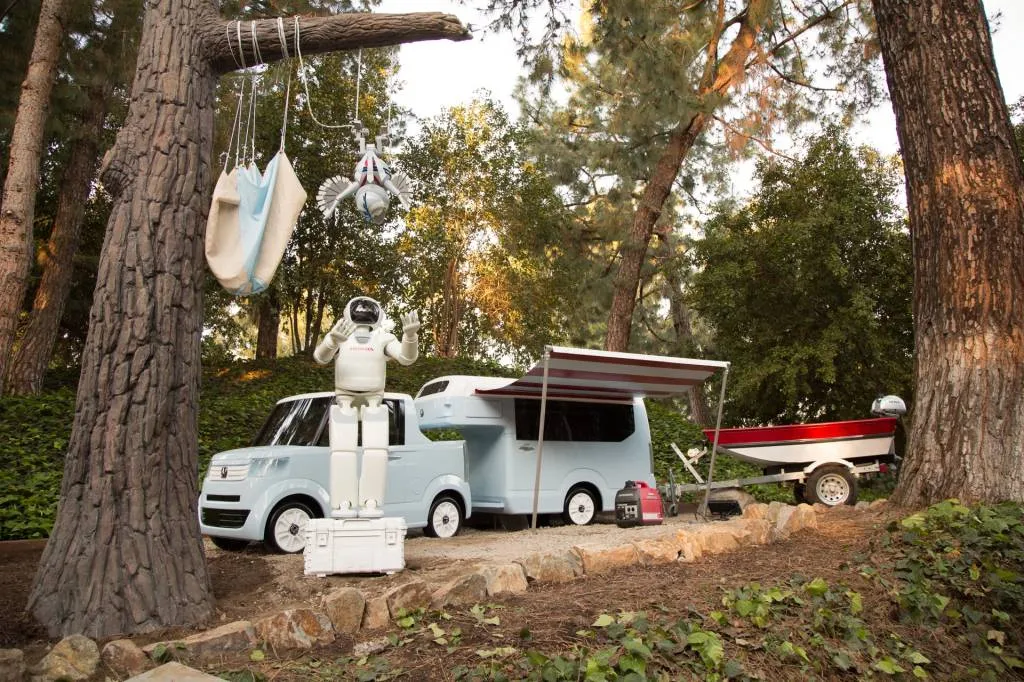
Honda at Autopia
“We consider this a victory and thank Disneyland for making the right choice for employees, visitors and the air we all breathe,” Zan Dubin, co-founder of National Drive Electric Week, said in a statement.
Disneyland will phase out the gasoline engines in its Autopia vehicles “within the next 30 months,” according to the Los Angeles Times. That means the EVs will arrive by fall 2026, but the sooner the better, advocates say.
“Employees work eight-hour shifts standing inches away from Autopia’s smog-spewing tailpipes,” noted Dubin.
Honda might have issue with the term “smog-spewing,” as it noted to Green Car Reports that when it began its sponsorship of Autopia in 2016 it replaced existing engines at the attraction with more efficient Honda iGX270 engines.
“As a part of our sponsorship, we continue to work with Disneyland Resort to tell inspirational stories that celebrate personal mobility and freedom, which are at the heart of the attraction and a good fit for Honda’s corporate slogan, ‘The Power of Dreams,'” stated Honda.
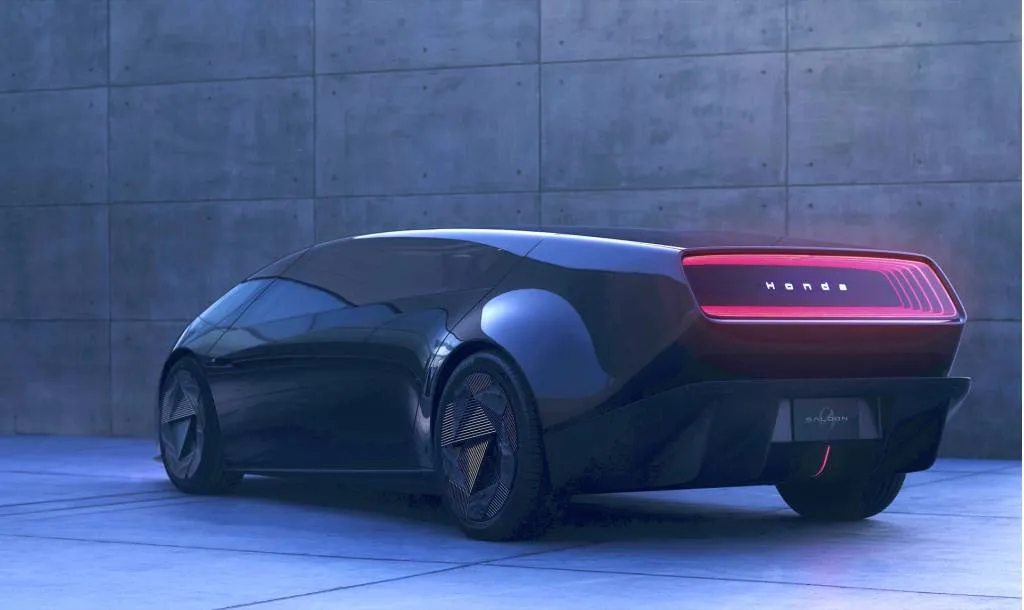
Honda 0 Saloon concept
Although it’s unclear what level of emissions devices these vehicles do have on them, motorcycles and small internal-combustion engines have been in some respects a bigger problem than cars and trucks, because emissions controls for smaller engines generally aren’t as extensive as in passenger cars.
Opened in 1955, Autopia was originally sponsored by Richfield Oil (which later merged into ARCO), and then by Chevron from 2000 to 2012. Since 2016, the attraction has been sponsored by Honda. The automaker said at the time that it had a 10-year deal, meaning it will end in 2026—around the same time the switch to EVs is scheduled to be completed.
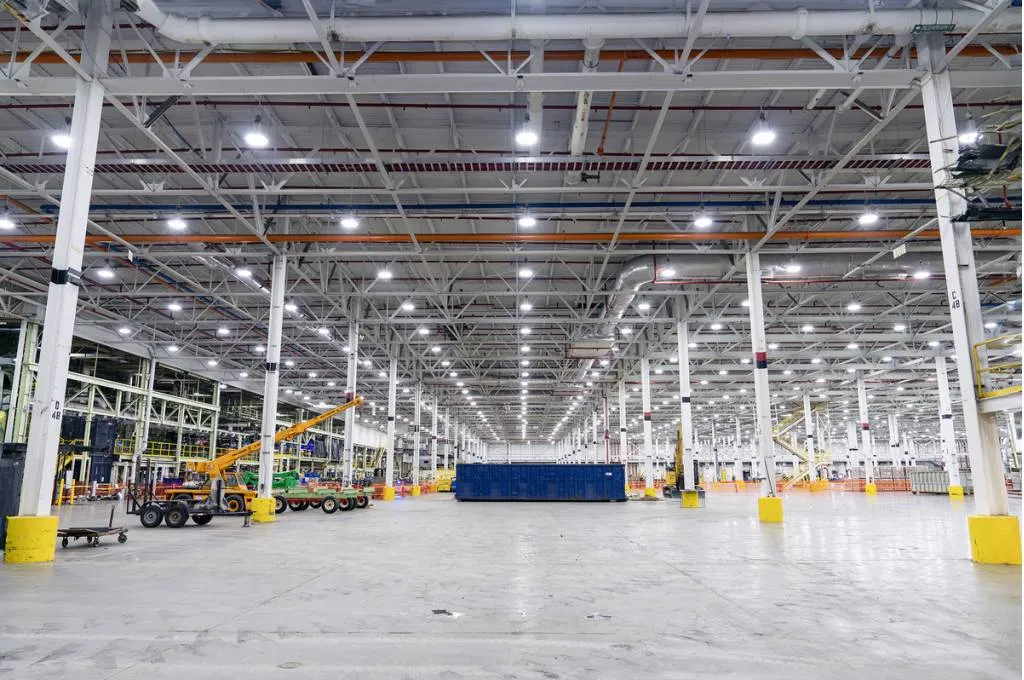
Honda preparing EV hub in Ohio
Honda has been cautious about EVs, but last week it revealed that it might potentially ramp up its EVs in a way that might outpace all but Tesla in U.S. EV production. Honda says battery-electric and fuel-cell electric vehicles will make up 100% of its global sales by 2040.
By electrifying an attraction once sponsored by oil companies and conceived in the golden age of automotive optimism, Disney (and perhaps Honda) could set an example and acknowledge that shifting to EVs will save thousands of lives by 2050.
Local air pollution can cause asthma in kids, and communities of color are adversely burdened by vehicle air pollution, a 2022 study found.

Megan Kimble probes the high price of America’s highways (Episode 247)
The author of ‘City Limits: Infrastructure, Inequality and The Future of America’s Highways’ examines the financial, environmental and human costs of highway expansions, explains the way interstates are funded, and details prospects of highway removal.

Camry hybrid, Ioniq 5 N reviews; Prius and Cybertruck recalls; Highlander EV: The Week in Reverse
Which EV maker is grading how reliably fast-charge stations work with its vehicles?
Which automaker reportedly scrapped development of ICE range extenders for EVs?
This is our look back at the Week In Reverse—right here at Green Car Reports—for the week ending April 19, 2024.
In a first drive of the 2025 Toyota Camry hybrid, we found that the hybrid system blends into the background—just like the rest of the car, which has now appropriately gone all-hybrid. Available all-wheel drive, its ratings of up to 51 mpg combined, and a comfortable, spacious interior make it one of the most appealing Camry sedans yet.
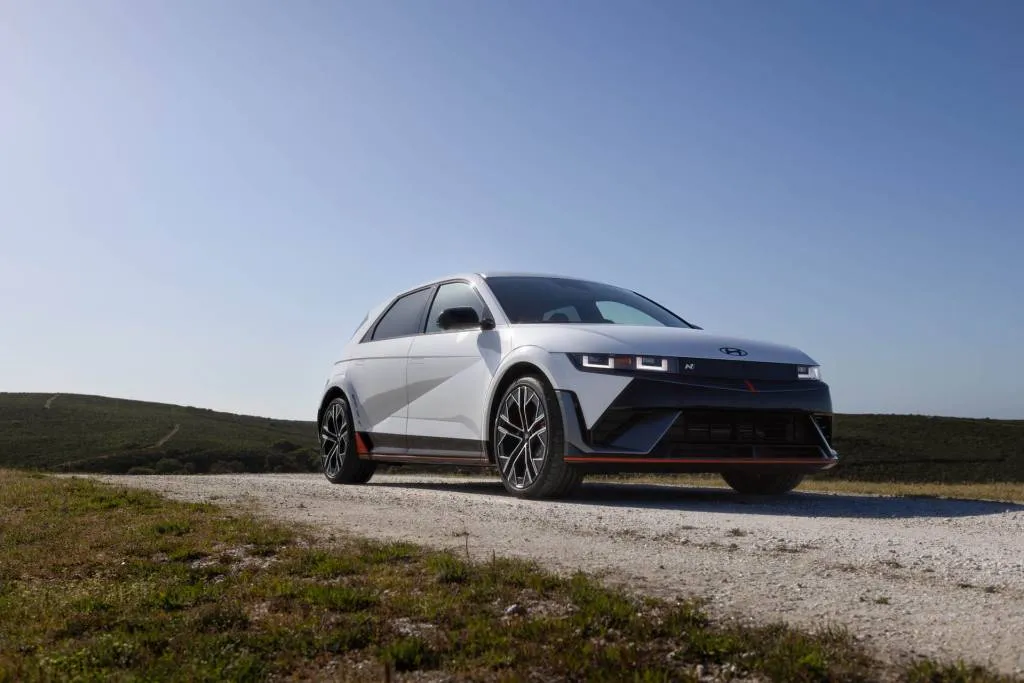
2025 Hyundai Ioniq 5 N
And on a first drive of the 2025 Hyundai Ioniq 5 N, Green Car Reports found what might be a motorsports game-changer—an EV that brings more emotion and joy to high-performance driving, with the capability to keep its cool out on the track.
Rivian has announced that it’s rating EV fast-chargers for real-world reliability—and including those letter-grade ratings in its route planning and interface. It’s a situation that may put some pressure on networks to prioritize reliability, and in the meantime it may favor Tesla Supercharging and its generally superior reliability.
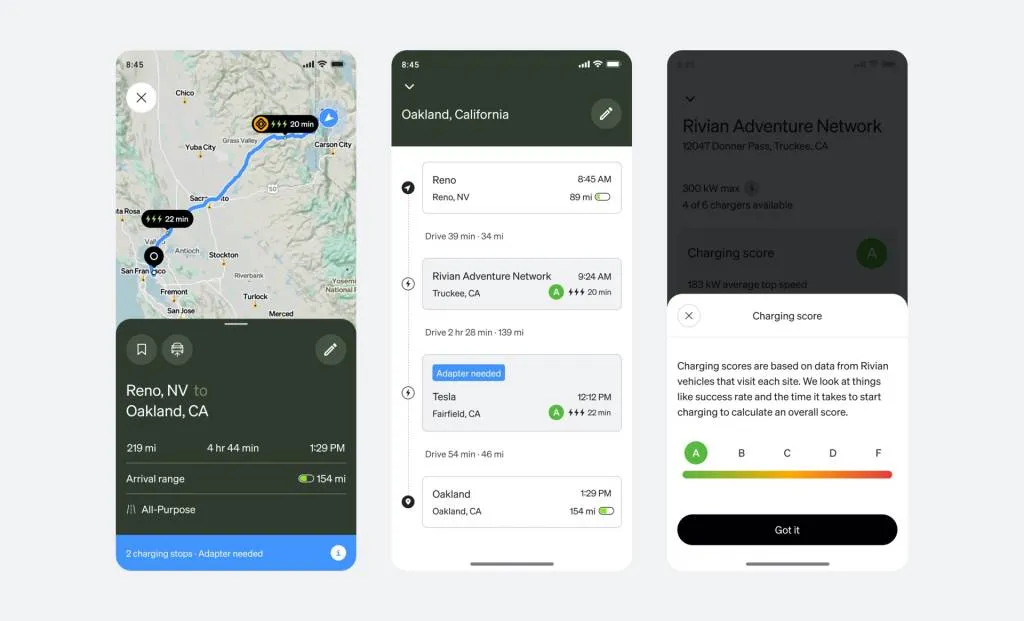
Rivian charging grades for trip planning – Software Update 2024.11.01
The Kentucky-made three-row Toyota electric SUV that the automaker has been underscoring is on the way has taken on an intriguing twist with new info: that it’s reportedly a Toyota Highlander EV. According to the originating report, the Highlander will go all-electric, leaving room for a Grand Highlander offering various gasoline-fueled flavors. Plus, reportedly, Toyota’s “bZ” nomenclature might already be toast.
“Trapped” accelerator pedals are prompting a Tesla Cybertruck recall that, based on recall documents, may have been spurred by a production workaround on the assembly line. Tesla is recalling nearly 4,000 Cybertrucks for the issue but acted quickly, with a reengineered component already introduced.
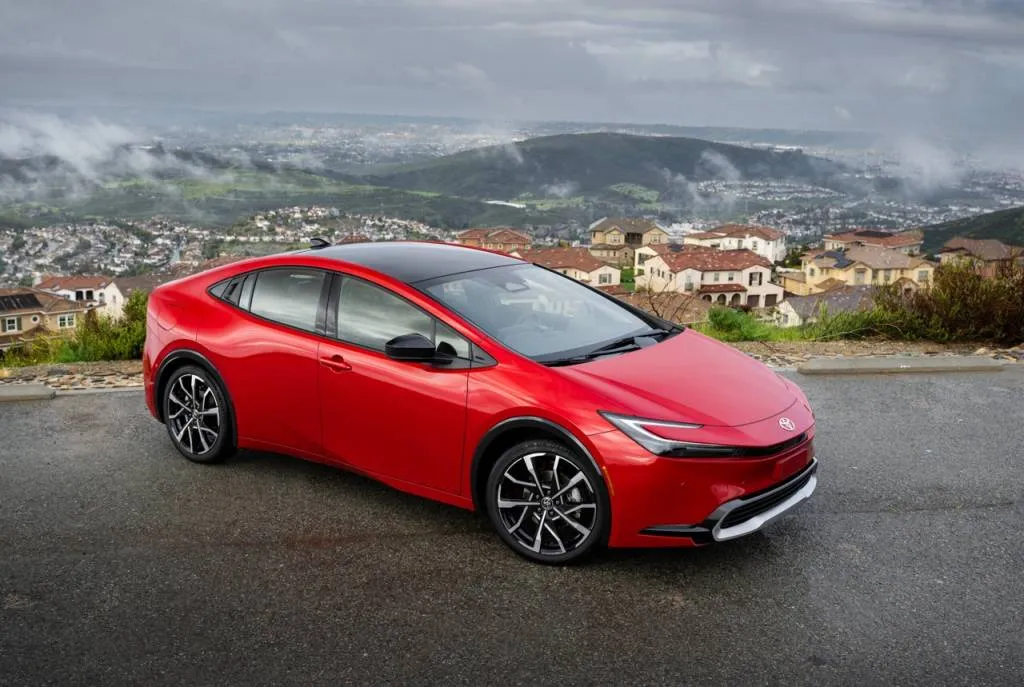
2024 Toyota Prius
The 2023-2025 Toyota Prius is being recalled for an issue that might cause waterlogged electronic rear door latches to suddenly short-circuit and open. In the meantime, Toyota is advising Prius owners to lock those doors while driving.
It’s looking increasingly likely that the first U.S.-bound fully electric luxury convertible will come from Italy. The Maserati GranCabrio Folgore, revealed Monday, is due to arrive in America in the fourth quarter of the year, as a 2025 model, with a price above $200,000.
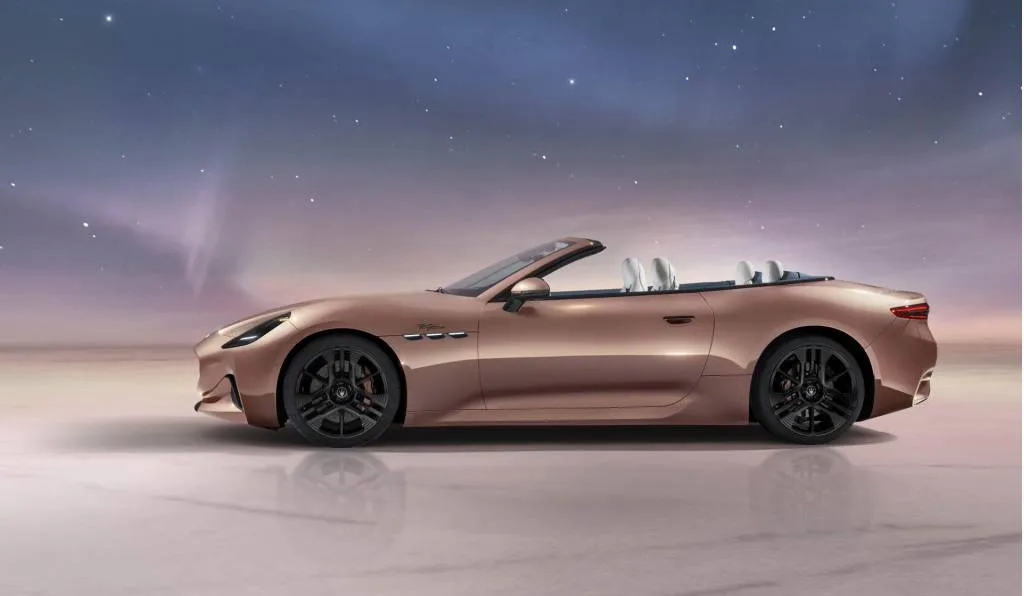
2025 Maserati GranCabrio Folgore
The 2024 Lucid Air Grand Touring is now being delivered, and once again it hits a 516-mile EPA range—the best of any EV. But with the addition of a head pump, improved automatic preconditioning, and up to 30% faster DC charging, it’s likely to cut the time spent at road-trip charging stops even more.
GMC confirmed a starting price just under $100,000 and an EPA range of 440 miles for its top 2024 GMC Sierra EV Denali Edition 1 electric pickup. That includes four-wheel steering and CrabWalk capabilities, plus GM’s SuperCruise and the same very high-power charging rates as the GMC Hummer EV.
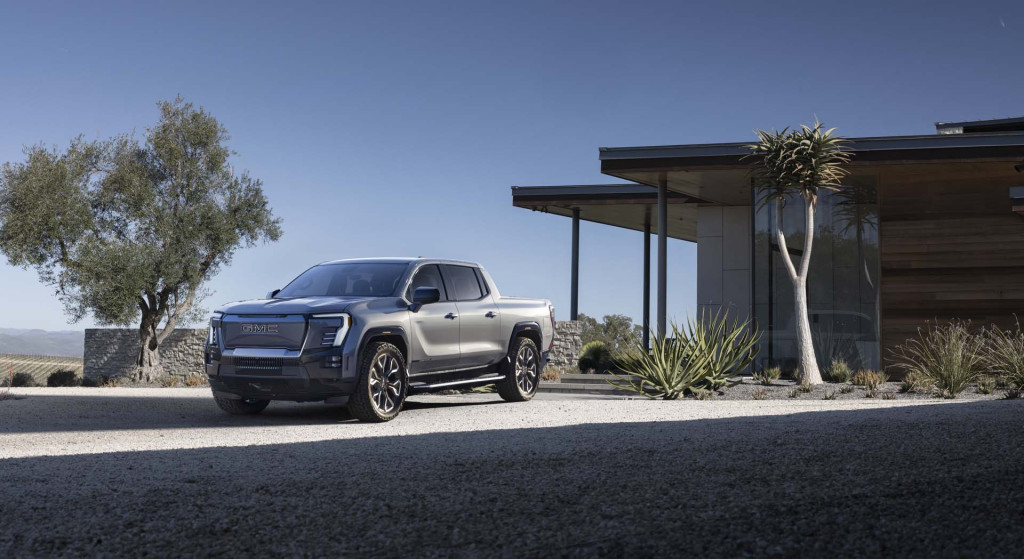
2024 GMC Sierra EV Denali Edition 1
Mercedes-Benz announced pricing and details for its 2025 eSprinter electric van lineup, which includes a smaller 81-kwh battery pack and shorter standard-roof version at a base price of $63,545 that’s more competitive versus fleet-oriented rivals.
Mercedes has also, reportedly, scrapped its extended-range EV powertrains under development, at least partly because they were too expensive and seen as a technological patch. The plug-in series hybrids would have used dramatically downsized engines—a turbo-2 for the EQS—while halving the EV battery pack.
According to data analyzed by Bloomberg New Energy Finance this past week, China now makes enough batteries for global EV production, In 2023, manufacturing capacity was already double what global battery-cell demand amounted to for EVs and energy storage combined, and if companies keep to announcements there may be even more of a gap between supply of cells and demand by EV plants.
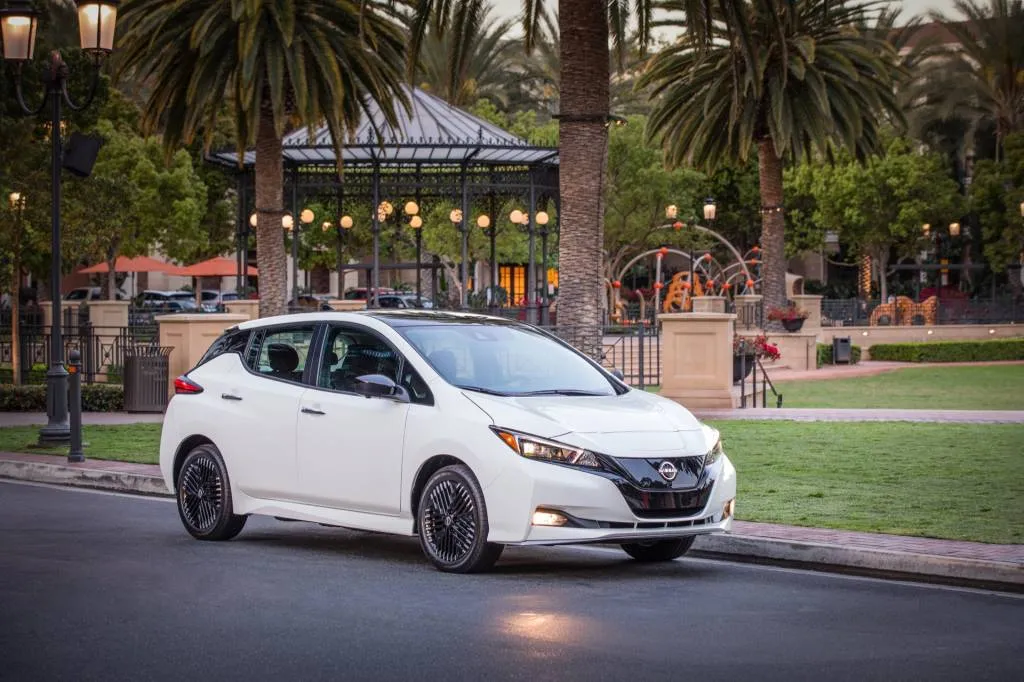
2024 Nissan Leaf
According to a recent deep dive into EV cost of ownership, half of new 2024 EVs cost less over five years versus ICE models—despite depreciation, which was far greater this past year.
While U.S. electricity demand has remained flat, or declined, in recent years, that’s not the case around EV battery plants—and new EV factories may be causing additional pollution, according to a recent report. Biden administration policy has greatly incentivized the growth of EV assembly plants and battery plants, and for labor reasons most of those have been sited in the American Southeast. That’s caused a spike in electricity demand, leading utilities to shift their power mix toward natural gas and away from renewables.
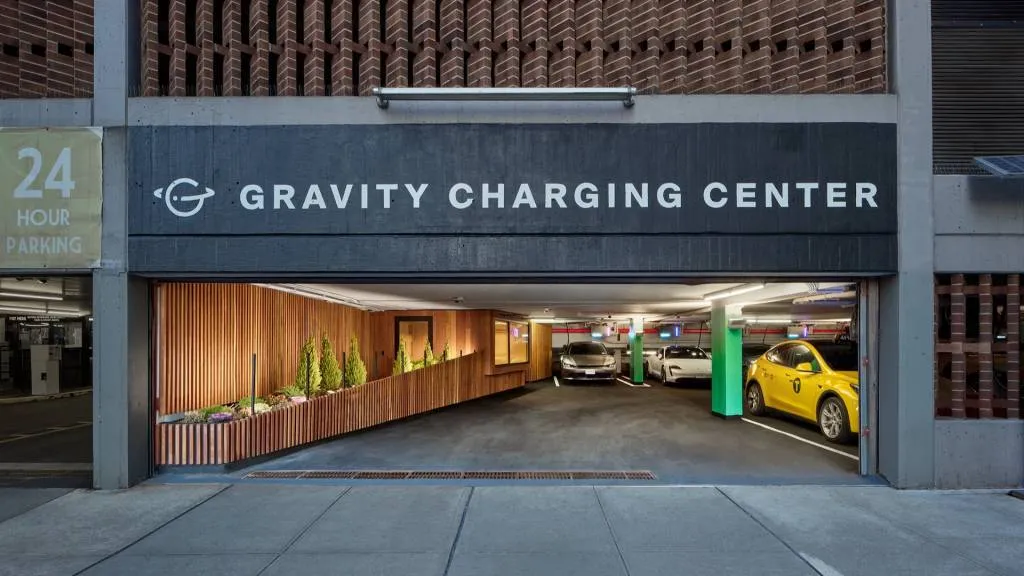
Gravity EV charging center in New York City
Despite a leveling-off of demand and more conservative sales growth of EVs themselves, U.S. fast-charger growth is accelerating in recent months. Just in the first quarter of the year the total number of fast-chargers is up nearly 8%, fueled by the Biden administration’s NEVI program—now amounting to one fast-charger for every 15 U.S. gas stations.
And if $50,000 EVs still lose $6,000, according to a recent analysis, when will EVs become profitable? Various financial incentives will help; so will range and efficiency; but the simple answer may rest on production volume.
_______________________________________

Cybertruck recall, US fast-charger growth, EV factories taxing grid: Today’s Car News
Road-trip fast-chargers for EVs are growing at a record pace. EV factories in the Southeast may inadvertently be creating more pollution for all ratepayers. And saving seconds with soap may have initiated an in-person recall of thousands of Cybertrucks. This and more, here at Green Car Reports.
“Trapped” accelerator pedals are prompting a Tesla Cybertruck recall that, based on recall documents, may have been spurred by a production workaround on the assembly line. Tesla is recalling nearly 4,000 Cybertrucks for the issue but acted quickly, with a reengineered component already introduced.
While U.S. electricity demand has remained flat, or declined, in recent years, that’s not the case around EV battery plants—and new EV factories may be causing additional pollution, according to a recent report. Biden administration policy has greatly incentivized the growth of EV assembly plants and battery plants, and for labor reasons most of those have been sited in the American Southeast. That’s caused a spike in electricity demand, leading utilities to shift their power mix toward natural gas and away from renewables.
And U.S. fast-charger growth is accelerating in recent months, despite a leveling of sales and demand. Just in the first quarter of the year the total number of fast-chargers is up nearly 8%, fueled by the Biden administration’s NEVI program—now amounting to one fast-charger for every 15 U.S. gas stations.
_________________________________

Tesla Cybertruck recall prompted by “trapped” accelerator pedals
Tesla is recalling nearly 4,000 Cybertrucks over sticky accelerator pedals, after the NHTSA earlier this week said that it was already communicating with Tesla on the issue.
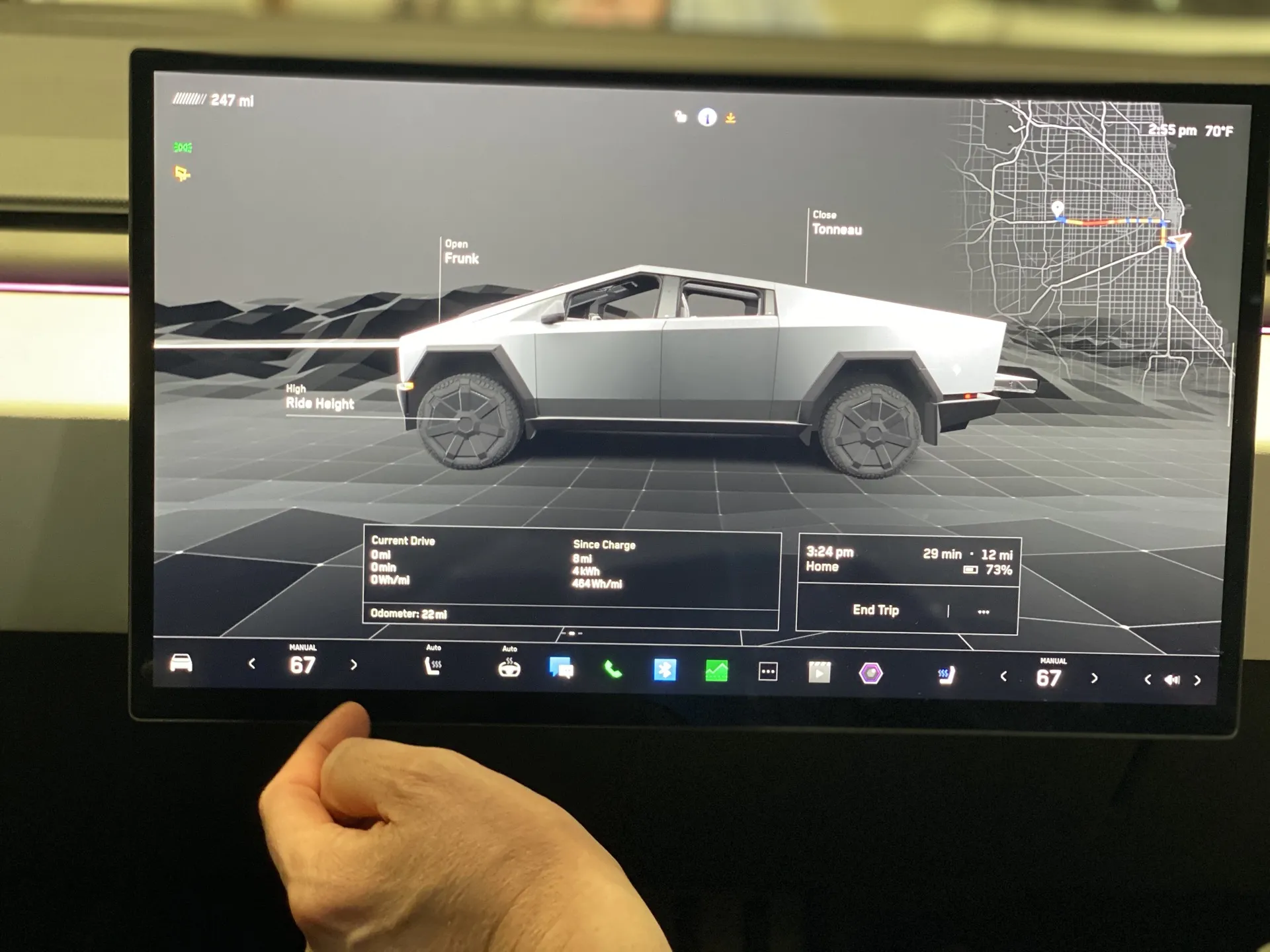
Cybertruck pedals may become trapped in a depressed, “accelerate” position after a lot of pressure has been applied by the driver, explains documents filed with the federal government.
The issue potentially affects 3,878 Cybertrucks made from November 13, 2023, through April 4, 2024—perhaps including those made for the production Tesla Cybertruck reveal, where the company delivered the first examples.
A “high force” on the pedal may trap the pedal below interior trim next to the pedal for a curious reason that appears to be related to assembly shortcuts rather than the engineering of the vehicle. According to Tesla, in vehicle assembly, soap was introduced as a method of getting the pad onto the pedal. The residue that had eased the assembly then prevented the pad from staying on the pedal.
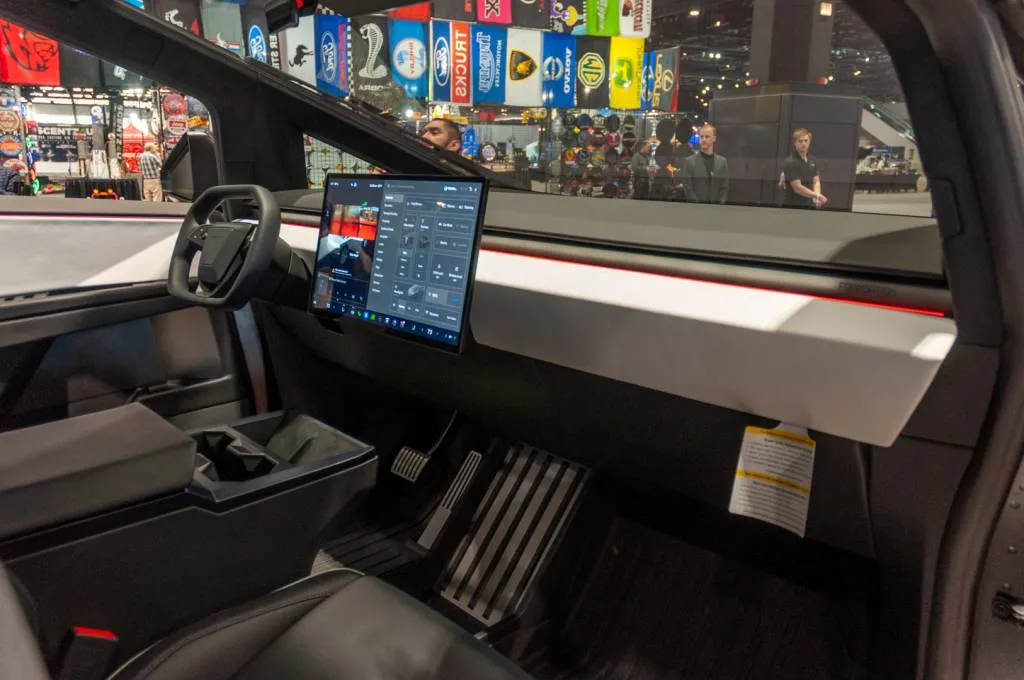
Tesla Cybertruck
Fortunately, Tesla has provided multiple failsafes for such a condition, from an engineering standpoint. “Note that application of the brake pedal will cut drive torque, including when both brake and accelerator pedals are pressed, and continued application of the brake pedal will bring the vehicle to a stop as quickly as if the accelerator pedal was not pressed,” Tesla explained in these documents, also noting that the driver will also receive audible and visual alerts that both pedals are being pressed.
As proven more than a decade ago in unintended-acceleration instances relating to the Toyota Prius, among other vehicles, even cut-and-dried cases of pedal misapplication can lead to sensational headlines and social-media posts, while few if any vehicles made in recent decades are capable of out-accelerating their brakes. This latest Cybertruck issue made the rounds in a TikTok video that has been widely misconstrued.
There have been no known crashes or injuries due to this issue, which has escalated quickly relative to most other automotive recalls. The brake-pedal issue was first identified on March 31 with a customer claim, with engineering verifying simultaneous brake and accelerator inputs from data logs, and a recall was initiated after Tesla could recreate the condition.
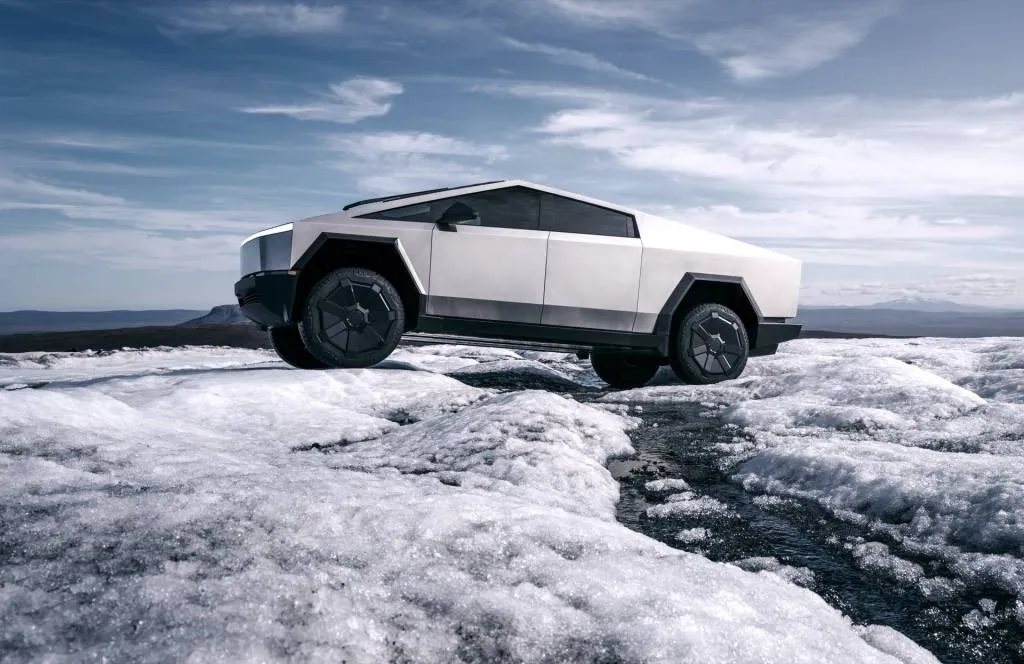
2025 Tesla Cybertruck – Courtesy of Tesla, Inc.
Tesla says it will “replace or rework” the accelerator pedal assembly in existing vehicles “to prevent the pad from dislodging,” and it noted that models in transit will also get the remedy. It’s already redesigned the component as of this week, so models made starting on April 17 shouldn’t have the concern.
So far, the Cybertruck has ramped up on a niche-vehicle trajectory. As the market doesn’t shift away from EVs but shifts toward more affordable EVs, Ford has delayed its next-generation electric truck—a “Cybertruck for Silicon Valley people,” as Ford CEO Jim Farley put it—until 2026. Meanwhile Tesla CEO Elon Musk has pushed back against reports that its affordable Model 2 has been nixed in favor of an all-in Robotaxi project.

US EV fast-charger growth is accelerating, filling in the flyovers
The U.S. now has nearly 8,200 public DC fast-charging stations, filling in gaps on the route map, according to a new Bloomberg report.
The number of public fast chargers increased 7.6% in the first quarter of 2024, fueled by the Biden administration’s $5 billion National Electric Vehicle Infrastructure (NEVI) program, according to the report, which found that this growth spurt means there is now one fast charger for every 15 U.S. gas stations.
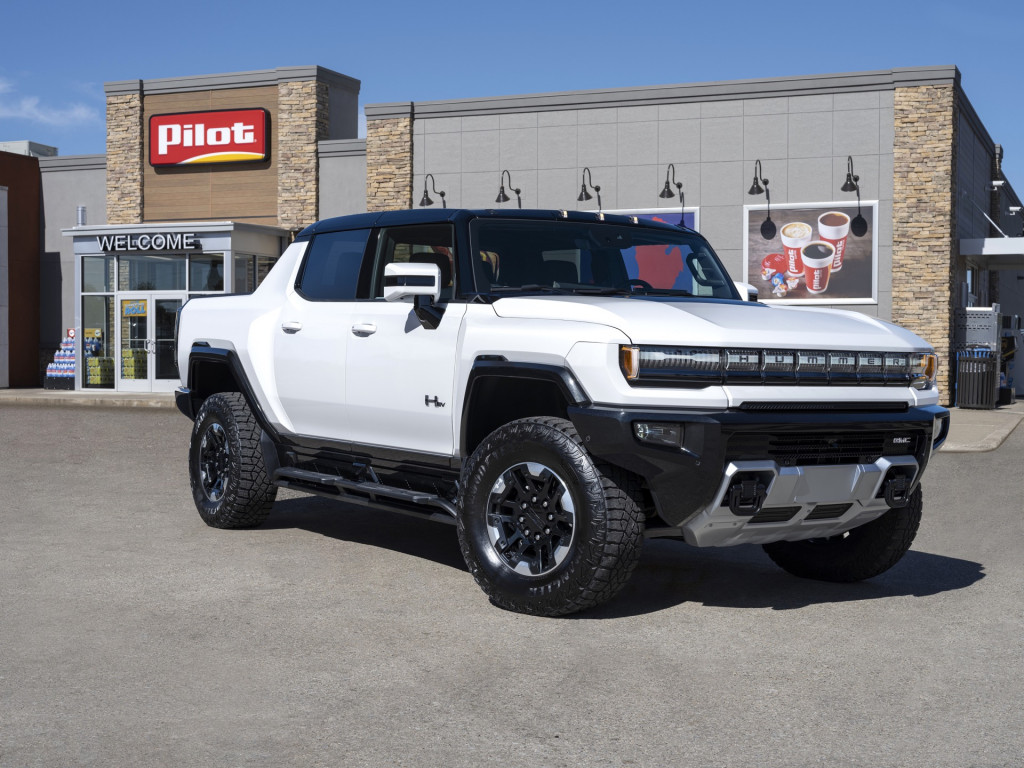
GMC Hummer EV at Pilot travel center
Charging infrastructure is also expanding beyond the traditional coastal EV strongholds, according to the report. Indiana added 16 new fast-charging stations between January and April, while Missouri and Tennessee each added 13, and Alabama added 11. And Ohio claimed the first NEVI installation nationwide in December 2023.
The additional charging stations in flyover country is partly down to convenience stores like Buc-ee’s and Wawa getting involved in charging, Bloomberg notes. The two chains collectively added 19 new charging stations in the first three months of 2024.
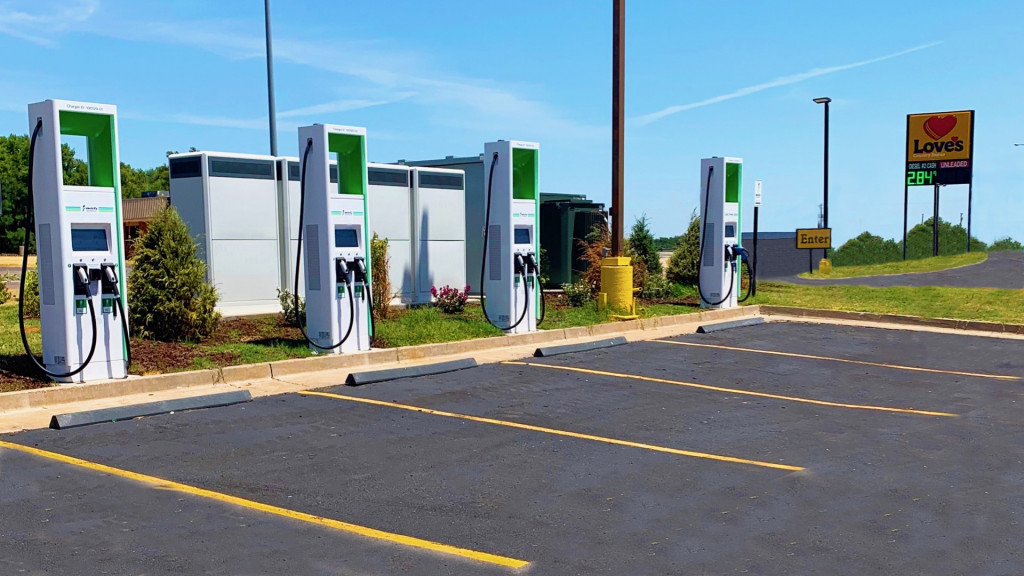
Electrify America charging stations at Love’s Travel Stop
A study last year from the mapping-data firm HERE suggested that identifying the states that are leading or lagging on charging might not be as straightforward as it initially seems. Instead, it relates partly to the size of their EV fleets and where chargers are in relation to that and where they’re going. Further, the Department of Energy still has one of the best tools—its map of “Designated Alternative Fuel Corridors”—for anticipating where future EV fast chargers may fill out.
Meeting the federal goals laid out by the program, which calls for stations at 50-mile intervals along major corridors, will require more than 1,100 fast-charging stations across the nation, according to a look by the Great Plains Institute last year. And that’s not considering other ambitious EV charging network efforts, like Ionna—or the growth of Tesla Supercharging.

Report: EV factories may be leading utilities to dirtier decisions
New factories producing EVs and their batteries are bringing more jobs to the Southeast, but utilities are trying to meet the power demands of these factories with natural-gas power plants rather than renewable energy, reports Energy News Network.
Anticipated demand from the auto industry—as well as solar-panel manufacturing and data centers—is leading utilities to forecast single-digit percentage growth every year through the end of the decade in some regions, according to report.
That’s a big change considering that demand has stayed flat—or declined—in most of the U.S. for the past decade and a half.

Scout EV plant groundbreaking
In the Southeast, major utilities seem more focused on natural gas as the solution for meeting this anticipated demand. The Georgia Public Service Commission just this week approved utility Georgia Power’s plan to build three new methane and oil-burning plants, as well as to buy energy from sister company Mississippi power, delaying retirement of one of that company’s coal-fired plants, according to the Southern Environmental Law Center.
Duke Energy recently added more gas-fired plants to supply power in North Carolina and South Carolina, and lawmakers in the latter state have fast-tracked construction of an additional new gas-fired plant, according to the report. And the federal Tennessee Valley Authority is reportedly developing a plan that could include new gas-fired power plants as replacements for coal plants.
Electricity from natural gas is broadly better than electricity from coal—or gasoline itself, in cars—but it still pollutes, producing sulfur dioxide, oxides of nitrogen (NOx), and more. And of course there’s CO2, so it doesn’t provide the carbon gains of power from solar, wind, or hydro-electric sources. Even if electricity demand rises to meet projections and additional power-generation capacity is needed, the question remains whether continuing with natural gas is necessary, rather than adding renewables.
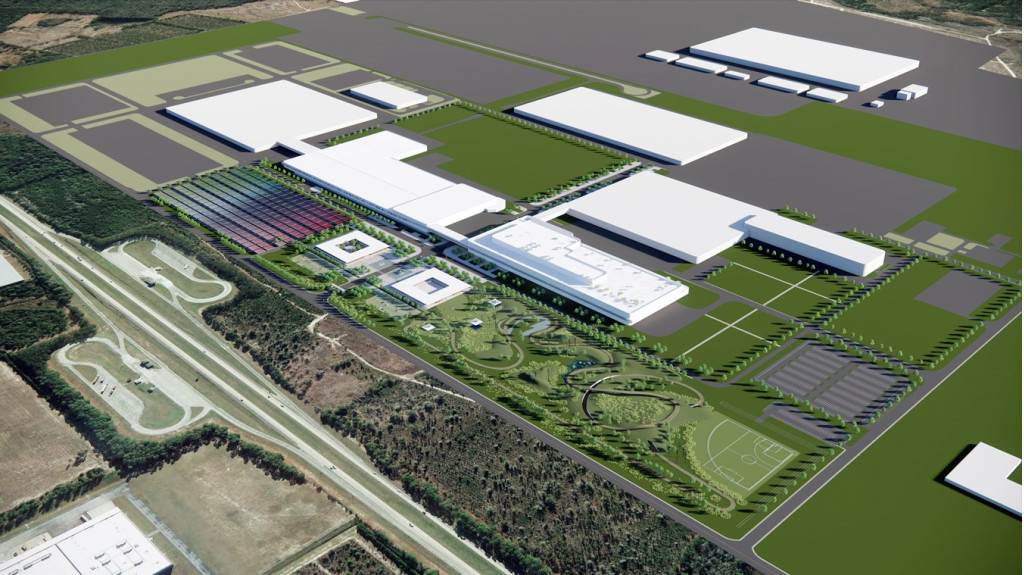
Kia EV manufacturing in Georgia
This reaches back to concerns voiced years ago when automakers started announcing new EV factories and battery facilities in places where cheap coal-based energy could be bought. The vast majority of EV and battery plants are being sited in Southern states eager for the jobs, but led by Republicans who paradoxically fight policy nurturing EV production but will generally gladly take credit for the manufacturing the incentives help bring.
Once EVs and their batteries are built, grid upgrades may also be needed to support charging, a 2020 report claimed. But various studies suggest that, eventually, EVs will drive the long-term cost of electricity down.

2025 Camry hybrid review, Highlander EV, Prius recall: Today’s Car News
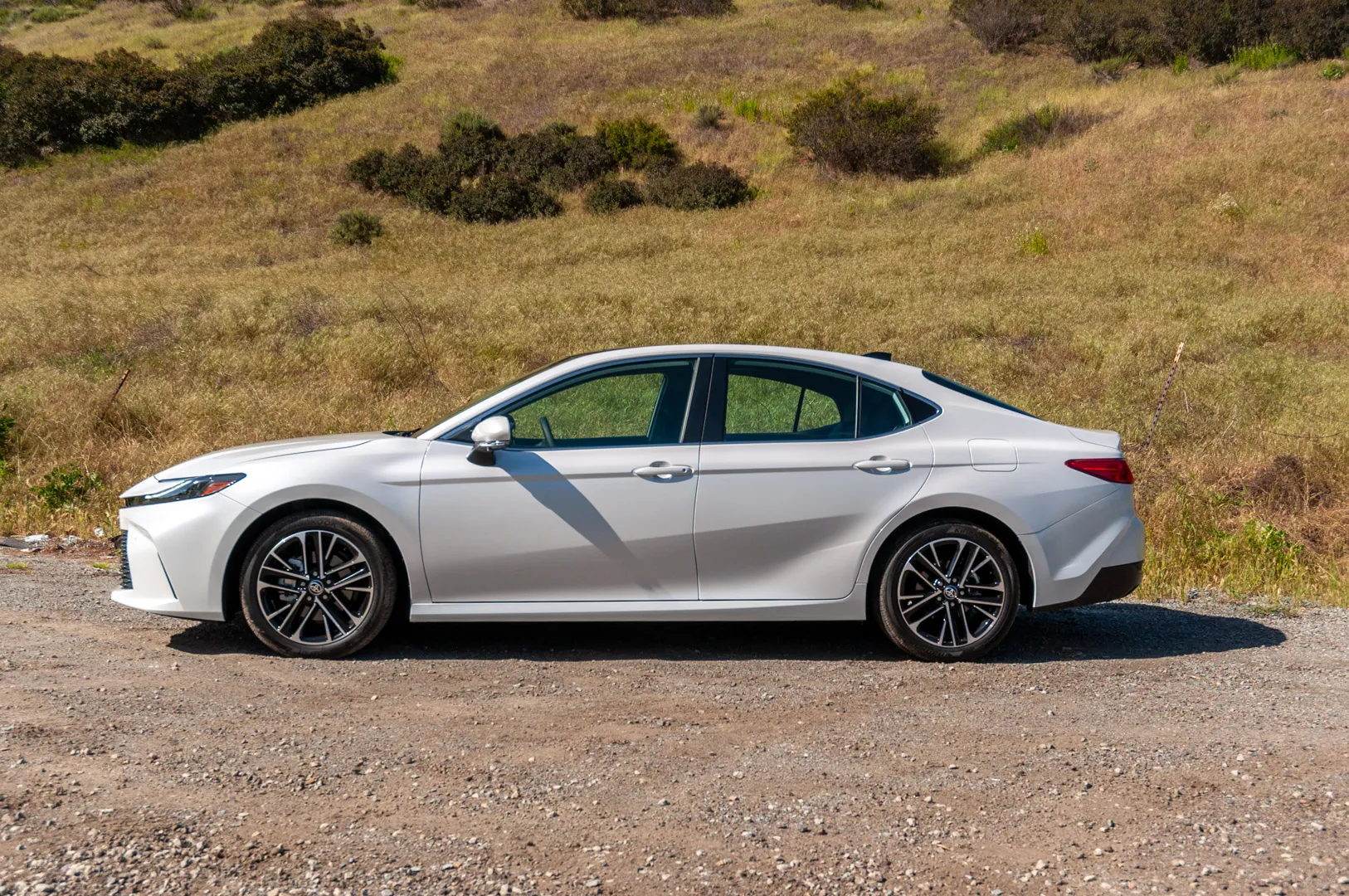
The 2025 Toyota Camry goes all-hybrid and does that matters to Camry shoppers a little bit better. Prius owners need to keep those doors locked. And is the U.S.-made three-row Toyota electric SUV a Highlander EV? It’s a variety pack of Toyota news today, here at Green Car Reports.
In a first drive of the 2025 Toyota Camry hybrid, we found that the hybrid system blends into the background—just like the rest of the car, which has now appropriately gone all-hybrid. Available all-wheel drive, its ratings of up to 51 mpg combined, and a comfortable, spacious interior make it one of the most appealing Camry sedans yet.
The 2023-2025 Toyota Prius is being recalled for an issue that might cause waterlogged electronic rear door latches to suddenly short-circuit and open. In the meantime, Toyota is advising Prius owners to lock those doors while driving.
And that Kentucky-made three-row Toyota electric SUV that the automaker has been underscoring is on the way has taken on an intriguing twist with new info: that it’s reportedly a Toyota Highlander EV. According to the originating report, the Highlander will go all-electric, leaving room for a Grand Highlander offering various gasoline-fueled flavors. Plus, reportedly, Toyota’s “bZ” nomenclature might already be toast.
_________________________________