
Category: General

Tesla Model 3 Performance bows with adaptive suspension, track mode
A new Tesla Model 3 Performance based on the refreshed Model 3—codenamed “Highland” by the automaker—is now available to order in the U.S.
Appearing on Tesla’s website Tuesday, the new Model 3 Performance has a dual-motor all-wheel drive powertrain rated at 510 hp and 546 lb-ft of torque. Tesla quotes 0-60 mph in 2.9 seconds, a 163 mph top speed, and 296 miles of range.
Tesla also claims more consistent performance from its fourth-generation drive units, with a 22% increase in continuous power output, a 32% increase in peak power output, and a 16% increase in peak torque compared to the previous Model 3 Performance, along with lower energy consumption.
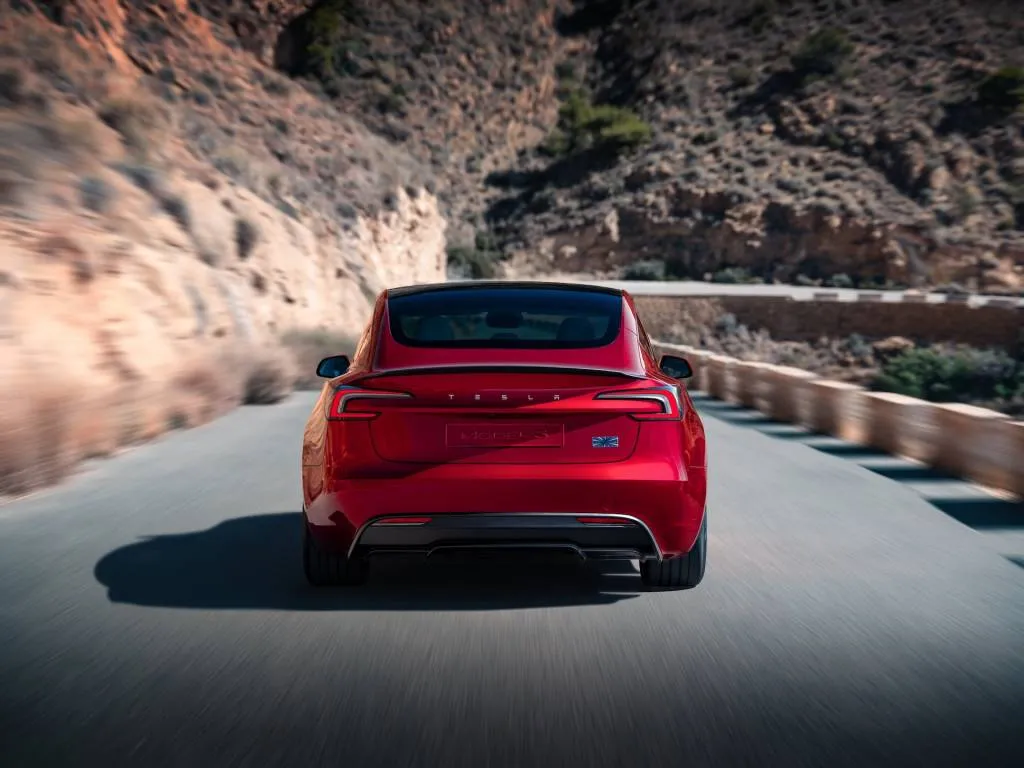
Tesla Model 3 Performance
Chassis upgrades include adaptive dampers and an improved Track Mode that ties together the functioning of motor, suspension, and powertrain cooling controls with the car’s vehicle dynamics controller. Tesla also equips Performance models with 20-inch forged and staggered wheels with Pirelli P Zero 4 tires.
The Model 3 Performance gets the same revised styling previously seen with the Highland update, which have been available in the U.S. since January. As with those other models, Tesla claims aerodynamic benefits, with a 5% reduction in drag, a 36% reduction in lift, and a 55% improvement in front/rear lift balance compared to the previous Model 3 Performance.
The main interior change is a new set of front sport seats. The Model 3 cabin overall received a substantial revamp with the Highland refresh, adding features like cooled front seats, dual wireless device charging, and an 8.0-inch screen for rear-seat passengers in addition to the main 15.4-inch touchscreen.
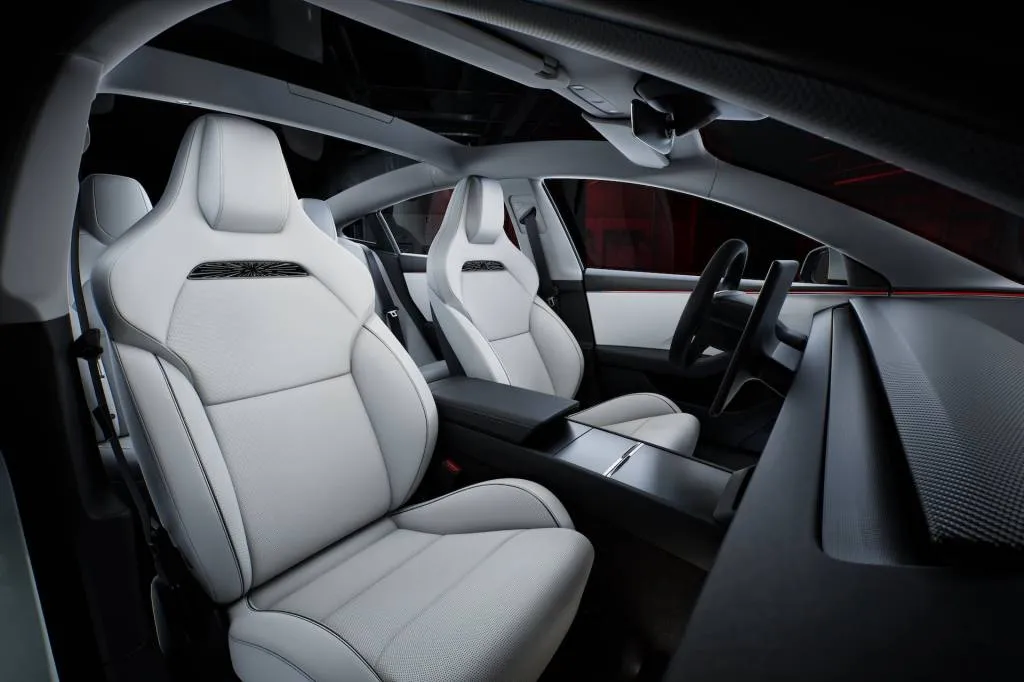
Tesla Model 3 Performance
Pricing starts at $52,990 before destination, putting the Performance at the top of the Model 3 lineup, above the Long Range All-Wheel Drive ($47,740) and Rear-Wheel Drive ($38,990). The Performance appears eligible for the federal EV tax credit, which could mean it’s a better deal than the Long Range, though. Tesla has been applying these credits at the time of purchase.
Tesla pricing is always volatile, however. A round of price cuts just earlier this week mean the Model Y now undercuts the Model 3. Currently the bestselling vehicle on the planet, the crossover hasn’t gotten the same updates as the sedan, though.
When it launched, the Model 3 Performance was somewhat of an outlier. But new competition has cropped up in the form of the BMW i4 and Polestar 2, so just as with the standard Model 3, an update of the Model 3 Performance was needed.

Vinfast adds US dealer franchises, as EV deliveries lag targets
Vinfast on Tuesday announced the signing of 12 more U.S. dealerships, but a recent report suggests the EV firm may be falling behind on sales targets.
The first of the new dealerships is expected to open later this month, according to a Vinfast press release. The additions will give the company 18 franchised dealerships in seven states—North Carolina, New York, Texas, Florida, Kansas, Connecticut, and Kentucky—since the start of a pivot to a dealer model last year. That’s on top of 15 company-owned stores and service centers in California, the nation’s largest EV market.
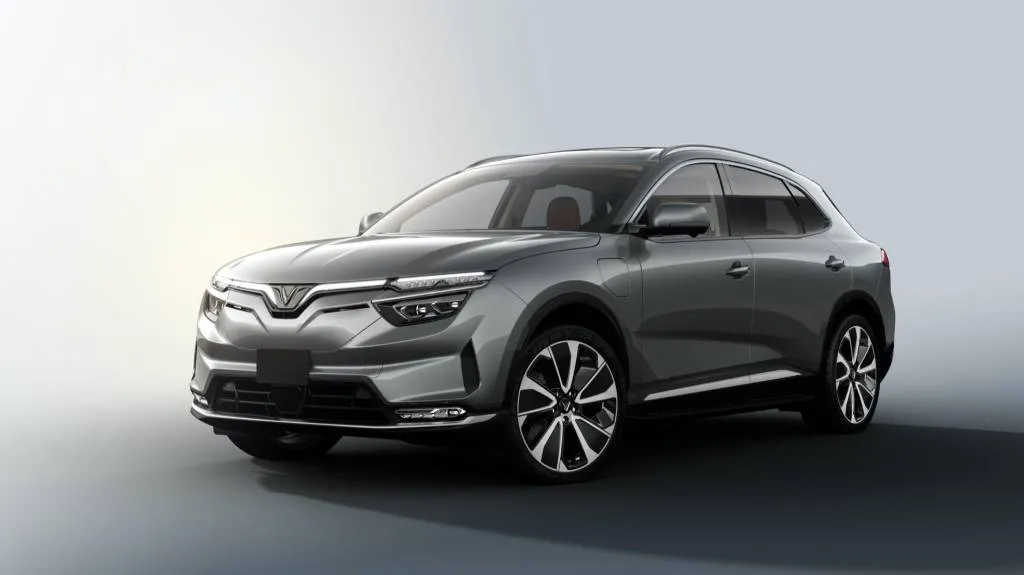
2023 Vinfast VF 8
Vinfast’s first product for the U.S. is the VF 8 electric SUV. A preview drive in 2022 showed us that the VF 8 had a long way to go, and an official first drive of the VF 8 last year led us to warn that it simply doesn’t feel ready yet.
A follow-up, the three-row Vinfast VF 9 SUV, has been officially rated with a 330-mile EPA range, but deliveries haven’t yet started. Both the VF 8 and VF 9 arrive to crowded fields of crossover alternatives. At CES 2024, Vinfast revealed a new pickup concept and showed its unique VF 3 mini-SUV. Both might be more likely to find inroads in the U.S. market.
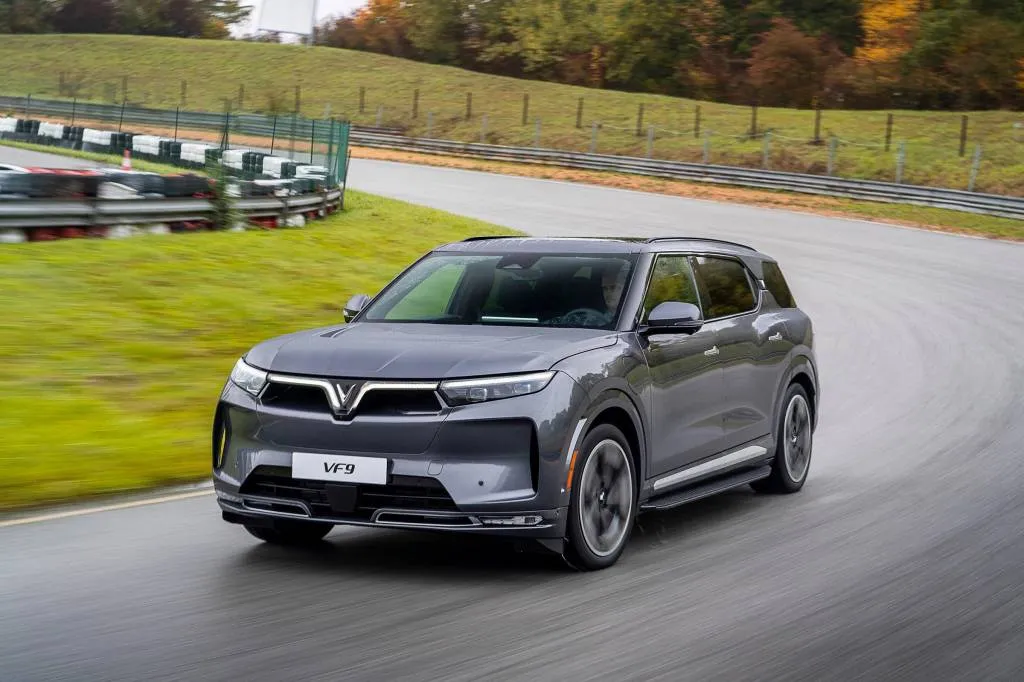
Vinfast VF 9
Meanwhile construction is reportedly paused at Vinfast’s factory in North Carolina, with it reportedly seeking a smaller footprint, according to local newspaper The News & Observer. A recent Axios report suggested that Vinfast is simply having trouble selling its vehicles all around the world.
Vinfast hopes to deliver 100,000 vehicles globally this year, but delivered just 9,869 in the first quarter, according to Axios. Vinfast has shipped just 3,118 vehicles to the U.S., and only 265 of those had sold as of December, the report said, citing registration data. Yet Vinfast told shareholders it plans to complete the North Carolina factory in 2025, with an annual production capacity of 150,000 vehicles.

2025 Mercedes-Benz G-Class works on its quads (motors, that is)
It has four motors, 579 hp, and an off-road heritage that goes back further than the Rivian R1S, GMC Hummer EV, and Tesla Cybertruck. With the electric version of its military-grade G-Class, Mercedes-Benz promises even more freedom from pavement than all those American-built flagwavers, and it does it all with batteries.
Joining the G-Class in the 2025 model year will be this G 580 with EQ Technology—not, as had been speculated, the “EQG.” From here on out, new EVs from Benz will adopt the first names of their classic model lines, with their electric DNA tagged at the end. E-Class, GLE-Class, and S-Class—all will get battery-electric models in the future, which could make today’s EQE and EQS cars the German equivalent of one-hit wonders.
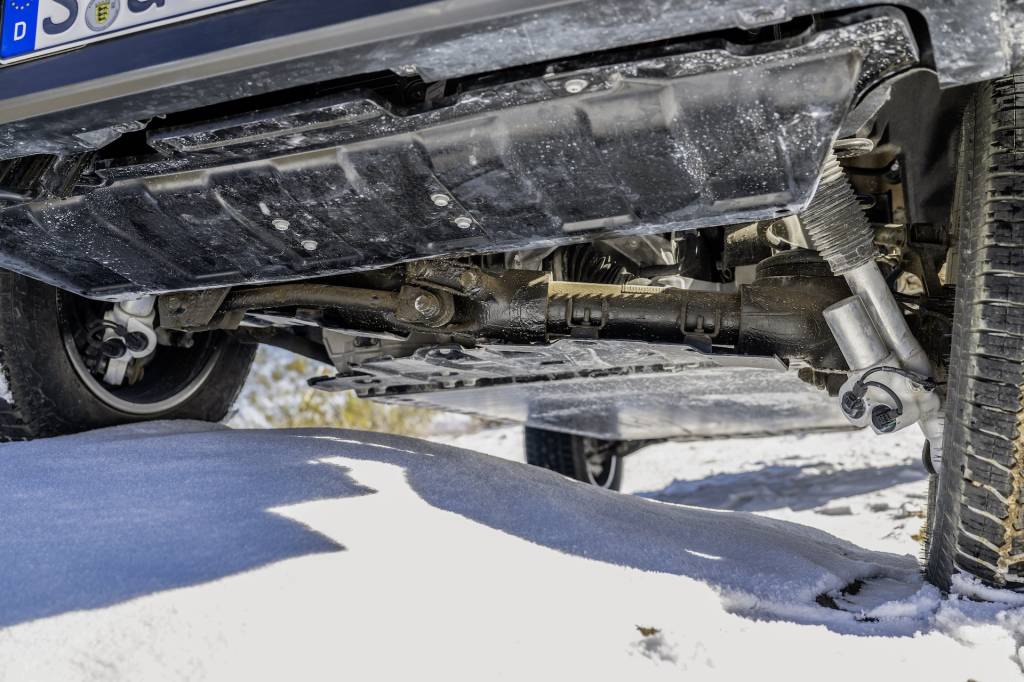
2025 Mercedes-Benz G 580 with EQ Technology
G-Class EQ: A big battery floor
The electric G sports its usual ladder-frame construction, but instead of an ICE under the hood, it rides atop a 116-kwh lithium-ion battery mounted in its floor. Housed in a flex-resistant case, the battery pack integrates with the frame and wears thick metal protection as a skid plate. The pack combines 216 cells into 12 modules in two layers, cooled with three circuits. There’s no mention of the rumored silicon-anode battery chemistry that Mercedes had been keen to introduce to speed charging times.
With a quad-motor setup, each generating a maximum of 108 kw, the G 580 EQ nets out at 579 hp and 859 lb-ft of torque. Each motor has its own transmission, which enables a low-range mode for off-roading and relieves it of the need for its gas cousin’s three locking differentials. Mercedes promises a 0-62 mph time of 4.7 seconds and a top speed of 112 mph.
In addition to the G 580 EQ’s Comfort, Sport, and Individual drive modes, a duo of Trail and Rock govern its off-road ability. Trail mode allows higher-speed driving, while Rock mode opens the door for Low to be engaged. When it is, it reduces the gears’ ratios by 2:1 and limits the speed to about 53 mph.
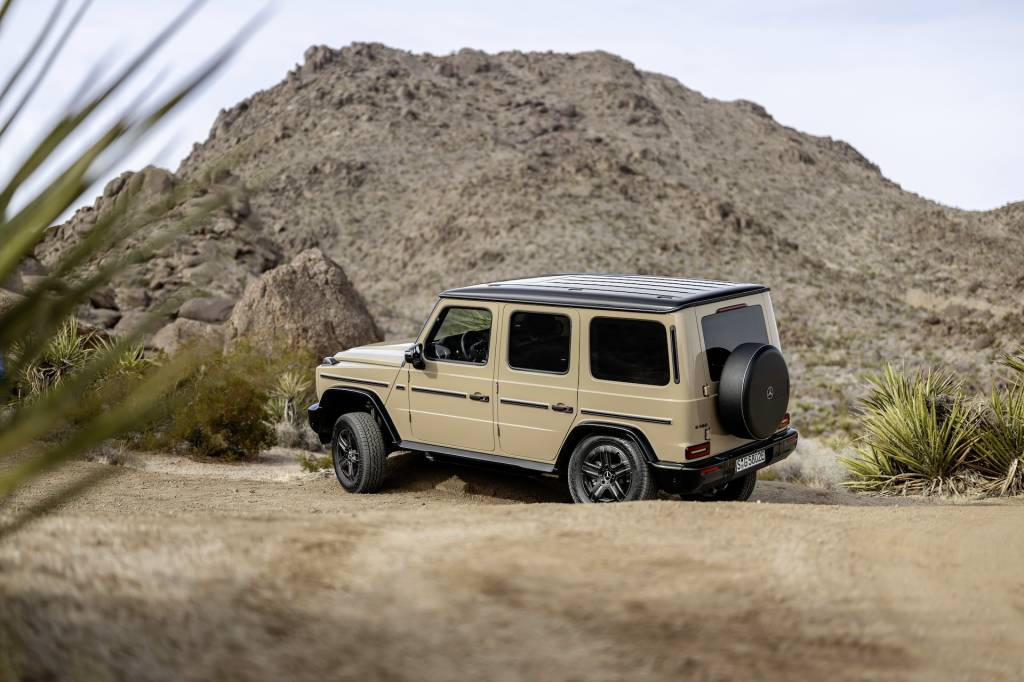
2025 Mercedes-Benz G 580 with EQ Technology
That mode also slips the G 580 EQ into two stunt-drive modes. G-Steering enables all-wheel steering that reduces turning radii on low-friction surfaces, while G-Turn takes that to its ultimate party-trick zenith. In D, with Rock and Low modes selected, a full crank of the steering wheel and a press on the accelerator pivots the car in a tight circle, almost like a skid-steer, permitting two complete revolutions.
An off-road cruise control system permits low, variable, and fast crawl up to 5 mph, all with precise motor control. Ground clearance between the axles of the G 580 EQ stands at least at 9.8 inches. It offers a breakover angle of 20.3 degrees, an approach angle of 32 degrees, and a departure angle of 30.7 degrees. It can ford more than 33 inches of water, and it’s been tested on the same mountain trails at the Schöckl as the standard G-Class.
It’s all accompanied by G-Roar, a programmed set of sounds associated with drive modes or events, and an Off-Road Cockpit with readouts for a compass, steering angle, torque, tire pressures, and altitude.
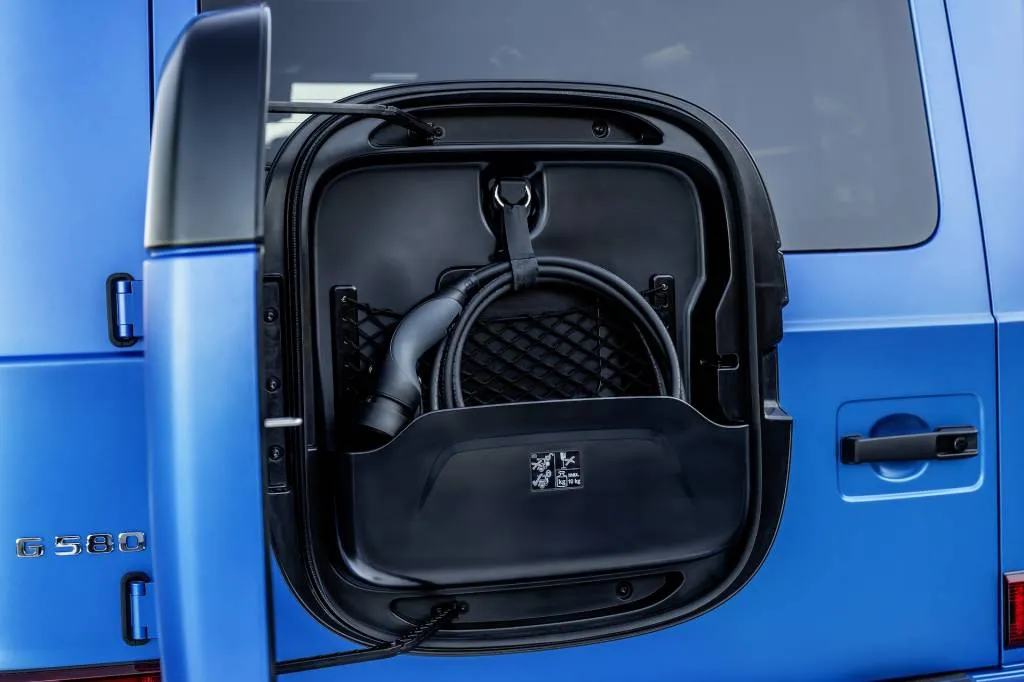
2025 Mercedes-Benz G 580 with EQ Technology
Electric G-Class reaches for range
Benz quotes the G-EV’s WLTP range at 434-473 miles, which likely means about 250 miles on the EPA cycle, but official numbers haven’t been divulged. With a 200-kw maximum charging rate, it could take just over a half-hour to fast-charge it to 80%, based on its European specs.
Recuperation of some energy gets overseen by paddle-controlled modes. The default of Auto dials in regen according to vehicle speed, cornering angle, and other factors, while a D+ allows for more sailing. In the other direction, Normal and D- and D– modes crank up the regeneration, but it’s unclear whether the G 580 EQ offers one-pedal driving.
As for ride and handling, the vehicle pairs a double-wishbone front suspension with a DeDion rear axle, while adding the new electrohydraulic adaptive damping system that’s also new to the ICE G this year. The brakes are hydraulic-assist, the G EQ rides on 265/60R18 tires, and in default modes, it has a very SUV-like turning radius of 44.6 feet. That’s before enabling its trick steering modes including G-Turn, which has met with some controversy. Rivian’s similar Tank Turn feature was canceled due to environmental concerns. The GMC Hummer EV and the related Sierra EV have a CrabWalk setup for diagonal driving.
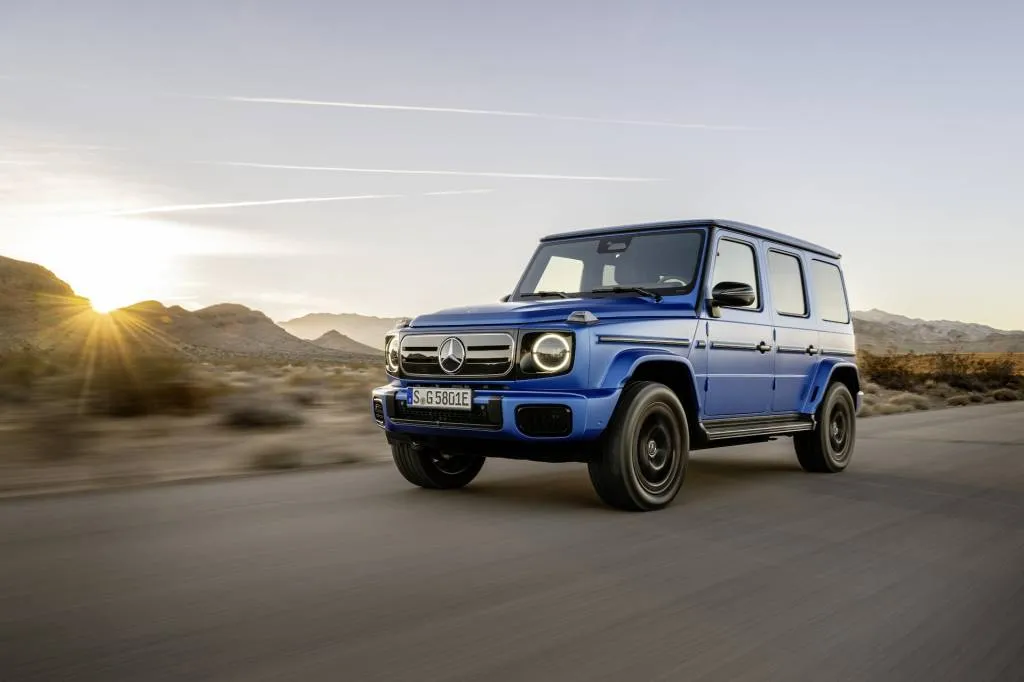
2025 Mercedes-Benz G 580 with EQ Technology
G-Class with EQ Technology: Looks about right
About seven inches shorter than the 2024 model-year ICE G-Class, the G-Class EQ is otherwise very close in style. It sports a black-panel “grille,” a higher hood line, flares on the rear fenders that act as air curtains, and a small spoiler at the top of the windshield to smooth air flow.
Riding on a 113.8-inch wheelbase, at 182.0 inches long, 76.0 inches wide, and 78.2 inches tall, the G EQ ladles on the electronica among its usual power features, open-pore wood and leather trim, and ambient lighting. It lights up a 12.3-inch digital gauge cluster and a 12.3-inch touchscreen for infotainment, with standard Apple CarPlay and Android Auto. Standard safety features include adaptive cruise control, active lane control, active steering with blind-spot monitors, and automatic parking. Its available surround-view camera system generates stitched-together views that show the area directly around the vehicle for picking around trails. Burmester sound, twin 11.6-inch rear-seat displays, a dashcam, and a wireless charging pad are available, as are 20-inch wheels, running boards, and a package that lights the star logo, the model name, and the EQ badge.
The electric G-Class arrives at dealers late this year. Prices have not been announced, but think big. In Euros, the standard G 580 with EQ Technology costs more than $150,000, and the Edition One costs more than $200,000.


Study: Tesla leads with lowest ownership cost, beats Toyota
Teslas are less expensive to maintain than other car brands, including some with strong reputations for reliability, according to Consumer Reports.
As part of its 2023 Annual Auto Surveys, Consumer Reports asked owners how much they paid out of pocket for maintenance costs like oil changes over the previous 12 months. Researchers then compared cumulative costs by brand for years one through five and years six through 10 of ownership.
Tesla had the lowest reported maintenance costs, averaging $580 for the first five years of ownership and $3,455 for the sixth through 10th years of ownership, for a total 10-year cost of $4,035. The higher cost for maintenance for years six through 10 was typical of brands surveyed, as new cars generally have fewer maintenance needs, as well as warranties that supplement out-of-pocket spending.
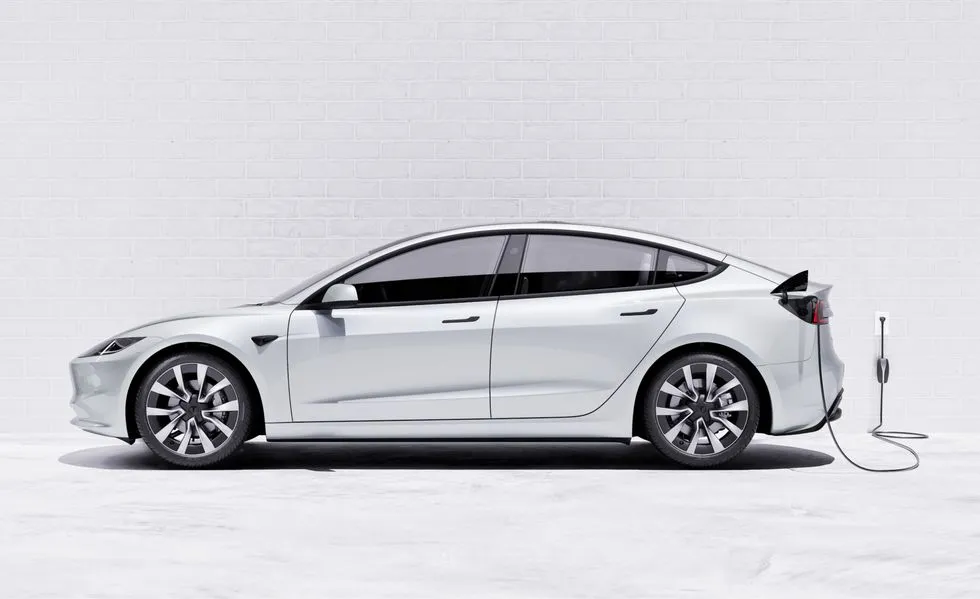
Tesla Model 3 (Europe-market refresh)
Tesla was well ahead of second-place Buick, which had average maintenance costs of $900 for the first five years of ownership and $4,000 for the following five years, totaling $4,900. Toyota, which is emphasizing hybrids in its lineup and is widely perceived to have very low operating costs, was even further back in third place. Its 10-year ownership-cost average was the same $4,900 as Buick, but with a higher cost of $1,125 for the first five years of ownership and $3,775 for the following five years.
The costliest brands were Land Rover, at $19,250 over 10 years, Porsche ($14,090), and Mercedes-Benz ($10,525). Consumer Reports did not provide any analysis for these findings, but Tesla was the only brand surveyed with an all-EV lineup—and previous studies have shown EVs to have substantially lower ownership costs.
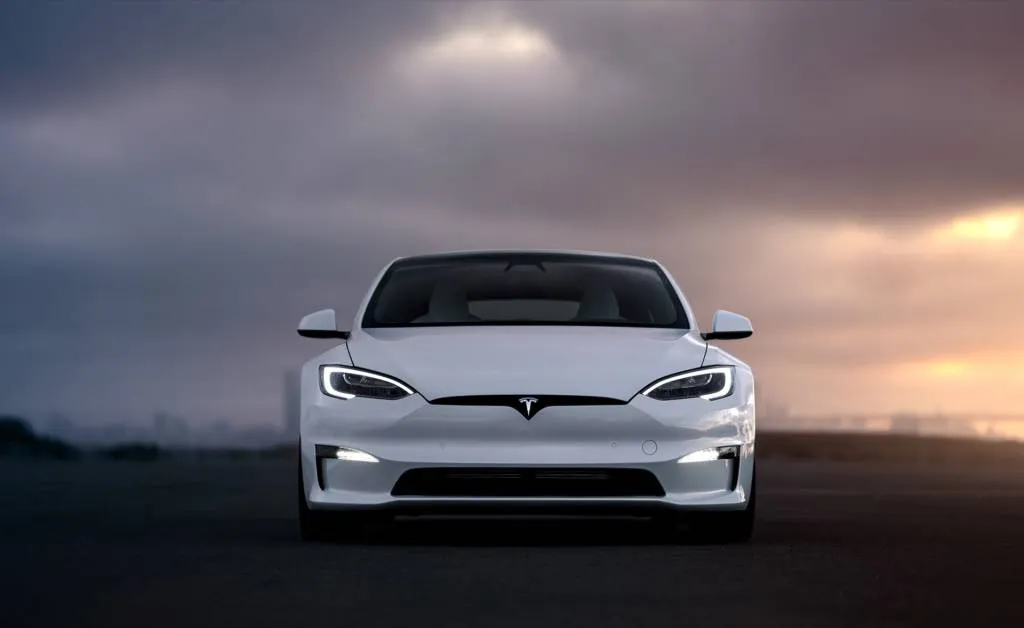
2024 Tesla Model S. – Courtesy of Tesla, Inc.
A recent Vincentric analysis found that half of 2024 EVs have a lower five-year ownership cost vs. internal-combustion. While those figures include depreciation, which has been high as of late, in fairer times and not including that factor, gas vehicles cost up to six times more than EVs over a period of years—depending on the region—another analysis found. And while electricity prices are relatively predictable, if not stable, over time, a spike in gas prices could negatively affect gas-vehicle operating costs in a big way.
Maintenance costs are only one factor, though. A 2023 Ipsos study found that cost misconceptions may be behind waning EV interest, with many respondents showing concern over battery-pack lifecycles and replacement costs.

Tesla prices; in-wheel motor Land Rover; airless tires, robotaxis, Autopia: Today’s Car News
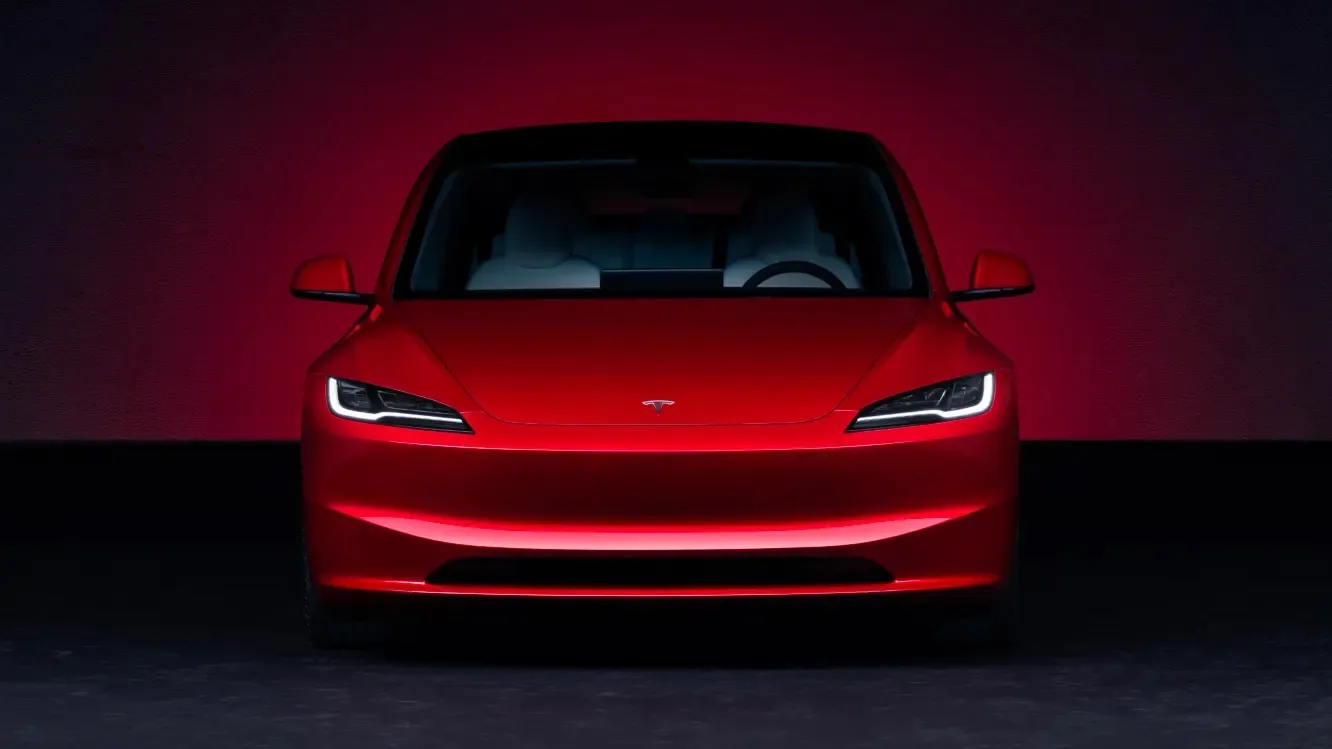
Tesla cuts prices nearly across the board and appears to be pushing more people into Full Self Driving. Disney is making a popular automotive ride all-electric. Airless tires look like the future. And do in-wheel motors make more sense for EV conversions? This and more, here at Green Car Reports.
The Tesla Model Y undercuts the Model 3 by $5,000—for those who are EV tax credit eligible—under the latest round of Tesla price cuts made on Saturday. With it, the base Model Y rear-wheel drive could cost just $37,130, with other state incentives yet to be deducted. Tesla has also dropped the price of what it calls Full Self Driving to $8,000, but it’s eliminated the popular $6,000 Enhanced Autopilot option.
Michelin believes that airless tires are the future. But with this tech that could be especially well-suited for robotaxis, EVs, and more still under development and at the prototype stage, the company is also focusing on other tech like sustainable materials and retreads.
The U.K.-based company that now owns Protean in-wheel motors has showcased a Land Rover Defender EV conversion that doesn’t gain weight in the translation. Although it’s modest in its electric range, the idea acts as a technology proof point and, perhaps, a lot more.
Disneyland has now confirmed that its Autopia ride will go fully electric in 2026. The attraction for kids, started with sponsorship by an oil company, has run for decades with internal combustion mini-cars, but it’s supposed to represent the future.
_________________________________

Tesla price cut: Model Y undercuts Model 3 by $5,000 with tax credit
Tesla on Saturday once again cut prices on several of its models for the U.S. market, as part of around-the-world price cuts. Given the cuts, anyone considering the Model 3 and Model Y in the U.S. may want to take a fresh look at the numbers.
The base price of the Model Y rear-wheel drive has dropped $2,000 versus last week, to $44,630, while the Model Y Long Range AWD price has dropped by the same amount to $49,630. Both are eligible for the $7,500 EV tax credit, cutting the effective price for many households to just $37,130 and $42,130 respectively.
The Model 3 didn’t get a corresponding price cut and, as of Monday morning, retains its pricing at $42,130 for the base RWD Model 3 and $49,380 for the Model 3 Long Range AWD. The Model 3 also doesn’t qualify for the EV tax credit.
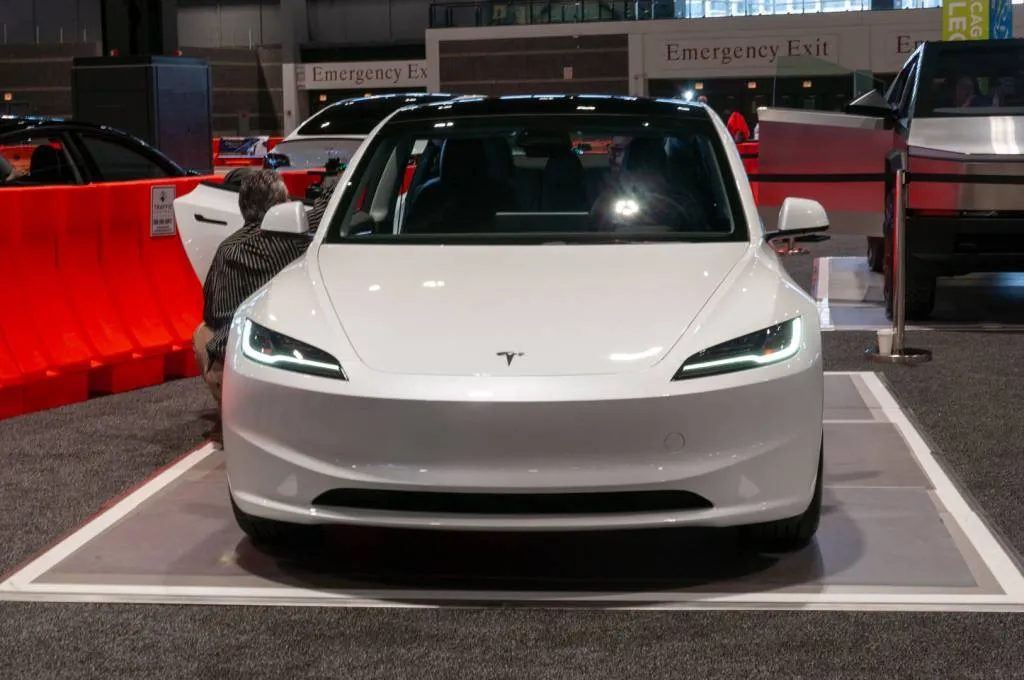
Tesla Model 3
So Americans in an income bracket that qualifies them for the federal EV tax credit—that’s a modified adjusted gross income (MAGI) limitation of $300,000 for married couples filing jointly, $225,000 for head of household, or $150,000 for other filers—can get the Model Y Long Range AWD for the same price as the base Model 3 RWD. In addition, the base Model Y RWD now undercuts the base Model 3 by $5,000 for the tax-credit-eligible.
Production facilities and Tesla’s anticipation of higher production volume for the Model Y might also be playing a role in this pricing move. The Model Y is currently the top-selling EV—and passenger vehicle, in the world; it’s produced for America at both the Fremont, California, factory and in Austin, Texas, while the Model 3 is only made for the U.S. at Fremont.
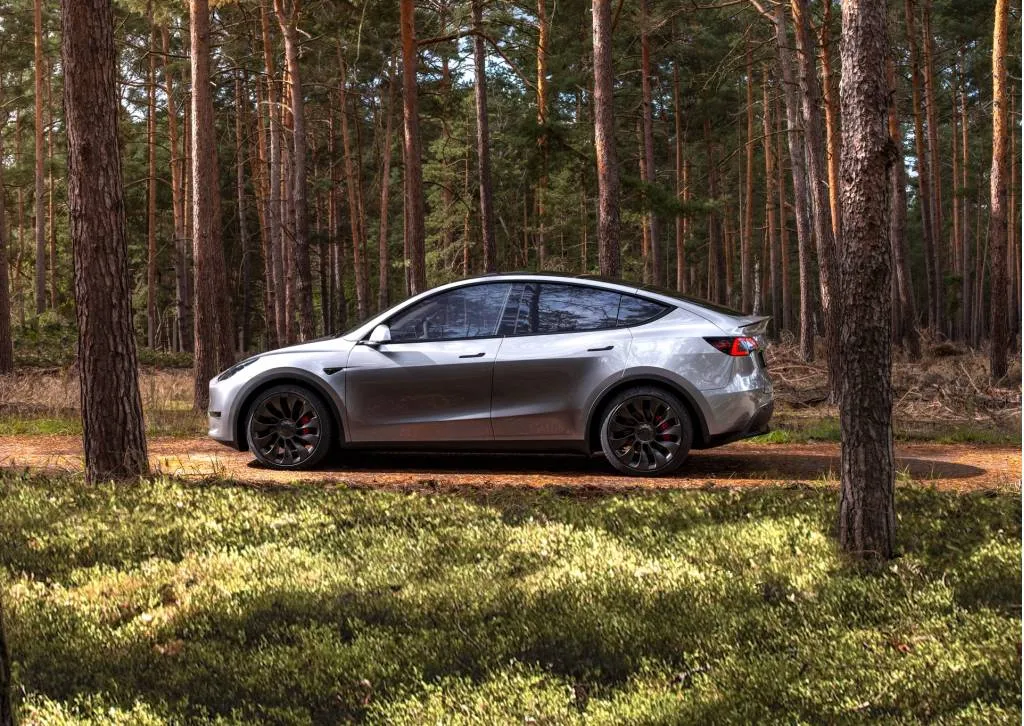
2024 Tesla Model Y. – Courtesy of Tesla, Inc.
Prices of the Model S and Model X also dropped as part of the cuts, by $2,000 in both cases. Tesla has also dropped the price of its so-called Full Self Driving package to $8,000, from $12,000 (and $15,000 until recently), eliminating the $6,000 Enhanced Autopilot option that was necessary for adaptive cruise control functionality paired with steering assist.
“Your car will be able to drive itself almost anywhere with minimal driver intervention,” Tesla currently touts as part of its explanation for FSD.
The company has typically dropped prices toward the end of a respective quarter, so the timing is a bit odd. The first quarter of 2024 was Tesla’s worst for sales since pandemic shutdowns. Its quarterly call is Tuesday, April 23, so this might be a proactive (and pre-emptive) move from Tesla management, including CEO Elon Musk, to spark interest.
Note: Green Car Reports always includes mandatory fees when possible, and from here on it’s including Tesla’s $250 “order fee”—for lack of a reasonable way to avoid the fee.

Airless tires look like the future for robotaxis, EVs, and more
Michelin built its name on tires that ride on a cushion of air. But the top tire-maker in the world sees the future as completely airless.
“We are convinced at Michelin that airless is the future technology that is necessary for many reasons,” Cyrille Roget, the company’s director of scientific and technical communications, said to Green Car Reports at a recent event that emphasized sustainability and EVs.
One of those reasons, he explained, is that globally about 20% of tires are taken out of service prematurely due to sidewall damage or a puncture. With around 1.6 billion tires annually reaching the end of their service life each year, that adds up to about 320 million tires annually “that potentially could have been saved by airless technology,” Roget said.
“It’s a technology that really is useful in our approach of sustainability, because it saves material and it saves time,” he explained. And with less material and less overall manufacturing time invested, it’s likely to wear a lower lifetime carbon footprint—an aspect that automakers are especially aware of with EVs.
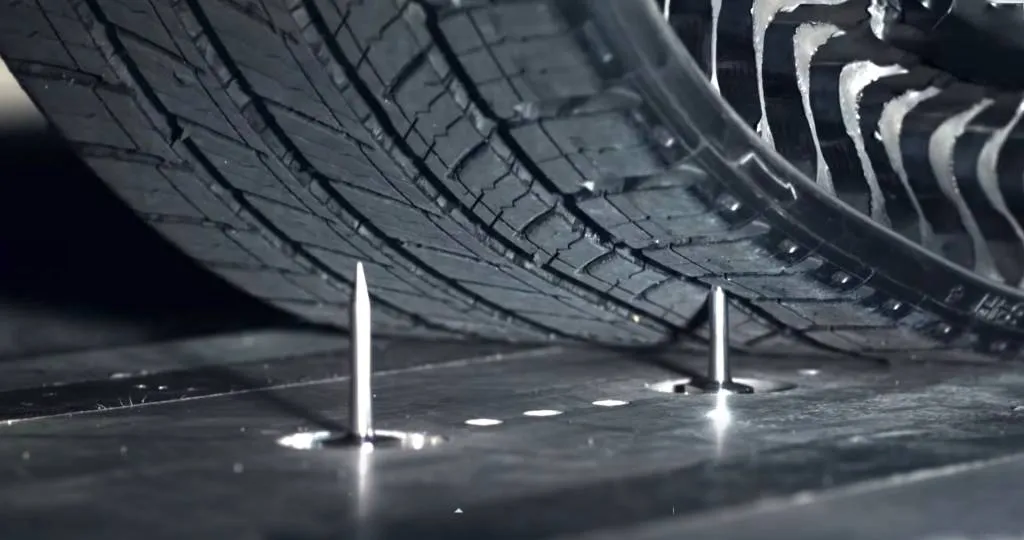
Michelin Uptis airless tires
No flats, no blowouts, no pressure checks
Michelin’s prototype airless tire line, Uptis (Unique Puncture-proof Tire System), may have been conceived to have less impact on the environment, but as the name origin suggests it has other big advantages. Although the tires weigh slightly more than standard air-filled tires, vehicles don’t need to be equipped with spares, jacks, repair kits, or tire-pressure sensors. From a safety standpoint, it avoids flats and blowouts and assures consistency in ride and handling in a way that air-filled tires might not.
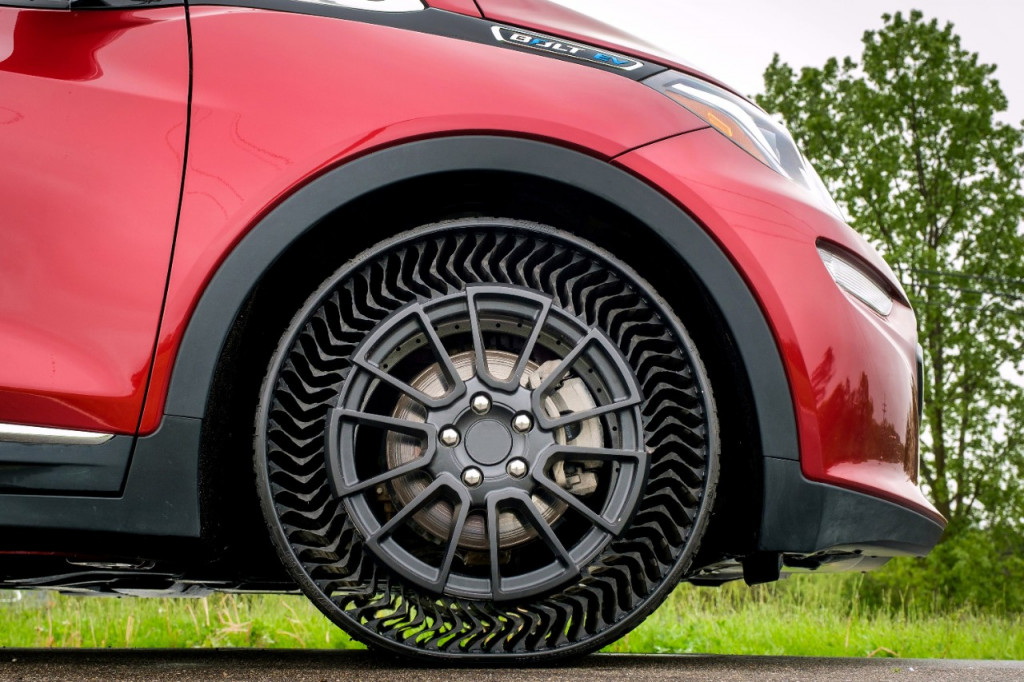
GM, Michelin Uptis airless tire prototype
As Michelin has outlined before, it thinks airless is a perfect fit for EVs and their greater curb weights, as well as autonomous vehicles, ride-hailing, or other technology or services that need to be up and running all the time.
At one point it looked like airless tires might be ready for the road surprisingly soon. In 2019, with the introduction of Uptis, Michelin and GM announced that the automaker would be testing it on the Chevy Bolt EV. GM was bullish on its Cruise autonomous-vehicle unit at that time, and it was suggested by the companies that original-equipment airless tires might debut on a 2024 GM EV. Neither company has responded to Green Car Reports with takeaways of that test.
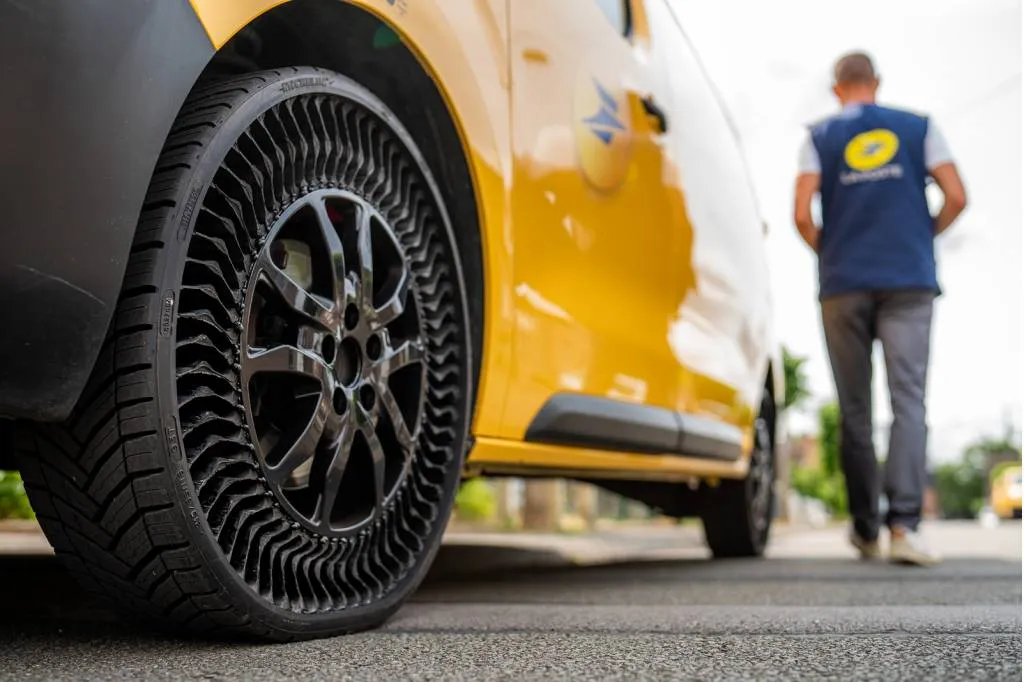
Michelin Uptis airless tire on French postal van
Tests in delivery fleets, talks with Tesla
But more tests continue on this tech, which the company describes as being at the prototype stage. In 2023, Michelin announced Uptis real-world trials with both DHL Express in Singapore, and with La Poste, the French postal service. They’re fitting about 50 vehicles in each of those fleets with Uptis tires, Roget explained, and the idea will be to capture as much data as possible.
Michelin needs all that data, because despite its more than 130 years making pneumatic tires, airless tires bring new challenges.
“Airless technology is completely new in terms of design, in terms of production, in terms of homologation, so we have to learn everything,” Roget summed. “And that’s why we have those two years that we will test with DHL and Le Poste to the end of 2025.”
At that same time Michelin confirmed it has been in talks with Tesla about testing Uptis. So along with wireless EV charging, it might be another ideal hands-off technology fit for future Tesla Robotaxis.
Roget notes that Uptis remains in prototype form and technically isn’t homologated for on-the-road use, but Michelin has an exception to be able to place them in test use.
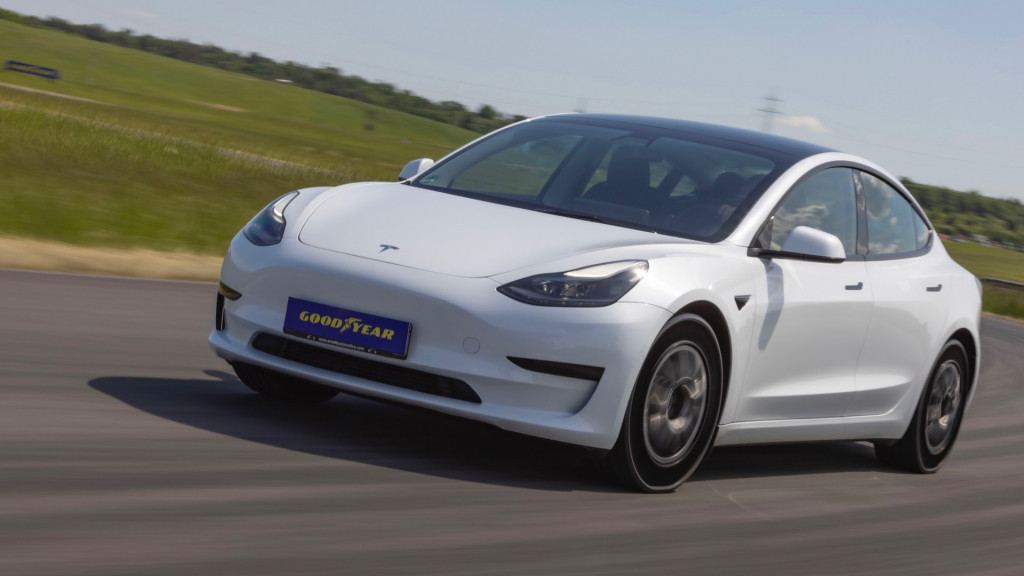
Tesla Model 3 with prototype Goodyear airless tires
There have been other attempts at airless tire designs. Hankook and Bridgestone are among the several others that have presented airless tire concepts, and Goodyear has a prototype. Toyota and the tire maker Sumitomo debuted weight-saving airless tires combined with in-wheel motors in a 2017 concept, noting then that it needed to make progress in cutting rolling resistance, which was still higher than inflated designs at the time. Then it showed what appeared to be an evolution of the tires in its 2023 Lunar Cruiser EV concept.
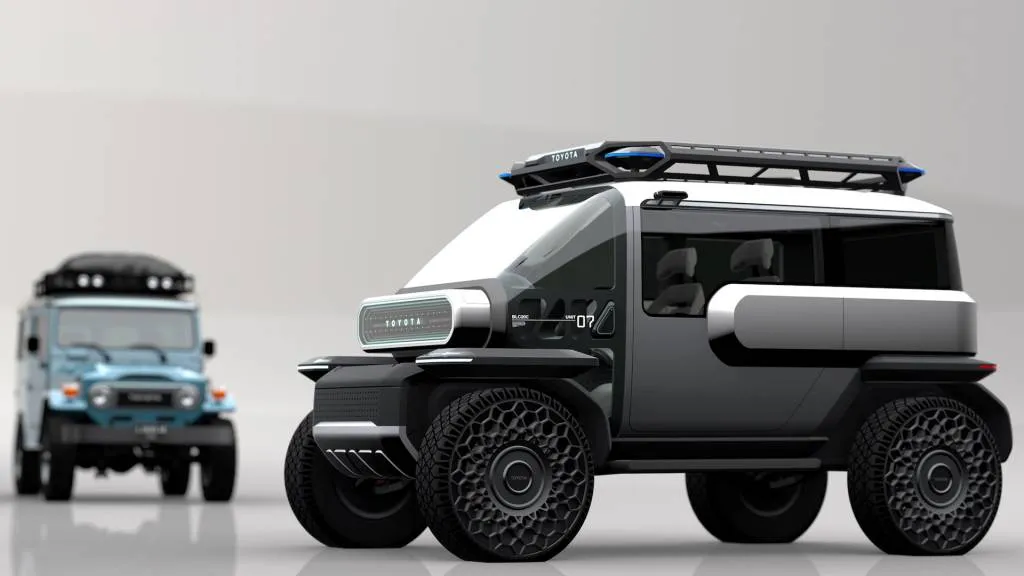
Toyota Baby Lunar Cruiser concept
But Michelin boasts that it’s the “only manufacturer in the world to run an airless tire on open roads under real-world conditions as part of commercial contracts.” The company also says the tires are “currently fitted on a fleet of vehicles in Las Vegas and Thailand” with clients the company isn’t disclosing.
In the meantime, Michelin has worked on a new material within the tires, incorporating fiberglass, that can reach a level of performance very close to other modern tires. The tech has been tested internally at Michelin and has covered more than two million miles, according to the company—and, as an executive said last year, at up to 130 mph with police use in mind.
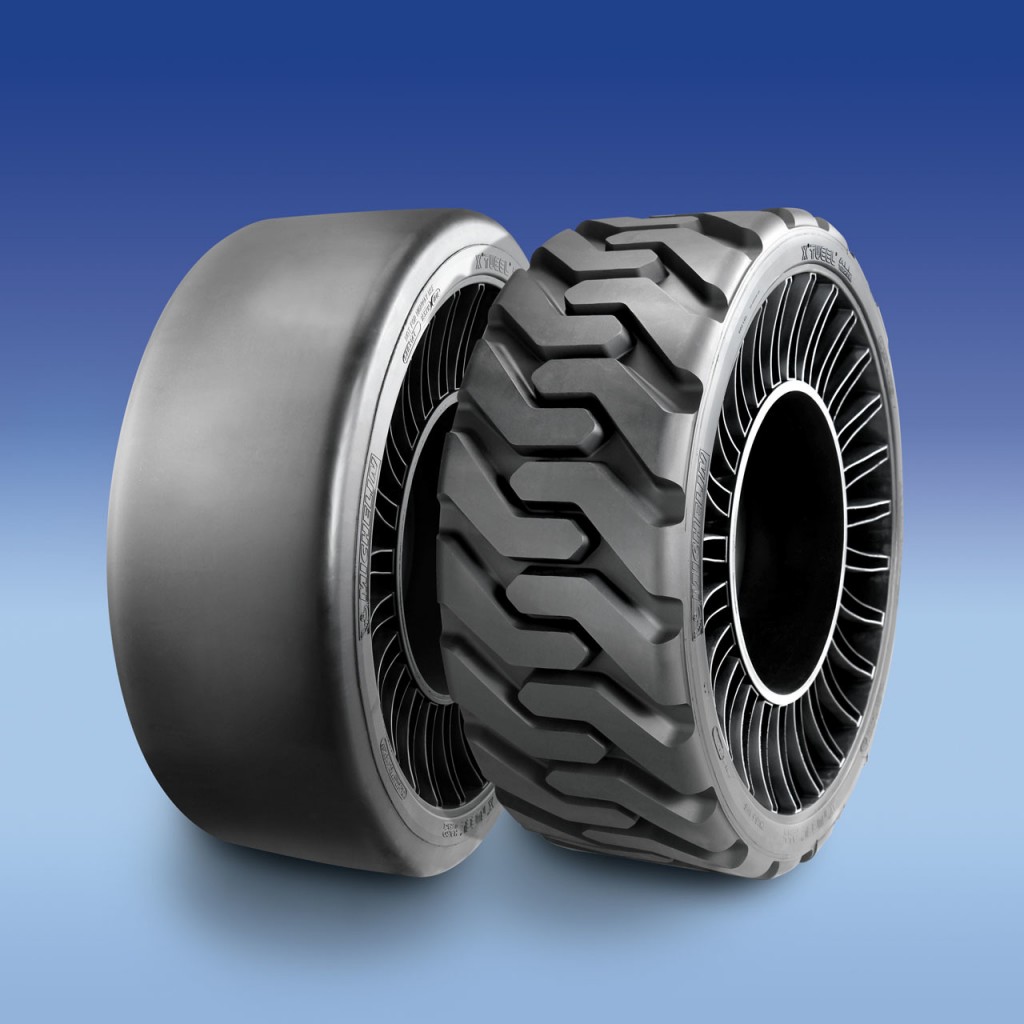
Michelin tweel
Building on Tweel
Uptis isn’t Michelin’s first or only airless technology. It introduced Tweel (tire plus wheel) as a concept in 2005 and made it commercially available for specific low-speed applications starting in 2012, and they’re now used in a range of things from riding mowers to industrial equipment.
Michelin’s South Carolina facility was the first facility in the world to build Tweel, and the concept was born in the company’s Greenville research center, so it’s fitting that location hosts both global development of airless tires and production of the pilot-production tires to be tested.
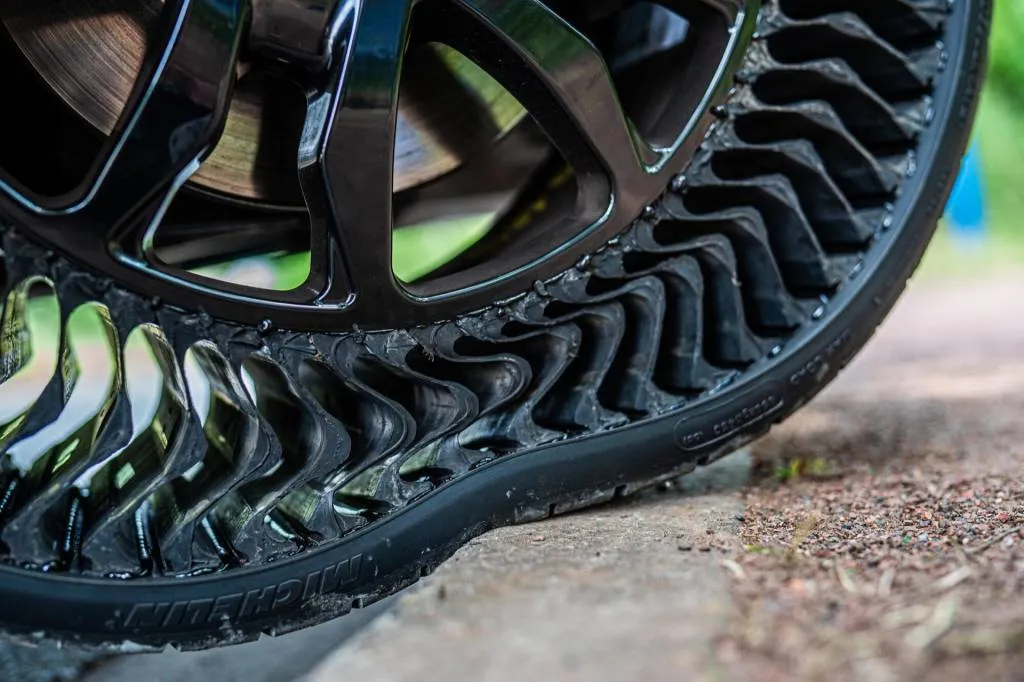
Michelin Uptis airless prototype tires
While airless might not be prevalent for decades, Michelin is also working on a number of other more sustainable solutions, especially for EVs that wear through tires much quicker. One of those is greener, EV-specific tires with greatly increased sustainable materials—42% or more in a prototype recently presented and due by 2025. It’s also hoping to revive the popularity of retreads with a reboot of the tech for trucks, allowing up to five retreads while reusing the tires’ carbon-intensive structure.
Whether with Uptis, Tweel, retreads, or sustainable-material tires, these solutions all make smarter use of the materials and processes needed to make these wearable items we rely on every day. And that’s certainly not just hot air.

Land Rover EV conversion packs in-wheel motors, weighs same as original
U.K.-based Bedeo is launching a Land Rover Defender EV conversion based around in-wheel motors from Bedeo-owned Protean Electric.
The Defender is the first in a series of “Reborn Electric: Icons” conversions, according to a Bedeo press release. The program will expand the company beyond its current business of electric van conversions to the burgeoning cottage industry of electrified classic cars—and, perhaps, to more contracts to supply its in-wheel motor tech.
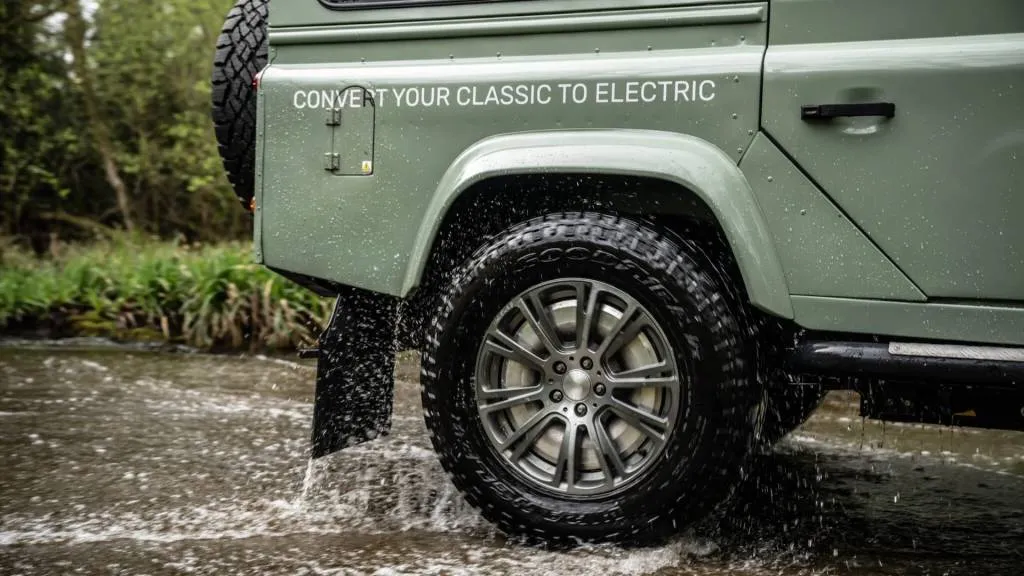
Land Rover Defender EV conversion by Protean
The first completed Defender EV has a 75-kwh battery pack affording 153 miles of WLTP range—likely in the vicinity of just 110 to 125 miles if it were to be run in EPA-cycle tests. A standard 22-kw AC onboard charger can recharge the pack in an estimated five hours, while optional DC fast charging can do the same in 90 minutes (likely less time for the more typical 80% charge).
Bedeo claims it’s “committed” to maintaining the original curb weight and driving dynamics with each of these builds, achieved in part through “the advantages of weight reduction and engineering enhancements” of in-wheel motors. The company didn’t reveal the curb weight of this example.
While numerous companies and DIYers are already converting older internal-combustion vehicles to electric power, Bedeo also claims to be the first to use in-wheel motors in such a conversion.
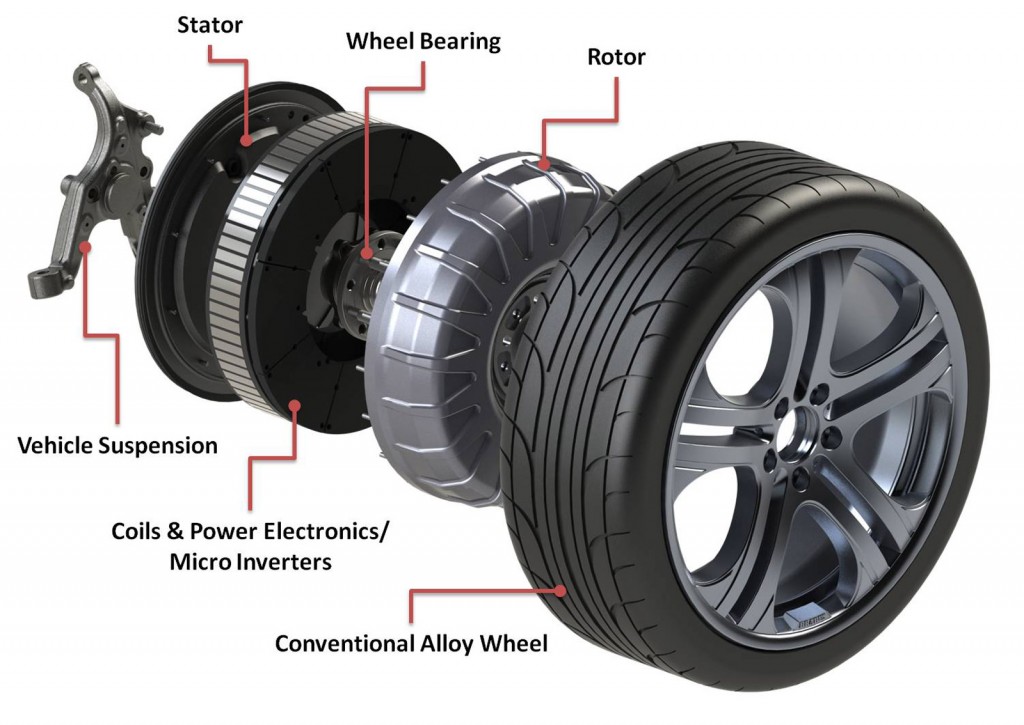
Protean in-wheel electric motor
Protean has had a production in-wheel motor for more than a decade. Prior to its current U.K. ownership, the now-defunct Chinese-funded automaker NEVS, which had been reworking some of Saab’s assets, bought Protean in 2019.
Since then, Dongfeng, a Chinese automaker with a Volkswagen joint venture, has sourced Protean motors for its Fengshen E70 sedan. Dongfeng claims to have the world’s first passenger car to be homologated for sale with in-wheel motors, but the Lordstown Endurance pickup truck previously used them as well, sourced from Elaphe. Very few Endurance trucks were built, however.