
Category: General


Mazda applies its design flair to China with EZ-6 electric sedan
An electrified successor to the Mazda 6 mid-size sedan goes on sale in China later this year, but prospects for the U.S. are unclear.
Unveiled at the 2024 Beijing auto show, the Mazda EZ-6 combines the Japanese automaker’s signature design flair with powertrain tech from Changan Automobile, Mazda’s Chinese partner. Mazda hasn’t confirmed sales plans for other markets.
The rear-wheel drive EZ-6 will be available with plug-in hybrid and all-electric powertrains, with the latter delivering an ideal 50/50 front/rear weight distribution and a maximum range of 373 miles, as measured on the Chinese testing cycle. Mazda also estimates 621 miles of total range from both a full battery and a single tank of fuel for the plug-in hybrid.
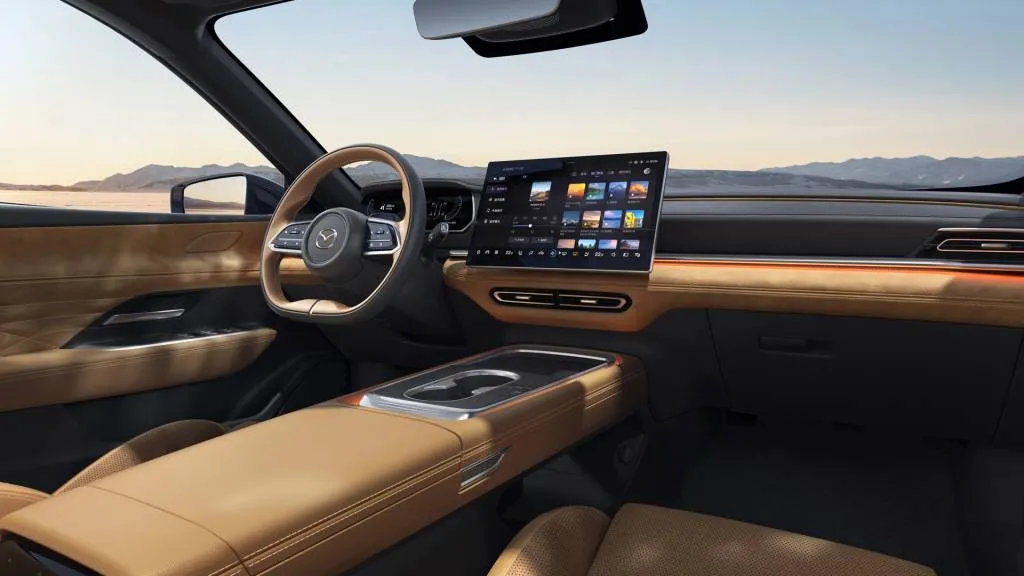
2025 Mazda EZ-6
The EZ-6 measures 193.7 inches long, making it about 4.5 inches longer than the last Mazda 6, which left the U.S. market after the 2021 model year. While Mazda touted the efficiency of the final-generation model’s Skyactiv internal-combustion engines, it was never available with electrified powertrains.
Mazda didn’t discuss other specifications, but confirmed that Changan is responsible for the EZ-6’s powertrains and connectivity tech. Such tech includes gesture controls and voice recognition, supplementing a large horizontal infotainment touchscreen.
The Chinese focus of the EZ-6 means Mazda’s electrification plans for the U.S. remain hard to parse.
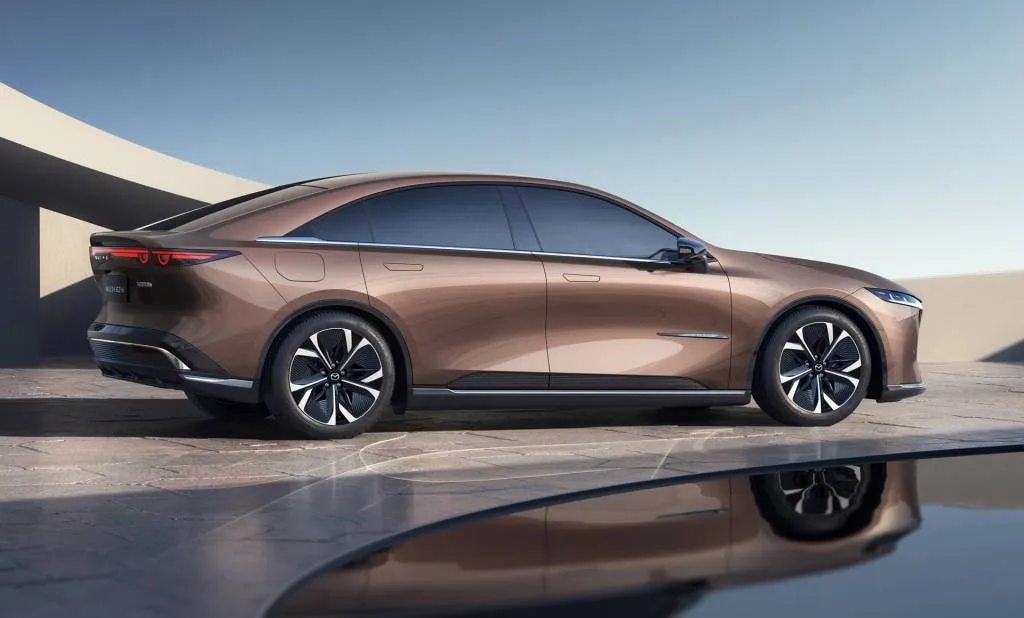
2025 Mazda EZ-6
Mazda created the MX-30 EV for the U.S. (and Europe) as a shorter-range EV with an available range-extended rotary version, reflecting corporate thinking that longer-range EVs aren’t the future. But it’s already cut those models from the lineup. It might be just as well, as the range-extended version in particular was a plug-in puzzle that didn’t make a lot of sense for real-world use.
Mazda and Panasonic last year finalized an agreement for cylindrical EV batteries, and Mazda also showed the Iconic SP hybrid concept, which traded heavily on the heritage of the rotary-engine RX-7 sports car. But plug-in hybrids aside, all of this chatter hasn’t led to any actual electrified models for the U.S.

Toyota confirms second 3-row electric SUV for US production
Toyota announced on Thursday that it plans to build a new three-row battery-electric SUV in Princeton, Indiana, with a corresponding $1.4 billion investment in the plant.
The company emphasizes that this announcement comes in addition to the recent $1.3 billion investment in the automaker’s Kentucky plant, to build a separate three-row battery-electric SUV, starting in 2025.
In other words, yes, Toyota will have two different three-row electric SUVs. A report from earlier this month pegged one of those EVs as a fully electric Toyota Highlander EV—with a potential Lexus TZ sibling. A Thursday report from Automotive News suggests that with this vehicle due for Indiana in 2026, the Kentucky plant’s EV due for production in 2025 might be a Toyota bZ5X.
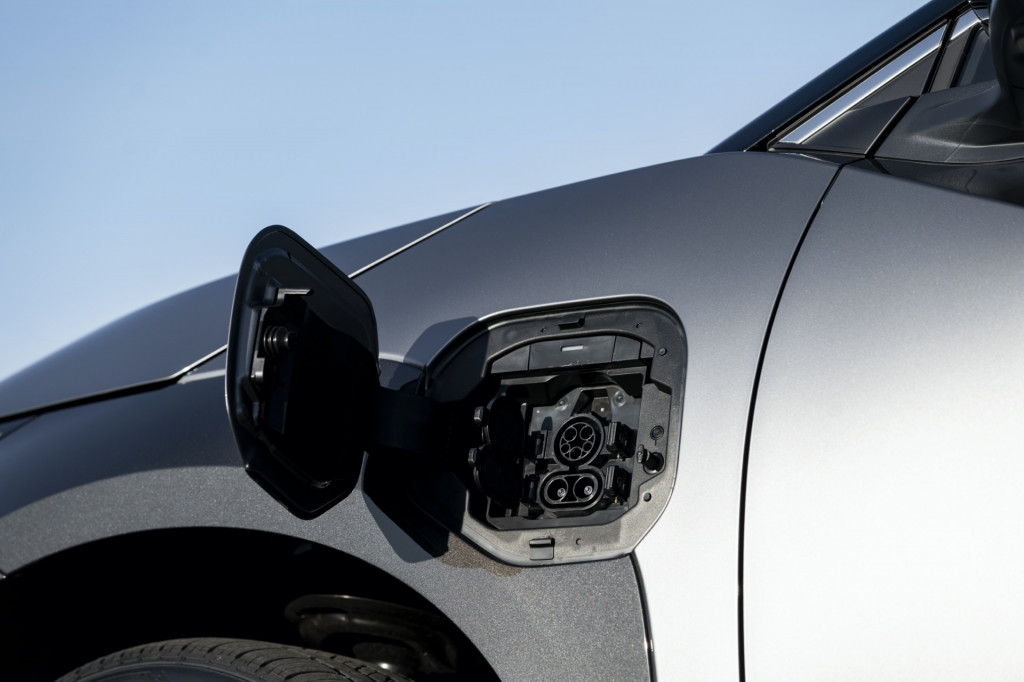
2023 Toyota bZ4X Limited AWD
Reports have suggested that Toyota is having second thoughts about the bZ nomenclature for EVs, and as such it’s unclear which of these two SUVs—the Highlander EV or bZ5X—would be the more premium one, or how they might coexist.
The best hint of the latter vehicle came in May 2023, when Toyota said that its 2026 EVs would be built on three different platforms—a software platform, an electronic platform, and a body and chassis platform. Toyota also said then that it was completely rethinking the manufacturing process for EVs. So it’s possible the Kentucky EV could represent all of these advancements while, as Automotive News points out—seemingly agreeing with this alignment—the Indiana EV will be a “chassis-based” one sharing components with gasoline models.
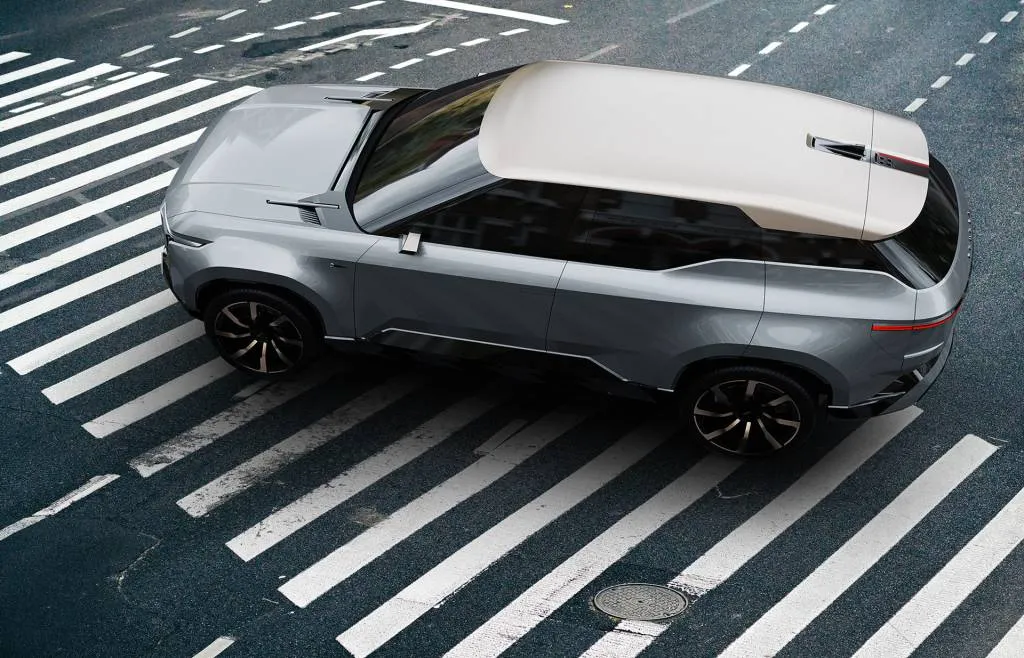
Toyota Land Cruiser Se concept
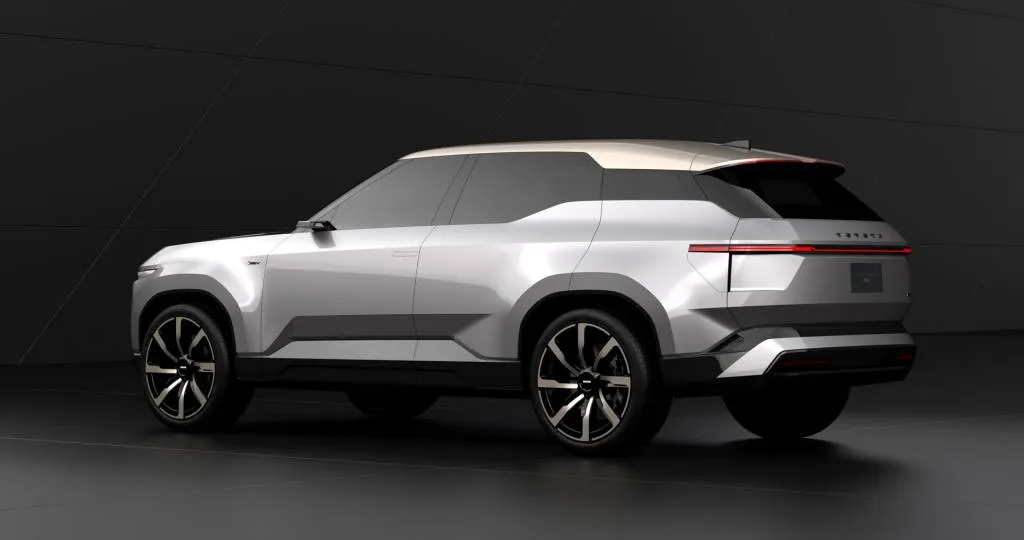
Toyota Land Cruiser Se concept
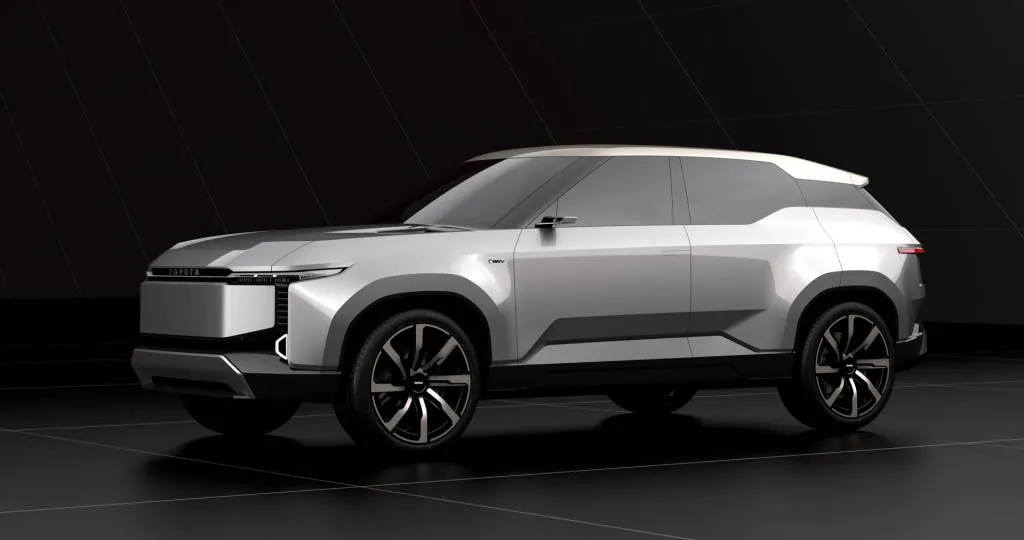
Toyota Land Cruiser Se concept
So the big Land Cruiser Se concept shown at Tokyo in October 2023 might be pushed toward Kentucky production, with a somewhat smaller Highlander EV to follow in Indiana.
In May 2023, Toyota said that it planned to launch 10 new EVs, ranging from luxury vehicles to compact cars and commercial vehicles, “mainly in the United States and China,” by 2026. That would help Toyota reach what it called a 1.5-million-EV “baseline” in 2026.
With Thursday’s announcement, the automaker will also add a new battery pack assembly to its $13.9 billion battery facility in North Carolina, due to start production in 2025 for a range of electrified vehicles. According to Toyota, the Indiana EV announcement itself adds up to “340 new, sustainable U.S. jobs.”
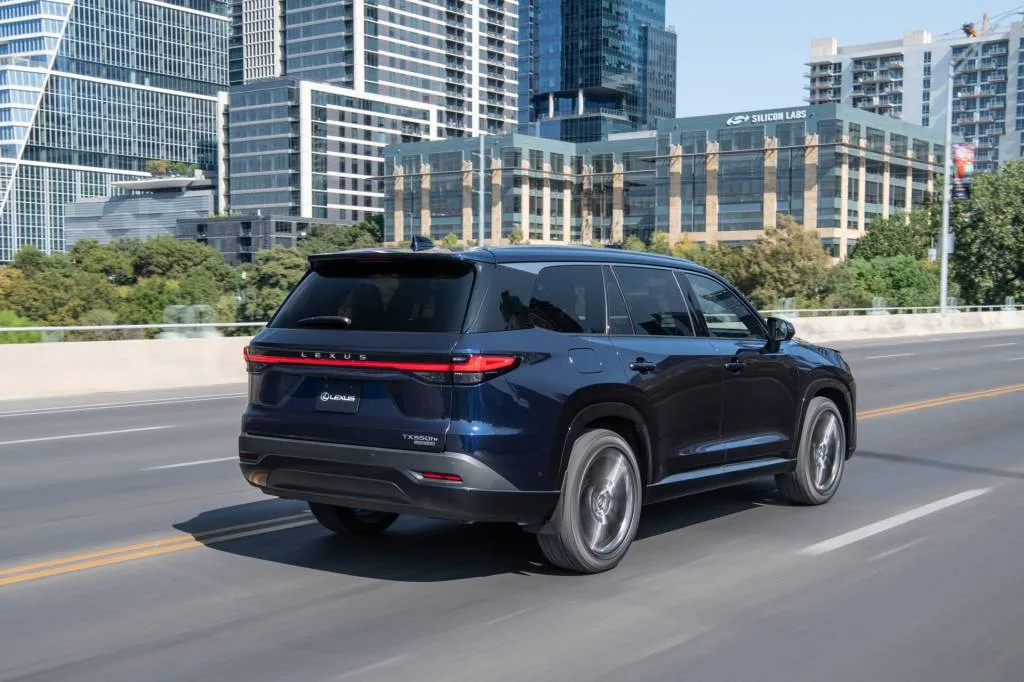
2024 Lexus TX 550h+ plug-in hybrid
As Toyota points out, the Indiana plant already employs 7,500 workers and makes the Toyota Sienna hybrid minivan, Toyota Highlander and Grand Highlander SUVs, which are offered in hybrid and non-hybrid versions. It also makes the Lexus TX, which is offered in standard, hybrid, and TX 550h+ plug-in hybrid variants.

Mini Aceman EV, GM home-backup hardware, 2024 EV sales to climb: Today’s Car News
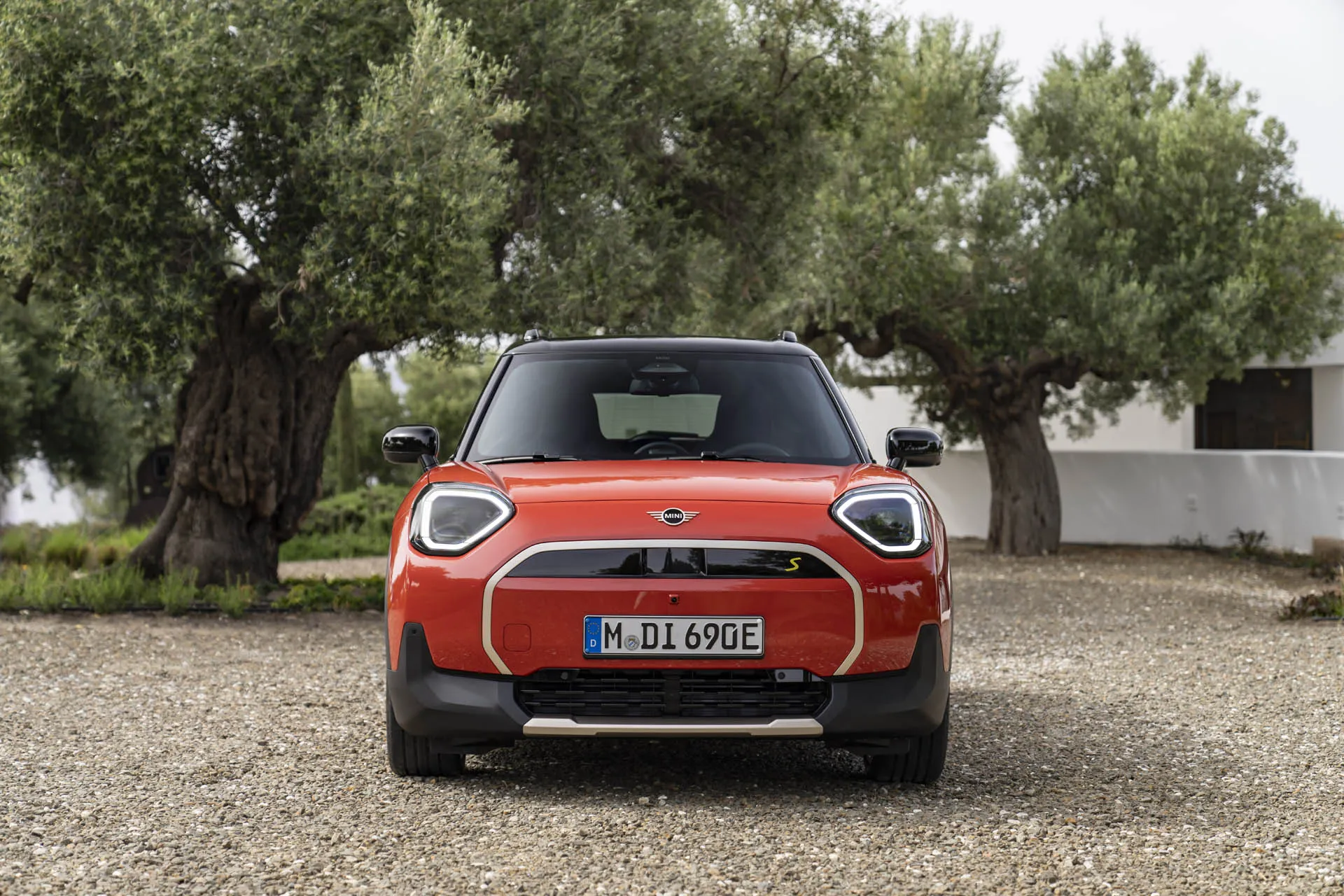
GM reveals more about what will turn its EVs into backup power for the home. Mini shows its Aceman EV. And EV sales are set to make gains in the U.S. and globally in 2024. This and more, here at Green Car Reports.
The Mini Aceman urban EV has been revealed, and it quite closely follows the 2022 concept car of the same name. If this model arrives in the U.S., it would fit between the Cooper and Countryman in the brand’s lineup.
GM this past week released details regarding the home energy backup functionality that’s available for its Chevy Silverado EV RST electric pickup as vehicle-to-home (V2H). Does it make sense versus other EVs claiming this skill set—or home battery systems like the Tesla Powerwall?
According to the International Energy Agency, in an annual report and forecast out this week, EVs are set for 11% of the U.S. vehicle share, and about 20% of all cars sold globally. Because of all the battery investment, automaker commitments, and emissions regulations, half of new vehicles sold globally could be EVs, it says.
_________________________________

Does EV home-backup capability outmode the Tesla Powerwall?
GM last week announced details regarding its vehicle-to-home (V2H) system, set to launch with the Chevrolet Silverado EV RST, that will help EV owners back up their home without the help of a storage battery like a Tesla Powerwall or a backup generator.
It’s ultimately part of GM’s big energy play that sees EVs becoming home power banks and more. Trucks like the Silverado EV are literally huge mobile battery packs, with this truck’s massive 205-kwh capacity the equivalent of 15 Powerwalls. Even making a small portion of the pack available should be enough to power an American home for days.
According to GM the V2H bundle will initially only be available for purchase in California, Florida, Michigan, New York, and Texas.
“We are closely tracking interest in other states and laser focused on delivering an unparalleled experience for our customers, and we will be able to share more about the availability of the products throughout the U.S. in future updates,” GM spokesperson Sanaz Marbley said to Green Car Reports.
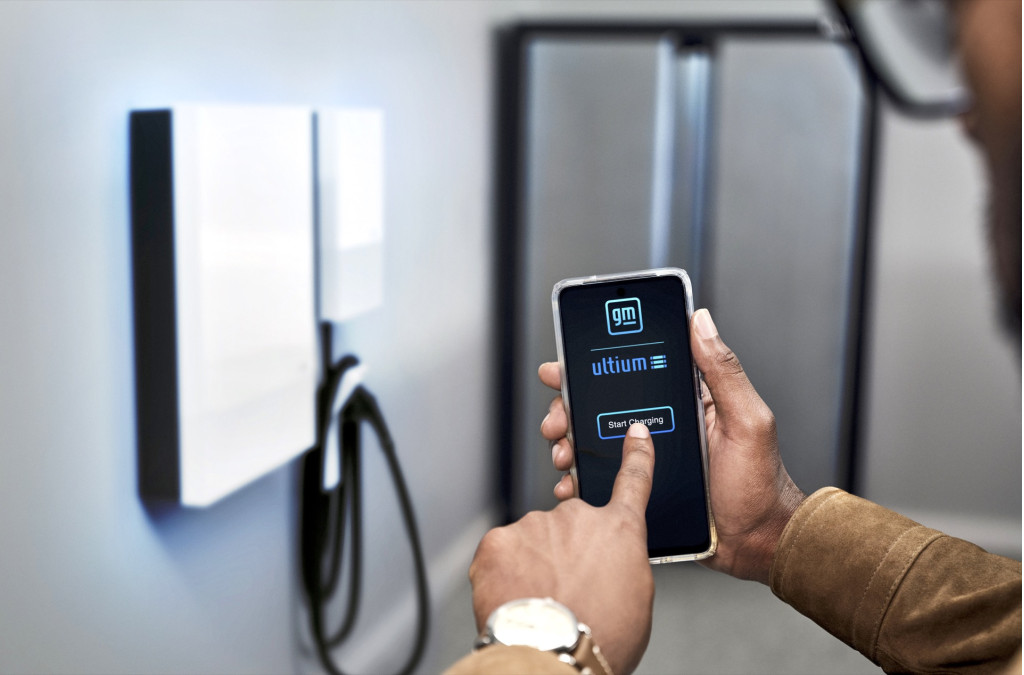
GM Energy app
The automaker has a bigger vision for the product. GM once again noted with the announcement that it plans to expand V2H bidirectional charging technology across all its Ultium-based EVs by model year 2026. It confirmed that the 2024 GMC Sierra EV Denali Edition 1, 2024 Chevrolet Blazer EV, 2024 Chevrolet Equinox EV, 2024 Cadillac Lyriq, and the future Cadillac Escalade IQ will also be part of that rollout. It’s more recently clarified that these products won’t be walled off to a GM Energy app, as previously envisioned (pictured above) but instead as part of their respective brand apps—for Chevy, GMC, or Cadillac, for instance.
In the case of the Chevy Blazer EV, GM has already confirmed that models delivered from the start have all the hardware needed for compatibility with these GM Energy components, but the software to use it won’t be in place until sometime later in the year.
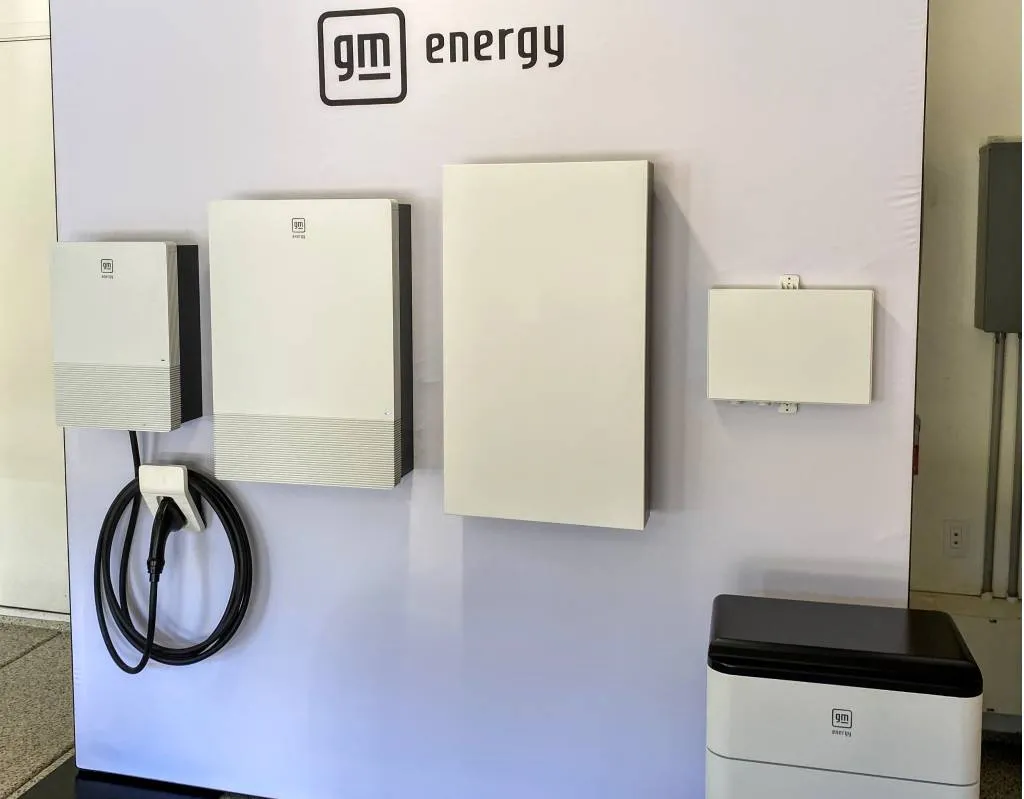
GM Energy home bundle – displayed with Chevy Blazer EV
Batteries included, other hardware needed
The GM Energy Powershift Charger that’s initially mandatory to access the vehicles’ bidirectional functionality will cost $1,699. It’s good for charging at 19.2 kw AC, while discharge power from the unit is DC and peaks at 9.6 kw.
The other necessary piece, the V2H Enablement Kit, costs $5,600 and includes an inverter, a grid disconnect switch, and the 12-volt dark-start battery necessary to move the contactors (think heavy-duty switch) in the case of a power outage. That brings the total component cost to $7,299.
For those who want it all on the GM ecosystem, GM Energy stationary energy storage and solar integration will both also be available for purchase starting later this year.
GM cautions that installation costs for the equipment are based on a number of factors, including where you live, the age of your home and electrical panel, the location of the panel, and your servicing electric utility.
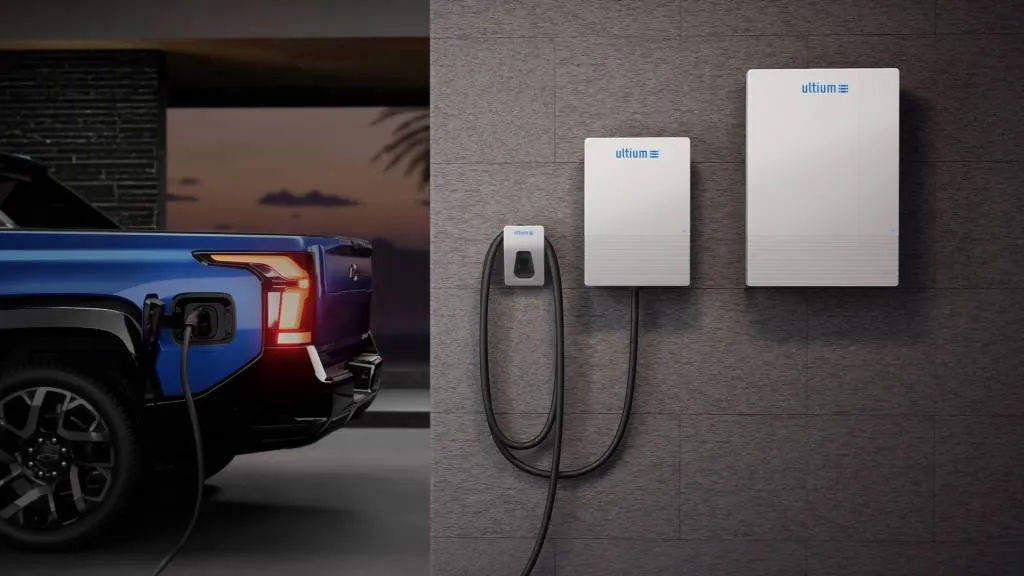
2024 Chevrolet Silverado EV with GM Ultium Home energy system
Chevy V2H: Like Ford, leave thousands for installation
GM is by no means first-on-market with this functionality, as the Ford Home Integration System has already been available for nearly two years. Working with the Charge Station Pro, which is already included with large-pack versions of the F-150 Lightning, it includes hardware that perform those same roles, allowing owners to use energy from their truck to back up the home. Tesla is also offering a Powershare feature with the Cybertruck—permitting 11.5 kw of home backup power through the charge port and claiming no additional equipment would be needed for homes already equipped with a Powerwall and its Wall Connector. Tesla points to a typical installation cost of $2,000 to $3,500 excluding the cost of the equipment, which would at minimum be an $1,800 Gateway in addition to a compatible wall connector.
Ford’s installation of the home system relies on solar provider SunRun. A page from SunRun that appears to have been updated since the original launch, now says the system costs $8,900 to $9,400 to install including the Ford Charge Station Pro, which may be a redundant piece. Ford originally told Green Car Reports that a best-case-scenario installation—not requiring a new panel or service upgrade—would cost about $6,000, including the hardware. Ford hasn’t responded about updated installation costs for the system, and based on other reports and feedback from owners, it’s likely to cost thousands more for many households.
EV home backup and the shift to Tesla NACS
The other big question that’s been left unanswered by GM is whether this system would be forward-compatible with other EVs, via an adapter, after GM switches to the Tesla-based NACS connector from its vehicles’ current CCS connector. As NACS has been standardized, it does support V2X technologies, so while there will be workarounds within the standards, it’s not yet been spelled out by any executive, as far as Green Car Reports is aware, as to whether or not this would require a new generation of hardware.
As of yet, the list of other EVs that can power the home is a short one. The Kia EV9 can provide home backup, with hardware from Wallbox, and the Volvo EX90’s bidirectional charging features will be the start of an energy business tapping into its EVs’ bidirectional charging features. Both of these options might shift in hardware, if not functionality, when NACS arrives.
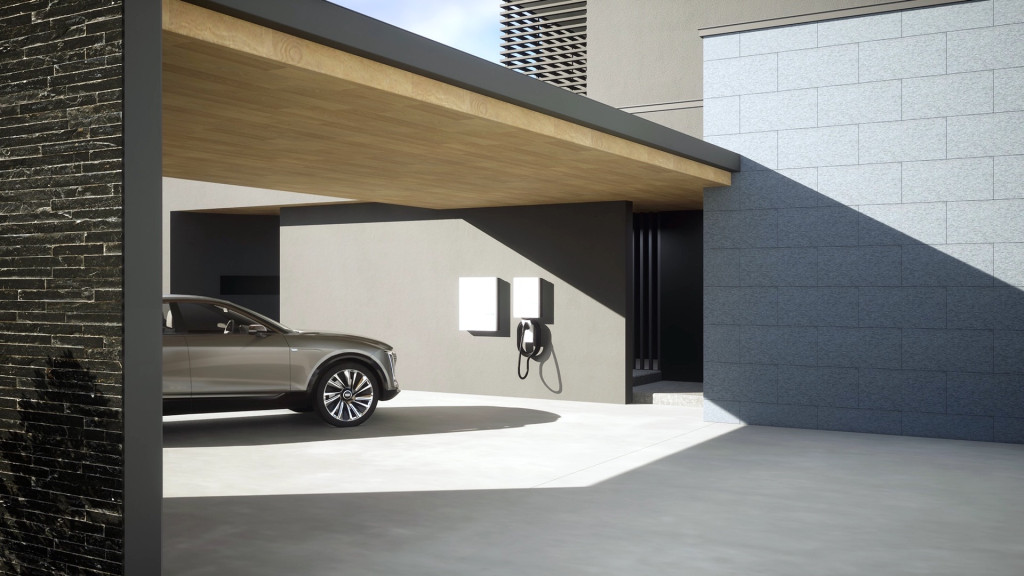
GM Energy – Ultium Home
The other issue, of course, is that the vehicle has to be plugged in to provide home backup power. So if you’re going through a brownout and need to go out on an errand, or if a downed tree keeps you from reaching your garage, it means no power. For this scenario, it’s likely some homeowners will, in the future, be combining V2H vehicles with even smaller battery backup.
If that’s enough unease to stick with whatever EV you’re driving at this point, the Tesla Powerwall is currently at $9,300, minus a 30% tax credit plus installation. So while the hardware goes through yet another iteration, potentially, simply backing your home up with a Tesla Powerwall might be cheaper and a safer bet at the moment—if you don’t need to move your battery backup around on wheels.

EVs set for 11% of 2024 US vehicle share, 1 of 5 cars sold globally
EV sales are likely to continue growing in 2024, reaching around one in five new car sales globally, and 11% of the U.S. market, according to the International Energy Agency (IEA).
Tight profit margins, volatile battery raw material prices, and the phaseout of incentives in certain countries have led to concerns about an EV sales slump, but data shows that sales are still growing, analysts found, with falling battery prices, EV-friendly policies, and increased sales in emerging markets underpinning further sales growth.
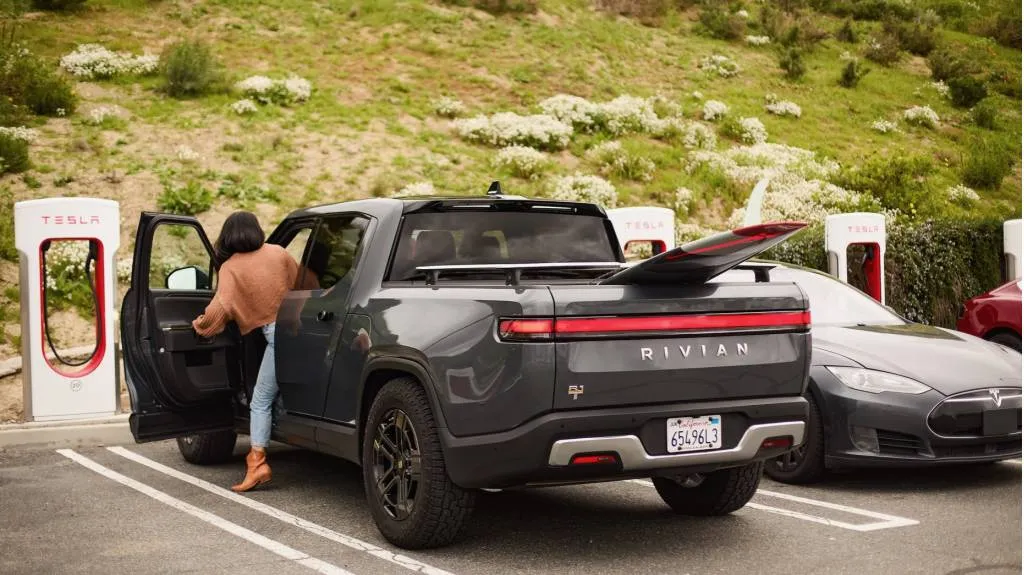
Rivian R1T at Tesla Supercharger
That conclusion is based in part on record 2023 EV sales. Last year, EV market share reached 18%, up from 14% in 2022. Most (60%) were sold in China, followed by Europe (25%) and the U.S. (10%). But growth in other markets could further boost EV sales, analysts predict.
Over 20 major automakers, representing 90% of global car sales in 2023, have set electrification targets, the IEA notes. And sufficient investment in battery manufacturing capacity to meet these targets is already in place, according to analysts. With this groundwork laid, and stricter emissions regulations in place in many countries, every other car sold globally in 2035 could be an EV, analysts predict.
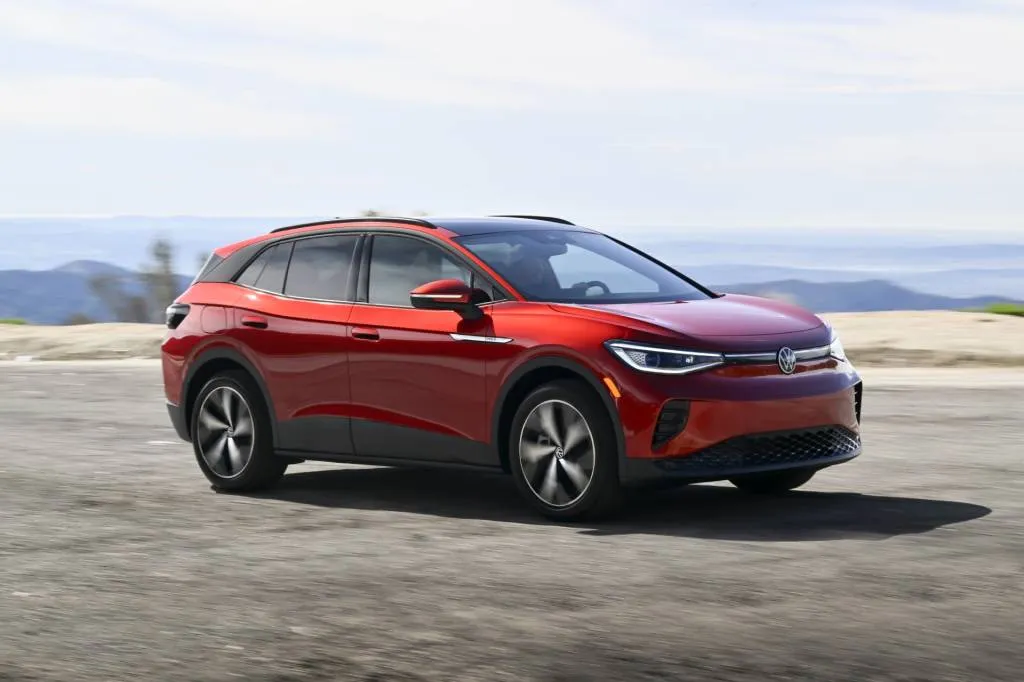
2024 Volkswagen ID.4
The IEA analysis mostly agrees with a consensus of other analysts’ predictions for 2024—that EVs will keep gaining market share. Bloomberg earlier this year predicted 1.9 million EV sales for the U.S. in 2024, accounting for 13% of the new-car market. EVs already make up more than a third of the U.S. luxury vehicle market, the Energy Information Administration (EIA) said in December 2023.
In the U.S., EV adoption has become more polarized by state, a 2023 study found. And while U.S. EV sales are growing, so is the size of the gasoline fleet, potentially offsetting emissions reductions from EVs.

Mini Aceman urban EV fits between Cooper, Countryman
Mini on Wednesday unveiled a new entry electric model, although it’s unclear if it will reach the U.S.
Called the Aceman, the new model is a crossover that borrows the name and minimalist look from a 2022 concept car. Measuring just 160 inches long, it slots between the redesigned 2025 Mini Cooper hatchback and 2025 Mini Countryman crossover.
That footprint also means the Aceman is a step smaller than the 2024 Hyundai Kona Electric and 2025 Volvo EX30—two of the freshest subcompact EVs confirmed for the U.S. market at the moment. Mini does claim a maximum 35.0 cubic feet of cargo space with the rear seats folded flat, which is more than the Volvo.
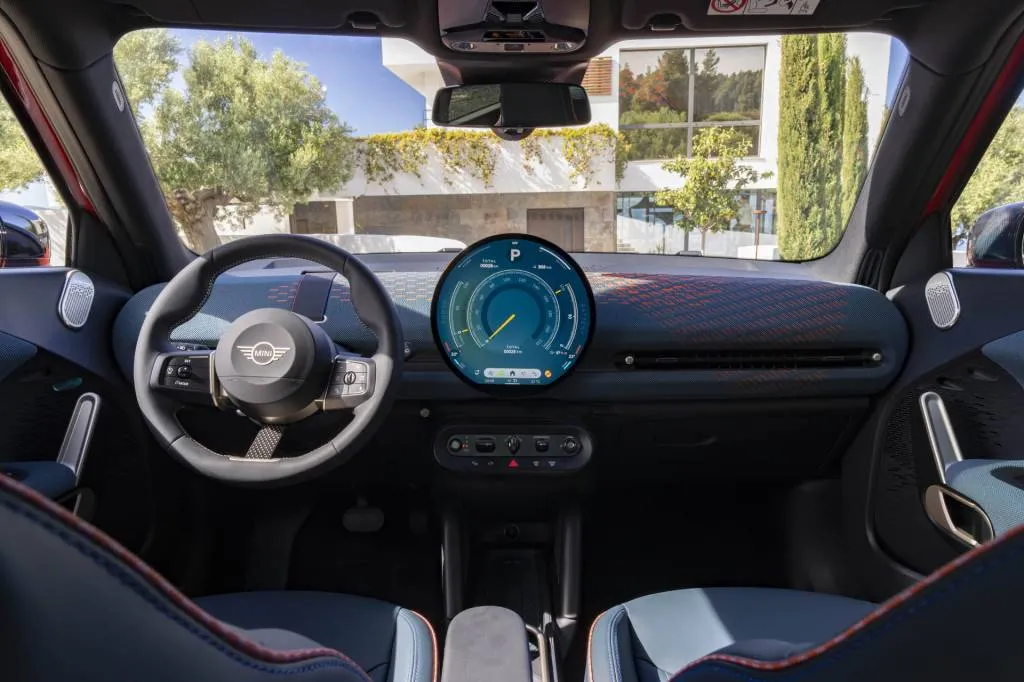
2025 Mini Aceman
Developed in partnership with Spotlight Automotive, a joint venture between Mini and Chinese automaker Great Wall Motors, and slated to be built in China, the Aceman borrows interior fittings and tech from the latest Cooper, including a 9.4-inch circular screen, voice control that responds to the prompt “Hey Mini,” and digital key functionality.
Mini confirmed Aceman E and Aceman SE variants. The base Aceman E has a 42.5-kwh battery pack and a front-mounted electric motor tuned for 181 hp, enough for 0-62 mph in 7.9 seconds. The Aceman SE has a 54.2-kwh pack and 214-hp motor, with 0-62 mph happening in 7.1 seconds.
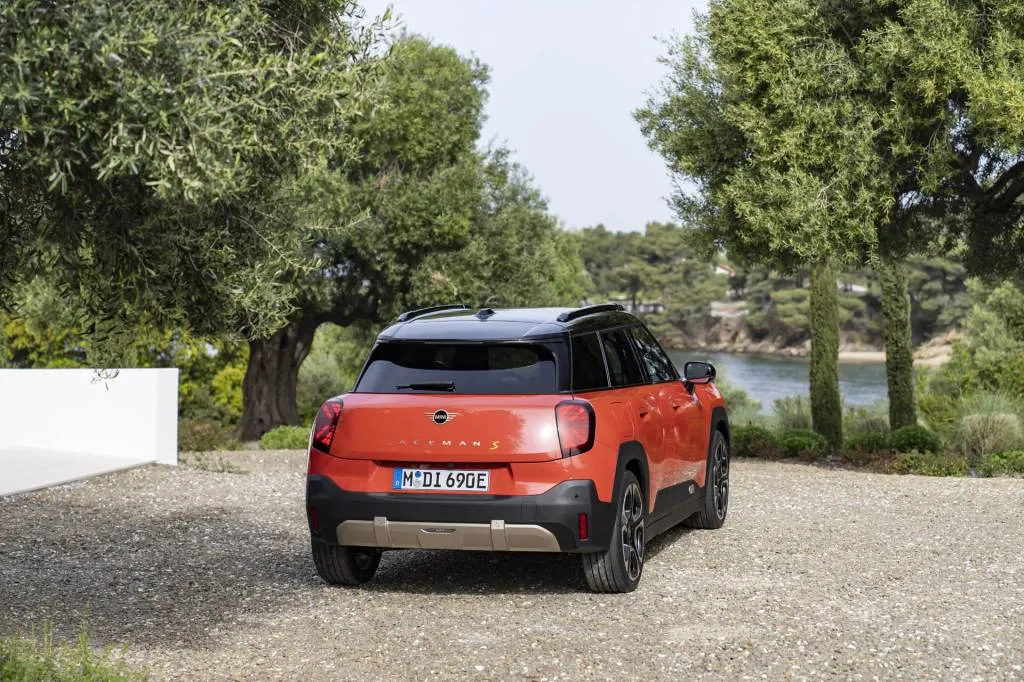
2025 Mini Aceman
European WLTP range is estimated at 192 miles for the Aceman E and 252 miles for the bigger-battery Aceman SE—so don’t expect 200 EPA miles out of this model in any form. The E and SE can DC fast charge at 75 kw and 95 kw, respectively, in either case allowing for a 10-80% charge in just under 30 minutes.
Up until now, the only electric Mini has been the Cooper SE—also one of the most affordable EVs in the U.S. market. But the redesigned 2025 Cooper and Countryman will both be available as EVs. Those models are expected to reach the U.S., but we’ll have to wait and see if the Aceman makes it here as well.

Mercedes G-Class EV, Model 3 Performance, Tesla ownership costs, Vinfast dealers: Today’s Car News
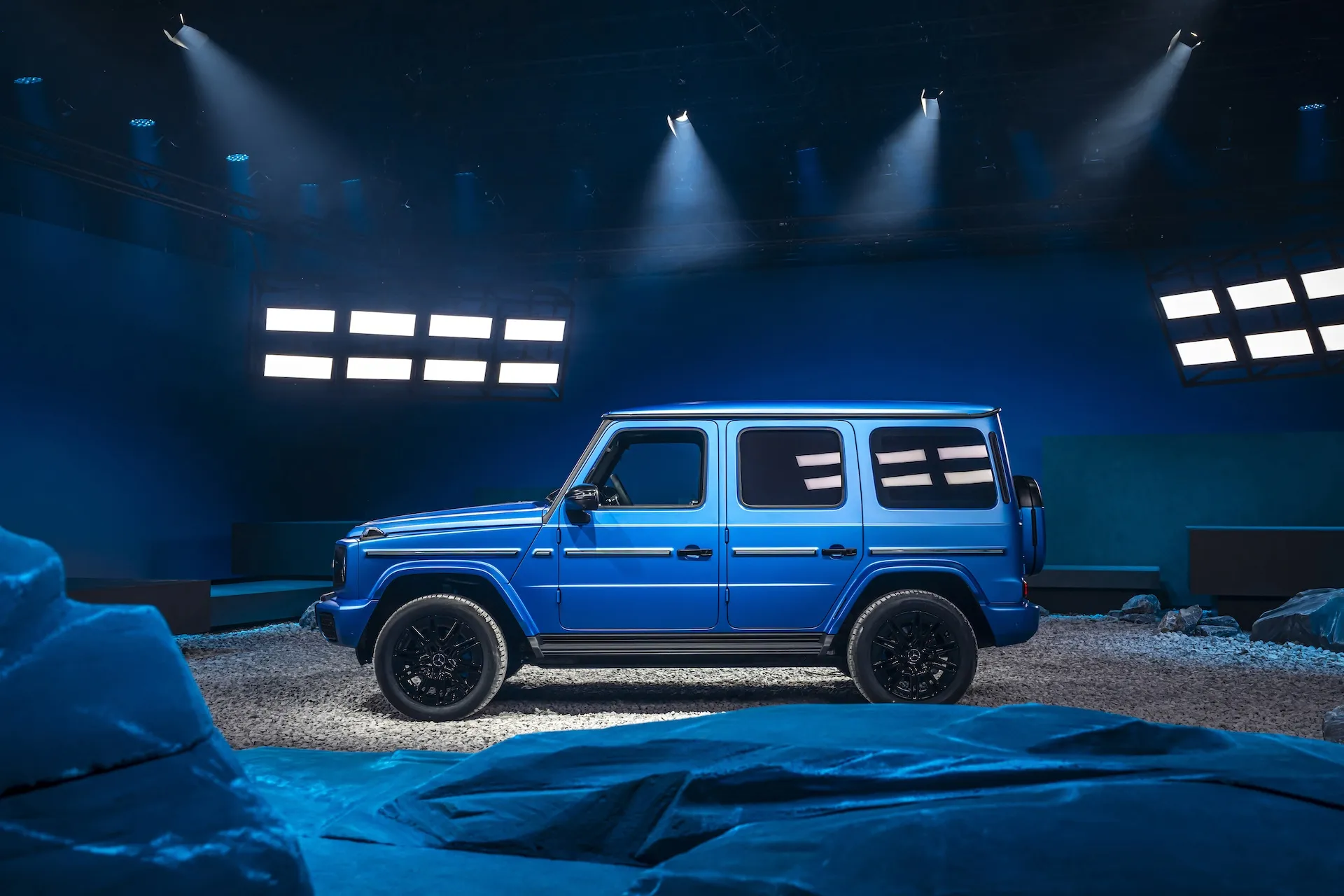
Tesla reintroduces the Model 3 Performance, and the brand rules in ownership costs. Mercedes rolls out its electric G-Class. And Vinfast adds U.S. dealerships. This and more, here at Green Car Reports.
In addition to Tesla’s quarterly call for investors—which ended up very much focused around robotaxi plans—the EV brand revealed its Tesla Model 3 Performance on Wednesday. With a dedicated track mode, an adaptive suspension, and various other improvements already gained by the refreshed Model 3 “Highland,” the Model 3 Performance looks a step closer to a luxury car while upping its performance. It might also be EV tax-credit-eligible while other Model 3 versions aren’t.
Vietnam’s Vinfast announced Tuesday that it has signed a dozen new U.S. dealerships to sell its EVs. With the expansion, it will have 18 franchised dealerships in addition to 15 company-owned stores in California. Cinfast has delivered only a fraction of the 100,000 vehicles it targets globally this year, so the sales push might help simply get them out in front of shoppers.
The 2025 Mercedes-Benz G-Class EV has made its debut, and although it’s missing the silicon-anode battery chemistry the automaker suggested this model would debut, it’s going to be a serious rival to the Rivian R1S, GMC Hummer EV, and Tesla Cybertruck. Badged the G 580 with EQ Technology, this model will allow a trick G-Turn on low-friction surfaces, and it might return more than 300 miles of EPA range.
And Tesla has the lowest ownership costs of any brand, according to the latest assessment by Consumer Reports. According to the organization, Teslas average just $4,035 in maintenance costs over 10 years, which puts the brand well ahead of other brands—even Toyota.
_________________________________