
Category: General

Report: Trump offered to nix EV incentives for $1B donation from Big Oil
At a meeting with top oil executives at his Mar-a-Lago club last month, Donald Trump offered to reverse Biden administration environmental policies in exchange for a $1 billion donation to his presidential re-election campaign, the Washington Post reports.
The donation would be a “deal,” Trump said, because of the taxation and regulation oil companies would avoid because of him, according to the report, which cited people with knowledge of the conversation who spoke on the condition of anonymity.
Under this quid pro quo, Trump reportedly said he would scrap stricter EPA emissions rules anticipated to drive up sales of electric cars—something he is quite critical of—through the beginning of the next decade (while stopping short of an EV mandate) as well as end the Biden administration’s freeze on permits for new liquefied natural gas (LNG) exports and auction off more leases for oil drilling in the Gulf of Mexico.

Oil field (Image: Flickr user johnny choura, used under CC license)
Under Biden, the U.S. is now producing more oil than any country ever has, at nearly 13 million barrels per day last year, the report noted. ExxonMobil and Chevron—the two largest U.S. energy companies—also reported their biggest profits in a decade last year. But the oil industry has still complained about Biden policies—particularly the new EPA emissions rules.
Yet oil companies have been hesitant to fund Trump’s campaign, according to the report. Oil interests contributed more than $6.4 million to Trump’s joint fundraising committee in the first three months of this year, according to an analysis by the advocacy group Climate Power. In contrast, one oil executive reportedly said in the Mar-a-Lago meeting that the industry has spent $400 million on lobbying the Biden administration this year.
It’s worth remembering that these companies diversified their investments, becoming “energy companies” rather than oil companies, and gasoline is seen as a legacy business—nevertheless one that will be important for a long time. So it’s not surprising that they didn’t immediately get on board with Trump’s offer.
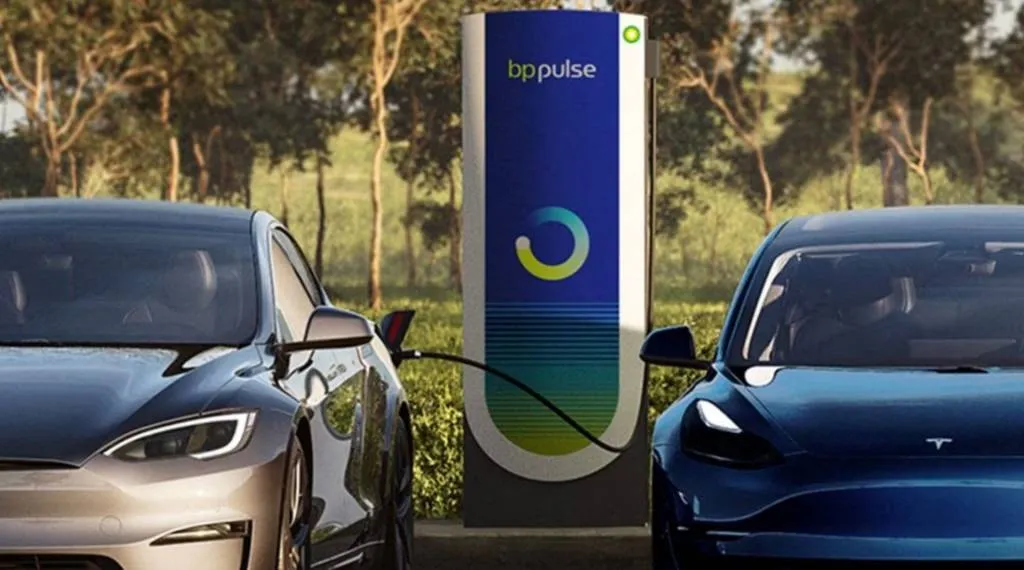
BP to purchase Tesla chargers
Were oil executives to take the former president up on said offer, they would be reasonably assured that he’d follow through. During the last Trump presidency, his agencies attempted to revoke California’s emissions authority—and failed—and delayed the imposition of higher fines for automakers that failed to meet emissions targets.
If re-elected, elimination of stricter emissions rules and EV-friendly policies might not be the only way Trump disrupts the auto industry. He’s announced that he will seek a 100% tariff on Chinese vehicles—even if they’re made in Mexico—with some indications he may try to go further in dismantling what’s left of NAFTA, which allows Mexico-built vehicles from other global automakers at no tariff and eligible for some federal incentives.

BP seeks stranded Tesla Supercharger sites in $1B EV charging buildout
BP is eying Tesla Supercharger sites as part of a planned expansion of the oil giant’s U.S. charging network, Bloomberg reports.
The company said it “is aggressively looking to acquire real estate to scale our network, which is a heightened focus following the recent Tesla announcement.”
Tesla CEO Elon Musk earlier this month fired most of the Tesla Supercharger team in a shift away from further fast-paced growth of the public charging network. BP now appears ready to capitalize on that.
“If there are stranded real estate partners who are looking for someone to call, they should feel free to pick up the phone and call me or look me up on LinkedIn,” Sujay Sharma, CEO of BP Pulse Americas, the corporate arm in charge of the company’s U.S. charging network, said in an interview with Bloomberg.
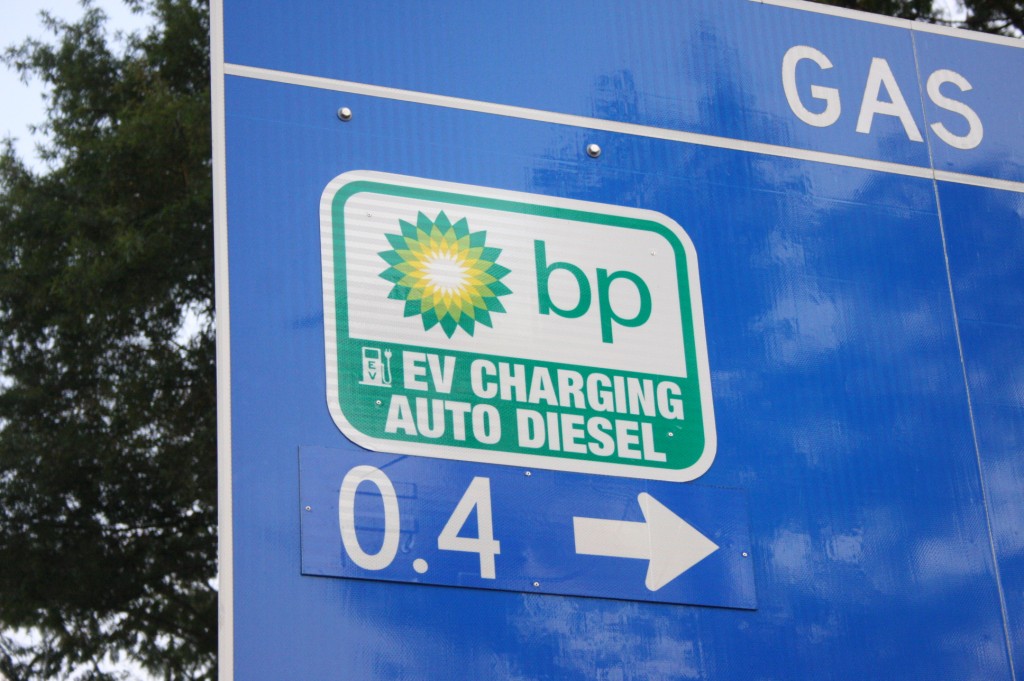
Highway sign for electric-car fast-charging station at BP in Metrolina area of Charlotte, NC
BP reportedly plans to spend $1 billion by 2030, half of that amount within the next two or three years, to install over 3,000 chargers in the U.S. That will include large-scale sites with 12 or more chargers that BP calls Gigahubs.
It first offered EV charging in 2010 and started a serious push in 2017. BP sees EV charging as a business line bound for profitability, with one executive saying in 2022 that chargers were already almost as profitable as gasoline pumps. It’s not the only oil company enthusiastic about charging: Shell announced earlier this year that it’s shedding some gas stations in favor of EV charging.
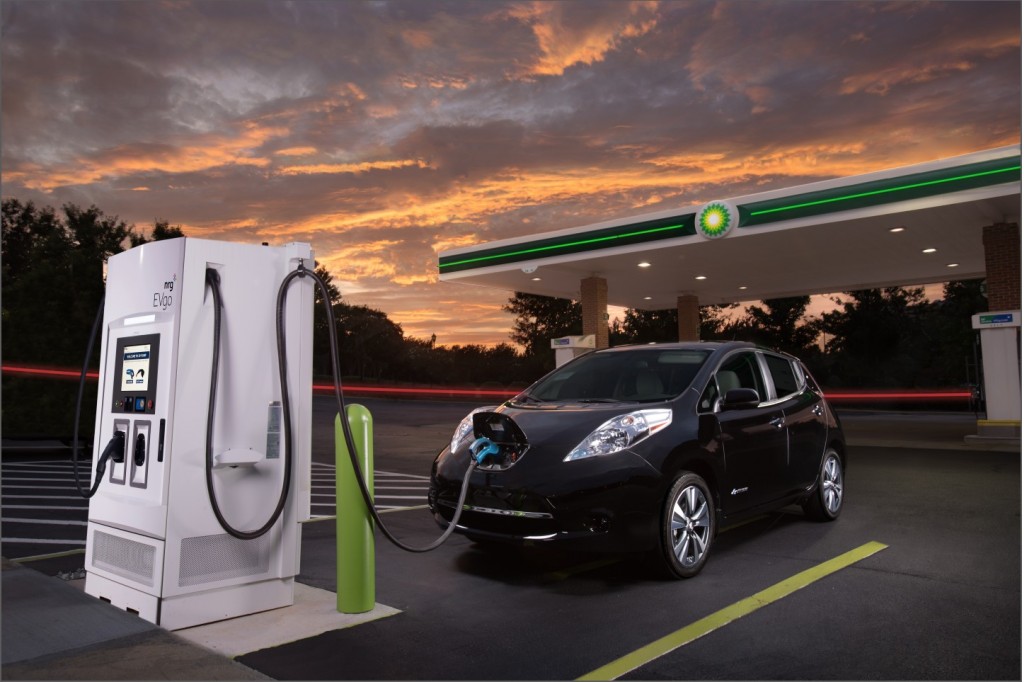
Nissan Leaf electric car using DC fast-charging station at BP in Metrolina area of Charlotte, NC
The BP charging buildout will be complemented by expansion plans from dedicated charging networks. Electrify America, which was created as part of a fine for Volkswagen’s diesel-emissions cheating, also this week confirmed an expansion push through this year. And Ionna, the national EV charging network funded by investments from seven automakers, is looking to open its first stations this year, on the way to a minimum of 30,000 fast-chargers across North America.
Automaker commitments to the Tesla North American Charging Standard (NACS) connector means, regardless of the gutting of the Tesla Supercharger team, NACS will likely continue to proliferate on these alternative networks. But when it comes to reliability, merely switching to the NACS connector won’t solve much; it’s about interoperability and keeping on top of the software updates to enable that—plus maintenance.

Hyundai Ioniq 6 review, cheaper California charging, EV flame retardants: Today’s Car News

The Hyundai Ioniq 6 is a strong alternative to the Tesla Model 3. California shows ho it can make home EV charging cheaper. And are EV interiors—and car interiors in general—making us sick? This and more, here at Green Car Reports.
In a follow-up Hyundai Ioniq 6 test drive, Green Car Reports found that this electric sedan goes the distance for a competitive price—with more range in the real world, or by ratings, versus the Tesla Model 3. But the Ioniq 6 doesn’t quite get it right on all its details.
Residential electricity rates throughout the nation have soared over the past couple of years. Meanwhile, California is seeking to cut the cost of home EV charging through a fixed-charge plan—essentially a package of energy for a flat, reduced fee, with the cost even less for low-income households.
And are the flame retardants in vehicle cabins making us sick? Citing studies and investigations, Consumer Reports is calling on the federal government to reevaluate the standards, which were adopted in 1971 and haven’t changed much since. What’s more, the chemicals intended to curb a gasoline-fueled fire might not even be relevant in EVs.
_________________________________
Green Car Reports Newsletter
Sign up to get the latest green car and environmental news, delivered to your inbox daily!
I agree to receive emails from Green Car Reports. I understand that I can unsubscribe at any time. Privacy Policy.

Test drive: 2024 Hyundai Ioniq 6 overshadows Model 3
With more range, better functionality, actual style thanks to a better design, and competitive price, the Hyundai Ioniq 6 just makes better sense than the Tesla Model 3.
But that style does come at a price for taller passengers; Tesla has upped its interior-material game; and the car that’s so forward-thinking still lacks some tech polish found in Tesla and other competitors.
Here are the pros and cons of living with the 2024 Hyundai Ioniq 6 after shuttling the kids around town and running errands for a week.
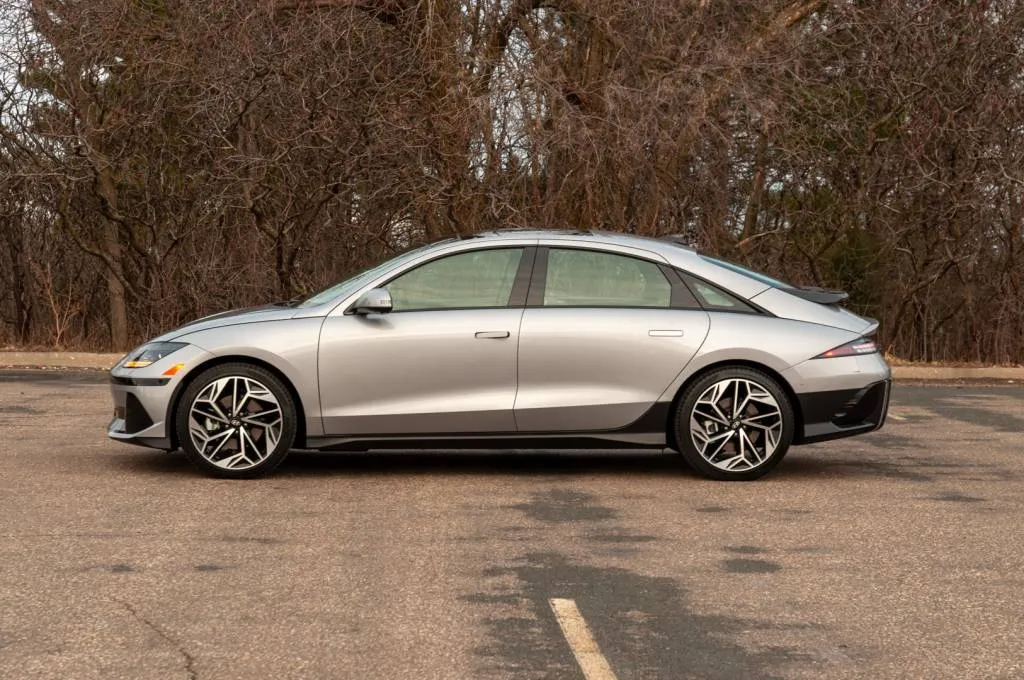
2024 Hyundai Ioniq 6
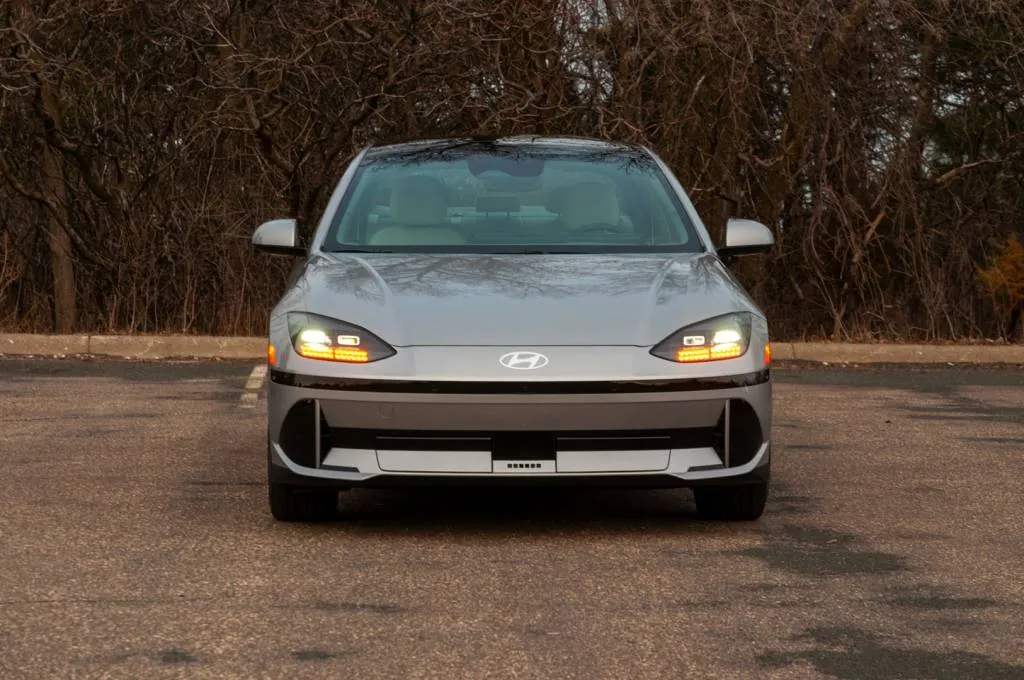
2024 Hyundai Ioniq 6
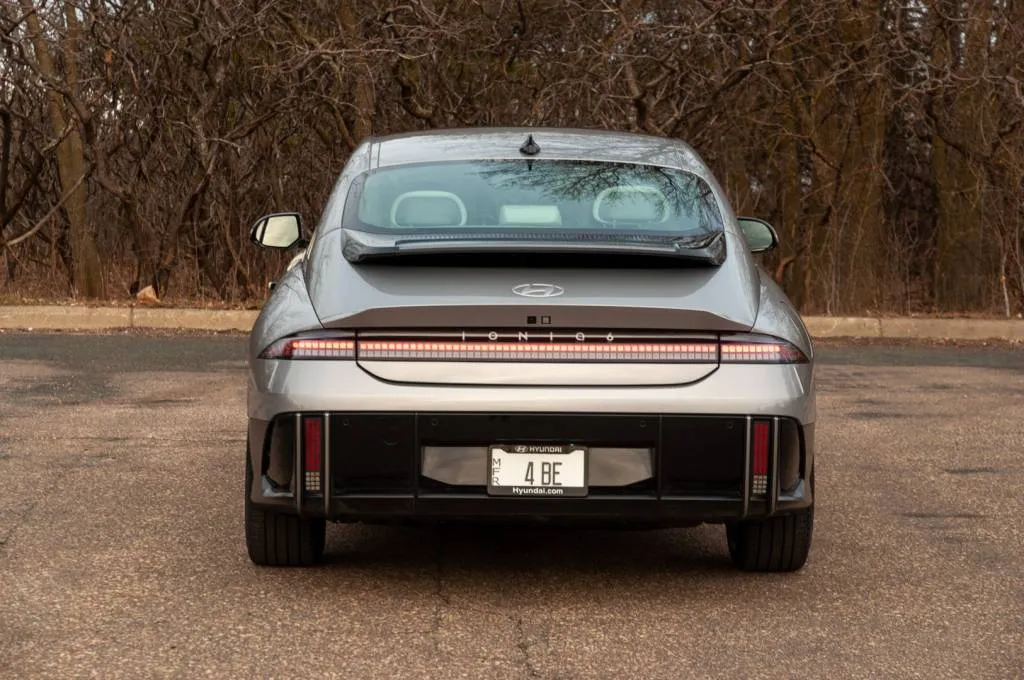
2024 Hyundai Ioniq 6
Pro: Ioniq 6 design stands out
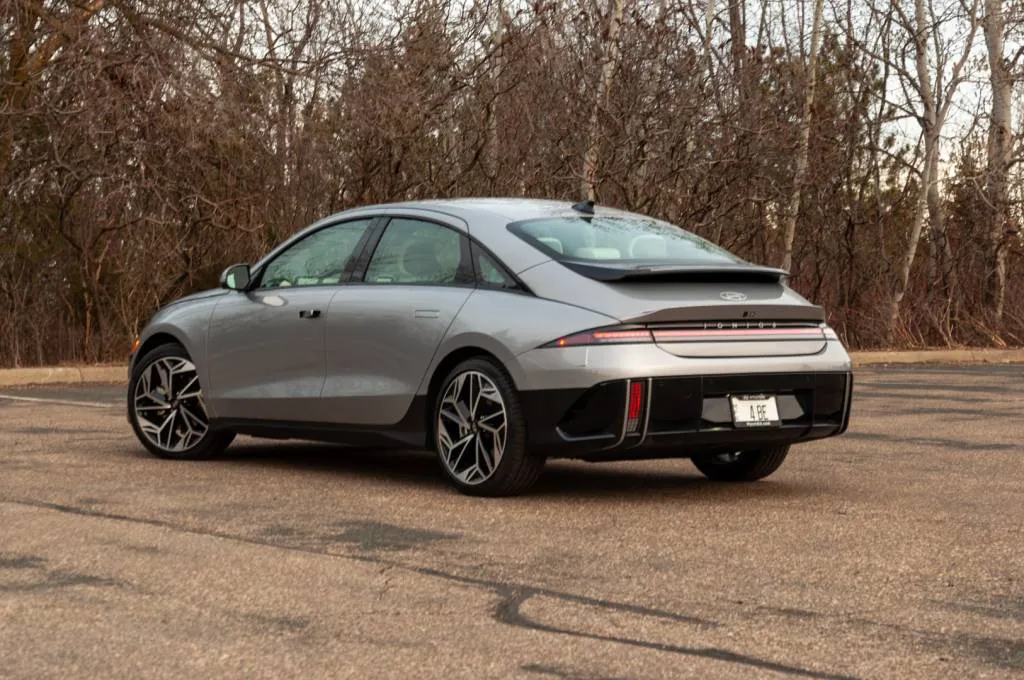
At best the Model 3 is clean and inoffensive, and at worst it’s boring and anonymous. The Hyundai Ioniq 6 just looks cool, and its design is functional to boot. It’s more aerodynamic than the Model 3, and it’s one of the most aerodynamic vehicles in production today. Its streamliner design features a front end that arguably has Porsche Panamera and GM EV1 vibes. The rear end harkens back to the Infiniti J30 and finishes it off with a ducktail spoiler. The signature Ioniq chiclet LED light signatures front and back are intricate, neat details that catch the eye.
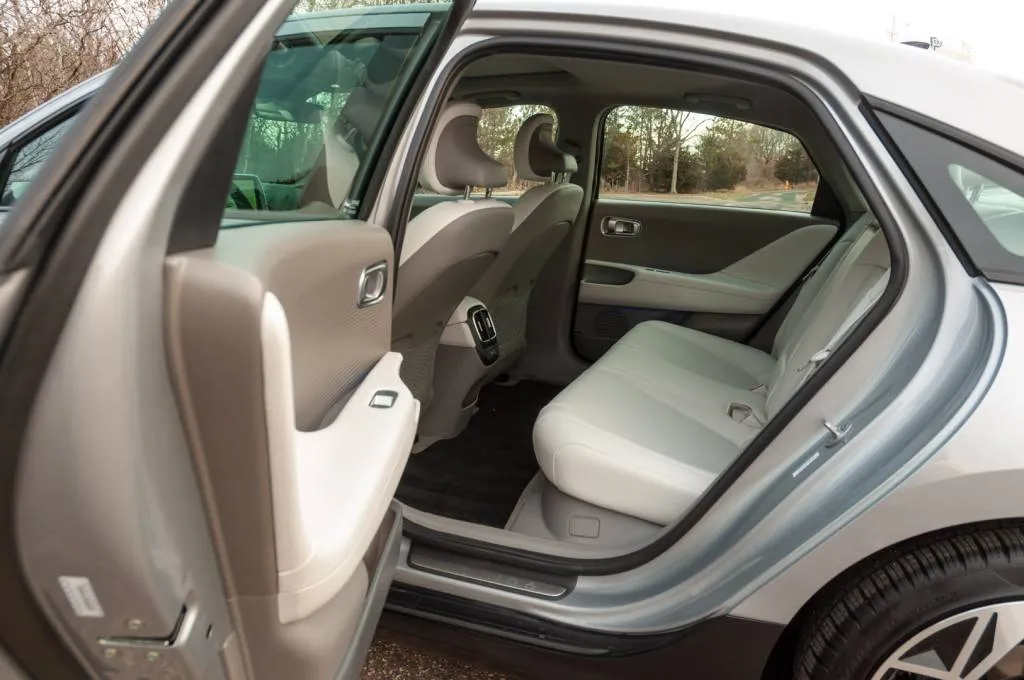
2024 Hyundai Ioniq 6
Con: Aerodynamics cost some headroom
Taller occupants in front will be just fine, but the slippery design severely impacts rear headroom. It’s the fast roofline in the rear that causes the issue. At 5-foot-10 my head skims the headliner. Anybody 6-foot and over is going to have an issue with comfort, let alone bumps in the road.
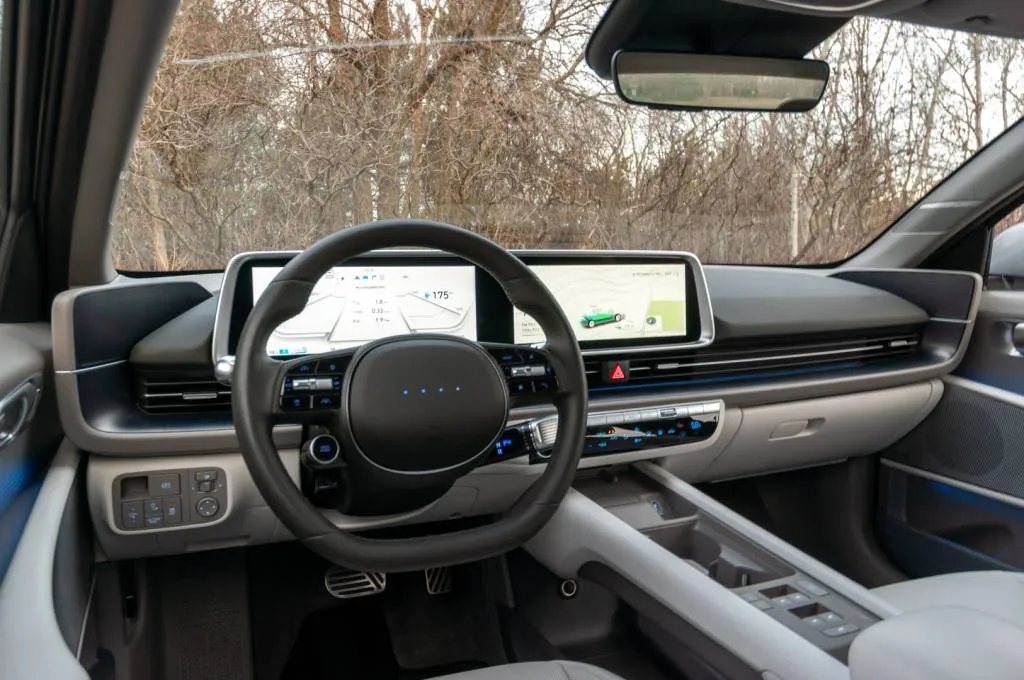
2024 Hyundai Ioniq 6
Pro: Hyundai pairs function with form
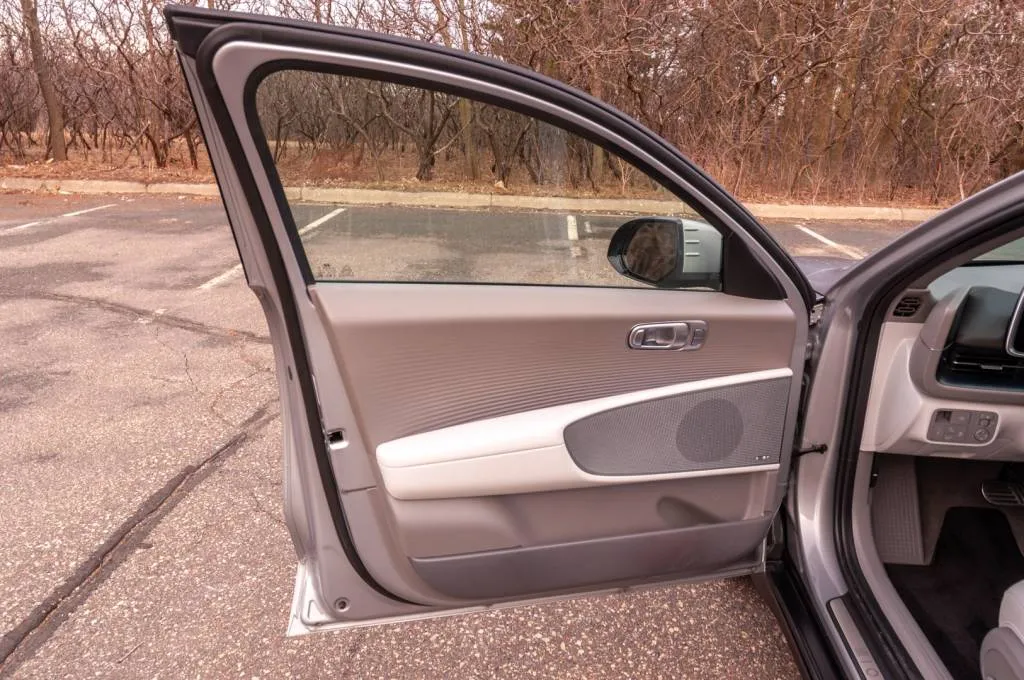
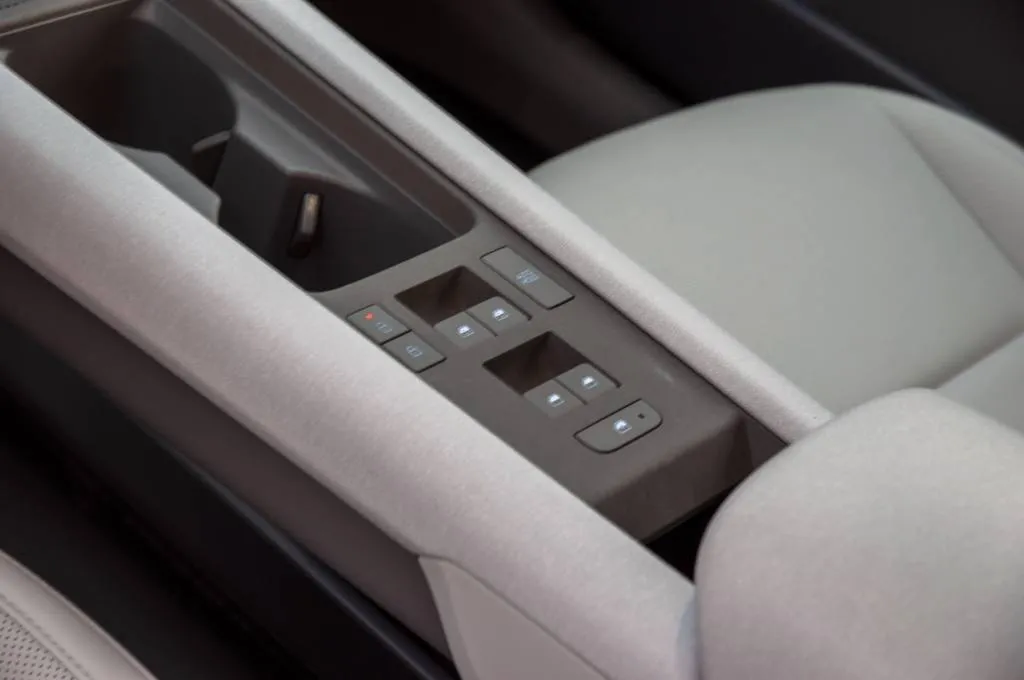
The Ioniq 6 features a low dashboard and cowl for terrific visibility, a wall of glass with two 12.3-inch screens together comprising the digital gauge cluster and touchscreen infotainment system, and plenty of neat bitmap squares around the interior to match the exterior lighting elements. But unlike the Model 3 it also has buttons, knobs, and toggles for essential functions like climate and audio controls.
2024 Hyundai Ioniq 6
2024 Hyundai Ioniq 6
Con: Hyundai’s Ioniq 6 materials are a mixed bag
There’s zero scratch-prone shiny piano-black plastic in the Ioniq 6, which is great. And the center console in my test car had a matte-finish plastic trim surround that borderline felt like concrete. It was neat. But the Ioniq 6 Limited Long Range with 20-inch wheels, as tested, cost $55,010, and the dashboard, door uppers, and other trim bits didn’t go with the price tag and were mostly hard plastic. The Tesla Model 3 received a refresh that upgraded the car’s interior materials at least a half step above this.
2024 Hyundai Ioniq 6
Pro: Ioniq 6 range goes the distance for a competitive price
The Ioniq 6 has an EPA-rated range of up to 361 miles and costs $43,600 including an $1,150 destination charge. That’s far more than any Tesla Model 3. There’s a base model Ioniq 6 that costs $38,050, undercutting the Model 3, but it only has 240 miles of range. Tesla’s adjustment factor applied in calculating most of its official EPA range numbers means you’re simply more likely to see the Ioniq approach these numbers in real-world driving.
The Long-Range dual-motor Ioniq 6 I had carried an EPA range rating of 270 miles. In good weather I’ve seen an average over 3.0 mi/kwh, while in cold weather with temps hovering in the mid to low 30s with this car I saw that drop to 2.6 or 2.7 mi/kwh in mixed suburban driving. Neither of those quite match its EPA number, but that’s competitive.
2024 Hyundai Ioniq 6
Con: Hyundai EV app and infotainment
Somehow Hyundai’s car of the future doesn’t feature wireless Apple CarPlay or Android Auto. Both require a wired USB-A connection, which boggles the mind.
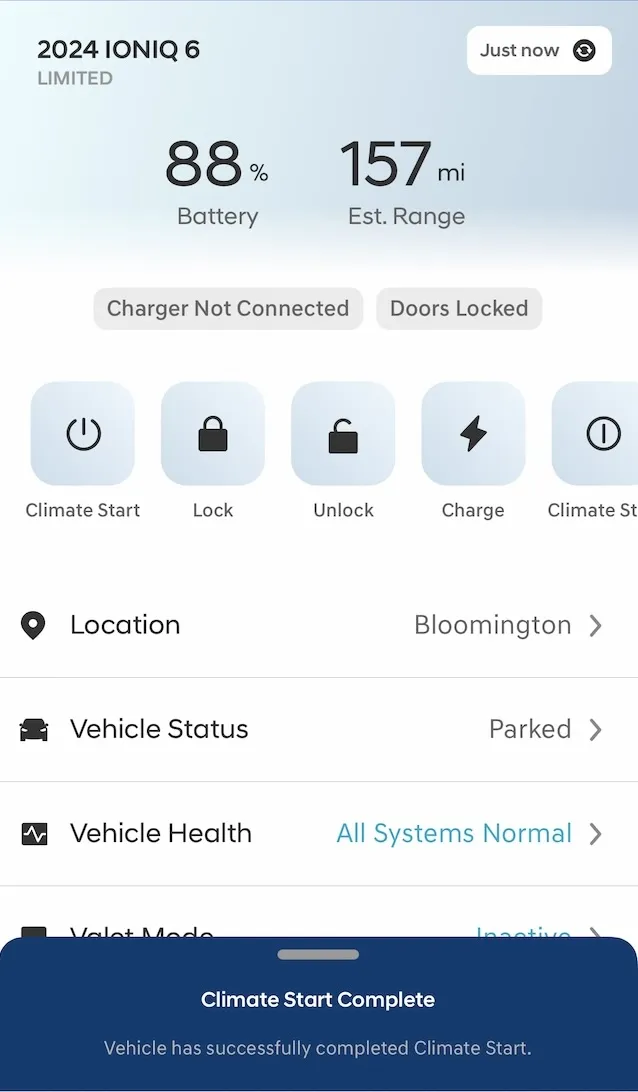
The Hyundai iOS app to control the car was fine, but certainly not in the same league as what Tesla’s developed, or even what Rivian and Lucid are running. Even Ford’s app for the Mustang Mach-E is more polished and quicker. The iOS app is slow, requires loading constantly, then confirmation for functions such as starting the heat ahead of time. It’s clunky and feels a full step behind competitors.
The Tesla Model 3, for now, might be easier to live with on the basis of the Supercharging network and a better app experience, but both of these merits are fleeting. The Ioniq 6 brings style, range, and efficiency in a swoopy package for a competitive price. It should be on the shopping list.
_______________________________________
2024 Hyundai Ioniq 6 Limited Long Range AWD
Base price: $43,600, including a $1,150 destination fee
Price as tested: $55,010
Drivetrain: 320 hp combined, dual-motor AWD
EPA range: 270 miles
The hits: Stylish design, efficient, real buttons, good range and price
The misses: Mediocre iOS app, wired CarPlay, some cheap plastics, rear headroom


Car flame retardants might make us sick—and be unnecessary in EVs
Outdated federal standards for the flammability of vehicle interior materials—put in place before the rise of EVs—pose an unnecessary health hazard, argues Consumer Reports.
In response to a study from the Green Science Policy Institute at Duke University, which found harmful chemicals from flame retardants can be present in the air of car interiors, Consumer Reports is calling on the National Highway Traffic Safety Administration (NHTSA) to consider replacing the current standards, which were adopted in 1971, with new ones that don’t require use of these chemicals.
The study found that 99% of cars contained a flame retardant under investigation by the U.S. National Toxicology Program as a potential carcinogen. Most cars were also found to have additional harmful flame-retarding chemicals, including two known carcinogens under California Proposition 65.
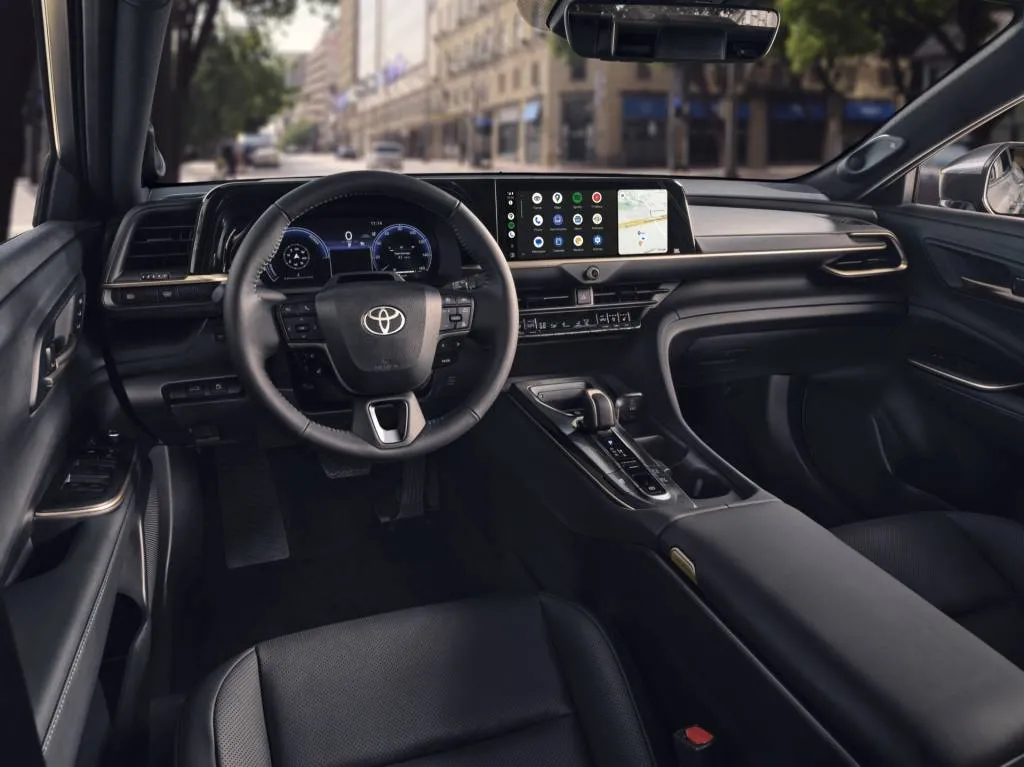
2025 Toyota Crown
A 2022 study conducted by the Ecology Center’s Healthy Stuff lab also found that car seats—particularly in vehicles at lower price points—contained potentially harmful chemicals, Consumer Reports noted.
With that in mind, Consumer Reports is calling for an update to Federal Motor Vehicle Safety Standard (FMVSS) 302, which governs flammability and applies to materials used inside a vehicle. One possibility, Consumer Reports suggests, is adopting something like the smolder test instituted by California in 2013. This is “similarly effective,” but sets a standard that can be met without the use of flame retardant chemicals, according to Consumer Reports.
“Regardless of powertrain, NHTSA and automakers should align on steps to better protect consumers and first responders from vehicle fires,” said William Wallace, CR’s associate director for safety policy, to Green Car Reports. “In addition, we’re looking forward to commenting on NHTSA’s proposed rules to add new requirements and test procedures for the safety of EVs and hydrogen fuel cell vehicles. Hopefully, these rules will help protect the public and drive safety innovation in this space.”
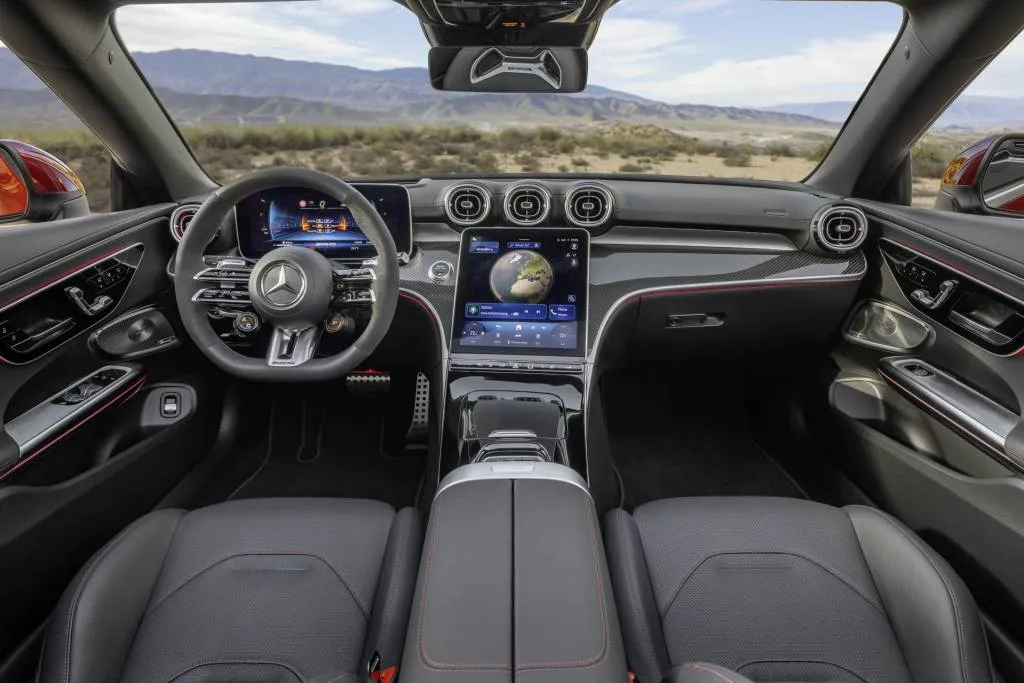
2025 Mercedes-Benz AMG CLE 53 Cabriolet
If the federal government revisits this, the concerns might be different for EVs. Fires are far less frequent in EVs, and when they do occur, they’re often charging-related. That means a vehicle is typically parked without people inside. Simple measures like an anti-short layer may go a long way in preventing EV fires—versus the complexities of managing a flammable liquid in gasoline models.
It’s not that EVs are without unique safety issues, though. Emergency responders still need training to deal with high-voltage electronics, and the Insurance Institute for Highway Safety (IIHS) has pointed out that weight is a safety concern.

Here’s how California seeks to cut the cost of home EV charging
Spikes in electricity rates can raise the cost of charging an EV at home, but California has a solution.
As explained in a recent post on The Equation, from the Union of Concerned Scientists (UCS), California is considering adding a fixed charge on electricity bills from its largest utilities in exchange for a reduction in the per-unit price of electricity use. That would keep utilities’ revenue consistent while maintaining lower overall home-charging costs for EV owners.
A proposal from the California Public Utilities Commission (CPUC), the state’s utility regulator, would establish a monthly flat fee of $24.15 for customers of California’s three major investor-owned utilities—Pacific Gas & Electric (PG&E), Southern California Edison (SCE), and San Diego Gas & Electric (SDG&E).
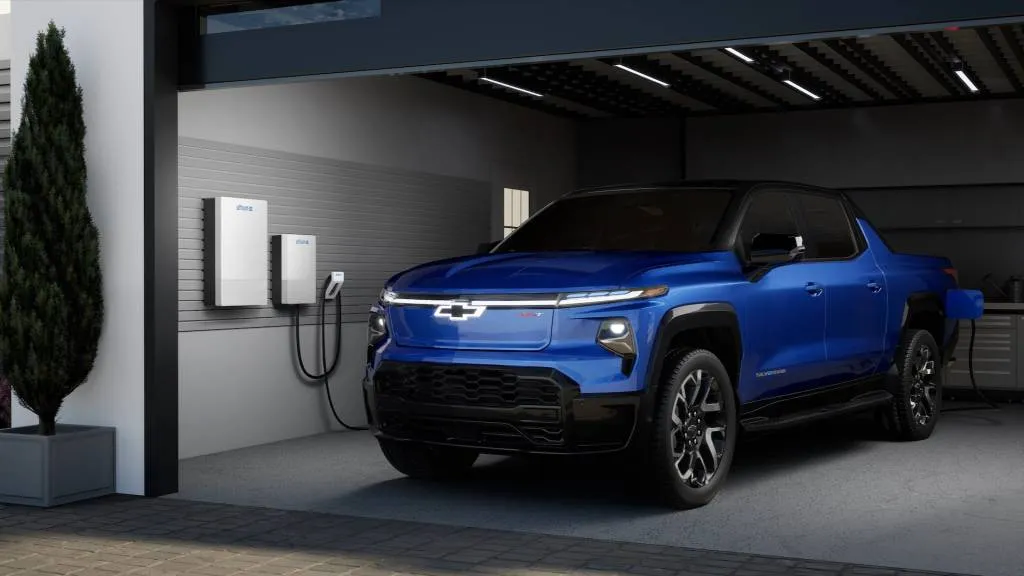
2024 Chevrolet Silverado EV with GM Ultium Home energy system
The proposal also calls for income-based tiers for the monthly charge. Customers participating in the California Alternate Rates for Energy (CARE) rate-reduction program would pay approximately $6.00 per month, while those enrolled in the Family Electric Rate Assistance program, those living in affordable housing, and those with incomes at or below 80% of area median income would pay approximately $12.00 per month. All others would pay the full $24.15 monthly fee.
The proposal, which follows up on legislation passed in 2022, wouldn’t be implemented until late 2025 or early 2026. But it could reduce electricity rates by 4.6 cents to 6.8 cents per kwh at that time, according to the UCS.
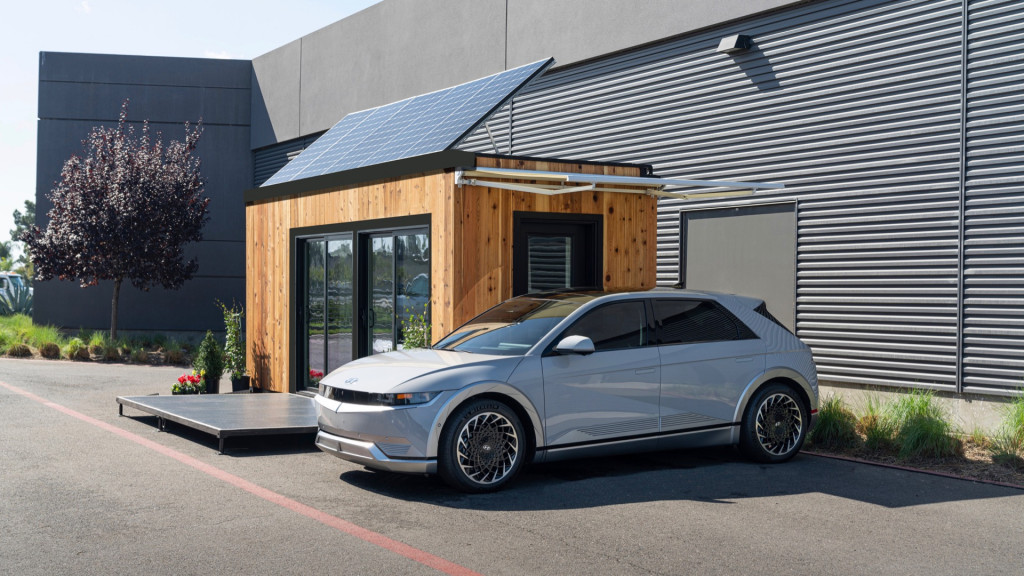
Hyundai Home
Such a proposal seems just in time, as throughout the nation sharp electricity hikes have for some households soured the home EV charging experience. Before these hikes, the federal Department of Energy found that every new EV costs less than $1,000 a year to “fuel” with electricity.
California has been working on a way to reduce the cost of home EV charging—potentially connected to time-of-use—for several years. More than a third of U.S. EVs are sold in California, so it’s a very important matter for U.S. adoption as a whole. But similar programs in other states will be needed to maintain the momentum established by California.

Rivian R2 production, Kia EV3 debut date, Eli Zero: Today’s Car News
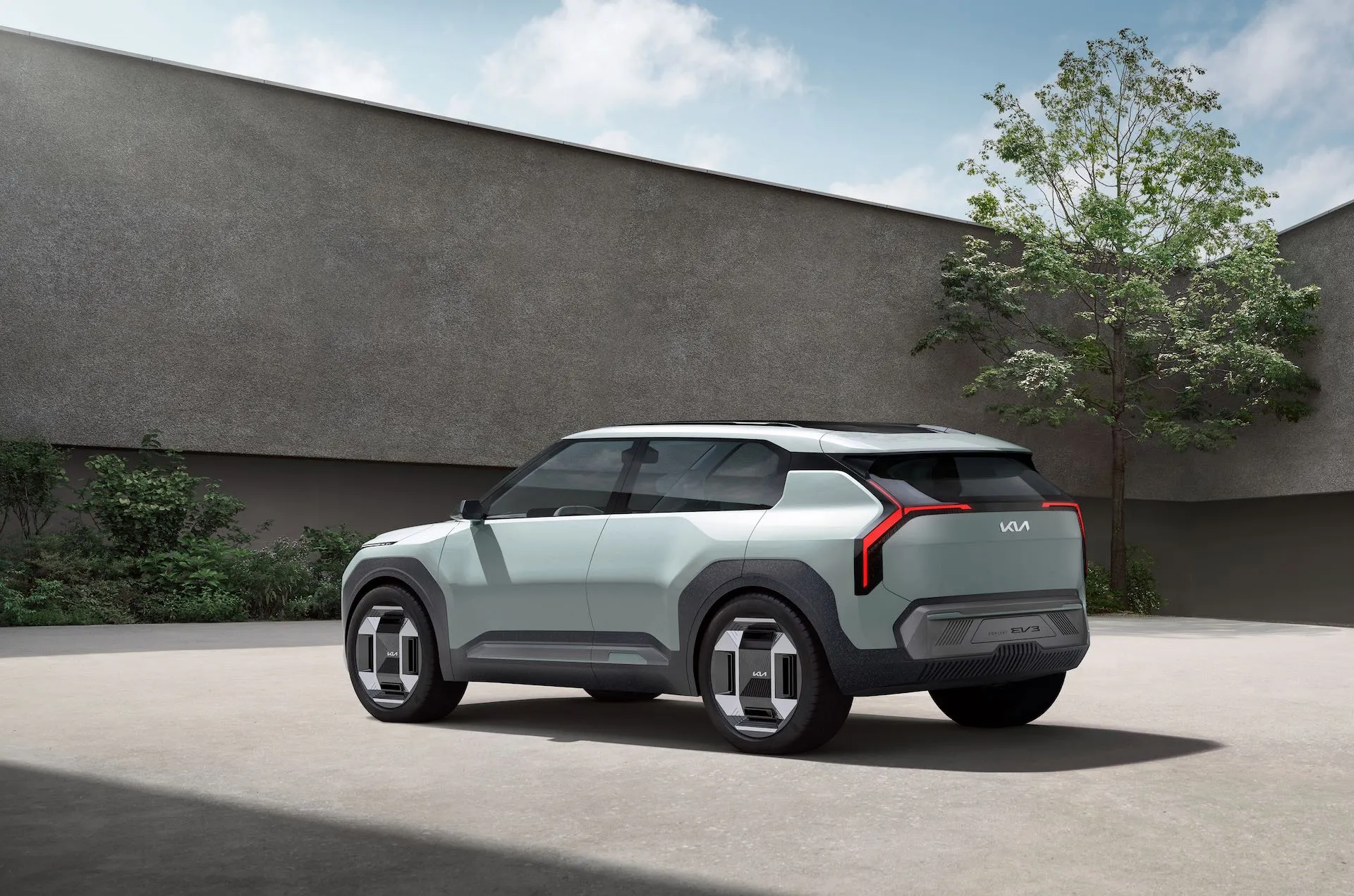
Kia confirms the EV3 for production. Rivian revamps its Illinois plant for R2 production. EVs are already having a big effect on gasoline demand. And how small of an EV is big enough? This and more, here at Green Car Reports.
Rivian is rejiggering the production capacity of its plant in Normal, Illinois, to accommodate up to 155,000 of its more affordable R2 SUVs annually. That’s more than the cumulative number of EVs the company has delivered since it started rolling its R1 family out to customers about 2.5 years ago.
Kia has confirmed that its compact EV3 electric SUV is production-bound and will arrive next year. It hasn’t yet confirmed whether this model is coming to the U.S., although maybe that will be clarified after its May 23 debut. In a small set of close-cropped teaser photos, Kia showed that the production EV3 preserves many of the same bold design traits and so-called Star Map lighting theme as the concept.
According to the consultancy Wood Mackenzie, as quoted in a Reuters report this week, growing EV sales in both the U.S. and China could contribute to a significant cut in gasoline demand in 2024. That’s due not so much to an acceleration in EV growth but to the cumulative effect of all the EVs now in service.
And if you’re fine moving no faster than 25 mph, the tiny $11,990 Eli Zero EV might be just right for urban deliveries. In U.S.-bound form, the two-seat hatchback minicar goes up to 90 miles, and constrained by those speeds it’s unlikely range anxiety is going to be a concern.
_________________________________

Rivian aims for 155,000 of its $45,000 R2 electric SUVs in Illinois
Just after the reveal of its more affordable R2, R3, and R3X models in March, Rivian announced plans to rejigger its production capacity at its existing plant in Illinois, to accommodate the R2 electric SUV at that plant instead of an even larger one in Georgia that remains on the drawing board.
Recognizing that the R2 is critical to the company’s survival, Rivian included the following in its Q1 financial report, released Tuesday: “We believe launching R2 in Normal will create long-term value by driving greater capital efficiency and reducing risk to the R2 launch and associated ramp.”
With the update, Rivian also revealed exactly what that means in intended production numbers. It now intends to make 155,000 of its R2 electric SUV at the Illinois plant annually, with a total of 215,000 units including its other vehicles (consisting of the R1S SUV, R1T pickup, and EDV fleet vehicle).
That’s more R2s in a year than Rivian has delivered cumulatively—all models combined—since it started making deliveries in fall 2021. And it will take an expansion for Normal, which Rivian had previously said was limited to a plant capacity of about 150,000 vehicles per year.
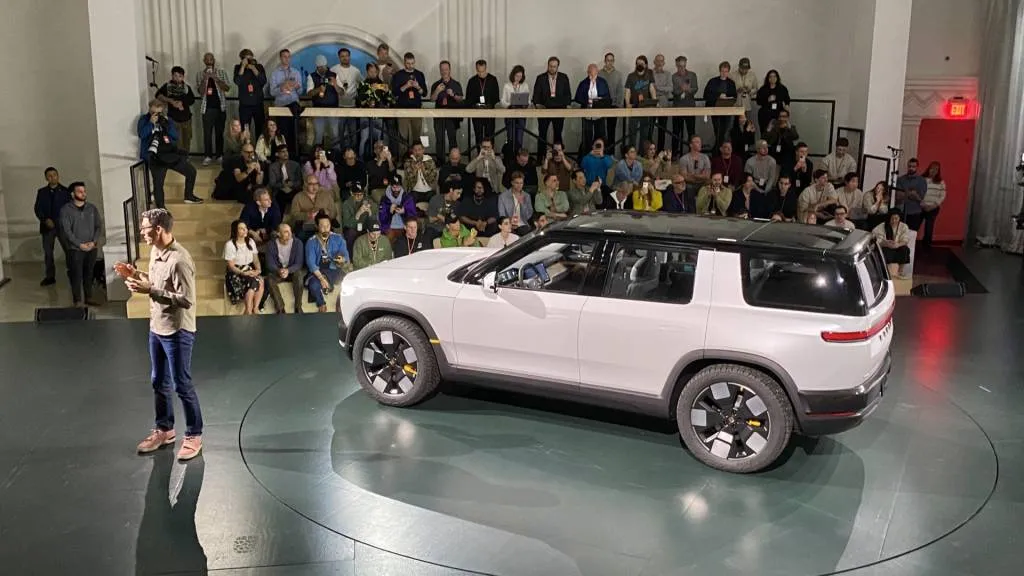
Rivian R2
In the meantime, it says that it’s aiming to improve R1 production efficiency by about 30%.
With R2 included, the shift will represent a huge boost in production versus Rivian’s current levels. The company made 57,232 vehicles in all of 2023, while it made 13,980 vehicles in Q1 2024.
In Rivian’s Q1 investor call accompanying the announcement, Rivian’s CFO Claire McDonough said that the maximum capacity has some flexibility and will break out as up to 85,000 R1 models or up to 65,000 EDVs.
Rivian pointed out that the R1S was the fourth bestselling EV in the U.S. over the first quarter of 2024—after only the Tesla Model Y and Model 3, and the Ford Mustang Mach-E.
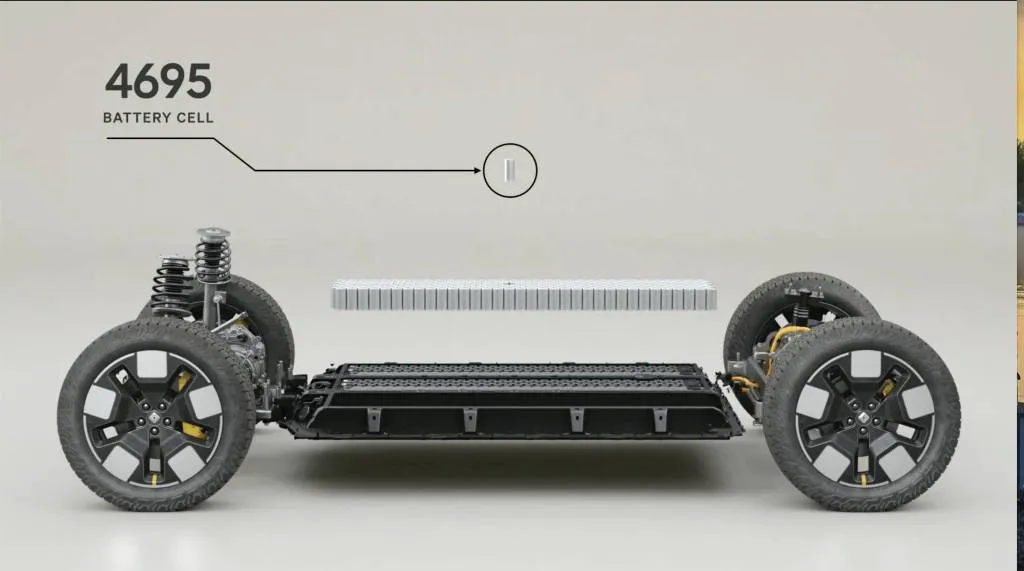
Rivian R2
The new midsize platform, called MSP, will be the basis for the R2, R3, and R3X, which Rivian underscored “are expected to deliver amazing performance, utility, and range at a significantly lower price point than our flagship R1.”
Rivian pointed to cost efficiencies at the core of the MSP vehicles, which will include the use of high-pressure die castings, a structural battery pack, and “simplified closures.” It’s also teased that it sees the potential for a model with half the carbon footprint of the R1S by 2030.
The R2 is expected to start around $45,000, with production set to start in the first half of 2026, according to Rivian.
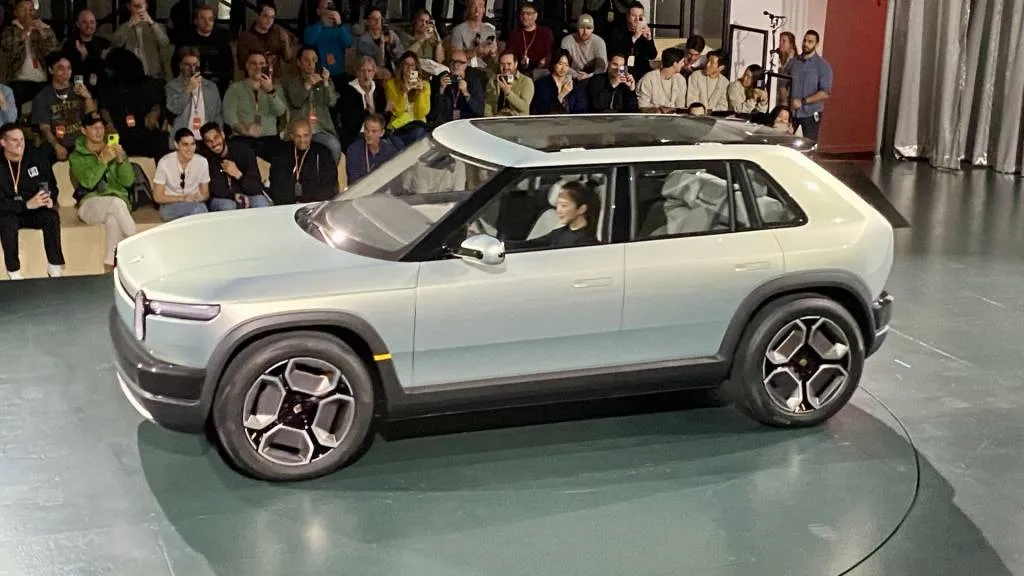
Rivian R3
And then, potentially come the R3 and R3X. Rivian didn’t specify where those models would be built, but it again said that the R3 “has been designed with a high level of commonality with the R2,” and would be available internationally following a North American launch.
Whether that means confirming those models for the now-paused Georgia plant remains to be seen. Either way, Rivian would need another serious expansion to make room for R3 and, perhaps, more production space for R2. It’s potentially a predicament Rivian might be happy to face.