
Category: General

Report: EVs are slowing the pace of growth in gasoline demand
Growing EV sales in both the U.S. and China could contribute to a halving in gasoline demand in 2024, says the consultancy Wood Mackenzie.
Demand is likely to rise 340,000 barrels per day (bpd) to 26.5 million bpd for the year, but that’s the slowest growth since 2020, and down from a growth rate of 700,000 bpd last year, according to the report. And it’s partly because, with increased EV sales, China is nearing the point of peak transportation fuel demand, while the U.S. has surpassed it, notes Reuters.
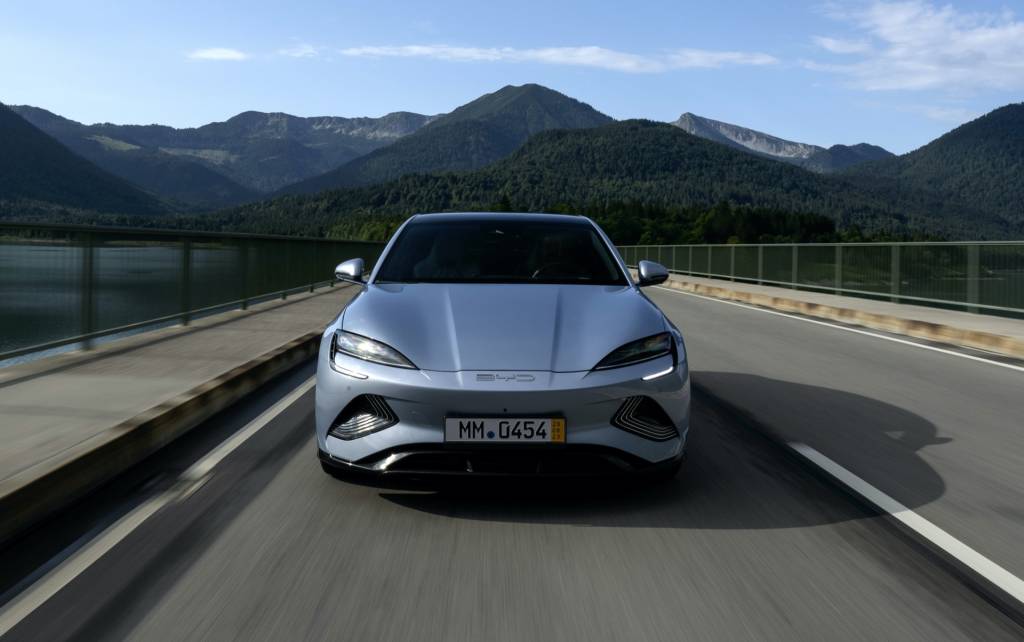
BYD Seal
EVs have only ticked up about 2% in overall registrations, Wood Mackenzie analysts note, but the cumulative number of EVs on the road is now thought to be enough to impact gasoline demand. That’s a feat as, in the U.S. at least, the fleet of gasoline vehicles has grown alongside EVs.
Wood Mackenzie also expects increased EV sales growth throughout the rest of the year. In China—the world’s largest new-car market—local analysts predict slower growth of 24% this year versus 36% last year, but that still means 11 million new EVs to add to the cumulative total, Wood Mackenzie notes. And the International Energy Agency (IEA) believes falling prices could lead to an EV market share of 45% in China, 25% in Europe, and 11% in the U.S. this year.
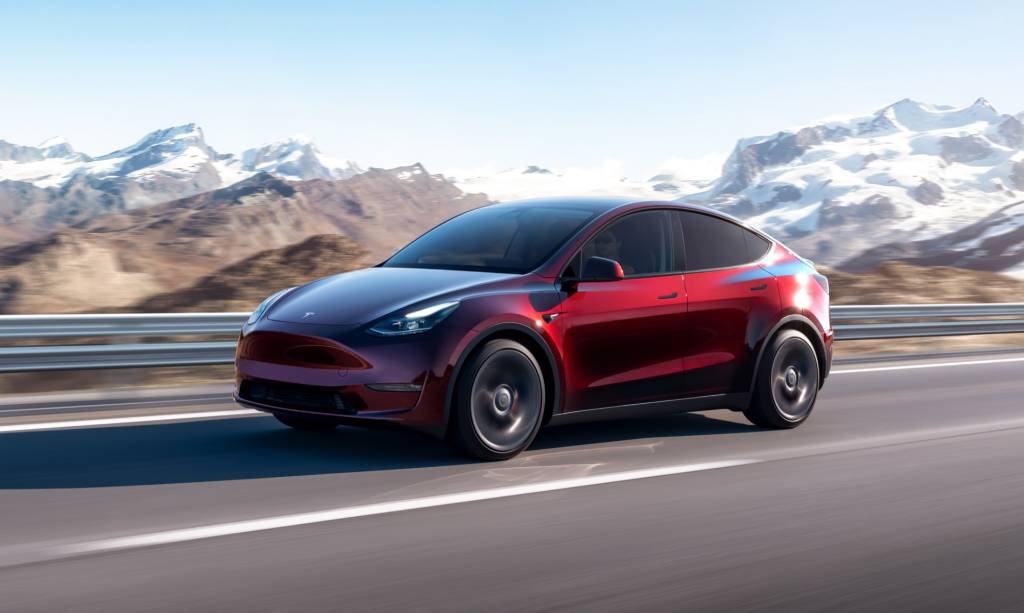
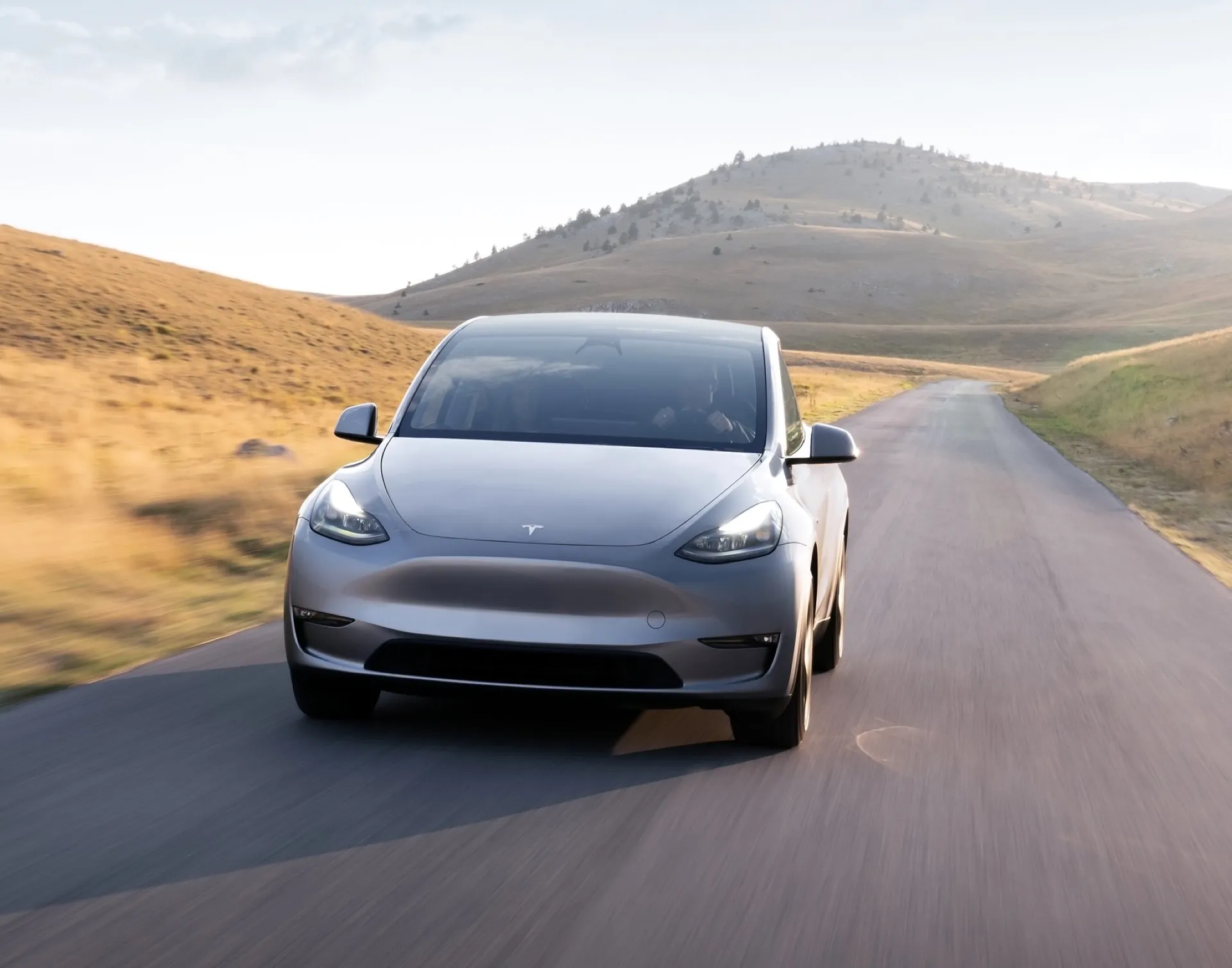
2024 Tesla Model Y. – Courtesy of Tesla, Inc.
Other analysts have predicted that EVs could top two-thirds of global vehicle sales by 2030, and have seen this as a point at which, cumulatively, the dynamics of gasoline supply and demand will become very different.
Grid demand and the emissions from a shift toward EVs are concerns, too, but EV efficiency gains could help cut that over decades—and EVs keep getting more efficient based on the energy mix they plug into.

Tiny Eli Zero urban EV priced at $11,990, goes up to 90 miles—slowly
Eli Electric Vehicles on Tuesday opened U.S. reservations for its Eli Zero, a tiny urban EV with a starting price of $11,990.
Launched with help from crowdfunding, the Zero was first shown in 2017 and began shipping to European dealers in 2021. At the time, Eli said it was targeting a 2022 launch for the U.S. That date has slipped significantly, but Eli claims to have delivered hundreds of vehicles in both Europe and French Polynesia in the interim.
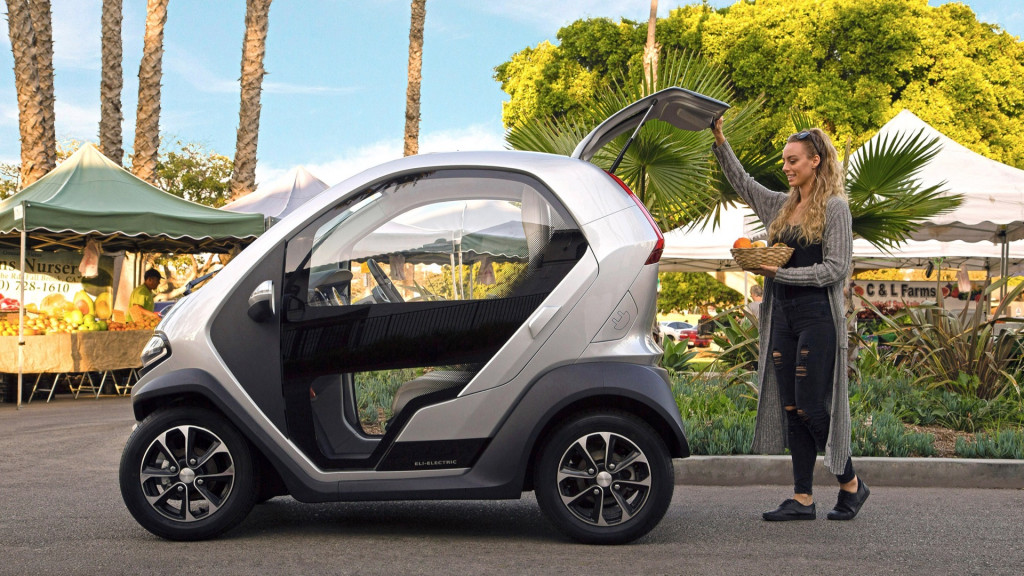
Eli Zero
The company now plans to start U.S. sales in the third quarter of this year, with deliveries after that. It’s taking $200 refundable deposits to secure a build slot; sales for 2024 will be limited to these reservation holders. Eli plans to sell vehicles “through local distributors and dealer partners” and claims to have an assembly plant capable of producing 4,000 vehicles per year.
Measuring just 4.5 feet wide and 7.4 feet long, the aluminum two-seat Eli Zero is classified as a neighborhood electric vehicle (NEV) in the U.S. As such, it has a top speed of just 25 mph. The price is a bit higher than Eli previously quoted, but the battery pack is larger as well, affording more range. It’s now 8 or 12 kwh, enough for 60 or 90 miles of range, respectively, compared to 5.8 kwh and 50 miles.
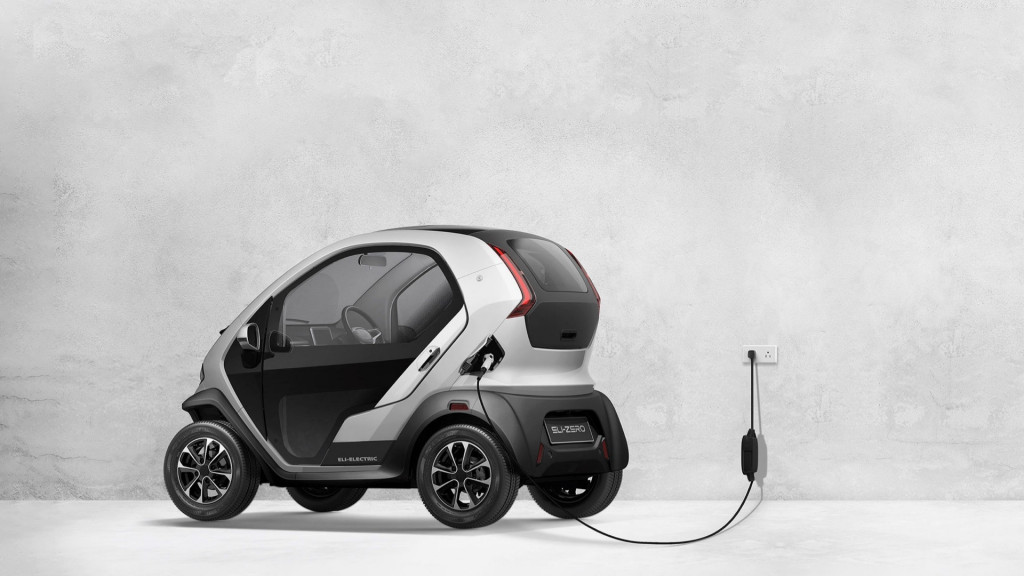
Eli Zero
The Zero also has some convenience features like soft-close doors and a Sony infotainment system with Apple CarPlay and Android Auto. We have a feeling it’s not quite going to be of the caliber of that in upcoming Afeela EVs from Sony and Honda, though.
The low-speed Zero is a completely different take on a light-and-lean EV versus the Aptera three-wheeler, which aims for 400 miles of range in its launch spec and performance more like that of conventional cars, or Arcimoto, which classified its three-wheelers as “autocycles,” putting them in the motorcycle family and again allowing for higher speeds.

Kia confirms EV3 for May 23 reveal, arrival in late 2024
Kia on Tuesday confirmed that its compact EV3 electric SUV will go on sale later this year.
The production-bound EV3 is due to make its debut on May 23 and will in its shift from a concept vehicle to a production-bound one arrive “comprehensively equipped,” according to Kia, while also offering “outstanding performance through its incorporation of innovative technologies.”
A set of very closely cropped teaser photos of the production EV3 released with the announcement showed it looking much like the EV3 concept, with the automaker pointing out that it carries over the boxy rear fenders and tailgate plus the so-called Star Map lightning theme
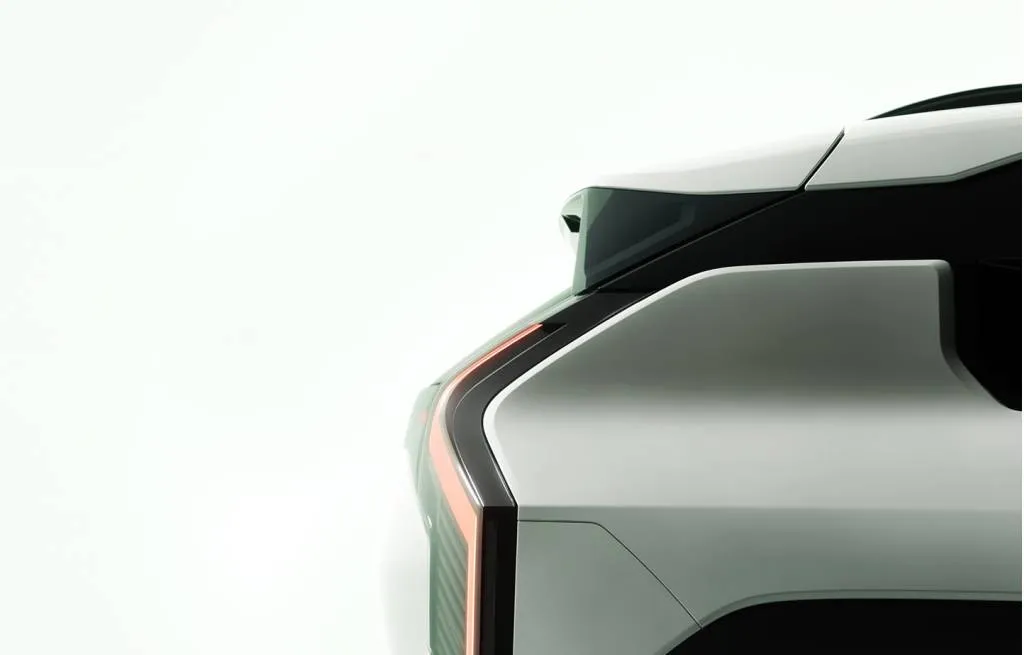
Kia EV3 teaser for production-bound EV
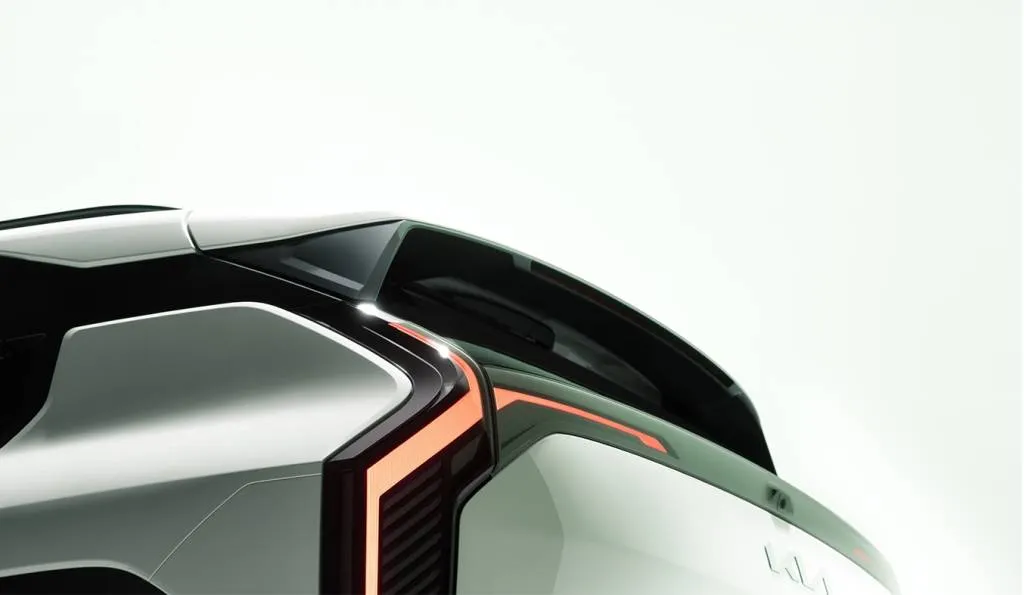
Kia EV3 teaser for production-bound EV
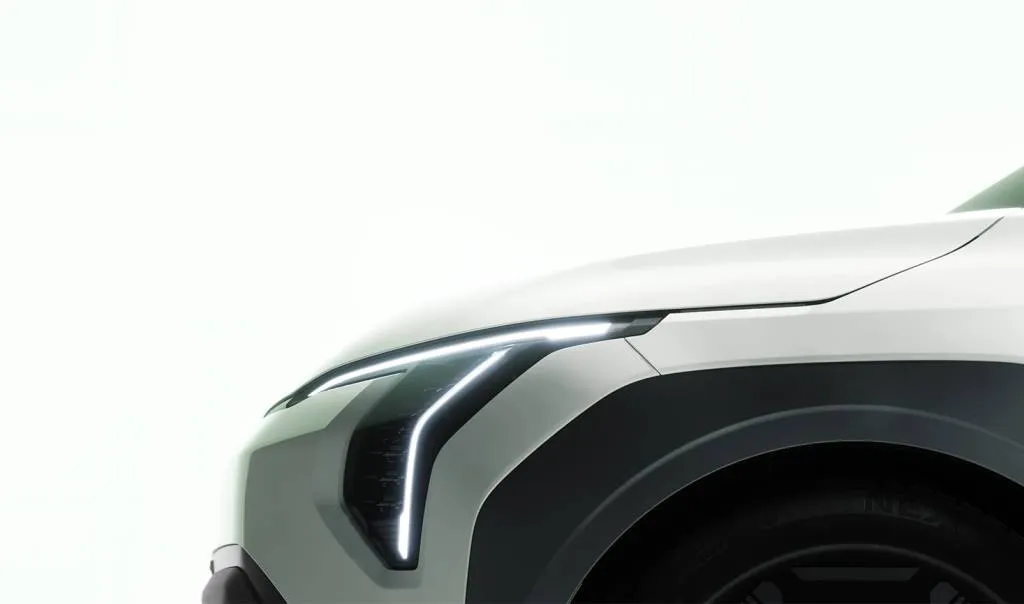
Kia EV3 teaser for production-bound EV
The EV3 and EV4 concepts were revealed along with a production-bound EV5 electric crossover sized closely with the Kia Sportage, Honda CR-V, and Toyota RAV4—and on the electric front, the VW ID.4 and Nissan Ariya, among others. At the time Kia stated that the EV5 was not U.S.-bound, but it left the door open for the smaller EV3 and EV4.
At the time of that reveal, Kia pointed to starting prices of $35,000 to $50,000 among the three models. So it might be inferred that the EV3 would have a starting price in the vicinity of $35,000.
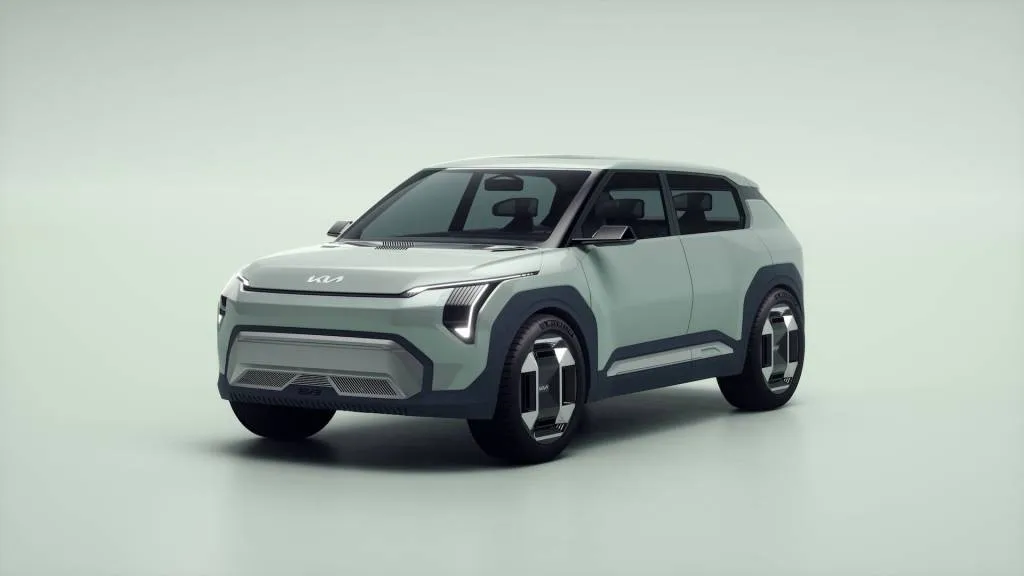
Kia EV3 concept
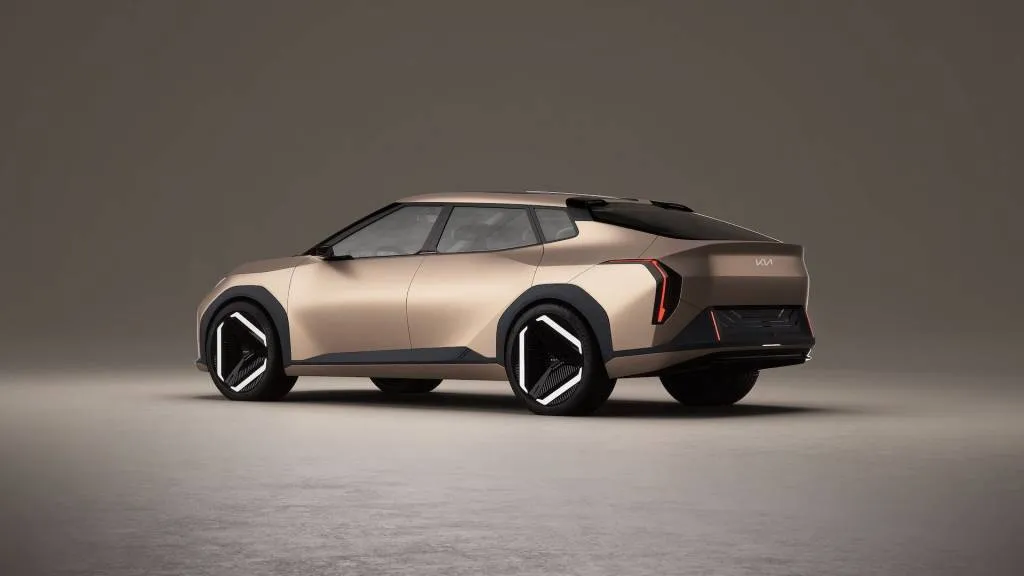
Kia EV4 concept
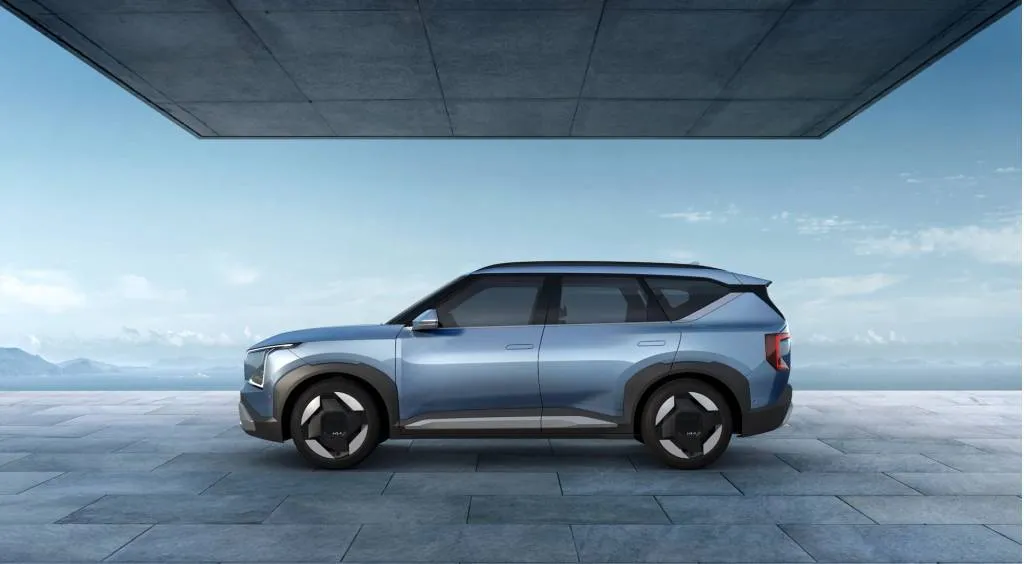
Kia EV5
Kia has also confirmed that an EV2 is on the way for Europe and emerging markets—perhaps priced around $30,000—but don’t count on that one for the U.S.
We can’t actually count on the EV3 quite yet either, Kia USA emphasized to Green Car Reports in a response following the global EV3 announcement. Spokesperson James Hope said that the EV is “an exciting addition to Kia’s expanding global lineup of electrified vehicles and is a key component to the brand’s Plan S strategy,” but he emphasized that no official announcement has yet been made about U.S.-market availability for the model.
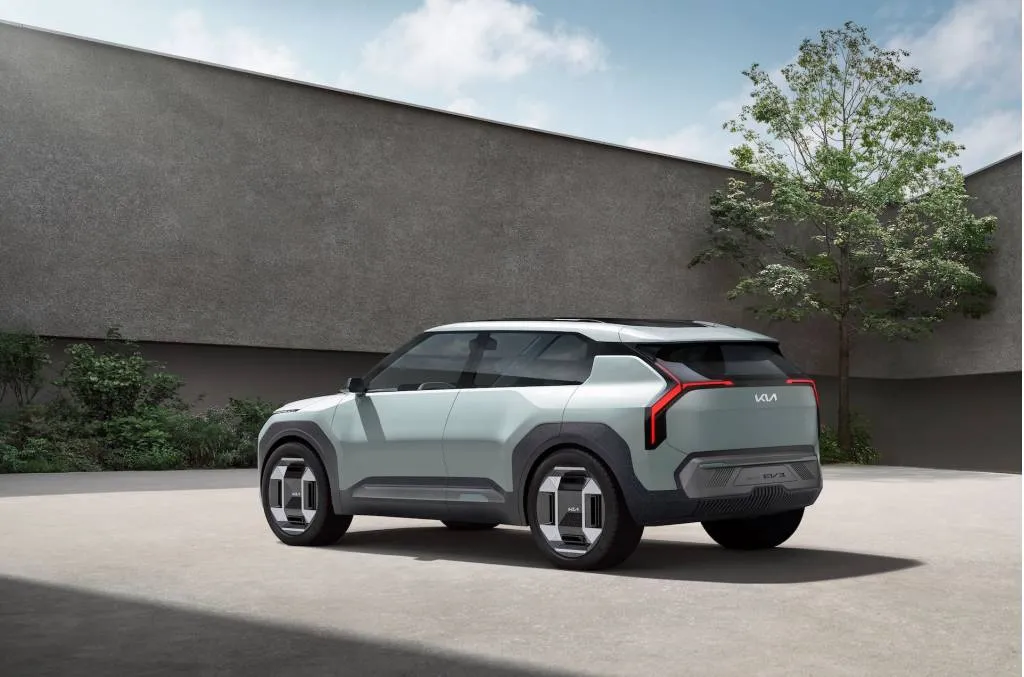
Kia EV3 concept
To apply a critical lens, it’s unclear how the EV3 might stand next to the Niro EV, for instance. In a review of the Kia Niro EV, Green Car Reports found it to be well equipped and refined yet overpriced for what it is.
The automaker just last month announced plans to expand the Kia hybrid lineup, but it emphasized that its EV plans stay intact. Last year Kia stepped up its 2030 global EV target—to 1.6 million global EV sales annually by then, versus its previous target of 1.2 million. Kia plans to introduce 15 new electric vehicle models by 2027. So there are likely other EV concepts and reveals for the brand coming later this year.

Ram hydrogen fuel-cell truck, BMW EV batteries, rural charging: Today’s Car News
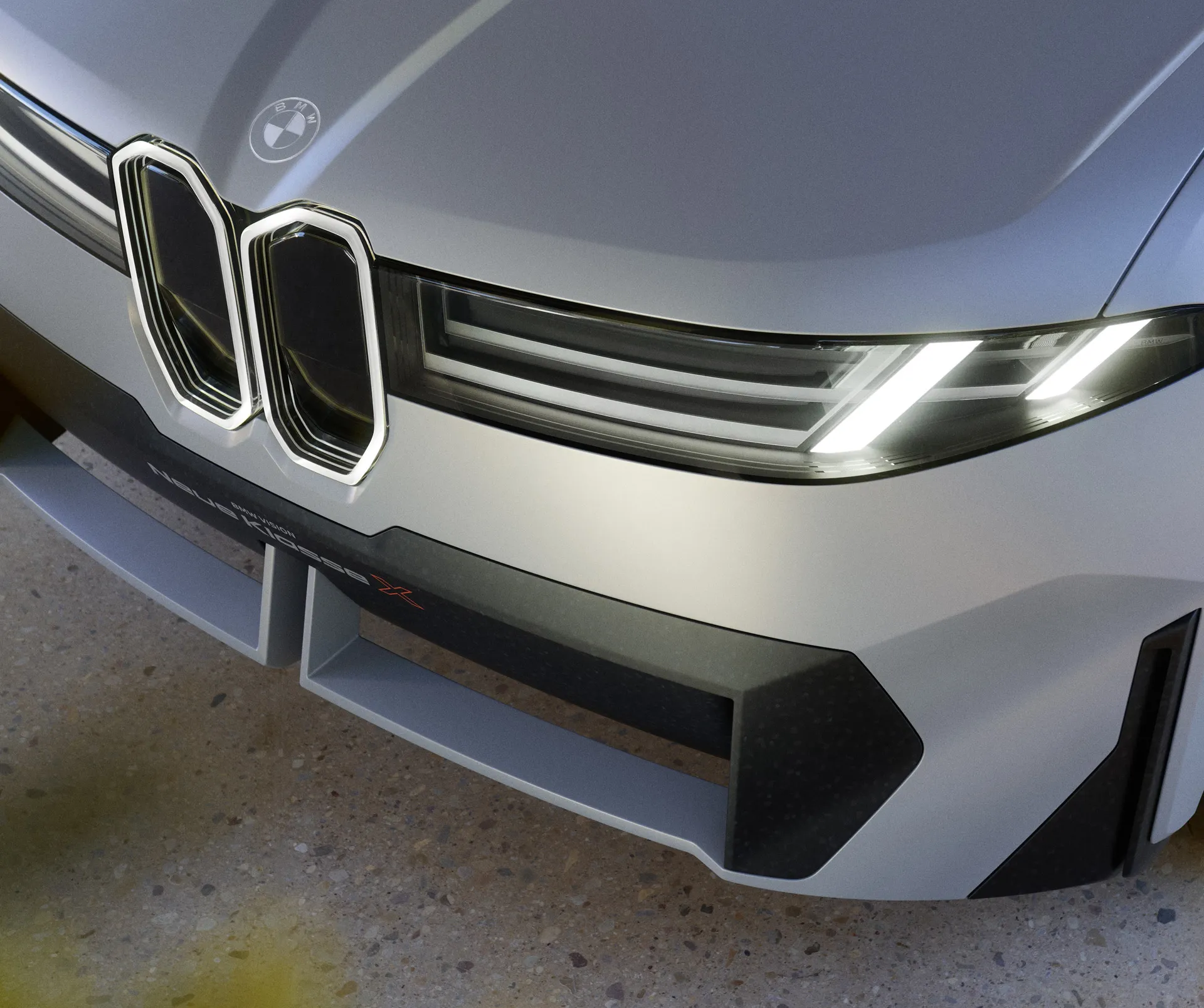
EV battery production for BMW is setting up south of the border. Ram aims to scale up its hydrogen fuel-cell muscle. And why do rural governments see EV charging as less important? This and more, here at Green Car Reports.
BMW has started building a battery plant in Mexico that will provide more energy-dense cylindrical cells for longer range and faster charging in next-generation Neue Klasse EVs. If Inflation Reduction Act rules remain, the products might eventually qualify for the EV tax credit.
As part of a commercial vehicle push, Stellantis plans a hydrogen fuel-cell Ram heavy-duty truck. Although details are yet to come, the decision to push well into the medium-duty sector with fuel cells coincides with other automakers’ decisions to shift away from fuel-cell passenger vehicles.
And in what might be yet another example of an urban-rural divide, a recent University of Michigan survey suggested that EV charging is seen as less relevant to rural communities than to cities. While more local governments are interested versus a version of this survey in 2019, they’re still concerned about cost.
_________________________________
Green Car Reports Newsletter
Sign up to get the latest green car and environmental news, delivered to your inbox daily!
I agree to receive emails from Green Car Reports. I understand that I can unsubscribe at any time. Privacy Policy.


Survey: Local governments see EV charging as costly, lower-priority
More local governments across Michigan see EV charging as a relevant issue, but the number is still fairly low, according to a new University of Michigan survey, and those interested in EV charging see cost as a barrier.
While the survey is Michigan-specific, it’s the traditional hub of the auto industry and probably represents a greater awareness in rural areas of EV tech versus other states. Conducted last fall, it increased interest from local governments compared to a previous study conducted in 2019, but still leaves some room for improvement.
Just under 40% of local leaders surveyed said EV infrastructure planning is somewhat or very relevant—a 23% increase from 2019. Just over a quarter said EV charging isn’t relevant in their jurisdictions, compared to 40% in 2019.
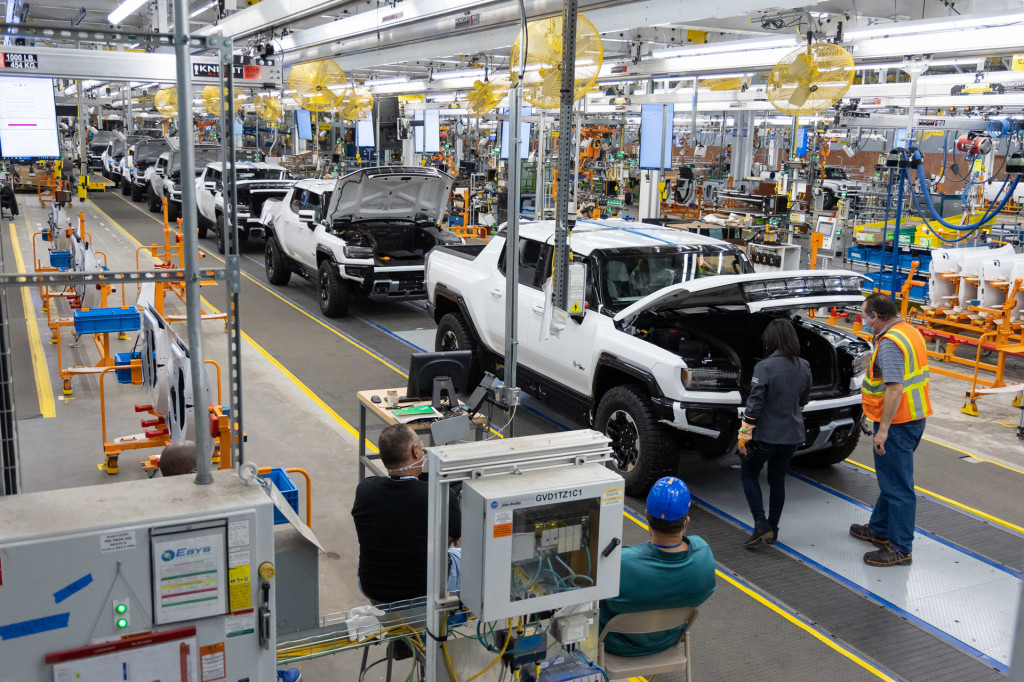
2022 GMC Hummer EV pre-production at Factory Zero plant in Detroit, Michigan
Over a third of respondents (34%) said their community had too few public charging stations, up from 29% in 2019. A majority of those surveyed (53%) pointed to the cost of adding EV charging stations or lack of interest among residents (51%) as major barriers to further infrastructure expansion.
The survey also found an urban/rural divide, with village and township officials less likely to say that planning for EV charging is very relevant to their jurisdictions (at 14% and 10%, respectively) compared to officials of cities and counties (32% and 30%).
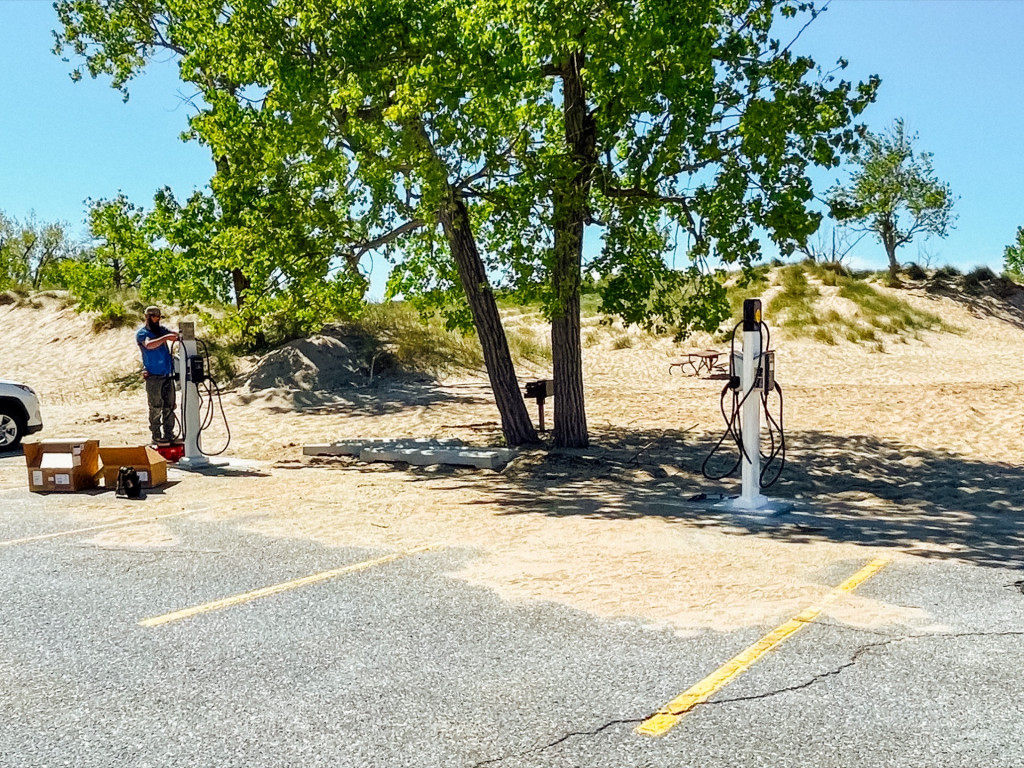
Rivian Waypoints chargers at Holland State Park, MI – Photo by Diane Dawson Wilks, c/o Michigan DNR
On the federal level, the Biden administration’s 500,000-charger national network will be laid out across some rural regions and small towns, but it depends on designated alternative fuel corridors. The administration has provided additional funds focused on rural areas—called out ambiguously as “low-income communities and non-urban areas” and depending on statistical designations.
Some smaller California cities and rural counties have been very eager to share their success with EVs and charging, but that was at the early adopter stage and at a time when EVs were less politically polarizing. Meanwhile, installing Level 2 chargers for commuters, shoppers, and more will definitely help in rural areas, too. And they don’t cost much.

BMW begins EV battery buildout ahead of Neue Klasse EVs
BMW has begun building a battery-assembly facility at its San Luis Potosí, Mexico, plant in anticipation of production of its Neue Klasse EVs.
In addition to the battery facility, BMW said in a press release that it is also expanding the body shop and making other upgrades to the site, with a total investment of 800 million euros (about $860 million at current exchange rates). The automaker also aims to generate 20% of the plant’s power from solar panels, and increase use of treated wastewater.
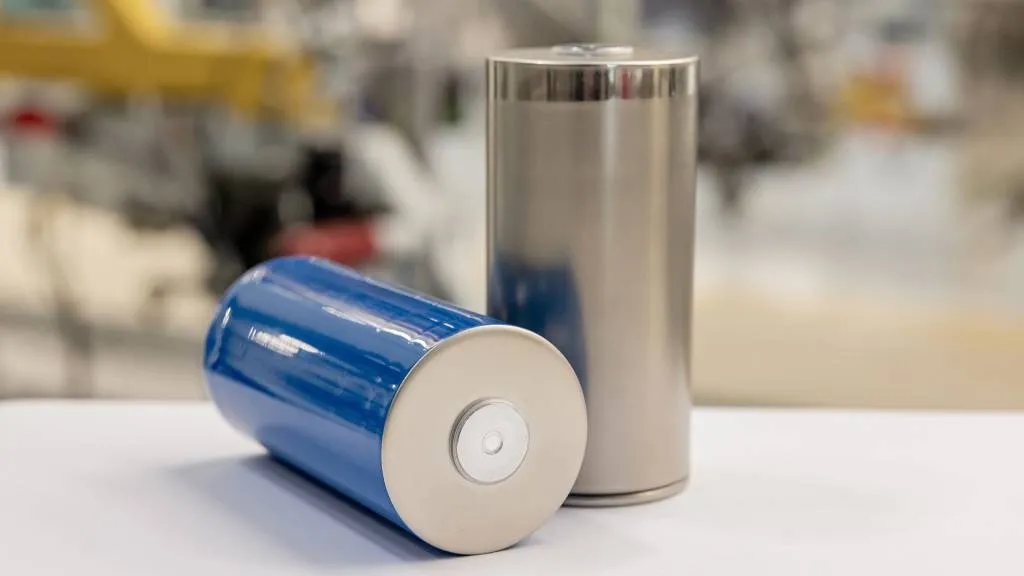
BMW cylindrical battery cells
BMW announced that it would build Neue Klasse EVs in Mexico, as well as two European production sites, in February 2023. The battery side will supply cylindrical cells with 20% greater energy density than current cells, helping to boost charging speed and range by 30%, BMW claims. The automaker believes this tech could put it ahead of Tesla.
The groundbreaking for the expanded Mexican site was delayed, according to The Yucatan Times. BMW is however sticking to its original timeline for the end products, with Neue Klasse (German for “new class”) models set to begin rolling off Mexican assembly lines in 2027. That will be preceded by European production.
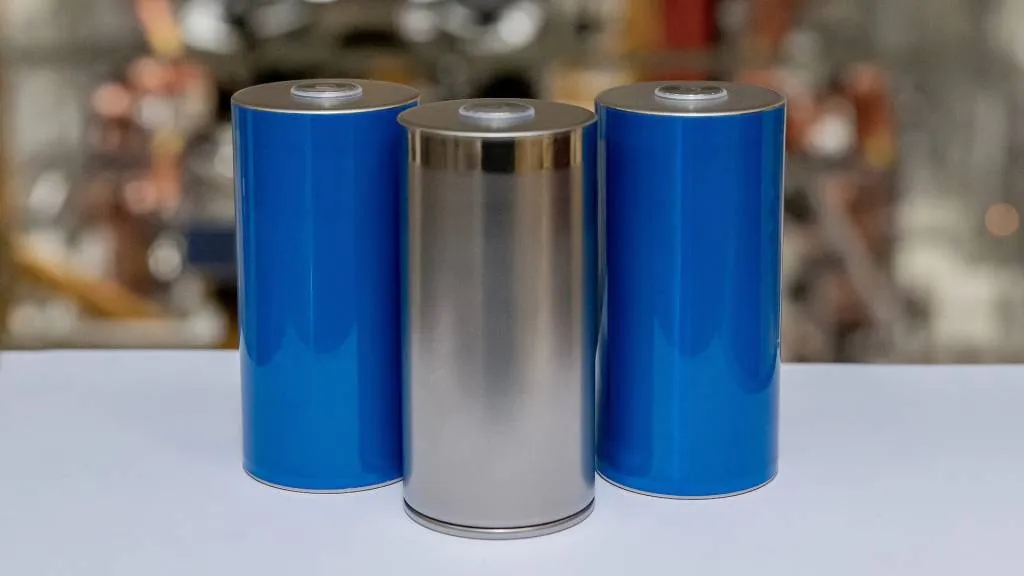
BMW cylindrical battery cells
The first Neue Klasse model, an SUV previewed by Vision Neue Klasse X concept, is scheduled to start production in Hungary in 2025. A sedan based on the minimalist Vision Neue Klasse concept will follow the SUV into production in Germany in 2026. The SUV will also be the first electric model assembled at the Mexico factory, which opened in 2019 and currently builds combustion BMW 3-Series and 2-Series models.
Named after an iconic family of BMW models from the 1960s, the Neue Klasse will be affordable and distinct, but without the polarizing design and packaging of the previous BMW i3, development boss Frank Weber said in a 2023 interview.

Tesla drops base Model Y, Electrify America push, NACS and reliability: Today’s Car News
Electrify America is on an expansion streak. EVs are part of the solution to remedy unhealthy air. Tesla has dropped the base Model Y for a 320-mile version that only costs $2,000 more. And will the Tesla connector fix charging? This and more, here at Green Car Reports.
Tesla has canceled its cheapest Model Y, while adding a rear-wheel-drive Model Y Long Range version with a range of 320 miles for just $2,000 more. Additionally, CEO Elon Musk suggests that recently delivered base Model Y versions can tap into all or nearly all that range as an upgrade, pending regulatory approvals.
Will the Tesla NACS connector bring more reliable charging? As a report recently underscored, the answer to that is no, as the vast majority of charging issues relating to EVs isn’t due to a failure of the connector but to the maze of interoperability that manufacturers, hardware makers, and networks face.
According to a recent annual report from the American Lung Association, 39% of the U.S. population lives with unhealthy air. While recent EPA emissions rules for passenger cars and commercial trucks will help clean up particle pollution, ozone pollution remains a challenge. EVs are part of the remedy, as progress is also made in curbing pollution from power plants.
And on the sixth anniversary of its first EV fast-charger installation, last week—the same week that Tesla laid off its Supercharger team—Electrify America confirmed big expansion plans. It aims to boost its total number of fast-chargers by 25% through the year, to 5,000 chargers. That’s about 20% more by the end of the year versus what it has today.
_________________________________

EV charger reliability gains will take more than a Tesla connector
Nearly every EV brand in North America is adopting Tesla’s North American Charging Standard (NACS) connector and gaining access to the automaker’s Supercharger network. But despite that network’s fairly good reputation for reliability, the NACS connector alone may not guarantee an overall improvement in charger reliability, says one expert.
Joerg Heuer is the CEO of EcoG, a company that provides operating systems for EV chargers. In a recent interview with Charged EVs, Heuer emphasized that interoperability will be the key to reliability as more EVs charge with NACS connectors or adapters.
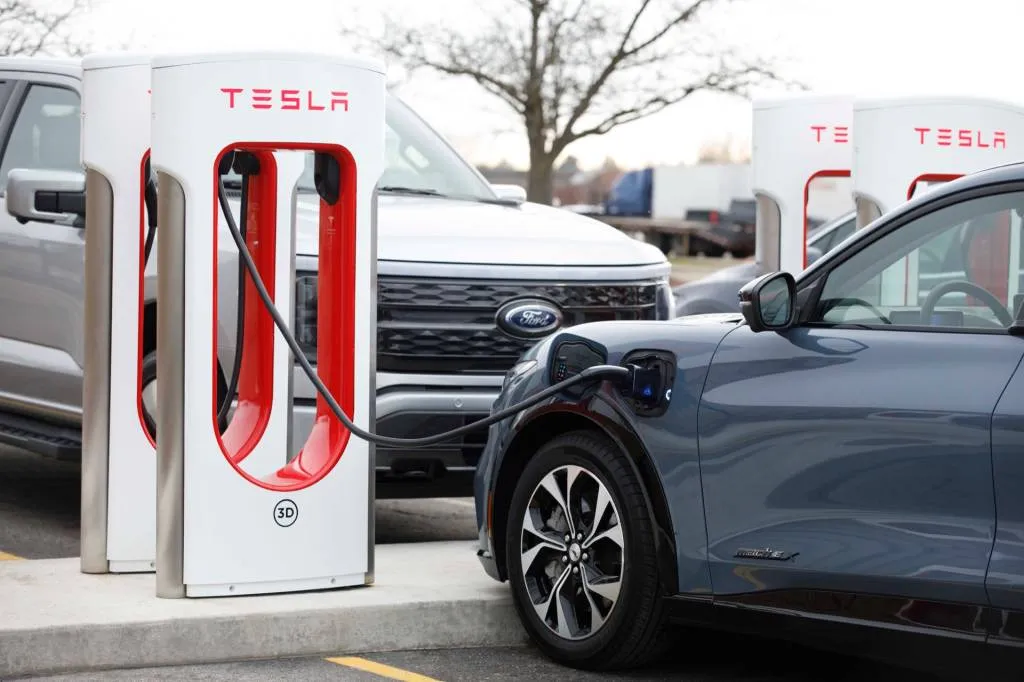
Ford EVs at Tesla Supercharger
“Right now, we’re looking at a landscape with about 100 charging station manufacturers and a growing number of EV manufacturers,” Heuer said. “Achieving interoperability means testing over 500 combinations of cars and chargers.”
Helping a bit is that NACS, which is being formally standardized as SAE J3400, is similar to the Combined Charging Standard (CCS) hardware already used by most EV brands. There’s about “90% to 95%” commonality between CCS and NACS, according to Heuer, with nearly everything except the plug itself being similar enough to easily facilitate interoperability. That’s not the case with the CHAdeMO standard, which was harder to reconcile with CCS, according to Heuer.
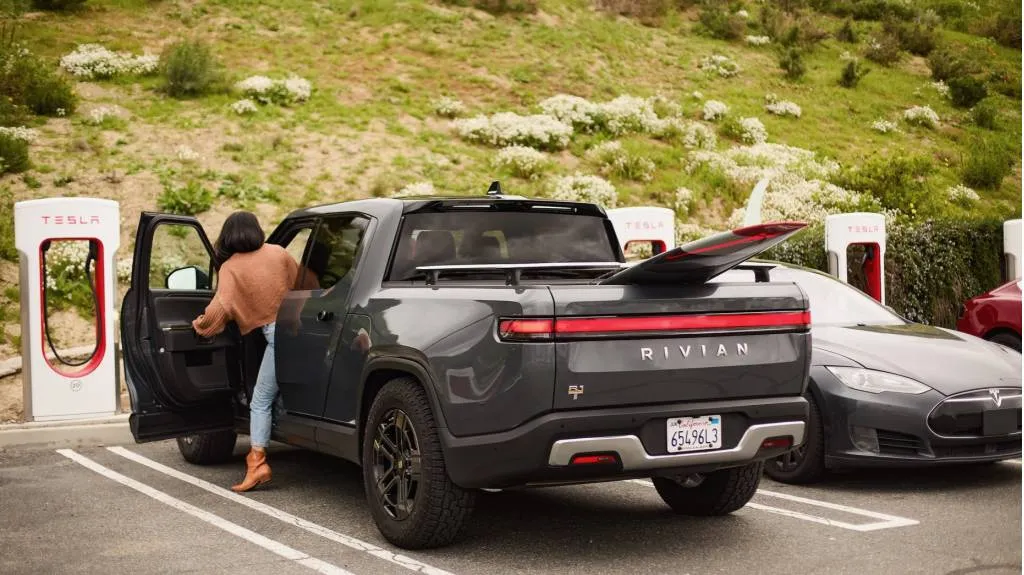
Rivian R1T at Tesla Supercharger
Tesla pushed other automakers to use its connector starting in 2022, but most didn’t bite until Ford announced plans to adopt NACS in May of last year. Most automakers selling plug-in vehicles in North America followed after that. Adapters for some brands have started to show up, and users have thus far noticed that charge rates are a wash. Measures like Rivian’s route-planning grades may help prioritize the ones that work best and most reliably, though.
The switch has left the auto industry wondering if Tesla Supercharger reliability will extend to other brands’ EVs, but to think it’s simply a matter of switching the connector or favoring Tesla’s network is naive. Some of it will depend on feet-on-the-ground support—now potentially less present for Tesla with the layoff of its charging team—but as with much about charging, it’s complicated.