
Category: General

Study: EV interest waning amid concerns over cost, charging
Consumer interest in EVs has decreased compared to last year, according to a new J.D. Power study.
On Thursday, J.D. Power released the results of its 2024 U.S. Electric Vehicle Consideration study. For the first time since the study’s launch in 2021, analysts saw a decline in consideration of EVs by new-car shoppers.
Of those car shoppers surveyed, 24% said they were “very likely” to consider purchasing an EV, down from 26% a year ago. The share of respondents who said they are “overall likely” to consider purchasing an EV also decreased, from 61% in 2023 to 58% this year.
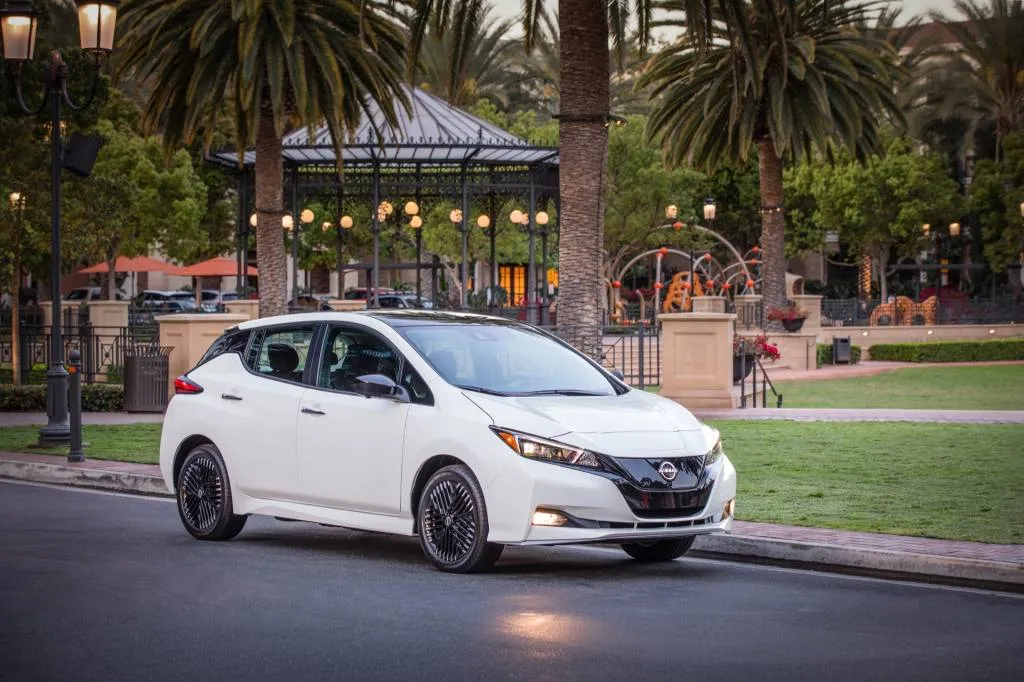
2024 Nissan Leaf
One of the main factors behind diminished EV interest was affordability. In statement, J.D. Power executive director of EV intelligence Stewart Stropp cited “the continued shortage of affordable vehicles” as one of the “main roadblocks” to getting more consumers behind the wheel of an EV.
The lack of affordable EV models is causing consideration to drop among the Gen Z and Gen Y buyers who are otherwise most excited about EVs. The share of Gen Z and Gen Y buyers “very likely” to consider an EV was down 2 and 5 percentage points year over year, respectively. However, that still leaves 24% of Gen Z and 32% of Gen Y respondents that are “very likely” to consider one—the two highest ratios amount generational demographics.
High interest rates and inflation—which also impact affordability—were two other factors in the decline in EV interest, according to J.D. Power. And while incentives can help make EVs more affordable, 40% of respondents said they did not have a solid understanding of such incentives. The drop in tax credit availability for many models likely hasn’t helped, either.
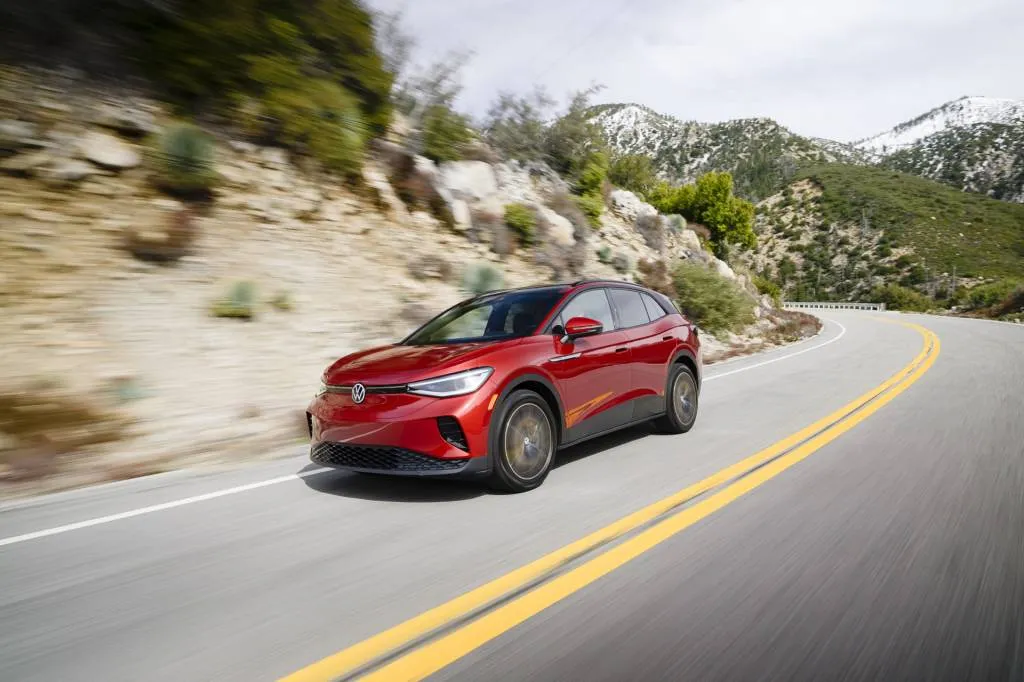
2024 Volkswagen ID.4
Charging also remains an issue. Among respondents said they were “somewhat unlikely” or “very unlikely” to consider an EV, 52% cited lack of charging station availability as a reason. This figure increased 3 percentage points year over year. A previous J.D. Power study also found that charge times, as total ownership costs, may be holding shoppers back from EV purchases.
The study also found that drivers with long commutes are less likely to consider EVs. They might potentially benefit the most from them in ownership costs, but with lower gas prices and increased charging anxiety, those who drive the most daily miles are shying away from EVs, according to J.D. Power. Instead we’ve seen that Americans all too often buy vehicles for the one trip or scenario they might only need once a year.
Even as gas prices rise again and charging networks grow and become more reliable, the dearth of affordable EV models may soon become the true issue without more market entries.

Megawatt charging for electric big rigs is starting to arrive
After a few years of slow rolling, megawatt charging for electric commercial trucks is arriving in a substantial way.
WattEV this week announced the opening of a solar-powered charging station for medium-duty and heavy-duty commercial trucks in Bakersfield, California. Announced in 2021, it’s the fourth station WattEV has opened, following three other California locations positioned near major trucking hubs and routes.
The Bakersfield station has three Megawatt Charging Standard (MCS) 1,200-kw chargers connected to its solar array, WattEV said in a press release. These can reduce the charge time for 300 miles of range to just 30 minutes, WattEV claims. The 119-acre site also has 16 dual-cord 360-kw chargers connected to the grid, as well as 15 single-cord 240-kw Combined Charging Standard (CCS) chargers.
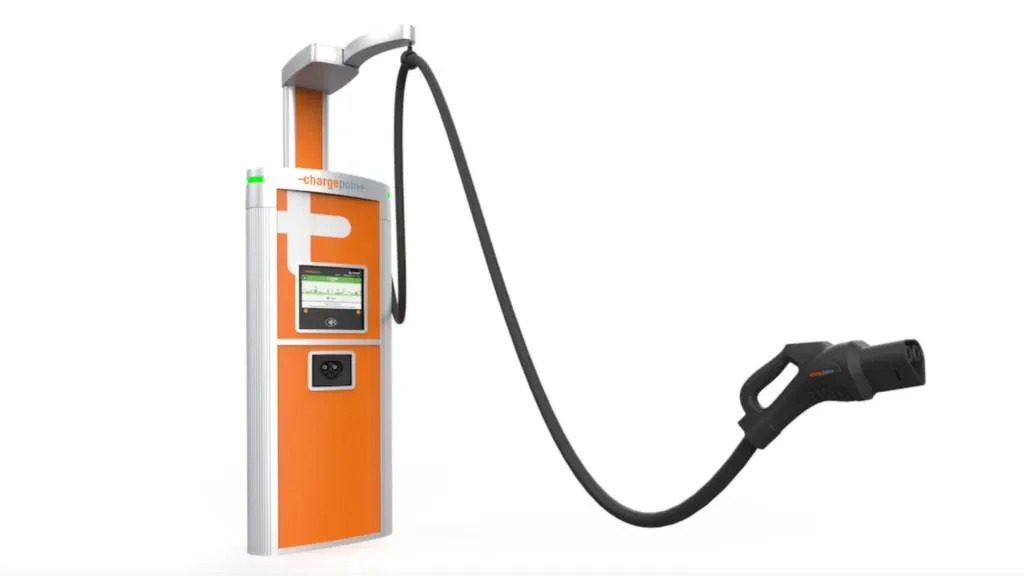
ChargePoint EV charger with megawatt connector and cable
ChargePoint this week also announced support for the MCS. A compatible cable and connector will be available on the company’s Power Link 2000 stations, delivering up to 1.2 megawatts, according to a ChargePoint press release. The MCS is also designed for bidirectional charging, with an output of up to 3 megawatts, as well as marine and aviation charging applications, the company noted.
These announcements indicate that megawatt charging infrastructure development is finally picking up speed. The first megawatt-charging-ready station for electric semis opened in 2021, in Portland, Oregon, while megawatt charging was formalized as a standard in 2022.
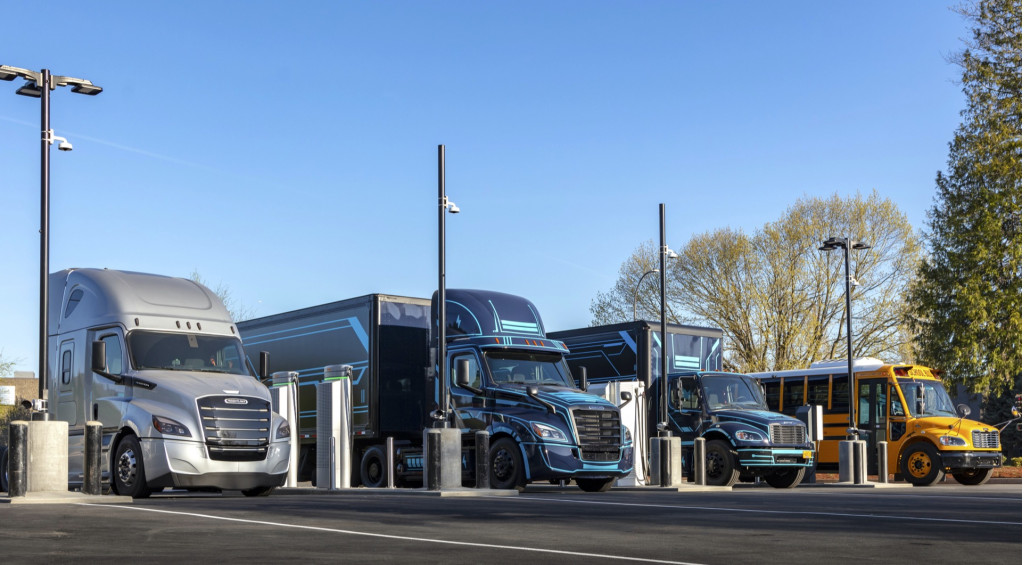
Electric Island – Daimler Trucks North America and PGE – Portland OR
This may be just the start. A utility-based project helping to lay out and site these high-power stations kicked off in 2020, helping to pave the way for a network along the West Coast’s I-5 corridor. Truck maker Daimler is also planning a $650 million U.S. charging and hydrogen network for big rigs.
With refueling times for hydrogen fuel-cell semi trucks estimated at 20 minutes or more, megawatt charging creates a closer competition between fuel-cell and battery-powered trucks in the effort to decarbonize commercial vehicles—along with cause to wonder if the time for hydrogen fuel-cell semis has already come and gone.

Mercedes electric G-wagen review, Chinese EV tariffs, BMW and Honda EV targets: The Week in Reverse
Which EV charging network remains slated for growth, with nearly the entire team laid off?
How will EV tires last longer while tapping into more renewable materials?
This is our look back at the Week In Reverse—right here at Green Car Reports—for the week ending May 17, 2024.
In a first drive of Mercedes’ electric G-wagen, we found it to be a better, more precise off-roader than the gasoline model—outshining the combustion versions even before the EV’s party-trick zenith called G-Turn.
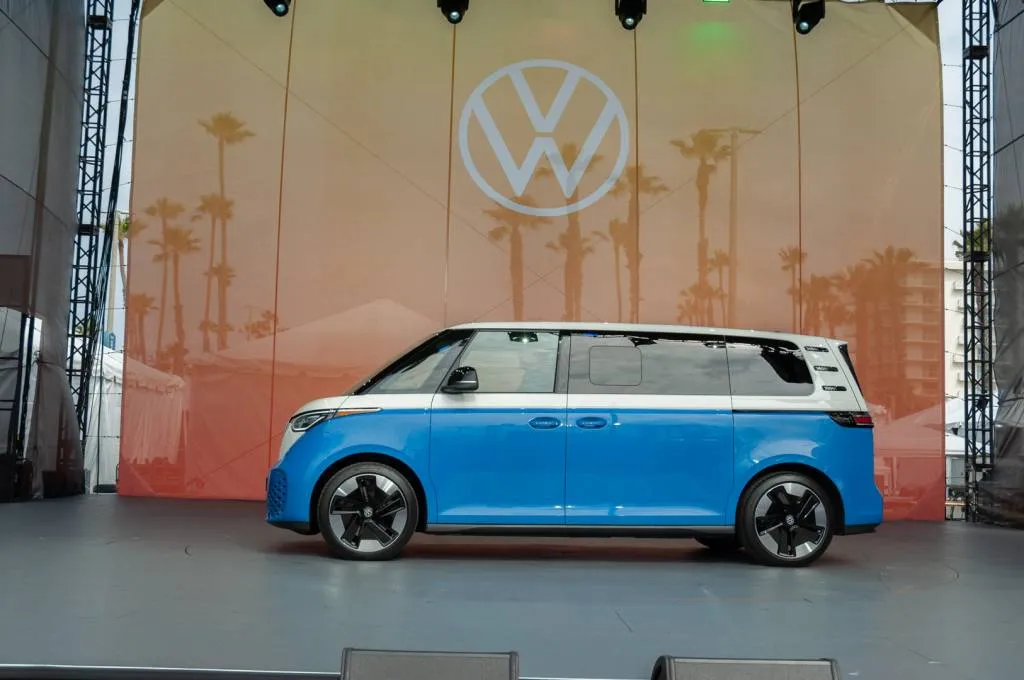
2025 Volkswagen ID.Buzz
Volkswagen has confirmed standard features and trim levels for its U.S.-bound 2025 VW ID.Buzz electric vans, but pricing and EPA range might remain months away, closer to when these models are expected to arrive for first deliveries. Expect colors and interior trims for the longer three-row ID.Buzz versions that America gets.
The 2025 Kia EV6 has made a global debut with a larger battery pack and potentially a range boost of 10% or more—plus styling updates that appear to bring this trendsetting electric crossover in alignment with details from Kia’s latest EV9 and upcoming EV3. Also, the 2025 Kia Sorento Hybrid three-row SUV lineup earns up to 36 mpg, and it’s getting refreshed styling inside and out, without any price hike. A similar update applies to the plug-in hybrid.
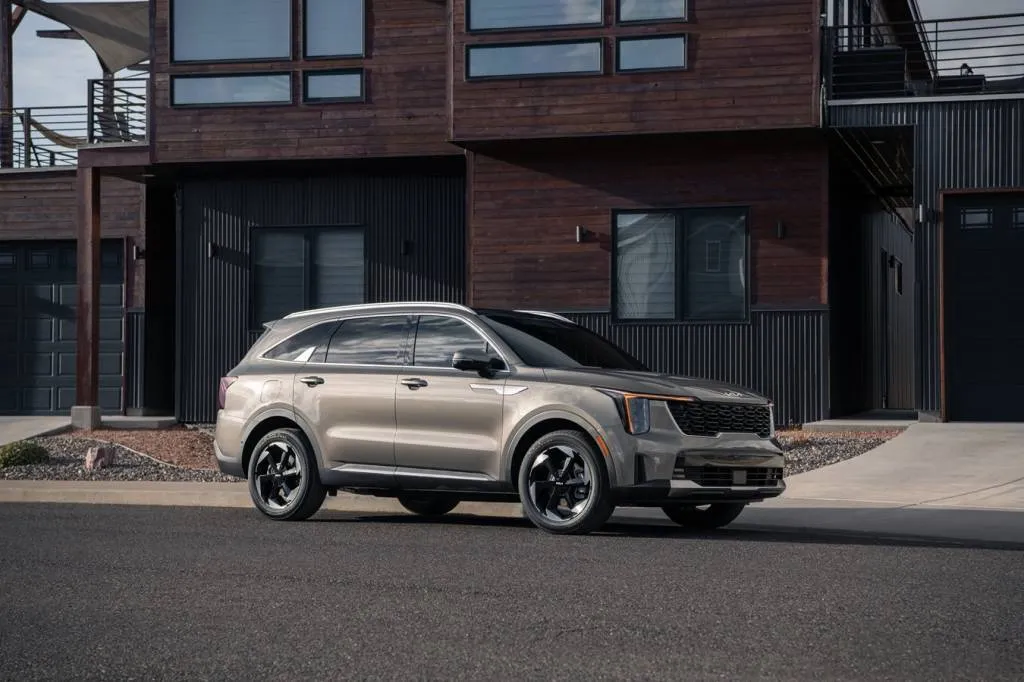
2025 Kia Sorento plug-in hybrid
California EV startup Aptera is ending crowdfunding for its three-wheel EV after June, it announced late Wednesday. More funding is still needed to get its Launch Edition solar EV to production, although it says it plans to bring the vehicle to market “at scale” in 2025.
Subaru is bringing back the Crosstrek Hybrid, according to a report, and it will likely arrive soon after the upcoming 2026 Subaru Forester Hybrid. Meanwhile, it appears that three out of the four EVs that Subaru announced last year will be collaborations with Toyota.
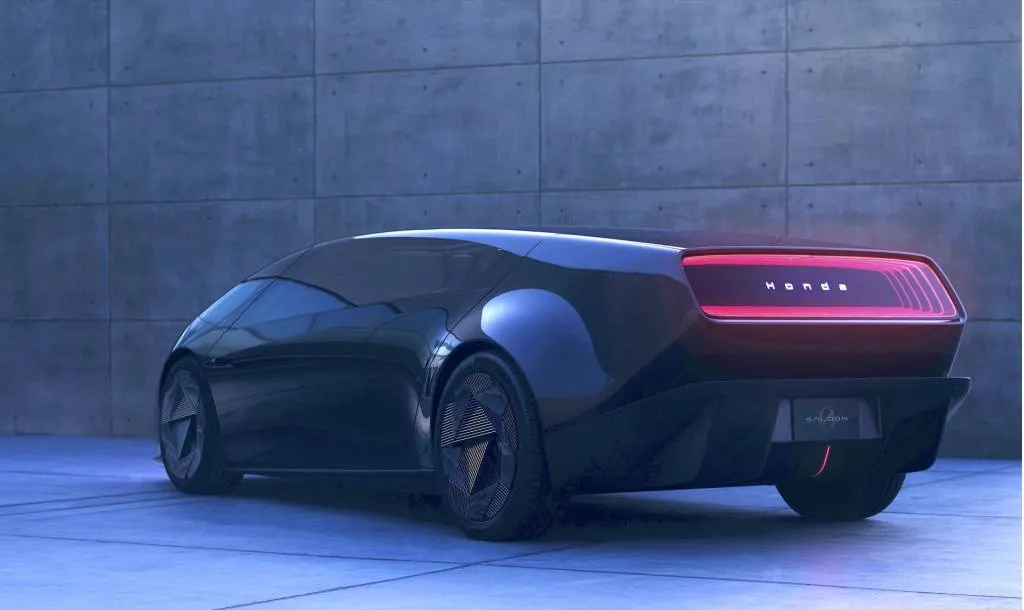
Honda 0 Saloon concept
Honda has confirmed that it plans to make two million EVs annually by 2030. And, as part of a presentation outlining all that it hopes to achieve with EVs in the second half of the decade, it also revealed plans for a new generation of Honda all-wheel-drive hybrids coming soon.
Mitsubishi provided a rough idea of what its future U.S. lineup might look like for 2026 and beyond. Two models will bring the brand into new market segments, it says, and Mitsubishi EVs, hybrids, and plug-in hybrids are on the way. It didn’t provide any update on the reported Mitsubishi electric pickup to be shared with Nissan, though.
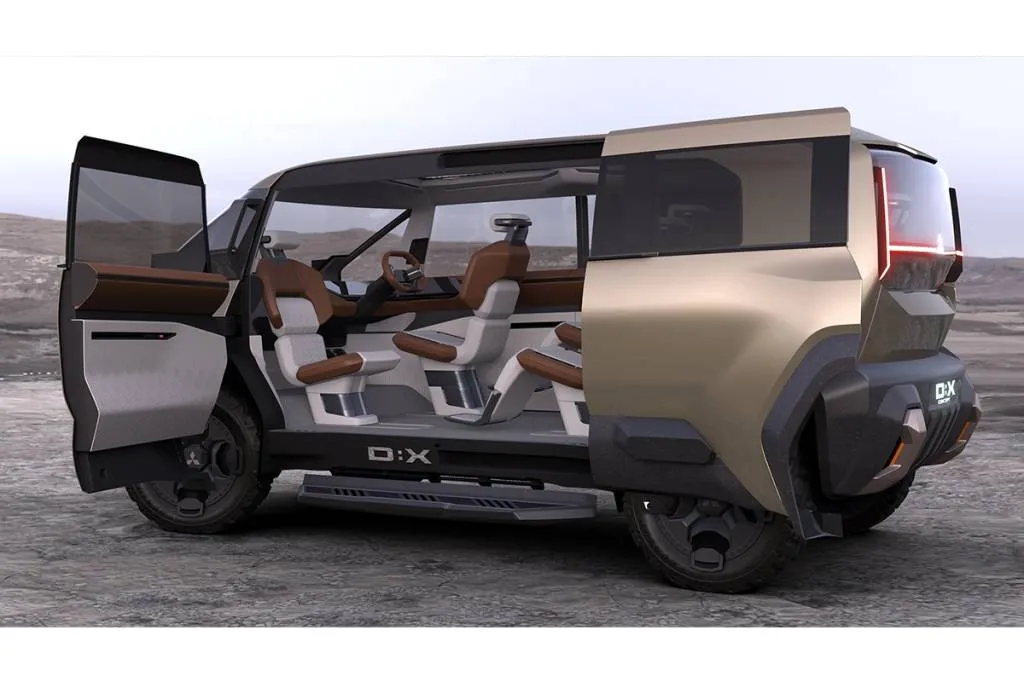
Mitsubishi D:X concept
The world debut of Sony’s new in-vehicle entertainment app is in the Vinfast VF 8 electric SUV, the Vietnamese automaker announced Friday. Vinfast will initially offer the feature, called Ridevu, as complimentary, including a library of movies, and streaming to other passenger devices. The interface serves as an early preview of what’s in store in Sony’s upcoming Afeela EV conceived with Honda.
The Biden administration effectively quadrupled the tariff on Chinese EVs, accompanying tariff hikes on EV batteries, solar cells, and critical minerals. It expands beyond just EVs, however, to steel and aluminum and semiconductors, but it omitted the language from challenger Donald Trump singling out imports from Mexico as an issue. And coincidence or not, the same morning the tariff hikes were announced, China’s BYD Shark plug-in hybrid pickup made its debut in Mexico. As the first completely new BYD to debut outside China, the sub-$55,000 pickup with 62 electric miles provided a political statement even if not intended.
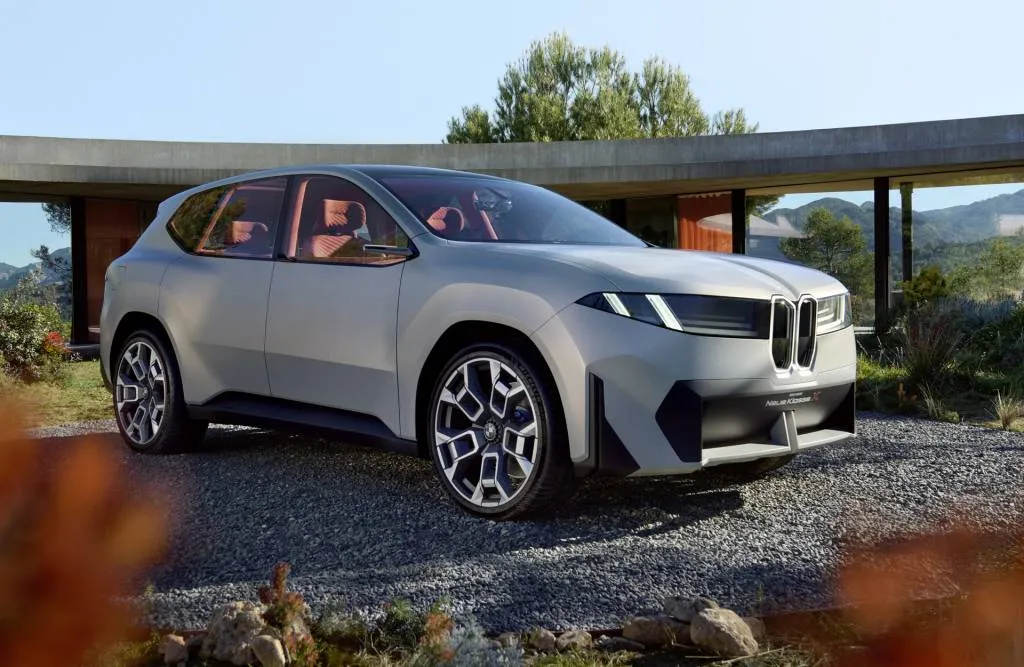
BMW Vision Neue Klasse X concept
BMW is sticking to the EV targets it announced several years ago—50% fully electric sales by 2030, not including hybrids or plug-in hybrids. That said, BMW CEO Oliver Zipse wouldn’t set an end date for internal combustion, emphasizing that the company “will stay flexible—even well into the 2030s.”
Ford is recalling some Maverick and Escape hybrids, as well as some Lincoln Corsair plug-in hybrids, over an issue that could leave these vehicles in limp mode. It’s a software fix but requires a trip to the dealership.
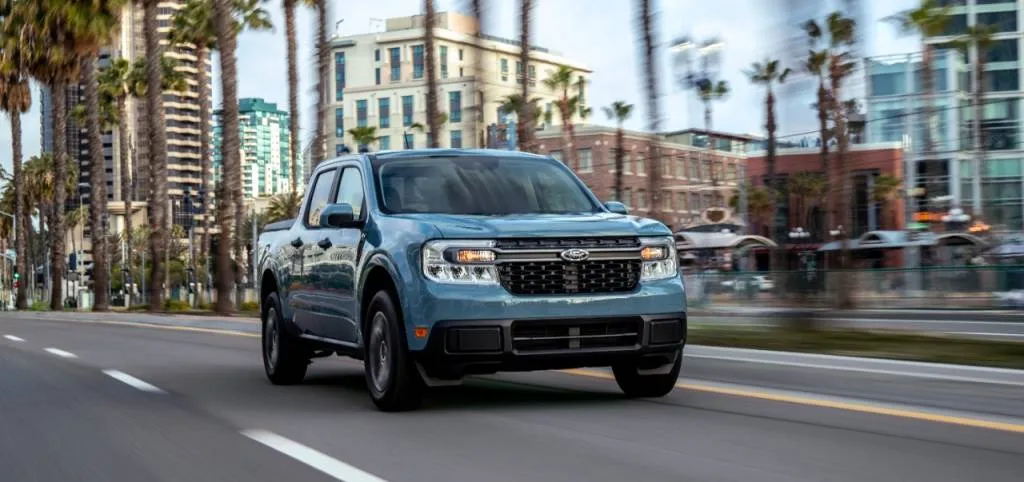
2024 Ford Maverick
Michelin might be the top tire maker in the world, but it sees a future in which you won’t need to buy as many tires. That’s because in addition to radical innovations like airless tires and million-mile retreads, future EV tires with sustainable materials will last longer.
In Q1, U.S. EV market share fell, while EV sales levels remained significantly up on a year-over-year basis. With that as the top-level takeaway of an update from the DOE’s Energy Information Administration, the backstory suggested some complicated dynamics, as a glut of luxury EVs sits in a sagging luxury market, affordable EVs remain scarce as affordability challenges remain, and Tesla managed only slight U.S. sales gains.
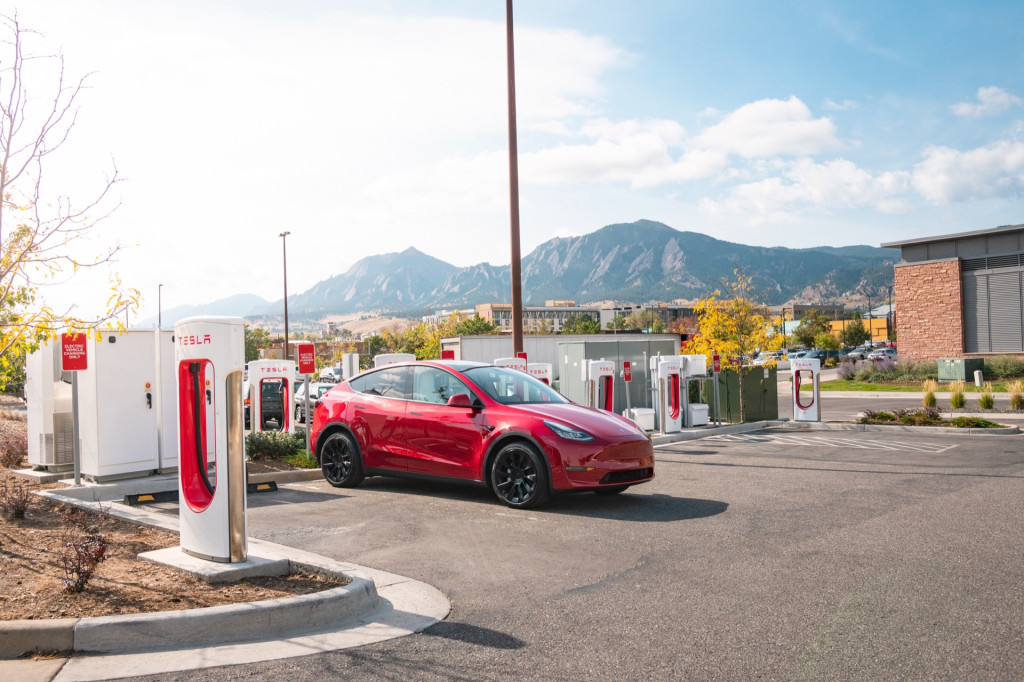
Tesla Supercharger
And Tesla’s Supercharger network is set to grow by “thousands” of chargers in 2024, attested CEO Elon Musk, despite a recent round of layoffs that essentially purged the entire division behind the highly successful charging network. It will spend “well over” $500 million on its Supercharger network this year, he said in a post on X, with that investment independent of operating costs.
_______________________________________

Wayve’s Alex Kendall raises $1 billion for shot at self-driving breakthrough (Episode 251)
The CEO and co-founder of the U.K. automated-driving startup details a fundraising round that includes investment from SoftBank, Nvidia and Microsoft. Further, he explains the company’s ChatGPT-like approach to utilizing AI in the traffic realm.

Chevy Bolt EV owners may get up to $1,400 for battery recall
Those who’ve owned or leased a Chevrolet Bolt EV from the 2017 through 2022 model year are likely eligible for an amount ranging from $700 to $1,400, as part of a $150 million settlement amount against GM and LG Energy Solution.
The Michigan class-action case is the consolidated version of eight class-action cases filed in various U.S. District Courts vs. GM in late 2020 and early 2021 and, in settlement documents posted by CBS, lays out eligibility and amounts.
According to the settlement, Bolt owners who installed diagnostic software that temporarily affected these models’ driving range are eligible to get $1,400, provided they installed it by Dec. 31, 2023, while those who owned or leased a Bolt prior to the remedy can claim $700.
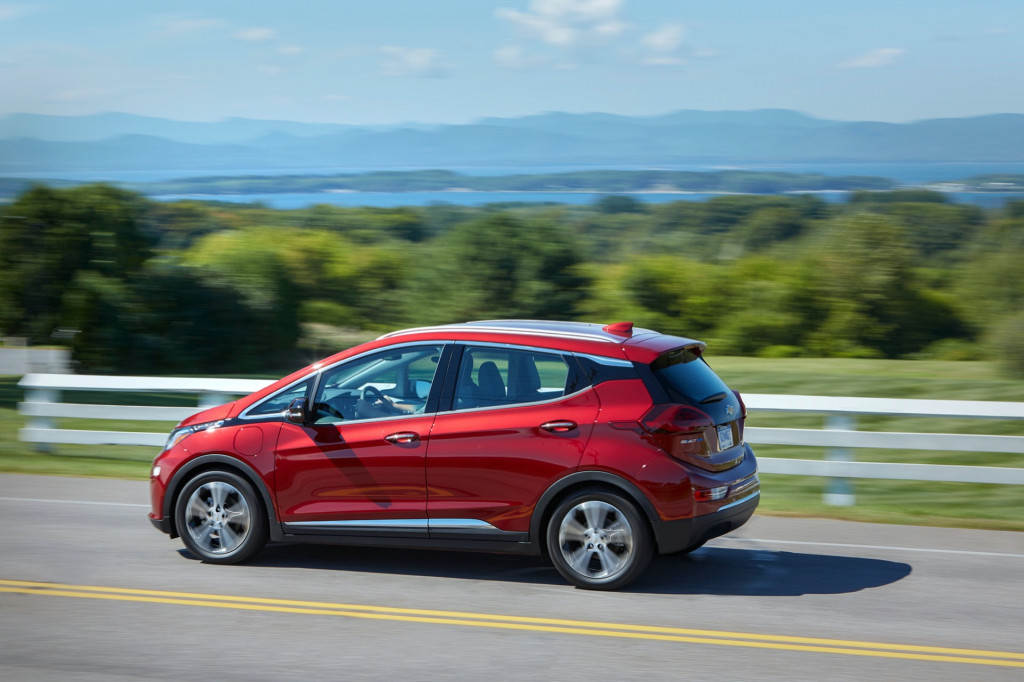
2021 Chevrolet Bolt EV
The $1,400 amount is the same that GM offered to pay 2020-2022 Chevrolet Bolt EV and EUV owners in October 2023, in exchange for the installation of diagnostic software limiting capacity (and range) to 80% of the original over a period of 6,200 miles. That was considered an early settlement amount and required signing a legal release.
The class action settlement also excludes customers who opted for a buyback from GM, which was on the table for some customers early on in the diagnosis and recall process. But it doesn’t exclude drivers who already got a new battery.
The 2021 recall effort eventually spanned all of the roughly 140,000 Bolt EV and Bolt EUV vehicles in North America, after two specific manufacturing battery defects in cells supplied by GM partner LG led to at many fires. GM said that it would replace all battery modules in 2017-2019 Bolt EVs. Some of those owners of earlier Bolt EV models got a completely new pack, resulting in more range than they originally had.
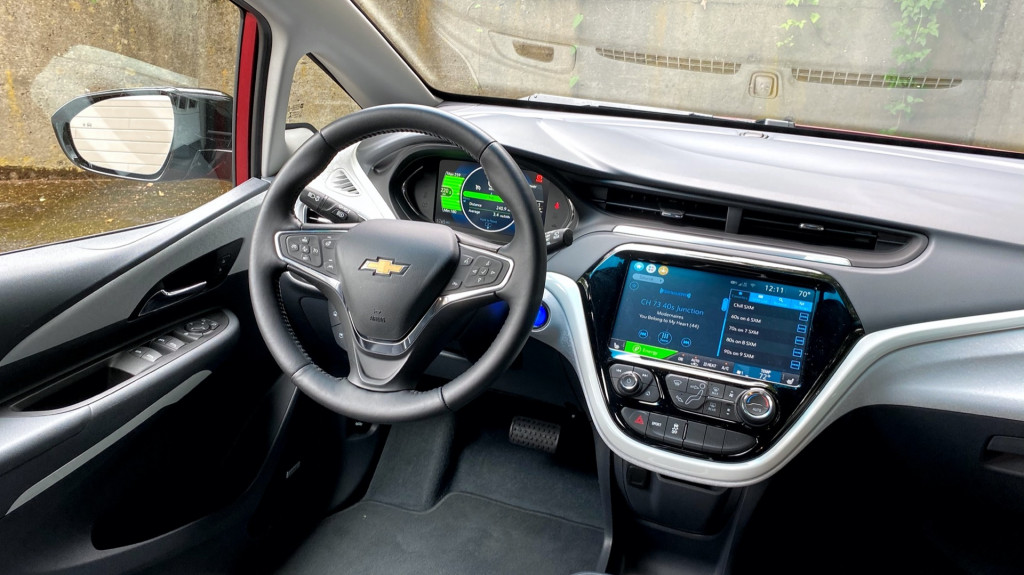
2020 Chevrolet Bolt EV review update – Portland OR
Bolt EV drivers were inconvenienced. For many months before a recall remedy was announced, GM asked Bolt EV drivers to park 50 feet away from other vehicles—a challenge for many of its drivers, who tend to live in urban areas. It also instructed customers to set their vehicles to a maximum 90 percent state of charge, charge their vehicles more frequently and not allow range to drop below 70 miles, and park their vehicles outside immediately after charging.
The incidents were generally when the vehicles were parked and nearly fully charged but still hooked up to a charger, not when they were being driven.
LG eventually agreed to pay GM $1.9 billion for the issue—effectively covering the cost of the recall itself, but not other factors like reputation.
A new-generation Chevy Bolt EV is set to replace the Malibu at GM’s Kansas plant, likely arriving later in 2025. It’s expected to make a switch to GM’s Ultium EV platform and will be GM’s first U.S. product to use lithium iron phosphate (LFP) battery cells on that platform.

Mitsubishi EVs, Honda AWD hybrids, EV tire sustainability: Today’s Car News

Honda promises more all-wheel-drive hybrids. Mitsubishi teases new EVs and hybrids for the U.S. And we run through why you shouldn’t need to buy EV tires as often in the future. This and more, here at Green Car Reports.
Honda has confirmed that it plans to make two million EVs annually by 2030. And, as part of a presentation outlining all that it hopes to achieve with EVs in the second half of the decade, it also revealed plans for a new generation of Honda all-wheel-drive hybrids coming soon.
Mitsubishi on Thursday provided a rough idea of what its future U.S. lineup might look like for 2026 and beyond. Two models will bring the brand into new market segments, it says, and Mitsubishi EVs, hybrids, and plug-in hybrids are on the way. It didn’t provide any update on the reported Mitsubishi electric pickup to be shared with Nissan, though.
And Michelin might be the top tire maker in the world, but it sees a future in which you won’t need to buy as many tires. That’s because in addition to radical innovations like airless tires and million-mile retreads, future EV tires with sustainable materials will last longer.
_________________________________
Green Car Reports Newsletter
Sign up to get the latest green car and environmental news, delivered to your inbox daily!
I agree to receive emails from Green Car Reports. I understand that I can unsubscribe at any time. Privacy Policy.

Michelin doesn’t want you to buy as many EV tires
The tire maker Michelin provides original-equipment tires for seven out of 10 EVs sold in the U.S. And yet it acknowledges that EV drivers shouldn’t be buying as many tires as they are.
It’s a technology challenge on multiple fronts. EVs wear through tires quicker, as they weigh more and their torque-rich motor systems tear away more persistently at the tread.
Michelin sees a future in which its tires might be more expensive but last much longer and be much less impactful on the environment. For a company built around a wearable item with a finite service life, that’s an unexpected tack.
“Our goal is not just to sell more tires; we want to sell better tires—in multiple ways,” summed the company’s North American CEO Alexis Garcin at a recent sustainability summit the company hosted in Sonoma, California.
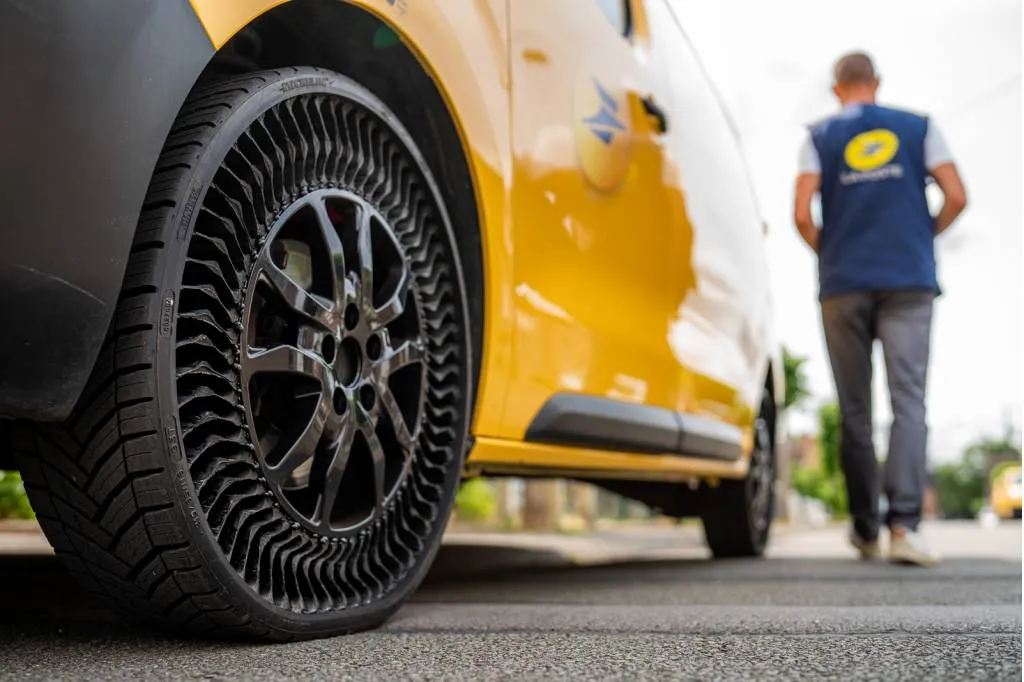
Michelin Uptis airless tire on French postal van
There, executives confirmed to Green Car Reports that the company is pushing ahead on airless tire technology that may be smarter for robotaxis and other autonomous vehicles. It also provided an update on how it’s working to effectively reinvent retread technology with sustainability in mind, allowing the original tire plus four retreads to provide up to a million miles of service in heavy commercial trucks.
“If you start to think in a way that you want to limit your innovation because of the (cost) premium, it could mean we are losing a lot of opportunities,” explained Garcin as to why Michelin keeps investing in long-game technologies.
Michelin moving toward fossil-free materials
In the meantime, Michelin’s short game for this decade includes getting more sustainable and renewable materials into its tires, and making them last longer while saving energy for EVs. Michelin has targeted 40% renewable and recyclable materials across all its tires by 2030, on the way to 100% fossil-free by 2050.
At Sonoma Raceway, it also provided an on-the-road look at part of that future with mass-market tire technology that will likely go into production in 2025.
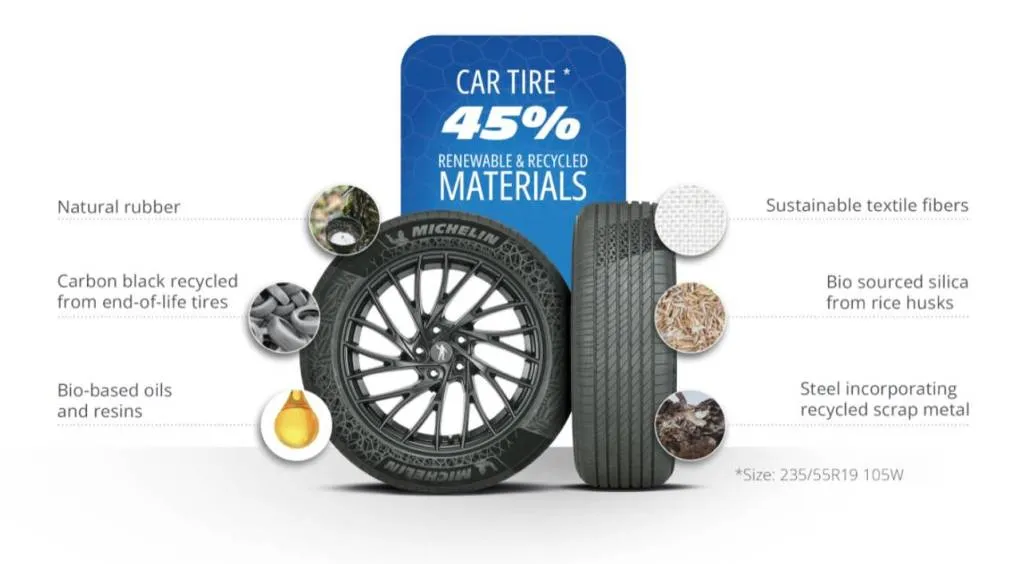
Michelin 45% sustainable tire. – 2024 prototype
The Primacy A/S demonstration tire offers at least 42% sustainable content—45% in the version shown. That’s more than double what such tires offer today, in a product that Michelin attests, performs as well or better than today’s offerings. It’s made with recycled steel, recycled carbon black from end-of-life tires, with silica from pulverized rice husks, as well as some natural resins and oils—including from orange peel for higher efficiency.
Natural rubber is nearly a fifth of the composition of modern passenger-vehicle tires, and Michelin is making efforts to extract it from sustainable crops like guayule in the American Southwest.
Other tire makers have shown concepts with much higher levels of sustainable content, but what makes the Primacy A/S demo tire different is that it’s production-ready.
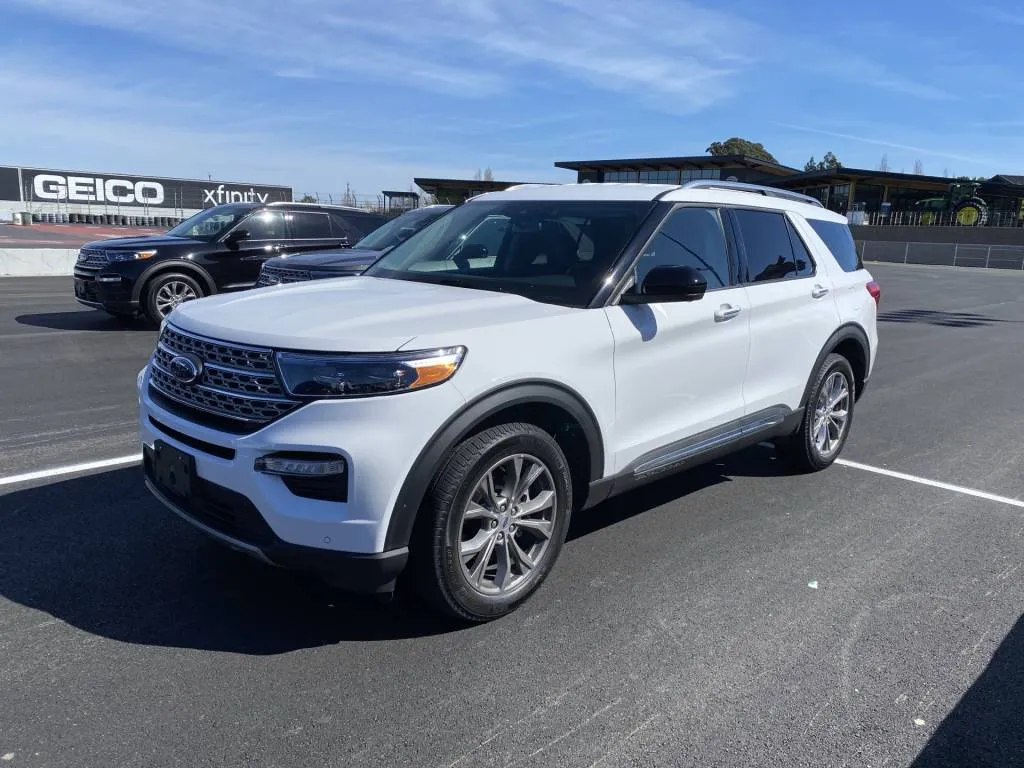
Michelin Primacy all-season tires with 42% sustainable content – on Ford Explorer
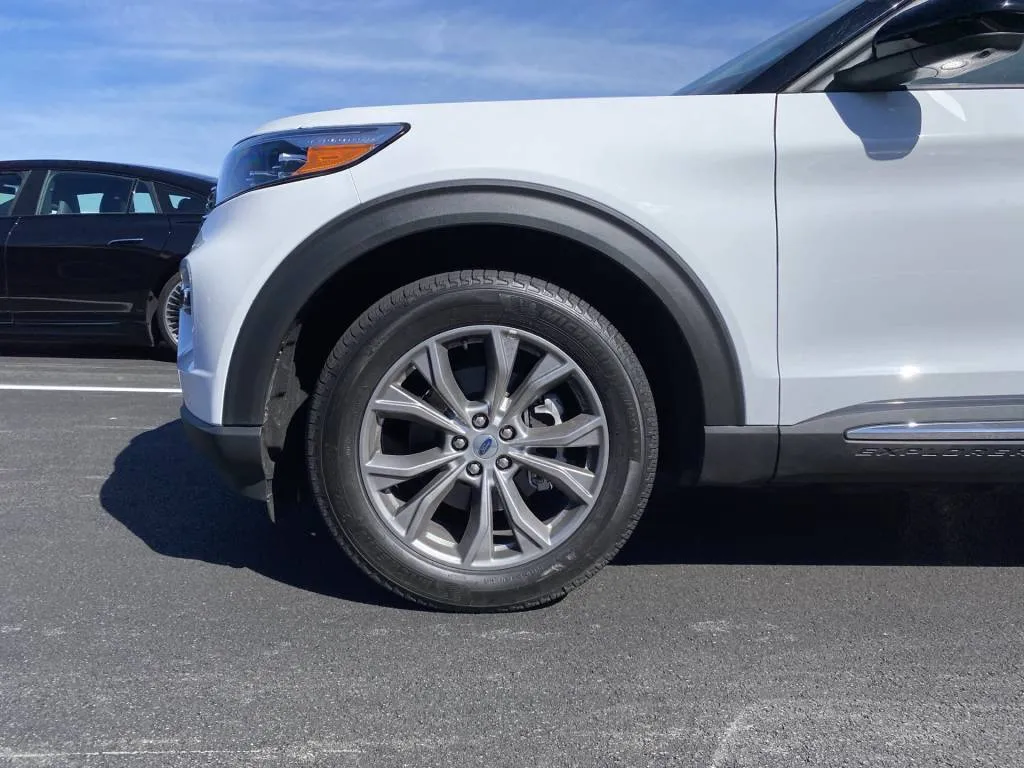
Michelin Primacy all-season tires with 42% sustainable content – on Ford Explorer
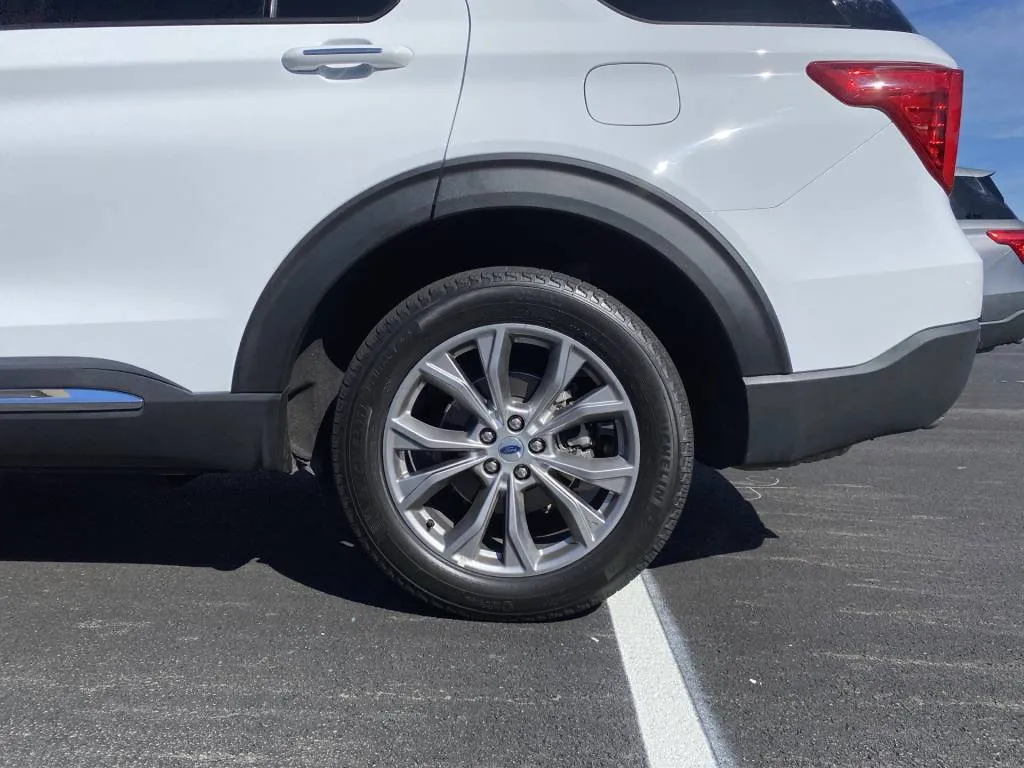
Michelin Primacy all-season tires with 42% sustainable content – on Ford Explorer
Michelin showcased the tire mounted on a new Ford Explorer. On Sonoma Raceway, in noise, grip, and overall performance, it felt like these tires could be interchangeable with the stock Michelin Primacy all-seasons.
The green tire was showcased along with several EVs that include original-equipment Michelin installations, including the Porsche Taycan and Genesis GV60, underscoring that Michelin sees the sustainability factor as especially important in EVs.
Michelin taking custom approach in optimizing for EV range
The performance and durability of tires comes down to three core aspects: the structure of the tire and its core design, the tread, and the compound. With EVs, more rolling resistance can mean more energy lost not only when accelerating and cruising, but also during regenerative braking, so it can have a great effect on the efficiency of EVs overall.
Cyrille Roget, the company’s director of scientific and technical communications, underscored to Green Car Reports, it’s a matter of mapping out the usage needs and then optimizing for the lowest level of rolling resistance. It takes a lot of simulation tools to provide a match for the car, then rounds of final testing with the car.
In the era of EVs with very different weight distribution and power delivery, to go along with their additional weight, that may mean more customized tires.
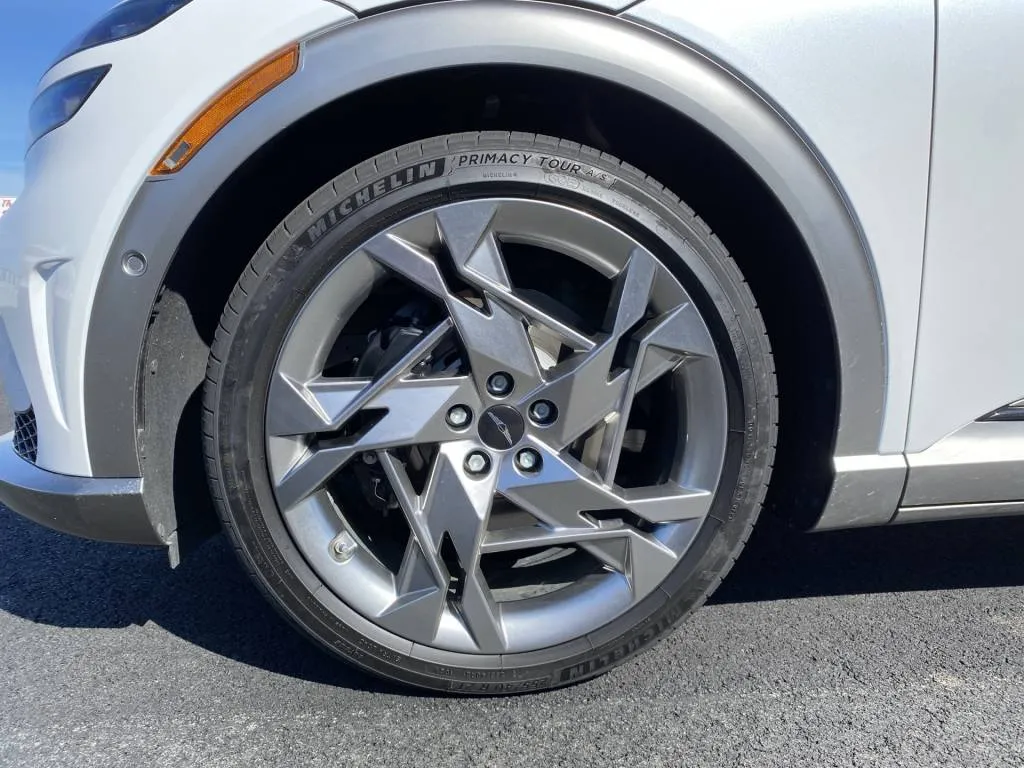
Michelin tires on Genesis GV60
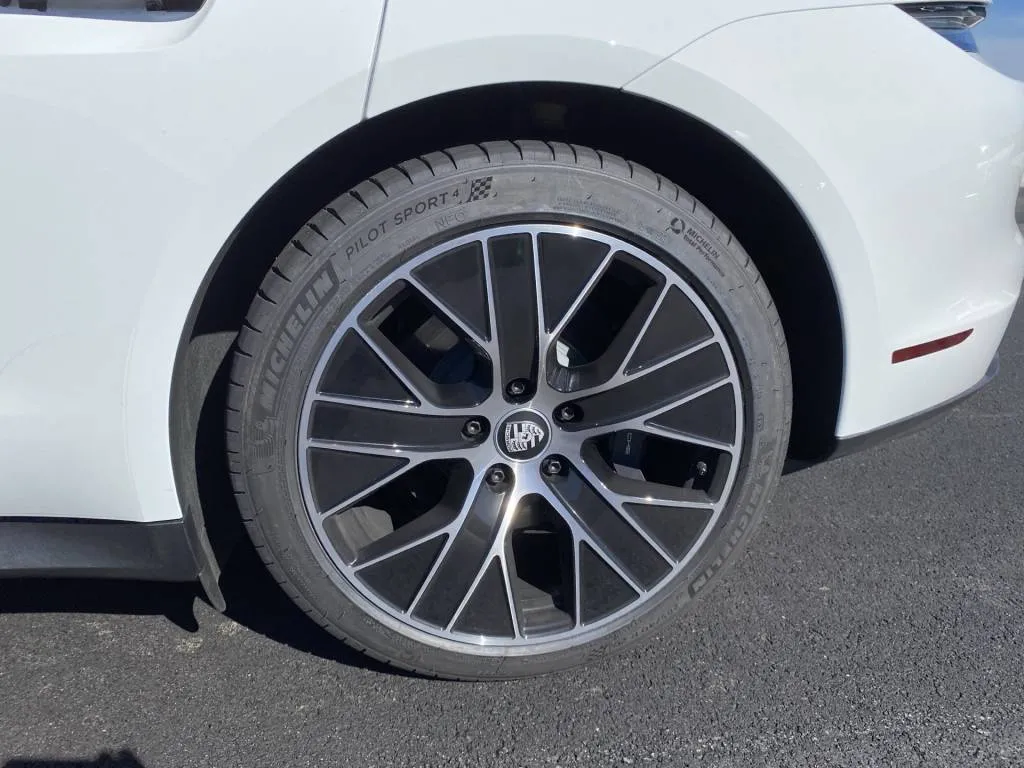
Michelin tires on Porsche Taycan
EVs, hybrids, and PHEVs: Same tire advancements needed
“It does not change so much, the way we consider the market and the way we design tires,” said Garcin, when Green Car Reports asked what’s different about the tire demands for hybrids. “You still have the same effect of this incredibly high torque and the increased weight of the vehicle, so that we just leverage the same technologies to accompany these trends, whether it’s fully electric or hybrid.”
Regarding the compound, there are more than 200 ingredients in typical tires, and carbon black is one of the most important for establishing durability and strength with low rolling resistance.
Michelin has created a consortium called BlackCycle in which it is looking at developing a value chain locally in Europe around secondary raw materials—especially carbon black—to be used in new tires, rather than see the tires shipped across the world.
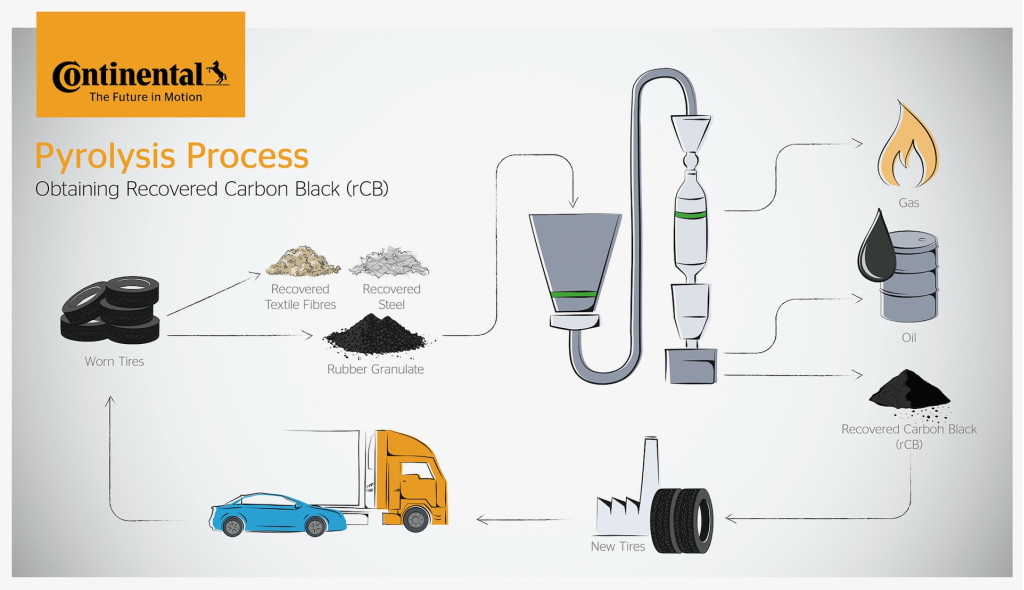
Pyrolysis process used to extract recyclable material from Continental tires
Restarting the loop with carbon black
That led to an evaluation of the global supply chain for carbon black and whether the companies could get more out of pyrolysis, which is the process of heating them without oxygen to recover compounds. It results in recovered carbon black plus three different types of oil, and a process has only recently been devised to create “virgin” carbon black—now termed sustainable carbon black—from the middle oil.
“So there is virgin carbon black from petrol; there is recovery of carbon black from pyrolysis; and now you have sustainable carbon black coming from the pyrolysis oil,” Roget summed. Even the lighter oil can be used to create resins used in the tires.
That’s important because the tire maker knows it will not be able to replace all of the needs for carbon black with only the recovered carbon black, Roget explained. The sustainable carbon black effectively closes the loop and ends the need for petroleum input for tires.
Carbon black via pyrolysis is already “very virtuous” energy-wise in an industrial operation, versus creating the original product, according to Roget, and it has the potential to be a lot cheaper. During pyrolysis, gas is captured, which can in turn be used to help heat the pyrolysis oven.
Michelin is hoping that more companies will help invest in a pyrolysis industrial base. It’s working with Bridgestone on this because as Roget says if they together present the specification they want for recovered carbon black, it will represent a big part of the industry.
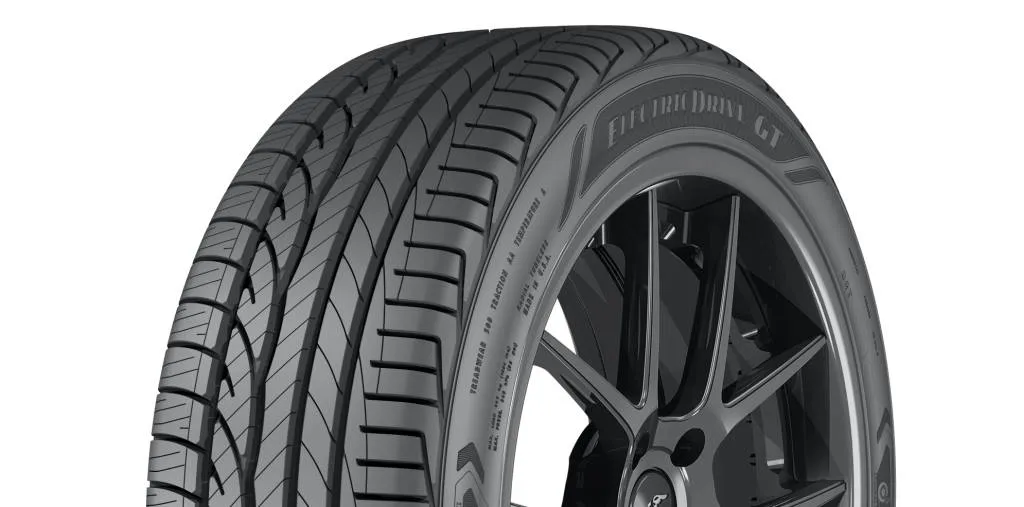
Goodyear ElectricDrive GT tires for Tesla Model 3
Goodyear has also said it’s on board with recycled carbon black. It’s using Monolith’s carbon black from pyrolysis in a replacement tire for the Tesla Model 3.
Garcin described the collaboration with Bridgestone as “part of the bigger plan, as we have to really move towards 100% renewable and recycled materials in all of our tires.”
Sustainable tires require better recycling beyond reuse for tires
Around 90% of tires worldwide are recycled, while some markets within Africa still need to get onboard with the idea. Michelin and Bridgestone are currently organizing pilots on how to create a system for it in those markets.
“You have to obtain a material that has the same quality as the fossil material that you’re trying to replace. So that’s the first challenge,” said Roget.
For instance, PET (polyethylene terephthalate) is used as a reinforcement in passenger-car tires, and PET recovered directly from plastic bottles can replace that from fossil sources. The challenge for big potential users like Michelin is how you organize the collection of all the plastic bottles to buy as a consistent feedstock in the future.
It has to be cost-effective to recover and reuse materials, too. Synthetic rubber, or butadiene rubber, is “very cheap today,” said Roget, because it’s often made as a side product of gasoline production. Although the company is working on ways to produce it from agricultural waste, the cost is a barrier.
According to information from the U.S. Tire Manufacturers Association, synthetic polymers make up about 24% of the material in passenger vehicle and light truck tires.
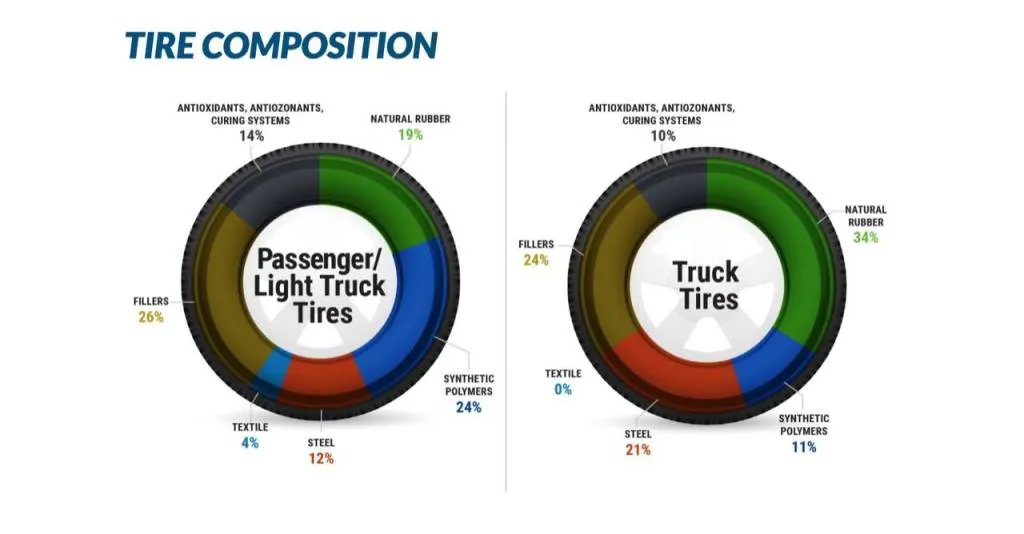
Tire ingredients. – U.S. Tire Manufacturers Association
Emissions from tire wear
Finally, the elephant in the room is that tires emit their tread material as they wear, often in the form of particulate matter, some of which becomes airborne.
A 2023 study from Imperial College London suggested that, including what ends up in the ground and waterways, 52% of all global particle emissions from vehicles in 2021 came from tires and brakes, not exhaust, while globally 6.6 million tons of tire-wear particles are emitted annually. As the U.K. firm Emissions Analytics started pointing out in 2020, EV weight gains can result in colossally greater tire emissions.
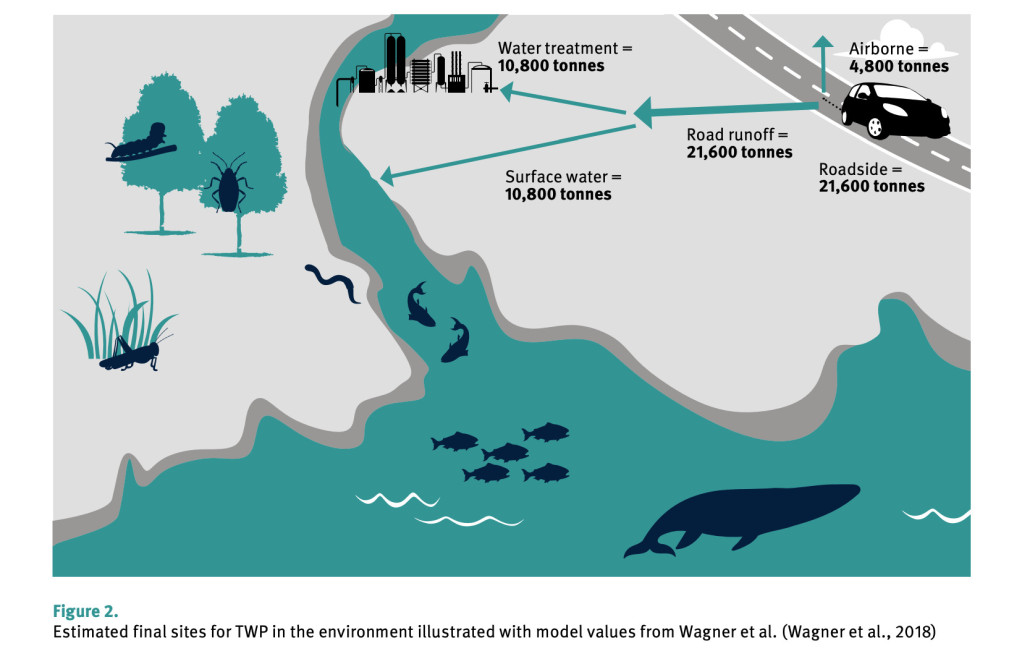
How tire particulate emissions enter the environment (from Imperial College London 2023 report)
Michelin’s Roget is aware of this issue, and he says that a white paper on the matter is forthcoming. Michelin has improved on that metric by 11% from 2010 to 2020, he says. Continuing that progress while seeking better materials will in turn deliver more performance with less weight—both initially and lost to tread wear.
In a 2022 study from Europe’s largest automobile association, the ADAC, researchers found Michelin to be the lowest in the weight of tread compound lost per distance driven—the metric that directly corresponds with particulates left in the environment.
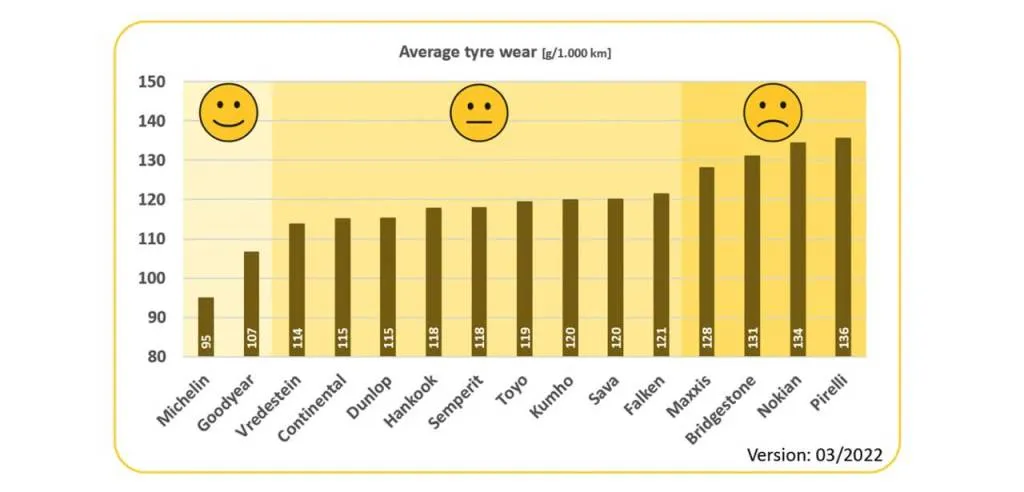
ADAC test of tire wear in weight per distance
All these examples underscore that sustainability isn’t open-ended. It’s a loop, and all of the points around that loop need to be well thought-out. With tires as the example, where the materials come from, where they end up, how they fail, the energy put into making them, and the energy savings they enable in use, are all considerations.
As the vehicles we drive transform to be part of a renewable loop, there’s no reason not to think the tires we roll on should transform too, even if that involves using fewer tires.
—
Michelin paid for meals and travel expenses relating to the demonstration of its tire technology and executive access.

Mitsubishi plans EVs, plug-in hybrids in expanded US lineup
Mitsubishi plans to update its U.S. lineup with new hybrids, plug-in hybrids, and EVs over the next few years.
The automaker on Thursday unveiled a new business plan called “Momentum 2030” which includes plans for one new or refreshed model to be introduced between 2026 and the end of the decade, nearly doubling the automaker’s U.S. lineup from its current four models, according to a Mitsubishi press release. An accompanying teaser image showed seven vehicles.
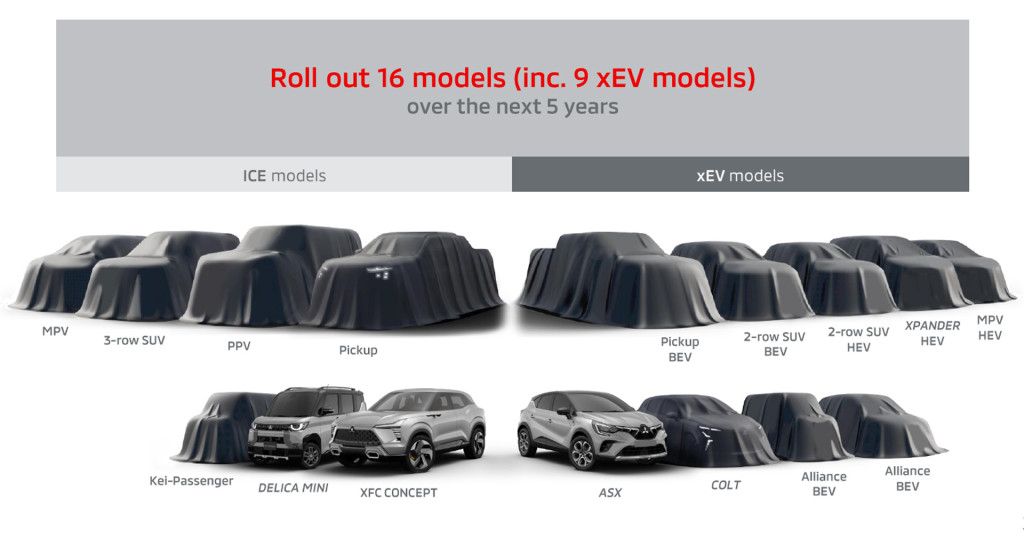
Mitsubishi to launch nine electrified vehicles by end of 2028
This new lineup will include two models in “segments in which the company does not currently compete,” according to Mitsubishi, with a powertrain mix of “advanced-technology internal combustion engines, hybrids, plug-in hybrids and battery electrics.”
The announcement appears to be a long-awaited North American response to Mitsubishi’s global product plan released in March 2023. That included plans for an expanded “xEV” lineup encompassing hybrids, plug-in hybrids, and EVs, and saw 50% of its product mix electrified by 2030.
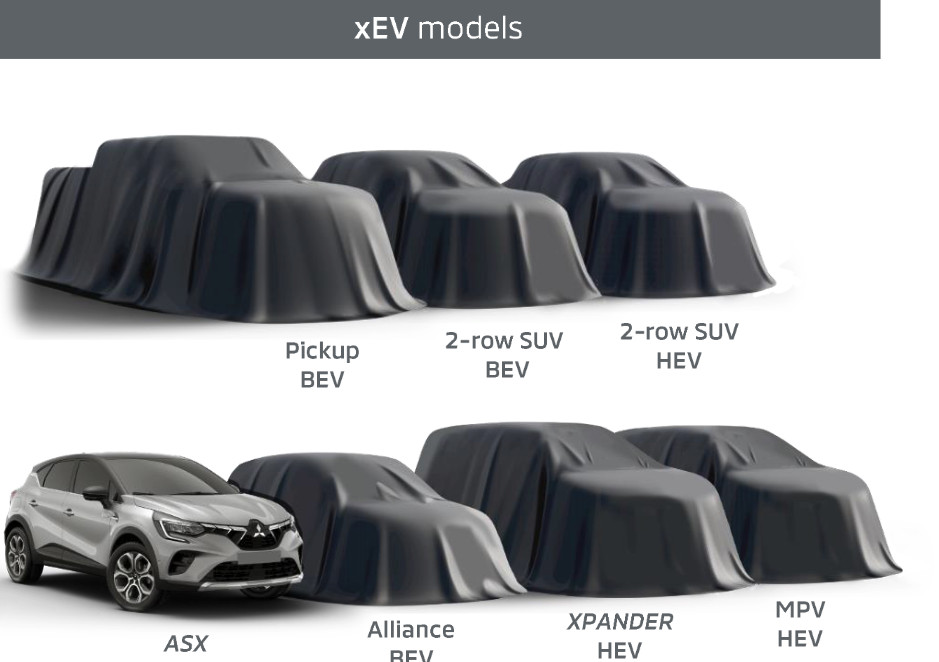
Mitsubishi to launch nine electrified vehicles by end of 2028
According to reports, Mitsubishi and parent brand Nissan might share an electrified pickup that would get both plug-in hybrid and EV variants (an electric pickup was also mentioned in the global product plan last March). Nissan and Mitsubishi compact vehicles are also expected to share the same updated platforms across multiple models.
While it previously sold the tiny i-MiEV electric car in the U.S., Mitsubishi’s only plug-in model at present is the Outlander PHEV, which shows the brand’s best with a hybrid system still superior to many others on the market. Launched for the 2023 model year, this second-generation Outlander PHEV boasts an EPA-rated 38 miles of electric range.

BMW EV targets, Ford hybrid recall, Aptera funding pivot: Today’s Car News
Aptera is done with crowdfunding. Ford recalls Maverick Hybrid and Escape Hybrid models for a software issue. And BMW holds to its EV targets as other automakers waver. This and more, here at Green Car Reports.
BMW is sticking to the EV targets it announced several years ago—50% fully electric sales by 2030, not including hybrids or plug-in hybrids. That said, BMW CEO Oliver Zipse wouldn’t set an end date for internal combustion, emphasizing that the company “will stay flexible—even well into the 2030s.”
Ford is recalling some Maverick and Escape hybrids, as well as some Lincoln Corsair plug-in hybrids, over an issue that could leave these vehicles in limp mode. It’s a software fix but requires a trip to the dealership.
And Aptera is ending crowdfunding for its three-wheel EV after June, the California firm announced late Wednesday. More funding is still needed to get its Launch Edition solar EV to production, although it says it plans to bring the vehicle to market “at scale” in 2025.
_________________________________
Green Car Reports Newsletter
Sign up to get the latest green car and environmental news, delivered to your inbox daily!
I agree to receive emails from Green Car Reports. I understand that I can unsubscribe at any time. Privacy Policy.