
Category: General

Gravity’s urban fast-charging “trees” could rival Tesla Supercharging
The Gravity charging company on Wednesday unveiled a new design for EV charging stations that it believes will be the foundation of a massive urban fast-charging network.
Styled as Distributed Access Energy Points (DEAPs), the chargers take the form of what Gravity calls “trees,” taller structures in which the charge cable dangles from an extended arm (or would that be branch?) that seems as much like the swivel arms at self-service car washes as anything from nature.
The cable pivots down from a hinged swing arm, which then raises back up when charging is completed, according to a Gravity press release. This should mean that there’s no concern about tripping over cables lying on the sidewalk.
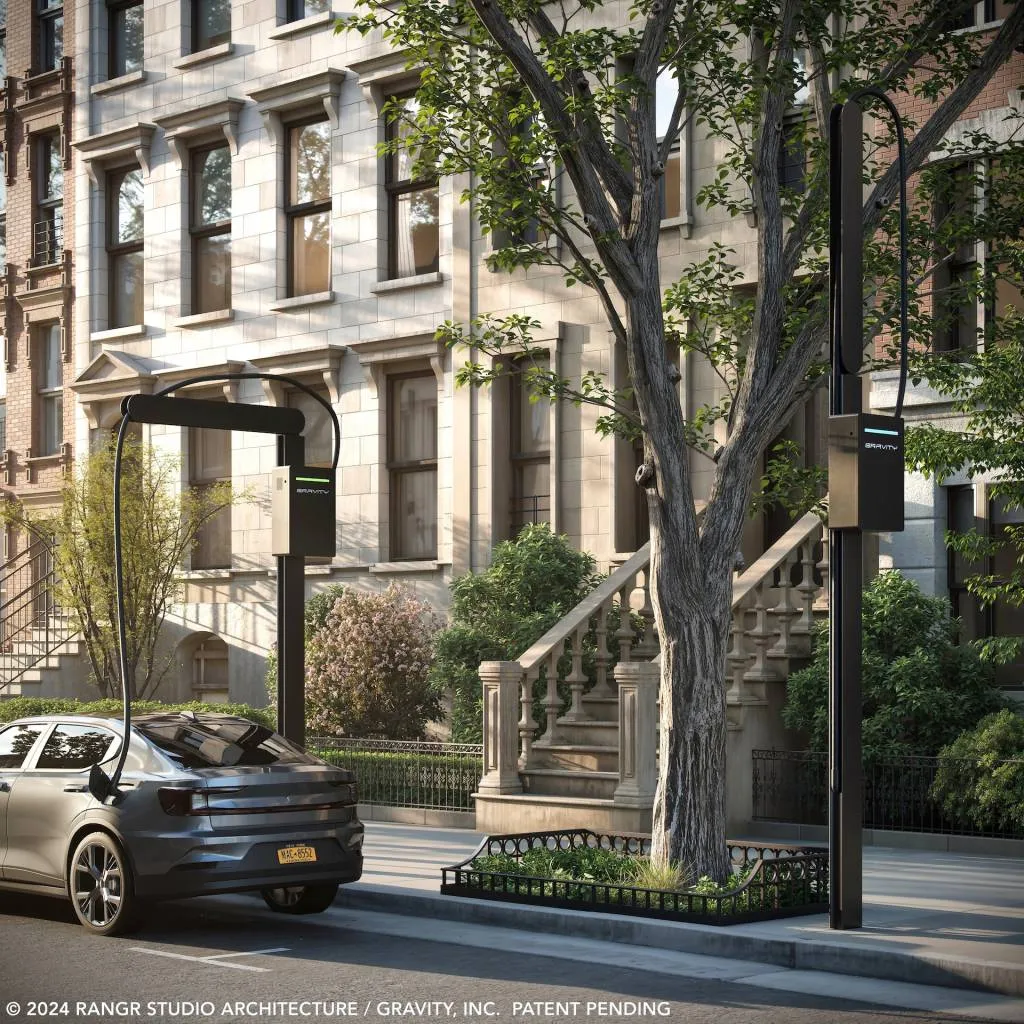
Gravity curbside EV charger
Gravity also claims that no utility upgrades are needed to plant these trees, yet they’re still capable of 200-kw or 500-kw power levels, which can add 200 miles of range in 13 minutes or five minutes, respectively. If Gravity—which claims existing garage-based charging sites are the fastest in America—can follow through on its plans, so they’ll soon be a common sight in urban areas.
“Gravity is striving to develop a network of on-street DEAP charging more expansive than Tesla’s current Supercharger network.” And based on the company’s claims, the DEAP chargers will be more powerful than Tesla’s urban Superchargers, which tend to have lower power than those on road-trip routes.
Curbside chargers like these have been relatively rare in the U.S. up until now. EVgo added some to its network starting in 2019, and now other companies like Voltpost aim to build out Level 2 chargers where apartment-dwellers might charge overnight or for a few hours.
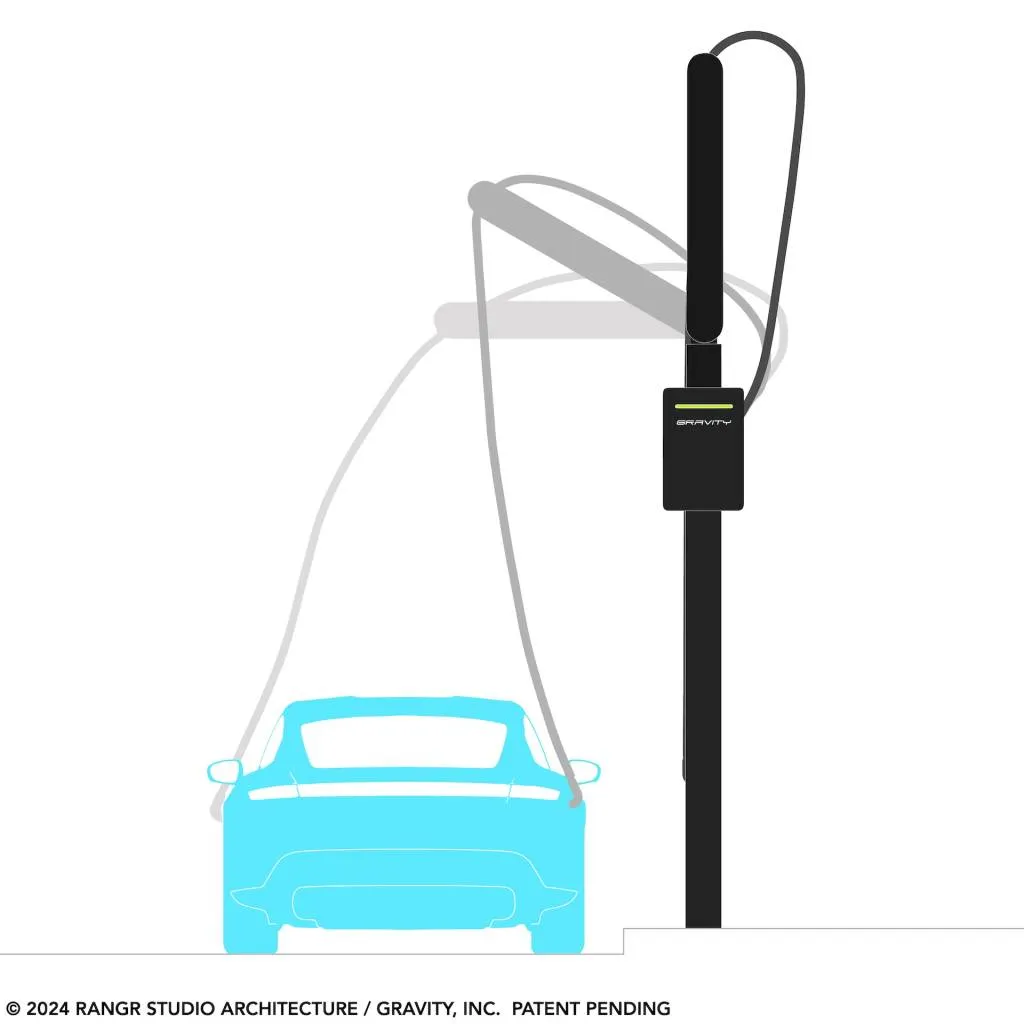
Gravity curbside EV charger
Curbside chargers could help make EVs practical for people who don’t have a driveway, garage, or other place to install a home charger. But relying on public street parking could bring challenges, like internal-combustion cars blocking chargers, cars sitting idle without charging for long periods, and the need to work with municipalities to coordinate installations with parking rules.
If some states are having trouble distinguishing the differences between the required infrastructure for gas stations versus EV charging stations, as appears to be the case in Kentucky, it might be a tough road ahead for companies like Gravity.

Kia EV3 small electric SUV follows EV9, tops 300 miles of range
Kia on Thursday revealed the production-bound version of its EV3 compact electric crossover that might, if Kia keeps to original hints, start around $35,000.
The EV3 emerges on the way to production in much the same form as the EV3 concept that was first shown in October 2023, albeit with a little more round to its profile and the rear end especially, and with a completely different interior that borrows some ideas from the larger Kia EV9 electric SUV.
This served as a global reveal for the model and, as of yet, Kia is short on U.S. specs, details, or differences—or whether, to be sure, the model is headed to America. If it were to arrive in the U.S. at the $35,000 starting price Kia suggested for the concept, it might be a strong rival for the Volvo EX30, along with others including the Hyundai Kona Electric and next-generation Chevrolet Bolt EV—and leave Kia’s own Niro EV on uncertain ground.
The EV3 set for success from the start thanks to several key decisions. It’s built on Hyundai’s flexible E-GMP architecture, which has resulted in a hit parade of rewarding-to-drive, fast-charging EVs from Hyundai, Kia, and Genesis, and it has a coefficient of drag of just 0.263—great for efficiency in such an upright vehicle.
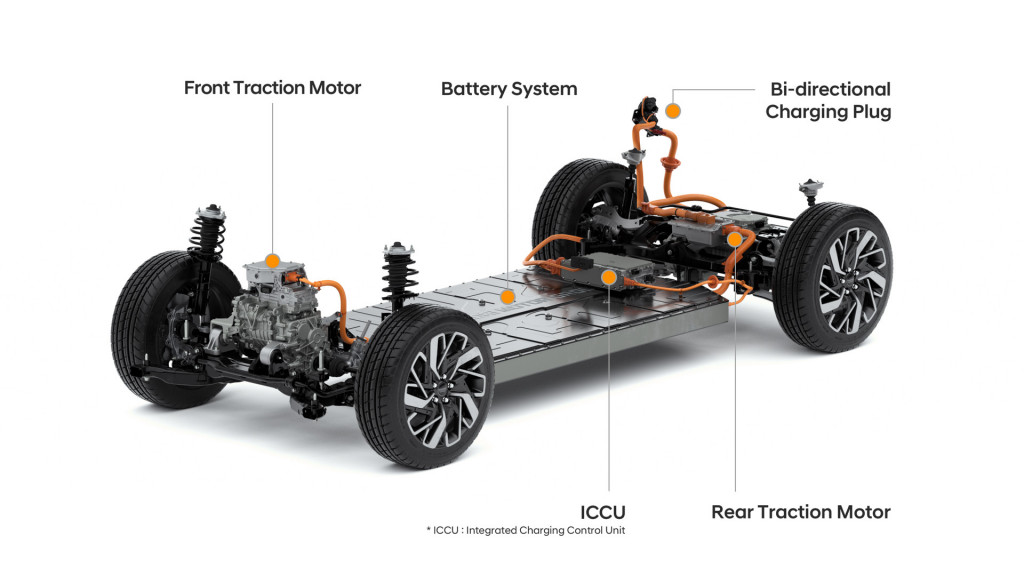
Hyundai Motor Group E-GMP platform
Kia EV3 isn’t a hot hatch, but it looks sharp
Kia has managed to carry over many of the same technical and geometric details from the concept, and splice in Kia’s latest Star Map lighting theme, which just also made its debut in the 2025 Kia EV6. The EV3 will be offered in nine different exterior body colors.
Two different battery packs will be featured in the EV3, fitted to EV3 Standard models and EV3 Long Range versions, and amounting to 58.3 kwh and 81.4 kwh, respectively. Kia notes that charging times will be in the vicinity of 31 minutes from 10-80%. Regardless of the battery pack, a single 150-kw (201-hp) electric motor at the front wheels provides 209 lb-ft of torque and accelerates the EV3 to 62 mph in 7.5 seconds.
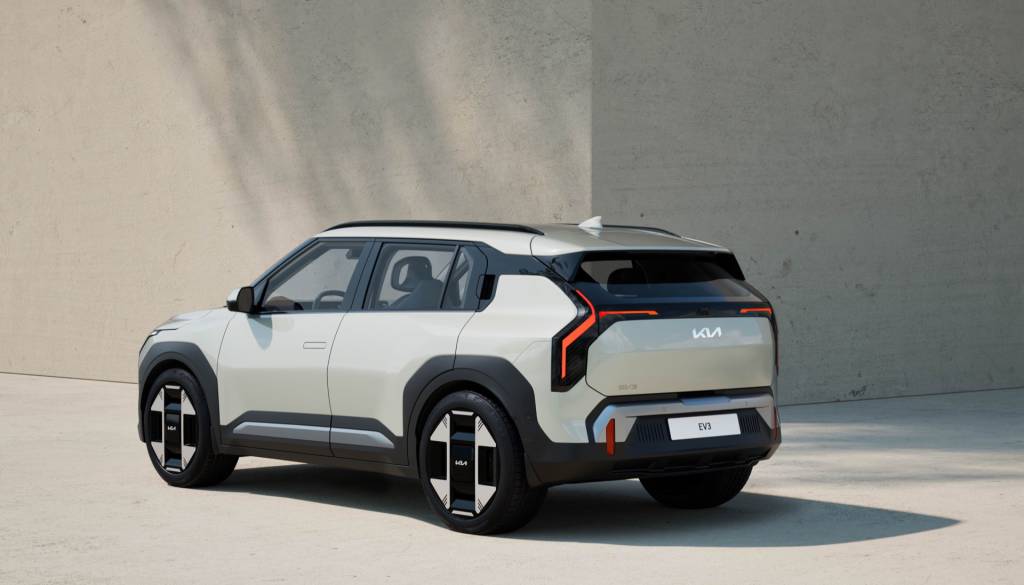
Kia EV3
Kia EV3 range shaping up for 300+ miles
Kia boasts of a WLTP driving range of up to 373 miles. EPA ratings are based on different driving cycles, and it isn’t a direct translation, but given how other Kia EVs like the EV6 and EV9 have fared, that might mean an EPA range rating of well over 300 miles for some versions.
The EV3 gets a more advanced version of its regenerative braking system, including one-pedal driving and adjustable modes for various levels of regen. The EV3 will be one of the few vehicles in its compact class to provide so-called Vehicle-to-Load (V2L) power output, which is good for powering small appliances and tools—and a gateway for other bidirectional charging features, perhaps.
The dedicated EV platform accommodates what looks like a roomy passenger space considering this model’s decidedly compact exterior. While cargo capability are rather ordinary for this size of vehicle, at 17.0 cubic feet of rear cargo space with the back seats up and less than a cubic foot of frunk space, the interior layout allows a sliding table, fully reclining seats for a fold-back relaxation mode, and a center console with a sliding table and storage area. An adjustable two-tier luggage floor allows 5.5 inches in load-floor flexibility.
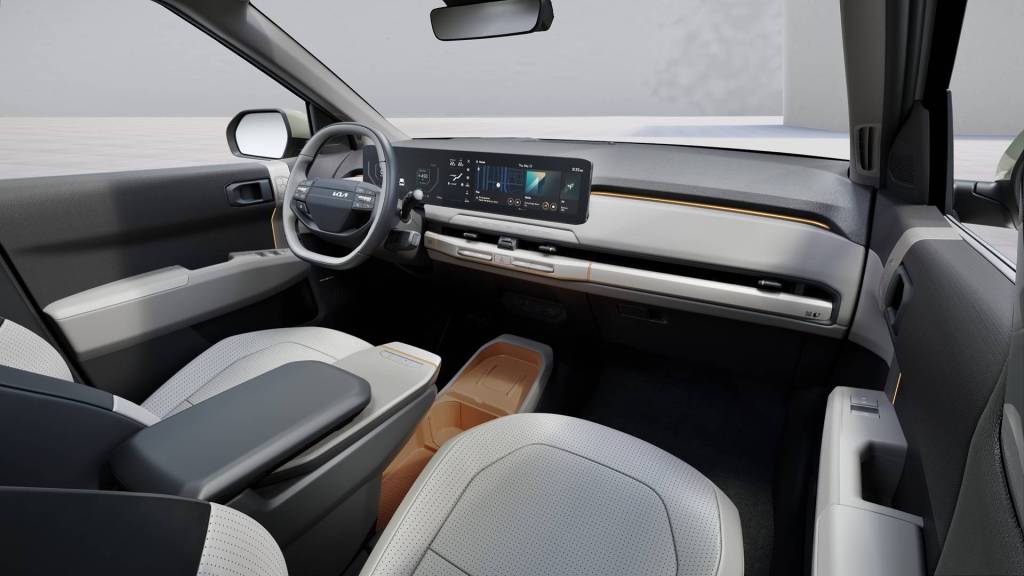
New Kia EV3
Little EV3 goes big with interface, streaming, AI
The focal point of the EV3 dash is its big widescreen display, spanning nearly 30 inches and incorporating two 12.3-inch displays plus a five-inch climate control panel—essentially a version of what’s made its debut in the EV9. The one at the center of the dash is a touchscreen good for entertainment and navigation.
A smartphone- or smartwatch-based digital key system allows entry without a physical keyfob. Kia plans to provide downloadable display themes to customize the EV3 dash and infotainment system, and streamable content will be available through a Premium Streaming service powered by webOS and via LG’s content platform. Kia says that with the top Harman Kardon audio system the experience will be akin to home cinema.
The Kia EV3 uses integrated generative AI for its voice assistant, extending natural language commands to span vehicle functions, entertainment, and info searches.
Just as in the EV3 concept, there’s good use of recycled materials in the production-bound EV3—including recycled fabric for the dash and door trim plus PET used throughout the interior.
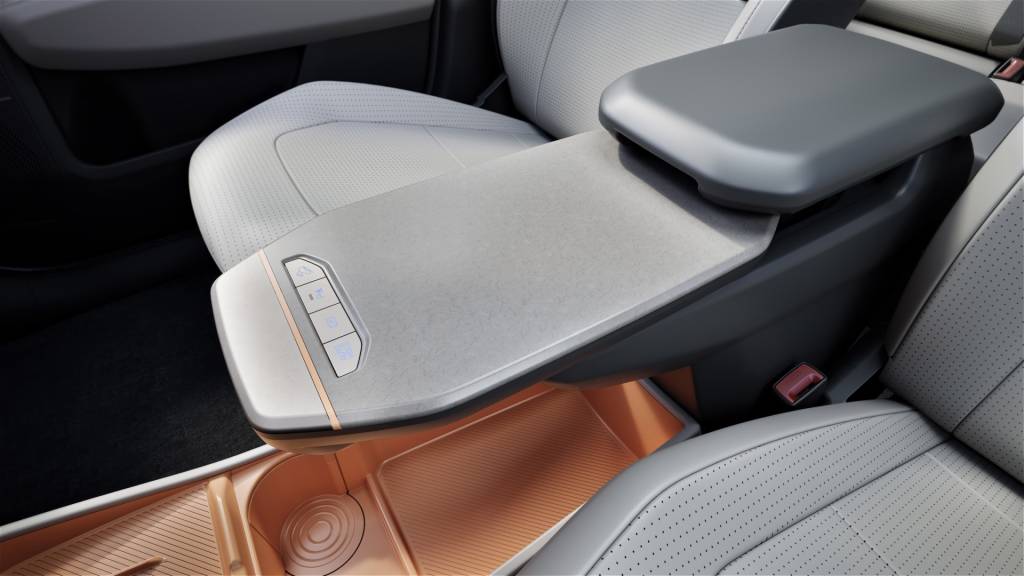
New Kia EV3
US arrival date for Kia EV3?
Kia says that the EV3 will be introduced in Korea in July 2024, followed by Europe in the second half of the year. It says it “has plans to expand the sale of EV3 into other regions, with subsequent launches to be expected after the European market entry.” So America might well be part of the plan in 2025.


Honda Civic Hybrid details, VW ID.7 delay, Camaro EV: Today’s Car News
GM gets its plug-in hybrids ready for 2027 and considers an electric Camaro. The Civic Hybrid will be perky and provide nearly 50 mpg. And VW puts its ID.7 on hold for the U.S. This and more, here at Green Car Reports.
The Volkswagen ID.7 EV has been delayed for the U.S., VW confirmed Wednesday. It provided no new timeline for the aero-savvy hatchback, but it verified that this decision doesn’t affect the arrival of the ID.Buzz electric Microbus, still due later this year in extended-length American form.
The 2025 Honda Civic Hybrid lineup coming this summer will return nearly 50 mpg, the automaker revealed Tuesday, as well as pep and performance that may rival that of the sporty Si model. Civic hybrids, with a larger engine than what’s been used in past versions of this model and a choice of sedan or hatchback layouts, are aiming for 40% of Civic sales.
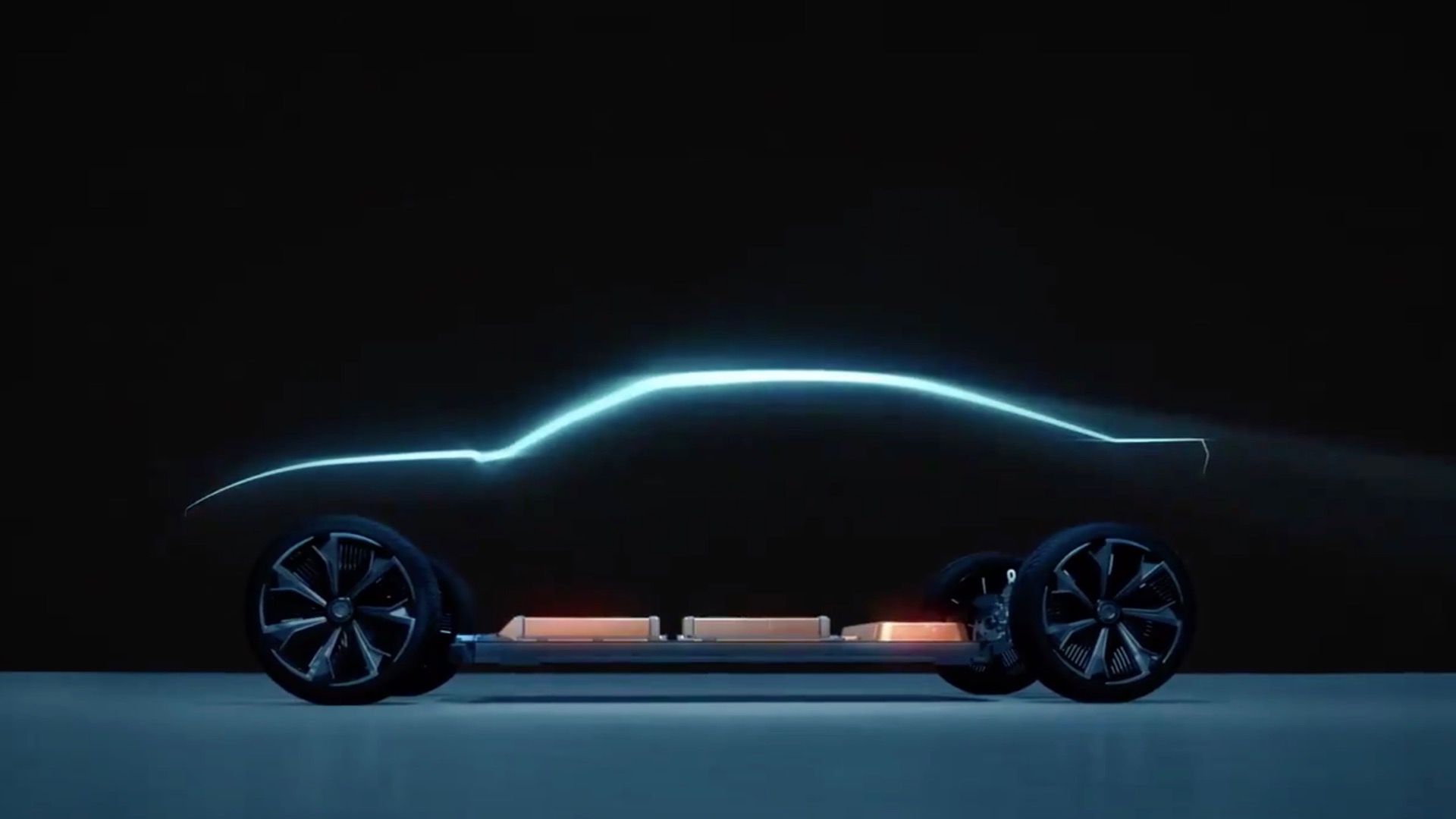
GM is reportedly considering an affordable Chevy Camaro EV as part of its rollout of Ultium electric vehicles. In a different approach than what Ford has used for the Mustang Mach-E, the Camaro EV would be a car, not a crossover, according to a recent report citing GM president Mark Reuss. Is this related to the automaker’s plan for cylindrical batteries and, potentially, a lower-profile version of the platform?
On the other hand, GM is pushing ahead with plug-in hybrids. They’re due in 2027, executives recently confirmed, so as to help with stricter fuel efficiency and emissions standards. GM has already hinted that trucks may be first in this rollout, and GM hasn’t sold a U.S. PHEV since the Volt departed after 2019.
And wondering how much real-world range Teslas lose in the first several years? Data from thousands of Model 3 and Model Y vehicles shows that they don’t lose very much, but they don’t exactly start near the EPA ratings either.
_________________________________

VW delays US release of ID.7 EV, electric Microbus unchanged
Volkswagen announced Wednesday that it will delay the arrival of its ID.7 electric hatchback for the U.S. and Canada.
VW didn’t provide a revised timeline for the ID.7’s arrival. It was originally due later this year, for the 2025 model year.
In a statement on the delay, it cited two reasons behind the change: changing market dynamics, and the stronger-than-anticipated demand for its Tourer variant in Europe.
“After the introduction of the ID.7 Tourer, customer demand for the models is higher than expected, especially in Germany,” said Volkswagen of America. The ID.7 hatchback went on sale in Europe last year, while the ID.7 Tourer, a wagon version, is now being delivered there.
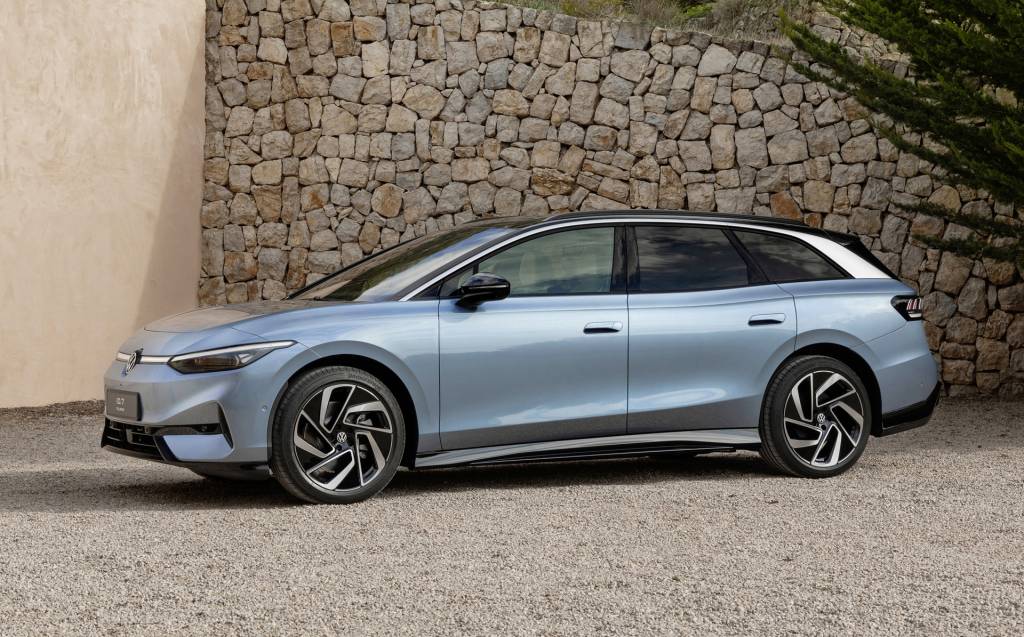
2025 Volkswagen ID.7 Tourer
The company confirmed to Green Car Reports that this doesn’t affect U.S. rollout timing for the ID.Buzz, which remains set for an arrival later in 2024. A refreshed 2024 VW ID.4 electric SUV is also arriving at dealerships, with some of the lineup getting an improved interface, more power, and range improvements.
VW earlier this month revealed an initial U.S. feature set for its ID.Buzz electric van, which are set to arrive in the U.S. in a long-wheelbase form roughly two years after they arrived in Europe.
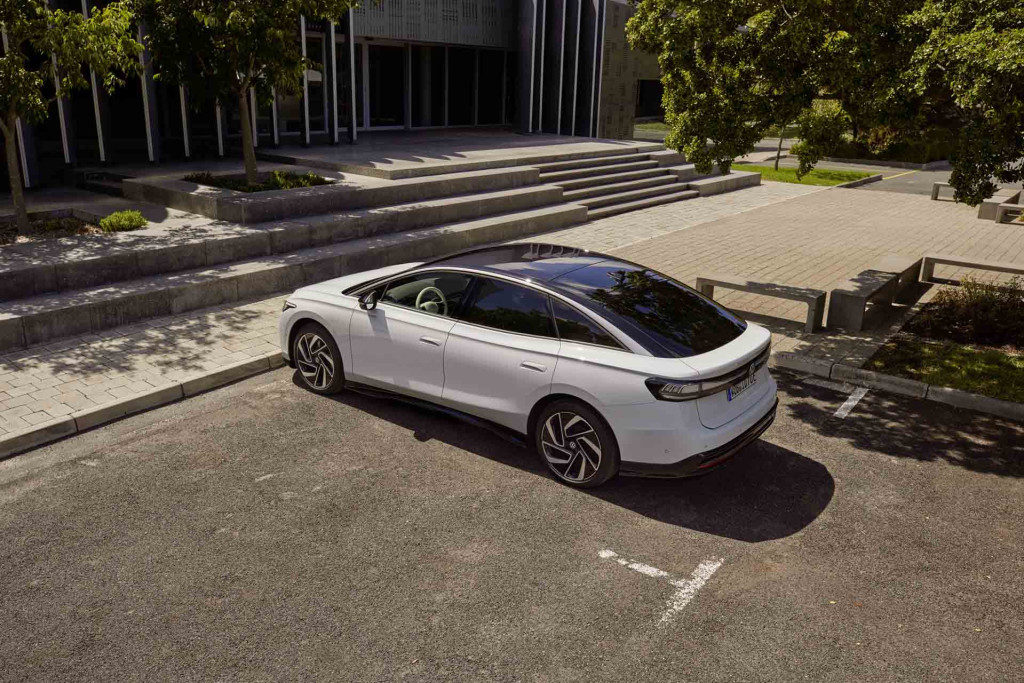
Volkswagen ID.7
In a preview drive of the 2025 VW ID.7, more than a year ago, Green Car Reports found that the ID.7 handled well and delivered loads of passenger space, in an aerodynamically savvy package that aimed to maximize range. But VW decided not to bring the ID.7 to the U.S. with the most driving range, in its largest and fastest-charging battery configuration.
Generally, Volkswagen has chosen to launch its electric vehicle products in the U.S. later than in its home European market. However it’s working to add a series of affordable U.S.-built electric trucks from a new Scout EV brand. Those are set for first deliveries in the U.S. first, in 2026.

Report: GM is mulling a Chevy Camaro EV
The last Chevrolet Camaro left the factory in late 2023, putting the vaunted muscle-car nameplate on hiatus. But General Motors president Mark Reuss wants to see the Camaro make a comeback as an EV, according to Motor Trend.
GM would take a different approach than rival Ford, which has applied the Mustang name to the Mach-E electric crossover sold alongside the traditional gasoline coupe and convertible. Reuss’ ideal electric Camaro would be a car, not a crossover, according to Motor Trend. The Chevy Blazer EV, arguably the brand’s current rival to the Mach-E, arrived with plenty of cues carried over from the Camaro, though.
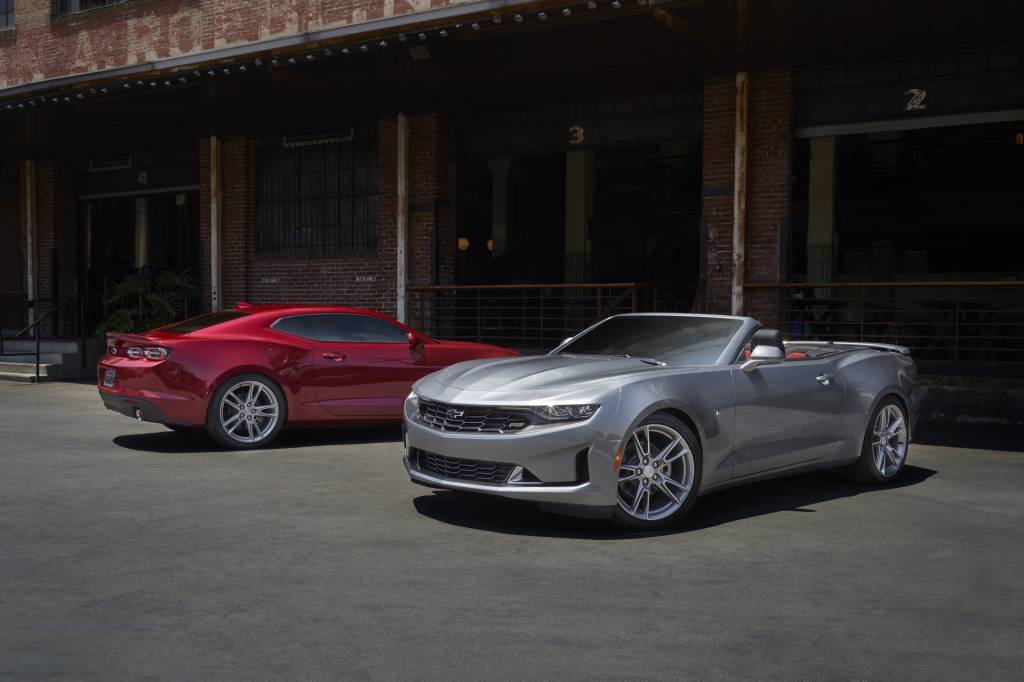
2024 Chevrolet Camaro
Unlike every production Camaro to date, though, any future electric version would reportedly have four doors. Sports cars and convertibles built on skateboard EV platforms are scarce, because of all the packaging hurdles, and sales of two-door cars don’t exactly justify extravagant engineering solutions. That still leaves room for a four-door coupe similar to the current BMW i4, though.
Instead of going for the biggest horsepower numbers and quickest acceleration, Reuss also wants a Camaro EV to go back to the nameplate’s roots, emphasizing simplicity and affordability. Reuss told Motor Trend that the base price of a Camaro EV could be similar to the $34,995 starting price of the Chevy Equinox EV crossover.
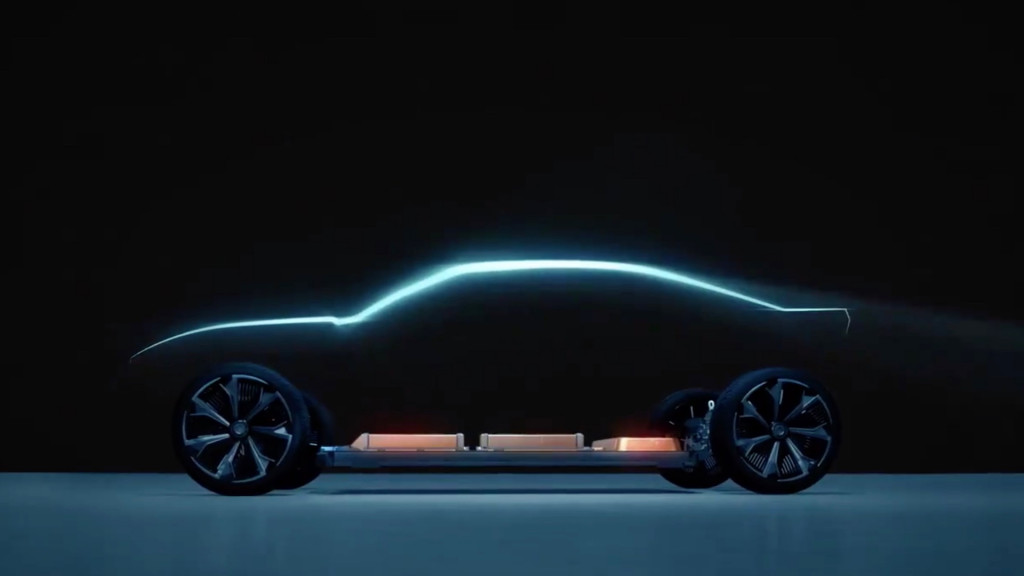
Possible electric Chevrolet Camaro in GM Ultium teaser video
With an upcoming Chevy Bolt EV, plus the Equinox EV, GM will already have several affordable EVs—both, perhaps, even by then starting under $40,000. If a Camaro-inspired model were to land in that price range too, as a car, it might pivot that performance car’s image in the right way.
While an affordable Camaro EV appears to be more a thing that Reuss would like to do versus something that’s firmly in GM’s product plan, the automaker has hinted for several years that it intends to produce lower-profile EVs based on its Ultium component set—perhaps with the cylindrical batteries it’s planning to make with Samsung.

Here’s how much range Tesla EVs lose in the first three years
In real-world driving range, a three-year-old Tesla Model 3 or Model Y will likely retain roughly 64% of its EPA rating, according to analysis from battery-data firm Recurrent.
Recurrent cites battery health reports from used EVs, based on observations of cars already on the road. In 898,504 observations of 7,078 Model 3 sedans and 664,642 observations of 5,120 Model Y crossovers, Recurrent found that range tended to decline steeply during the first 1,000 days, or nearly three years, of battery age, to that 64% EPA-range mark, before stabilizing.
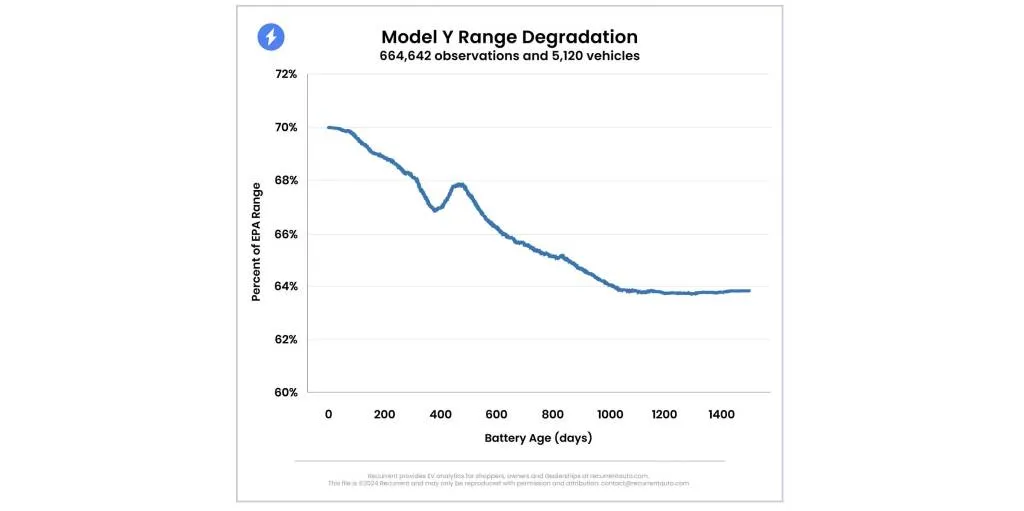
Tesla Model Y range degradation (via Recurrent)
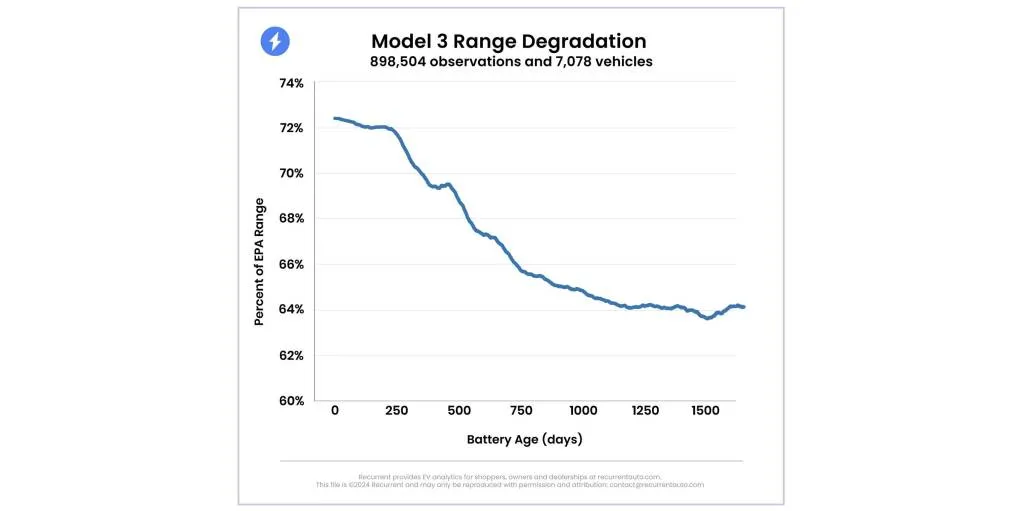
Tesla Model 3 range degradation (via Recurrent)
It should be noted that these vehicles don’t start at 100% of their EPA rating in real-world use—more like 70% of it, representing Tesla’s more generous adjustment factor in calculating its posted range numbers in the first place.
Lithium-ion battery degradation tends to follow an S-shaped curve, according to Recurrent. When a battery is new, there can be some noticeable degradation as it settles into a steady state, the company says, but this levels off for awhile. Ultimately, batteries will start to degrade significantly again later in life, to the point where they need to be replaced.
There’s some parallel here between EV battery degradation and overall depreciation of new cars. That also tends to be the steepest in the first three years of ownership.
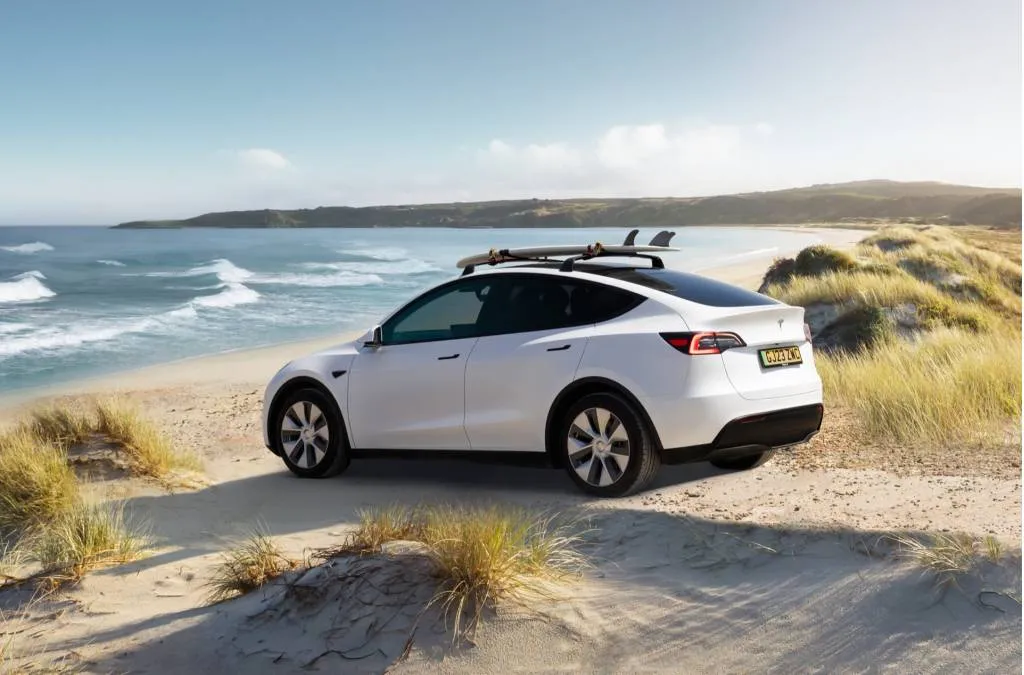
2024 Tesla Model Y. – Courtesy of Tesla, Inc.
And, once again, Recurrent’s results emphasize that battery degradation is predictable and isn’t likely to “brick” your EV. And recalls aside, battery replacement is relatively rare. Outside of big recalls, Recurrent estimates that only 2.3% of EV batteries have been replaced—and most of those are in older vehicles. An estimated 13% of EVs from model year 2015 and earlier have had battery replacements, but less than 1% of 2016-and-newer EVs have needed this, according to Recurrent. And many of those replacements were under warranty.
Recurrent also reported last year that Teslas don’t seem to be affected, in terms of degradation, by frequent fast-charging, as much as other EVs. They are affected by hot weather, though, the company has found. And while cold weather doesn’t seem to be as tied to battery degradation, it can put a big dent in range, depending on the model.

Bolt EV settlement, EV interest waning, Honda hydrogen semi: Today’s Car News

Automakers might be losing younger EV shoppers over the lack of affordable models. A Honda hydrogen semi kicks off a new fuel-cell push for the brand. And megawatt charging for big electric trucks is finally starting to arrive. This and more, here at Green Car Reports.
Versus last year, interest in EVs is waning, according to a new J.D. Power study. Its analysts saw a decline in consideration of EVs by new-car shoppers for the first time since it started tracking it in 2021, and it suggests it’s partly related to the lack of affordable EVs—an especially important aspect for younger Gen Z and Gen Y shoppers.
After several years, charging hardware and stations that use the Megawatt Charging Standard (MCS) are starting to roll out. These stations, and their corresponding faster charging rates for big electric trucks, may render the superior fueling speeds of comparable hydrogen vehicles a moot point.
Today Honda is introducing a hydrogen fuel-cell semi project at the Advanced Clean Transportation (ACT) expo for fleet vehicles, and it signals the start of a new project and the company’s emphasis of fuel-cell tech for uses beyond passenger vehicles.
And just before the weekend we learned about final class-action settlement documents that mean many Chevy Bolt EV owners might get up to $1,400. The settlement money will even apply to those who’ve already received a completely new battery.
_________________________________