
Category: General


2025 Audi E-Tron GT: Flagship performance EV ups efficiency, range
The 2025 Audi E-Tron GT gets a boost in range, efficiency, and power as part of a mid-cycle refresh revealed Monday.
Styling hasn’t changed much from what we’ve become familiar with since the E-Tron GT was unveiled in 2021, although there are new front fascia designs for the different grades. Audi has put more effort into improving performance—along the lines of updates recently given to the related Porsche Taycan for 2025.
The base E-Tron GT has been dropped. The entry-level grade is a new 670-hp S E-Tron GT. The carryover RS E-Tron GT is now the middle child of the lineup, and sees output increase from the previous 647 hp to 845 hp. A new RS E-Tron GT Performance grade sits atop the range with 912 hp. It’s capable of 0-62 mph in 2.5 seconds, while top speed is limited to 155 mph.
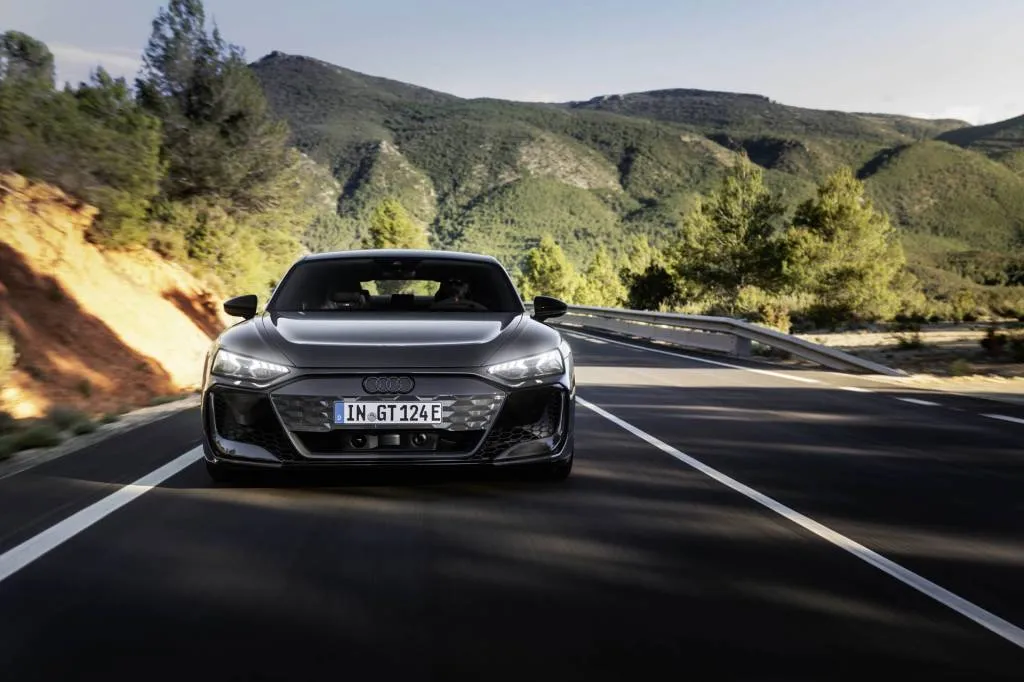
2025 Audi RS E-Tron GT
Dual-motor all-wheel drive remains standard across the board; you won’t find a single-motor version, or one with three motors like the Audi SQ8 E-Tron performance electric SUV. All models also feature a boost function that delivers 94 hp in 10-second intervals.
All models use the same 105-kwh battery pack as the updated Taycan. The pack sits lower and, at 1,378 pounds, weighs slightly less than the previous 83.7-kwh pack despite its higher capacity. Charging power increases from 270 kw to 320 kw, enabling a 10%-80% charge in 18 minutes. The maximum energy recoverable via regenerative braking also increases from 290 kw to 400 kw.
Audi estimates a maximum 378 miles of range as measured on the European WLTP testing cycle. An equivalent EPA figure will be lower, but could still improve on the current E-Tron GT’s 249-mile rating.
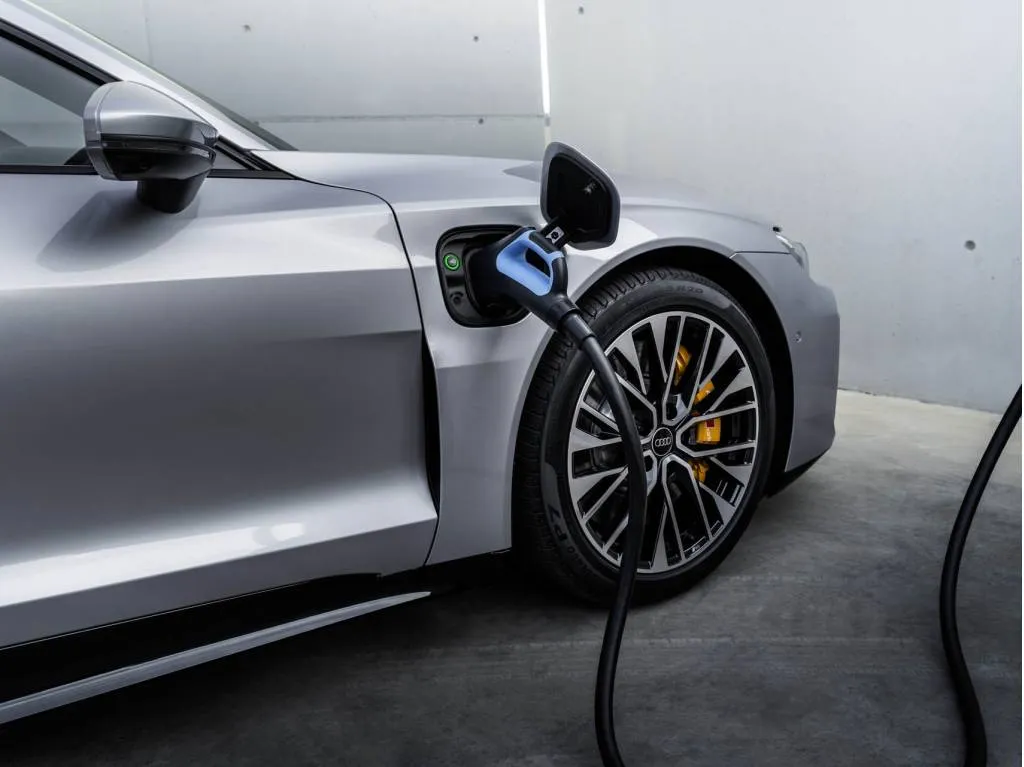
2025 Audi S E-Tron GT
Other changes include more powerful 10-piston front brake calipers, with standard steel rotors on the S E-Tron GT, a tungsten carbide-coated rotor design on the RS models (this is also optional on the S), and available carbon ceramic rotors. Strengthened driveshafts, recalibrated electronics for controlling torque distribution, and new dual-valve dampers shared with the updated Taycan round out the chassis changes.
In a first drive of the 2025 Taycan we found it makes good on the mission, not letting up on the poise and high-speed stability that made this model a standout for road trips—now with even more real-world range. With the pre-facelift E-Tron GT, touring comfort was prioritized over Taycan sharpness—which actually made it our preference for long-distance blasts.
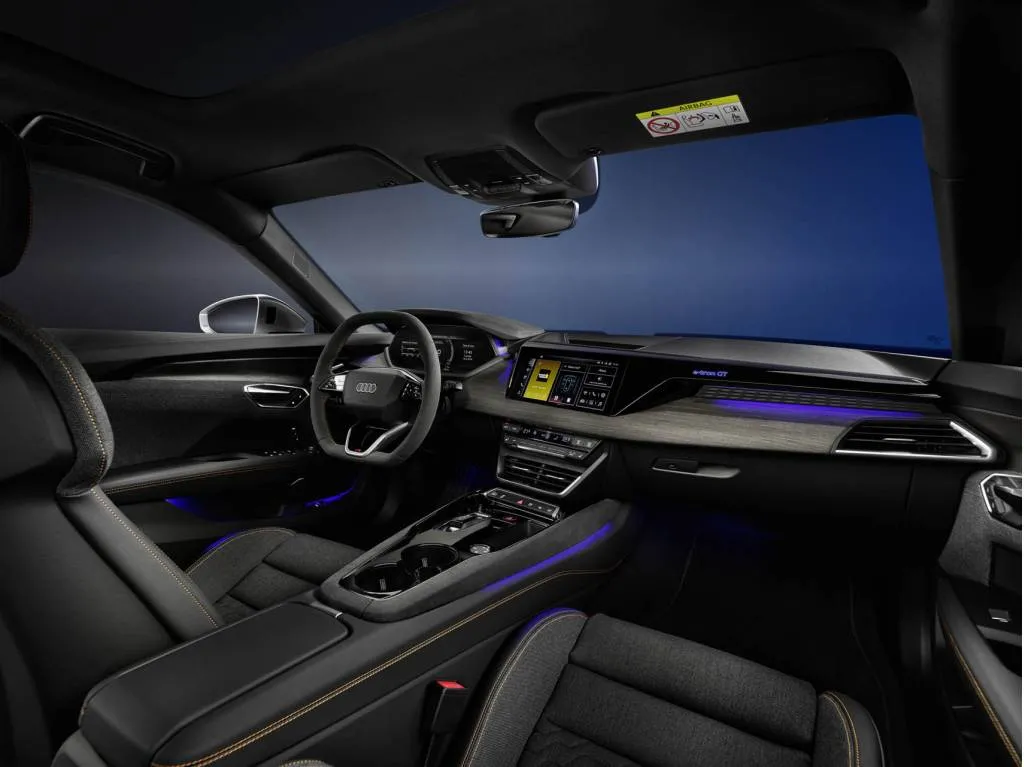
2025 Audi S E-Tron GT
Inside, the seats, steering wheel, and door sills were redesigned. Audi continues to use its own interface for the E-Tron GT, with a digital instrument cluster that now shows battery temperature, maximum possible charge rate, a completion forecast, and preconditioning status.
Pricing information and launch timing for the U.S.-market 2025 Audi E-Tron GT will be announced at a later date. Production is expected to stay at Audi’s factory in Böllinger Höfe, Germany.

Fisker bankrupt, Volvo S60 Recharge canceled, Kia EV3: Today’s Car News

Volvo cancels its highest-mpg hybrid. Kia might be thinking Mexico for its upcoming affordable EV. FIsker has gone belly up on the Ocean. And why don’t Americans drive their EVs more? This and more, here at Green Car Reports.
The American EV startup automaker Fisker filed for bankruptcy Monday after it failed to gather enough new investment to get production of its Ocean electric crossover going again. It’s possible that its liabilities have already neared its total assets, as Fisker has followed an “asset-light” model that involved contract manufacturing. And yes, this is the second time a Fisker automaker has gone bankrupt.
The Volvo S60 Recharge is the highest-mileage plug-in hybrid in Volvo’s lineup—by electric miles or mpg—and it’s going away after the 2025 model year. While Volvo confirmed several years ago that gasoline models would be dropped from the South Carolina plant where it’s built, Volvo on Monday ruled out making the S60 an import. It’s unclear, as of yet, where the V60 wagon variants stand.
According to a report citing inside sources, Kia is considering Mexico as the assembly location for its upcoming Kia EV3 electric SUV—so the compact EV might reach the U.S. market with a price as low as $30,000 and EV tax credit eligibility. But it’s no done deal as of yet.
In the U.S., EVs are driven fewer miles annually than gasoline models, including hybrids. It’s not that way elsewhere in the world, where EV drivers tend to drive more. Why is the U.S. the outlier?
_________________________________

US EVs are driven fewer miles than ICE—unlike elsewhere in the world
U.S. EVs average less annual mileage than other vehicle types, according to the Department of Energy (DOE). But that isn’t the case in other countries with significant EV fleets.
According to the 2022 National Household Travel Survey, EVs averaged 12,400 miles per year. That’s compared to 14,100 miles for gasoline vehicles and a high of 17,500 miles for diesel vehicles. Plug-in hybrids and hybrids were between gasoline and diesel vehicles in annual mileage, while the average mileage for all vehicles in a household was 14,200 in 2022, the DOE noted.
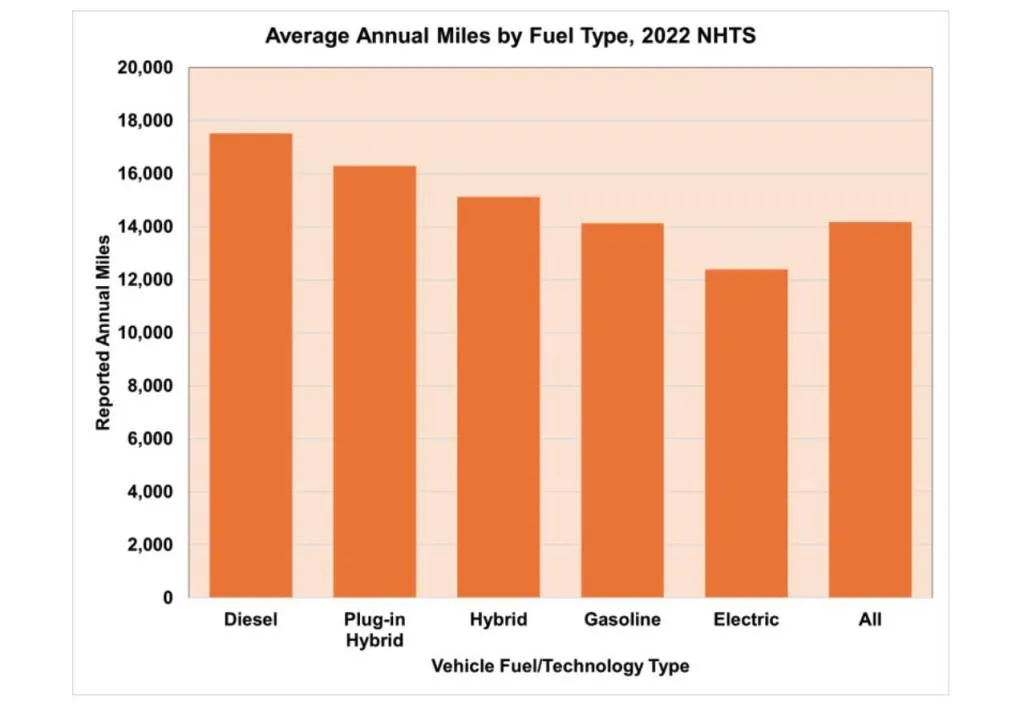
2022 U.S. average annual mileage by vehicle type (via DOE)
While plug-in hybrids had the second-highest annual mileage after diesels, U.S.-market models tend to have smaller batteries which, when combined with longer distances driven, raises a concern that they will add to oil demand as a result of relatively few electric miles, as Bloomberg New Energy Finance (BNEF) noted in recent analysis.
EVs in other countries accumulate more mileage annually, BNEF has found. In China and the Netherlands, EVs travel 66% and 56% more than internal-combustion vehicles, respectively, according to BNEF. In China, at least, that may be partly due to the popularity of EVs as ride-hailing vehicles, which was also noted by BNEF. In Norway, long a poster child for EV-friendly policies, EVs travel 40% more than internal-combustion cars.
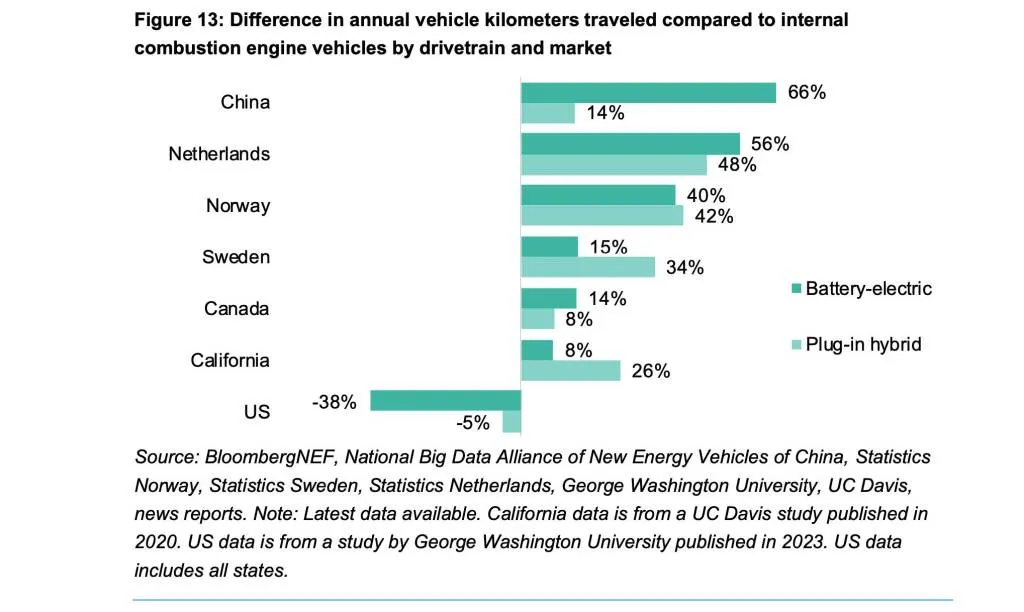
Annual kilometers traveled by EVs vs. ICE vehicles (via BNEF)
A study last year from George Washington University and the DOE’s National Renewable Energy Laboratory (NREL) found that EV drivers simply aren’t driving as much as those with gasoline vehicles (it may vary by model, though, with one analysis finding that Tesla leads other EVs in mileage). And that’s a problem for some of the emissions models and assumptions for the benefits of EVs.
Earlier EVs tended to be short-range. As other long-range EVs added to the mix, it was assumed that EV distance would go up—but so far it hasn’t tracked upward as quickly as the range capabilities of the EV fleet.
Does this mean Americans are seeing long-range EVs as second vehicles, while the rest of the world sees them as primary vehicles? That part is unclear, but it appears to be a uniquely American dilemma that, perhaps, will require some uniquely American solutions.

Report: Kia EV3 may be made in Mexico to hit $30,000 price
The Kia EV3 electric SUV could be assembled in Mexico for the U.S. market, a move that could allow it to be eligible for a federal tax credit and carry a sticker price of $30,000, reports Korean Car Blog (via Electrek).
“Kia is developing a distinct North American model” of the EV3, to be built at the automaker’s factory in Monterey, Mexico, starting next year, according to the report. The North American version, codenamed SVm, is reportedly scheduled to start testing later this year.
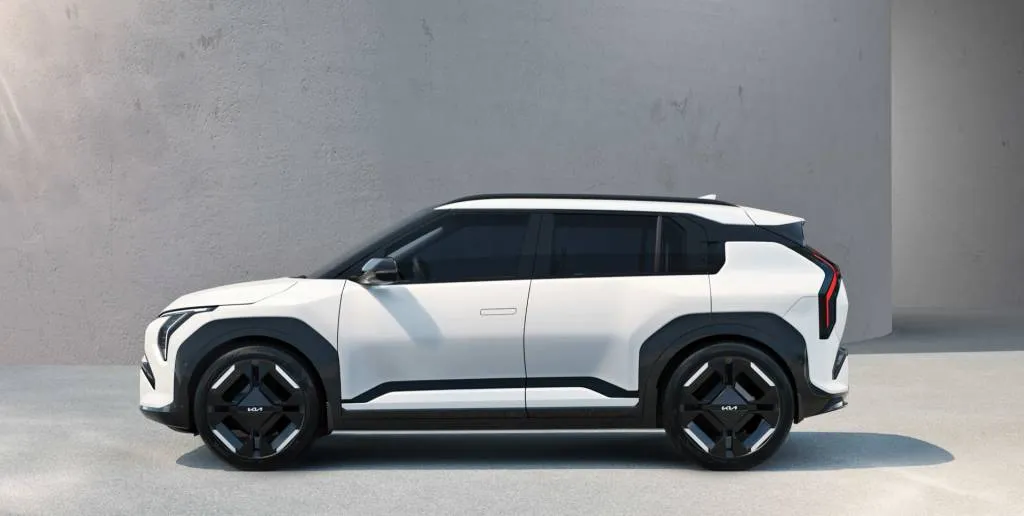
Kia EV3
Once production ramps up in the fourth quarter of 2025, Kia reportedly aims to produce up to 110,000 vehicles annually in Mexico, compared to the 100,000 target for the Gwangmyeong, South Korea, plant that launched EV3 production. That plant will serve both the Korean and European markets, according to the report.
Kia revealed the EV3 last month, with hints that some versions might return more than 300 miles of range. Earlier the automaker also suggested it would start around $35,000. It does in Korea start closer to $30,000—so this may be an attempt to get the price closer to that.
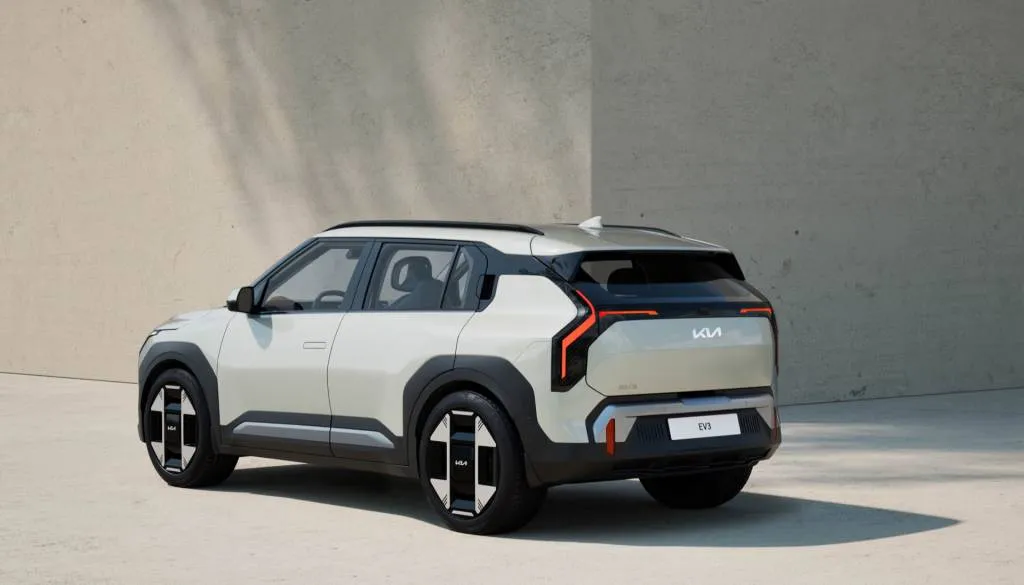
Kia EV3
Kia would likely focus on EV tax credit eligibility, as that might cut the effective price for many families around or below the $25,000 mark, including destination. Mexico-built EVs still qualify for the federal tax credit, and Mexico’s trade status would allow Kia to avoid import duties, Korean Car Blog notes.
It’s likely a difficult time for Kia to put together such a plan to make cost-conscious EVs south of the border, however. Former president Donald Trump has proposed a 100% tariff on Chinese vehicles—EV or not—and he’s given some indication he’d like to further reel in those mostly free trade rules with Mexico established under NAFTA, if re-elected. He’s also reportedly offered to scrap Biden administration incentives—like the EV tax credit—in exchange for Big Oil campaign contributions.

Out of charge: Fisker files for bankruptcy, again
- Fisker filed for bankruptcy protection in Delaware
- The startup automaker estimates liabilities between $100 million and $500 million
- Fisker halted production with contract maker Magna Steyr in March
Electric vehicle manufacturer Fisker on Monday filed for bankruptcy after the company failed to secure new investment to help get production of its Ocean crossover running again.
Fisker in a statement said it has sought Chapter 11 bankruptcy protection with a court in Delaware, and that it is currently in talks with creditors over debtor-in-possession financing and the sale of remaining assets.
In a court filing seen by Reuters, Fisker estimated its liabilities at between $100 million and $500 million, and its assets at between $500 million and $1 billion.
The move comes roughly a year after the start of deliveries of the Ocean, Fisker’s debut model. Production of the electric compact crossover was handled by contract manufacturer Magna Steyr at a plant in Austria, but it was halted in March after Fisker experienced a cash crunch.
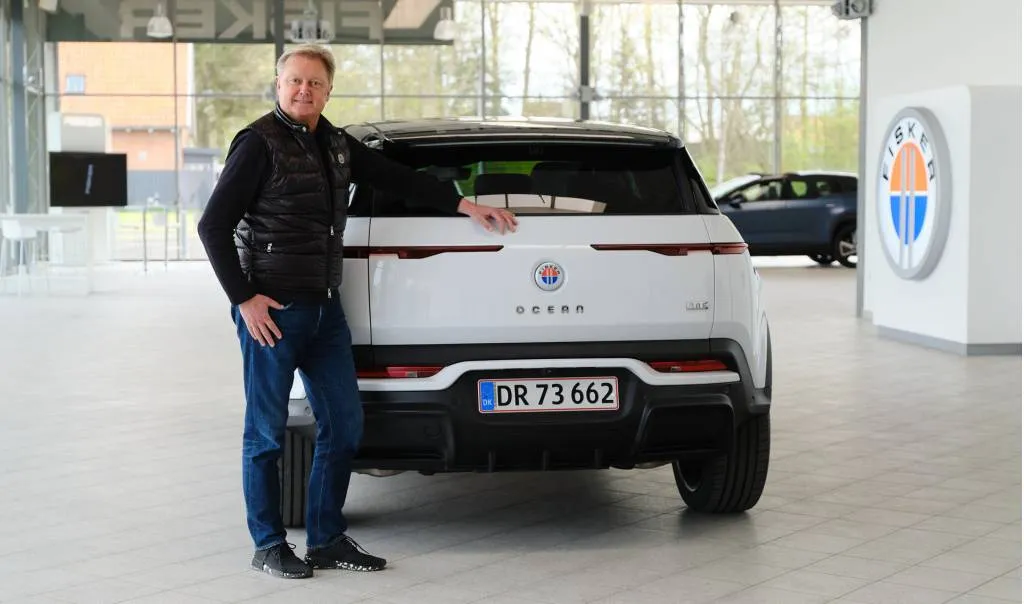
Henrik Fisker with the first customer Fisker Ocean – May 2023
According to Reuters, more than 10,000 Oceans were built in 2023 and only about 4,700 were delivered to customers. The company hasn’t said what support will be offered for Ocean owners.
Prior to filing for bankruptcy protection, Fisker tried to raise funds by forming a partnership with a major automaker, rumored to be Nissan. The company also slashed prices on the Ocean in an attempt to reduce the building glut.
Beyond the funding issues, Fisker has also suffered from cooling demand for EVs, as well as supply chain issues that delayed a ramp-up in production of the Ocean.
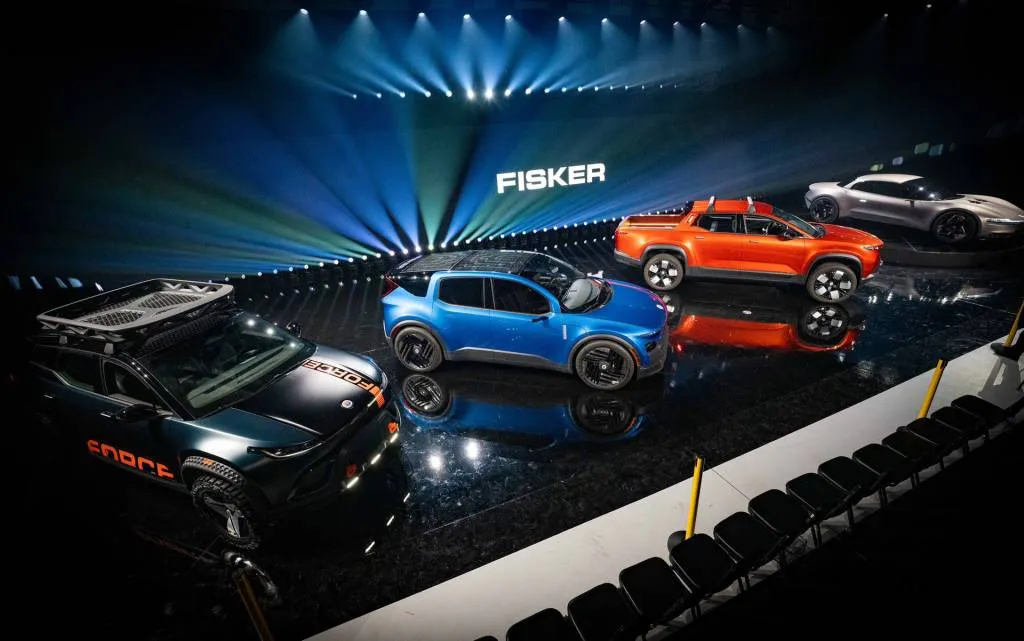
L to R: Fisker Ocean Force E, Pear, Alaska, and Ronin prototypes
The National Highway Traffic Safety Administration also started a preliminary probe into the Ocean in May after receiving complaints of doors sometimes failing to open.
This is the second instance of an EV startup founded and led by Henrik Fisker going bankrupt. Another company operating as Fisker failed in 2013, with its remaining assets sold to the Chinese battery company Wanxiang. That earlier Fisker was eventually revived and now operates as Karma.
A buyer with deep pockets could potentially purchase Fisker’s assets, pay off its liabilities, and revive Ocean production. Fisker also presented designs for three additional vehicles that could be launched. They included the Pear urban crossover, Alaska pickup truck, and Ronin convertible.

Used EV price plunge, EV rejectors cite cost, Tesla roundup: Today’s Car News
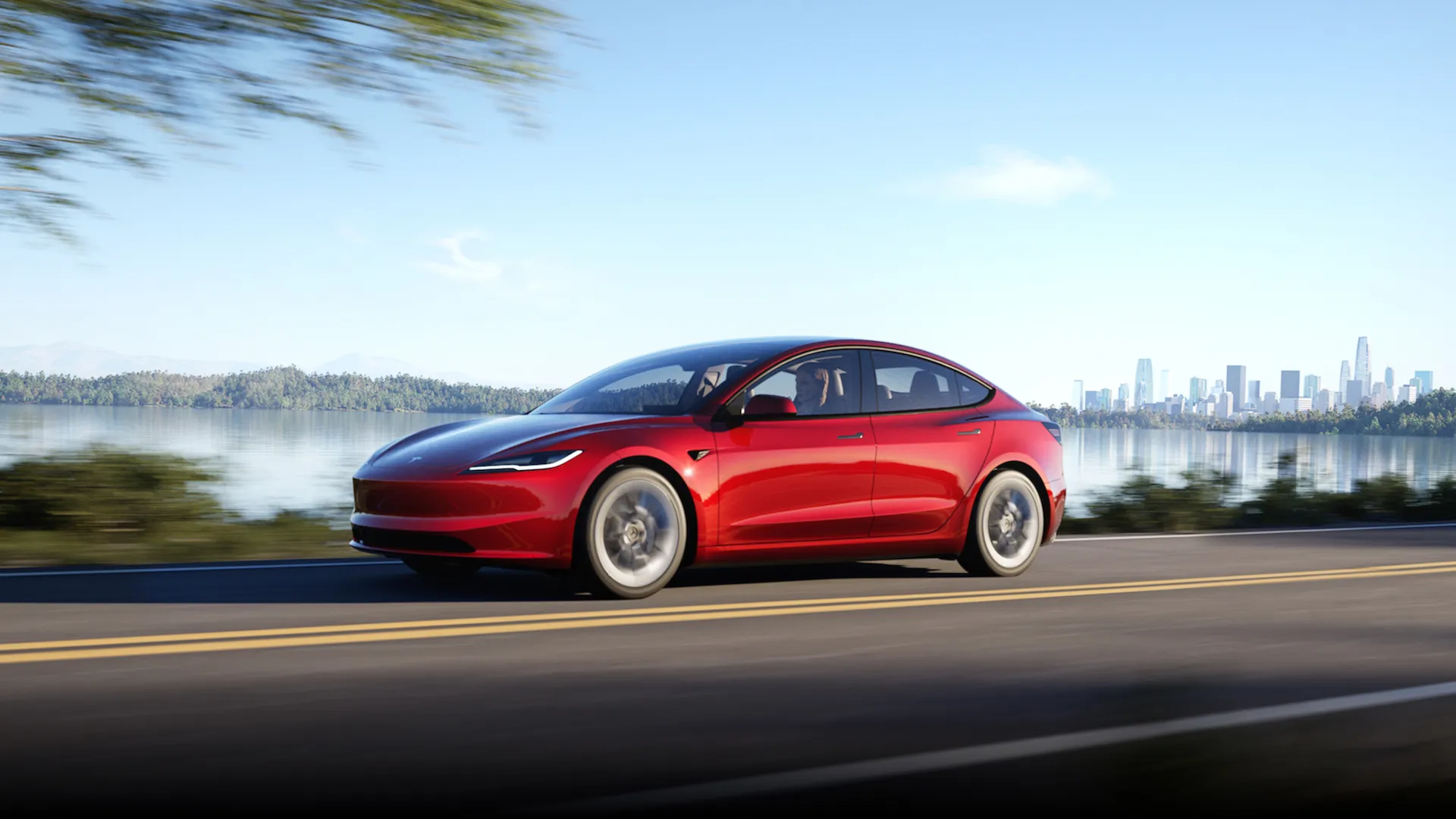
Last week’s Tesla shareholder buzz brought some product and battery news. And at the same time that EV rejectors keep citing cost as the primary reason why they don’t work, the cost of new EVs keeps settling and used EV prices have plunged. This and more, here at Green Car Reports.
We already knew that new EV transaction prices have been settling downward. Now market analysis is seeing that used EV prices have plummeted—to the degree that they now stand below the prices of comparable gasoline vehicles. If there’s an example that underscores the point best, it’s that average used Tesla Model 3 prices are now below BMW 3-Series prices, both for a recent-model-year timeframe.
At the same time, a recent wide-ranging consumer poll from the Associated Press and public policy researchers suggested that cost headlines the EV deal breakers for many U.S. adults. According to that, Nearly 6 in 10 cited cost as a primary reason for skipping EVs, with these polls echoing previous results suggesting that these EV cost concerns were greater for older adults.
And just prior to the weekend, we rounded up two product takeaways from Tesla’s annual shareholder meeting. CEO Elon Musk emphasized the importance of affordability and confirmed three upcoming “amazing” Tesla EVs—although there was no mention of the Roadster. And Musk revealed that Tesla is still struggling to lower the cost of its 4680 battery cells, pushed as a game-changer that would change the economics behind EVs, below that of current supplier-made cells.
_________________________________

Price is keeping many Americans away from EVs, polling suggests
Americans aren’t very enthusiastic about EVs, with cost, range anxiety, and charging among the main concerns, according to a new consumer poll by the Associated Press–NORC Center for Public Affairs Research and the Energy Policy Institute at the University of Chicago (EPIC).
Researchers polled 6,265 U.S. adults between March 26 and April 10, 2024, with about 4 in 10 respondents saying they were at least somewhat likely to get an EV as their next car purchase, and 21% saying they were “very” or “extremely” likely to buy an EV as their next car.
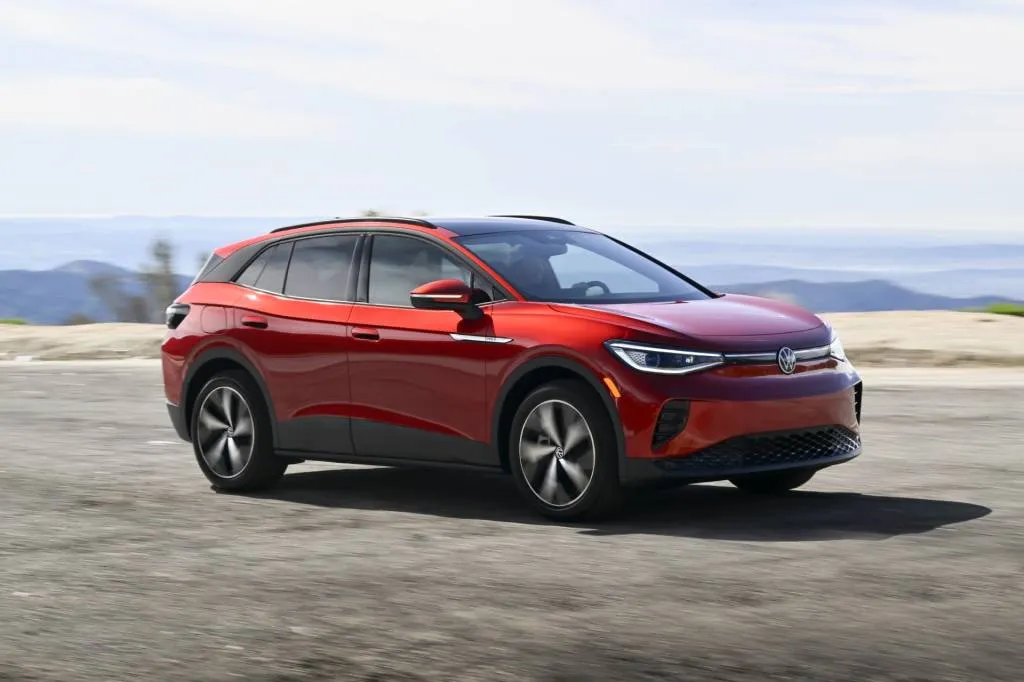
2024 Volkswagen ID.4
Among those not interested in an EV, nearly 6 in 10 cited cost as a primary reason. That echoes previous polls and studies, with the Energy Information Administration (EIA) attributing an EV sales stumble in the first quarter of this year to a dearth of affordable models.
Cost was more of a concern for older adults, the AP noted, who also tend to be less interested in EVs than younger car shoppers, according to previous research. A report from earlier this year underscored that Gen X and Millennials buy the most EVs, and one recent survey suggested that younger U.S. drivers are more open to Chinese EVs as well.
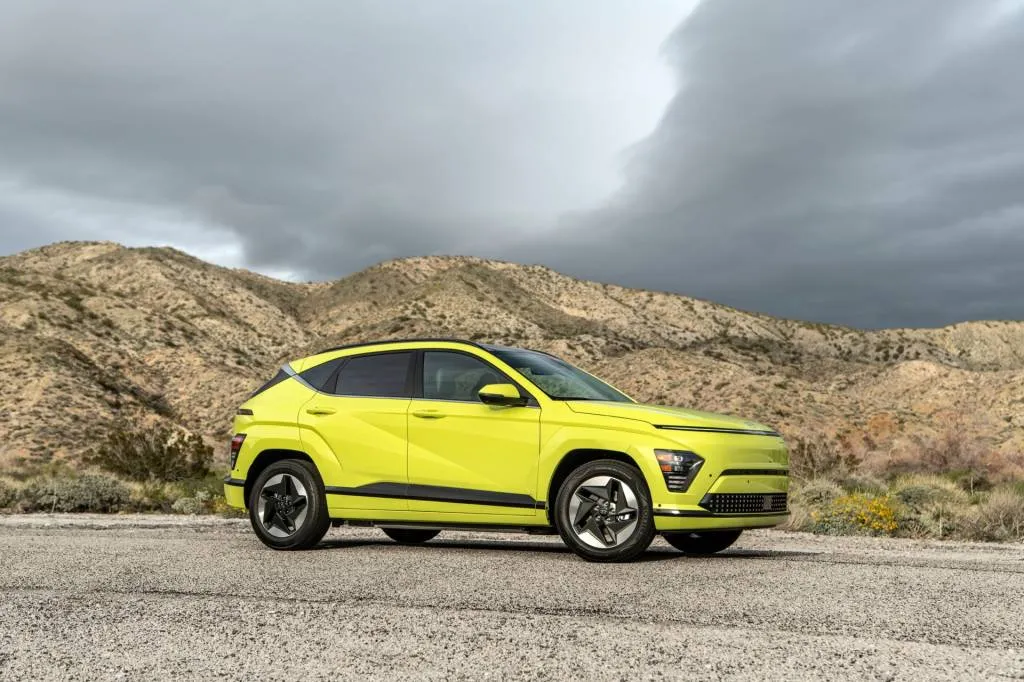
2024 Hyundai Kona Electric
About half of U.S. adults cite range anxiety as a reason not to buy an EV, while about 4 in 10 said long charging times and lack of public charging stations in their areas were strikes against EVs, the AP poll found.
While the industry often cites the figure that 85% of EV drivers charge at home the majority of the time, survey results from ChargeLab emphasize that 3 of 5 EV drivers with home charging use public chargers weekly. The federal government’s National Electric Vehicle Infrastructure (NEVI) effort is accelerating slowly, and Tesla has recently pulled back in its Supercharger push, so whether public infrastructure can truly fulfill EV drivers’ needs remains to be seen.