
Category: General

Steve Kiefer on eradicating the scourge of distracted driving (Episode 256)
Ahead of the July 4th holiday, historically a deadly date on U.S. roads, the Kiefer Foundation chairman details the steps that tech companies, automakers, lawmakers and individual drivers can all take to stop distracted driving and improve traffic safety.

Ferrari plots first EV—for $500,000 or more
- Ferrari’s first EV due in late 2025
- Production to take place at new “e-building” plant
- May not be a traditional supercar
It was only a decade ago that Ferrari was vehemently against launching an electric car, but the automaker known for its loud gas engines has been working on one for several years and plans to reveal it in late 2025.
It is expected be priced at the high end of Ferrari’s pricing spectrum, with a source revealing to Reuters that the starting price will be 500,000 euros (approximately $535,000).
That will make it more expensive than the SF90 Stradale supercar and Purosangue SUV, which are Ferrari’s priciest non-limited-production models. It will also make it considerably more expensive than the average transaction price for a Ferrari, which according to Reuters was about 350,000 euros in the first quarter of 2024, including options.
If accurate, it means Ferrari won’t rely on sharp pricing to entice buyers to give up the emotional sound of its gas engines. Instead it may offer advanced technology like axial-flux motors, in-wheel motors, and sound generators.
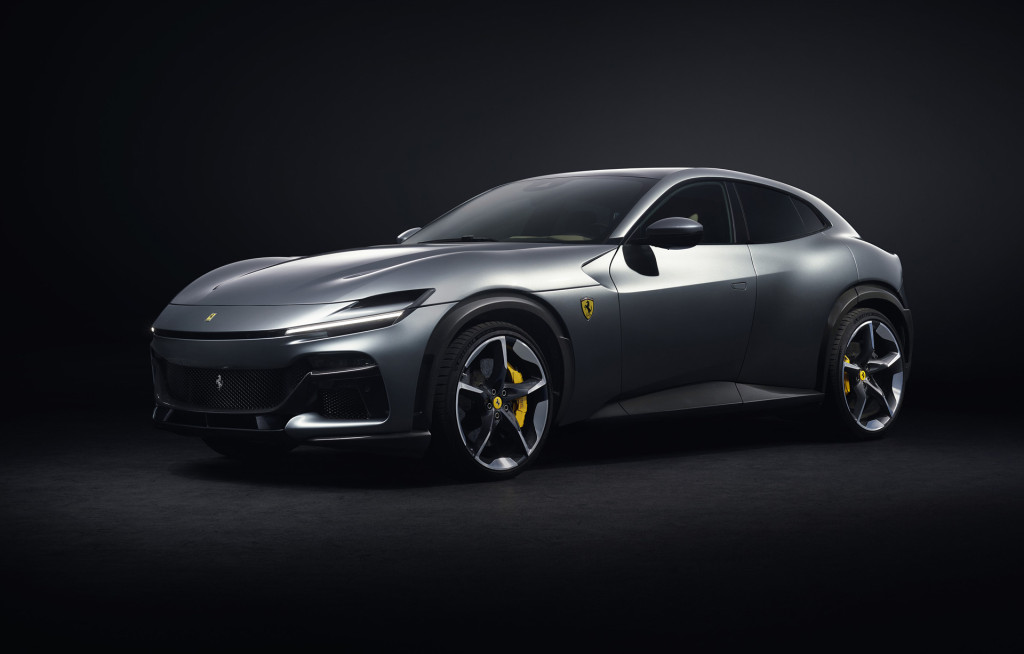
Ferrari Purosangue
Ferrari hasn’t said what form the car will take, and there are rumors it may be something closer to the Purosangue than one of the automaker’s traditional supercar models. According to Reuters’ source, Ferrari has a second electric car already in development, albeit still at an early stage.
Ferrari will build its electric cars at a new plant referred to as the “e-building” by CEO Benedetto Vigna. Located adjacent to the current plant at the automaker’s Maranello headquarters, the new plant is expected to come online this week, initially to build some gas models in addition to electric motors, inverters, and batteries for plug-in hybrid powertrains. Volume production of EVs isn’t expected to start at the site until early 2026.

Ferrari plant in Maranello, Italy
Similar to its approach with gas powertrains, Ferrari intends to develop its own electric motors, inverters, and batteries, aiming for industry-leading weight and power density.
The automaker will work with partners in some areas, one of which is leading battery supplier SK On. The two already have a deal for the supply of batteries going in Ferrari’s existing plug-in hybrid models, and in March they announced plans to explore new possibilities in the area of battery cell technology.

Tesla-powered Hummer H1 EV weighs half as much as GMC Hummer EV
- A restomod Hummer H1 EV with Tesla batteries has entered the chat
- The Hummer H1 EV weighs only about 4,500 pounds
- The Hummer H1 EV is said to have about 300 miles of range from its 75-kwh battery
A Canadian company already established as an EV conversion shop is building an electric Hummer that’s lighter than the one General Motors is currently selling.
North American Electric Vehicles (NAEV) aims to take former military Humvees—the vehicles once sold as the original civilian Hummer H1—and equipping them with secondhand Tesla powertrains to create what it calls the Cyber-Hummer. And it claims this restomod, which it says it will start delivering this summer, weighs 4,500 pounds.
That’s about half the weight of a new GMC Hummer EV and about 2,000 pounds less than the leanest factory-built H1.
NAEV’s initial Executive Edition configuration has a dual-motor all-wheel-drive powertrain producing a claimed 1,000 hp and 1,000 lb-ft of torque, enabling a 0-60 mph time of 2.5 seconds. A 75-kwh battery pack will afford up to 300 miles of range, it claims. The company plans to provide both NACS and CCS charging compatibility.

NAEV Cyber-Hummer
Much of the weight savings come from removal of the stock cast-iron suspension components and geared hubs, as well as the transfer case, transmission, fuel, and exhaust systems—none of which are required with this EV conversion, NAEV founder Jeffrey Kotulak told Green Car Reports.
The stock suspension is replaced with what NAEV calls a “hybrid” independent suspension system including some new in-house components. The Cyber-Hummer still sports 15 inches of ground clearance for off-roading, though, and it rides on all-terrain tires mounted to 20-inch alloy wheels.
NAEV uses secondhand Tesla components, while the Humvees are sourced from surplus auctions, Kotulak said, adding that this use of secondhand vehicles and components is a sustainable choice.

NAEV Cyber-Hummer
With curb weight of less than 6,000 pounds, NAEV’s Hummers can also be registered as Class 1 vehicles with an on-road title, Kotulak noted.
However, as older vehicles designed for military use, these Hummers were not designed to modern standards of safety, occupant protection, or accident avoidance.
That’s the tradeoff for a Hummer that treads lighter than the GMC Hummer EV, which is so heavy and inefficient that it joined gas guzzlers on an American Council for an Energy Efficient Economy (ACEEE) list of “meanest” vehicles for the environment.
The Executive Edition has a starting price of $139,900. NAEV also plans to offer Baja and Commander versions priced at $98,900 and $119,900, respectively. Builds take six months after an order is placed, and aims to build 328 units annually, Kotulak said.

Tesla is purging turn-signal stalks, but owners are adding them back
- Teslas no longer have control stalks…
- …but some owners want stalks back
- Owners have resorted to adding aftermarket parts as replacement
Tesla has removed control stalks from the Model S, Model X, and Model 3, but owners are adding them back with aftermarket parts.
As discovered by InsideEVs, aftermarket stalks are available for about $400, and there are even some YouTube videos explaining how to install them. As one video explains, this process is a bit involved. It involves removing the steering wheel to install the stalks, as well as connecting wires to controllers in the center console, requiring additional disassembly.
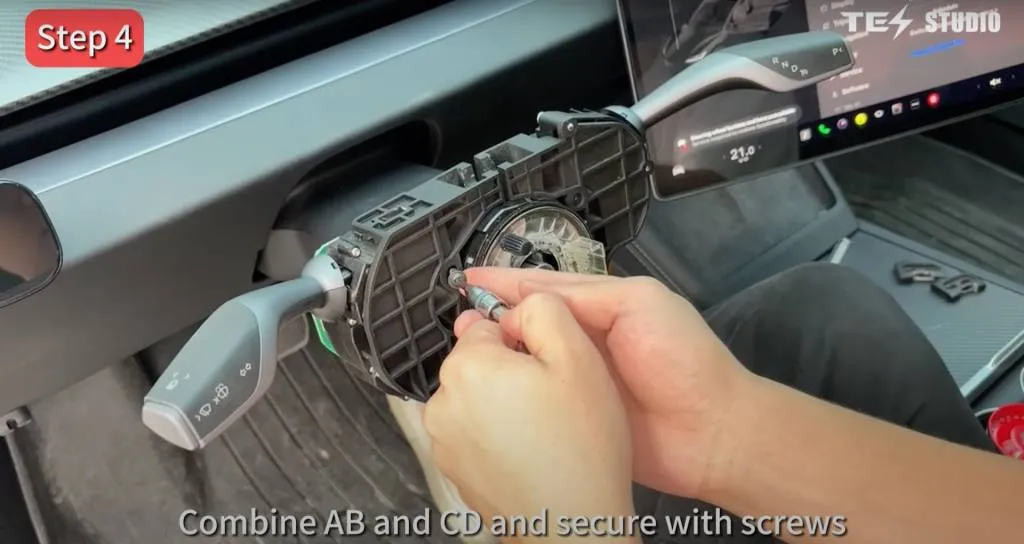
Installation of aftermarket stalks in a Tesla Model 3 Highland (via TesStudio)
That video deals with installation of aftermarket stalks in the refreshed Model 3 that went on sale in the U.S. earlier this year. Known as the Highland, this version also does away with the shift lever in addition to control stalks. But the Model 3 isn’t the only Tesla that owners are tinkering with to add back analog controls.
InsideEVs notes that Model S and Model X owners devised a workaround in 2021 using the clock spring, stalks, and Steering Column Control Module (SCCM) from the then-current Model 3. This modification, which required special software to allow the Model 3 and Model S/Model X hardware to communicate, came after the steering yoke that Consumer Reports called a pain to use—and possibly a safety concern.
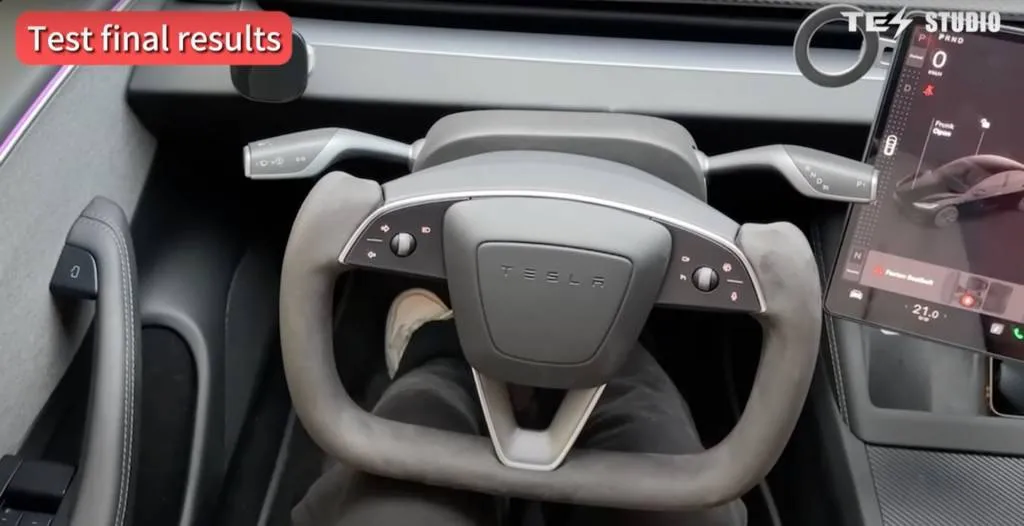
Installation of aftermarket stalks in a Tesla Model 3 Highland (via TesStudio)
Multiple studies have underscored that EVs are more trouble-prone than other vehicle types not necessarily because of their powertrains but often because of overly complex interfaces that automakers choose to adopt with them.
While none have been quite as zealous as Tesla in removing analog controls and familiar interfaces, automakers have a tendency to push high-tech features on EV customers, but in this case it seems Tesla customers are pushing back.

Volvo PHEV review, EV insurance cost, cable theft, Big Oil pushback: Today’s Car News
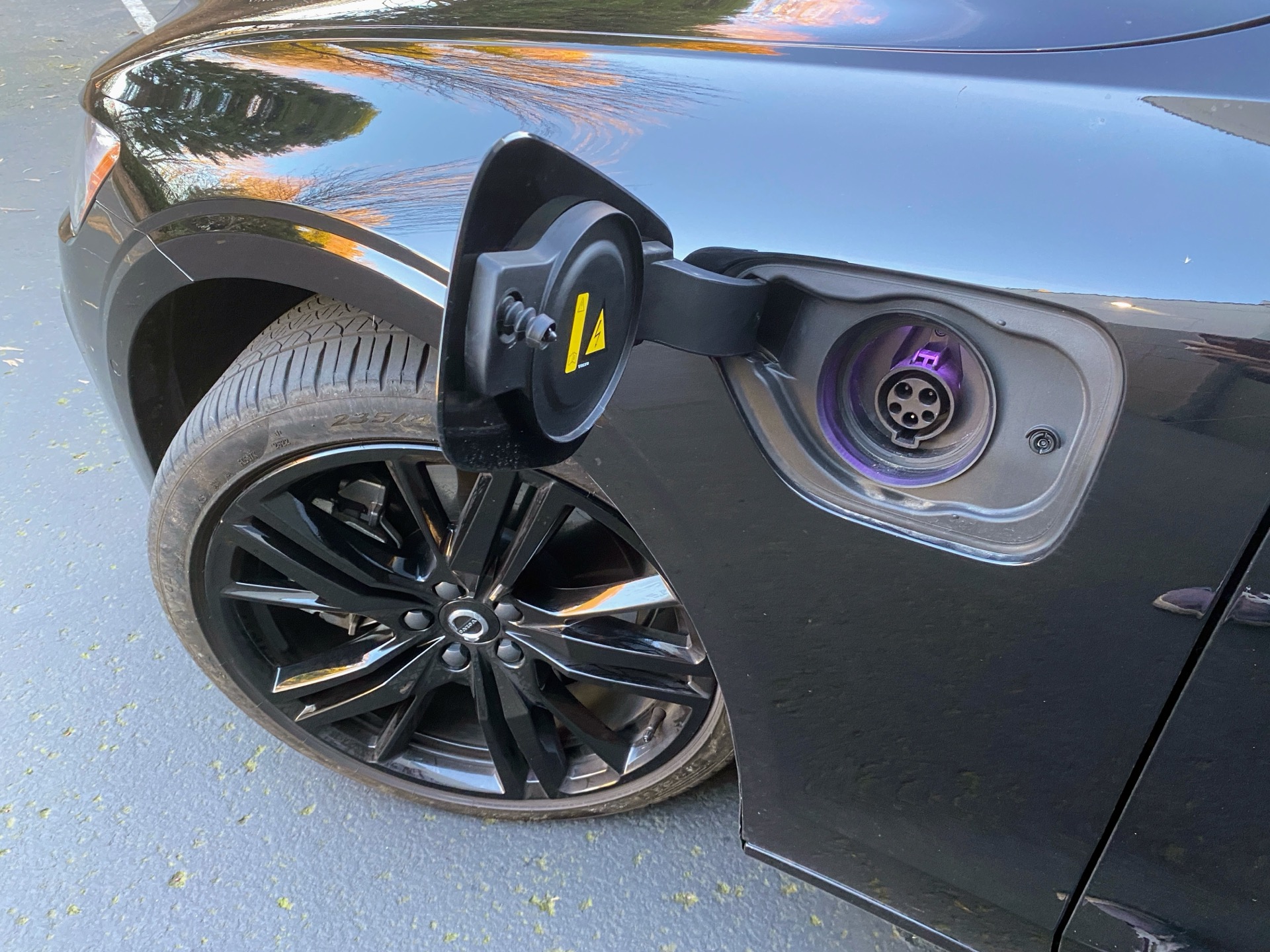
EVs still cost more to insure. Thieves are looking at fat charging cables as a fat paycheck (but they’re not). The oil industry is speaking up against EPA standards—and filing court cases. And we plug in Volvo’s plug-in hybrid sedan and see why it’s pointing to EVs. This and more, here at Green Car Reports.
In a review of the Volvo S60 Recharge plug-in hybrid, Green Car Reports found this highest-mpg, highest-mileage PHEV from Volvo to be a little confused about its hybrid identity but more electric when it counts compared to previous PHEVs from the brand.
The oil industry challenged EPA vehicle standards this past week—standards that had already been softened for light trucks versus their earlier proposal. Spurred by rules that emphasize plug-in vehicles and mostly ignore ethanol, the American Petroleum Institute says the standards amount to an electric vehicle mandate (it’s technically not). It hadn’t pushed back as strongly vs. the last round of standards, so its timing in an election year is likely no mistake.
More data has rolled in from the insurance industry, unfortunately underscoring a trend that makes electric vehicle ownership a little more complicated: EVs are more expensive to insure. Why? In its latest risk report looking at calendar-year 2023, LexisNexis doesn’t point to particulars but says EVs have a 17% higher claim frequency and 34% higher claim severity (by cost) versus “traditional segments.”
And the fat cables on commercial EV chargers are becoming a magnet for thieves, according to a recent AP report looking at crime statistics and checking in with charging networks. That’s left EV drivers frustrated and charging companies with big repair bills. It costs about $1,000 to replace each cable that might ultimately contain $15 of hard-to-extract copper.
_________________________________

Report: Fat public EV charging cables are a magnet for thieves
Copper remains lucrative for thieves, enough that public EV charging cables are now a target, reports the Associated Press.
Charging cables contain large amounts of copper, prices for which are now at record highs. And charging-station operators are reporting increased instances of cut cables and thefts, according to the AP.
Two years ago, Electrify America noted a cut cable at one of its stations about every six months. Through May of this year, the number of reported cut cables reach 129—four more than in all of 2023, according to the report. At one Seattle charging station, cables were cut six times in the past year, Electrify America vice president of operations Anthony Lambkin told the AP.
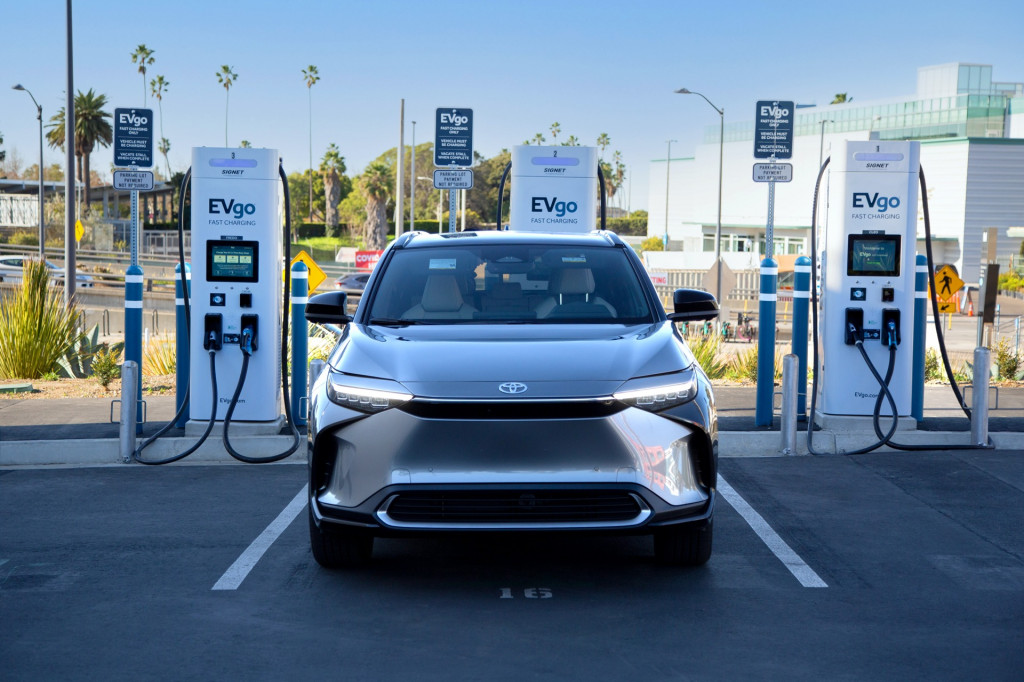
2023 Toyota bZ4X at EVgo charging station
After the report was shared by the AP’s official account on X (formerly Twitter), Electrify America reposted it, adding that “cable theft across the electric vehicle (EV) charging industry is on the rise.” The company said it is “committed to cooperating with law enforcement to swiftly address this issue.”
Flo and EVgo also reported a rise in thefts, and Tesla charging stations have been struck by copper thieves as well, according to the AP report. At one Houston-area Tesla station, thieves stole 18 of 19 charging cables, local police told the AP.
Copper prices hit a record high of nearly $5.20 in late May (up about 25% from a year ago), and analysts expect further increases, according to the AP. Yet charging companies said there isn’t much copper in their cables—perhaps $15 to $20 per cable—and what metal there is can be difficult to extract. That metal often ends up at scrap yards, which often can’t tell it was extracting from a vandalized charging cable, according to the report.
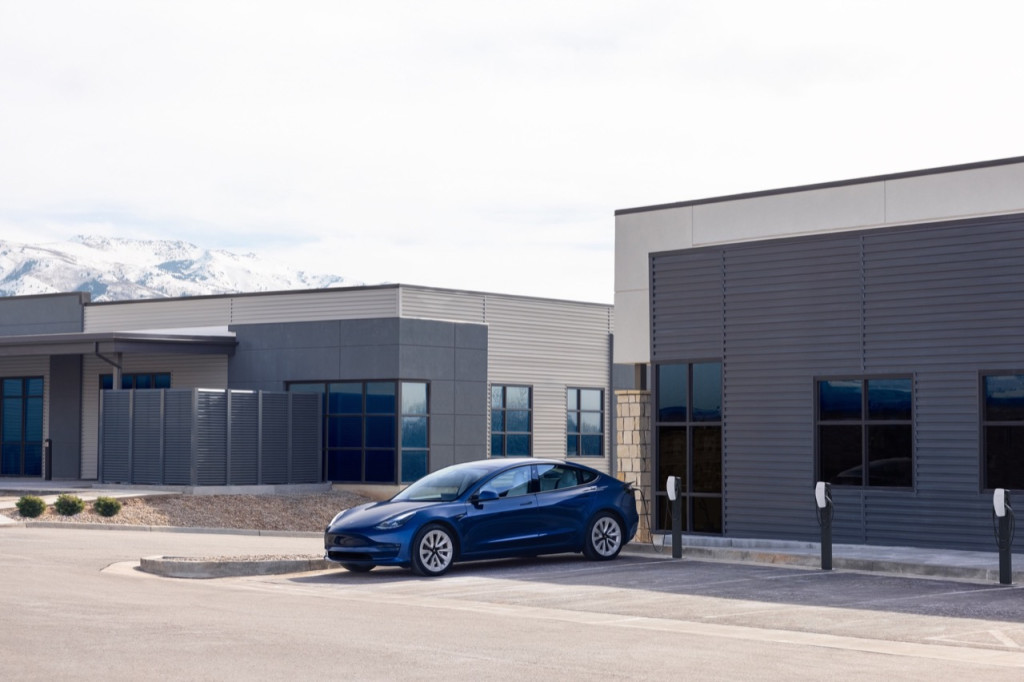
Tesla charging
In many respects, it’s for the same reason that hybrids became a target for thieves several years ago—because their catalytic converters included higher amounts of platinum, rhodium, and palladium to accommodate the frequent starts of their engines. Prior to that, Prius owners also needed to worry about battery theft itself.
Charging-station operators are left with frustrated EV drivers and big repair bills. Minneapolis has paid $1,000 to replace just one cable at its city-owned charging stations after they were vandalized, according to the report.
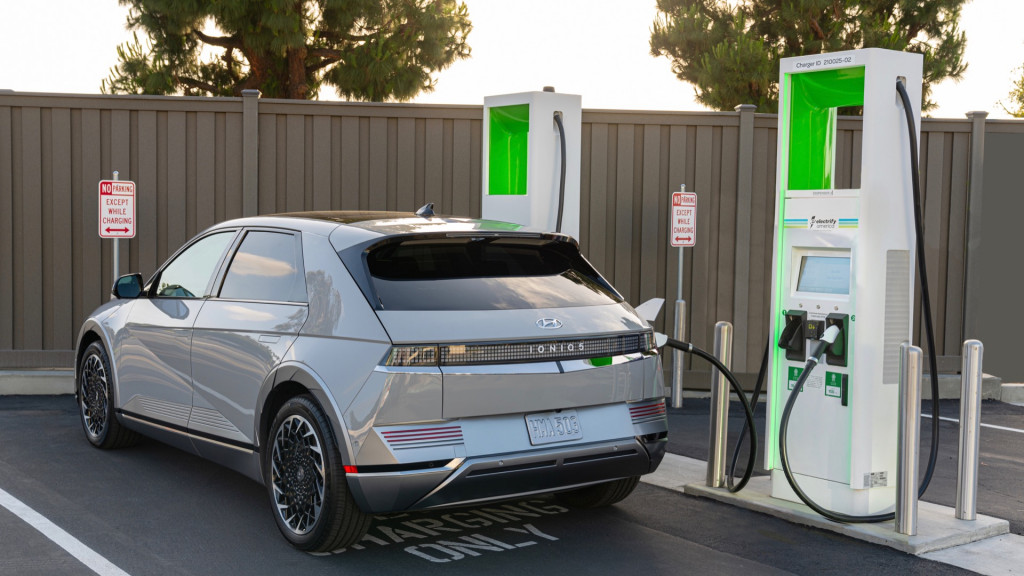
2022 Hyundai IONIQ 5 at Electrify America DC fast-charging station
For now, charging companies and police are taking some steps to guard against cable theft. Electrify America is installing more security cameras, and Houston police are spending more time plying scrap yards for stolen copper, according to the report. But technological changes could also help.
Higher-power 800-volt charging means thinner cables without the same cooling needs, so at least at the charger and cable level it helps cut costs. Charging companies have been aiming to provide faster charging without bulkier cables, involving some innovative cooling methods. Wireless charging could also lessen the need for bulky copper cables, but it’s expensive.

Oil industry pushes back versus softened fleet mpg standards
The oil industry last week launched a legal challenge versus the U.S. EPA and its latest light- and medium-duty vehicle standards set for the 2027-2032 model years.
The case was filed by the American Petroleum Institute (API), which represents members ranging from valve makers to Shell and Exxon Mobil. Joining in are the National Corn Growers Association, over accusations that corn ethanol wasn’t taken into account as a “critical and effective climate solution,” and the American Farm Bureau Federation, which claims that the standards will drive up the cost of farm vehicles “and force farmers to rely on a charging network that does not yet exist in rural areas.”
Also behind the lawsuit on the car-and-light-truck side is a group of six auto dealers, mostly from middle America, “representing sixteen brands and collectively operating dozens of dealerships in major markets across the country.” There are about 18,000 new-car dealerships in the U.S.
A press release accompanying the filing of the lawsuit called the EPA standards an electric vehicle mandate, although that accusation was omitted from the actual case petition.
Challenging the inevitability of plug-in vehicles
The case challenges the EPA rules for 2027-2032 confirmed in March and book noted in the federal register in April. These rules fit in with the Biden administration’s efforts to curb greenhouse-gas emissions, reduce smog-forming emissions, and boost public health. The standards clearly don’t mandate EVs, although based on the way they’re structured the EPA projected that EVs might make up 56% of new-vehicle sales by 2032—in order for full-line automakers to keep delivering large, gas-guzzling trucks as well.
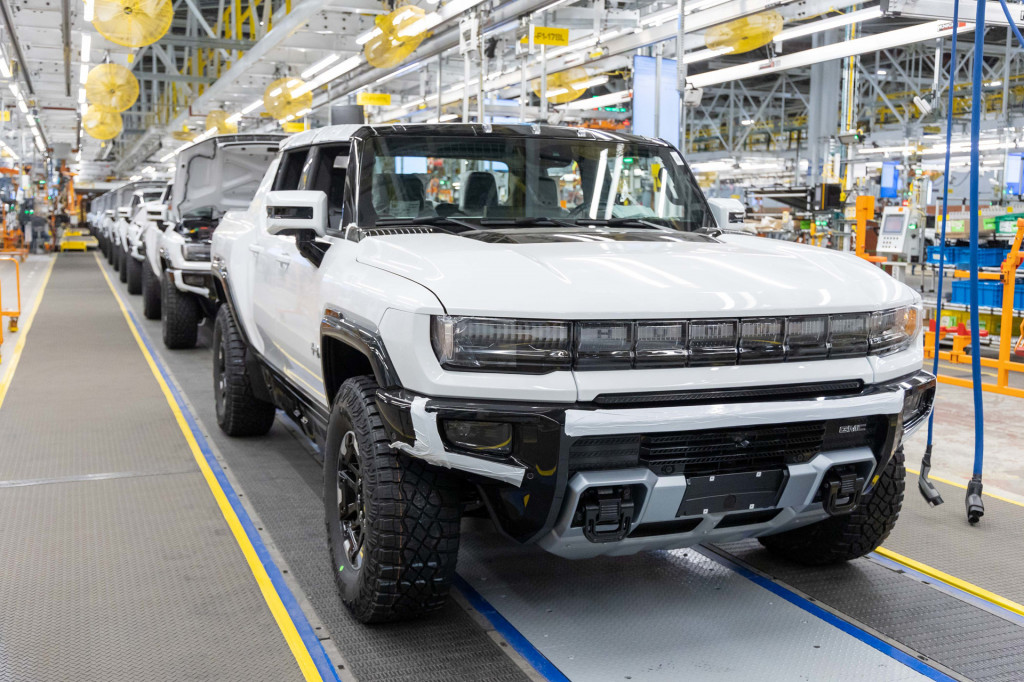
2022 GMC Hummer EV pre-production at Factory Zero plant in Detroit, Michigan
Over the long term, these rules will go hand-in-hand with the investments in EV and battery infrastructure championed by the Inflation Recovery Act.
“EPA’s final rule exceeds the agency’s statutory authority and is otherwise arbitrary, capricious, an abuse of discretion, and not in accordance with law,” the plaintiffs petition.
The EPA had already reeled back these latest 2027-2032 rules versus the tougher ones, finalized in 2022, that call for increases of 8% in 2024 and 2025 and 10% in 2026. Those rules were shaped in part to make up for a rollback under President Trump that cut the annual fleet improvement from about 5% in Obama-era rules to just 1.5%, and although steeper they were not met with the same level of pushback from the oil industry.
MPG rules have already been softened
Corresponding final rules for Corporate Average Fuel Economy (CAFE) revealed earlier in the month and meant to coordinate with the EPA standards, go easy on truck and SUV mpg versus what was originally proposed—prescribing an annual improvement for 2027-2031 of just 2% for passenger cars and 2% for light trucks for those model years.
The pushback also goes against the greener image that a number of big, multinational oil companies—now seeing them as energy companies—want to maintain. Shell, for instance, has shed some of its gas stations in favor of EV charging, and BP, notably, spoke out to acquire any stranded Tesla Supercharger sites when the EV maker pulled back on its buildout of fast-chargers.
Hertz and BP Pulse partner for EVs and charging
Meanwhile 13 states plus the District of Columbia have adopted a California plan mandating EVs, working toward 100% EVs and plug-in hybrids by 2035. In April, the U.S. Court of Appeals for the D.C. Circuit once again rejected a challenge to California’s precedence in establishing pollution limits.
Up until now, automakers have mostly supported these final rules publicly and in an investment sense, although lobbying efforts might show otherwise. Most appear to recognize that the EV shift is a good thing for global competitiveness.
The organizations haven’t stopped with cars. A companion lawsuit filed Tuesday essentially did the same for trucks, challenging the EPA’s heavy-duty truck emissions standards, also announced in April.
Last month, Presidential candidate Donald Trump allegedly offered to nix Biden EV incentives in exchange for a $1B campaign donation from Big Oil. But a regulatory landscape that’s more lopsided than ever might not be the future that even the oil industry would wish for.

Why do EVs cost more to insure than hybrids in 2024?
As more data rolls in from the insurance industry, an unfortunate trend has persisted for electric vehicles: They cost more to insure.
And there are enough of them in the vehicle fleet now to underscore that it’s no longer a matter of insurance companies covering themselves for the unknowns of a new vehicle type.
Based on calendar-year results examined by the insurance analytics team at LexisNexis Risk Solutions, EVs now have a 17% higher claim frequency and 34% higher claim severity versus what the firm considers “traditional segments.”
“Consequently, the number of paid claims, as well as the total claims payment amount for EVs has risen faster than the number of EVs as a percentage of the total PPA market over the year,” underscored LexisNexis in its report, out Thursday.
While the EV fleet in 2023 was 1.5% of the insured vehicle fleet, it represented 1.7% of all paid claims and 2.3% of the total claims payment, it says, citing its own proprietary analysis.
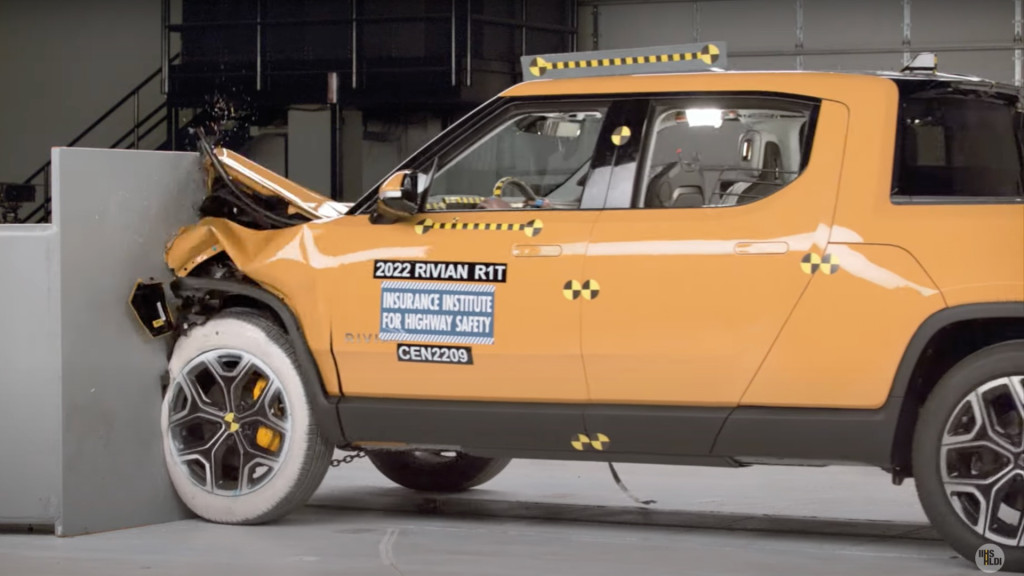
2022 Rivian R1T IIHS crash testing
As Consumer Reports found last year, EV insurance costs hundreds of dollars more annually versus comparable gasoline models, hybrids included. Based on the general factors presented by LexisNexis, plus the high cost of battery replacement, that’s not looking likely to change anytime soon.
EVs aren’t all bad news to risk-minded insurers. According to the Highway Loss Data Institute (HLDI), EVs are stolen less than gasoline cars.
More EVs didn’t cool the risk pool
As the report points out, 2023 was truly a big year for EVs out in the real world. EV sales increased 54% versus 2022, to 1.4 million in the U.S. That meant the total number of EVs insured grew by 40%, to 3.9 million vehicles, including plug-in hybrids, while insured private passenger vehicles grew just 1.2% to 265 million.
That bigger pool of owners and drivers—and vehicles—wasn’t enough to swing the odds more in EV drivers’ favor, however.
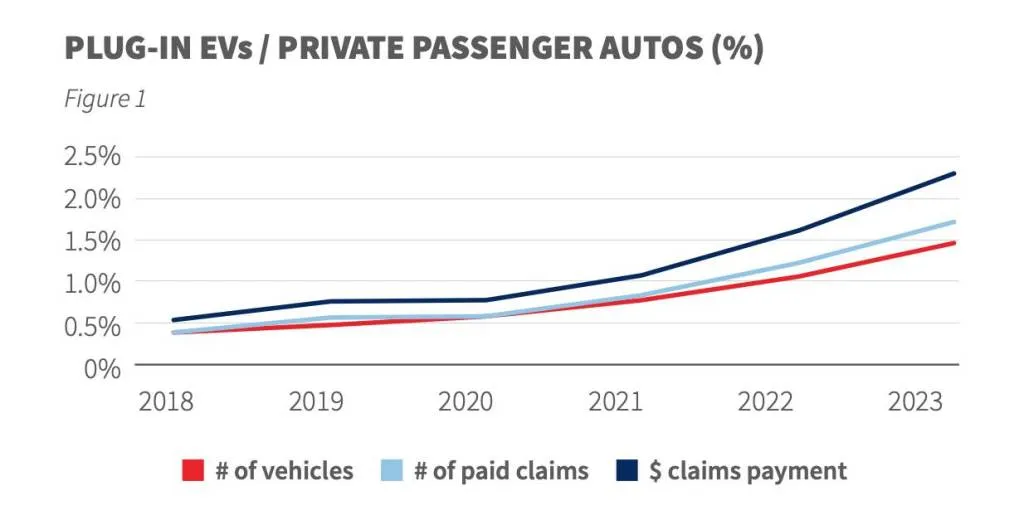
LexisNexis EV insurance claims trends – 2024 report
“Higher frequency and severity of EV claims have contributed to an escalating profitability challenge for all EV insurers,” the firm said, later stating: “Differing driving experiences in electric vehicles (EVs) have contributed to higher and more severe claims than internal combustion engine (ICE) vehicles.”
Green Car Reports has reached out to LexisNexis to understand what these driving experiences are, and if it’s referring to urban environments, less cautious driving, or some other factor.
Riskier driving, and it goes beyond EVs
American motorists in 2023 were riskier nearly across the board. Speeding, driving under the influence (DUI), and distracted driving offenses all went up, emerging well above pre-pandemic levels. DUI offenses were up nearly 9% in the first six months of 2023 versus the first six months of 2019.
Overall, across all types of vehicles, body injury severity rose by 20% from 2020 to 2023, while the severity of material damages (in amount claimed) has risen 47%.
A greater percentage of EV drivers were actively shopping around for lower rates, the firm observed—above the record levels of policy shopping and switching in 2023. That was spurred by sharp rate hikes inflicted by insurers starting in Q2 2022 that persisted at least through 2023—leading to an unprecedented 14% hike in insurance premiums for 2023 as a whole, year over year.
The high price of EV insurance has led Tesla to create its own insurance product. Tesla Insurance remains available in 12 states, and in all but California it uses a real-time algorithm impacting rates and based on driving habits.
2023 Chevrolet Bolt EV
LexisNexis was involved in a scandal in which GM shared driver-specific data on Chevy Bolt EV driving habits with the firm through its OnStar Smart Driver program—with many drivers not at all aware that they’d been enrolled by the dealership.
Meanwhile, insurers aren’t doing well on promptness or satisfaction. Two of five, or 40% of respondents, said that it had taken a month or longer to get the full payment from the insurer, and 46% of those involved in such a claim were dissatisfied with the experience. So there’s lots of room for insurers’ improvement—and, perhaps, competition for those safe drivers.