
Category: General

Nissan sees lots of crossover between Formula E, production EVs
- Nissan plans to bring its e-4orce AWD tech into Formula E
- Formula E may in turn become a testbed for performance AWD
- Battery tech will stay divergent between production and racing
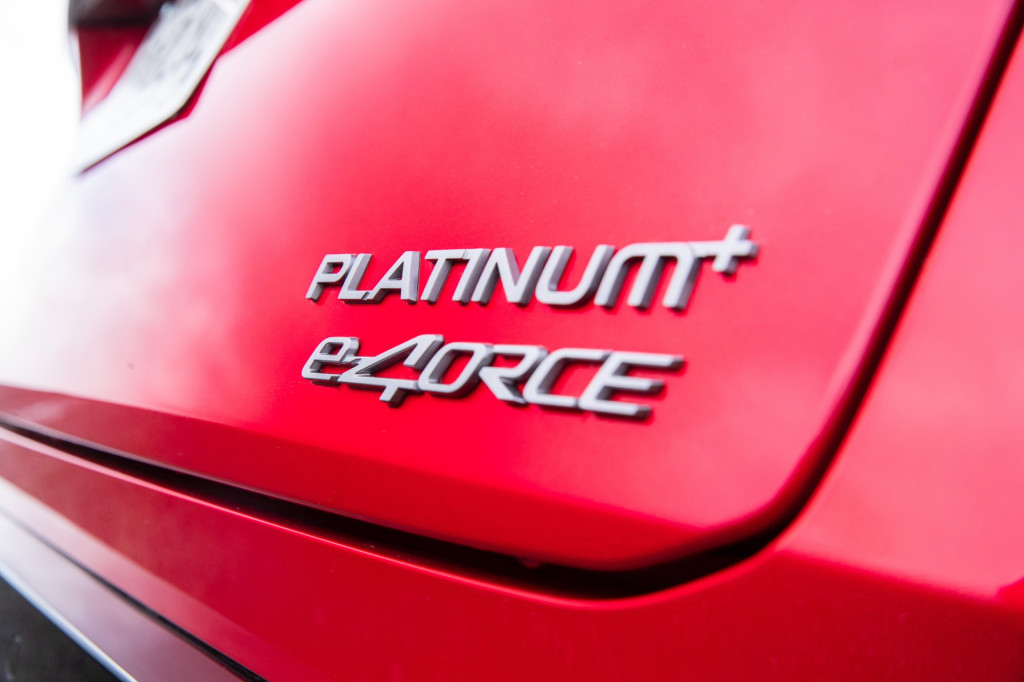
Nissan’s Formula E race car is wearing the e-4orce badge for the first time this 2023/24 season.
Yes, that’s the same badge you might find on a 2024 Nissan Ariya—a badge that you’re likely to see much more of on performance-focused Nissan EVs in the future.
While Nissan’s street cars and race cars have little in common today, Nissan sees them potentially meshing more in the future—and learning from each other, as Green Car Reports learned in a conversation with Nissan Formula E team principal Tomasso Volpe at last weekend’s Formula E race in Portland.
Volpe likened his job to being the CEO of a company while also implementing all the supporting operations. And he actually sees Nissan’s Formula E and production Nissan EV programs getting closer together.
This top-level view may not be so surprising considering his employer stands in stark contrast to a line of naysayers who’ve dropped out of Formula E, like BMW, Audi, and Mercedes. Nissan this spring became the first manufacturer to sign up for Formula E’s Gen 4 era, which will run through 2030.
2023 Nissan Ariya e-4orce
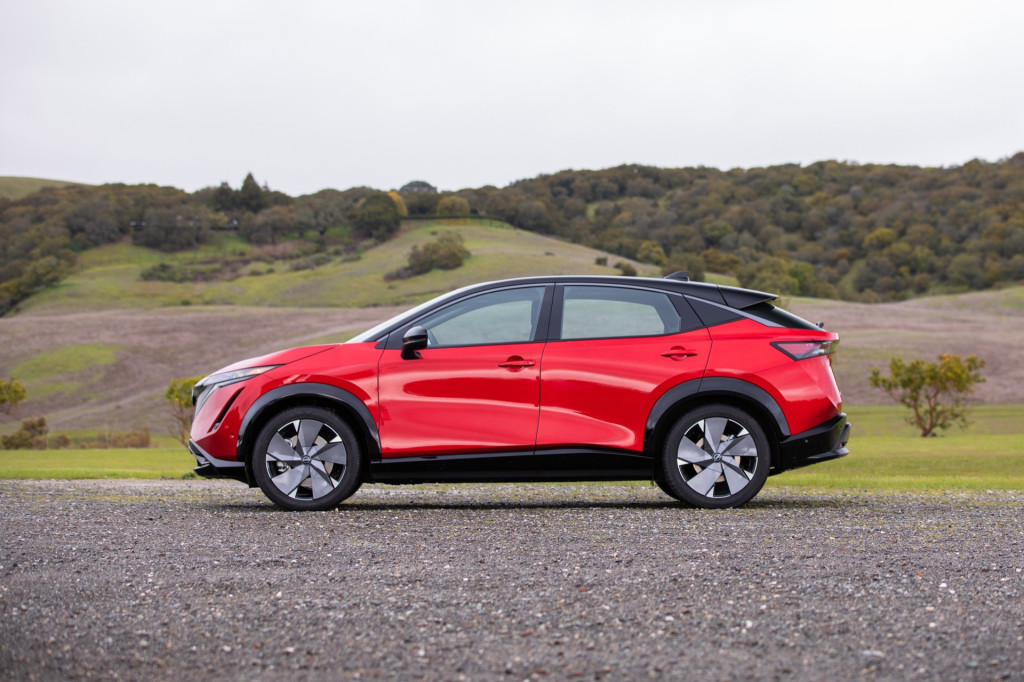
2023 Nissan Ariya e-4orce
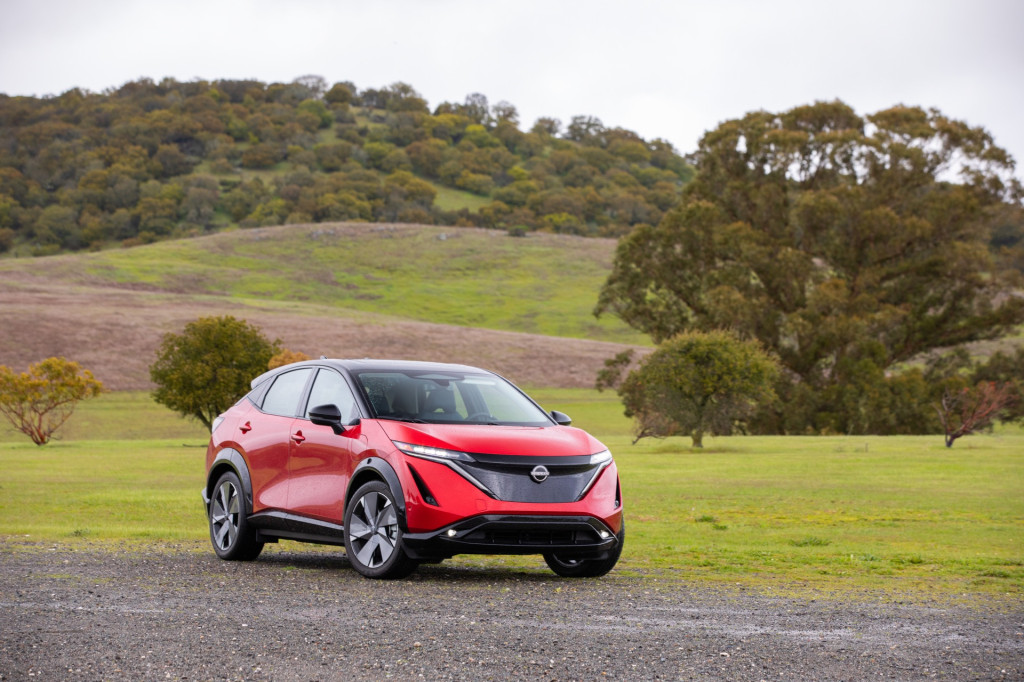
2023 Nissan Ariya e-4orce
Efficiency and regen are at the core
Everything changed already from Gen 2 into Gen 3, as the cars became lighter, faster, and much more powerful, with up to 600 kw of brake recuperation thanks to the inclusion of new front motors—already used for that, but due to be employed for forward motion in a Gen 3.5 upgrade next season.
Volpe told Green Car Reports that first and foremost, what the team has already learned in more than a season of the Gen 3 car, ahead of those changes, is how to manage vehicle dynamics and energy use and recovery together. With regenerative braking, and a strategy around it, built into the race, if you were not regenerating at all, you would finish around 60% of the total race length.
“Where we have improved a lot is in the management of the vehicle efficiency—what you can achieve with all the software tools that you develop, and the control systems for the vehicle dynamics,” said Volpe. “Configuring the dynamics has improved a lot. It’s not that we’ve found more energy, it’s that we use energy much better.”
“Yes, we put e-4orce on the car already this year to start promoting it, to be honest; it’s a branding exercise,” Volpe admitted. But he quickly added: “Next year there will be moments where you can use all-wheel-drive technology in the car, and for that, yes, we are using some expertise from Nissan.
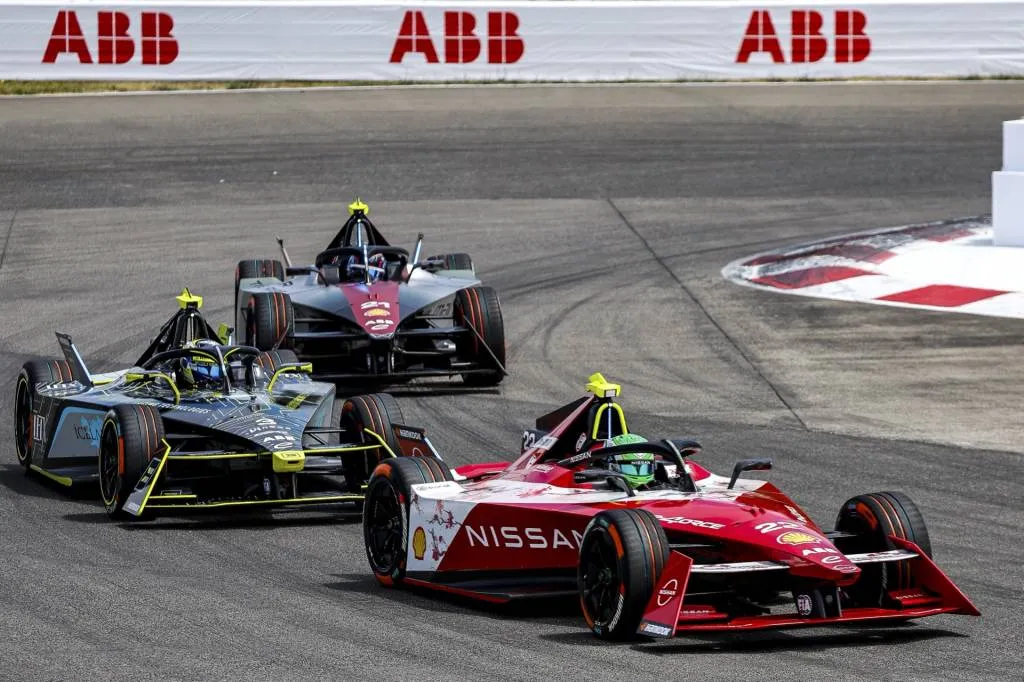
Nissan Formula E car, at Portland, 2024
Ariya e-4orce schools Formula E…which schools future GT-R?
“So we have some of the engineers who have developed e-4orce to advise us how to use all-wheel drive in the most efficient way…how to maximize the efficiency of the all-wheel drive,” he explained.
For now, Formula E cars don’t even use the front motor for tractive (forward) power yet. But they do use it for regenerative braking—and Nissan is already able to tap into some of its chassis know-how in that respect.
Nissan has emphasized that e-4orce was derived from work that started with its GT-R supercar. Likewise, senior VP and chief planning officer Ponz Pandikuthira confirmed to our companion site Motor Authority that Formula E will serve as a testbed for next-gen GT-R development.
Next year will bring some control strategies gleaned from the dynamic control of regenerative braking, used in Nissan production models like the Ariya employing e-4orce. Hardware-wise, a new gearbox will be “massively improved, thanks to some ideas and solutions suggested by advanced R&D in Japan,” and that will bring the team another boost in performance and efficiency.
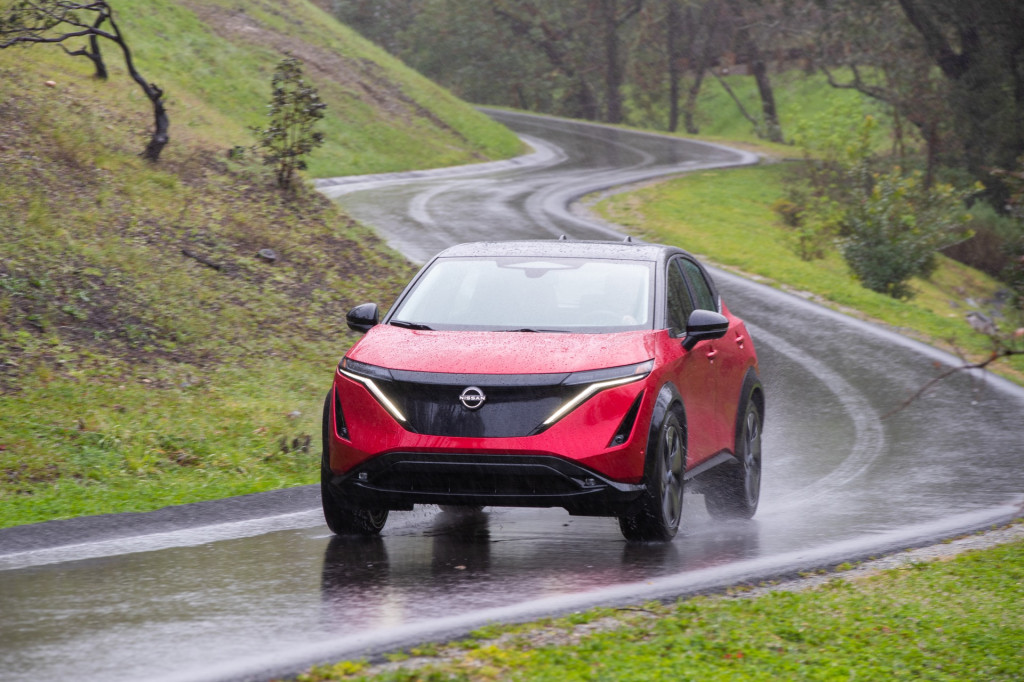
2023 Nissan Ariya e-4orce
And then comes Gen 4, which is expected to introduce constant all-wheel drive, whereas Gen 3.5 will offer traction from the front wheels some of the time. “So for us we can apply e-4orce for all of the race then, and for us all-wheel drive is a fundamental technology for electric vehicles,” said Volpe.
Chassis control and dynamics as it relates to that are part of Nissan’s core business, he says, so having an all-wheel-drive vehicle will give Nissan the opportunity to transfer a lot more knowledge both ways.
Real-world crossover for Formula E
While this sounds like a quite harmonious meshing of racing, R&D, and EV development—one that Porsche, for instance, also sees—that’s not the way that several other big automakers have gone. Audi, BMW, and Mercedes were among the automakers exiting Formula E just before the current Gen 3 arrived for the 2022-2023 season.
Each of these automakers had a range of reasons, but at one point or another, each has ultimately suggested that there was a relatively low level of technology transfer back to production vehicles. After seven years in Formula E, BMW sounded the most pessimistic on the prospects when it announced it would be dropping out after the 2020-2021 season. “When it comes to the development of e-drivetrains, BMW Group has essentially exhausted the opportunities for this form of technology transfer in the competitive environment of Formula E,” the company said.
Audi confirmed its departure a short time later, in 2021, and pointed to other types of motorsport, like the Dakar Rally, as a way to “further develop our expertise in the field of electric mobility under extreme conditions,” and Mercedes merely noted that the decision was made to refocus resources on EV development.
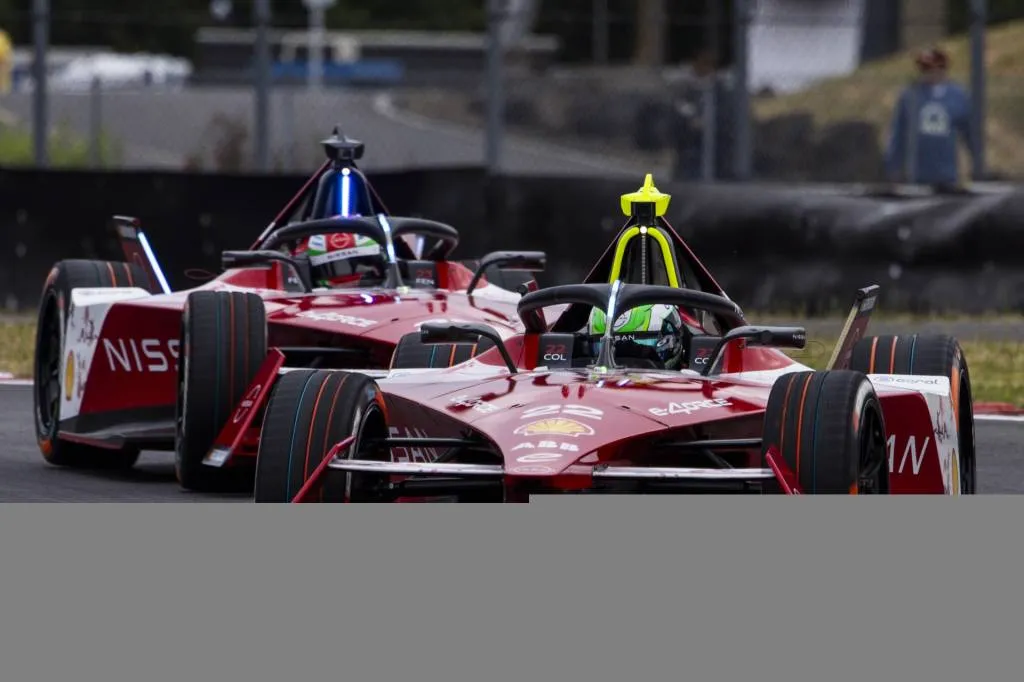
Nissan Formula E car, at Portland, 2024
Battery tech has to be very different
Not every technology here is relevant to production EVs—even performance ones—the team boss admits. The battery is the obvious example, because it’s such a different use case. Getting through the race without a component failure is the objective, not getting the battery pack to last 150,000 miles or more as in a production EV.
Although even here there may be some lessons good for taking to EVs set to claim track time. “The main issue that we have with the battery is the temperature, and to try to get the battery always in the right window to make sure we use most of the energy in the most efficient way. This is the main challenge when it comes to the battery more than anything else; the rest is quite consistent in the BMS.”
Formula E teams operate under a different set of priorities. They can run the battery all the way up to 73.5 degrees C and still be reasonably efficient in extracting energy from it, but they’d better be sure the temp won’t keep rising, because at 74 degrees it’s dead and won’t be revived for the race. With around 55 degrees on up considered the ideal range for the battery, the teams and Formula E itself come up with a strategy on where to start—specifically, 42-45 degrees for last Saturday’s race that the pit crew was then preparing for.
Volpe noted that sometimes within Formula E races you see cars with a higher percentage of energy left at the end of the race, while they hadn’t actually been pushing so much to recover positions in the last few laps. That’s a signal the battery temperature wasn’t managed well.
On the other hand, engineering insights from the inverter, gearbox, and motor can all be useful for production models. So can insights from advanced materials like carbon fiber.
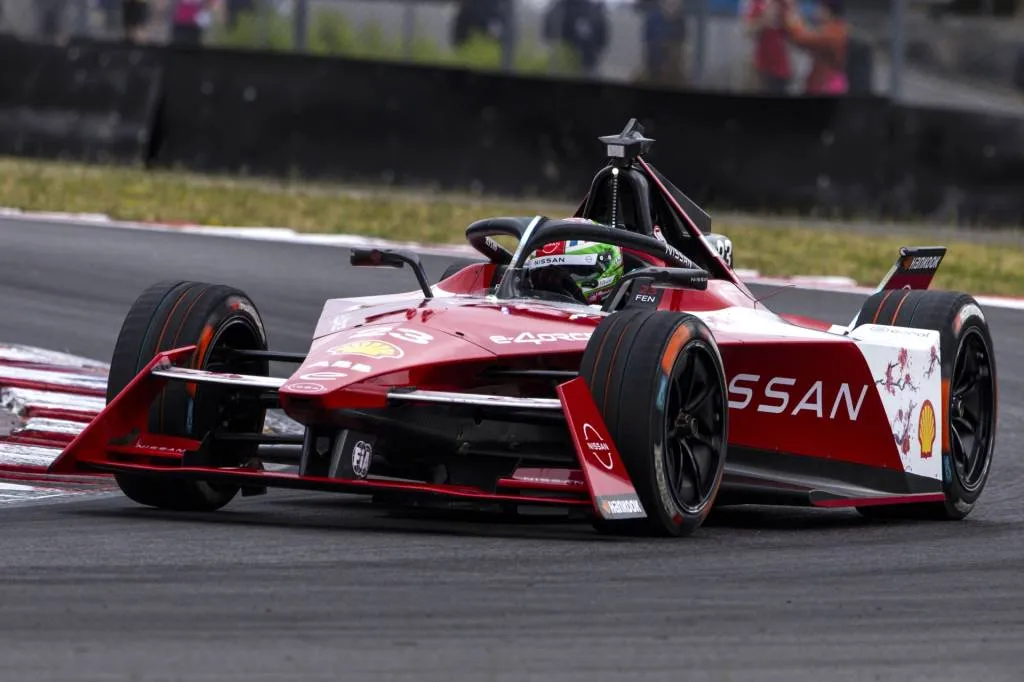
Nissan Formula E car, at Portland, 2024
Formula E leaning on software for gains, drivers for wins
This year, the big efficiency gains are software ones, according to Volpe. Energy management software is giving the team a much more sophisticated tool to use during the race, for better dynamic optimization of power delivery and regen.
“By regulation, in theory, you could rewrite the whole software of the car from one race to another. Of course the core software stays the same, but there are little tools we use; some are tools that connect to the software in the car and these are continuously updated.”
Nissan’s engineers like to think that they have a new version of the software for every single race. But it does need to be set in advance of the race itself. The FIA reviews the entire code, except for offline tools and whatever is used for data analysis.
But so much of it in Formula E still rests on the driver—as seen at Portland where the outcome of the race came down to simple driver error and one not quite following the racing line he’d intended, clipping the grass, and spinning out.
I’ll leave you with a picture you’ll just have to imagine, as inside the workings of its pit crew Nissan doesn’t allow snaps: On site, at pit lane and just out of view of the normal pit-lane tours, Nissan gave me a brief glimpse of a control room full of screens and people looking at layers of data, including driver simulations and heat maps. Meanwhile, a team in Paris is also diving into data and advising on various scenarios.
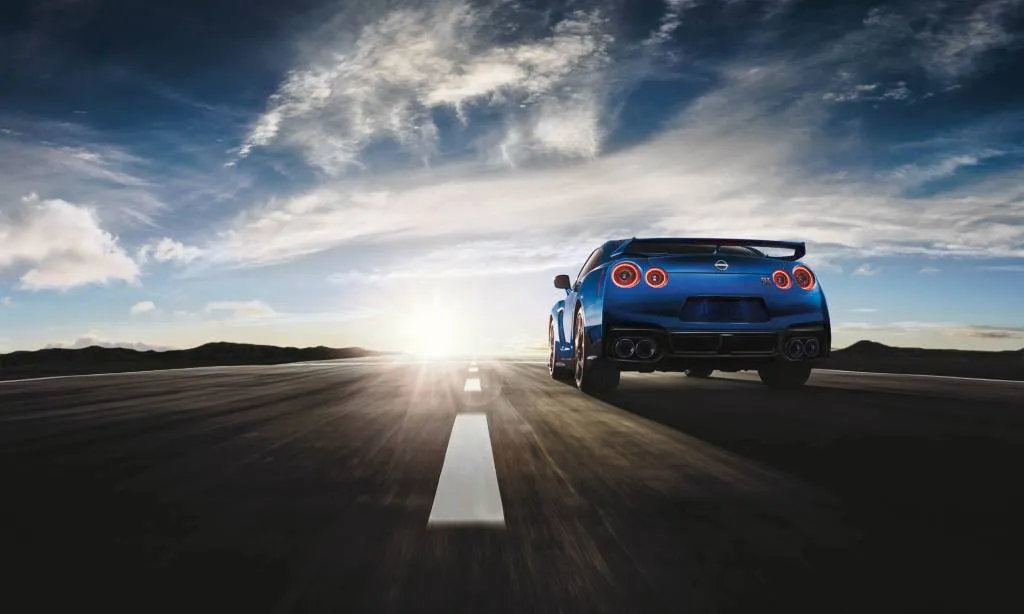
2024 Nissan GT-R Skyline Edition
From Portland to Paris to Yokohama, Formula E seems to be working for Nissan as a remote testbed—and for Jaguar Land Rover, which has claimed real EV range gains from Formula E tech.
As I left pit lane I pondered: If those other automakers are getting what they need from F1, what technology, like solid-state batteries or deeper simulation tools, will it take to get them back on board with Formula E? The race is on, but not everyone sees themselves in the same race.

DOE: Pickups could save the most on fuel as EVs vs. gasoline
Pickup truck drivers stand to save the most by going electric, according to the U.S. Department of Energy (DOE).
Pickups tend to be bigger than other vehicle types, meaning they use more energy and thus offer greater potential for savings when the cost of that energy is reduced, the DOE recently noted. And reducing consumption of gasoline or diesel is a virtual guarantee of reducing those energy costs.
That’s illustrated by data from Argonne National Laboratory, which estimated cost savings for replacing a gasoline vehicle with a similar-sized EV or plug-in hybrid on a ZIP code level. Across ZIP codes, pickup trucks had the greater potential for savings, followed by vans and SUVs.
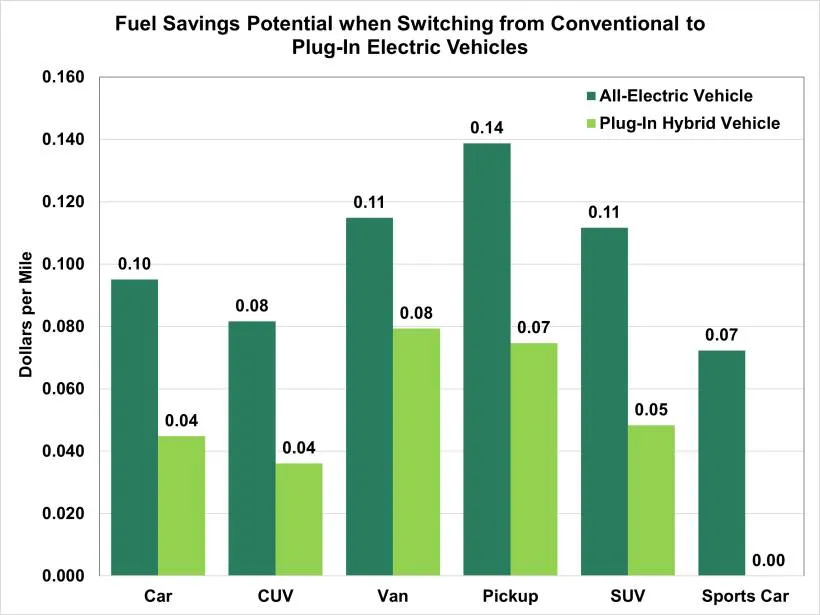
Fuel-savings potential when switching to EVs or plug-in hybrids (via DOE)
And the greater the level of electrification, the greater the savings, according to the DOE, noting that an all-electric vehicle of the same size is estimated to achieve greater cost savings than a plug-in hybrid.
Consumer Reports has also crunched the numbers and underscored higher potential savings for electric trucks and SUVs. In many cases, electrification likely won’t require huge concessions either. A 2022 study found that more than half of pickups could be replaced with electric (on a use cycle basis)—again, with massive cost savings.
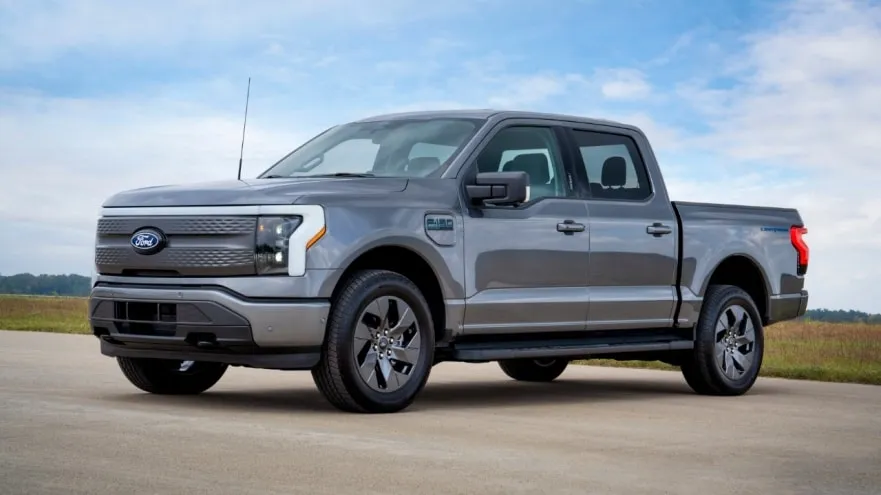
2024 Ford F-150 Lightning Flash
Such findings do come with some caveats, though. As a comprehensive DOE study in 2020 underscored—still true today—EV costs vary widely depending on where you charge the vehicle and how you charge it (i.e., using a public charger or home charger).
The purchase prices of new electric trucks are also relatively high. As of yet, low-priced fleet versions of electric trucks—versions of the Ford F-150 Lightning and Chevrolet Silverado EV, for instance—have been few and far between.

Fisker trying to sell Ocean EVs for $14,000
Fisker has asked the judge overseeing its Chapter 11 bankruptcy proceedings for permission to sell remaining Ocean electric SUVs to a leasing firm at a fraction of their original price, Reuters reported Wednesday.
The company hopes to offload 3,321 Oceans to American Lease at a price of $14,000 each, according to the report, which cites a court filing. On May 30, two weeks before Fisker filed for bankruptcy protection, American Lease had offered to buy 2,100 vehicles, according to the report, later upping the offer to the current number of vehicles, which reportedly represents all Ocean SUVs ready for sale.
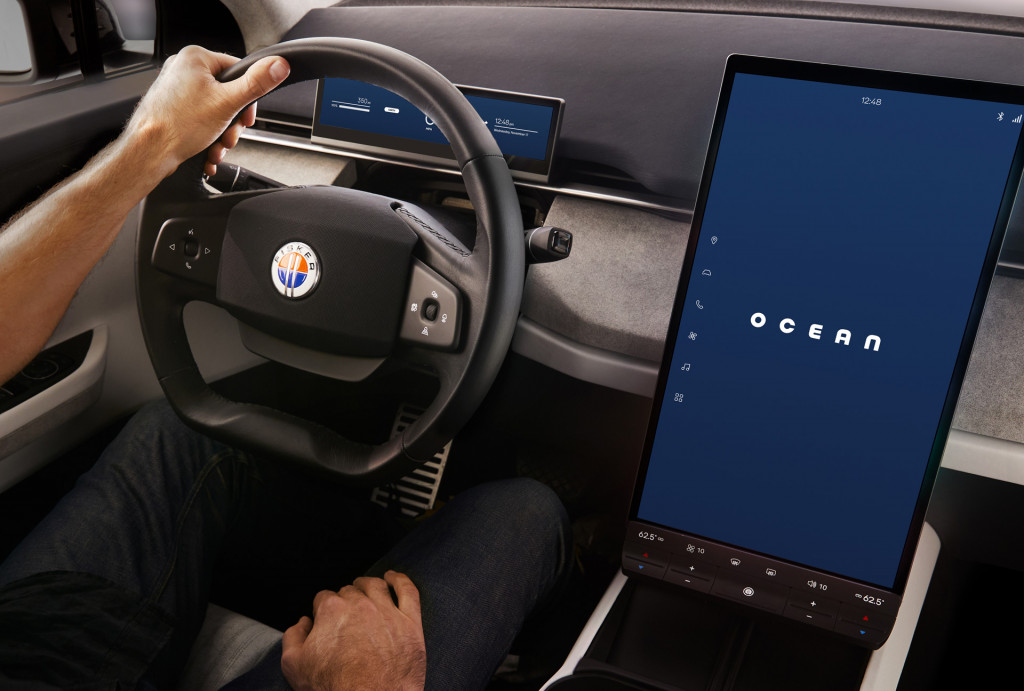
2023 Fisker Ocean
The Ocean originally had a starting price of $38,999 for the base Sport grade, with Ultra and Extreme versions priced at $52,999 and $61,499, respectively. However, Fisker in March slashed prices by up to $24,000 and asked contract manufacturer Magna to pause production in order to drawn down inventory.
Ocean production started at Magna’s facility on Graz, Austria, in November 2022, but deliveries didn’t start until six months later. The first cars reached U.S. customers in mid-2023. Even that slow rollout didn’t give Fisker time to address numerous quality issues with its first EV, though.
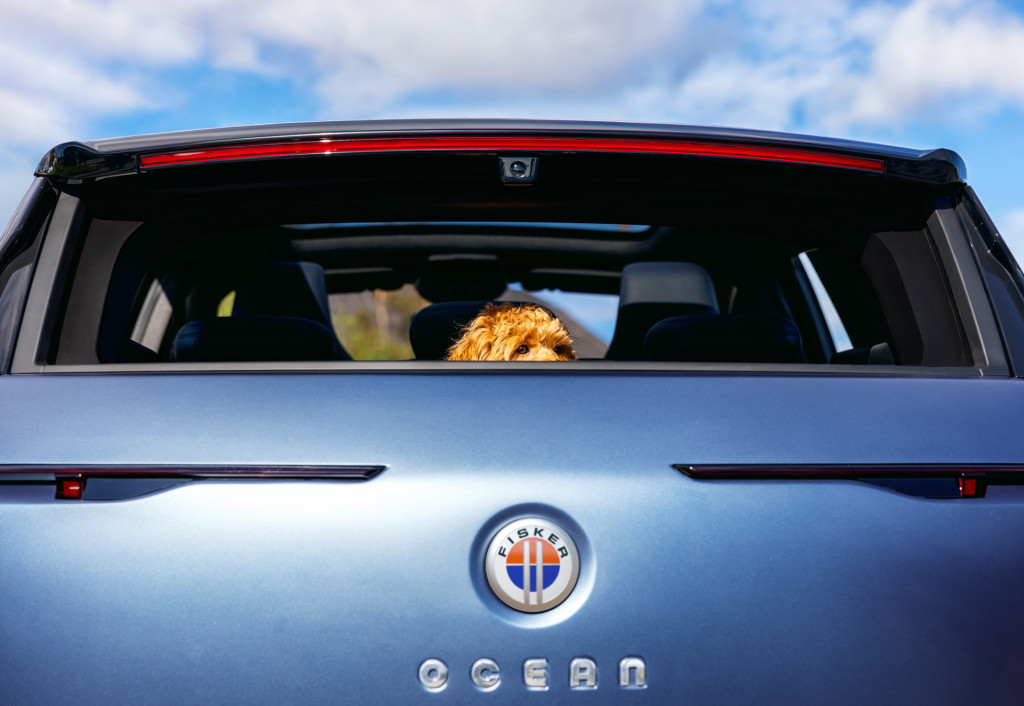
2023 Fisker Ocean
Fisker issued three recalls for the Ocean last month alone, including one for a “malfunctioning mechanism” that could cause exterior door handles to stick and fail to open. That recall includes 8,204 vehicles in the U.S., indicating the slow pace of deliveries.
Even as cash began running out in the final months before bankruptcy, Fisker continued discussing ambitious plans to shift to a franchised dealership model and launch additional EVs, including the more affordable Pear, the Alaskan pickup truck, and the Ronin convertible. A buyer with deep pockets could potentially revive those models.

Moving a life and a half in the 2024 Mercedes-Benz eSprinter
As luck would have it, I got scheduled into a weekend with the 2024 Mercedes-Benz eSprinter exactly when I needed it.
The third wettest Spring on record in Southeastern Wisconsin flooded my mom’s basement. Prior to moving from a condo to a house three years ago, I stashed a lot of my own clutter downstairs at her place to streamline my life, and three years before the death of my niece’s father had already stockpiled other possessions down there.
The flooding meant the time had come to move all that crap out to clear room for contractors to work.
I took possession of the eSprinter with a 99% charge on the battery and an indicated 199 miles of estimated range. An official range hasn’t been released, but the 2024 eSprinter has 273 miles of range on the more lenient European WLTP cycle.
I must admit to having a little range anxiety. I figured the roundtrip would be about 140 miles, and I didn’t want to risk running out of charge mid-trip. Turns out I didn’t have to worry. My mom’s house is 42 miles away to the north and west, while my niece’s house is a little more than 14 miles away to the south and east, which would account for about 112 miles for the day. That left a lot of wiggle room between the actual efficiency and the eSprinter’s real-world range, which appears to be at least 200 miles.
My tester was the same as all 2024s: a high-roof model with the 170-inch wheelbase and larger 113-kwh (usable) battery (the 2025 eSprinter also offers a short roof, a shorter 144-inch wheelbase, and a smaller 81-kwh battery). The tester also had the more-powerful 201-hp motor that spins up the same 295 lb-ft of torque as the 151-hp base version.
2024 Mercedes-Benz eSprinter
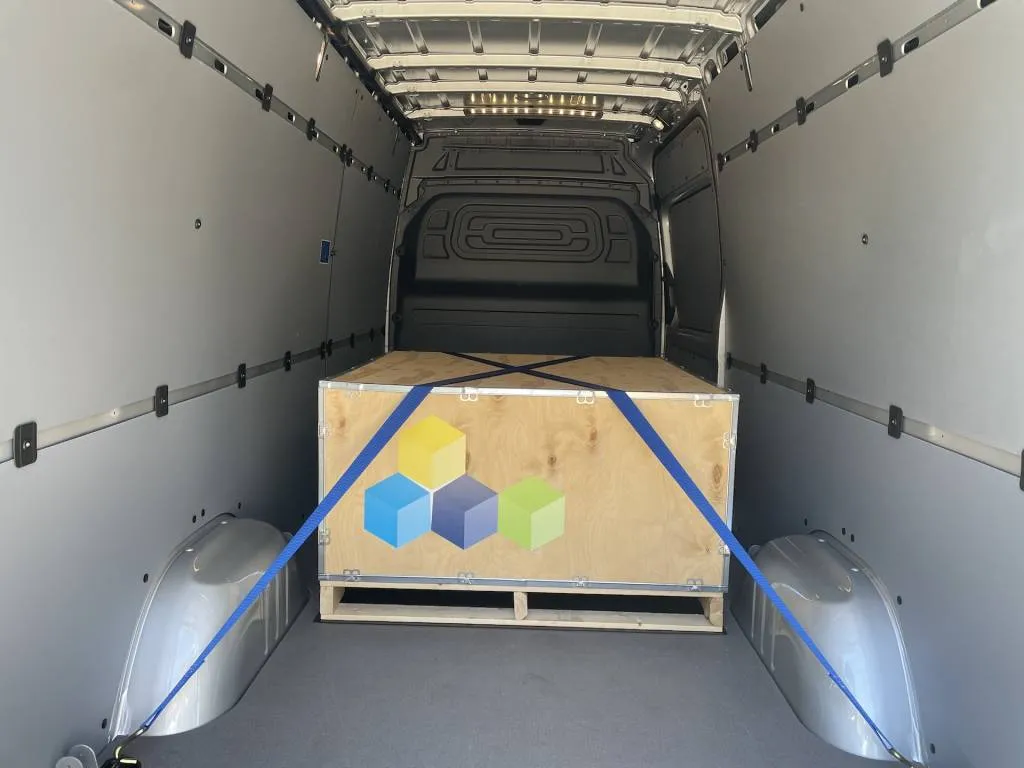
As a big empty box with a very generous 488.1 cubic feet of cargo volume, the eSprinter arrived with a 48x48x28-inch wooden box mounted in the middle of its cargo floor, as well as a pair of spare tires mounted in front of it. The box contained 440 pounds of weight that combined with the spare tires to help settle the ride when empty the same way pickup owners use sand bags in an unladen bed. That big box of nothing was going to rob me of possibly vital space to move a life and a half.
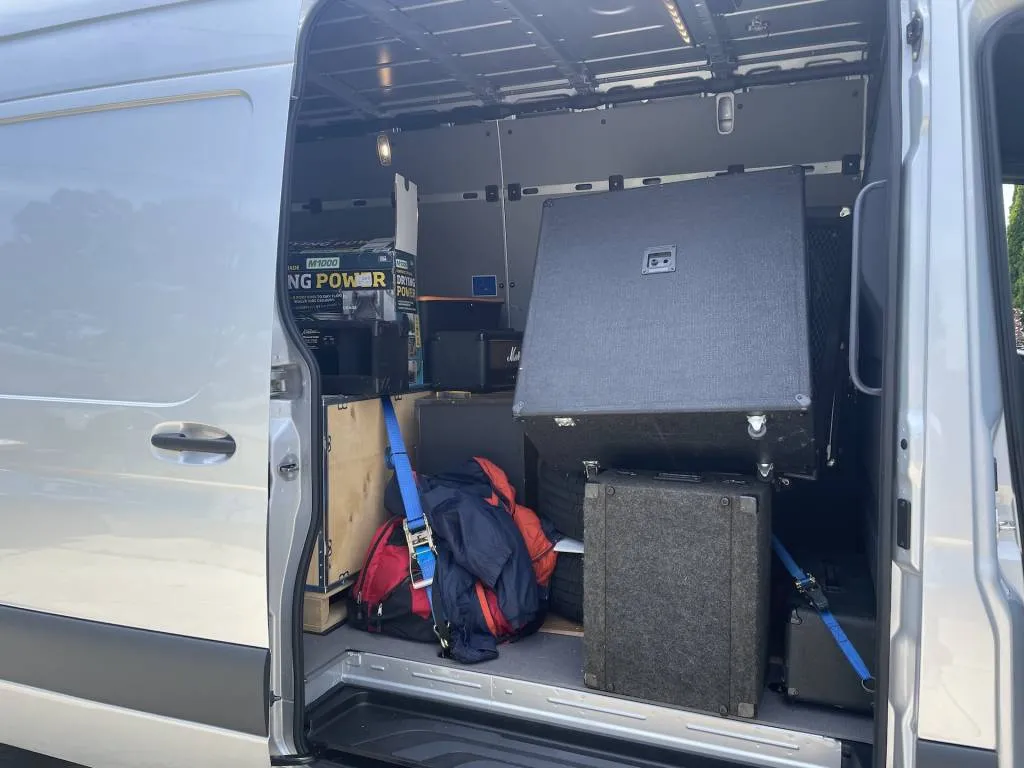
Well, it wasn’t exactly a full life and half. It was more like the leftovers of two lives, the stuff that you want to keep but don’t need regular access to. The box provided a natural divider between my model cars, magazines, and automotive books and his guitars, amps, and survivalist gear. With everything loaded, there was still plenty of room left over.

2024 Mercedes-Benz eSprinter
2024 Mercedes-Benz eSprinter
The load didn’t have a noticeable effect on the eSprinter’s range or limited power. The 83.9-mile trip to mom’s and back, half loaded and half not, used 48% of the range, and the trip computer indicated I had between 85 and 98 miles of range remaining, depending on driving style and climate control usage. With the A/C running and most of those miles on the freeway at 70 mph to the top speed of 75 mph, I understand why it slightly underperformed its expected range.
The van had no problem keeping up with traffic in the city or getting up to freeway speeds. However, laden or not, highway passing proved a challenge. This powertrain is tuned to work as needed in the real world and offer little beyond that.
Another 28.7 miles to my niece’s and back, again mostly on the freeway, took the trip total to 112.6 miles and left the eSprinter with 73-85 miles of estimated remaining range and the battery with 37% of remaining charge. All told, the van averaged 1.7 miles per kwh for the trip, which seems perfectly reasonable given it amounts to a big beast cutting through the wind like a brick wouldn’t.
2024 Mercedes-Benz eSprinter
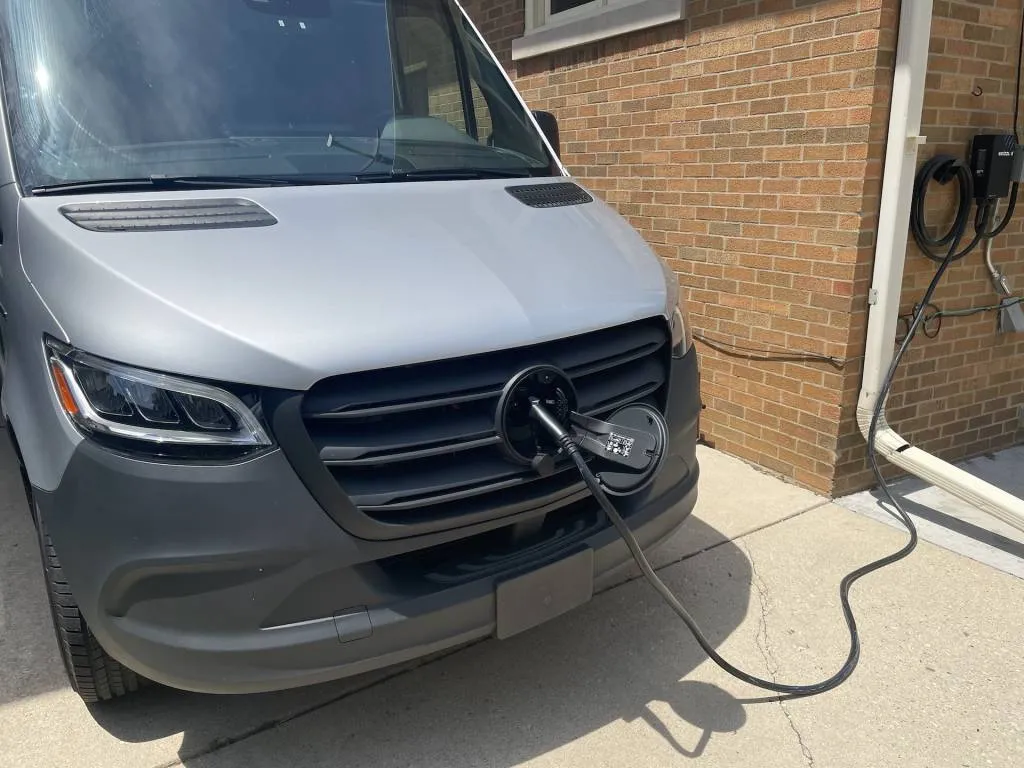
After I recharged the van overnight on my Level 2 home charger the trip computer indicated 192 miles of range with a 100% charge. The system obviously learns how the van is being driven and adjusts its range estimate based on the most recent miles. A lighter load and slower speeds would certainly increase the range estimate.
The 2024 Mercedes-Benz eSprinter strikes me as a smart choice for fleet buyers. Priced at $77,611 with $3,430 for the larger motor, it’s about $16,000 more than a gasoline model. It has enough range for a full day on the job and its electric power will make it much cheaper to operate, though it will take quite some time and many miles to up for that price premium. It will be a lot cleaner to use, too.
It’s especially helpful when one is offered to you just when mom needs your crap moved out of her basement.
––––––––––––––––––––––––––––––––––––––––––
2024 Mercedes-Benz eSprinter
Base price: $74,181, including $2,295 destination
Price as tested: $77,611
Powertrain: 201-hp motor, 113-kwh battery, rear-wheel drive
EPA efficiency: Estimated 200-220 miles of range
The hits: Just enough power, lots of cargo room, efficient for a fleet
The misses: Power ends where the speed limit ends, big and cumbersome, much pricier than gas version


GM killed Bolt EV and it’s outsold other Chevy EVs in 2024
- Despite being discontinued, the Chevy Bolt EV has outsold the Blazer EV in the first half of 2024
- Launched last year, the Blazer EV appears to have overcome a problematic rollout
- GM promises that when the Bolt EV comes back for 2026 it will be the most affordable EV
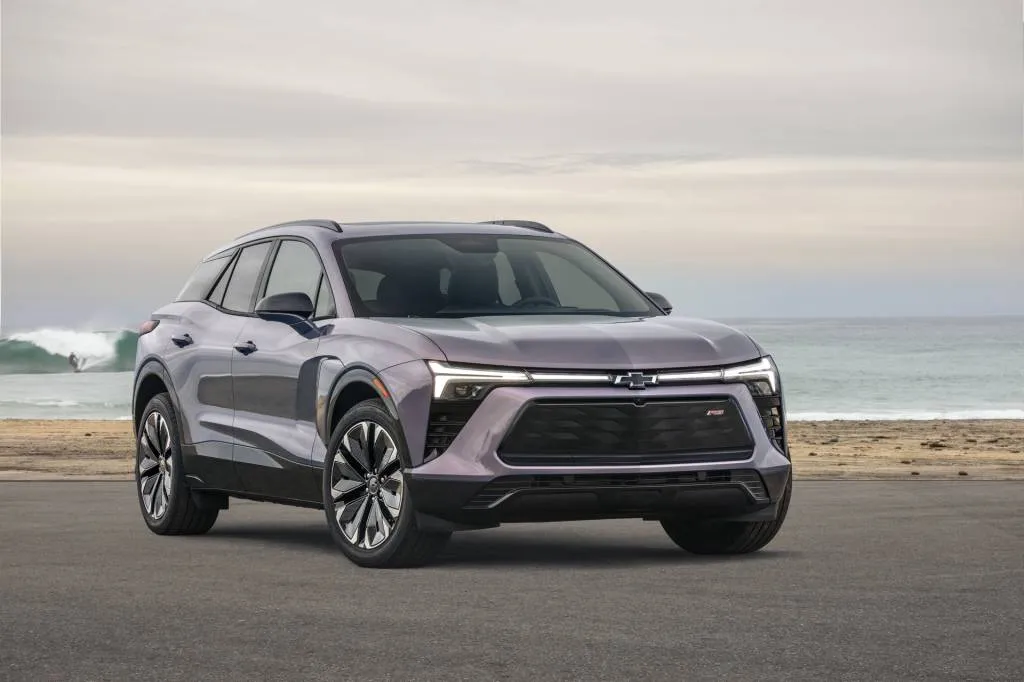
The Chevrolet Bolt EV is no longer in production, but it still outsold the Chevy Blazer EV over the first half of this year, according to General Motors’ most recent financial results and sales update.
GM delivered 8,414 units of the Bolt EV and its crossover-like Bolt EUV variant in the first two quarters of the year, compared to 7,234 Blazer EV deliveries. However, in Q2 alone, Blazer EV deliveries were higher than Bolt EV/EUV deliveries, at 6,634 units and 1,374 units, respectively.
2024 Chevrolet Blazer EV RS
The difference is a reflection of the fact that Bolt EV/EUV deliveries have been trailing off since production ended at the end of 2023, while Blazer EV production has ramped up. But the fact that the Blazer EV hasn’t yet pulled away from the discontinued Bolt EV in year-to-date sales shows just how gradual that ramp up has been.
GM technically started Blazer EV deliveries last July, and it’s been slow going since then. It struggled to accelerate EV deliveries through 2023, due mostly to issues ramping up its Ultium battery cells. GM reported 21,930 EV deliveries in Q2, up 34% from Q1 and 40% year-over-year, indicating that it has started to turn a corner. But previous goals to deliver 400,000 EVs through 2023—and then the first half of 2024—have clearly been dashed.
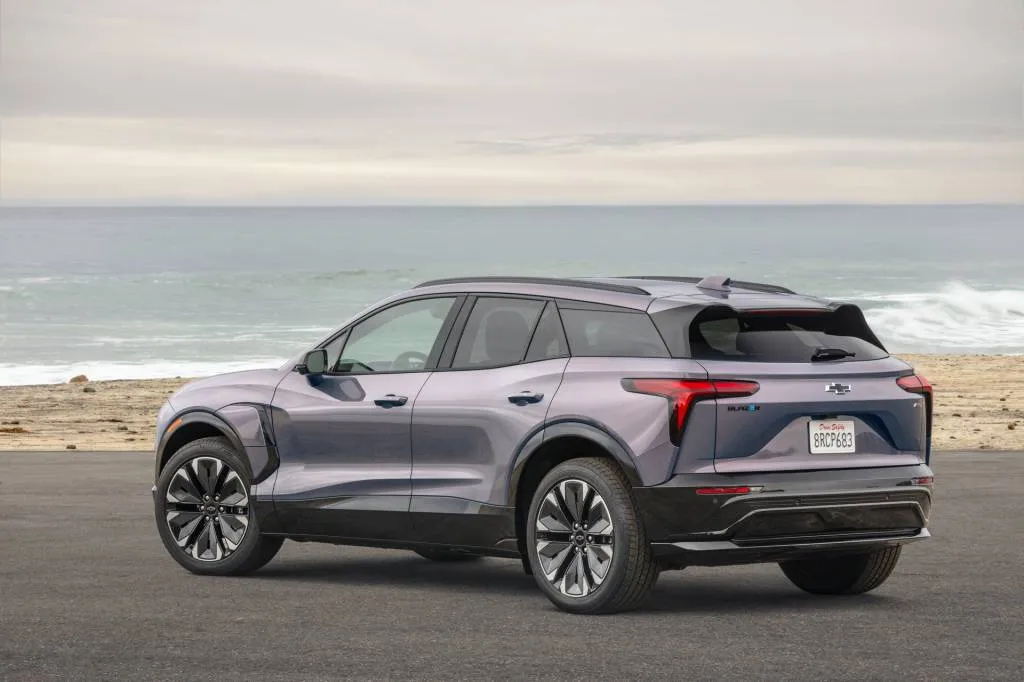
2024 Chevrolet Blazer EV RS
GM cut prices of the Blazer EV in March, and so far, beyond addressing a backlog and software issues that led to a stop-sale late last year, it doesn’t appear to have sparked more sales. Those meager sales do at least include a high number of sought after “conquest” customers trading in from other brands. GM claims 40% of Blazer EV buyers are new customers, coming from rival brands like Jeep, Ford, Hyundai, and Kia.
The Bolt EV will only be gone for one model year. CEO Mary Barra has said that the 2026 Bolt EV will be the most affordable U.S. EV and will switch to an LFP battery chemistry to help make that happen.

Review: For the 2025 Polestar 4, genre is a construct
-
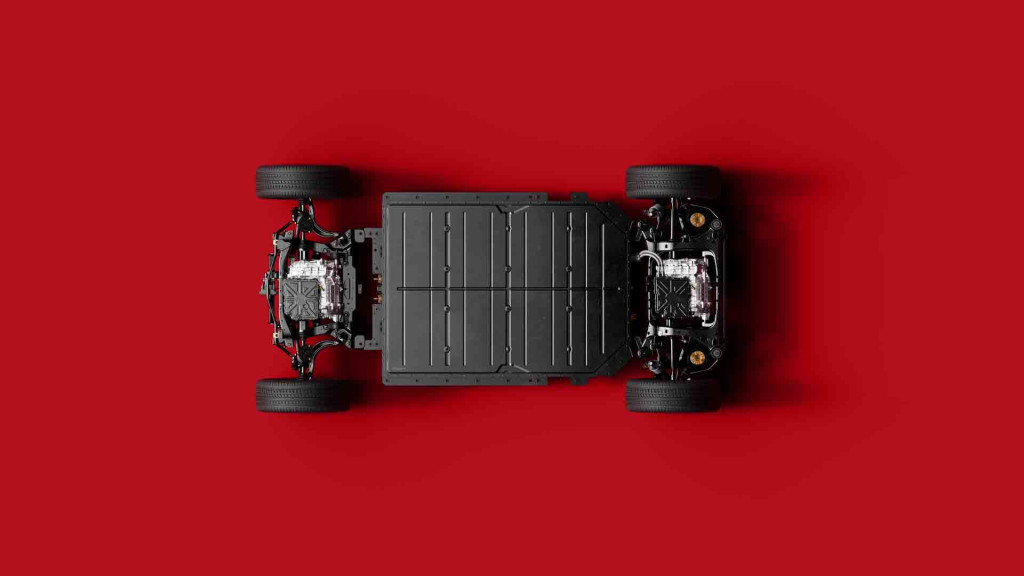
The 4 packs a 102-kwh battery pack, with up to 200-kw fast charging
-
Range? It’s 270 miles in two-motor form, 300 miles with one (both estimated)
-
No 800-volt charging, but the Polestar 4 has Android firmware on deck
-
About that rear glass…or the lack of it…
Polestar has marched through its debut as a brand with a plug-in hybrid 1 coupe, then on to a conventional-ish 2 hatchback as it leafs out with a full battery-electric lineup.
This year the Polestar 3 swings for efficient performance with its seven-seat body style and U.S. assembly site. It seems a surer bet than the Polestar 4, an intriguing new entry that blends coupe, sedan, fastback, and SUV cues as its come-on to drivers lured otherwise by the Genesis GV60, Tesla Model Y, or the upcoming Porsche Macan EV.
If you’re looking to define it with a body-style label, don’t. Its ground clearance is on the low end of the SUV norm. Its four doors rule out the coupe tag. The fixed glass over the rear-seat passengers nixes the hatchback idea. Sedan? With that roofline?
For the Polestar 4, genre is a construct. It’s curious about a lot of body styles but not fixated on any of them. That makes it a fascinating new thing that grants it much leeway with its distinct but not fatal flaws: a hyperfocus on touchscreen functions, moderately fast charging, and an occasionally brittle ride.
How do I know? I drove it from central Madrid to the hills northwest near Segovia, and back. The Polestar 4 does have plenty of familiar electric-car feel. But in some ways, it’s all by itself.
2025 Polestar 4
2025 Polestar 4: Fast acceleration, quick charging
-
0-60 mph: 3.7 seconds (AWD), 6.9 seconds (RWD)
-
300 miles of range (single-motor), 270 miles (dual-motor)
-
400-volt DC fast charging at 200 kw maximum; 10-80% in 30 minutes
-
One-pedal drive in all drive modes—via a screen tap
-
More specifications: 2025 Polestar 4
Two Polestar 4s lurk inside its slick body. There’s an amply quick single-motor car with rear-wheel drive, and a fast hustler with two motors and all-wheel drive. Neither has much steering sensation and big wheels tax their adaptive damping, but both still feel next-wave.
A 102-kwh battery underpins both versions. In the single-motor Polestar 4, it’s not exactly juiced, with 272 hp and 253 lb-ft of torque. That’s good for a 0-60 mph time of 6.9 seconds, Polestar says, and for 300 miles of driving range by their estimates (by EPA standards, not WLTP). If so many other EVs didn’t have unnecessarily blinding acceleration, this would all be fine.
Until you drove the two-motor 4, that is. That same battery surges here for a net 544 hp and 506 lb-ft. That clips the 0-60 mph time to 3.7 seconds—and range, too, to 270 miles. It’s the car you’d want on the mountain passes that thread northwest toward Segovia, where Seats and cyclists pace progress in 20-kph increments. Find a spot in the lane ahead, flick the accelerator, and the dual-motor Polestar 4 snaps to attention and finds the slot—all without the zithery soundtrack of some other luxury EVs.
Single-motor cars have standard dampers and struts, but the all-wheel-drive, dual-motor Polestar 4 gets adaptive dampers that want to help it cope with the enthusiasm the powertrain can generate. It needs more compliance, even when it’s fitted with the mid-range 21-inch Michelin Pilot Sport EV tires from my test car. (The 4 comes with 20-inch wheels standard, and 22-inchers come with U.S.-bound AWD cars.) With its power delivery set to performance mode and its steering left to its normal weighting—light—the 4 could track precisely down the highway while it got ruffled by stretches of scabby pavement, skittering across instead of absorbing it.
The solution? Brake into those patches, or deploy one-pedal drive mode to lessen the impacts. The two stopping systems work in concert well, though the one-pedal mode feels less eager to decelerate than in some other performance EVs I’ve driven recently.
In other bona-fides news, the two-motor Polestar 4 has a 3,500-pound tow rating and a claimed 6.5 inches of ground clearance, but with these looks, who’d press either rating?
2025 Polestar 4
2025 Polestar 4 exterior and interior: Lots of space, even in the interface
-
Great style, inside and out
-
Great room, too: 190.5 inches long, 118.1-inch wheelbase, 18.6-54.2 cubic feet of cargo space (and a small front trunk)
-
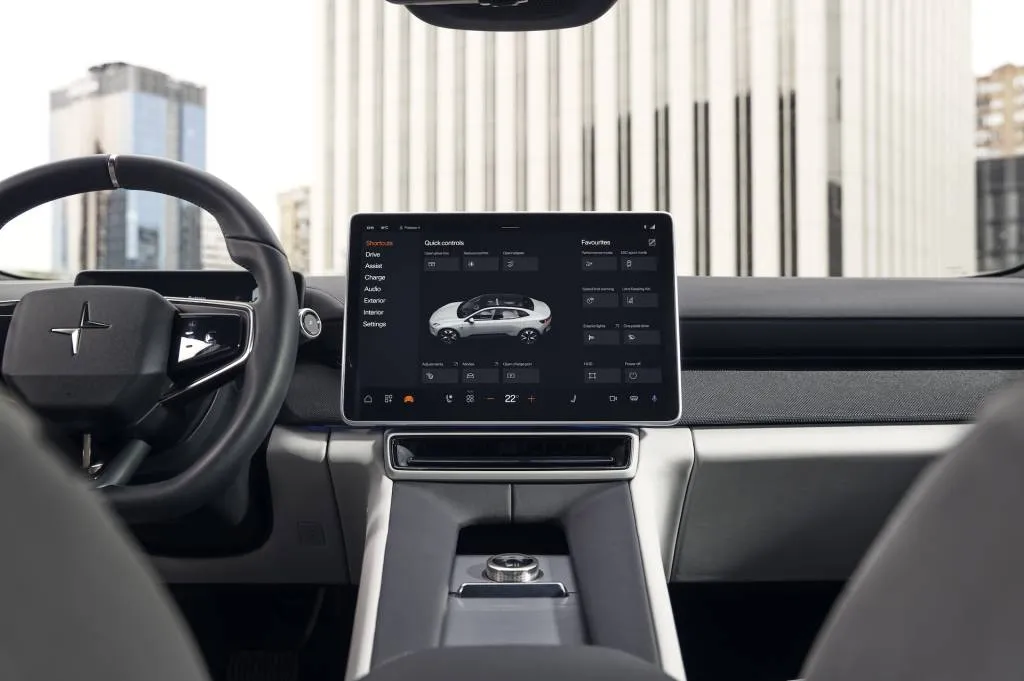
Too many functions buried in the touchscreen
-
Interior lighting themed on the solar system
The 4’s exterior and interior style wrap around a cabin with lots of space—and Polestar takes that to a literal conclusion in the ambient lighting. It’s patterned after objects floating in our solar system: a rolling planetarium, minus the Doobie Brothers.
The 4 serves up an exciting wedge shape decorated by pickaxe LED headlights, and capped by a Polestar logo. Down its sides, the 4 gets chunky and angular sills that hollow out what otherwise would be thick spans of sheet metal. A single strap of LED taillights pulls in the tail toward the rising rear roofline, all to good spartan effect.
Where I think the 4 falls flat is with the long panoramic roof that extends over the rear seat, and in the stubby decklid hidden in its profile. Polestar uses these two to omit a rearview windshield, and it actually doesn’t go far enough to make the car so visually distinct as to overcome the vision problems it induces. For those of us with prescription glasses or motion sickness, the Polestar solution of a digital rear camera mirror is no solution. Mazda took the 3 hatchback further to the edge of the styling ice—and it’s more of a standout.
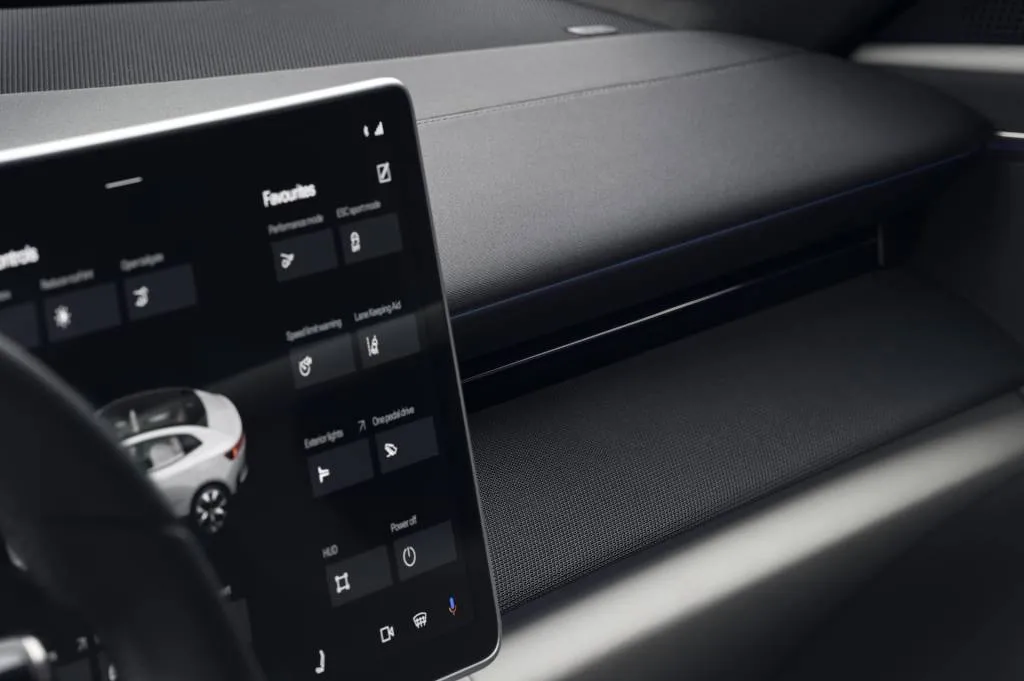
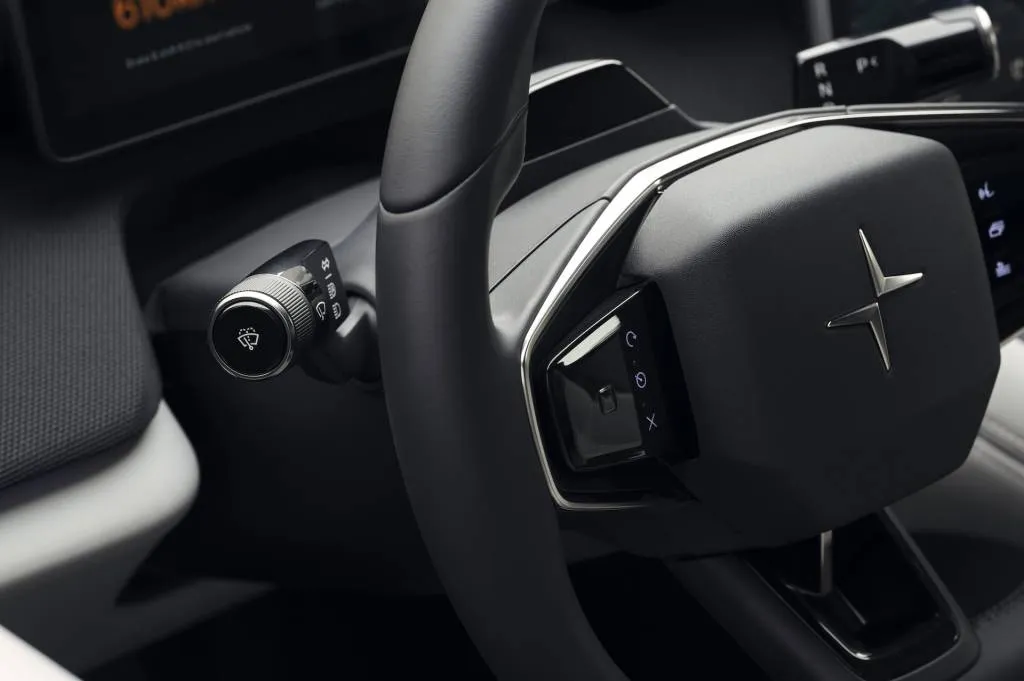
The 4’s cockpit has been pared down more than needed, too. The 10.2-inch digital gauge cluster and 15.4-inch tablet-style touchscreen work fine as displays. When they’re put to work through the Google built-in interface to host lots of functions normally toggled or switched or spun with a knob, they breed the kind of J.D. Power dissatisfaction that other car companies avoid like inquiries from reporters. So many functions depend on the touchscreen and on steering-wheel controls—adjusting head-up display height and information, steering-wheel position, et al—that it can take minutes to set up the car for a driver that isn’t in one of the car’s available “favorite” setups.
It’s a setback, since the rest of the cabin perfects the uncluttered and matte-luxury touch of the EV genre. The woven-textile seats have excellent support and hard controls for adjustment. Polestar offers real leather upholstery, too. The 4 has lots of footroom and headroom thanks to the flat floor and form factor. And the lack of rear glass doesn’t induce back-seat anxiety as much as I expected. The rear bench needs better support stitched into it, though its electric-recline option will coddle two large passengers while the third middle passenger snoozes on their shoulders.
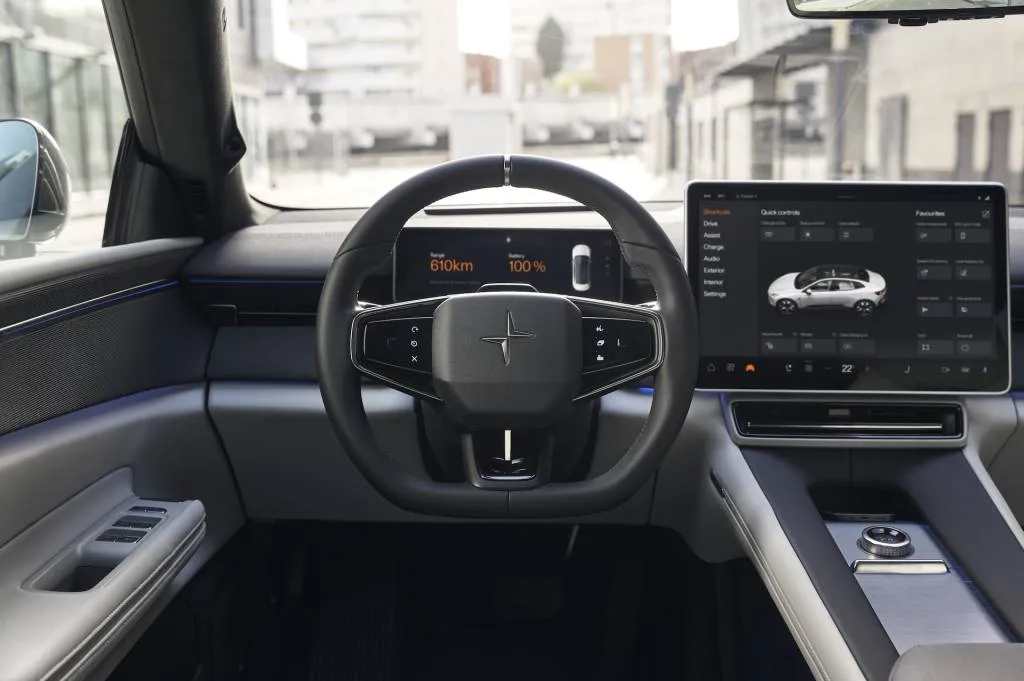
2025 Polestar 4
2025 Polestar 4
2025 Polestar 4
2025 Polestar 4
2025 Polestar 4 prices and technology: OTA all the way
-
$56,300 for the rear-drive 4
-
$64,300 for the AWD 4
-
Wireless CarPlay and smartphone charging standard
Available to order now, with deliveries to begin in a few months, the Polestar 4 costs $56,300 for the single-motor car, inclusive of a $1,400 destination charge. The AWD dual-motor car costs $64,300.
Every Polestar 4 has automatic emergency braking, blind-spot monitors, adaptive cruise control, active lane control, and a surround-view camera system. Limited hands-free driving comes with an option package that knits together 12 lidar sensors, 14 cameras, and a radar sensor—and Polestar promises upgraded ability through OTA updates without committing to the “full self driving” schtick. Other standard features include a power tailgate, a panoramic roof, power front seats, and 20-inch wheels.
Options range from the $1,500 lidar-sensor Pilot Pack on single-motor cars (dual-motor cars carry it standard) to a Pro Pack ($2,000 or $600, single- or dual-motor) which adds 21-inch wheels, gold valve caps, and gold-striped seatbelts.
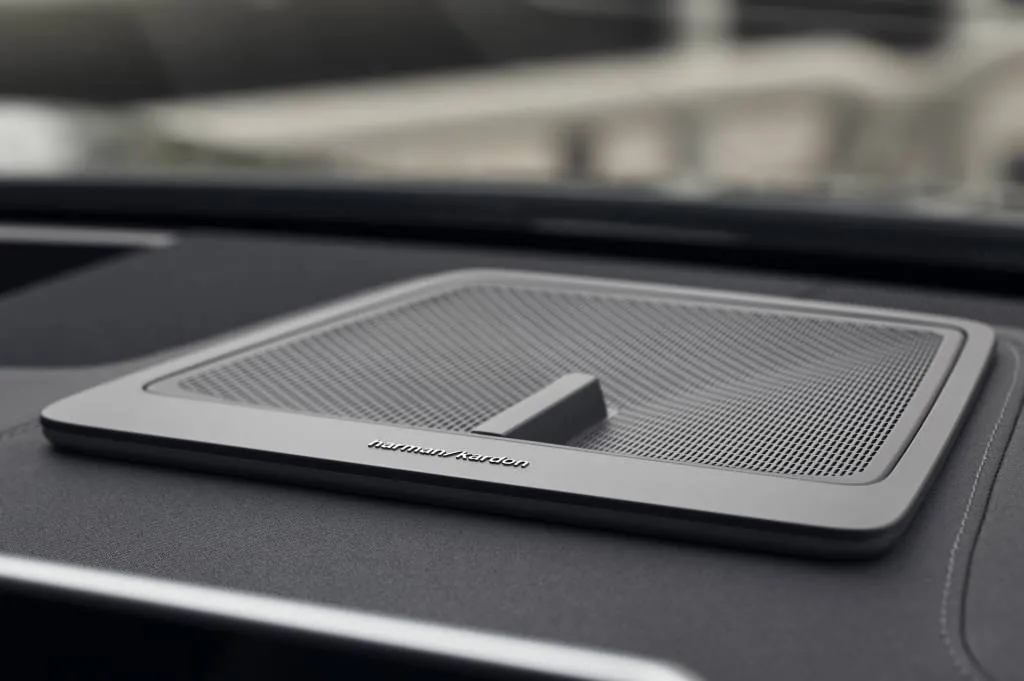
A Plus Pack lifts prices to $61,800 or $69,800, respective of motor count. It sports 12-way power front seats, synthetic leather upholstery, heated and reclining rear seats, a head-up display, and Harman Kardon audio.
Dual-motor cars with the Performance Pack cost $74,300, which nets them a sport-tuned suspension, 22-inch forged wheels and summer tires, as well as Brembo brakes with upgraded discs and gold-painted calipers.
The first versions of the 2025 Polestar 4 will be assembled in China, an untenable situation given tariff talk. Early next year, the vehicle moves to a plant in South Korea, which might or might not resolve those tariff issues. For now, the price is the price, Polestar says. With its standout style and intentional quirks, the Polestar 4 could turn out to be a cult favorite. In EV circles, where as we’ve seen, usually it pays to be different.
Polestar paid for travel so that we could bring you this test drive review.

EV discounts increase, average price dips below Tesla
- For the first time in nearly 18 months, the average new EV cost less than the average Tesla
- Dealers are cutting prices on used EVs and offering incentives on new ones
- The average discount on an EV was 12.4% of the average transaction price in May, nearly six points lower than the industry average
Average EV prices have fallen over the past two months, with the rest of the industry catching up with Tesla’s price cuts, reports Cox Automotive (via Automotive News).
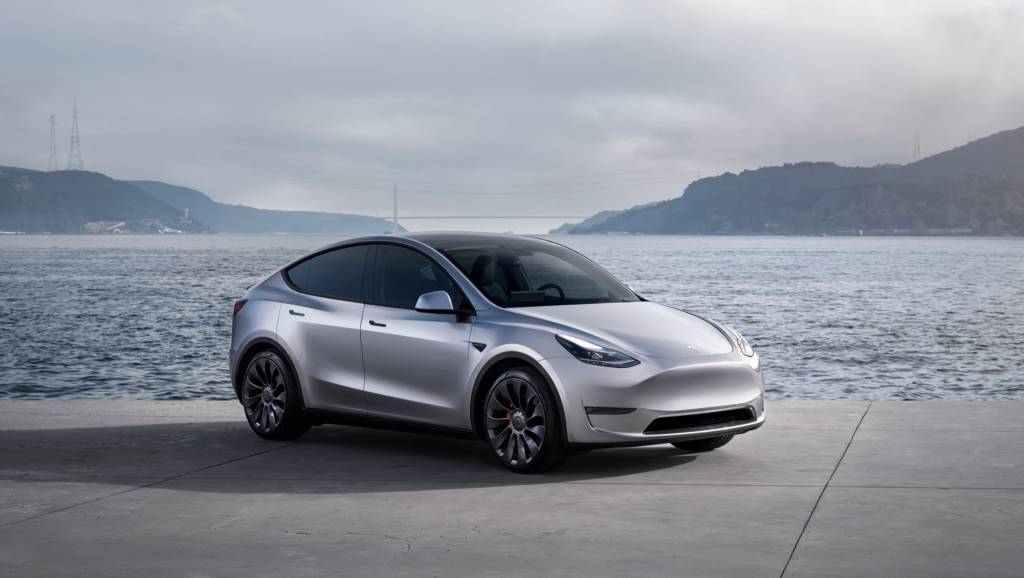
The average EV transaction price across all brands (including Tesla) was $55,235 in April, or $433 less than Tesla’s average. That marks the first time the industry average fell below that of Tesla since February 2023, notes Automotive News. In May, the industrywide average for EV transaction prices was $721 less than the Tesla average, at $56,648.
2024 Tesla Model Y. – Courtesy of Tesla, Inc.
Tesla has cut prices many times over the past year, but other automakers now also appear to be joining in. The average EV discount was 12.4% of the average transaction price in May, nearly six points higher than the industry average, according to Cox.
EV prices have been volatile over the past six months, Cox noted. They remained around $57,000 from December to February, fell to $53,000 in March, but in May they rose back up to nearly the same place as they were in December. The gap to Tesla completely disappeared in that time, though. In December, the overall average price of an EV was $7,276 higher than Tesla’s average, according to Cox.
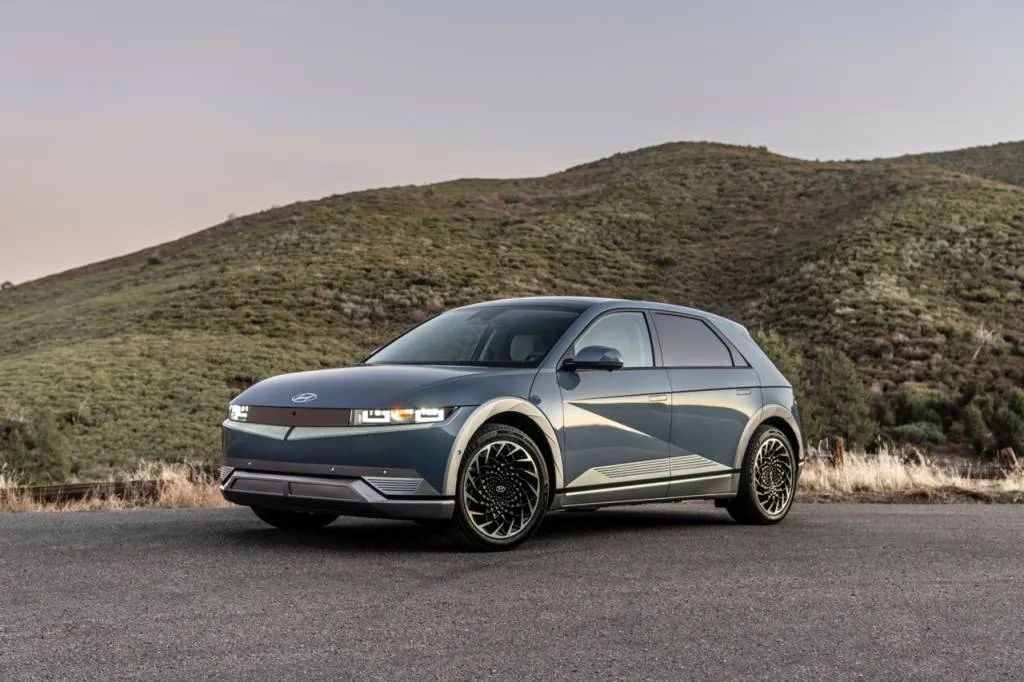
2024 Hyundai Ioniq 5
Discounts may be an acknowledgement of reality. Concerns over new EV costs are at the core of a drop in consumer consideration, according to a J.D. Power study published in May. A dearth of affordable EV models and shrinking availability of the $7,500 federal EV tax credit due to new rules that went into effect at the beginning of the year haven’t helped matters.
Cox also noted an 84% surge in sales of used EVs in May. That’s helped by a shrinking price gap with used gasoline cars, which narrowed to $1,100 the week of May 6. Earlier this month, iSeeCars reported, based on surveying posted asking prices for used cars, that used EV prices actually stood below internal-combustion prices. Lower used EV prices could also put pressure on automakers to discount their new EV models.

2025 BMW iX continues with minor changes
The 2025 BMW iX electric SUV enters its fourth model year with small equipment changes, but nothing mechanical.
An eSim enabling 5G connectivity is now standard across the board, while a Dynamic Handling Package is now optional on the iX xDrive50 model. This includes active steering and air suspension, both of which are also available as standalone options. An Interior Design Package, including dark silver trim and a sportier-looking steering wheel, is also optional on the xDrive50 and standard on the more powerful iX M60.
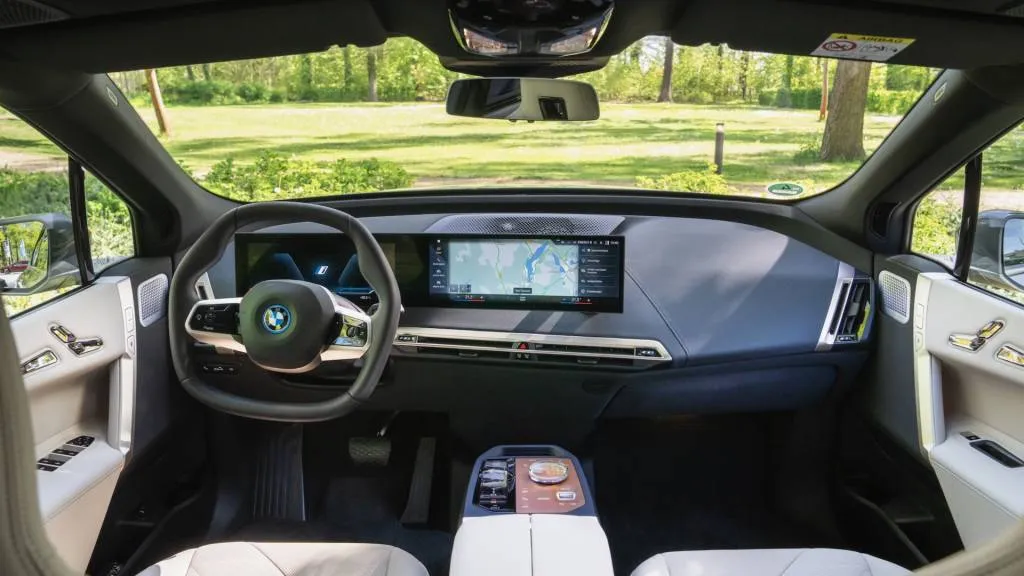
2025 BMW iX
Pricing starts at $88,245 for the xDrive50 grade and $112,675 for the M60 grade. Both prices include a mandatory $1,175 destination charge.
Both iX models use a dual-motor all-wheel-drive powertrain and a battery pack with 109 kwh of usable capacity. The xDrive50 is tuned to produce 516 hp and 564 lb-ft of torque, enabling 0-60 mph acceleration in a BMW-estimated 4.4 seconds. Output rises to 610 hp and 749 lb-ft in the M60, lowering the time to 60 mph to 3.6 seconds.
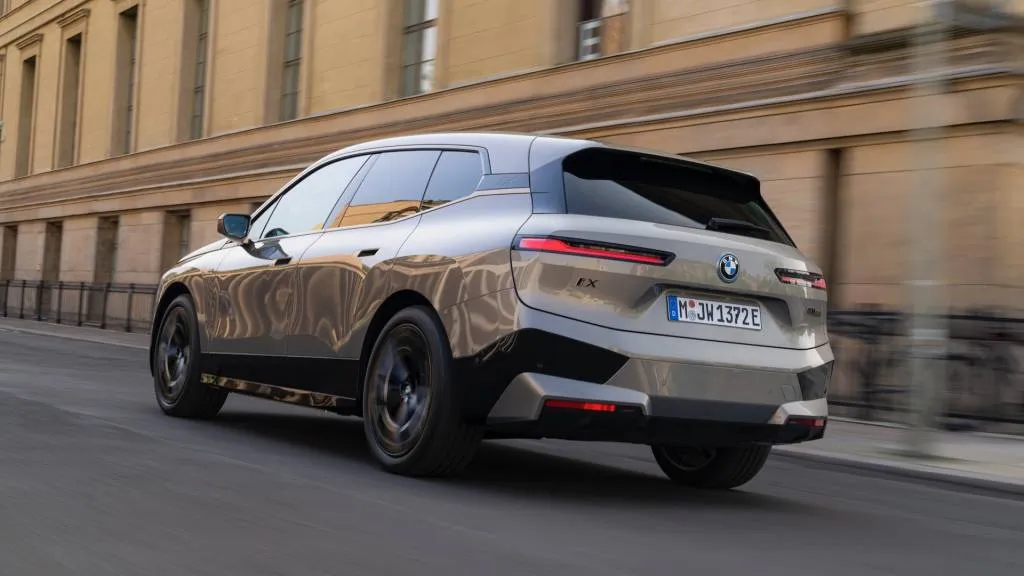
2025 BMW iX
Range is not likely to change from previous model years, meaning the iX should still top 300 miles in at least some versions. An 11-kw onboard charger can fully replenish the battery pack in 10.3 hours, according to BMW. A maximum DC fast-charging power rate of 195 kw allows for a 10-80% charge in less than 40 minutes. BMW plans to adopt the Tesla charge port starting early in the 2025 calendar year, so iX owners still have to wait a bit to use Tesla Supercharger stations.
Green Car Reports has found the iX to be charmingly offbeat, and capable of delivering on its range ratings in the real world. But BMW EVs are about to take another evolutionary step in the form of the Neue Klasse family. Based on a new dedicated EV platform and using cylindrical battery cells, the first Neue Klasse model will start production in Hungary in 2025, followed by Germany and Mexico.