
Category: General

Electrify America won’t allow EVs a full charge at busy stations
- Some Electrify America locations in California will limit charge to 85%
- “High-utilization station” locations were chosen for the pilot test
- Regular charging and idle fees apply
Electrify America is testing a strategy that may help alleviate wait times at some of its busiest stations by preventing customers from charging all the way to 100%.
Through a so-called Congestion Reduction Pilot, EA has targeted a series of “high utilization station” locations in Southern California that it’s limiting to a maximum 85% state of charge for DC fast-charging.
Unlike gasoline vehicles, which fill at about the same rate until the fuel nozzle’s automatic shutoff valve clicks, EVs don’t charge at a uniform rate. Generally speaking, an EV may take the same amount of time—or even more—to top off from 80% to 100% as it does to get to 80%. While the reasons as to why depend on both the EV’s battery pack and the charger, simply put it’s to keep the cells safe and avoid too much heat buildup.
So for charging-station operators—and EV drivers waiting in line on busy weekends—cutting people off at 85% could save a lot of time.
The pilot, which began in early July, is solely an Electrify America initiative, the company told Green Car Reports, with the goal simply to reduce congestion. It stated that the locations were chosen for their “high usage, long wait times and the proximity of other stations if customers wanted to charge to 100%.”
The network explained that it’s helped optimize charger availability with idle fees, hardware updates, and larger-format stations. “Nevertheless, some stations are experiencing long wait times.”
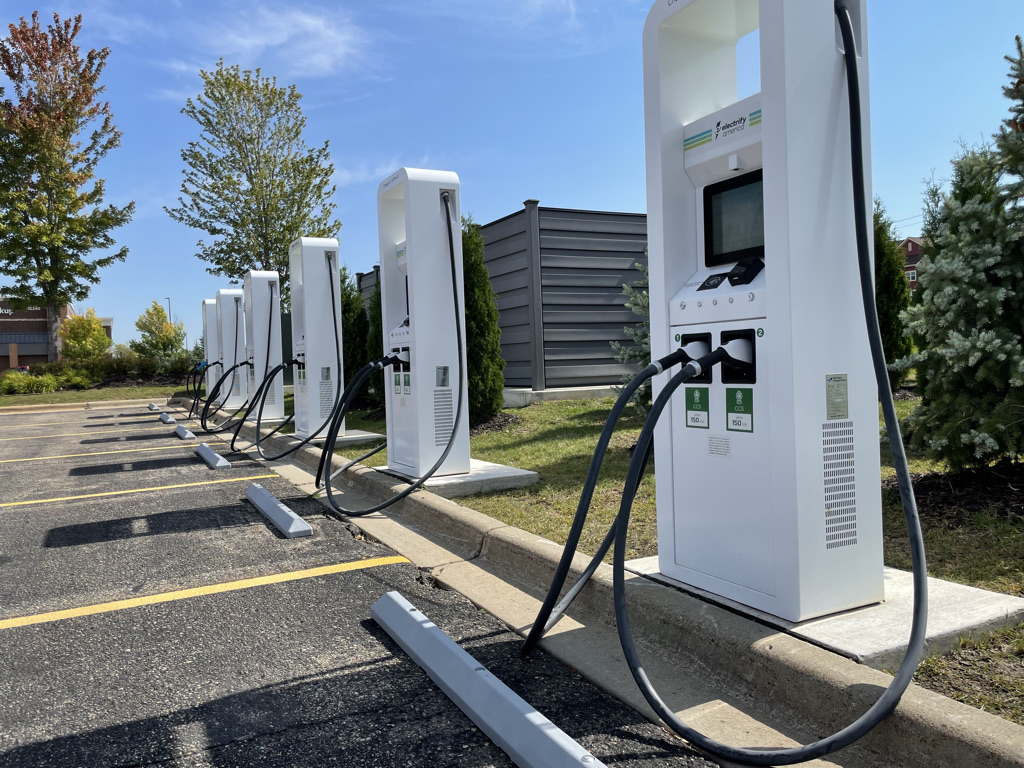
Electrify America chargers
Electrify America was created as part of a Volkswagen diesel settlement, with federal and California regulators, and for the most recent and final cycle of that it faced more scrutiny in California over reliability. Although the company doesn’t connect this pilot to its reliability push, it’s currently gathering feedback on how the limit works at those stations, and evaluating how it affects congestion and queueing. And depending on those takeaways it might roll the pilot out to a greater number of stations.
As EA states in an information page on the pilot, chargers will simply end the session once the vehicle reaches 85%. The network, which shifted to a station-specific pricing structure in 2023, applies idle fees after a 10-minute grace period, and those will continue to apply as normal, the network noted.
Even though Tesla laid off nearly its entire Supercharger team, CEO Elon Musk claims that the company plans a $500 million Supercharger expansion this calendar year. Electrify America has also underscored that it’s set to grow by 25% in 2024.

Lucid Air recalled for loss of power and coolant heater issues
- Lucid’s Air has been recalled, twice, in two weeks
- Over-the-air software updates have been sent to cars for both issues
- Lucid will replace any high-voltage coolant heaters that fail on affected cars
Lucid has issued two recalls applying to its Air electric sedan.
The two independent recalls include a software error that could cause a loss of power and a coolant heater that might fail.
Posted by the NHTSA on June 28, the high-voltage coolant heater issue stems from a potential failure that could lead to a failure in the climate system’s windshield defrosting. This recall, NHTSA campaign number 24V-495, affects 7,506 vehicles that range from the 2022 to the 2024 model year. Lucid estimates 1% of the vehicles recalled have the defect.
Lucid already released an over-the-air software update that will identify and alert owners of a high-voltage coolant heater failure. Lucid said should one of these components fail it will be replaced for free. Notification letters to owners will be mailed Aug. 9.
A separate recall has been issued for 5,251 2022 to 20223 Airs. Only 1% of vehicles within the campaign are estimated to have this defect. Lucid said when a hardware communication fault is detected the high-voltage interlock software might disconnect the high-voltage contractors while the vehicle is in motion. The result would be a loss of drive power, which could result in the risk of a crash.
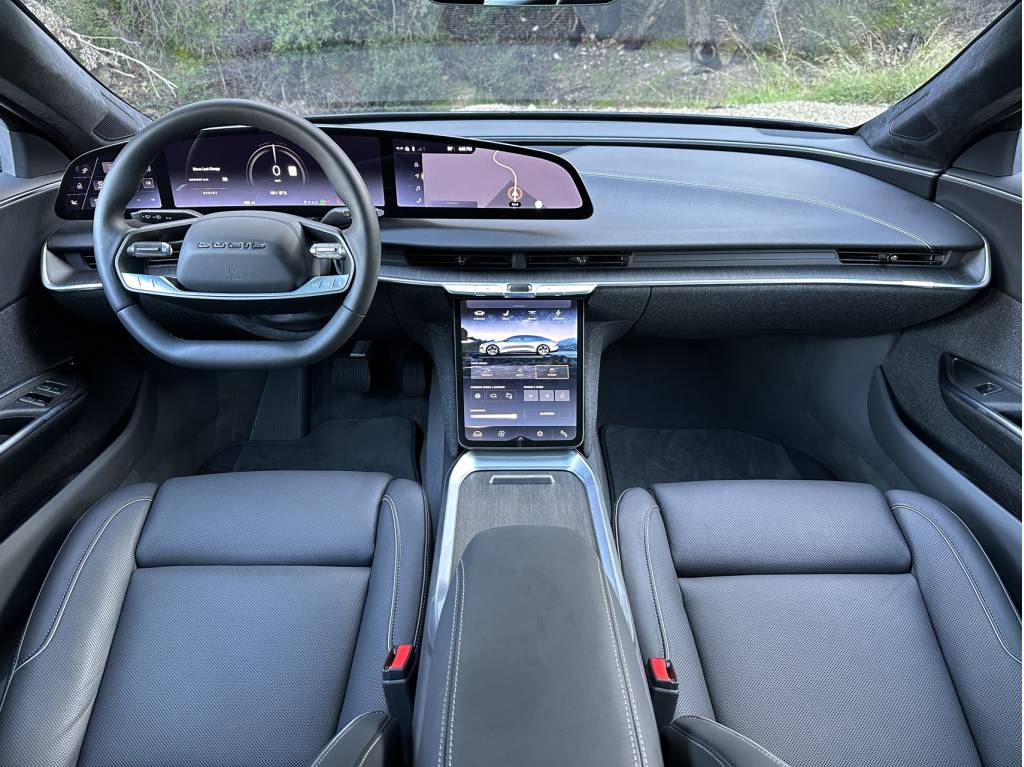
2023 Lucid Air Touring
To date, 10 known occurrences have been reported.
Lucid released an over-the-air software update for the issue on June 24. Letters to owners alerting them of the issue will be mailed Aug. 15. The recall is filed under NHTSA campaign 24V-497.
Anyone looking for more information can contact Lucid at 1-888-995-8243 or the NHTSA at 1-888-327-4236.

Is NASCAR getting ready for EVs—or hybrids?
NASCAR surprised attendees at its Chicago Street Race on Saturday with the debut of a fully electric SUV prototype.
It’s so surprising, perhaps, because the race series hasn’t even gone hybrid yet. NASCAR remains a race of thirsty, loud V-8 engines and rear-wheel-drive cars with rear-mounted manual transmissions.
And while the organization is making no suggestion of going all-electric next year, or even this decade, the prototype is surely an indication it’s thinking of the day when NASCAR will.
The NASCAR EV Prototype has all-wheel drive and is powered by three six-phase motors—one in front, two in back—potentially producing more than 1,300 hp and rolling on four Goodyear Racing Eagle tires. A 78-kwh battery pack powers the vehicle, and it emphasizes regenerative braking that NASCAR says makes the car “ideal for road courses and short oval tracks.”
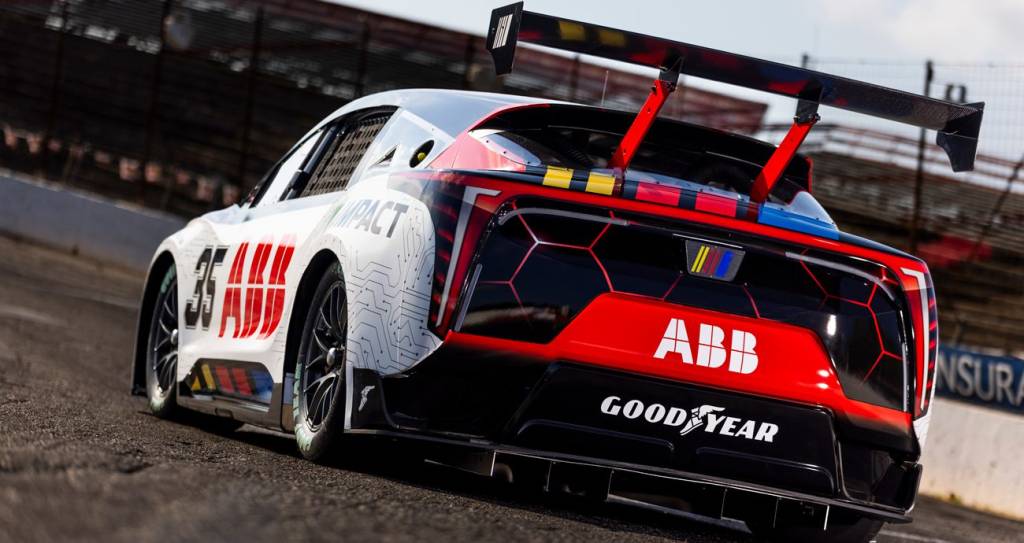
NASCAR electric race car prototype
Its body is made of “sustainable flax-based composite, with its steering, suspension, brakes, and wheels all derived from the current race cars.
The prototype was developed with the charging and automation supplier ABB, which is now the car-racing league’s official partner for greening and very much involved in Formula E and F1.
The road to electrify the “stock car”
While the “S” and the “C” in NASCAR stand for stock car, the league’s race cars have not had much to do with production cars.
It started to change that in 2022, with its so-called Next Gen car that updated the racers’ components, aiming to better match those of production cars on a component basis, even if not as a whole. For instance, it finally dropped the old solid-rear-axle layout for an independent rear suspension.
NASCAR appears in a bind, as the organization has pledged to green the race series while its fan base appears not to value that shift. When it introduced its NextGen car, NASCAR said that a hybrid powertrain might arrive by 2024. But with that shift nowhere in sight, the soonest that’s estimated to arrive now is around 2027—despite current competition cars emulating the Ford Mustang Mach-E, Toyota bZ4X, and Chevrolet Blazer EV.
Zero-emissions pace cars happened long ago. The Ford Focus Electric became the first NASCAR EV pace vehicle in 2012, and the Toyota Mirai paced NASCAR in 2015. And some NASCAR drivers stood behind EVs even before then.
In April 2023, NASCAR committed to its first long-term carbon emissions goal and “the beginning of a new era in sustainability for America’s top motorsport.” That included a goal to cut its carbon footprint to zero across its core operations by 2035.
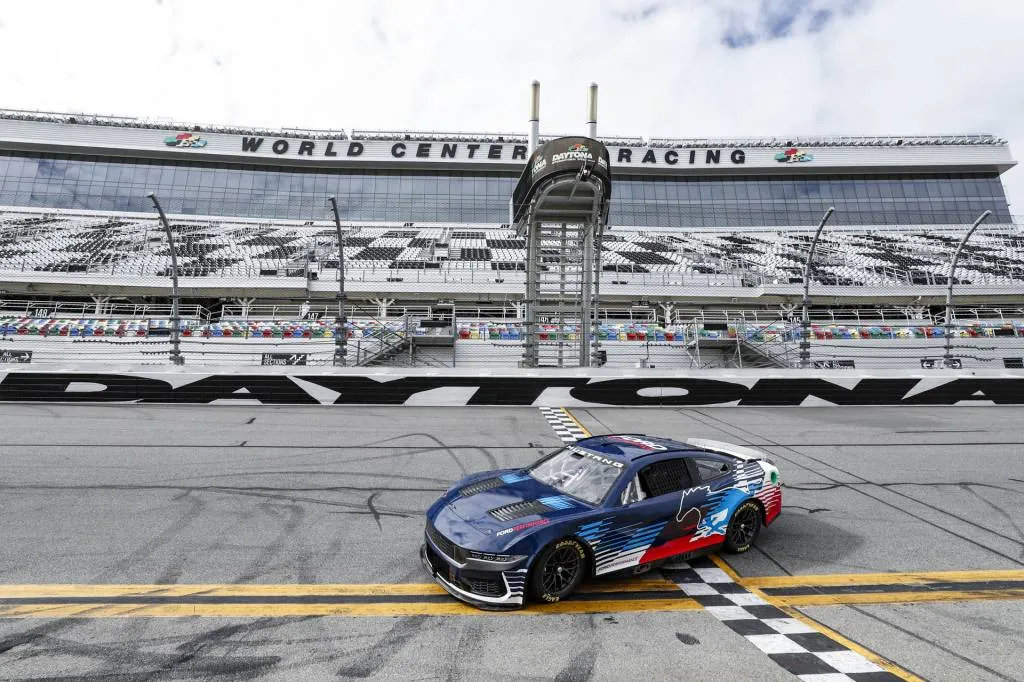
2024 Ford Mustang Dark Horse NASCAR Cup Series race car
Still an arena of 5-mpg guzzlers
NASCAR racers’ fuel consumption hasn’t changed much in decades and remains around 5 mpg during races. Over a season NASCAR’s fuel load has been estimated at around 2 million gallons—the same amount of gasoline that’s used by about 5,000 vehicles (30 mpg, 12,000 miles) in a year.
Formula E cars, on the other hand, complete their entire race on a full charge of less than 47 kwh—or the energy equivalent of about 1.4 gallons of gas. NASCAR race cars might use around 80 gallons in a race, admittedly much longer.
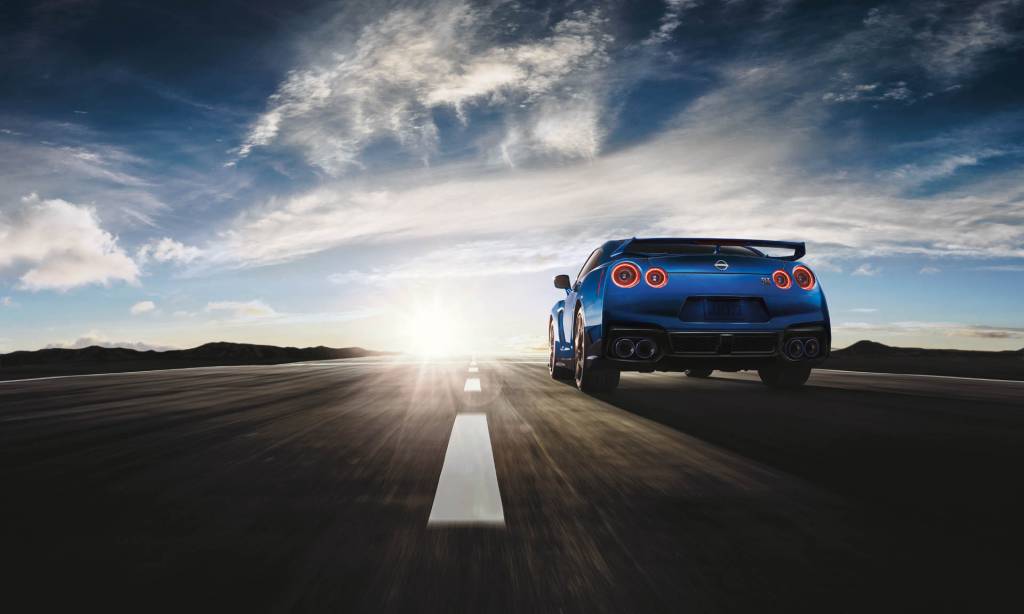
2024 Nissan GT-R Skyline Edition
Could EVs bring the “stock” back?
As Nissan recently argued, too, Formula E is providing more of a testbed for production vehicle technologies—like its e-4orce all-wheel drive system for EVs, and future performance applications for it.
The more appropriate question in NASCAR’s mission to green itself may be whether or not its target audience is ready to say farewell to the era of gas-guzzling V-8s.
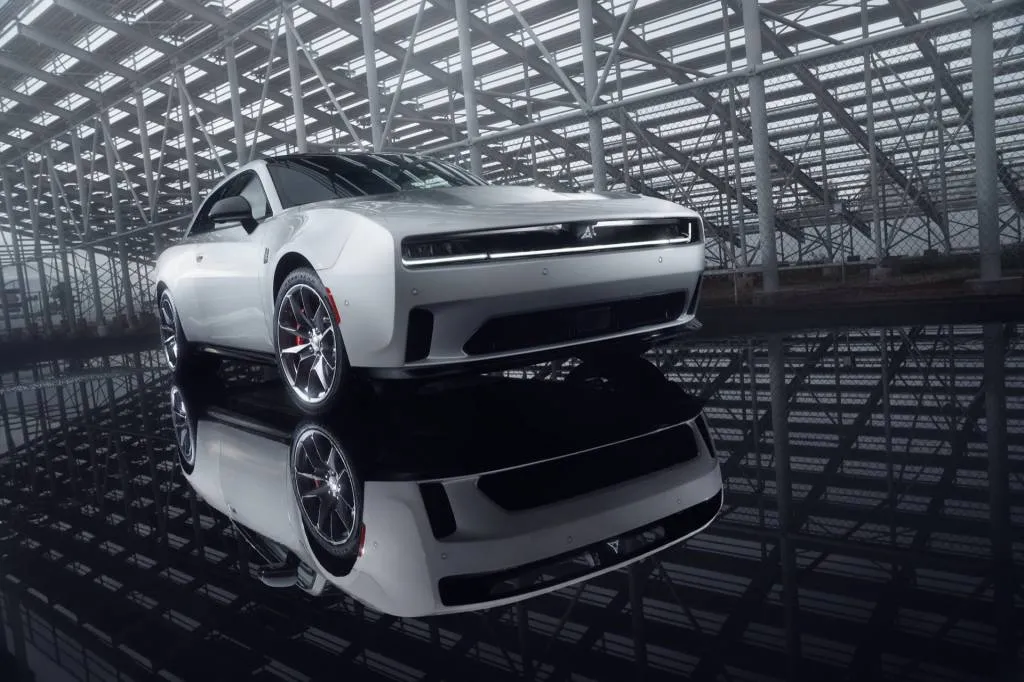
2024 Dodge Charger Daytona
There’s a market test on the way. The EV potentially set to charge the NASCAR crowd up the most may be the 2024 Dodge Charger Daytona EV, which harks back to the heritage Daytona, the first vehicle to break 200 mph on a NASCAR track in 1970. The Dodge EV obviously won’t have the same level of gasoline fumes as the original, but it will include a “bone shaking” Fratzonic Chambered Exhaust system that relies on an amplifier and tuning chamber—perhaps striking the right mix of old and new that will eventually be necessary to sell the NASCAR crowd on EVs.

Software prompts another Chevy Bolt EV battery fire recall
- 72 Bolt EV and EUV models missed software to signal a bad battery
- Those models need to return to dealerships for the software
- Affected owners should park outside, not charge above 90%
A small subset of Chevrolet Bolt EVs previously recalled for potential battery fires have once again been recalled for the same.
While this isn’t a new issue, GM’s proactive tally of service records indicated that some vehicles didn’t complete the installation of diagnostic software as part of their recall remedy.
That means a new round of recall paperwork (and dealer service) for 66 different 2020-2022 Bolt EV hatchbacks and 6 different 2022 Bolt EUVs. In those specific cars, GM says, “advanced diagnostic software may have been incorrectly installed and fail to detect defective battery modules, possibly resulting in a battery fire.”
Although GM isn’t aware of any incidents connected to this software issue, the automaker internally identified that its service software system would, in some cases, allow a technician to process a vehicle’s warranty claim without complete installation of the software, it explained in recall paperwork.
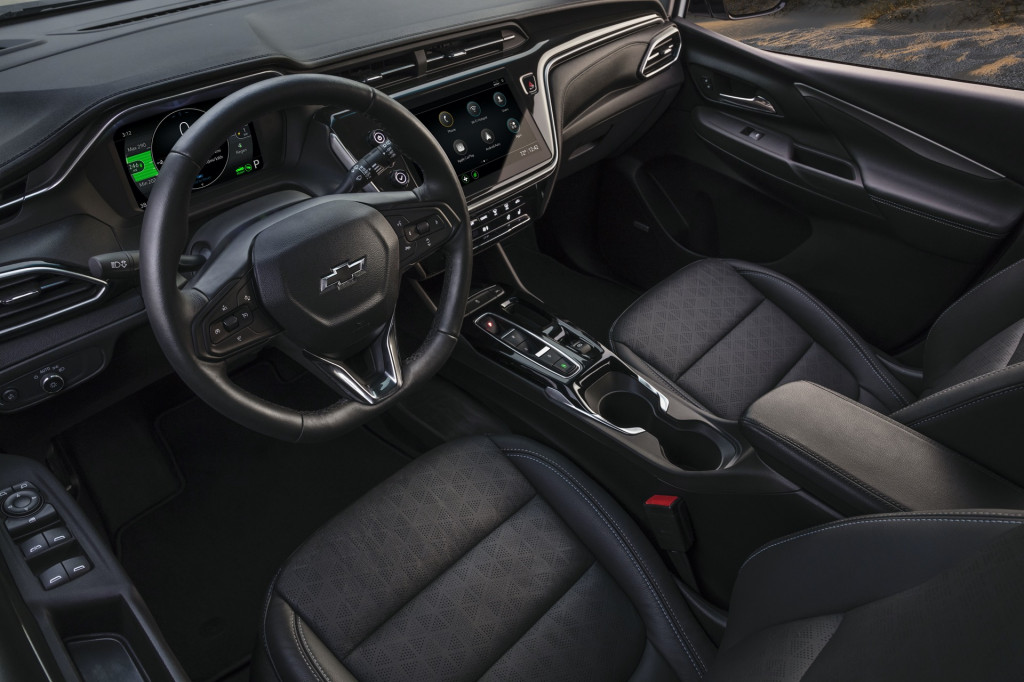
2022 Chevrolet Bolt EV
Advice for what drivers of affected vehicles are instructed to do sounds much like when GM was rolling out such software to the Bolt EV when it was first affected by that battery recall: Set the target charge level to 90%; avoid depleting the battery below 70 miles of range remaining; park outside after charging; and do not charge the vehicle indoors overnight.
Lucky owners who get to bring their vehicle in yet again for recall service will be notified starting around August 5, 2024. Bolt EV owners may in the meantime contact 833-382-4389 with questions.
This is a very, very small subset of GM’s massive 2021 battery recall effort, which eventually spanned all 140,000 Bolt EV and Bolt EUV models in North America. Although this recall relates to the later model years, many owners of earlier 2017-2019 Bolt EVs ended up with new battery packs, resulting in more driving range than they originally had.
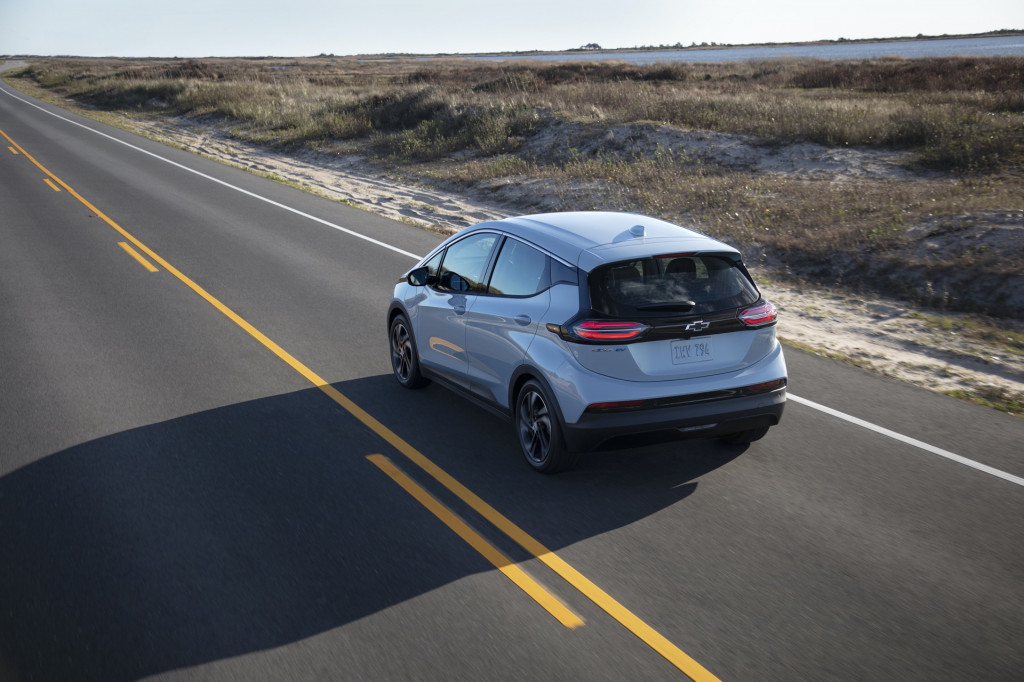
2022 Chevrolet Bolt EV
As part of a class-action Bolt EV settlement vs. GM and LG Energy Solution, owners are also likely eligible for $700 to $1,400.
The Bolt EV went out of production in December 2023, but as GM reported last week it remained Chevy’s top-selling EV for the first half of 2024, with the Blazer EV failing to overtake it for the period. GM CEO Mary Barra confirmed earlier this year that when it returns later in 2025 the 2026 Chevy Bolt EV will be the most affordable U.S. EV.

2025 Ram 1500 REV electric truck aims for 500 miles of range
- The 2025 Ram 1500 REV is Ram’s electric truck launching near the end of 2024
- Ram said the 1500 REV will have up to 500 miles of range, but standard battery trucks will have 350 miles of range
- A range-extended Ram 1500 Ramcharger arrives after the electric Ram 1500 REV
Ram is looking to go the distance with its electric truck when it arrives later this year.
The 2025 Ram 1500 REV electric truck aims to upstage the Ford F-150 Lightning, Chevrolet Silverado EV, Rivian R1T, and Tesla Cybertruck with up to 500 miles of range. The key ingredient? A massive battery pack.
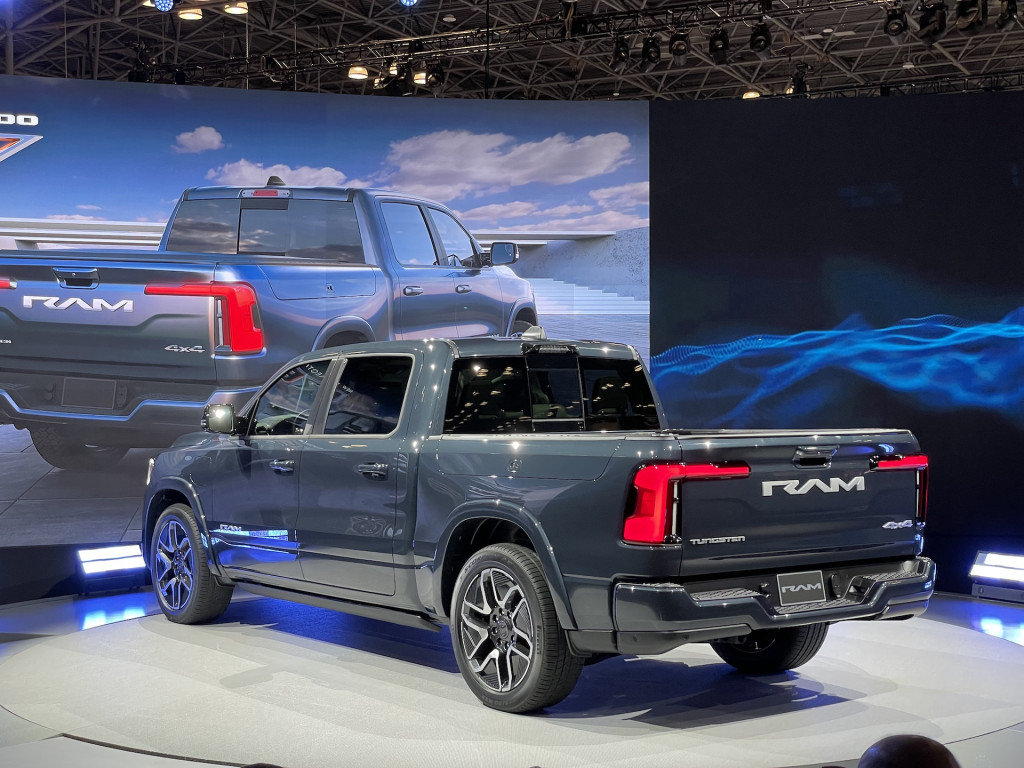
2025 Ram 1500 REV at the 2023 New York auto show
Ram hasn’t release full specs, yet. We know the Ram 1500 REV will ride on Stellantis STLA Frame chassis, which is its dedicated electric family of platforms, in this case made for a body-on-frame vehicle, like a full-size pickup truck. The standard battery fitted within the frame will be a 168-kwh pack that Ram said will probably deliver up to 350 miles of range. But a 229-kwh battery pack will be available, and Ram estimates that will give the Ram 1500 REV up to 500 miles of range.
The Ram 1500 REV will be capable of DC fast-charging of up to 350 kw, which Ram said will add 110 miles of range in about 10 minutes regardless of battery pack. The truck will be capable of bidirectional charging, but Ram hasn’t outlined this feature, yet. A panel of plugs in the bed can output up to 7.2 kw of power while a plug in the front trunk provides up to 3.6 kw.
Ram said the 1500 REV electric truck will be capable of towing up to 14,000 pounds, the most of any electric pickup, and have a payload capacity of up to 2,700 pounds.
Only a dual-motor powertrain delivering all-wheel drive has been announced so far with up to 654 hp and 620 lb-ft of torque. The motors are integrated with inverters in a module, and the front can be disconnected from the axle to boost efficiency. Ram said that regenerative braking will be strong enough for one-pedal driving. An electronic locking rear differential will be available. Ram said the 1500 REV will be capable of 0-60 mph in 4.4 seconds and fording up to 24 inches of water.
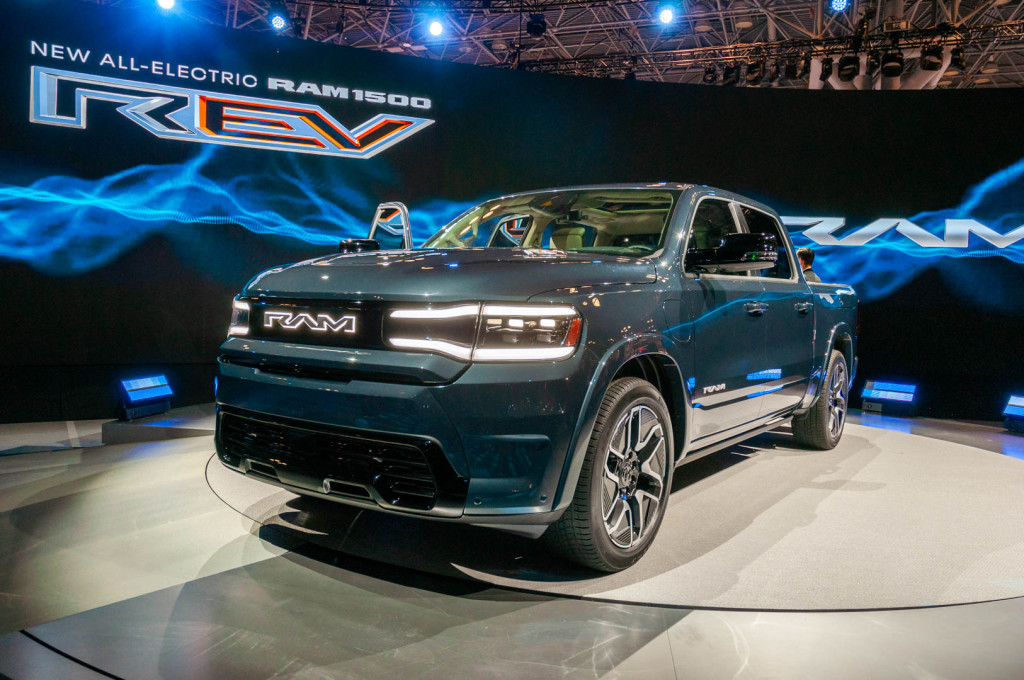
2025 Ram 1500 REV
First shown in February during the Super Bowl, the electric Ram pickup won’t look dramatically different from its gas-powered siblings. The front grille’s blocked off for aerodynamic and frunk purposes, the LED daytime running lights bleed into the center of the front end, and the rear taillights extend into the tailgate. Much beyond that it’ll be wheels and small trim bits that visually differentiate the electric-powered truck from the gas-powered model. It’s going to take a keen eye to know which truck is which on the road. Ram fitted the entire underbody of the 1500 REV with smooth panels to clean up the aero. Ram said the 1500 REV has a 0.34 coefficient of drag.
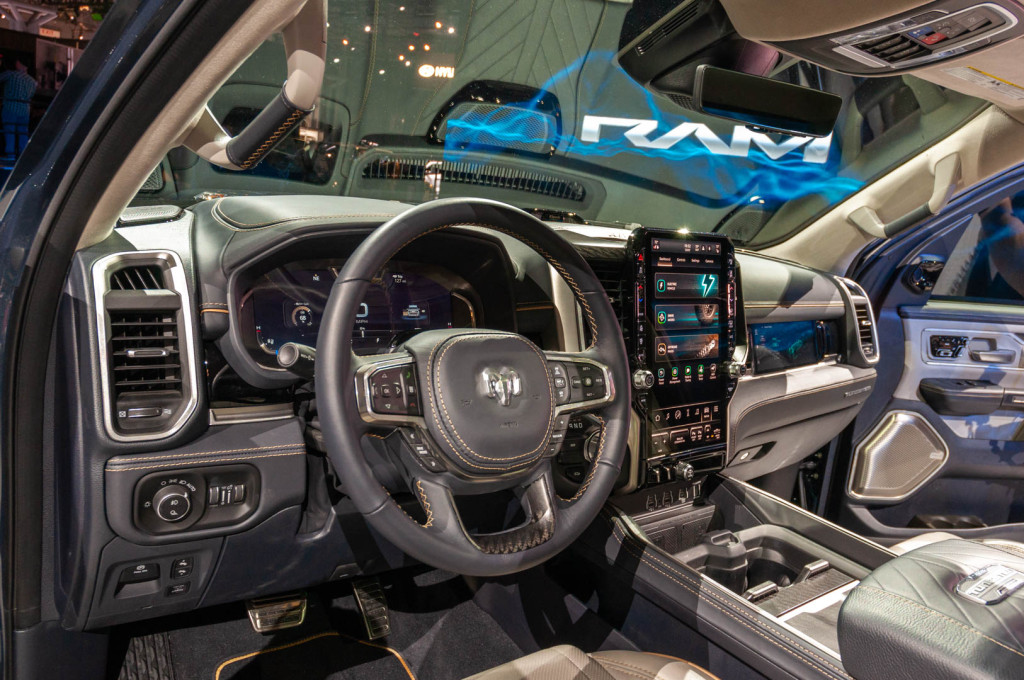
2025 Ram 1500 REV
Inside the story is the same. Cabin appointments are the same as those for the gas-powered model aside from some visuals on the screens to show the electric truck’s status for charging, battery, and powertrain. The dashboard controls also carry over from the gas-powered model. That’s not a bad thing since the Ram 1500 has the nicest interior money can buy in a pickup truck. From an available 14.0-inch touchscreen and 12.3-inch digital gauge caster to a 10.3-inch front passenger screen, the leather-lined cabin can be outfitted like a luxury vehicle.
Ram hasn’t said how long the bed will be or what sizes will be offered, but the front trunk has 15 cubic feet of space.
The 2025 Ram 1500 REV will launch ahead of its range-extended sibling, the 2025 Ram 1500 Ramcharger.

Porsche’s gas-powered era begins to end in 2026
Porsche has confirmed that the gas-powered Macan SUV and the 718 Boxster and Cayman sports cars all will be discontinued by 2026.
A Reuters report confirms the decision, which has been widely anticipated as Porsche has introduced and updated key vehicles in its electric-car product plan, including the electric Taycan sedan and the upcoming Macan EV electric SUV.
The rate of EV adoption has slowed in many global markets, but as Porsche board member Albrecht Reimold told Automobilwoche magazine, vehicles such as its gas-powered Macan have reached the end of their planned life cycles.
While the fossil-fuel Macan has already been dropped from Porsche’s European lineup, sales continue in markets where it remains a bestseller—the U.S. included.
Reimold confirmed to the magazine that the gas versions of the smaller 718 sports cars would end production in 2025. Electric versions of those vehicles should emerge by the end of 2024, with sales expected to begin late in 2025. The sports-car EV duo may be designed around a battery pack arranged down the center of the vehicle for optimal weight distribution—like Porsche’s Mission R concept, which offered a dual-motor all-wheel-drive system.
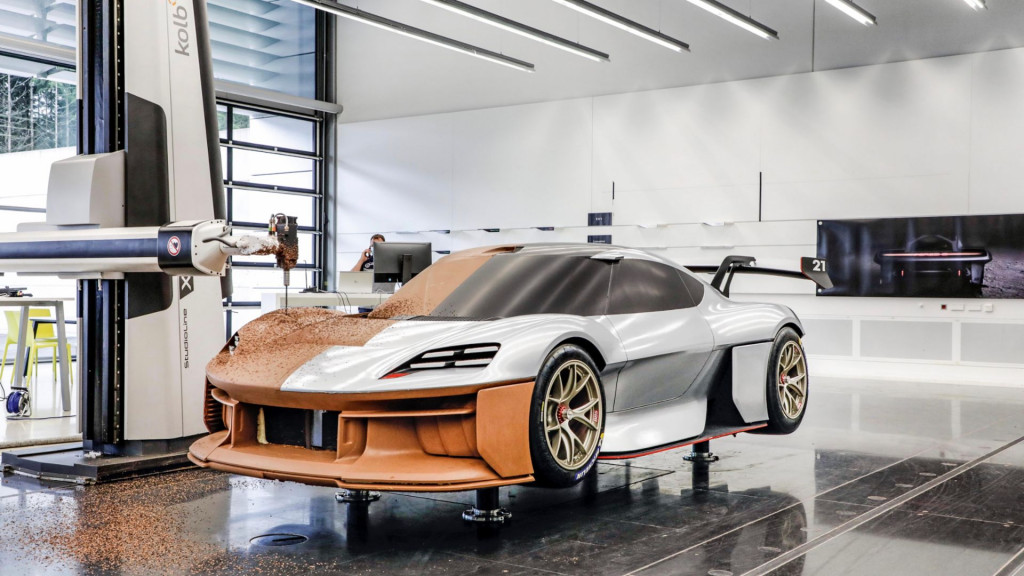
Porsche Mission R development
Porsche is moving quickly into EVs, thanks to lessons learned from its Taycan sedan. The 2025 Taycan has just received a thorough update, one which has boosted its overall driving range by up to 35%.
The Macan Electric, coming to the U.S. this fall, will be Porsche’s first vehicle on the new PPE (Premium Platform Electric) architecture that it shares with the Audi Q6 E-Tron and A6 E-Tron. Integral to the new vehicle are features shared with the Taycan, including 270-kw maximum fast-charging and so-called “bank charging” which divides the 800-volt battery pack into two 400-volt sub-packs which can charge in parallel. Porsche claims the entire 100-kwh pack will then, as a result, be able to recharge from 10% to 80% in 22 minutes—or add more than 60 miles of range in four minutes.
Green Car Reports Newsletter
Sign up to get the latest green car and environmental news, delivered to your inbox daily!
I agree to receive emails from Green Car Reports. I understand that I can unsubscribe at any time. Privacy Policy.

Grayson Brulte on the rocky rollout of software-defined vehicles (Episode 258)
The founder and CEO of The Road To Autonomy examines the new Rivian-Volkswagen joint venture, casts some doubts on the auto industry’s electrification push and explores the broader mobility business landscape.