
Category: General

Tesla Cybertruck range extender battery won’t be user installed
- The Cybertruck’s optional range extender battery pack will require a service appointment for installation or removal
- Tesla hasn’t said how much the option costs or when it will be available
- The battery will increase Cybertruck range to 470-plus miles, according to Tesla
Cybertruck owners excited about the optional range extender battery now have more details about how it will work.
On Saturday, Tesla Cybertruck lead engineer Wes Morrill confirmed the optional range extender battery pack will not be user installed.
Morrill responded to a question on X, formerly Twitter, asking if the range extender battery will be easily removable or offered as a rental option from a local service center.
“No, any range extender by Tesla will be structurally mounted so it’s safe in a crash,” Morrill responded on X.
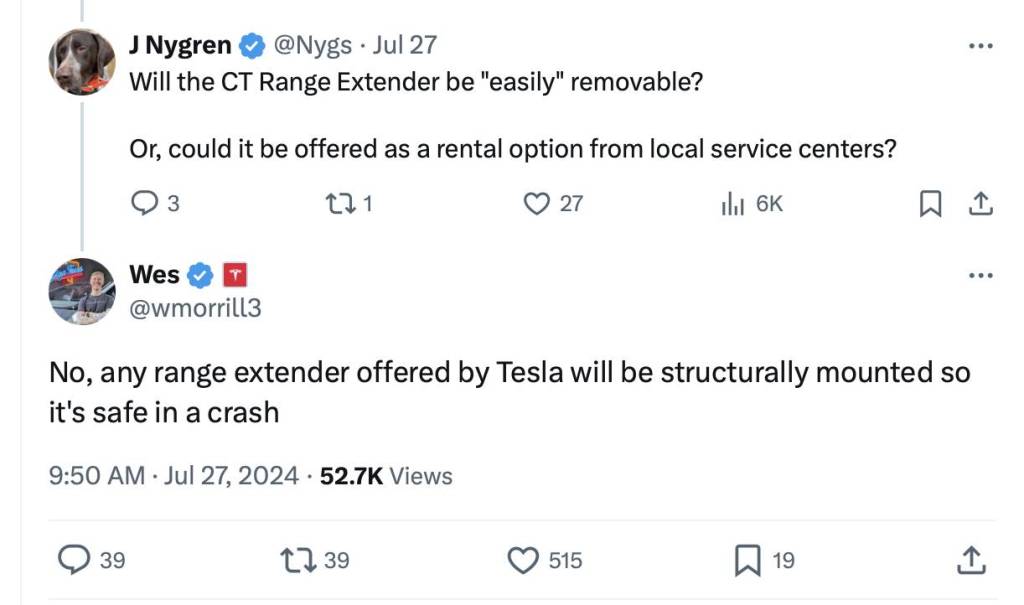
Wes Morrill on X noting Cybertruck’s range extended battery isn’t DIY install
This means owners will need to schedule a service appointment with Tesla to have the optional battery pack installed or removed. It’s unclear if removed what happens with the battery pack.
No specifications or pricing has been announced for the range extended battery option, nor has Tesla said when it will become a reality.
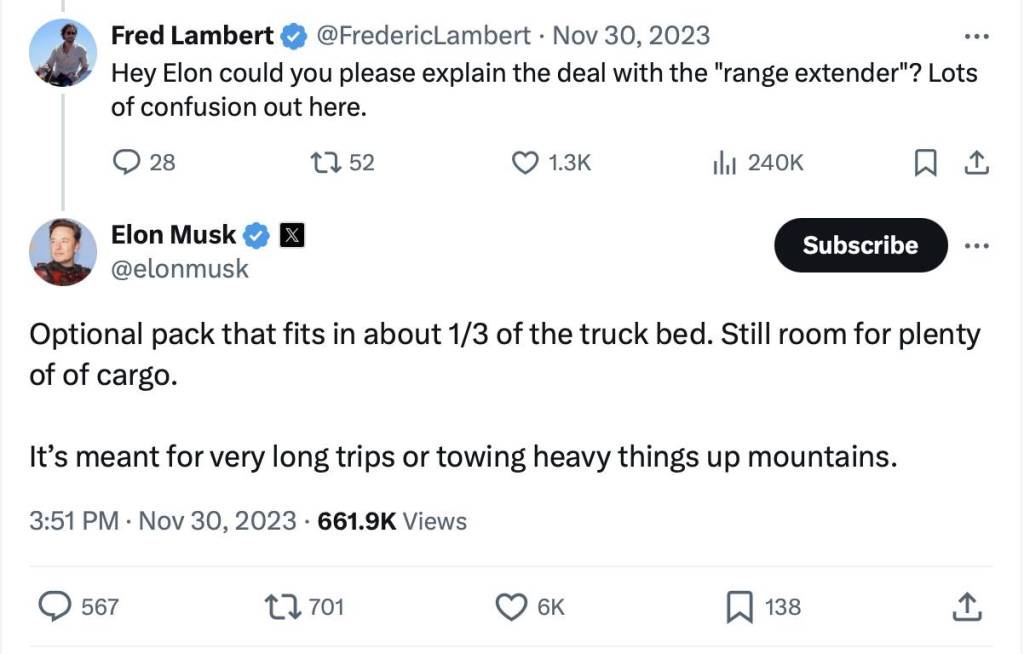
Tesla CEO Elon Musk on Cybetruck range extender battery pack
Tesla CEO Elon Musk, also the owner of X.com (formerly Twitter), noted on the platform after the truck’s debut that the range extender battery pack would take up about a third of the truck’s bed.
Even with the optional range extender battery pack the Cybertruck won’t have the originally promised 500 miles of range.
The three Cybertruck models announced include a Rear-Wheel Drive, Dual-Motor, and tri-motor Cyberbeast. The three models have respective range claims of 250 miles, 340 miles, and 320 miles, according to Tesla. Official EPA ratings don’t exist. Tesla claims the optional battery pack will enable the Cybertruck to offer up to 470-plus miles of range, but it’s not clear for which model.
Tesla recalled the Cybertruck in April due to “trapped” accelerator pedals, and again in June for a busted wiper motor and loose trim.

Supercar maker sells EV division to focus on gas V-12s
- Gordon Murray Group sold Gordon Murray Technology
- Gordon Murray Technology was the EV division for the automotive group
- CEO Phil Lee doesn’t see the EV supercar market developing, focusing on V-12s
The winds of the all-in EV future are shifting for everyone from mainstream automakers to niche supercar companies.
On Monday, Autocar cited comments from Phil Lee, CEO of Gordon Murray Group (GMG), revealing the company sold its EV division last year.
The division, known as Gordon Murray Technology, was part of the larger Gordon Murray Group, which consists of the Gordon Murray Automotive car business and Gordon Murray Advanced Engineering development and engineering business.
Gordon Murray, the designer responsible for the McLaren F1 and founder of GMG, serves as the executive chairman and remains involved with the businesses.
Lee said the Gordon Murray Technology EV division was sold to CYVN Holdings investment group. The Abu Dhabi government is linked with CYVN Holdings, which is also one of the top investors in the Chinese automaker Nio.
Gordon Murray Technology was established in 2022. The division announced development of two electric SUVs, one of which was to be sold by Gordon Murray Automotive. The state of the two electric SUVs is unknown.
ForSeven, a CYVN-backed EV startup, was working with Gordon Murray Technology before the sale. Lee said the project was became huge and started to swamp the team’s focus off Gordon Murray Automotive’s supercars.
Lee wouldn’t disclose how much Gordon Murray Technology sold for, but noted the sale gave the team focus and cash to move forward with their V-12-powered supercars.
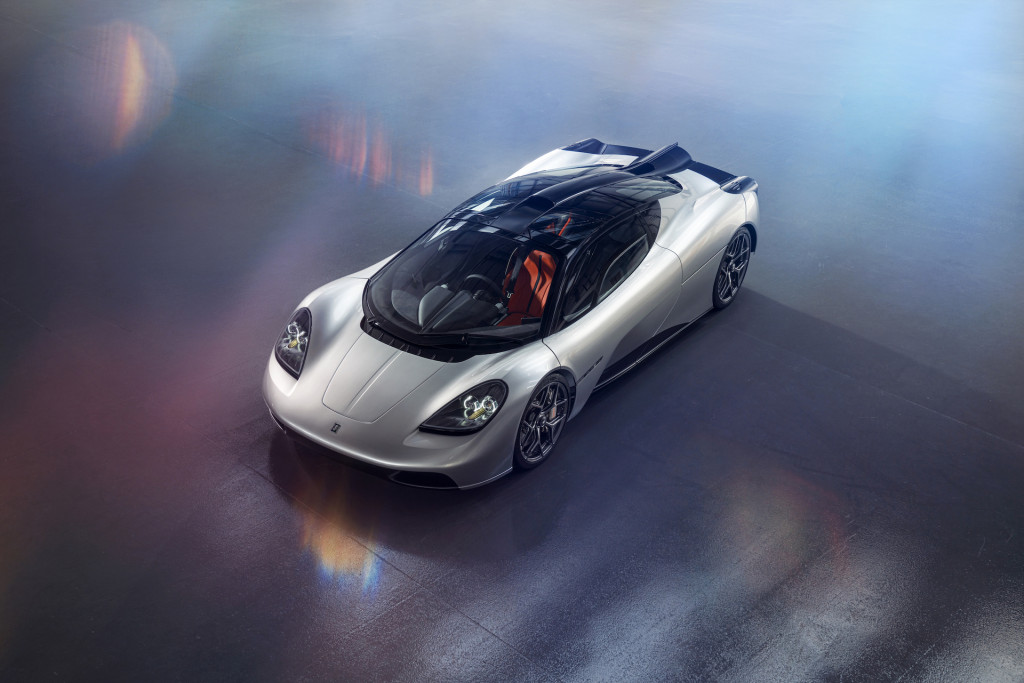
GMA T.50
The cash infusion is being used to get the T.50, T.50S, and T.33 supercars, all powered by V-12 engines, out the door. The supercars are sold out through 2028.
Lee said the company needs to protect the V-12 engine given where the automotive market is going. There’s big demand for the emotion the 12-cylinder powertrain provides.
“I’m not completely sure that there is a place for electric supercars in the way that there is a V-12,” Lee said.
The automaker will go hybrid at some point to keep the V-12 alive as long as possible, according to Lee. But the hybridization will be “clever” instead of a more conventional design with a big battery, series, or parallel system.
Current legislation puts the cut-off at 2040 in the U.S., 2035 in Europe, and 2030 in the U.K. before the automaker would need hybridization. Lee said the team will work on lobbying to protect low-volume vehicles from the regulations.

Mitsubishi tipped to join partnership between Honda and Nissan

Honda and Nissan are forging a partnership in the areas of electrification and software, and Mitsubishi reportedly wants a piece of the action.
Honda and Nissan first announced plans for their partnership in March, which at the time of the announcement was only at the feasibility study stage.
Japan’s Nikkei newspaper reported on Sunday that Mitsubishi will now work with Honda and Nissan to finalize the details of the partnership, particularly when it comes to standardization of in-vehicle software systems.
The Nikkei reported that the tie-up will leave Japan with two dominant automotive groups to better challenge Tesla and a band of Chinese EV brands.
Toyota and its associated brands will form one of the groups and the other will be the alliance between Honda, Nissan, and Mitsubishi. Combined, the two groups last year sold over 19 million vehicles.
Mitsubishi is already closely linked with Nissan. Both automakers form part of the Renault Nissan Mitsubishi Alliance, and already share platforms and EV technology. Approximately 34% of Mitsubishi’s shares are also owned by Nissan.
Mitsubishi and Honda have also been linked in the past. Most recently, the two automakers tested the waters with a battery leasing joint venture company known as Altna.
Japanese brands have lagged some of their foreign rivals in rolling out EVs and are now playing catch up. China’s EV leadership helped the country overtake Japan last year to become the world’s largest exporter of vehicles.
Separately, Toyota, Mazda, and Subaru in May also teamed up to develop a new generation of internal-combustion engines.

Tesla Cybertruck reporting for police duty in California
- The Tesla Cybertruck’s being turned into a police car
- The Irvine Police Department said it’s taking delivery of its police-spec Cybertruck soon
- The conversion to police spec is being handled by UP.FIT
The world hasn’t gotten quite bad enough for the emergence of RoboCop, but the first police Cybertruck will soon report for duty in California.
First spotted by Electrek, the Irvine Police Department announced on X (formerly Twitter) this week that it would soon take delivery of a Cybertruck. No further details were given, but Electrek notes that the accompanying photo indicates the truck looks like one used in promotional materials for UP.FIT, a division of Tesla tuner Unplugged Performance.
Coming soon to Irvine…….#cybertruck #notkidding#irvine #irvinepd #tesla #orangecounty #police #policecar #teslamodels #whelen #cityofirvine #carsofinstagram #policecybertruck #elonmusk pic.twitter.com/jOaoszz9ZD
— Irvine Police Department (@IrvinePolice) July 24, 2024
UP.FIT unveiled a Cybertruck police cruiser last month, saying police departments and other agencies had already expressed interest, and that deliveries would start later this year.
Customers can spec typical police equipment, including radios and any other additional communications equipment, as well as prisoner partitions, storage for weapons and other equipment, and K9 enclosures, UP.FIT said when it unveiled the truck. The company also offers heavy-duty suspension and brake packages, as well as an off-road package.
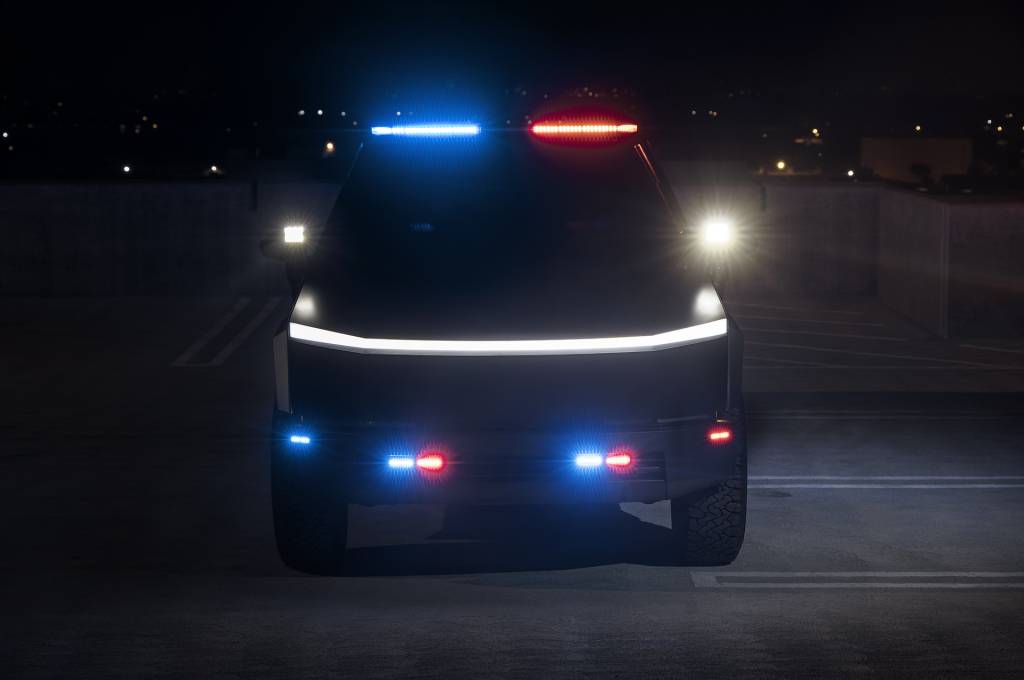
Tesla Cybertruck Next-Gen Patrol by UP.FIT
While UP.FIT’s offering is an aftermarket conversion, Ford announced an electric police truck based on the F-150 Lightning in 2022, offered through the automaker’s Special Service Vehicle (SSV) factory upfit program. In 2021 the automaker, which has traditionally controlled a large share of the police market, showed a Mustang Mach-E police testbed, and subsequently announced that the NYPD had expressed interest in Mach-E police cars.
But other than small-scale tests, police departments have largely avoided EVs due to a lack of options for suitable vehicles, with cost being a major issue, according to a 2022 report. The Cybertruck starts at $60,990 before any police conversion work.

FirstElement Fuel’s Shane Stephens on hydrogen trucks’ long-term advantage (Part II)
Although hydrogen may cost more initially, the FirstElement Fuel co-founder and chief business development officer argues hydrogen-powered trucks will be more efficient and viable than battery-electric counterparts at scale.

Alfa Romeo Junior EV might come to US
- Alfa Romeo Junior is the automaker’s first EV
- The Junior wasn’t slated for the U.S., but Alfa Romeo might shift its plans
- If the Junior comes to the U.S. it might only be sold in certain states
Alfa Romeo is considering bringing its Junior crossover—the automaker’s first EV—to the U.S., reports Automotive News Europe.
The Junior was unveiled in April as the Milano, but Alfa Romeo quickly changed the name due to an Italian law forbidding the use of names of Italian cities for products not manufactured in Italy. The Junior is slated to be built in Poland. Alfa Romeo said at the time that it had no plans to bring the Junior to the U.S., but it will now show the car to dealers here to gauge interest, head of product Daniel Tiago Guzzafame said in an interview with Automotive News Europe.
Even if it does get the green light for U.S. sales, the Junior may not be a 50-state vehicle. Guzzafame said Alfa Romeo is looking at sales in California and Florida—two states with fairly robust EV sales—as well as other states that follow California’s emissions rules.
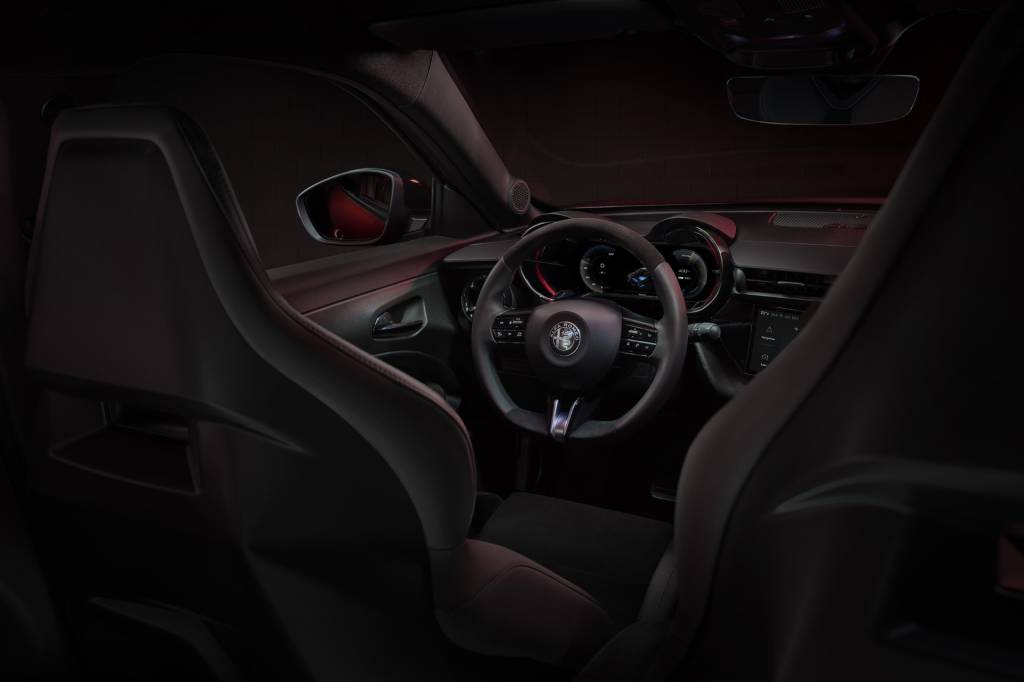
2025 Alfa Romeo Junior
The Junior is based on the same Stellantis eCMP2 architecture as the Jeep Avenger and Fiat 600, which aren’t planned for the U.S. All three are ideally sized for Europe, but fairly small for the U.S. At 164 inches long, the Junior is roughly 14 inches shorter than the Alfa Romeo Tonale plug-in hybrid crossover that is the automaker’s current entry-level model in the U.S.
This architecture can accommodate internal-combustion and all-electric powertrains, and the Junior will be sold as both an EV and mild-hybrid in Europe. But the only version being considered for the U.S. is the Junior Veloce, the most powerful of the all-electric variants, according to Automotive News Europe.
In Europe, the single-motor Junior Veloce generates 281 hp, getting it from 0-62 mph in 5.9 seconds and on to a top speed of 124 mph. Official ratings haven’t been published yet, but Alfa Romeo is reportedly expecting 205 miles of WLTP range from the same 54-kwh battery pack used in less-sporty Junior electric models.
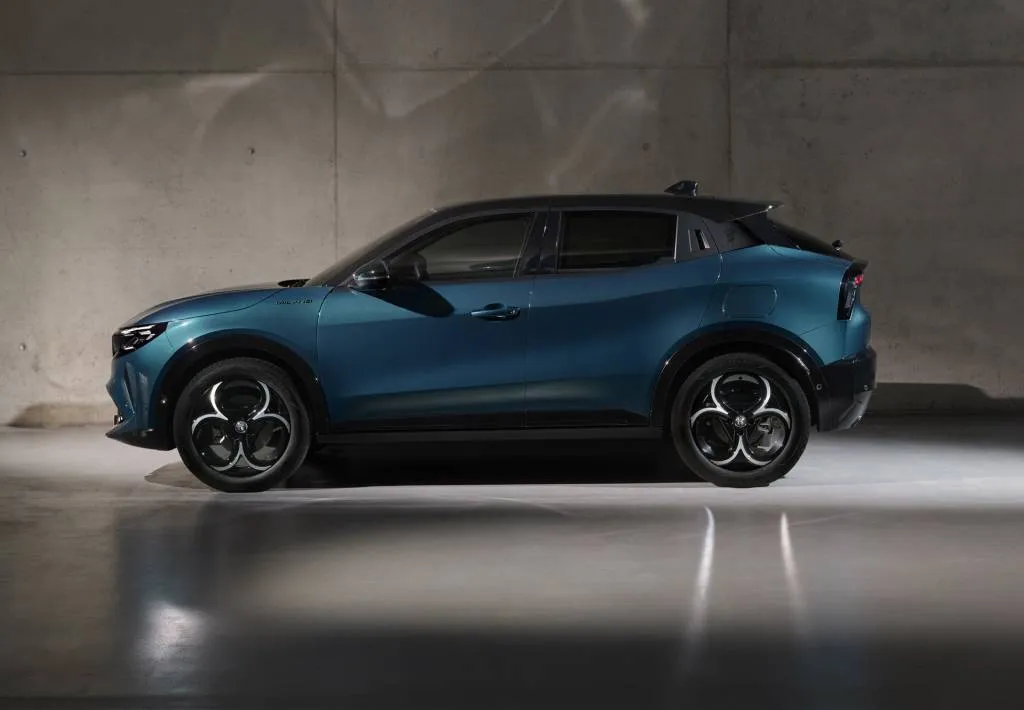
2025 Alfa Romeo Junior
It’s unclear where the Junior would be priced in the U.S., but in Italy it starts at 52,000 euros including shipping and a 22% sales tax, according to Automotive News Europe. An equivalent U.S. price would likely be around $42,000.
The Junior could have a price advantage over two other small premium EVs—the 2025 Mini Cooper electric and 2025 Volvo EX30—because it’s built in Poland rather than China. That means it’s subject to only a 2.5% tariff, compared to 102.5% for the Mini and Volvo, Automotive News Europe notes. That advantage would likely be temporary, though, as rivals adjust their plans to account for the tariff. Volvo has already delayed the U.S. launch of the EX30 until next year due to the tariff, as it moves production from China to Ghent, Belgium.

Toyota reportedly building battery plant for Lexus
- A new Toyota battery plant is reportedly in the works
- The Japanese plant would make batteries for Lexus EVs
- Toyota is building a battery plant in North Carolina as well
Toyota plans to build a Japanese EV battery plant for its Lexus luxury brand, the Nikkei business daily reported Friday.
Circulated by Reuters, the report said the new battery plant would be located in Japan’s southwestern prefecture of Fukuoka, but did not provide any other details. Toyota views Kyushu, the island where Fukuoka is located, as a central hub for its EV supply chain, according to the report.
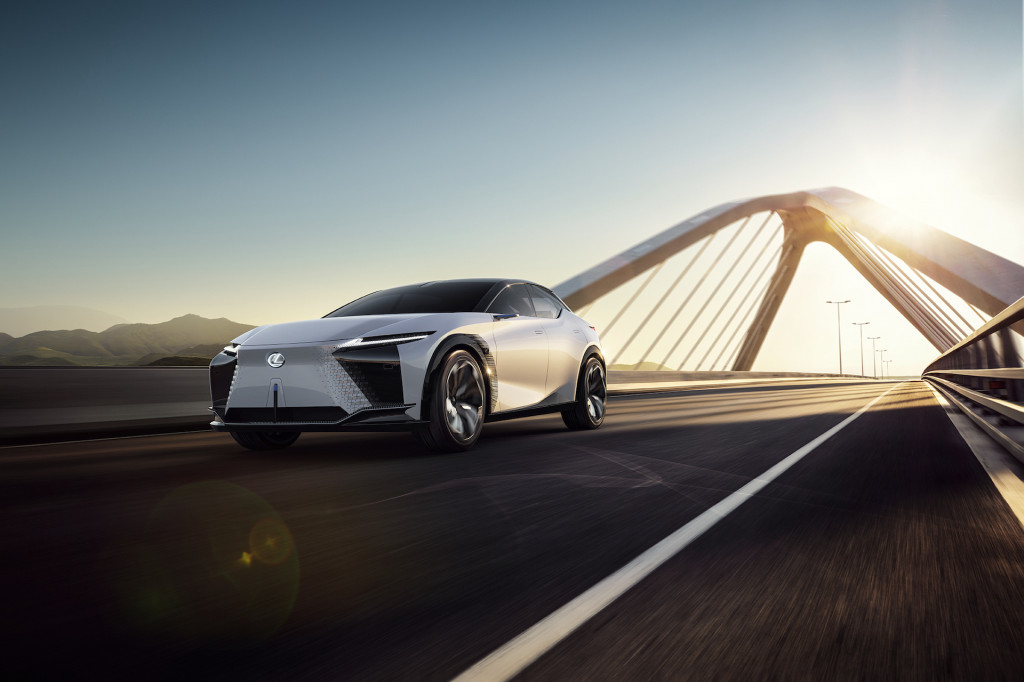
Lexus LF-Z Electrified concept
This report comes as other automakers pull back EV production targets. EV output is 45% below expectations, French supplier OPmobility SE said this week. General Motors recently announced that it would delay a goal to have production capacity for one million EVs, originally targeted for 2025, while Ford is re-tasking a Canadian assembly plant from EVs to internal-combustion Super Duty pickup trucks.
Toyota in 2023 said it would transform Lexus “into a battery EV brand” by 2035, but there may be some flexibility in the steepness of the ramp to that goal. Other luxury brands, including Audi, Mercedes-Benz, and Porsche, have recently discussed keeping combustion models in production into the next decade on the way to an all-electric future. And Toyota in 2021 indicated 85% of its U.S. vehicles would still have tail pipes in 2030.
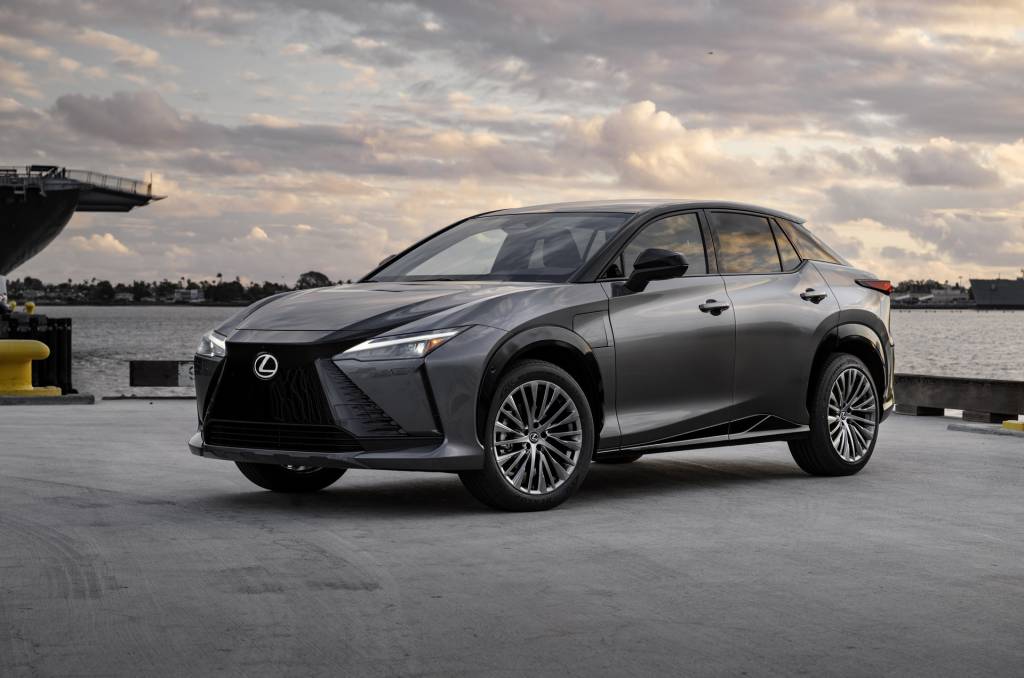
2024 Lexus RZ
While it has shown some striking concepts, the only Lexus EV currently sold in the U.S. is the RZ crossover, which tests the electric waters but isn’t a mass-market effort. Lexus added a less-expensive, longer-range version of the RZ for the 2024 model year called the RZ 300e with up to 266 miles of range, compared to a maximum 220 miles for the initial RZ 450e variant.
A Toyota battery plant in North Carolina is slated to start building cells for hybrids and EVs in 2025. The automaker has already announced a $2.5 billion expansion of that plant, which is still under construction, that will be used specifically to add capacity for EV battery production. Toyota also confirmed two three-row electric SUVs for U.S. production in 2025 and 2026.

EV startup Karma to debut GT-UV concept in Monterey
- Karma Automotive still exists
- The automaker plans to unveil a concept vehicle in August
- The concept might be an SUV
Karma this week said it will show up to next month’s 2024 Monterey Car Week with a new concept vehicle whose description suggests it will be an SUV of some sort.
The concept is referred to as the GT UV Design Study, though that isn’t its actual name. The debut is scheduled for Aug. 16 at The Quail, A Motorsports Gathering, one of the premier events of Monterey Car Week.
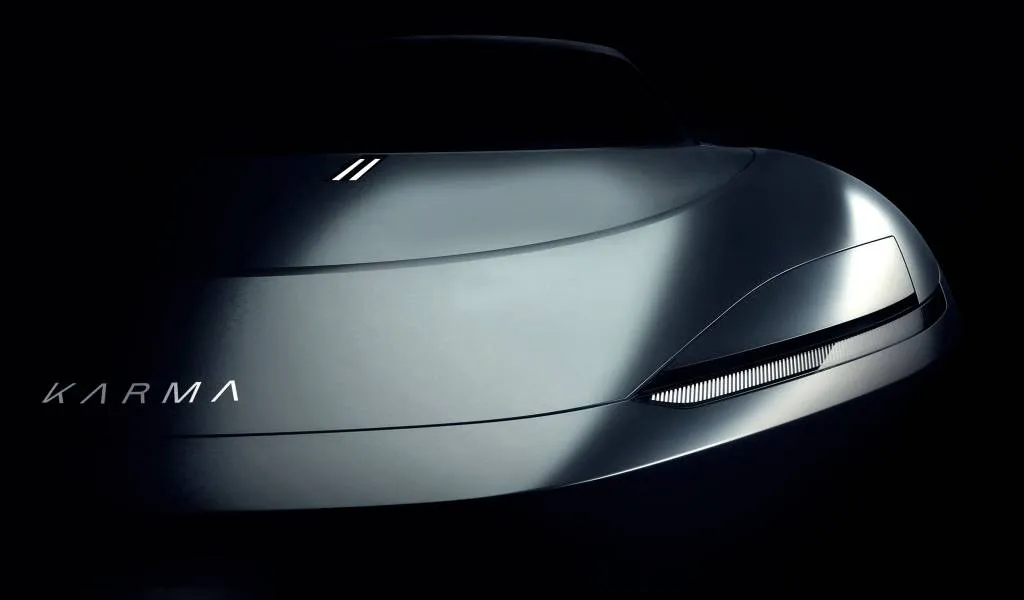
Teaser for Karma GT-UV Design Study debuting during 2024 Monterey Car Week
Karma describes the concept as a grand touring utility vehicle with four seats and multi-terrain capability. Teaser photos released alongside Monday’s announcement suggest we might be looking at an SUV of some sort, and a very sleek one at that.
Joining the GT UV Design Study on Karma’s stand at The Quail will be the previously revealed Kaveya sports car concept and Gyesera sport sedan.
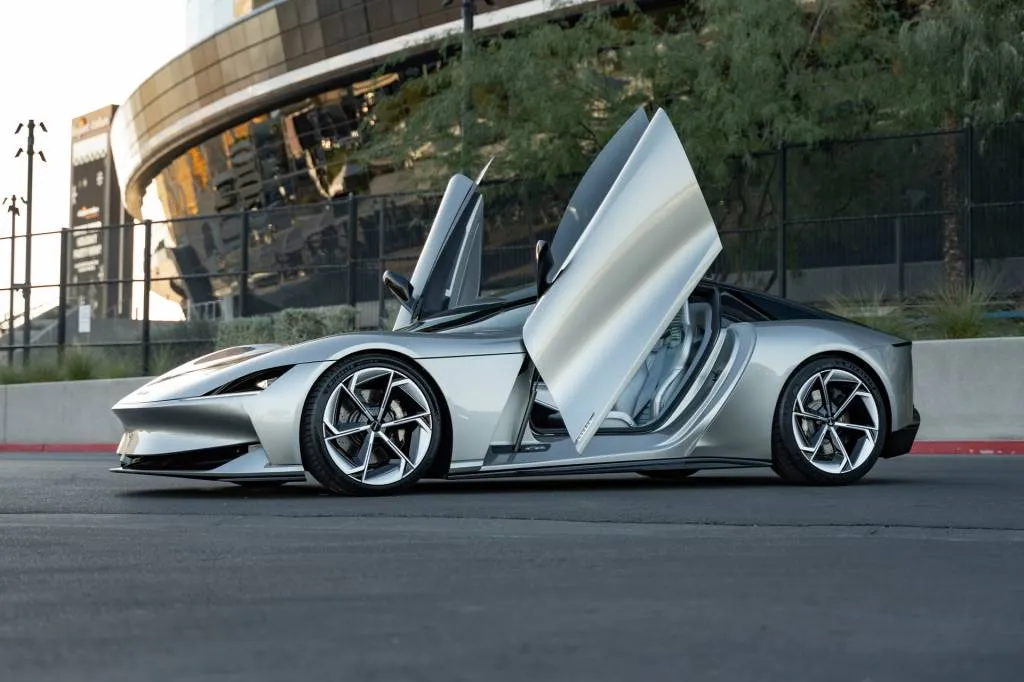
Karma Kaveya concept
The Kaveya was first shown in 2023 but the upcoming version will feature the interior of the production model that Karma now expects to go on sale in 2026, or a year later than previously announced. It will offer up to 1,000 hp and come with a starting price of around $300,000.
The Gyesera was shown in March and is on track to start sales later this year though this may also be pushed back into 2025. It will offer 120 kwh of battery capacity, a maximum 590 hp, and a starting price of around $175,000, Karma has previously said.
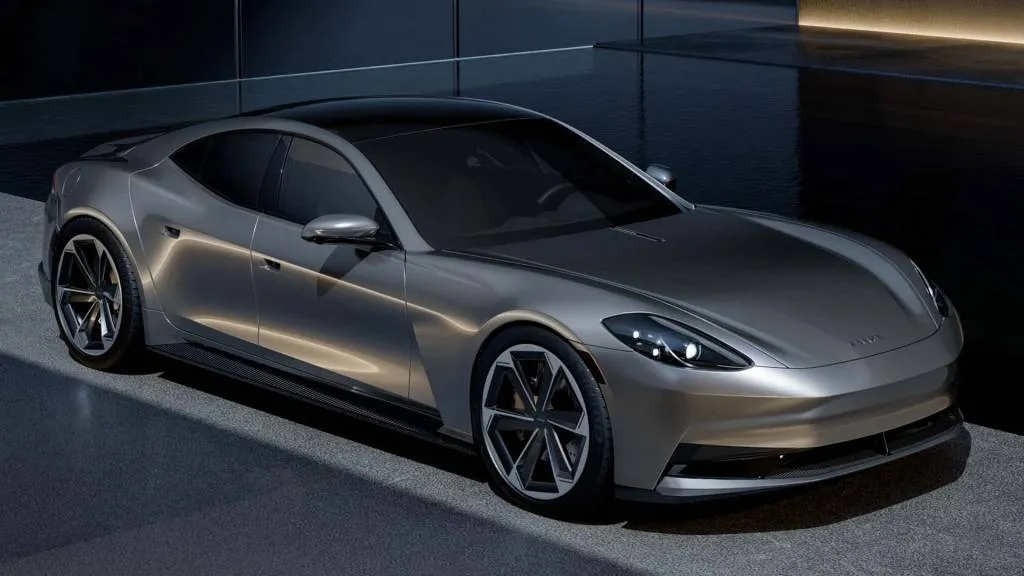
Karma Gyesera
Karma is the company born out of the remains of the original Fisker Automotive that went bankrupt in 2013, and its first and sole model currently available is the Revero, a heavily updated version of the Fisker Karma. Like the Fisker Karma, the Revero is a series plug-in hybrid, but all future models from Karma will be EVs.
Karma only a few years ago planned to offer luxury vehicles alongside commercial vehicles, though the company now plans to focus exclusively on luxury vehicles with a high level of personalization. It wants to position itself as an American ultra-luxury brand, not unlike Duesenberg more than a century ago. Production of the new Karmas will be handled at the company’s plant in Moreno Valley, California, where the Revero is built.