
Category: General

Audi A6 Sportback E-Tron evolves the electric car
- A6 and S6 Sportback E-Tron electric cars arrive in North America next spring or summer
- The first cars using Audi’s new platform cut a sharp shape
- A 94.9-kwh usable battery pack supports three models
The Audi A6 and S6 Sportback E-Tron join the Porsche Macan EV and Audi Q6 E-Tron SUVs as the first cars to utilize Volkswagen Group’s new Premium Platform Electric (PPE).
These new underpinnings provide more range, promise better driving dynamics, optimizes the interior space, and introduces a new digital dash.
A first drive of the Q6 E-Tron SUV earlier this summer and a media preview of the A6 Sportback E-Tron in mid-July in Munich, Germany, have shown Green Car Reports that PPE positions Audi to be a leader in electrification.
Technically, Audi was there first. The Audi E-Tron launched the brand’s electric ambitions in 2018 for the North American market. The E-Tron joined the more expensive Tesla Model X and discontinued Jaguar I-Pace as the first electric crossovers to market. Audi played it safe by making the E-Tron as much like the combustion Q8 as possible, and Audi did it so well that it earned Green Car Reports Best Car To Buy 2020.
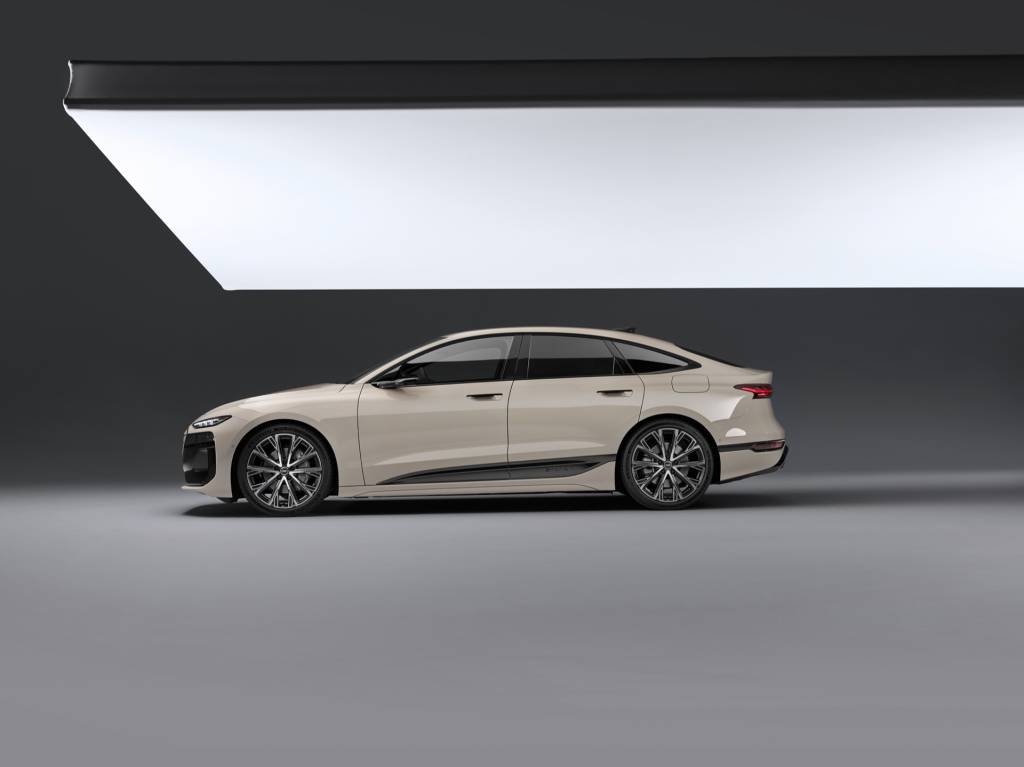
New Audi A6 E-Tron Sportback
So much has changed in five years, including a new 2024 Q8 E-Tron. While the Q8 showcases how much can change for a single electric model, the A6 and related Q6 show how much more is possible on a dedicated platform used not just on several model lines but across VW AG’s many brands.
The flexible PPE and its 800-volt electric architecture will be used on at least 10 electric models launched globally in the next few years.

Gernot Döllner
“The future will be an all-electric portfolio,” Audi CEO Gernot Döllner confirmed in a press briefing in Munich. “We have a lot of debate in Europe about the speed of that. We’ll be flexible for the next 10 years.”
By 2027, Audi plans to have a battery electric offering in every core segment, and in two years time the brand will have a new combustion portfolio. Audi still forecasts a fully electric lineup by 2033, even as automakers ranging from Cadillac to Mercedes-Benz and even its Porsche family member walk back those all-electric targets. The A6 and S6 hatchbacks will rival existing models ranging from the Mercedes-Benz EQE, BMW i5, and Tesla Model S.
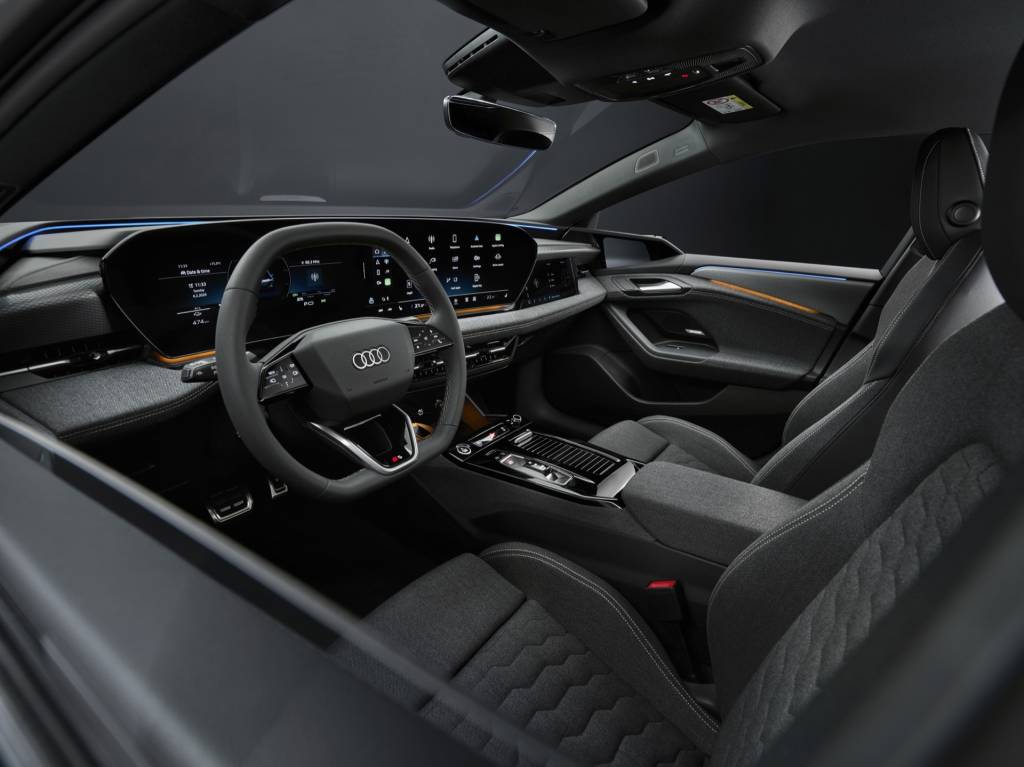
New Audi A6 E-Tron Sportback
In the meantime, the new A6 E-Tron illustrates Audi’s new naming convention, where even-numbered models are electric and odd-numbered models are combustion vehicles, also on a new Premium Platform Combustion heralded by the 2025 Audi A5.
“We will need these vehicles to bridge to the all-electric future,” Döllner iterated.
For the time being, Audi holds fast to the balky E-Tron naming convention for EVs.
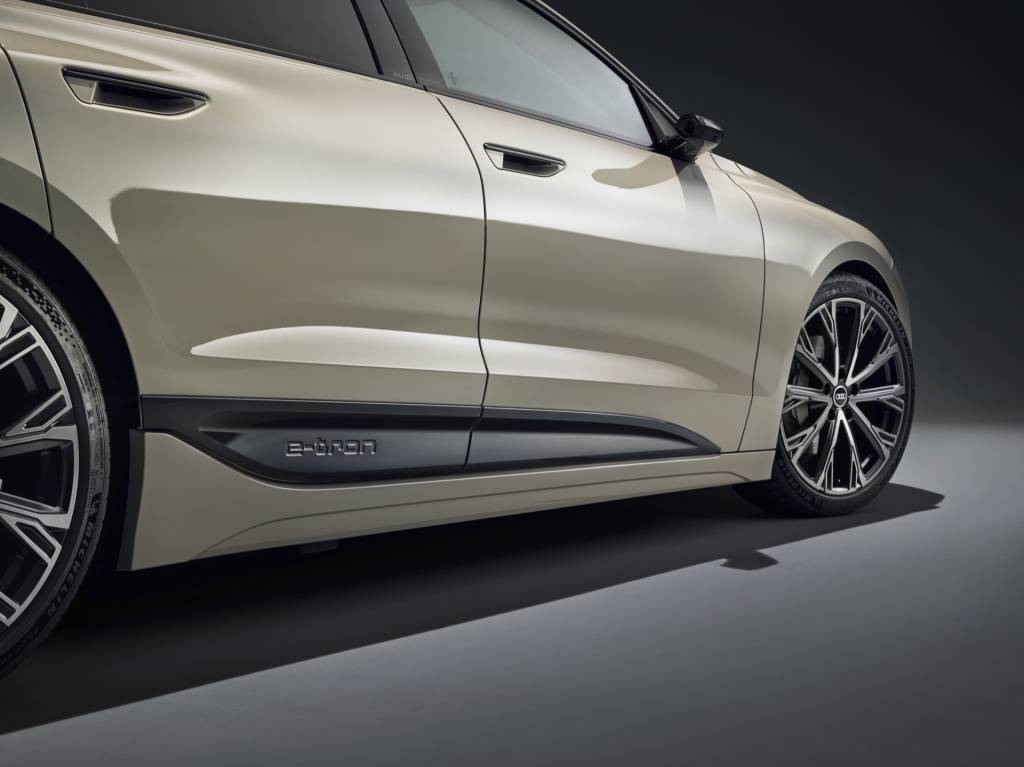
New Audi A6 E-Tron Sportback
Audi A6 Sportback E-Tron builds a bridge
The 2025 A6 E-Tron spearheads Audi’s mainstream electric sedans, excepting the $130,000 E-Tron GT that’s also refreshed for 2025. The electric A6 embodies the understated poise that has defined Audi design for decades.
The hood cascades down between slim daytime running lights bejeweled with a three-dimensional design. Customizable light signatures crown a solid grille studded with faux levers as part of Audi’s “inverted grille” design, where the lower grille is open except for the radar housings. Plastic corners with recessed intakes hold up the LED headlights in a raccoon mask of black. A splitter lips the bottom. The grille optimizes airflow while minimizing drag, Audi tells us, and helps make the A6 Sportback E-Tron the most aerodynamic vehicle in the VW Group family with a 0.21 coefficient of drag.
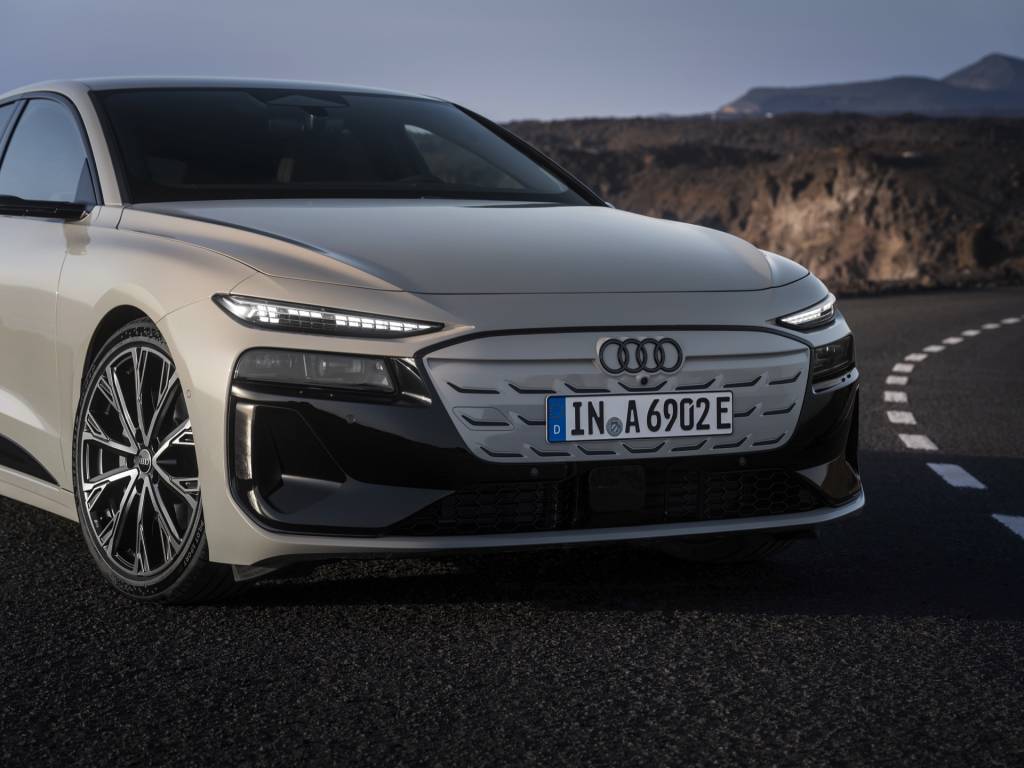
New Audi A6 E-Tron Sportback
You may notice the welcome light show more. With the optional light package, the four-ring logo illuminates in red at the tail and white on the nose. Brush your hand on the hood above the rings up front and it pops the frunk, which is large enough to fit a stuffed backpack or the cable for the 9.6-kw onboard charger. In the rear, a light arrow appears on the ground to wave your foot and pop the hatch with no hands.
Walk up to the car and it illuminates like a good pup sitting and waiting, its tail wagging, instead of other automakers’ light shows that can be too much, like a pup jumping all over you. In the back, ten OLED panels and a light bar span the raised hatch and integrated spoiler. It too has eight customizable light signatures, like the front, and in some markets the taillights can flash a hazard triangle to reflect danger up ahead or it can generate other images in concert with whatever the algorithms are picking up from the five onboard computers supporting Audi’s digital architecture.
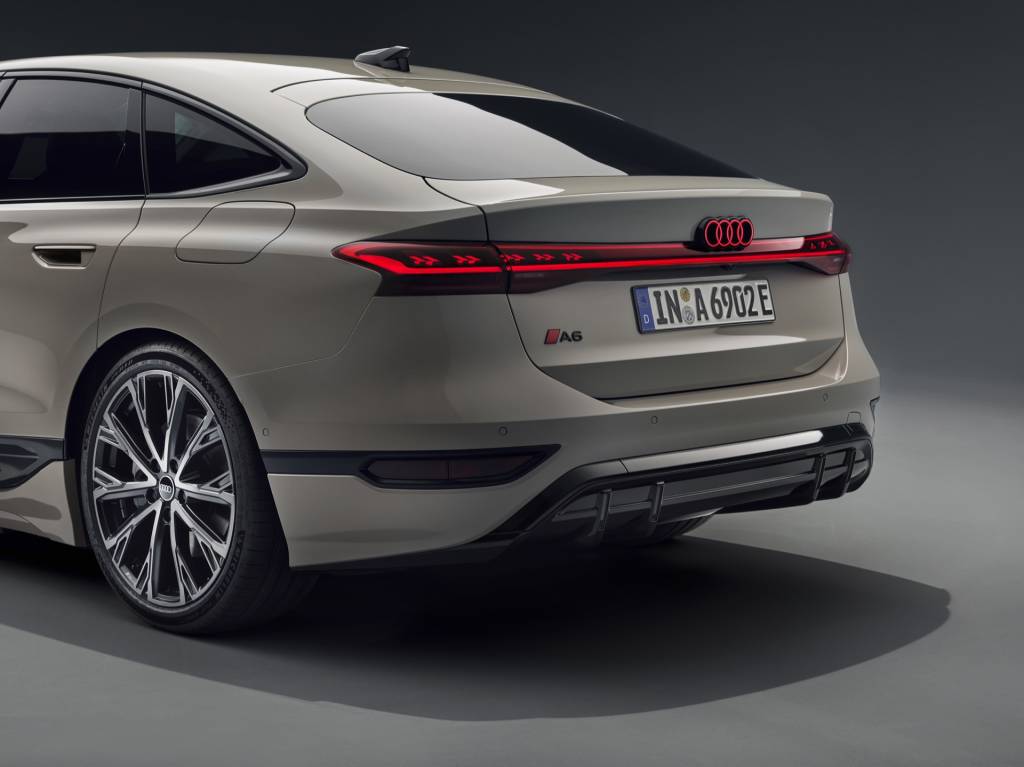
New Audi A6 E-Tron Sportback
There’s a lot promised, and features such as car-to-X communications and the adaptive matrix LED headlights won’t be available for North America for now, but this evolution of using the taillights to communicate to other drivers could be far more significant than the third brake light mandated in the U.S. in 1986.
Getting other automakers and cars to speak the same language is a separate hurdle.
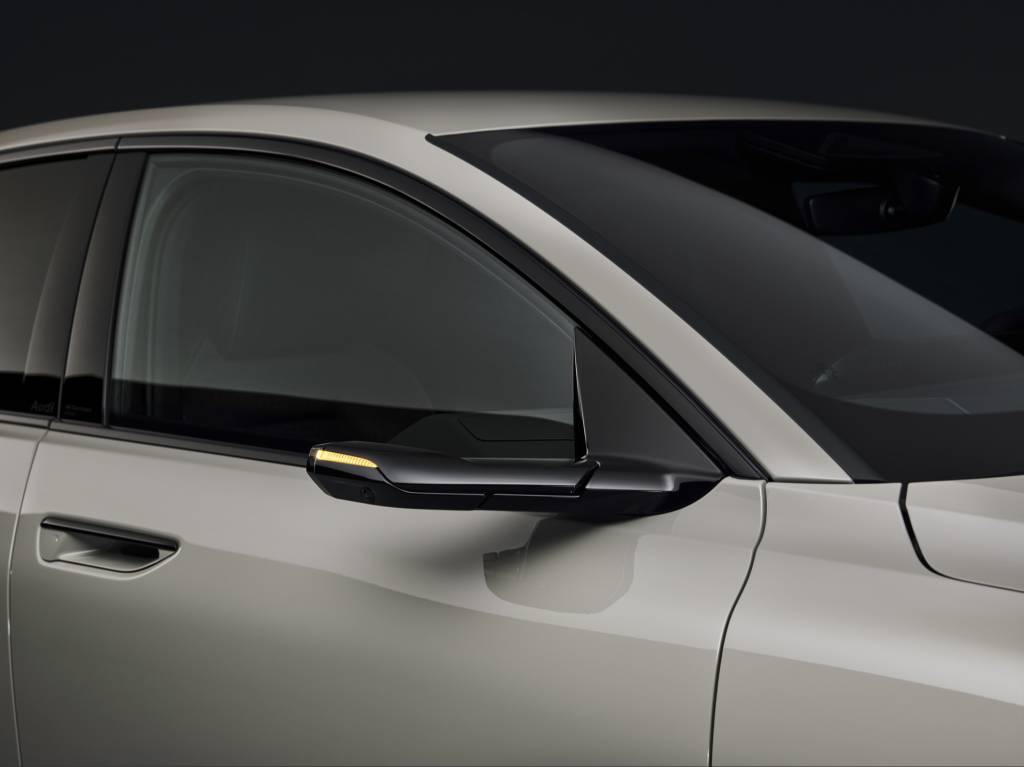
New Audi A6 E-Tron Sportback
Even the customizable light signatures are subject to different U.S. regulations; they can only be changed when you’re parked. Blame U.S. regulators for the chunky side mirrors instead of the slim side-mirror cameras available in other markets; that ups the coefficiency of drag from 0.21 to 0.22 in North America.
Another non-American thing? The gorgeous Avant wagon model, muscular in all the right places yet toned on the ends, won’t come to North America.
In profile short overhangs and slim wheel gaps house 19-inch wheels standard on the A6, 20-inchers standard on the S6, or optional 21-inch wheels. The curved roofline and raised haunches lend it the sophistication of a grand tourer but with a prominent Sportback rear. A black E-Tron blade breaks up the rocker panels and signals the thick, nearly 6-inch floor housing the 100-kwh battery pack (94.9 usable).
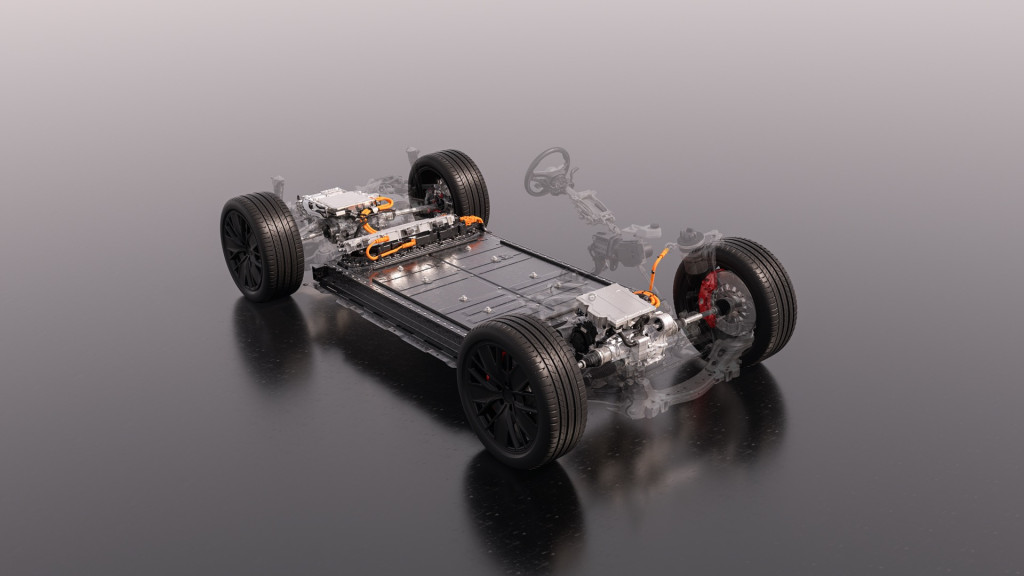
PPE platform for VW Group, developed by Porsche/Audi
Audi A6 Sportback E-Tron specs and the PPE
- A6 Sportback E-Tron RWD, 362 hp, 0-60 mph in 5.2 seconds
- A6 Sportback E-Tron Quattro, 422 hp, 0-60 mph in 4.3 seconds
- S6 Sportback E-Tron Quattro, up to 543 hp, 0-60 mph in 3.7 seconds
Underneath its toned Sportback skin, the A6 E-Tron gets most of the same mechanicals as the Q6 E-Tron SUV that marked Audi’s first big evolutionary EV lift.
When it goes on sale here next spring or summer as a 2025 model (we’re confident it will be changed to a 2026 model) it will be offered in three variants bulleted above.
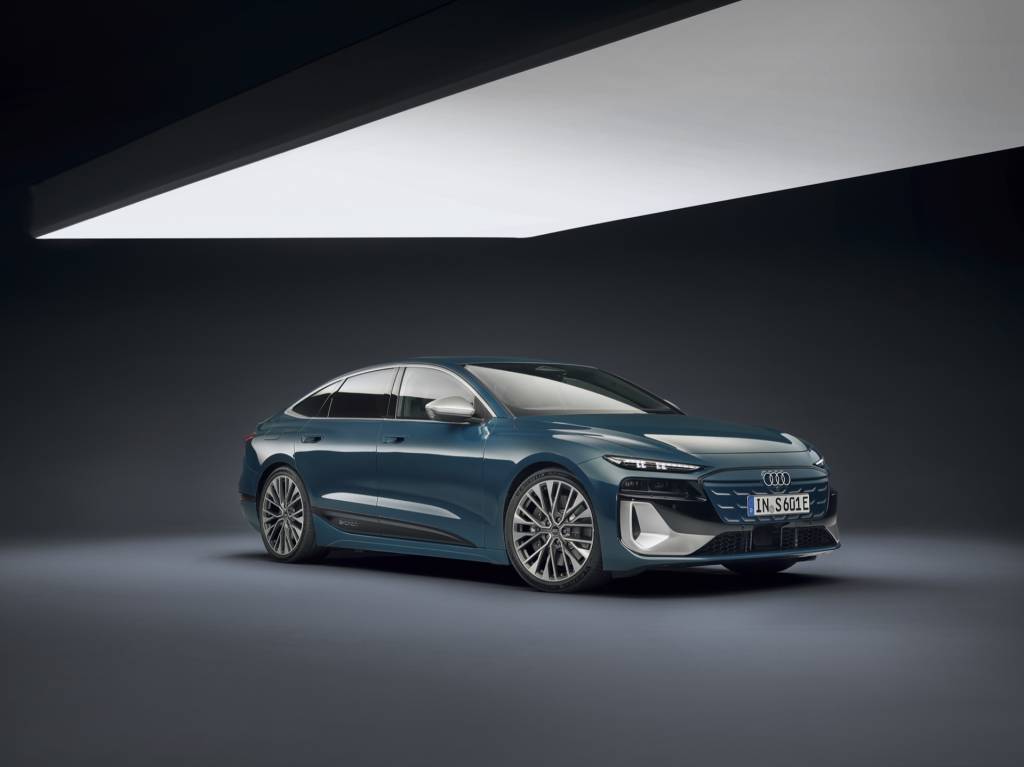
New Audi S6 E-Tron Sportback
The low-set battery pack consists of 12 modules of 15 prismatic cells made of more energy-dense nickel-cobalt-manganese lithium-ion cells. The A6 E-Tron uses a 280-kw permanent magnet synchronous motor in back as the main propulsion unit, while a 140-kw induction motor on the front axle helps with takeoff and supplements heavy power demands. The front motor spins freely, when cruising for greater efficiency.
New motor designs weigh less and require about 30% less installation space than the motors used in the Q4 and Q8, with more efficiency and about half of the friction losses versus Audi’s last-gen motors. Curb weight, range estimates, torque, and other specs were not finalized for the A6.
Audi fits the S6 with an air suspension with adaptive dampers. Audi says the front and rear tires will be sized differently, wider in the rear, with the demo S6 cars wearing Michelin Pilot Sports 245/40R21s up front and 275/35R21s in back. We don’t know if that will carry over to the U.S.
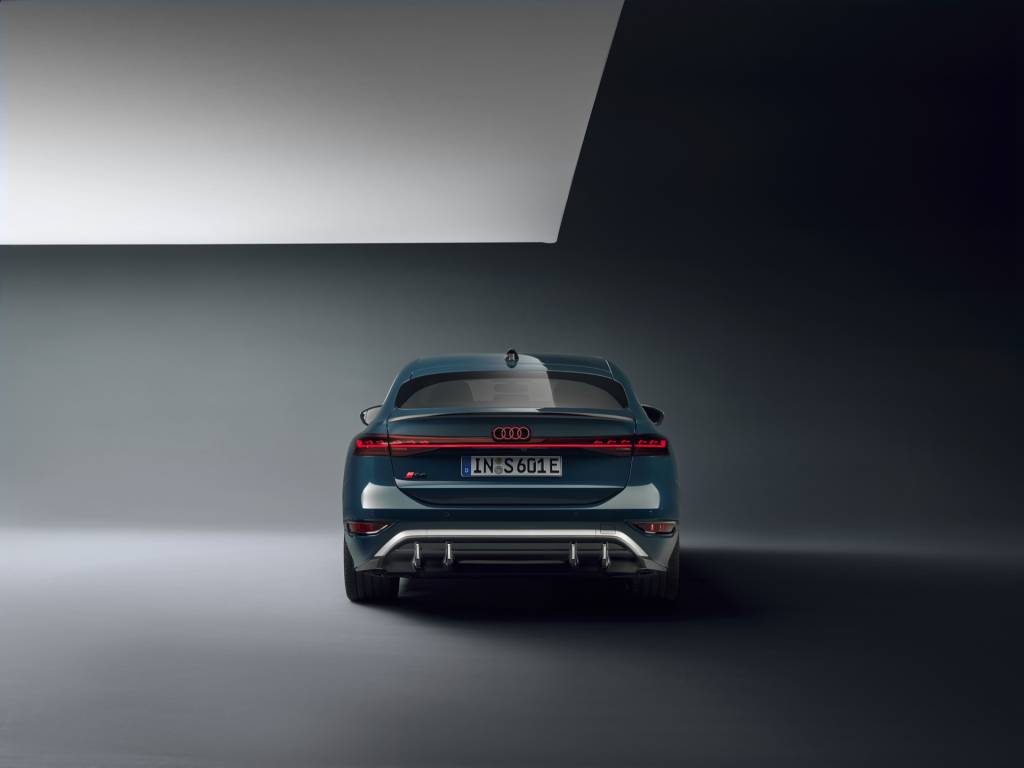
New Audi S6 E-Tron Sportback
A6 Sportback E-Tron braking
Audi says that 95% of everyday braking in the A6 E-Tron can be handled by both motors, and it can recuperate up to 220 kw. The Q6 can capture up to 0.25 g of deceleration, but Audi didn’t have that spec finalized for the A6. Paddle shifters can adjust the regen levels, from coasting to grabby, or the “B” mode in the console gear selector enables one-pedal driving. An Auto mode modulates regen braking from the camera system reading the road and traffic ahead.
Audi did not want to talk range, especially for the U.S., but in European spec it targeted a range of 750 kilometers, or 466 miles on the very generous WLTP cycle. Maybe the A6 E-Tron RWD will reach 375 miles on the EPA cycle?
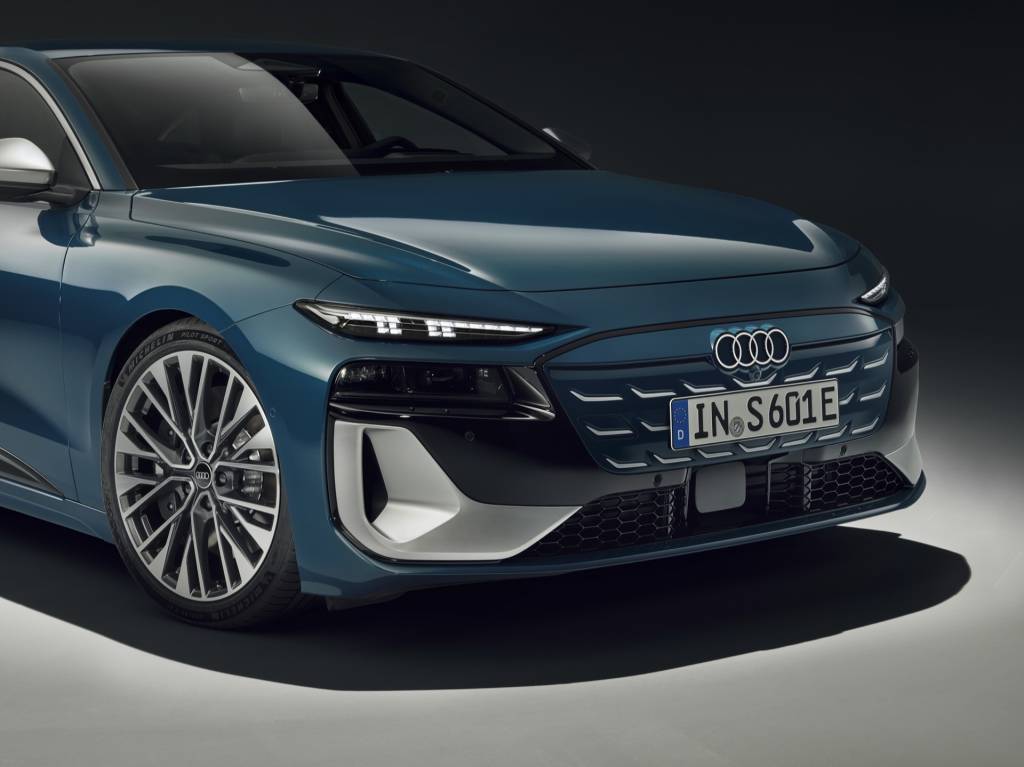
New Audi S6 E-Tron Sportback
A6 Sportback E-Tron charging
The PPE’s 800-volt system accepts a DC fast-charge of up to 270 kw, if you can find a public charger pumping electrons at that rate. Audi estimates a 10-80% state-of-charge in 21 minutes, and the first 10 minutes of charge at that rate could recoup nearly 135 miles of range. That’s fast.
Owners can use Plug & Charge at Electrify America stations that automatically connect to your account, so you don’t need to swipe a card. Even at an EA station rated at 135 kw, the 800-volt charging system virtually splits into twin 400-volt circuits that can charge in parallel in 35 minutes. At home, on a 50-amp 240-volt AC circuit, the A6 E-Tron’s 9.6-kw onboard charger will fill the battery in about 10 hours.
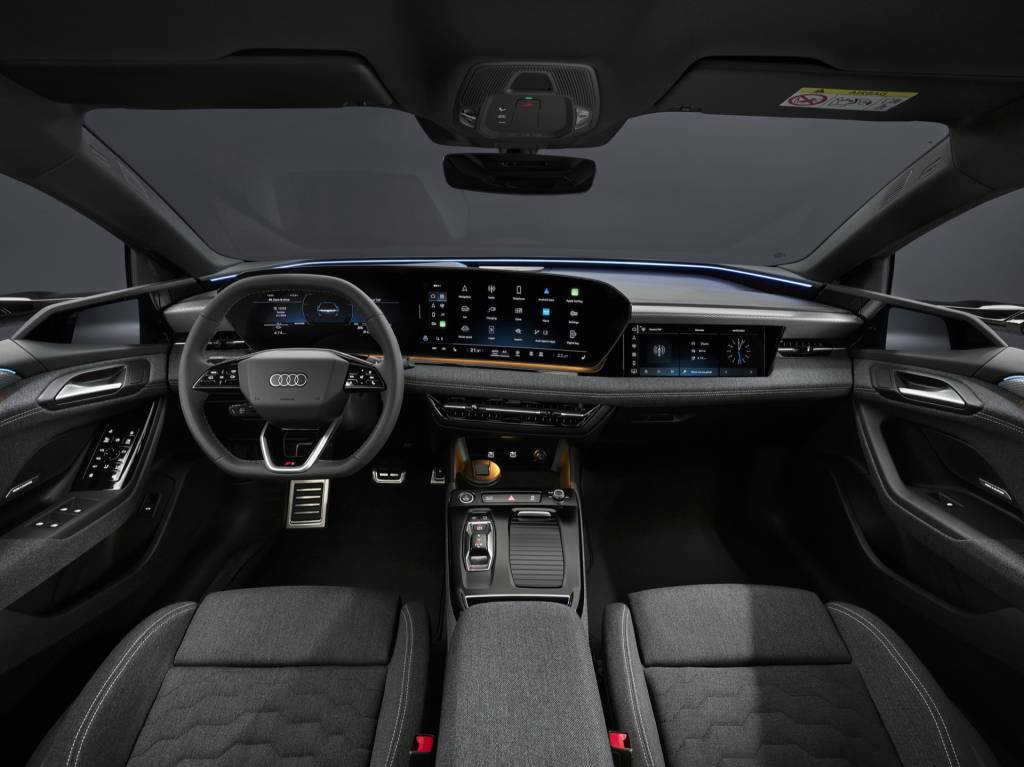
New Audi A6 E-Tron Sportback
Audi A6 Sportback E-Tron interior space and digital dash
- A6 Sportback E-Tron measures 58.7 inches tall, 194 inches long, 75.7 inches wide
- A6 Sportback E-Tron has a 116-inch wheelbase, and plenty of room for four adults
- The hatch measures 26 cubic feet or 40 cubic feet with the rear seats folded
The new A6 E-Tron is about the same length as the outgoing gas model but it’s at least an inch taller and wider, and I could fit easily in the rear seats, with a fist-full of headroom for my 5-foot-8 stature.
A panoramic sunroof with six grades of opacity opens up the space, and the demo cars showcased Audi’s finest quilted leather.
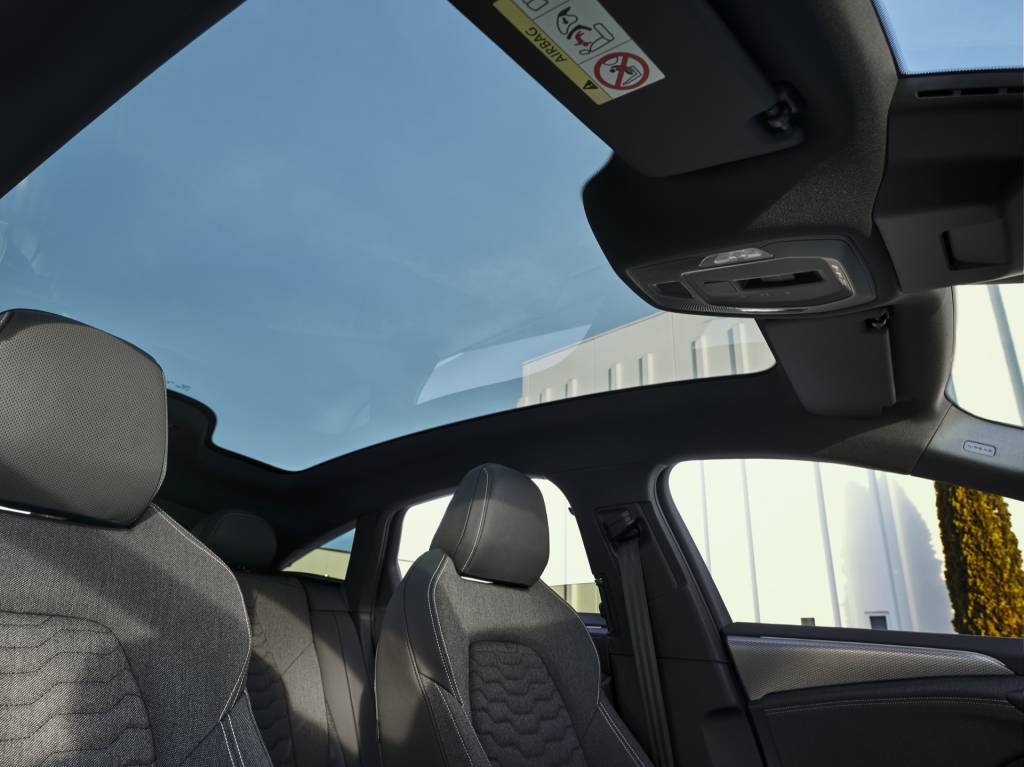
New Audi A6 E-Tron Sportback
The A6 E-Tron embraces the brand’s “Digital Stage” rolling out in new models on these new platforms, including the Q6 E-Tron and the new Audi A5 sedan. The curved panoramic display starts with the crystal clear 11.9-inch digital instrument cluster that shows vehicle info and whatever the exterior sensors are picking up. It holds a small message board of colored dots and dashes that reflect what the voice assistant is processing. The same system in the Q6 had good fidelity and, aided by AI, it can process more than 800 vehicle commands and general interest questions.
The voice commands lessen the need for the 14.5-inch touchscreen interface that evolves Audi’s already excellent graphics. Users can easily press and drag apps to their desired position, rearrange info hierarchies, and customize tile displays. Beside it is a 10.9-inch passenger touchscreen for private streaming or to help navigate; the passenger can override the nav settings from their screen. One cool available feature will be a 20-speaker Bang & Olufsen sound system that includes headrest speakers creating two sound zones—one for the driver to listen to nav directions, for instance, without disrupting the passenger’s Netflix and chill.
Pricing and full U.S. specs won’t be released until closer to late spring, but in Germany the A6 Sportback E-Tron Quattro will cost 75,600 euros, or about $82,000, and the S6 slots at 99,500 euros, or about $108,000. We’ll see.
Audi paid for lodging and airfare for Green Car Reports to present this firsthand report.


2024 Ford Mustang Mach-E GT Performance Upgrade unlocks power for $995
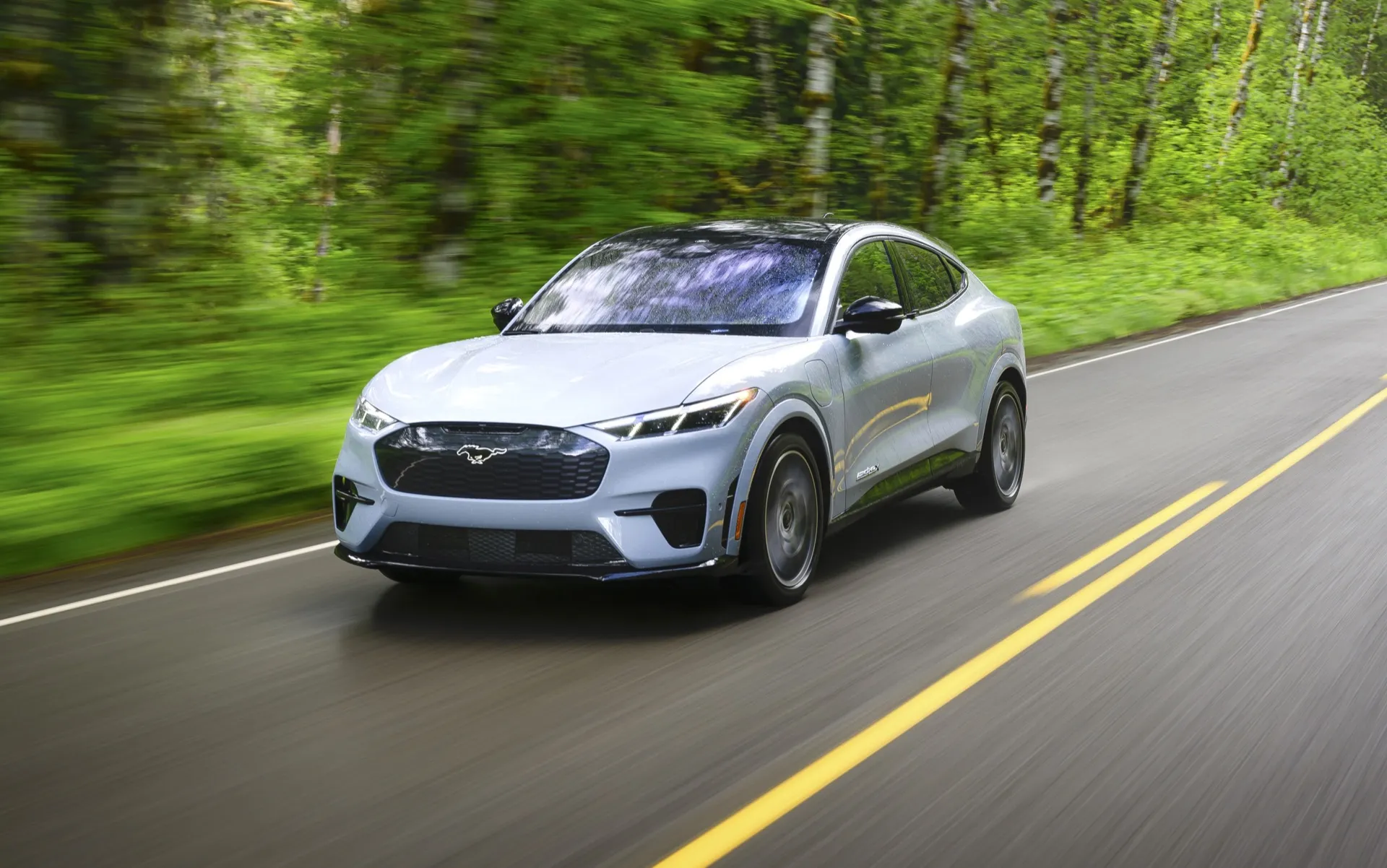
Ford Mustang Mach-E GT owners can make their cars quicker with a few taps of their phone and a one-time charge.
On Tuesday, Ford announced a Performance Upgrade for the 2024 Mustang Mach-E GT that increases torque and drops the electric crossover’s 0-60 mph and quarter-mile times. The performance boost costs $995 plus tax.
The Performance Upgrade increases the Mach-E GT’s torque rating by 100 lb-ft, which takes output from 600 to 700 lb-ft. Horsepower remains unchanged at 480.
The increase in torque and recalibration subsequently drops the Mach-E GT’s quarter-mile time of 12.4 seconds and 0-60 mph sprint of 3.8 seconds down to 11.8 seconds and 3.3 seconds, respectively, according to Ford.
Ford spokesperson Sam Schembari told Green Car Reports the update is only available for the 2024 Ford Mustang Mach-E GT.
The GT Performance Edition, which used to sit above the Mach-E GT in the lineup, had 634 lb-ft of torque and a 0-60 mph time of 3.5 seconds. The GT Performance Edition was discontinued after 2023.
The added torque comes standard on the Mach-E Rally.
The Performance Upgrade can be optioned when buying the Mach-E GT, but current owners can now buy the package via the FordPass smartphone app. Upon purchase the update will automatically unlock the increased performance for the EV “within minutes,” according to Ford.
Ford upgraded the Mustang Mach-E lineup for 2024 with faster charging and more range on some trims. The 2024 Mach-E GT gained 10 miles of EPA-rated range for a total of 280 miles.
A new in-house-designed motor and thermal changes were swapped in for 2024 as well.
Ford said the 2024 Mach-E fast-charges from 10-80% in 36.2 minutes, which is 8.8 minutes quicker than when the Mach-E launched.

Mercedes CLA EV crossover may rival Tesla Model Y in 2026
- Mercedes could have a Tesla Model Y competitor in 2026
- Production will reportedly begin in October 2025
- The compact crossover will replace the EQB EV in the lineup
Mercedes-Benz may be prepping an electric version of its upcoming CLA-Class sedan, along with a related crossover SUV.
On Tuesday, Automotive News reported that an electric version of the Mercedes-Benz CLA four-door sedan will enter production. A crossover based on the electric CLA might follow the sedan and arrive in the first half of 2026.
AutoForecast Solutions has said production of this electric CLA-based crossover, which is being viewed as a direct shot at the Tesla Model Y, is expected to begin in Rastatt, Germany in October 2025.
The Model Y-fighting Mercedes carries an internal codename of X174. Mercedes won’t speak to future product plans.
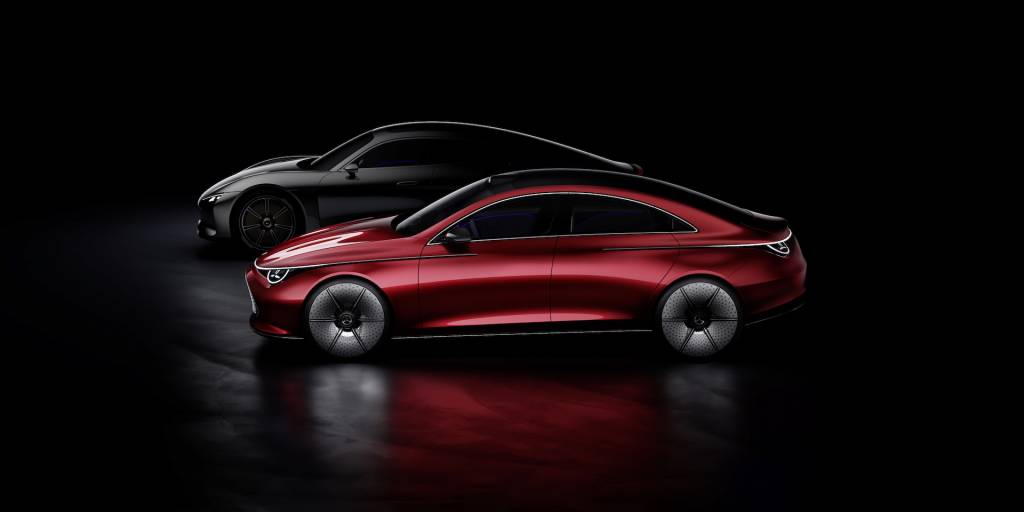
Mercedes-Benz Concept CLA-Class
Mercedes-Benz previewed the upcoming electric CLA coupe in 2023 with the Concept CLA-Class. The concept was meant to show off the engineering of Mercedes-Benz Modular Architecture (MMA), which is to serve as the base for four compact EVs in multiple body styles. One will be the rakish four-door sedan while another will be the compact crossover bearing the codename X174.
The crossover would likely replace the current EQB EV crossover, which is an EV based on today’s gas-powered GLB. AutoForecast Solutions Vice President Sam Fiorani told Automotive News the EQB, which launched in 2022, will not be replaced when production ends in late 2025.
The MMA platform features an 800-volt electrical architecture that is said to enable DC fast charging at up to 250 kw, which would recover up to 248 miles of range in 15 minutes. The electrical architecture also includes vehicle-to-grid (V2G) and vehicle-to-home (V2H) capability.
Mercedes touted that the MMA platform was designed around a “remarkably small” battery pack with multiple chemistries. Base models will use lithium iron phosphate (LFP) chemistry while upper-end models will use an anode made with silicon oxide. The pack design is said to be lighter weight than today’s batteries and provide greater structural stiffness for the vehicle.
Mercedes developed an EQXX concept that went 746 miles on a single charge in 2022. The focus of that car was all about efficiency. The Concept CLA was said to use the silicon-carbide power electronics, battery-cell packaging, and heat pump all derived from the EQXX.
In February Mercedes delayed its EV sales targets that would’ve had the automaker going all-electric in some markets by 2030. Automotive News said a new gas-powered CLA will arrive in 2026 after the EV model. The gas and electric CLAs will reportedly share similar styling and both ride on the new MMA platform.

First all-electric police fleet coming to California
- The City of South Pasadena’s police fleet is going all electric
- The fleet will consist of 20 EVs with 10 Tesla Model Ys and 10 Model 3s
- The project will cost the city $1.85 million
Even cop cars are going electric.
On Monday, the South Pasadena Police Department in California announced it’s the first police fleet in the U.S. to go all electric.
The department will completely replace its gas-powered vehicles with EVs.
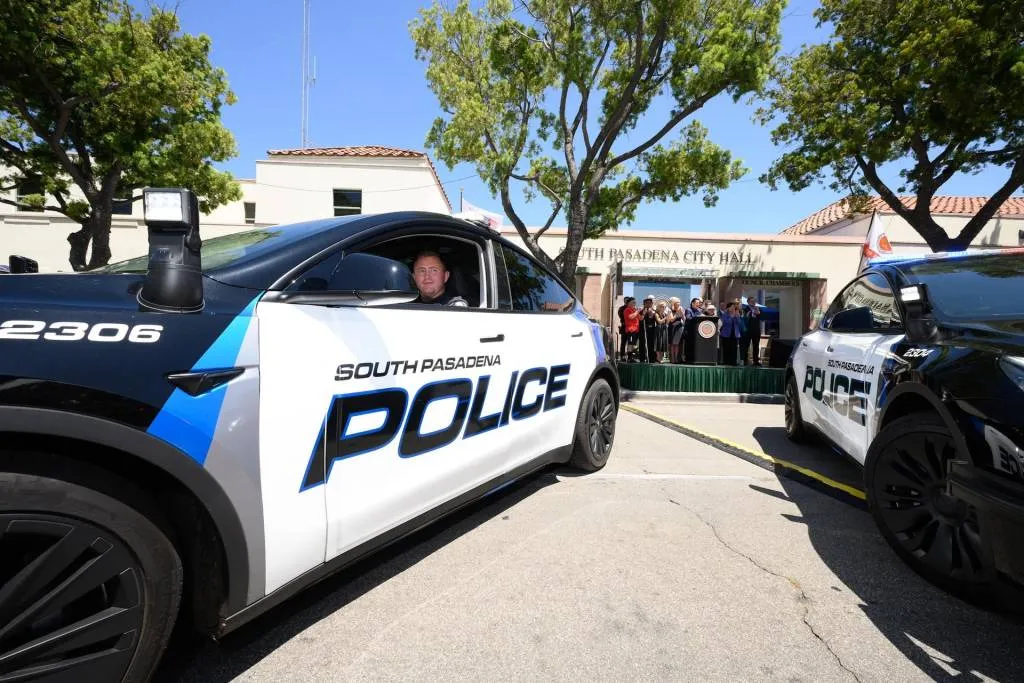
South Pasadena electric Tesla police cars – Photo via City of South Pasadena Facebook fan page
A fleet of 20 Teslas will become the departments latest cop cars. The department will acquire 10 Tesla Model Ys as patrol vehicles and 10 Model 3s for detective and administrative duties. Photos of the electric police cars were posted to Facebook by Supervisor Kathryn Barger and reshared to the City of South Pasadena’s fan page.
UP.FIT, a division of Tesla tuning house Unplugged Performance, will up-fit the Teslas for patrol and administrative police duty.
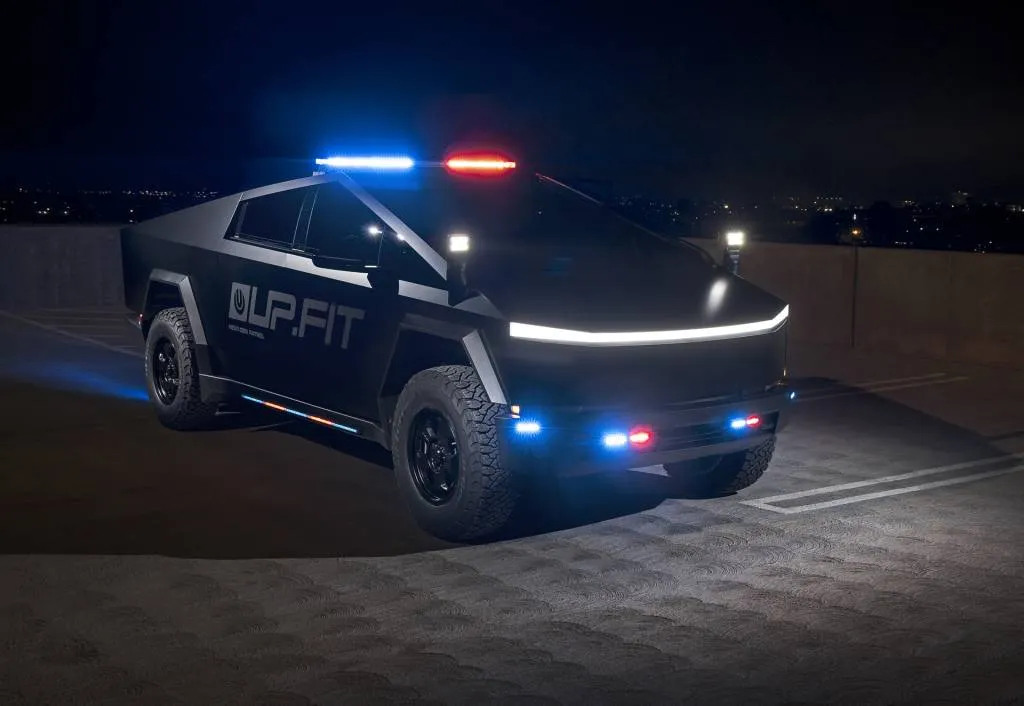
Tesla Cybertruck Next-Gen Patrol by UP.FIT
The news from Pasadena comes just after the Irvine Police Department announced it will soon take delivery of a Tesla Cybertruck, which will also be uplifted for police duty by UP.FIT.
A bank of 34 electric chargers were installed at South Pasadena City Hall to ensure the cars are charged. More chargers are planned for the the police station, fire station, and it will all be backed up by a solar-powered system with battery storage to ensure power delivery during power outages.
“This transition reflects the city’s vision of a sustainable future based on both sound fiscal management and environmental stewardship,” said South Pasadena Mayor Evelyn Zneimer.
Zneimer said the city’s city council is behind the decision to have a “21st century police force.”
South Pasadena Police Chief Brian Solinsky said, “switching to these vehicles offers the police department the opportunity to acquire a cutting-edge vehicle fleet.”
City staff expect the transition to save about $4,000 per vehicle on energy costs, with more savings on vehicle maintenance. The EV fleet is expected to be at least half the per-mile cost of the gas-powered cars used today.
Over half the funding for the project is coming from partners. Clean Transportation Funding from the Mobile Source Air Pollution Reduction Review Committee will contribute nearly $500,000 to the program. Approximately $530,0000 in work will be covered by Southern California Edison under the Charge Ready program. Clean Power Alliance’s Power Ready Program is providing no-cost solar and battery storage systems. The city said its net expense for the project will be $1.85 million, which includes the cost of the EV chargers and lease payments for the Teslas.
Historically police departments have wanted to electrify their fleets but noted there are few vehicle options to do so. Most cited cost being the major issue.

Next-gen VW EVs reportedly delayed by software issues
- Volkswagen’s reportedly having software issues with its next-gen EVs
- The software issues could lead to years-long delays for next-gen vehicles
- VW invested $5B in Rivian to get the startup automaker’s electrical architecture
Volkswagen’s next-generation EV platform is being delayed due to software issues, reports Autoblog, citing German media outlets.
Ongoing issues with the Volkswagen Group’s Cariad software division have pushed the launched of the Scalable Systems Platform (SSP), successor to the current MEB dedicated EV platform, from 2024 to an uncertain date after 2026, according to the report.
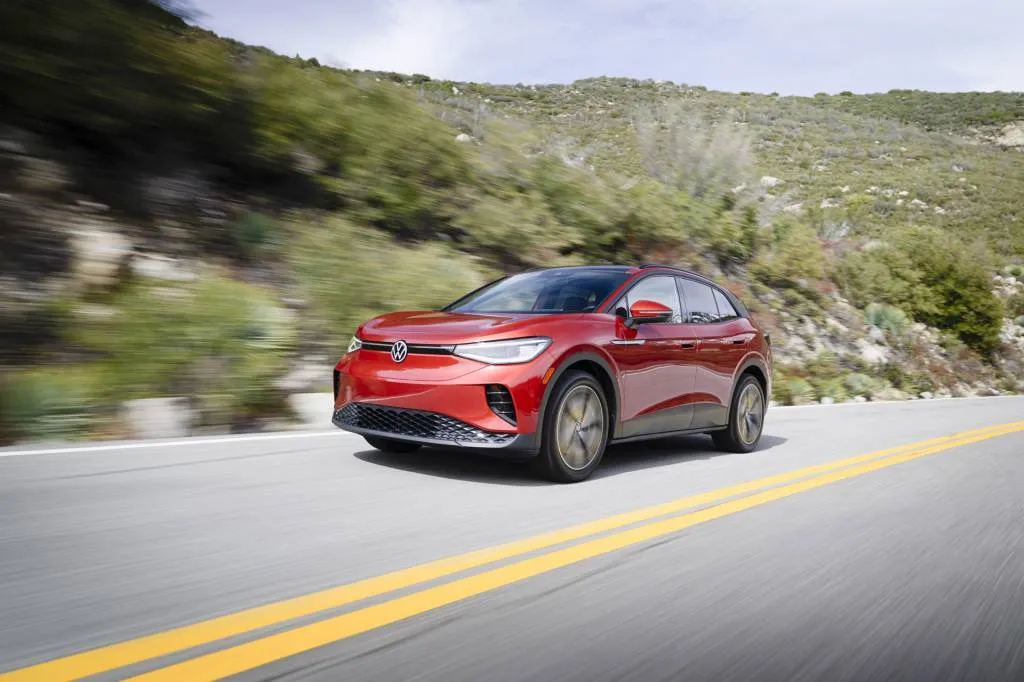
2024 Volkswagen ID.4
Audi was slated to be the first VW Group brand to utilize the SSP architecture, and VW Group CEO Oliver Blume said last year that the brand was on track to launch its first SSP-based model in 2026, but that’s been delayed to 2027 and 2028, and in the meantime Audi has been looking at buying a platform from a Chinese automaker, according to German media reports.
Software issues also mean the Volkswagen brand may also keep the current-generation ID.4 around until 2029, at which point it will be nine years old, Autoblog notes. This will also reportedly mean delays for a new electric VW Golf and a large VW electric SUV called the T-Sport, the launch date of which could move from 2028 to 2031. Meanwhile, VW has launched a sub-brand of the ID sub-brand in China, and committed to new solid-state battery tech.
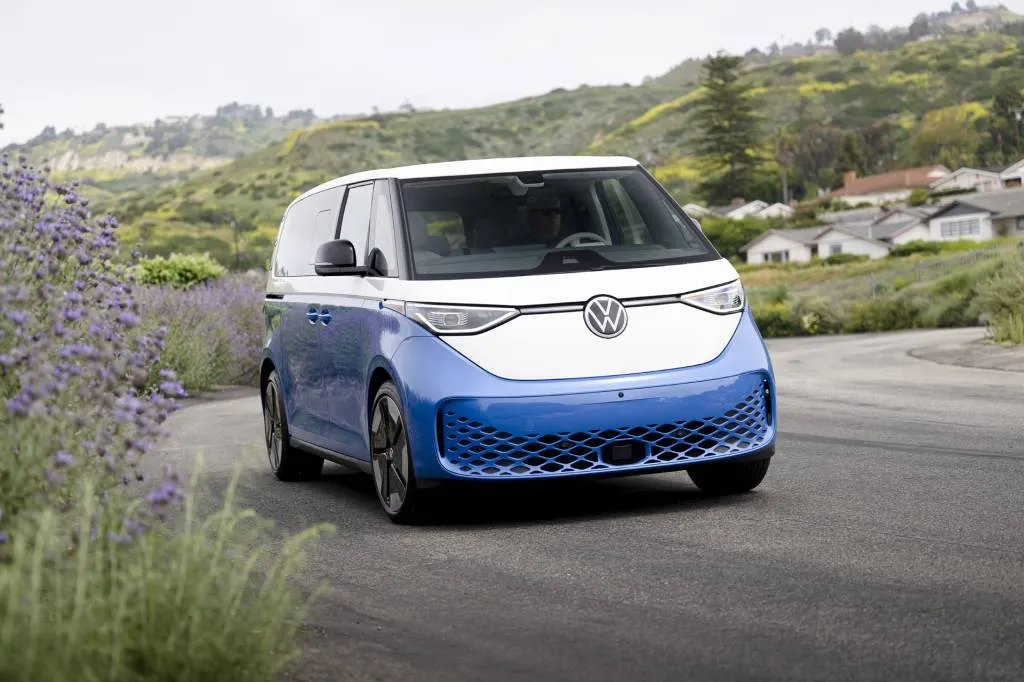
2025 Volkswagen ID.Buzz
A Porsche seven-seat SUV build on the SSP architecture is already out testing and due in 2027, reports Autoblog, but it could also be subject to software-related delays.
Reports of software problems at VW put the automaker’s investment in Rivian in a clearer context. VW in June confirmed that it would take a $5 billion stake in Rivian to access the U.S. automaker’s software and zonal electronics platform.

Tesla recalls over 1.8M vehicles due to unlatched hood issue
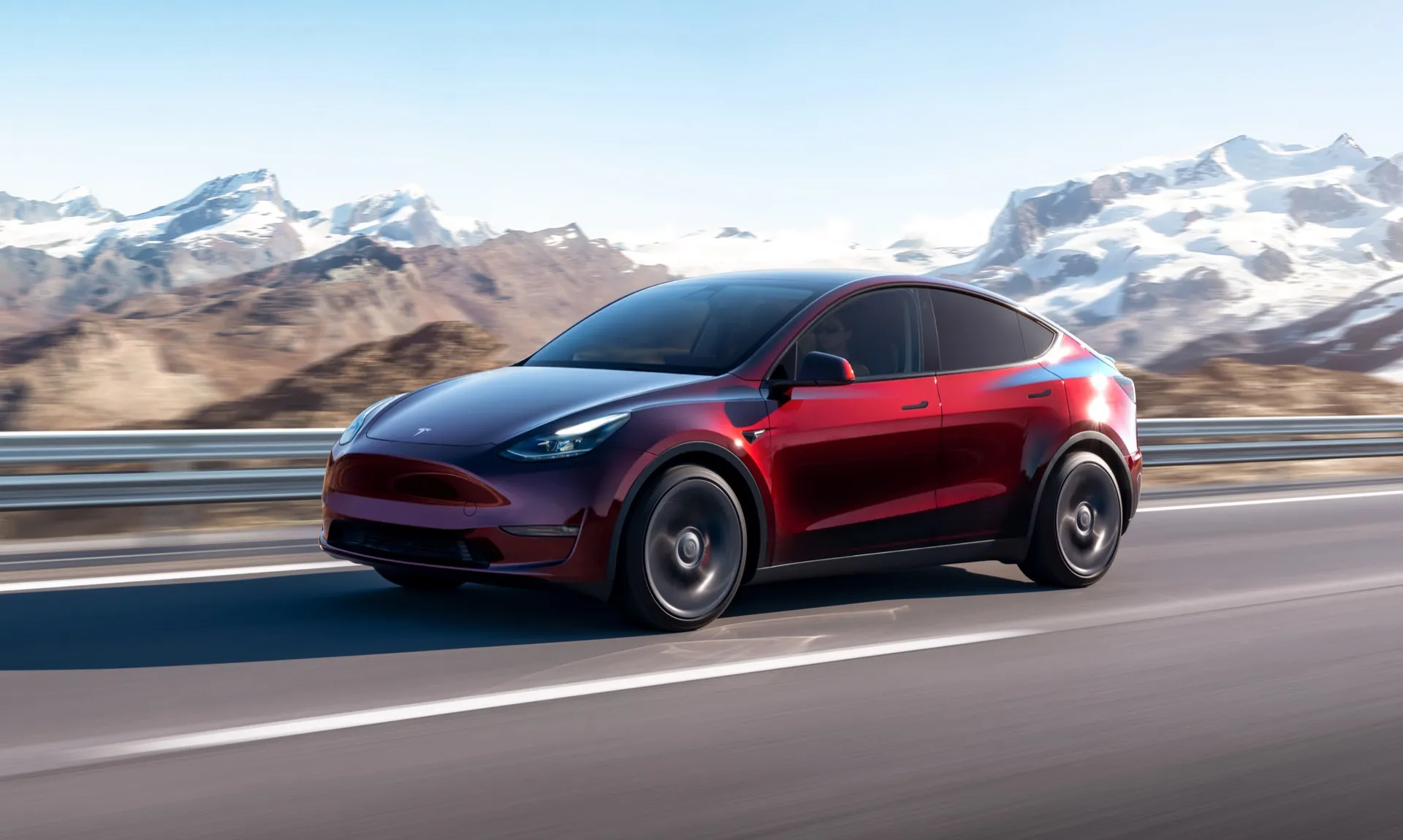
Tesla has issued a recall for a problem with hood closure across all its model lines. The problem could lead to the vehicle’s hood opening while in motion.
On Tuesday, Tesla and the NHTSA announced a recall for 1,849,638 vehicles, including the Model 3, Model Y, Model S, and Model X.
The issue stems from the vehicle’s hood latch assembly and related software. The assembly may fail to detect an unlatched hood after the hood has been opened. This could lead to the unlatched hood opening while driving.
Tesla said it began investigating customer complaints of unintended hood opening events on Model 3s and Model Ys in China on March 25.
Tesla said it has released an over-the-air (OTA) software update on June 18 to the affected vehicles. The update is said to detect the unlatched hood. Firmware release 2024.20.3 and later updates include the remedy.
Affected models, including Model X, Model S, Model 3, and Model Y built after July 15 came off the assembly line with firmware 2024.20.100, which incorporated the software fix, according to Tesla.
Vehicles affected include all model-year 2021-2024 Model S sedans, 2021-2024 Model X crossovers, 2020-2024 Model Y crossovers, and 2021-2024 Model 3s manufactured between September 21, 2020 and June 2, 2024 in China.
The recall is filed under NHTSA campaign 24V-554.
For more information, contact the NHTSA at 1-888-327-4236.

Review, Postmortem: Fisker Ocean was a promising EV, may be frozen in beta
- Ocean EV impressed in design and features, but software and tech details lagged
- OS 2.0 reportedly soothed some issues for this software-defined vehicle
- After June 2024 bankruptcy filing, owner support is a top concern
The most daunting challenge Fisker Ocean owners may face doesn’t relate directly to how this stylish, well-equipped EV is built, or how well it was engineered. It also might not be physical repairs or replacement parts, as resourceful Tesla Roadster owners at one point proved.
Simply put, it’s that the Ocean might never be fully realized in a software sense. Over-the-air software updates hold a good-faith promise of constant improvement—that an EV bought this year might be better-driving and more full-featured in a couple years. But once Fisker filed for bankruptcy on June 17, with creditors’ vying over a liquidation of its assets since then, it’s hard to imagine how or why any entity would continue to improve these “legacy” Oceans to go above and beyond the minimum of consumer support.
That’s arguably been part of the leap of faith that Fisker Ocean buyers took from the get-go, as they took delivery of their vehicles with some decidedly rough edges in a number of interface aspects, prior to the rollout of Fisker’s big update, termed Fisker OS update 2.0.
We’re entering an era, pioneered by Tesla, of software-defined vehicles that can be constantly upgraded over time. That software support often arrives as a brand-building bonus for owners, but it comes at significant cost to a company and involves a team of highly skilled people. It’s not uncommon for newly launched vehicles to have software issues, nor is it unusual for EVs to be delayed due to software or to launch without all of its features. Software has even been at the core of CEO upheaval at one of the world’s largest automakers.
Fisker delivered the vehicle. But somewhere along the way, it became apparent that the momentum from delivering the car alone wasn’t enough. Fisker never faced something like Tesla’s Model 3 “production hell,” and there was no need for CEO Henrik Fisker to be sleeping on the assembly floor even if its contract manufacturer, Austria’s Magna-Steyr, would have let him.
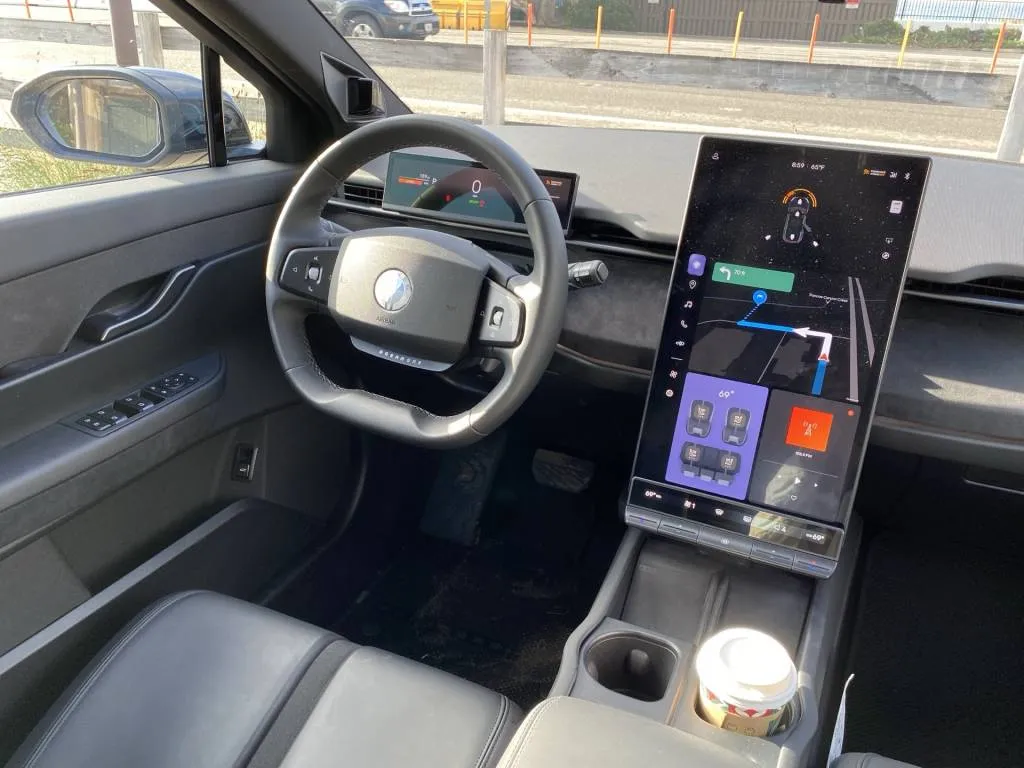
2023 Fisker Ocean One
2023 Fisker Ocean One
2023 Fisker Ocean One
Fisker Ocean: Complete as a functional EV, incomplete in innovation
Fisker’s challenges were revealed clearly late last year when it offered me a first drive of an Ocean overnight; I came away positively impressed in one big respect and quite disappointed in another. As a piece of hardware, the Ocean impressed as very close to fully baked. Next to any number of those vehicles the Ocean feels well-built. Doors opened and closed with a satisfying thunk; switchgear didn’t disappoint; and materials felt durable, pleasing to the touch, and better than what I might have expected for the mission.
But with all the challenges of on-the-ground sales and support channels aside, it was clear from that first experience that while software was key to the Ocean’s success, it clearly lagged.
Now, given the apparent path Fisker has opted to take in bankruptcy, there’s a chance that what Fisker has delivered in software up to now will effectively leave the vehicle frozen in beta. That’s it.
As John A.E. Pottow, a professor of law who studies bankruptcy at the University of Michigan Law School, told Wired in late June, a bankrupt Fisker would “have no obligation to update their software.”
2023 Fisker Ocean One
2023 Fisker Ocean One
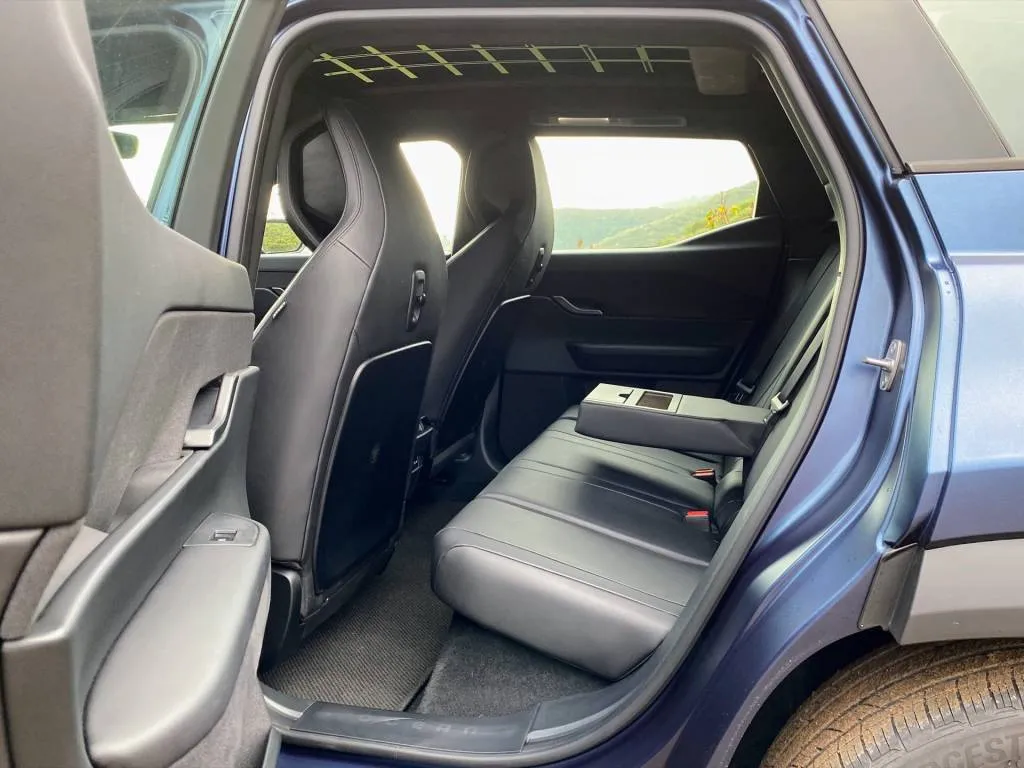
2023 Fisker Ocean One
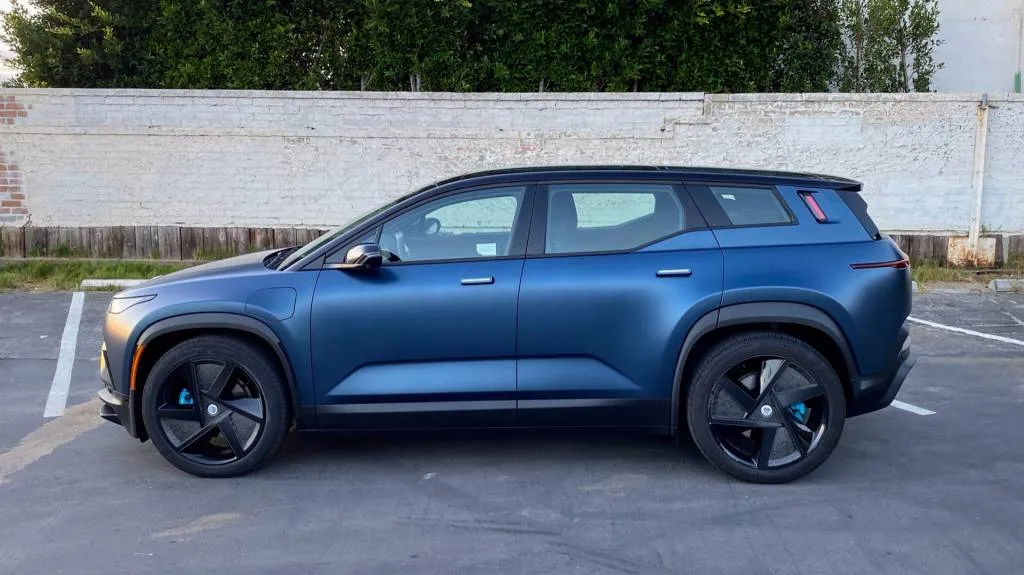
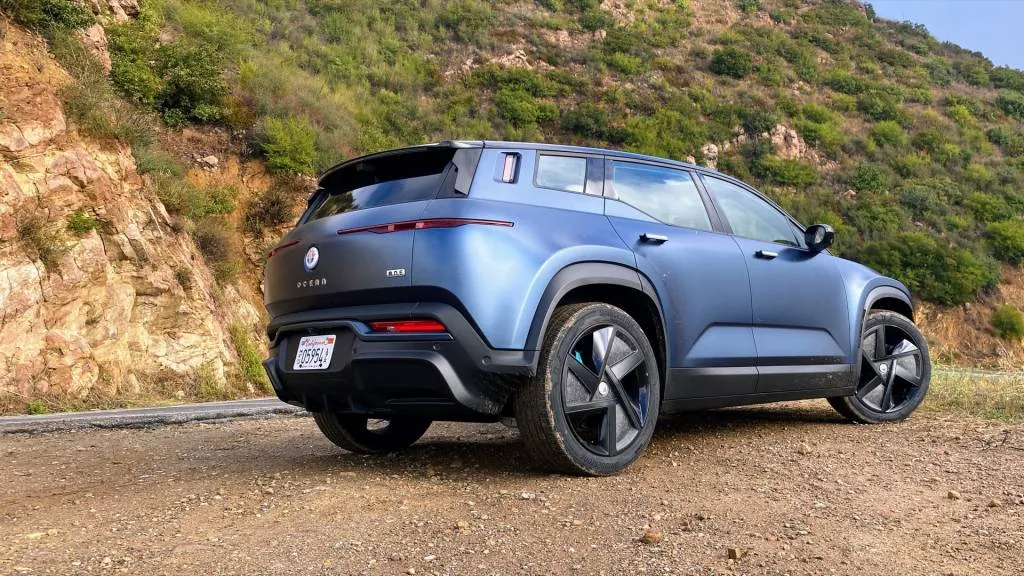
The Fisker Ocean has all of the fundamentals. It’s nicely proportioned and attractively styled, and thoughtful details abound pretty much everywhere you look. It’s also packaged very well. The first time I stepped into its roomy cabin I did a double-take, as itdoesn’t make concessions for a potential internal-combustion option. It really makes the most of what the platform allows.
I’d recently also been in the Kia EV9, and looking from the driver’s seat to the back corner of the vehicle the Ocean seems nearly as large, only it’s not a three-row vehicle. It’s long enough for a third row, with height probably the limiting factor. If space for five and a whole lot of stuff is what you need, the Ocean has it.
All of those smart-looking, smart-packaged traits fit in with what we’ve come to expect from design mastermind Henrik Fisker.
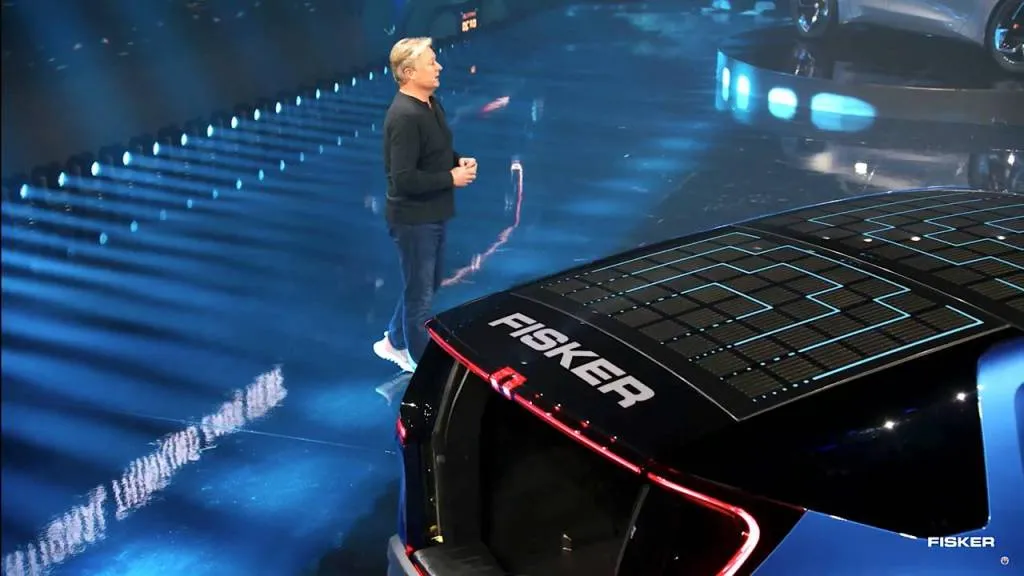
Fisker CEO Henrik Fisker with Ocean, solar roof
Fisker Ocean EV driving impressions: What could be vs. what is (or was)
If I could look past the software oddities and UHF snow and imagined a little bit, it may also be a great driving SUV. It felt like a vehicle that has the basics down pat but needed to quell some software gremlins. On LA freeways, the Ocean had rather light, almost overboosted steering but tracked really well, and it felt smooth, solid, and stable at 80 mph. Even when I loaded up the suspension for a tight, lower-speed off-ramp, it remained well behaved for all its approximately 5,400 pounds (!) of curb weight and it even hinted of a fun side.
I soon worked out that I just needed to bypass the Ocean’s eco-themed Earth mode, and mind the uneasy brake pedal. The core modes to select from are Earth, Fun, and Hyper, and Earth mode did more than just soften responses, as Eco driving modes tend to do. Rather, it added a rubber-band-like lag to power delivery when pressing quickly on the accelerator and suffered from lag before light regenerative braking kicked in when lifting off the pedal.
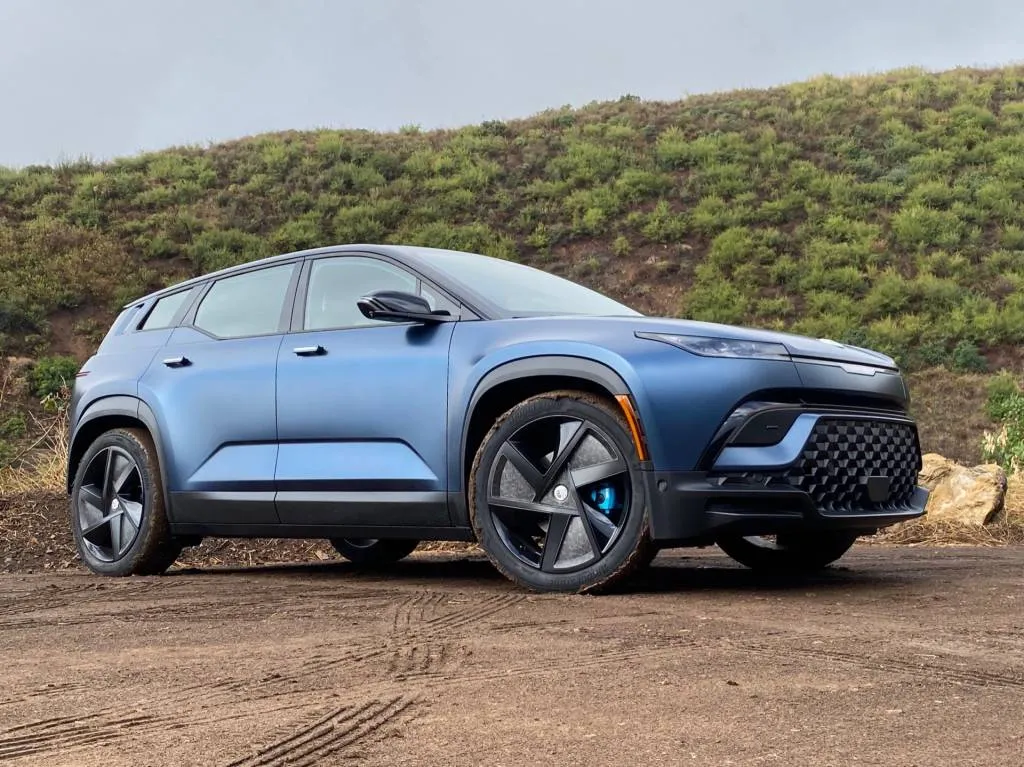
2023 Fisker Ocean One
The brake pedal itself, on my test vehicle, traveled disconcertingly far before scrubbing off speed, either blended or from the brake pads. I got used to it, but at times it felt a bit like the hybrids and EVs of a decade or more ago, where the last few feet of a stop were a guessing game. Then there also didn’t seem like any rhyme or reason as to why it would creep forward when I lifted off the brake pedal sometimes and not others.
Two permanent-magnet motors operate on the same reduction ratio, emit more than a typical level of EV whine during moderate to hard acceleration, and provide a combined 564 hp and 543 lb-ft of torque. The Ocean felt fully up to claims and expectations for acceleration. I experienced a 0-60 mph time of well under five seconds with a rolling start. Fisker claims just 3.7 seconds with a Launch Mode to be selected from the screen once in Hyper mode, but given my level of uncertainty with its traction and stability systems (which I’ll get to), I didn’t test that.
The Ocean has a lingering feeling that fine details are missing in the way it drives. It bounds over bumps in a way that’s disconcerting at first, but just as with other rather heavy electric SUVs that don’t have air suspensions or adaptive dampers, you get used to that. What remained sorely missing was the safety net of modern, sophisticated, and most importantly predictable stability systems. It became more apparent the more time I spent with it and the harder I pushed it.
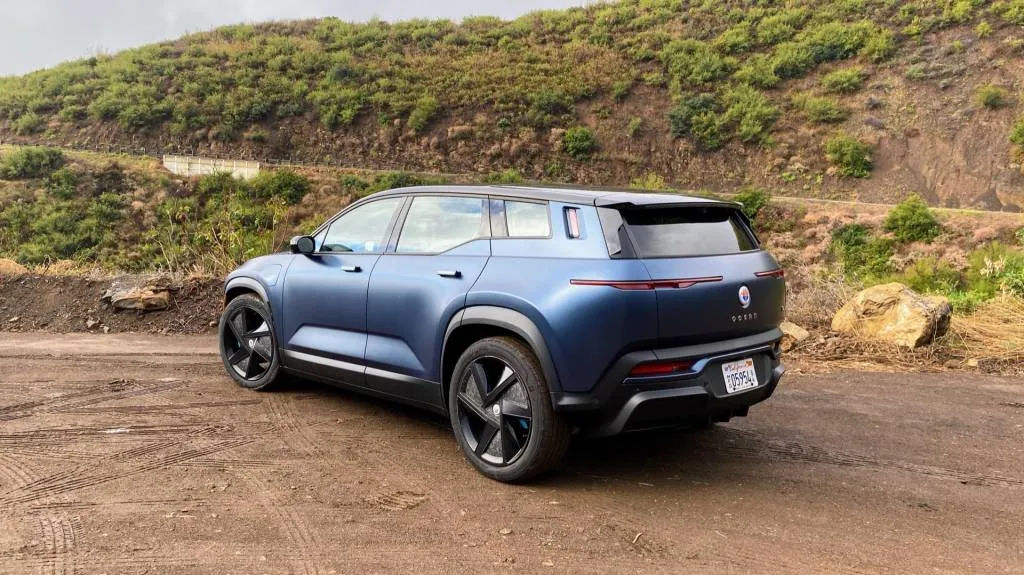
2023 Fisker Ocean One
Early on my second day with the Ocean I took it out to canyon roads and those somewhat unhinged electronic nannies kept me from enjoying any fun side of the vehicle. This Ocean’s dynamic envelope felt tuned for electronic chassis systems that weren’t dialed in yet and weren’t playing any anticipatory role. I pushed the Ocean hard on a few corners where I felt comfortable to do so and it simply didn’t feel like it had a modern stability control system. What I experienced instead felt like the early stability systems that were marginally a step ahead of traction control—blipping the brakes reactively rather than doing anything proactive to help keep the vehicle on its intended path and in its lane.
The Ocean seemed to lose some of its cornering poise with the higher regen setting. Regen can be adjusted, but it requires finding the Settings button, then the Driving menu of the infotainment screen. The high regen setting does not allow actual one-pedal driving, but it does scrub off a lot of speed.
Fisker Ocean efficiency underwhelmed
The trip meter didn’t assure me that the Ocean was particularly efficient. It reported that I covered 180.6 miles in the Ocean, using 87.8 kwh of total energy and averaging nearly 2.1 miles per kwh. Energy consumption during about 84 miles that included more spirited driving on canyon roads, using the Ocean’s Fun and Hyper modes, proved to be only slightly lower than moving mostly with the flow of traffic in Earth mode.
Considering the Ocean’s 113-kwh battery pack (106-kwh usable), that’s about 223 miles of range, or at least a third less than its 360-mile EPA range rating. Oof.
Since then, multiple Ocean owners have reported in the range of 300 miles or more on highway trips. Fisker has noted “enhanced accuracy in energy consumption metering,” and trip metering with its software updates made since then, so I’m unsure of the accuracy of those numbers seen during that early drive.
2023 Fisker Ocean One
Fisker Ocean interior: Spacious, innovative, modern
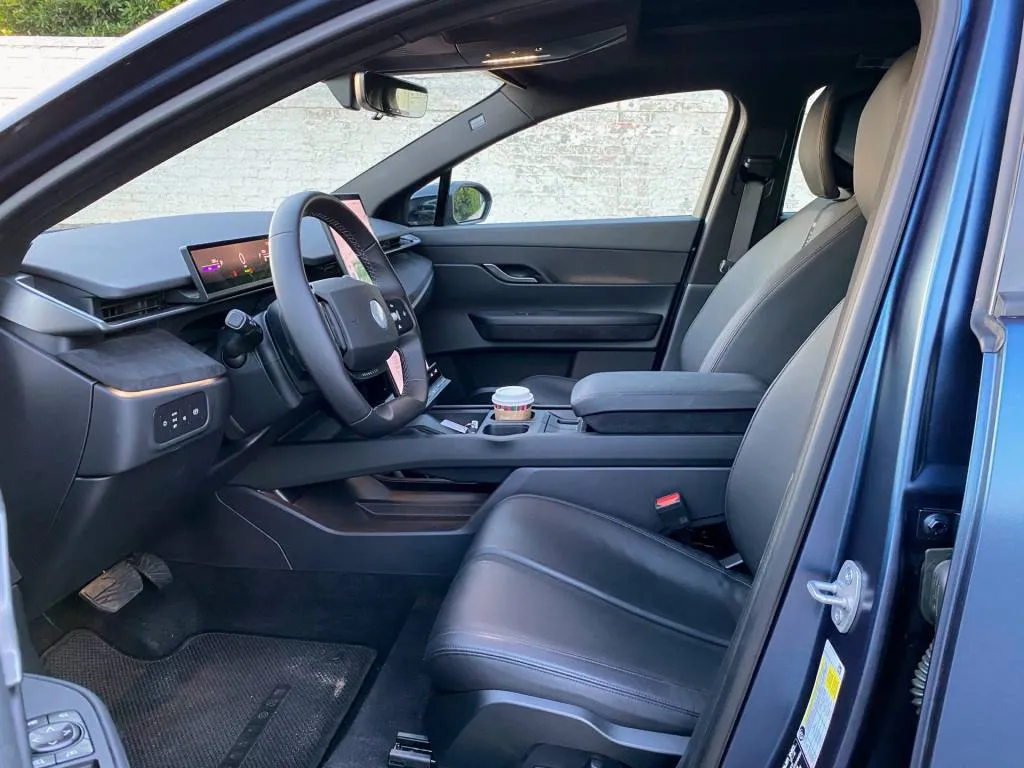
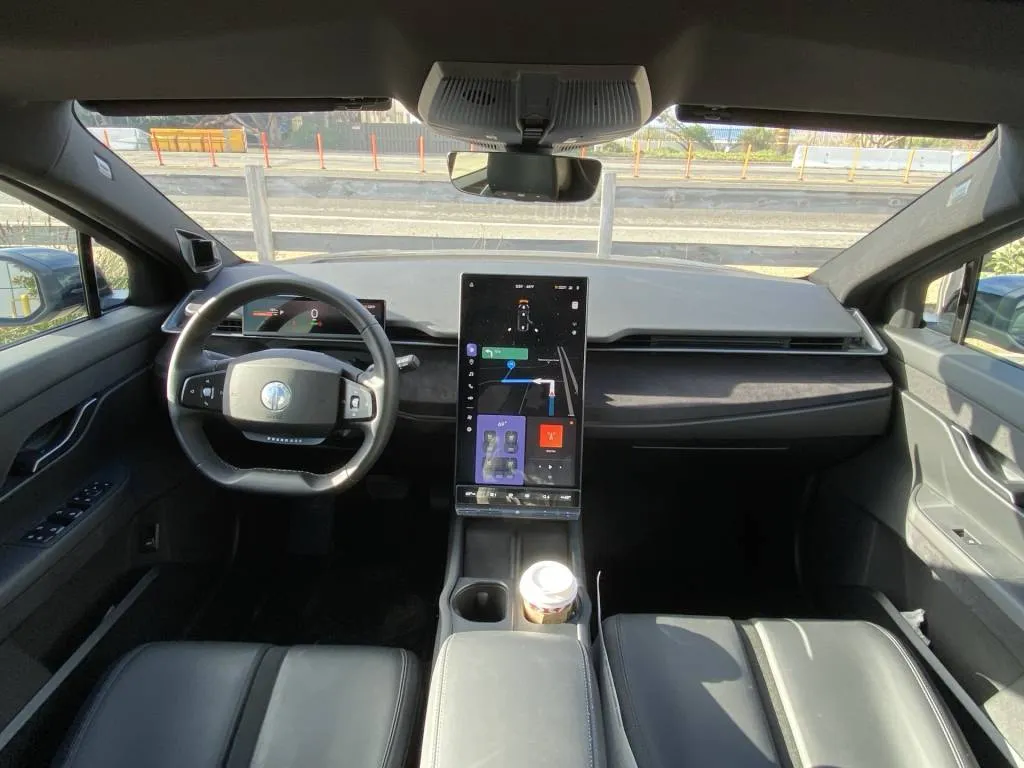
Upon first getting into the Ocean, there’s a lot to take in, and even beyond the top-level product-design work of Fisker, it’s an impressive cabin that the team put together, with great materials and touch points.
The semi-transparent, functional solar roof and California mode were two of the most noteworthy aspects from the get-go—different from what you can find in other EVs. The roof is functional, and according to Fisker it can recover up to 1,500 miles per year (although other automakers have suggested far less from similar systems). As of yet there’s no info screen or way to tell—as in the Hyundai Sonata Hybrid or Toyota Prius Prime—how much energy you’re getting from it.
Located on the roof is a button with a sun symbol to engage California mode, which after a confirming chime opens every window in the vehicle including the rear doggie window and rear tailgate glass. For the sake of rear passengers, California mode is for mostly low-speed cruising fun, although Fisker has tested California mode’s ability to close everything back up and maintain window seals at well over 100 mph, an engineering manager told me.
There’s a real shift lever and wiper stalk and generally speaking the switchgear was easy to figure out. While it lacks a glovebox, Fisker provides plenty of thoughtful touches and places to stow smaller items. Small sturdy tables that Fisker calls taco trays fold out from the center console and allow a space to eat lunch or, when used together, to hold a laptop or become a workstation good for up to 11 pounds. And there are little storage bins under both of the front seats, which is something I haven’t seen in any other vehicle. It works here, why not?
2023 Fisker Ocean One
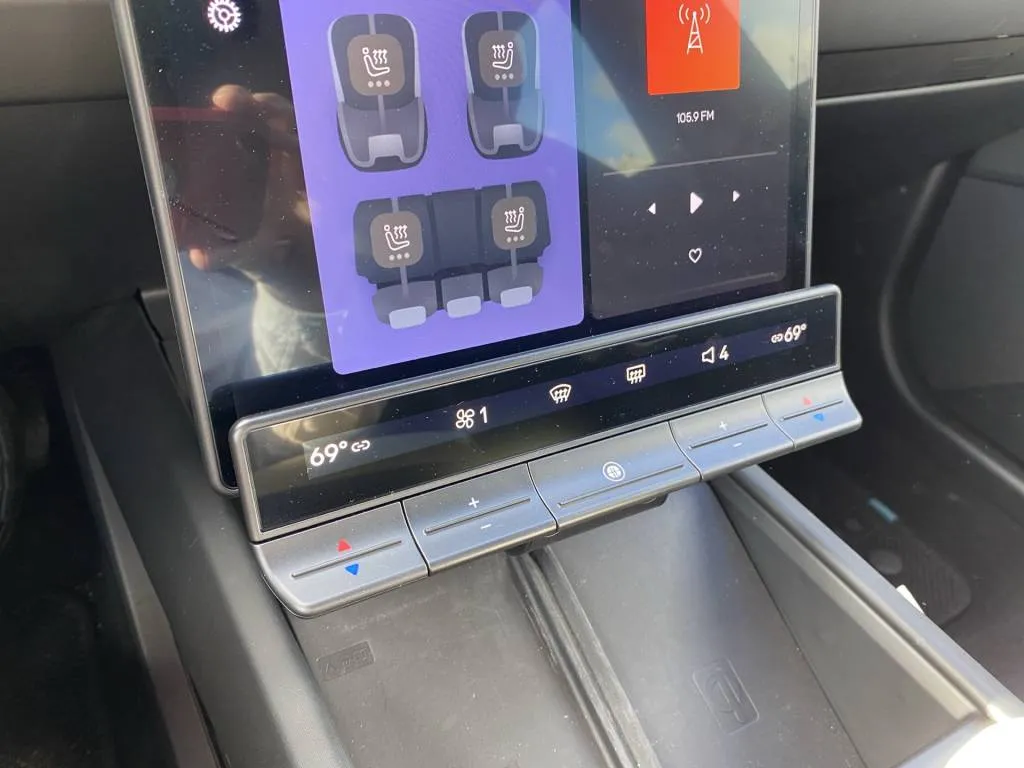
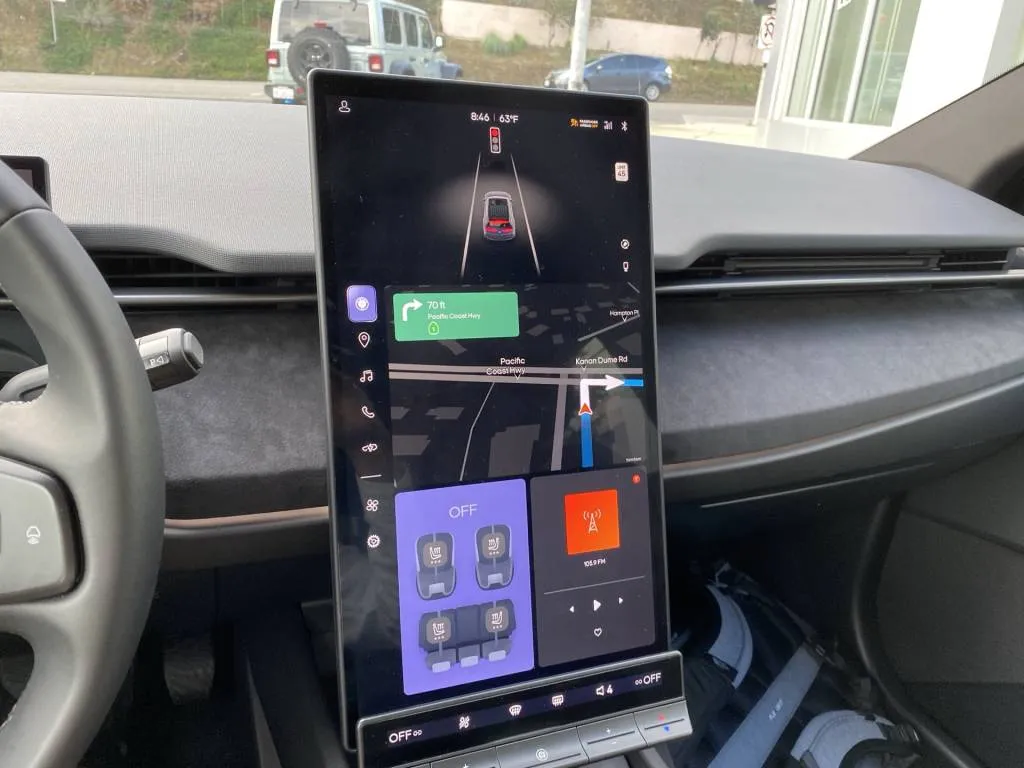
Both sides of the center console have wireless charging pads, and the infotainment screen can swivel from portrait to landscape positions. Hold the center button below the screen for a few seconds and it rotates, engaging what Fisker terms Hollywood mode. Only available when parked and stopped, it allows occupants to be entertained while charging. The screen mechanism has a very low force threshold (I tested it) for aborting its mission when fingers are in the way, yet it swivels smoothly.
When parked you can see a view of all the cameras available, assisting with low-speed maneuvers and parking, while “current” view allows a 360-degree overhead view combining camera inputs—definitely useful for a quick assessment during parallel parking. Shortcut buttons on the left of the screen toggle between the different priorities, including entertainment, climate, and the navigation, allowing the latter to go full screen. A green charging-station button works as a navigation shortcut to find one nearby. Fisker also claimed, then and now, that it will automatically route the user to charging stationsas needed along a road-trip route.
Carry the keyfob with you into the vehicle, and it should unlock the doors, Fisker told me—their emphasis—although that intermittently took some extra clicks. Once in the vehicle, tapping the brake pedal turns it on. Walking away from the vehicle is supposed to lock itand place it in a sleep mode, but as in other models it felt like a leap of faith as I would sometimes still see the door handles out from a distance, and then I’d have to walk closer before the Ocean would respond to the lock button on the fob.
The Ocean fast-charges at a peak of around 200 kw and doesn’t precondition, with a 10-80% time of about 35 minutes. All Oceans have a 32-amp onboard charger good for roughly 14 hours from 0% charge to full on a Level 2 outlet.
2023 Fisker Ocean One
2023 Fisker Ocean One
2023 Fisker Ocean One
2023 Fisker Ocean One
Fisker’s touchscreens banked a lot on the software future
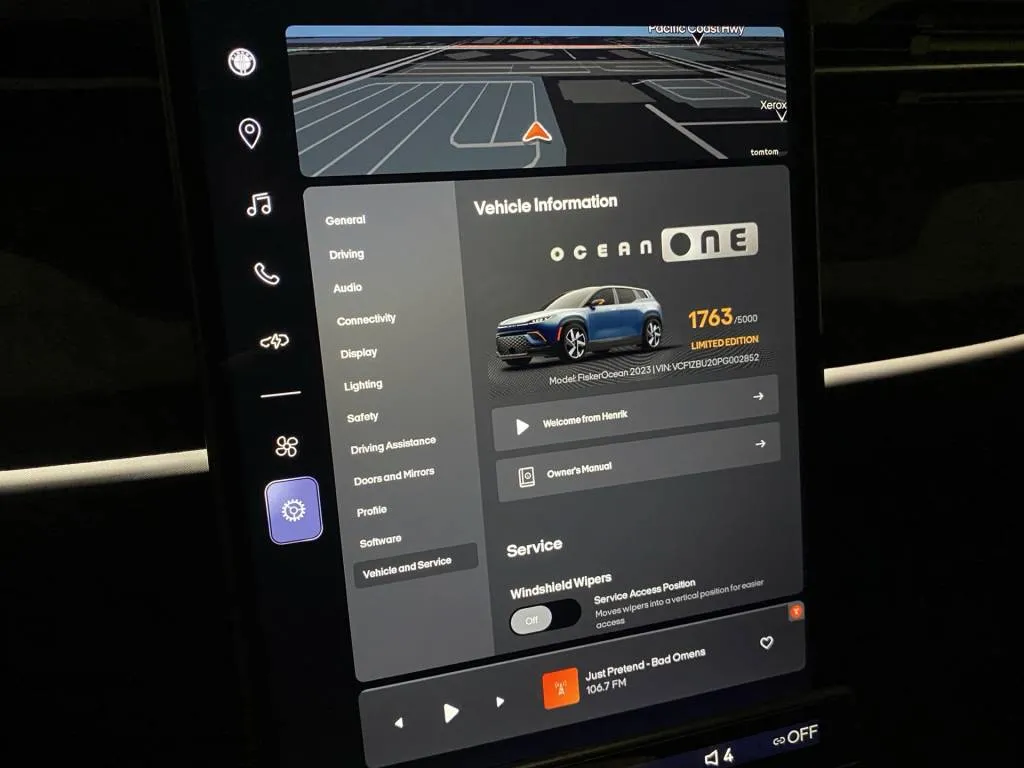
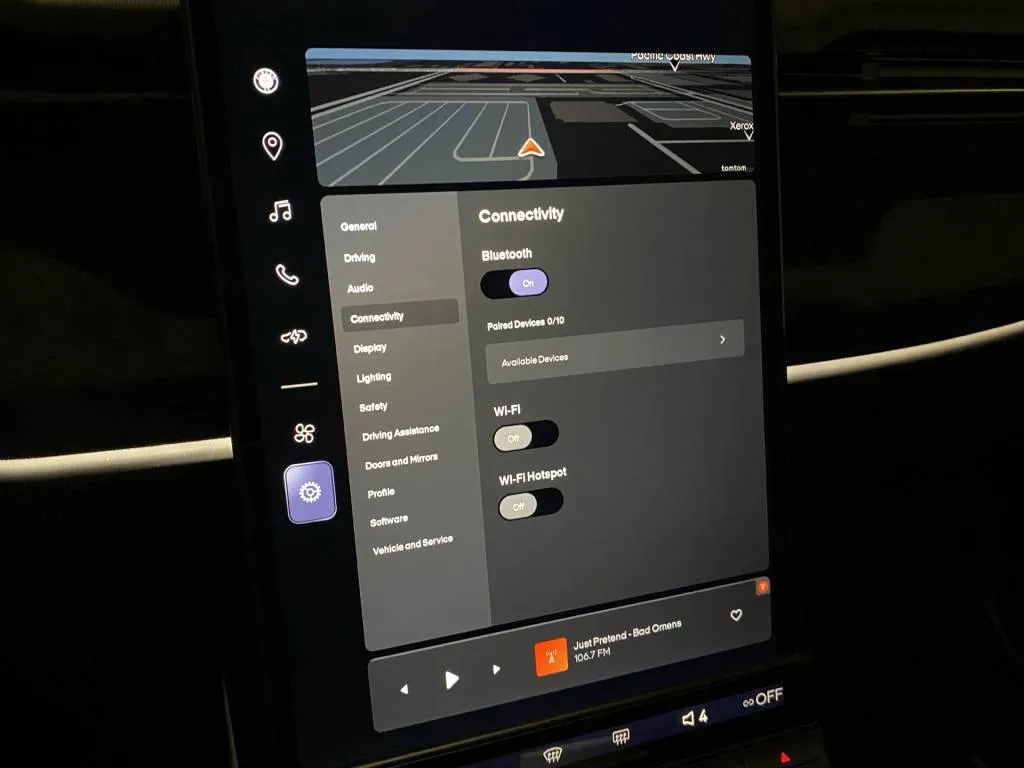
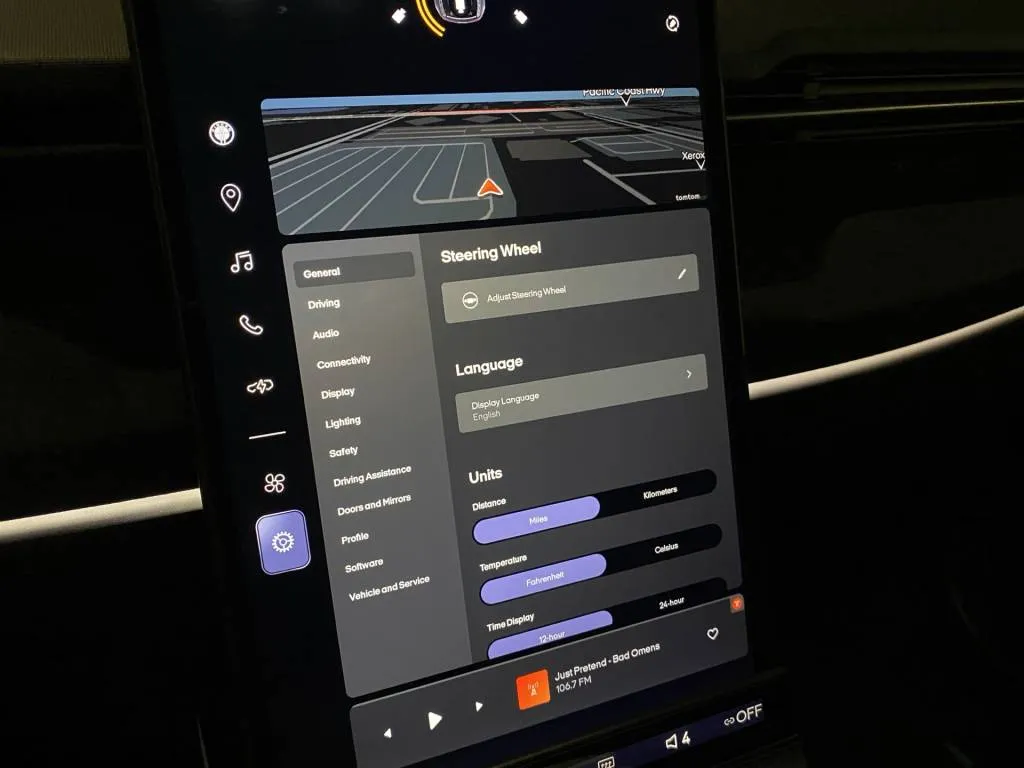
When I tested the Ocean, the infotainment system felt partly complete, and missing a number of features Fisker had promised. There’s no AM radio, but it offers FM plus apps for iHeartRadio, Spotify, and TuneIn. Fisker said months ago that this system could be Apple CarPlay and Android Auto compatible in the future, but by the time I drove it the official word was that it was waiting to get more customer feedback to see if it was necessary.
Some might prefer the map to be on the upper portion of the screen. But you can’t drag the modules around; they sit in dedicated locations on the screen. It also includes live-updated traffic-light information atop the screen, which I found to be remarkably in sync most of the time.
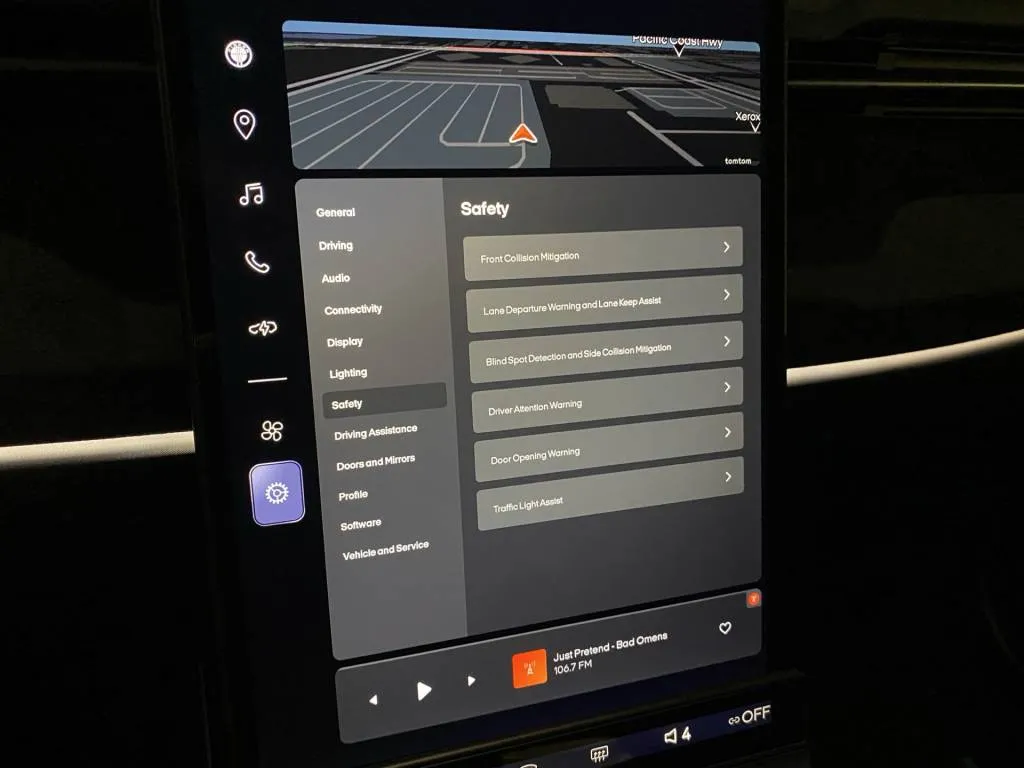
The menu system was quite easy to figure out and within a few minutes I’d switched to the dark display mode, toyed with ambient lighting, scrolled through ADAS features (driver monitoring is on the front pillar, not around the steering wheel), and seen that you can reset the height of the tailgate via the menu system. There was also a rear touchscreen and a Limo mode that gives priority for the climate and entertainment controls to the rear screen.
Some things were in glaring omission. Voice controls weren’t enabled yet, but Fisker said they soon would be. While I could pair my phone via Bluetooth, and while a voicemail played fine and I could answer a call, I couldn’t seem to make an outgoing call without disconnecting from the car.
Fisker had also promised to add phone-as-key functionality, but it appears that didn’t to arrive (Bluetooth first, right?). My test car also didn’t have adaptive cruise control. That was set for a future update, according to Fisker.
2023 Fisker Ocean One
Fisker Ocean post-drive download and epilogue
After I turned the vehicle in, I shared some of the feedback about interface niggles that the team had clearly heard about from others and was working on. I also shared those concerns about dynamics directly with chief technology officer David King, a longtime Aston Martin executive who jumped to lead Fisker’s global engineering and software teams. King promised me that the company’s software OS 2.0 was just a few weeks away, included updates that would batten down the dynamics I described, and that the team would make sure I experienced that as soon as they had it in something outside development vehicles.
Those few weeks turned into a few months. Fisker released the first of three pieces of Ocean OS 2.0 on a beta basis in late February, and it reported in early April that it had been rolled out to most customers. Part 2 and 3 arrived later in April, with the latter updating the keyfob. After more requests Fisker went dark on product PR. Then on June 17, however, the company filed for bankruptcy.
2023 Fisker Ocean One
2023 Fisker Ocean One
2023 Fisker Ocean One
What Fisker’s last and best official update gets you
The most noteworthy driving change for OS 2.0 is this model’s shift of the base torque split to rear-biased (45:55 front to rear), with an even stronger rear bias in Fun and Hyper modes during dynamic driving.
As King insisted, OS 2.0 was comprehensive in ways we haven’t seen from many other automakers. It even included a software update to the keyfob, said to “improve button click performance and response.”
Fisker adjusted the climate control performance in Earth Mode for more comfort, introduced individual driver profiles for a range of settings, and better managed energy drain when parked with a standby mode allowing an adjustable “sleep state” defaulting to 24 hours. It also fixed a few of the minor criticisms I had in notes, like how the vehicle’s Hill Hold feature held the vehicle so briefly there wasn’t enough time to look about and move one’s right foot to the accelerator.
Based anecdotally on some owners’ feedback and social-media postings, the brake-hold behavior has been soothed, energy management appears improved, and the modes and drivability have been improved. But plenty of bugs remain.
Among the features Fisker planned to enable in 2024 are a “Park My Car” autonomous parking feature, adaptive cruise control with lane awareness, a PowerHouse mode that would allow the Ocean to provide emergency backup power for days, and a PowerCar system that would allow the Ocean to charge other EVs. Unfortunately, these features will likely never arrive.
2023 Fisker Ocean One
Hold on. This could be a pretty good EV.
Why am I wrapping up these thoughts now? The Fisker bankruptcy is in process and production has halted indefinitely. Although I never got the promised perspective on how quickly its EV was improving, I should underscore that the Ocean as it was delivered had a lot of potential. It showed a lot of hard work was put in by both from supplier Magna and Fisker itself.
The Ocean is far, far from the worst vehicle I’ve ever tested. It’s not far-fetched to envision it, with some major software updates and simplification of hardware, being one of the better vehicles in its class. It was developed with real mass-production scale in sight, as its approximately 11,000-vehicle production total until the financially imposed shutdown demonstrates. And it did go through proper hot-weather and high-speed testing.
Earlier this month Fisker was cleared to sell more than 3,000 of its EVs in North America to a leasing company for up to $46.25 million, including an initial lot of about 1,000 vehicles at $14 million. Yes, that’s about $14,000 per Ocean EV—20% of the approximately $70,000 sticker for the one I’d driven months ago.
The Ocean is a more complete vehicle, and it shows far more market potential versus the Fisker Karma that was purchased many years ago and continues to be made in very low volume as the Karma Revero.
2023 Fisker Ocean One
In some respects, it seems unlikely that the Ocean as a product will be completely shelved. It’s fully DOT-legal, and it’s already complete in all the aspects that are very costly in the development stage. With the help of a couple more major software updates—admittedly a heavy lift, in all this context—it could be a very good vehicle. If it is revived, it might not ultimately bear the Fisker name. But if it does live up to its promise, it will have Henrik to thank.

2025 BMW i4 starts at $58,475, some models get range boost
- BMW’s i4 electric car gets new lighting treatments
- Range is up on the single-motor model, but down on the dual-motor model
- Prices have, naturally, increased—but in the hundreds of dollars, not thousands
The 2025 BMW i4 is on sale now with mildly updated exterior styling and interior trim, and an apparent range boost for some models.
Both the i4 and the related 2025 BMW 4-Series Gran Coupe gasoline model receive new headlights, as well as taillights available with laser-lit accents previously seen on the M4 CSL, a limited edition version of the gasoline M4 2-door coupe. New exterior colors and wheel patterns are featured throughout the range as well.
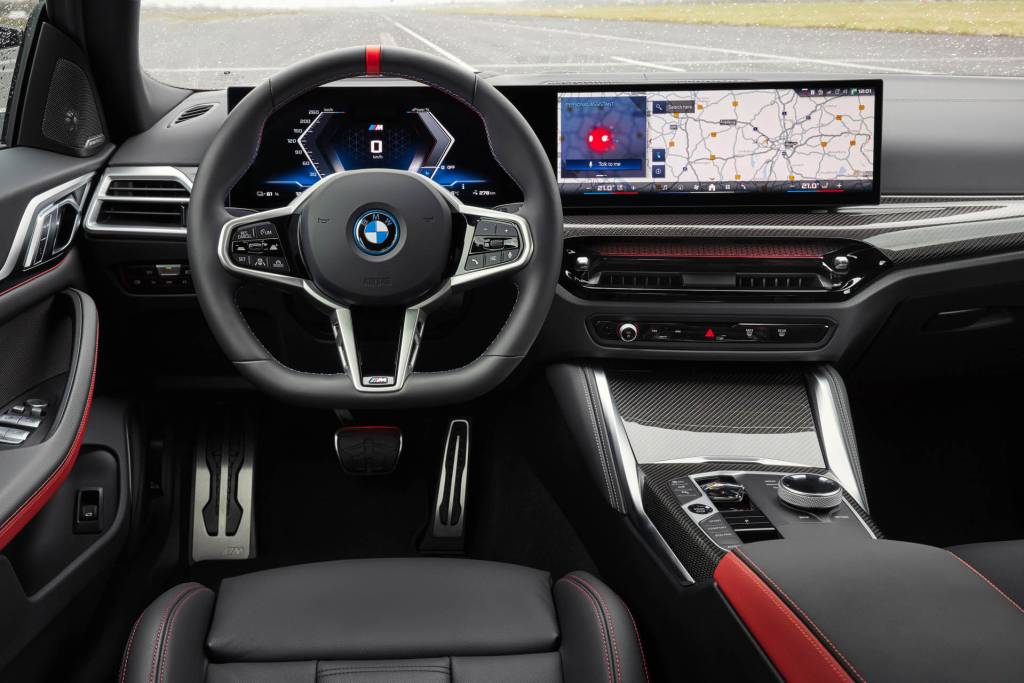
Inside, the i4 receives a new steering wheel design and some new interior trim options. It still features a curved display incorporating a 12.3-inch digital gauge cluster and 14.9-inch touchscreen, running the BMW iDrive 8.5 infotainment system. Apple CarPlay and Android Auto remain standard as well.
2025 BMW i4
The i4 supports the Plug & Charge protocol, with the ability to recognize accounts from up to five networks. BMW has been working to aggregate more EV chargers into a streamlined interface for its customers, a process that will continue in the 2025 calendar year with Tesla Supercharger access. The automaker has said it will adopt the Tesla North American Charging Standard (NACS) port starting next year, while also shipping adapters for existing vehicles.
The single-motor rear-wheel-drive i4 eDrive35 that was the base model for 2024 isn’t listed on the 2025 i4 configurator. The least expensive model listed is the i4 eDrive40, which starts at $58,475 with the mandatory $1,175 destination charge. That’s $600 more than the comparable 2024 model, but $5,100 more than the 2024 eDrive35 model.
The eDrive40 also has a single-motor powertrain, with output unchanged from the previous 335 hp, but BMW now lists up to 318 miles of range compared to 301 miles before. BMW also continues to offer a dual-motor all-wheel-drive xDrive40, which starts at $63,475 (a $700 increase). As with the eDrive40, output (in this case 396 hp) is unchanged. But BMW now lists a lower maximum range of 287 miles, down from 307 miles previously.
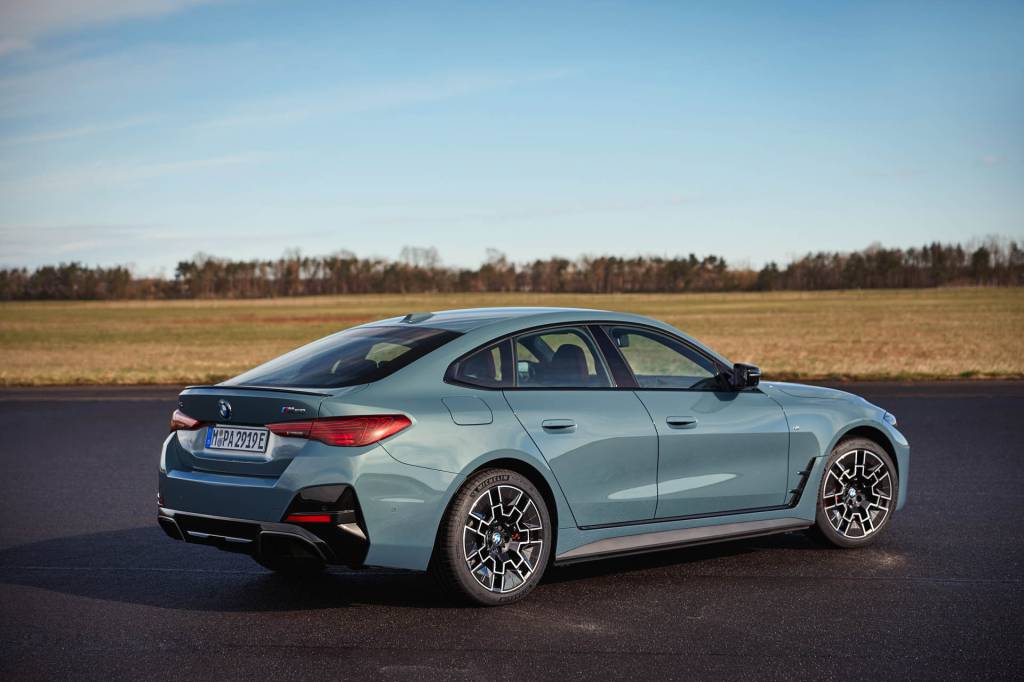
2025 BMW i4
The i4 M50 performance variant once again tops the lineup. This dual-motor model is rated at 536 hp—also unchanged from 2024. Estimated range dips just two miles, to 267 miles, while the prices increases $1,000, to $71,875.
While the i4 and other current BMW EVs share underpinnings with combustion models, the automaker will soon launch its Neue Klasse family of dedicated EVs based on a new architecture, starting with an electric SUV that’s due to start production for Europe in 2025.