
Category: General

Mark Norman on EV pain points and a ‘return to normal’ (Episode 262)
The managing partner at FM Capital examines barriers to electric-vehicle proliferation. Further, he discusses investing in transportation-tech startups and the economic conditions ending the “order taking” era in the auto industry.

Where in the US do EVs save the most money to fuel vs. gasoline?
- EVs cost less to fuel in every state of the U.S.
- By electricity cost vs. gas prices, there’s a vast range among states
- EVs have the strongest advantage in Idaho, Washington, and the Northwest
Fluctuating gas prices can make internal-combustion vehicles cost up to six times more to drive than EVs, but the potential savings can vary in different parts of the country.
The Northwest is the U.S. region where EV owners save the most money compared to fueling gasoline cars, according to the Department of Energy (DOE). That’s based on analysis by Argonne National Laboratory, which estimated cost savings from replacing a gasoline vehicle with the same-sized EV, with analysis including ZIP-code-level information about electricity cost and gasoline pump prices.
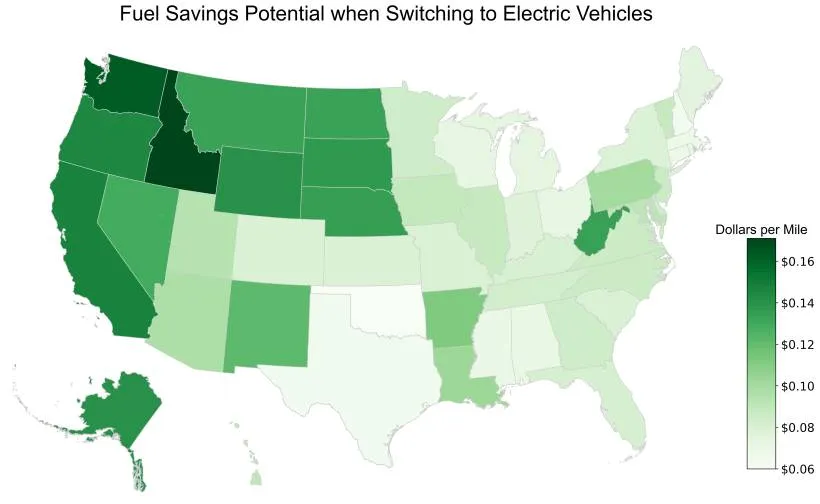
Fuel cost savings potential when switching to EVs, by state (via DOE)
Idaho and Washington State showed the greater potential for cost savings, at more than $0.14 per mile saved. California and Alaska were close behind, with mostly lower potential savings for states in the South and Northeast.
A combination of low electricity prices and high gas prices likely contributed to higher potential cost savings in the Northwest, according to the DOE. That region also has a high population of larger pickup trucks which, as the DOE previously pointed out, could save the most as EVs. Larger vehicles consume more fuel and, the more a vehicle consumes, the greater the cost savings from going electric.
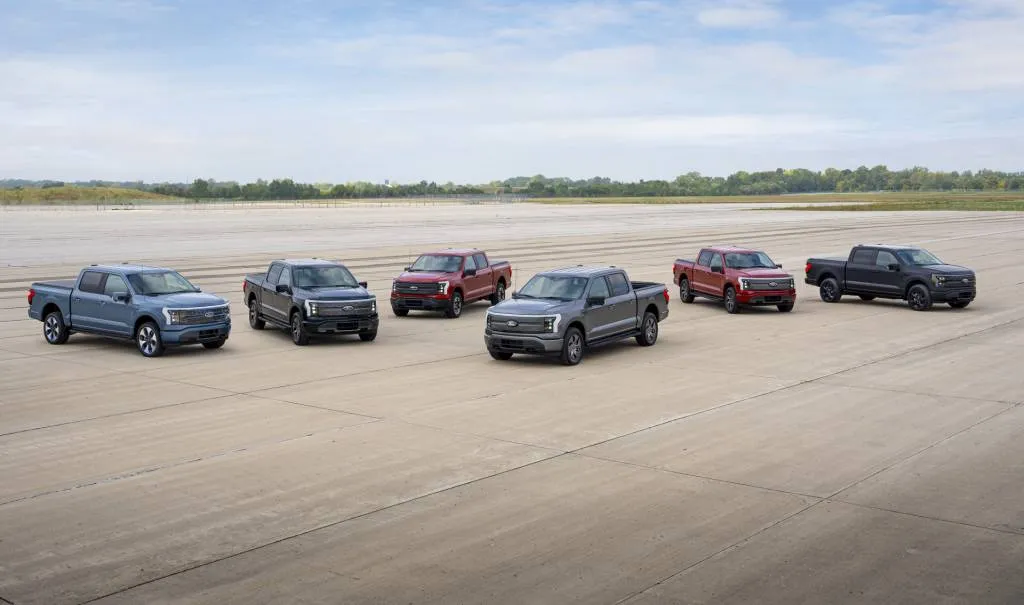
2024 Ford F-150 Lightning
Switching from gas guzzlers to EVs will also have a bigger immediate impact on overall fossil-fuel consumption and emissions. Consultancy Wood Mackenzie reported in May that growing EV sales were already on track to halve gasoline demand in 2024, on a global scale.
Savings on electricity vs. gasoline can contribute to lower EV ownership costs, but that’s only part of the picture. Initial purchase prices of EVs are still generally higher than those of internal-combustion vehicles, although a lithium glut could erase that in a few years. EVs also remain more expensive to insure than comparable gasoline vehicles.

2025 BMW i5 starts at $68,275
The 2025 BMW i5, the all-electric version of the 5-Series midsize luxury sedan, returns essentially unchanged for its second model year.
The entry point to the i5 lineup is the single-motor rear-wheel drive i5 eDrive40, which costs $68,275 with the mandatory $1,175 destination charge. It’s still rated at 335 hp and 295 lb-ft of torque, with a BMW-estimated 0-60 mph time of 5.7 seconds.
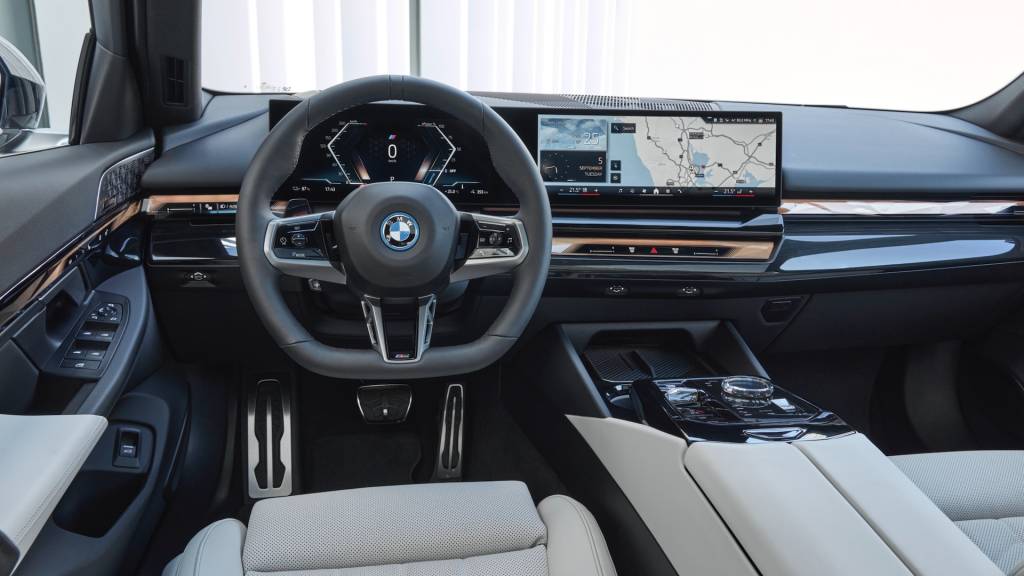
2025 BMW i5
The dual-motor all-wheel drive i5 xDrive40, which joined the lineup midway through the 2024 model year, starts at $71,275 with destination. Adding a motor powering the front axle, it bumps output to 389 hp and 435 lb-ft, lowering the 0-60 mph time to 5.2 seconds.
A more powerful dual-motor i5 M60 (badged as the M60 xDrive) remains at the top of the lineup, with 590 hp and 586 lb-ft of torque and can do 0-60 mph in 3.7 seconds, according to BMW. It also adds an adaptive suspension and upgraded brakes to live up to the “Ultimate Driving Machine” mantra. For 2025, it’s priced at $85,275 with destination.
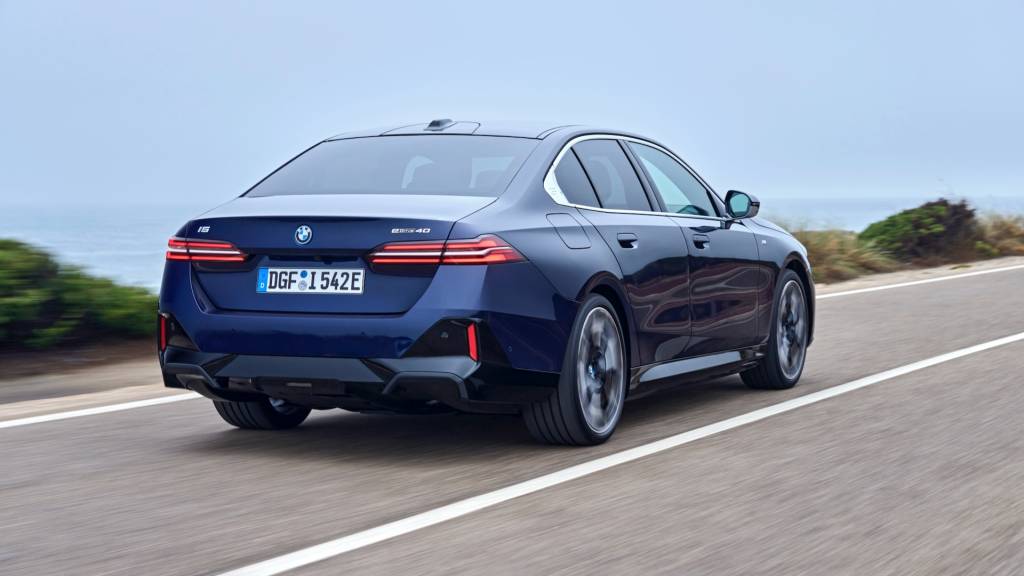
2025 BMW i5
All i5 models continue to use an 84.3-kwh battery pack. EPA range ratings likely won’t be different from 2024, meaning a maximum 295 miles for the i5 eDrive40, 266 miles for the i5 xDrive40, and 253 miles for the i5 M60, with the optimal wheel and tire combinations.
Launched for the 2024 model year, the i5 is similar in concept to the BMW i4 and i7, in that it’s an all-electric version of a gasoline model. In a first drive, Green Car Reports found the electric version trounces its gasoline sibling. It’s simply a better car than the standard 5-Series. But it might be even better if BMW brought the stylish i5 wagon to the U.S. alongside the sedan—something that’s unlikely to happen due to Americans’ aversion to that body style.

One out of three US cars sold might be electric by 2027
- Bloomberg New Energy Finance expects EV sales to grow exponentially
- General Motors has criticized President Biden’s EV sales goals as unrealistic
- California aims to end the sale of most vehicles with an ICE by 2035
EVs could make up almost a third of U.S. new-car sales by 2027, assuming current policies remain in place, according to a Bloomberg New Energy Finance report published in July.
Automakers sold 1.5 million new EVs in the U.S. last year, accounting for 10% of the new-car market, but BNEF expects sales to increase to 4.5 million vehicles in 2027, on the way to 48% market share by 2030. That would nearly meet President Biden’s goal of 50% EV sales by the end of the decade without new policy interventions, BNEF notes, a goal General Motors has criticized as unrealistic.
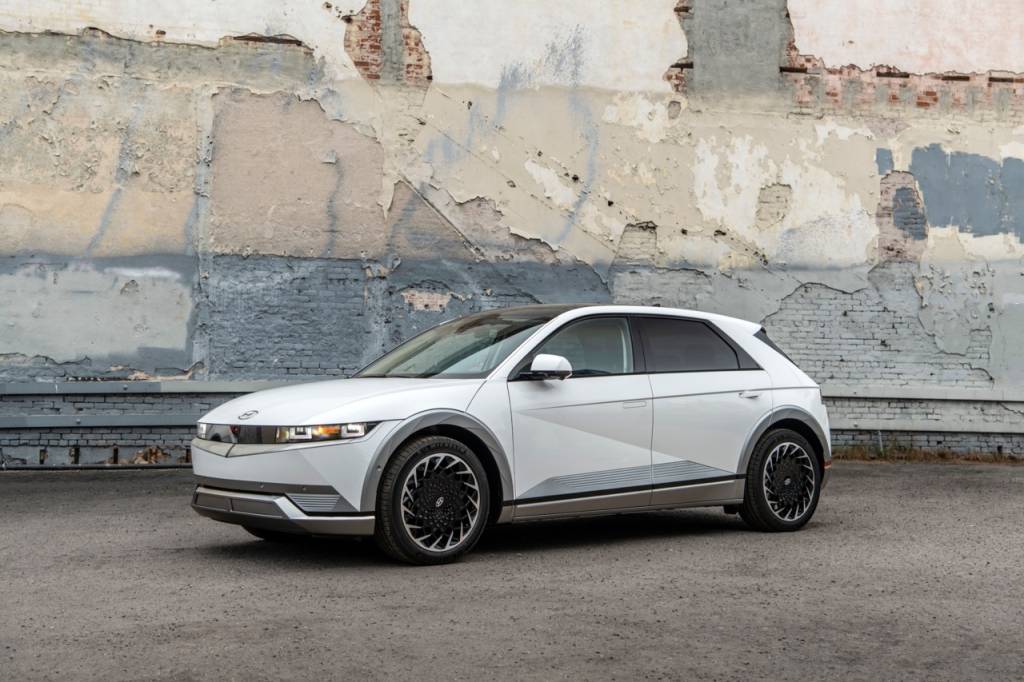
2024 Hyundai Ioniq 5
This would also put the U.S. on track for 7.7 million EV sales by 2030, BNEF predicts, setting up the ramp to 67% EV sales by 2032, as predicted by the EPA based on its latest round of emissions standards. That’s assuming the 2024 presidential election doesn’t bring policy change. Former President Trump’s overall EV policy is shaping up into something that could subsidize gasoline vehicles, from some perspectives.
BNEF expects California to continue leading the nation in EV sales. In 2023, one in four new vehicles sold in California had a charge port, and EVs are expected to account for 65% of new car sales in the state in 2030 and 90% in 2040, after stricter emissions rules go into effect.
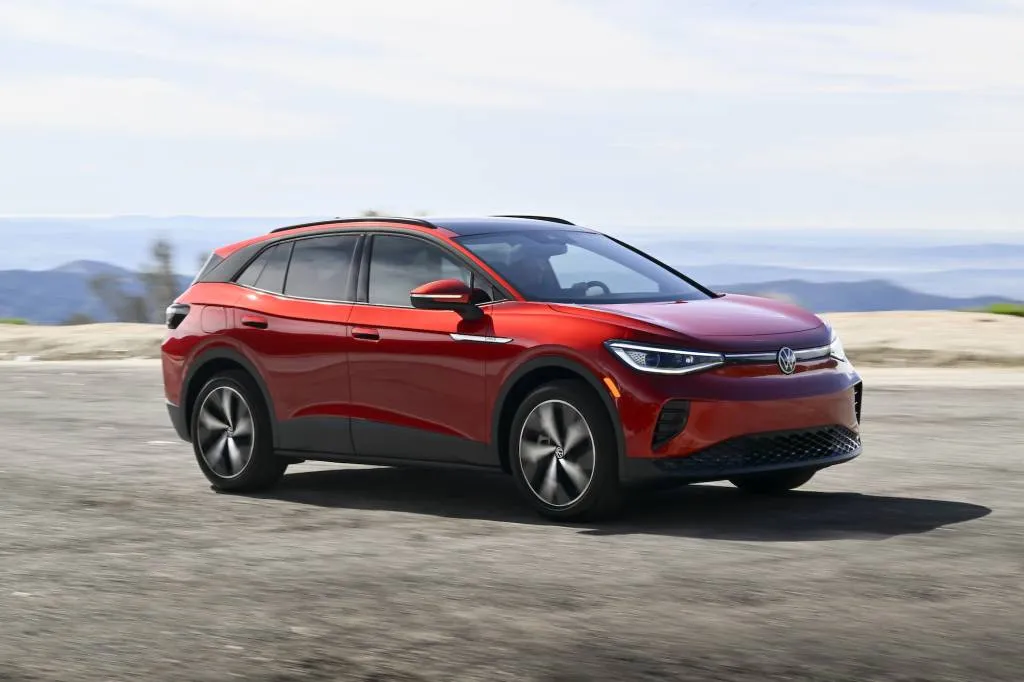
2025 Volkswagen ID.4
In 2035, California aims to end sales of most vehicles with combustion engines, but with a carve out for plug-in hybrids with at least 50 miles of electric range. Toyota is advocating plug-in hybrids, BNEF notes, and aims to push their electric range as high as 120 miles. But BNEF doesn’t expect the U.S. market share for plug-in hybrids to expand beyond the 20% to 25% it’s sat at in recent years, and predicts global plug-in hybrid sales will peak at 10% of the market in 2030.
Globally, BNEF expects EV sales growth to continue. EV sales are predicted to rise 21% annually to 2027, after average growth of over 60% between 2020 and 2023. EV market share in the U.S. will likely be lower than China and Europe, where BNEF expects EVs to compose 60% and 41% of the market by 2027, respectively.

EV buyers want maintenance at the dealership, study suggests
- U.S. dealers heavily rely on after-sale services and products for revenue
- EV buyers are willing to see dealerships manage EV maintenance, for a subscription fee
- Study also found dealerships can still do more with EV education
EVs have lower maintenance needs than internal-combustion vehicles, but a new survey suggests that buyers may be interested in subscriptions for any maintenance they do require—helping dealers maintain this source of revenue even without oil changes and timing belt replacements.
Analytics firm Escalent looked at the dealership experience in the eyes of consumers and dealers in its 2024 EVForward survey. Dealers and their business models, which currently relies more on maintenance and other after-sale services and products than vehicle sales themselves, could be affected by low-maintenance EVs.
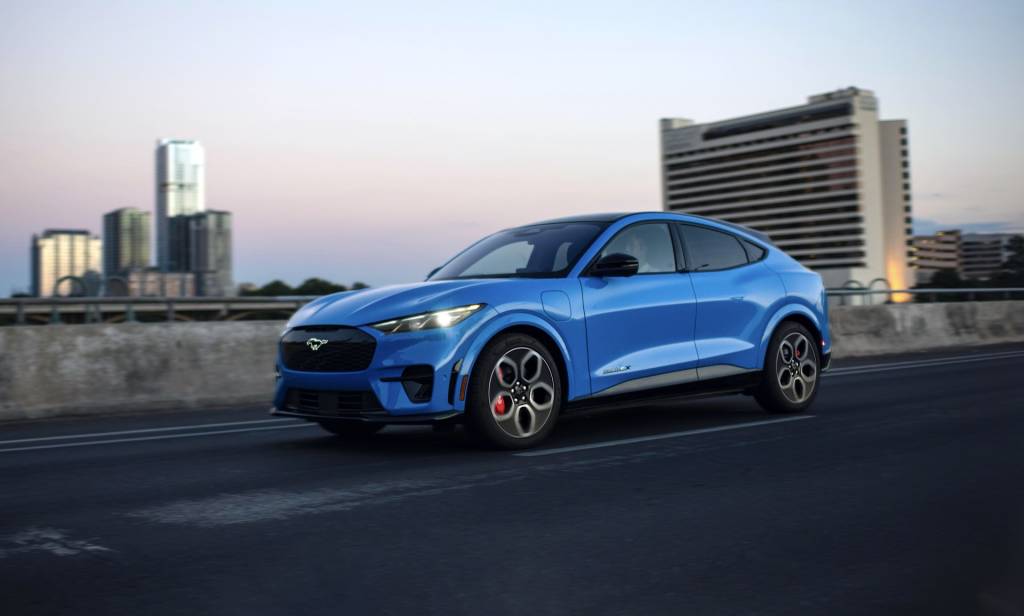
2024 Ford Mustang Mach-E
Analysts found that customers were willing to let dealers manage the maintenance of their EVs, even at the lower level required. The majority of EV “intenders”—survey respondents identified by Escalent as being 15 times more likely to purchase an EV than the average new-car buyer—indicated they would be interested in a subscription plan for routine maintenance.
Brake replacement (82%) and tire replacement (84%) were the most popular options. EVs need new tires much more often than gasoline vehicles, partly because of their weight and torque—but tiremakers are working on it. Current EVs still need their friction brakes serviced like gasoline cars, but as regenerative braking gets stronger, EVs might not even need brake-pad replacement, as they’ll only be for emergency braking and the last few feet of a stop.
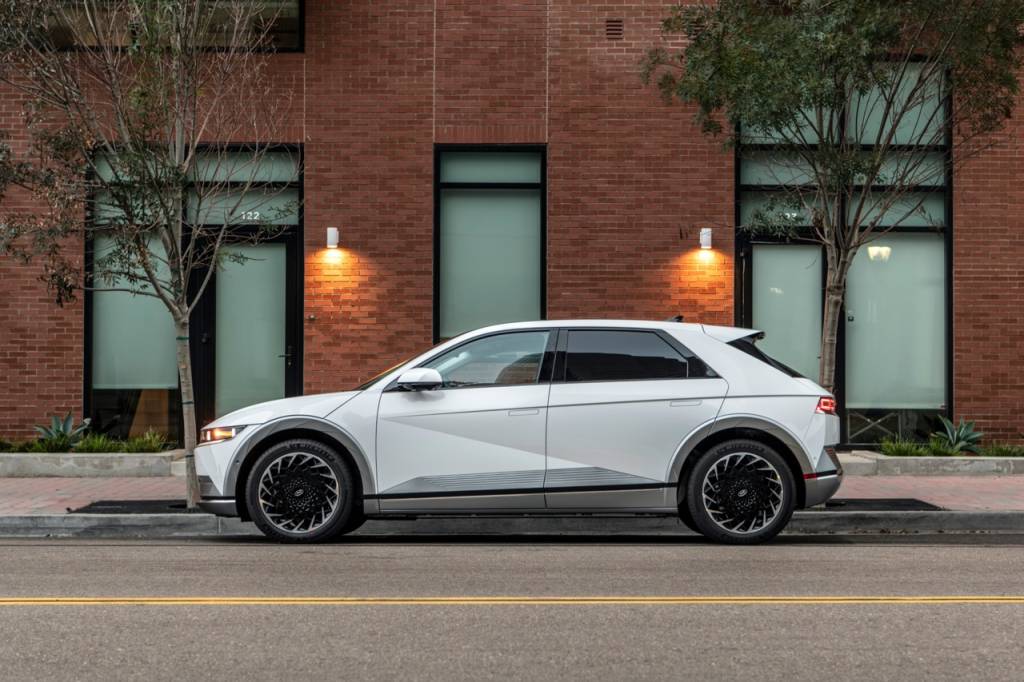
2024 Hyundai Ioniq 5
One thing that isn’t going away, though, is the need for consumer education—something the survey also emphasized. More than 80% of respondents said that having the dealer review proper maintenance would be very important in an EV purchase (only 62% reported dealers actually doing this). Almost 70% of EV intenders and 48% of EV owners said they would be interested in taking courses on topics like maximizing range and battery life.
While EV maintenance needs are typically far lower—helping to keep their five-year ownership cost below many gasoline cars, according to one study—higher insurance cost is a concern. Perhaps more automakers should step up and help assure that insurance is more affordable, too?

Electric Mercedes-Benz C-Class arriving in 2026
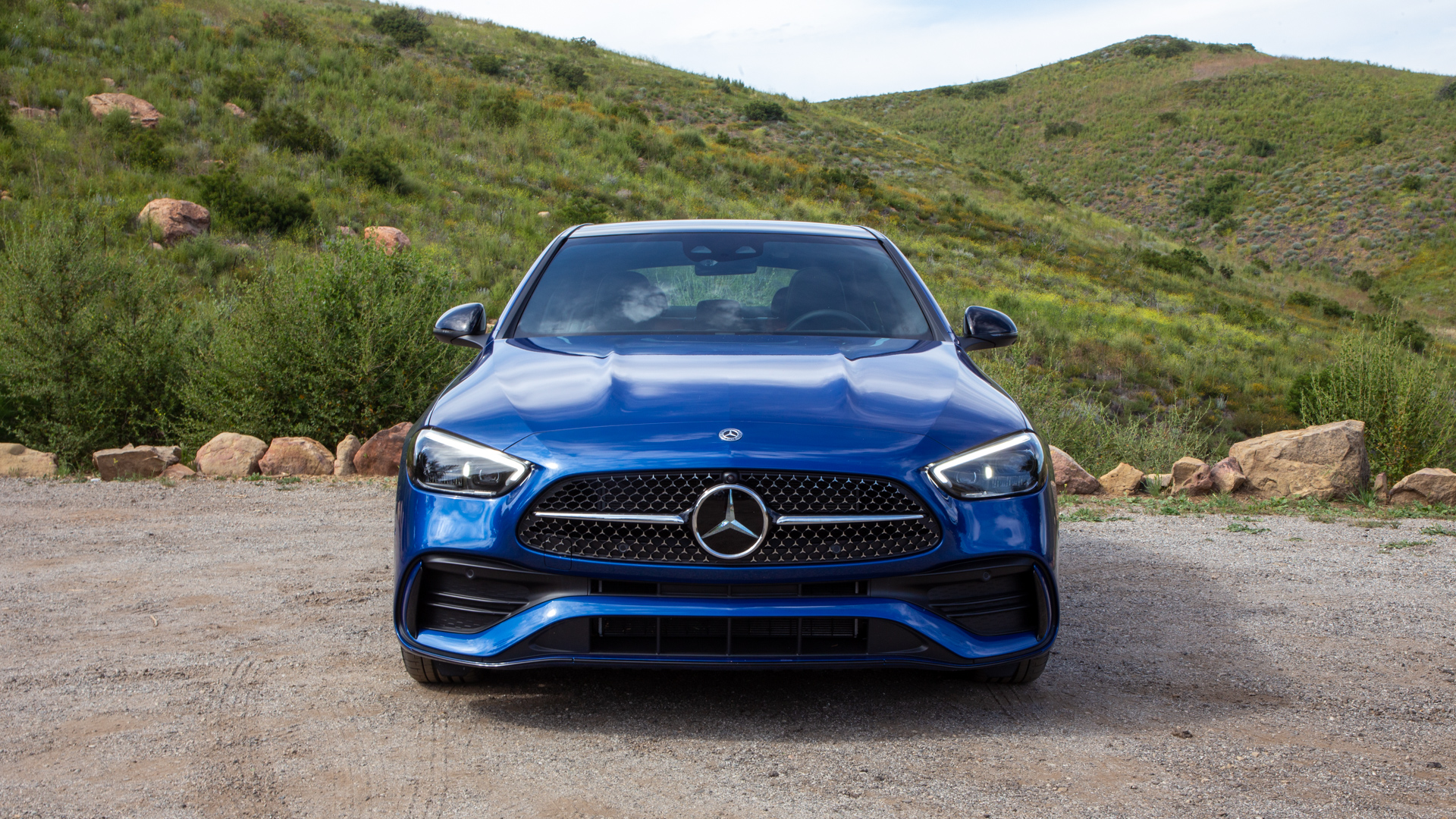
An electric iteration of Mercedes’ compact sedan is just around the corner.
On Friday, Autocar reported Mercedes-Benz CEO Ola Källenius said during the automaker’s second-quarter earnings call that the Mercedes-Benz C-Class EV will arrive in two years.
Källenius said the electric C-Class will arrive alongside the electric GLC-Class SUV.
Both the electric C-Class and GLC-Class SUV will follow immediately after the upcoming electric CLA-Class and CLA-based crossover SUV, the latter of which is expected to enter production in October 2025. The CLA-based crossover SUV, which carries the internal codename of X174, is said to be aiming for the Tesla Model Y.
The Mercedes electric lineup is going to be crowded quickly. The C-Class and GLC-Class EVs will aim upmarket with higher price points than the CLA-Class and CLA-based crossover.
While the CLA models will ride on Mercedes’ upcoming Mercedes-Benz Modular Architecture (MMA), the C-Class and GLC-Class EVs will ride on the brand’s MB.EA EV platform. The electric vehicle platform was supposed to spawn two versions, MB.EA Small and MB.EA Large. The latter was destined for the EQE and EQS successors along with their respective SUVs, but development of MB.EA Large has been stopped to curb spending amid an EV sales slowdown. Development of MB.EA Small continues.
Prototypes of the Mercedes-Benz C-Class EV have already been spotted testing on public roads in production form. The electric iteration of the C-Class will feature more aerodynamic styling than the gas-powered model, while borrowing from the upcoming electric CLA-Class lighting and logos.
Mercedes hasn’t detailed specifications for the electric C-Class, but expect a range of 300 miles or more.

2025 Hyundai Kona Electric spreads the V2L wealth
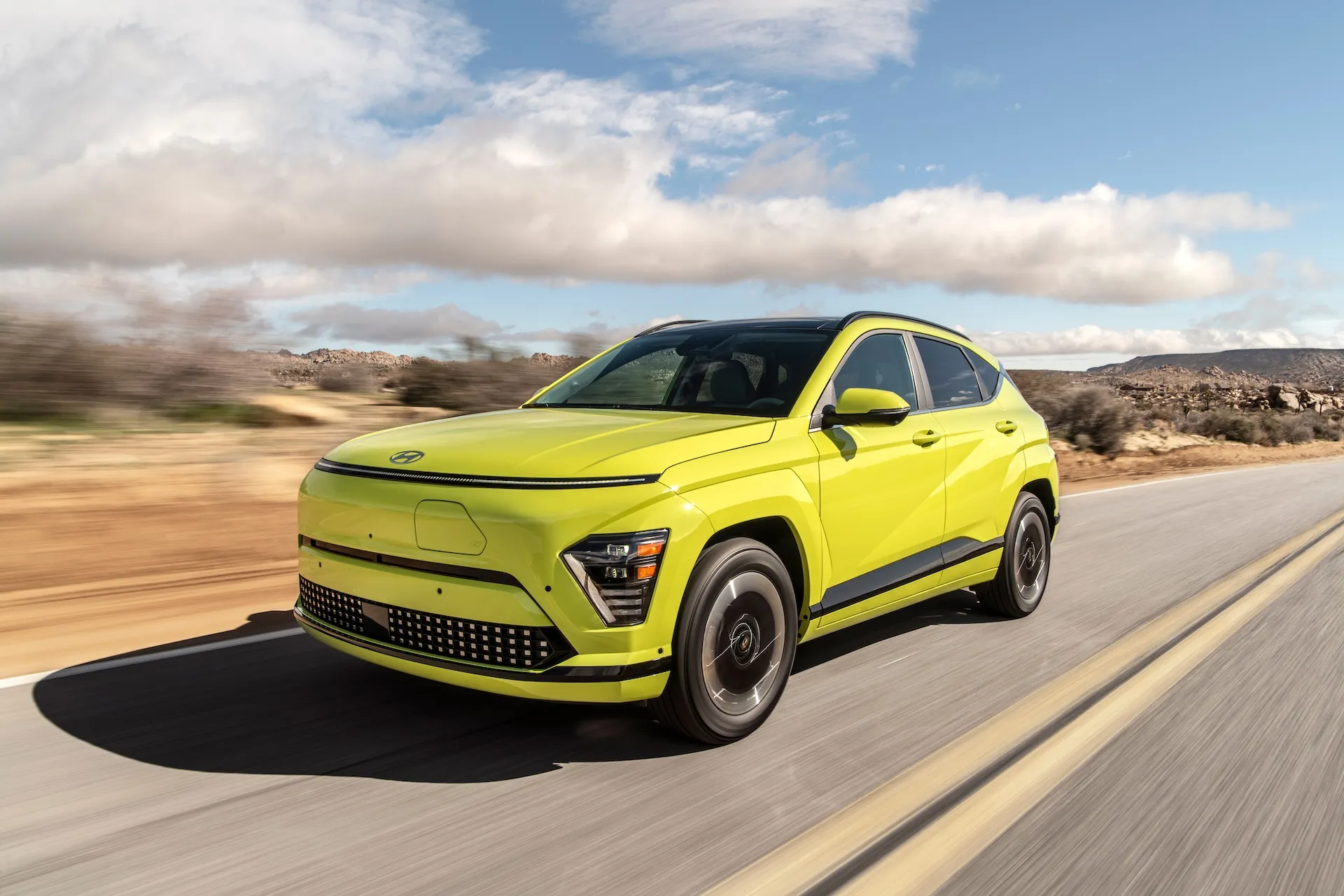
Prices are up across the board for the Hyundai Kona Electric in 2025, but so is standard equipment.
The ’25 Kona Electric also gains a new trim level: the N Line, which gets sporty trim inside and out, to mirror the version that’s sold with a gas engine.
Regardless of trim, the electric Kona continues to outshine gasoline versions of the redesigned hatchback, and it continues to be one of the lowest-priced new EVs in the U.S.
This year’s Kona Electric SE costs at least $34,270, up $260 from last year. That includes a $60 boost in destination charges, up to $1,395 from $1,335.
The SE continues as the only model that gets a smaller 48.6-kwh battery pack, which offers 133 hp and 200 miles of EPA-rated range (for the 2024 model year; the EPA hasn’t published 2025 data, yet).
The Kona Electric SEL costs $38,270 for 2025. The cost increase is the same—but it upgrades to the 64.8-kwh pack that returns 261 miles of range and also powers the N Line and Limited models. It’s rated at 201 hp.
The $39,670 N Line slots in below the $42,445 Kona Electric Limited, which costs only $65 more than last year.
Among the features found in the Kona Electric, ambient lighting moves from the Limited trim down to the new N Line trim and LED interior lighting now spotlights the SEL, N Line, and Limited trim levels.
V2L capacity now factors in across all four editions: SE, SEL, N Line, and Limited.
Otherwise the Kona Electric carries over for the 2025 model year. Last year, all models received a larger 12.3-inch touchscreen that brought with it wireless Apple CarPlay and Android Auto, a built-in wifi hotspot, and over-the-air (OTA) software updates. The Kona family, which was new for 2024, also sports more interior room than before, as well as options including a power tailgate and a head-up display.
The Kona Hybrid that’s sold in other global markets still remains out of reach for American shoppers: Hyundai has focused its HEV and PHEV efforts on larger Tucson and Santa Fe crossover SUVs and the Elantra and Sonata sedans.

Uber and BYD team up for EVs and autonomous vehicles
- Uber partnered with BYD for 100,000 EVs for the ride-hailing service
- The partnership could get BYD into the U.S. while skirting retail sales
- Uber’s targeting a zero-emissions platform by 2040 and going all-electric by 2030 in some markets
Uber on Wednesday announced a partnership with BYD to bring 100,000 of the Chinese automaker’s EVs to its ride-hailing platform—laying the groundwork for BYD EVs to reach the U.S.
The agreement—the largest so far between Uber and an automaker—will see the ride-hailing giant deploy BYD vehicles “in key global markets,” starting with Europe and Latin America, according to a company press release, and later expanding to include the Middle East, Australia, Canada, and New Zealand.
While the U.S. was not mentioned, the Uber partnership gives BYD a way into the U.S. other than retail sales, which are unlikely to remain an option for the automaker given current high tariffs on Chinese-made vehicles, something that’s unlikely to change regardless of which party wins the 2024 presidential election.
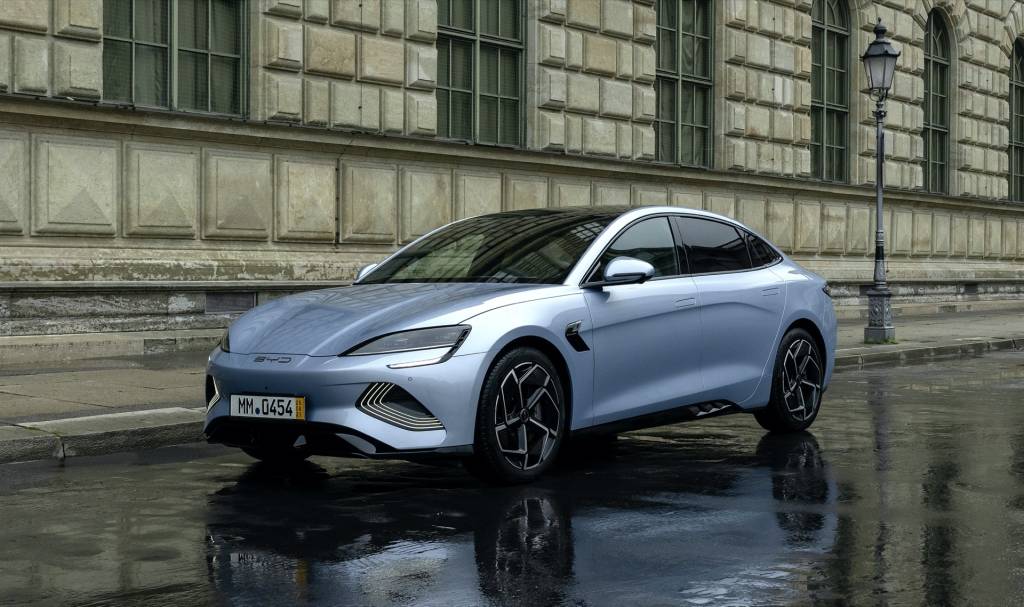
BYD Seal
In Uber, BYD now has a large potential customer for fleet use of its EVs, something that failed to develop in the automaker’s previous efforts to enter the U.S. Marketed mainly as a taxi, the BYD e6 was even certified for sale in the U.S., but customers didn’t bite. BYD, which regularly competes with Tesla for the most EV sales, currently sells EVs like the Seal in Mexico, and is also considering entering the Canadian market, Reuters reports.
Uber claims its drivers are going electric five times faster than private car owners, but that driver surveys show that price and lack of financing options remain major barriers for those that haven’t made the switch. To address this, Uber and BYD will work to provide EVs to ride-hailing drivers at lower cost, the release said.
The partnership may include financing and lease offers for drivers, as well as discounts on charging, maintenance, and insurance, “based on what works best for drivers in a given market,” the release said.
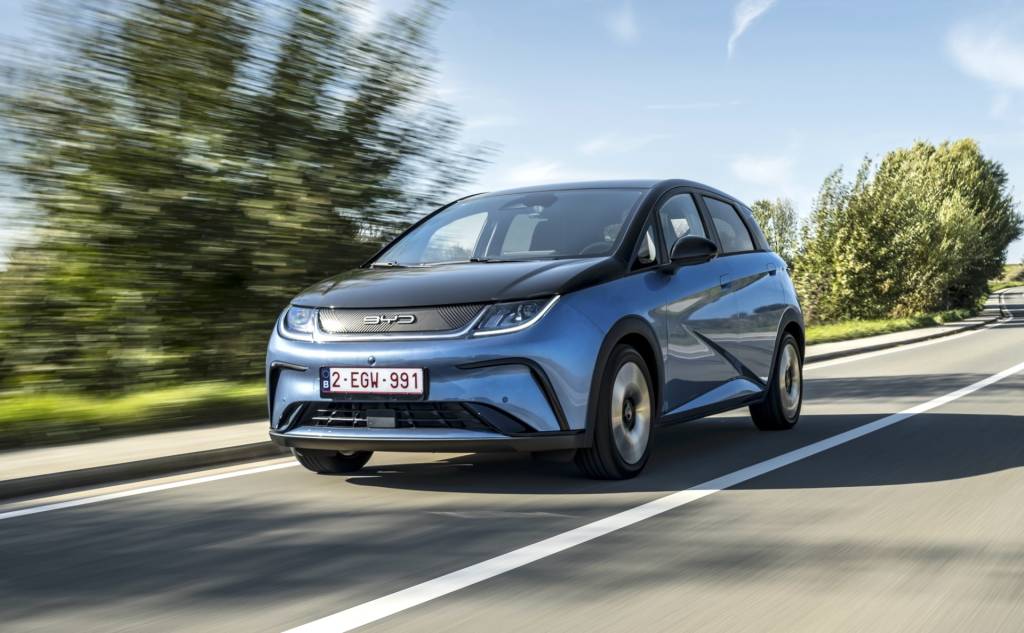
BYD Dolphin EV – Euro spec
The two companies will also partner on future “autonomous-capable vehicles” developed by BYD to be used by Uber. The ride-hailing company has long considered EVs designed specifically for its ride-hailing and delivery services, also working with startup Arrival on a good-looking design that was later dropped by the startup. Among established automakers, Hyundai seemed like the most logical partner for Uber EVs on the ground, given the two companies’ existing partnership to develop electric air taxis.
Efforts to acquire more EVs feed into Uber’s targeting a “zero-emission platform” by 2040, with the goal to be all-electric by 2030 in some markets. In California, that will simply mean compliance with an EV mandate for ride-hailing services passed in 2021, which requires companies like Uber to go all-electric by the end of the decade.