
Category: General

Audi slashes EV interest rates, but Tesla Y can cost a lot less
Current Audi EV financing undercuts Tesla, but it may still be possible to get a better deal overall from the U.S. automaker, reports CarsDirect.
A recent dealer bulletin showed 0.99% financing on all 2024 Audi EVs for up to 60 months, compared to rates of 2.99% to 6.49% for most of the brand’s other models. It also undercuts the 1.99% rate Tesla is currently offering on the Model 3 and Model Y, and is dramatically lower than the 5.99% rate for the Model S and Model X, according to CarsDirect.
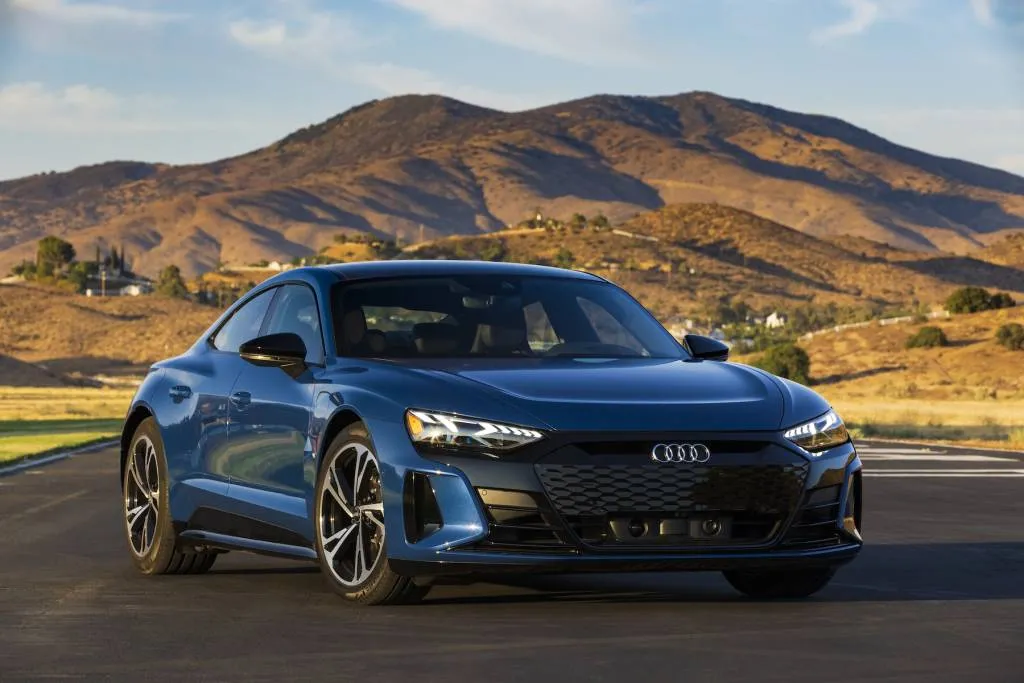
2024 Audi e-tron GT
However, most Model 3 and Model Y variants (apart from the base rear-wheel-drive Model 3) are eligible for a $7,500 federal tax credit, while no Audi EV is eligible for the credit under current rules that went into effect at the beginning of this year. And that means one of the entry-level Tesla EVs could still be a better deal.
With the tax credit factored in, CarsDirect estimates a $680 monthly payment for a 60-month financing term on a Tesla Model Y Long Range AWD. Even with the lower interest rate, it estimates a monthly payment of about $870 for an Audi Q4 E-Tron over the same term.
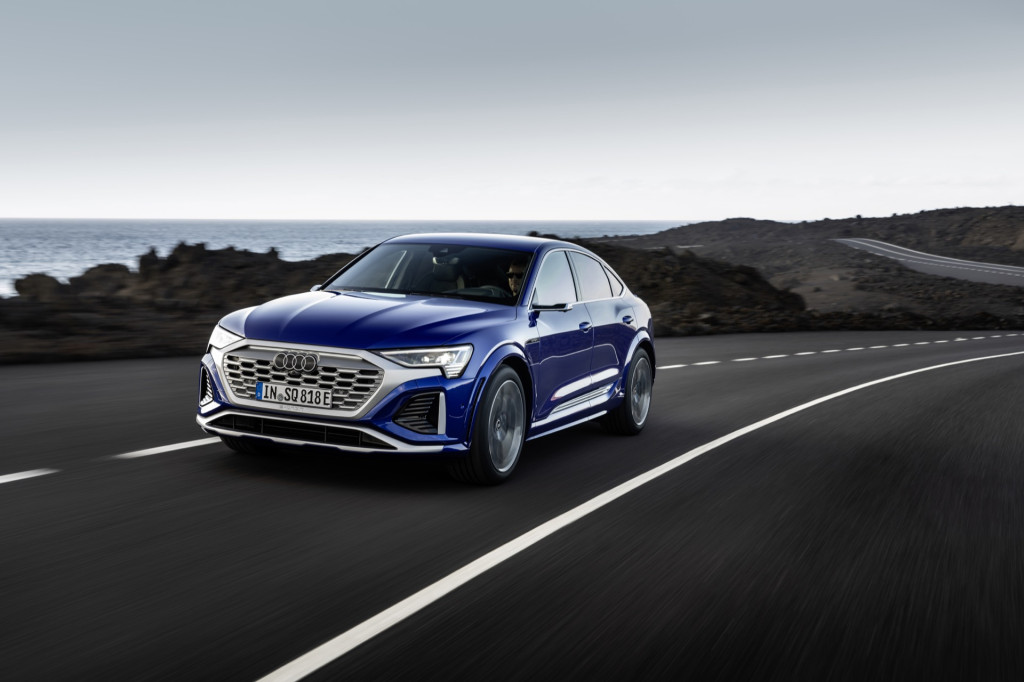
2024 Audi Q8 E-Tron
The Q4 E-Tron is Audi’s entry-level EV and thus the closest rival to the Model Y. It shares the MEB platform with the Volkswagen ID.4 and ID.Buzz from Audi’s parent brand. Audi’s EV lineup also includes the E-Tron GT and RS E-Tron GT, which share the J1 platform and its 800-volt electrical architecture with the Porsche Taycan, and Q8 E-Tron, which is based on a version of the MLB platform used by many VW Group gasoline models.
Both the Q4 E-Tron and E-Tron GT receive some updates for 2025, bringing more power and range to the Q4 E-Tron and a new RS E-Tron GT Performance grade for the flagship E-Tron GT. The existing models will soon be joined by the Q6 E-Tron crossover and A6 E-Tron hatchback, both based on the same Premium Platform Electric (PPE) as the all-electric 2025 Porsche Macan.

Cadillac Lyriq AWD recalled for potential brake failure
General Motors is recalling 2023-2024 Cadillac Lyriq electric SUVs over potential unexpected activation of anti-lock braking systems (ABS).
The recall encompasses 21,469 vehicles in the U.S., all with the dual-motor all-wheel-drive powertrain. Single-motor rear-wheel-drive models are not affected. The recalled vehicles may have overly sensitive ABS, according to the National Highway Traffic Safety Administration (NHTSA).
In rare circumstances, this condition could cause the ABS to activate unnecessarily, which could lead to the sustained release of brake pressure. That in turn could result in reduced stopping power or inoperative brakes. This can happen during braking on dry surfaces at speeds below 25 mph, according to the NHTSA.
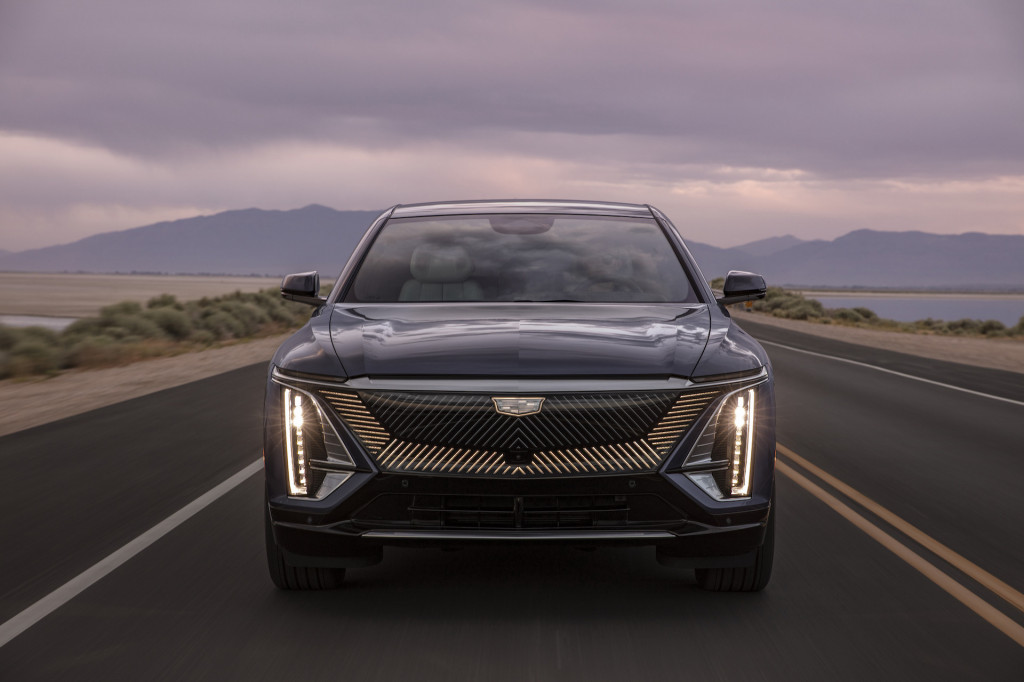
2023 Cadillac Lyriq
GM opened an investigation into the issue in May following two reports of “minor accidents” alleged to be the result of brake failure. The automaker is not aware of any injuries or fatalities related to this issue.
The remedy is a software update for the affected vehicles’ electronic brake control modules, which does not require a dealer visit. Owners can have the software installed as an over-the-air update, or take their vehicles to dealerships to have the update installed if they wish.
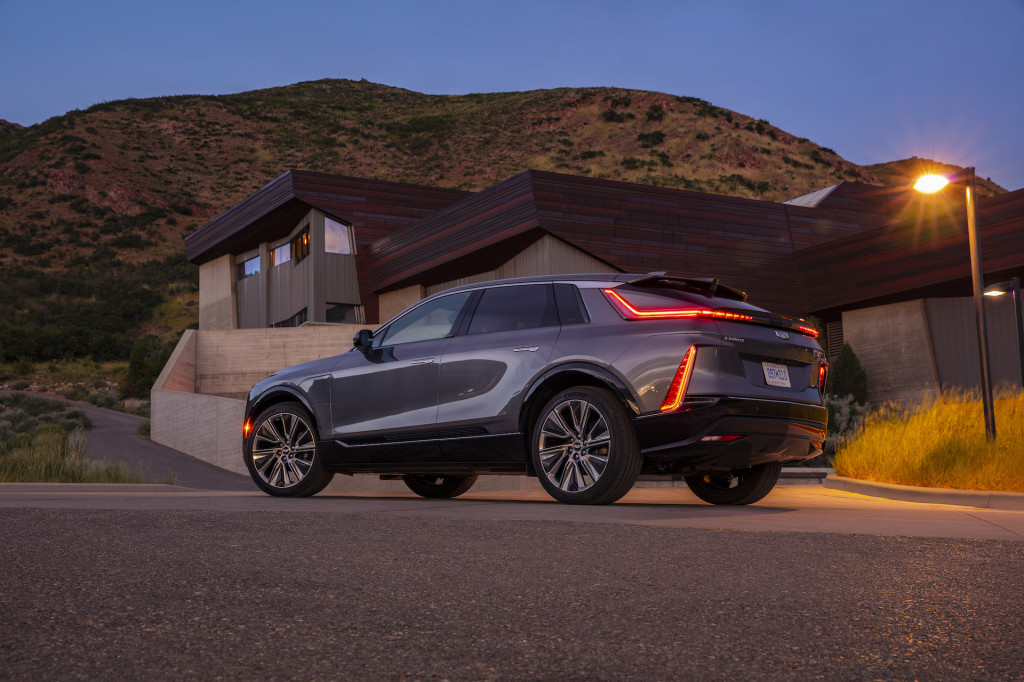
2023 Cadillac Lyriq
GM plans to mail owner notification letters Sept. 23, 2024. In the meantime, owners can contact GM customer service at 1-800-458-8006 or Cadillac’s EV Concierge service at 1-844-382-2345. GM’s reference number for this recall is N242453471.
This is the fifth recall for the 2023 Cadillac Lyriq, which arrived on the market earlier than expected in the 2022 calendar year as the first Cadillac model to use GM’s Ultium EV component set, and was a Green Car Reports Best Car to Buy 2023 finalist.

2025 Genesis GV60 gets less expensive base AWD model
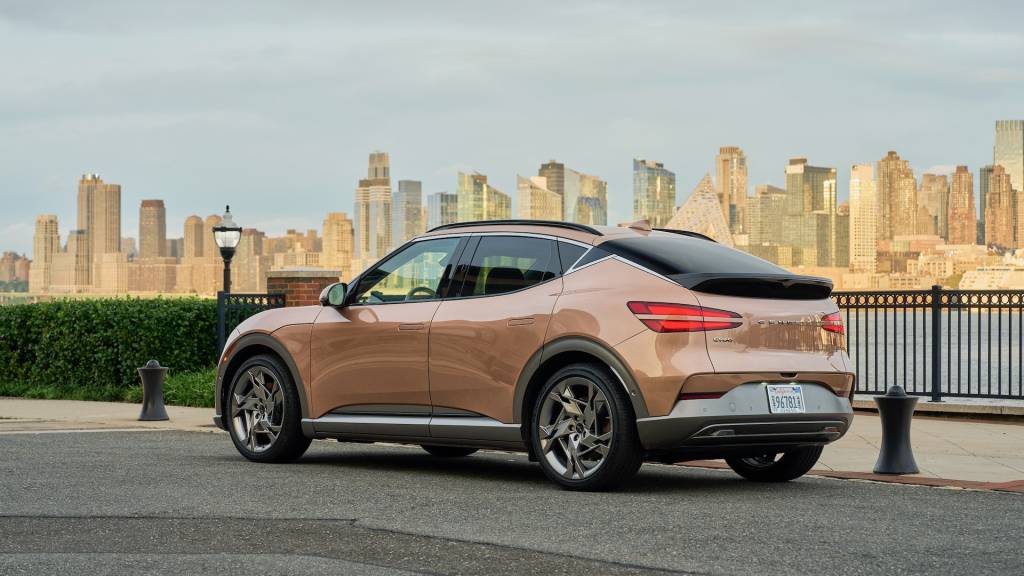
The 2025 Genesis GV60 receives minor changes and a minor price increase for its third model year on sale in the U.S., Genesis announced last week.
Wireless Apple CarPlay and Android Auto are now available, along with a new Capri Blue exterior paint color. The 19-inch-wheel option for all-wheel-drive models has also been broken out into its own trim level. The 19-inch wheels were previously standard on the Advanced AWD grade, which is now available only with 20-inch wheels.
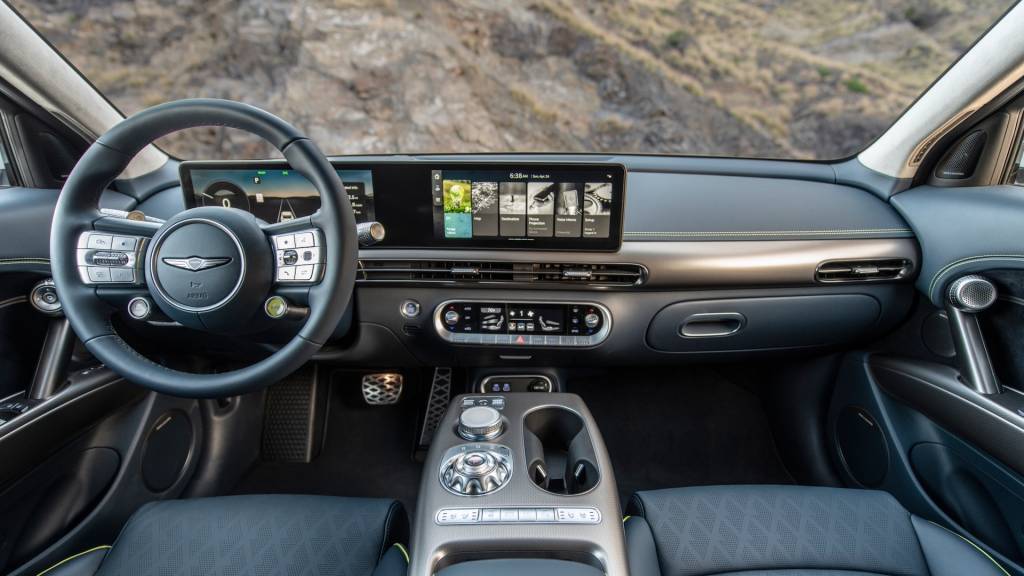
2025 Genesis GV60
The single-motor rear-wheel-drive version introduced for the 2024 model year remains the least-expensive GV60, with a base price of $53,700 (all prices include a mandatory $1,350 destination charge). That’s $350 more than the 2024 model.
The 2025 all-wheel-drive model has a new entry point with 19-inch wheels and a starting price of $57,200. Last year, the Advanced AWD was the entry point at $61,900. This year’s Advanced AWD model with 20-inch wheels starts at $62,250. The Performance AWD returns as well, with a $71,250 starting price.
EPA range ratings for the 2025 model year have not been published yet, but for reference the 225-hp rear-wheel-drive model was the longest-range GV60 variant for 2024, extracting 294 miles from a 77-kwh battery pack. Genesis quotes a slightly larger 77.4-kwh capacity for AWD models, which for 2024 were rated at 264 miles with 19-inch wheels, 248 miles with 20-inch wheels, and 235 miles in Performance guise.
2025 Genesis GV60
The Performance model boasts 429 hp, compared to 314 hp for other all-wheel-drive models, but it will be superseded by a production version of the GV60 Magma concept shown at this year’s New York auto show. The production version that was demonstrated at the Goodwood Festival of Speed in July will be the first in a series of Magma performance models, although Genesis hasn’t confirmed whether any other EVs are planned.
Genesis said in 2021 that it would introduce only battery-electric or hydrogen fuel-cell vehicles from 2025, on the way to an all-electric/fuel-cell lineup by 2030. But the automaker is planning to introduce hybrids, citing changes in customer demand.

Fratzonic: EVs have to sound like something, but does it have to be ICE?
The 2024 Dodge Charger Daytona electrifies a hallowed muscle-car nameplate. And it features an elaborate sound generator to replicate the exhaust noise of the V-8 that will not be offered in the new Charger.
Unveiled in March, the Daytona is the all-electric version of the redesigned Charger, which will also be sold with a gasoline twin-turbocharged 3.0-liter inline-6 engine. Electric models feature what Dodge calls the Fratzonic Chambered Exhaust—named after Dodge’s Fratzonic logo.
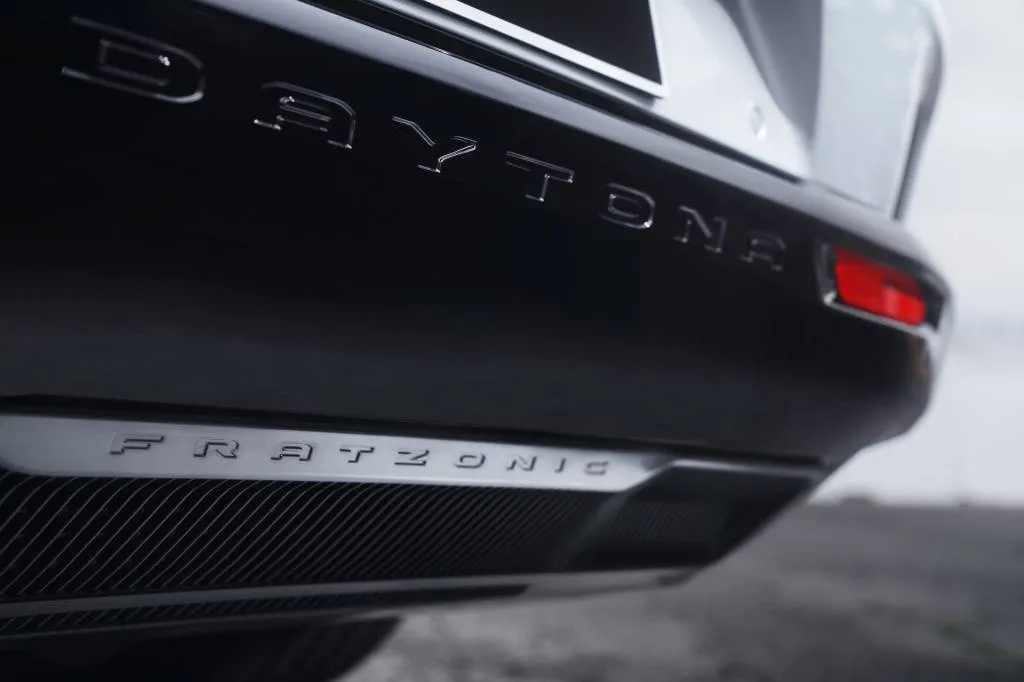
2024 Dodge Charger Daytona
This artificial exhaust system uses transducers under the body to produce sound that is then amplified by resonators, much like the ones used in mufflers to alter sound, which is then piped out of the car. The system also considers speed and control inputs like steering and pedal pressure. This creates a reasonable facsimile of a V-8 exhaust note, as demonstrated in a video recently released by Dodge.
The sound in the video is for the Charger Daytona R/T and Charger Daytona Scat Pack models that arrive later this year as the first electric Charger variants. Dodge may create a different soundtrack for an expected higher-performance model coming later, rumored to be called the SRT Banshee.
[embedded content]
The sound level is also alterable by drive mode. Sport mode delivers a medium sound output, while Drag, Drift, Donut, and Track make things louder. A Stealth mode is also available for those want to drive in silence without the artificial V-8 noises.
Federal rules require EVs to emit some kind of noise as a warning to pedestrians, and the National Highway Traffic Safety Administration (NHTSA) in 2023 even considered a petition to add these pedestrian-warning sounds to millions of older vehicles. But does that mean EVs should sound like the internal-combustion cars they’re meant to replace?

Test drive: 2024 Subaru Solterra feels fit for the blue highways
- Solterra efficiency is in the same ballpark as Hyundai Ioniq 5 and VW ID.4
- Even with improvements, it’s one of the slower-charging electric crossovers
- X-Mode off-road mode gives the Solterra impressive AWD traction and finesse
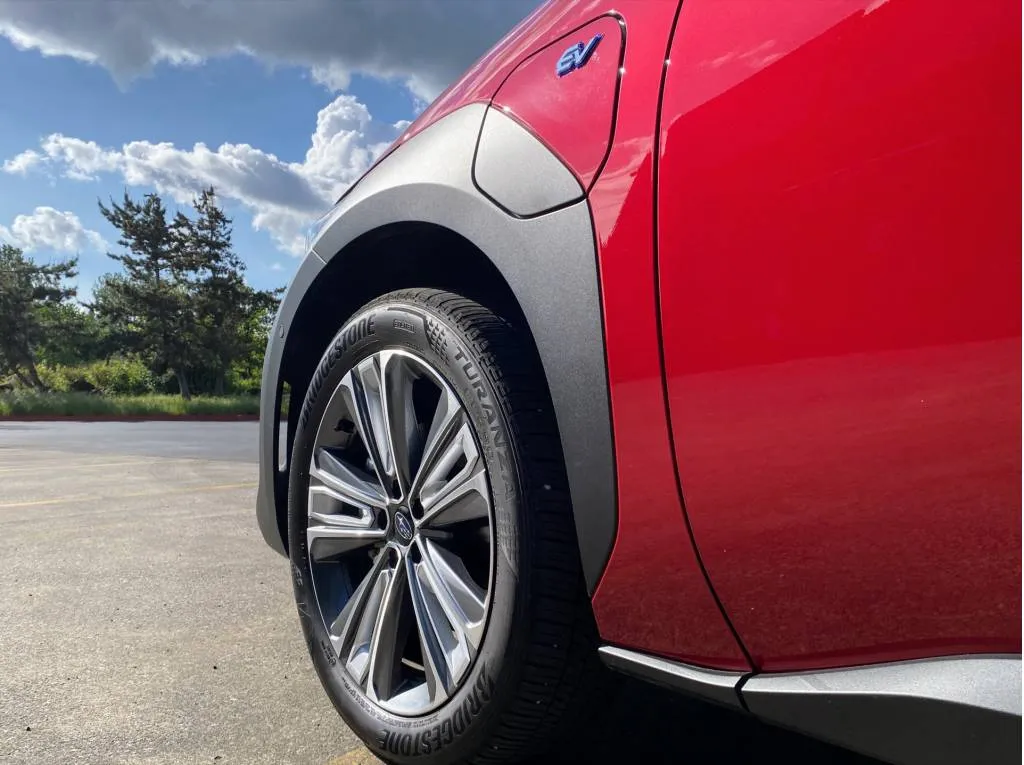
Subaru’s vehicles have never completely fallen in line with the mainstream. As I spent more time with the brand’s first electric car, the Solterra, it started to make sense that there’s no reason to think its EVs will shed the Gore-Tex look. This all-wheel-drive electric crossover is simply on its own trip versus other EVs.
After a brief sample of the Solterra off-pavement, I recently covered more than 400 miles in the Solterra, with the vast majority of that—nearly 360 miles—on freeways. During that time, taking its strengths and weaknesses in light, I realized that I had this model away from its element. The lesser-traveled routes, the gravel roads and rutted trails, and the travel days getting out to trailheads and launch points—the blue highways—altogether make much better sense in the Solterra than aiming to haul through interstate miles in the shortest possible time.
2024 Subaru Solterra
That said, I ran this electric Subaru on the Interstate Highway System slog to test out the 2024 Solterra charging improvements. Subaru aims to step up Solterra sales volume with a series of second-year upgrades and updates. In addition to quicker charging, steering-wheel paddle-shifters can now adjust regenerative braking on the fly, and roof bars can now hold a static load of up to 700 pounds, good for rooftop tents.
With a lot of attention paid to the charging and efficiency points, here are those pros and cons that help frame the Solterra.
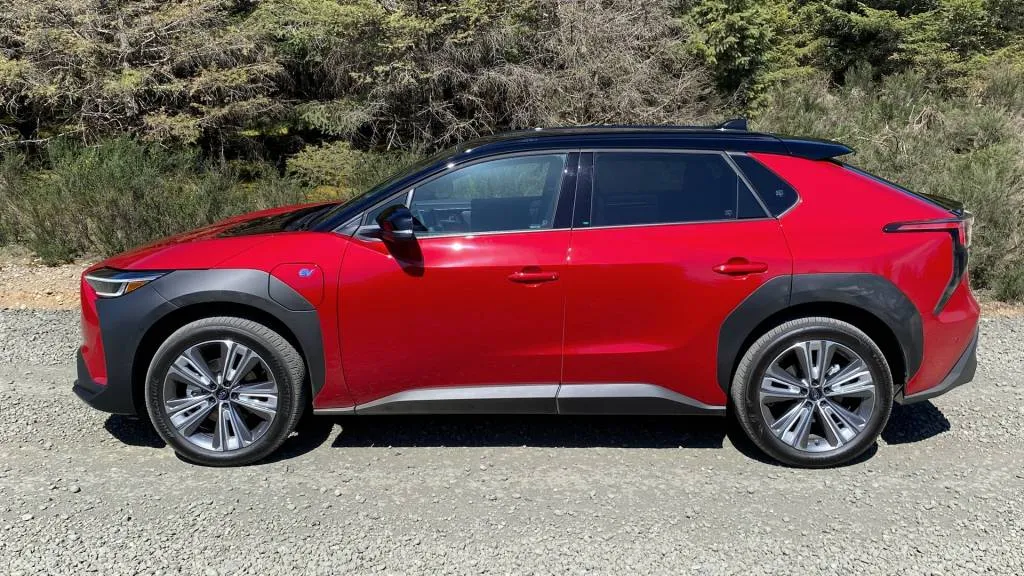
2024 Subaru Solterra
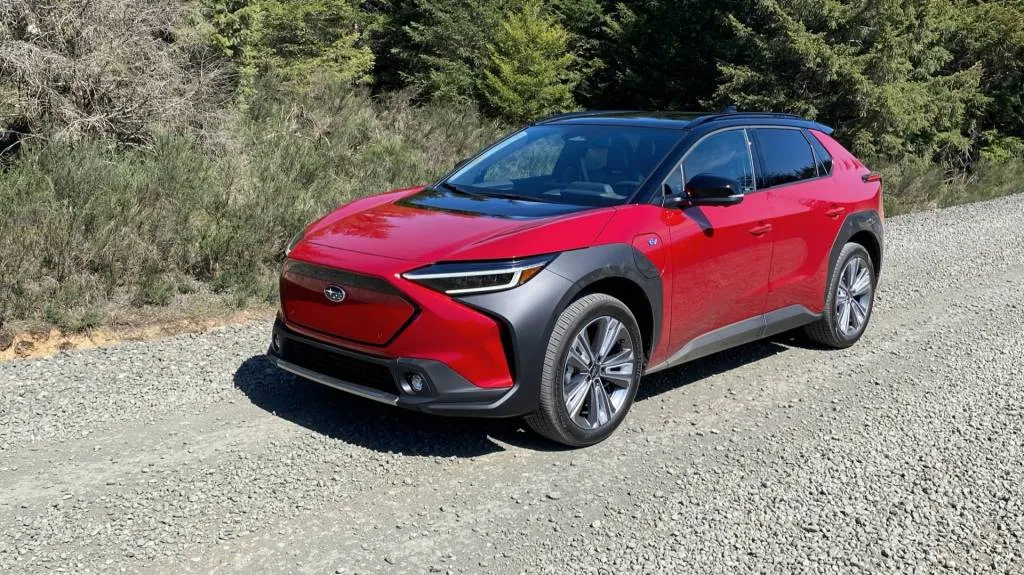
2024 Subaru Solterra
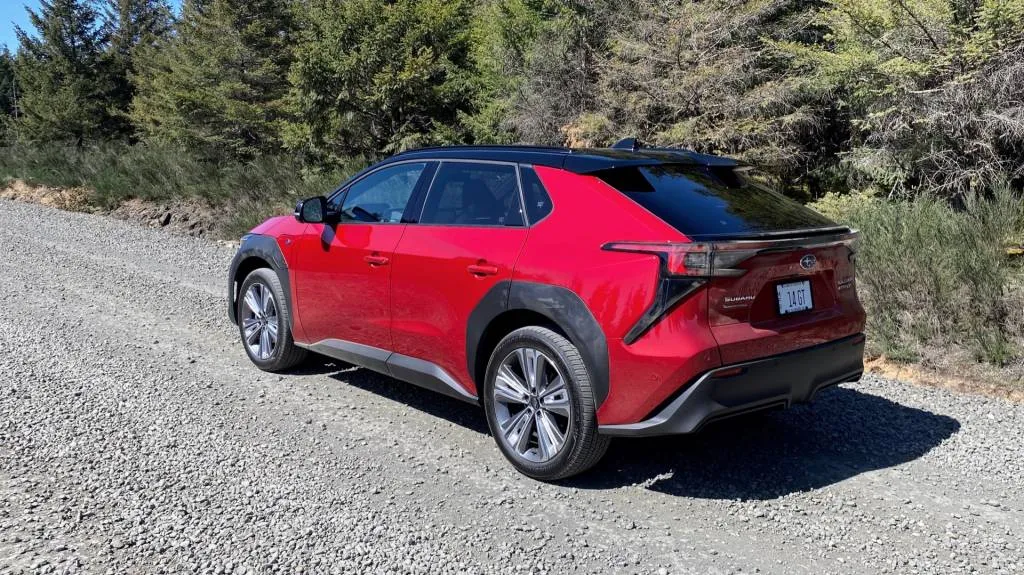
2024 Subaru Solterra
Pro: Surefooted electric all-wheel drive
The Solterra is the result of a partnership with Toyota, and it’s very closely related to the Toyota bZ4X. But the Solterra is all-wheel-drive only, unlike the bZ4X, and Subaru boasts that it oversaw the tuning of these models’ traction and stability control systems, including the Solterra’s incorporation of its X-Mode off-road traction system.
When I drove the Solterra earlier this year, at the annual NWAPA Mudfest vehicle roundup, on a demanding course that traversed a steep, somewhat loose incline, and over logs, boulders, and pits that challenged wheel articulation, it didn’t flinch.
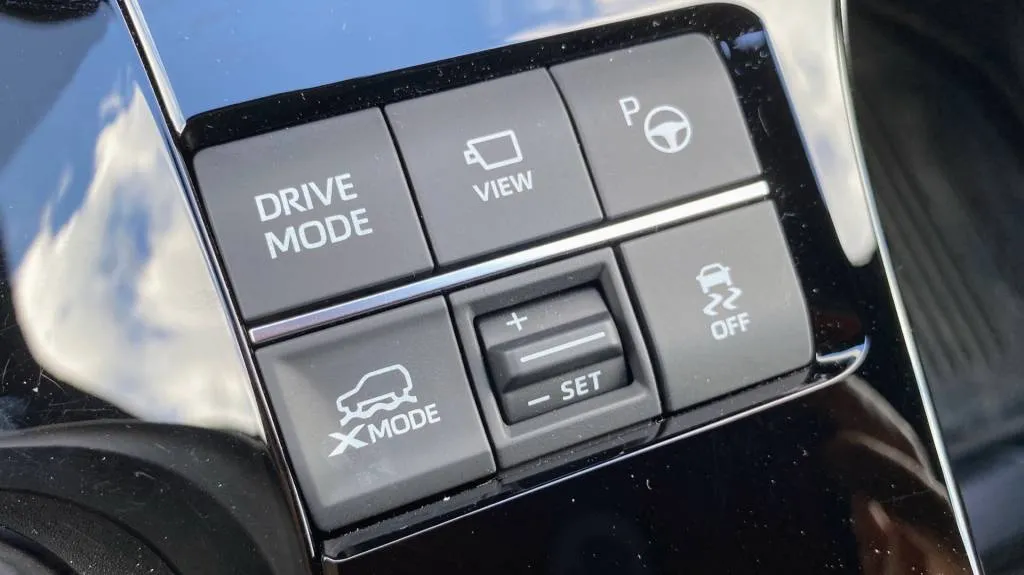
2024 Subaru Solterra
Between its Eco, Normal, and Sport modes, throttle sensitivity seems to be the main difference, but for this course I opted for X-Mode, which Subaru has carried over from its gasoline vehicles. The Solterra doesn’t find its traction like a Forester or Outback, though, and so I noted that X-Mode here was tuned for finesse—in a way that shows off the precision that can be dialed into EV propulsion. It even includes a Grip Control feature that will maintain a set, very low, off-road speed, all with near zero tire slip. There’s no high-speed driver assistant quite like Autopilot or Super Cruise here, but this is the trail-oriented cruise control Subaru owners need.
Like most other Subarus, the Solterra has lots of ground clearance. Its 8.3 inches is an inch or two more than most other electric crossovers with its exterior dimensions, and it could make a big difference in whether you get out of that uncleared winter driveway without high-centering. Conditions permitting, you can also turn off all the traction systems if and when you want, allowing fast and loose driving that favors power to the rear wheels.
2024 Subaru Solterra
Con: Solterra’s not quite there on road noise
One of the issues with EVs is that their propulsion systems are so quiet you start to dwell on all the other noises. During all the time I spent on the highway, I found myself turning the nice-sounding Harman Kardon audio up higher and higher—to compensate for the cabin noise, which was at levels much higher than in the Ford Mustang Mach-E I also spent a fair amount of time in that same week. While the Solterra’s design is relatively boxy, it didn’t seem to be wind noise up around the roof or pillars so much as a din of road noise from below and behind. It’s partly a matter of coarse American interstate highway concrete, and I’ve noticed such issues before in Subarus as well as in the Toyota RAV4, so it’s all in the family.
2024 Subaru Solterra
Pro: Decent efficiency, consistent range
By the official numbers, the Solterra earns an EPA range rating of 227 miles from a usable capacity of 65 kwh, out of a gross capacity of 72.8 kwh. And based on EPA combined driving cycle results, it’s rated at around 3.1 miles per kwh. These efficiency numbers are pretty good—right in line with the Hyundai Ioniq 5 AWD and its 260 miles from 74 kwh usable, and the Volkswagen ID.4 AWD Pro and its 263 miles from 77 kwh usable. It’s just a significantly smaller pack.
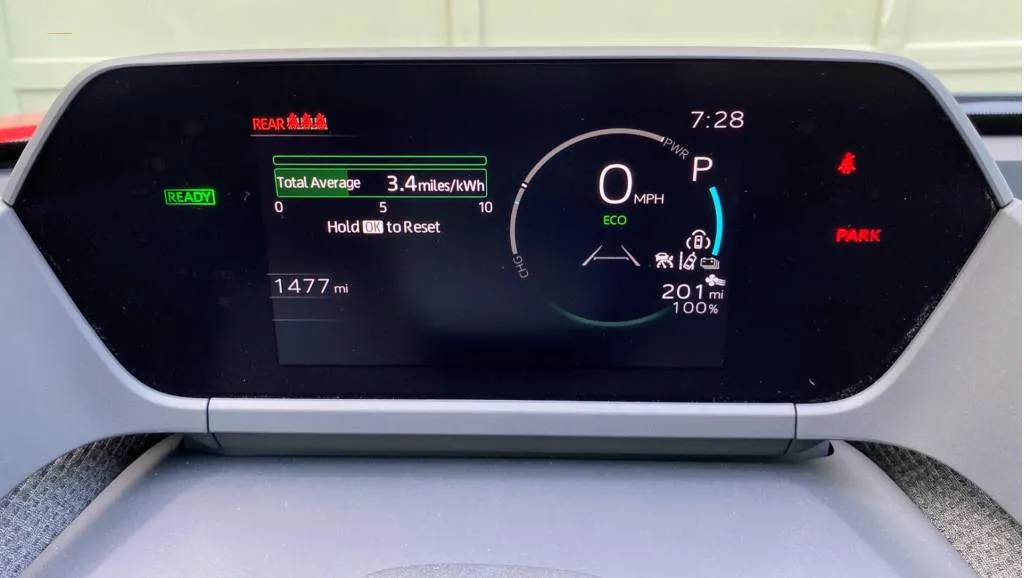
Over more than 400 miles spent with the Solterra I averaged 3.4 miles/kwh. That included 360 miles of highway driving between Portland, Oregon, and Bellevue, Washington, in which I averaged in the 3.2 to 3.4 mi/kwh range.
2024 Subaru Solterra
There are big asterisks to this mostly good report on how the Solterra works with the energy it has. Firstly, the weather was dry and mild (55 to 70 degrees F) during my time with the Solterra, and I’ve noted in a drive of the nearly identical Toyota bZ4X AWD that temps in the low 40s put a huge dent in efficiency and range. Secondly, I noted that Solterra efficiency falls off a figurative cliff much above 70 mph. On a short, flat stretch, on a relatively calm day, I saw 2.6 mi/kwh from the trip computer over several miles at XX mph, versus 3.5 at 70 mph. Read on and figure in the factor below, and you won’t be speeding.
2024 Subaru Solterra at Electrify America
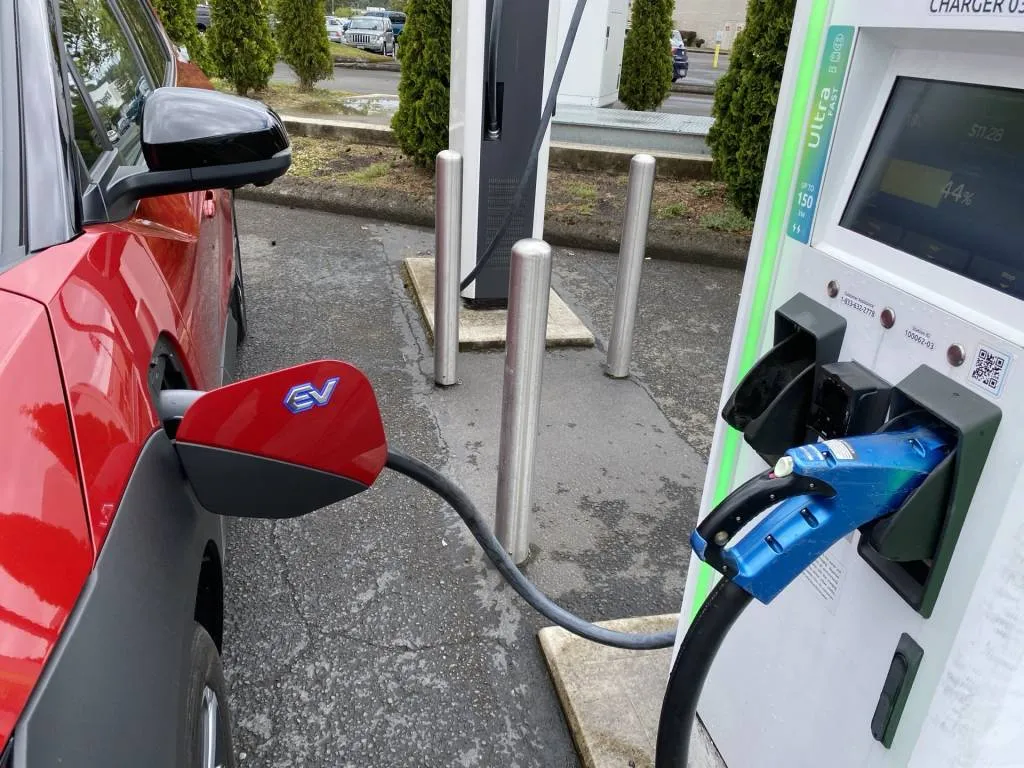
2024 Subaru Solterra at Electrify America
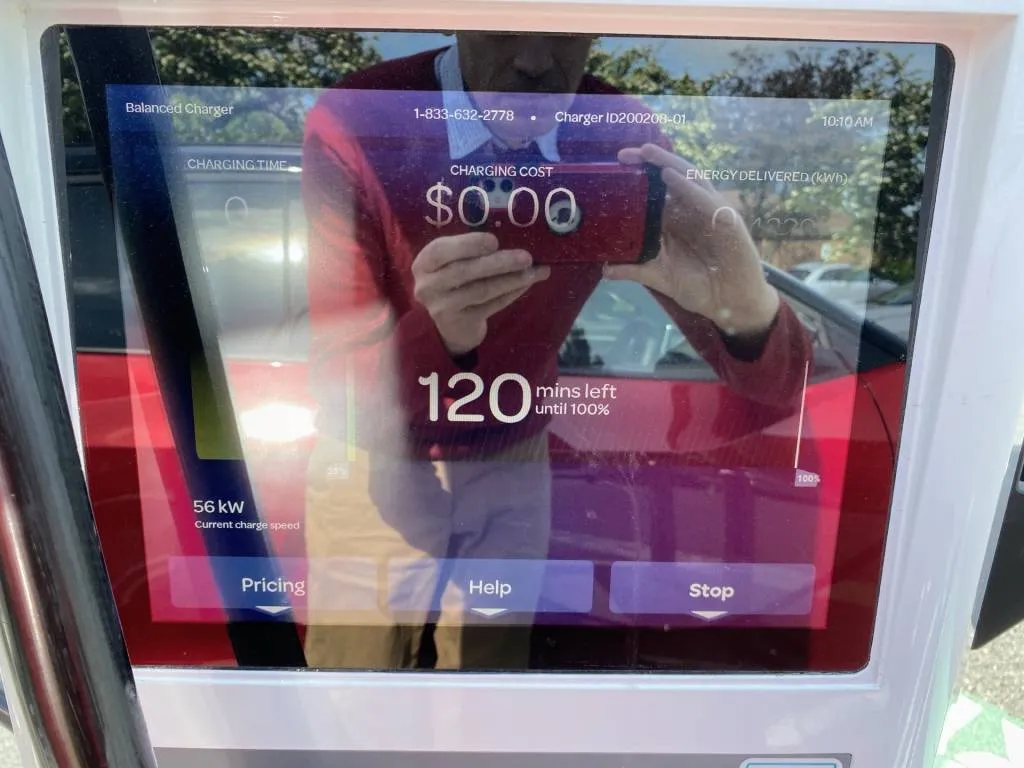
2024 Subaru Solterra at Electrify America
Con: Long charging stops
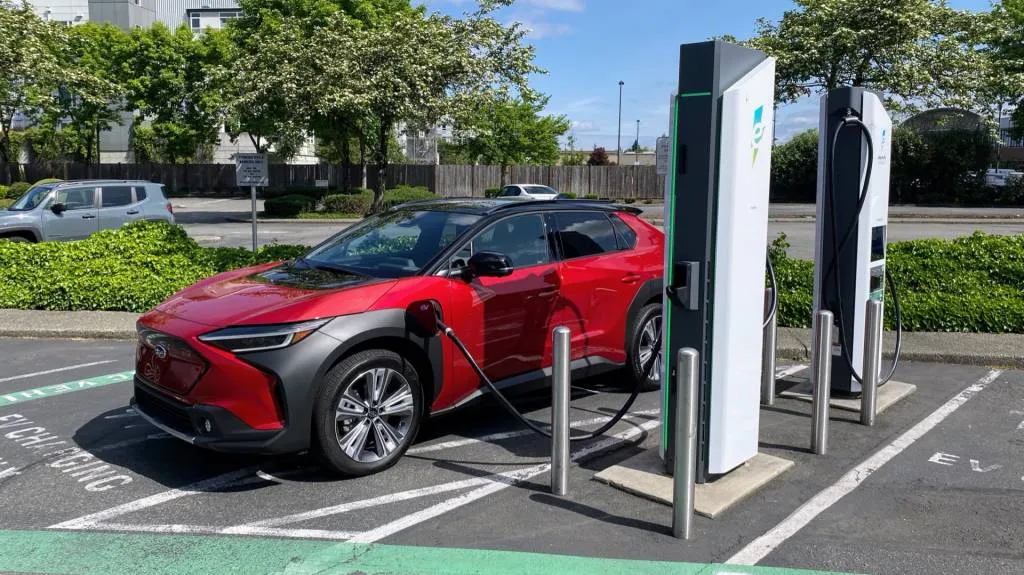
Yes, you can take the Solterra on a long road trip, but no, you can’t expect to be in too much of a hurry. My 360-mile Portland-to-Bellevue round-trip required TWO charging stops, and they weren’t brief. Subaru claims that the Solterra can now charge from 10-80% in as little as 35 minutes, though my charge times didn’t at all demonstrate that.
Due to the way chargers were placed along the way, I needed to plug in at 25%. I intended to get to 80% but decided to cut and run at 77% after 41 minutes (35.8 kwh delivered). The charging session never reached 60 kw, and it displayed a whopping 120 minutes to get to 100%. Where’s Matt Pinfield?
I then traveled another 152 miles, averaging 3.4 miles per kwh, and I plugged in at 9%, and this time the session power rose to 80 kw right away. It got from 9% to 48% in a speedier 20 minutes before the rate started slowing appreciably—adding nearly 80 miles of real-world range in that time, easily more than enough to get me back to Portland and plug in my L2 connector. That’s closer to Subaru’s claimed charge time, but the Electrify America charger still estimated the total time to 80% at 55 minutes for that session starting at 9%.
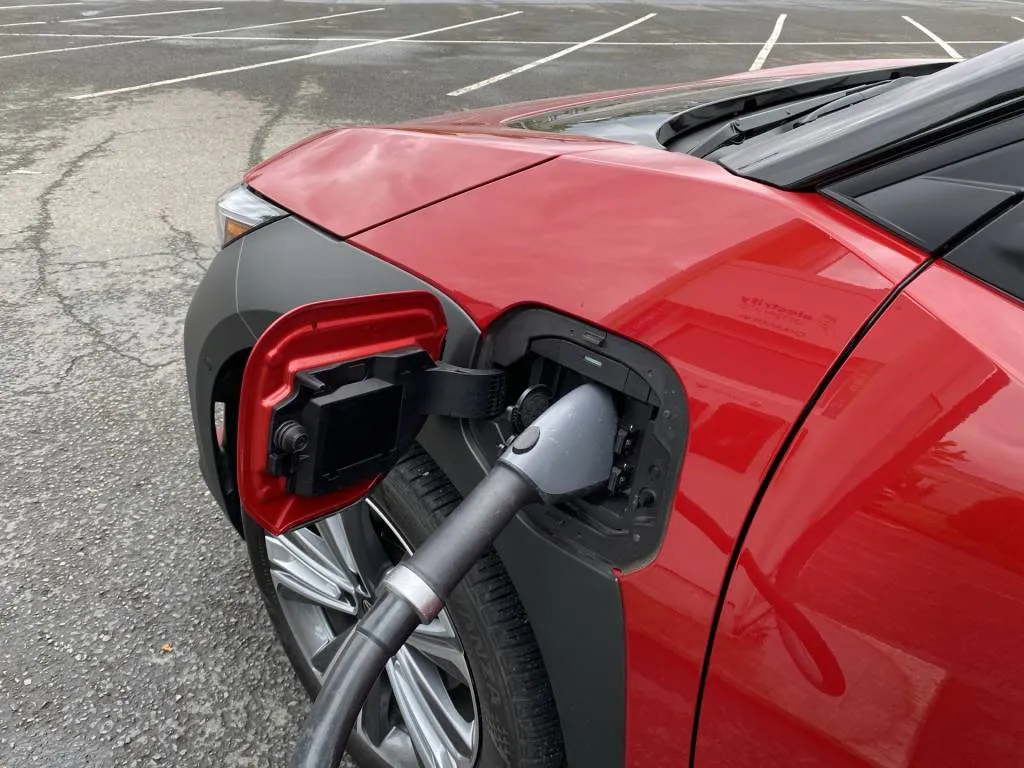
2024 Subaru Solterra charging
Overall, that’s an hour of charging for a 360-mile round trip where arriving back with near zero charge was fine. For a longer road trip with more uncertainties, it adds up; count on most of an hour of charging every 180 miles on the open road—an hour for every 2.5 hours at 70 mph—if you can get the chargers spaced out just right. It’s where the fastest-charging EVs like the Ioniq 5 and its 18-minute 10-80% state-of-charge capability can make a huge difference.
Pro: Solterra space in back is good for people, great for gear
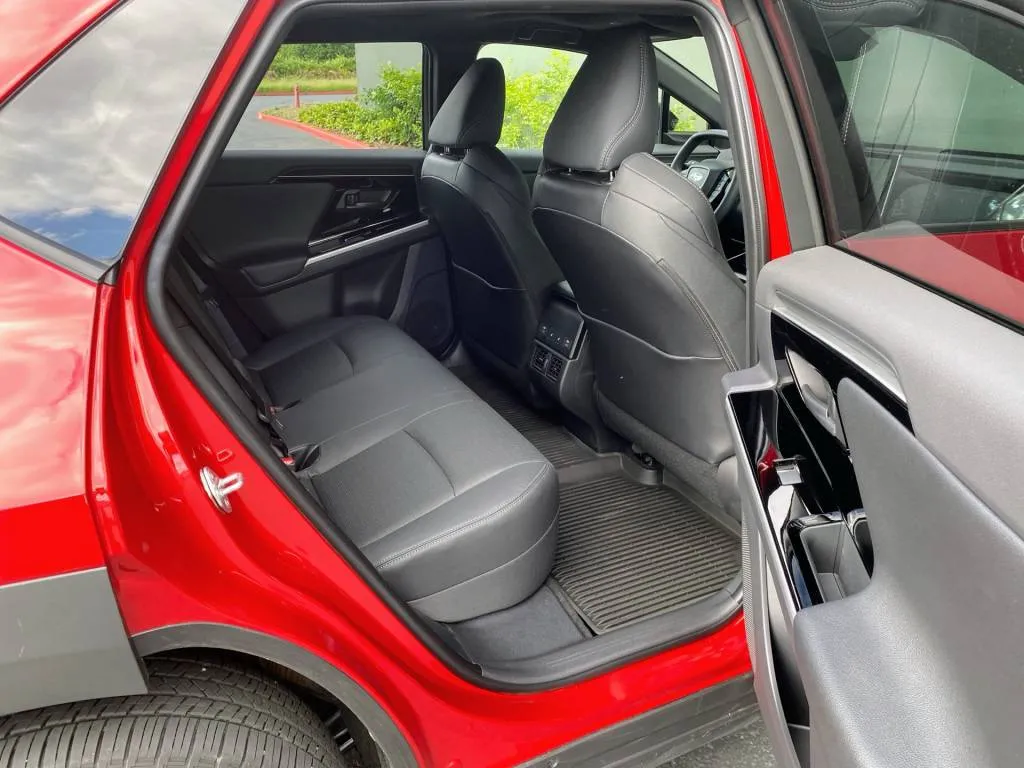
Tapering rooflines that put the squeeze on backseat space and cargo usefulness are common in this latest cohort of electric crossovers. But you won’t find that here in the Solterra; from inside the back seat, it feels positively boxy, and spacious in a way few of those rivals do. Door cuts are wide and the seating position is comfortable enough for adults (especially without the Touring’s panoramic sunroof). And if you’re the type to haul a lot of gear out to weekend activities, or the finds from antique stores back home, the Solterra offers impressive space for things. There’s 23.8 cubic feet of flat cargo space behind the second row, or 63.5 cubic feet if you fold both of those 60/40-split portions forward (not quite flat).
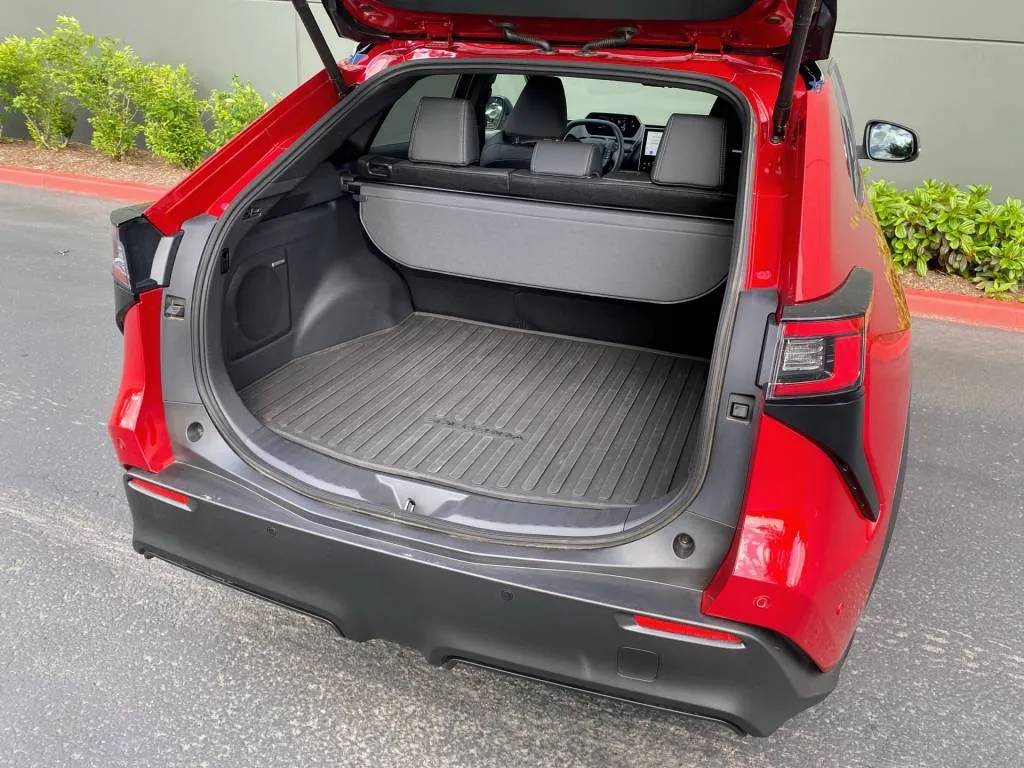
2024 Subaru Solterra
2024 Subaru Solterra
2024 Subaru Solterra
Con. It’s hard to get comfortable in front
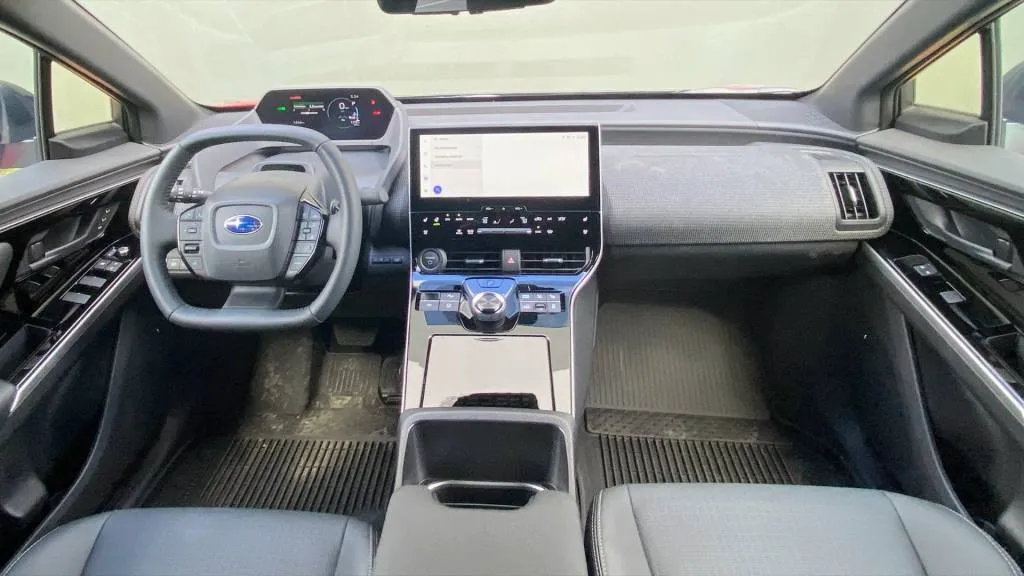
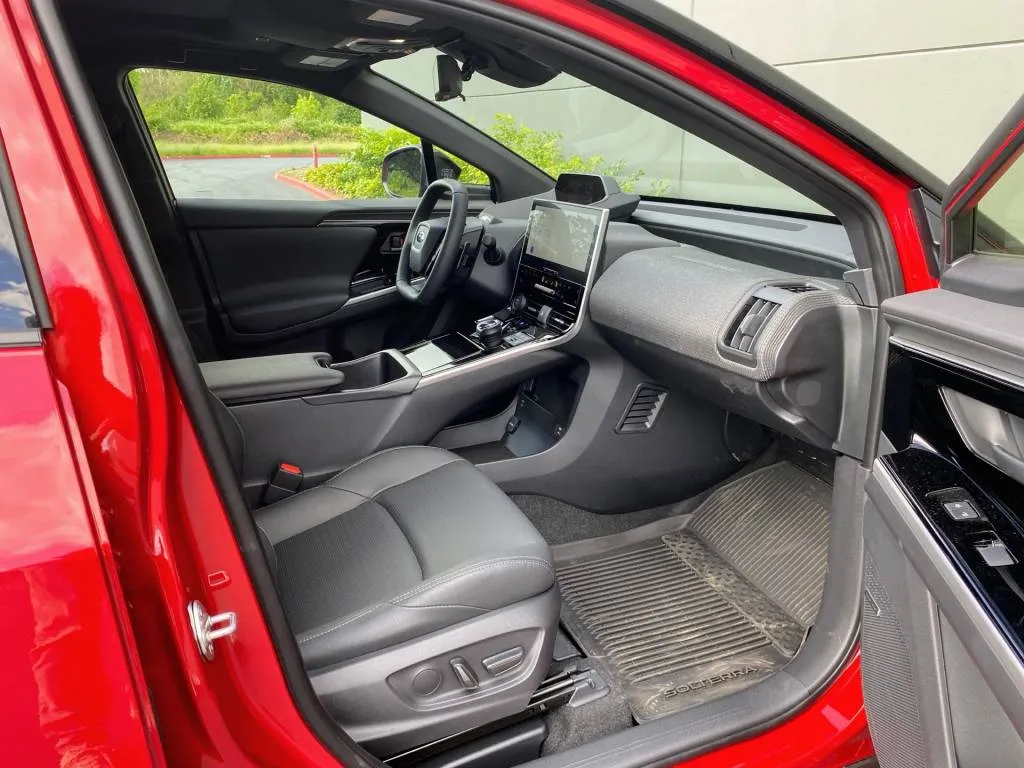
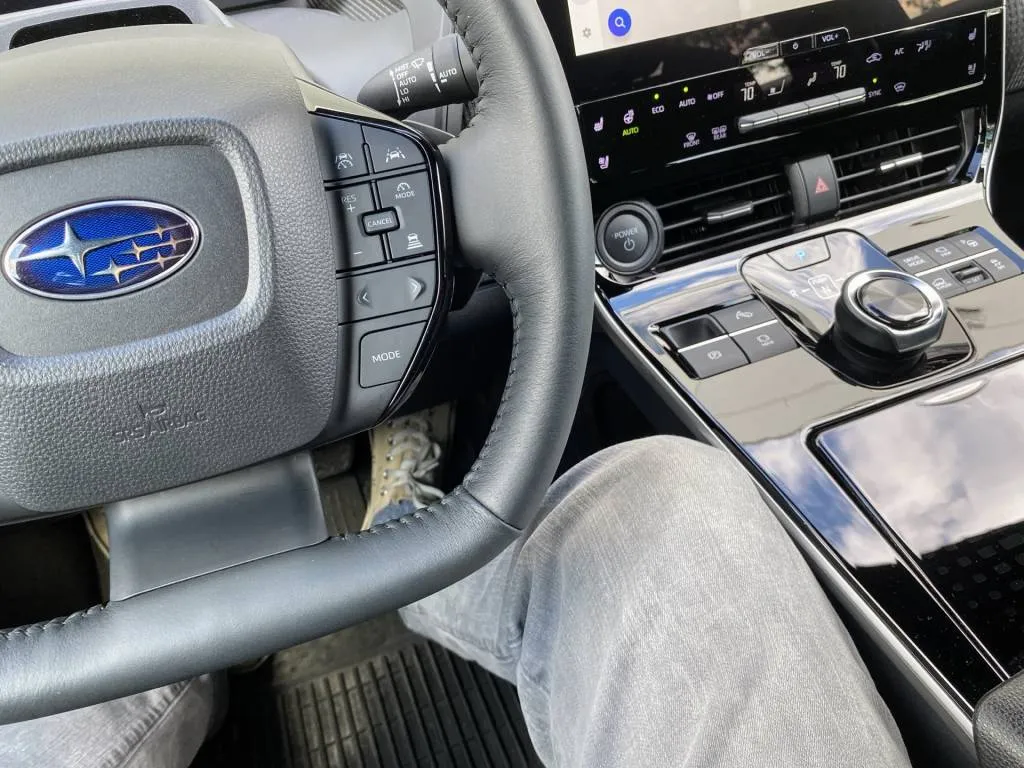
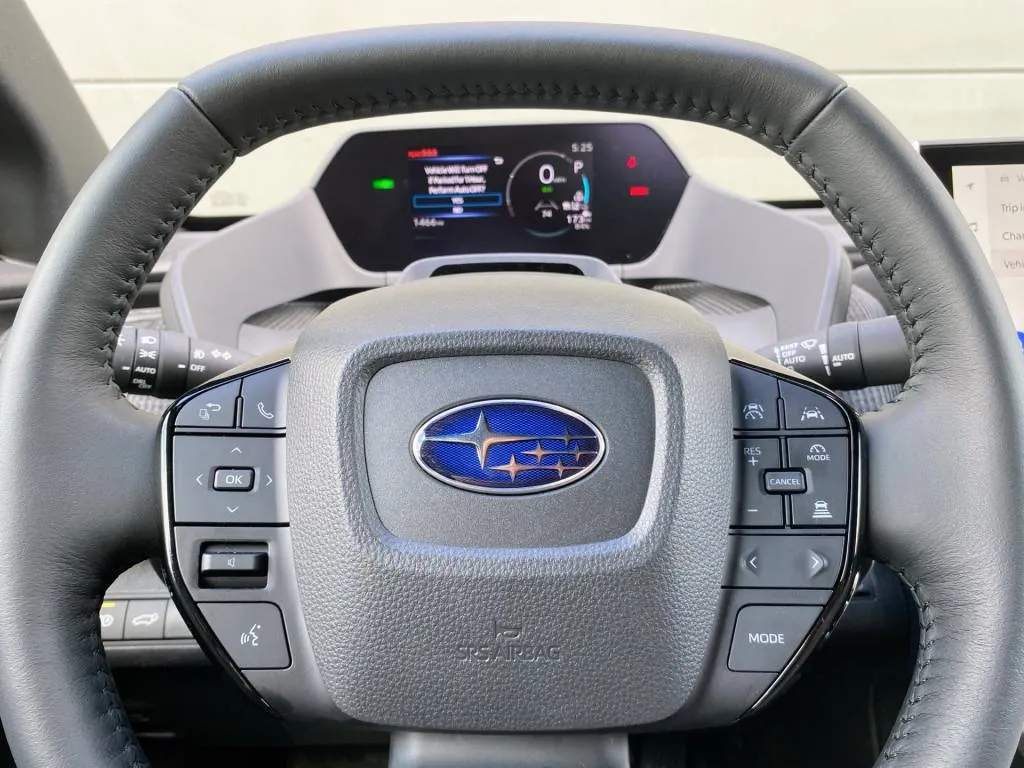
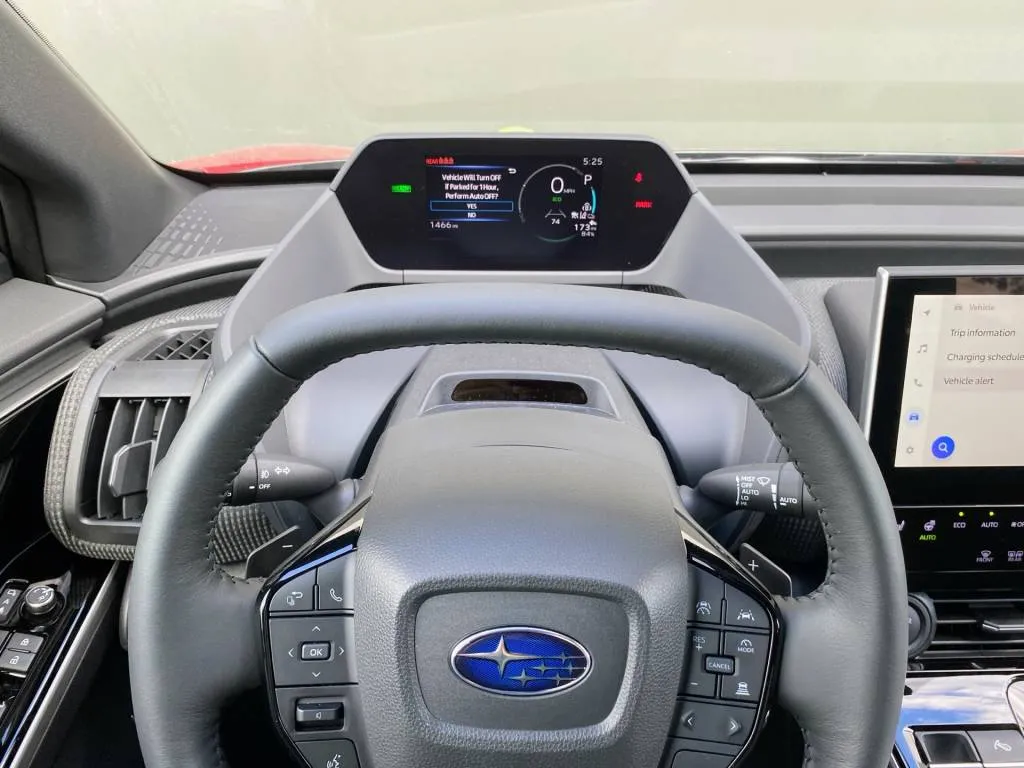
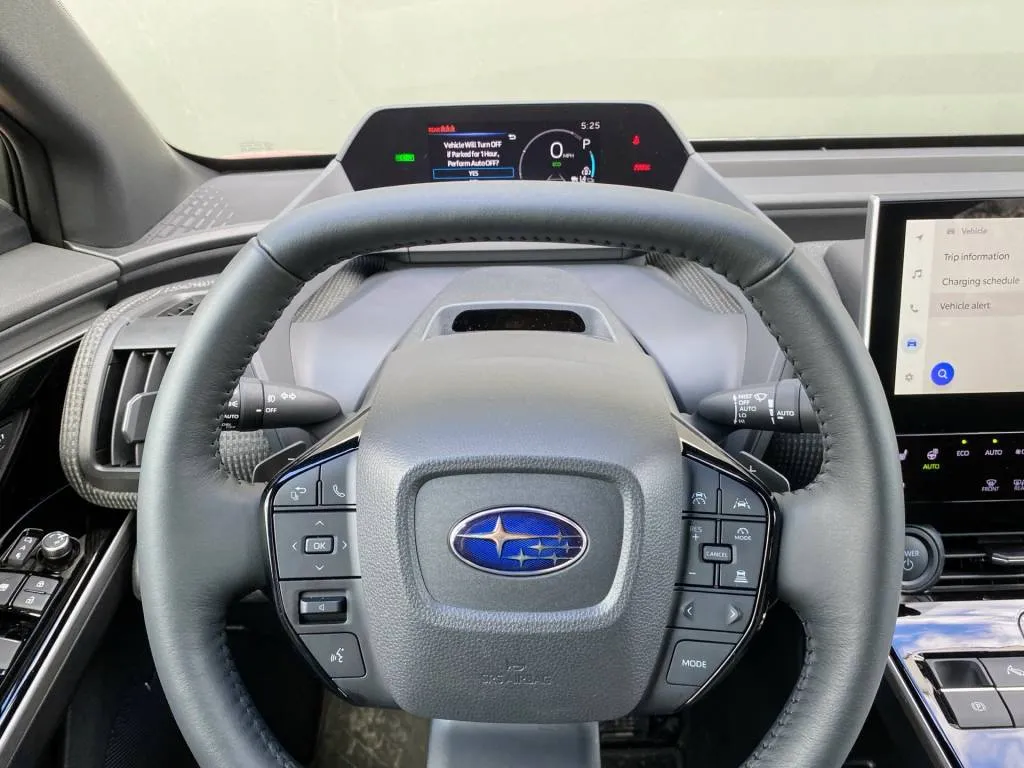
Between the short, unduly flat seat cushions, the hard center console, the unnecessarily complex dash layout, and the “squircle” steering wheel, it’s going to be difficult for lankier types to get comfortable in the driver’s seat. Even with the new steering-wheel design, this 6-foot-6 driver found it virtually impossible to adjust the manually tilting/telescoping steering wheel to a position that simultaneously yielded a comfortable driving position and allowed me to see the gauge cluster.
2024 Subaru Solterra
2024 Subaru Solterra
2024 Subaru Solterra
2024 Subaru Solterra
Technology didn’t help with the comfort level. The Solterra’s driver-monitoring system, which relies on a camera aiming around the top rim of the steering wheel, simply wasn’t helpful and it’s seemingly become even worse with the squircle at seeing whether taller drivers (if I’m an example of that) are alert or not. I adjusted my posture up and down and felt like I could have taped my eyelids open and the system still would have been nagging me to pay attention. Luckily I found a submenu allowing it to be disabled.
2024 Subaru Solterra
Solterra tech: Decent, but it’s missing this key piece
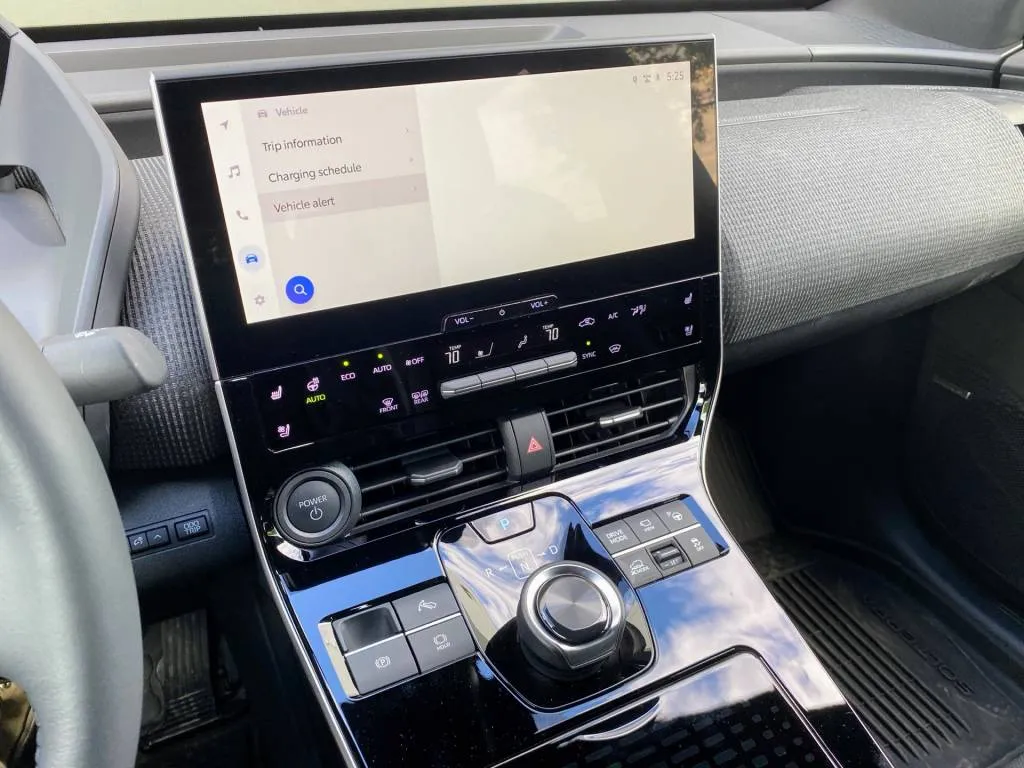
Design complexity aside, the Solterra’s interface does nearly all it needs to do once you’re familiar with it. Controls for the heated-and-cooled front seats are separate touch controls below the screen; the one-pedal driving mode with more regen is a physical button (in addition to steering-wheel paddles!); and vents are well located and easy to aim quickly without having to consult the touchscreen.
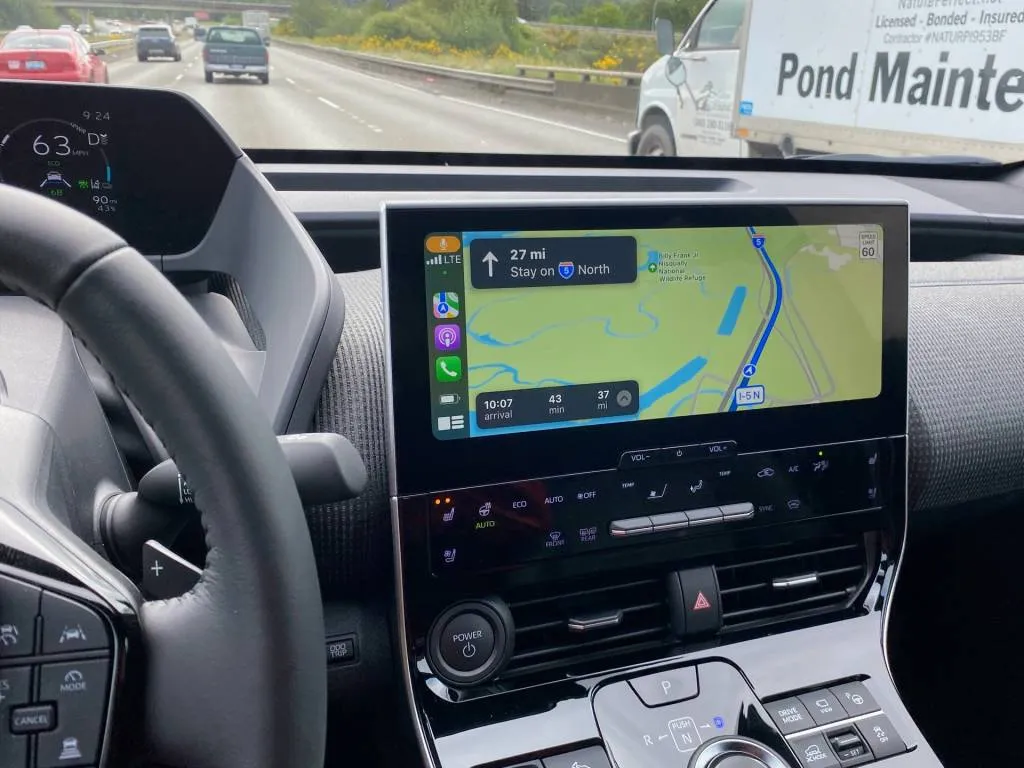
I had no big issues with the screen system, which felt familiar from time in recent Toyotas (including the bZ4X). Wireless Apple CarPlay worked great, and I appreciated the bright, 12.3-inch touchscreen display that’s the centerpoint for entertainment and apps in all but the base Premium.
2024 Subaru Solterra
In this top Touring trim, cloud-based navigation will help you find a nearby charging station but it’s sorely missing a well-integrated route planner that will, given the Solterra’s charging shortcomings, simply advise you on where to stop—so as to spend the least amount of your road-trip time charging. Luckily, there are apps for that.
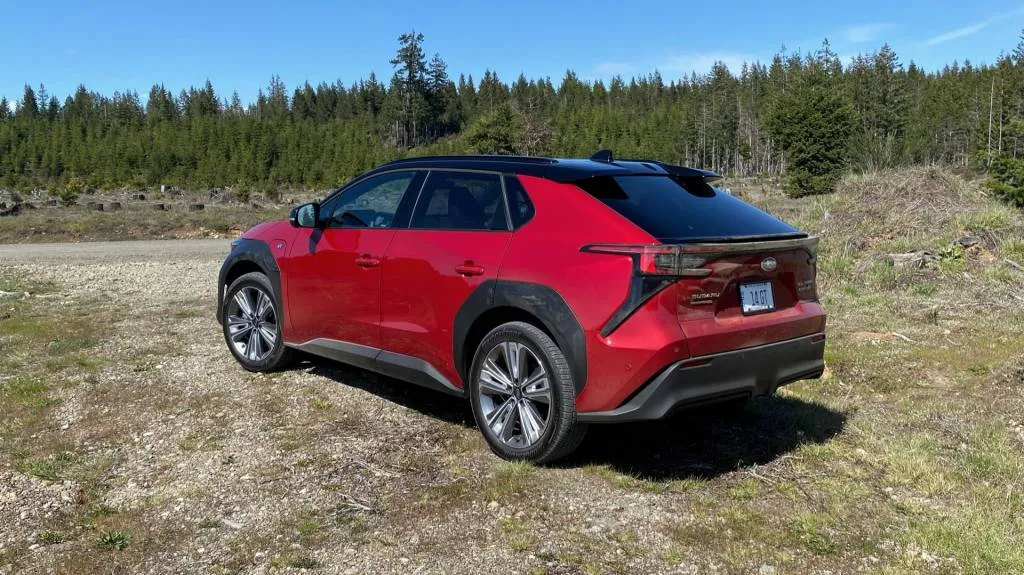
2024 Subaru Solterra
2024 Subaru Solterra
Base price: $46,340 (Premium)
Price as tested: $54,558 (Touring, plus premium paint, floor mats, cargo tray)
Propulsion: Dual permanent-magnet motors, 107 hp and 125 lb-ft each, 215 hp and 249 lb-ft combined; all-wheel drive
EPA efficiency: 227 miles of electric range, 3.1 mi/kwh combined
The hits: All-wheel-drive traction and finesse, decent efficiency, back seat and cargo space
The misses: Slow charging, road noise, front seat space, no live route planner

Electrify Expo’s BJ Birtwell on the ways to win EV curious consumers (Episode 263)
The founder and CEO of the multi-city EV festival details the impact of a shift from early adopters to mass-market consumers and identifies counterintuitive ways to drive adoption of electric vehicles.

Rivian R2 charge port moves to left rear, like Tesla
- Rivian confirmed rear left charge port location in upcoming R2 models
- That changes from plans on rear right for streetside charging and Rivian’s own networks
- R2 owners should have an easier time using Supercharger stations
Front, rear, left, right? Automakers still can’t agree on where to place EV charge ports on vehicles. But it appears that Tesla’s longtime preferred location at the left rear may have swayed another U.S. EV maker—Rivian.
News of Rivian’s switch in location for future EVs came Thursday through Rivian Forums. A contributor noted that as the R2 and R3X were being shown at the Rivian Space in Pasadena, Calif., an executive confirmed the move in charge port location from the brand’s currently set right rear location.
“We can confirm the charge port will be located on (the) rear driver’s side of R2,” a Rivian spokesperson stated to Green Car Reports Friday. “We look forward to sharing more info and specs on R2 in the future.”
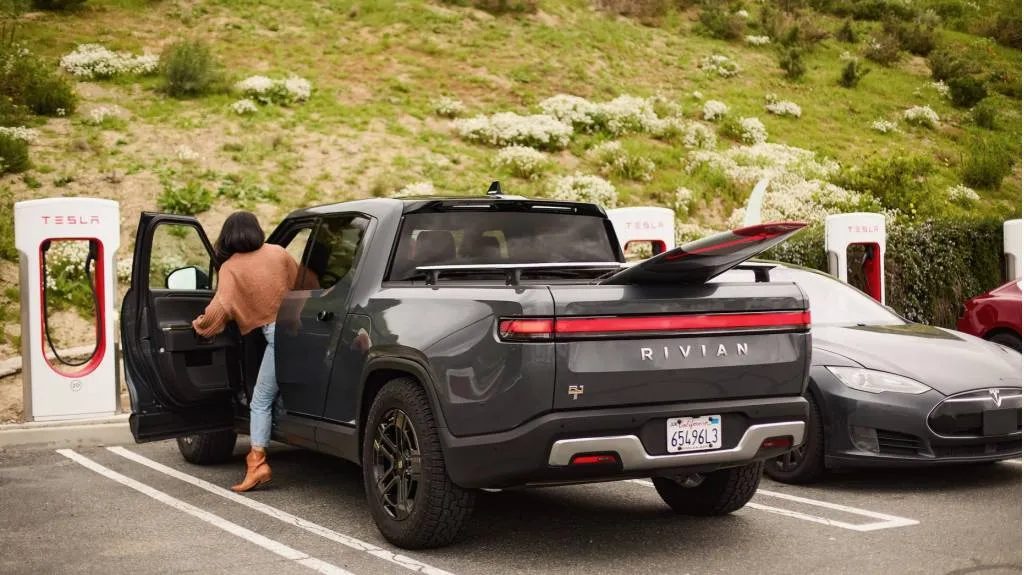
Rivian R1T at Tesla Supercharger
Reach issues with R1 charge port at Superchargers?
The shift may have something to do with Rivian owners’ experiences at Tesla Supercharger stations using the current charge-port location of R1S and R1T models—on the left side of the vehicle, just ahead of the driver’s door. At some Supercharger locations, in experiences well documented on YouTube and in forum posts, Rivian drivers have had to get creative with parking in order to reach their charge port with the Tesla connector.
Rivian confirmed last June that it would adopt the Tesla-based charge port, also called J3400, as part of the North American Charging Standard (NACS). The R2 and R3 families made their debut in March in prototype form with the Tesla port under neatly downsized charge-port doors at the right rear of the vehicle, instead of the bulkier CCS port. Then in March it announced that it would begin shipping free NACS adapters to R1 customers, arriving in April, with Superchargers since then appearing in Rivian trip planning.
There are currently 2,321 Tesla Supercharger locations in the U.S., offering 26,217 charging ports, according to the U.S. Department of Energy.
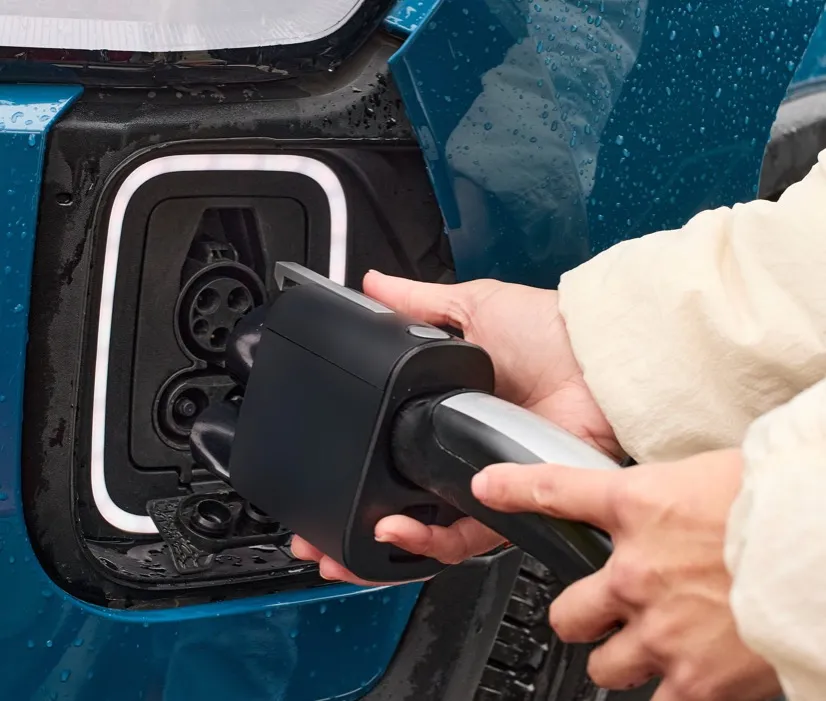
Rivian NACS adapter
Right rear was for streetside charging, Rivian’s networks
In March, at the launch of the $45,000 Rivian R2, as well as the smaller, even more affordable R3 and R3X, all built on the same next-generation platform and part of the same product family, Rivian officials suggested that the charge port placement on the rear right was an ideal location for streetside charging. That’s expected to be increasingly important in Europe, where Rivian is hoping to sell many of these vehicles, and eventually more U.S. urban environments.
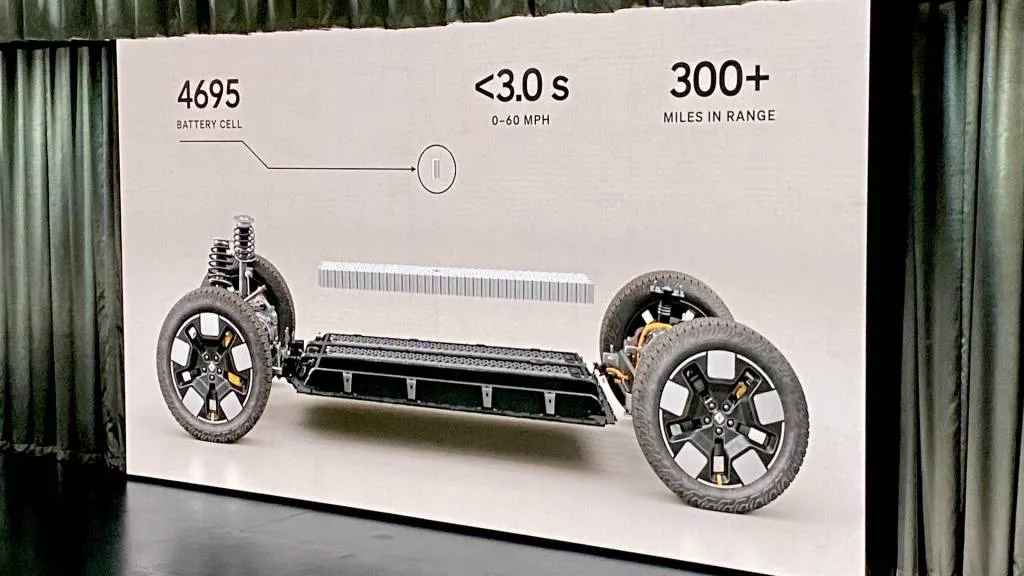
Rivian R2
Rivian’s head designer Jeff Hammoud then fielded some additional questions about the placement of the charge port, making clear that Rivian had already given the location a lot of thought.
“We did a lot of research and specifically in left-hand-drive countries in Europe,” Hammoud said to a small group, including Green Car Reports. “We saw a lot of people charging cars on the street, and you’d see anything from charging cables wrapped over hoods to get to the other side, and we wanted to solve that.”
Hammoud summed that putting the port at the rear of the vehicle versus the front meant fewer wires, less weight, and less cost. Further, Rivian has been building its current charging network for that front left position of the R1, and he added, “If you’re gonna flip the car back into the space, it’s essentially the exact same location.”
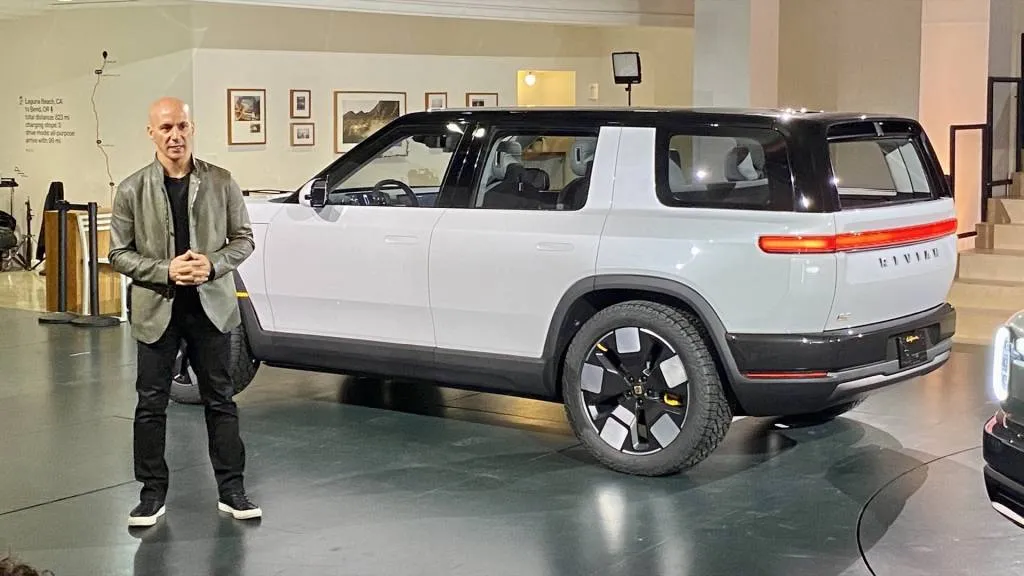
Rivian R2
To underscore what Rivian has confirmed versus what it hasn’t, this shift in location is technically so far only confirmed for the R2, not necessarily the R3.
The choice of the Tesla location for the R2 does however suggest that the sheer volume of charge sessions on the Tesla Supercharger network may make it a worthwhile tradeoff for customers, and perhaps for the brand’s image. In making these future, more mass-market vehicles easier to use on the Supercharger network, it’s future traffic and revenue for those Tesla stations. Now, will any other automakers follow?