
Category: General


Fastest charge? Zeekr claims 10-80% charge in 10.5 minutes
Chinese EV brand Zeekr claims new batteries debuting in its 007 electric sedan can support the world’s fastest charging rates.
These batteries allow vehicles to charge from 10% to 80% in as little as 10.5 minutes at normal temperatures, Zeekr announced this week. Even at temperatures as low as 14 degrees Fahrenheit, Zeekr claims a 10%-80% charge is still possible in 30 minutes thanks to an “enhanced battery management system.”
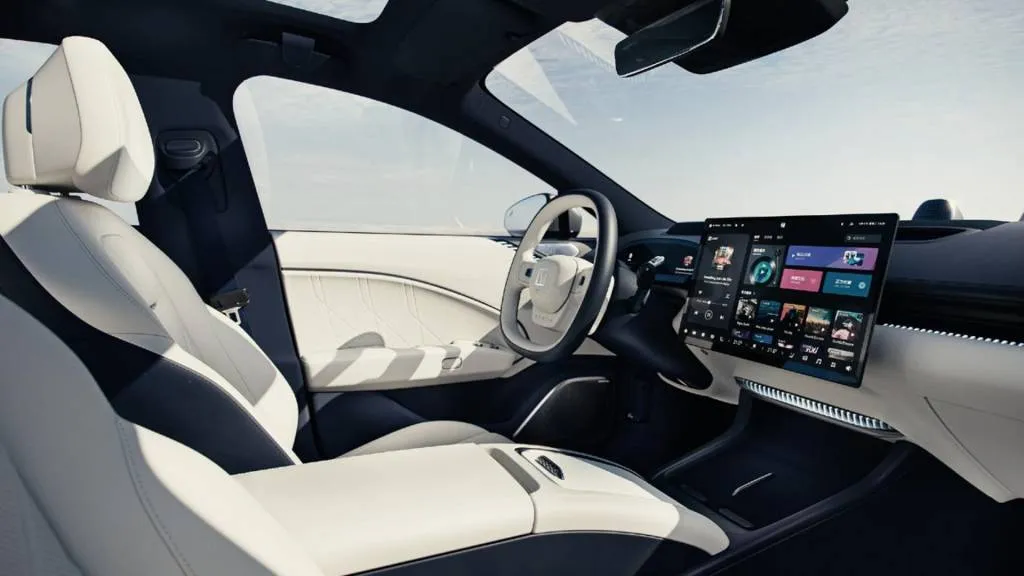
2024 Zeekr 007
Relatively few of today’s EVs can charge from 10%-80%—typically seen as the benchmark for road-trip EV charging—in less than 30 minutes under any conditions. The fastest-charging EVs sold in the U.S. can generally manage a 10%-80% charge in the 18-22 minute range.
The first model to get these new batteries and take advantage of the fastest charging rates is the Zeekr 007 sedan, which starts deliveries this month. It joins the 001 hatchback, 009 minivan, and Zeekr X crossover in the lineup of this relatively new brand from Chinese automotive conglomerate Geely, which is also the parent company of Volvo, Polestar, and Lotus.
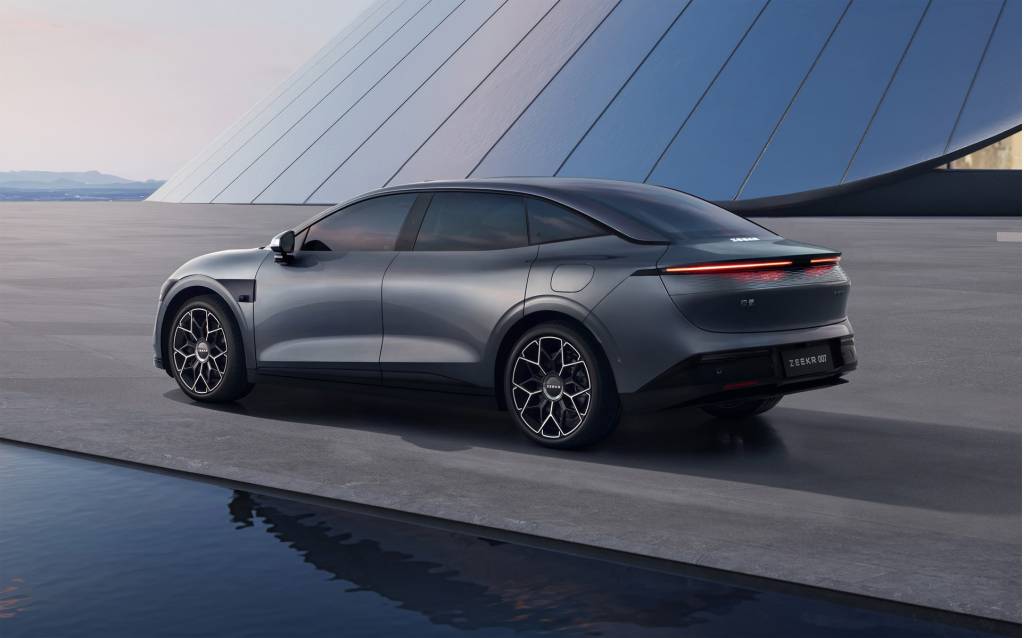
2024 Zeekr 007
Zeekr uses lithium iron phosphate (LFP) chemistry, which is commonly used in China but is also being adopted by U.S. automakers like Tesla and Ford. Zeekr claims “optimized materials and upgraded technology” helped it achieve this charging performance, but it’s not the only company making bold claims about LFP batteries. Chinese battery firm CATL in 2023 said its next-generation LFP batteries could add 250 miles of range in 10 minutes of charging.
The fastest charging battery also requires high-power charging stations. In the release, Zeekr said it had opened 500 fast-charging stations that can support 800-volt charging, totaling over 2,700 individual connectors, in its home market of China. The brand plans to expand the network to over 1,000 charging stations this year, and aims to have over 10,000 connectors in operation by 2026.

Acura Performance EV concept revealed in Monterey
Acura on Thursday unveiled a striking SUV concept that previews the next electric vehicle it has in the pipeline.
The new Performance EV concept was unveiled at 2024 Monterey Car Week currently underway in California, and previews a vehicle due to enter production in late 2025 at parent company Honda’s sprawling Marysville Auto Plant in Ohio.
The batteries will also be sourced from the site which is being revamped for EV production. Honda already refers to the site as the Honda EV Hub.
Acura’s Performance EV concept is a fastback crossover whose striking lines will likely be toned down for production. However, many of the design themes will make their way onto future Acuras, the brand’s chief creative officer, Dave Marek, said in a statement.
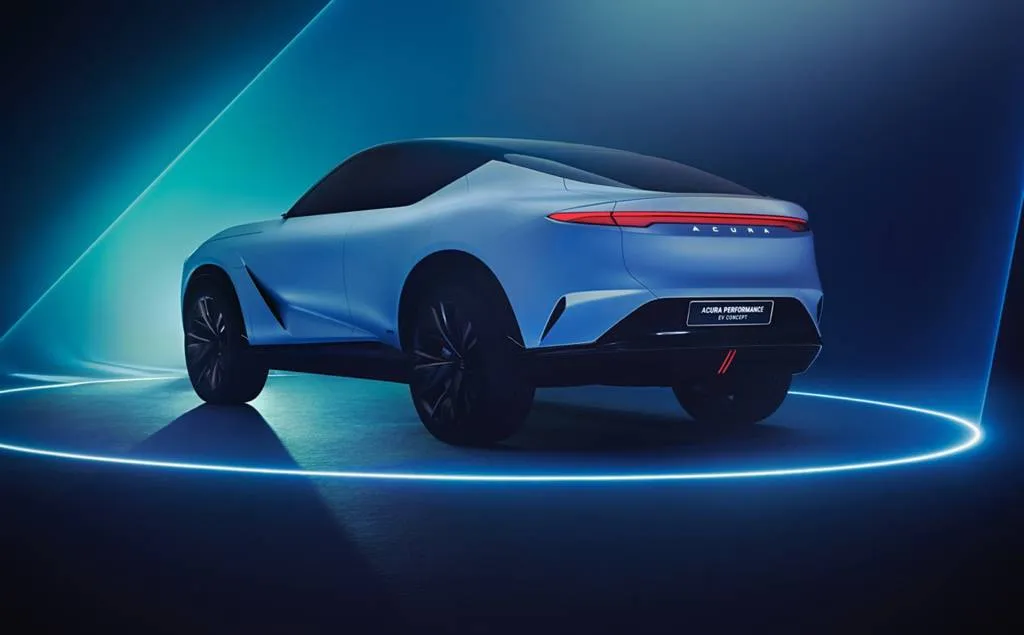
Acura Performance EV concept
The concept’s technology will also make it into more Acuras, as well as many Hondas and likely even models from the new Afeela brand established between Honda and Sony. Underpinning the concept is a dedicated EV platform developed in-house by Honda and targeted to deliver 300 or more miles of range as measured by the EPA.
The platform is unrelated to General Motors’ Ultium EV platform and battery technology, used by the current Acura ZDX and Honda Prologue. The platform will feature an electric and electronic (E&E) architecture that will utilize Honda’s own vehicle operating system and in-vehicle software, including a new generation of user interface and digital services, the automaker has previously said.
The first Honda vehicle to ride on the platform is expected to be a member of the 0 Series family of EVs announced in January at 2024 CES. The first 0 Series EV has been confirmed by Honda to be a U.S.-built model starting sales in 2026, and possibly inspired by the Saloon that Honda presented when announcing the 0 Series.

Polestar 3 electric SUV starts production in US
After some delay, the Polestar 3 electric midsize SUV has started production at Volvo’s plant near Charleston, South Carolina, paving the way for the start of customer deliveries in the U.S. shortly. It joins the related Volvo EX90 which has been in production at the plant since June.
U.S.-built Polestar 3s will be sold locally, as well as in Europe. Polestar 3 production is also handled at Volvo’s plant in Chengdu, China, where the first examples rolled off the line in February.
Production was meant to start in Chengdu in the fourth quarter of 2023 but was put on hold due to software-related issues. The same issues also led to delays in the start of production of the 2025 EX90. Recall, both SUVs were shown as early as the fall of 2022.
Both SUVs are based on Volvo’s SPA2 platform developed from the onset for EVs. The Polestar only comes with two rows whereas the Volvo has a third row.
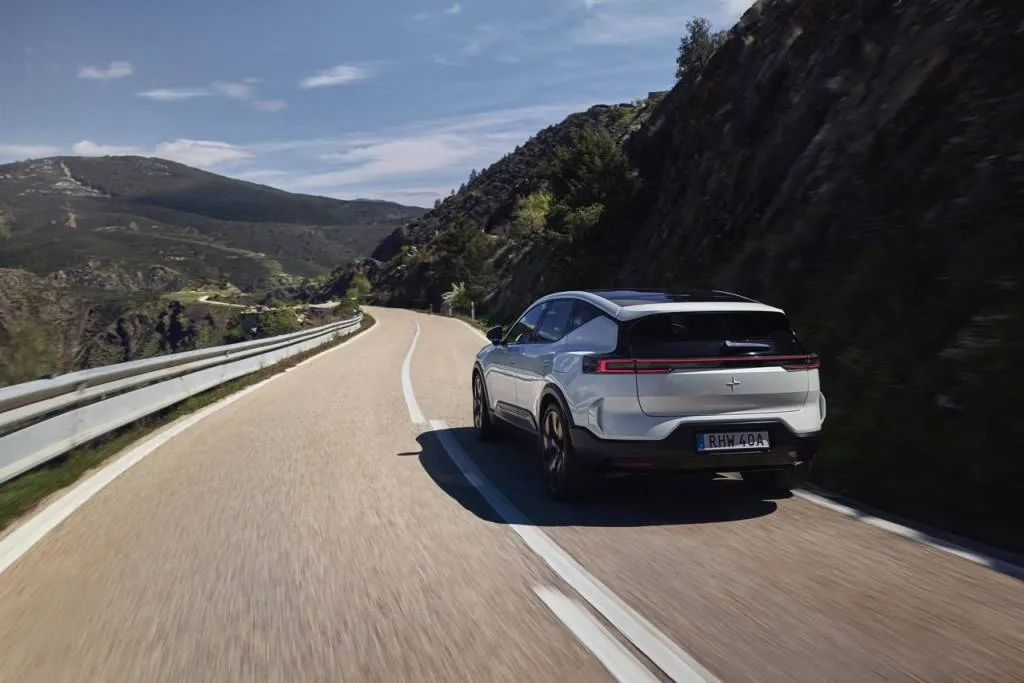
2025 Polestar 3 Performance Pack, test drive, Madrid
In the U.S., the Polestar 3 comes with a dual-motor electric powertrain delivering 489 hp as standard and 517 hp with an available Performance Pack. Owners can expect 0-60 mph acceleration of 4.9 seconds as standard and 4.6 seconds with the Performance Pack. The top speed is 130 mph in both configurations.
The sole battery is a 111-kwh unit that Polestar estimates will deliver up to 315 miles of EPA-rated range.
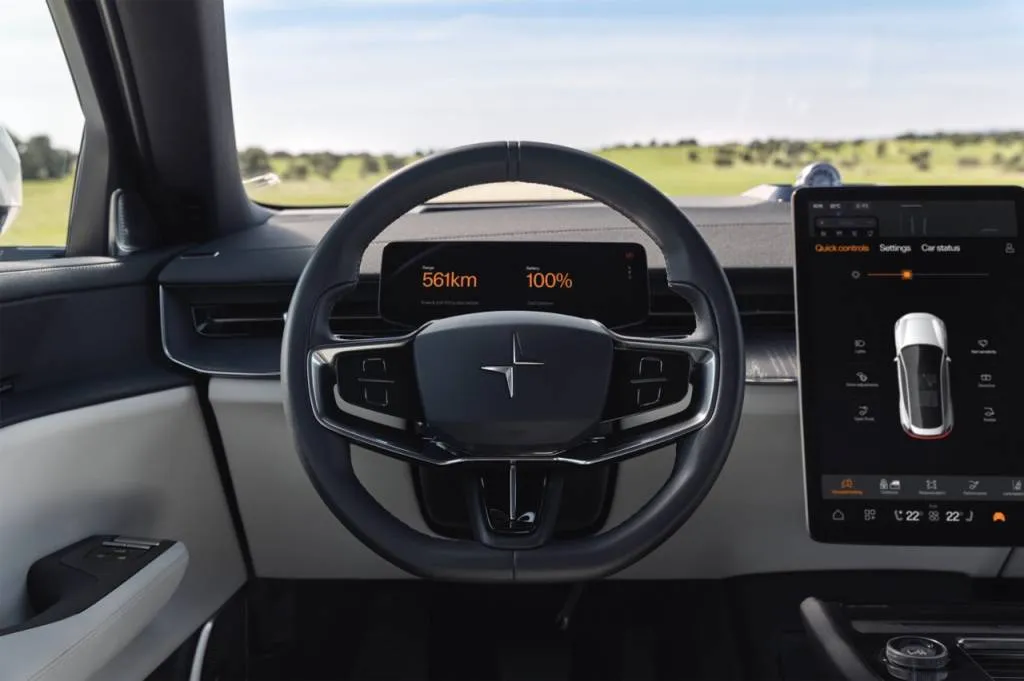
2025 Polestar 3 Performance Pack, test drive, Madrid
Order books for the Polestar 3 are already open and pricing in the U.S. starts at $74,800, including a $1,400 destination charge.
Polestar also has the 4 compact crossover in production in China, though to avoid steep tariffs bringing the vehicle into the U.S., Polestar plans to start production in South Korea around the middle of 2025. A free-trade agreement means the Korean-built Polestar 4s won’t be affected by any tariffs.

JD Power: Charging satisfaction is on the rise
- DC fast-charging usage has improved, according to Power
- Ease of charging and payment acceptance were the biggest differentiator between Tesla’s network and others
- Some 19% of those surveyed said they’d encountered inoperable chargers
Customer satisfaction with public EV charging continues to improve, with Tesla remaining on top, according to a new J.D. Power study.
While issues remain, J.D. Power found improvements over the first two quarters of 2024. Satisfaction with DC fast charging increased to 664 points on a 1,000-point scale, a 10-point increase from the same period in 2023. Satisfaction with Level 2 AC charging saw a slight dip of three points, with a score of 614.
Among Level 2 users, satisfaction improved in five of the 10 factors that comprise those rankings, though, and DC fast charging saw satisfaction improve in six of those 10 areas. One sticking point with AC charging was speed, where satisfaction with Level 2 chargers dropped four points, to 451. Satisfaction with DC fast-charging speed increased from 588 points in 2023 to 622 points in 2024.
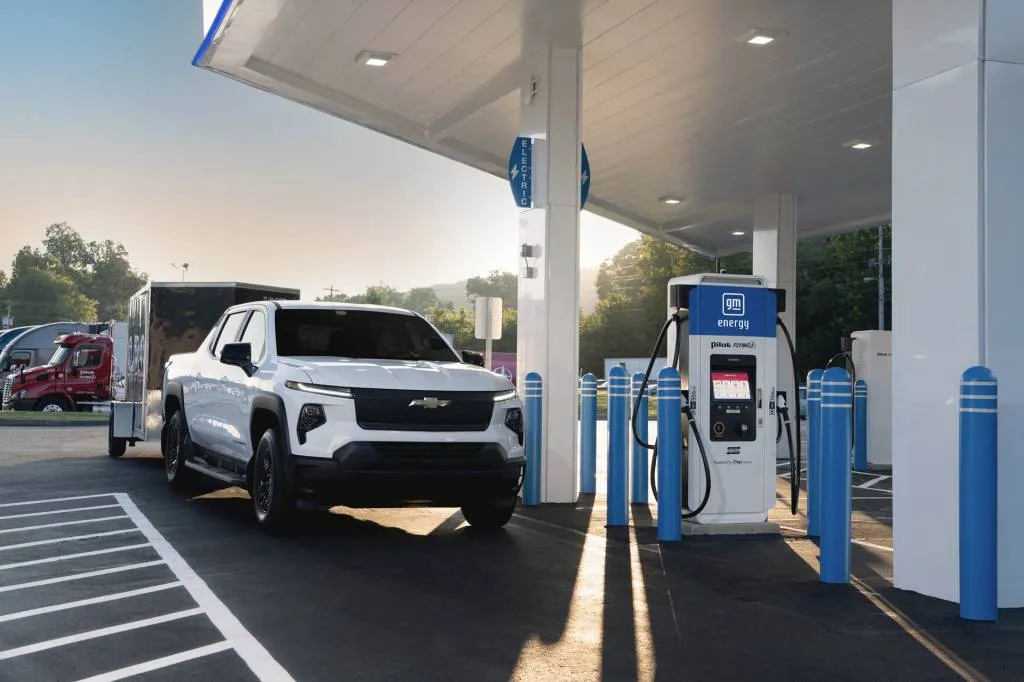
GM and Pilot Company’s EV charging network
While another J.D. Power study published in June indicated the Tesla Supercharger network was losing its edge, it remained the highest-ranked DC fast-charging network for the fourth year in a row. The Tesla Destination network was also the highest-ranked Level 2 network.
The biggest gaps between Tesla and non-Tesla charging experiences were payment and ease of charging, according to J.D. Power. Tesla lists customers start charging quickly via automatic payments, which study data showed is particularly important to EV drivers, but other automakers and charging networks have been slower to implement equivalent automatic payment systems like Plug & Charge.
The fact that some owners of non-Tesla EVs can now access the Tesla Supercharger network thanks to automakers’ adoption of the North American Charging Standard (NACS) may be a factor in the increase in overall satisfaction with charging, J.D. Power says. But consistent reliability gains will likely depend on guaranteed interoperability between vehicles and charging stations as well.
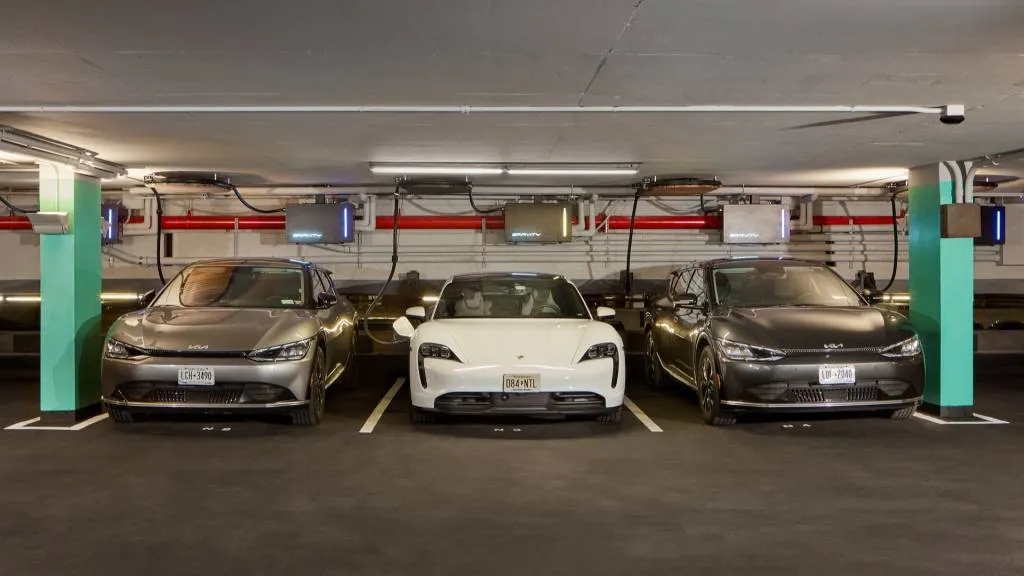
Gravity EV charging center in New York City
And reliability is still an issue, according to J.D. Power. Of EV owners surveyed for this study, 19% reported visiting a charging station and not being able to charge their vehicle. That’s not exactly an improvement from a previous J.D. Power study from 2023, which found that one in five charging attempts fails.
The main culprit was inoperable chargers, which affected 61% of failed charging attempts. Lack of chargers and/or long wait times (20%) and damaged cables or connectors (10%) were also factors. EVgo has announced a program of improvements and better diagnostics to address this, but it seems there is a long way to go.

EVgo aims to improve charging reliability
EVgo is looking to tackle the issue of charging reliability with upgraded hardware and more extensive diagnostics.
In a press release, EVgo said it was making progress in bringing its public chargers up to date. Since 2022, the company says it has upgraded, replaced, or decommissioned older equipment at more than 500 charging spots in over 20 states. It plans to do the same at over 150 charging spots in 2024.
EVgo also hopes to increase the number of 350-kw charging stations on its network by 115% this year, and claims to have increased the number of sites capable of charging at least six vehicles by over 80% compared to last year. The company is now looking to develop more 10-vehicle sites.
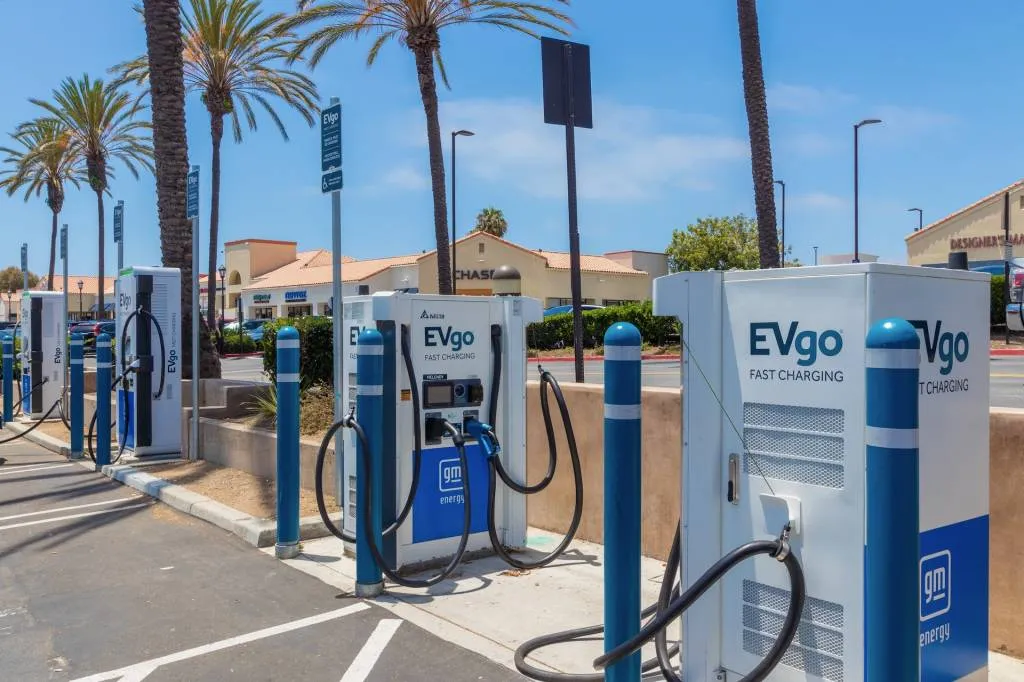
EVgo charging stations
When chargers break, EVgo claims to have reduced repair times by 67% since the first quarter of 2023. New software that detects when the signal from a charge cable is lost—a likely indicator of a problem—helps identify issues more quickly, according to the company.
EVgo has also deployed a new diagnostic software tool and says it has done extensive interoperability testing on more than 70 EV models, including passenger cars, motorcycles, and light- and heavy-duty trucks. While the mass adoption of the Tesla North American Charging Standard (NACS) and greater access to the automaker’s Supercharger network is expected to provide greater reliability to more EV drivers, interoperability may be where the real gains can be found.
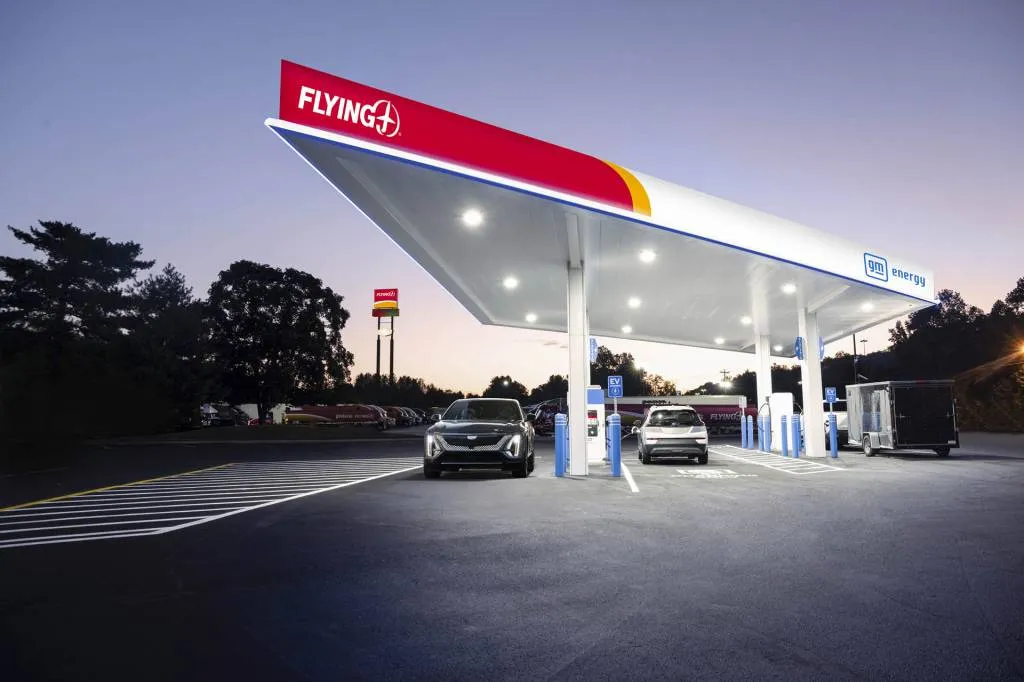
GM and Pilot Company’s EV charging network
EVgo currently lists over 1,000 DC fast-charging locations across more than 35 states. The company in 2021 paired with General Motors to step up fast charging in urban areas, and in 2022 announced a second collaboration with GM to install up to 500 350-kw DC fast chargers at Pilot and Flying J travel centers.
Improved reliability will help EVgo stay competitive with new charging projects like Ionna, an EV charging network backed by seven automakers to plans to establish a minimum of 30,000 high-power fast chargers in North America by 2030. The federal government is also taking a closer look at charger reliability as it doles out funding for a national EV charging network through the National Electric Vehicle Infrastructure (NEVI) program.

These apps provide the route-planning smarts some EVs lack
- Good EV route planning shortens trips by connecting the fastest compatible chargers at the right time
- Not all automaker apps and interfaces provide the tools for the quickest EV road trips
- Even if your EV has charger-savvy route planning, independent apps can suggest better options
It doesn’t take electric vehicle owners long to understand that, for EV road trips, charging can be far more important than driving range.
That’s partly because “filling up” an EV in the shortest possible time is more complicated than filling up a gasoline vehicle. You can’t select the grade, put the nozzle in, and expect essentially the same rate for topping off anywhere you go.
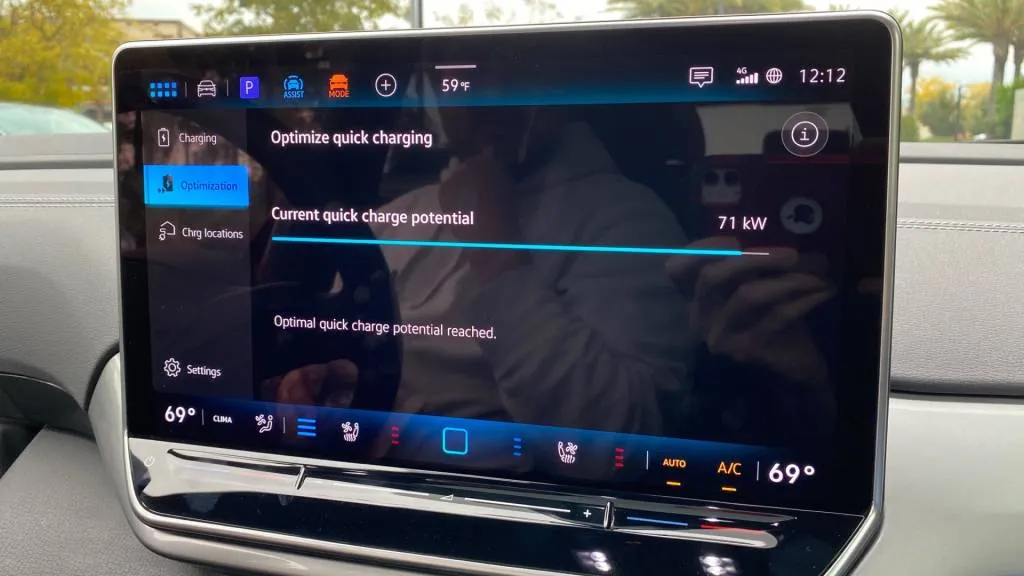
For EVs, getting miles and state of charge back in at the peak rate means not only plugging the correct charger and charge connector in, but doing so at the ideal state of charge—usually in the vicinity of 10%. Some of today’s fastest-charging EVs can get from 10-80% in well under 30 minutes, but they need to be plugged in at that low state of charge to achieve it.
That requires a strategic approach to trip planning, taking into account where the fastest chargers are along the route, and whether they can be selected to match up with a low battery charge to harness the speediest charging stop.
Tesla was ahead of the curve in all of this. It rolled out an in-vehicle or in-app smart route planner more than a decade ago with the Model S, refining it essentially as it built out its Supercharger network.
2024 Volkswagen ID.4
2024 Volkswagen ID.4
2024 Volkswagen ID.4
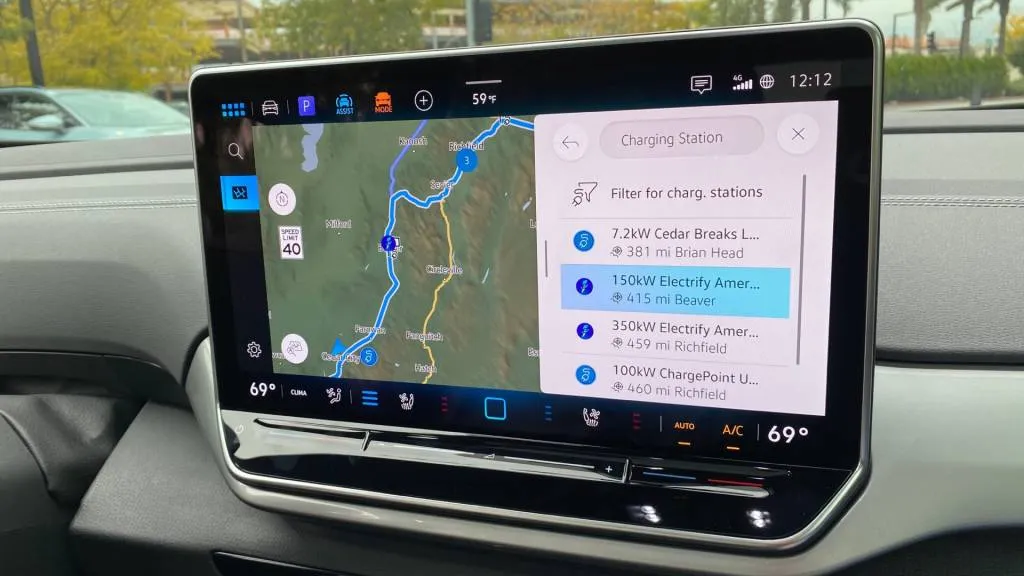
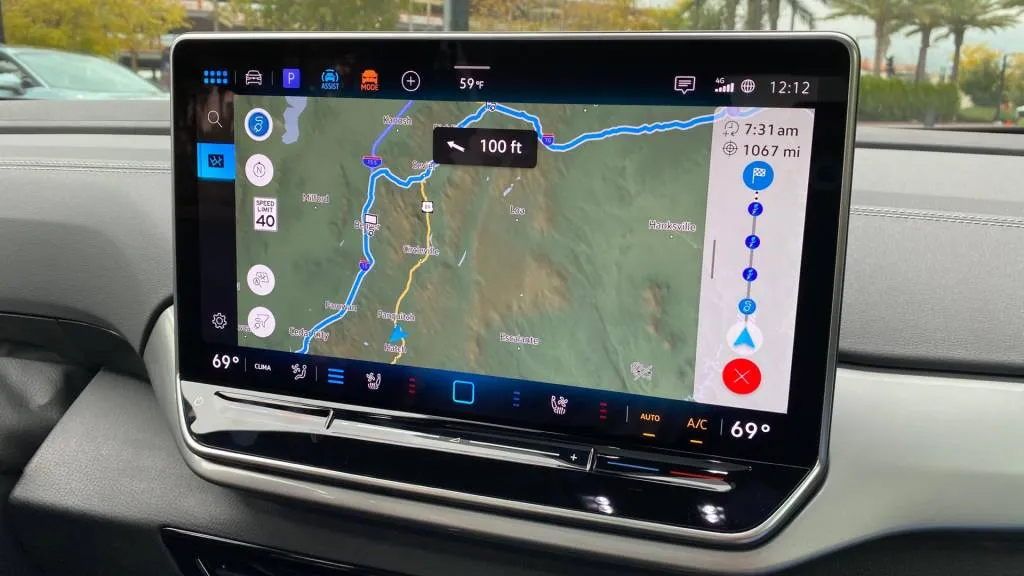
Other automakers are catching up. For instance, Ford and VW have recently vastly improved their route-planning interfaces. The system in the VW ID.4, for instance, now automatically plots chargers along your route, and it’s easy to swap in different stops as it makes sense. Rivian has resorted to grading EV charging sites included in its own vehicles’ trip planner for a better experience. GM, Polestar, and Volvo are among the automakers relying on a version of Google Maps functionality, which doesn’t always get it right.
But there are still plenty of EVs that offer no route planner, if you consider EV route planning to be the ability to augment the route or charging stops as necessary. The Subaru Solterra I was recently in would find chargers, but it wouldn’t triage those charging stations and my state of charge.
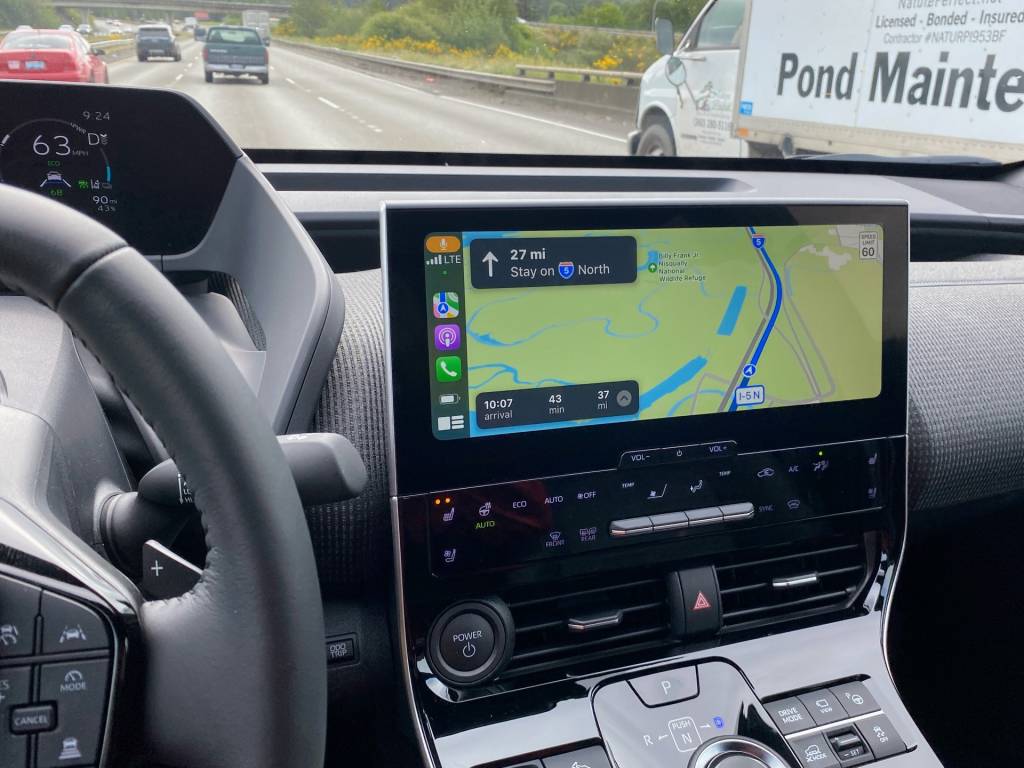
2024 Subaru Solterra
Even today, other automakers are hit and miss in whether they enable their customers with the knowledge or the tools needed to make the most of their EVs’ range and charging. In recent years, motivated EV drivers have sought out better solutions while automakers struggle to implement anything close to what Tesla has offered.
That involves some well-meaning efforts to aggregate multiple charging networks into single brand apps for devices or the vehicle interface. These usually help, but they sometimes make it more confusing, as compatible chargers get left out—leaving customers uneasy about whether they’ll have a place to charge.
Our advice? Use your brand app. And when you go on EV road trips, use one of these other route-planning apps, too. You might find a faster way—and a new favorite.
Chargeway Plus
Chargeway
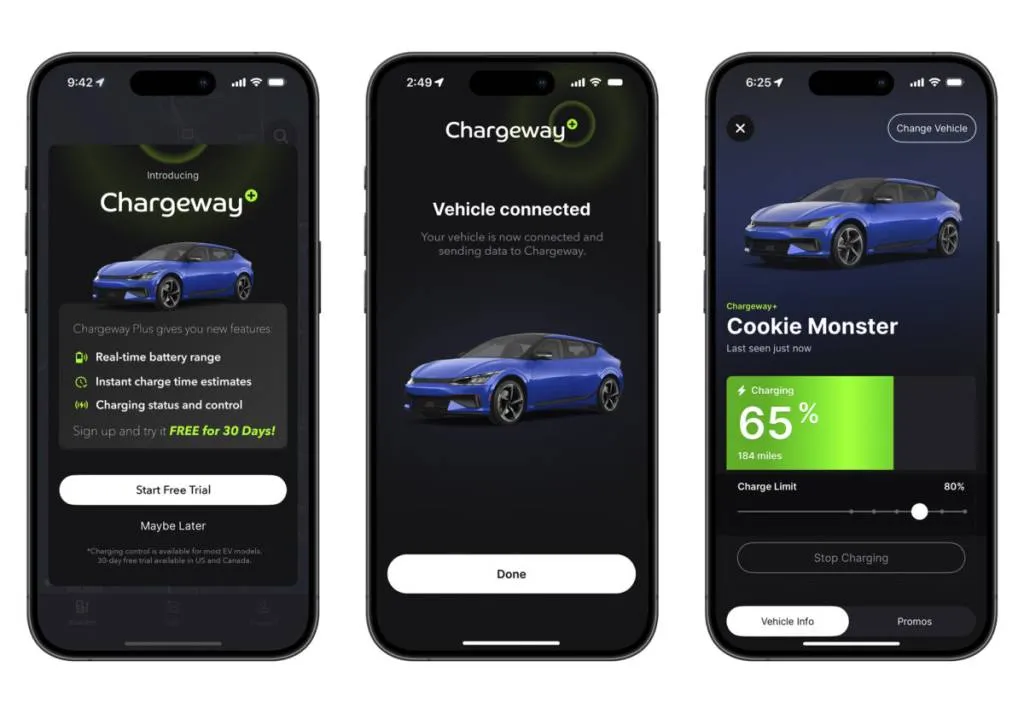
Chargeway is probably best known for providing a color-coded visual language for finding the right charge connector for a particular EV. But for years it’s also been providing route-planning functionality—now offered on iOS and Android—that draws from a vast data set of charger info to minimize the time spent charging based on the EV and driving conditions. If you have multiple EVs, you can enter them in the app and get customized planning catered to each of them.
That’s all been free to consumers, but now Chargeway also has a premium tier. In June, after a pilot test and soft launch in Austin, it launched a suite of Chargeway Plus connected-EV features that allow owners to tap into real-time state-of-charge info, see remaining range, and have control over charging sessions. Chargeway does this by linking, with your permission, to the connected services you likely already have for your EV. Chargeway also plans to add real-time pricing, activation, and payment for charging—so in the near future this could be a single go-to app for everything from unlocking your EV to managing home charging habits and seeing where you’ll stop to charge in an upcoming trip.
A Better Route Planner with Apple CarPlay
A Better Route Planner
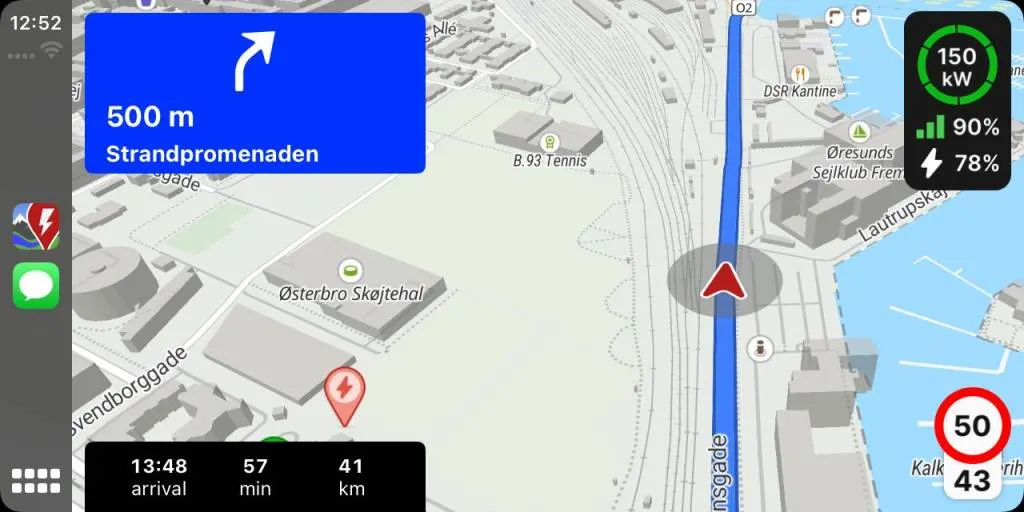
For route planning, A Better Route Planner (ABRP) is exactly that, and it’s found a loyal following over the years from EV drivers who simply can’t put up with the clumsy or nonexistent route-planning features that came with their vehicle. ABRP offers basic EV route planning, incorporating the best use of chargers along the way, for free.
A premium membership of $5 a month or $50 a year is necessary to use it with Apple CarPlay and Android Auto and juggle multiple vehicles all via the same interface. Just like Chargeway, it takes into account weather conditions, as well as traffic, and using your vehicle’s telematics connection you can connect the app so it taps into state of charge and charging progress. In Premium form, ABRP can also tap into your vehicle’s data with your existing cellular connected service, but it alternatively offers an OBD dongle you can plug into your vehicle’s port to use with the iOS or Android app.
PlugShare with Apple CarPlay
PlugShare
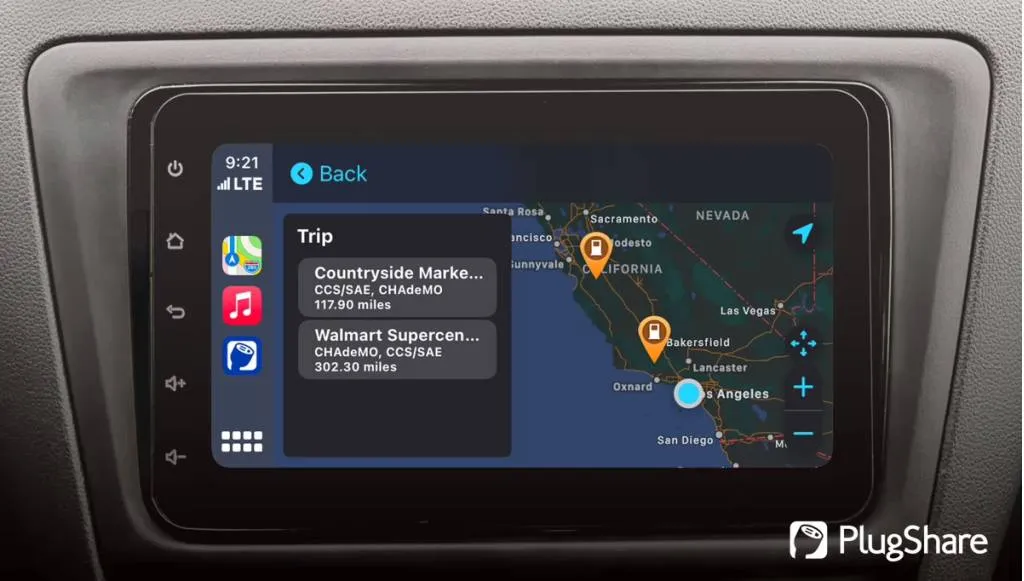
When PlugShare started in 2009, there simply wasn’t anything like it—a map-interface-driven charging finder for EV drivers. It was the early leader for locating charging stations and filtering them by connector type or power needs, and by 2015 it had a simple trip planner in place. Within its first five years, PlugShare had added crowdsourced ratings for charging stations, user reviews and feedback, and eventually a limited charging payment system bypassing the array of physical cards and fobs necessary at the time.
Although now owned by the same company that owns the charging network EVgo, PlugShare has remained network-agnostic in terms of its filters, interface, and route planning. It’s also free for iOS and Android, and compatible with Apple CarPlay and Android Auto—although the app relies on banner ads and paid subscriptions cost $0.99 a month or $9.99 a year to remove advertising.
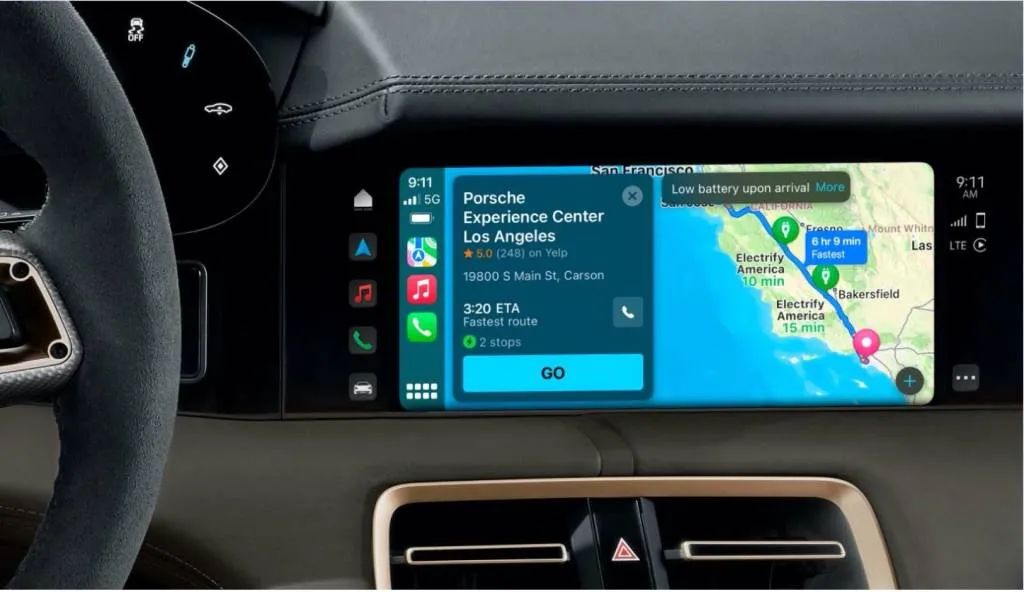
Apple Maps in Porsche Taycan
Apple Maps
When used with Apple CarPlay, and the user has selected the make and model of EV, Apple Maps itself will provide route-planning guidance based on the anticipated range of the vehicle. And some models, including the Ford F-150 Lightning, Ford Mustang Mach-E, Porsche Taycan, BMW i4, and more. Although in each of these cases, battery preconditioning, which may shorten charging stops in colder weather especially, happens only when using native navigation or when the driver remembers to activate it.
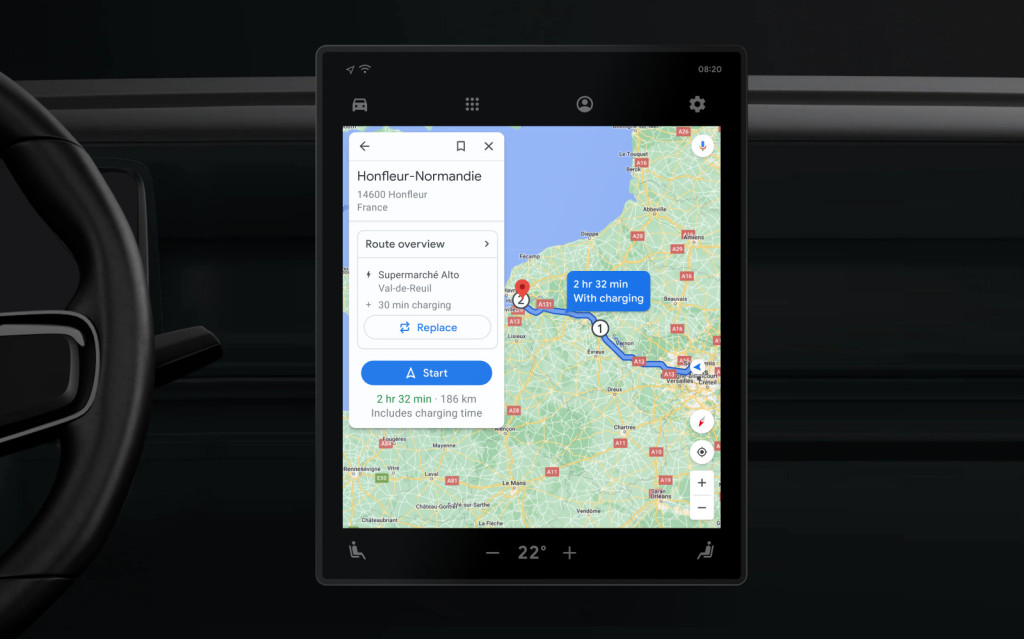
Google Maps EV charging station functionality
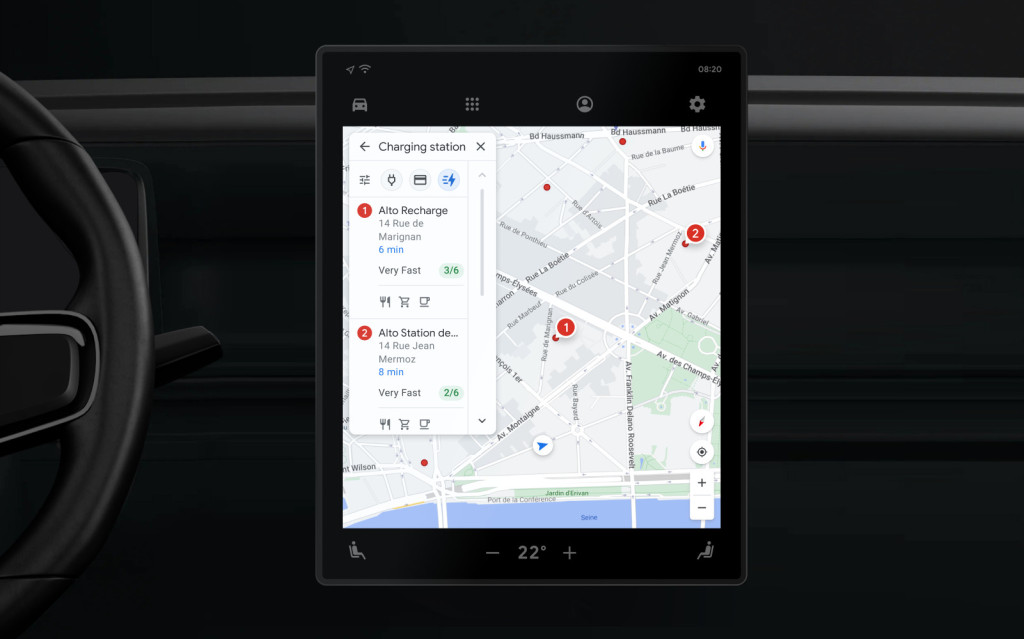
Google Maps EV charging station functionality
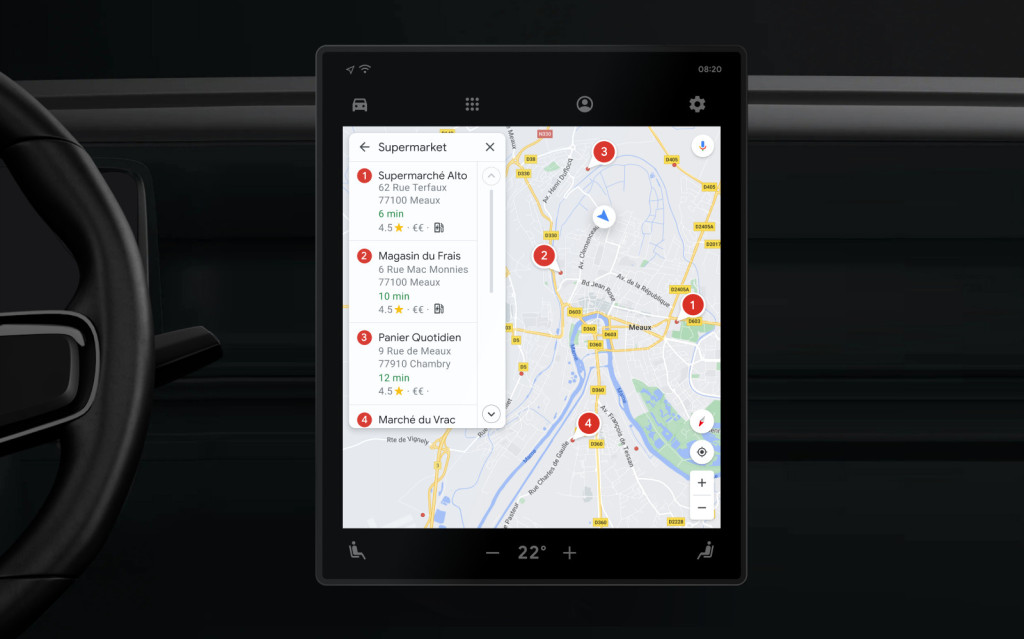
Google Maps EV charging station functionality
Google Maps
Google has come a long way with its route-planning interface in a relatively short time. It’s offered charging station information through its Maps app since 2018, though that feature was originally limited to Android devices. In 2019 it added dynamic EV routing, but it wasn’t all that useful until 2023 when it truly started differentiating charging stations by power level. Google Maps and its EV route planning, noe part of what it’s calling the “Google Maps Platform,” has now become serious business as it’s the native navigation application for vehicles with “Google Built-In”—and get ready to pay subscription fees to Google and automakers to use it in cars in a few years.

Mazda EZ-6 electric sedan confirmed as brand’s first global EV
Mazda on Tuesday announced that the EZ-6 electric sedan will be its first global-market EV.
Mazda revealed this sedan in April in China, and at that time it didn’t provide information about whether it would be offered for any other markets. But in a press release Mazda said the EZ-6 will be “officially launched in the fall of 2024 as a global model,” going on sale in China first, followed by Europe. The U.S. wasn’t mentioned, but the “global” phrasing does at least leave the possibility of U.S. sales open—depending, perhaps, on U.S. tariff, trade, and EV policy after the November elections.
The announcement didn’t include any further information about the EZ-6. The electrified successor to the Mazda 6 combines the Japanese automaker’s styling with powertrain and connectivity tech from Chinese automaker Changan Automobile.
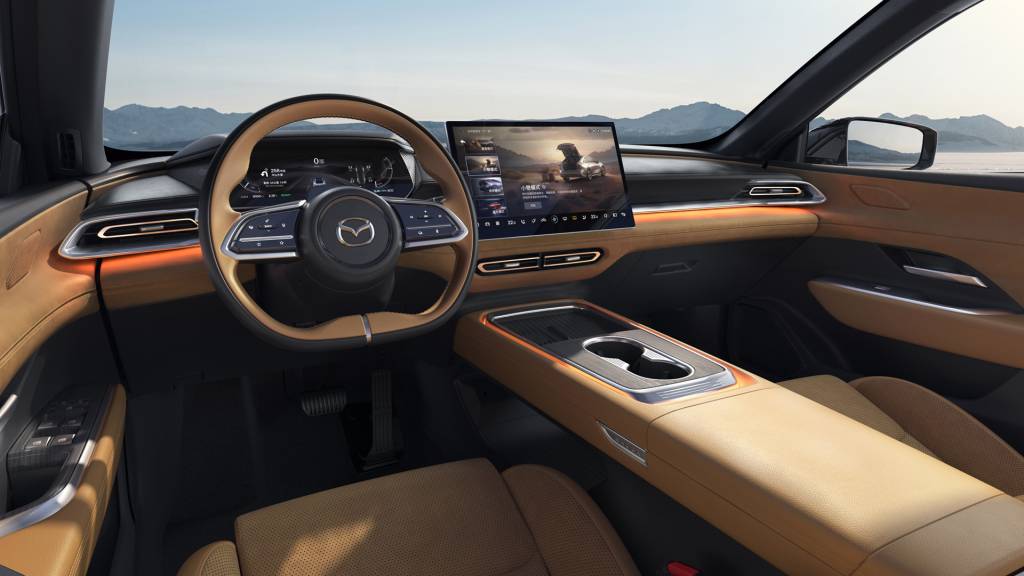
2025 Mazda EZ-6
On the powertrain side, Mazda has confirmed both all-electric and plug-in hybrid options, with rear-wheel drive for better handling. Adding to that, the all-electric version will also feature an ideal 50:50 front-rear weight distribution, Mazda said at the time of the reveal. The automaker also quoted a 373-mile range (based on the Chinese testing cycle) at that time.
Connectivity highlights will include gesture controls and voice recognition, Mazda has said, with a large horizontal infotainment touchscreen in keeping with current trends.
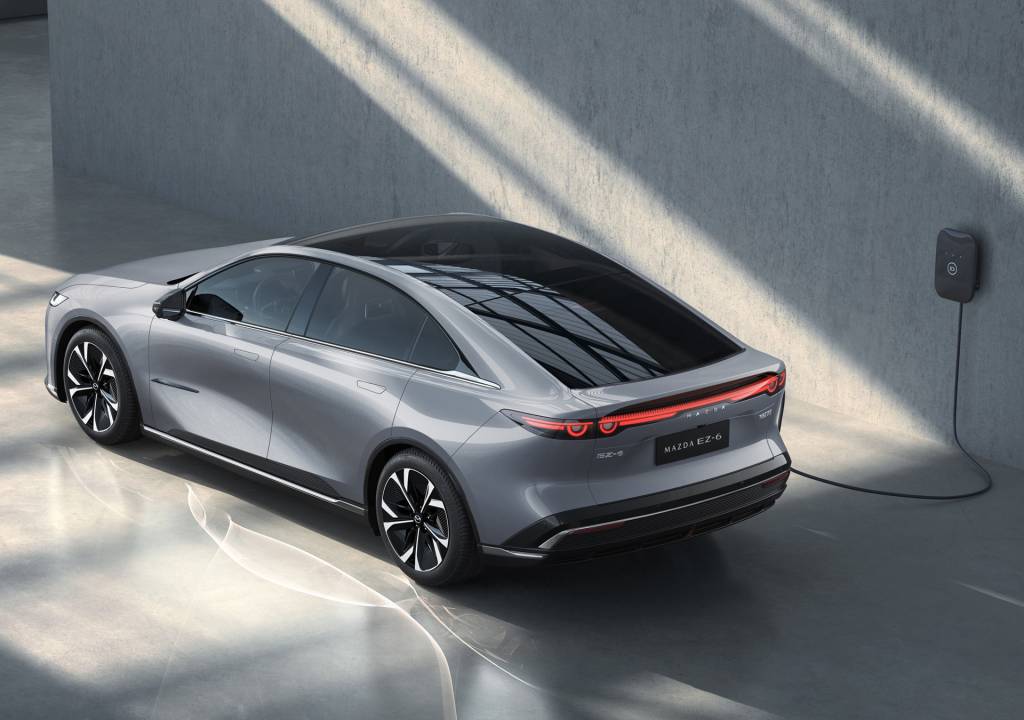
2025 Mazda EZ-6
In discussing the EZ-6 as its first entry into the global EV market, Mazda seems to have forgotten the MX-30, which was only around for a very short time. A rotary range-extended version of that crossover never even made it to the U.S.
The EZ-6 is definitely a long-range EV, but a U.S. Mazda executive just last year clearly stated that it doesn’t see long-range EVs as the future, predicting that EV buyers will learn, evolve, and shift their priorities, and in doing so realize they don’t really need much range.