
Category: General

Porsche won’t make EVs with simulated shifts
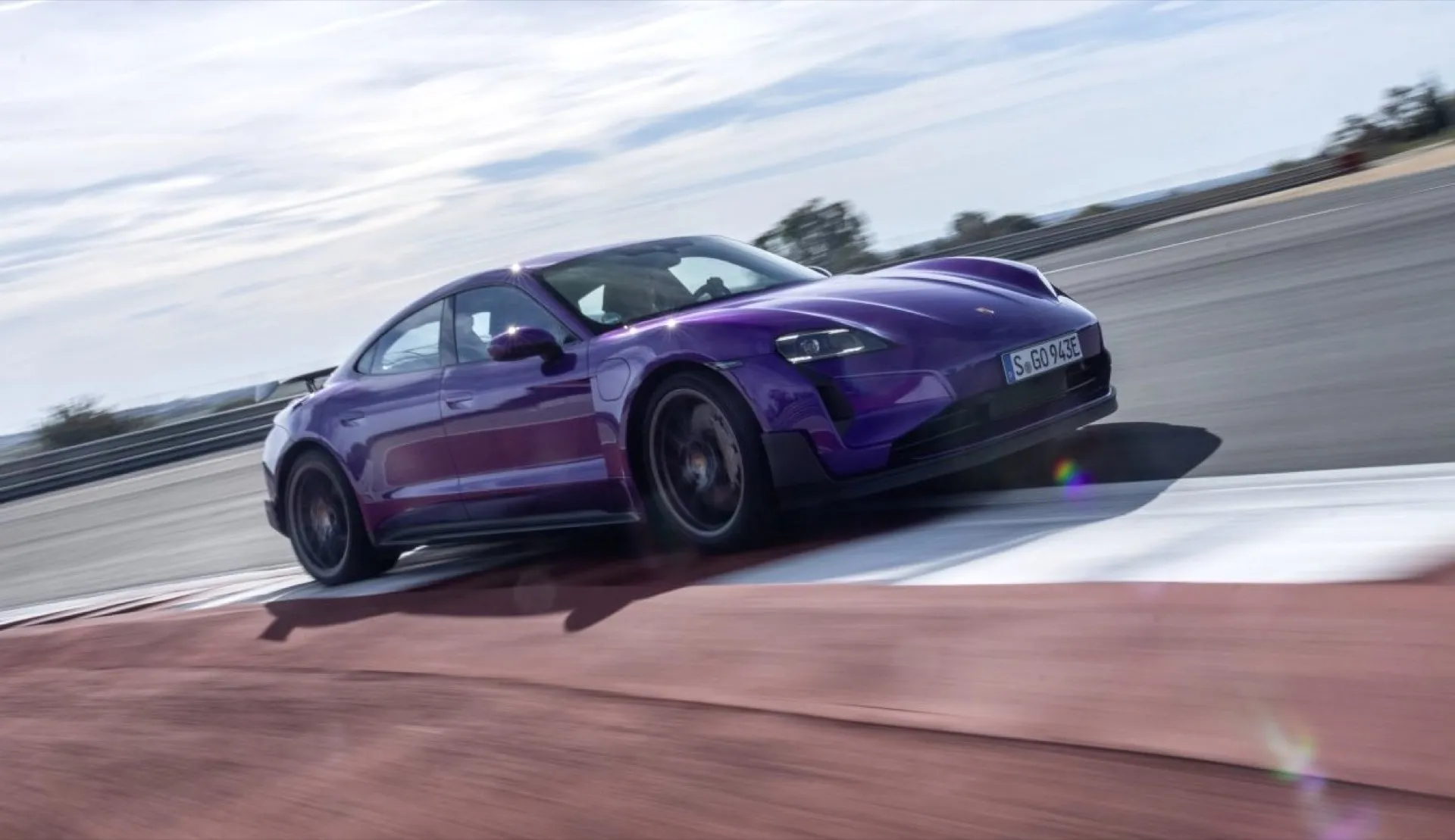
- Porsche EVs won’t pretend to be gas-powered cars
- The automaker explored the idea of fake shift points
- Porsche has two EVs in its lineup and a third en route
Porsche seemingly won’t follow Hyundai’s lead.
Porsche development driver Lars Kern told Drive that the automaker doesn’t see a need to put fake shift points in EVs.
“Our perspective on this is always why should we make something worse,” Kern said.
The driver acknowledged the automaker’s watching what others, including Hyundai, are doing to simulate sporty characteristics in EVs, but features like fake shift points are viewed as counter-intuitive to driving as fast as possible.
Kern noted “there’s no reason to simulate what has been in the past.”
Porsche still makes combustion engines for those that want that feeling.
Porsche explored the technology to simulate shit points and gear changes, but the automaker stopped at the idea stage. A prototype was never created, according to Kern.
Hyundai developed shift points, power cutoff and transfer, and even sound generators (speakers) at various points around the vehicle in the Ioniq 5 N. All were done in an effort to simulate a gas-powered car’s driving experience in an EV.
The effort was all in the name of fun rather than lap times. Hyundai execs and spokespeople told Green Car Reports at the launch of the Ioniq 5 N that the shift points and sound help drivers have more fun and provide a better sense of speed on the track.
The 2025 Hyundai Ioniq 5 N was worth the wait, and both the fake shit points, power curves, and sound generators work to create a different experience in an EV. An experience that’s closer to that of a gas-powered car than a BEV, but while fun, it was clear on a race track these things don’t make the car lap the course quicker. If anything, they might slow the car down due to the fake power curves being implemented for the fake gearing.
Kern said that’s not what Porsche is looking for. “We don’t try to make the electric car feel like a combustion engine, so that’s why we just didn’t follow up on that.”
The Porsche Taycan has been on sale since 2020, and the automaker’s second EV, the Macan, is launching now. A successor to the 718 Boxster and Cayman is in the wings and will bring Porsche’s sports cars into the electric era.

World’s first solar-powered DC-to-DC fast charger can be pre-ordered
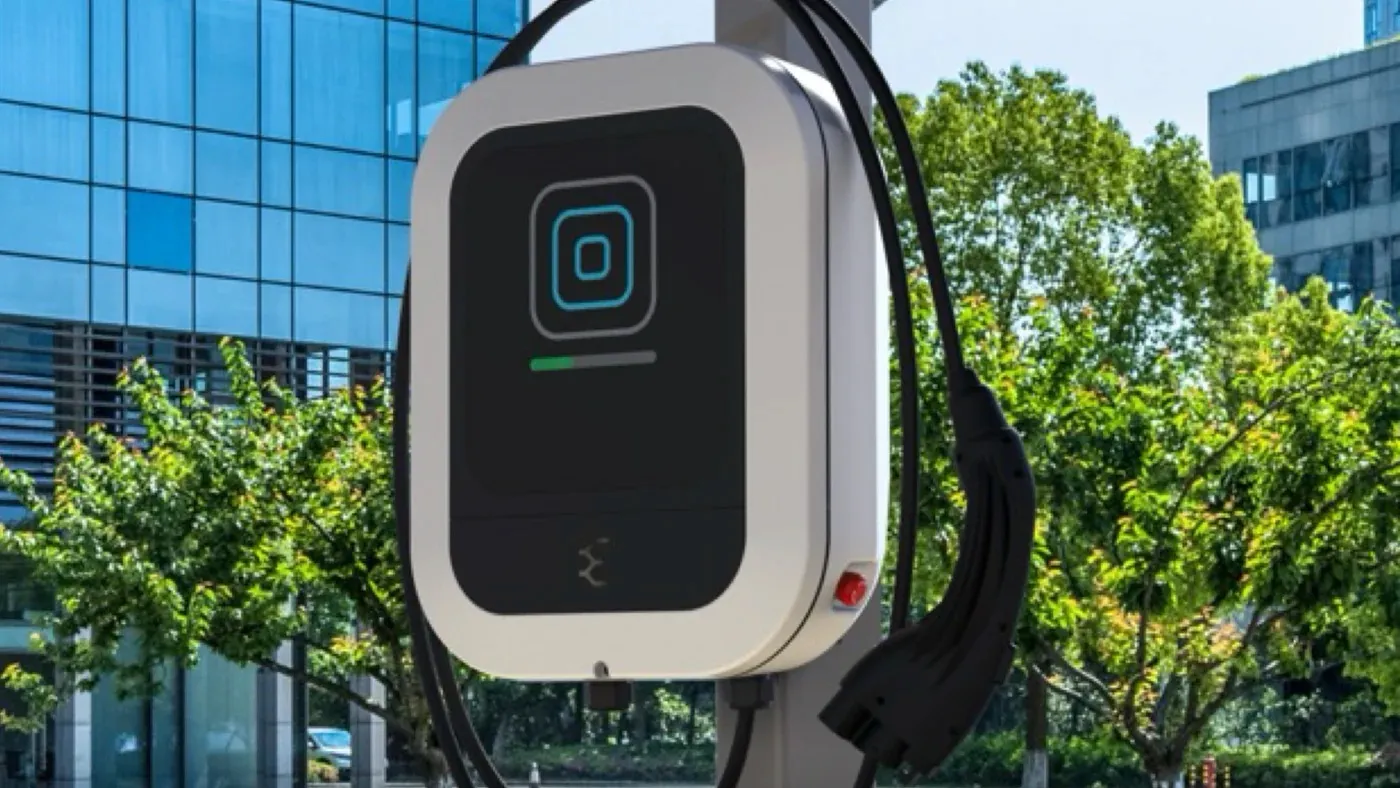
California-based Enteligent is taking pre-orders for a DC-to-DC EV fast charger that can be paired with solar to minimize emissions.
Pitched as an alternative to Level 2 AC chargers, the Enteligent TLCEV T1 EVSE eliminates energy losses from DC-AC-DC conversion losses that would otherwise be a factor if installed at a location without a dedicated power source for the charger, the company said.
This setup, which Enteligent claims is a world first, allows for DC fast charging installations at sites that previously had lower-power Level 2 charging. And if chargers are connected to solar installations, Enteligent claims, there’s no need to connect them to the grid. This cuts down on permitting and other complications while ensuring EVs are charged exclusively with renewable energy, further lowering their carbon footprint.
Enteligent said its hardware can support fast charging at up to 12.5 kw, and is available with Tesla North American Charging Standard (NACS) or CCS-1 connectors. This setup can now be pre-ordered with a refundable $250 deposit, which will be applied toward an “early bird” price of $2,249.
Enteligent also announced that it had supplied a 25-kw DC-to-DC bidirectional charger to a “large logistics company” to charge electric deliver vehicles, and had raised $6 million for further commercialization.
Solar-powered bidirectional charging could provide the capability for EVs to act as an emergency backup power source. Such capability is already with the Ford F-150 Lightning pickup truck for residential applications, while General Motors has established an entire energy business unit to take advantage of the bidirectional charging that will soon be available across its EV lineup.

Honda CEO on EVs: “Can’t force people to change their minds”
- Honda’s CEO doesn’t believe consumers can be incentivized to change to EVs
- Honda’s spending $700M to retool plants and $3.5B to built a battery plant for mass EV production
- The exec believes the future is electric, but it’ll take time
Electric cars and hybrids are currently having an inverted moment.
Speaking with The Drive at the 2024 Monterey Car Week, President and CEO of American Honda Kazuhiro Takizawa talked about EVs, ecosystems, and consumers.
Takizawa said, “You can’t force the customer to change their mind, really, and to some degree [you can incentivize] them but we just can’t force the people living in, say, the midwest, with no charging stations.”
The issue, Takizawa believes, is consumers won’t just make the change from ICE vehicles to EVs rapidly, even with incentives. It’s going to be a gradual changeover, according to the executive.
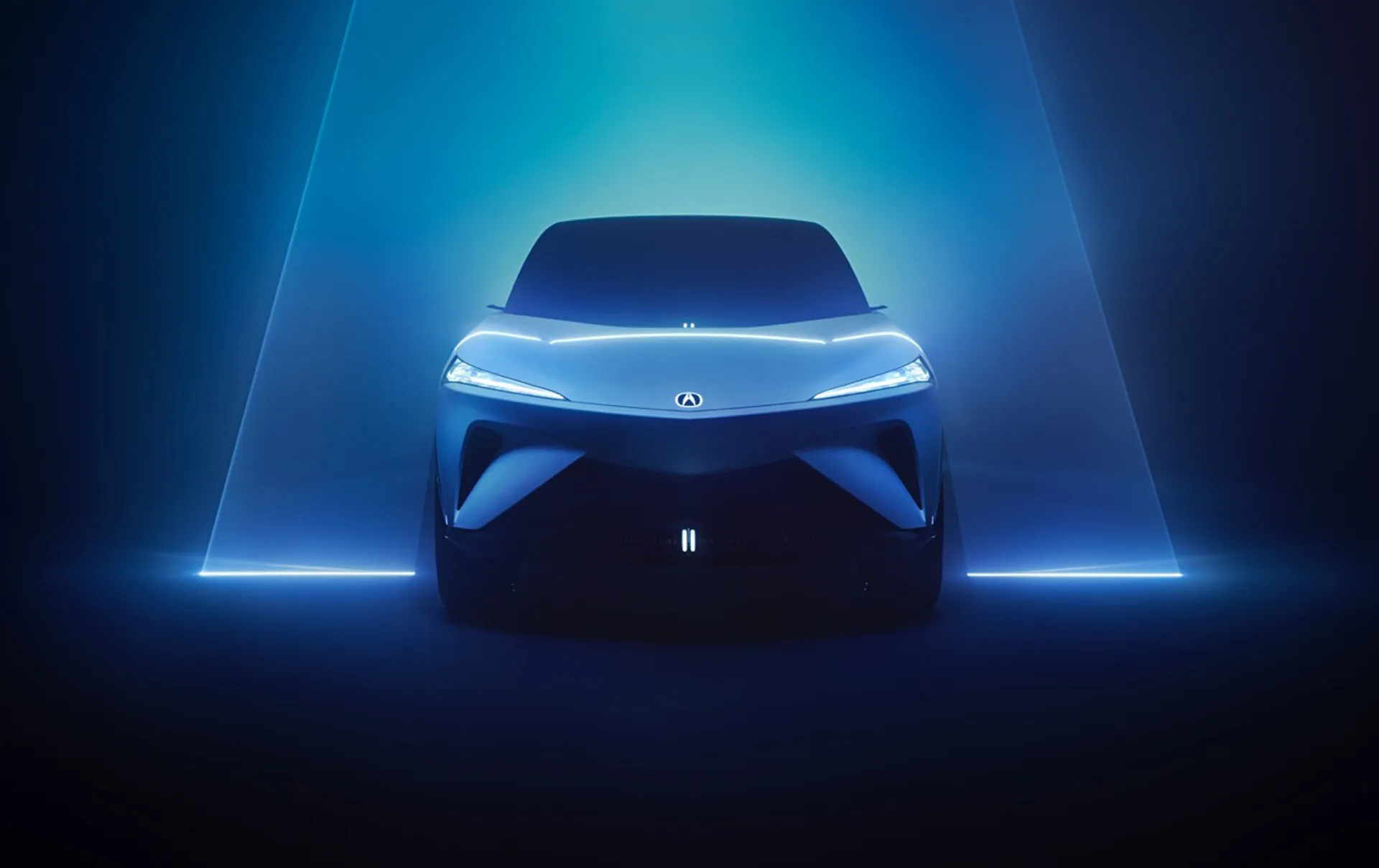
At the event Acura revealed a Performance EV concept that previews one of the first EVs to come from the luxury automaker on the in-house developed Honda 0 platform. The production version will roll off the assembly line at the automaker’s Marysville Auto Plant in Ohio in 2025.
Honda’s currently underway with a $700 million retooling effort at three of its plants along with a $3.5 billion battery plant all for U.S. EV mass production. The moves could position Honda to outpace all but Tesla in U.S. EV production.
Takizawa’s comments came days before Ford shifted its electrification strategy, killed its three-row EV, and doubled down on hybrids.
Lucid CEO Peter Rawlinson noted at the 2024 Monterey Car Week that the softening of the EV market is a “temporary blip,” and that “retrenchment Into hybrids is a blind alley.” Both Rawlinson and Lucid’s president of design and brand, Derek Jenkins, commented that consumers have more EV options than ever, yet, the options are underwhelming.
Battery EVs are the best way to reach carbon neutrality, according to Takizawa. But today’s ecosystem is lacking for charging. Societal changes and societal issues take time, he noted.
Honda’s current EV, the Prologue, is a reskinned Chevrolet Blazer EV based on GM’s Ultium platform. Green Car Reports noted in February at the crossover SUV’s launch it gets to something greater as an effort that registers as “normal.” No niche effort like the Toyota bZ4x, the Prologue aimed for capturing EV-curious Accord, CR-V, and Passport drivers.

Sam Abuelsamid delves into Ford’s EV retreat and GM’s software cuts (Episode 265)
The Guidehouse Insights principal analyst examines forces driving Ford Motor Co. to scale back its electric-vehicle plans, steady sales growth in the overall EV market, and why it’s hard for legacy automakers to get software right.

US EV “loophole” subsidizes imports, has fueled leasing boom
- Inflation Reduction Act’s 45W, intended for commercial fleets, subsidizes EV leasing
- Up to $7,500 of federal money applies to EV leases regardless of their price or where they’re built
- That’s stoked a leasing boom that undercuts some of the original intent of the IRA
If you seek a new luxury EV, or an EV made overseas, the payment math may point toward some very attractive lease terms—even when compared versus sensibly financed purchase terms.
Why? Thank the government—and the U.S. Treasury Department, which opted to interpret and implement subsidies from the Inflation Reduction Act in a way that some lawmakers argue doesn’t keep to the original intent of the law.
The funds sweetening consumer leases come from the Commercial Clean Vehicle Credit, or IRS 45W, which was enabled by the IRA. Originally intended to allow operators of commercial fleets a subsidy for adopting EVs, its final language was tweaked to allow automakers’ captive finance partners to apply the credit to EVs leased to consumers.
Nearly every EV can qualify for such a credit toward leasing, while credits on EV purchase only apply to a small subset of EVs. So it’s not surprising that as a result, leasing is surging relative to sales—and it’s the EV segment that’s pulling more weight in this surge than non-EVs.

TransUnion EV lease rates by year
Federal funds partly behind an EV leasing surge
In a report from the credit giant TransUnion out earlier this month, EV leasing has helped push overall lease volumes from 539,000 in Q1 2023 to 714,000 in Q3 2024. That’s approaching the leasing levels seen in 2020, when interest rates were much lower.
According to Merchant, the number of lower-priced EVs arriving on the market had a role, as well as the arrival of leasing incentives—in the form of federal tax credits resulting in subsidized EV leases that applied starting in January 2023.
What IRS 45W has meant in the context of passenger vehicles is that, indirectly, automakers have been able to count on up to $7,500 per EV they lease—regardless of the vehicle’s assembly location, the origin of its battery pack or materials, or the sticker price of the vehicle, and regardless of the lessee’s household income. There’s also no limit to the number of credits an automaker—nee leasing company—can claim toward leasing, or to the number of federally subsidized EV leases a customer can commit to.
That’s made leasing a more preferred mode of moving luxury and imported EVs—because IRS 30D, the Clean Vehicle Credit that applies to the purchase of EVs or plug-in hybrids, emphasizes affordable American-made EVs built with the support of battery materials from North America or trade partners. To claim that EV tax credit of up to $7,500, buyers must meet household-income requirements and the vehicles meet a set of criteria for American assembly, EV battery sourcing, and a price ceiling of $55,000 or $80,000 depending on the vehicle type.
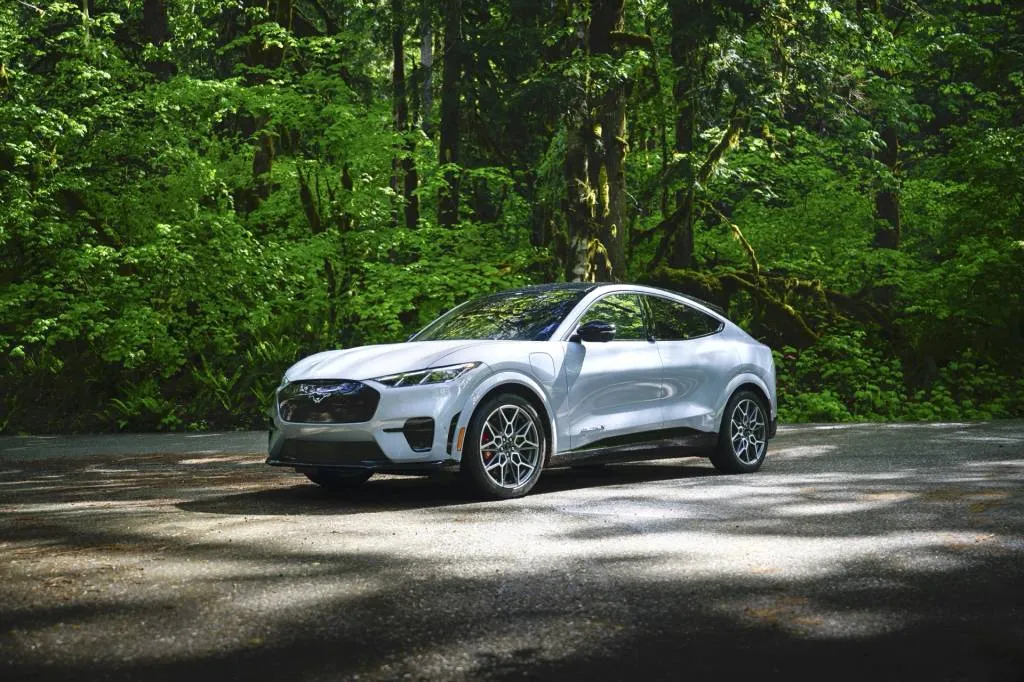
2024 Ford Mustang Mach-E GT
For EVs, leasing surpasses financing
“Auto leasing has certainly been up overall in recent quarters, but nowhere has it been more pronounced than in the EV market, where leasing has now surpassed financing as the preferred option among consumers acquiring a new EV,” said Satyan Merchant, senior vice president for auto and mortgage at TransUnion.
The TransUnion observation is the latest piece of broad leasing-industry data to see that the dynamics around leasing are changing, with EVs front and center. Last year, fellow credit giant Experian noted a market shift toward EV leasing, with the shift easy to see starting around April 2023—just as those a few months.
That in itself leads to a paradox of sorts. The boom in leasing, spurred by the Inflation Reduction Act itself, arguably softens the intended incentives for industry to build out the EV supply chain and build more EVs in America—just before that IRA buildout really starts to pay off in more American-made and American-sourced EVs.

UAW-made sticker on 2022 Chevy Bolt EV
Biden EV policy working against itself?
“If consumers choose to take up the tax credit primarily via leasing under Section 45W, automakers will not face financial pressure to use battery components sourced from the United States, use recycled batteries, or source critical minerals from the United States or free trade agreement partners,” summed the Peterson Institute for International Economics in a May 2023 working paper on the IRA, pointing out that U.S. imports of EVs from the EU and South Korea have increased since the IRA. “Section 45W thus reduces the incentive to create a separate redundant EV battery input supply chain outside of China.”
The policy has, however, led to greater lease popularity for U.S.-made, affordable EVs, too. Last year Experian noted that the Tesla Model 3 is one of the top-ten most-leased models in the U.S.
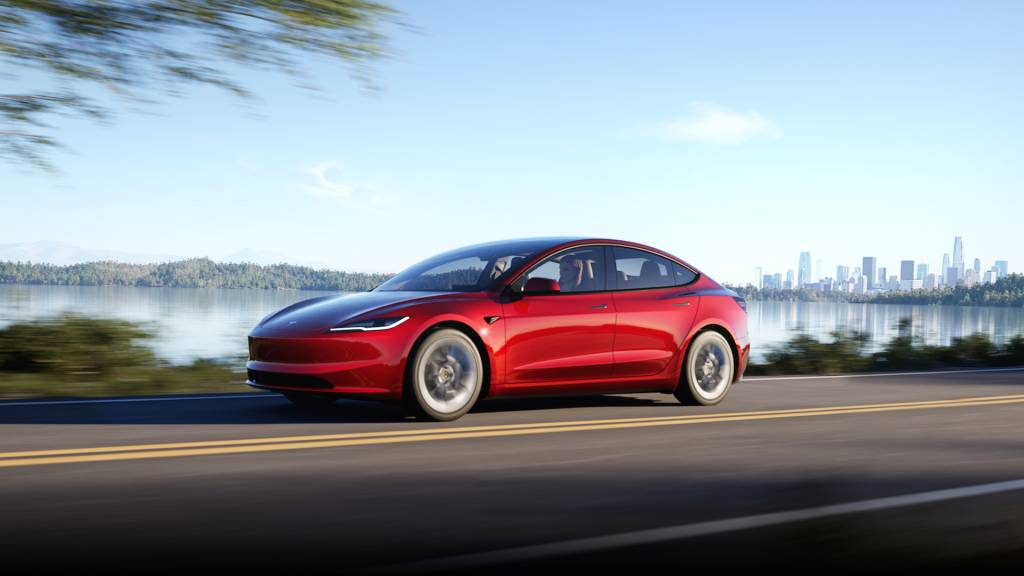
Tesla Model 3 (Europe-market refresh)
Last year, Green Car Reports reached out to the majority of automaker finance firms and the IRS regarding the frequency of 45W claims in EV lease financing, and those captive finance companies that responded stated that they were choosing to keep that information private. We reached out again to the IRS, and to the Treasury Department, for an update on how many 45W claims there have been, and what proportion of those are estimated to be linked to passenger-vehicle leases versus than commercial vehicle fleets.
The Treasury Department confirmed to Green Car Reports Friday that it doesn’t yet have top-level data for 2023 regarding the amount claimed under 45W, how many vehicles it applies to, or the end use of vehicles for which the claims are made.
In the meantime, the consumer EV leasing market will likely continue to be subsidized with federal funds until Congress steps in and sets some ground rules. That means subsidized EV leases will continue until next year’s session at the earliest. As with so much about current EV policy and election season, it’s all subject to change.

Electric NASCAR race cars could feature sustainable bodywork
- NASCAR is considering an electric racing series
- A prototype electric SUV race car was revealed in July
- The electric NASCAR race car prototype’s body panels were made from plants
NASCAR surprised attendees at its July Chicago Street Race with an electric SUV prototype race car, but the powertrain and body style weren’t the prototypes only unusual features.
The NASCAR EV Prototype also featured bodywork from Swiss firm Bcomp that incorporates flax, which Bcomp claims is a sustainable alternative to the carbon fiber used throughout motorsports today, with an overall carbon footprint 85% smaller with a similar level of stiffness.
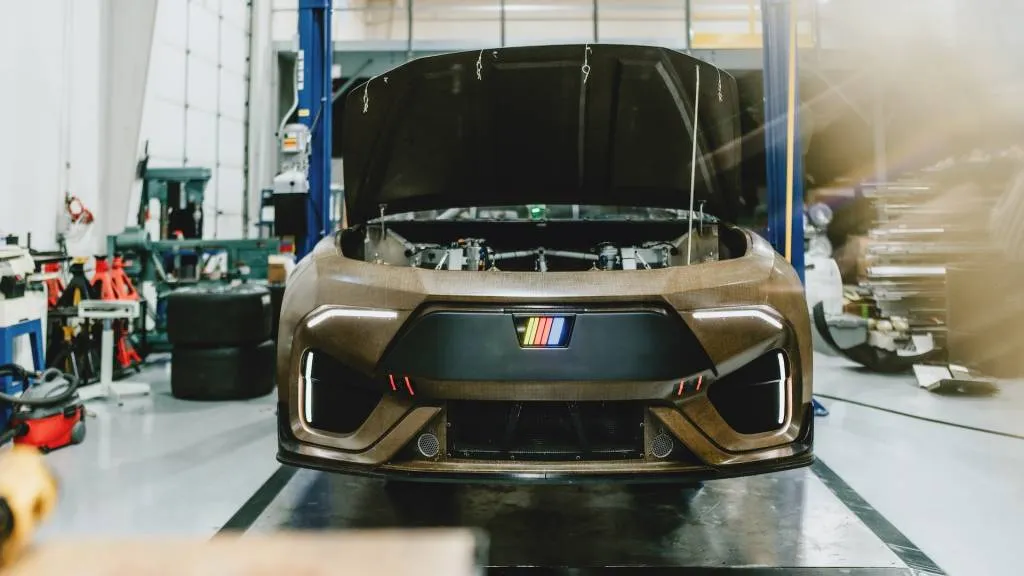
NASCAR electric race car prototype (image via Bcomp)
That stiffness is thanks in part to an inner structure inspired by the vein structure of leaves, Bcomp said in a blog post. The flax fibers used in this material—which takes the form of a fabric that can be layered and molded into shape like carbon fiber or fiberglass—is grown in Europe without competing with food crops, according to the company’s website.
In April 2023 NASCAR committed to its first long-term carbon emissions goal and “the beginning of a new era in sustainability for America’s top motorsport.” That included a goal to cut its carbon footprint to zero across its core operations by 2035.
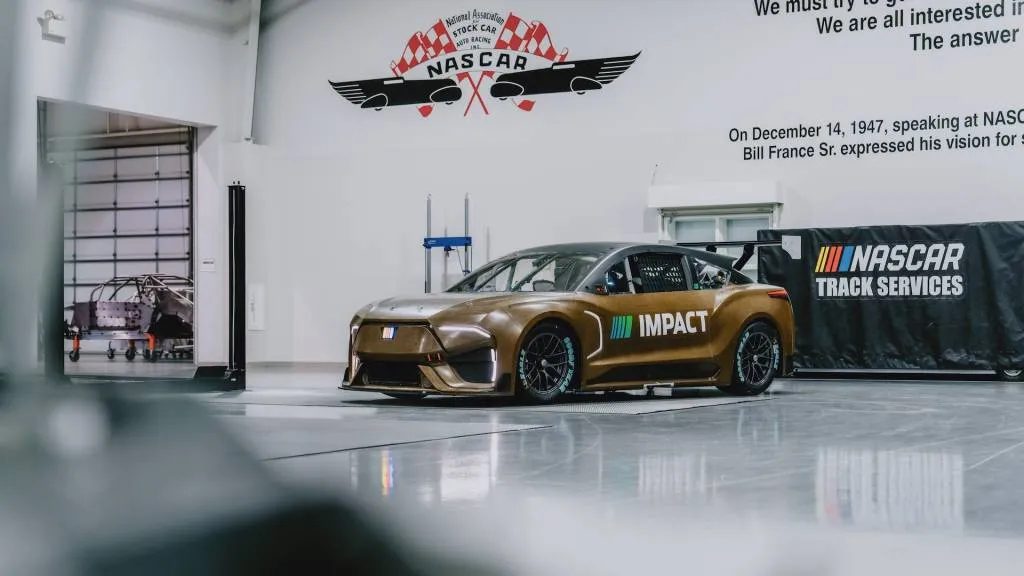
NASCAR electric race car prototype (image via Bcomp)
Flax-based bodywork could make a small contribution toward that goal with less shock than switching from the current race cars—which feature loud, thirsty V-8 engines—to something like the electric SUV prototype. The prototype has all-wheel drive and three six-phase motors—one in front, two in back—potentially producing more than 1,300 hp. A 78-kwh battery pack, along with regenerative braking, make the SUV “ideal for road courses and short oval tracks,” NASCAR previously said.
The SUV body style of the prototype is nearly a big a change as its electric motors, but is more in line with automaker’s current lineups. NASCAR is not giving a timeline of when it might introduce electric race cars, but if it did it is easy to imagine the prototype being reskinned as a Ford Mustang Mach-E, Chevrolet Blazer EV, or Toyota bZ4X in keeping with NASCAR’s current practice of racing cars branded as ones fans can buy.

2024 GMC Sierra EV Denali Edition 1 arrives at dealers
- GMC now has two electric trucks in production
- The 2024 GMC Sierra EV will be a low-volume model for at least a year
- The limited-edition launch version of the Sierra EV costs $99,495
The 2024 GMC Sierra EV Denali Edition 1 is now being delivered to customers, General Motors announced Wednesday. But it will be some time before other versions of the electric pickup reach dealerships.
The limited-edition launch version of the Sierra EV arrives with a starting price of $99,495 with a $1,995 destination fee—a few thousand less than the price suggested when the Sierra EV was first previewed by Green Car Reports in 2022. The launch model’s 440-mile EPA range is also about 10% more than originally suggested.
Bearing GMC’s top-luxury Denali badge, the Edition 1 features adaptive air suspension, rear-wheel steering, and the CrabWalk feature from the GMC Hummer EV. The latter distinguishes the GMC from the top-trim 2024 Chevrolet Silverado EV RST. Like their internal-combustion counterparts, the Sierra EV and Silverado EV are essentially twins, with the main differences coming down to styling and some feature content.
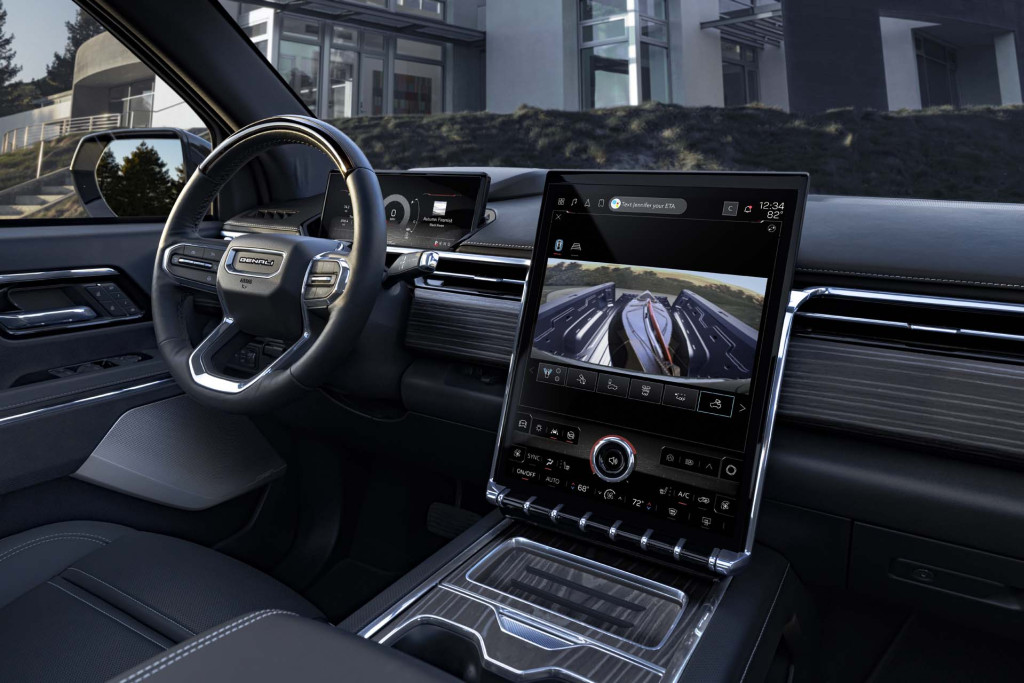
2024 GMC Sierra EV Denali Edition 1
Edition 1 models have a dual-motor powertrain producing up to 754 hp and 785 lb-ft of torque, enabling 0-60 mph acceleration in 4.5 seconds and a maximum towing capacity of 10,000 lbs that’s slightly higher than the 9,500 pounds originally suggested. A midgate pass-through—pioneered by GM in the 2000s—allows the truck to swallow items up to 11 feet long. A front trunk is included as well.
With a dual-layer battery pack expected to be the same 205 kwh as top trims of the Hummer EV, the Sierra EV can take full advantage of 350-kw, 800-volt charging connectors, according to GMC, allowing up to 100 miles of range in 10 minutes. Bidirectional charging at up to 10.2 kw allows the Sierra EV to serve as a mobile power source.
The truck rides on massive 24-inch wheels and features a generously-sized 16.8-inch infotainment touchscreen. The Super Cruise highway driving-assistance system, which can be used while towing a trailer, is also available. GM expects 750,000 of compatible U.S. and Canadian roads to be available by the end of 2025.
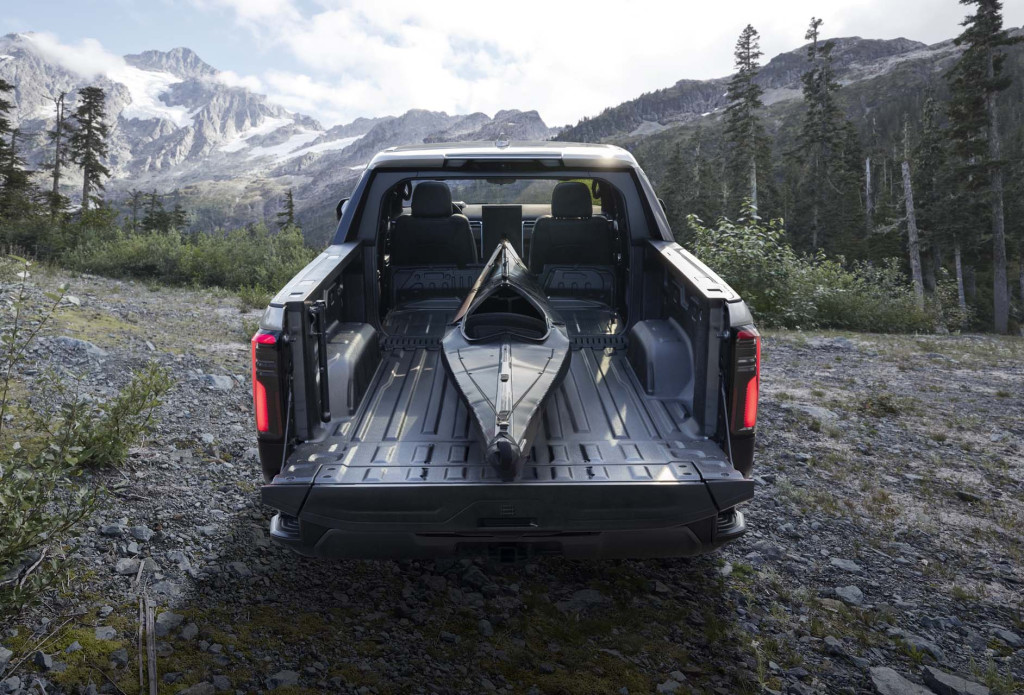
2024 GMC Sierra EV Denali Edition 1
The Sierra EV was announced in 2021 and at that time was confirmed for a 2023 market arrival. GMC has suggested all along that it might not be “high-volume entry” electric truck that GM CEO Mary Barra stressed in describing the Silverado EV, so work-truck variants like those offered for the Chevy likely aren’t planned. GMC has said that an AT4 off-road model is on the way, as well as an entry-level Elevation model priced around $50,000.
These other versions likely won’t arrive right away, though. Large-scale production of the Sierra EV and Silverado EV at GM’s Orion Assembly plant in Michigan has been postponed until mid-2026—the latest in multiple delays of the production ramp-up of these trucks and other GM Ultium EVs.

Lucid reportedly developing three affordable EVs
- Lucid has three affordable EVs in the pipeline
- The project “mid-size program” will encompass a crossover SUV, probably a sedan, and possibly a hatchback
- Lucid’s model will put an emphasis on efficiency
Lucid is developing three affordable EVs priced below the Air sedan and the upcoming Gravity SUV, CarBuzz reports.
The automaker is currently working on a “mid-size program” that will apply technology and design elements first seen on the Air to a trio of smaller vehicles aimed at a wider audience, Lucid design boss Derek Jenkins told CarBuzz in an interview during 2024 Monterey Car Week.
“The whole idea is to take our technology and hit a wider swathe of consumers,” Jenkins said. “We’re creating a range of possibilities around that program.”
Teaser for Lucid Project Midsize – Photo credit: John Voelcker
The three new models won’t be as quick as the Air, but will share a focus on efficiency and aerodynamics with the sedan, Jenkins said. They will also be “compact, lighter vehicles” compared to the Air, he noted.
One of these vehicles could be the potential Tesla Model Y rival Lucid teased in January at the opening of the second manufacturing stage of its Casa Grande, Arizona, assembly plant. Lucid referred to this model as “Project Midsize” in that announcement, in which the company said engineering prototypes of the vehicle already existed.
In the interview, Jenkins didn’t confirm any other body styles but shot down the idea of a station wagon, noting that this segment is shrinking even in Europe, where wagons have retained greater market share than in the U.S.
A sedan to compete with the Model 3 and complement the Model Y competitor makes sense. Lucid CEO Peter Rawlinson has told Green Car Reports in the past he likes the Golf size and format and would love to make an affordable and sporty hatchback.
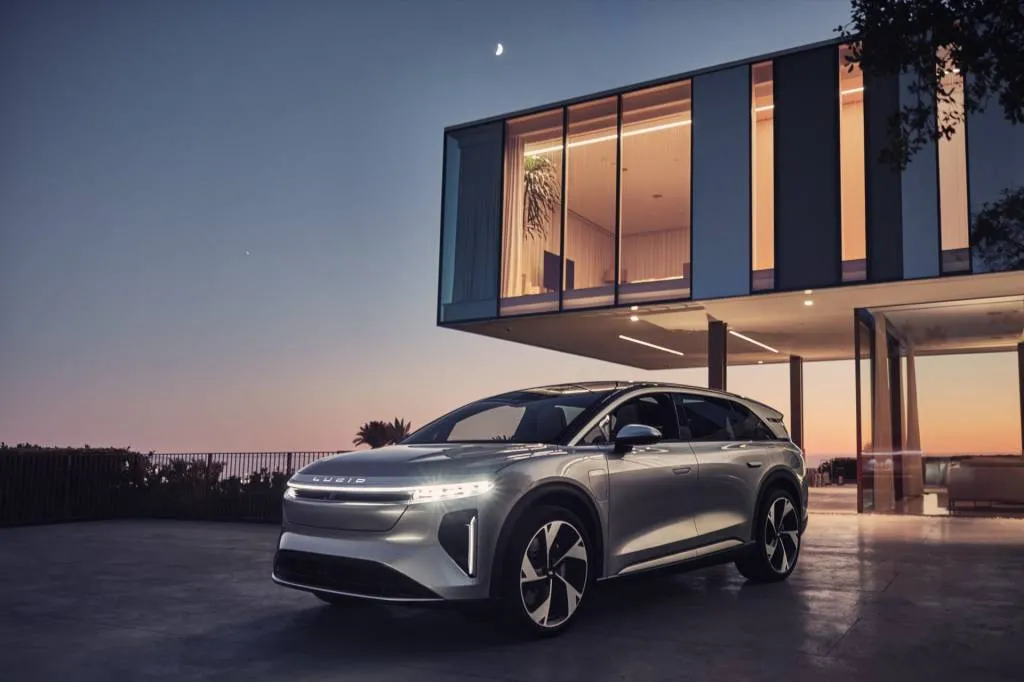
Lucid Gravity
In the meantime, Lucid is moving ahead with the launch of the Gravity. The SUV was unveiled in 2023 and pre-production units started rolling off the assembly line in January. In a separate Monterey Car Week interview, Rawlinson said the EV market was experiencing “a temporary blip” and called other automakers’ refocus on hybrids a “blind alley.” In a LinkedIn post published earlier in August, Rawlinson said those automakers still committed to EVs would take years to catch up to Lucid in efficiency.
Green Car Reports has reached out to Lucid for comment and will update this story when we hear back.

Fisker Ocean recalled due to regen brake issue
The Fisker Ocean has been recalled once again, this time for an issue that could lead to an unexpected reduction in regenerative braking.
The recall includes 7,745 Ocean electric SUVs from model years 2023 and 2024 (the only two in which the Ocean was sold before Fisker filed for bankruptcy). Software issues in these vehicles may reduce regenerative braking while decelerating over bumps, according to the NHTSA.
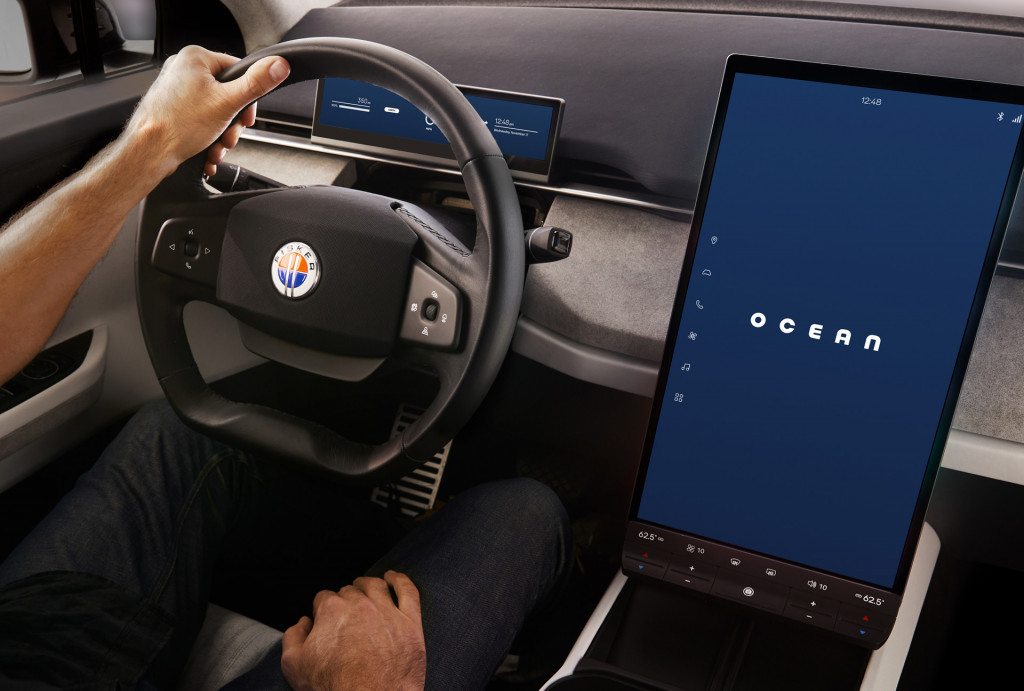
2023 Fisker Ocean
Drivers still have access to friction brakes, and “normal operation” resets after 740 milliseconds, according to recall documents. However, drivers may have to press the brake pedal unexpectedly due to the reduced regen. Fisker is aware of one injury related to this issue.
Fisker will release an over-the-air software update to address the issue. It plans to mail owner notification letters Oct. 14, 2024, but in the meantime owners can contact Fisker customer service at 1-844-347-5371. Fisker’s reference number for this recall is TSB10062408.

2023 Fisker Ocean
This is the fifth recall of the Ocean during its brief production run, although only three recalls apply to both 2023 and 2024 models. That includes a recall of 8,204 vehicles in the U.S. to address sticking door handles that could prevent the doors from opening. Assembly and some development work was contracted out to Magna, which built the Ocean at its facility in Graz, Austria, alongside the also discontinued Jaguar I-Pace.
Production was slow to ramp up and, once it did, slow sales left Fisker vulnerable. In July, the bankrupt automaker asked the judge overseeing its Chapter 11 proceedings for permission to sell leftover cars to a leasing company for $14,000 each. In a postmortem drive, Green Car Reports found that the Ocean was frozen in beta, with a stylish design but tech features left incomplete by software updates that may never come.