
Category: General

Hyundai plans plug-in hybrid SUV for 2026, 21 EVs by 2030
Hyundai will launch plug-in hybrid SUVs as a “bridge to electrification” in 2026, but still plans to launch 21 EVs globally by 2030.
Announced during the automaker’s 2024 CEO Investor Day presentation Wednesday, a new plug-in hybrid powertrain will use two electric motors to enable all-wheel drive, with a combustion engine acting primarily as a generator. This is similar to the defunct Chevrolet Volt, and distinct from the plug-in hybrids Hyundai has offered in the past.
Hyundai claims a combined range of up to 559 miles on both gasoline and electricity, with an “EV-like driving experience” the automaker claims will encourage customers to give all-electric models a try in the future.

2025 Genesis GV80
The powertrain will first appear in SUVs for both Hyundai and the Genesis luxury brand. The automaker is targeting annual North American sales of 80,000 units across both brands. Hyundai plans to start production by the end of 2026, with sales starting in 2027.
The Genesis plug-in hybrid SUV may be just one of multiple hybrids augmenting what was to be an all-EV lineup. Genesis in 2021 laid out plans to sell only EVs or fuel-cell vehicles by 2030, but recently reversed course, citing customer demand. A report from The Korea Economic Daily earlier this year said Genesis was developing a hybrid powertrain based around a 2.5-liter engine, likely for use in the G80 sedan and GV70 SUV.
Hyundai is also planning updates to its existing hybrid system to improve fuel economy and performance—while targeting increased sales. The automaker aims to sell 1.3 million hybrids globally by 2028, and 690,000 in North America alone by 2030. The automaker is also expected to add production of hybrids alongside EVs at its new Georgia Metaplant scheduled to open later this year.
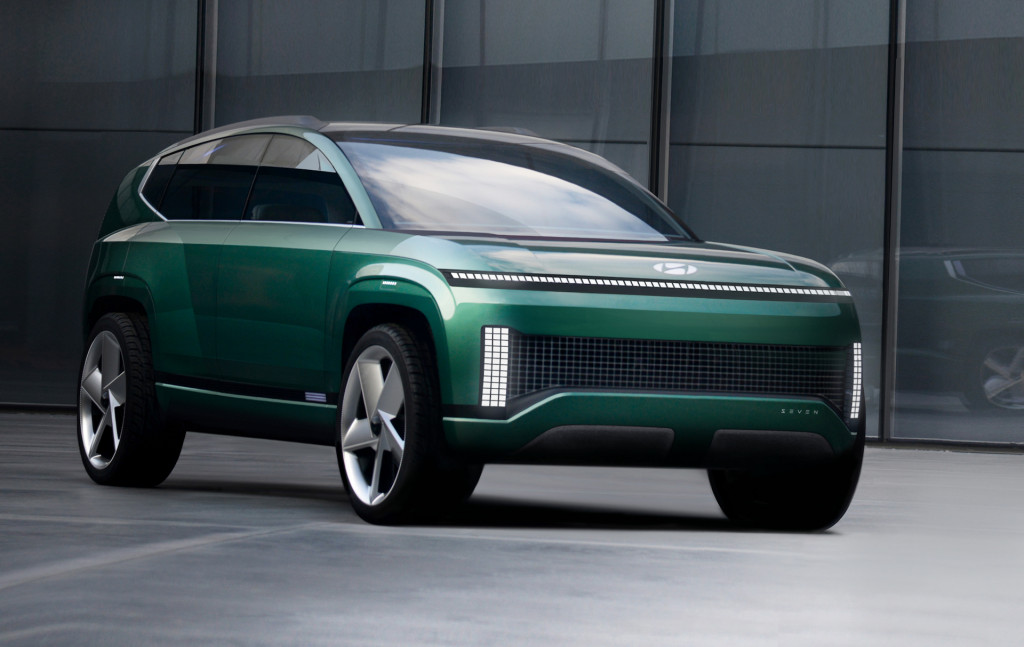
Hyundai Seven concept
EVs remain a priority for Hyundai, though. The automaker said it is researching new battery tech, including a new chemistry that it plans to introduce in 2030 alongside current nickel-manganese-cobalt (NMC) and lithium-iron-phosphate (LFP) and cell-to-vehicle packaging that would see battery cells integrated directly with a vehicle’s body shell—going a step beyond even the cell-to-pack designs being touted by the likes of Chinese battery supplier CATL.
Hyundai is targeting 2 million global EV sales by 2030. Among the new models already slated for production is a three-row SUV debuting later this year—the Hyundai Ioniq 9, based on the Hyundai Seven concept first shown in 2021—as well as additional performance models in the vein of the Hyundai Ioniq 5 N.

GM-Samsung $3.5B battery plant coming to Indiana
Samsung SDI on Wednesday said it had signed an agreement with General Motors for a joint EV battery factory in Indiana.
First reported by Reuters, the deal calls for the two companies to invest $3.5 billion in the factory, which targets annual production capacity of 27 gigawatt-hours of cells. Samsung reportedly expects the factory to begin mass production in 2027, and is leaving room for capacity to expand to 36 gigawatt-hours in annual volume.
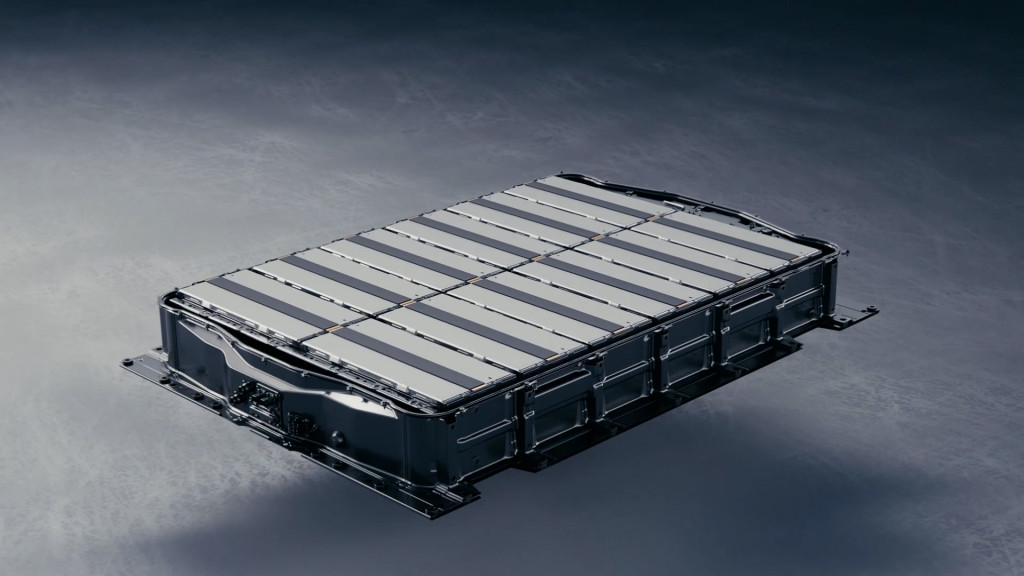
General Motors Ultium batteries
The factory was announced in April 2023. At the time, GM and Samsung said it would cost around $3 billion, would aim for 30 gigawatt-hours of annual cell production, and would open in 2026. At the time, GM said the factory would produce both prismatic and cylindrical cells, highlighting the automaker’s flexibility on cell format.
Discussion of those formats means the Indiana factory could build cells that are markedly different than the very large-format pouch cells GM is having manufactured at battery plants under its Ultium Cells LLC joint venture with LG.
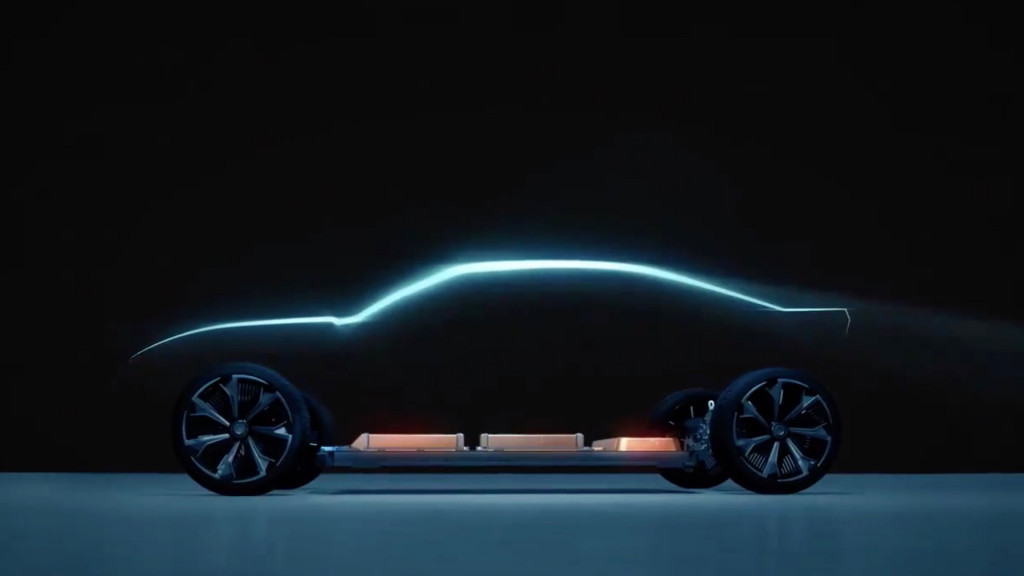
Possible electric Chevrolet Camaro in GM Ultium teaser video
Cylindrical cells could be much easier to integrate within lower-profile vehicles than those large-format pouch cells, making them prime candidates for low-slung electric performance cars like the electric Corvette GM has already confirmed, or aerodynamically efficient sedans such as the rumored all-electric replacement for the Chevy Camaro.
Indiana will also host two Samsung SDI joint-venture battery factories with Stellantis. The first, announced in May 2022, will be located in Kokomo and is due to ramp up in early 2025. The two companies announced a second battery factory for Indiana in July 2023, saying at the time that it would begin producing batteries in 2027.

Dodge Charger Daytona possibly preparing for police duty
- Dodge is preparing its next-gen cop car
- Dodge teased what appears to be a police-spec Charger Daytona EV
- The old gas-powered Charger was popular with police fleets
The outgoing gasoline Dodge Charger sedan has become a staple of police fleets, but will that also be the case for the all-electric 2024 Dodge Charger Daytona?
An Instagram post on Dodge Law, the official account for the Stellantis brand’s law enforcement business, shows the new Charger in police garb. The vehicle is labeled as a concept, and the post notes that more details are soon to come.
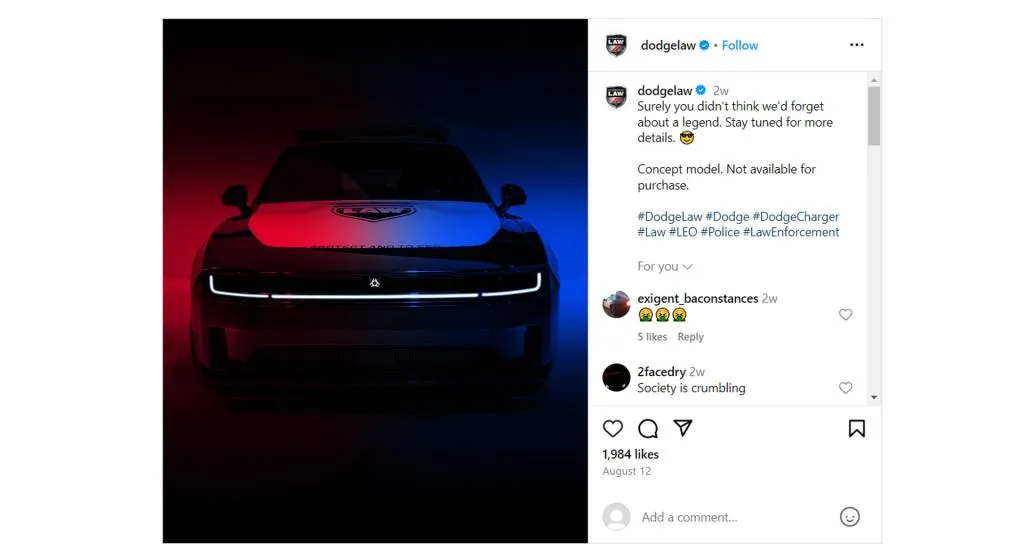
Dodge Law Instagram post from Aug. 2024
While the post doesn’t specify whether the car pictured is a Charger Daytona EV or the companion gasoline model, which uses a turbocharged inline-6 engine, the way the police decal on the hood dips down indicates that the police concept has the R-Wing front blade that is specific to the electric version.
The Charger Daytona will be offered as a three-door or five-door hatchback, with the latter offering space in back for detainees. A 100.5-kwh (93.5-kwh usable) battery pack provides up to 317 miles of range in civilian models, and a peak DC fast-charge rate of 183 kw allows for a 20-80% charge in about 28 minutes. Less relevant to law enforcement is the Fratzonic exhaust system that simulates the noise and vibration of the now-defunct V-8 engine.
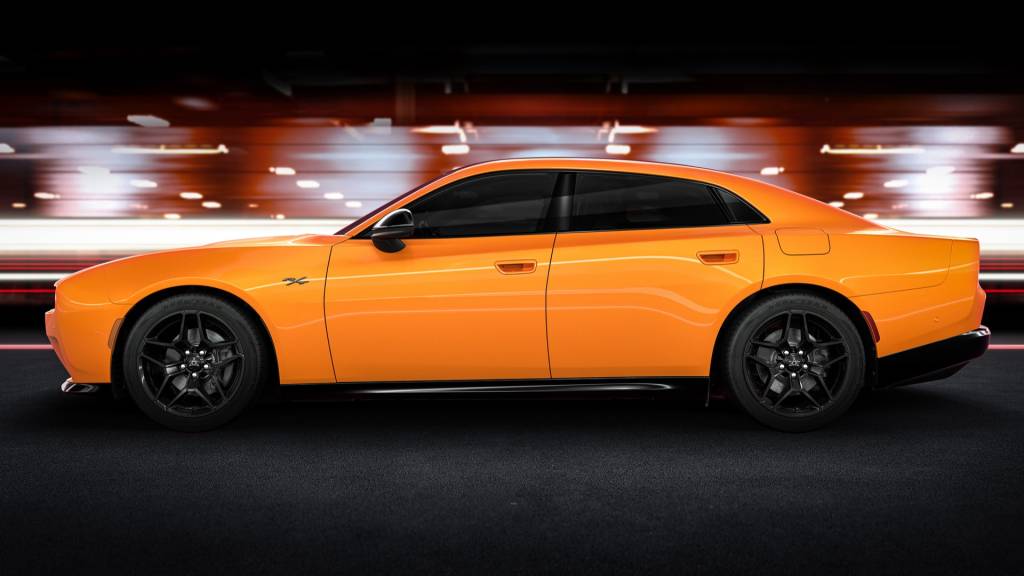
2024 Dodge Charger Daytona
This would be the first all-electric police car offered by Stellantis in the U.S., but other EVs such as the Ford F-150 Lightning and Chevrolet Blazer EV have already been converted for law enforcement work. The City of South Pasadena, California, has even claimed to have the nation’s first all-electric police fleet, although it’s an outlier. U.S. police departments have been slow to adopt EVs, in part due to a lack of suitable options.
Considering the popularity of the old Charger with police fleets, perhaps the Charger Daytona will provide an all-electric platform better suited to their needs and help spur wider adoption of EVs among law enforcement. In the meantime, the civilian Charger Daytona is scheduled to reach dealerships later this year with a base price of $61,590.

Electric Porsche Panamera to live alongside gas-powered model
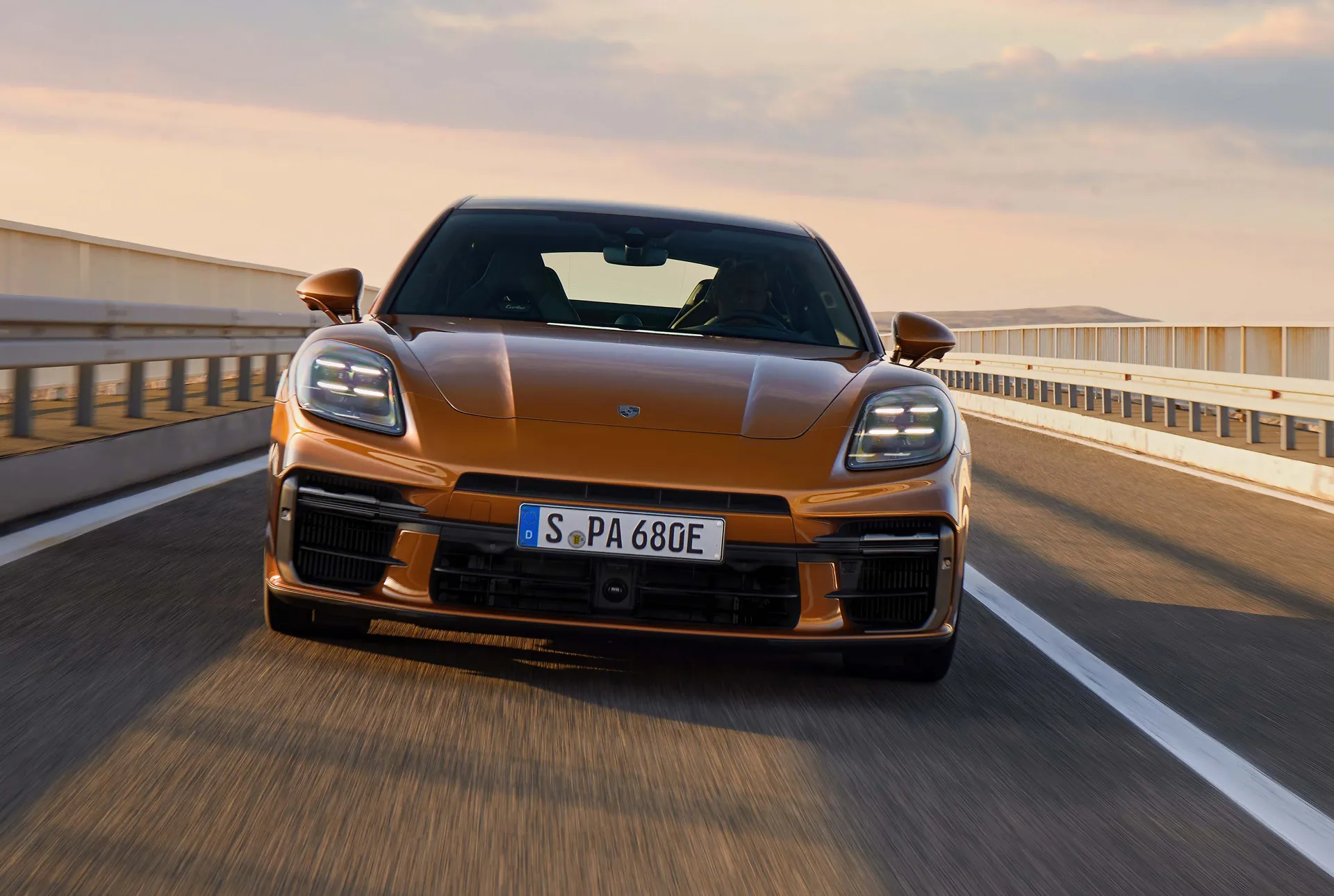
Product strategy continues to shift at Porsche as market winds blow.
In an interview with Autocar, Porsche’s research and development boss Michael Steiner said the gas-powered Panamera will exist alongside the next-generation electric model in showrooms.
“The new Cayenne is fully electric, but for its whole lifespan we will have the ICE version in parallel. It’s the same for the Panamera,” Steiner said.
The revised powertrain lineup and model cycles go beyond the Panamera and Cayenne.
The electric Porsche Macan, which is arriving stateside in the coming weeks, will sell alongside the gas model for the coming years. The Macan EV received a lower price and likely more range for 2025.
The next-generation Cayenne will be electric, but it will sell alongside the gasoline-fueled models. The 2024 Cayenne lineup saw hybrid models receive large upgrades in terms of power and range for 2024.
Porsche has more electric SUVs on the way. A flagship electric SUV will arrive after and be positioned above the next-generation Cayenne. The yet to be named electric SUV will be based on Volkswagen Group’s Scalable Systems Platform (SSP), with Porsche using the specific “Sport” version of SSP for the model.
The automaker has said the electric SUV will provide “strong performance and automated driving functions with the typical Porsche flyline.” The interior is billed as “a completely new experience.”
In the coming years Porsche showrooms will eventually house three electric SUVs, and an electric hatchback in the form of the next-generation Panamera.

2025 Cadillac Lyriq drops prices and base trim
The 2025 Cadillac Lyriq drops the previous Tech base trim, and but lower prices for the remaining trim levels help counteract that move.
The Lyriq Tech started at $58,590 for the 2024 model year but lacked many of the standard features on the Luxury 1 grade that is now the base model for 2025. Thanks to a $2,700 price cut, the Luxury 1 costs $59,990 including the mandatory $1,395 destination charge. A Sport 1 grade is positioned just above that at $61,090 ($2,100 less than the 2024 model year).
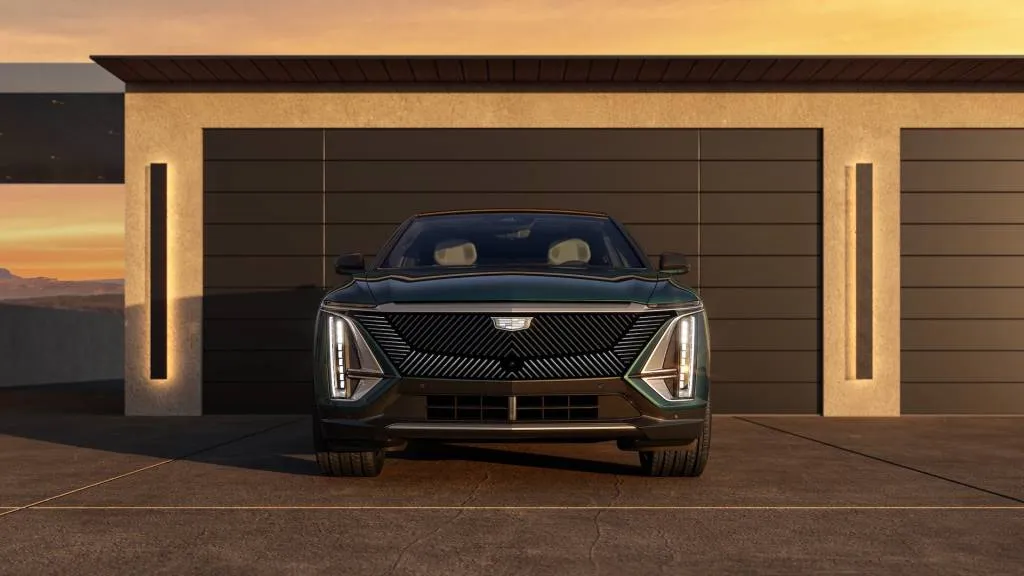
2025 Cadillac Lyriq
Cadillac also cut the prices of the Luxury 2 and Sport 2 grades by $2,000, so they now start at $64,990 and $65,490, respectively. The top Luxury 3 and Sport 3 grades are priced $2,220 lower, at $68,390 for the Luxury 3 and $68,890 for the Sport 3.
A single-motor rear-wheel-drive powertrain rated at 340 hp and 325 lb-ft of torque remains standard. A dual-motor all-wheel-drive powertrain that bumps output to 500 hp and 450 lb-ft is an extra $3,500. All Lyriq models use a 102-kwh battery pack. EPA range ratings of 314 miles for single-motor models and 307 miles for dual-motor models will likely remain unchanged.
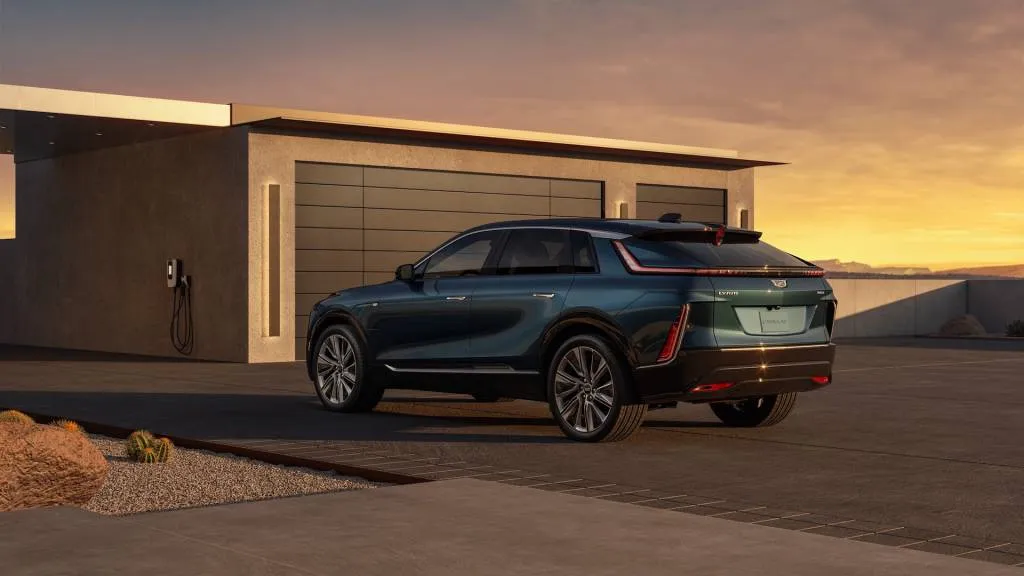
2025 Cadillac Lyriq
The only notable changes to equipment for 2025 are standard OnStar telematics features and front-passenger memory, a standard Technology Package for Luxury 2 and Sport 2 grades that includes a hands-free tailgate and rearview camera mirror, and more color choices for the interior ambient lighting system.
The Lyriq debuted for the 2023 model year as the first Cadillac EV based on General Motors’ Ultium architecture. Cadillac is continuing to add EVs, including the entry-level Optiq and three-row Vistiq, but GM is reportedly reconsidering plans to make the luxury brand all-EV by 2030.

Canada adds 100% tariff for “extraordinary threat” of Chinese EVs
- 100% tariff on Chinese-made EVs follows U.S.
- EV incentives only apply to free-trade partners, Canada underscored
- Mexico remains a potential U.S. entry point for Chinese automakers
Canada’s national government Monday announced a 100% tariff on the import of Chinese-made electric vehicles.
The 100% tariff, set to go into effect October 1, 2024, closely matches that adopted by the U.S., and it follows language similar to that being adopted by the EU. Specific tariff items apply widely without exceptions, on everything from passenger vehicles to buses and trucks, and of fuel types ranging from gasoline to electric and hydrogen fuel-cell.
Accompanying the vehicle tariff, Canada also announced a 25% tariff on Chinese steel and aluminum set to start October 15, 2024.
Additionally, Canada took its actions versus China a step further than the U.S. has thus far: It’s limiting eligibility of Chinese EVs for all federal EV incentives—to those that have negotiated free-trade agreements with Canada. With no limitations on final assembly or battery and mineral sourcing requirements for Section 45W, U.S. firms eying commercial use or leasing and purchasing Chinese vehicles subject to the new tariffs would appear to still be eligible to get $7,500 or more back via the EV “leasing loophole.”
Canada’s move follows Biden’s 100% tariff hike
“China’s intentional, state-directed policy of overcapacity and lack of rigorous labor and environmental standards threaten workers and businesses in the EV industry around the world and undermine Canada’s long term economic prosperity,” said Canada’s Department of Finance in a press release accompanying the announcement. It added that “exceptional measures are required to address this extraordinary threat.”
The Biden administration tariff hike versus China was announced in May, and it was directly positioned to keep Chinese EVs out. That U.S. move raises tariffs on EVs from 25% to 100% this year, and it hikes the tariff rate on lithium-ion batteries and battery parts from 7.5% to 25% when applied to EVs. An equivalent hike on tariffs for lithium-ion batteries imported from China for other applications applies starting in 2026.
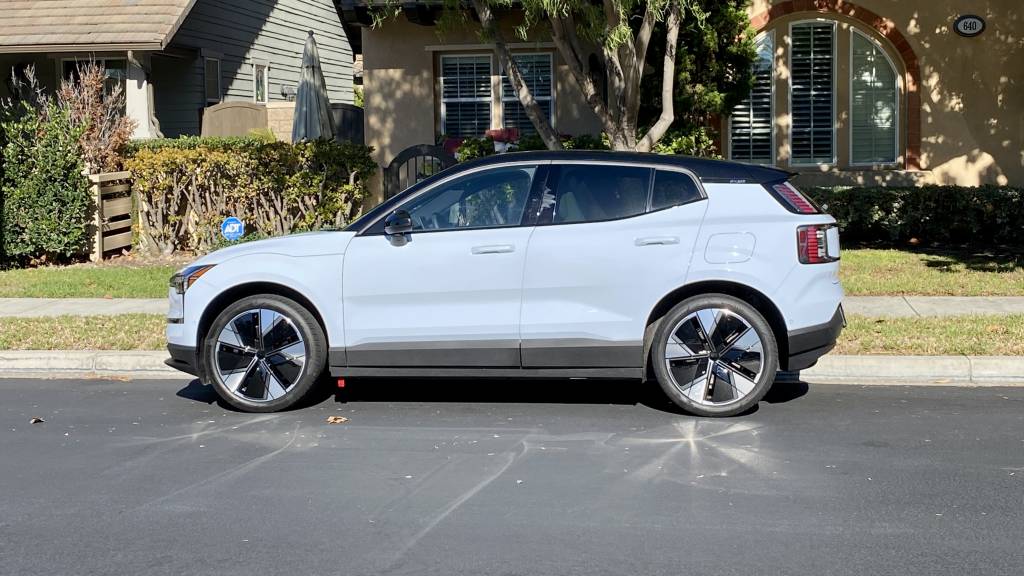
2025 Volvo EX30
That reportedly led to the delay of the Volvo EX30 compact EV, a vehicle that was slated to arrive first as a Chinese import, with Europe-built vehicles arriving later.
Mexico in the balance—especially for EVs
Presidential candidate Donald Trump, who has underscored that Mexico has taken away 34% of automobile manufacturing business in the U.S., has promised to take the 100% Chinese tariffs a step further—to all vehicle types—with policies to pressure automakers to build vehicles in the U.S. rather than Mexico.
Mexico remains part of the evolution of a free-trade framework with the U.S. and Canada. Once called NAFTA, it was revamped only slightly during the Trump administration and renamed the U.S.-Mexico-Canada Agreement (USMCA).
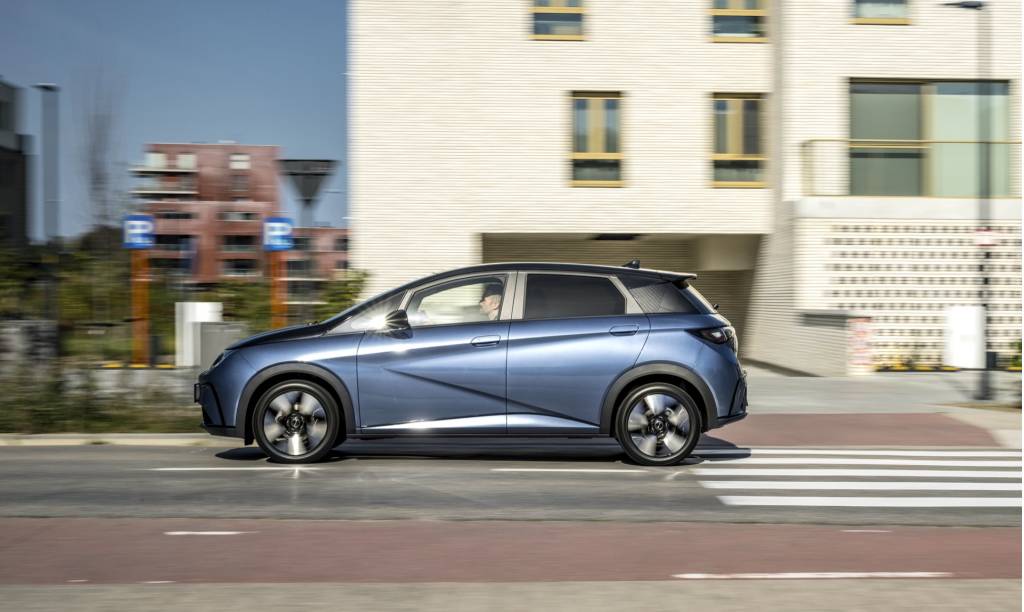
BYD Dolphin EV – Euro spec
But Mexico is also proving to be the weak point in the defense against the onslaught of inexpensive Chinese EVs. Under the USMCA, Chinese EVs made in Mexico, with Mexican materials, could still potentially be sold in the U.S. free of trade tariffs. So far the nation has made no move to step up its Chinese tariff rules.
Europe remains in pushback mode, and it appears that versus Chinese EVs, its implementation of EU tariff rules may be too late. China’s BYD has already begun selling its Dolphin EV, a well-rated compact hatchback, for less than $30,000 in some EU markets, and the lower-priced Seagull might be sold for less than $20,000 in some markets.

Canoo leaves California, CTO leaves company
- Canoo’s done with California and will now be based out of Texas
- Two of the three founders have left Canoo
- Canoo pivoted its business model to focus on commercial applications
Canoo is planning to leave its original headquarters location in California and is replacing one of its founding executives, according to two separate reports from TechCrunch.
The website reported Thursday that Canoo told staff in an all-hands meeting that it would close its Los Angeles office, which served as Canoo’s original headquarters when the EV startup launched in 2017. Canoo plans to relocate its headquarters to Justin, Texas, where it has maintained a corporate office since CEO Tony Aquila took over a few years ago.
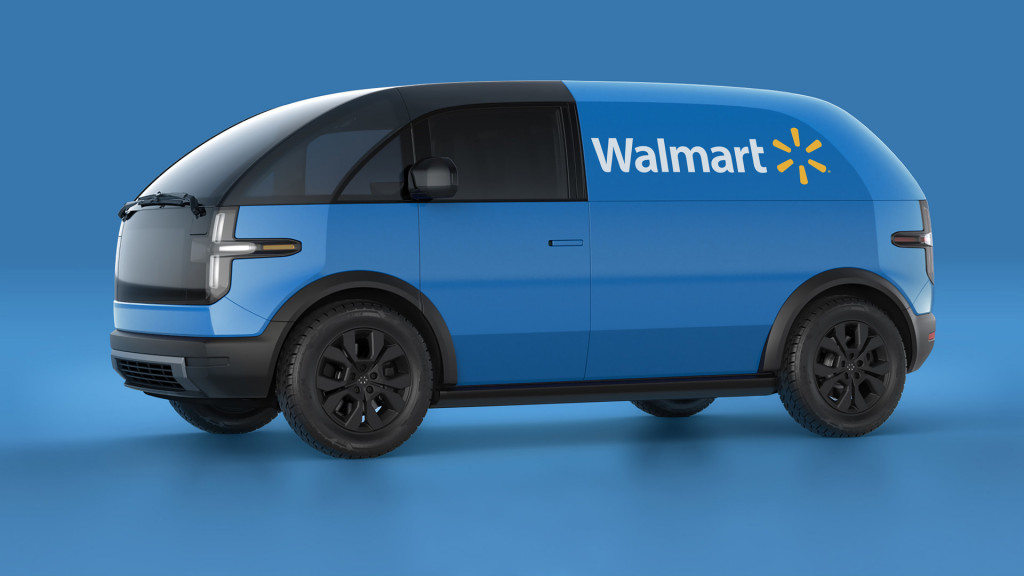
Canoo Lifestyle Delivery Vehicle with Walmart logo
As TechCrunch notes, Canoo previously tried to move its headquarters to Bentonville, Arkansas, as it was courting Walmart, which announced an order for 4,500 electric vans from the startup in 2022. Canoo has also tried to set up a small-scale manufacturing facility in Arkansas, with larger-scale production to take place in Oklahoma.
Canoo isn’t any closer to ramping up production than when it announced those manufacturing plans in 2021, but it is offering the option for 137 of 194 employees at its Los Angeles office to relocate to either Oklahoma or Texas, TechCrunch reports, with the remaining staff being laid off.

USPS Canoo LDV 190 van
Employees had “long expected” the L.A. office to shut down, according to the report, especially after Canoo co-founder and chief design officer Richard Kim left the startup in 2023. Kim is now being joined by CTO Sohel Merchant, TechCrunch reported Friday, citing two anonymous sources familiar with the matter. That leaves just one of the original executives who founded Canoo still at the company—chief engineer Christoph Kuttner.
Canoo initially had eyes on selling a stylish EV on a subscription basis, but has pivoted to commercial vehicles under current CEO Aquila. It’s since provided vehicles to NASA, the U.S. Postal Service, and the U.S. Army for testing, but has failed to produce EVs in meaningful numbers. Earlier this year it announced the acquisition of the remains of EV startup Arrival, including manufacturing equipment that could help it finally ramp up production.