
Category: General

These EVs are top-rated for safety by the IIHS
The 2024 Subaru Solterra joins a handful of other electric vehicles in earning the industry’s toughest safety award with a Top Safety Pick+ recognition, the IIHS revealed Thursday.
The IIHS toughened requirements to earn its highest Top Safety Pick+ and second-tier Top Safety Pick awards for 2024. Some 91 models still qualified for at least one of the awards, with 38 earning the Top Safety Pick+ award. That compares to 65 models which earned one of the IIHS awards for 2023, when the agency also updated its criteria to make its awards tougher to obtain.
The following electric vehicles earned a TSP+:
- Genesis Electrified G80
- Genesis GV60
- Genesis Electrified GV70
- Hyundai Ioniq 5
- Hyundai Ioniq 6
- Rivian R1T
- Subaru Solterra
- Tesla Model Y RWD
A handful of models earned the lower Top Safety Pick award. That list includes:
- Audi Q4 E-Tron and Q4 Sportback
- Audi Q8 E-Tron and Q8 Sportback
- Lexus RZ
- Kia EV9
- Nissan Ariya
- Rivian R1S
- Tesla Model Y AWD
- Toyota Prius Prime
- Volkswagen ID.4
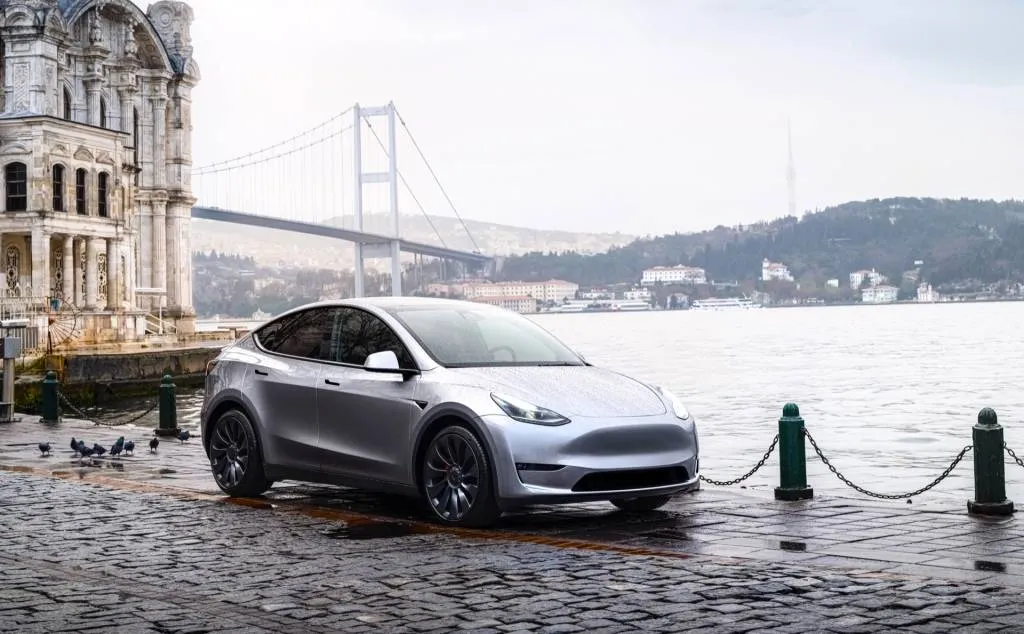
2024 Tesla Model Y. – Courtesy of Tesla, Inc.
The IIHS introduced a tougher side crash test for 2023, using a heavier barrier traveling at a higher speed when impacting a car. An “Acceptable” or “Good” score was sufficient to earn a Top Safety Pick award last year, but for 2024 only the top “Good” score qualifies vehicles for an award.
Vehicles also needed an “Acceptable” or “Good” rating in the updated pedestrian front-crash prevention test for 2024. This test combines daytime and nighttime scenarios, which were previously scored separately.
The IIHS also introduced an updated moderate front-overlap test for 2024, which adds a second crash test dummy behind the driver and looks closer at rear seat safety. An “Acceptable” or “Good” score on this test was needed for the Top Safety Pick+ award, while a “Good” rating on the old test was needed for a Top Safety Pick award.
As before, vehicles also needed a “Good” score in the IIHS’ small-overlap front crash tests and “Good” or “Acceptable” headlights on all trim levels to earn either award.
There’s been a lot of talk about EV safety, although not necessarily related to crash performance. The IIHS warned last year that fires aren’t an EV safety concern, but weight is. That was backed up by a recent study, which found that EVs may be too heavy for U.S. highway guardrails.
Meanwhile, the CEO of Stellantis recently argued that quicker acceleration is an EV safety asset—although that’s debatable. Don’t expect the IIHS to incorporate that into its safety evaluations.


GM and Hyundai might partner for EV batteries, fuel cells
General Motors and Hyundai signed a memorandum of understanding that could lead to the two automakers collaborating on green tech such as fuel-cell vehicles and EV battery manufacturing.
The non-binding memorandum announced Thursday is the first step toward a partnership between GM and Hyundai. The potential partnership would focus on using the automakers’ combined economies of scale to reduce costs, the companies emphasized.
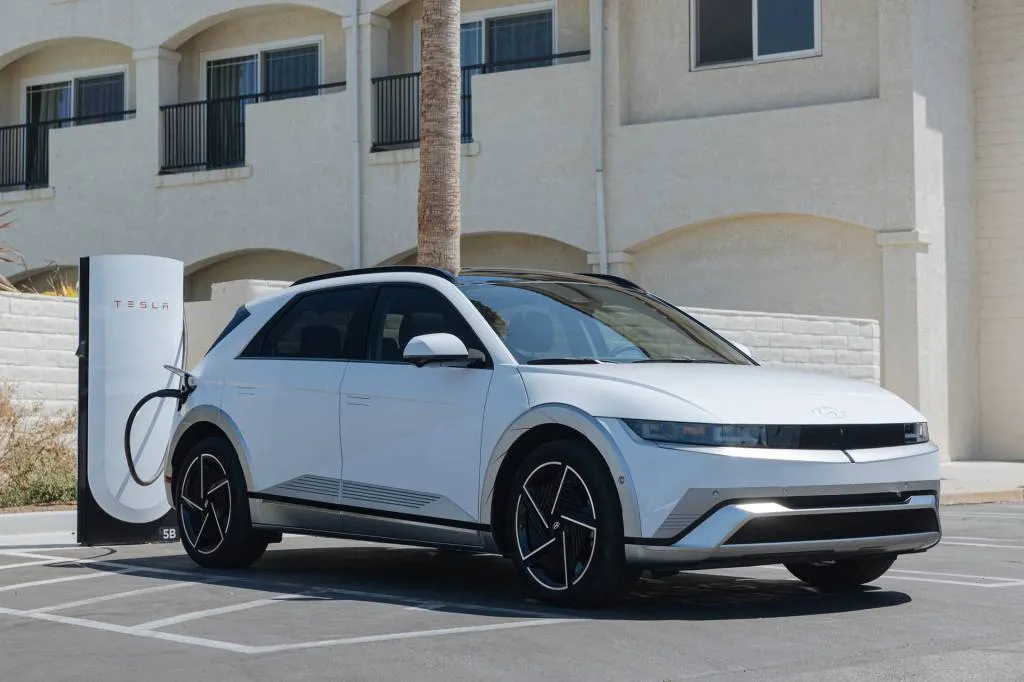
2025 Hyundai Ioniq 5
“Potential collaboration projects center on co-development and production of passenger and commercial vehicles, internal combustion engines, and clean-energy, electric and hydrogen technologies,” the automakers said.
The two automakers will also “review new opportunities for combined sourcing” of battery raw materials, steel, and other raw materials. GM in 2022 said it had already secured enough battery raw materials to establish annual North American production capacity of 1 million EVs by 2025, although it has now backed away from that target after issues in ramping up its Ultium hardware.
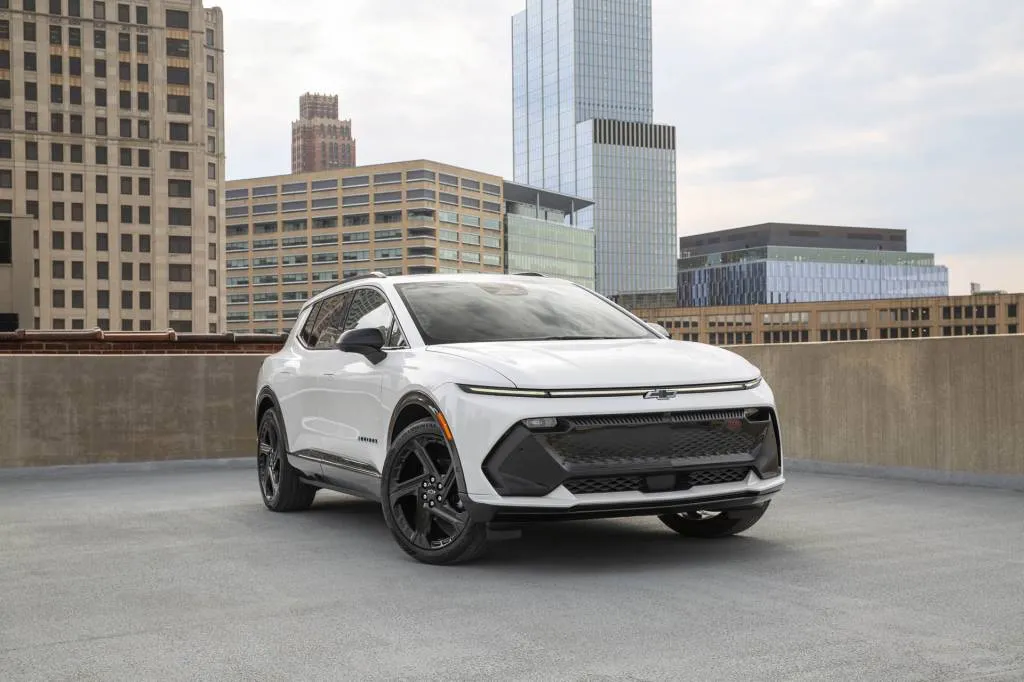
2024 Chevrolet Equinox EV
This would be GM’s second major partnership with another automaker relevant to EVs. An existing partnership with Honda has seen GM manufacture the Ultium-based Acura ZDX and Honda Prologue electric SUVs for the Japanese automaker. GM and Honda in 2023 confirmed an early end to an affordable-EV partnership, aborting plans to make millions of EVs together. The two automakers also continue to partner on hydrogen fuel-cell tech.
Honda is now focusing on developing EVs in-house. It’s targeting 2 million annual EV sales by the end of the decade from a family of next-generation EVs dubbed the 0 Series, and it’s also partnering with Sony on the Afeela EV brand. That potentially leaves room for GM to bring in another automaker partner for future electrification plans.

Jaguar exec calls EV brand reboot “hugely frustrating”
Jaguar was one of the first established luxury brands to launch an electric vehicle, but it’s finding a shift to an all-electric lineup difficult, the brand’s boss said in a recent interview with Top Gear.
“It’s been hugely frustrating—saying we’re going all EV then ‘nothing,'” managing director Rawdon Glover said in reference to Jaguar’s current course of discontinuing nearly all of its current models before introducing a lineup of next-generation EVs starting in 2025.
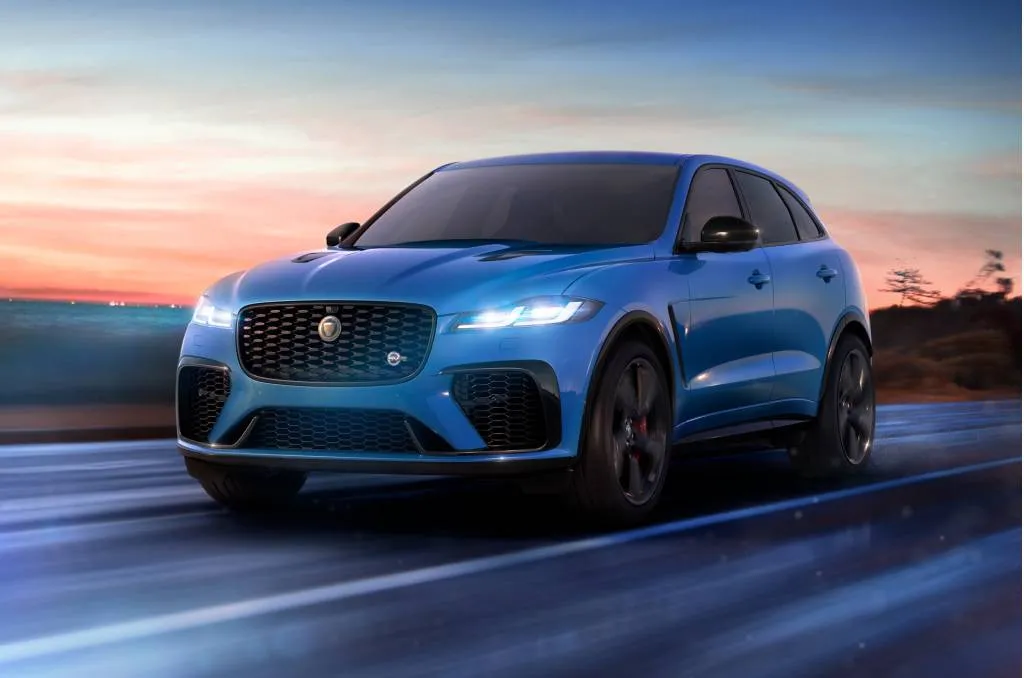
Jaguar F-Pace SVR 575 Edition
Even the Jaguar I-Pace, the brand’s only current EV, won’t be replaced. Introduced for the 2019 model year, and receiving some updates over the following years, the I-Pace is being abandoned rather than redesigned. The gasoline F-Pace crossover is slated to remain Jaguar’s only model for the time being, before being retired itself to bring down the curtain on Jag’s gas-engine era.
Jaguar management does at least seem to have finally committed to an EV product strategy after waffling for a bit. The automaker had planned to introduced an all-electric XJ flagship in 2021 as a replacement for the gasoline XJ sedan, while continuing to evolve the I-Pace into a second generation. But both models were eventually scrapped in favor of a clean-slate approach.
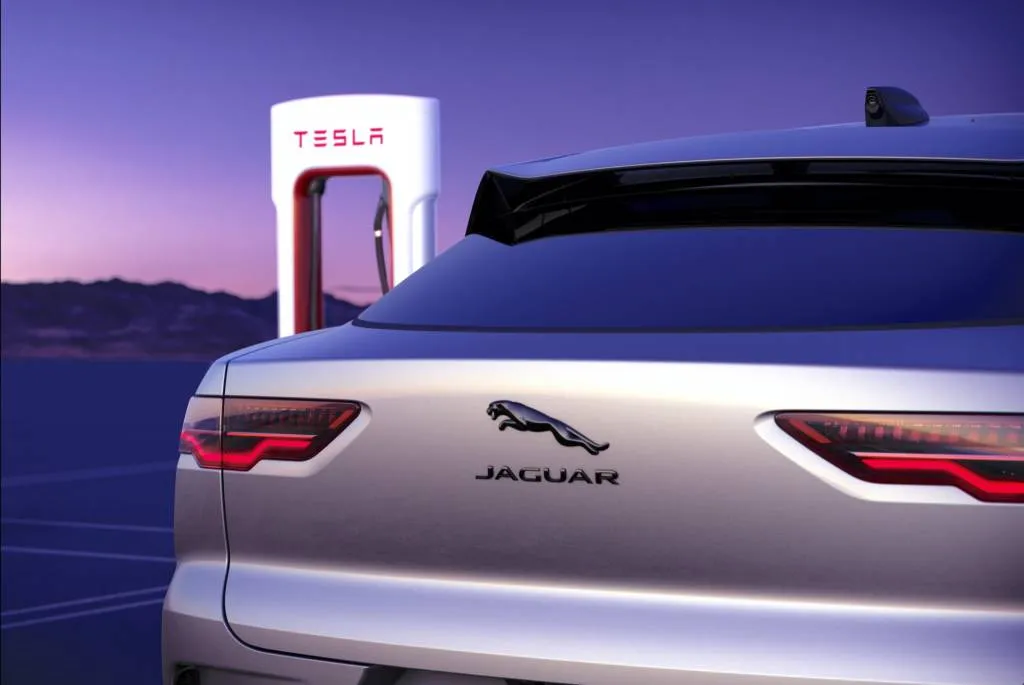
Jaguar I-Pace and Tesla Supercharger station
The first model from Jaguar’s new all-electric lineup is expected to be a sleek sedan or hatchback with coupe-like styling. A concept previewing it will be revealed later this year. An SUV and a large sedan are expected as well, with all three models positioned at higher price points than we’ve typically seen from Jaguar recently.
Those next-generation EVs will also get a Tesla NACS charge port, allowing them to use the American automaker’s Supercharger stations without an adapter. Expect future electric models from companion brand Land Rover to do the same.

Factorial solid-state tech could boost Mercedes EV range 80%
Several years in, a partnership between Mercedes-Benz and battery firm Factorial is finally showing progress toward developing viable solid-state battery tech for EVs.
Factorial on Tuesday announced that its Solstice solid-state battery cell developed in collaboration with Mercedes could boost EV range by up to 80% through greater energy density. This allows for greater energy storage within a given volume, making for smaller battery packs that also reduce vehicle weight and increase efficiency, Factorial noted.
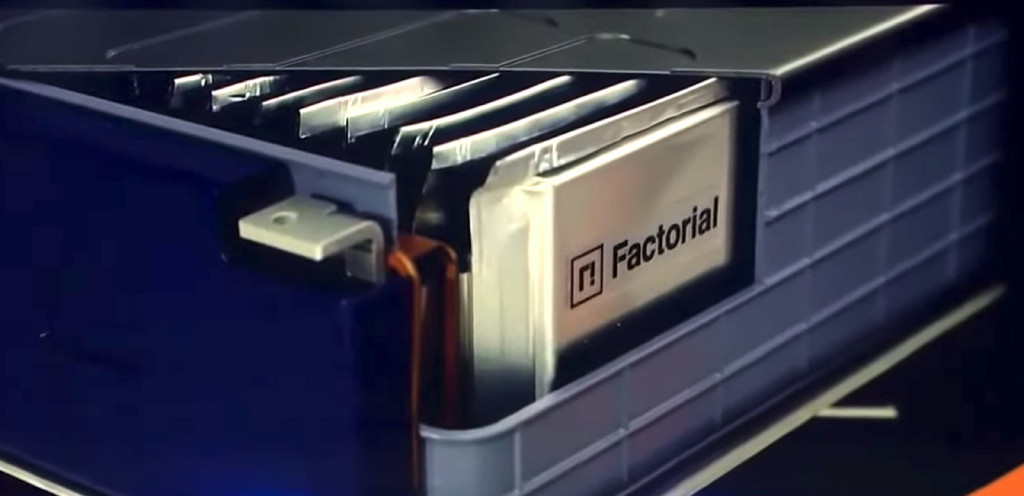
Factorial solid-state cells
The range boost is even greater than the 50% Factorial discussed when it began providing test cells to automakers in 2022. The following year, Massachusetts-based Factorial opened what it billed as the largest U.S. solid-state EV battery plant yet in a Boston suburb. Factorial said at the time that the $50 million facility—a very small facility next to most of today’s “giga-scale” battery factories—would eventually produce up to 200 megawatt-hours of batteries annually on its assembly line.
The Solstice cell’s sulfide-based solid electrolyte can also remain stable at temperatures above 194 degrees Fahrenheit, reducing cooling system requirements, according to Factorial. Like other solid-state battery firms, Factorial also claims lower risk of fires compared to liquid electrolytes.
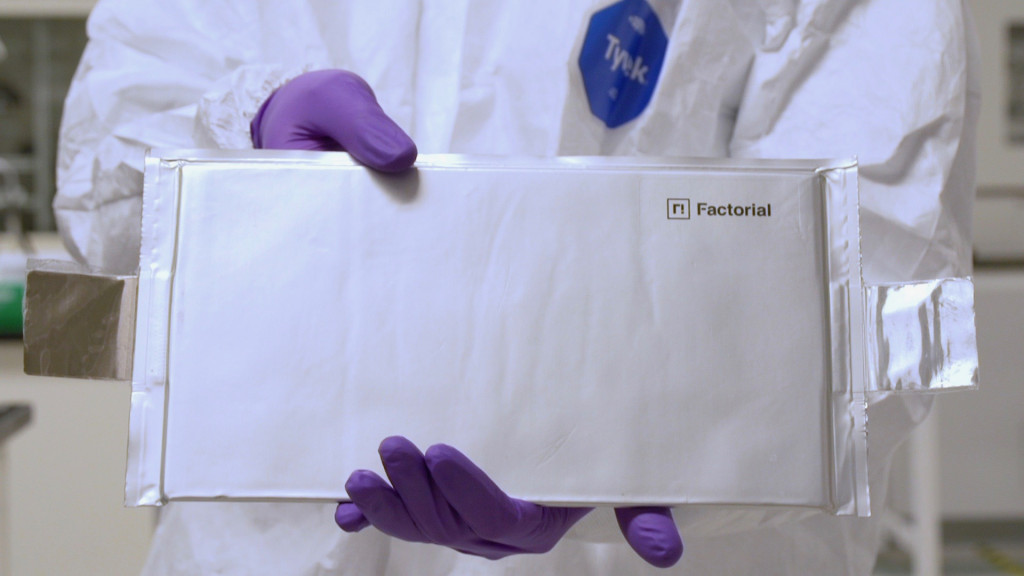
Factorial Energy 40-amp-hour solid-state battery
Mercedes entered into the joint battery-development agreement with Factorial in 2021 and co-led a $200 million funding round for the company alongside Stellantis that was completed in 2022 (Hyundai has also invested in Factorial).
Other automakers are also funding solid-state battery tech, either through in-house development programs or partnerships with startups. Volkswagen has long backed QuantumScape, while Nissan and Toyota have been developing solid-state cells in-house. Toyota recently confirmed plans to begin manufacturing solid-state cells in 2026 or soon after then, as it attempts a tenfold boost in EV production.

Lucid CEO doesn’t want automaker thinking about an electric truck
- Lucid’s paint shop could fit an electric truck, but the CEO said it’s not happening
- Lucid’s CEO said there’s no business case for an electric truck with today’s technology
- The issue with electric trucks is efficiency and usability, according to Lucid’s CEO
Buyers holding out hope Lucid will create an efficiency-focused pickup truck are about to be left out in the cold.
On Tuesday during the Lucid’s manufacturing and technology day, founder and CEO Peter Rawlinson said, “I don’t want Lucid to start thinking about a pickup truck.”
The issues surrounding an electric truck for Rawlinson all stem around efficiency, battery size, and a business case.
Rawlinson’s tune on an electric truck has changed. In 2020 the CEO told Green Car Reports “if we want to make a longer vehicle like a pickup or something like that, which we may want to make in the future, the paint shop is future-proof for pickups.” At the time Rawlinson said Lucid wasn’t planning a pickup, at least not quite yet, but it was an idea the team was considering.
That idea’s time has passed, as indicated by Rawlinson’s comments on Tuesday.
Rawlinson said, “I really think it’s very tough to make an electric pickup work today.”
The main issues with making an electric truck work is having it be “usable and cost effective,” Rawlinson said.
Rawlinson noted that towing isn’t an efficient activity, acknowledged truck owners tow and that deals a blow to driving range. That translates to huge batteries, which drive up costs and prices.
To achieve a 300-mile pickup Rawlinson said it would take a 120-kwh battery, but that’s not enough to tow with. “I think the minimum threshold for a usable pickup is probably 150 kilowatt-hours,” the CEO said. The Lucid Air Sedan in base Pure trim has a 420-mile EPA-rated range using a 84-kwh battery pack.
Rawlinson said, “Now, how on Earth are you ever going to do that around 50, 55, $60,000 and make a business case?”
Rawlinson is focused on getting the most mileage out of the smallest battery pack. The CEO said in August it will take the competition years to catch up. Lucid sells the most efficient vehicle on sale today in the U.S. with the Air, which achieved 5.0 miles per kwh and 146 MPGe in EPA testing.
During the manufacturing and technology event Lucid also teased its upcoming midsize electric SUV. The automaker said its Tesla Model Y competitor will arrive late in 2026 and cost less than $50,000. Lucid said the unnamed vehicle will have the same range as competitors though it will have a smaller battery.
Lucid’s currently focused on ramping production of the electric Gravity SUV. Pre-production units are rolling off the assembly line and customer deliveries are supposed to begin later this year. The Gravity will gain a NACS charge port in 2025, according to Lucid.

Lucid Gravity getting Tesla NACS charge port in 2025
- Lucid said the Gravity SUV will get a NACS charge port in 2025
- Initial deliveries of the electric Gravity SUV will have a CCS charge port
- Lucid hasn’t said when the Air sedan will get a NACS charge port
Lucid just put a timeline to its transition to Tesla’s North American Charging System (NACS) charge port.
On Tuesday, during the automaker’s manufacturing and technology day, Lucid posted on Twitter (now known as X) that the upcoming Gravity electric SUV will come with Tesla’s NACS charge port starting in 2025.
The announcement came with two images showing that the NACS port will be mounted on the driver’s side rear fender. The location of the charge port is different than the pre-production Gravity units rolling off the assembly line today, which feature a CCS charge port on the driver’s side front fender.
The new charge port location is the same area on the vehicle where Tesla places its charge ports, which allows vehicles to neatly back into parking spots at Tesla Superchargers.
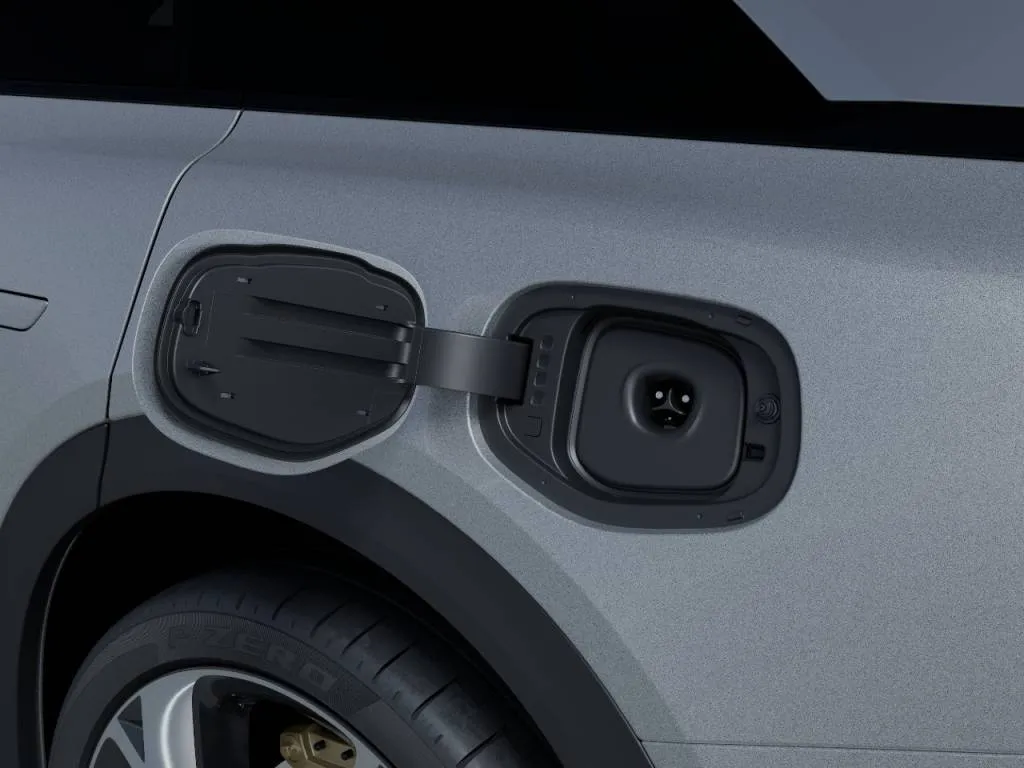
Lucid Gravity with Tesla NACS charge port
Twitter users were quick to note the new charge port door and housing is large compared to what’s necessary for the smaller NACS port, but the reasoning could be to easily allow space for a CCS2 port, which is the fast-charging standard in Europe
Lucid has said deliveries of the Gravity SUV will begin later this year, which means the first cars off the line going to customers will still have a CCS charge port, likely on the front fender as originally shown and seen on prototypes.
Lucid hasn’t said when the Air sedan will make the switch to a NACS charge port, or whether the charge port location will move on the sedan. The automaker also didn’t show full images of the Gravity with the NACS port. Missing is the front half of the car, which is where today’s CCS charge port is located.
Lucid committed to adopt Tesla’s NACS charge port on Nov. 6, 2023. The announcement on Tuesday is the first time the automaker’s given a timeline to the move.
During the event Lucid tweeted an image of its upcoming midsize electric SUV that will be about the size of the Tesla Model Y. The automaker said the SUV will arrive late in 2026 and cost less than $50,000.

Jeep boss: Wagoneer S will be delayed if quality isn’t “perfect”
The 2024 Jeep Wagoneer S is the brand’s first electric vehicle for the U.S., but Jeep won’t rush it into showrooms if it is not ready, the brand’s boss said in an interview with Automotive News.
Jeep has said the Wagoneer S, which was revealed in May, will arrive in U.S. dealerships this fall. That will only happen if the electric SUV meets the standards of CEO Antonio Filosa.
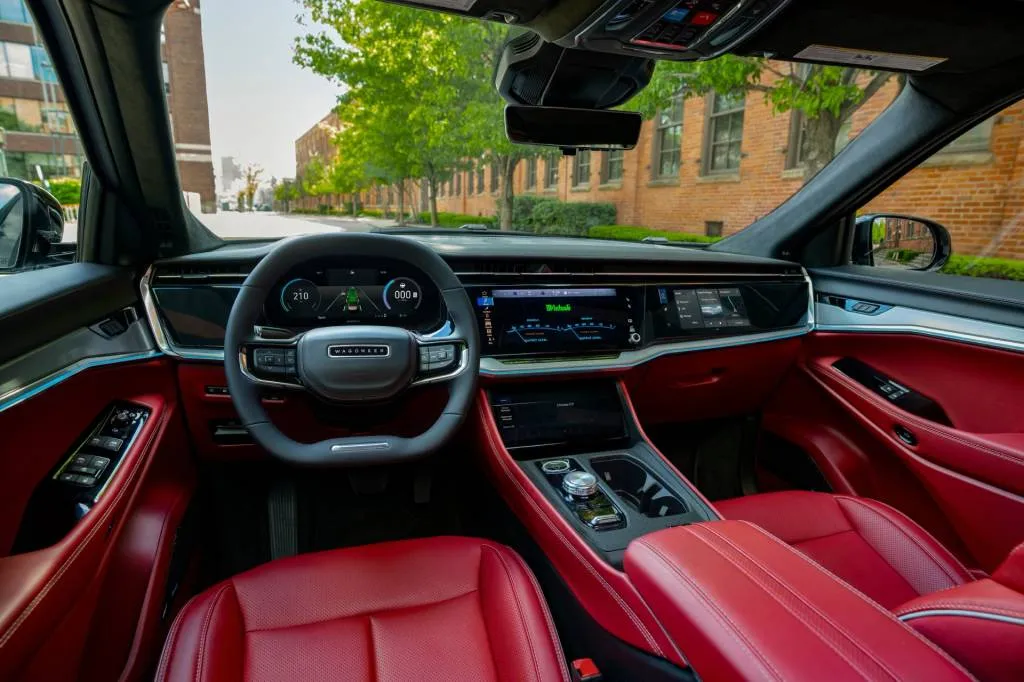
2024 Jeep Wagoneer S
“I want perfect quality, and I know that we are close, but close is not good enough,” Filosa told Automotive News. “Timing is important, but more important than that is to be perfect for the consumers that will give us the privilege to buy this car.”
Filosa said he had received word from the factory in Toluca, Mexico, that builds the Wagoneer S that “quality is increasing,” and did not confirm a delay. But he emphasized that the mandate for the Wagoneer S is “no launch if the quality isn’t perfect.”
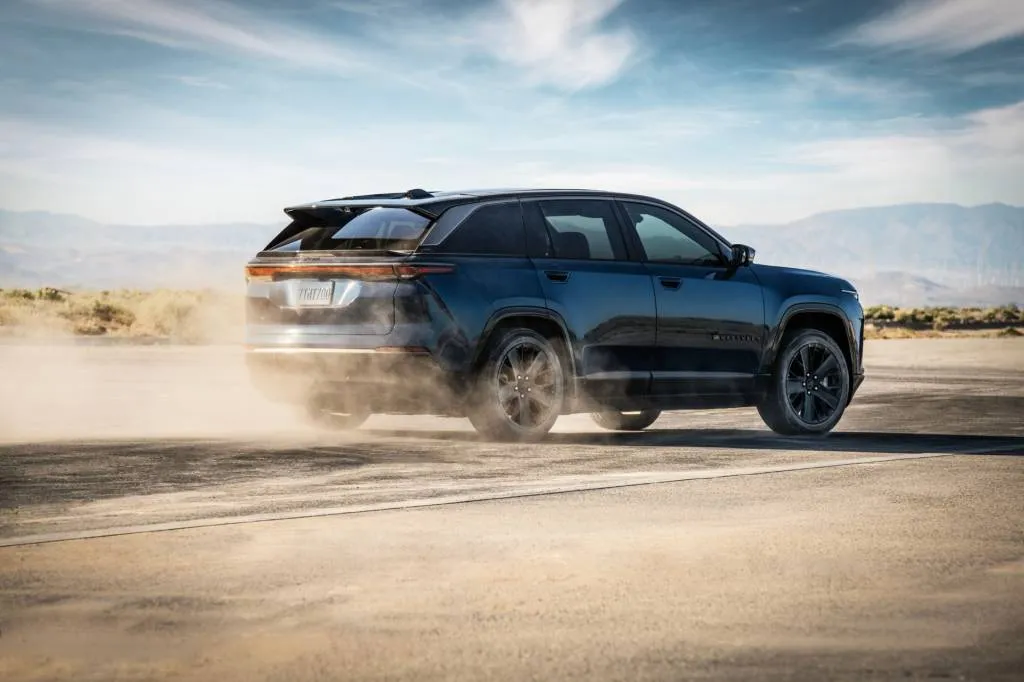
2024 Jeep Wagoneer S
Built on Stellantis’ STLA Large platform, the Wagoneer S is about the same size as the Jeep Grand Cherokee. It will launch with a dual-motor powertrain producing 600 hp and 617 lb-ft of torque, with a 0-60 mph time of 3.4 seconds. Jeep says the EPA range will top 300 miles, but that’s not official yet. So far Jeep as only detailed the Wagoneer S Launch Edition, which costs $71,995 with destination. Other versions will arrive for the 2025 model year.
The Wagoneer S will be joined by the Jeep Recon, which the automaker describes as a fully electric “brother” to the Wrangler, next year, with a new “electrified” midsize model that could replace the Cherokee arriving in 2026. Jeep has said that by 2025 it will offer “multi-energy options” across its whole lineup.

Tesla supplier Panasonic ready to ramp 4860 EV battery production
Panasonic has finalized preparations to begin manufacturing 4680-format lithium-ion battery cells at a Japanese factory, Reuters reported Monday.
The company is reportedly sending sample cells produced at the factory in Japan’s western prefecture of Wakayama to automaker customers for approval, with production to start once that approval is received.

Comparing 4680 vs. 2170 – Panasonic
Panasonic supplies batteries to Tesla, which has been one of the principal advocate for 4680 cells, so named because they measure 46 millimeters in diameter and 80 inches tall, compared to 21 millimeters and 70 millimeters, respectively, for Panasonic’s current 2170 cylindrical cells.
The bigger cells have been championed by Tesla CEO Elon Musk since 2020 as the key to unlocking cheaper electric cars, as well as a critical component to ore power-intensive applications like the Tesla Semi and Cybertruck. Tesla has begun manufacturing its own 4680 cells, but has had difficulty ramping up volume. Musk in July reportedly told the Tesla battery team that the issues needed to be fixed or the large-format cells would be abandoned.
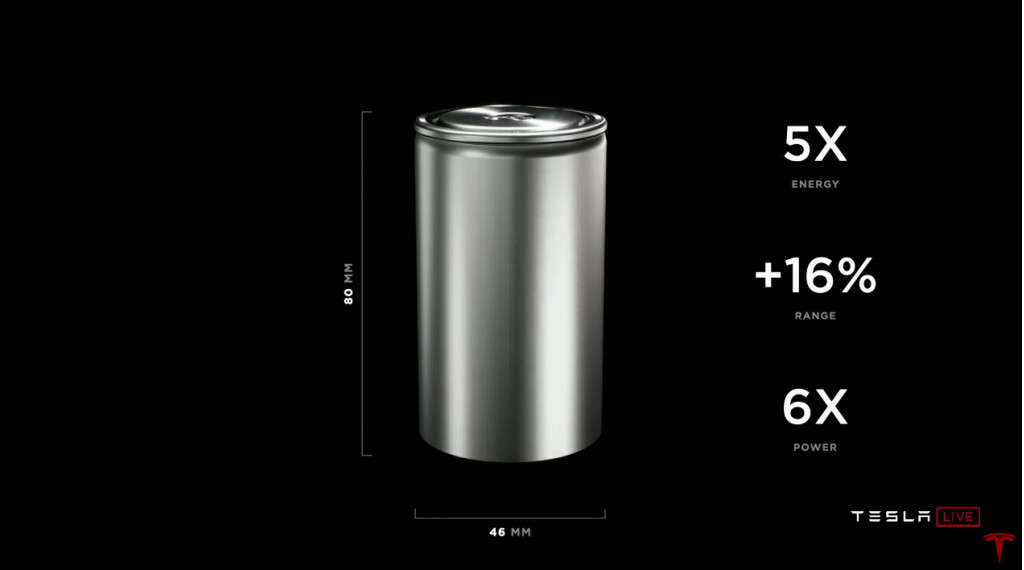
Future Tesla cell will make energy, power gains
Panasonic anticipated difficulties with the new cell format, cautioning in 2021 that mass producing Tesla 4680 cells would require “new techniques” and expressing skepticism that potential issues with overheating could be overcome. Nonetheless, the start of production is only somewhat delayed from the target Panasonic announced in 2022. At that time, the company said mass production would start during the fiscal year ending in March 2024.
Other battery suppliers have shown interest in large-format cells, but none has been able to scale them up faster than Panasonic and Tesla. CATL has gone a completely different route with its cell-to-pack tech, which eliminates the modules used in most current battery-pack designs. In 2022, CATL said the then-current version of cell-to-pack could deliver 13% more power than Tesla’s 4680 cells, given the same volume. But cell-to-pack has also been slow to ramp up.