
Category: General


Nissan joins BMW, Ford, Honda alliance for vehicle-to-grid tech
- Nissan’s taking a 25% stake in ChargeScape
- ChargeScape is a vehicle-to-grid joint venture formed by BMW, Ford, Honda, and now Nissan
- Nissan has a vision for the “fuel station of the future” where EVs would double as energy-storage units
Nissan on Monday announced that it will join ChargeScape, the vehicle-to-grid joint venture formed in 2023 by BMW, Ford, and Honda.
The automaker is set to take a 25% stake in ChargeScape alongside the original automaker partners, which announced the official launch of the venture last month. That paves the way for ChargeScape to roll out software-based services for grid integration to EV owners in the U.S. and Canada.
2023 Nissan Leaf
As articulated in the announcement of the company last year, ChargeScape’s goal is to connect EVs with electric utilities for “EV-enabled grid services” that include financial perks for owners who connect their vehicles to the grid, share data with ChargeScape, and provide power from their cars in coordinated ways to help support the grid. ChargeScape plans to launch “virtual power plants” in California, Texas, and other markets to achieve the latter goal, according to Nissan.
Feeding power from EVs back into the grid can help reduce emissions by lessening the need for “peaker” plants, Nissan noted. Used by utilities to bolster output when electricity demand is high, these plants are generally fossil-fuel powered and thus also significantly increase pollution, according to a 2023 report by the Rocky Mountain Institute (RMI).
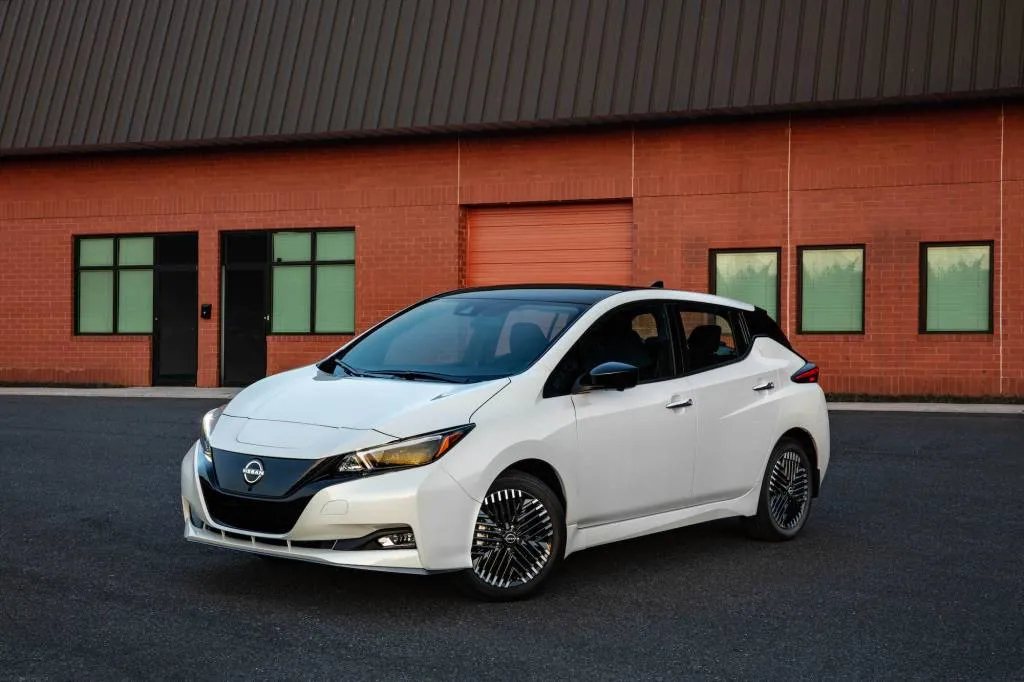
2025 Nissan Leaf
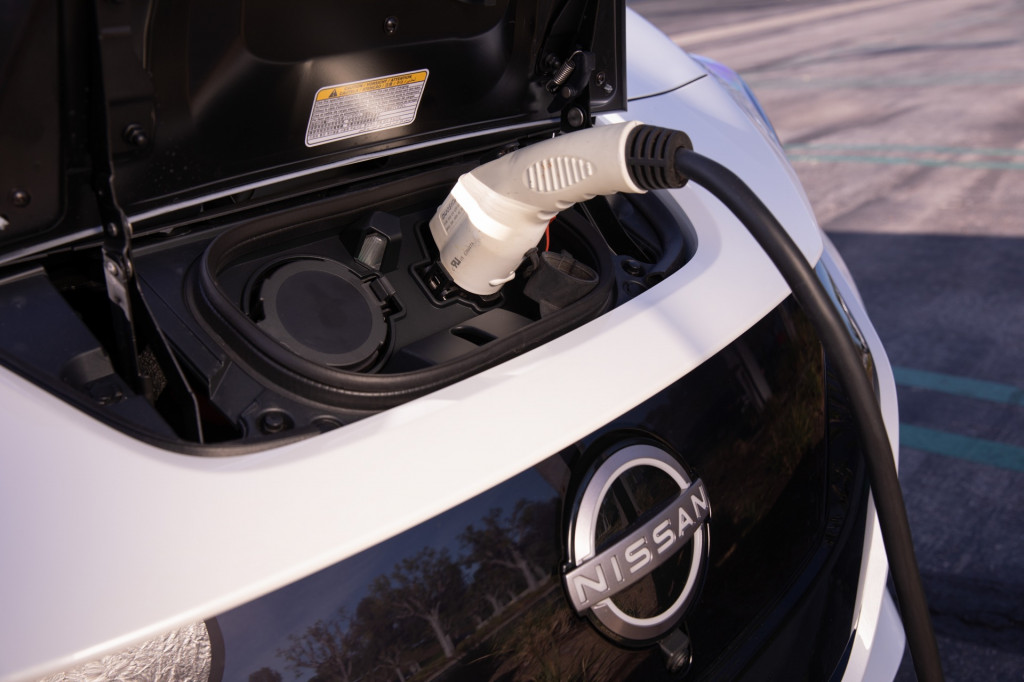
The Nissan Leaf could play an important role here because it’s one of the few EVs already offered with the bidirectional charging capability that’s a prerequisite for vehicle-to-grid applications. Leaf hatchbacks have had the hardware for bidirectional charging since 2013, but Nissan didn’t officially enable or endorse the use of this feature in the U.S. until 2022—and only with certain chargers.
Integrating EVs with the grid has been discussed almost as long as modern EVs have been available. In 2016 Nissan unveiled an expansive vision of the electric cars as the “fuel station of the future,” in which EVs would double as energy-storage units and help power buildings when parked. Perhaps ChargeScape and other ventures like it will finally make that vision a reality.

Report: GM pulls the plug on Ultium name
General Motors will drop the Ultium name from the modular EV batteries and related components used in all of the automaker’s current and planned U.S.-market electric vehicles, CNBC reported on Tuesday.
The hardware will remain the same, but GM will erase the Ultium name other than for production operations such as its Ultium Cells LLC battery joint venture with LG, according to the report. CNBC cited statements from the automaker made ahead of an investor conference Tuesday in which the rebranding was expected to be made official.
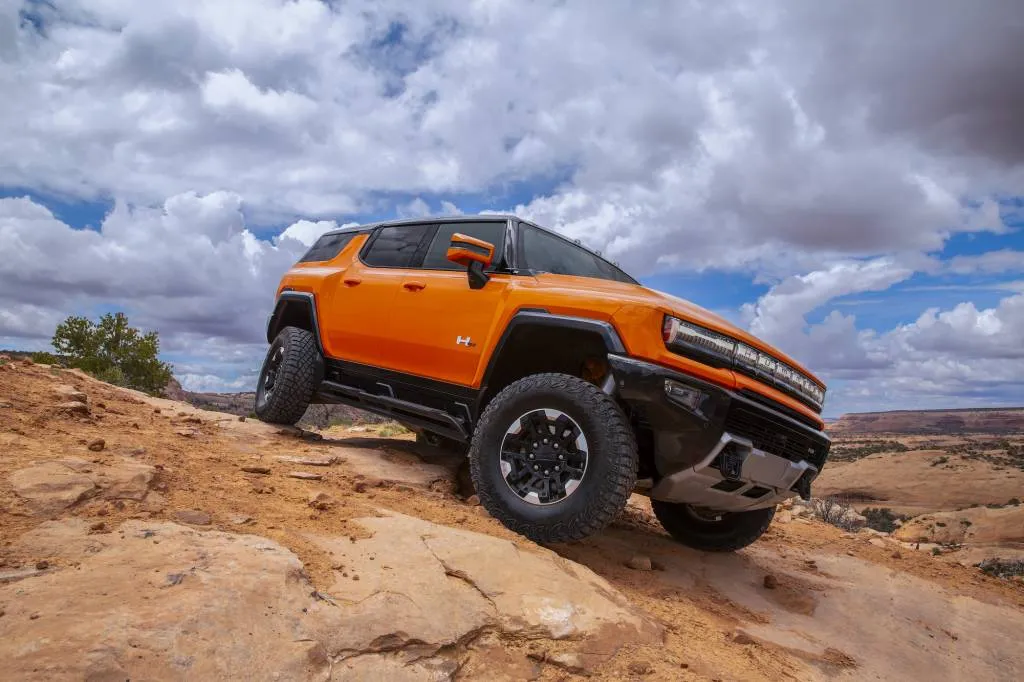
2025 GMC Hummer EV
“As GM continues to expand its EV business, the company is no longer branding its electric vehicle architecture, battery cells, or EV components with the Ultium name, starting in North America,” the automaker said in a statement to CNBC.
GM announced the Ultium propulsion strategy in 2020, aiming to achieve economies of scale for a wide variety of electric models by building everything off a common battery cell and motor family. The idea was meant to be an electric interpretation of the automaker’s traditional part-sharing strategy that led to ubiquitous internal-combustion powertrains like the classic small-block V-8.
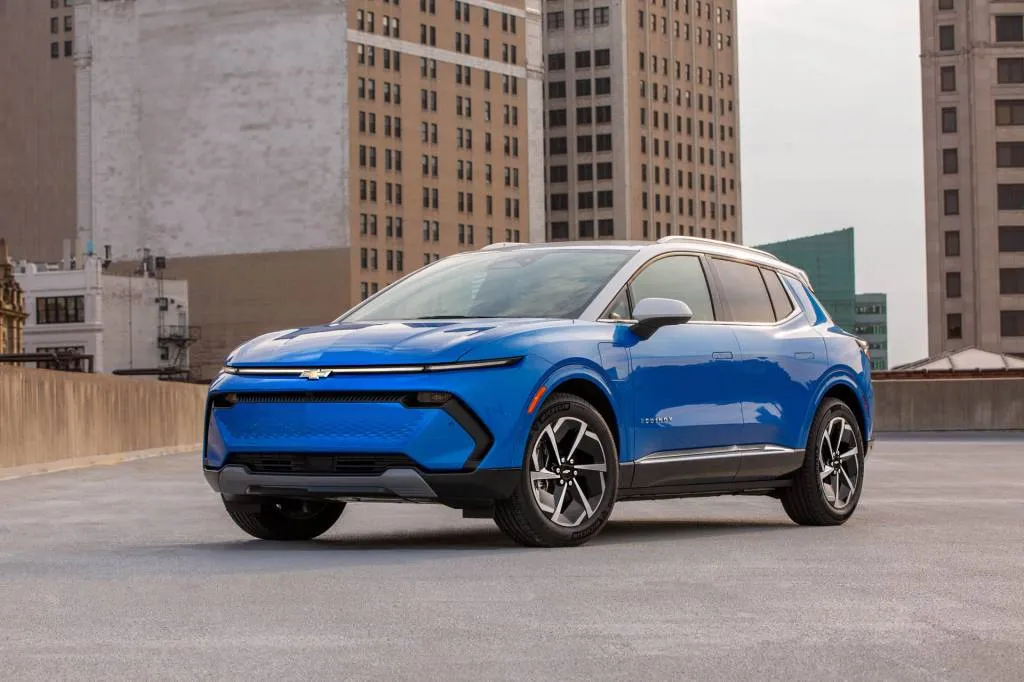
2024 Chevrolet Equinox EV
That strategy has since been implemented on vehicles ranging from the six-figure GMC Hummer EV to the $34,995 Chevrolet Equinox EV. But GM is now rethinking its EV strategy as sales grow at a slower pace than the automaker wants.
In July, GM CEO Mary Barra said the automaker was backing away from a target of production capacity for one million EVs in 2025, blaming an undeveloped EV market. In September, Barra said she was also surprised that EVs had become political, but said GM was still on track to eliminate tailpipes from its light-duty vehicles by 2035 (an “aspiration” announced in 2021) if customers are ready by then.

Honda wonders if you’d like gas-engine sounds inside your EV
- Honda might add the sounds of vintage performance models to future EVs
- The sounds might be offered for download for a small cost
- Honda’s next-gen user interface could enable in-vehicle purchase capability
The upcoming Honda 0 Series EVs are shaping up to be super-quiet inside.
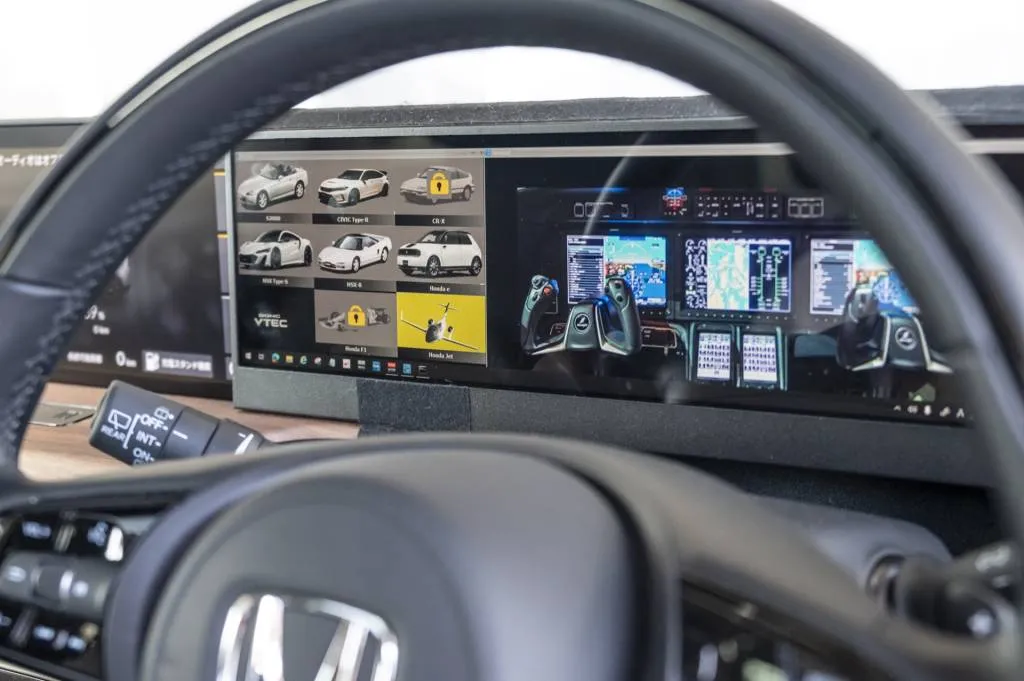
But would you rather like your Honda EV to sometimes sound like a high-revving S2000 roadster? Or revisit the gauge cluster look—as well as the sound of that CRX Si you once drove?
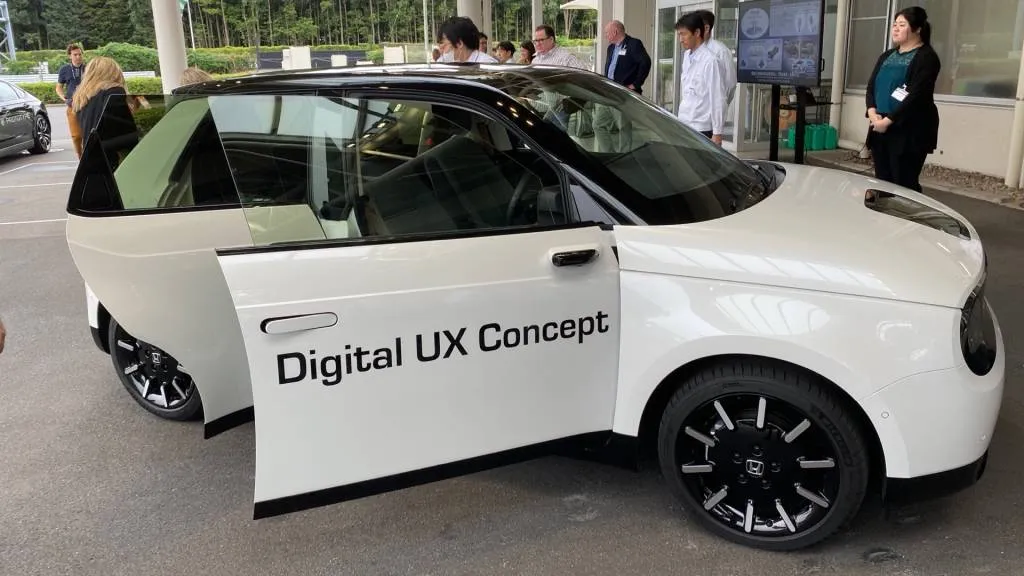
Honda EV sport sound feature for future UX
Last week I got to sample such a system as part of a so-called Digital UX Concept installed in a Japanese-market Honda e. It provided a glimpse of the things that Honda might make available for a relatively small cost in future EVs. The 0 Series ushers in Honda’s next-generation interface, with facial recognition, regular over-the-air updates, and in-vehicle purchases perhaps enabled on a market-by-market basis.
In addition to the S2000 and CRX, other choices included a new Civic Type R, the NSX Type S from earlier this decade, and the final NSX-R form of the first-generation mid-engine sports car from 2002.
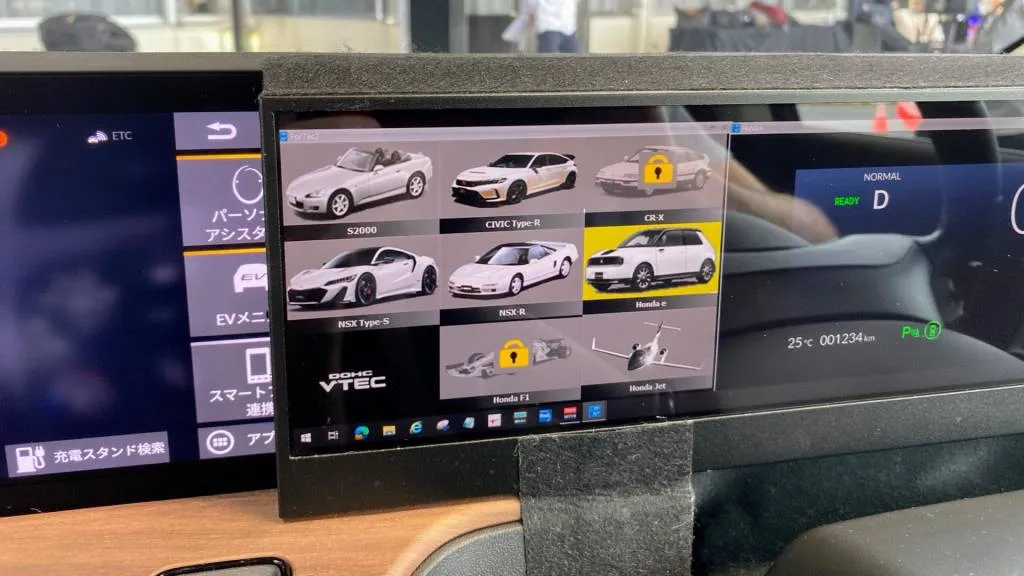
Honda EV sport sound feature for future UX
Each of the demos revamped the instrument cluster with the look of the original vehicle’s gauge cluster, accommodating quick revs of the engine in Park. Honda noted that the system responds when the vehicle is moving based both on speed and accelerator position, but it doesn’t simulate gears.
One of the most noteworthy in the demonstration was the Honda Jet. In that setting, gradually flooring the accelerator recreated a takeoff.
It’s one of the tightest integrations I’ve experienced for such a feature; if you’re over the gimmick you can simply go quiet as usual. The sounds are only for inside the vehicle, so in this case those outside the vehicle probably won’t know the difference.
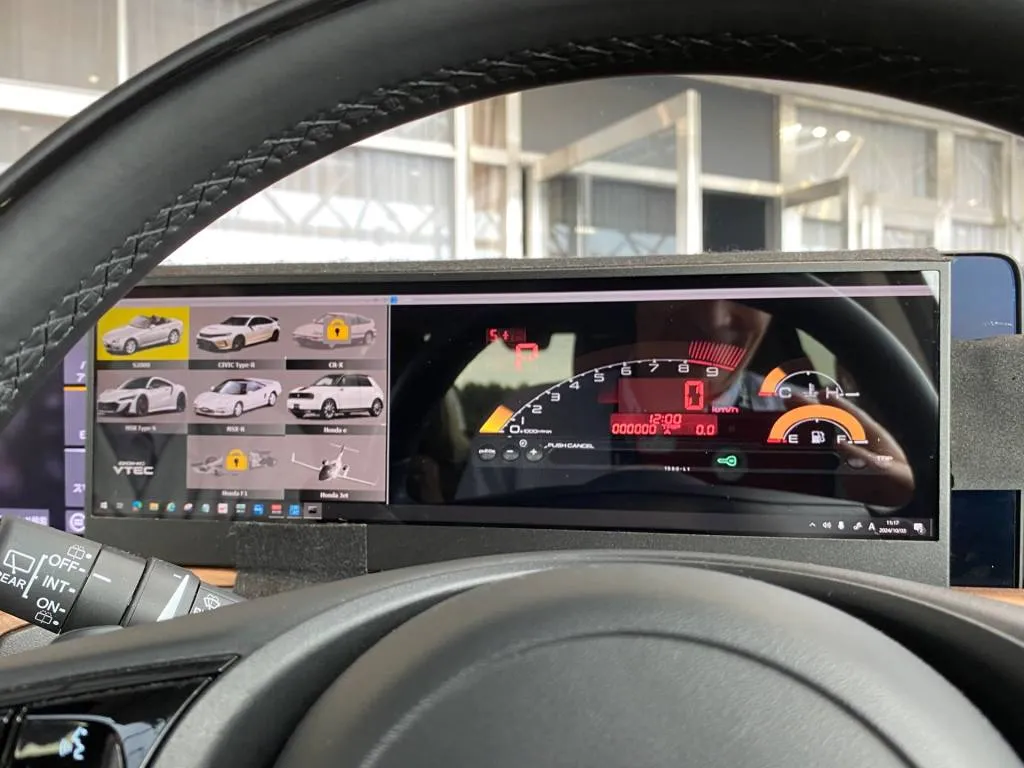
Honda EV sport sound feature for future UX
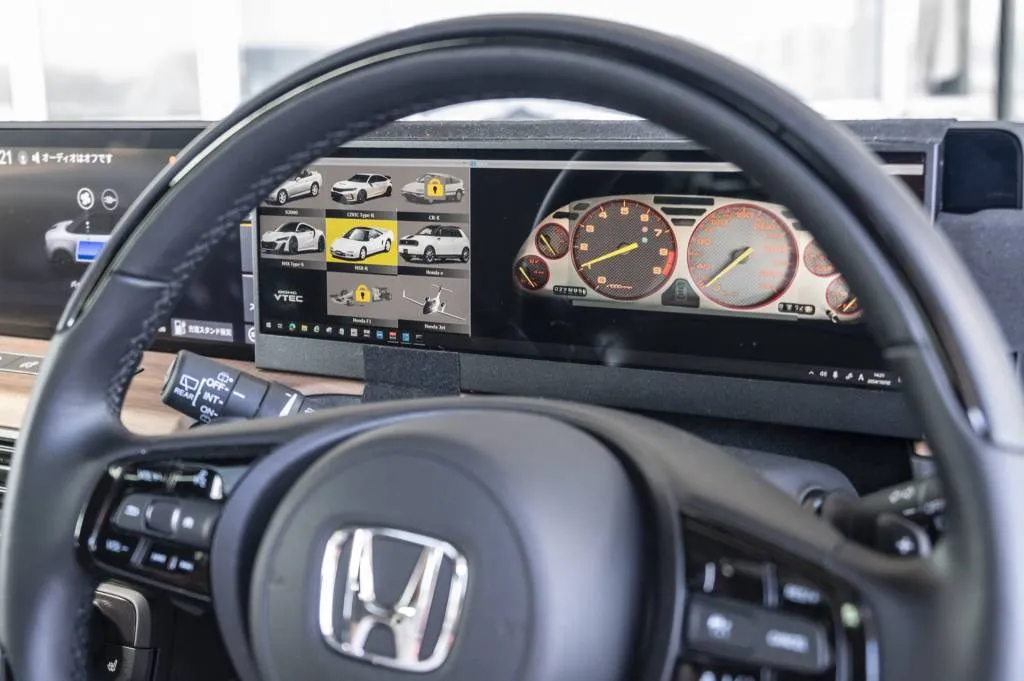
Honda EV sport sound feature for future UX
Honda EV sport sound feature for future UX
The feature, in the form of modules to be downloaded for a small fee, is only said to be under consideration. It might not be exclusive to upcoming 0 Series EVs, though, since the user interface being designed for the 0 Series will eventually be deployed throughout the Honda lineup, including in hybrids and other gasoline vehicles.
Everyone feels differently about EV sounds, it seems, when it doesn’t relate directly to safety. The NHTSA has said no to EV driver-selectable pedestrian sounds, and other sounds like Tesla’s Boombox, which under its original rollout drowned out federally mandated warning sounds. You can buy aftermarket noisemakers for Teslas that generate engine sounds both inside and out, and the upcoming Dodge Charger Daytona EV trumpets its own tune.

2025 Chevrolet Silverado EV ups range to 492 miles, costs $57,095
- Chevrolet expanded the Silverado EV lineup for 2025
- The 2025 Silverado EV can be had with up to 492 miles of range on the WT Max Range pack
- The 2025 Chevrolet Silverado EV costs $57,095
The 2025 Chevrolet Silverado EV gains a new mid-level grade and gets range boosts across its lineup, topping off at an estimated 492 miles of range for the WT with the newly available Max Range pack.
The Silverado EV LT slots between the fleet-oriented Work Truck and the RST, which was the top-of-the-line Silverado EV first available to retail buyers when it launched for the 2024 model year.
Pricing starts at $57,095 for a Work Truck with the Standard Range pack (all prices include a $2,095 destination charge). The Standard Range 119-kwh pack is new this year, but Chevy has not disclosed the estimated range. The dual-motor all-wheel-drive powertrain generates 510 hp and 580 lb-ft of torque.
The price rises to $69,495 with the Extended Range pack rated at 170 kw, and has a range estimate of 422 miles.
A $77,795 Max Range pack rated at 205 kw and 492 miles of range is new to the 3WT this year. Last year the base 3WT only came with the Extended Range pack with an estimate of 450 miles of range last year.
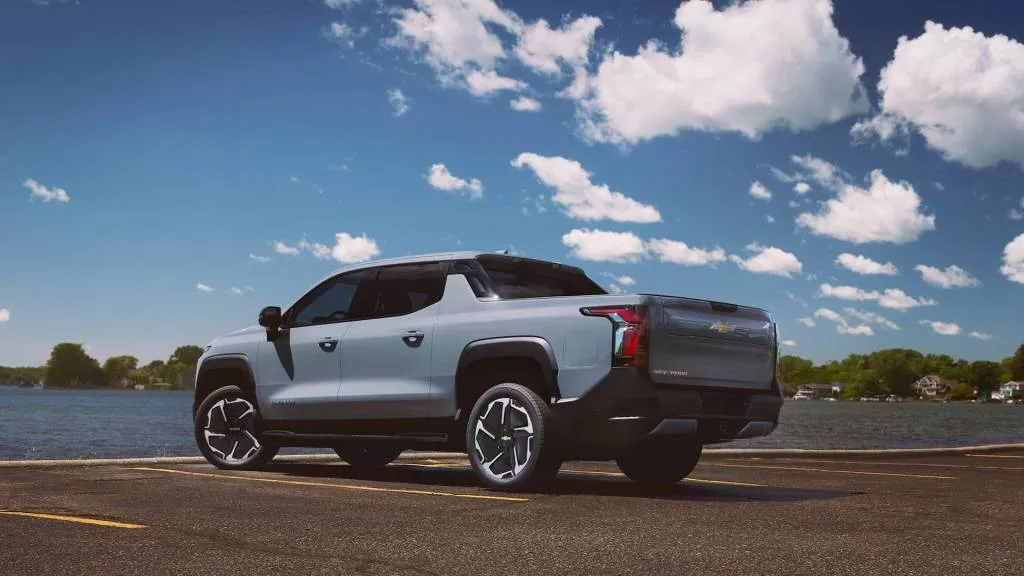
The new-for-2025 Silverado EV LT starts at $75,195 with the optional Premium Package adding $6,800.
LT models are available only with the 170-kwh Extended Range battery pack, achieving an EPA-estimated 408 miles in standard form or 390 miles with the optional Premium Package. That package includes larger 22-inch wheels (18-inch wheels are standard) that may result in the lower range, as well as the Super Cruise driver-assist system and mid-gate pass-through (in addition to the standard Multi-Flex reconfigurable tailgate).
2025 Chevrolet Silverado EV LT
In LT models, the dual motors are rated at 645 hp and 765 lb-ft of torque with the Wide Open Watts (WOW) performance mode engaged. Chevy also quotes a 12,500-pound towing capacity and 1,800-pound payload capacity for the LT.
RST models start at $89,395 and $97,895 with the Extended Range and Max Range packs, respectively. It generates 760 hp and 785 lb-ft with the largest battery pack.
Work Truck and RST models also get range increases for 2025, resulting from efficiency-related tweaks to motors, inverters, and aerodynamics, Chevy spokesperson Shad Balch told Green Car Reports.
RST range stretches to 460 miles of range with the Max Range Pack, compared to 440 miles for the 2024 model, while Extended Range models achieve 390 miles.

Prototype test drive: Honda 0 Series recalibrates path to EV innovation
- Honda aims for aero-savvy EV shapes—and SUVs—with upcoming Series 0 platform
- 0 Series boasts an air suspension and 3D gyro tech from robots
- Radiant heat and a heat pump will help maintain range edge in winter
Last week, at Honda’s R&D facility in Tochigi, Japan, I caught up on all the engineering work that’s gone into remaking Hondas as electric, culminating in about 10 minutes of dynamic driver’s seat time in a 0 Series EV in disguise.
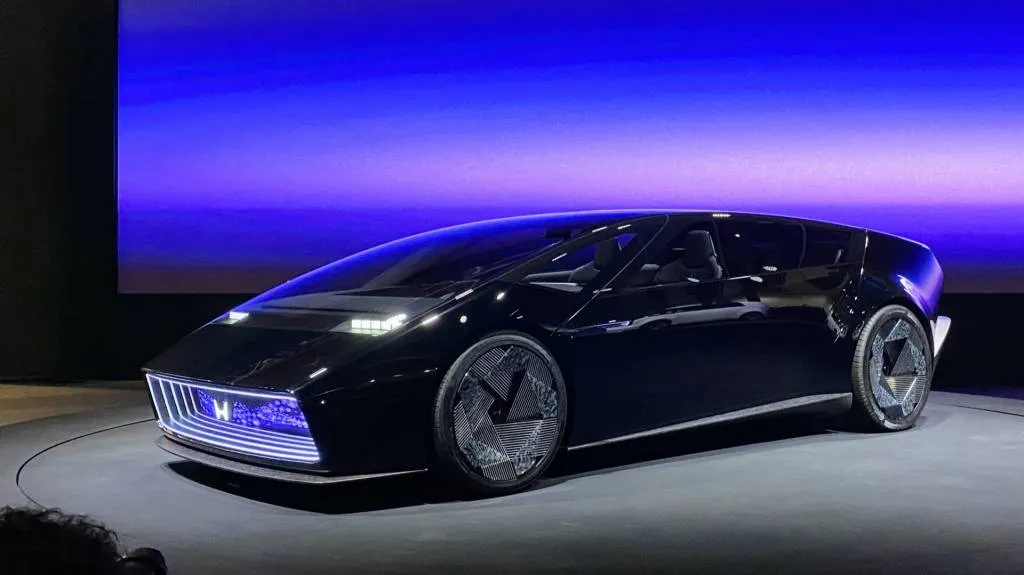
It gave me an answer to a question I simply couldn’t get out of my mind: How can a car as low and racy-looking as the Honda Saloon concept have a shape that’s nearly production-bound?
Honda Saloon Concept – 2024 CES
In January at CES, Honda revealed the Space-Hub and Saloon EV concepts. And among them, the Saloon EV’s supercar-like kammback profile seemingly stole the show—especially after executives claimed its poster-car look was nearly production-bound.
It underscores a point: Building a new generation of efficient, competitive battery and propulsion systems isn’t the only challenge that legacy automakers face in shifting to electric vehicles. The even greater test may well be how the rest of the vehicle—the top hat, in industry parlance—is conceived around it.
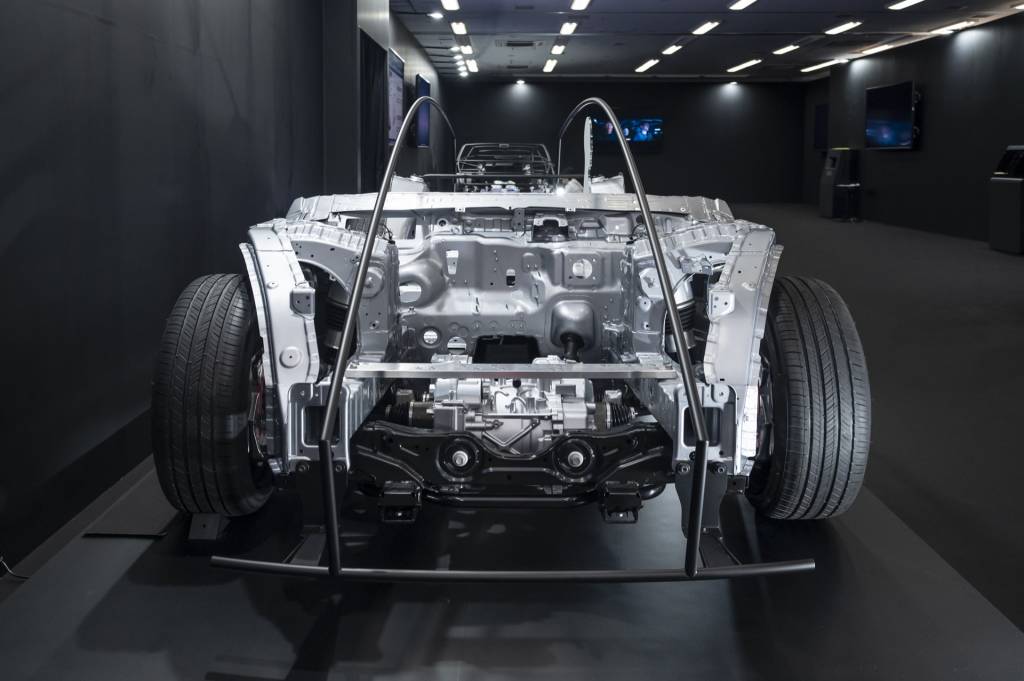
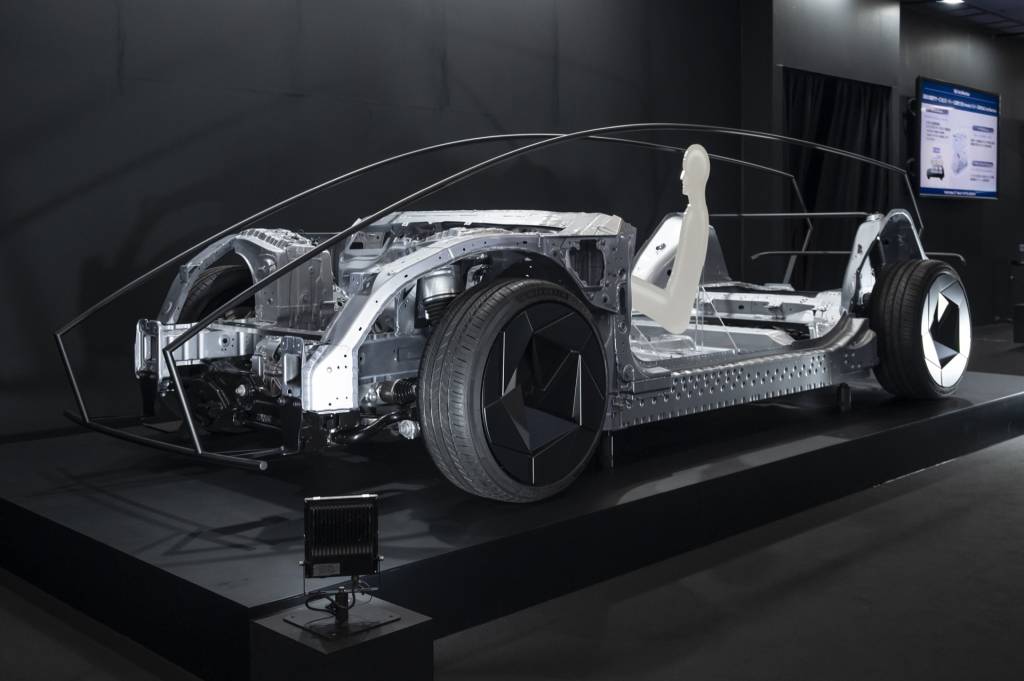
Honda 0 Series EV platform
Honda 0 Series EV platform
Honda 0 Series EV platform
Getting such a profile to work against the headwinds of crash-test standards, roomy passenger cabins, and the status quo of passenger EV layouts is the puzzle Honda says it can handle. And it’s just the car for Honda to lay out in profile as the example for why it’s taken on a “thin, light, and wise” strategy in engineering these upcoming 0 Series EVs. They signal a fresh start as it looks past the GM-supplier Prologue and ahead to its first family of entirely Honda-engineered mass-production EVs, due to be made in Ohio starting in late 2025.
The first two of those EVs to arrive will be an Acura crossover, previewed by the Performance EV concept shown in August, then a production-bound version of the Saloon concept.
While Honda isn’t entirely ready to show that especially rakish future in production form, it’s ready to give us a sense of all the work underneath.
Back at CES, the automaker provided a lot of information about what Honda 0 Series EVs will (and won’t) be, and it underscored that these models won’t be Accords, Civics, CR-Vs, or niche models. Fundamentally, between EVs on one side and gasoline models, hybrids, and maybe plug-in hybrids on the other, With the exception of its electronics platform and user interface, Honda doesn’t plan to overlap its EV structure and platform with gas and hybrid models.
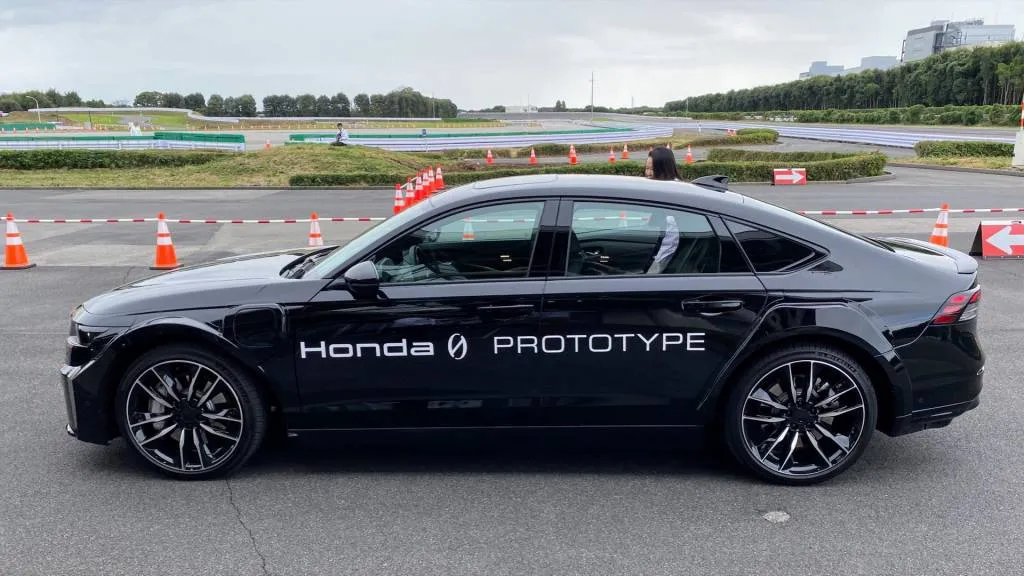
Honda 0 Series platform prototype (Accord)
So it seems ironic that here I was, set to drive some key aspects of Honda’s 0 Series platform in either an Accord or a CR-V—including the floor and battery case, as well as the 0 Series suspension. Both of the vehicles got tuning of the suspension and drive systems to adapt it to their own weight distributions, but I headed straight for the Accord after a tip that it may provide the best preview of 0 Series driving dynamics.
Honda challenges “thick and heavy” as the basis for EVs
Honda says that by emphasizing “thin, light, and wise,” it aims to transcend the constraints of having an EV be a “thick and heavy” vehicle. Too often, thick battery packs with bulky cooling systems and body structures intended to meet sedans and SUVs in the middle amount to packaging that doesn’t work so well for anything at the extremes.
With active aero and a low profile, the Honda Saloon concept promises better aerodynamics than any other production car, as well as an overall height that could be less than 55 inches while still maximizing interior space for adults.
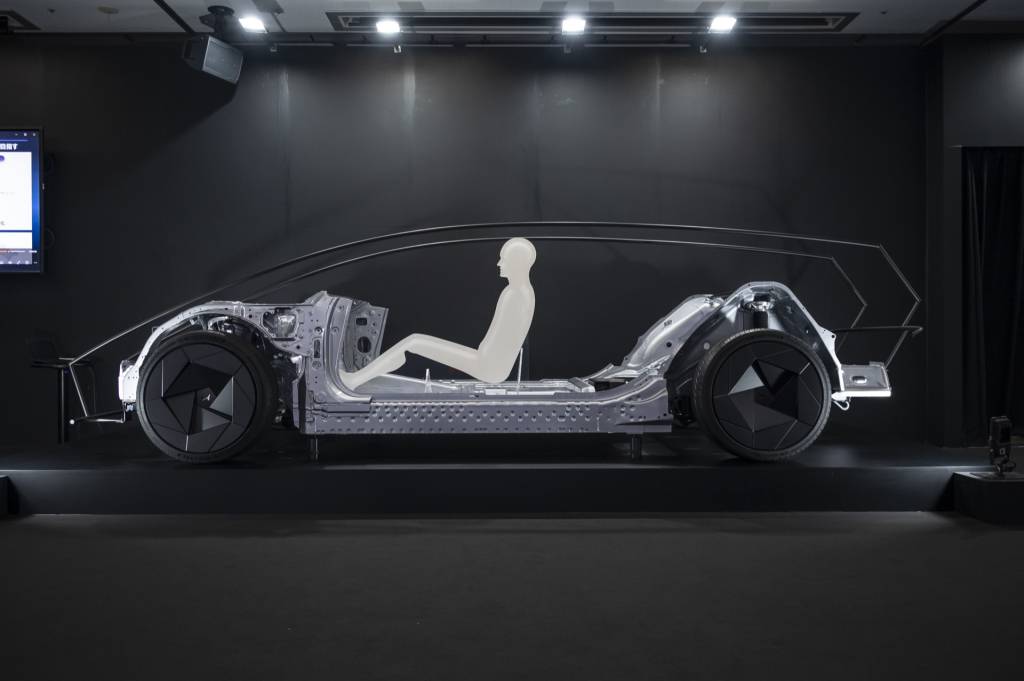
How it got there meant first conceiving a thin, super-low battery pack that acts as a structural member. Slimmed-down e-axles, combined with an aluminum-focused body structure, holds its mass close to the middle of the vehicle. Honda has also reeled in overhangs, and it’s rethought the way body flex at the front and rear factors into the suspension, allowing less lateral rigidity than current vehicle convention. Honda says that cuts weight and results in more nimble driving.
Honda 0 Series EV platform
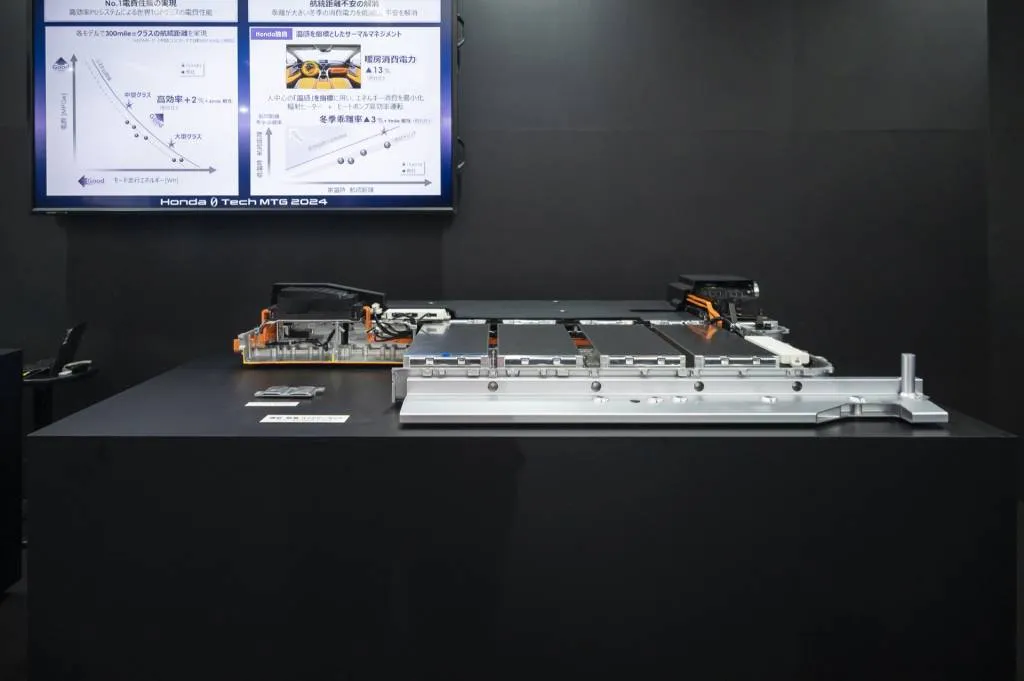
That battery pack is part of a so-called Integrated Power Unit that acts as the battery case and an integral part of the platform’s body structure. It’s girded with thick rails that together with the pack itself act as a structural member of the vehicle and enhance side impact protection.
Part of what allows the lower hoodline and aero profile is a body structure underneath that wasn’t conceived to allow for engines in front. Frontal offset force paths connect through to those thick rails in a way that takes away the need for higher cowl crossmembers.
Honda 0 Series models will be all-wheel drive or rear-wheel drive. So far, Honda has a 180-kw (241-hp) electric drive unit and a 50-kw (67-hp) unit that’s shared with its two-mode hybrids. It says the e-Axle is 40% smaller versus a composite average of current rival units from OEM suppliers. Honda labels these e-axles as proprietary, although they’re built by partner Hitachi Astemo, of which Honda owns a majority stake.
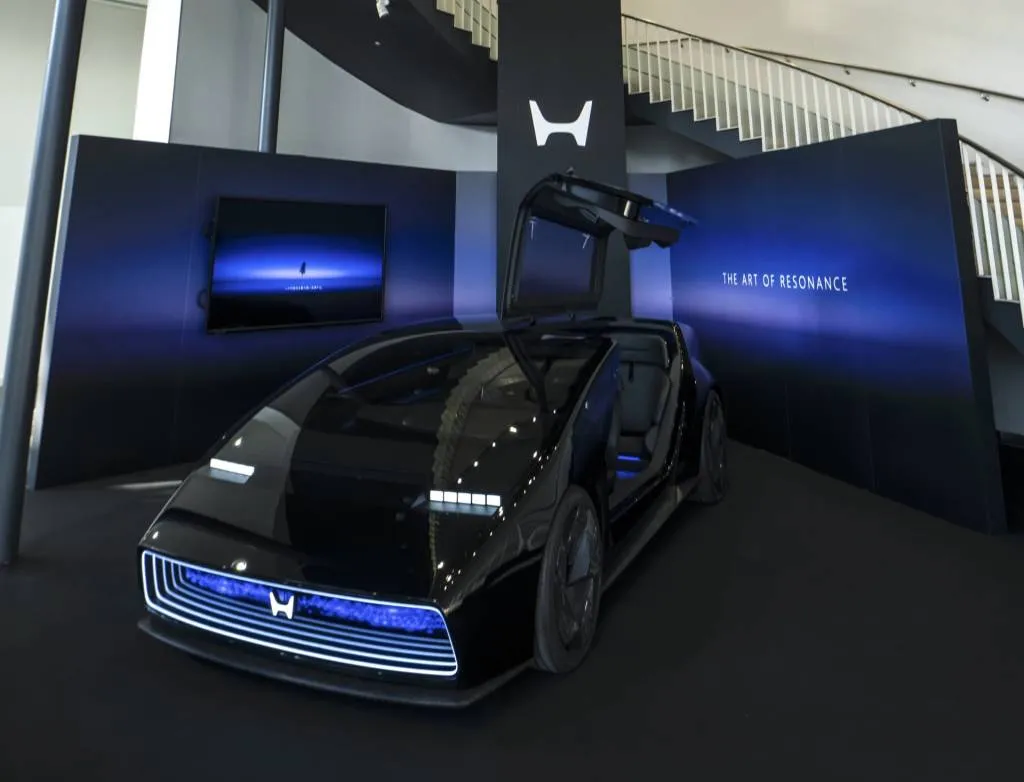
Honda Saloon EV concept
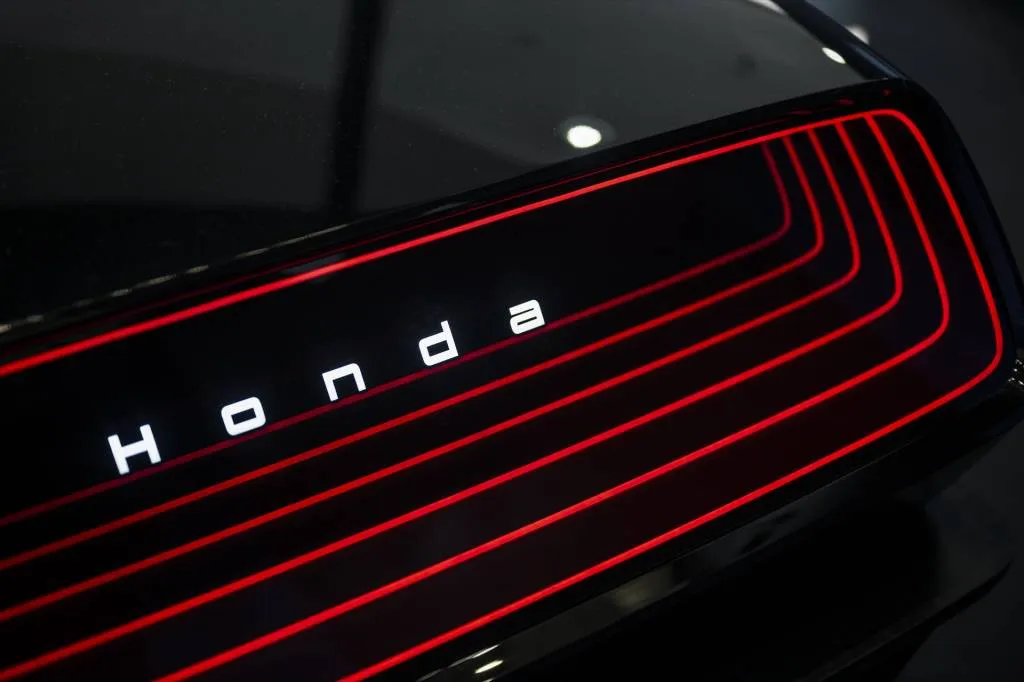
Honda Saloon EV concept
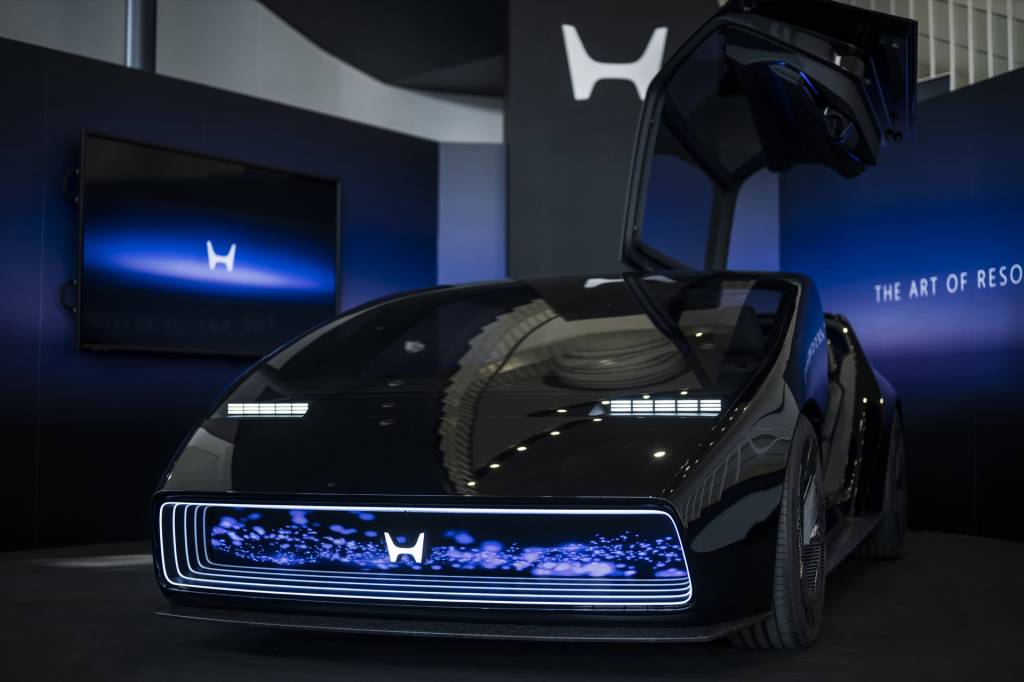
Honda Saloon EV concept
Honda 0 Series aims for 300 miles
Given all of this, Honda aims to achieve “around 300 miles” across various 0 Series models, in terms of EPA cycle range, with battery pack sizes varying to meet that. With a radiant heater and heat pump, Honda says the 0 Series reduces heating power consumption by 13%, with a lower winter-weather range deviation than rival models.
Honda also promises that the 0 Series will be 2% more efficient than rivals—a composite average of them—in terms of range per energy. Without seeing specific examples (like Tesla, and Lucid) factored in, it’s difficult to anticipate where Honda might land.
The Accord I drove had two of these 241-hp units, amounting to an output potentially topping 480 hp, although Honda officials wouldn’t confirm if the units were making their peak output here. Honda had no update on core specs like the battery capacity, but it confirmed that modules will be only in the pouch format—supplied by a Honda joint venture with LG. Honda also hasn’t provided figures for charge rates, or even confirm whether these EVs will operate at 400 volts or 800 volts, but it promised that later versions of the 0 Series arriving in a few years will be able to charge from 15-80% in just 10-15 minutes (suggesting 800-volt charging) and will lose no more than 10% of the original battery capacity after 10 years of use.
These models will get battery cells through an arrangement with LG and supplied via an LG joint venture with Honda in Ohio. Honda hasn’t yet detailed how many cells are installed per module, but it clarified that its battery management system is a wired one and monitors resistance at the cell level.
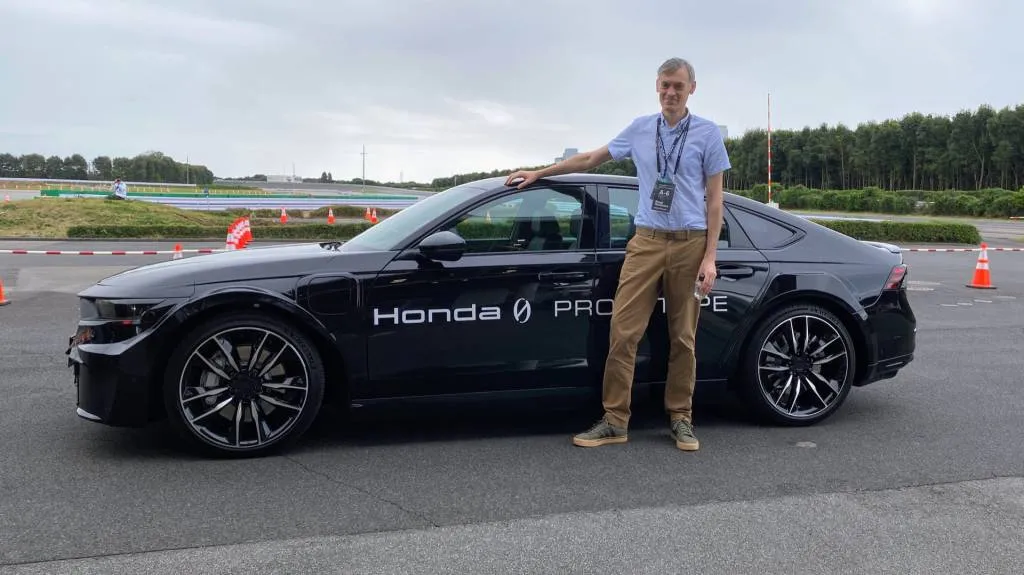
Honda 0 Series platform prototype (Accord)

Halvorson disccusses Series 0 driving attributes with chief engineer
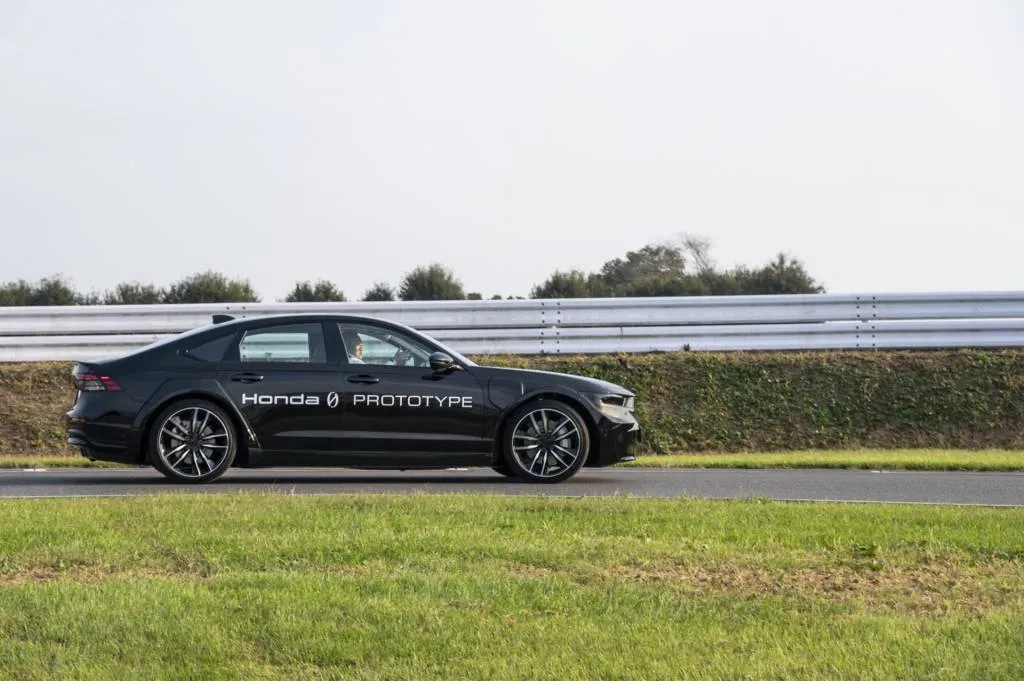
Honda 0 Series EV platform in Honda Accord
Honda 0 Series prototype quick spin
Back to the preview: What I’m riding in gives the face-value impression that it’s an Accord—with some development controls, and a thin display screen fitted to it looking nothing like the vast display space of the Saloon concept. But I’m assured that some of what I’m riding on is in some aspects close-to-final-form 0 Series.
I roll out from the staging area onto the straight of the small road course and roll into the accelerator, reaching the floor momentarily before I cautiously take on the course’s curves. As I quickly learn, this might be a heavier EV, but it feels more nimble and balanced than a typical Accord. A second and third time with a nod from my development-engineer passenger, I push it a little faster in the straight than the speeds originally intended for the exercise, eventually reaching about 75 mph. The propulsion system is remarkably quiet even then.

Honda Series 0 prototype (Accord)
Overall, this feels every bit as quick as the quickest mainstream AWD EVs—all except for those with Plaid, Performance, or N badging. Meanwhile the motors are delivering their torque free of vibration, and they feel in sync with the stability control and body control.
This Accord-based 0 Series prototype isn’t fitted with the production car’s steer-by-wire system. It’s also not a production-level braking configuration, and it only has one level of brake regen—a moderate one that scrubs off some speed but definitely requires the brake pedal. Honda also wouldn’t confirm the capacity of the battery pack in this prototype, whether it’s close to that of a production version in weight, or how much heavier it is than an Accord. It was confirmed that the prototype is heavier than a gasoline Accord, though.
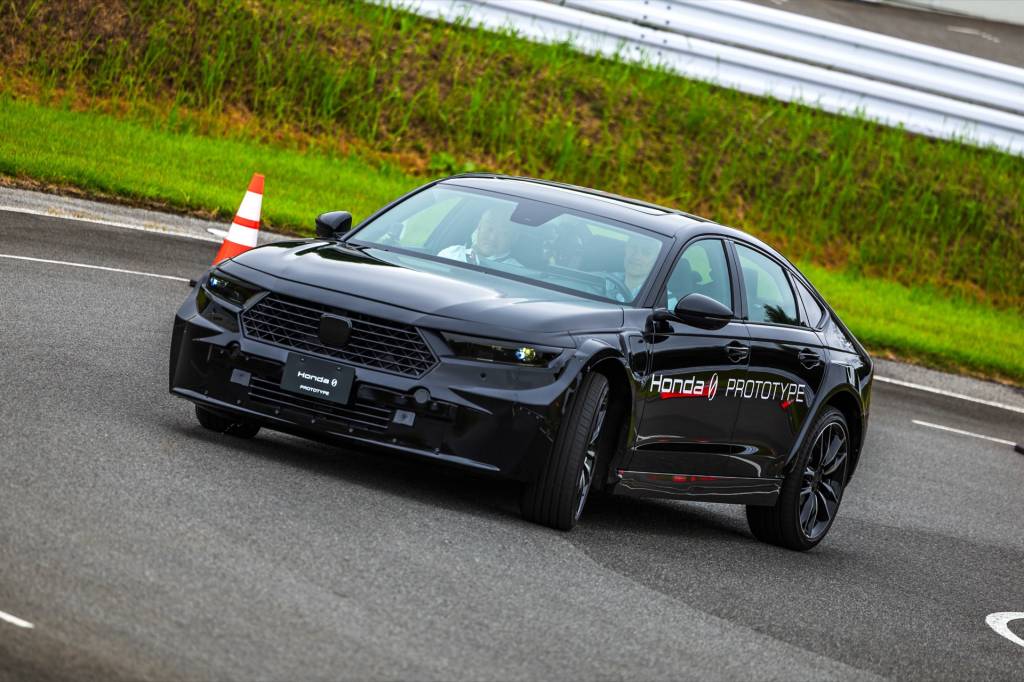
Honda Series 0 prototype (Accord)
0 Series prototype handles better than an Accord
What it does have is the 0 Series’ air suspension, with air-spring struts in front and a multi-link setup with air springs in back. It also gets the 0 Series’ stability system and body controls incorporating 3D gyro sensors inherited from the ASIMO robot family—a world first, according to Honda.
My takeaway is that this feels like a flat-cornering, lower-riding Accord. Yet the engineer riding with me reminds me that the actual H-point of this car is slightly higher than that of a standard Accord.
After driving, I stood back and watched this special Accord on a subsequent lap and visually confirmed it’s cornering as flat as it feels inside.
Back away from the prototype, I learned much more about all the innovation Honda plans in manufacturing these EVs. Altogether, the battery pack case is Honda’s largest single cast piece ever—including its engines—and the pack case has just five parts as opposed to 60 or more for some, Honda says. It will be using six 6,000-ton high-pressure die-cast (“megacasting”) machines at its Ohio facilities to make them—because megacasting uses less energy than gigacasting and is better for production flexibility.
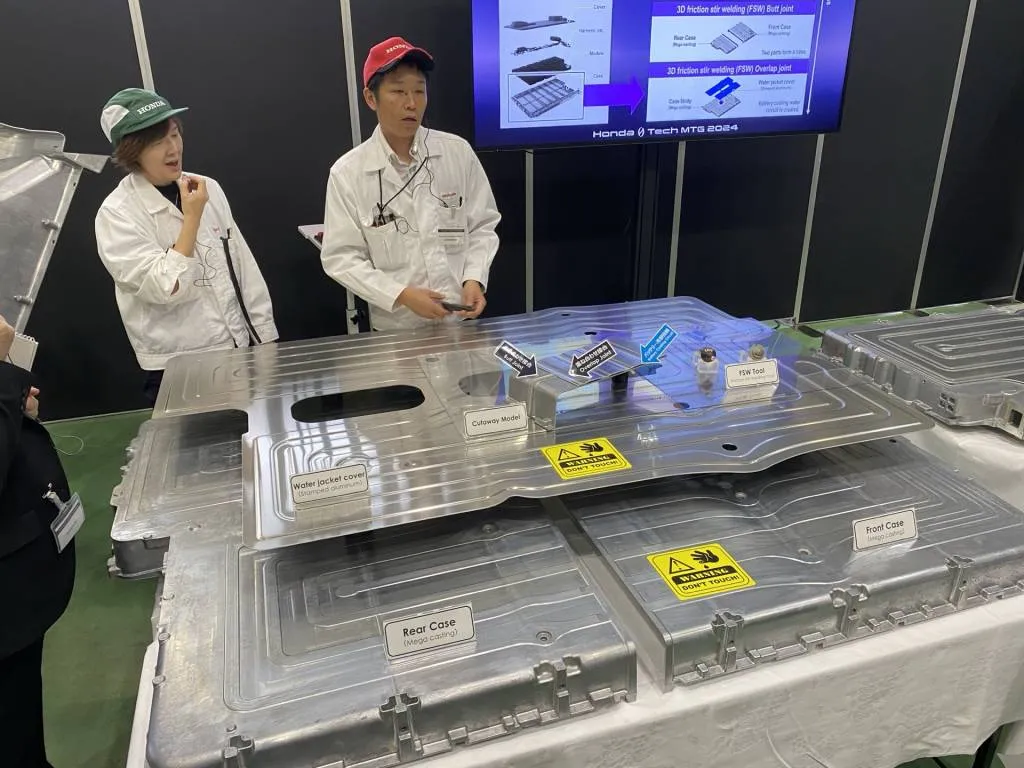
Honda 0 Series platform – battery pack
Further, after the quick zip-zip of a robotic trimming process, a new process called friction stir welding will bond the pack’s pieces, assuring precise cooling channels. It all appears ready for the mass-production ramp.
Honda has planned for a semi-automated flex-cell production system that allows it to be especially quick to modify its mix of battery pack sizes based on vehicle demand. Honda anticipates that roughly 75% of 0 Series EVs may be medium-size, while a quarter will be large-size.
0 Series to be made in Ohio, alongside gas vehicles
And that underscores an important point: The 0 Series EVs are engineered, despite their differences, to be assembled side-by-side in Ohio with Honda’s ICE vehicles, as part of a semi-automated assembly line.
Honda also plans to mega-cast even larger aluminum rear body modules for 0 Series EVs within a few years—likely starting in 2028 in its Canadian plant. It’s also utilizing CDC (constant direct current chopping) joining technology that Honda has worked out specifically for this body frame and its alloy type, allowing less energy and a stronger weld.
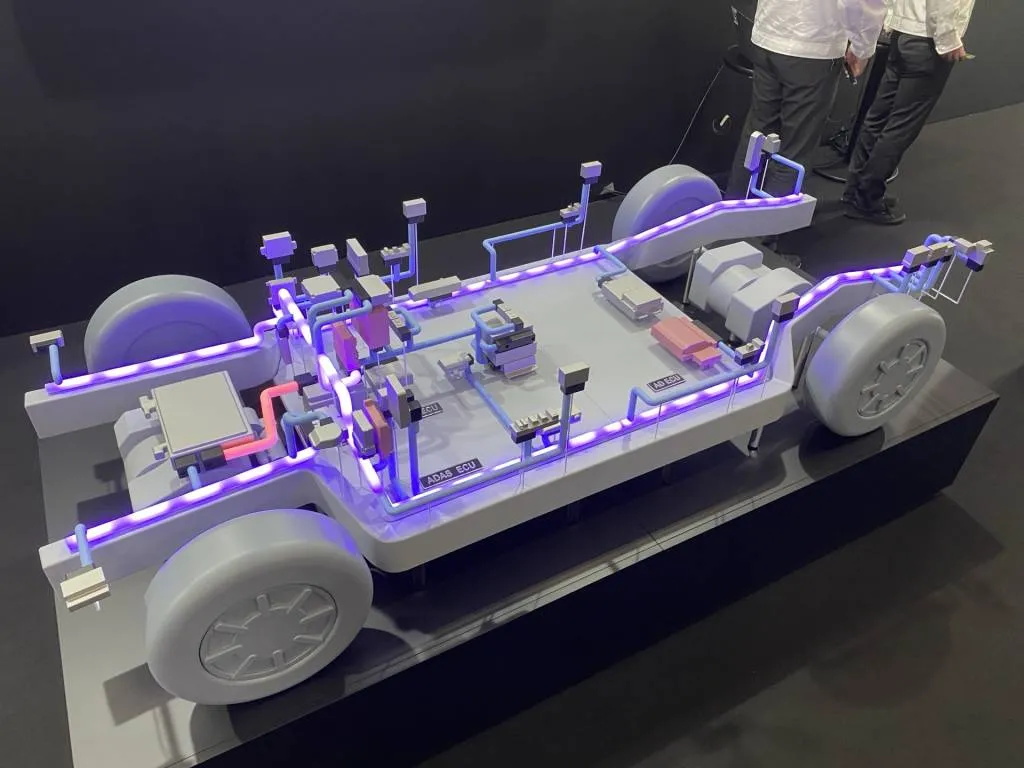
Honda 0 Series platform
The 0 Series will run on a new Honda electrical and electronics architecture, corresponding to three ECUs: safety and autonomous driving for the first; dynamics, body electronics and energy management for the second; and the digital UX for the third. It’s planning an advanced summon feature, as well as an extended-reality (XR) feature that allows friends or family to join you for a virtual ride.
High-precision detection will include lidar sensing, sensor fusion for long-range detection and night driving, and proprietary AI, Honda says, with plans to offer Level 3 driver assistance features. It will not be limited to mapped roads, and it says the system will be the world’s fastest for “all area eyes off” operation eventually, at a further point in the 0 Series lifecycle.
Getting a fully electric sedan that truly feels as low and nimble remains a challenge. Yet Honda believes it can produce a low, long, and wide car and two SUVs in 2026, a 3-row SUV in 2027, a couple more SUVs in 2028 and 2029, and a compact sedan in 2030, all on the 0 Series electric platform.
If it can push these along, showing that what’s underneath isn’t the limiting factor, that’s quite the starting point.
—
Green Car Reports accepted various accommodations including travel and meals in order to facilitate this report.

Toyota debating when to end pure gas-car sales in US
- Toyota knows the end is coming for pure gas-powered cars
- Electrified models, mostly hybrids, accounted for 48% of Toyota’s U.S. sales in September
- Toyota has a three-row electric SUV on the way in 2026
Toyota believes it’s nearing the point where sales of hybrids, plug-in hybrids, electric vehicles, and hydrogen fuel-cell vehicles will overtake pure internal-combustion cars in the U.S.—and is weighing whether to end sales of non-hybrid combustion models entirely.
“In the U.S., there is a decision being made now—and I’m not a part of it—as to whether to stop making pure ICE for [the] U.S. market,” Gill Pratt, Toyota’s chief scientist, said in an interview with Bloomberg. “Just the fact that we’re thinking of that means that, OK, we must be close.”
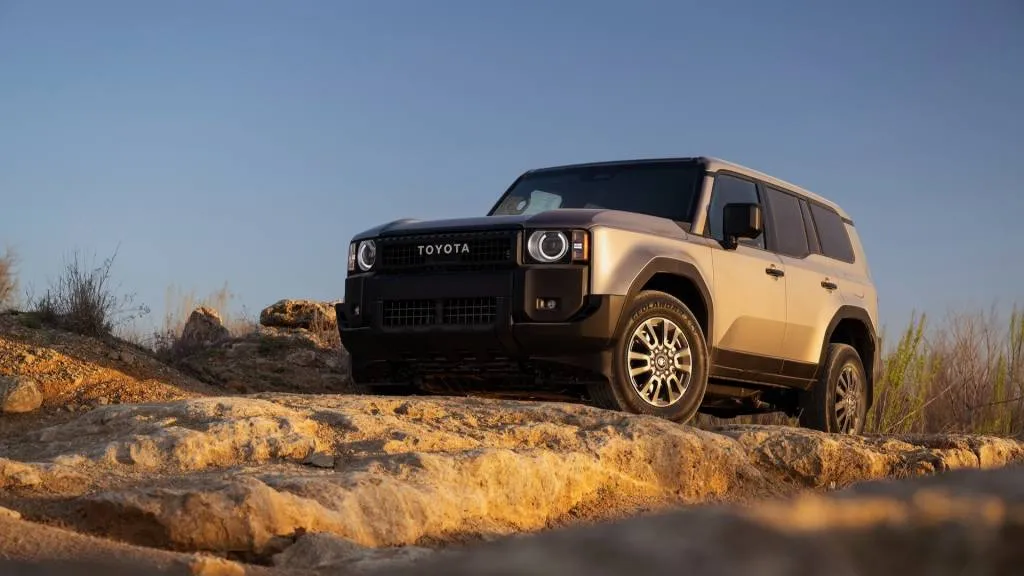
2025 Toyota Land Cruiser
Toyota’s electrified models—including hybrids, plug-in hybrids, and fuel-cell vehicles, as well as EVs—accounted for 48% of the automaker’s U.S. sales in September, Bloomberg noted, compared to 20% for the same period two years ago.
Much of the heavy lifting is being done by hybrids. Nearly every model in Toyota’s U.S. lineup currently offers a hybrid powertrain, and some—including the Camry midsize sedan, Sequoia full-size SUV, Sienna minivan, and even the iconic Land Cruiser—are available only as hybrids.
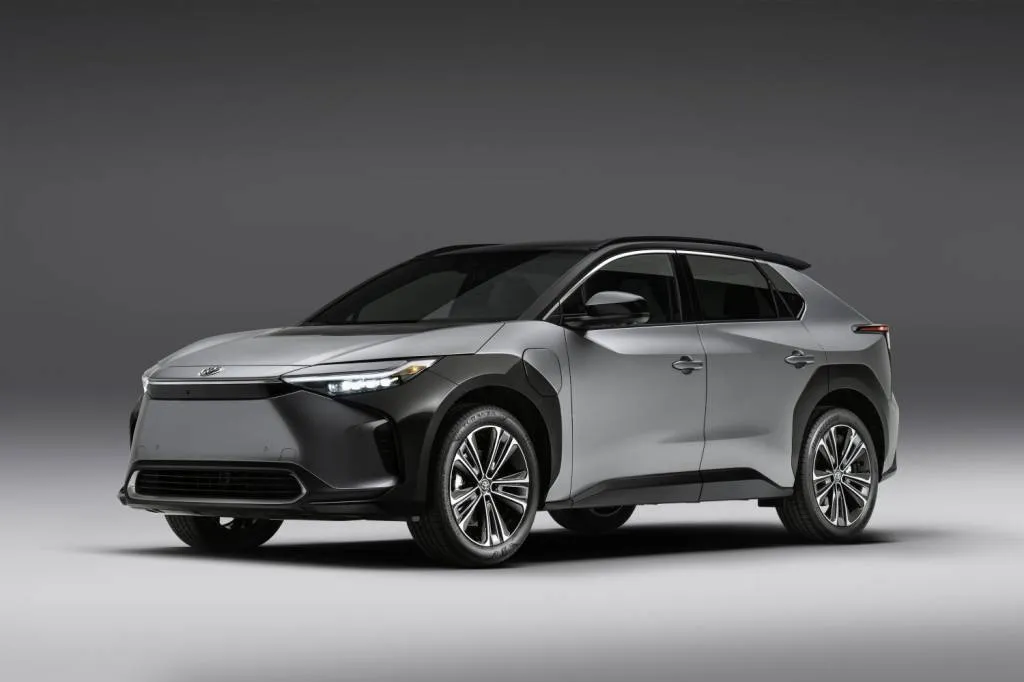
2024 Toyota bZ4X
Toyota also continues to offer plug-in hybrid versions of the Prius and RAV4, although it’s nixed the Prime badge for those models for easier recognition by customers. It also sells the hydrogen fuel-cell Mirai sedan in California, but infrastructure problems have made owning a hydrogen car somewhat impractical even in that state, which remains the only one with anything close to a proper network of fueling stations.
The only all-electric models Toyota sells in the U.S. are the bZ4X and related Lexus RZ, but that’s about to change. Toyota plans to start building a three-row electric SUV at a plant in Kentucky in 2026, with batteries supplied by a new North Carolina factory. On a global level, the automaker recently announced a tenfold boost in EV production by 2026, and confirmed that it’s moving ahead with low-volume production of potentially game-changing solid-state batteries.

Toyota and Subaru reportedly developing another electric SUV together
Toyota and Subaru will launch a second jointly-developed electric SUV in 2026, reports Nikkei.
A follow-up to the Subaru Solterra and Toyota bZ4X twins, this second model will be sold in the U.S., Europe, and Japan, according to the report. Subaru’s Yajima plant, located in Japan’s Gunma prefecture, is slated to handle production, with output estimated to eventually reach between 15,000 and 20,000 vehicles per month.
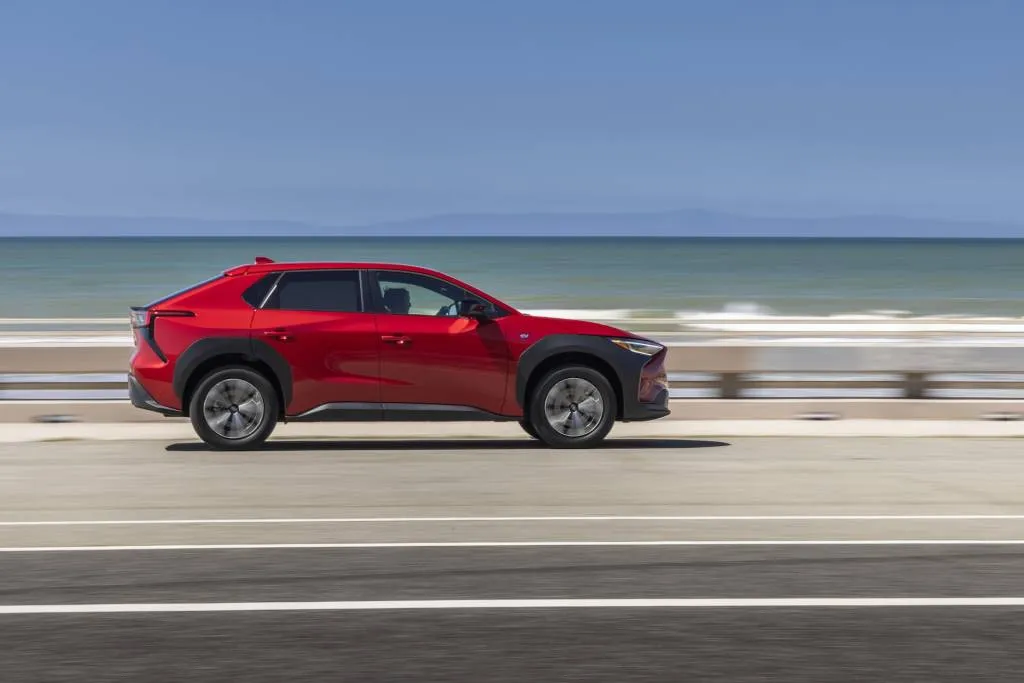
2024 Subaru Solterra
The new electric SUV may include some carryover parts from the Solterra and bZ4X in order to keep production costs down, according to the report.
This follows a May report from Automotive News that Subaru would lean on Toyota for three more electric SUVs through 2026. One of those EVs is thought to be a Subaru version of the Toyota three-row electric SUV previously scheduled to be built in Kentucky in 2025, but now reportedly delayed to 2026. Toyota also plans to build a second three-row electric SUV at an Indiana plant that year.
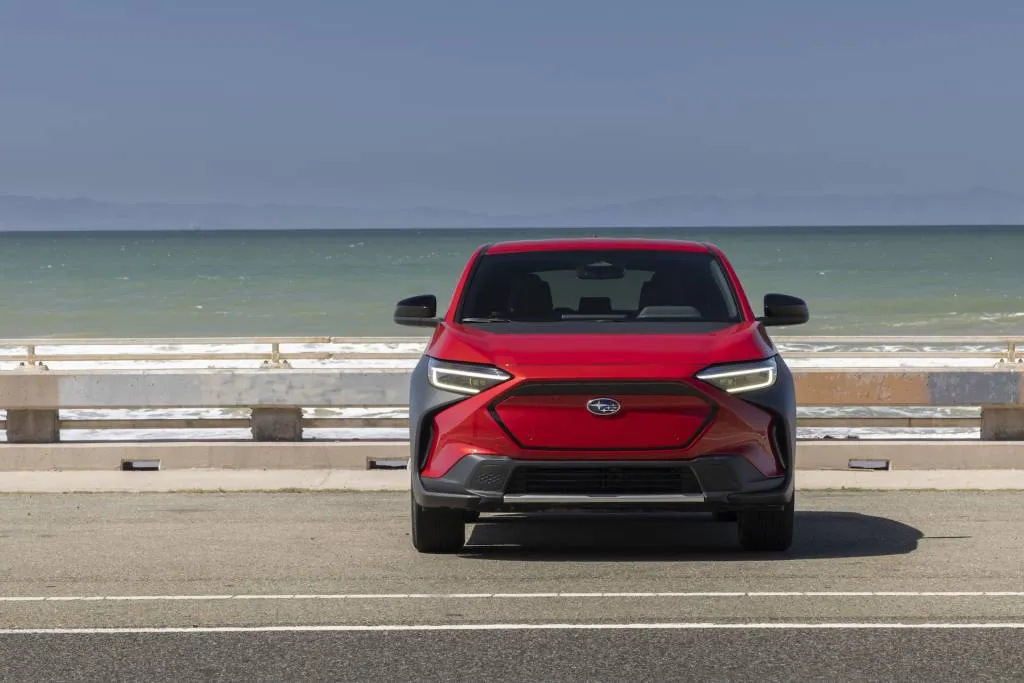
2024 Subaru Solterra
Before that happens, the same report said Subaru will revive the Crosstrek Hybrid, a plug-in hybrid model that borrowed powertrain components from Toyota, which was discontinued after the 2023 model year. The new Crosstrek Hybrid will reportedly share its hybrid system with the 2026 Subaru Forester Hybrid, due next year.
Subaru in 2023 confirmed an accelerated EV plan for 50% EV sales by 2030, including four additional battery-electric models to be introduced by the end of 2028, with at least one of those set to be built in the U.S., and including some models that already included Toyota input. The automaker has also followed most major EV brands in adopting the Tesla North American Charging Standard (NACS) port for future models.

Rivian aims to start EV production in Georgia in 2027
- Rivian applied for a federal loan to build its Georgia plant
- The loan application states Rivian will begin partial operations in Georgia in 2027
- Rivian intends to build the R2 and R3 electric SUVs in Georgia
Rivian has applied for a U.S. Department of Energy (DOE) loan to fund construction of its Georgia factory, Reuters reports.
In a filing with the DOE, Rivian said it aimed to begin partial operations in the third quarter of 2027, and to have the first “production capacity block” fully operational in 2028. Located east of Atlanta, the factory is slated to become Rivian’s second, alongside its current Normal, Illinois, plant that was repurposed from a former Mitsubishi facility.
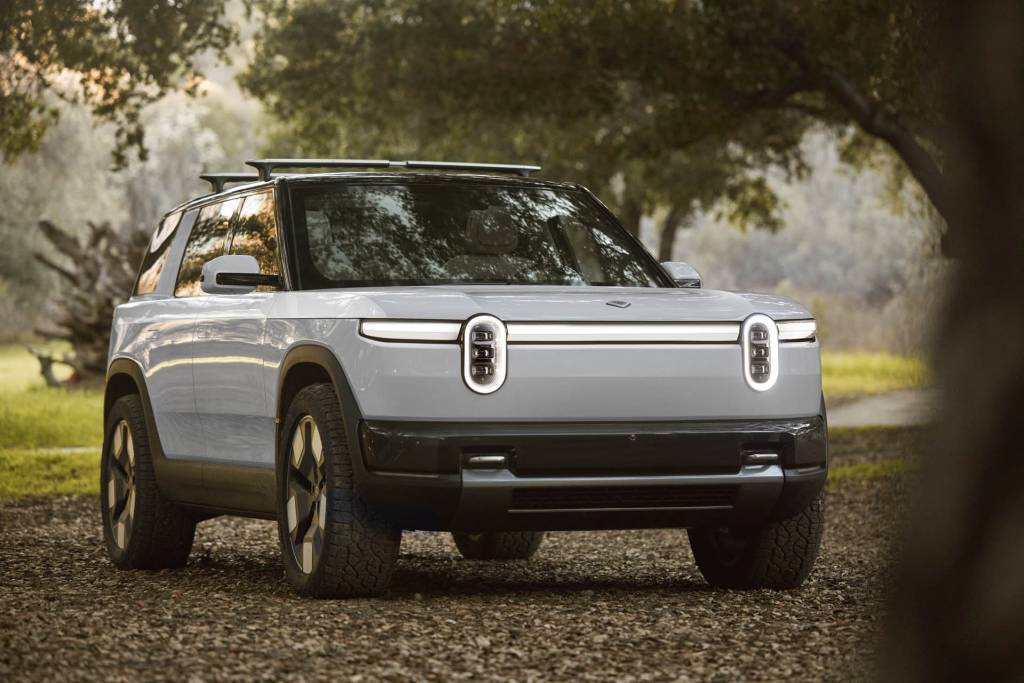
Rivian R2
Rivian announced the $5 billion Georgia factory in 2021, saying at the time that it would begin construction in 2022 with the goal of starting vehicle production by 2024. But Rivian has since paused construction as it works to rejigger its production capacity in Normal to accommodate the R2, a $45,000 electric SUV the automaker has said will start production in the first half of 2026.
When it announced this plan in May, Rivian said it was aiming to build 155,000 R2s at the Illinois plant annually. That’s more R2s in a year than Rivian has delivered cumulatively—including all models—since it began vehicle deliveries in fall 2021. Factoring in other models (consisting of the R1T pickup truck, R1S SUV, and EDV fleet delivery vehicle) Rivian expects the Normal plant to churn out 215,000 vehicles annually.
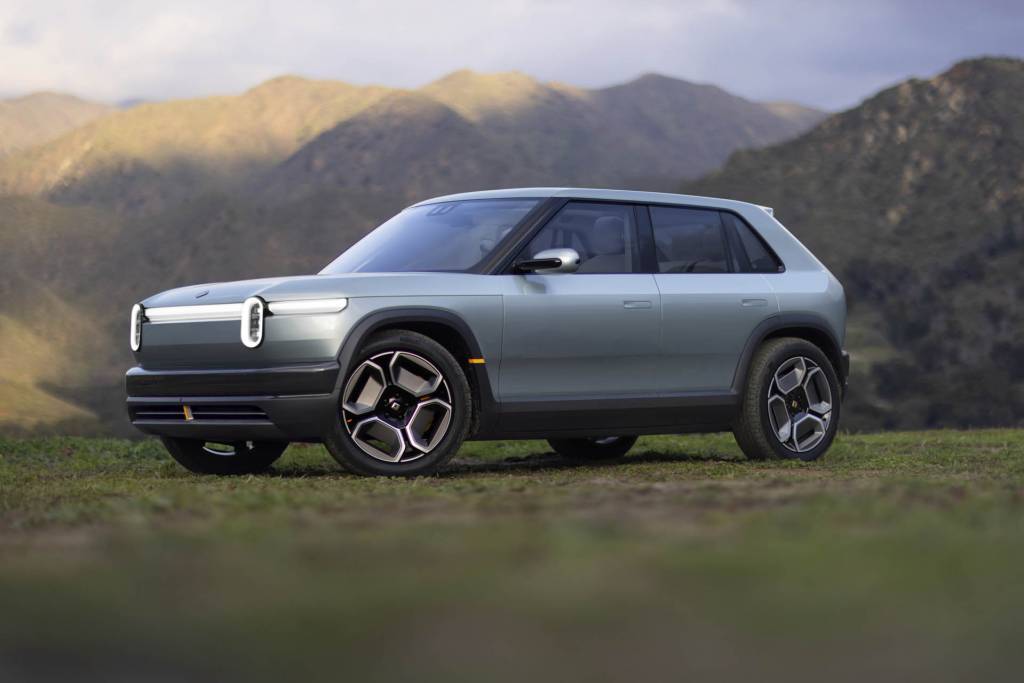
Rivian R3
This substantial increase in production capacity (Rivian reported making 57,232 vehicles at Normal in 2023) will be funded in part by an $827 million incentive package from the State of Illinois, Reuters reports. In 2022, Rivian secured $1.5 billion in state and local incentives for the Georgia factory.
Rivian also expects to save $2.25 billion and speed up the start of production by moving the R2 to Illinois, Reuters notes. That still leaves the R3 and R3X, which will launch at an undetermined date after the R2. Rivian would need another major expansion of the Normal plant to accommodate those models, meaning they could be shifted to the Georgia plant should Rivian receive its DOE loan and complete construction.