
Category: General

BMW i7 and i5 recalled for steering issue
Two BMW electric sedans are being recalled over steering components that could break, requiring more effort to turn the wheel.
The recall includes 202 BMW i5 sedans from model years 2024 and 2025 and just 21 BMW i7 sedans, all 2024 models, plus non-electric versions of both. The recalled vehicles may have steering spindles manufactured with specifications that “may not have been appropriate for the application,” according to the National Highway Traffic Safety Administration (NHTSA).
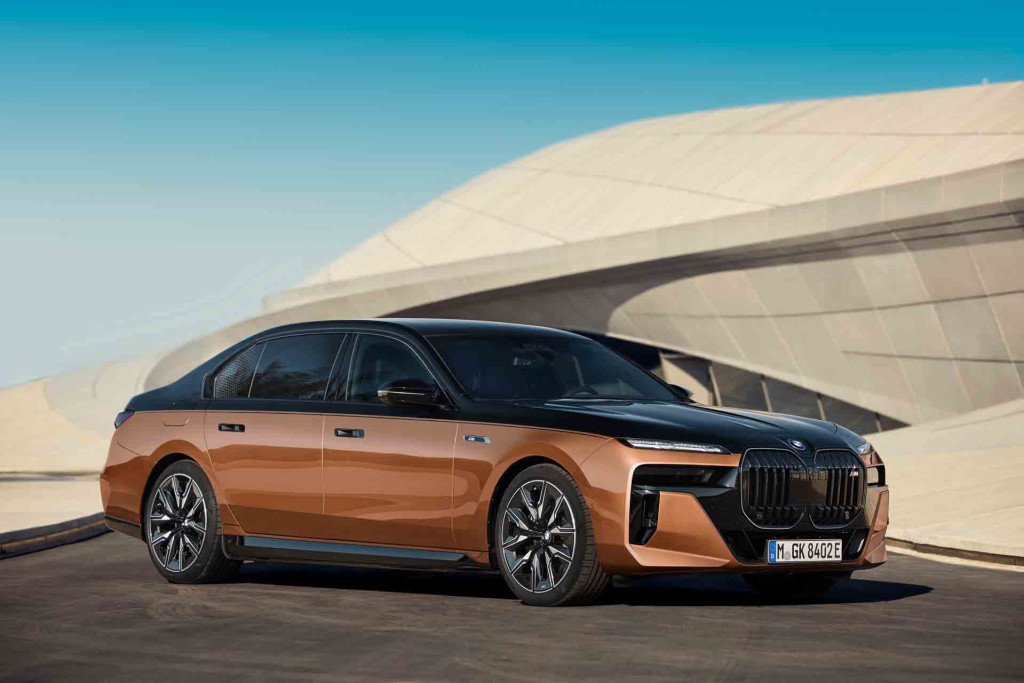
2024 BMW i7 M70
In certain situations, the the swivel socket of the spindle’s double universal joint could break, resulting in an unexpected increase in steering effort required to properly steer the vehicle, according to the NHTSA. If this occurs, drivers may notice a noise coming from the steering column, as well as “changes in the steering behavior,” recall documents said.
A sudden increase in required steering effort can make it harder to avoid a crash, but BMW told the NHTSA that it is not aware of any crashes or injuries related to this issue, nor is it aware of any related warranty claims or customer complaints. The automaker said it first became aware of the problem when damaged steering spindles were noticed at assembly plants.
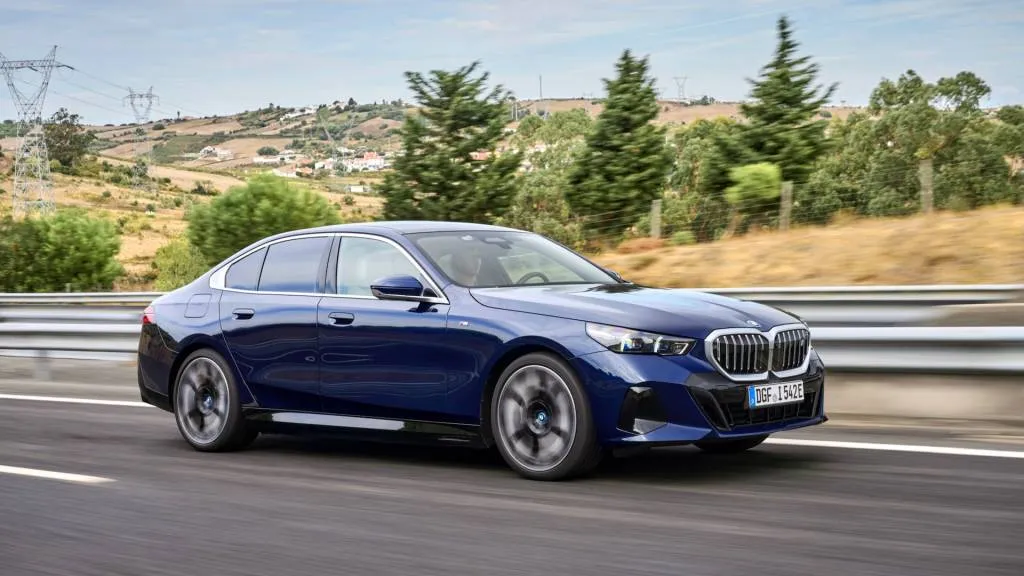
2025 BMW i5
Dealers will replace the affected double universal joints, free of charge. BMW plans to mail owner notification letters November 15. Owners can also contact BMW customer service at 1-800-525-7417 for more information.
The i5 and i7 are all-electric versions of BMW’s 5-Series and 7-Series sedans, respectively, sharing body shells and most non-powertrain components with their combustion-engine counterparts. This reflects a recent strategy by BMW to focus on electric versions of its existing models, one that the automaker is shifting away from with its upcoming Neue Klasse EVs, which will be based on a dedicated architecture.

$30,000 Tesla Cybercab due “before 2027,” Robovan concept seats 20
- Two-passenger Cybercab, also called Robotaxi, is due by 2027 and will use wireless charging
- Cybercab will cost less than $30,000, have no steering wheel or pedals
- Robovan bowed with seating for 20 and greatly reduced operating costs
Tesla CEO Elon Musk on Thursday night introduced its Robotaxi. The Cybercab, an autonomous electric vehicle is so locked into the evolution of Tesla’s so-called full self-driving system that it doesn’t have a steering wheel or any pedals.
Tesla may have gotten some pushback about omitting the turn signal stalk and shift lever in some of its latest vehicles, like the revamped 2024 Tesla Model 3. But it seems that the company’s CEO Elon Musk has his head way farther into a future where none of those controls will matter—and ubiquitous autonomous vehicles may be competing with mass transit.
“I think the cost of autonomous transport will be so low that you can think of it like individualized mass transit,” said Musk, at the invite-only event from a Warner Bros. Studio set in Burbank, California.
The average cost of a bus—to run, not the ticket price—is about a dollar per passenger mile, Musk claims, while the Cybercab will probably be around 20 cents per mile in operating cost and 30 to 40 cents per mile “including taxes and everything else.”
Tesla is targeting a price below $30,000.for the Cybercab, which builds on years of Tesla Robotaxi hype. Musk originally promised in 2019 to have a fleet of revenue-generating, self-driving robotaxis in operation as part of a Tesla Network in 2020.
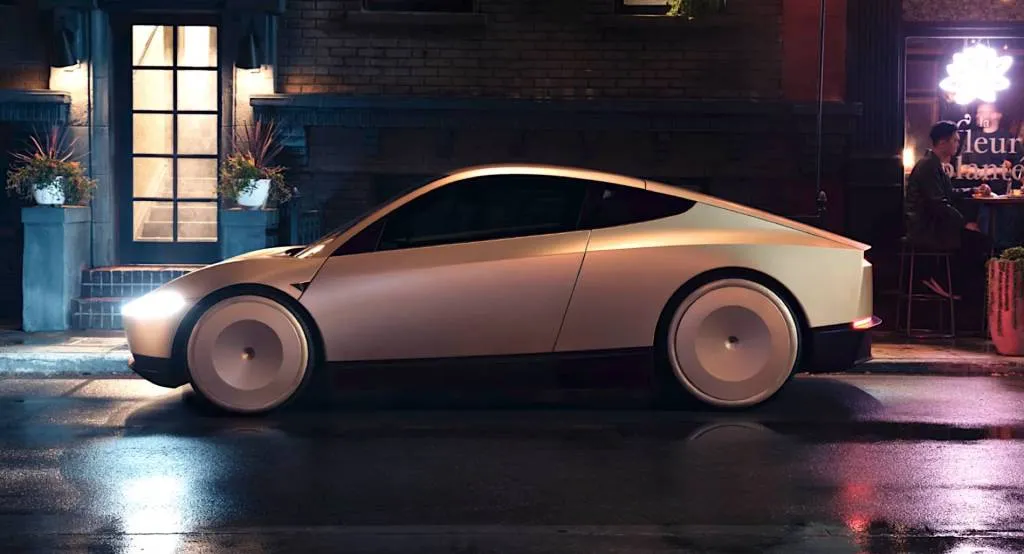
Tesla Cybercab
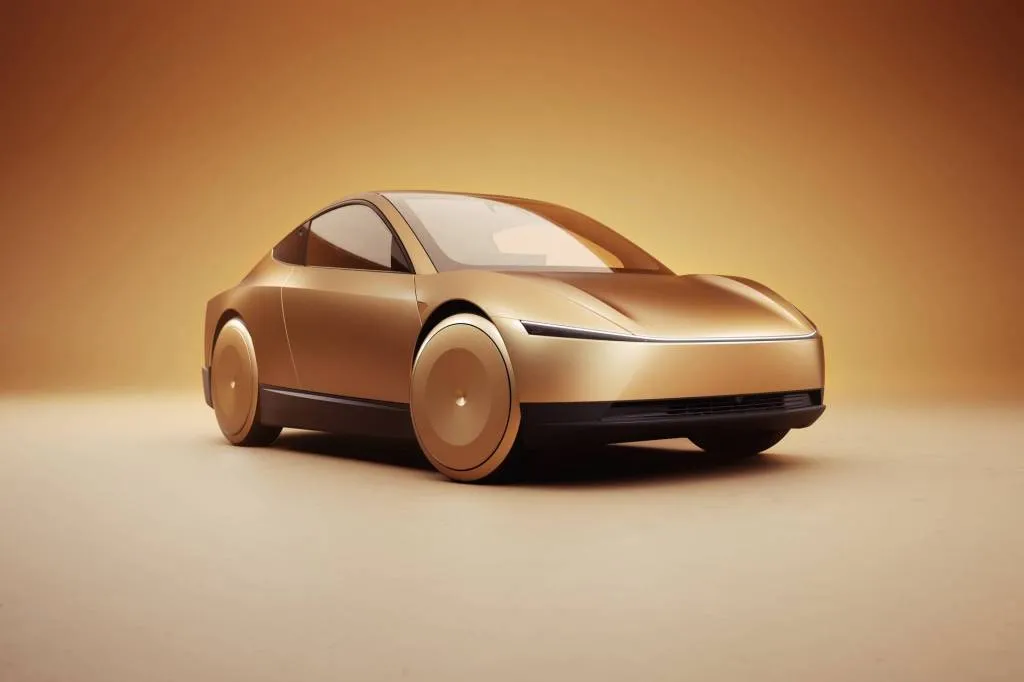
Tesla Robotaxi Cybercab
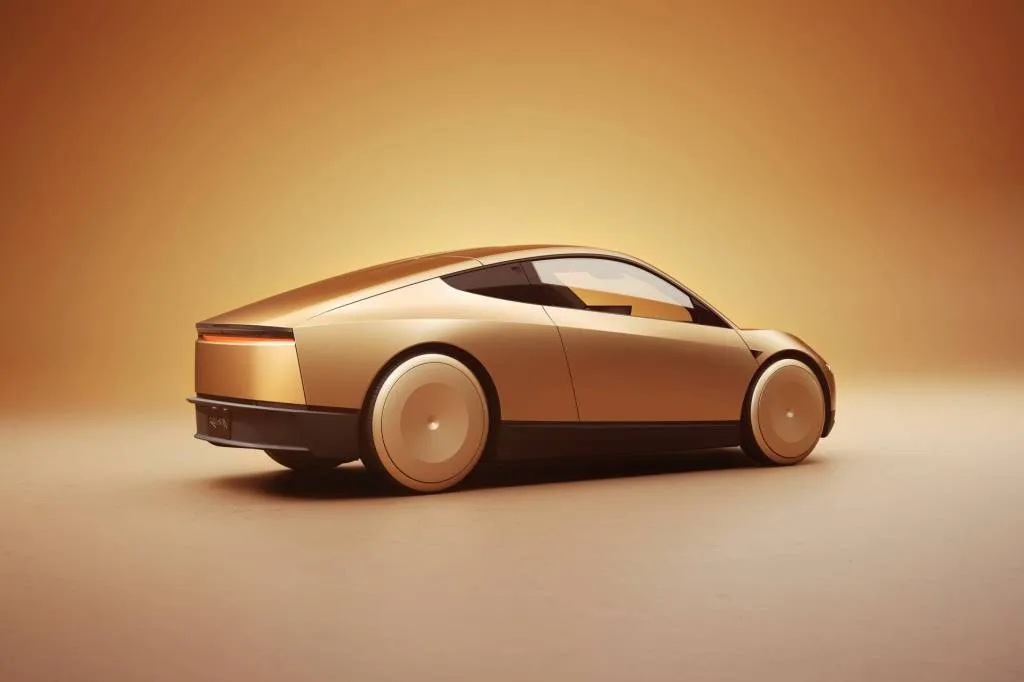
Tesla Robotaxi Cybercab
Shown plying around the studio set, the two-seat coupe that appears to be compact- to midsize by U.S. proportions. Tesla didn’t reveal any details about the mechanical basis of the vehicle, its propulsion system, or even its architecture, and until Green Car Reports can see these vehicles up close we’re calling them concept cars.
For whenever they do arrive, Musk pointed to an operator model in which individual owners manage autonomous fleets, likening it to shepherds tending to a flock. There was zero talk about how the vehicle rides or drives, with the focus instead a pragmatic bottom line.
Shift to inductive charging for future Teslas?
Musk also confirmed that the Cybercab, which he interchanged in name with Robotaxi at points in the presentation, will use inductive wireless charging—and only inductive wireless charging. “The Robotaxi has no plug; it just goes over the inductive charger and charges—so yeah, it’s kind of how it should be.”
Given the shift to only inductive charging in a future product, and Tesla’s recent pullback in Supercharger development, there may be some big changes coming to the company’s public charging vision soon.
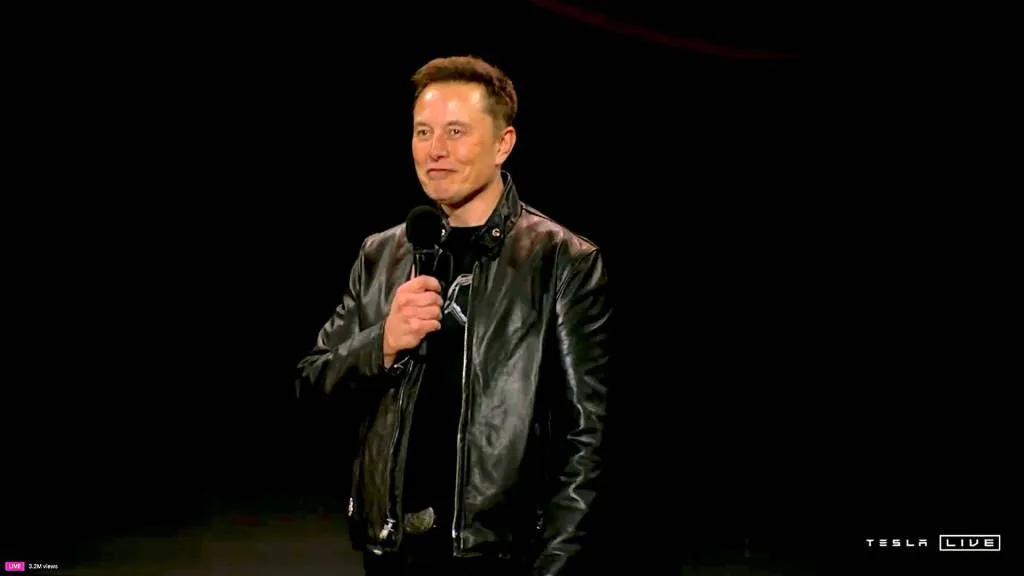
Tesla CEO Elon Musk at Cybercab event (screenshot) – Oct. 2024
Musk plots autonomous Teslas vs. public transit
Musk, as he has before, spent a time discussing what robotaxis enable on a societal level—although his argument includes a future in which such vehicles may truly face off versus public transit systems.
Musk says that the average passenger car is only used about 10 hours, out of the 168 hours of the week. “So the vast majority of the time cars are just doing nothing; but if they’re autonomous they could be used—I don’t know—five times more, maybe 10 times more,” he said.
In other words, autonomous vehicles may be clogging the highways much like human-piloted vehicles are today, but all their occupants will be free to use their cars as lounges or workspaces.
Musk also added that if vehicles are almost always in use, there won’t be a need for as many parking lots, so there’s an opportunity to turn them into parks and reclaim green space.
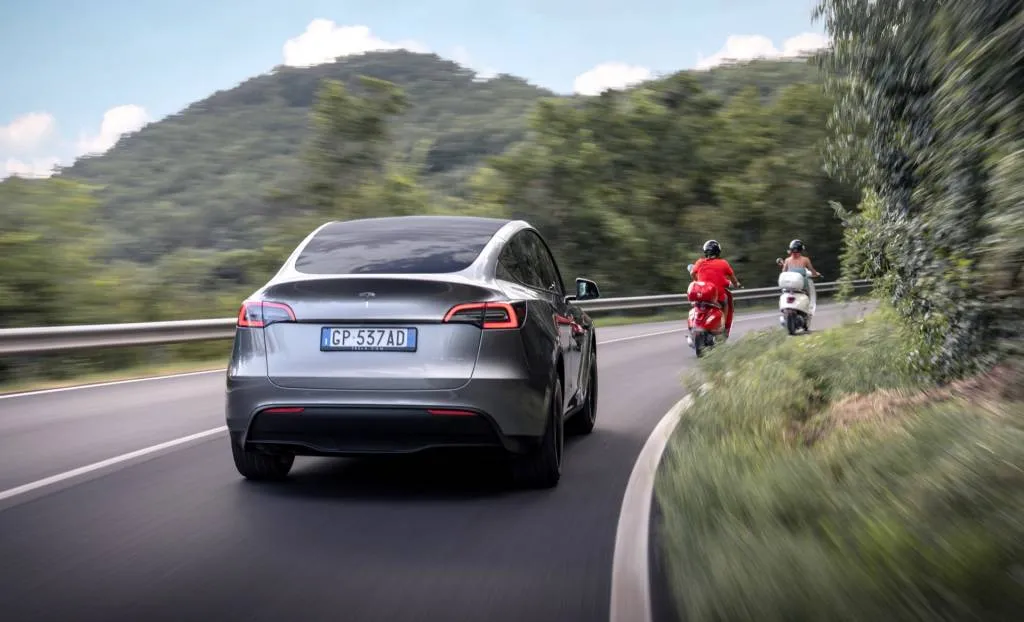
2024 Tesla Model Y. – Courtesy of Tesla, Inc.
Starts with “unsupervised FSD” of Model 3/Y in 2025
Musk also claimed that Tesla expects to start “fully autonomous, unsupervised FSD” in Texas and California next year in the Model 3 and Model Y. “And then we expect to be in production with the Cybercab, which is really highly optimized for autonomous transport.”
Musk then reeled the statement in, noting that he tends to be a little optimistic with timeframes, landing at: “Before 2027, let me put it that way—and we’ll make this vehicle [the Cybercab] in very high volume. But well before that you will experience a robotic taxi via the Model 3 and Model Y program
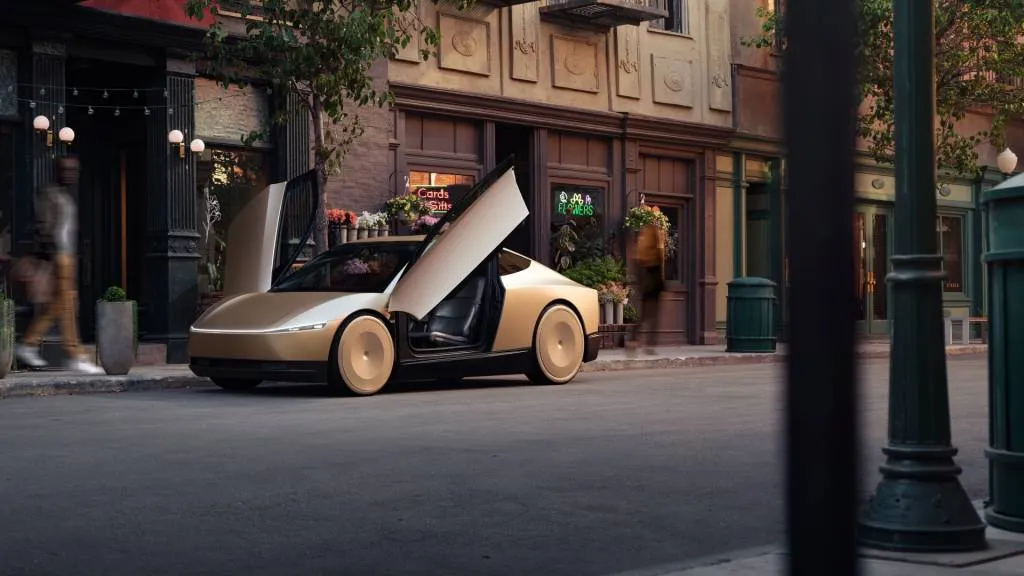
Tesla Robotaxi Cybercab
On the company’s autonomous-driving systems, Musk repeated much of what he has in the past, regarding how Tesla’s driving computer can be much safer than a human driver as it’s trained on millions of cars, seeing in all directions simultaneously, and it doesn’t get tired or text. Musk sees autonomous cars becoming 10 or more times safer than a human: “So with autonomy, you get your time back, which is a very big deal; it’ll save lives—a lot of lives—and prevent injuries.
Tesla has faced DOJ and SEC scrutiny over its self-driving claims in 2022, culminating with an official safety recall (an over-the-air update) ordered over federal claims it posed “an unreasonable risk to motor vehicle safety” for the way it was deploying its city-enabled driver-assistance system labeled Full Self-Driving Beta.
The CEO noted that Tesla plans to “overspec” the computer for the Cybercab, making them available for distributed computing. “Because I think there’s actually also an opportunity, sort of like Amazon Web Services, where if a car is driving for 50 hours a week there’s still over 100 hours left. Musk wasn’t clear about whether owners will “lease” out that compute power or whether that’s part of Tesla’s model to keep the price on the vehicle low.
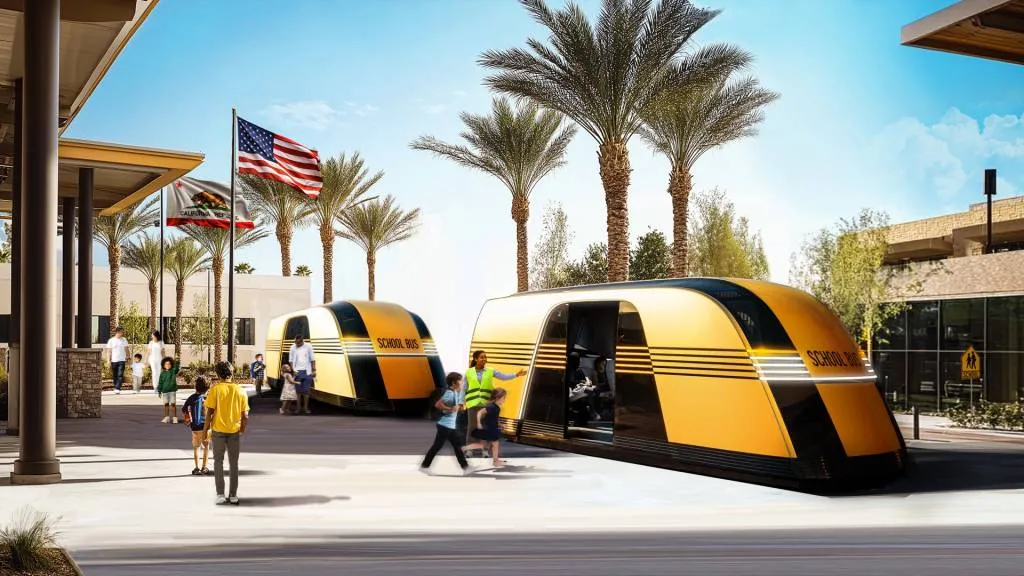
Tesla Robovan
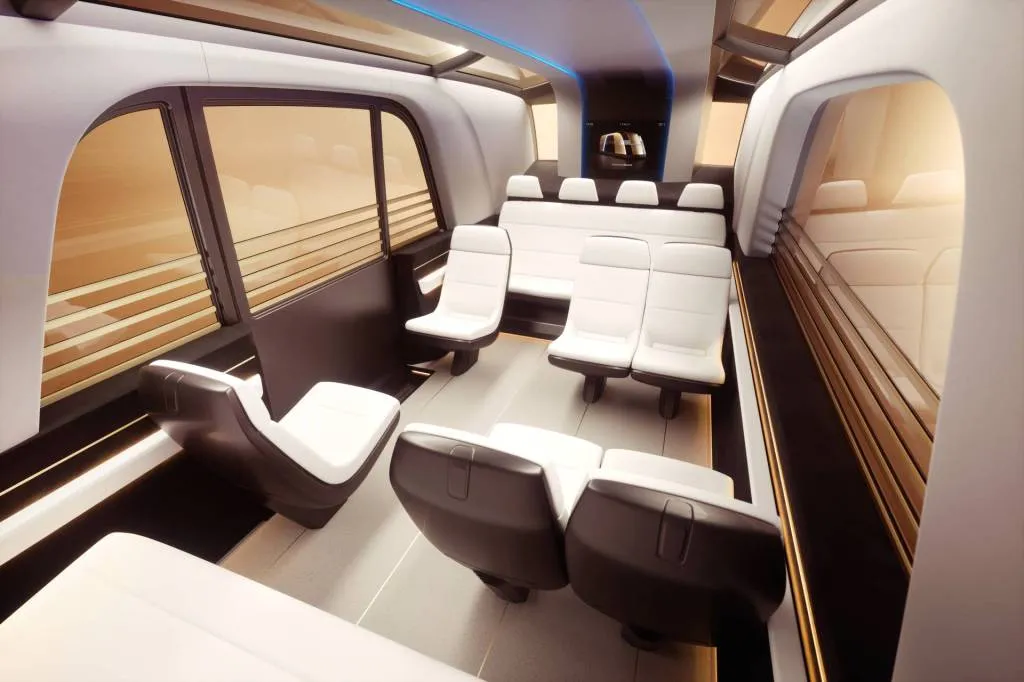
Tesla Robovan
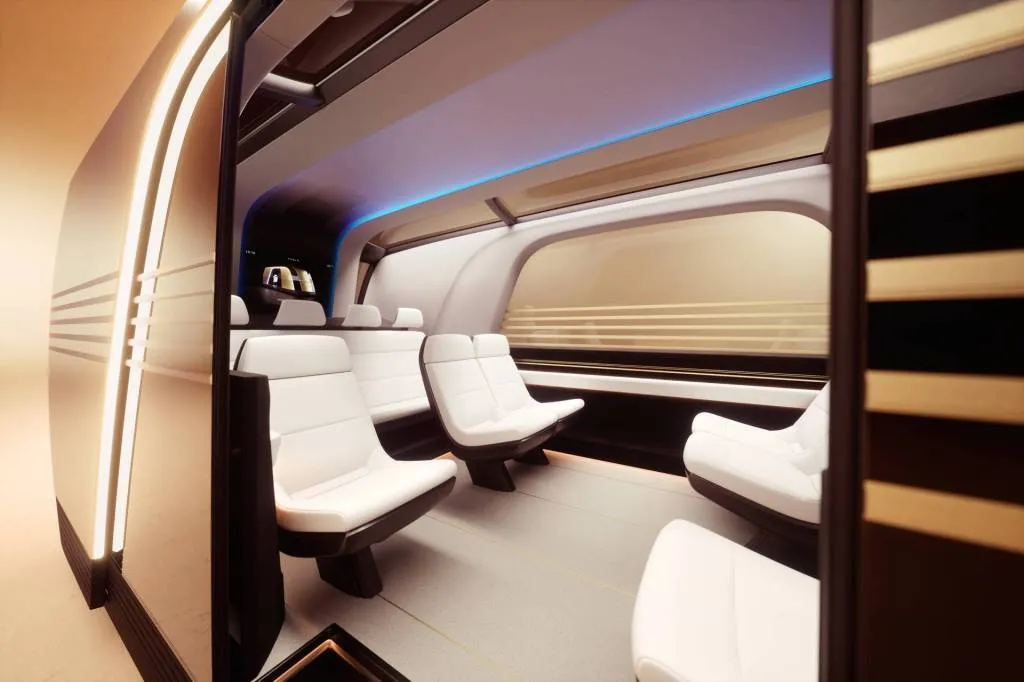
Tesla Robovan
Robovan aims to “look like the future”…with a personal C-3PO
Tesla also introduced the Robovan (emphasis on the “bo”)—a long, autonomous electric van, not entirely unlike the Cruise Origin project that GM canceled, but truly embracing a dark, 1930s-1950s pulp sci-fi train-like look and good inside for transporting cargo or up to 20 people at a time. Musk has teased the idea of a Tesla Robovan multiple times, and the design makes it refreshingly different.
“We’re going to make this, and it’s going to look like that,” said Musk, noting that it would potentially bring the cost per mile (per passenger) down to 5-10 cents a mile.
“One of the things we want to do, and you’ve seen this with the Cybertruck, is we want to change the look of the roads,” he added. “The future should look like the future.”
Seemingly anticipating reactions to the look, Musk admitted, as we all know, that he likes the dark, apocalyptic stories about the future but is instead attempting to paint a more “fun, exciting future” with these products.
In all, Tesla claimed to have 50 fully autonomous vehicles at the event, with many of them open for rides. That included some Model Ys and some Cybercabs.
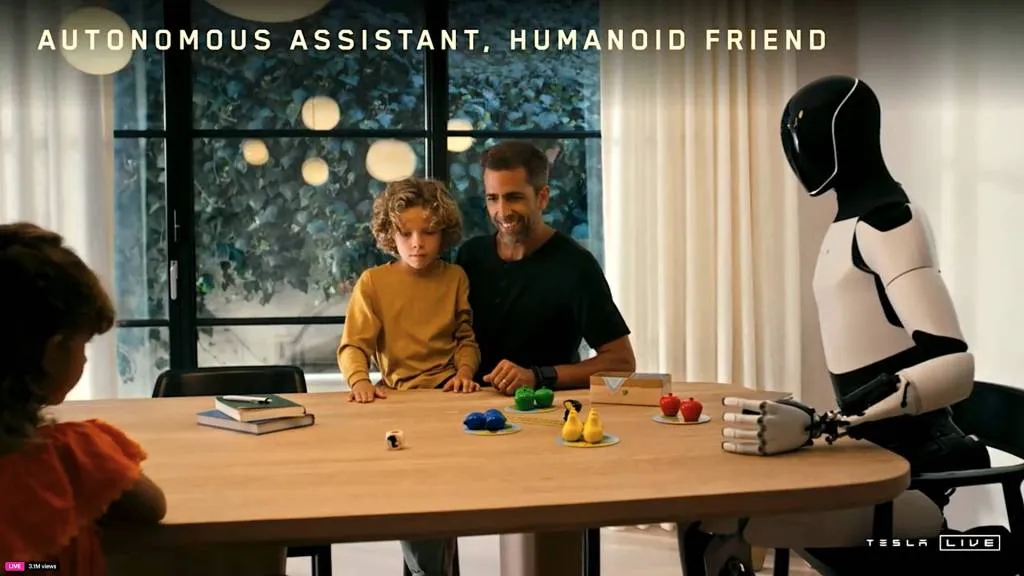
Tesla Optimus robot tasks

Tesla Optimus robot tasks
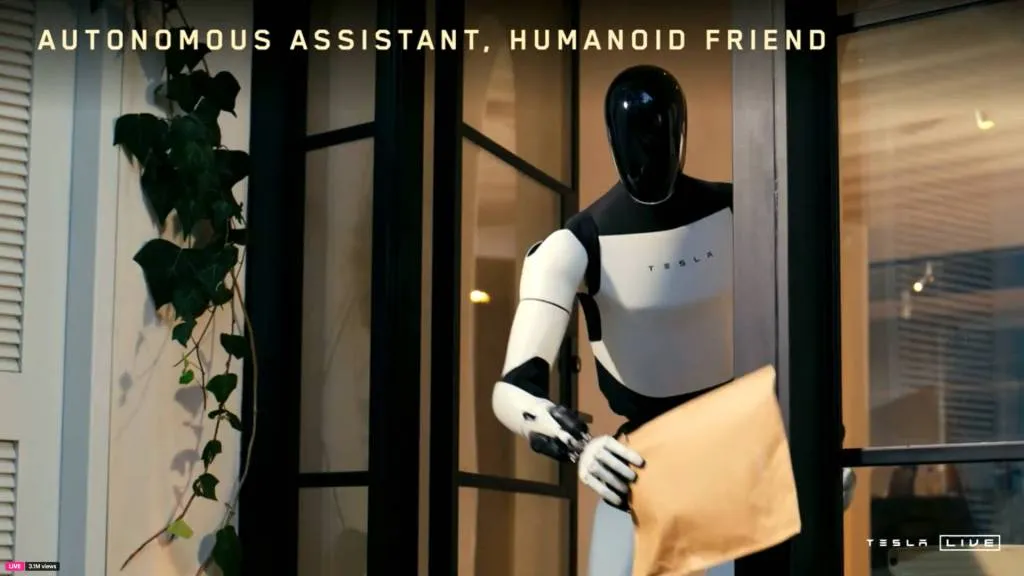
Tesla Optimus robot tasks

Tesla Optimus robot tasks
Musk also introduced a new generation of the Optimus humanoid robot, emphasizing that it has “progressed dramatically year after year.”
“So if you extrapolate this, you’re really going to have something spectacular…so you can have your own personal R2D2, C-3PO,” Musk said, noting it would cost less than a car. It would be able to teach or babysit kids, walk the dog, mow the lawn, get groceries, serve drinks or “just be your friend.”

GM PowerBank home energy storage arrives, could outflex Tesla
- GM PowerBank home energy storage is now available as part of V2H bundles
- Two capacities offered—10.6 kwh and 17.7 kwh
- Automaker’s V2H bundles are now offered in all 50 states
General Motors is now rolling out its PowerBank energy-storage battery packs, providing the first real competition to the Tesla Powerwall home energy-storage system directly from an automaker.
While other vehicle brands have discussed energy-storage products, and the Ford F-150 Lightning can be had with a home backup power system, GM appears to be the first to bring automaker-branded battery packs to market in the U.S. since Tesla.
Part of GM’s big energy play that sees EVs becoming home power banks and more, PowerBanks are available in 10.6-kwh and 17.7-kwh capacities as part of vehicle-to-home bundles that also include chargers and inverters needed to connect these batteries to EVs and home electrical systems. GM previously said V2H bundles would only be available for purchase in California, Florida, Michigan, New York, and Texas, but now the company boasts 50-state availability.
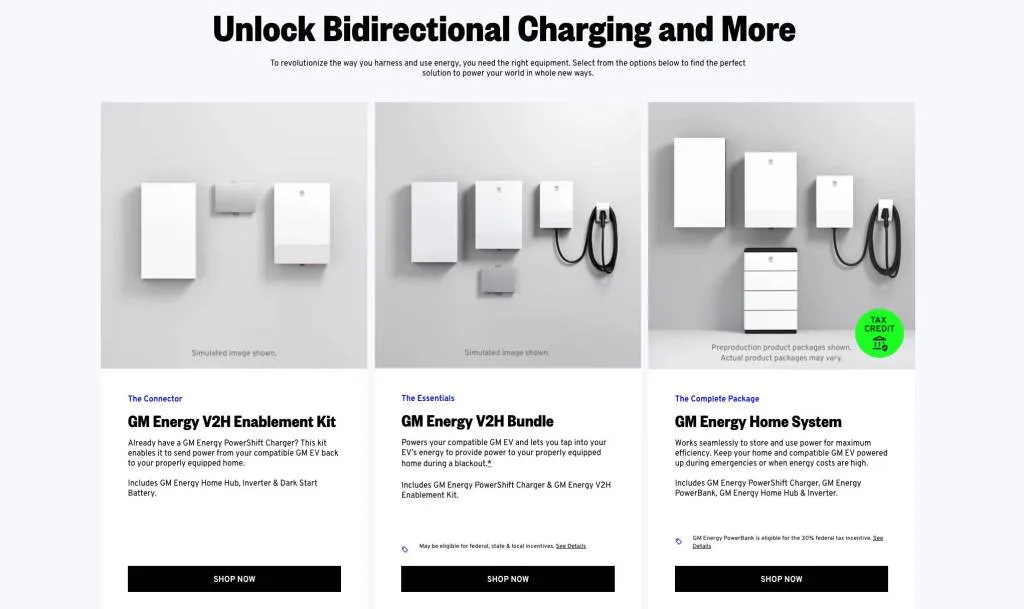
General Motors energy storage hardware
Customers can also combine two 17.7-kwh packs, with the resulting 35.4 kwh enough to power the average American home for up to 20 hours, GM claims. And the available charger connects energy-storage systems to GM EVs, allowing owners to potentially tap into the entire battery capacity, which for the biggest electric trucks is up to 205 kwh.
GM confirmed last summer that it plans to expand bidirectional charging throughout its entire EV lineup—for what was called Ultium—by the 2026 model year. So owners of all new GM EVs will be able to use their vehicles as home backup power sources by that time.
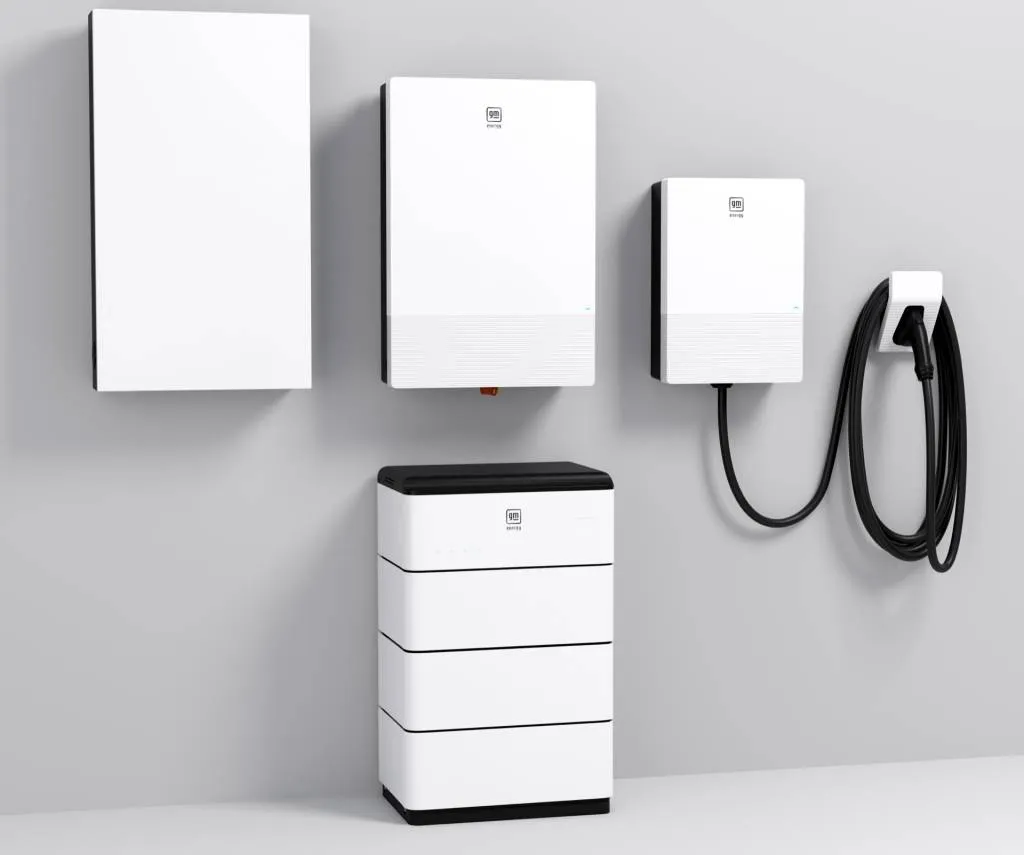
GM Energy home system with PowerBank energy storage
Complete home-energy systems with PowerBank units start at $12,700. GM previously confirmed pricing of $1,699 for the Powershift Charger that’s initially mandatory to access EVs’ bidirectional charging functionality and $5,600 for the V2H Enablement Kit. The kit includes all necessary hardware for energy-storage installation, minus the battery pack itself.
Tesla currently offers one 13.5-kwh capacity for its Powerwall systems, with varied outputs of up to 11.5 kw and the ability to bundle with home solar installations. But the key difference may be interfaces, as it remains to be seen whether GM’s app can provide anything close to the easy flexibility of the Tesla app for EVs and all things energy.
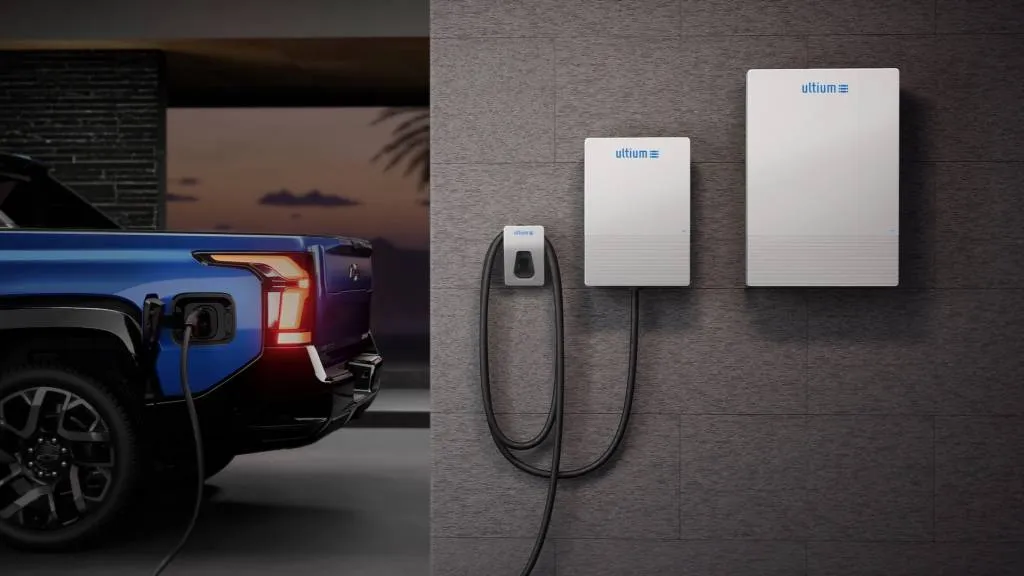
2024 Chevrolet Silverado EV with GM Ultium Home energy system
GM first detailed this equipment in mid-2023. But at that time a different partner, SunPower, was due to provide installation and support. It had tested the tech leading to this equipment set with pilot programs in California starting in 2022. GM announced a switch to Qmerit as the provider this spring, and in August SunPower—one of the most popular choices for solar a decade ago—filed for bankruptcy.


VW reportedly plans 8 cheaper electric models by 2027
Volkswagen plans to launch eight affordable electric vehicles by 2027, CEO Thomas Schåfer said in a recent interview with German publication Auto Motor und Sport (via Reuters).
“We have to produce our vehicles profitably and put them on the road at affordable prices,” Schåfer said in the interview.
One of those affordable models will be the ID.2, which the same report said was being expedited. Development is reportedly being compressed to 36 months compared to the previously-discussed 50-month timeline. That’s likely necessary to get the electric hatchback ready for its planned 2025 unveiling.
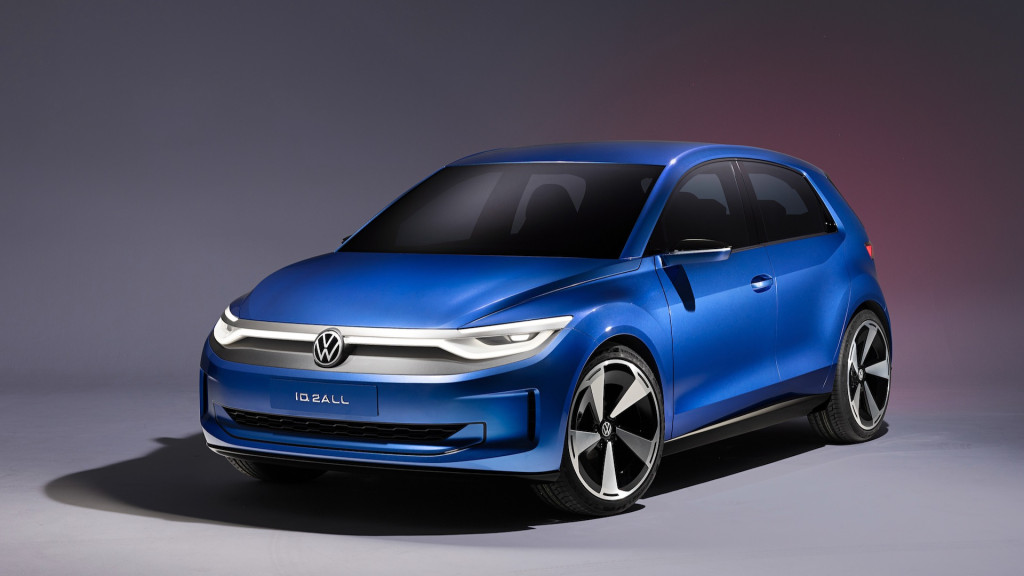
Volkswagen ID.2all concept
VW previewed the ID.2 in 2023 with the Golf-like ID.2all concept, saying that the production version would be engineered for low production costs and a low sticker price—around $26,500. To help achieve that, the ID.2 will use a modified version of the MEB platform from current VW-brand EVs like the ID.4, called MEB Entry.
The automaker has also discussed an even cheaper EV starting at around $22,000. This could be based on the ID.Life concept VW unveiled in 2021, which the automaker said would be based on a pared-down version of the MEB platform called MEB Small.
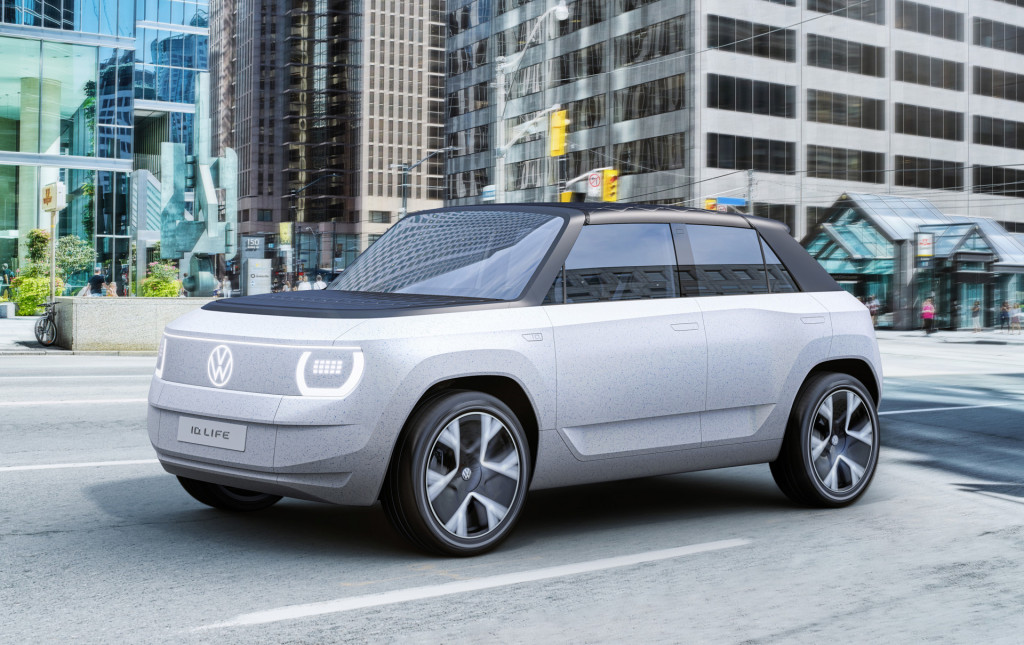
Volkswagen ID.Life concept
It’s unclear if the ID.2 and its cheaper sibling will reach the U.S., but VW has said it’s planning an under-$35,000 EV for this market. Based on the timing discussed by VW when this model was first mentioned last November—in three to four years—it’s likely to arrive in 2027 and thus could be one of the eight models referenced by Schåfer.
Looking beyond the namesake VW brand, the Volkswagen Group aims to have 25 all-electric models for the U.S. market by 2030—all of which could qualify for the full $7,500 federal EV tax credit if produced in the U.S.

Honda created a manual transmission for EVs
Most electric vehicles don’t have multi-speed transmissions—and don’t need them. Multiple gears may even hurt efficiency, in fact. But that hasn’t stopped Honda from experimenting with a manual transmission for electric cars.
The automaker is currently testing a manual gearbox—complete with a clutch pedal—for EVs, an engineer told The Drive during a recent media event highlighting tech features for the upcoming Honda 0 Series EVs. Honda wasn’t willing to discuss production plans, though.
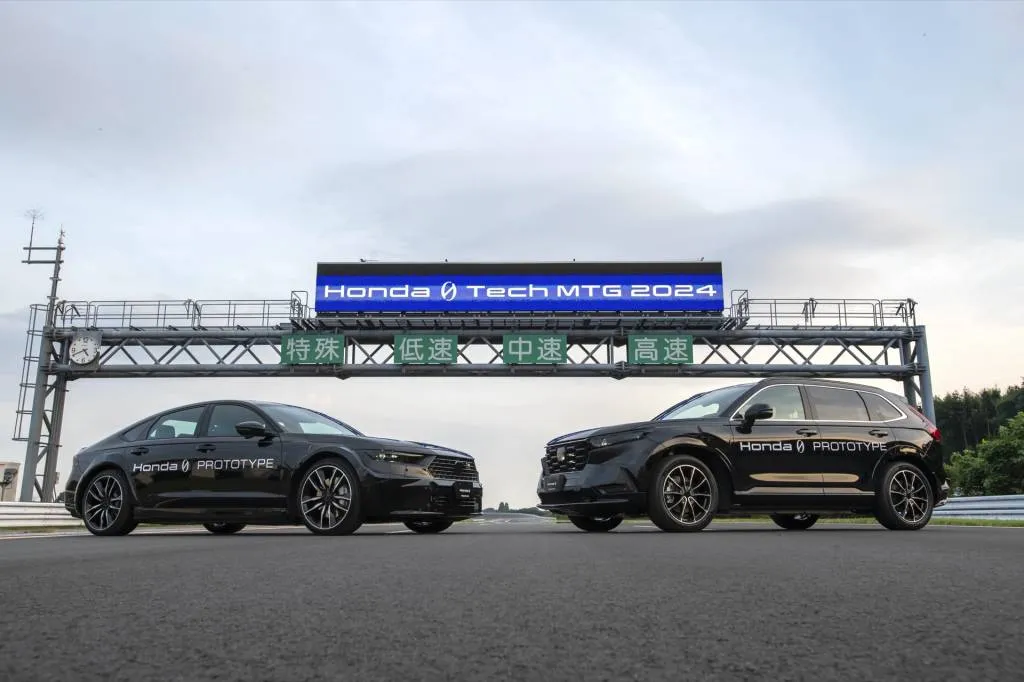
Honda Series 0 prototype (Accord)
If it does make it to production, the manual transmission could be accompanied by artificial gas-engine sounds. At the same media event, Honda showed off the ability to replicate the sounds of iconic models like the S2000, CRX, and NSX-R, as well as the more recent NSX Type S and the current Civic Type R, in its EVs.
Manual transmissions may not be necessary for EV efficiency and performance, but some automotive engineers and executives believe they might be worth including in performance EVs to preserve driver involvement and cater to enthusiasts used to combustion cars.
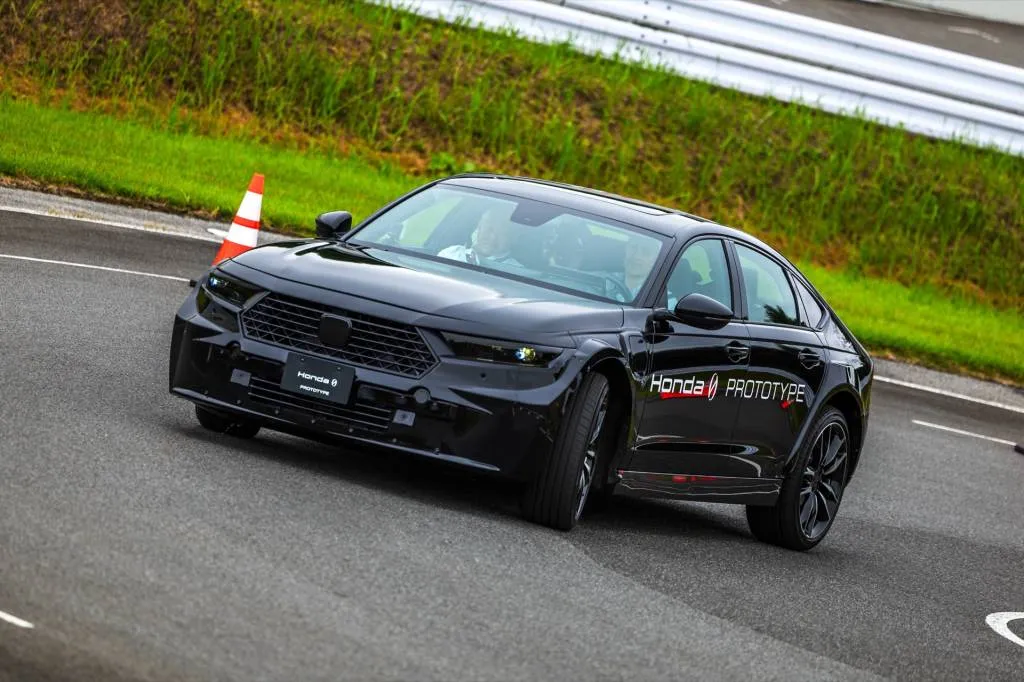
Honda Series 0 prototype (Accord)
While he was still CEO of Toyota, Akio Toyoda championed a manual transmission with clutch pedal in EVs. In a 2023 interview, Toyoda said the goal was to replicate the full experience of a combustion-engine car—complete with stalling—minus the smell of gasoline. It was a predictable move for Toyoda. The grandson of Toyota’s founder, he’s an avid racer who during his tenure also pushed for more performance models like the revived Supra sports car.
Hyundai has already tried to achieve a similar affect without going to the extent of including physical gears and a clutch pedal. The 2025 Hyundai Ioniq 5 N features artificial shift points, accompanied by a synthetic soundtrack—all managed by software.

Nissan Leaf recalled for possible battery fire while fast charging
Nissan is recalling certain Leaf electric vehicles due to a risk of batteries overheating and catching fire while fast charging, the NHTSA disclosed this week. Owners are advised not to fast charge their vehicles until recall work is completed.
The recall includes 23,887 Leaf hatchbacks from model years 2019 and 2020, but just 1% are estimated to have the defect, according to the NHTSA. That issue is thought to be related to excessive lithium deposits in the battery cells of affected vehicles, which can increase electrical resistance—and thus heat.
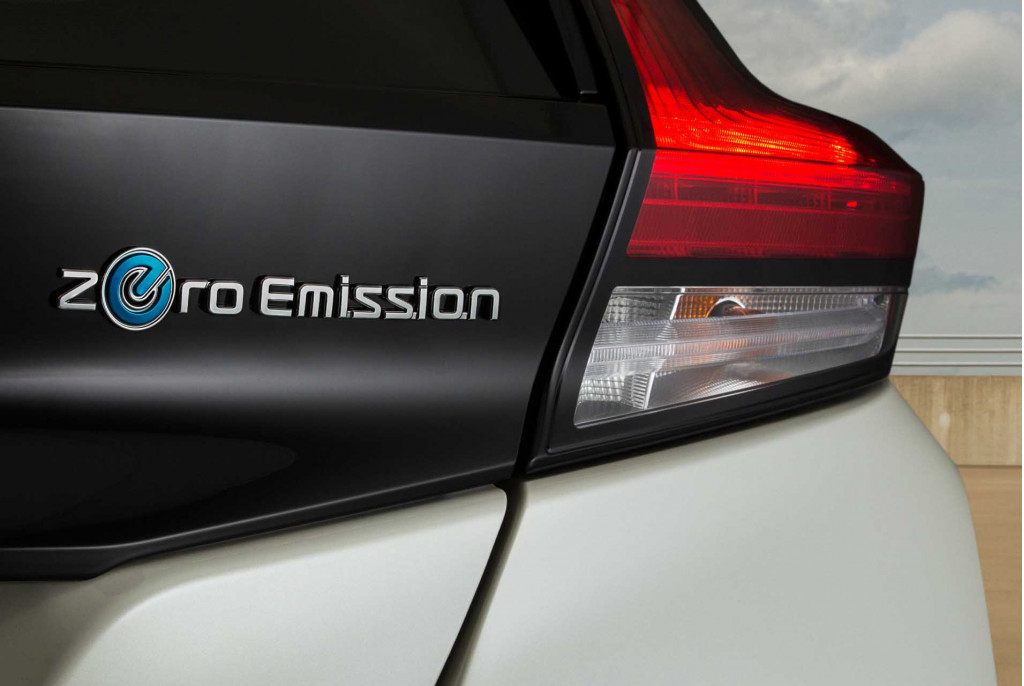
2020 Nissan Leaf
The recall population includes a mix of models with the standard 40-kwh battery pack and the longer-range 60-kwh pack. In cars with the defect, operators may notice smoke, noise, interrupted charging, or smells associated with overheating components, Nissan said in documents submitted to the NHTSA. But the automaker did not say whether it was aware of any actual fires due to this issue.
Nissan is in the process of devising a software update as a fix for this problem. Said update will be installed by dealers free of charge when it’s available, which Nissan anticipates to be sometime during November.
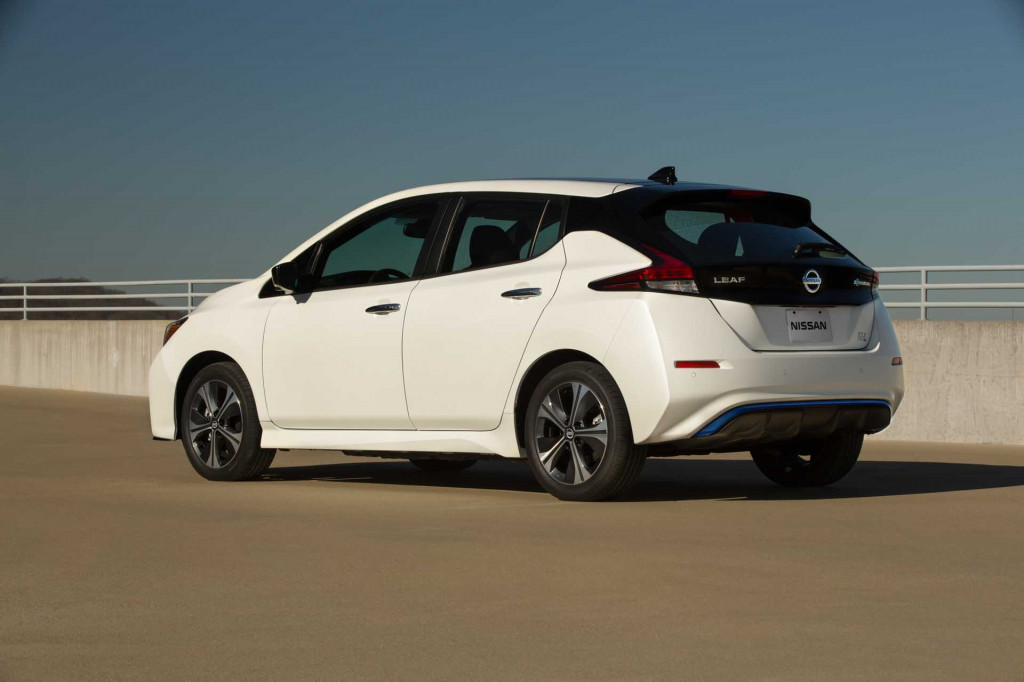
2020 Nissan Leaf
The automaker plans to begin mailing owner notification letters explaining everything later this month. Owners can also contact Nissan customer service at 1-800-867-7669 or visit Nissan’s recall hub for more information. Nissan’s reference number for this recall is R24B2.
Nissan hasn’t changed the Leaf much in recent years, which has led to the hatchback becoming the last EV with CHAdeMO fast charging. The Leaf has also become one of the cheapest EVs available, even undercutting the gasoline Nissan Versa economy car at times. Already phased out in the U.K. and Europe, the Leaf may soon be replaced in this market by a slightly more crossover-influenced sequel.

GM adopting LFP batteries, could cut $6,000 from EVs
General Motors on Tuesday filled in some details on plans to use cost-cutting lithium iron phosphate (LFP) battery cells in future EVs.
Now it has a number for the level of cost-cutting that’s potentially gone into the next Bolt EV. As reported by InsideEVs, GM executives said at an investor conference that LFP cells would combine with other changes to packaging and manufacturing to cut $6,000 from the cost of making EVs, compared to current models.
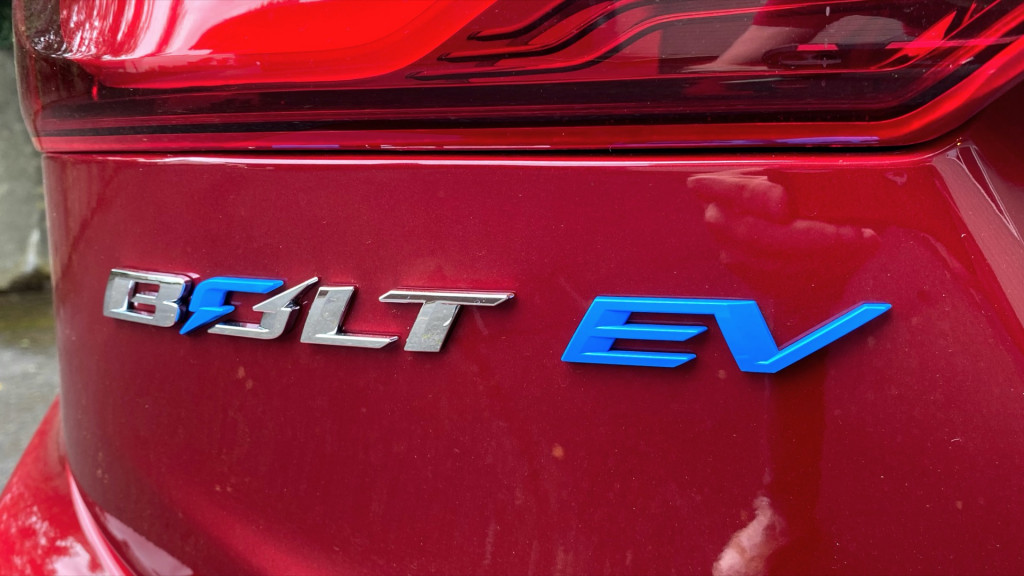
2020 Chevrolet Bolt EV review update – Portland OR
GM previously indicated that it would build a “low-cost” version of the next-generation Bolt EV with LFP cells, which will likely be a key factor in making it the most affordable EV in the U.S., as GM has claimed. The new Bolt EV is expected to arrive in 2025 as a 2026 model, although it’s unclear if the LFP-powered version will be available at launch.
It should be noted that battery-related savings on the Bolt EV specifically, with its more modestly sized battery pack, likely add up to less than the potential $6,000 figure for switching chemistries.
InsideEVs also reports that GM is in talks with Japanese firm TDK Corp. to manufacture LFP cells in the U.S. using tech licensed from CATL. It was reported earlier this year that GM was seeking a U.S. battery-supply deal with CATL directly, despite “foreign entity of concern” language introduced into federal EV tax credit rules presenting a legal gray area for manufacturing of batteries derived from Chinese intellectual property.
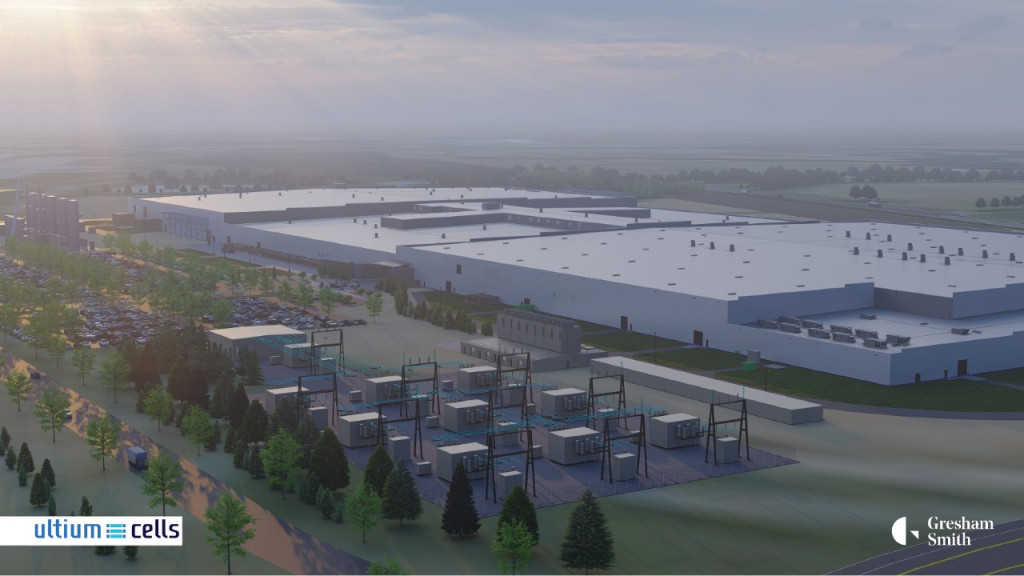
Conceptual drawing of Ultium Cells plant in Tennessee
Roughly one-fifth of the world’s EV batteries are LFP. They’re not as dependent on nickel and cobalt, making them cheaper and less environmentally and geopolitically controversial. They’re also less prone to overheating, thermal runaway, and heat-related degradation than the nickel manganese cobalt (NMC) cells used in current GM EVs. Uptake in the U.S. has been slow, but that’s changing, with Ford already seeking to manufacture LFP cells under license from CATL.
To date, GM has focused on a specific NMC pouch cell format co-developed with LG, but in 2023 CEO Mary Barra said the automaker was flexible on battery cells and had been looking at other formats all along. Now the automaker appears ready to put its money where its mouth is, which is likely also a factor in the decision to drop the Ultium branding mostly associated with its initial pouch cells as it looks to diversify.

Uber adds EV-only preference for riders, AI chat for drivers
Uber is looking to increase utilization of EVs for its ride-sharing service, in part by updating its app to help get riders matched with EV drivers more easily.
That starts with making the Uber Green option all-electric—in some cities, at least. Uber Green currently includes both EVs and hybrids, but Uber announced Tuesday that it had enough EV drivers to go fully electric in over 40 cities globally. Prices will remain similar to the UberX fare, the company claims.
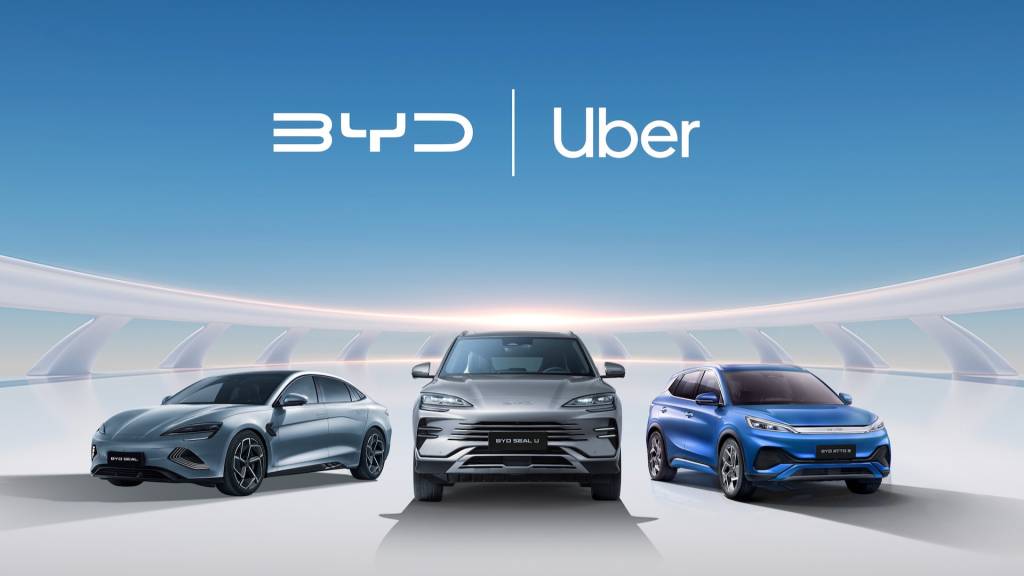
Uber and BYD
Uber is also adding a “set and forget” EV preference to its app. This automatically matches customers with an EV anytime an electric vehicle is nearby, rather than going to the Uber Green option separately. That means customers don’t have to search for an EV, although it won’t be helpful if no EVs are around when they need rides.
Instead of the typical Hyundai Ioniq 5 or equivalent, customers in certain cities will also get limited opportunities to ride in high-end EVs. Uber will launch “pop ups” with the Lotus Eletre in London and Rivian R1 models in Los Angeles, Dallas, and Miami.
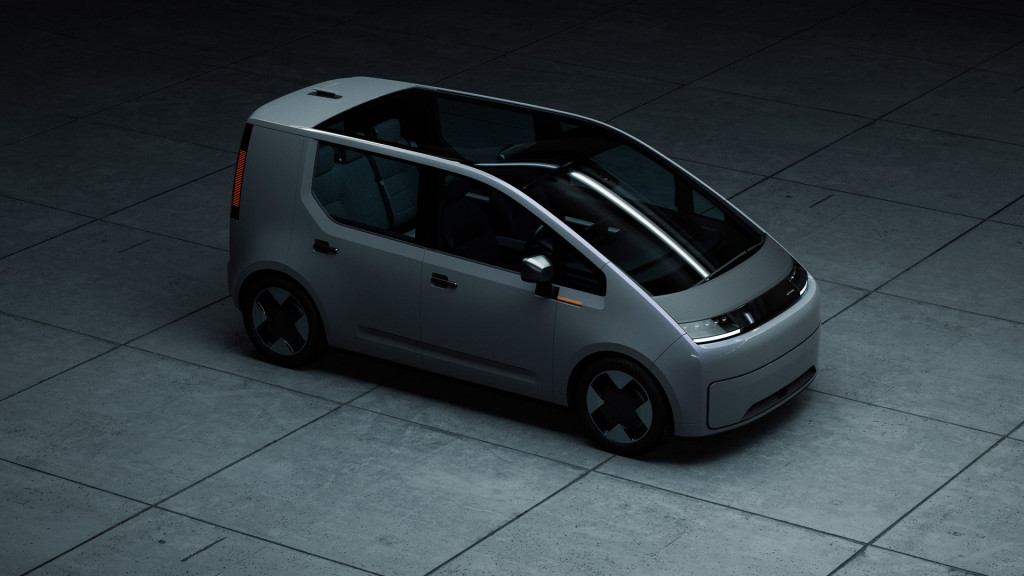
Arrival Car prototype
For drivers, Uber will add an AI chatbot based on OpenAI’s GPT-4o to answer EV-specific questions, as well as an “EV mentorship program” to connect experienced EV drivers with newbies. In the U.K., 1,000 drivers will receive free home chargers from Octopus Energy and an 8% discount on public charging on that company’s network. The program is co-funded by Octopus and Chinese automaker BYD, which in August announced that it would provide 100,000 EVs to Uber and partner with the company on autonomous vehicles.
Uber has targeted all-electric rides by 2030, but will likely continue to rely on drivers choosing EVs over internal-combustion vehicles. Uber has reportedly been working on its own EVs for ride hailing for years—and showed one designed by startup Arrival in 2021—but none of them have come close to production yet. In urban areas Uber has at least been working to provide better charging facilities—like Revel’s 24/7 Manhattan station.

Tesla Cybertruck reports for police duty in California
- The Tesla Cybertruck’s been turned into a police car
- The Irvine Police Department took delivery of its police-spec Cybertruck
- The conversion to police spec was handled by UP.FIT
The world hasn’t gotten quite bad enough for the emergence of RoboCop, but the first police-spec Cybertruck has reported for duty in California.
In July the Irvine Police Department announced on Twitter (now known as X) it would soon take delivery of a Cybertruck. Months later, that Cybertruck is now a police utility vehicle based on a video on Facebook released on Tuesday by the Irvine Police Department.
The Irvine Police Department noted the Cybertruck would be part of its Drug Abuse Resistance Education (DARE) program and community outreach efforts. The truck will not be put into patrol or pursuit duty, but it can be used to respond to emergencies and assist the community when needed, according to the department.
UP.FIT, a division of Tesla tuner Unplugged Performance, transformed the Tesla and promoted the police-spec Cybertruck on Facebook.
UP.FIT unveiled a Cybertruck police cruiser in June, saying police departments and other agencies had already expressed interest, and that deliveries would start later this year.
Customers can spec typical police equipment, including radios and any other additional communications equipment, as well as prisoner partitions, storage for weapons and other equipment, and K9 enclosures, UP.FIT said when it unveiled the truck. The company also offers heavy-duty suspension and brake packages, as well as an off-road package.
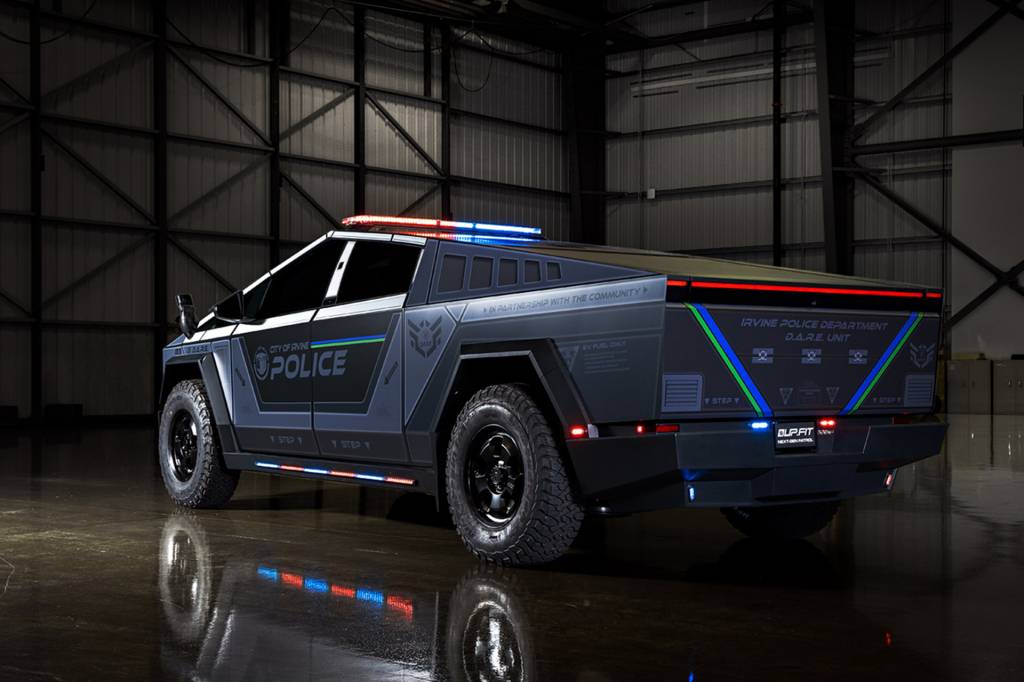
Irvine Police Department Cybertruck police car via Unplugged Performance
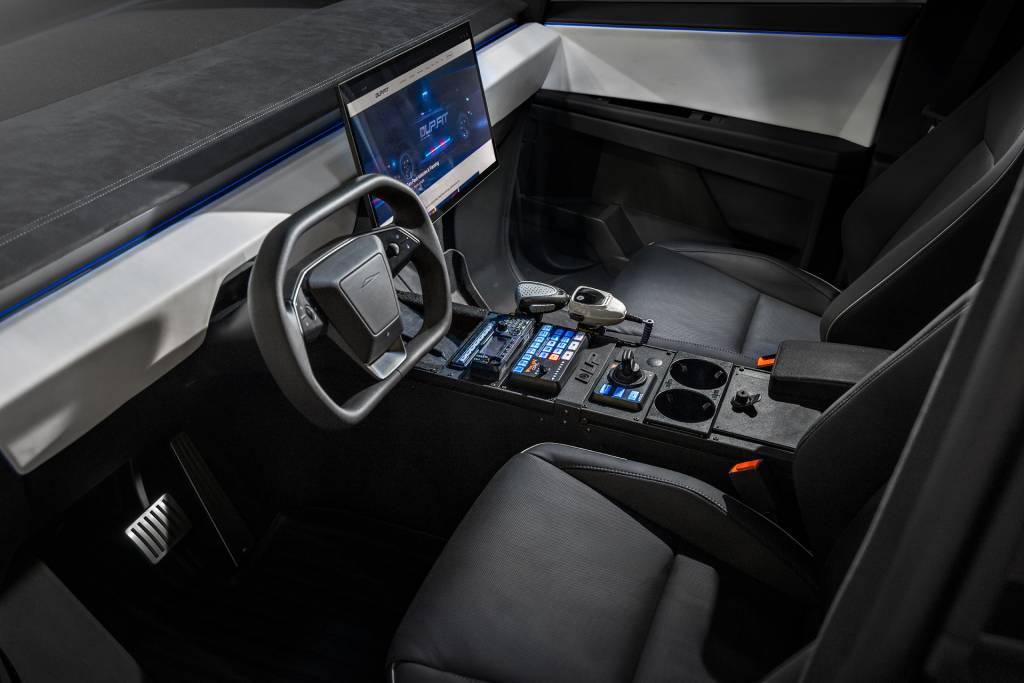
Irvine Police Department Cybertruck police car via Unplugged Performance
While UP.FIT’s offering is an aftermarket conversion, Ford announced an electric police truck based on the F-150 Lightning in 2022, offered through the automaker’s Special Service Vehicle (SSV) factory upfit program. In 2021 the automaker, which has traditionally controlled a large share of the police market, showed a Mustang Mach-E police testbed, and subsequently announced that the NYPD had expressed interest in Mach-E police cars.
But other than small-scale tests, police departments have largely avoided EVs due to a lack of options for suitable vehicles, with cost being a major issue, according to a 2022 report. That changed in July when the City of South Pasadena converted its entire police fleet to electric Tesla Model 3s and Ys.
Note – This story was updated to reflect the police truck now being delivered to the Irvine Police Department