
Category: General

THK EV prototype teases in-wheel motors, electric brakes, four-wheel steering
- Japan’s THK unveiled the LSR-05 EV prototype at the 2024 Paris auto show
- Prototype features in-wheel motors and wireless charging system
- The designer was former Nissan design chief Shiro Nakamura
A Japanese company specializing in components that utilize linear motion with rolling contact presented an electric vehicle prototype showcasing some of its latest developments at this week’s 2024 Paris auto show.
The company is THK, and its LSR-05 prototype uses in-house technology in everything from the electric powertrain to the charging system to the suspension and even the seats.
The LSR-05 was first shown as a concept at the 2023 Tokyo auto show, but the version on display in Paris is a more advanced prototype featuring parts that may end up in production.
Highlights include seats that require a much smaller installation place on the vehicle floor compared to conventional seats, yet still deliver plenty of maneuverability thanks to what TKH describes as a special actuator. This saves interior space, allowing for improved packaging.
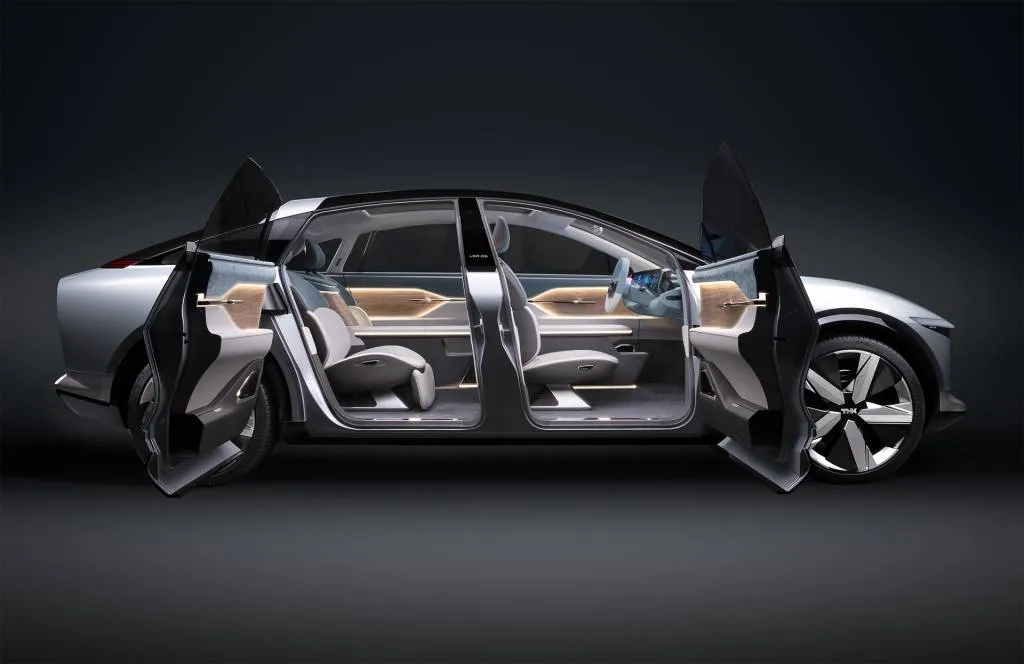
THK LSR-05 prototype
The prototype also uses in-wheel electric motors developed by THK. There is one for each of the rear wheels, rated at 125 hp each, which work together with a conventional electric motor driving the front axle, rated at 295 hp. The in-wheel motors, which also work together with a rear-wheel-steering system, feature a variable magnetic flux system that utilizes a highly rigid ball screw developed by THK. The configuration is similar to what Dongfeng has installed in its Fengshen E70, billed by the Chinese automaker as the world’s first passenger vehicle with in-wheel motors.
Other technologies include an active suspension system with magnetic dampers, a brake-by-wire system, and a contactless charging system. The charging system relies on a power transmitter embedded in the ground, and a power receiver installed in the vehicle. Lowering the height of the vehicle using the suspension system improves charging efficiency, enabling the power receiver to be made smaller and lighter, according to THK.
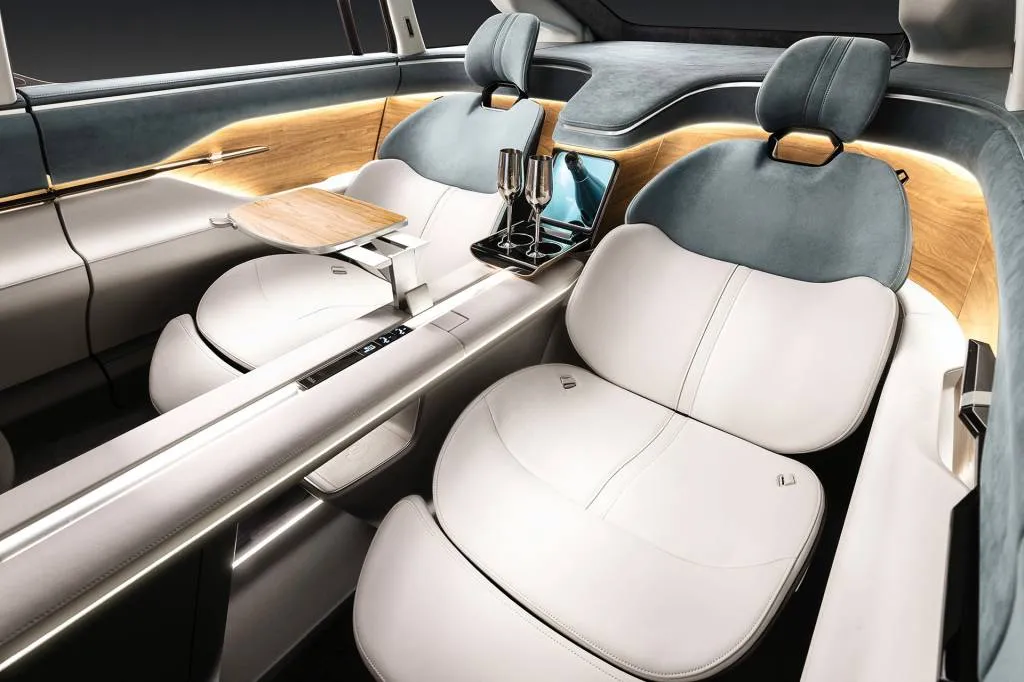
THK LSR-05 prototype
Responsible for the design of the LSR-05 was SN DESIGN PLATFORM, a Tokyo-based design company headed by former Nissan design chief Shiro Nakamura. Nissan fans will recognize Nakamura as the designer of the original Leaf EV, as well as the current GT-R sports car. He also designed or oversaw the design of multiple additional Nissan and Infiniti models while he headed the creative teams at both brands from 1999-2017.
The LSR-05 isn’t the only EV designed by Nakamura and his team at SN DESIGN PLATFORM in recent times. He only last year presented the EV Sport 01, an electric sports car concept built to showcase electric motors developed by Japanese technology company AIM. While AIM said it planned to build a business case to get the EV Sport 01 into production, a similar statement hasn’t been made by THK for its LSR-05, though THK said in a statement that it is working on a more advanced EV prototype, which will by called the LSR-07.

Mini EVs get sportier with John Cooper Works variants
Mini is applying its John Cooper Works (JCW) performance badge to electric vehicles for the first time—and on two models simultaneously.
On Monday, JCW versions of the electric Mini Cooper hatchback and the Aceman subcompact crossover made their public debut at the 2024 Paris auto show. The Cooper hatch is also sold with gasoline powertrains, while the Aceman, which roughly slots between the Cooper and Countryman, is offered exclusively as an EV. Neither electric model is currently available in the U.S.
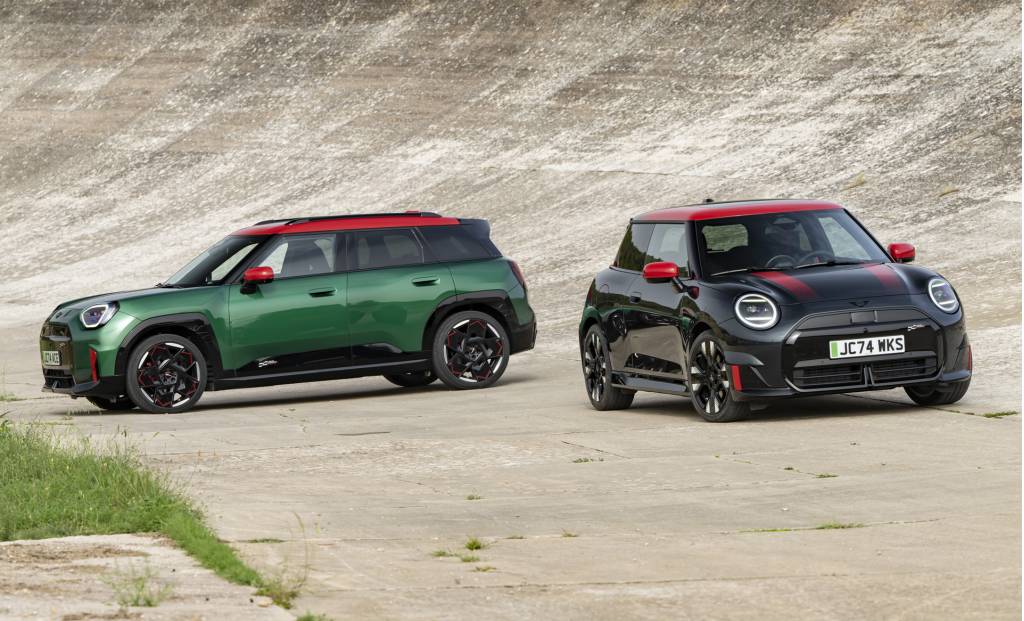
Mini John Cooper Works Cooper and Aceman EVs
Both JCW models have a 255-hp electric motor that drives the front wheels. Mini quotes a 0-62 mph time of 5.9 seconds for the JCW Cooper electric hatch and 6.4 seconds for the JCW Aceman, with models electronically limited to 124 mph. The JCW treatment also includes sport-tuned suspension, upgraded brakes, and a go-kart mode that provides a temporary power boost.
Styling changes include body kits and model-specific wheels measuring 18 inches for the JCW Cooper EV and 19 inches for the JCW Aceman. Inside, a black-and-red theme encompasses a knit surface on the dashboard, and seats with black upholstery and red accent stitching. Other JCW-specific touches include an ambient lighting package that illuminates the roof, and new graphics for the infotainment system menus.
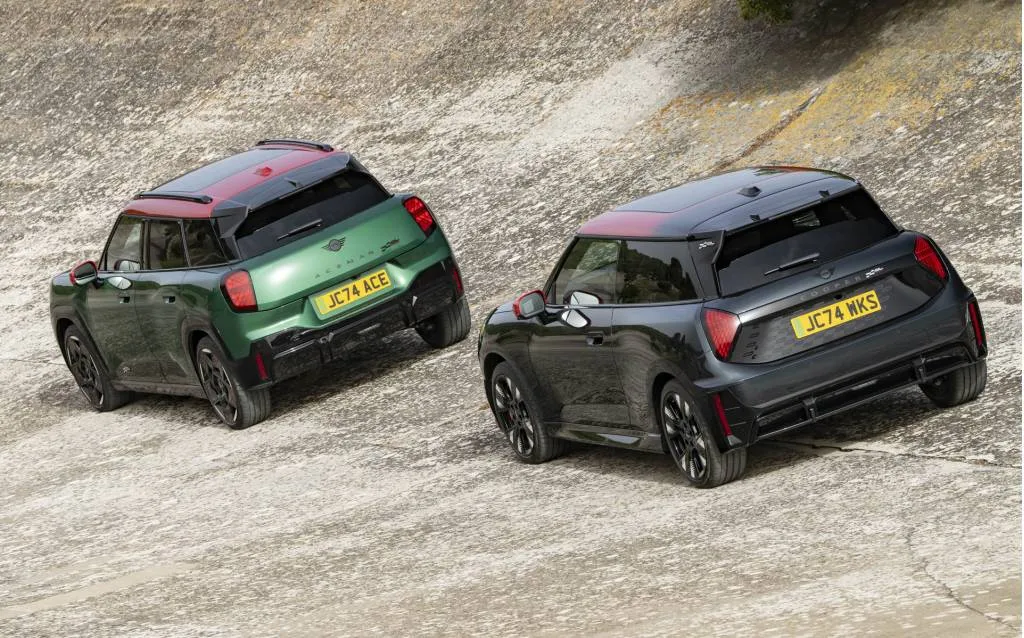
Mini John Cooper Works Cooper and Aceman EVs
The two models also share a 54.2-kwh battery pack that Mini estimates will provide 230 miles of WLTP range in the JCW Cooper and 220 miles in the JCW Aceman. Comparable U.S. EPA figures would be lower, assuming either JCW model reaches this market.
Electric Cooper and Aceman models will initially be manufactured in China, meaning they’ll be subject to substantial tariffs if imported to the U.S. Mini has said it will add U.K. production of the electric Cooper in 2026, potentially allowing that model to reach the U.S. Mini has also indicated that it plans to shift to EVs entirely by the early 2030s.

Audi expands E-Tron GT recall for same battery issue as Taycan
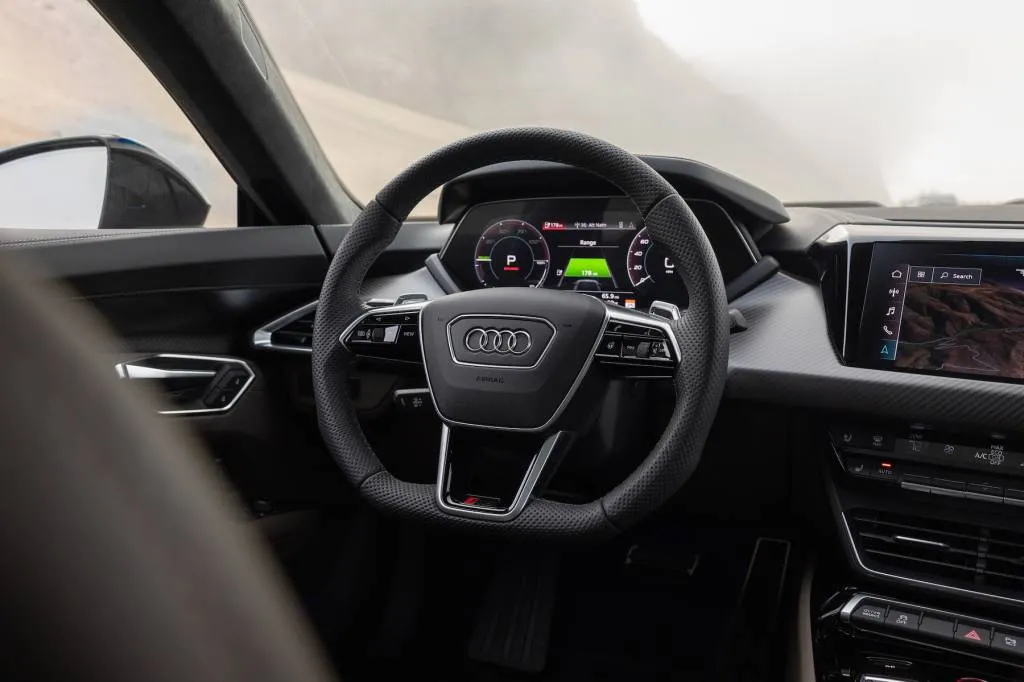
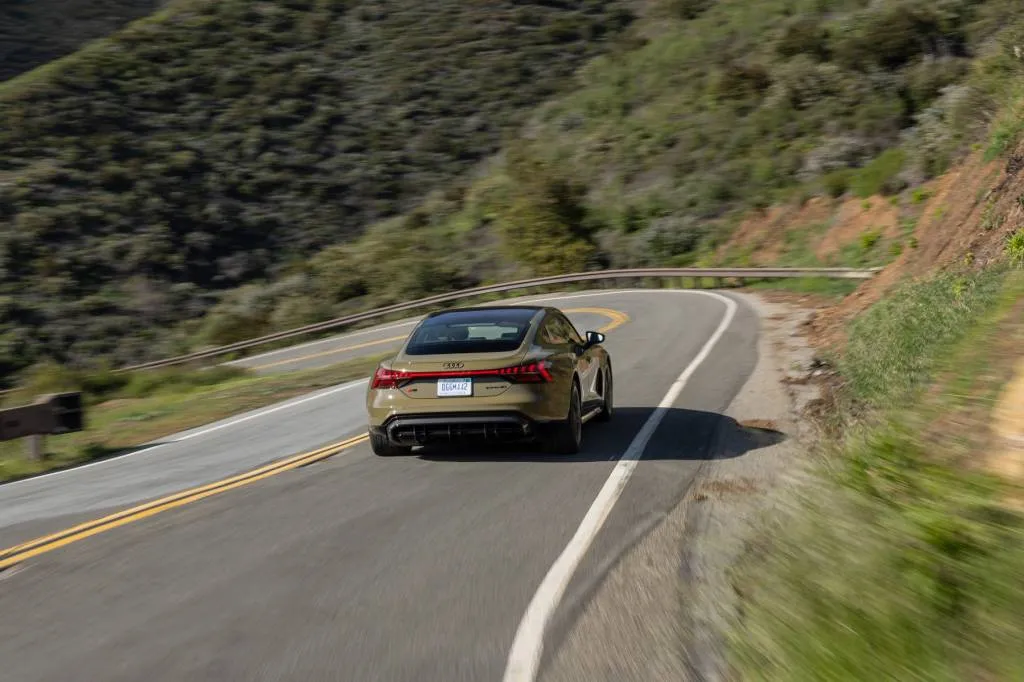
Audi has issued another recall for its E-Tron GT and RS E-Tron GT electric cars over potential battery issues that could lead to short circuits and fires, the NHTSA disclosed Monday.
The recall of 6,499 vehicles from model years 2022-2024 follows a similar recalled for the related Porsche Taycan affecting over 27,000 vehicles. The Audi and Porsche EVs share the Volkswagen Group J1 platform and fast-charging hardware, meaning recalls of one model often affect the other.
In this case, “production issues” with battery modules could lead to defects that could allow internal short circuits, which in turn could lead to overheating and fires, according to the NHTSA.
2024 Audi e-tron GT
Battery concerns prompted another recall of these same models in April, albeit with smaller populations encompassing 1,042 E-Tron GT and RS E-Tron GT electric vehicles and 606 Taycans. It’s unclear if new Audi and Porsche recalls are related to the April recalls, but issues and remedies remain the same.
Like Porsche with its most recent Taycan recall, Audi will install new diagnostic software in affected vehicles, free of charge. That software isn’t expected to be available until the first quarter of 2025, however. As an interim measure, dealers will perform inspections and, if issues are found with battery modules, instruct owners to only charge their cars to 80% until those modules can be replaced free of charge.
Some cars already have online data monitoring, in which case dealers will monitor for problematic battery modules. If a problem is found, owners will be instructed to only charge their cars to 80% until the affected module can be replaced by an Audi dealer, again, free of charge.
2024 Audi e-tron GT
Audi plans to mail owner notification letters November 29. Owners can also contact Audi customer service at 1-800-253-2834 for more information. Audi has two reference numbers for this recall: 931A for vehicles with online data monitoring already enabled and 931B for those without.
In addition to the battery short-circuit recalls, the E-Tron GT/RS E-Tron GT and Porsche Taycan were jointly recalled for a battery seal issue last year. Later in the year, Audi and Porsche also recalled the mobile charging cable for these models and other EVs and plug-in hybrids, replacing it with a new version that brought better thermal safety.

Will JuiceBox EV chargers be stranded assets as owner shirks support?
- Enel X abruptly left the U.S. market with no initial plan for JuiceBox support, functionality
- JuiceBox line is among the most prevalent U.S. home smart EV chargers
- Prompted a letter to the FTC, alarm about connected devices relying on company servers
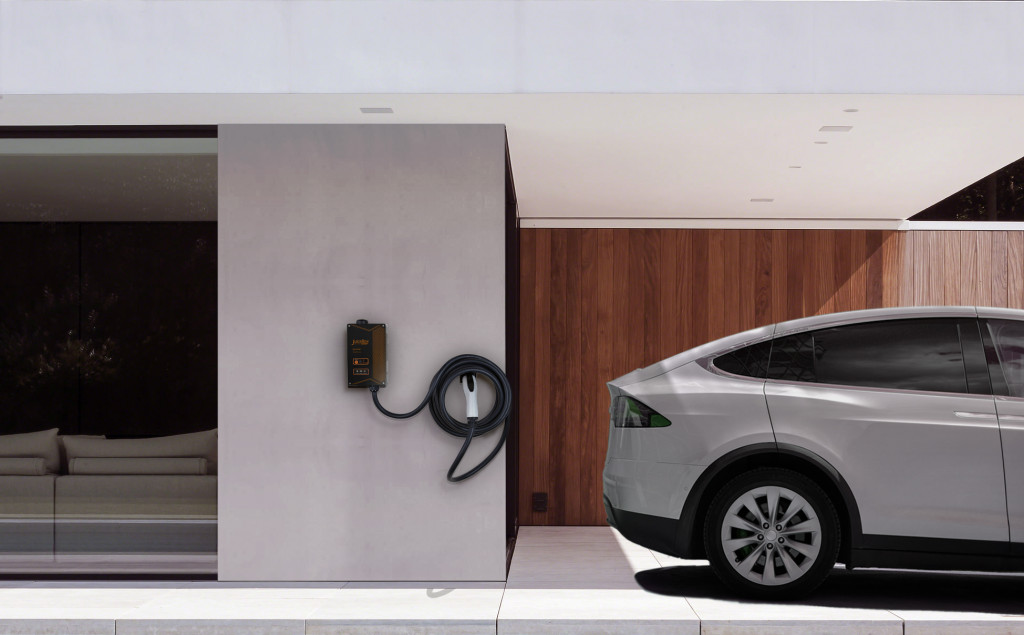
If you’ve come to rely on smart EV charging as part of your daily routine, and you have one of the most popular smart chargers in the U.S., you might soon have to come up with an old-tech backup plan.
Earlier this month, the EV charger provider Enel X sent out a message to U.S. users of its smart chargers—including the JuiceBox line—essentially stating that in nine days it was pulling the plug on its charger business in the U.S.
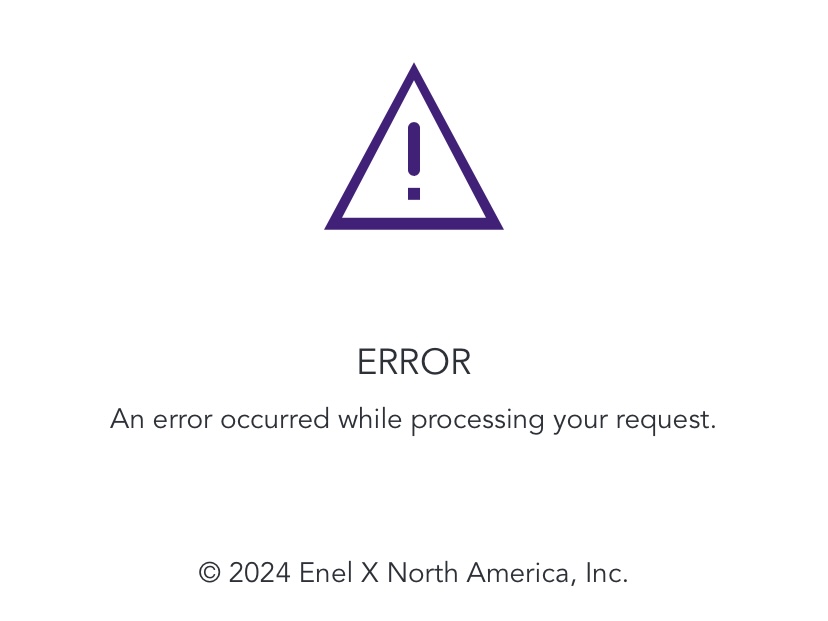
That potentially meant the end of ongoing support of its smart chargers, which require Enel’s servers to function. So its “smart” chargers, which consumers had paid a premium for, might essentially become “dumb” chargers, reverting to base settings. That might retain their functionality as chargers, but render them unusable for all the smart-and-connected reasons buyers chose them. They’d no longer be able to initiate charging via a smartphone, even at home, or monitor a charging session on the app, as those things depend on the company’s servers.
The move sent shockwaves across the EV sector, and it begged some important questions that haven’t yet been addressed beyond the small print users likely skipped over in the app agreement. How long are companies that make smart, connected devices responsible for supporting them? What happens when something as substantial and essential for daily transportation, like an EV charger—one that’s been top-rated by experts for years, and widely supported by automakers and charging programs—is suddenly “bricked” due to lack of support of the brand behind it?
eMotorWerks JuiceBox wall mount charging Tesla Model X
“Bricked” products and a lack of consumer protection
Before the JuiceBox fiasco, the issue had already started building steam with a focused effort in Washington, D.C. Last month a set of consumer groups representing right-to-repair, economic justice, and environmental interests took on this idea of devices that are dependent on the manufacturer’s own software and servers with a letter to the U.S. Federal Trade Commission (FTC).
The examples then were mostly the products of a series of failed startups, including a connected bassinet, a sous vide cooker, a juicer, and a smart plug, Amazon’s Halo wearables and Google’s Dropcam cameras were mentioned as products that were “bricked” by an unusually short support window.
But now, with Enel’s swift move to leave the market, there’s already another especially glaring example—one that may have been installed with a four-figure electrician’s bill and perhaps with public incentives.
Likewise, JuiceBox smart chargers, which retail for $600 to $1,600, aren’t the current product of a small startup but a huge multinational company. The announcements come from Enel X Way USA LLC, a unit of the Italy-based energy giant Enel, which was the 59th largest company in the world, according to the Fortune Global 500.
A notice from Liquid Asset Partners—where Enel sends users of the JuiceBox, as of Thursday—specifies that there are about 120,000 residential customers (mostly JuiceBox chargers), 25,000 commercial customers, and 17,000 additional JuiceBox chargers, all of which need a new software-as-a-service agreement, which is listed as an “opportunity.”
On Thursday Consumer Reports and U.S. PIRG, which were two of the authors behind the earlier FTC letter, plus 60 owners of JuiceBox chargers pushed the matter, formally asking the FTC “to investigate the behavior of Enel X.”
Enel app error message – Oct. 11, 2024
After FTC letter, support for “an extended period”
Then later Thursday, Enel gave owners some assurance that chargers won’t be immediately bricked (note that as of Friday, GCR saw the contrary, above). But their future remains uncertain.
“Enel X Way USA continues to engage with a third-party firm to manage the closure of the business on October 11, 2024,” stated Enel X Way in an email update that went out to registered users (this correspondent included) on Oct. 10. “After further technical evaluation, the firm has entered into an agreement with the current provider to continue to operate the EV charging software in the US and Canada for an extended period.”
The company once again left no clear idea of what that support window is, but it appears that owners will retain their connected-charger functionality for some number of weeks beyond Oct. 11.
Green Car Reports has reached out to Enel for clarification on how long full functionality is expected to last, once apparent server issues at the time of writing are worked out. In its Thursday evening alert to owners, Enel said that it would continue “to operate the EV charging software in the US and Canada for an extended period,” but it called the move an “interim solution.”
“While JuiceBox products will continue to operate with software connectivity after October 11, 2024, customer service will not be available during this interim period,” the company added as part of that Thursday statement, laying out that a third-party firm will manage claims and communication after Oct. 11.
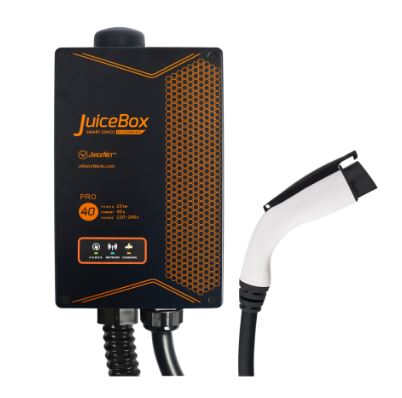
eMotorwerks JuiceBox Pro 40 networked home EVSE electric-car charging station
eMotorwerks JuiceBox Pro 40 networked home EVSE electric-car charging station
Not a no-name EV charger; among the best-rated and most common
The original JuiceBox EV chargers were among the front-runners of EV smart-charging, and earlier on it was the way to get a level of connectedness, data access, and usability that rivaled Tesla’s well-regarded wallboxes. Because of its touted interoperability and—previously—its originally well-updated smartphone app, the JuiceBox has been used by various time-of-use charging programs, and by businesses looking to track and log their energy use.
Enel bought the original creator of JuiceBox chargers, California’s eMotorWerks, in 2017. The chargers got a new, more fashionable physical look in 2020, but the interface and capabilities essentially carried over. Since then, functionality has waned as the company has switched to several different app versions and systems, leaving owners with a slower-reacting and less capable app than what they previously had.
But the timing for Enel X’s exit also looks suspect. The NHTSA revealed, in paperwork filed just a day after the company’s original announcement it was leaving the U.S. market, that it was investigating JuiceBox residential chargers over reports of “electrical arcing and thermal events,” citing six confirmed incidents including two fires.
It could get complicated on so many levels. As EV charging expert and GCR contributor Tom Moloughney, in his most recent State of Charge podcast (below), points out, Enel X may have more commercial Level 2 chargers out in use in the North American market than anyone except ChargePoint.
As Chargelab CEO Michael Bakumin points out in the podcast, which you might want to watch if you own one of these units, most residential and commercial chargers from Enel X have a proprietary basis and aren’t truly using the Open Charge Point Protocol (OCPP). That’s the “open source” language for chargers, which would otherwise allow a charger to be easily reconfigured for new networks and interfaces. While Chargelab has been able to migrate the commercial chargers, if Enel pulls all support it’s not even practical to get them back online in every case. For instance, it would take 15-30 minutes per charger to make the changes—meaning an apartment building with 20 L2 Chargers would face an entire day of skilled labor rates.
It’s also too complicated of a procedure to do with residential chargers, so the best hope remains a continued software agreement—and given the lack of a timeframe with Friday’s announcement, we’re not there yet.
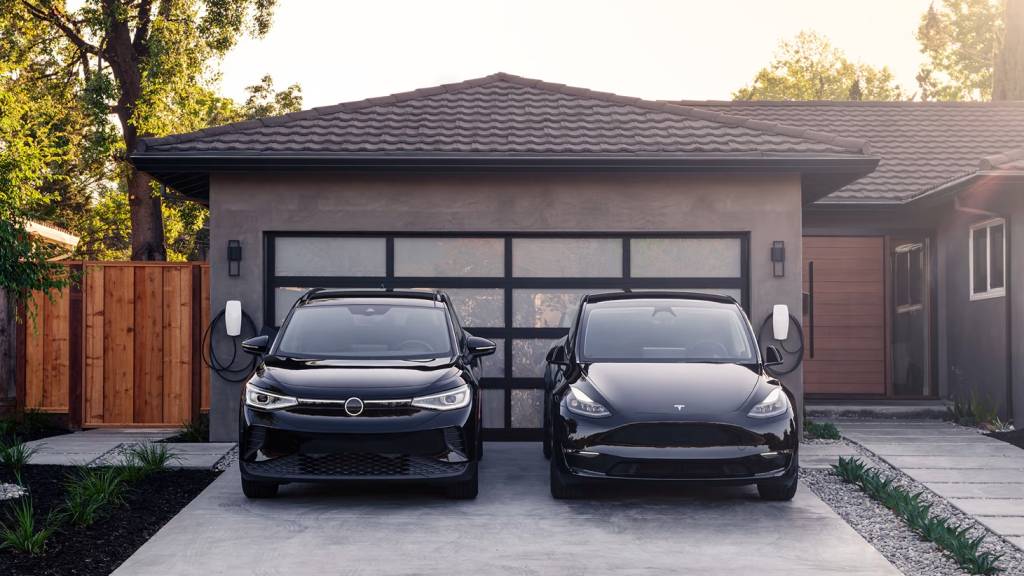
Tesla Universal Wall Connector
Lots of questions about EVs’ dependence on networks, cloud
The bottom line here is that the business is changing. Nearly all major automakers are now offering their own smart-charging and home-energy hardware, or a preferred smart-charging brand compatible with their brand app.
A smart charger may be unnecessary with many EVs you can simply set charging times and power levels via the EV itself—and that may ultimately be better than depending on network servers or data from the cloud.
It also may beg the question whether Enel owes the U.S. government (or states) money for cutting its support window so short, as many of these chargers were bought partly with public subsidies, or were part of public projects.
The September FTC letter summed that “in most cases, consumers end up with a hunk of e-waste that could still function with the right software, and a sense of disappointment.”
Those parties asked for a guaranteed minimum support time for connected products, a guarantee that the product will still work if the internet connection or updates cease, methods of reuse if support ends, tools that help interoperability, and an effort to build more longevity into products.
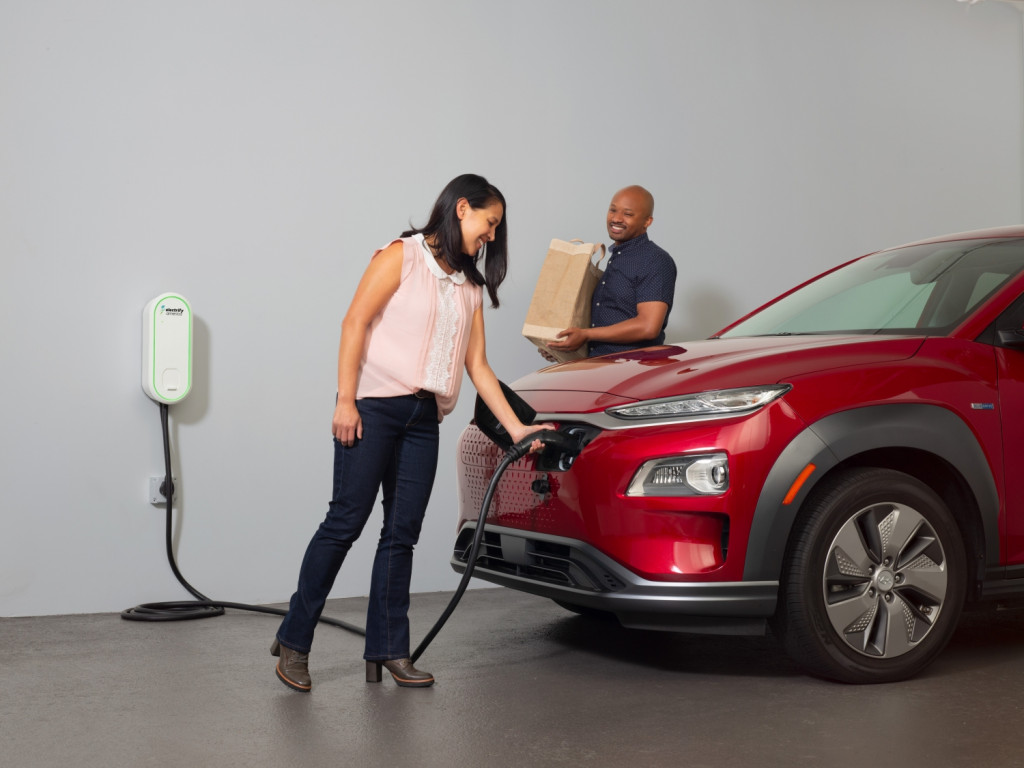
Electrify America Electric Vehicle Home Charger
Of course, this doesn’t start to address issues with cybersecurity, or whether or not a failure to support smart chargers will make them more vulnerable to hackers.
Meanwhile, seeking to address a wide range of such concerns with security, accessibility, and functionality over the long term, a group of owners called Juice Rescue seeks to get the company to release its source code for the chargers
And in the meantime, this stands as a disheartening blow to smart charging and all the advantages it can bring. As the Department of Energy has pointed out, it’s tech that smoothes out demand on the grid, makes driving an EV even greener and, usually, makes life with EVs easier.
To sum, programming your EV charging habits for your utility’s peak and off-peak rates is great, but reconsider how cloud-connected your charging needs to be—even if it’s time-of-use charging. And perhaps most importantly, look for smart charging hardware that’s OCPP-compliant, which assures that it could still be fully usable in the future if the company fails or the support window ends.

2025 Audi Q6 Sportback E-Tron debuts as a more fashionable electric SUV
- The 2025 Audi Q6 Sportback E-Tron is a more rakish take on the automaker’s electric SUV
- Audi said the Q6 Sportback E-Tron will have about 300 miles of range
- The 2025 Audi Q6 Sportback E-Tron will arrive in the U.S. in 2025
In keeping with the pattern set with its other electric SUVs, Audi on Sunday night unveiled a sleeker, coupe-like version of the Q6 E-Tron.
The Q6 Sportback E-Tron is scheduled to reach the U.S. in 2025. It follows the standard Q6 E-Tron, which is scheduled to arrive at U.S. dealerships before the end of the year as the first Audi-badged model off the new Premium Platform Electric (PPE), which the Q6 shares with the Porsche Macan EV.
As with previous Audi Sportback SUVs, the Q6 Sportback E-Tron differs from the standard Q6 E-Tron mostly in exterior styling. The roof is 1.4 inches lower, and the 114.1-inch wheelbase is 0.4 inch longer than the standard Q6 E-Tron. But width and overall length—along with most other styling details—are the same.
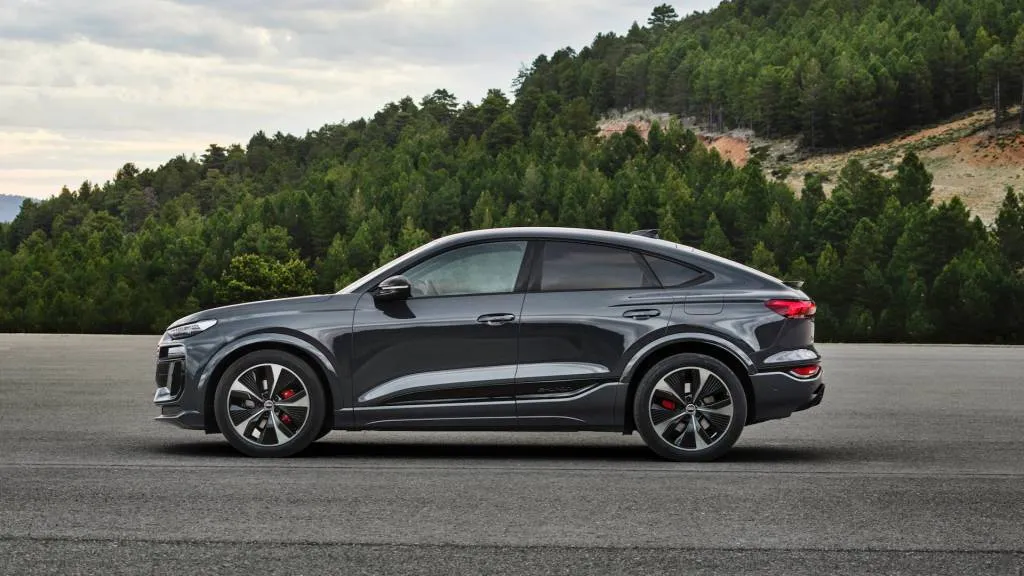
2025 Audi Q6 E-Tron Sportback (European-spec)
A 100-kwh battery pack (94.4 kwh usable) also carries over from the standard Q6 E-Tron. Performance figures for the U.S. will be finalized closer to the on-sale date, but so far Audi is only discussing dual-motor Q6 and S6 models rated at a peak 456 hp and 609 hp, respectively. Those numbers match the non-Sportback Q6 and SQ6, but Audi will also offer a single-motor version in the standard body style.
EPA ratings will be finalized closer to launch as well, but Audi expects Sportback models to offer around 300 miles of range. The standard Q6 E-Tron is rated at 321 miles in single-motor form, 307 miles in dual-motor form, and 275 miles in SQ6 form.
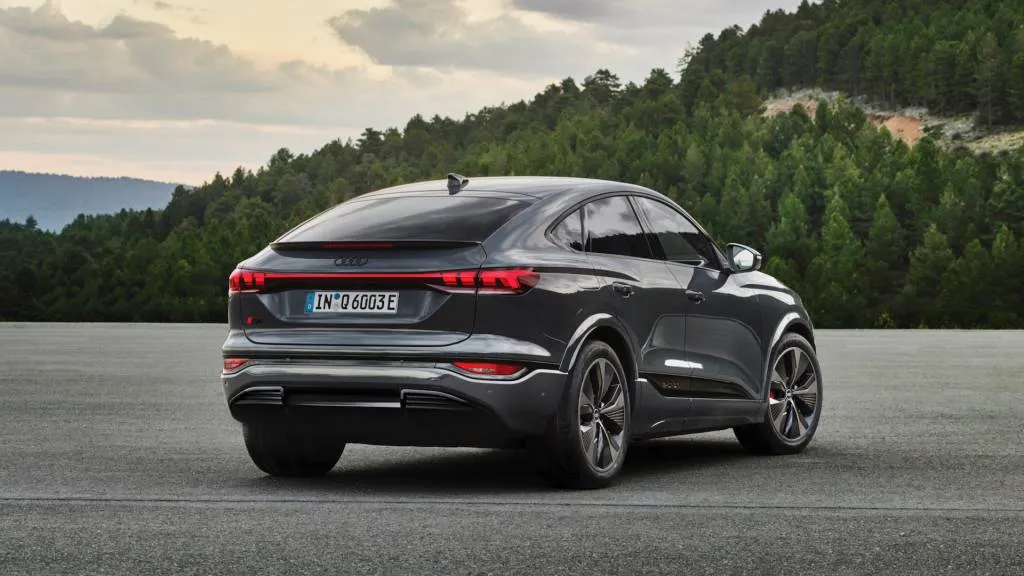
2025 Audi Q6 E-Tron Sportback (European-spec)
While rear-seat headroom and cargo space may suffer from the restyle, up front the Q6 Sportback E-Tron shares other models’ three-screen interior layout, with an 11.9-inch digital instrument cluster, 14.5-inch infotainment touchscreen, and a 10.9-inch touchscreen for the front passenger.
The Q6 Sportback E-Tron joins Sportback versions of the entry-level Q4 E-Tron, which for 2025 gets a reworked powertrain delivering more power and range, and the Q8 E-Tron. Audi is also applying that designation to the A6 Sportback E-Tron hatchback, also based on the PPE architecture, which is due to arrive in North America next spring or summer.

Kia marks 80th anniversary with EV restomod
- Kia is celebrating its 80th anniversary
- The automaker commissioned an electric conversion of its Pride hatchback
- A pair of 10-kwh batteries provide up to 120 miles of range in the restomod
Kia turns 80 this year, and to celebrate the automaker’s U.K. division commissioned an electric restomod of a humble Pride hatchback.
The EV conversion was done by Electrogenic, a U.K. firm that specializes in fitting classic cars like the Citroën DS with electric powertrains. The Kia Pride doesn’t have the stature of the DS, but it was a very important car for Kia.
While the company was founded in 1944 as a bicycle parts manufacturer named Kyungsung Precision Industry (the name was changed to Kia Industries in 1952), and built its first car (the Kia Brisa) in 1974, the Pride was what gave Kia an international presence. Based on what was known in Europe and elsewhere as the Mazda 121, it was sold in the U.S. as the Ford Festiva from model years 1988 to 1993 (later evolving to the Aspire).
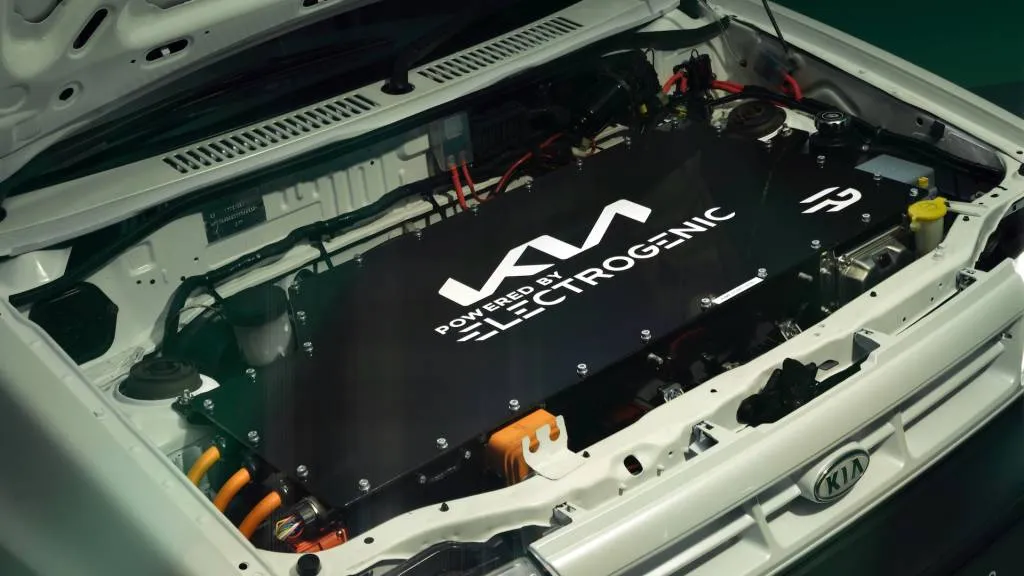
1996 Kia Pride EV conversion
The donor car was a 1996 Kia Pride 1.3 LX five-door hatchback from Kia’s U.K. heritage fleet. The exterior is original—down to the tiny 12-inch wheels—and no permanent alterations were made to the structure, according to Electrogenic, allowing the conversion to be reversed if desired.
However, replacing the 1.3-liter inline-4 with an electric motor nets a substantial increase in power. The gasoline engine made 60 hp and 87 lb-ft of torque, but the Pride EV now boasts 80 hp and 130 lb-ft in its default Auto drive mode and 107 hp and 173 lb-ft in Sport mode, cutting the 0-62 mph time from the original 19.8 seconds to a more reasonable time of approximately 8.0 seconds. An Eco mode, matching the output of the gasoline engine, is also available.
Power is still sent to the front wheels through the original 5-speed manual transmission, which was rebuilt with a performance clutch to handle the extra torque from the electric motor. Eco and Sport modes limit regenerative braking so drivers can make better use of the manual, according to Kia, while Auto mode features more regeneration and a driving feel more like that of a conventional EV.
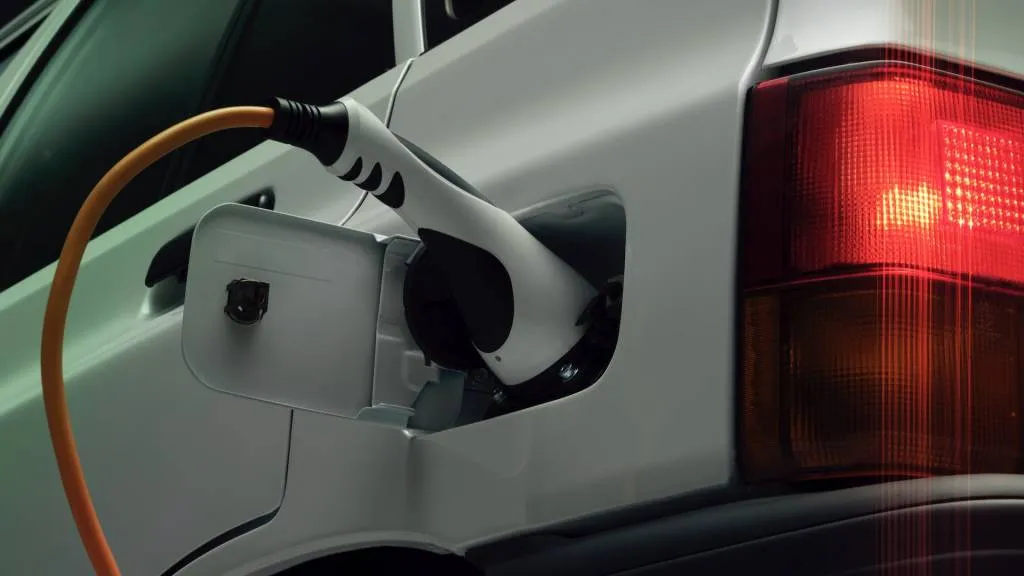
1996 Kia Pride EV conversion
A pair of 10-kwh battery packs—one under the hood and one underneath a slightly raised cargo-area floor—provide up to 120 miles of range. That’s when being driven “sensibly” in Eco mode, Kia notes. A 3.3-kw charger, with its port hidden under the stock fuel filler flap, can complete a full recharge in around six hours.
Even with the pair of battery packs, the Pride EV weighs just 1,918 pounds, compared to 1,873 pounds for the stock version. It’s another indication that, while keeping weight in check with EV conversions is difficult, it’s not impossible. U.K.-based Bedeo has also claimed its Land Rover EV conversions don’t pack on pounds.
Kia isn’t the only automaker to resurrect a car from its formative years as an EV restomod. Parent Hyundai has done the same with a Pony hatchback—its first in-house design—and its 1980s Grandeur flagship sedan. In 2023 a group of apprentices at Audi’s Neckarsulm, Germany, plant turned a vintage NSU Prinz 4 from one of the automaker’s predecessor brands into an EV to mark 150 years of manufacturing at the site.

Sion Power’s Pam Fletcher | EV Adoption’s Loren McDonald (Episode 271)
Pam Fletcher, a former leader at General Motors and Delta Air Lines, discusses her move to the battery startup world as CEO of Sion Power. Then Loren McDonald, CEO of analyst firm EV Adoption, provides a status report on the rollout of federally backed EV chargers.

Toyota exec says shift to EVs will lead to job losses
Eliminating internal-combustion engines would also eliminate many jobs related to engine-related technology, Toyota chairman Akio Toyoda told Reuters and other media Thursday.
“If electric vehicles simply become the only choice, including for our suppliers, those people’s jobs would be lost,” said Toyoda, who previously held the job of CEO and is also the grandson of the company’s founder.
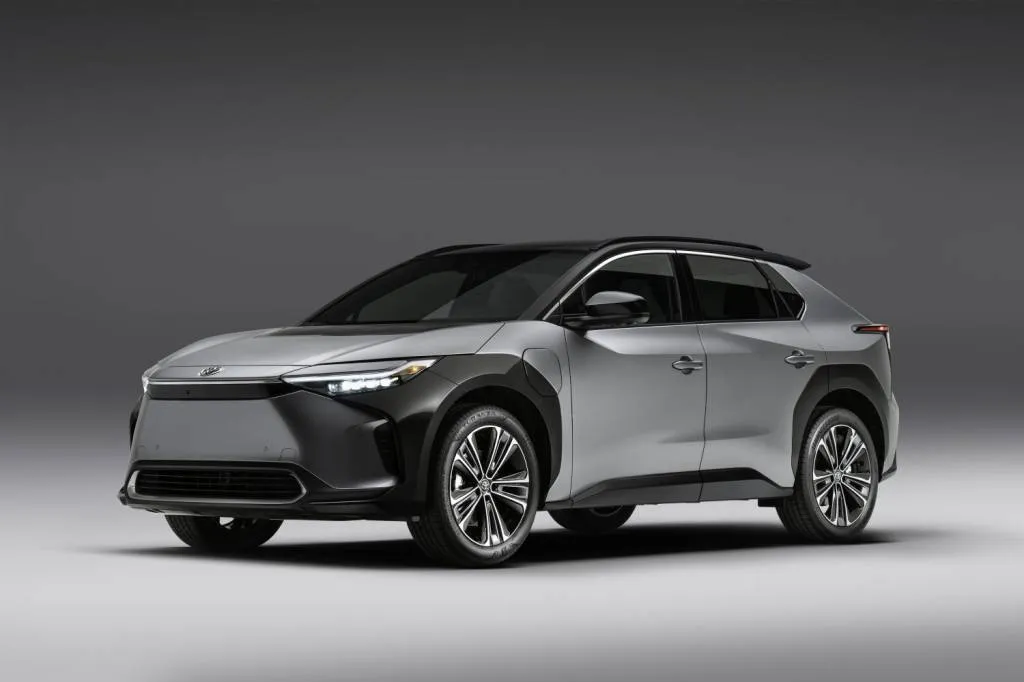
2024 Toyota bZ4X
These comments aren’t out of character for Toyoda, who said at another event in January that he does not see battery electric vehicles reaching more than 30% market share. The remaining 70%, Toyoda argued, will be taken up by hybrids and hydrogen fuel-cell vehicles, with conventional internal-combustion powertrains also remaining in the mix.
Despite the comments of its top executive, Toyota is dialing up its EV ramp. In September the automaker confirmed plans for a tenfold boost in EV production, to one million units globally by 2026. It’s also proceeding with production of advanced solid-state battery cells, albeit in relatively small numbers that will likely limit their use to niche models.
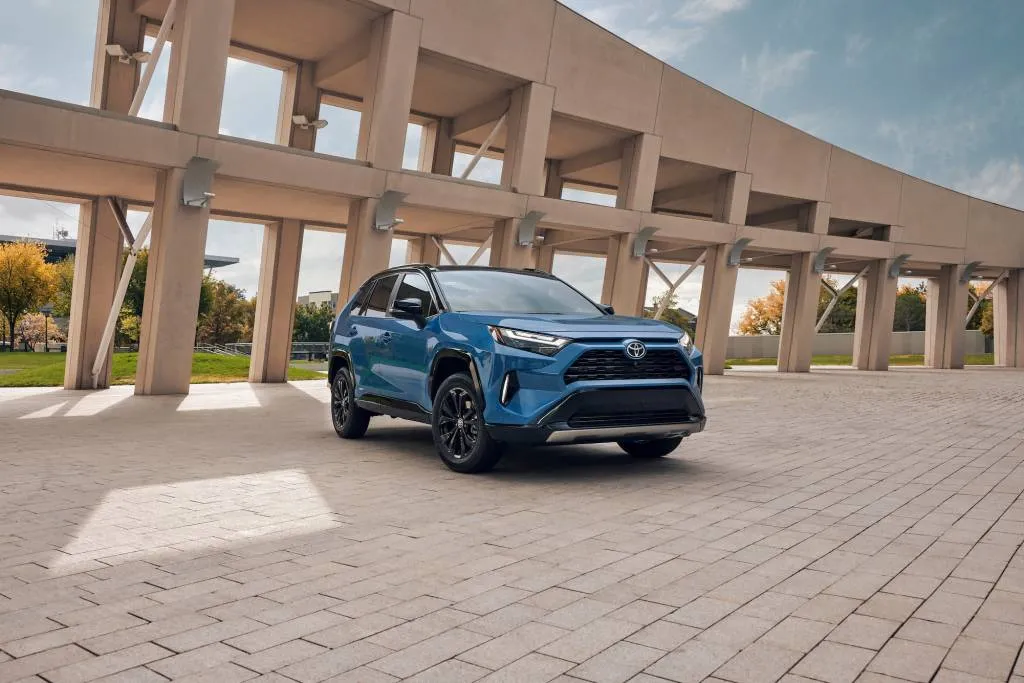
2025 Toyota RAV4
In the U.S., Toyota has made a long-term supply agreement with LG, with enough batteries coming from the supplier’s Michigan factory for U.S.-made EVs. Those will include a Kentucky-made three-row SUV expected in 2026, with a second model to be built in Indiana. Toyota and Subaru will also reportedly launch a second co-developed electric SUV in 2026 as a follow-up to the bZ4X/Solterra twins.
Hybrids, plug-in hybrids, battery-electric vehicles, and fuel-cell vehicles accounted for 48% of Toyota’s U.S. sales in September, which is close enough to start the conversation of whether or not to drop internal-combustion powertrains that don’t include a hybrid component, Toyota chief scientist Gill Pratt said in a recent interview with Bloomberg. But the automaker still has a long way to go to reach even the pessimistic 30% prediction by Toyoda in this market.