
Author: EVAI

Rudi Klein junkyard collection sells with Mercedes SL Alloy Gullwing fetching $9M
 Rudi Klein’s “junkyard” collection in Los Angeles has sold at auction more than two decades after his death The collection included multiple examples of many cars, including rare cars like the Miura and 300SL The most expensive car sold at the auction was a Mercedes-Benz 300SL Alloy Gullwing A collection of highly sought after classic…

Ford pausing F-150 Lighting electric truck production for six weeks
Ford will pause production of its F-150 Lightning electric pickup truck from Nov. 18 to Jan. 6, reports Reuters.
“We continue to adjust production for an optimal mix of sales growth and profitability,” the automaker said in a statement to Reuters regarding the six-week production pause, which overlaps with a week in December when all Ford factories are closed for the holidays.

2022 Ford F-150 Lightning pre-production
Ford said this month that U.S. EV sales for its namesake brand were up 45% this year, and that Lightning sales had more than doubled to 7,100 trucks in the three months ending Sept. 30, Reuters noted, adding that this means the Lightning makes up a tiny 3.6% of total F-150 sales.
The production pause comes after Ford in April cut production to just one shift. The automaker also slowed production in 2023 rather than further lowering prices as demand for pricier Lightning variants dried up. Ford initially promised that the Lightning would cost around $40,000 but, even with a few price cuts, prices remained much higher than that throughout 2023.
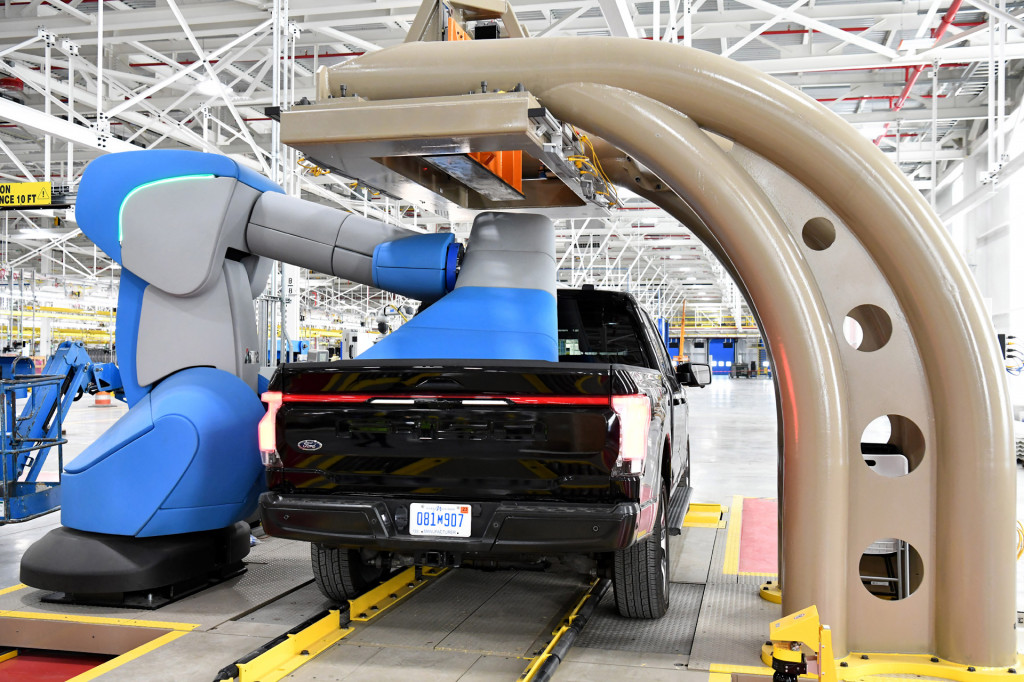
2022 Ford F-150 Lightning pre-production
Prices continued to fluctuate into 2024, with Ford cutting the sticker price of certain versions by up to $5,500 this past April—the same month as the most recent production cut. Those changes only affected models in the middle of the lineup, with prices for both the base F-150 Lightning Pro Standard Range and the range-topping Platinum Extended Range unchanged.
Ford has been resetting its EV plans. In August, the automaker said it was nixing a three-row electric SUV, adding an electric midsize pickup, and pushing back the launch of the Lightning’s replacement from 2025 to 2027. More hybrids are also part of this plan, particularly in bigger segments where battery costs could make all-electric models less profitable.

Ford adds NACS adapter supplier due to slow Tesla supply chain
Ford is now shipping a new North American Charging Standard (NACS) adapter to customers to help provide access to Tesla Supercharger stations more quickly.
First reported by InsideEVs, the new NACS adapter comes from Lectron, and will be distributed alongside the existing design from Tesla. They have the same specifications as the Tesla-provided adapters, with ratings of 500 amps and 1,000 volts, InsideEVs reports. But they have a slightly different appearance.
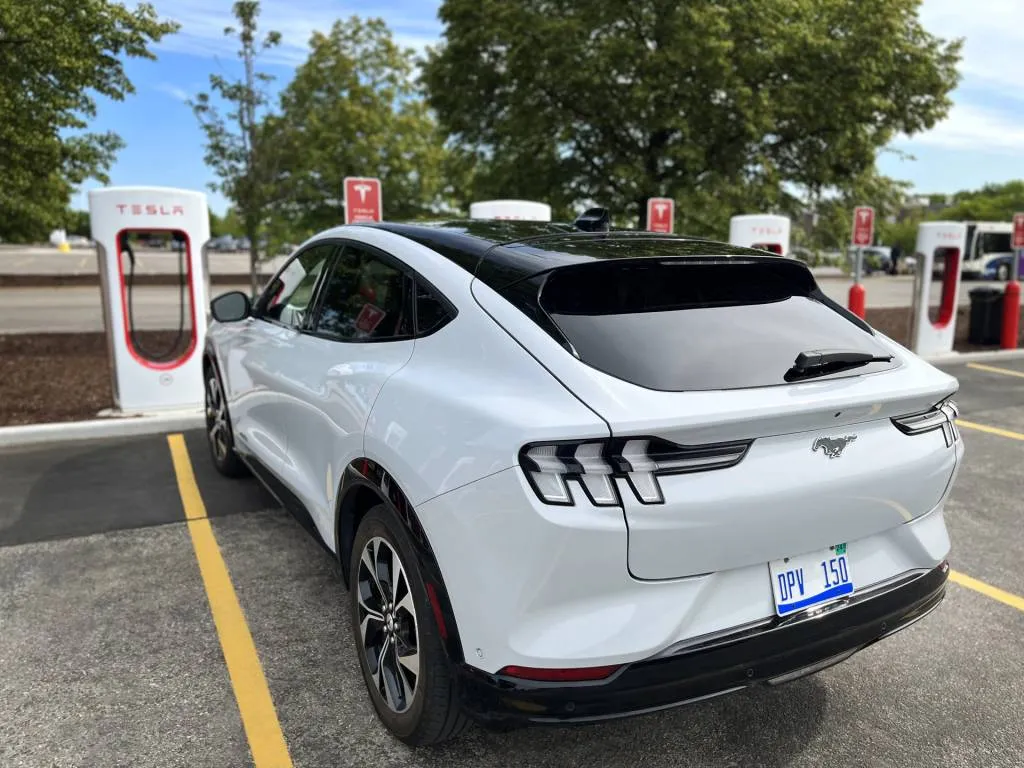
Ford Mustang Mach-E at Tesla Supercharger station
The new adapters aren’t replacements for the original design, which Ford began shipping to customers in March, but rather an “incremental” addition to get adapters to customers as quickly as possible, the automaker confirmed to Green Car Reports. The Lectron adapters began shipping Oct. 31, and customers in line for an adapter may get either one of those or one of the previous design.
Ford offered one free adapter per vehicle to all new and existing EV customers who enrolled in its charging aggregator by Jun. 30 of this year. Adapters are otherwise priced at $230, and Ford has set up a different process for fleet customers through its Ford Pro division. Those terms remain in place.
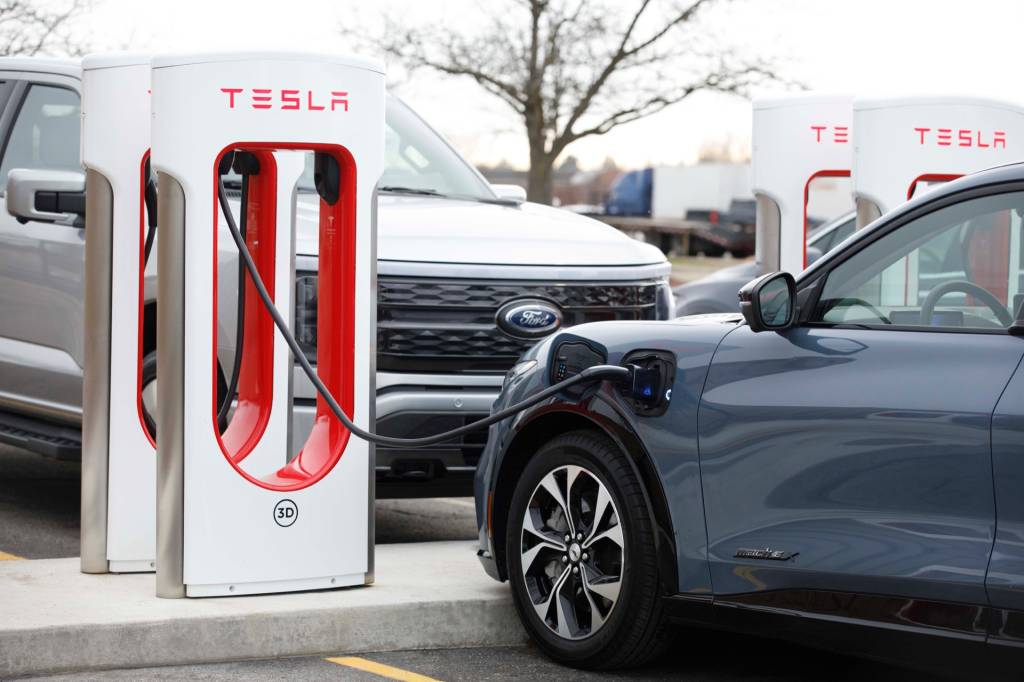
Ford EVs at Tesla Supercharger
The new adapter is also unrelated to a replacement program being undertaken by Ford after the automaker discovered a problem with a specific batch of the Tesla-sourced adapters that could result in reduce charging speeds, or potentially even damage to a vehicle’s charge port. The automaker has told certain customers to stop using affected adapters pending shipment of replacements, which was scheduled to start this week.
Ford led the industry last year in announcing a shift to the Tesla charge port, with nearly every other major U.S.-market automaker following suit. So far, though, only General Motors and Rivian have also begun shipping adapters to customers, with Volvo and Polestar announcing plans to do so earlier this week.

Honda’s racing division gets into performance parts game
 Honda and Acura’s official motorsports arm in the U.S., Honda Racing Corporation (HRC), announced on Thursday plans to develop a line of performance parts for Honda and Acura road cars, similar to offerings from Ford’s Ford Performance division and Nissan’s Nismo unit. HRC, previously known as Honda Performance Development (HPD)…

2024 F1 Brazilian Grand Prix preview: Sprint race returns
 The Brazilian Grand Prix is round 21 of 2024 F1 season The race is held at São Paulo’s Autódromo José Carlos Pace Lewis Hamilton will make an exhibition run in Ayrton Senna’s 1990 McLaren MP4/5B The 2024 Formula 1 World Championship continues this weekend with the Brazilian Grand Prix, the third race of this season’s American…

Scout Terra Vs. Rivian R1T: How Do They Compare?
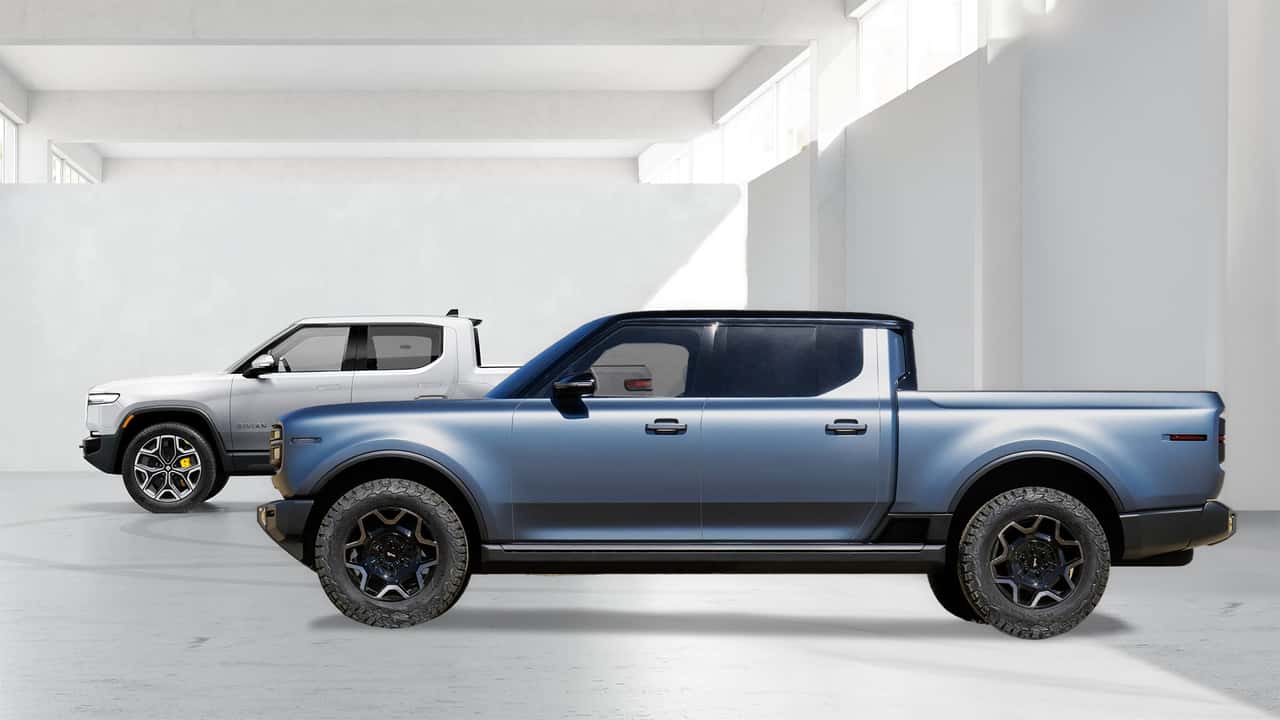
The Scout Terra is here, and it looks great. It’s the better-looking of the two recently revealed Scout prototypes, which the manufacturer says are at about 80% representative of the finished production models. What we’re looking at right now are essentially hand-built design studies—the factory where it will be assembled is still a few years away from completion.
It’s interesting to observe how two different manufacturers ended up creating such similar trucks. Under the skin, though, they are not related in any way and are actually quite different. The Terra pickup and Traveler SUV are both built on a new body-on-frame platform developed with the backing of its parent company, the Volkswagen Group.
They’re both about the same size, and they are about as direct as rivals in terms of capability. Probably the single biggest difference between them is that you can buy a Rivian R1T today, while for the Scout Terra, you have to wait at least three more years. Another significant difference is that you will be able to put fuel in the Terra to extend its range with gasoline power.
Let’s take a look at the other ways these electric trucks are similar, and different.

Scout Terra Rivian R1
Photo by: InsideEVs
Size
The Scout Terra is about a foot longer than the R1T, measuring 229.2 inches (5.82 meters) in length versus the Rivian’s 217.1 in (5.51 meters). That extra foot of length allows it to have a 5.5-foot (1.67 m) bed while the Rivian makes do with a 4.5-foot (1.37 m) bed.
The R1T is slightly wider at 81.8 in (2.08 m) with its mirrors folded, while the Terra measures 79.9 in (2.03 m) in width. With mirrors out, the measurements increase to 87.1 in (2.21 m) and 91.6 in (2.32 m), respectively. The size of the cab seems to be about the same, so both vehicles should offer similar levels of interior room.
Power
Rivian offers the R1T with standard all-wheel drive with two and three motors, with power levels ranging from 533 to 850 horsepower with up to 1,103 pound-feet of torque—in top spec, it’s really quick. The most potent one you can buy has a quad-motor powertrain with 1,050 hp and 1,198 lb-ft. Rivian claims it can accelerate to 60 mph in “less than 2.5 seconds,” putting it in supercar territory in a straight line. The base dual-motor R1T needs 4.5 seconds to hit sixty.
Only dual-motor all-wheel drive configurations will be offered for the Scout Terra. The manufacturer claims it will be able to do the dash to 60 mph in 3.5 seconds and should feel pretty muscular thanks to 1,000 lb-ft of torque.
Range
You can get the Rivian R1T with battery packs ranging from 92.5 to 141.5 kilowatt-hours, which can provide between 292 and 420 miles of EPA range. Because it has a 400-volt architecture, the R1T doesn’t charge as quickly as EVs built on higher-voltage platforms, topping out at 220 kW. That’s enough to bring the largest battery pack from 20 to 80% state of charge in 40 minutes, according to the manufacturer.
The Scout Terra runs on 800 volts, so it charges at speeds of up to 350 kW, enabling it to complete the 20 to 80% charge in 25 minutes. Scout hasn’t specified the Terra’s battery capacity, but we can expect it to go up to 350 miles on one charge.
Should you want to extend the Terra’s range further, there will be an option for a Harvester combustion engine (that isn’t connected to the wheels and works solely as a generator), which will push the range to 500 miles. It’s already proving to be an especially popular option among those who have put their name down for one.
Having the safety net of a combustion engine to add miles seems to be an attractive prospect for buyers. Scout hasn’t said whether the range extender Terra will have a smaller battery pack than the pure EV. If so, it will make the truck more enticing than the Ram 1500 Ramcharger, which gets a smaller pack compared to the fully electric Rev.
You will be able to use the Terra just like a BEV truck, unlike the Ramcharger, whose smaller battery will need the engine to turn on more often or require more frequent charging stops.
Scout will deliver the Terra with a NACS charging connector, making it compatible with Tesla’s Supercharger network. If you want to charge a Rivian via a Tesla Supercharger, you will need a special CCS to NACS adapter.
Towing
With an expected tow rating of 10,000 pounds, the Scout Terra won’t be able to match the Rivian R1T’s 11,000-pound rating. However, with a 2000-pound maximum payload, it will be able to carry slightly more than the R1T, which is rated at up to 1,764 pounds.
Features
One of the most unique features offered by the Rivian R1T is its gear tunnel. This is located behind the cab, and it’s an extra 11.7 cubic-foot compartment where you can store items (including longer ones) that you don’t want to leave in the bed. The gear tunnel could also accommodate a slide-out camp kitchen, but Rivian discontinued the option in 2022. Now you can add a special toolbox that slides out.
It also has an 11.1-cubic-foot front trunk, making it very practical. If you do want to leave something in the bed, the Gear Guard system monitors your belongings, as well as the truck itself. This system is similar to Tesla’s Sentry Mode.
With its standard air suspension, the R1T can vary its ride height between 7.9 in (20 centimeters) and 14.4 in (36.5 cm). In its lowest (and stiffest) setting, it’s surprisingly good to drive for a pickup, sticking to corners better than you would expect a pickup weighing over 7,000 pounds to manage.
The R1T doesn’t have any kind of mechanical differential locks (the quad-motor version doesn’t even have traditional differentials). It can simulate their effect and this makes the R1T a surprisingly good rock-crawler and generally good off-roader, but it won’t be up to the same level as the Scout Terra.
Scout Terra Interior
Photo by: InsideEVs
Scout doesn’t say how much the Terra’s air suspension varies the ride height, simply stating that it will have “over a foot” of ground clearance. You will also be able to specify 35-inch tires from the factory and the vehicle will feature a front mechanical locking diff to help it pull itself out of tricky situations. The Terra will have a solid rear axle and the ability to disconnect its sway bars to increase wheel travel and further enhance its off-road ability.
2025 Rivian R1 Dashboard
While the R1T’s interior adopts a minimalist design style (which almost makes it look Volvo-esque), the Terra has a much more traditional-looking interior. It still has a big infotainment screen in the middle of the dash, but it also has a bench seat in the front and a row of physical controls under the screen. It also has an actual compass built into the headliner, which is both useful and aesthetically pleasing.
Powering your home during an outage is possible with the Scout Terra thanks to vehicle-to-home (V2H) bidirectional charging. It also has two 120-volt and one 240-volt in the bed, making it possible to power tools like the ones used around a building site—Scout wants this to be a work truck too and it wants you to work on your own vehicle with up to 80% of its parts being serviceable at home. Rivian plans to add V2H in the future.
Price
You can have a Rivian R1T starting at $71,700. The current range-topper, the R1T Tri Max, costs $101,700. The R1T Quad Max, which is coming in 2025, could start at around $120,000. All Rivians that cost less than $80,000 are eligible for a $3,750 federal tax credit.
Scout says that with the federal tax credit factored in, the Terra will cost $51,500, so it will still come in under $60,000 even without incentives.
Share this Story

Walmart’s deploying Chevy BrightDrop electric vans for home delivery
Walmart is adding Chevrolet BrightDrop 400 electric vans to its U.S. home delivery fleet.
The vans will be deployed in Austin, Dallas, Denver, Detroit, northwest Arkansas, Orlando, and the San Francisco Bay Area before the end of the year, General Motors said in a press release. They’ll be used for Walmart’s InHome service, which provides delivery of groceries from stores to nearby customer homes.

Chevrolet BrightDrop 400 electric van in Walmart livery
GM and Walmart initially ran a pilot program with the vans, which got positive reviews from employees for their driver aids, automated features like automatic-closing doors, and ease of ingress and egress, the release said.
The 400 is the shorter-wheelbase option, with a long-wheelbase BrightDrop 600 van also available. GM estimates 159 miles of range with the standard battery pack and 272 miles with a larger optional pack. The vans use the same component set, branded as Ultium until recently, as GM’s current generation of electric passenger vehicles.
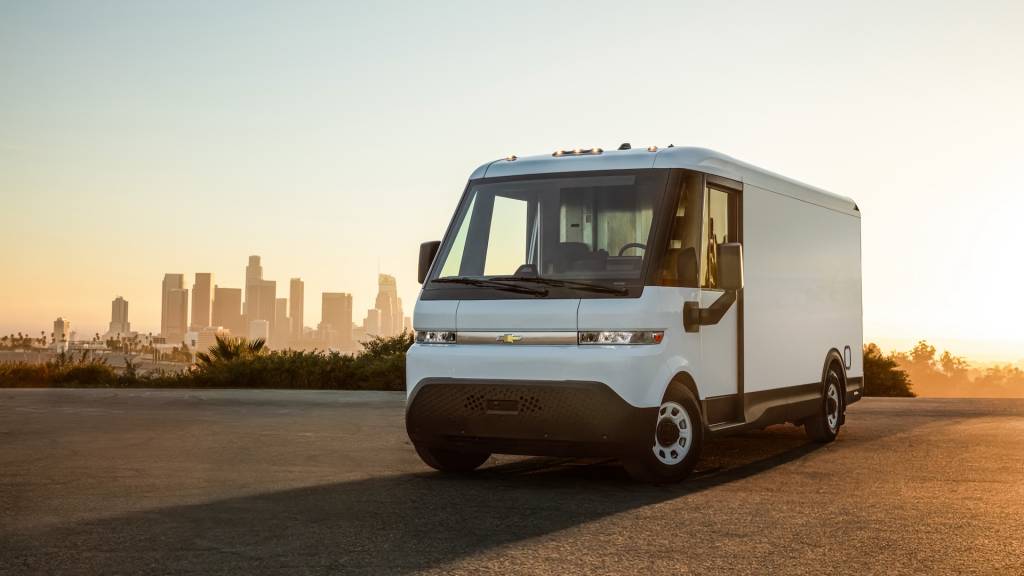
2025 Chevrolet BrightDrop 600
GM launched BrightDrop as a separate brand in January 2021, but folded it into Chevrolet in August of this year. Production is still assigned to GM’s CAMI Assembly plant in Ingersoll, Ontario, Canada, which has been building BrightDrop vans since late 2021. Earlier customers included FedEx and the Ryder rental fleet.
Walmart has long shown interest in electric vehicles. In 2022, the retail chain placed a larger order with Canoo for 4,500 electric vans—effectively breathing new life into the struggling startup, for a short period of time, at least. Some Walmart stores also host Electrify America charging stations, and the company announced its own EV charging network in 2023.

2025 Alfa Romeo Tonale
 What kind of vehicle is the 2025 Alfa Romeo Tonale? What does it compare to? Alfa Romeo’s Tonale brings Italian styling and athleticism, as well as an efficient plug-in hybrid, to the luxury small crossover segment. Competitors include Audi’s Q3, Mercedes-Benz’ GLA-Class, and BMW’s X1 and X2. Is the 2025 Alfa Romeo Tonale a…

Toyota removes the roof on the Land Cruiser with ROX concept
 Toyota to present open-top Land Cruiser and 4Runner concepts at SEMA show Land Cruiser ROX concept designed in Ann Arbor Concept features vintage color used on early Land Cruisers It’s not unusual to see a Ford Bronco or Jeep Wrangler with their roofs removed while out on the trail, but you won’t find this with the latest Toyota Land Cruiser and…

Truck tuner Solomon Lunger builds 1969 Ford F-100 for SEMA show
 Solomon Lunger’s Ford Era builds 1969 Ford F-100 for SEMA show Custom truck features full carbon-fiber body Power comes from F-150 Raptor R supercharged V-8 Early Ford F-Series pickup trucks are a popular option in the vehicle customizing scene, due in part to the wide availability of options and spare parts. And one company slowly building up a…