
Author: EVAI

Just So Everyone’s Clear: Scout And Rivian Are Not The Same
- The Volkswagen Group’s electric revival of an iconic American truck brand, Scout Motors, has drawn many comparisons to a similar EV truck company: Rivian.
- The VW Group and Rivian have a joint venture to develop software and electrical architectures together.
- Despite this, and despite what you may see online, a Scout is not a Rivian.
What an age of miracles we find ourselves in. The internet is the greatest tool for disseminating information that humanity has ever created, but it also allows anybody to just instantly broadcast whatever is on their mind at any given moment, regardless of how true it is or not. That does lead to the occasional bit of misinformation that news outlets like InsideEVs must correct.
Since the recent debut of two new electric concepts from Scout Motors, the American truck and SUV brand revived by the Volkswagen Group, we have noticed more than a few comparisons drawn to another EV truck company: Rivian.
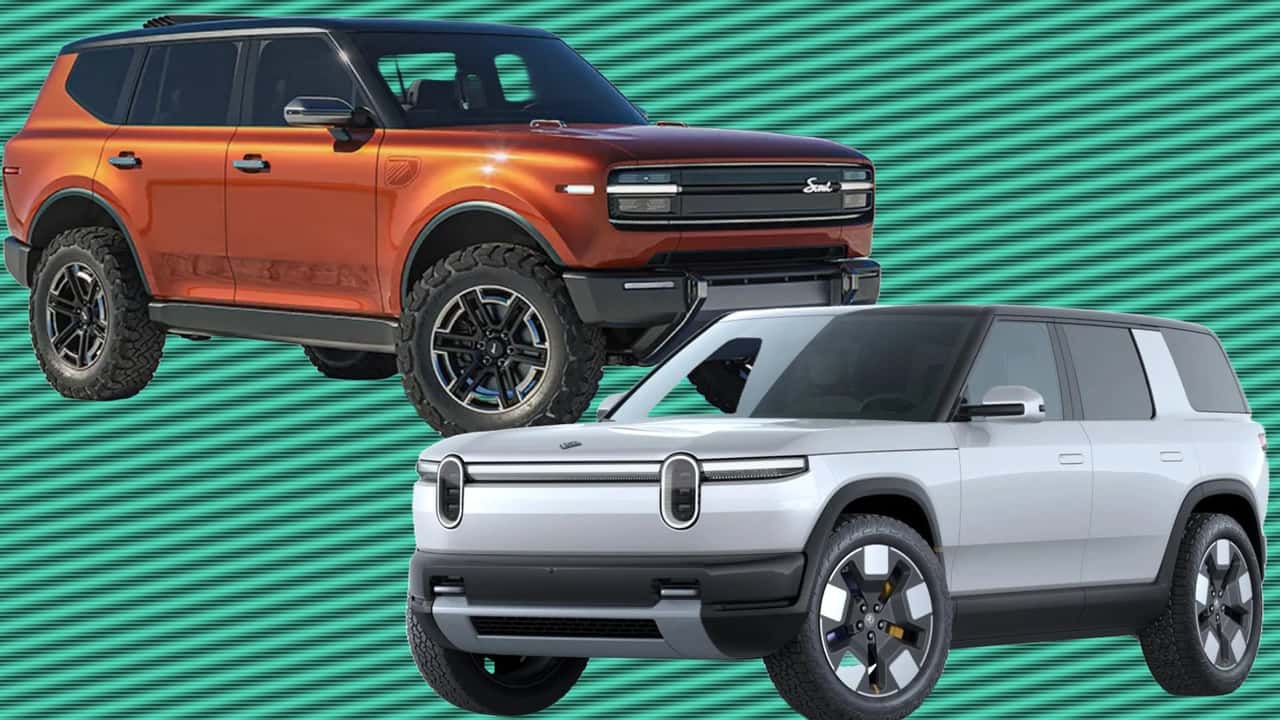
The comparisons are fair; Scout’s two concept vehicles bear a strong resemblance to Rivian’s first two vehicles, the R1T truck and R1S SUV. And the lines between the two brands are further blurred by the fact that the Volkswagen Group and Rivian have recently started working together.
<img src="https://evautoinsider.com/wp-content/uploads/2025/07/just-so-everyones-clear-scout-and-rivian-are-not-the-same.png" alt="
Photo illustration from InsideEVs.
” width=”16″ height=”9″ loading=”lazy”>
Photo illustration from InsideEVs.
But the latter situation, in particular, seems to be drawing a lot of confusion. Here are some emails, comments and social media posts we’ve seen lately:
“I can’t shake the thought that the Scout isn’t just like a Rivian, but it is a Rivian.”
“Well, now we know why Volkswagen is teaming up with Rivian.”
“Isn’t the Scout a rebadged Rivian?”
“The Scout Motors EV is really just a Rivian with a gas generator, isn’t it?”
“Reskinned Rivian? VW owns Scout, VW and Rivian announced a joint venture…”
“So how much is Rivian making per each Scout EV sold? It’s clear they’ll be using Rivian’s zonal architecture.”
And so forth. But I’m here to hopefully clear this one up once and for all: While Scout and Rivian have similar designs and will probably compete for the same customer, and Scout will use the new electrical architecture that VW is co-developing with Rivian, the two vehicles and brands are not the same. They do not use the same platform, are built (or rather, will be built) in different places and should have considerably different price tags.
Does it feel like a kind of McDonald’s-McDowell’s situation for the electric vehicle world? Yes, which is probably unfortunate for both brands. But there’s certainly room in the space for both, and whatever technological intersection exists between the two will probably benefit them both. Let’s dig in.

[embedded content]
Let’s Start With Rivian
We’ll begin with an extremely brief history of one of the more promising EV startups out there, California-based Rivian.
People forget this today, but Rivian actually launched way back in 2009 (and under a different name) with the goal of making a hybrid, mid-engine sports car. That idea was shelved, but by 2022, Rivian was making the R1S and R1T electric adventure trucks at a former Mitsubishi factory in Normal, Ill. Both vehicles boast excellent electric range, charming designs and legitimate off-road talents. The company also makes electric vans for fleet use, originally for Amazon alone but now available to any fleet customer.
Second Gen Rivian R1T and R1S
Rivian’s EVs have garnered considerable acclaim since then. While the company today has a sizable cash pile, it is still dealing with the instability and difficult path to long-term profitability that makes being a newcomer in the auto industry such a gargantuan task. Should it successfully fight through the “valley of death” that it’s currently in, Rivian is due to launch a series of more affordable, mainstream EVs by the end of this decade: the smaller R2 crossover and more compact R3 and R3X.
Rivian Future Roadmap
But Rivian has the advantage of being able to do things with a clean sheet, vertically integrated approach, something that traditional automakers who depend on vast networks of outside parts suppliers struggle with. This in-house approach, once pioneered by Tesla, has made Rivian into a burgeoning software power player too. The world took notice of that when Rivian and the Volkswagen Group (which has struggled mightily on the technology front as it seeks a mostly electric future) inked a $5 billion deal to co-develop software and electrical architectures together. That deal is giving Rivian the cash it needs to continue R&D and scale up operations, while VW is getting the kind of software and tech expertise it needs to be competitive in the future.
What About Scout Motors?
Scout’s history actually goes back many decades. The SUVs and trucks were made by the International Harvester Company, which was mostly known for agricultural and commercial vehicles, between 1960 and 1980. They were simple, capable machines that offered plenty of capability. The original Scouts are highly coveted by off-roading enthusiasts even today, as the company helped to pioneer that entire field of vehicles.
Scout Traveler and Terra Concepts
Photo by: Scout Motors
After a complicated series of sales and acquisitions, the VW Group ended up in possession of the Scout branding and trademarks (via the acquisition of International Harvester’s successor company, Navistar, to supplement VW’s other commercial truck brands) in 2020. As Scout Motors’ CEO Scott Keogh told InsideEVs earlier this year, that led to some discussions within VW, which has long struggled to garner the kind of mainstream, volume success in America that it enjoys in the rest of the world. Moreover, these days, the VW Group is losing ground quickly in China, so it needs to win big in the U.S.
That yielded a bold plan to relaunch the Scout Motors brand, and not as some re-badged ID.4 or Audi Q8 E-Tron but with an entirely new platform and a new factory in South Carolina to take advantage of tax incentives from the Inflation Reduction Act.
Scout Motors Factory Groundbreaking 2024 Official Photos
But They’re Both Boxy, Electric Trucks And SUVs Aimed At Off-Roaders. How Are They Different?
That’s certainly an understandable question, and I think the Scout Terra truck in particular bears an uncanny and perhaps uncomfortable resemblance to the R1T. We always knew the Scout was going to be boxy and utilitarian looking, as that’s how Scouts have always been. If you’re going for a boxy look while maintaining the aerodynamic design you need to build a competitive EV, it’s not surprising that the end result looks like an existing utilitarian, efficient electric truck. But the two vehicles from Scout and Rivian are different.

The R1T vs. the Scout Terra.
Besides predating the Scout vehicles by years (they won’t even go on sale until 2027 at the earliest) the Rivian R1S and R1T use a platform, motors and software all made in-house. The upcoming Rivian R3, R3X and R2 will use a new Rivian “midsize” platform as well that incorporates the lessons and cost-savings from the R1 vehicles. A Rivian spokesperson confirmed to InsideEVs that the R2 and R3 platform is “unrelated” to the upcoming Scout project.
Rivian R2 R3 R3X
As I mentioned earlier, Scout’s platform is a different animal. The automaker wanted a truly off-road capable EV, so it’s crafting a body-on-frame platform from the ground up with a solid rear axle and front and rear mechanical lockers—just like an old-school rock-crawling truck would have. Rivian’s vehicles do not use locking differentials. They also don’t offer solid axles.
The differences go even deeper. Perhaps most notably, the Scout models will offer a range extender option called the “Harvester,” which is simply a gasoline engine designed to solely recharge the electric battery. While it does not power the wheels at all, the engine is expected to boost the Scout EV’s range from 350 miles to 500 miles. Rivian has not announced any plans for a gas range extender, and given that it’s always been an all-electric automaker, that seems rather unlikely. Scout, however, has the advantage of potentially pulling a gas engine from the VW Group’s expansive family.
On the battery front, Rivian’s vehicles use cells from Samsung SDI in South Korea. CNBC reports that Scout’s batteries are expected to come from VW’s joint venture battery cell manufacturer in Canada.
Scout Terra Electric Pickup Truck
Photo by: Scout Motors
That’s not all. Besides being in different price classes—Rivian’s current vehicles start around $75,000 and reach into the $100,000 range, while the Scout EVs are aiming to start around $60,000—there are two very different approaches to the user experience at work here. Rivian’s interfaces famously (perhaps infamously, based on our reviews) eschew traditional buttons for touchscreen controls, voice commands and soon, a clickwheel system mounted on the steering wheel to operate various functions.
Scout, on the other hand, purposely went big on buttons. The Scout concepts revealed last week have some nice display units, sure, but also a row of physical buttons, volume knobs and steering wheel controls. Oh, and the Terra and Traveler will offer an optional bench seat as well, another old-school throwback.
Finally, the vehicles are different sizes. The Scout Traveler SUV is shorter than a Rivian R1S by about 10 inches, while Scout’s Terra truck is about a foot longer than an R1T.
So Where Do Rivian And Scout Intersect?
An excellent question, and one that’s come up recently. And this actually does speak to that Volkswagen-Rivian tie-up that’s in the works.
At the Scout concept debut, Keogh told InsideEVs that the cars could use the new zonal architecture being developed by that partnership—but only that one, not anything currently in use by Rivian. “It’s important to separate Rivian, the car company, from the joint venture,” Keogh said. “Those are two very different things. Rivian the car company, we have zero interaction with, absolutely nothing. But the joint venture company could potentially [provide] the architecture that is in this vehicle.”
That was confirmed on the other side of things by Rivian Chief Software Officer Wassym Bensaid at TechCrunch’s Disrupt 2024 conference this week. Here’s what Bensaid had to say:
[Scout] said at the time that the vehicles would use a zonal architecture — meaning it would rely on just a handful of computers that control the functions of a few “zones” of the electrical architecture. And the software in Scout’s press images looked awfully similar to what you can find in Rivian’s current vehicles, so Bensaid’s confirmation is not all that surprising. Bensaid stressed on the Disrupt stage that each brand that uses the joint venture’s software will “continue to have their own identity,” as well as “their own features.”
“We’re enabling competition,” he said. Bensaid also noted how much the Scout vehicles resemble Rivian’s overall design sensibility, even outside of the software. “That’s fantastic,” he said. “It’s great validation of the Rivian product.”
Scout Software Demo
And TechCrunch is correct that the software shown in the Scout concepts does look very Rivian-ish. (Rivish?) However, those vehicles are still just concepts with production models at least three years away. Even if these vehicles share commonalities on the back end that allow Scout to do things Rivians can do, like over-the-air updates, it’s extremely likely both brands will work to carve out their own identities and unique interfaces when they actually hit the market.
So What Did We Learn Today, Class?
In the end, while Scout and Rivian are both coming to market with similar products, designs, overall vibes and probably audiences, they are not the same brand or car.
I think that what this ended up being is two different EV-oriented companies both coming to the same conclusion about what American buyers love: big trucks and SUVs. In their own ways, they took advantage of the kind of retro-truck charm that’s extremely in vogue right now. Things got somewhat complicated by the software and tech team-up behind the scenes, but given what we’ve reported on Scout Motors’ development timeline, that certainly didn’t seem to be the plan all along.
Moreover, Scout’s target debut date of 2027 can feel like 500 years from now in the fast-moving world of modern EVs. We’re basing all of this on initial impressions, early official plans from both automakers and what we know about where both brands are at in late 2024. It’s entirely possible that the final production versions of the Scout vehicles could differ from these concepts in some way (though InsideEVs was told they are extremely close to the final designs) and we can’t rule out some kind of deepened tie-up between VW, Rivian and Scout in the future. For now, that’s just speculation.
But if you think these two adventure-ready EVs are the same thing, look a little deeper.
Contact the author: patrick.george@insideevs.com
Share this Story

Aptera finally built a production-intent working 3-wheel EV
Aptera on Wednesday announced that it had completed a working production-intent version of its high-efficiency, three-wheel solar EV.
This vehicle, the first in a series, is the first to combine a production-spec powertrain and carbon-fiber body with Aptera’s in-house designed software and battery pack, according to a company press release.
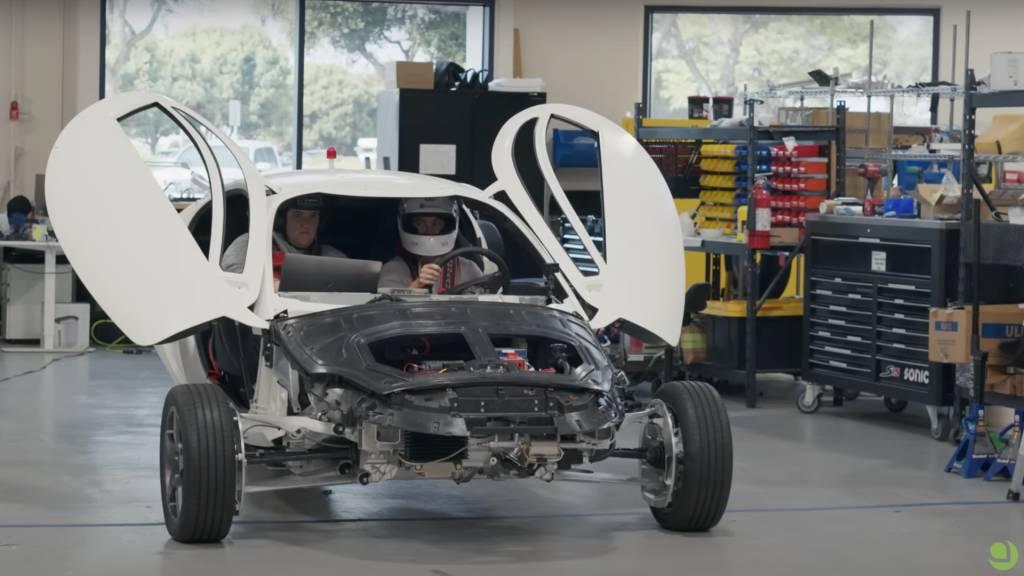
Aptera production-intent vehicle
Solar hardware, a production-intent thermal management system, and complete exterior surfaces will be added as part of the next phase of testing, according to Aptera. Vehicles will then undergo high-speed track testing to validate performance and efficiency characteristics, according to the company.
The production-intent process takes Aptera a step closer to an actual salable vehicle, for which the company claims to have more than 50,000 reservations. A $33,200 Launch Edition was revealed in January 2023 with a 4.0-second 0-60 mph acceleration time, a 42-kwh battery pack that would provide a range of up to 400 miles, and a solar power system that can provide 700 watts of continuous power good for 40 miles of range per day, the company has said.
Aptera has in the past discussed other versions with as much as 1,000 miles of range once power from the solar array is factored in, and 0-60 mph times as low as 3.5 seconds. The company also announced its use of the Tesla North American Charging Standard (NACS) port well ahead of the mass migration by U.S.-market EV brands last year. In recent months it’s also hinted that some design changes are coming to the three-wheeler for efficiency and cost-effectiveness.
Aptera earlier this year completed a crowdfunding program and moved on to seeking private capital on its way toward volume production. Over three years, Aptera raised more than $100 million from more than 17,000 investors across all phases of crowdfunding. The company said in May that, pending the necessary funding, it hoped to bring the three-wheeler to market “at scale” in 2025.

Honda Prologue and Acura ZDX fall short in crash tests
The 2024 Acura ZDX and 2024 Honda Prologue electric SUVs have failed to earn safety awards from the Insurance Institute for Highway Safety (IIHS).
The two electric vehicles performed well in multiple tests, but came up short in the small overlap front test, earning only an “Acceptable” rating, the IIHS said Thursday in a press release. The highest “Good” rating is required to earn an IIHS Top Safety Pick or Top Safety Pick+ award. Both SUVs failed to earn a “Good” rating because the passenger crash test dummy’s head slipped between the front and side curtain airbags.
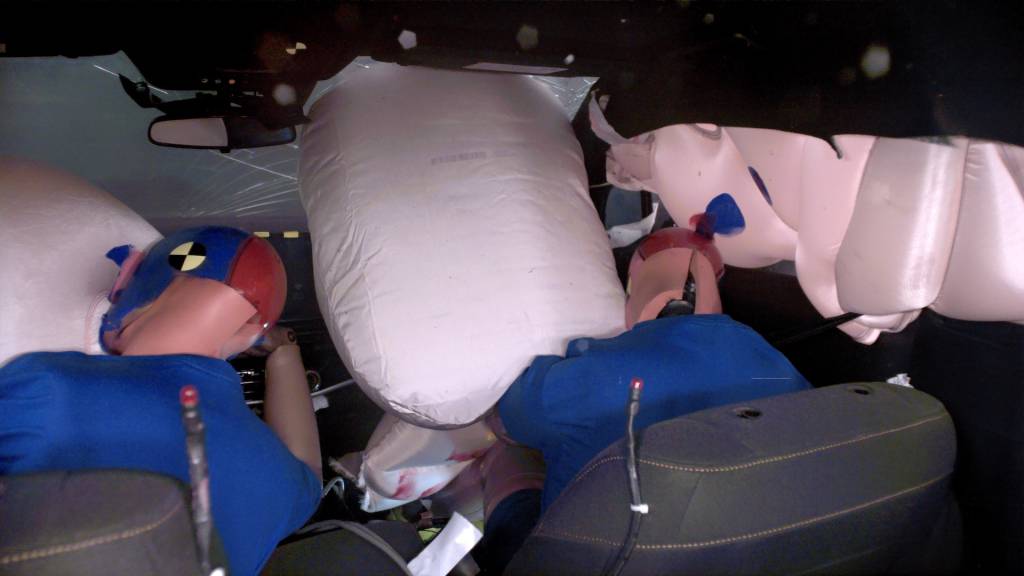
2024 Honda Prologue crash-test results from the IIHS
Other criteria include a “Good” rating in the updated side crash test, and “Acceptable” or “Good” ratings in the pedestrian front crash prevention test and headlight evaluation. In addition, a “Good” or “Acceptable” rating in the updated moderate-overlap front crash test is required to earn the highest Top Safety Pick+ award.
The ZDX and Prologue earned “Good” ratings in other crash tests and “Acceptable” ratings in the pedestrian front crash prevention test. The Prologue’s headlights were rated “Acceptable,” while the ZDX’s were rated “Good” following recent changes made by Acura. The headlights on vehicles built before September 2024 are rated “Poor.”
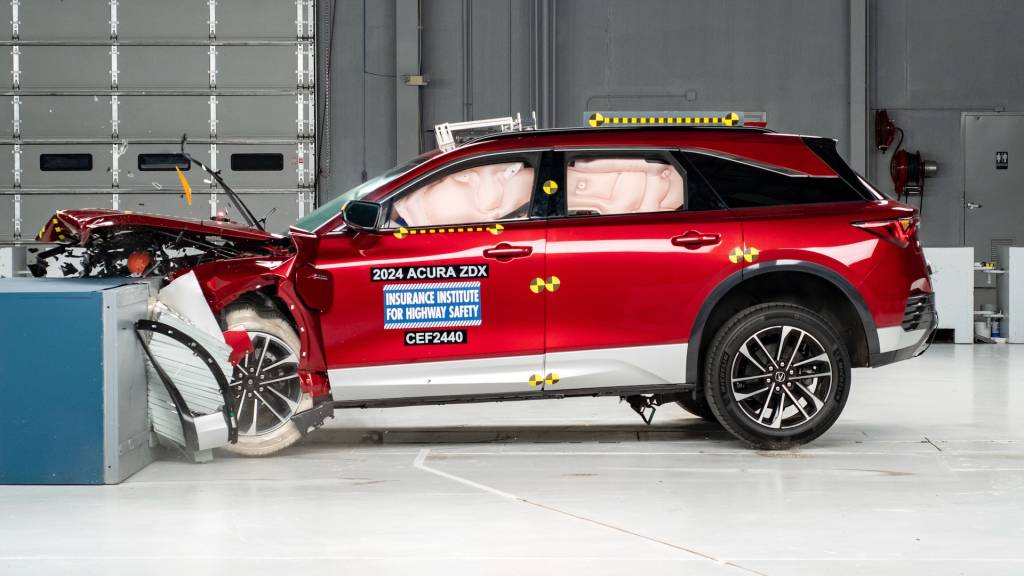
2024 Acura ZDX crash-test results from the IIHS
While not part of the award criteria, the IIHS also evaluates rear-seat reminders and LATCH child-seat anchor ease of use. The Acura and Honda both received “Good” ratings in each category.
Both the ZDX and Prologue are built by General Motors, with its battery and propulsion tech. The IIHS hasn’t published test results for the related Cadillac Lyriq and Chevrolet Blazer EV, but several other EVs are top-rated for safety by the organization. Eight all-electric models received the Top Safety Pick+ award for 2024, with nine earning the lower Top Safety Pick award.

Hyundai Initium concept previews upcoming fuel cell SUV
 Hyundai Initium concept planned for 2024 Los Angeles auto show Concept previews hydrogen fuel cell vehicle due in first half of 2025 Production model expected to replace Nexo Hyundai on Thursday provided a first look at a concept vehicle that previews a production-bound hydrogen fuel cell vehicle due in the first half of 2025. The concept is the…

2027 Mercedes-Benz GLC-Class EV spotted again
 Electric Mercedes-Benz GLC-Class spied ahead of 2026 U.S. launch New EV will replace EQC electric compact crossover sold overseas High-performance AMG variant planned Mercedes-Benz has been spotted testing a prototype for an electric compact crossover that will end up replacing the EQC. The EQC is the compact crossover whose 2020 debut marked the…

Ford makes car customization easy with Custom Garage program
 Ford launches Custom Garage personalisation program Program groups popular upgrades in easy-to-order packages Packages include styling and performance upgrades Ford will use the 2024 SEMA show on next week in Las Vegas to launch Ford Custom Garage, a program designed to make it easy to add upgrades to a new Ford truck or SUV. The program groups…

Scout previews pet and camp modes in electric truck concepts
Scout will follow the lead of Tesla and Rivian in offering software-based modes and features for its Traveler electric SUV and Terra electric pickup truck.
A TikTok video by Jordan Sanford briefly showed a pet mode on a Scout EV’s infotainment display. Scout spokesperson Kathy Graham subsequently confirmed this mode, as well as a camp mode and night mode, to Green Car Reports. Graham noted that all three modes “are presented as concepts” and that “we look forward to sharing detailed software features as we get closer to production.”
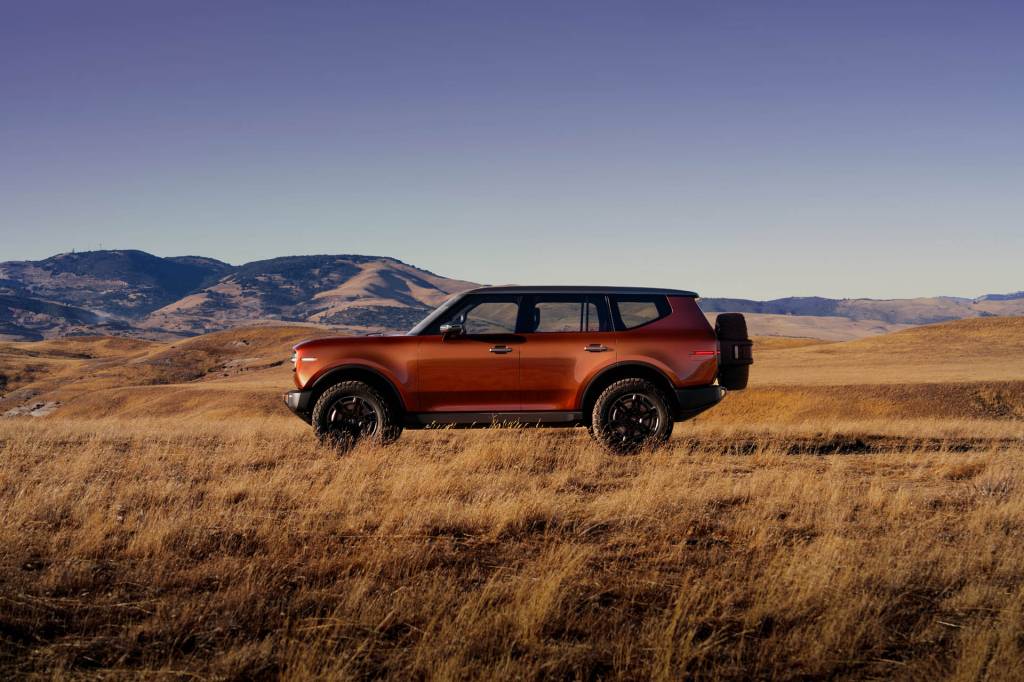
Scout Traveler concept
Pet mode is designed to use climate controls to allow pets to be safely left in vehicles, similar to the Dog Mode Tesla rolled out in 2019, and the Pet Comfort mode available from Rivian. Both automakers have released numerous other niche modes via software updates, with Rivian offering its own Camp mode that uses air suspension to level vehicles and provide a flat sleeping surface.
Scout’s camp mode will “manage audible sounds, energy settings, lighting, and more when outdoors.” An air suspension and active damping will be offered as an option, but automatically leveling was not specifically mentioned. Night mode dims interior displays and exterior lighting to reduce light pollution and help drivers and passengers better enjoy the night sky.
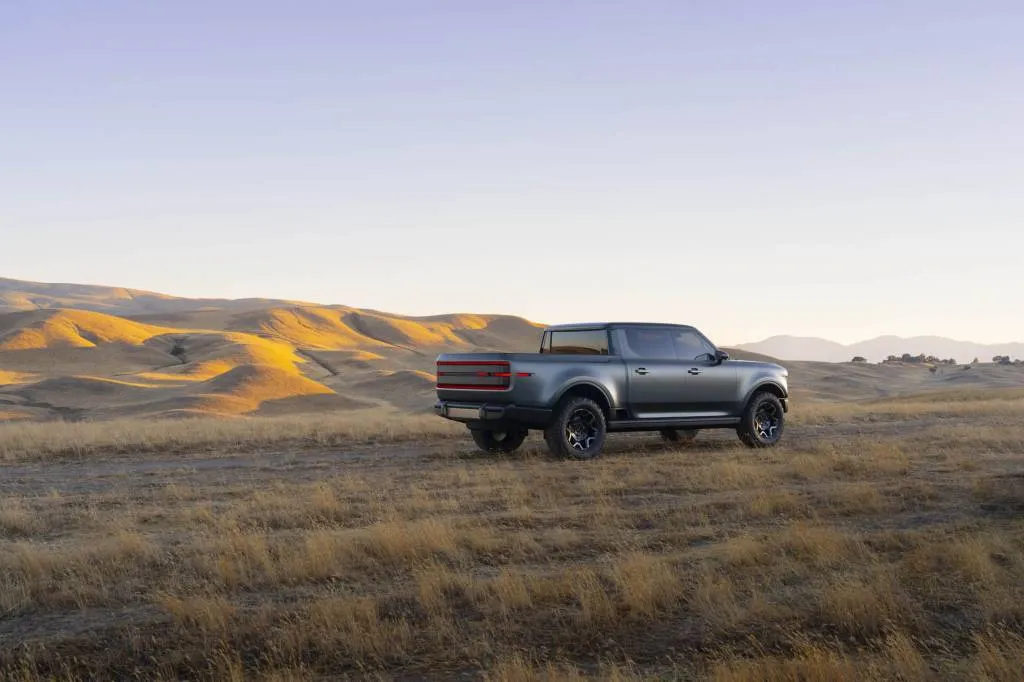
Scout Terra concept
Scout unveiled concept versions of the Traveler and Terra last week that the automaker says are 85% accurate to the production models. Those are scheduled to arrive in 2027, with assembly taking place at a new $2 billion factory in South Carolina.
Trading on nostalgia for the International Harvester Scout that ended production in 1980, Scout is a new brand under the aegis of the Volkswagen Group. It’s being run directly by the parent company rather than VW Group of America, creating space for a direct-sales model similar to Tesla and Rivian.

Electric hydrofoil ferry uses 80% less energy, and it can fly
Sweden is the home of Volvo and Polestar, but the Scandinavian country is electrifying more than cars.
On Tuesday, an electric hydrofoil ferry service began operating in Stockholm, shuttling commuters between the 14 islands that make up the Swedish capital. The service was inaugurated when 25 commuters in the suburb of Ekero boarded the electric hydrofoil, named Nova, reports the Associated Press.
The first of the P-12 hydrofoils from electric boat manufacturer Candela to enter service with Stockholm’s public transit operator SL, the Nova skimmed about three feet above the water and covered the nine-mile route to Stockholm’s city hall in 30 minutes, versus 45 minutes with diesel ferries.
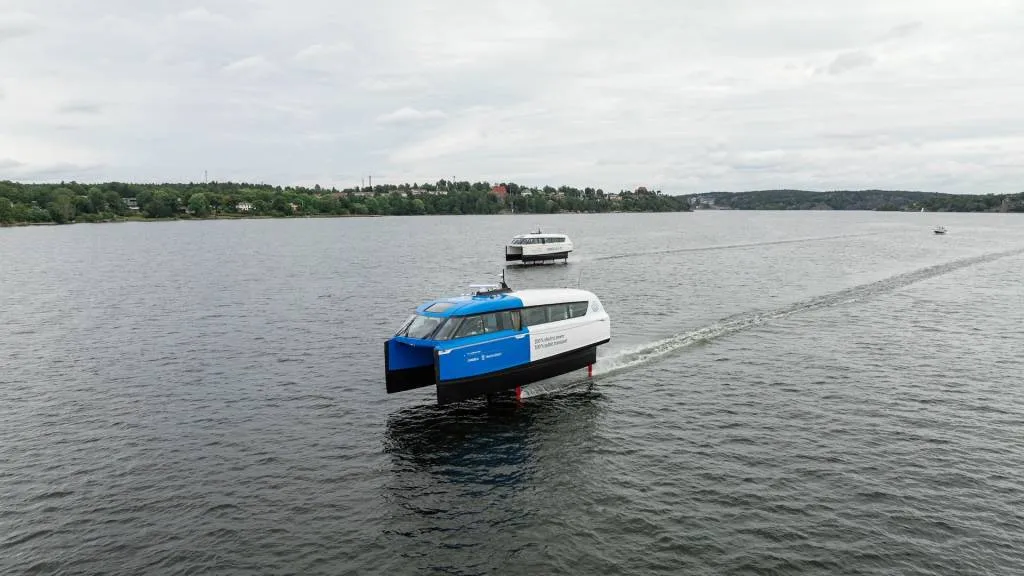
Candela electric hydrofoil ferry enters service in Stockholm
Hydrofoils lift their hulls out of the water at speeds, relying on extended struts (the foils) for control. This reduces drag, which, in the case of the Nova, contributes to an 80% cut in energy consumption compared to conventional vessels, Candela boss Gustav Hasselskog said in a statement. An added benefit is that the hydrofoil leaves no wake, so the Nova is exempt from the speed limit in Stockholm waters.
That allows the Nova to get closer to its cruising speed of about 29 mph—faster than conventional boats, according to Candela. It’s designed to carry 25 passengers, with one wheelchair space.
Just as electric buses could cut carbon emissions in other cities, electric boats like the Nova could make a big dent in emissions from public transit in Stockholm. According to the AP, ferries have been the fastest-growing mode of public transit since the coronavirus pandemic.
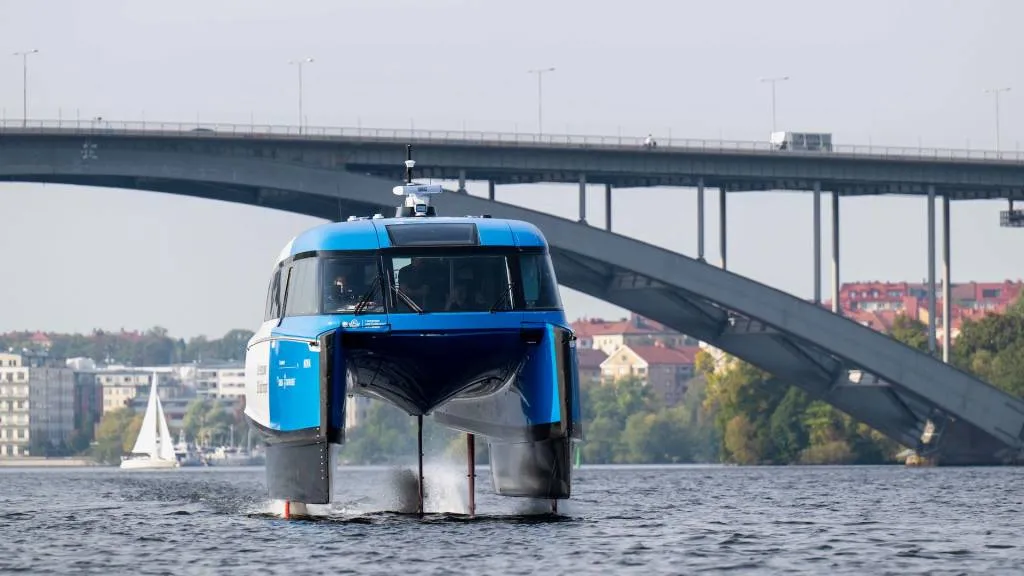
Candela electric hydrofoil ferry enters service in Stockholm
Candela also has a partnership with Polestar, which in 2022 made a deal to supply the company with batteries and charging tech. It’s part of Polestar’s plan to develop its own batteries and propulsion systems.
There are a number of electric ferries in use beyond Stockholm, but the up-front cost of putting them into service can be challenging. Cruise ships are likely too large for battery propulsion, although they’re starting to branch out into hybrid systems.

Hyundai Ioniq 9 3-row EV SUV teased, debuts in November
Hyundai on Wednesday released the first teaser for the Ioniq 9, a three-row electric SUV the automaker will unveil in November.
Judging by the teaser images, the Ioniq 9 will have the upright profile of a traditional SUV, albeit with a raked-back roofline that’s likely a concession to aerodynamics. It will be based on the same E-GMP dedicated EV platform as the current Hyundai Ioniq 5 and Ioniq 6.

2025 Hyundai Ioniq 9 teaser
Hyundai has been teasing this model for some time. It was announced along with the Ioniq EV sub-brand in 2020, and then previewed with the Hyundai Seven concept at the 2021 Los Angeles auto show. Expect the production Ioniq 9 to make its debut in L.A. as well.
In July of this year, Hyundai confirmed that an electric three-row SUV would arrive as a 2025 model, but is only now officially attaching the Ioniq 9 name to that model. While the use of Hyundai Seven for the concept version indicated the production model would be named Ioniq 7, the Ioniq 9 aligns the Hyundai with similar EVs from sibling brands Kia and Genesis.
2025 Hyundai Ioniq 9 teaser
The Ioniq 9 is likely to share some specs with the Kia EV9, which we named Green Car Reports Best Car To Buy 2024. Hyundai’s Genesis luxury brand will also launch its own “super-large GV90” electric SUV, likely in 2026. The GV90 is expected to take cues from the Genesis Neolun concept unveiled ahead of the 2024 New York auto show.
One big question mark over the Ioniq 9 is its production site. The GV90 will reportedly be built in South Korea, while EV9 production for the U.S. was recently shifted to Kia’s West Point, Georgia, plant. Hyundai has its own Georgia EV “Metaplant” that’s slated to build 2025 Ioniq 5 models, but Hyundai will also have to make room for the Ioniq 9 to make that model tax-credit eligible.

McLaren supercar business sold to Abu Dhabi-backed CYVN
 CYVN Holdings, an investment consortium owned by the Abu Dhabi government, has agreed to purchase 100% of McLaren Automotive, the supercar business of McLaren Group. The news was confirmed on Tuesday in a joint statement by CYVN and McLaren Group owner Bahrain Mumtalakat Holding Company, the sovereign wealth fund of fellow Gulf country Bahrain…