Author: EVAI

Polestar 2 successor arriving end of decade
The Polestar 2 electric vehicle will get a direct successor that will appear toward the end of the decade, CEO Michael Lohscheller said in a recent interview with Autocar.
With last week’s announcement of the Polestar 7 small SUV, it’s easy to assume this model will effectively replace the Polestar 2 electric hatchback as the entry-level vehicle in the EV brand’s lineup. But Lohscheller said that won’t be the case, telling Autocar that Polestar will aim for a six-model lineup with the next-generation 2 and the new 7 sandwiching the Polestar 3 and 4 SUVs, the Polestar 5 fastback, and the Polestar 6 sports car.
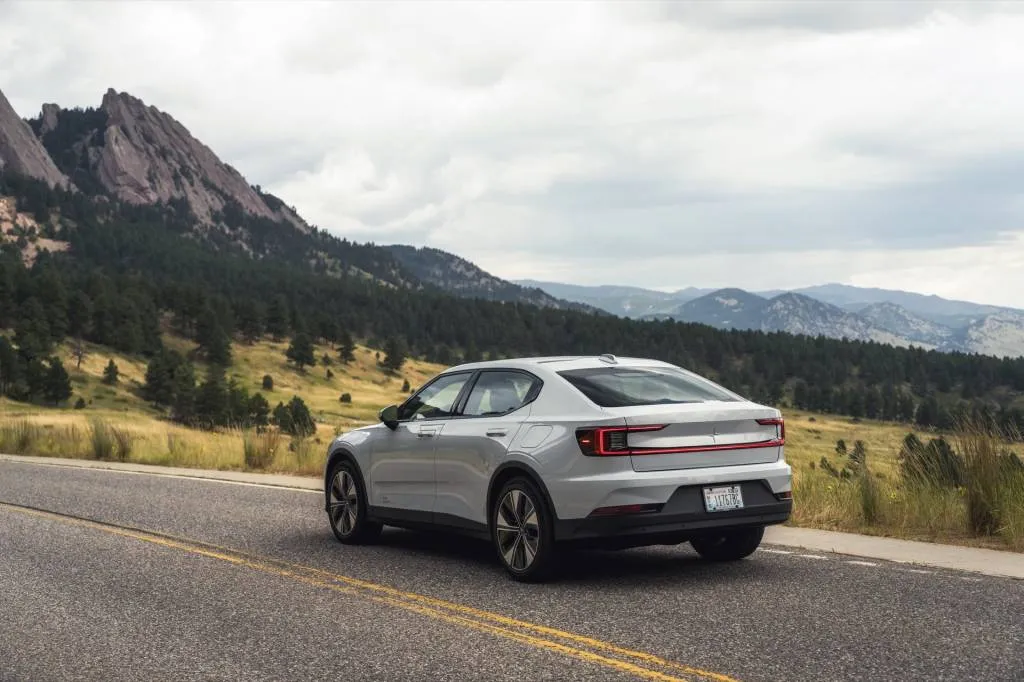
2024 Polestar 2 single motor
This aligns with what Green Car Reports was told about the fate of the current-generation Polestar 2, which was reduced to one configuration for the 2025 model year. That seemed like an indication the hatchback would be killed off soon, but Polestar said it remained committed to keeping it in the lineup. So perhaps the current-generation Polestar 2 will stick around long enough for the redesigned model to arrive.
That redesigned model will use a new architecture debuting with the Polestar 7 that will serve as the basis for all future Polestar models, and will arrive sometime after the 7, Lohscheller noted. Polestar hasn’t said exactly when that SUV will arrive.
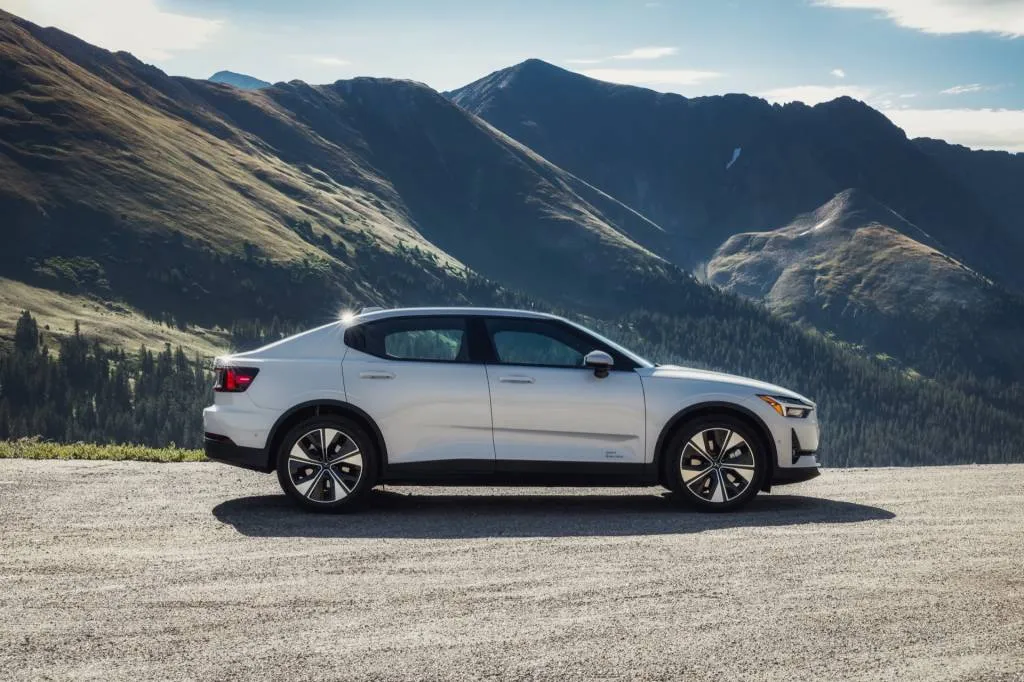
2024 Polestar 2 single motor
And while the current Polestar 2 is assembled in China, Autocar reports that the new version will be built in Europe, likely at parent company Geely’s new plant in Slovakia. That would also make U.S. importation easier should the Trump Administration follow through on its threat of even steeper tariffs than the ones already imposed by the Biden Administration on Chinese-made EVs.
While not confirmed for the U.S., a future Europe-built Polestar 2 would require less effort to sell here at a commercially-viable price than the Polestar 4. Polestar originally planned to build this model in China, but then shifted production for the North American market to a Renault plant in South Korea to get around U.S. trade policies that penalize China-manufactured EVs.

Defender Octa-based contender set for 2026 Dakar Rally
 The 626-hp Defender Octa will serve as the basis for a new Defender rally raid vehicle being developed by a JLR works team for the 2026 World Rally-Raid Championship, the premier event for which is the Dakar Rally in Saudi Arabia. The Defender rally raid vehicle will compete in the Stock category, which is designated for production vehicles. New…

Mexico is pushing ahead with a federally subsidized EV
As the incoming Trump Administration remains committed to stiff tariffs on Mexican imports, the Mexican government is pushing ahead with its affordable electric-vehicle project.
The project,—called “Olinia,” meaning “movement” in the indigenous Nahuatl language—was announced last October, but President Claudia Sheinbaum provided the first details earlier this month.
As reported by the Financial Times, the goal is an “ultra-compact” electric car—designed and built in Mexico—with a base price between 90,000-150,000 pesos, or approximately $4,400 and $7,300 at current exchange rates.
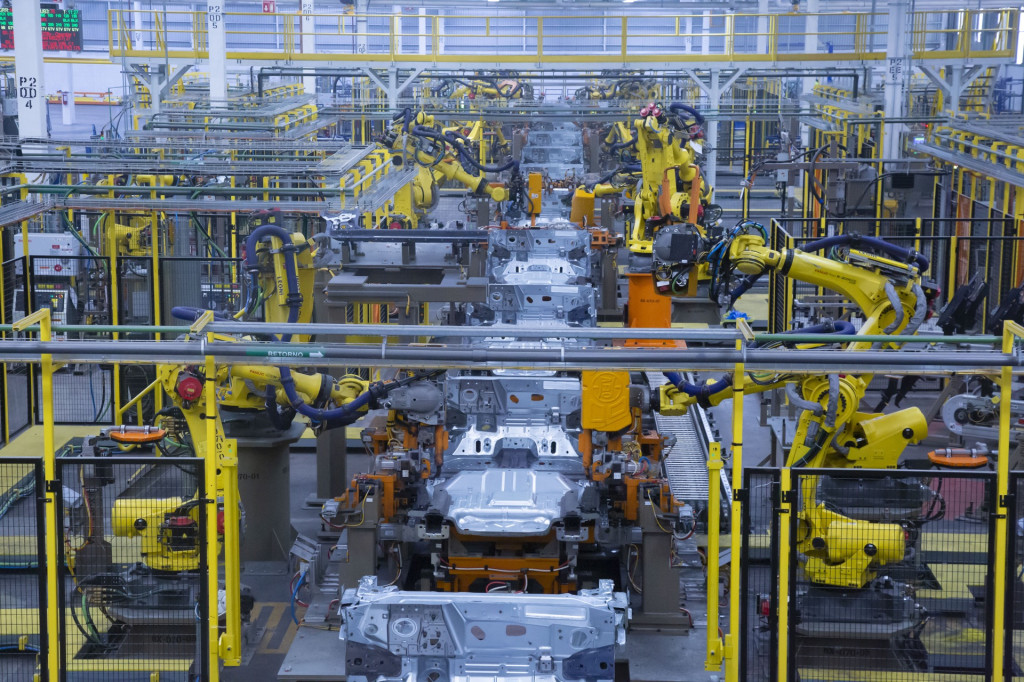
Ford Mustang Mach-E assembly – Mexico
This will be achieved with smallness and simplicity. According to the Financial Times, officials want the Olinia EV to be rechargeable using a conventional household socket rather than a dedicated charging station—more like an appliance than a car. That approach sidesteps the question of public charging infrastructure, which remains a problem for EV adoption Mexico just as it does in the U.S.
But instead of conventional EVs, its competition might instead be the small motorbikes frequently used for short trips or as taxis in working-class neighborhoods. In that sense, it’s a bit like an electric update of the Tata Nano, the ultra-cheap gasoline car designed for the Indian market as a safer, more comfortable alternative to two-wheeled vehicles.
The Olinia will likely also compete against entry-level EVs from both India and China. One in five vehicles sold in Mexico in 2023 was made in China, according to the Financial Times, reflecting that, while Mexico builds a substantial number of cars, most are exported. This project could produce a Mexico-made EV that more of the country’s citizens could afford, although given the modest budget of 25 million pesos (about $1.2 million), the likelihood of it being made in consequential volumes remains in doubt.
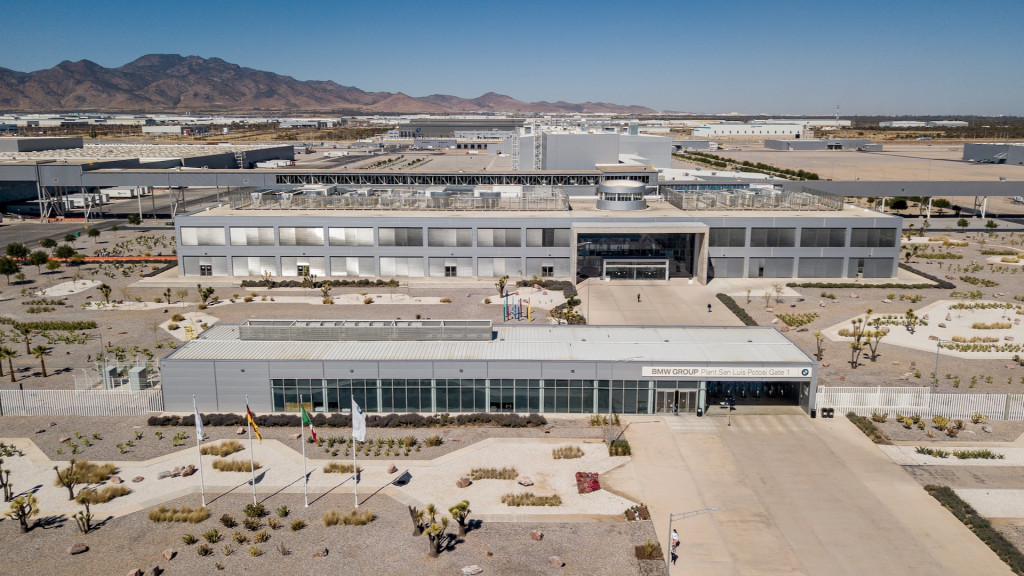
BMW Group Plant San Luis Potosí in Mexico
Meanwhile, President Trump is expected to put into action an aggressive tariff plan discussed during the 2024 presidential campaign. That included the promise of a 100% tariff on Mexico-built cars from Chinese brands—EV or not. He has also pledged to “punish” companies that ship jobs to Mexico or rely heavily on Mexico-based supplier factories. A wide range of analysts and industry experts have projected that such policies would raise new-car prices for U.S. consumers, but without the actual policy here yet it amounts to speculation.
In November, Ward’s Intelligence projected that tariff changes with Mexico would affect nearly 3 million vehicles annually, including some of the most affordable models reaching the U.S. market. With news reports suggesting a 25% tariff is what the administration might impose, Mexico is likely to lose some economic leverage—and needs to come up with more of its own plans to support manufacturing.

NHTSA escalates probe on Ford’s BlueCruise after 3 fatalities
 Two separate crashes involving BlueCruise in two Ford Mustang Mach-Es prompted the probe Investigation uncovered limitations with the Level 2 ADAS at nighttime and at speeds above 70 mph Other Ford and Lincoln models with active lane control are being scrutinized Ford’s BlueCruise is the latest limited hands-free driving system to come under…

2026 Mazda CX-5 spied for first time
 Mazda has been spotted testing prototypes for a third-generation CX-5 The new CX-5 is expected to debut later this year, likely as a 2026 model for the U.S. Mazda has confirmed a hybrid option is in the works Mazda’s top-selling CX-5 compact crossover is about to be redesigned, and a prototype has been spotted for the first time. The new…

Canoo files bankruptcy, claiming funding shortfalls
Struggling electric vehicle startup Canoo has filed for bankruptcy and ceased all operations.
The startup announced its filing for Chapter 7 bankruptcy on Jan. 17 in the U.S. Bankruptcy Court for Delaware. This will result in the federal appointment of a trustee to oversee the liquidation of Canoo’s assets and distribution of proceeds to creditors, the startup confirmed in a press release.
Canoo attributed the decision to declare bankruptcy to unsuccessful efforts to secure additional funding from a Department of Energy loan program and foreign investors. Canoo went public four years ago, raising an estimated $600 million, but the cash-intensive process of developing and manufacturing new vehicles left it looking for other funding sources.
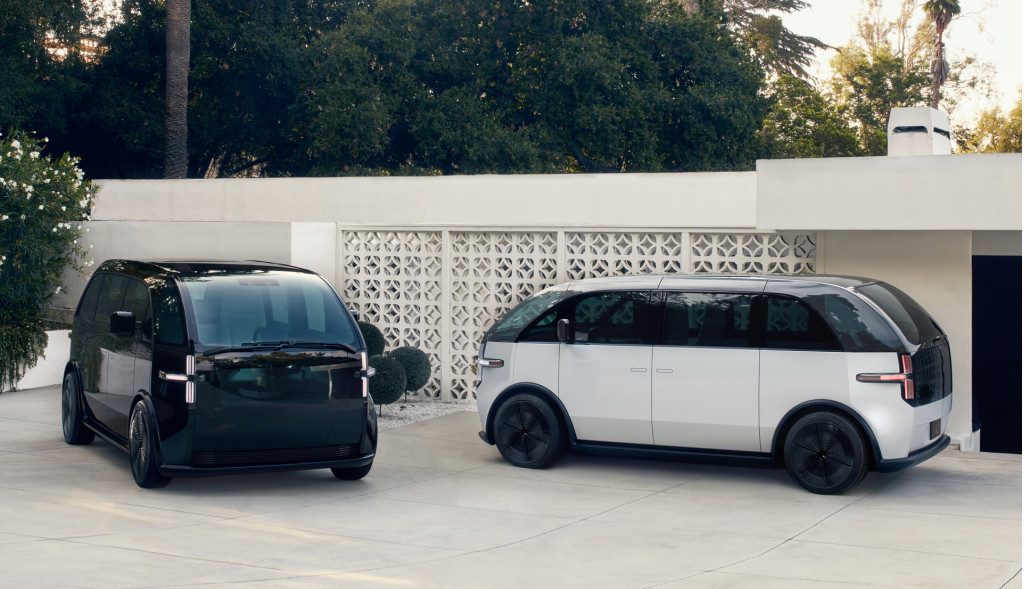
Canoo Lifestyle Vehicle
Canoo has claimed to have substantial numbers of orders from customers like Walmart, but has only managed to deliver small numbers of demonstration vehicles, including to NASA, the Department of Defense, and the U.S. Postal Service. It’s mainly focused on electric vans built atop a skateboard chassis, but it also produced two pickup-truck designs, the latter intended for military use and only produced in prototype form.
As first reported by TechCrunch, Canoo’s bankruptcy filing reveals the startup owes approximately $164 million to creditors while holding assets valued at $126 million.
Canoo in December furloughed 82 employees and idled an assembly facility in Oklahoma, then quickly placed the remaining employees on what it called a “mandatory unpaid break.” Earlier in the year, it purchased equipment from defunct U.K. startup Arrival for use at the Oklahoma facility.
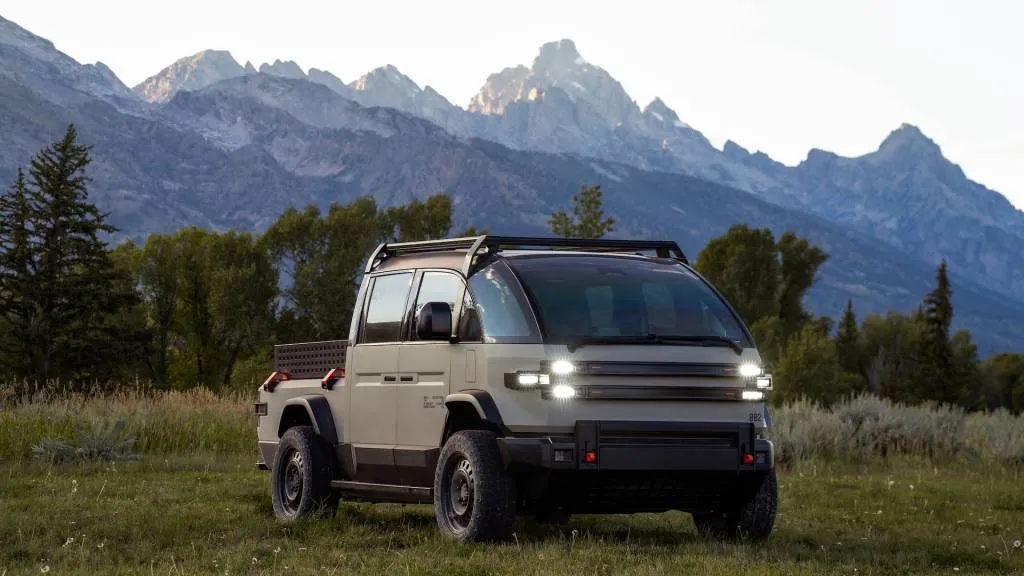
Canoo American Bulldog
In 2017, the company was started as Evelozcity by several former Faraday Future executives, although most of the contingent that launched it left some time ago. That’s coincided with a change in direction under current CEO Tony Aquila, who pivoted Canoo from its original plan of selling van-like EVs on a subscription basis toward commercial vehicles and government contracts.
While the broad-strokes plan to manufacture commercial vehicles has remained the same under Aquila’s leadership, the details have changed. Canoo revealed production plans with the Netherlands’ VDL, then canceled them, with a following corporate move to Arkansas and then Texas.

Lewis Hamilton spends his first day at Ferrari
 Lewis Hamilton has made the switch from Mercedes-Benz AMG to Ferrari The 40-year-old F1 veteran will be chasing his eighth title On his first day, he was greeted by an F40, his favorite supercar according to Ferrari Formula 1 superstar Lewis Hamilton has officially begun his tenure at Ferrari, one year after making the shock announcement that he…

Michigan State Police put first EV into patrol fleet
The Michigan State Police (MSP) has acquired its first electric patrol vehicle, joining a growing number of police departments utilizing electric vehicles.
A 2024 Ford Mustang Mach-E modified for police use has been assigned to the MSP’s State Security Operations Section to be used by properties security officers at state-owned and leased facilities around Michigan’s capital of Lansing, according to a Jan. 13 press release.
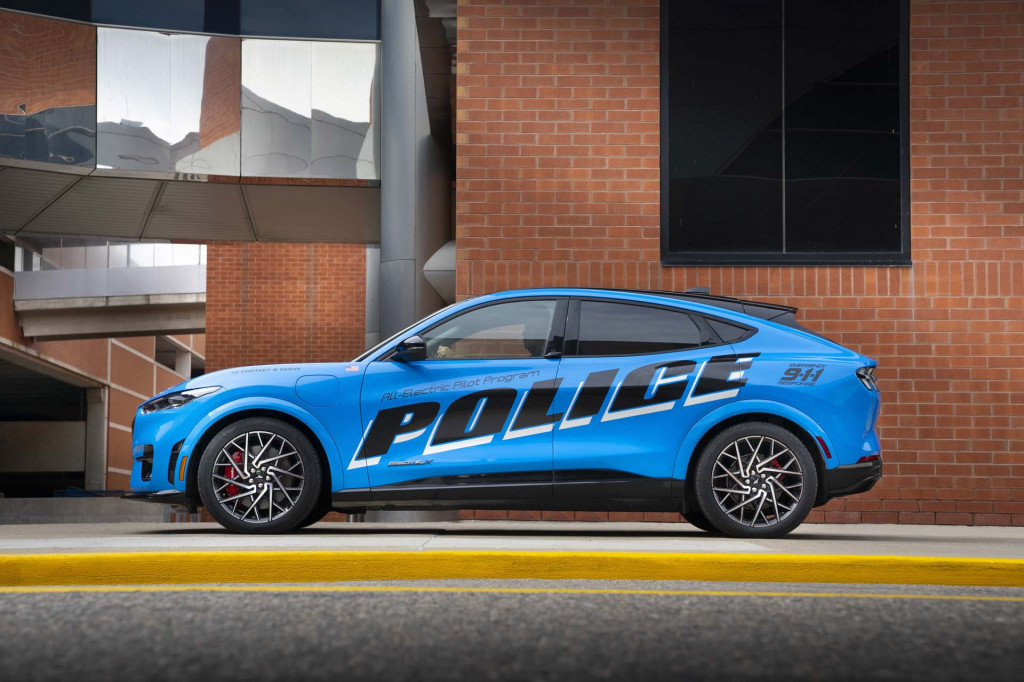
2021 Ford Mustang Mach-E police pilot vehicle
The Michigan State Police is known for conducting through testing of all new police vehicles, and has been testing EVs since 2022. But until now its only deviation from traditional internal-combustion has been with hybrid police cars.
Police departments in other parts of the country are ahead of Michigan in that regard. Ford has been pitching the Mustang Mach-E as a police car since 2021, and the New York Police Department (NYPD) has since acquired a few. Ford also offers a police version of the F-150 Lightning pickup truck, and has said it’s considering “purpose-built electric police vehicles” as well.
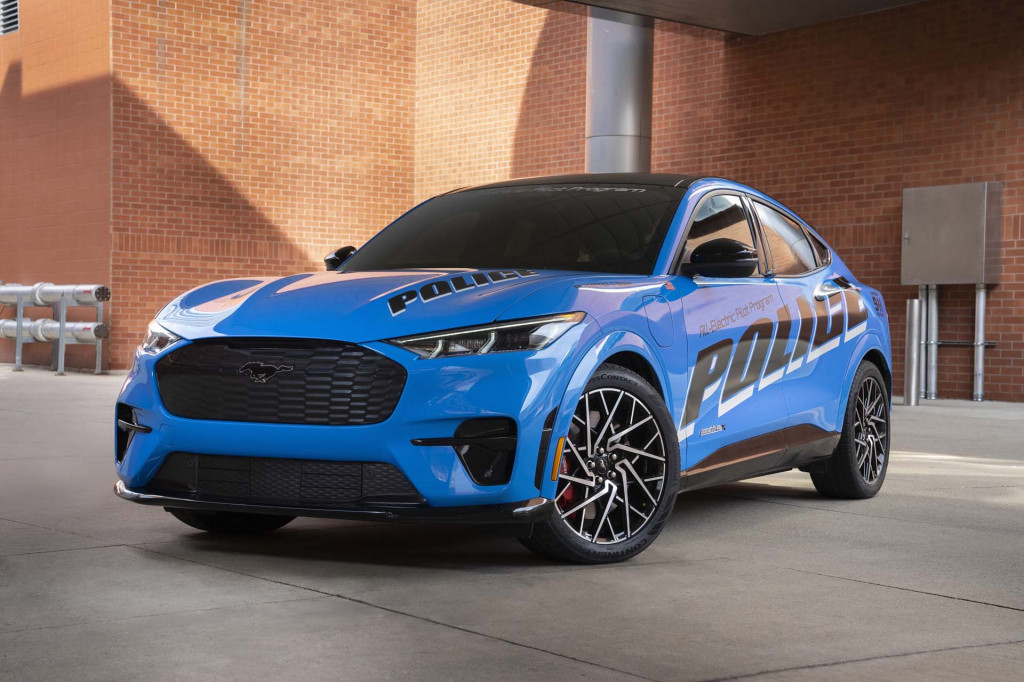
2021 Ford Mustang Mach-E police pilot vehicle
Given the state’s leadership in EV sales for civilians, several California police departments operate electric cars—with at least one municipality boasting an all-electric fleet. These tend to be Tesla Model 3 and Model Y crossovers modified by aftermarket companies, which some police departments have said are less than ideal for the job.
Police departments still don’t have many other choices for electric cars, though. It’s unclear whether the Tesla Cybertruck will prove more suitable for police work than the automaker’s smaller vehicles. But Stellantis has teased a possible police version of the all-electric Dodge Charger Daytona, which could make for a more reasonable replacement for previous-generation gasoline Charger sedans as they cycle out of service.

2025 BMW i7 electric flagship sedan carries over unchanged
The 2025 BMW i7—an all-electric version of the automaker’s flagship 7-Series—carries over to the new model year unchanged.
Listed pricing even remains the same, although an increase of the mandatory destination charge from $995 to $1,175 somewhat bumps up the effective cost of an i7. The three-tier lineup still starts with the single-motor rear-wheel-drive i7 eDrive50, which now costs $106,875 with the higher destination charge.
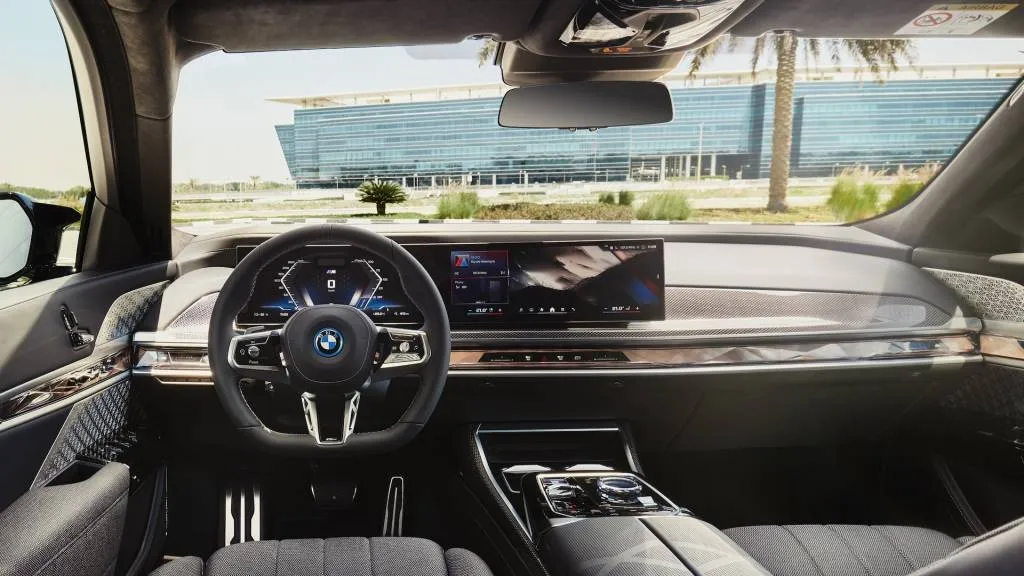
2025 BMW i7
The dual-motor all-wheel-drive i7 xDrive60 increases output from the rear-wheel-drive model’s 449 hp to 536 hp at a cost of $125,375. This is the version we initially drove when the i7 launched as a 2023 model, and we found it shockingly good considering that it shares so much with gasoline 7-Series sedans.
For 2024, BMW added a sportier dual-motor i7 M70 with 650 hp, which the automaker claims will get this version of the i7 from 0-60 mph in 3.5 seconds. It returns for 2025 with a $169,675 sticker price, once destination is factored in.
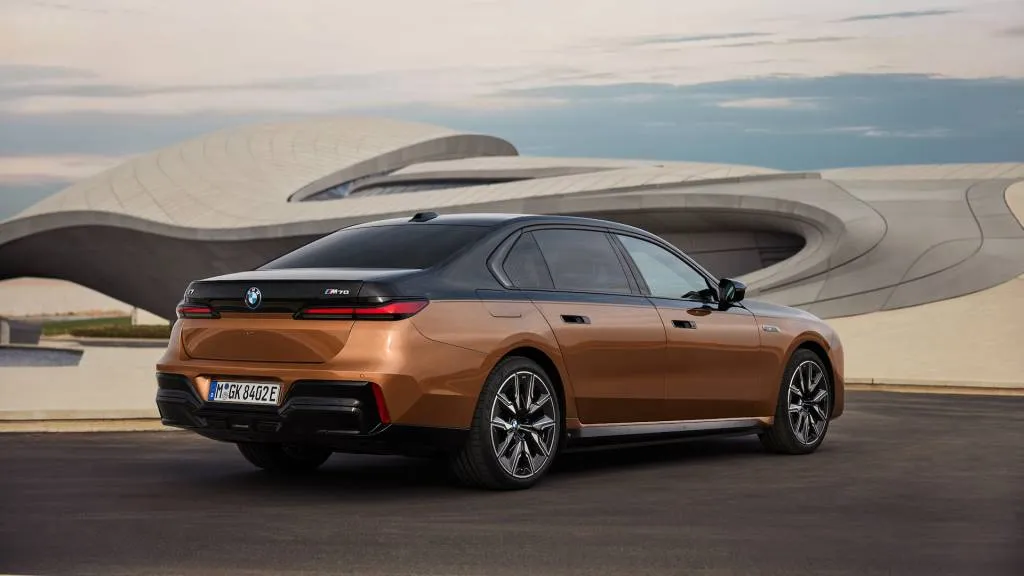
2025 BMW i7
All i7 models use a 101.7-kwh battery pack that delivers a maximum 314 miles of EPA range in eDrive50 models with 19-inch wheels (the smallest available). The xDrive60 and M70 max out at 311 miles and 285 miles, respectively. Again, that’s dependent on wheel choice. The i7 has an 11-kw onboard charger and can DC fast-charge at up to 195 kw—allowing it to gain 80 miles of range in 10 minutes, according to BMW.
The i7 represents one of multiple course corrections BMW has made with its EV plans. After relatively slow sales of the i3 hatchback, BMW refocused on EVs based on combustion models, yielding the i7 and other current models like the i4 and i5. But BMW is returning to dedicated EVs with its Neue Klasse models, the first of which is now in pre-production, for the European market, ahead of a planned launch there later this year.

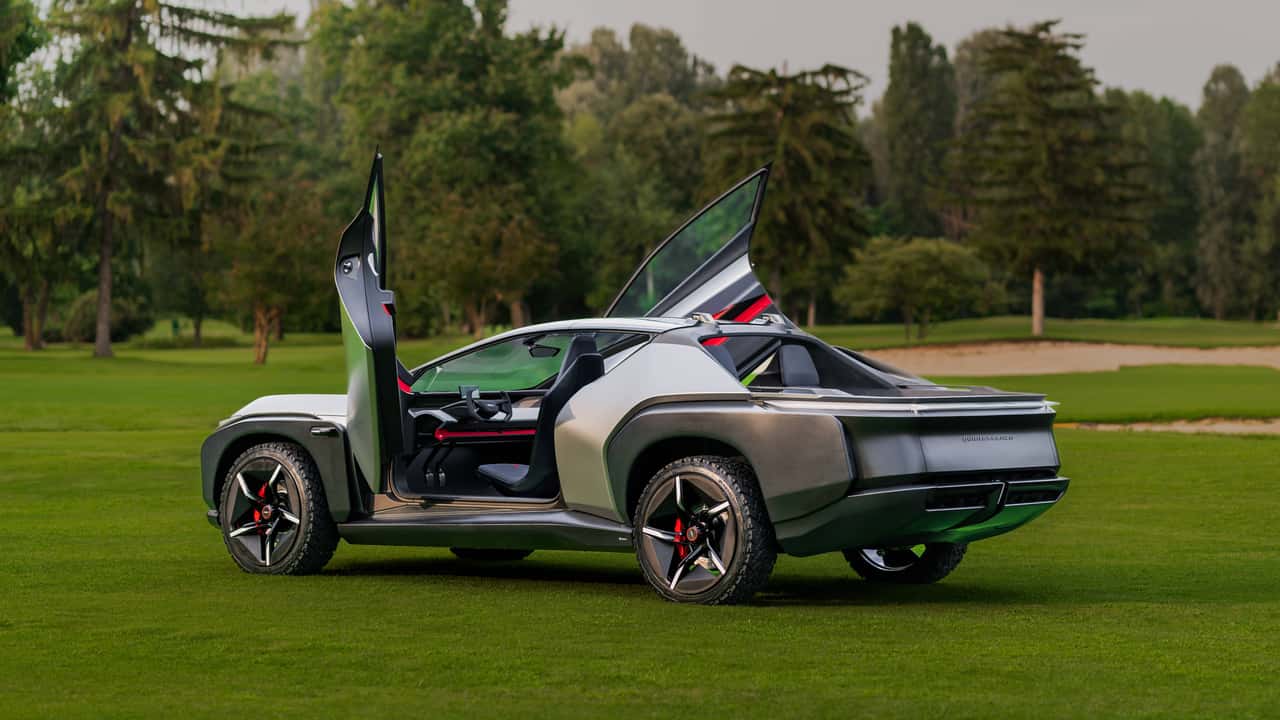
This Wild Electric ‘Truck’ Has Huge In-Wheel Motors
With high-performance tires, Italdesign reckons it could do 0-62 mph in less than 2.2 seconds. (Also, it has seats in the truck bed.)