
Author: EVAI

2025 Alfa Romeo Intensa Special Series brings two-tone treatment
 Alfa Romeo is adding a second special series across its three-vehicle lineup for the 2025 model year. After announcing the Tributo Italiano special series in late 2023, Alfa Romeo announced the follow-up series, dubbed Intensa, at the 2025 Brussels auto show. Like the Tributo Italiano series, the Intensa series brings unique cosmetic touches to…

This new Toyota includes $15,000 of free fuel, could cost $17,000
 Southern California shoppers might get up to 70% off hydrogen fuel-cell Mirai Bay Area customers can get discounts too Sales have slowed, and the price of hydrogen has soared If you live in Southern California, you can buy a new Toyota for about the cost of the cheapest subcompact car—with $15,000 of free fuel. That car is the 2024 Toyota…

A Mercedes S-Class Coupe might take aim for Bentley and Rolls-Royce
 The Mercedes-Benz S-Class Coupe could make a comeback as the automaker looks to move further upmarket. First spotted by Car and Driver, a pair of trademark filings with the European Union Intellectual Property Office (EUIPO) show coupe versions of the current-generation S-Class, known internally as the W223. Mercedes discontinued the coupe body…

Supplier SK On claims solid-state EV battery “breakthroughs”
Battery supplier SK On recently gave an update on its research into solid-state batteries for electric vehicles, claiming “breakthroughs” that could bring these batteries closer to production-readiness.
In a press release, SK On said it’s developing two types of solid-state batteries: one with a sulfide-based electrolyte, and one with an oxide-based electrolyte, with “commercial prototypes” expected by 2027 and 2029, respectively. The company aims to complete a solid-state battery pilot plant at its research center in Daejeon, South Korea, later this year.
This timeline will be made possible in part by the aforementioned breakthroughs, which SK On claims will allow a longer life cycle for solid-state batteries in the near future. They come from separate studies into methods for improving the robustness of both solid-state chemistries it plans to commercialize.
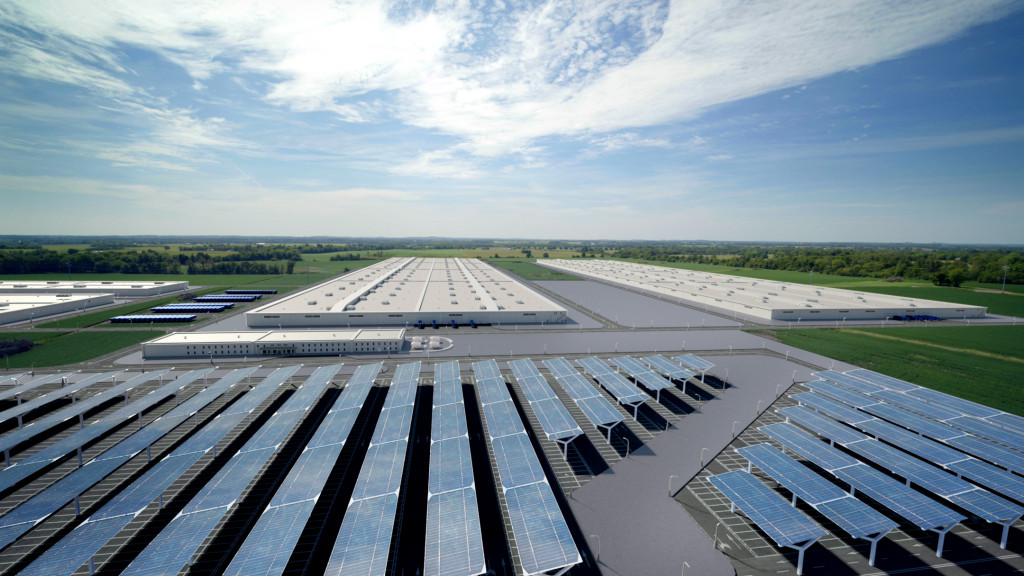
BlueOvalSK Battery Park – rendering, September 2021
In one study, SK On claims to have gotten encouraging results from photonic sintering of oxide-based electrolyte materials, a process the company says could address the brittleness of material produced using current methods, while potentially reducing costs. Testing was done with a hybrid solid-state battery cell that used a gel electrolyte, but SK On appears to believe that the results extend to all-solid-state batteries as well.
Researchers also tested lithium- and manganese-rich layered oxide (LMRO) cathodes for sulfide-based solid-state batteries. With a special coating applied to prevent oxidization of the sulfide electrolyte, SK On claims to have reached a satisfactory life cycle for these cells.
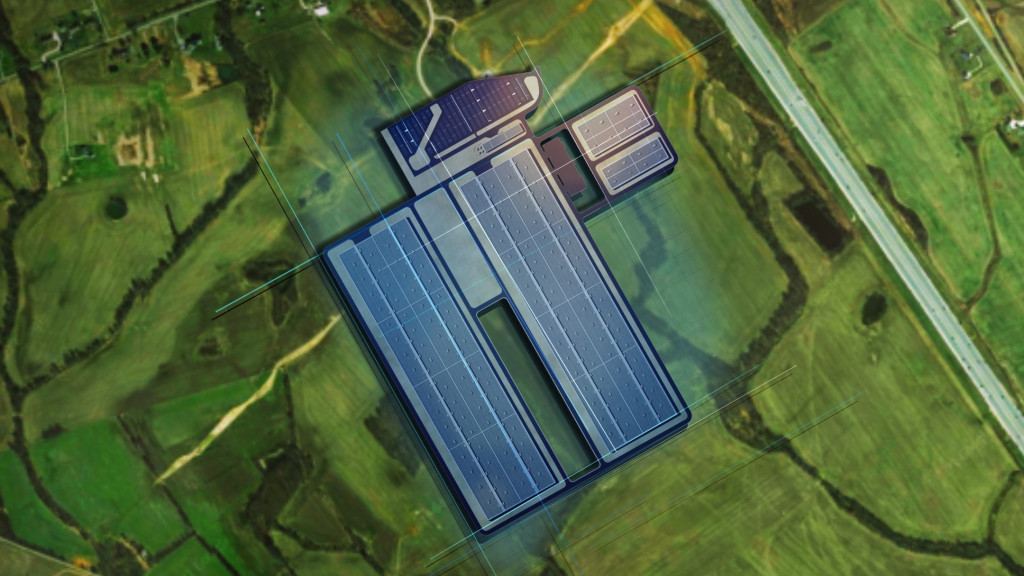
BlueOvalSK Battery Park – rendering, September 2021
It’s not unusual for startups to hype their achievements in the name of survival, but SK On is a large, established battery manufacturer that’s generally more conservative. So a declaration of breakthroughs from this company—which has automotive customers like Ford, Ferrari, and Hyundai—is a big deal.
The race to develop commercially-viable solid-state batteries has attracted a field of competitors ranging from startups and established firms like SK On to automakers themselves. Both Honda and Toyota are planning to produce solid-state batteries in-house, albeit likely on a small scale, by the end of the decade. Other automakers, such as Stellantis and Volkswagen, are allying with startups for access to the tech.

Porsche made an in-wheel electric motor in 1900
 In-wheel motors are now a much-discussed topic for performance electric vehicles, but Ferdinand Porsche, the founder of the Porsche engineering company and father to Ferry Porsche, the founder of the Porsche sports car brand, worked on them over 100 years ago. At the turn of the 20th century, electric cars gave internal combustion a run for its…

2025 Alfa Romeo Giulia loses trim levels, gains Tributo Italiano limited edition
 The Alfa Romeo Giulia sedan lineup shrinks from three grades to one for 2025, but gains a new limited-edition model. A single trim level replaces the previous Sprint, Ti, and Veloce grades. The Giulia Quadrifoglio performance model already departed earlier this year with a Super Sport special edition. That means the only available powertrain is…

Review: 2024 Porsche Cayenne Turbo E-Hybrid poses a triple threat
 The Cayenne Turbo E-Hybrid replaces the non-plug-in Turbo Up to 42 miles of range, according to this gauge It’s $148,550 for the SUV, $153,050 for the Coupe If you want a luxury car, you’ve earned it—but let’s be adults here. It’s time to make some concessions to efficiency. The new wave of plug-in hybrids in the…

Report: Ram cancels 500-mile 1500 REV electric truck
Stellantis has reportedly cancelled a bigger-battery version of the Ram 1500 REV electric pickup truck that the automaker previously said would offer 500 miles of range.
According to a Wednesday Mopar Insiders report, the truck brand is now telling suppliers that the long-range model has been cancelled, and to cease work and spending on any parts related to it. A Stellantis spokesperson would only say Ram’s decision to launch the Ramcharger first and shift focus is driven by consumer interest.
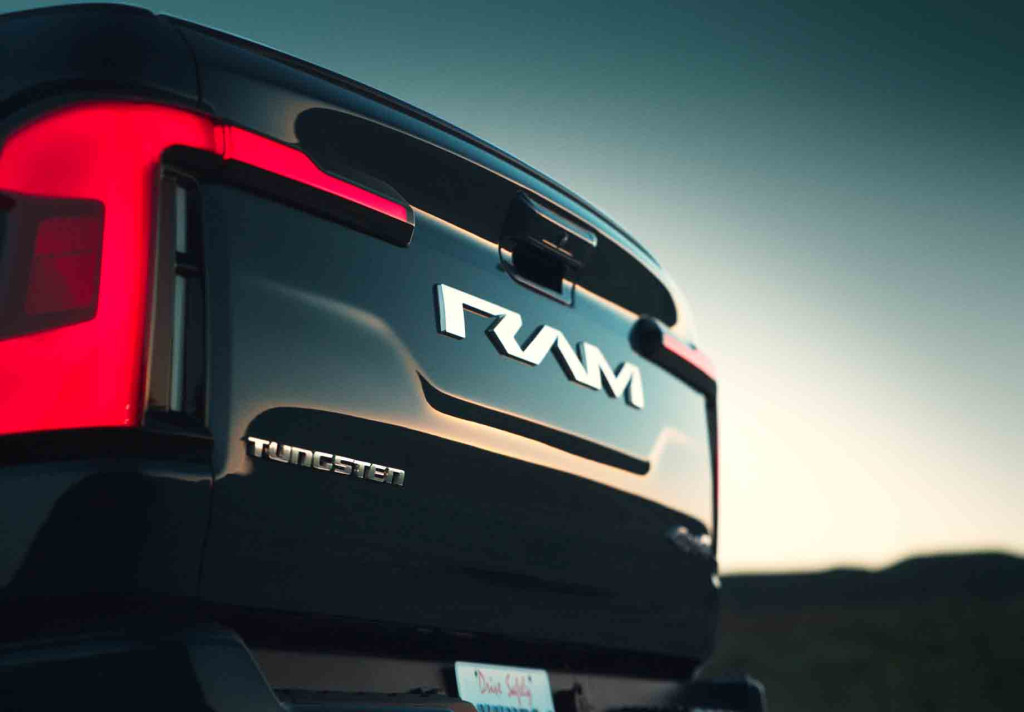
2025 Ram 1500 REV
The report to drop the bigger battery leaves the 168-kwh pack—also double-layer—which Ram previously estimated would deliver up to 350 miles of range. That’s less than the Chevrolet Silverado/GMC Sierra EV twins and Rivian R1T, but the Ram 1500 REV does at least offer 800-volt charging that Stellantis previously said could recover 110 miles of range in 10 minutes with a 350-kw CCS connector.
Big battery or not, the truck is running behind schedule. Ram confirmed the 500-mile target, to be achieved with a 229-kwh double-layer battery pack, at the 2023 New York auto show, and the truck made its debut in a 2023 Super Bowl ad. Stellantis said the electric truck would arrive at dealerships in 2024 as a 2025 model. But late last year, then-CEO Carlos Tavares it was being pushed back to the first half of 2025 to ensure quality. Stellantis later delayed the electric Ram even further, to 2026.
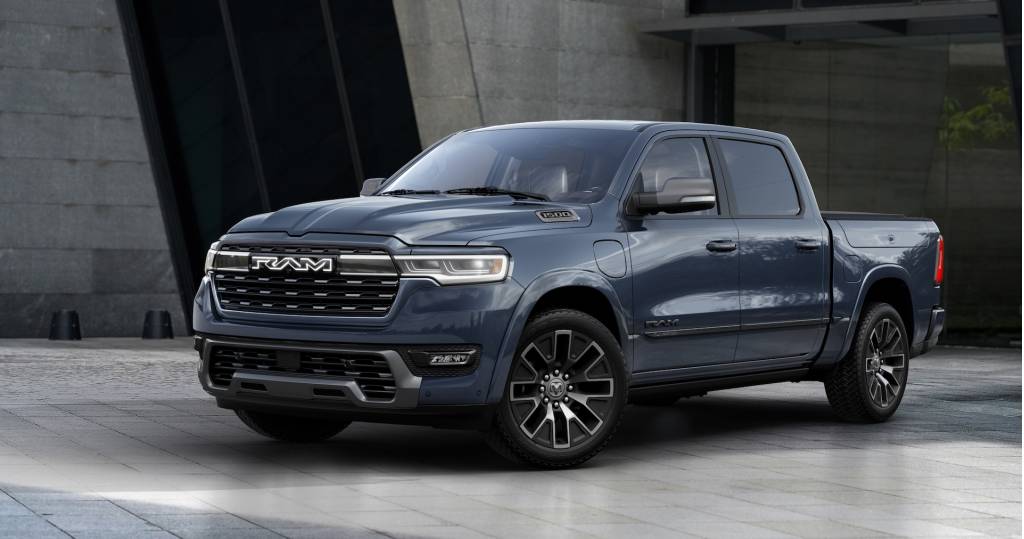
2025 Ram 1500 Ramcharger
Stellantis instead decided to launch the series-hybrid Ram 1500 Ramcharger before the all-electric REV. Now scheduled to arrive in the first half of this year, the Ramcharger uses a 92-kwh battery pack and a 3.6-liter V-6 engine acting as a range extender to deliver 145 miles of pure electric range, toward a total of 690 miles including those from the gas powertrain. The Ramcharger, which also promises similar acceleration, towing, and payload numbers to the REV, offers something novel instead of simply playing catch-up to rivals that have already launched battery-electric pickups. So it was always likely to upstage the REV, a turnabout that’s further enabled by the cancellation of the 229-kwh REV variant.

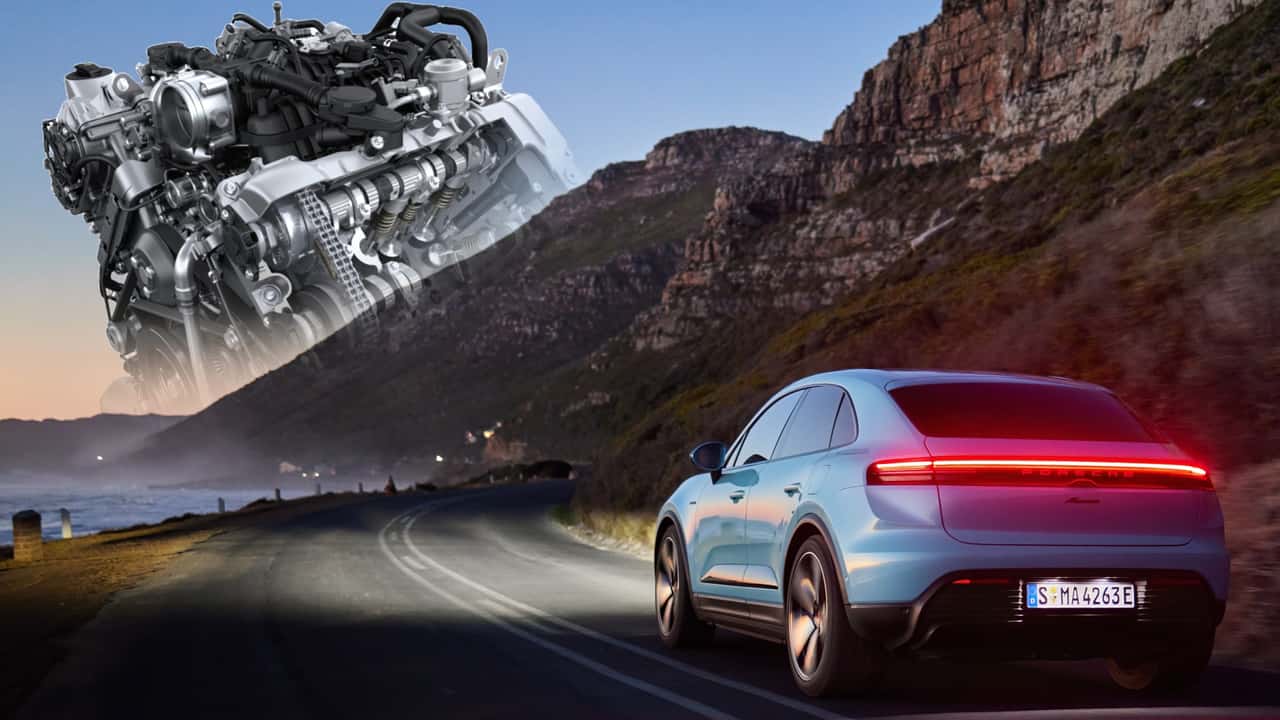
The Porsche Macan May Not Stay All-Electric After All: Report
- Porsche may come back on its decision not to make a new combustion-powered Macan after production of the current model ends in 2026.
- One report citing a “senior Porsche insider” says a new generation ICE Macan is being considered.
- Porsche EV sales weren’t so hot in 2024, which probably raised alarm bells within the company about its shift to electrified vehicles.
Porsche’s best-known models are sports cars, but the brand’s moneymakers are the SUVs: the Macan and Cayenne. The smaller of the two, the Macan, is Porsche’s global best-seller, so eyebrows were surely raised when the manufacturer announced that it would go electric-only for its next act. But now, one Porsche insider says the German automaker may be rethinking that plan.
Porsche initially announced that the original Macan, which debuted in 2014 and was discontinued in Europe last year, would remain on sale alongside the electric model in other markets (including the U.S.) until 2026. An Autocar report, quoting an unnamed “senior Porsche insider,” says the automaker is mulling a second-generation combustion Macan, even though it said it wouldn’t.

9
Source: Porsche
The insider explained, “The reception to the new Macan [Electric] has been positive, but we are yet to see its long-term performance, given uncertain market conditions.” Making a new ICE Macan is now being analyzed as part of a “range of product scenarios.”
Last year, Porsche sounded very optimistic about the Macan EV’s market success, with its CEO Oliver Blume even saying at one point that it was “overwhelmed” by orders. However, Macan EVs aren’t exactly flying out of showrooms, so it may have been more wishful thinking or an intentional exaggeration meant to stoke interest.
As good as the electric Macan is, buyers are likely put off by the very high price. The base model is $75,300, but the more powerful Turbo model with all the options costs twice that. The price is hugely important, as shown by the Tesla Model Y, which isn’t exactly a direct rival, being slightly smaller, less sophisticated and not quite as luxurious, but it costs considerably less and that’s a big part of why it’s a global hit.
Porsche began changing its narrative on how quickly it planned to transition to selling mostly electric vehicles. It appeared to lose confidence in its self-imposed goal of selling 80% electric vehicles by 2030, and we also analyzed reports that it was also considering putting a combustion engine in the new 718 sports car, even though it had previously emphatically announced that the Boxster and Cayman were going electric.
The timeline for the electric 718’s arrival is also uncertain, and it likely won’t be shown this year as initially announced due to issues with its battery supplier.
The manufacturer is alarmed by the fact that sales of its Taycan crashed in 2024, dropping by 49% globally, despite its major overhaul that made one of the best sporty EVs even better. In China, things were particularly bad for the groundbreaking electric sedan.
This was confirmed by Autocar’s unnamed insider, who explained that “The downturn in Taycan sales highlights new market dynamics. We cannot rely solely on traditional assumptions about consumer behavior,” he said.
Perhaps Porsche will end up giving customers different options longer than expected. As a U.S. spokesperson confirmed to us recently, nearly 30% of its global sales last year were hybrid or electric, and half of that figure was all-electric. The company may just be nervous about moving the Macan entirely away from gasoline.
It’s ultimately all about the money and Porsche looking to ensure its future existence. Lutz Meschke, Porsche’s chief financial officer, noted in November 2024 that they were “exploring the possibility of equipping some of the originally planned electric models with hybrid drives or internal combustion engines in the future. Conceptual decisions are being made, but what is clear is that we are committed to the combustion engine for much longer.”
Porsche isn’t alone in backtracking on its ambition to quickly transition to offering mostly electric or electrified vehicles. The other big German brands have made similar announcements, as have many other automakers, which are trying to adapt to changing market conditions. Even though hybrids, plug-in hybrids and range-extender EVs were seen as transitional vehicles that would be quickly phased out, it seems buyers prefer them over full EVs so manufacturers are reshuffling resources to add such models to their lineups.
Another reason why Porsche and other automakers are changing course is China. It is the world’s single biggest market for new cars, where the largest number of EVs was purchased in 2024. However, Chinese car buyers are increasingly opting for ever-more talented vehicles made by local brands, and they are moving away from foreign brands, even prestige names like Porsche, which sold 28% fewer cars in the People’s Republic in 2024 than the year before.
Share this Story

Hyundai offering 2025 Ioniq 5 buyers a free home charger
Hyundai is expanding an offer of free home chargers or public-charging credits for owners of the refreshed 2025 Ioniq 5 electric vehicle.
This perk was previously offered to owners of the 2025 Hyundai Ioniq 5 N performance variant, but Hyundai confirmed Thursday that it’s now available to owners of other Ioniq 5 models as well. Customers can choose between a free ChargePoint Home Flex Level 2 charger or a $400 public-charging credit for use at ChargePoint’s stations (it was originally $450 for Ioniq 5 N owners).
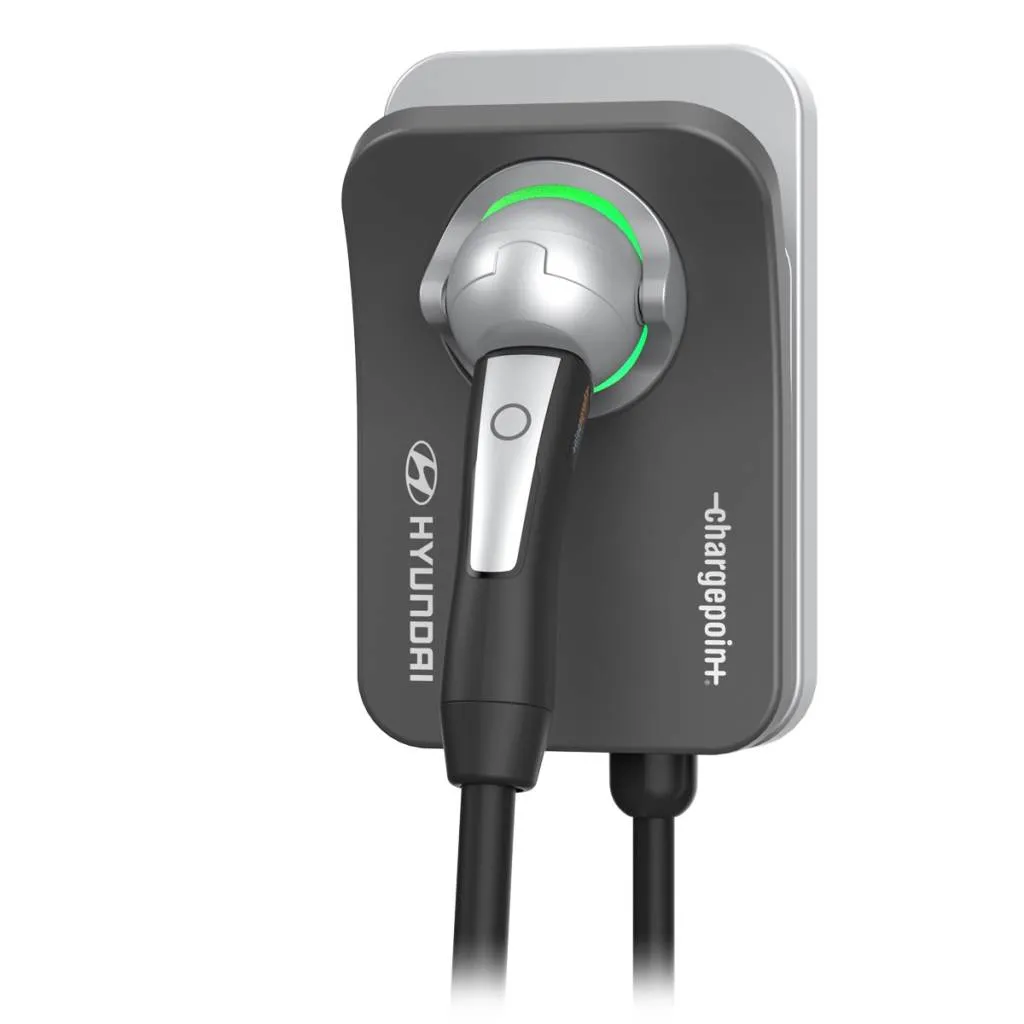
ChargePoint Home Flex Level 2 home charger for 2025 Hyundai Ioniq 5
The home charger is the same unit Hyundai began offering to other EV customers in 2023. Both the charger and installation services are once again provided through the automaker’s Hyundai Home service, which aggregates home-charging possibilities for EV owners, as well as solar and energy storage options, and provides bids for installation.
As with the previous offer for Ioniq 5 N customers, Hyundai is covering hardwired installation, but not any other installation costs, taxes, or fees. Customers who purchased or leased a new 2025 Ioniq 5 after Jan. 1, 2025, have 60 days to choose the free home charger or charging credit, and 120 days to complete hardwired installation for the home charger. The public-charging credit is good for two years.
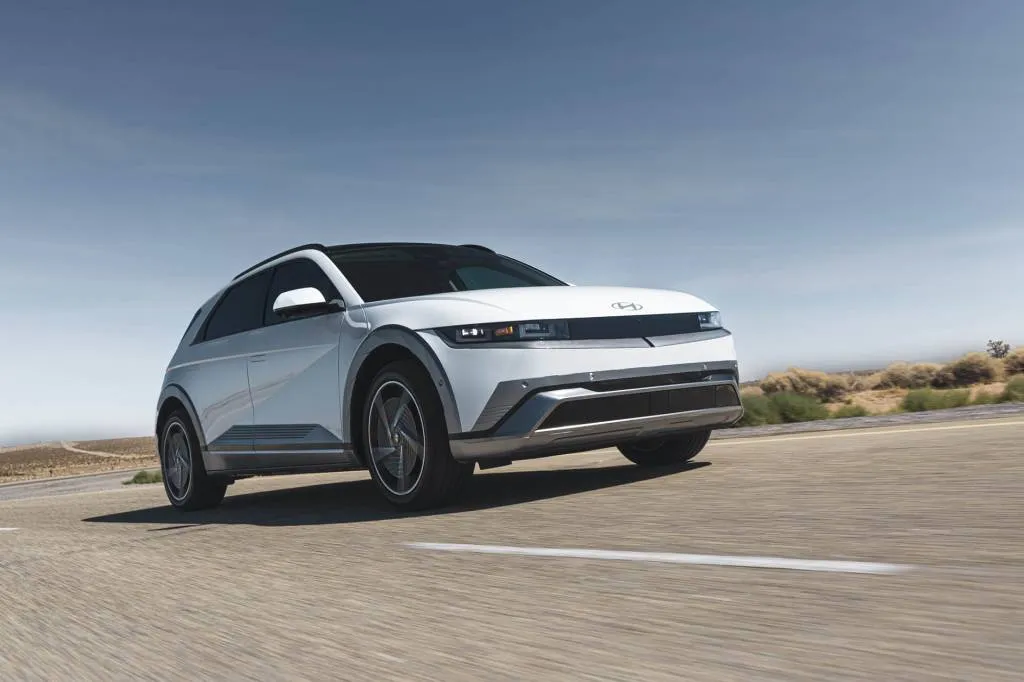
2025 Hyundai Ioniq 5
The Ioniq 5 N, we’ve found, resets expectations for enthusiast EVs with genuine track capability and handling prowess to complement the brutal straight-line acceleration many EVs already offer. But the 2025 Ioniq 5 gets a number of notable updates, too.
Hyundai increased the size of the two available battery packs, boosting estimated range to 318 miles with the larger pack. Charging for all but the 5 N is now accomplished with a Tesla-style NACS connector; a new XRT grade brings off-road features; and all versions feature small styling changes. Hyundai is also shifting most Ioniq 5 production—5 N version aside—to its Georgia “Metaplant.”