
Author: EVAI

Mississippi-made Nissan EVs set for 2028, as product plans shift
- Nissan reassesses plans to build a fifth EV model in the U.S., but four remain set
- Shift of Mississippi plant to EVs has in recent months been pushed out to 2028
- Plans to build a small electric crossover there have reportedly been canceled
Nissan has abandoned plans to produce a particular small crossover electric vehicle in the U.S., Automotive News reported Wednesday.
According to the report, Nissan made plans to build the EV—codenamed PZ1L—at its Canton, Mississippi, plant for U.S. sale. But amid evolving product plans, it’s reportedly now consolidating production of that vehicle to its Sunderland, U.K., plant. That likely means the PZ1L won’t be sold in the U.S., according to the report.
But beyond the four EVs already planned for Canton, there may still be room for more, according to Nissan.
“At the current time, we are focusing our planning efforts on the other four EV projects for the Canton plant, which will better meet the needs of the market and deliver higher volumes,” Nissan vice president of communication Brian Brockman said to Green Car Reports. “As is always the case in the planning process, we will continue to evaluate market opportunities for new models and make adjustments accordingly.”
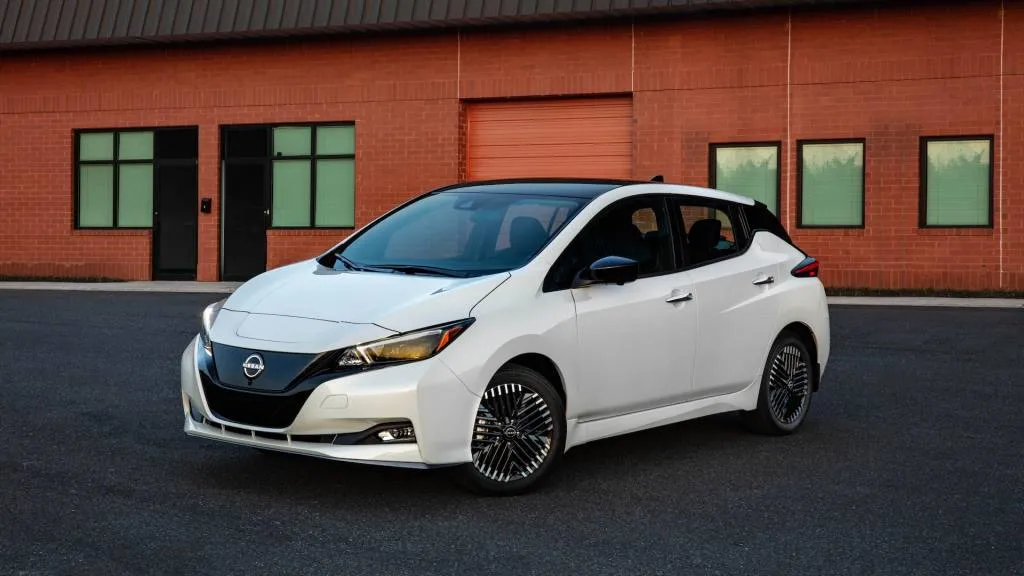
2025 Nissan Leaf
The automaker’s plans to build Nissan and Infiniti EVs in Canton had recently been delayed to 2028, from a 2027 start noted last year. It had originally announced plans for a 2025 start—back in 2022 when it announced the project.
According to recent comments from the automaker, Nissan is indeed planning for five vehicles from the plant.
“Nissan remains committed to the future of mobility and electric vehicle production,” said manufacturing and labor spokesperson Amanda Plecas last week to the Madison Country Journal. “Our Canton, Mississippi facility will transform into a Nissan Intelligent Factory, supporting the manufacture of five next-generation electric vehicles beginning in 2028.”
The Journal noted that the Nissan official would not confirm rumors over whether the Canton plant’s workforce might be downsized as the plant transforms into a Nissan Intelligent Factory that embraces more robotics and a zero-emission production system.
It’s unclear if the PZ1L is one of the three electric crossovers Nissan confirmed for its Sunderland plant in 2023. Two of them included electric versions of the Juke and Qashqai, with the latter unlikely to reach the U.S. The third is expected to be a crossover-influenced sequel to the Leaf, which is expected to arrive for the 2027 model year and has been tipped as U.S.-bound by Nissan officials.
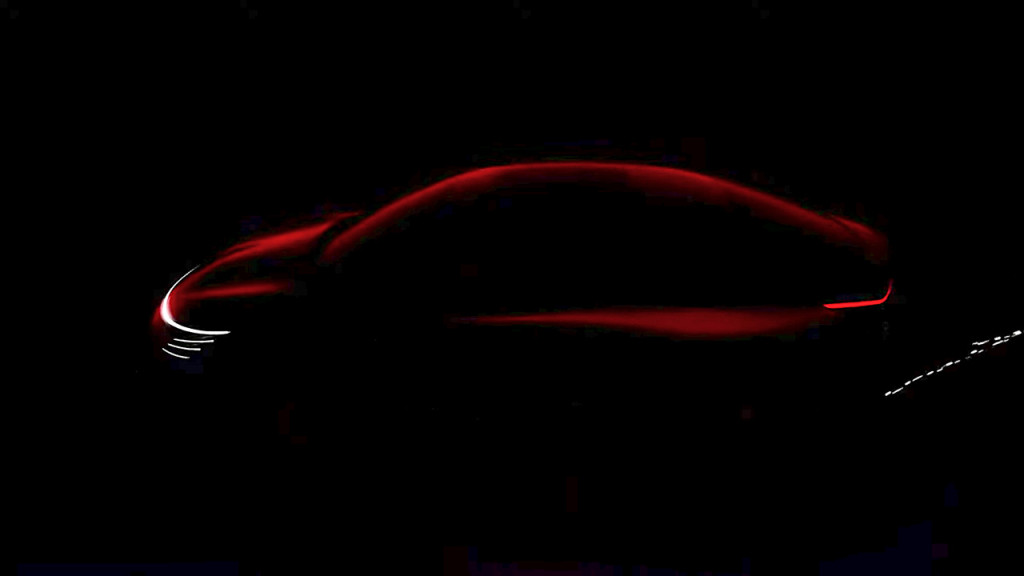
Nissan EV to be made in Mississippi
The Mississippi plant currently assembles the gasoline Altima sedan and Frontier pickup truck. Although Nissan has communicated the plant timing changes as a delay, Automotive News noted that last summer’s delay was different, with the automaker telling suppliers that it was pausing plans for EV production in Canton and putting a $500 million investment in the plant on hold.
A few months later, Nissan announced that it would lay off approximately 9,000 employees globally, representing 6.7% of its global workforce, and cut production capacity by 20% due to declining sales, primarily in the U.S. and China. The situation has led Nissan to pursue a merger with Honda, which the two automakers hope to complete by 2026.
—Senior editor Robert Duffer and senior editor Bengt Halvorson contributed to this report.

Ford Shelby GT350 returns for 2025, but not via Ford
 Shelby American has revealed the 2025 Ford Shelby GT350 The new GT350 is based on the seventh-generation Mustang and delivers up to 810 hp A more hardcore GT350R version is also available with up to 830 hp and parts borrowed from an upcoming Trans Am race car After launching the Super Snake last year, Shelby American’s tuning of the latest…

Lucid dumped Alexa, aims for EV context with new voice assistant
- Lucid’s new voice assistant incorporates natural-language interactivity
- SoundHound tech doesn’t rely entirely on a cellular connection
- Already available in Air, coming soon to Gravity
Lucid wants you to have a conversation with your Air or Gravity electric vehicle, and it goes far beyond the requisite wake-up of “Hey Lucid.”
Earlier this month I sat in the passenger seat of an Air, while the driver asked: “My friend suggested that I go check out the NFL stadium while I’m in Vegas; what’s it called?”
A synthetic voice replied within a fraction of a second: “The NFL Stadium in Vegas is called the Allegiant stadium. It’s super cool.”
“Navigate there,” said my seatmate.
The voice eventually confirmed, “Navigating to Allegiant stadium. Follow the road.”
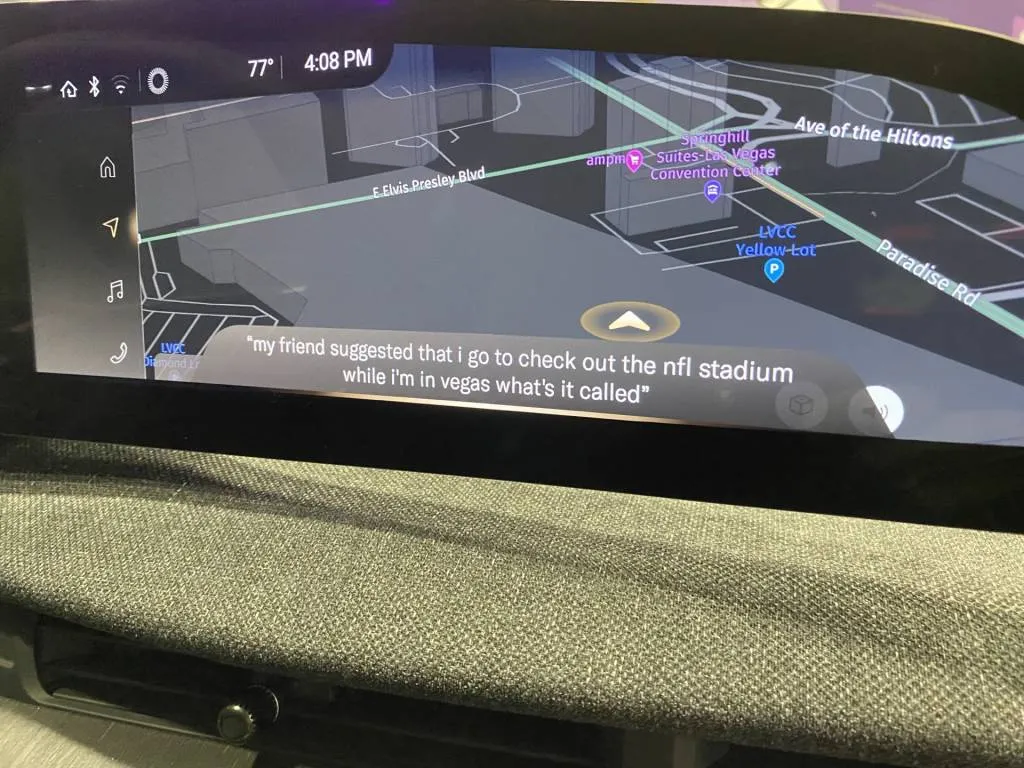
Lucid Assistant powered by SoundHound (demo)
The one in the driver’s seat walking me through Lucid Assistant voice interactivity was Kyle Halstvedt, the technical program manager at SoundHound who helped coordinate this completely new voice assistant for Lucid EVs.
With SoundHound’s voice-and-AI-focused team based in Santa Clara, California, near Lucid’s Newark headquarters, the companies worked closely on the project. Halstvedt aimed to show me that every voice query now has a lot of flexibility, and the voice functionality is now fully in tune with Lucid’s needs—like the need to find the fastest chargers along the way, plan the EV’s route, and precondition its battery to prepare for them.

2022 Lucid Air fast-charging in Garberville, CA
Here it’s especially important that this functionality navigates the nuance—because in a Lucid it can be the difference between one of the quickest EV charging experiences in the world versus one that’s just par.
“That was a fun aspect of this project, that they want to drive things through their own navigation system,” Halstvedt said. “We’re not just using a separate data provider; we’re deeply integrated with their navigation system, and that had to happen.”
Halstvedt noted that’s something SoundHound has experience doing before, and it’s something that Lucid had a particular requirement surrounding the project and the integration. “They appreciated the flexibility of our technical team to build the experience they’re looking for, something that takes a bit of creativity on the technical side,” he said.
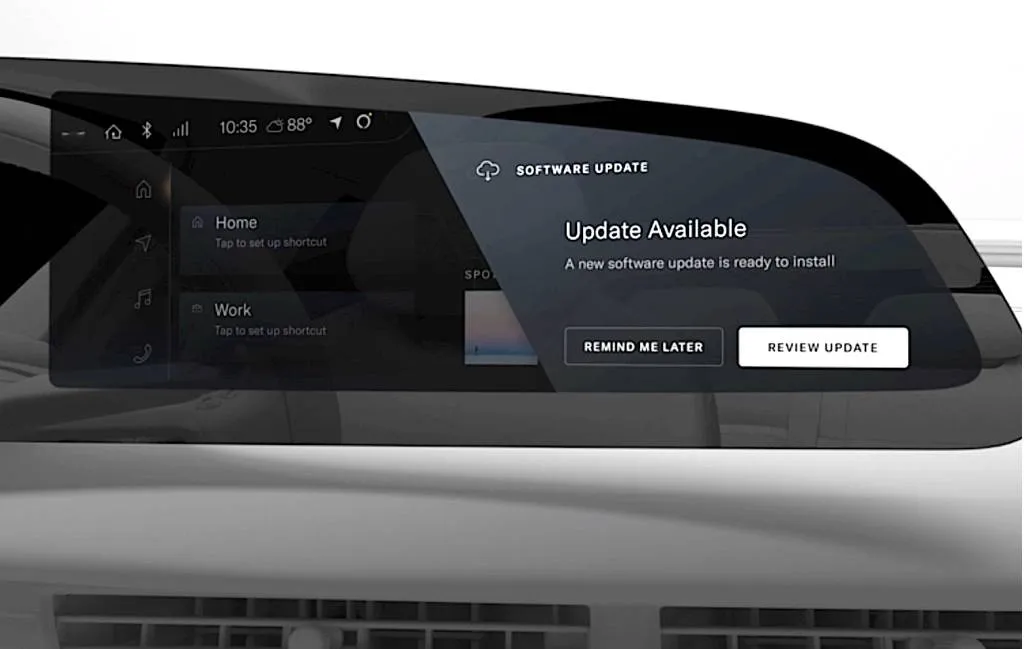
Lucid UX 2.4 update
Way more flexibility, better than Alexa
The Lucid Assistant was rolled out starting in September, replacing Alexa as part of Lucid’s UX 2.4 software update. According to Lucid, all Air models in North America and the Middle East now have access to it. Early Gravity models don’t yet have the Lucid Assistant, but they will soon, the automaker told Green Car Reports.
The new assistant, already configurable in six languages, will now better manage navigation and audio, climate control features, or heated seats—all basics that owners previously found challenging. But that’s just the start.
Lucid made a strategic choice about where it wanted its core competency, and voice is at the center of it, Lucid Motors head of user experience Dave Flint explained to Green Car Reports in December, when that system was still rolling out in Air. “It’s not just, I’m ordering the car around; it’s like, how does the car begin to communicate with me through voice?”
“That really wasn’t possible with our old system,” Flint bluntly summed.
Alexa wasn’t working for Lucid, and Lucid didn’t mince words about it—although there were likely plenty of drivers’ words minced. The California EV maker announced back in 2020 that it would employ an advanced version of Amazon Alexa to access an extensive array of vehicle functions ranging from small adjustments to finding charging stations, as well as tap into smart home controls. But what owners were finding out in the real world was that such commands within the vehicle depended too much on a strong data connection; account permissions and other factors could get in the way; and ultimately Lucid didn’t have a lot of control over how smoothly it all worked in the real world.
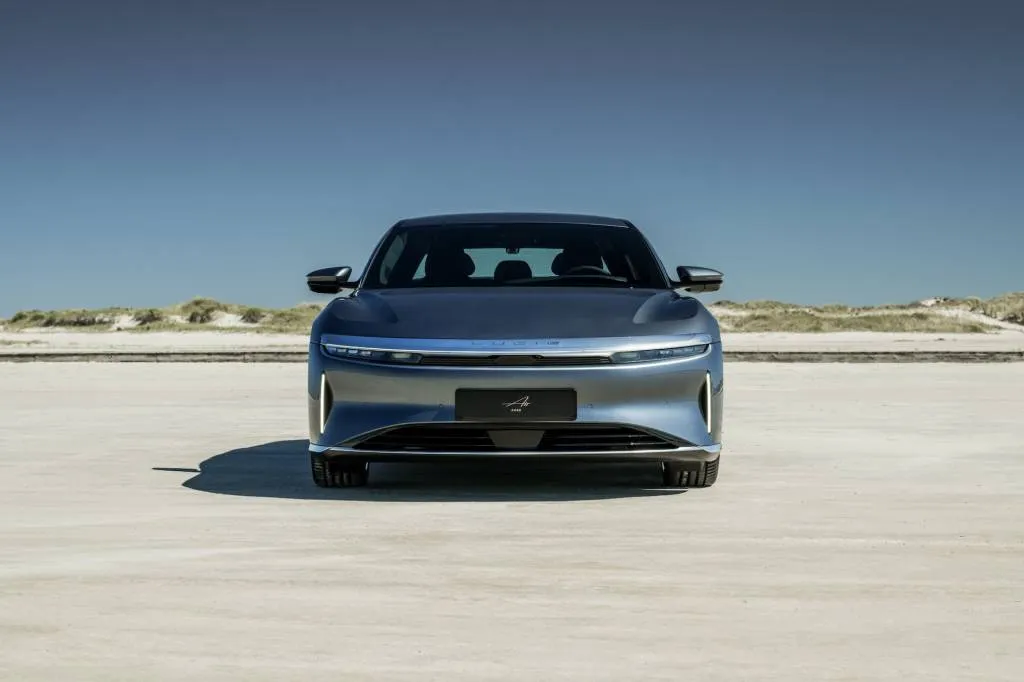
2025 Lucid Air Pure
Context is everything to new Lucid Assistant
“What we need to do a good job, at the natural language commands, is surrounding context—whether that’s the history of the conversation, knowledge about the natural world, or the position, where the user is,” Halstvedt said.
Consumers expect to be able to have an extended conversation about a location or series of locations, filtering it iteratively, and then they want to be able to act on it based on the cumulative results, he said. But few new vehicles can actually deliver that even in perfect connectivity.
SoundHound hasn’t ignored the uncanny smoothness of AI-based queries and chatbots, but it understands that way more is needed within the vehicle—and it needs to pair some of those advantages with traditional in-vehicle voice processing.
“If you just plugged OpenAI’s APIs into your vehicle it would do a really good job of talking but it wouldn’t do a really good job of acting,” Halstvedt said. “We want to bring together those strengths.”
To do that, the voice assistant runs on the reality that it won’t always have a cellular connection out on the road. In what SoundHound calls a native-hybrid model, it streams audio to servers or to a local embedded engine, balancing that in whatever way makes sense.
“Alongside the voice we’re sending, we’re also sending a set of data which we call request info, that represents all of the different attributes, like location, time zone, and more,” Halstvedt said. “That’s a key aspect of answering these questions.”
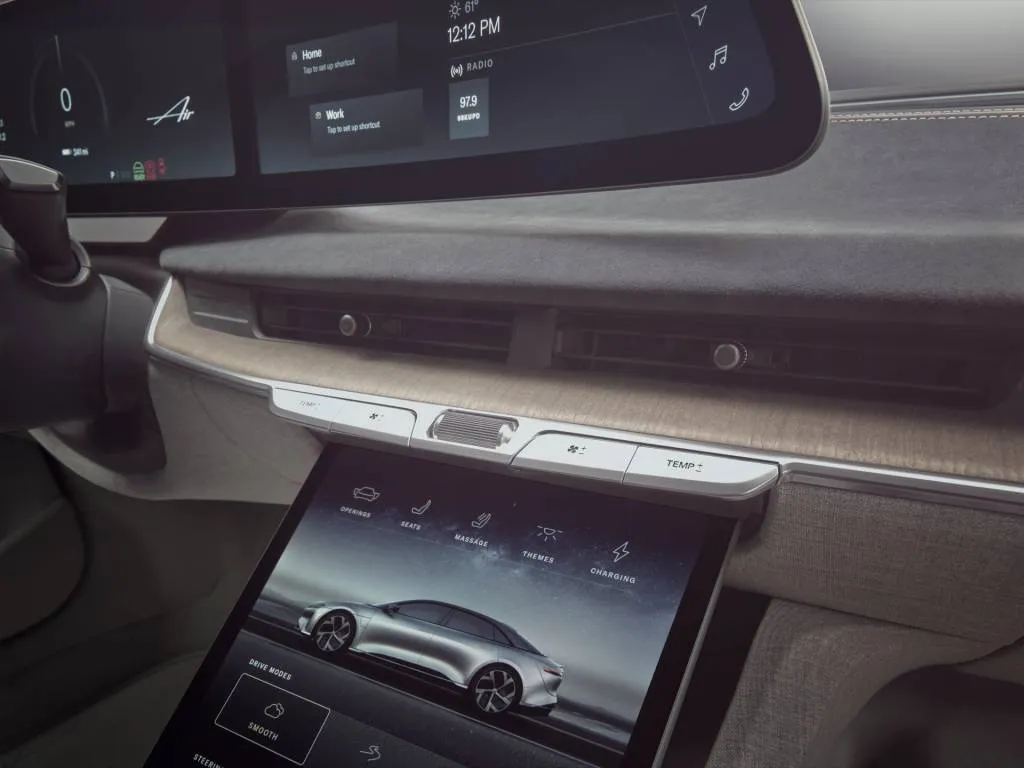
2025 Lucid Air Grand Touring
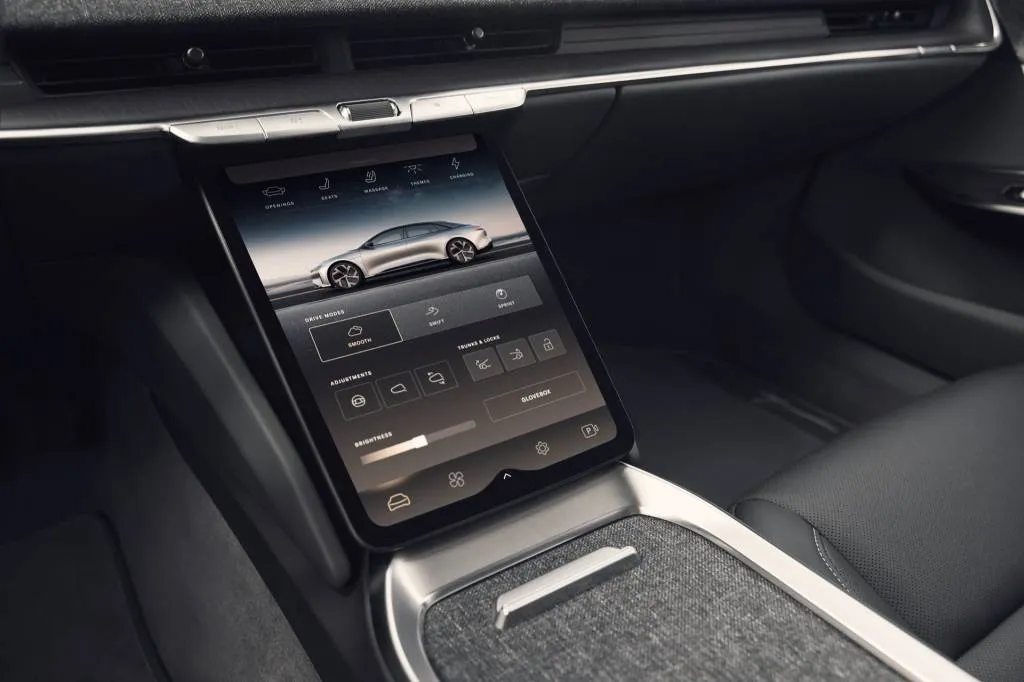
2025 Lucid Air Pure
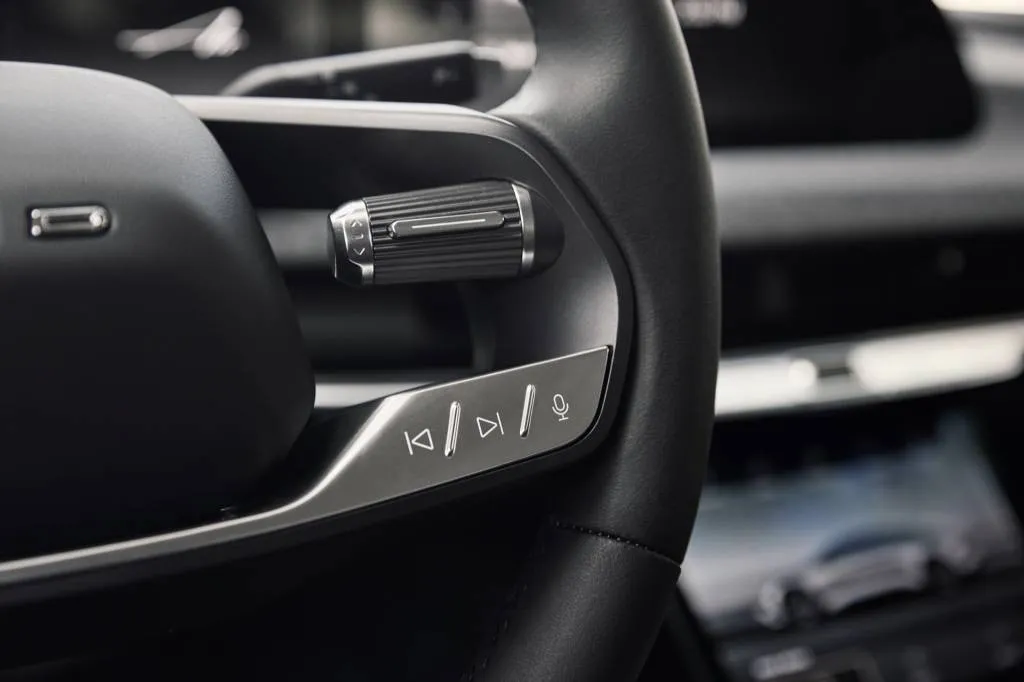
2025 Lucid Air Pure
Fewer “AI hallucinations,” connectivity optional
The approach also lowers the chances of so-called “AI hallucinations,” according to SoundHound—startling or tangential responses that seemingly have nothing to do with what was asked.
While it can seamlessly support those complicated natural conversation queries, it can, as Halstvedt put it, “Work decently well without a connection,” and provide some degree of the same experience.
As an example of something that needs to capture the nuance but doesn’t require a connection, he said, “It’s a little hot in here.”
“Decreasing temperature by two degrees Fahrenheit,” the voice replied.
“If we have cloud connectivity we can enhance those results with better results from the cloud and really mix in various voice generative AI features without having to be really costly from a computing standpoint,” Halstvedt added.
But in Lucid’s new approach, it’s also drawing from around 20 years of SoundHound’s work in understanding natural-language commands without access to the large-language model built into generative AI.
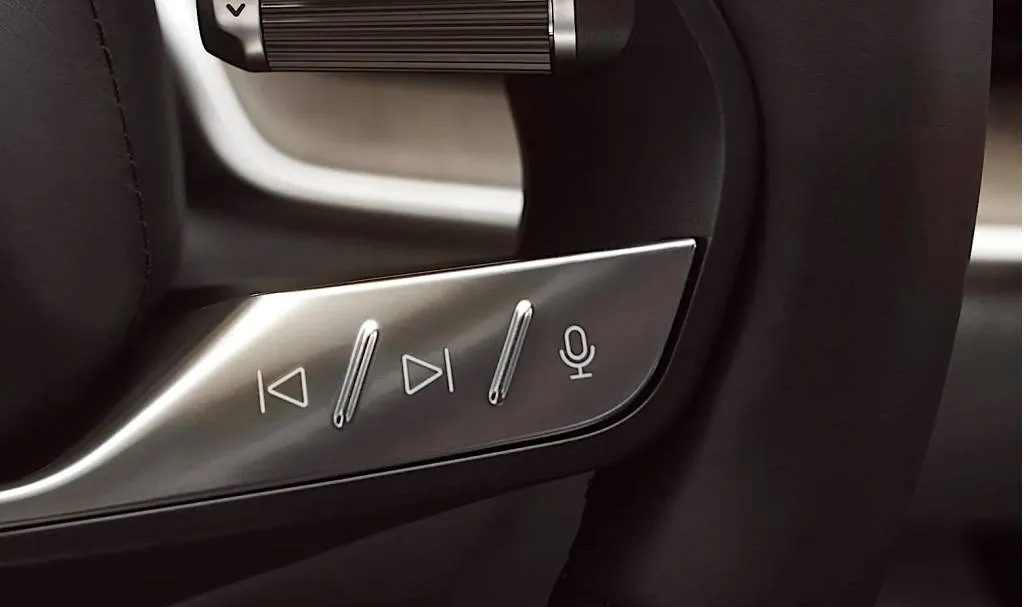
Lucid Air Touring steering wheel controls
Lucid’s voice assistant knows the owner’s manual
Versus the previous voice commands, SoundHound brings in new features, including what it calls vehicle intelligence—meaning “relevant and official information about all of the features the vehicle supports, like where things are and what the buttons do,” it explained in a recent press release on the feature set.
SoundHound has worked with other automakers, but it points to Lucid’s vehicle intelligence questions as where this integration covers new ground in natural language and AI. The whole owner’s manual is available via voice, and the system can sift through it based on your questions—even when you can only describe icons, symbols, or warning lights.
“We applied some computer vision techniques to allow symbols to be described from the vehicle manual… to make knowledge about the car a lot more accessible at the times a user might need to access it,” Halstvedt said.
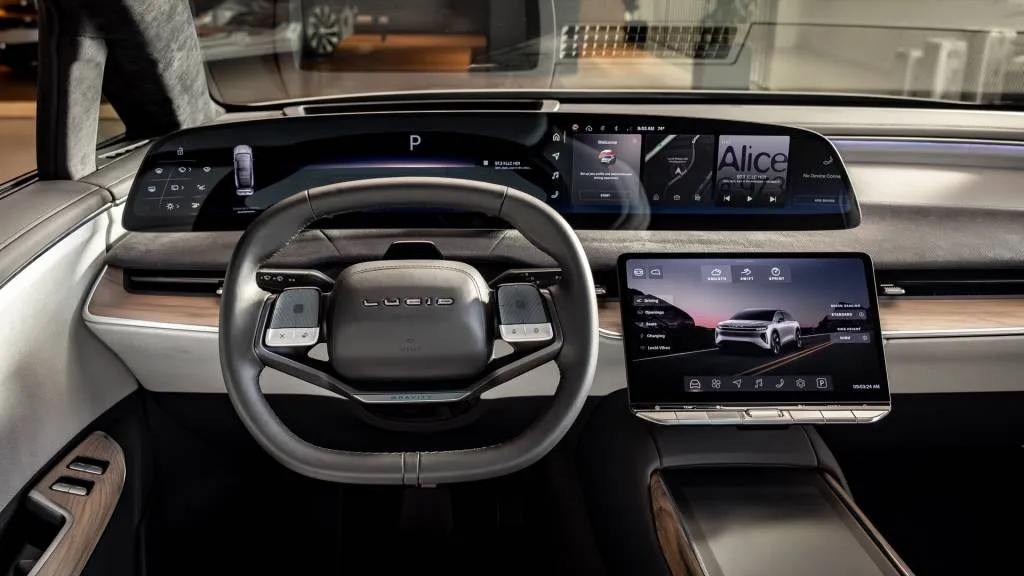
2025 Lucid Gravity Grand Touring
Voice controls in the 2025 Lucid Gravity
The hybrid model has also made the voice system easy for Lucid to adapt and customize as the Air and Gravity evolve and differ among trim levels. The teams overseeing functionality can change the way something works via the cloud almost instantly, with the local/native backup changed soon after via an update.
“We’re investing heavily in voice; it’s going to be a strategically important UX for us, with a lot of implications around what it means for natural-language interaction and natural-language engagement from the car,” Flint said.
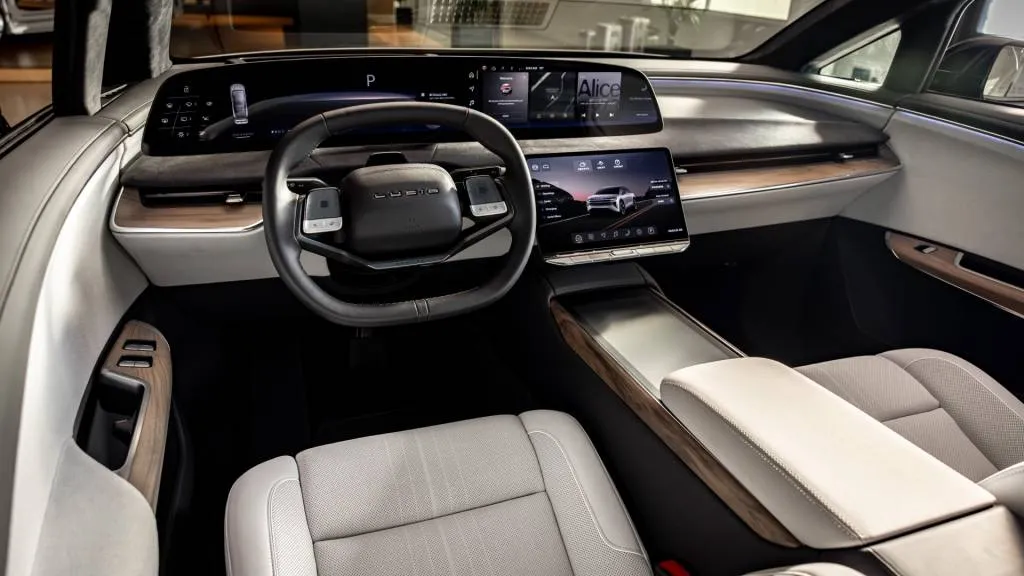
2025 Lucid Gravity Grand Touring
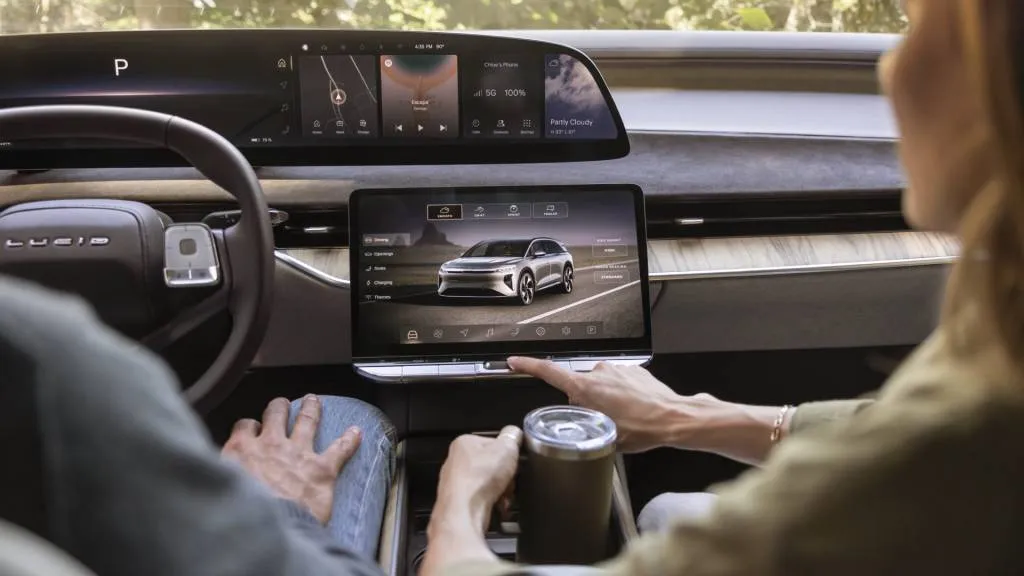
2025 Lucid Gravity Grand Touring

2025 Lucid Gravity Grand Touring
Indeed, in its 2025 Lucid Gravity SUV, which has a revamped interface, the automaker is offering a digital detox mode that goes with minimalist displays, and there’s a set of mood-and-ambience modes called Vibes. As Flint hinted, be prepared for voice controls to continue to take center stage there and beyond.
And among all of today’s AI hallucinations, observing that digital detox in voice form too might help drivers simply stay focused on what matters.

Ford recalls Maverick and Bronco Sport again
 The latest 12-volt battery recall corrects a previous 12-volt battery recall that didn’t work Owners will need to have the battery replaced at no charge This is the 15th recall for the Maverick and 10th for the Bronco Sport since the popular vehicles launched Ford has recalled more than 272,000 Maverick small pickup trucks and Bronco Sport compact…

GM considering re-badging Hyundai commercial EVs for US
General Motors could sell commercial electric vehicles made by Hyundai under one of its own brands in the U.S., an executive said this week.
“We are considering re-badging our commercial EVs and supplying GM,” Hyundai CFO Seung Jo Lee told Reuters and other media on an analyst call. “The deal will pave the way for our entry into the North American commercial vehicle market.”
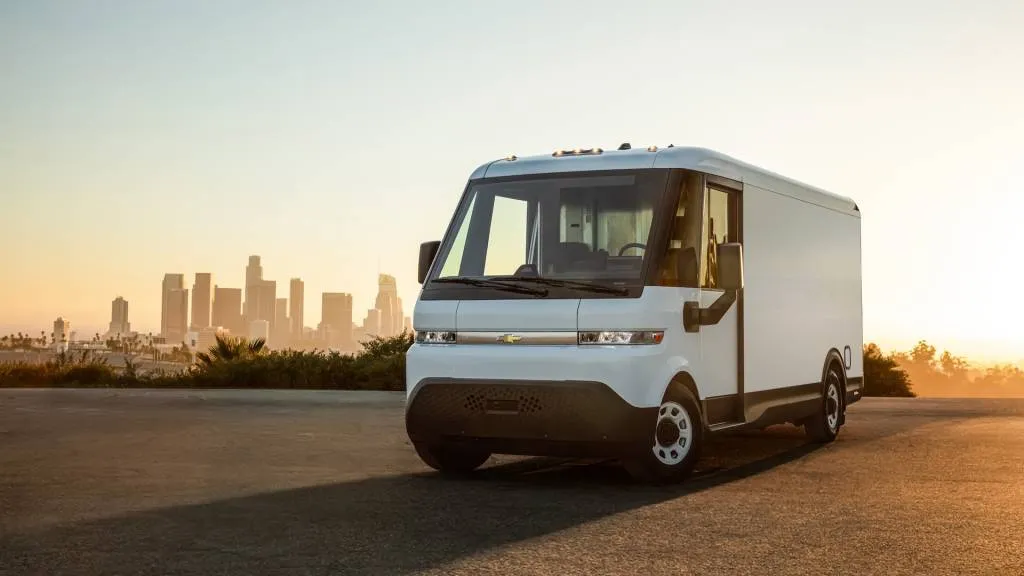
2025 Chevrolet BrightDrop 600
Hyundai signed a non-binding memorandum of understanding with GM last year aimed at laying the foundation for an EV and fuel-cell partnership. The automaker now aims to sign binding contracts with GM on cooperation in parts procurement, as well as collaboration on passenger cars and commercial vehicles, within the first quarter of this year, Reuters reports.
Hyundai sells commercial vehicles like buses and heavy-duty trucks in other markets, but hasn’t attempted to enter the U.S. market under its own banner. The automaker is bringing a small fleet of Xcient Fuel Cell Class 8 semi trucks to California for testing, though.
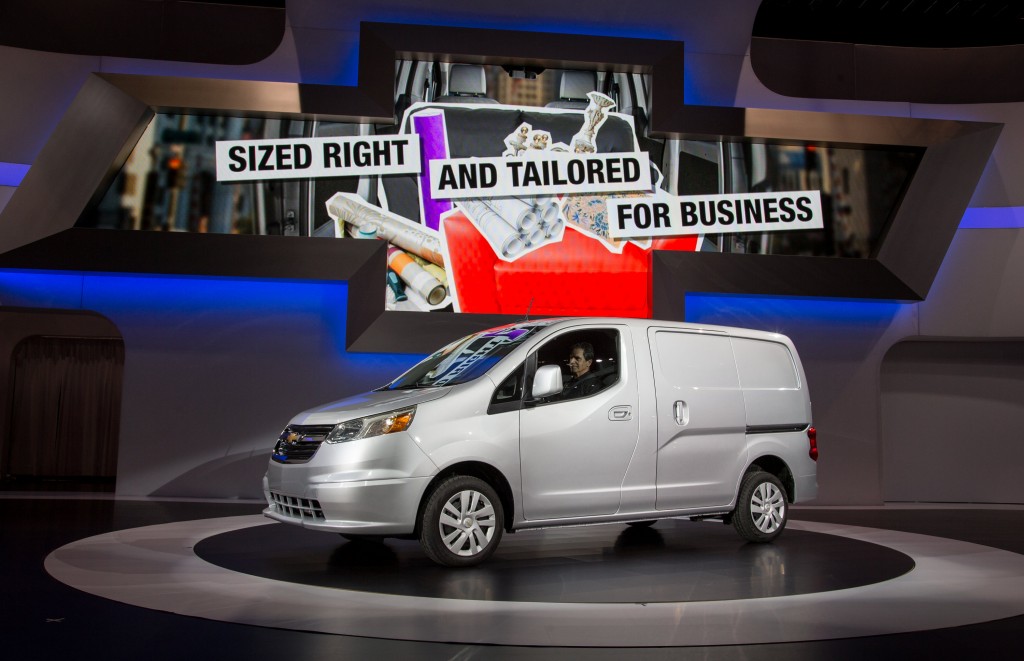
2015 Chevrolet City Express van, 2014 Chicago Auto Show
It’s unclear which Hyundai commercial EVs GM would choose to sell. The U.S. automaker already has its own electric vans, previously marketed under the BrightDrop brand, but recently folded into Chevrolet to leverage that brand’s larger dealer network. The BrightDrop vans are based on the same component set—formerly known as Ultium—used for GM’s current electric cars and trucks.
BrightDrop aside, GM hasn’t shown much interest in developing new commercial vehicles recently. It even once sold a rebadged Nissan NV200—the compact van once heralded as New York City’s “Taxi of Tomorrow”—as the Chevrolet City Express. However, neither GM nor Nissan saw fit to bring the electric version of the NV200 to the U.S.

2026 Cadillac Lyriq-V marks first electric V-Series for $79,990
- The Cadillac Lyriq-V will go into production in Q1
- Cadillac expects EPA range at 285 miles
- It’ll cost $79,990 to buy the 2026 Lyriq-V
The 2026 Cadillac Lyriq-V, revealed Thursday, marks the most powerful, quickest, and most expensive version of the Lyriq EV to date. When the Lyriq-V goes into production this spring at GM’s Spring Hill Manufacturing plant in Tennessee it will cost $79,990 including a destination charge of $1,395.
The Lyriq-V will use the standard Lyriq’s 102-kwh battery pack, but output from the dual-motor powertrain is kicked up to 615 hp and 650 lb-ft of torque. A single motor per axle will deliver all-wheel drive. Cadillac said range will check in at 285 miles.
The Lyriq-V’s 0-60 mph time of 3.3 seconds is 0.1 second quicker than the gas-guzzling supercharged-V-8-powered CT5-V Blackwing. Cadillac gave the Lyriq-V shorter final drive ratios of 11.59:1 in the front and 11.63:1 in the rear while the standard Lyriq has 9.87:1 front and 10.49:1 rear ratios.
Cadillac upgraded the braking system for V duty, with 6-piston Brembo calipers grabbing 15.3-inch front discs when it comes time to stop. The rear rotors, with sliding rear single-piston calipers that aren’t Brembo-branded, are 13.6 inches in diameter.
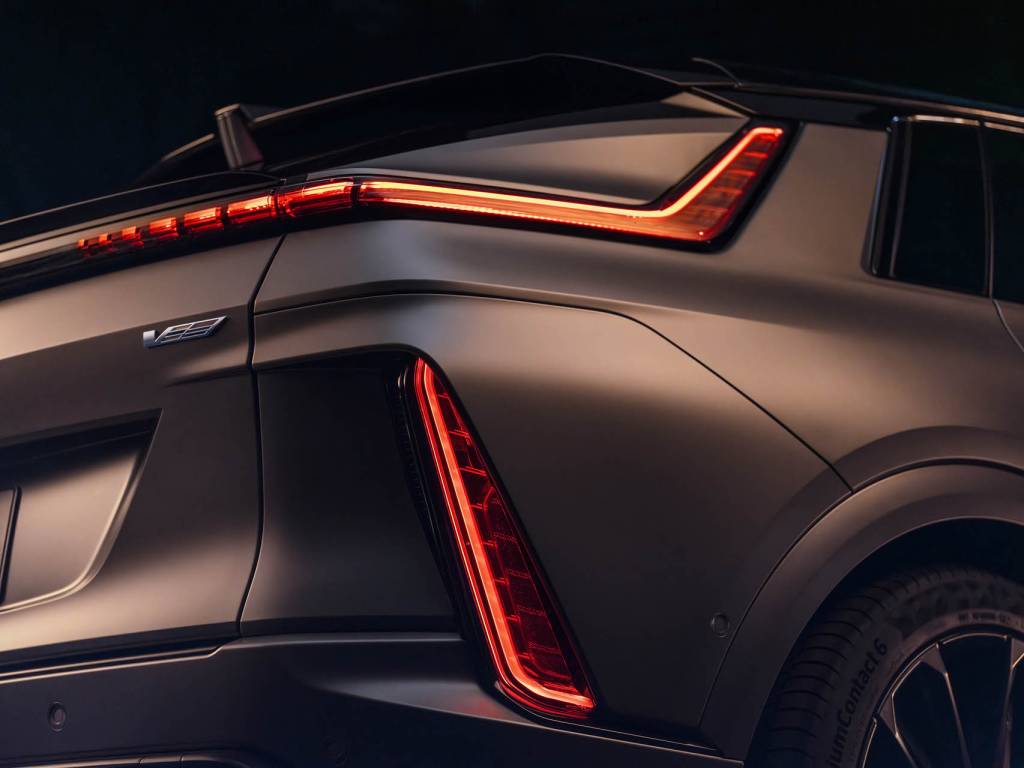
2026 Cadillac Lyriq-V
Lyriq-Vs will include a new Competitive Mode that Cadillac said lets drivers push the electric crossover to its lateral limits. A new V-Mode, which is a known fixture in the V-Series, enables drivers to modify settings to their liking. That includes steering weight and throttle sensitivity, along with damper firmness. Cadillac’s Performance Traction Management system, which enables multiple levels of stability control for track days on gas-powered V-Series models, is absent.
A stiffened structure, standard adaptive dampers that lower the ride height by 0.62 inch, and quicker 15.81:1 steering ratio (standard Lyriqs have a steering ratio of 18.44:1) should give the Lyriq-V sharper handling. Continental Performance Contact 6 summer rubber will be standard while Michelin all-season tires will be available.
The Lyriq-V is said to feature a V-specific sound. Cadillac noted it can be customized via modes, but for those that prefer it can be turned off. It’s said to deliver a “multilayer experience exclusive for the V,” Cadillac spokespeople said.
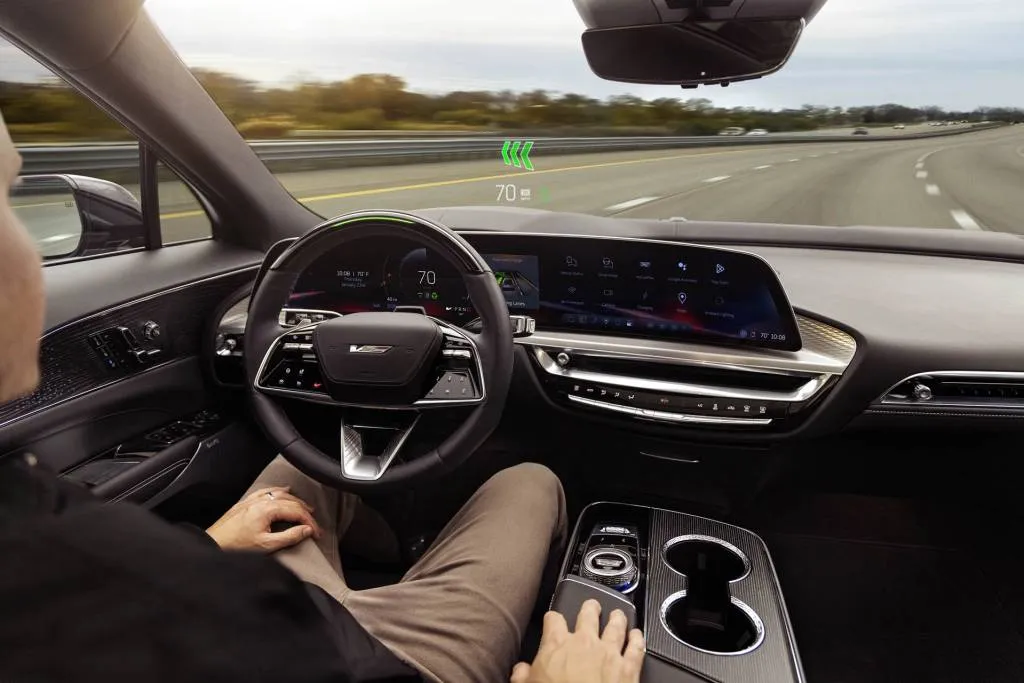
2026 Cadillac Lyriq-V
Subtle design updates include understated V-Series badging, revised front and rear fascias along with extended rocker panels. Buyers can opt for carbon fiber trim. Cadillac’s given the sportier Lyriq V-specific 22-inch wheels and a V-only Magnus Metal Frost color option.
Inside, the Lyriq’s 33.0-inch LED curved display screen and upscale dashboard remain, but V-specific graphics will splash across the screen. Augmented reality has been baked into the head-up display when using the navigation system. The automaker’s hands-free driver-assist system known as Super Cruise is standard as is a 23-speaker AKG Studio sound system with Dolby Atmos. Available nappa leather can be optioned on the V-specific front bucket seats with power-adjustable side bolsters.

2025 Volvo EX30 EV has arrived, $36,245 version due later
- U.S.-bound 2025 Volvo EX30 lineup includes Twin Motor Plus and Ultra
- That means starting price of $46,195, with 253-mile EPA range, claimed 3.4-second 0-60 mph
- Initial U.S. EX30s are China-made; Belgium-made examples, base $36,245 version coming later
Despite a delay of nearly a year, Volvo’s compact electric car, the 2025 EX30 has arrived at U.S. dealerships with its original feature set and pricing—if, that is, you’re seeking one of the more expensive dual-motor all-wheel-drive versions in the lineup.
At present, the 2025 Volvo EX30 lineup starts with the EX30 Plus Twin Motor Performance, at $46,195, including the $1,295 destination charge. Plus versions add Harman Kardon premium sound, a panoramic roof, and 19-inch wheels
What’s missing, as of yet, are the single-motor versions of the EX30—including the single-motor-only EX30 Core, which was set to serve as the base model for the U.S. lineup at just $36,245. Also missing are single-motor EX30 Plus versions, which otherwise adopted the same feature extras as above, without all-wheel drive, and were to cost $40,195.
Ultra versions get a new generation of Volvo’s Pilot Assist driver assistance, including assisted lane changes, a surround-view camera system, and parking assistance, and cost $47,895 with AWD. The Ultra had been set to cost $41,895 in single-motor form but that also remains missing from the lineup.
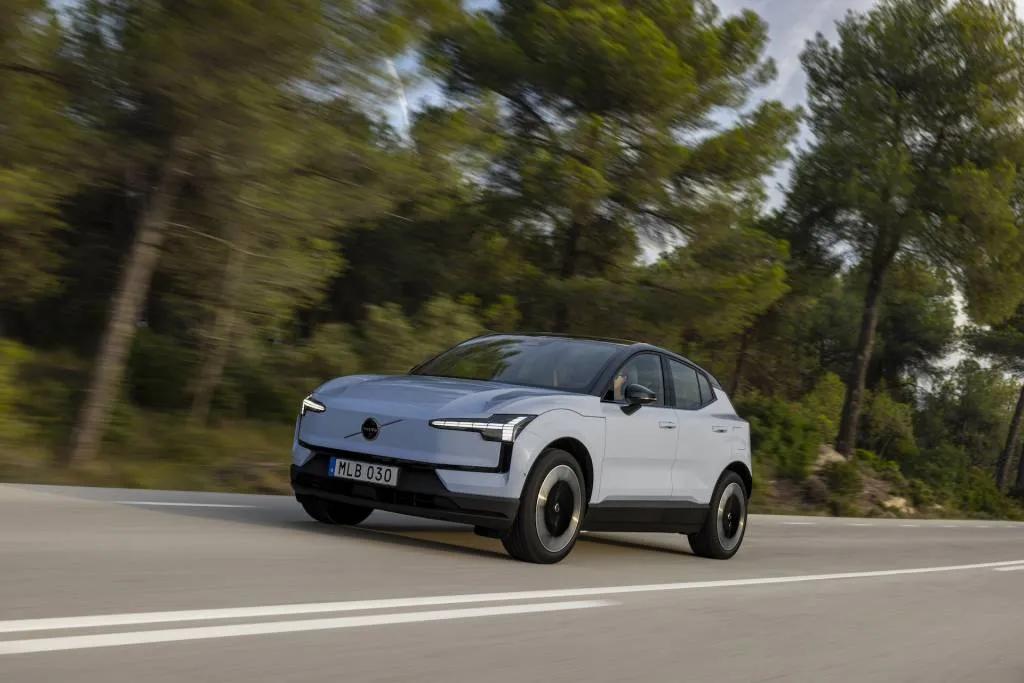
2025 Volvo EX30 electric SUV (single-motor, Cloud Blue)
That leaves just two versions at present for the U.S.—the Twin Motor Performance Plus, and the Twin Motor Performance Ultra, as Volvo terms them.
“It remains our ambition to introduce the EX30 Single Motor in the U.S.,” said U.S. media relations manager Russell Datz to Green Car Reports. “We will share more details on timing at a future date.”
U.S.-bound EX30 models were originally due to be sourced solely from China, but production will soon start in Ghent, Belgium. Volvo terms the initial deliveries of China-made EX30s happening now as being part of a limited run positioned to satisfy pre-order demand from enthusiasts, but it clarifies that future U.S. EX30s will come from the European plant.
“It is still our intention that most or all EX30s destined for the U.S. market will be built at our plant in Ghent, Belgium once production begins there,” said Datz.
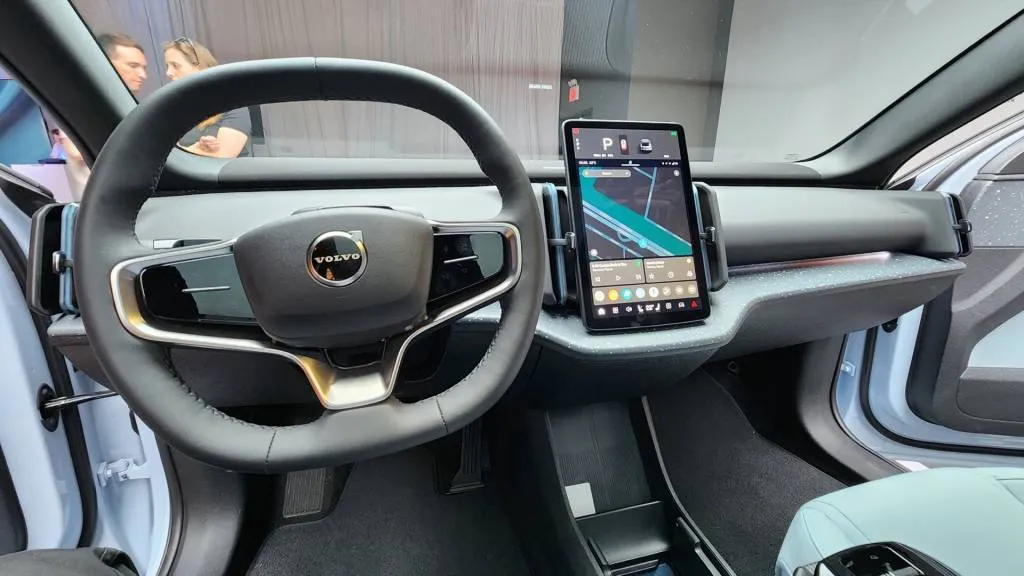
2025 Volvo EX30
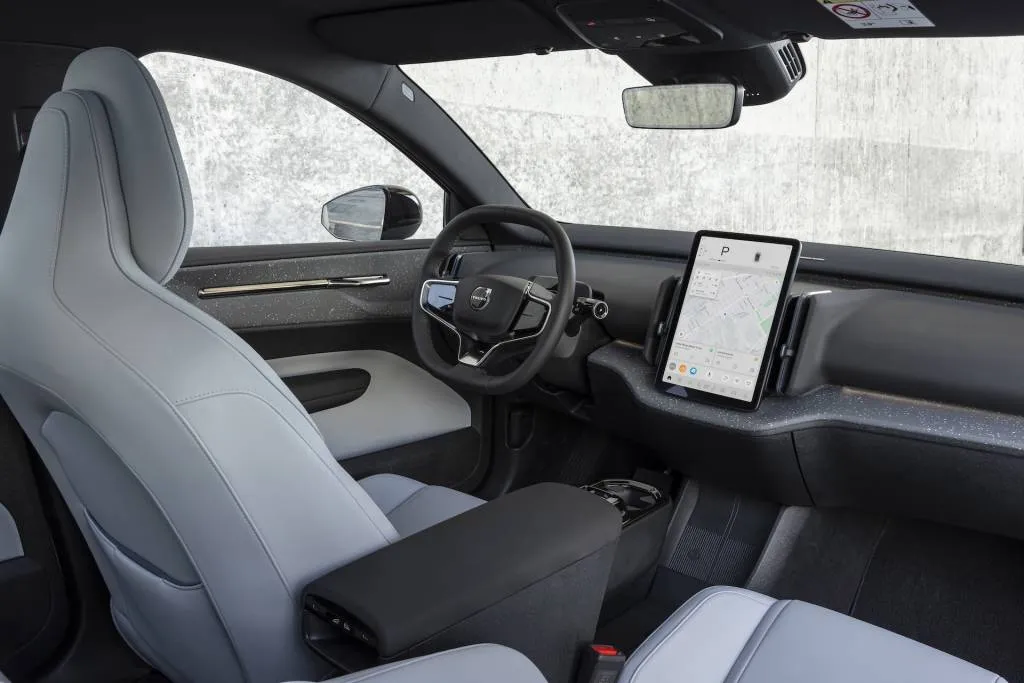
2025 Volvo EX30 electric SUV (single-motor, Cloud Blue)
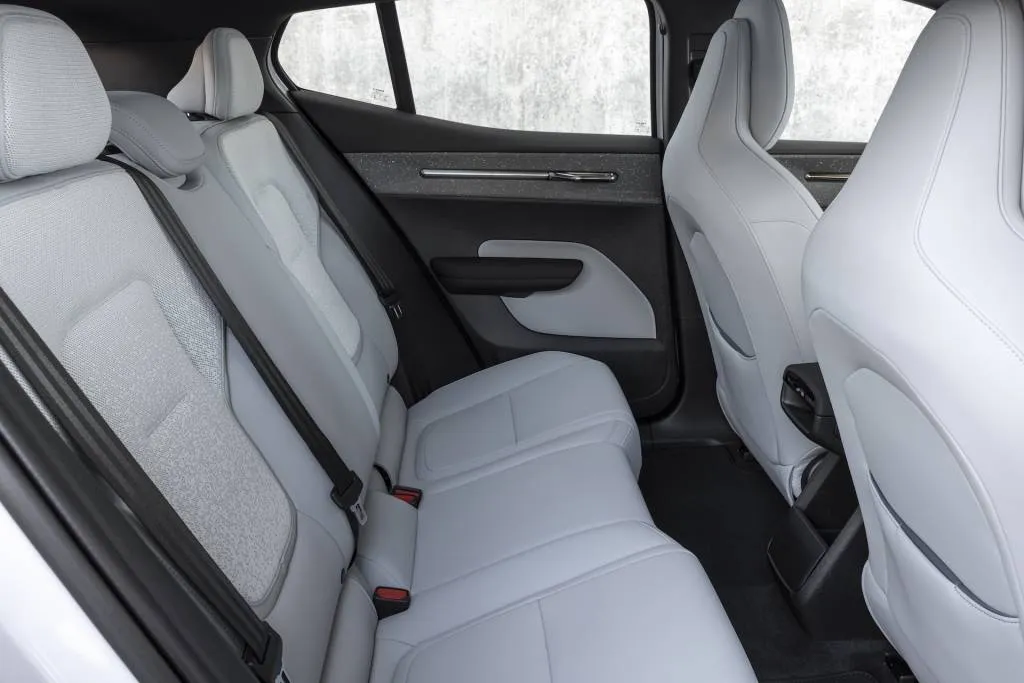
2025 Volvo EX30 electric SUV (single-motor, Cloud Blue)
All versions of the EX30 have a suite of advanced safety features including blind-spot monitors, and its interface is based around Google Built-In, meaning it revolves around native Google services like Maps—although wireless Apple CarPlay is supported.
In U.S. spec, the EX30 will be offered in a choice of Moss Yellow, Cloud Blue, Vapour Grey, Crystal White, or Onyx Black, with interior “expressions” including Mist Pine, Indigo, and Breeze. Volvo says that these are complemented with five ambient lighting themes.
That’s similar in price to a gasoline-engine equivalent, and Volvo achieves that parity without relying on the EV tax credit—which the EX30 likely doesn’t qualify for.
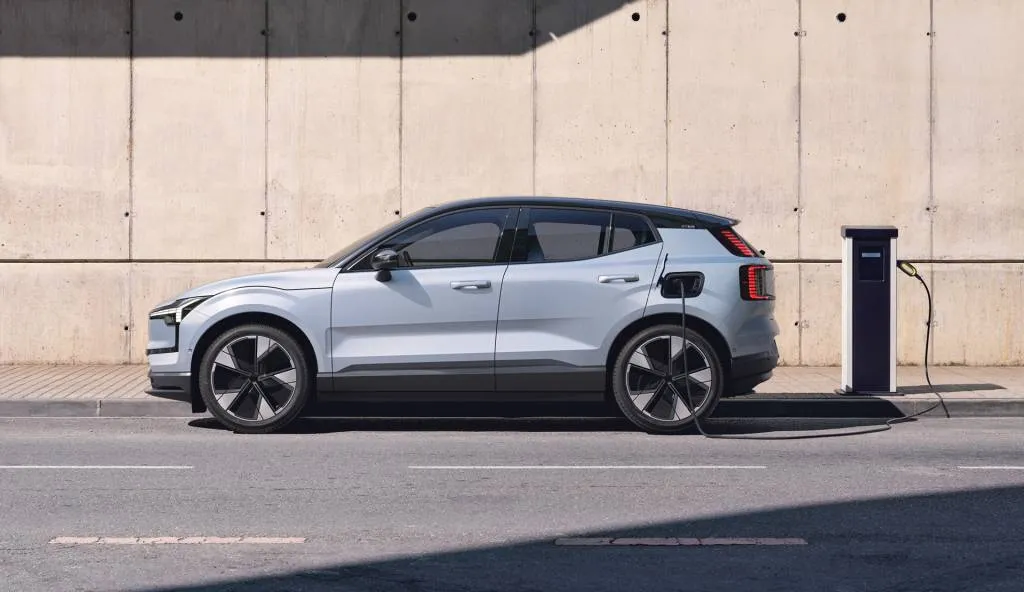
2025 Volvo EX30
Dual-motor versions of the 2025 EX30 have an EPA range rating of 253 miles. U.S. versions get a 69-kwh nickel manganese cobalt (NMC) battery pack that, in dual-motor versions will be able to charge from 10-80% in less than 30 minutes. It projected 275 miles under the EPA cycle for single-motor models.
Volvo won’t yet assign a U.S. arrival date or model year for those more affordable versions of the EX30, but it’s likely they’ll arrive later this calendar year. Whether that’s considered part of the 2025, 2026, or even 2027 model year, it remains to be seen.
The EX30 has the lowest CO2 footprint of any Volvo, the company says. Volvo flipped back and forth in calling the EX30 a car and an SUV, but in the U.S. it terms it an SUV. Volvo says the EX30 is up for weekend adventures, but it’s unclear whether it will offer some level of off-road capability or greater ground clearance than Volvo’s cars. It has said, however, that a more rugged Cross Country version is on the way.
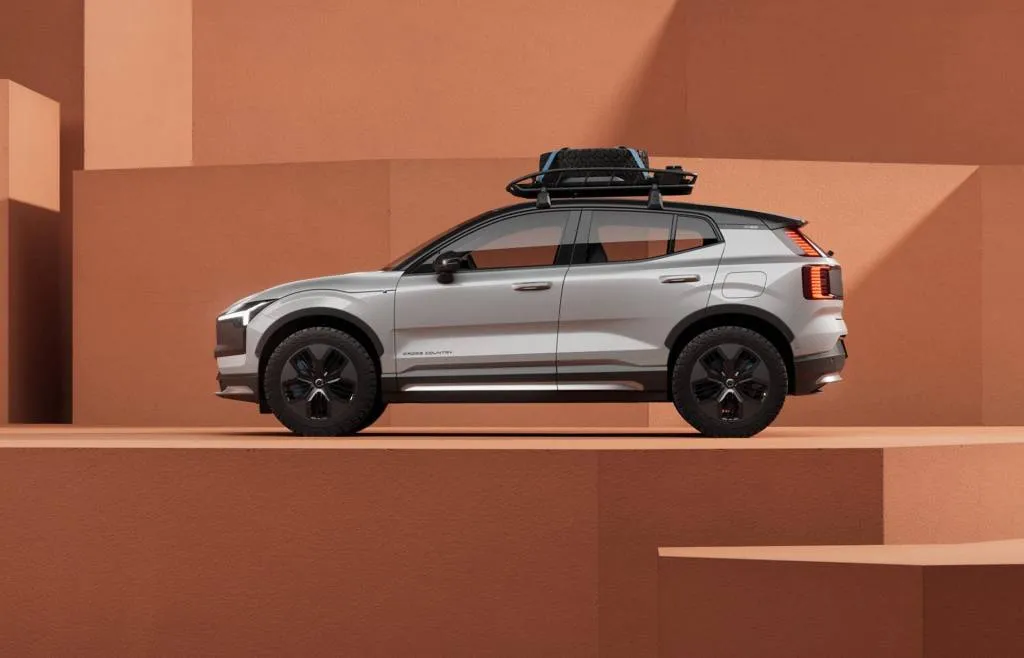
2025 Volvo EX30 Cross Country
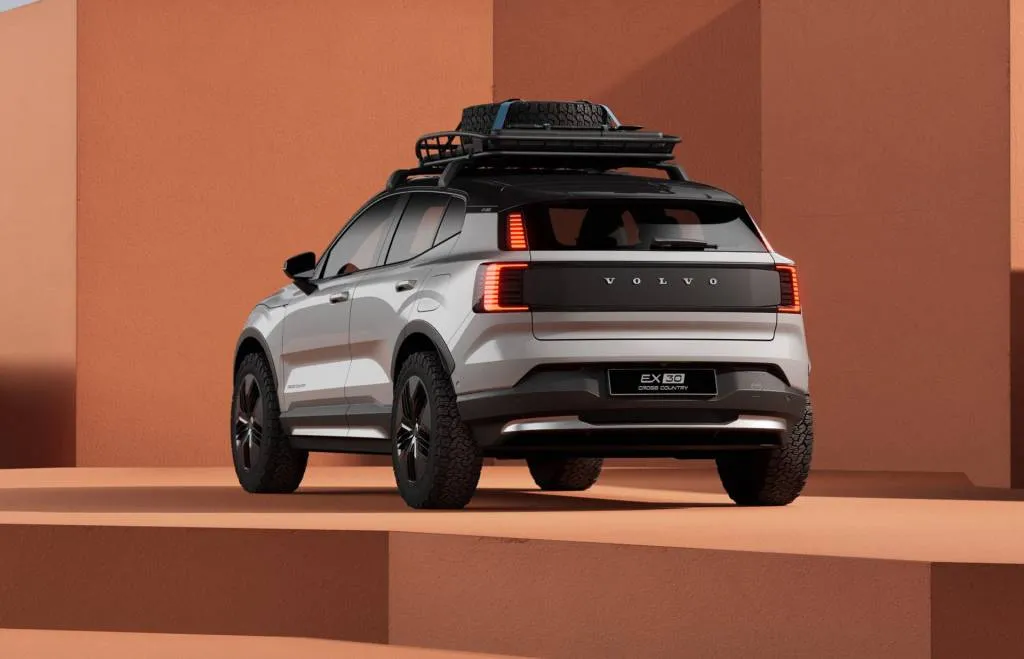
2025 Volvo EX30 Cross Country
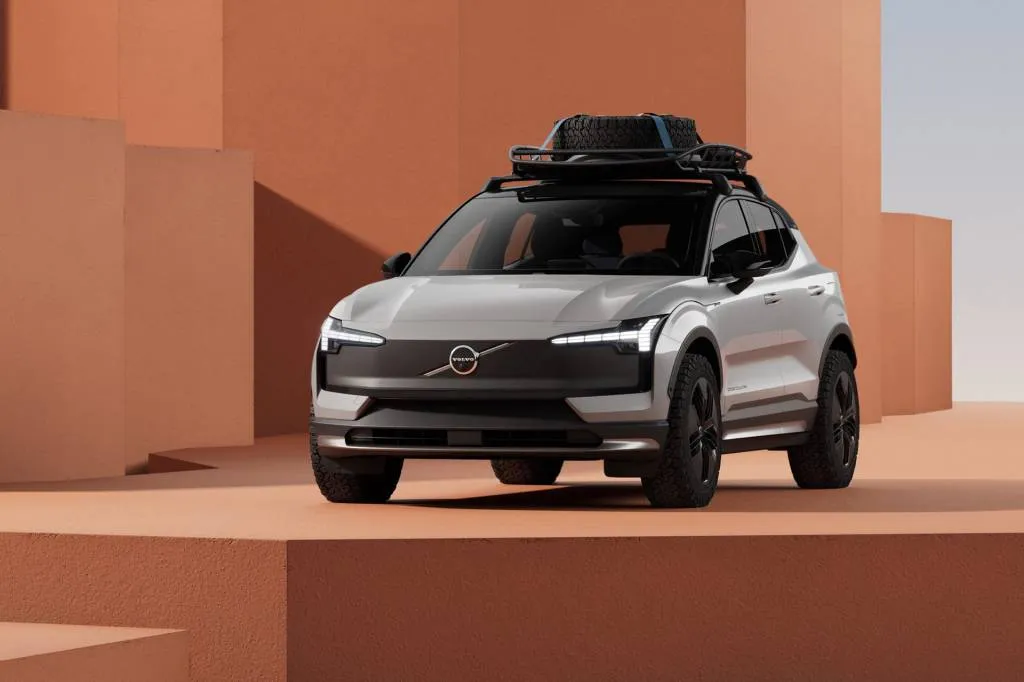
2025 Volvo EX30 Cross Country
Over the long term if Volvo can supply enough to avoid markups, that will position the EX30 as a viable alternative to the outgoing Chevy Bolt EV and Hyundai Kona Electric, as well as the Nissan Leaf Plus. It also undercuts the Kia Niro EV by a significant amount. At about 167 inches long, the EX30 is truly small-car-sized by American standards.
Volvo has for years suggested that it sees subscriptions as a means toward EV adoption, and the EX30 might be a great way to achieve that. Volvo announced back in 2021 that its U.S. EVs would be sold with no-haggle pricing and technically sold online only, although that strategy has yet to take form.

2025 Volvo EX40 costs $53,795, EC40 takes year off
- The EC40 hatchback skips 2025 model year
- The XC40 Recharge small electric crossover returns as the EX40
- Prices and specs mostly remain the same, with dual-motor versions costing only $1,750 more on the EX40
The renamed 2025 Volvo EX40 electric crossover is set to arrive at U.S. dealerships soon, but its coupe-like sibling skips this model year.
In a press release announcing its full-line 2025 model year pricing, Volvo confirmed that the EC40 would return to the U.S. as a 2026 model, leaving only the EX40 and its more conventional styling for now. The EC40 is distinguished from the EX40 by a lower roof and fastback-like rear end styling.
The EX40 and EC40 were previously the XC40 Recharge and C40 Recharge, respectively, but were renamed under a new scheme being applied across the lineup. Volvo is retiring the Recharge badge altogether, from both EVs and plug-in hybrids and giving EVs callout letters. EX denotes SUVs like the EX40, EC is used for electric coupes like the EC40 and the EM designation is for electric minivans—of which the Chinese-market EM90 is the only one so far.
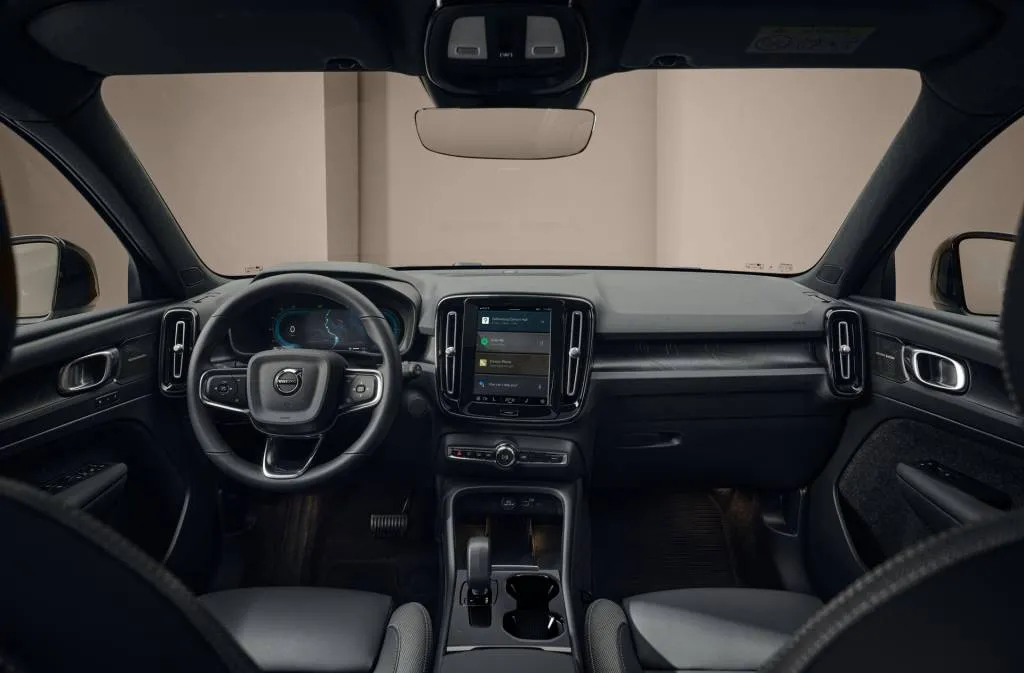
2025 Volvo EX40 (Europe spec)
These two compact models share the CMA architecture with the Polestar 2 and gasoline Volvo XC40, which continues for the 2025 model year with a standard mild-hybrid powertrain. Single-motor versions of the electric CMA models switched from front-wheel drive to rear-wheel drive for the 2024 model year (with dual-motor all-wheel drive remaining available throughout) and that continues for 2025.
As before, single-motor EX40 (nee XC40 Recharge) models produce 248 hp and 310 lb-ft of torque and have an 82-kwh battery pack. Dual-motor models up output to 402 hp and 494 lb-ft, but mandate a 78-kwh pack. Single-motor models return 296 miles of EPA range; dual-motor models are rated at 260 miles.
The only mechanical change to the EX40 for 2025 is an increase in DC fast-charging power from 200 kw to 205 kw. Volvo didn’t confirm whether the EX40 would be built with a NACS port as a 2025 model, but that is the plan for future Volvo EVs. Tesla Supercharger access for existing CCS-equipped cars, achieved via adapters, rolled out late last year.
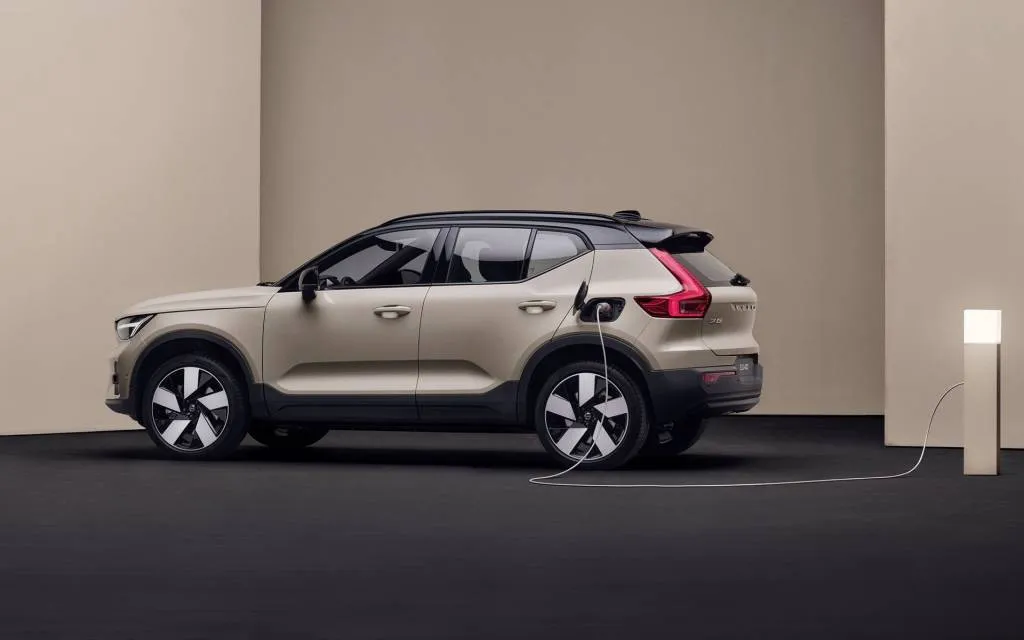
2025 Volvo EX40 (Europe spec)
EX40 pricing essentially holds steady at $53,795 for the base single-motor Core grade (all prices include a $1,295 destination charge). Plus and Ultra grades are available as well, costing $56,595 and $60,295, respectively. All-wheel drive is a $1,750 option on all three grades.
In the Volvo lineup, the EX40 is flanked by two new electric crossovers for 2025. The three-row EX90 is the brand’s new EV flagship while, following tariff-induced delays, the EX30 takes its place as the entry-level model. It slots below the EX40 with a $46,195 base price for the initial dual-motor configuration; a cheaper single-motor will arrive later in the calendar year.

Ram midsize truck confirmed for 2027
 A successor to the Dakota should begin production by 2027, 16 years after the Dakota was discontinued The UAW pressured Stellantis to keep its commitment to the idled Belvidere, Illinois plant The plans come as Stellantis has cooled on EV truck production Stellantis will move ahead with plans to build a midsize pickup truck—likely for the…

New Dodge Durango planned, UAW suggests
 The next-generation Dodge Durango looks to be back on. In a memo first spotted by Automotive News, Stellantis reconfirmed plans to build a redesigned Durango at its Detroit Assembly Complex, which already builds the current-generation Durango. That was subsequently announced in a press release from the UAW, along with confirmation that Stellantis…