
Author: EVAI

2025 Chevrolet Tahoe
 What kind of vehicle is the 2025 Chevrolet Tahoe? What does it compare to? The Tahoe three-row SUV sports seats for up to nine (!) people plus cargo, with heavy-duty V-8 or turbodiesel powertrains for big towing ratings. Its rivals include the Ford Expedition, Toyota Sequoia, and Chevy’s own Suburban. Is the 2025 Chevrolet Tahoe a good SUV?…

Ford planning plug-in hybrid trucks and SUVs
 CEO Jim Farley said Ford is planning an extended-range EV possibly for use in pickups and large SUVs The technology uses a gas-powered generator to charge a battery that feeds the motors that drive the vehicle It could provide up to 700 miles of range Ford has begun planning a plug-in hybrid system for use in SUVs and, possibly, some of its…

Jeep, Ford, Audi PHEV recalls: Battery replacement the next step?
 Damage to the batteries’ separator could lead to shorts and/or fires Recall campaigns from Stellantis, Ford, and Audi allow replacement of battery packs New paperwork filed by battery supplier Samsung SDI says the issue remains under investigation Plug-in hybrids from multiple automakers have been recalled due a potential issue with vehicles’…

Jaguar spied testing production version of Type 00 concept
 Jaguar is working on three ultra-luxury EVs to replace its current lineup The first will be a four-door grand tourer, debuting in late 2025 and ushering in the new JEA platform The grand tourer was previewed in 2024 with the Type 00 concept Jaguar is redefining its identity, evolving into an ultra-luxury car brand to rival the likes of Bentley and…

Trump DOT freezes EV charger funding, demands new state plans
- DOT to review $7.5B federal EV charging program, funded with 2021 Bipartisan Infrastructure Law
- Keeps funding projects in progress but rescinds guidance for continued buildout
- Means new state proposals for rules not yet released, months of delay for states’ funding
- Tesla has captured more than $41 million in government money for the buildout
The Trump Administration is stalling on dispersing more funds to U.S. states for the Biden Administration’s electric vehicle charging infrastructure program—one that Tesla has profited from handily.
The National Electric Vehicle Infrastructure (NEVI) Formula Program calls for 500,000 charging stations nationwide, and was funded with $7.5 billion under the 2021 infrastructure law to make that happen. That total was split into $5 billion for a highway-based program, and $2.5 billion for rural and underserved communities, with states submitting proposals for use of the available funds.
But on Thursday the Department of Transportation (DOT) said it had “decided to review the policies underlying the implementation” of the NEVI program, and was rescinding all previous guidance. That’s being used as an excuse to stop the funding of new projects.
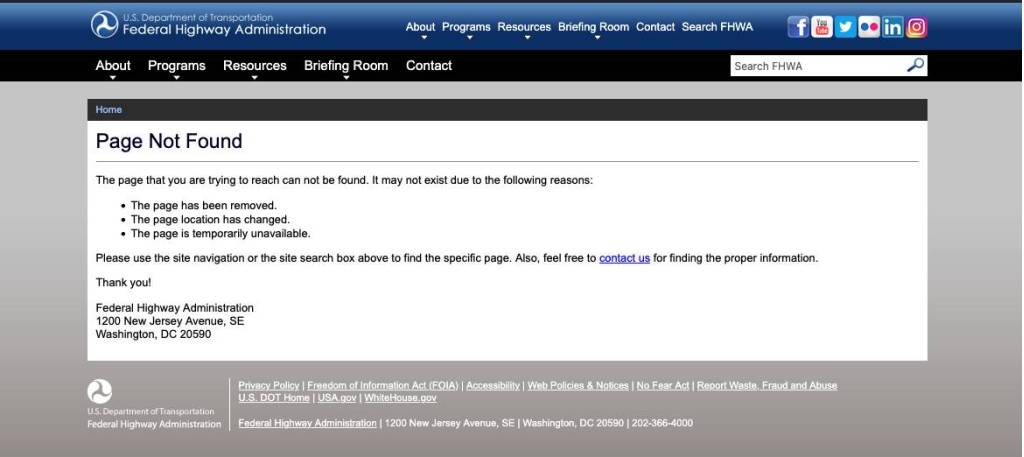
Redirect of FHWA webpage that previously contained NEVI documents from Feb. 6, 2025
The DOT stated that “effective immediately, no new obligations may occur under the NEVI Formula Program until the updated final NEVI Formula Program Guidance is issued and new state plans are submitted and approved.” Payments will still be made for projects already in progress, though.
“Until new guidance is issued, reimbursement of existing obligations will be allowed in order to not disrupt current financial commitments,” the DOT said.
Lawsuits will likely follow to free up the rest of the money, which the DOT is legally obligated to release to projects that meet requirements set out in the infrastructure law. While the DOT can issue guidance to clarify specifics, it can’t contradict the law itself or withhold funds in perpetuity.
As of late Thursday evening, the Federal Highway Administration (FHWA) had also removed NEVI documents from its website. This follows a reported pattern of information being removed from federal websites since Trump’s return to office.
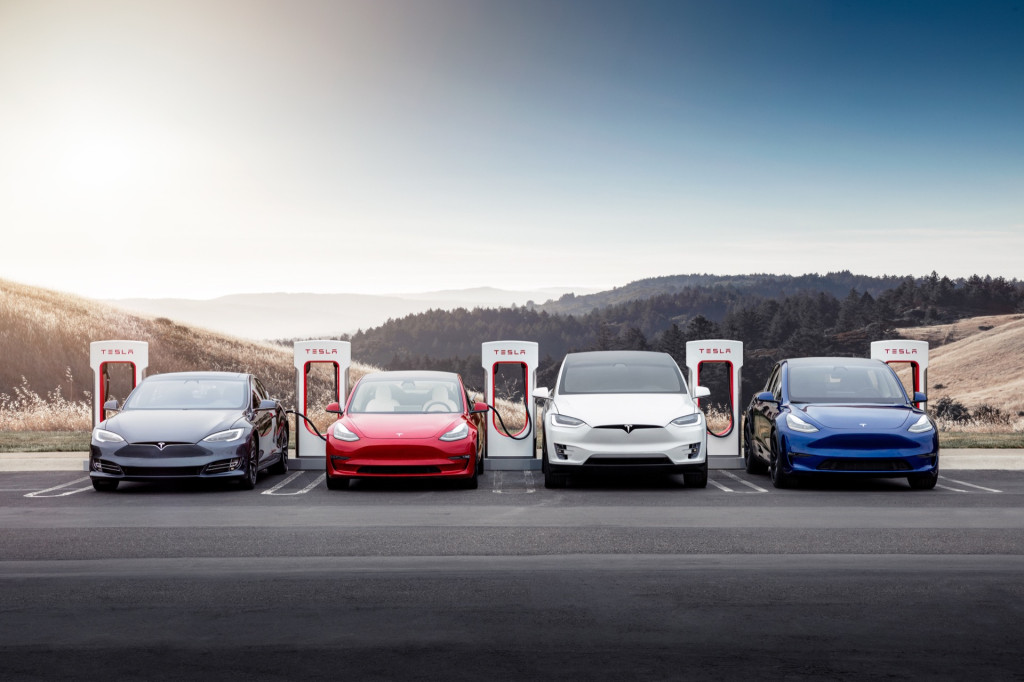
Tesla Supercharger
As Elon Musk continues to exert influence on the federal government as a private citizen, it’s worth noting that Tesla ended up winning many NEVI contracts, so this will have a serious financial affect on the EV company—and a growing conflict of interest. As of January 18, Tesla had captured more than $41 million in federal funding covering 99 different NEVI sites, according to the Paren NEVI Database.
The Ionna charging network—funded by eight full-line automakers and the most likely rival to Tesla’s Supercharger network in North America—has also suggested it will look to take advantage of the NEVI program.
Although it picked up speed last spring, NEVI-funded project rollout has been slow because states submitting plans must also deal with individual regulators, utilities, and other bureaucracies. Now that they have to submit new plans, all over again, it’s a major setback for the buildout—many months, if not years—even if the money isn’t actually taken away.

Jeep 4xe, Ford and Audi PHEVs recalled for battery fire risk
 Owners of certain plug-in hybrids need to take vehicles into a service center Jeep, Ford, Audi PHEVs have battery packs that may need replacement The faulty battery packs were supplied by Samsung SDI A software update to fix a battery fire risk in popular plug-in hybrids by Jeep, Audi, and Ford may not have worked, according to a Wednesday filing…

Report: Bankruptcy nears for Nikola, former hydrogen-hype darling
 Nikola, a developer of hydrogen fuel-cell and battery-electric trucks that was once among the most hyped automotive startups, is now considering filing for bankruptcy, the Wall Street Journal reported Thursday, citing anonymous sources familiar with the matter. In 2020, when it went public via a then-fashionable reverse merger with a special…

Freyr Battery cancels $2.6 billion Georgia battery factory plans
Norwegian battery firm Freyr has canceled plans for a Georgia factory that would have supplied batteries for energy storage.
First reported by the Newman Times-Herald of Newman, Georgia, Freyr confirmed plans to cancel the factory in a letter to the local Coweta County Development Authority dated Jan. 21, and in a Thursday meeting with the authority. Freyr also told the Georgia Department of Community Affairs that it would repay grants and incentives tied to the factory project.

Rendering of proposed Freyr
Announced in November 2022 and branded “Giga America,” the factory would have sat on a 368-acre site in Coweta County, which is on the southwestern edge of the Atlanta metropolitan area. Production was due to be stepped up in phases, starting with a $1.7 billion investment to build out 34 gigawatt-hours of annual production capacity. A second phase was to add more cell production lines and bring total investment to $2.6 billion by 2029.
Rising interest rates, falling battery prices, and a change in leadership at Freyr all contributed to the decision, Jason Peace, the company’s senior vice president of business development, said in an interview with The Newman-Times Herald.
Although oddly omitted in the original report, it’s hard to imagine that policies of the Trump administration pulling back on incentives for renewables wasn’t also a significant factor in this loss of potential Georgia jobs.

Rendering of proposed Freyr
Freyr is also not on totally solid financial footing, the newspaper added. In its third-quarter 2024 financial results, the company reported a net loss of $27.5 million, compared to $9.8 million for the same period in 2023. Peace told authority members that Freyr had been burning cash to get the battery plant built, and was now looking at a nearly-finished solar-panel plant in Texas as an alternative, quicker way to generate revenue.
Rivian, meanwhile, still appears to be moving ahead with plans for an EV assembly plant about an hour from downtown Atlanta. The plant was announced in 2021 and originally scheduled to open in 2024, but Rivian then paused construction. As a result, the opening was first pushed back to 2027, and then 2028, with a $6.6 billion conditional loan from the Department of Energy potentially helping get it across the line.

This Is The EV That Everyone Wants, Apparently
No, it’s not real. But based on owner data, this imagined EV has all the attributes buyers want.
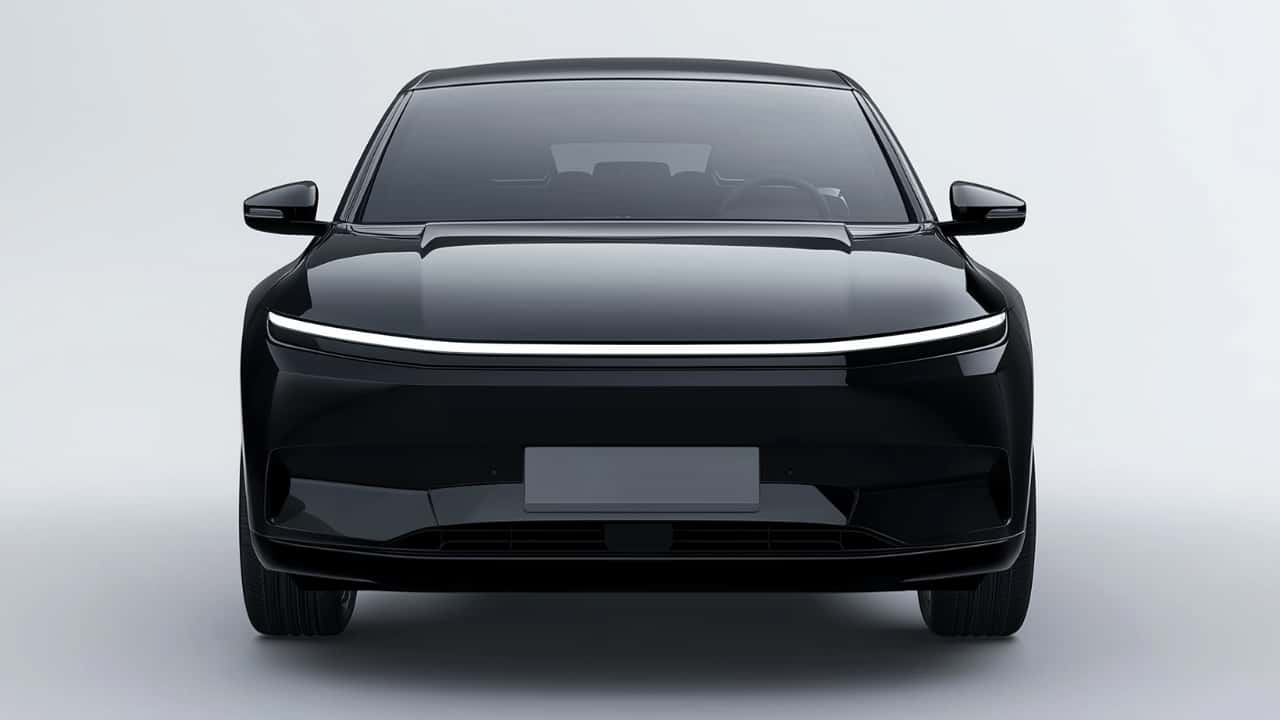

Karma claims these EVs and PHEVs are coming in 2025 and 2026
- Revero PHEV production continues now, limited-edition Invictus arrives in 2025
- Gyesera due in 2026 debuts new look, composite body
- Kaveya supercar due in late 2026 goes fully electric, embraces Intel architecture
- Karma’s push to power fleets and commercial vehicles has faded
It’s been more than ten years since California-based Karma Automotive initially formed with funding from the Chinese parts supplier Wanxiang Group and the assets of then-defunct Fisker Automotive.
Since then, Karma has teased a number of concept and limited-edition vehicles, along with several about-faces in business direction, all while both refining its plug-in series hybrid technology and working toward a mix of PHEVs and fully electric models in the future. Karma highlights that it engineers, designs, and manufactures its vehicles in Southern California.
Although Karma’s long-term funding situation remains unclear, it also has serious aspirations to be a technology supplier to other automakers and the industry, as evidenced by its 2024 acquisition of the tech assets and IP of over-the-air software update pioneer Airbiquity, and of its recent confirmation of a technology partnership with Intel Automotive—including co-branded inverters and more—aimed at creating and refining the architecture and software for next-gen software-defined vehicles.
“We’ve integrated that, and we continue to evolve our software platform. That’s a very, very big focus for us,” said Karma CEO Marques McCammon, of the Airbiquity acquisition. Karma’s upcoming Kaveya supercar is set to act as a “living development prototype” for the Intel architecture.
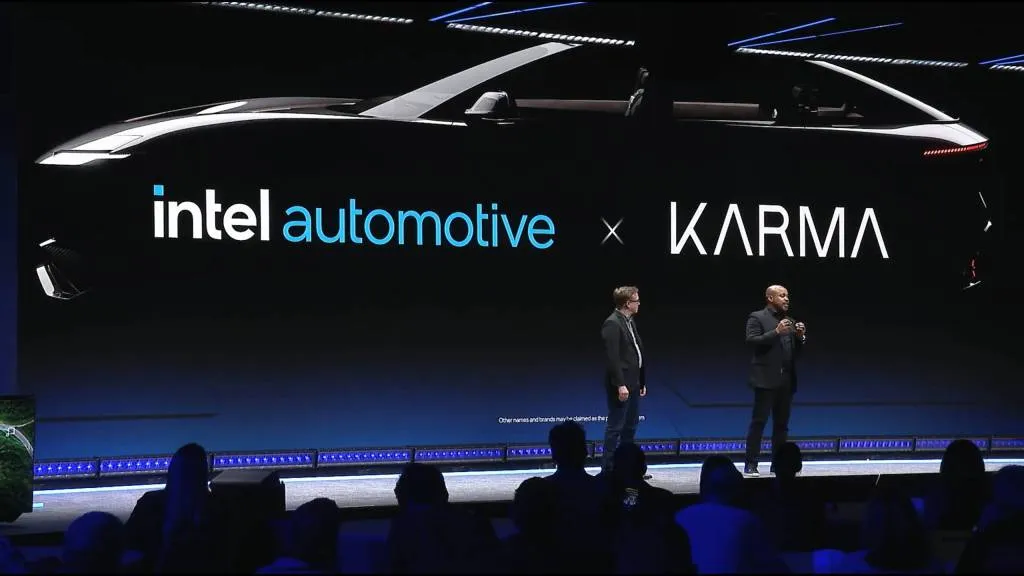
Intel Automotive and Karma
But last month, in a comprehensive interview with Green Car Reports, McCammon laid out that its primary goal remains to be a tech-forward ultra-luxury automaker with a ramped-up slate of models and an annual volume greater than what it’s managed to make cumulatively in its 10+ years.
Karma has some heavy lifting to get there. Its only current model, the Revero, returned in the fall after a production pause earlier in 2024, and McCammon confirmed that it’s once again being delivered. Deliveries in recent years have landed below a hundred vehicles a year; and earlier last year Karma said that it had delivered a cumulative 1,000 vehicles—over its entire history.
“I have no intention of claiming 50,000 or 100,000 units,” said McCammon when asked about annual volume targets. Instead, he offered, “3,000-5,000 units is where I want to be.”
“I can be at the ultra-luxury or exotic level and I can lean into the technology aggressively, and I’m small so I can move fast,” he said, summing up the philosophy. “And then I can share it.”
Sitting down with McCammon at CES, we had the CEO run through what will get him to annual production and sales of thousands rather than hundreds, and of the kind of desirability that will nurture Karma as a tech supplier.

Karma Revero GTS
Karma Revero, EREV series-hybrids remain the foundation
The Revero (also called the Karma GS-6 for a brief time) is a continuation of the Fisker Karma, which was first delivered in 2011. It carries most key aspects of the original Karma’s design forward but advances with a revamped powertrain and an updated interior. The plug-in series-hybrid propulsion system was featured in the Fisker Karma and is derived from a Quantum Technologies system originally developed for military vehicles. But Karma has extensively revamped that since the Fisker days, with a more powerful and refined 1.5-liter BMW turbo-3 and a bigger 28-kwh battery pack introduced for 2020.
In Karma’s so-called EREV system, the gasoline engine runs a generator when needed, while a dual-motor propulsion system produces 536 hp with additional electricity from the engine—delivering a 4.5-second 0-60 mph time—or 476 hp without the engine starting. The Revero was EPA-rated at 61 miles of range for the 2020 model year and specs haven’t changed significantly since then.
With it, the Revero is one of the few plug-in hybrid models on the market that can fast-charge. On an easy-to-find 50-kw CCS connector it can get to 80% in 24 minutes, according to Karma—so a quick charge during lunch might allow you more than 100 electric miles over the course of the day.
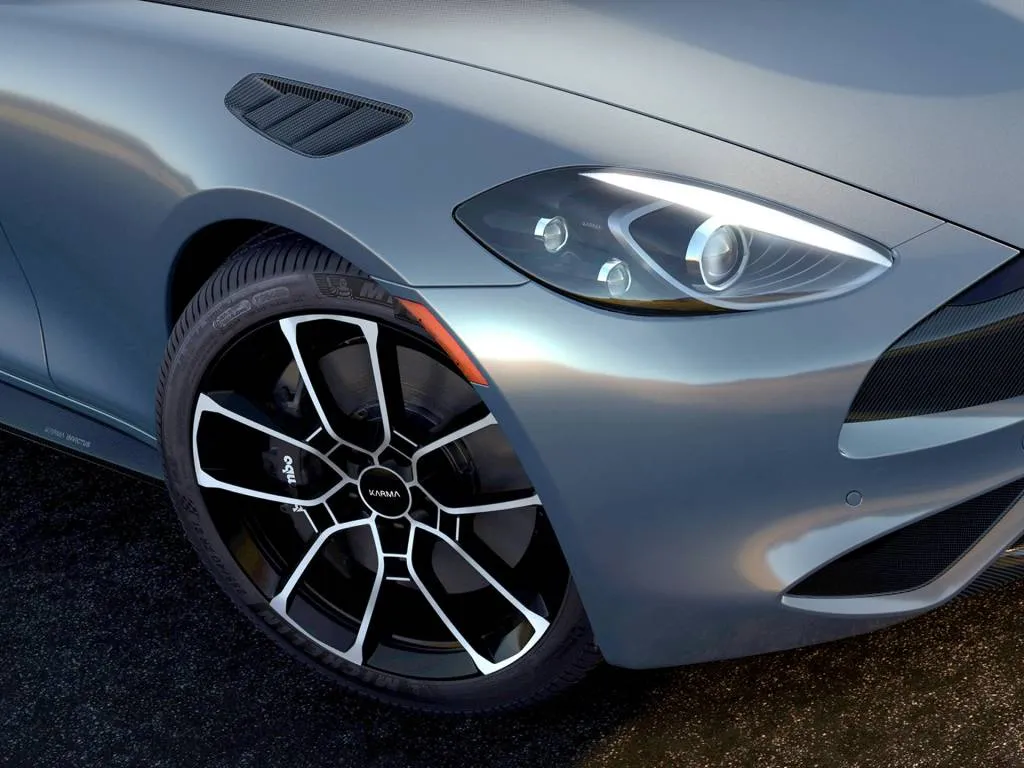
Karma Revero Invictus
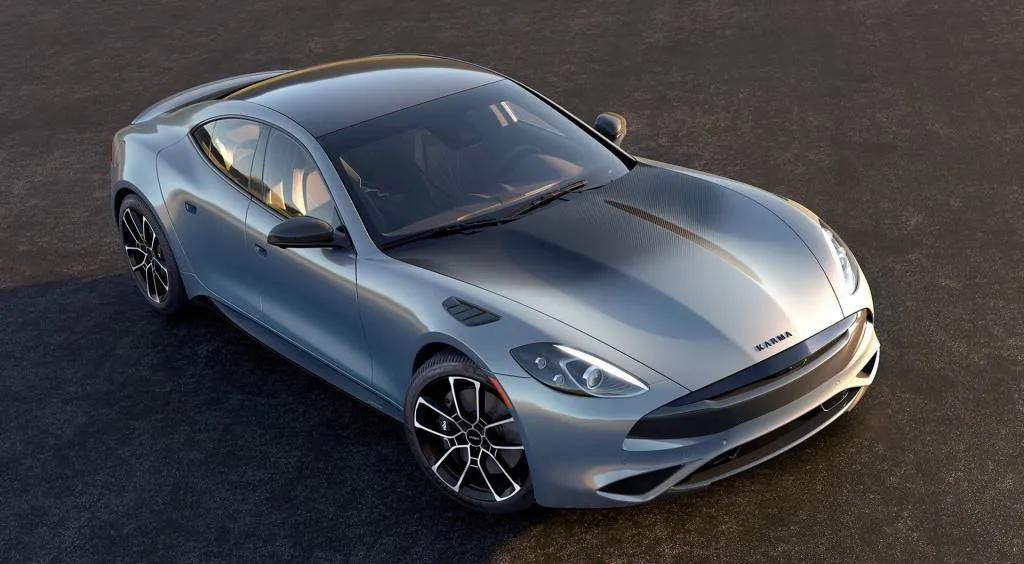
Karma Revero Invictus
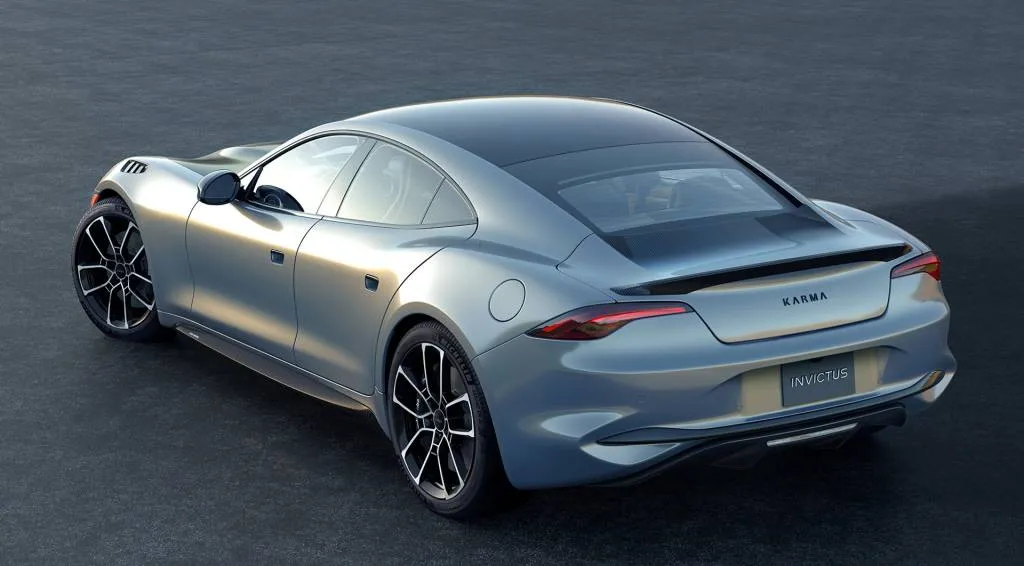
Karma Revero Invictus
Invictus transforms Revero, adds performance focus
The Karma Invictus comes next—later this year. As a special edition of the Revero, it’s set to be built around “a chassis more tightly refined for performance,” said McCammon, and it will weigh less overall than the Revero.
Karma has promised performance upfits including Öhlins dampers, Swift springs, and Michelin Pilot Sport 4S tires for the Invictus.
“We replace aluminum paddles with carbon; we lighten the vehicle up and we make it a fun driving machine; and then we do some really trick things on the interior, like hand-stitched themes where we draw from the Chrysler Building in New York,” said McCammon. “It’s very Art Deco—a collectible car.”
The Karma and Invictus will continue to take advantage of Karma’s body shop in Moreno Valley, California, which was configured to build a whole set of vehicles all starting with the same aluminum space frame.
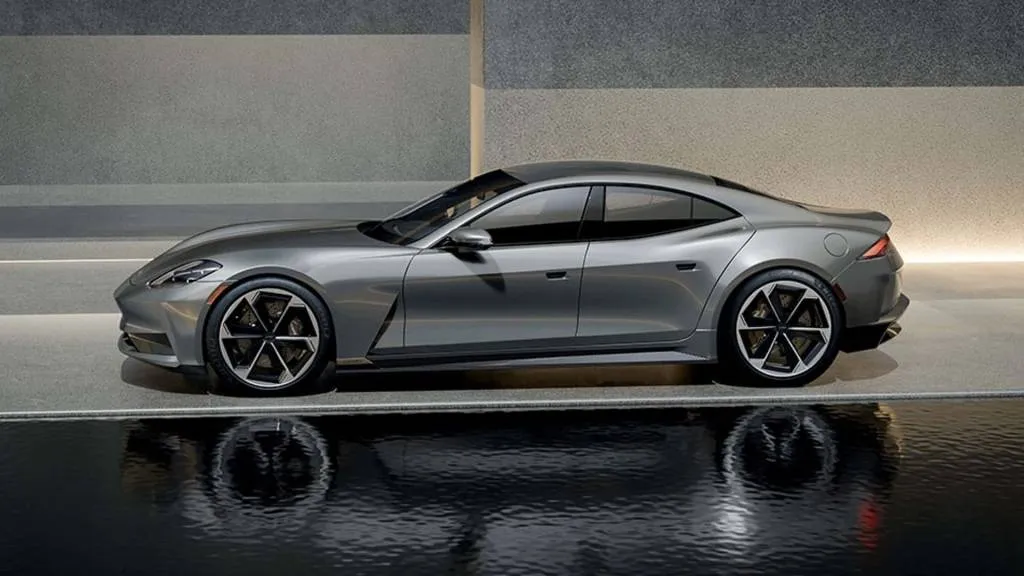
Karma Gyesera
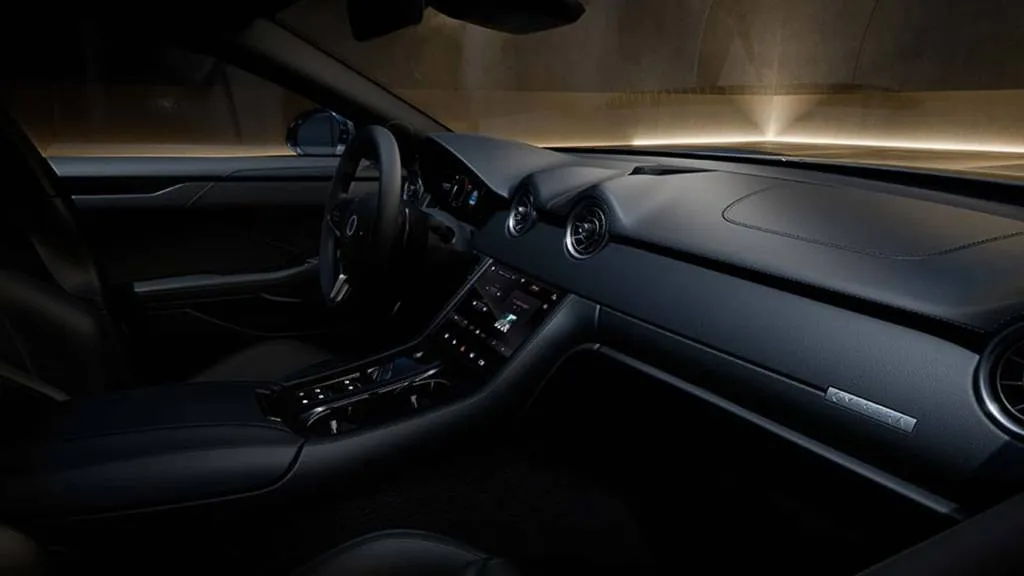
Karma Gyesera
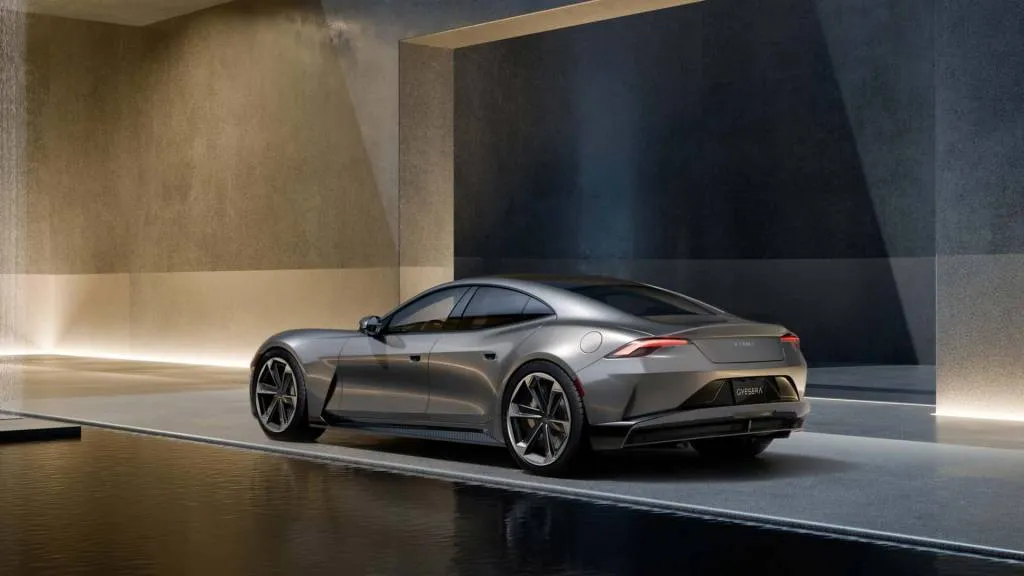
Karma Gyesera
Gyesera embraces composite body, new look
After Invictus comes the Gyesera, which McCammon described as a “new rebodied car.”
“It’s a whole new interior, whole new exterior, we’re moving away from aluminum for the body, and we’re focusing more on composite, so we have lighter weight, more high-performance, more exotic, frankly.”
Work on the composite body is being done partly in house and partly with suppliers. Its shop in California can paint composite panels but not make them. It’s specced and designed, then shipped in.
The Gyesera was originally due in 2024, and when we asked McCammon when it was arriving instead, he hinted that it’s changed direction over time. Although the Gyesera was originally supposed to be the first departure from that range extender, he suggested it will likely instead be a plug-in hybrid.
“We’ve been actively reevaluating that since June of last year, just because of the shift in market perception around EVs,” he said. “Right now with our EREV, I don’t know of anyone in the world—no one in North America—has an EV-only range of up to 80 miles.”
Sometime beyond the Gyesera, Karma has also suggested that a plug-in hybrid SUV might be in the way, maybe one like the Karma Ivara concept shown last year.
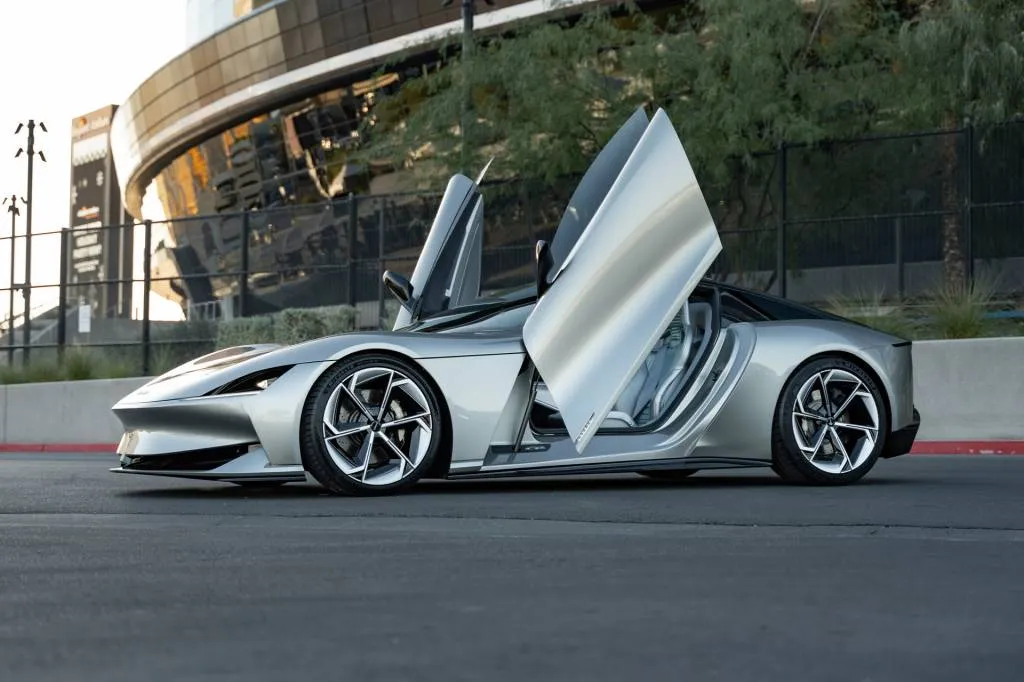
Karma Kaveya concept
1,000-hp Kaveya EV supercar tests Intel architecture
The exotic-looking, fully electric Karma Kaveya comes next, in late 2026—or perhaps sooner, hinted McCammon. It will produce 1,000 hp and be capable of accelerating to 60 mph in the vicinity of two seconds.
Although the Kaveya looks completely different, it will still build on Karma’s physical platform, meaning its aluminum space-frame layout and some of the chassis pieces. This will allow lots of commonality despite the adoption of the Intel whole-vehicle electrical architecture.
“We can change the spine, the length, the height, and don’t have to change the fundamental platform,” said McCammon. “So we can translate from a Revero or Gyesera to Kaveya and still have 40-plus-percent common content.”

Karma EREV E-Flex van concept
Commercial vehicles on the sidelines, design up front
Karma still plans to support commercial vehicles on its platform, McCammon said, but it won’t be at the core of the business as it appeared to be in 2021 when the company announced it would go after the electrified bus, RV, and box-truck market with a “Powered by Karma” banner. The focus will instead be on passenger vehicles, and specifically those at the upper end of the market—“American ultra-luxury,” as McCammon put it.
Based on the use case, its propulsion platform could have different configurations, including some built around 400 volts and others around 800 volts. That could include 800-volt versions for a super coupe or a crossover—allowing faster charging, among other advantages—plus a 400-volt version for commercial vehicles.

Karma Everyday BEV E-Flex platform
In addition to technology, design is the second key point that will get Karma to higher but still-exclusive volumes, the CEO explained. Between VP of design Michelle Christensen and Nick David as interior design director, they’re working as a team to give the vehicles a fresh look.
”I asked Michelle to take everything she has done in the studio and translate it into our entire brand experience,” McCammon explained. “Nick continues to work on the vehicle, but now she’s expanding that so every touch point of Karma has the same aesthetic.”
While Karma isn’t wound up in a typical startup hype cycle, it’s still trying to prove itself with finite resources. What it might deliver in tech and design all its own is still taking form—but it’s due very soon.