
Author: EVAI

Jeep or Ram might use EV drive motor to power integrated winch
Winches are a vital off-road accessory. And while they’re typically powered by a vehicle’s 12-volt electrical system, Stellantis is looking at an alternative power source for them in hybrids and electric vehicles.
In a patent filing published by the United States Patent and Trademark Office (USPTO) Jan. 21, 2025, and submitted by the automaker about a year prior, Stellantis discusses running a winch not off a battery pack but with a gearbox connected to one of the vehicle’s electric drive motors.
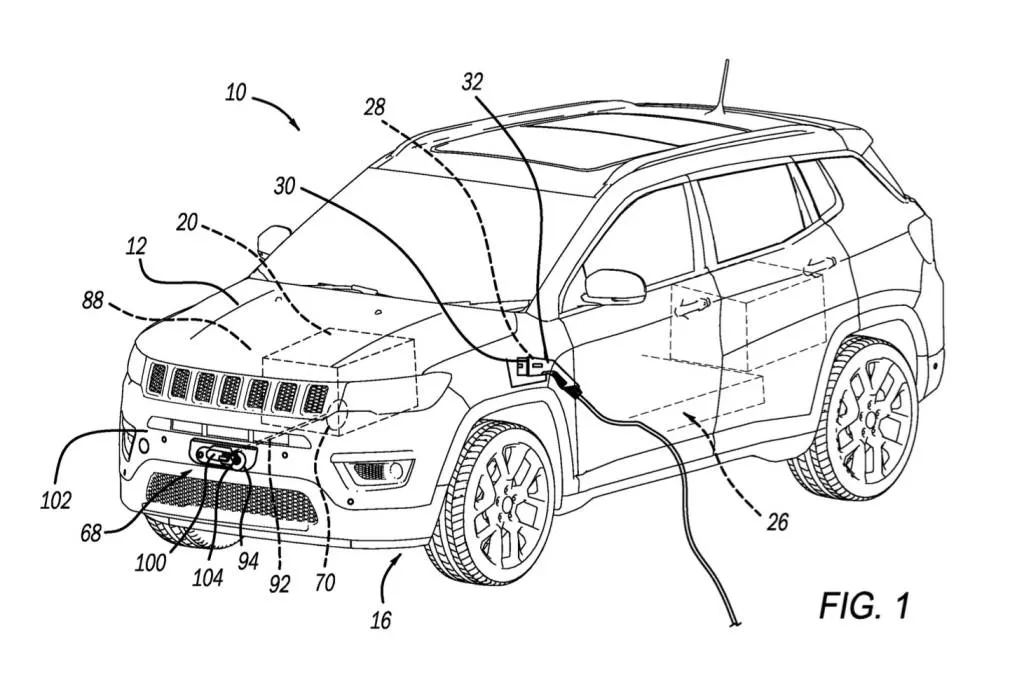
Stellantis patent image of a winch geared to an electric motor
As described in the document, the winch would be mounted on a vehicle’s front bumper in the conventional fashion. But instead of having its own built-in electric motor to spool and unspool a cable (which is then connected to an anchor point to pull the vehicle out of trouble spots), the winch would be connected to a planetary gearbox and then to drive modules like the ones Stellantis plans to manufacture in Indiana.
The gearbox would in turn be connected to the differential on the front axle, allowing an electric motor normally used to propel the vehicle to turn the winch’s spool instead of the wheels. A winch mode would disconnect the front wheels, as well as activate the parking brake to lock the rear wheels for maximum stability, according to the filing.
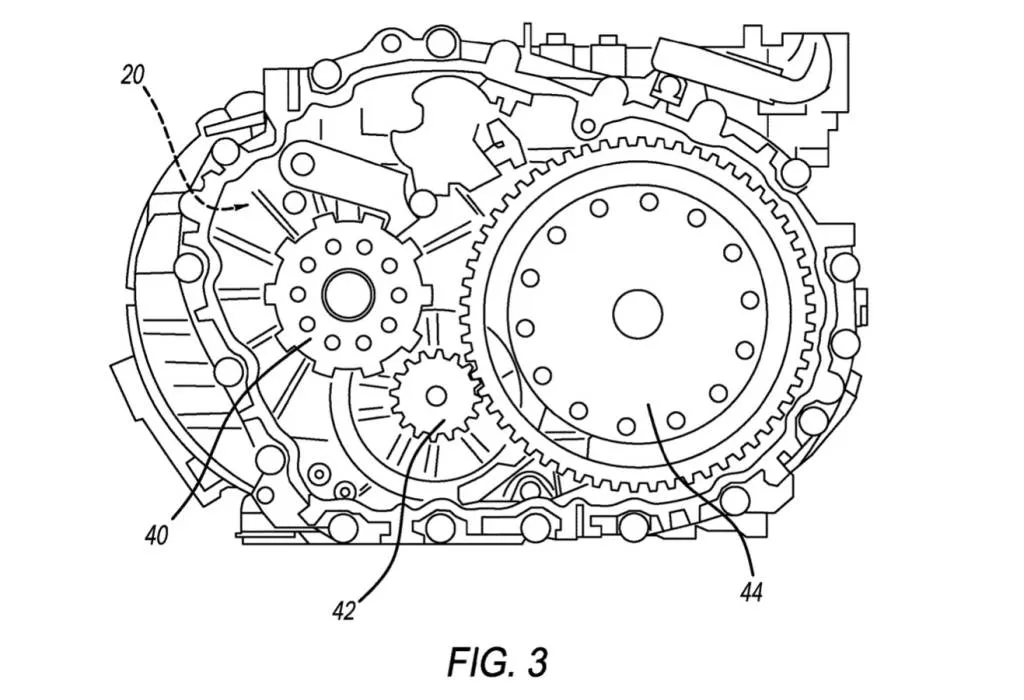
Stellantis patent image of a winch geared to an electric motor
The main benefit of such an arrangement would likely be the ease of integrating winches into vehicles from the factory. Eliminating the dedicated motor for winches would make them more compact, and potentially easier to place behind a bumper where they wouldn’t be a source of aerodynamic drag. Not that current buyers of off-road vehicles have any problem fitting aftermarket winches, though.
Integrated winches could be used on future Stellantis electric off-roaders like the Jeep Recon, a Wrangler-like SUV announced in 2022, and recently teased again in a Super Bowl ad, or perhaps a more off-road-focused version of the Ram 1500 Ramcharger plug-in hybrid or Ram 1500 REV EV. The latter has been pushed back once again, to late 2026, while Ramcharger is due to arrive later this year.

Polestar secures $450M loan as new-model rollout continues
Polestar on Friday announced additional funding as the automaker looks to continue building out its lineup of electric vehicles.
In a press release, Polestar said it had secured a 12-month loan facility of up to $450 million, following an $800 million 12-month facility locked in by the automaker in December. Polestar is also renewing a European Green Trade Finance Facility (TFF) for 480 million euros, or approximately $499 million at current exchange rates. It didn’t specify exactly where the new funding is coming from and whether its global parent Geely has a role—although it emphasized it received funding in 2022 from “a syndicate of leading global banks.”
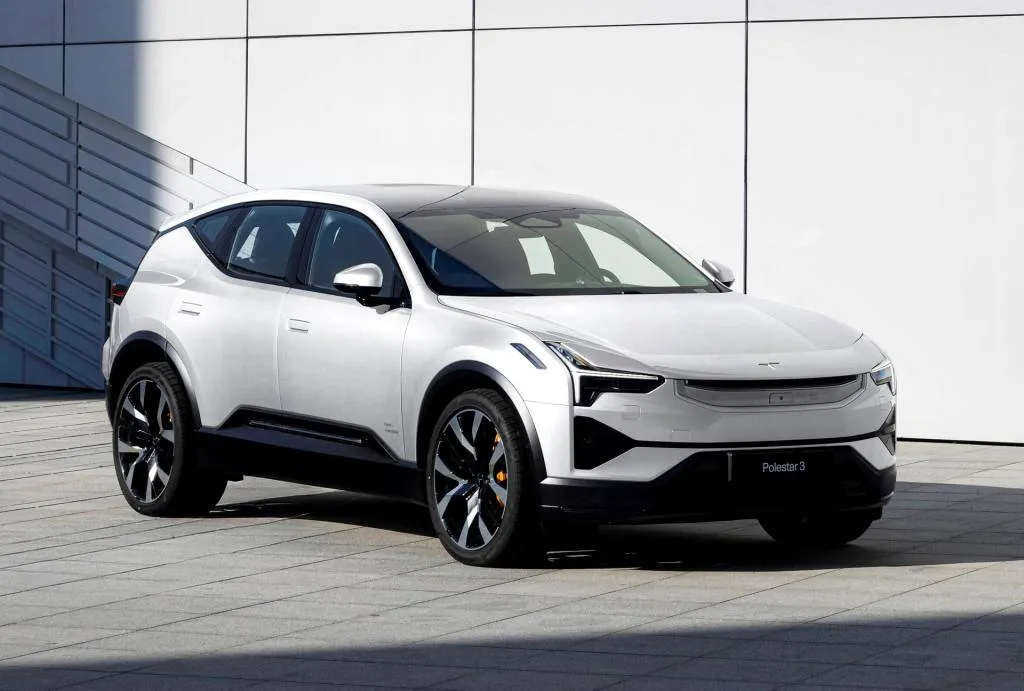
2025 Polestar 3
Additional funding was expected, but it’s still good news as Polestar looks to stabilize itself. Polestar shares have trended downward since the automaker went public in 2022 via a merger with a special purpose acquisition company (SPAC), and the automaker missed reduced 2023 delivery targets. Its 2024 financial results will be published in April.
Polestar describes itself as “born in Sweden,” although the EV maker produces most of its vehicles in China. It hasn’t manufactured a car in Sweden yet but leans on Volvo for development facilities. Thomas Ingenlath unexpectedly resigned as CEO of Polestar last year after leading the brand since its separation from Volvo, which had previously used the Polestar name for performance models, parts, and racing. Ingenlath was replaced in August of last year by Michael Lohscheller, who had previously served as CEO of Vinfast, Opel, and Nikola.
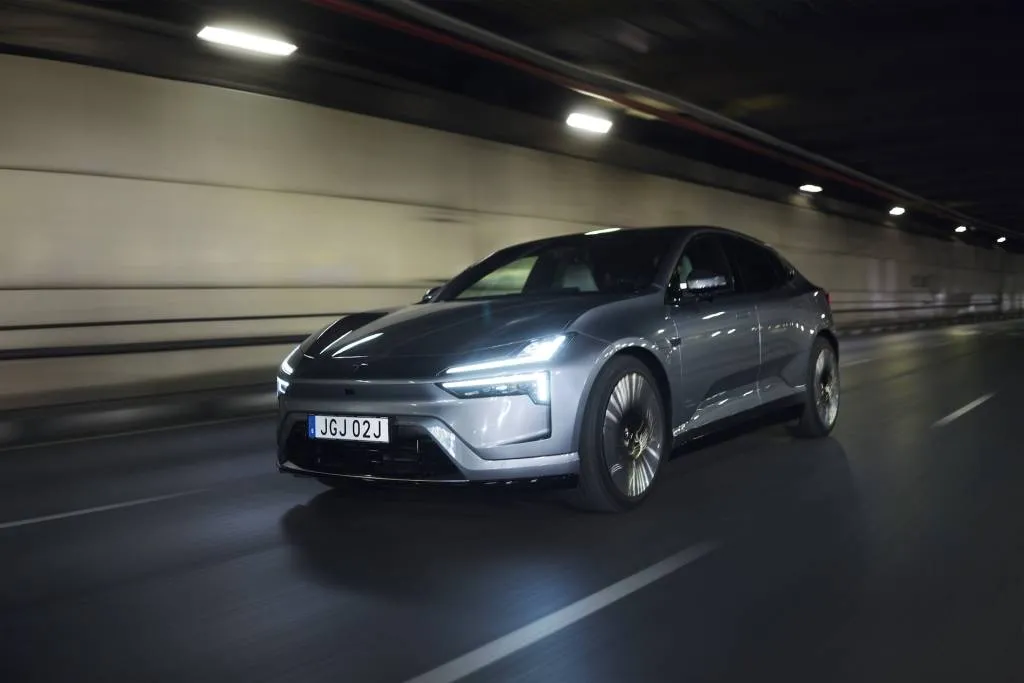
2025 Polestar 4
In what will likely help expand the brand’s reach, the Polestar 3 electric SUV went on sale last year, with U.S.-market vehicles manufactured in South Carolina. It likely has broader appeal than the Polestar 2 compact, or the segment-defying Polestar 4 that followed it to global showrooms.
The automaker reaffirmed in January that the Polestar 5 fastback would be the next model to arrive, reaching showrooms at some point later this year. It will be followed by a small SUV dubbed the Polestar 7, which will leapfrog the Polestar 6 convertible that’s also still in the queue.

BMW builds the ultimate online museum for fans of its brand
 BMW operates an official museum as part of its headquarters in Munich, Germany. However, for armchair travelers, the automaker has launched an online museum of sorts, offering detailed information and photos of models dating back to 1928, when BMW began building its first cars. The online museum, which BMW refers to as a product catalog, currently…

Polestar secures additional $450M of funding
 Polestar announced on Friday that it has secured a new loan of up to $450 million. The company also renewed an existing loan worth 480 million euros (approximately $500 million). This latest funding follows the $800 million in loans Polestar secured last December. Polestar’s sales fell 15% in 2024, ending the year at just 44,851 units. Without…

Upcoming Kia EV1 Will Be Even Smaller And More Affordable
- Kia is reportedly working on an even smaller electric model than the upcoming EV2.
- It will likely be called the EV and it is expected to be the electric equivalent of the Kia Picanto city car.
- It is expected to be priced €5,000 ($5,200) lower than the EV2.
Earlier this week, Kia unveiled several new electric models that will enter production soon. One of the most exciting is the pint-sized EV2 Concept, which previews a production model by the same name. The EV2 is basically Kia’s electric Europan city car, shrinking down the E-GMP platform for drivers who need something that doesn’t take up lots of space. But that’s not all—Kia is reportedly planning to go even smaller with its electric offerings.
The similar Hyundai Inster and EV2 are the Hyundai-Kia group’s smallest EVs, but according to Autocar, Kia is working on something even smaller, an electric equivalent of the tiny Picanto city car available on the European market. The Inster is already tiny by American standards, which is why neither it nor the EV2 are coming to the States, so the chance that the upcoming smaller model would be sold here is even slimmer.
And we know from past reporting that Kia has a whole family of EVs planned, from the EV9 all the way down to what this car will likely be: the Kia EV1.
For reference, the Hyundai Inster measures 150.6 inches (3.82 meters) in length and is just 63.4 inches (1.61 meters) wide, sitting on a 101.6-inch (2.58-meter) wheelbase. The Kia Picanto is almost 9 inches (22 cm) shorter and even narrower, and it’s likely the future EV1 will be roughly the same size.
The source report also says the EV1 will cost about €25,000 ($26,000) or around €5,000 ($5,200) more than the larger EV2.
Autocar quotes Kia president Ho Sung Song as saying, “If we want to move to the late majority customer target group, definitely we need a lower size of model—or a lower-price model—and we are internally studying what will be our entry EV models, apart from our EV2. Maybe next EV Day, we’ll show you what we are planning.”

54
Source: Alex Goy / InsideEVs
There are already EVs in the future EV1’s size bracket available in Europe, including the Dacia Spring, the Leapmotor T03 or the BYD Seagull. Renault is also working on an electric Twingo revival, which will share its underpinnings with an even cheaper future Dacia EV that will replace the current Spring.
The upcoming Dacia EV is expected to start around €18,000 ($18,800), making it considerably more affordable than all vehicles its size, including the EV1.
Share this Story

Xiaomi SU7 Ultra reaches market with 1,527 hp, sub-$73,000 price tag
 Xiaomi has started sales of its SU7 Ultra electric super sedan in China The SU7 Ultra packs three electric motors delivering a combined 1,527 hp Xiaomi plans to set an official lap time at the Nürburgring with a production example When it comes to bang for the buck, it’s hard to beat the Xiaomi SU7 Ultra. Currently available only in China…

How Motown, Martha and the Vandellas, and the Ford Mustang wrote music history
 A classic snare riff kicks it off—bah, bada bah-bah bah-bah bah-bah—and a chugging, urgent bass line propels the song forward. Three young women pop out from a wheel well, radiant in skirts and hair bands, beaming smiles and their hit song to a national network-TV audience. The bottle rocket that was Motown had taken flight; their…

Trump and Elon Musk might gut the EPA
![The White House, Washington, D.C. [Creative Commons license by dcjohn]](https://evautoinsider.com/wp-content/uploads/2025/02/trump-and-elon-musk-might-gut-the-epa.gif) The EPA could be the next target of the Trump Administration’s mass layoffs, although it’s unclear how deep the cuts might go. As reported by The New York Times, President Trump said during a Wednesday cabinet meeting that Lee Zeldin, the EPA administrator, planned to fire 65% of EPA employees, which agency officials later admitted would prevent…
The EPA could be the next target of the Trump Administration’s mass layoffs, although it’s unclear how deep the cuts might go. As reported by The New York Times, President Trump said during a Wednesday cabinet meeting that Lee Zeldin, the EPA administrator, planned to fire 65% of EPA employees, which agency officials later admitted would prevent…

Kia EV2 concept previews soulful small EV due in 2026
Kia on Thursday unveiled the Concept EV2, which previews an electric subcompact crossover expected to enter production in 2026.
Shown at the automaker’s EV Day presentation in Tarragona, Spain, alongside a handful of other electric vehicles, the boxy EV2 almost looks like an heir to the Kia Soul EV, which was sold in the U.S. in limited numbers from model years 2015 to 2019. A second-generation Soul EV was offered in other markets but it never made it to the U.S., even though it had an official 243-mile EPA range rating.
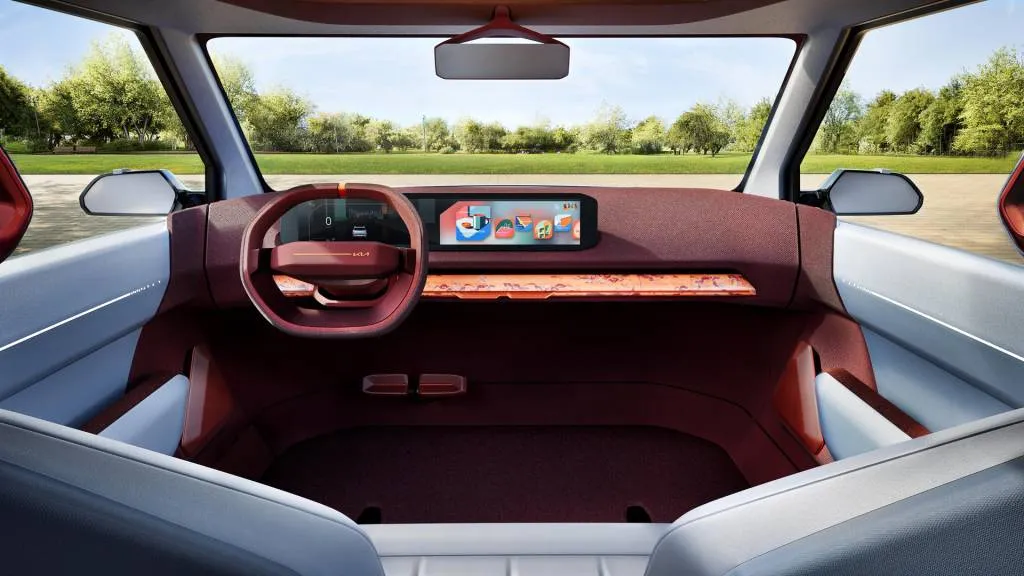
Kia Concept EV2
At 169.3 inches long, the EV2 is 4.1 inches longer than the current gasoline Kia Soul, and about the same length as the Kia EV3 electric crossover unveiled last May. That footprint puts both Kia vehicles between the Hyundai Kona Electric and Volvo EX30, two of the smaller EVs to reach the U.S., excepting the Fiat 500e that’s more than two feet shorter than the EV2.
Fanciful features like suicide doors (which Kia fully committed to by deleting the central roof pillar) likely won’t make it to production, but the flat floor, wide-opening tailgate, and pop-up cargo divider system might. The interior also features removable triangular speakers, a dashboard-spanning display, and the ability to project messages onto windows to communicate with other road users. Kia also claims to be developing an AI voice assistant for future EVs.
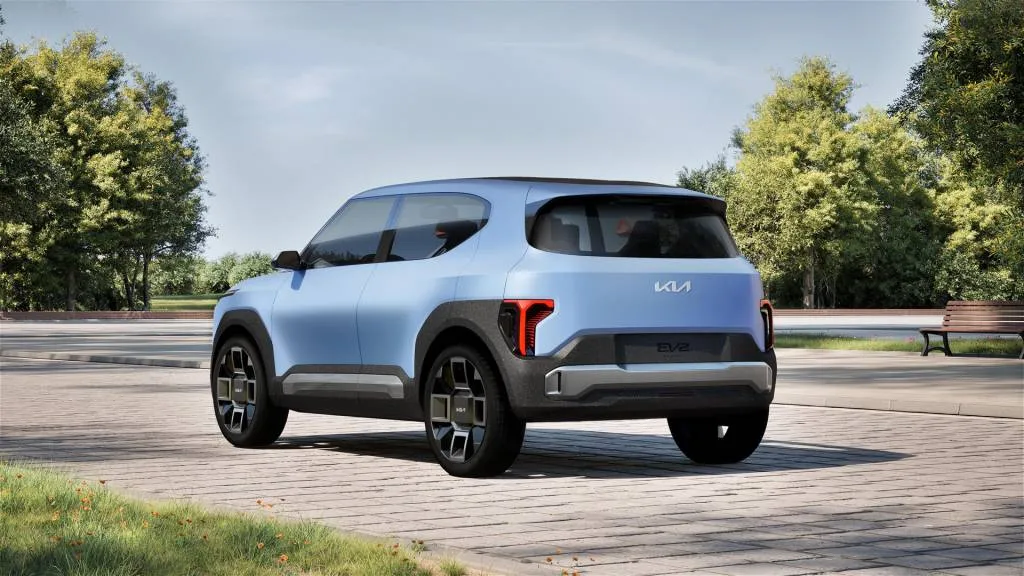
Kia Concept EV2
Kia has provided few technical details, but the EV2 is expected to use the same lower-cost version of the E-GMP dedicated EV architecture as the EV3. Cost-cutting is expected to include 400-volt charging in place of the 800-volt charging in other E-GMP models, although Kia said the EV2 will retain the bidirectional charging capability built into that platform.
The Concept EV2 was revealed alongside the production-ready EV4, a compact model to be offered in sedan and hatchback body styles, and the PV5 electric van. Kia has indicated that it’s mulling bringing the EV3 and EV4, as well as the PV5 van to the U.S., but it’s unclear if the EV2 might be sold here as well.

Kia PV5 electric van arrives to challenge the VW ID.Buzz
 Kia has revealed the PV5 as the first of its planned range of purpose-built vehicles The PV5 is an electric midsize van that Kia will offer in passenger and cargo forms Sales start this year but U.S. availability hasn’t been announced Kia has revealed the PV5, an electric midsize van, during a special Kia EV Day presentation in Tarragona, Spain…