
Author: EVAI

Review: 2025 GMC Yukon AT4 Ultimate stretches the limits of off-road luxury
 GMC’s full-size SUV gains a new flagship off-road trim All Yukon models get a new dash with a massive central screen Air suspension convincingly hides the Yukon’s trucky platform In its new AT4 Ultimate trim, the 2025 GMC Yukon tries hard to do a lot of things, many of which seem to cancel out one another. Meaty all-terrain tires wrap…

US-bound Kia EV4 electric sedan and hatch duo revealed
 Kia will soon expand its electric vehicle lineup with the addition of the EV4 compact sedan and hatchback The EV4’s design stays true to the bold lines of the concept version first revealed in 2023 Sales for the U.S. are planned but timing remains uncertain Kia continues to expand its lineup of electric vehicles, with the new EV4 compact sedan and…

Stellantis and Rivian working on flat towing for EVs
Flat-towing an electric vehicle—that is, towing it with its wheels in contact with the road—is more difficult than with internal-combustion vehicles. But automakers are working on solutions.
When internal-combustion vehicles are flat-towed, their transmissions are shifted into neutral, or prop shafts are removed or disengaged, to allow the normally-driven wheels to rotate freely without risking damage to mechanical components. But mechanically decoupling electric motors from the wheels they normally drive isn’t as straightforward with EVs.
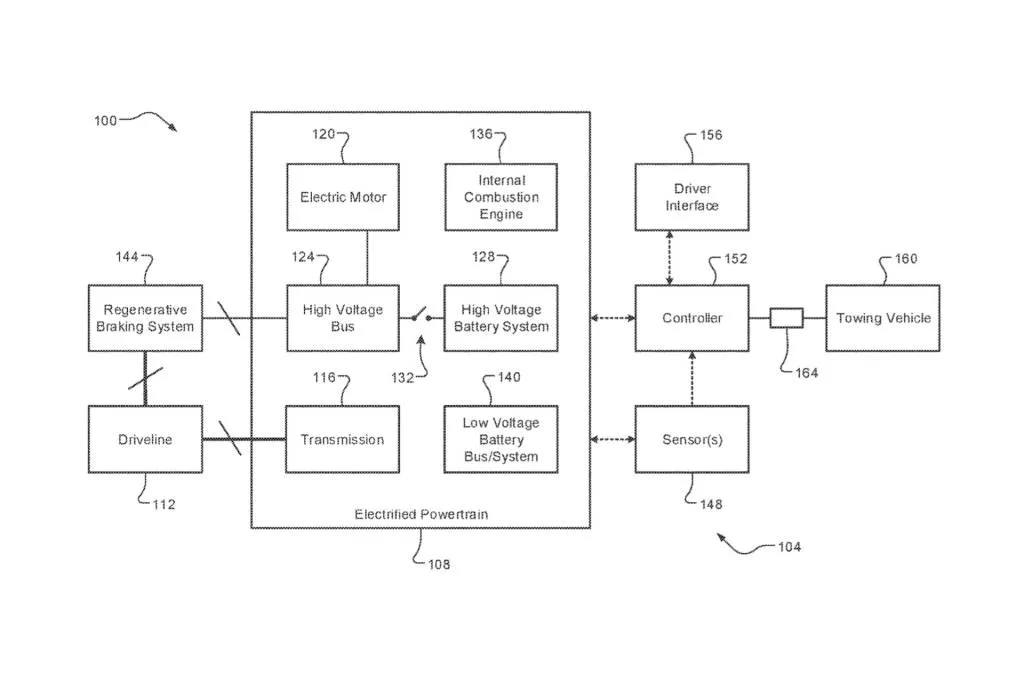
Stellantis EV flat towing patent image
In a patent filing published by the United States Patent and Trademark Office (USPTO) Jan. 30, 2025 (and submitted Jul. 24, 2023), Stellantis proposes an alternative, for vehicles equipped with permanent-magnet synchronous motors, at least. A high-voltage bus could be used to induce field weakening, reducing the torque of the motors and allowing them to spin more freely, while being isolated from the battery pack.
It’s a somewhat simpler solution than the one proposed by Rivian in a patent filing that surfaced just about a year ago. In that filing, the automaker discusses using software to disconnect the motor or motors that would normally power the rear axle, while still applying torque to the front wheels to keep the vehicle from rolling out of sync with the tow vehicle.
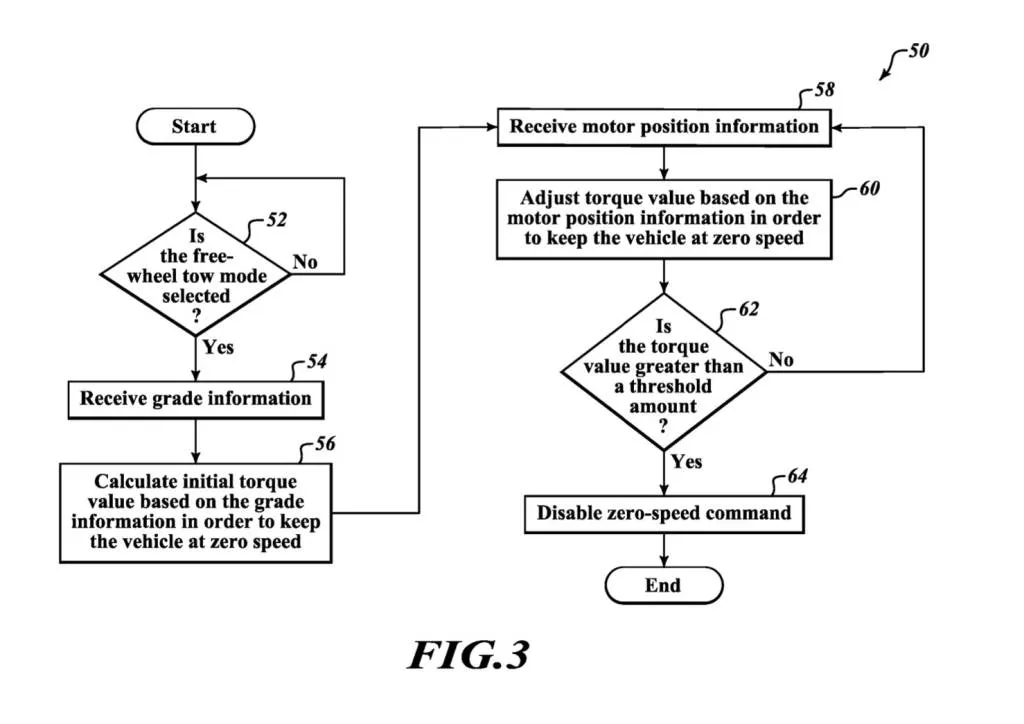
Rivian free-wheel towing patent image
In earlier patent application, published by the USPTO in 2021, Ford takes things a step further by suggesting that EVs could selectively be charged when towed. That also opens up the possibility of using the EV to help boost the tow vehicle up hills, similar to what startups Pebble and Lightship have built into travel trailers.
While flat-towing might not be a primary concern for all EV shoppers, it’s popular with RV owners, and could also make it easier to recover stranded EVs, reducing the need for flatbed trucks. So these patented ideas could prove quite useful if they’re ever applied to production vehicles.

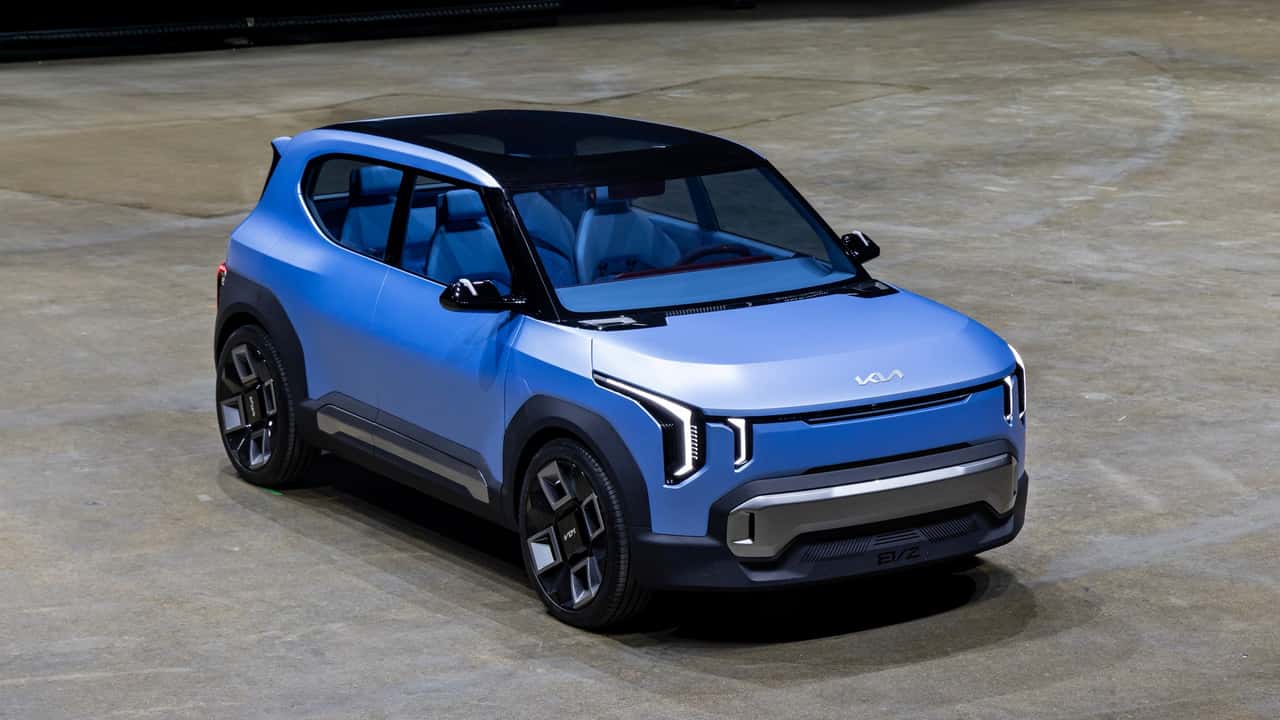
Kia EV2 Concept: This Will Be Kia’s Most Affordable EV Yet
While it’s a concept, Kia says this tiny powerhouse has vehicle-to-load charging, over-the-air updates and everything else you’d expect.

Upcoming Nissan EV getting NACS port: Will it be next-gen Leaf?
- NACS will debut in Nissan-branded pure EV in 2025, be available in 2026
- Unclear whether that’s refreshed Ariya, or next-generation Leaf
- Nissan won’t immediately renew home charging around NACS
Nissan was the first Japanese automaker to confirm a switch to the Tesla-based North American Charging Standard (NACS) connector for future U.S.-market EVs.
It announced back in July 2023 that Nissan EVs with a NACS port would begin arriving in 2025, and in a recent check-in with Green Car Reports, Nissan confirmed that it remains on-track for that target—with a few intriguing details.
Nissan is now offering a NACS adapter for the Ariya, which has a CCS charge port, so that it can take advantage of the Tesla Supercharger network and other additional NACS connectors. That’s ahead of a message that Nissan is now adding a little more detail to: It confirmed Wednesday its plan to “introduce” a Nissan-branded pure EV with a native NACS port later this calendar year, with on-sale availability assured for calendar-year 2026.
That potentially pegs a refreshed Ariya as the first U.S. Nissan with a NACS port, but Nissan wouldn’t confirm that’s the case. Further, its hint of “introduce” opens the door to a different model potentially leading the transition, at least from a show stand. A next-generation Nissan Leaf is likely to be previewed globally before the end of the year, for instance, but its U.S. arrival and timing are unclear as of yet.
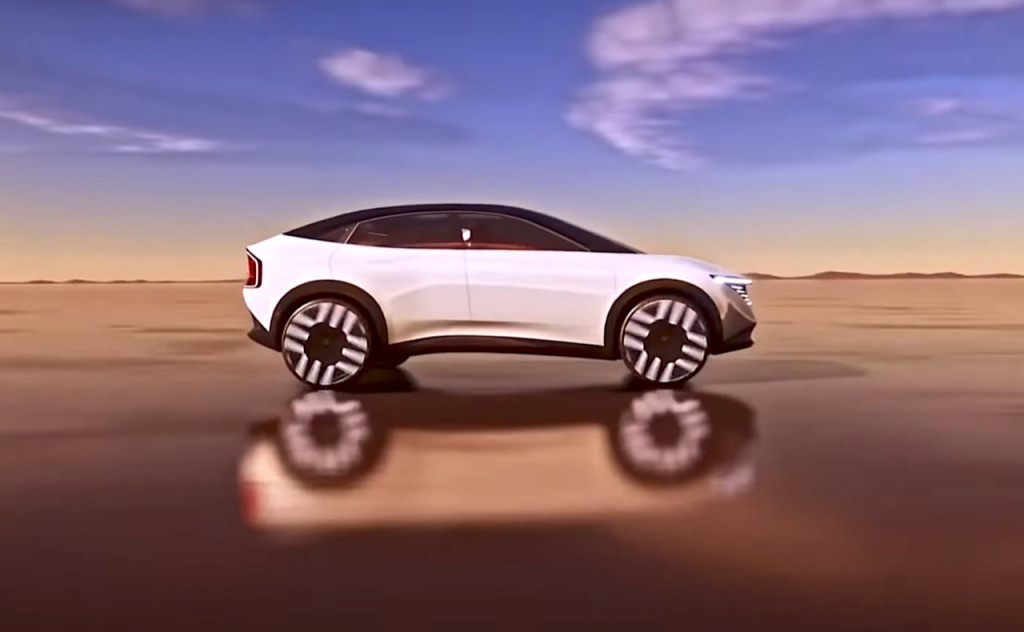
Nissan Chill-Out concept – December 2021
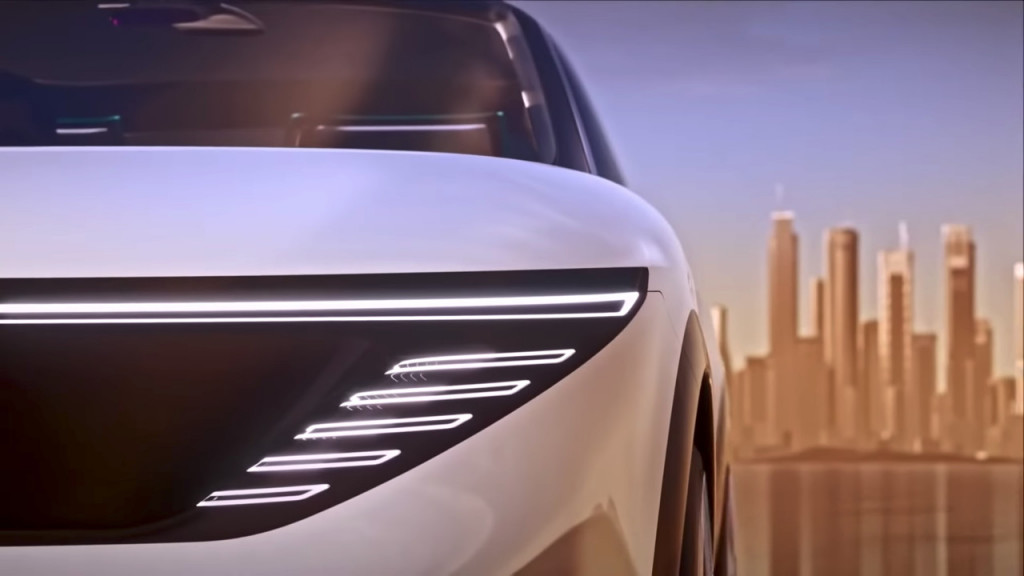
Nissan Chill-Out concept – December 2021
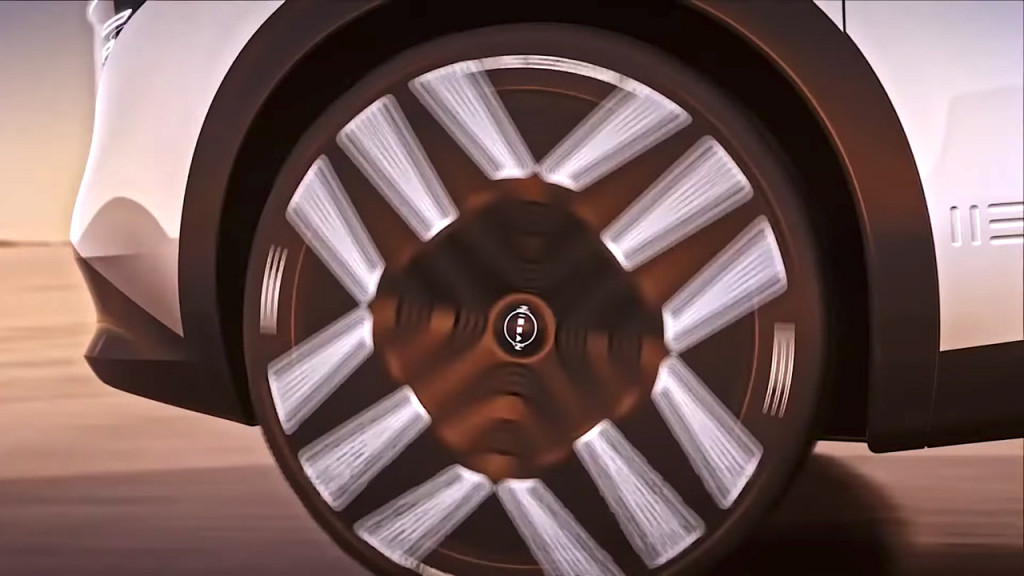
Nissan Chill-Out concept – December 2021
In advance of this, Nissan updated its app earlier this year so that you can now see live station availability, compatibility with your vehicle, and what equipment is needed to achieve the peak charge rate. You can also start and stop charging sessions—even those on the Supercharger network—with the app.
To prepare for the adapters and then that bigger shift, Nissan already has all compatible Supercharger stations listed in the Nissan app, according to Ansu Jammeh, an engineer overseeing charging compatibility and development at Nissan in the U.S.
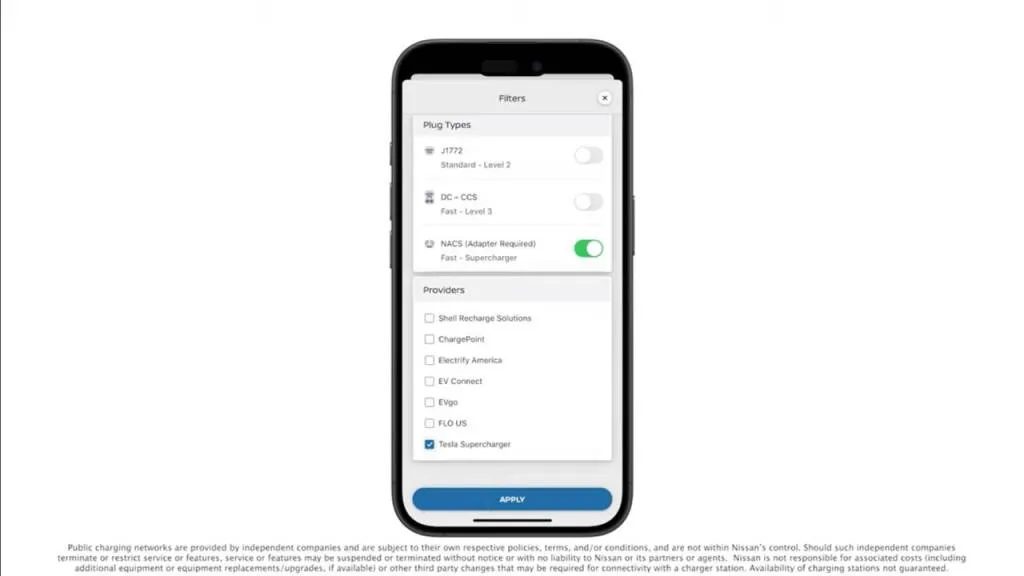
Nissan app – network filters including Tesla Supercharger

Nissan app — ability to send Tesla Supercharger guidance to vehicle
With NACS compatibility, Nissan added an additional 20,000 DC fast-charger posts. That essentially doubles the charge connectors available to a Nissan customer, Jammeh recently noted to Green Car Reports.
Regardless of what happens with a range of factors such as the federal charging buildout, Nissan is expecting “steady growth” in U.S. charging infrastructure over the next few years, according to Jammeh. “Industry-wide, we still see the customer want, and the necessity, behind more charging infrastructure,” he underscored.
Home charging remains a big part of it, too, and Jammeh emphasized that part of it won’t be changing immediately—and it doesn’t need to, with adapters playing their part.
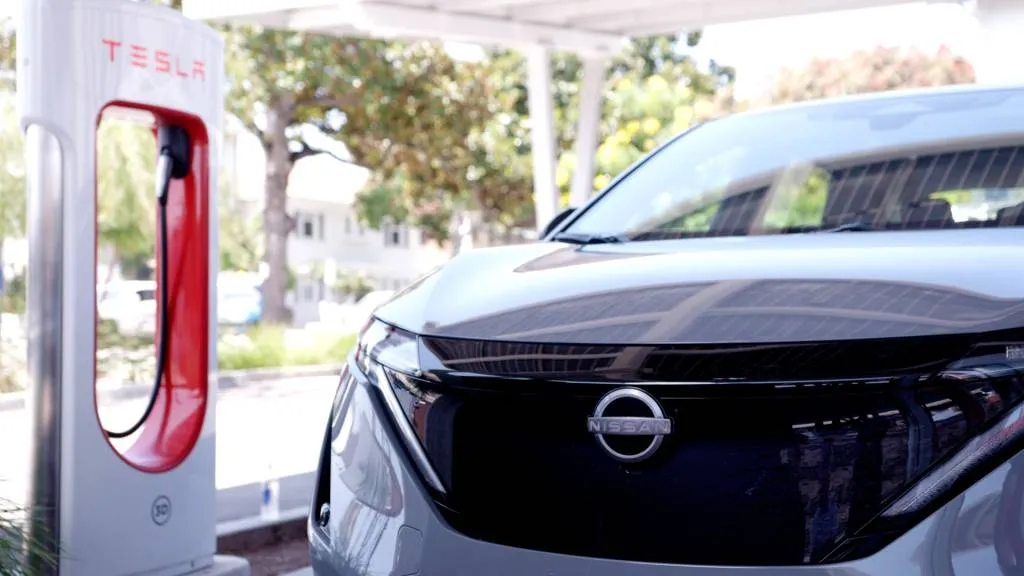
Nissan Ariya at Tesla Supercharger station
“The beautiful part is that, between J1772, CCS1, and NACS, they’re compatible,” said Jammeh, referring to what’s assured by the developing J3400 standard around the NACS connector. “So in terms of a customer, do they actually need to change their home infrastructure? No, they can utilize the same equipment they have.”
As for that adapter, it’s available now, and it can be purchased for $235 through Nissan dealers or directly from Nissan.
Nissan strongly advises against using a third-party adapter—or for that matter, even the Tesla Magic Dock, and cautions that it’s prohibited under Nissan’s own terms and may also violate Tesla’s terms of use for the Supercharger Network. In Nissan’s design specifically, a plastic tab that fits within the adapter helps it fit securely.
The adapter fully supports the Ariya’s peak charge rate of 130 kw, which allows it to charge from 10-80% in as little as 35 minutes, according to Nissan.
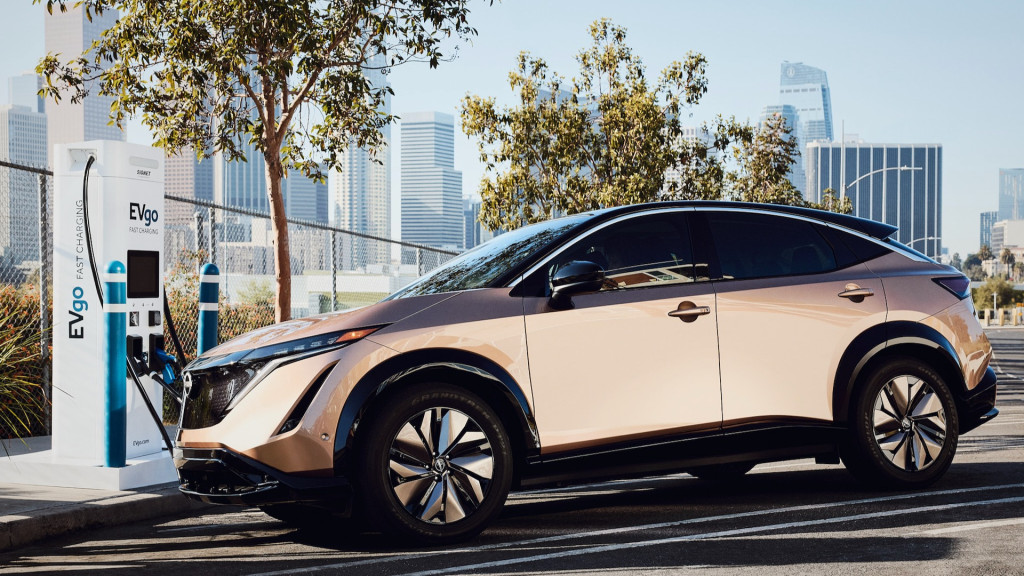
2023 Nissan Ariya at EVgo charging station
Jammeh said that looking ahead, Nissan “will support any change that needs to be done on the vehicle design or equipment side to make sure customers are best-equipped.” But the engineer couldn’t yet say whether or not that means better support in its electric vehicle products for bidirectional charging—just that it hopes to adopt those technologies in the future.
Future charging technology announcements, Jammeh hinted, might also correspond with Nissan’s plans to offer an all-solid-state battery in at least one global vehicle by 2028.
Nissan, on a global basis, has emphasized the importance of bidirectional charging tech, including vehicle-to-home (V2H) and vehicle-to-grid (V2G) technologies, and it once said those capabilities were built into the Ariya. In the U.S., Nissan does support Leaf bidirectional charging, but the only compatible (and warranty-supported) unit at present is one that enables V2G rather than home-backup capability.
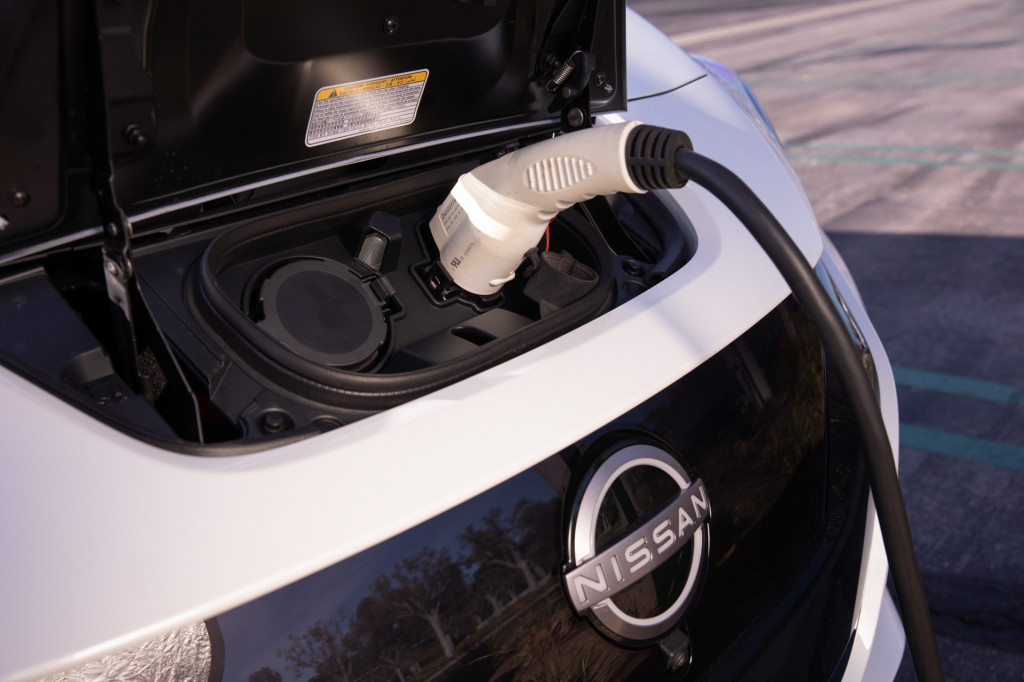
2023 Nissan Leaf
The Leaf is Nissan’s only U.S. vehicle to use the CHAdeMO charge port. A 2026 Nissan Rogue plug-in hybrid has also been confirmed, and seeing that its Mitsubishi Outlander PHEV cousin uses CHAdeMO, it will be interesting to see whether it arrives with that, CCS, or NACS. Nissan also has several Mississippi-made EVs in the works, but those have now been pushed out to 2028 and will surely offer NACS.
In the meantime, with such variance in upcoming EVs, adapters, and different charge ports, it’s going to be much more of a challenge for automakers to communicate what to plug into—both within apps and in-person.

AC Cobra GT to be built at former Saab site
 AC Cars has teamed up with T-engineering for production of its Cobra GT T-engineering was founded by ex-Saab engineers and is based on the former Saab plant in Sweden AC is also building the Cobra GT in the U.K. AC Cars has turned to an unlikely partner for support in building its modern take on the iconic Cobra sports car. The British company…

2027 Mercedes-AMG GLS 63 spied possibly testing new V-8
 The Mercedes-Benz GLS-Class range is expected to be updated for 2027 model year An AMG GLS 63 prototype is out testing with light camouflage gear only A new electrified V-8 engine is possible for the updated GLS 63 Mercedes-Benz is working on an update for the GLS-Class, and the latest prototype to be spotted is for the fiery AMG GLS 63 model…

Ram Ramcharger PHEV doesn’t need a charge to haul 14,000 lb up 6% grade
 The 2026 Ram Ramcharger plug-in hybrid will now arrive in the second half of 2025 The Ramcharger will have a total driving range of 690 miles Ram’s CEO mentioned a price of $69,995 No one said it’ll be quick, or efficient, but Ram’s upcoming Ramcharger plug-in hybrid can do the tough truck deeds, according to the automaker. On Monday, Ram CEO Tim…

Volvo ES90 electric sedan gets 800V charging, sustainable materials
- Upcoming ES90 will get 800-volt architecture, 350-kw fast-charging
- Smaller battery than EX90 electric SUV, yet a longer range
- Recycled plastics, certified wood, and battery passport all part of eco credentials
The Volvo ES90 electric sedan will be the first of the Swedish automaker’s electric vehicles with an 800-volt electrical architecture, and will continue Volvo’s emphasis on sustainable materials.
First teased last fall, the ES90 is due to be revealed Mar. 5, but Volvo is releasing some details to build up hype ahead of that. On Wednesday, the automaker sent out a press release focused on charging and sustainability aspects of the new sedan.
On the charging side, Volvo confirmed an 800-volt electrical architecture that will allow European-spec versions of the ES90 to charge at up to 350 kw and recover up to 186 miles of range in 10 minutes of charging at that power level.
The automaker also expects the time for a 20-minute 10-80% charge, compared to 30 minutes for the EX90 SUV, with 400-volt hardware. But it hasn’t yet said whether the ES90 will also offer the bidirectional charging capability that’s been promised for the EX90.
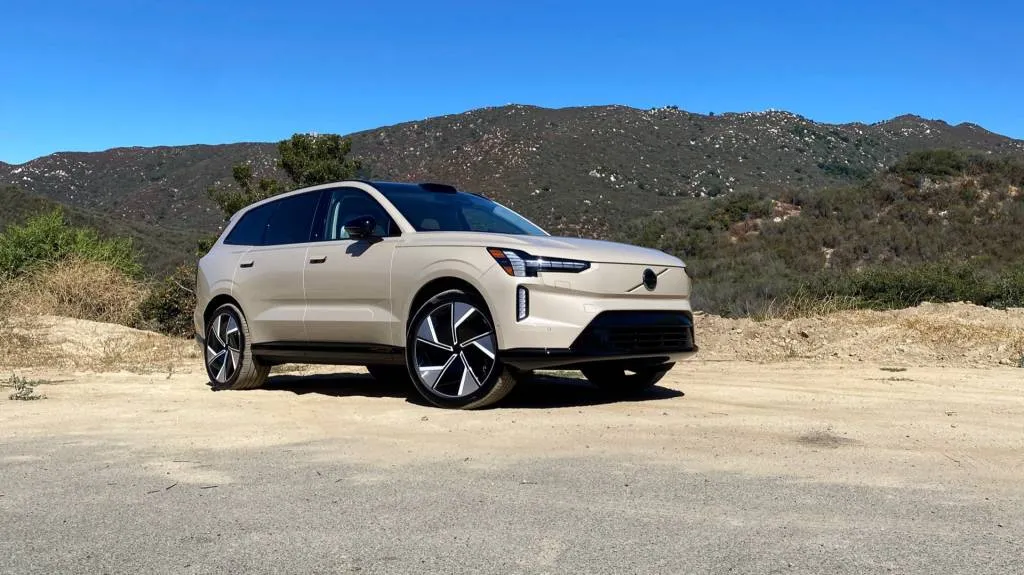
2025 Volvo EX90
Volvo is aiming for 435 miles of range, as measured on the European WLTP testing cycle. That’s based on a dual-motor powertrain and 106-kwh battery pack, although Volvo didn’t specify whether the battery capacity was usable or gross. For reference, the EX90’s pack is 111 kwh gross, with 107 kwh usable. And it’s worth remembering that WLTP numbers don’t directly translate to the U.S. EPA cycle, although the ES90 should still manage well over 300 miles in EPA testing.
Volvo also claims that it will keep the overall carbon footprint of the ES90 with meaningful use of sustainable materials. The automaker claims 29% of the aluminum, 18% of the steel, and 16% of the plastic polymers used in the car will be recycled material, while all wood trim will be certified by the Forest Stewardship Council (FSC) as sustainably harvested.
The ES90 will also have a blockchain-based “battery passport” that tracks the sourcing of raw materials—including cobalt, graphite, lithium, and nickel—as well as the overall carbon footprint of the battery, according to Volvo.
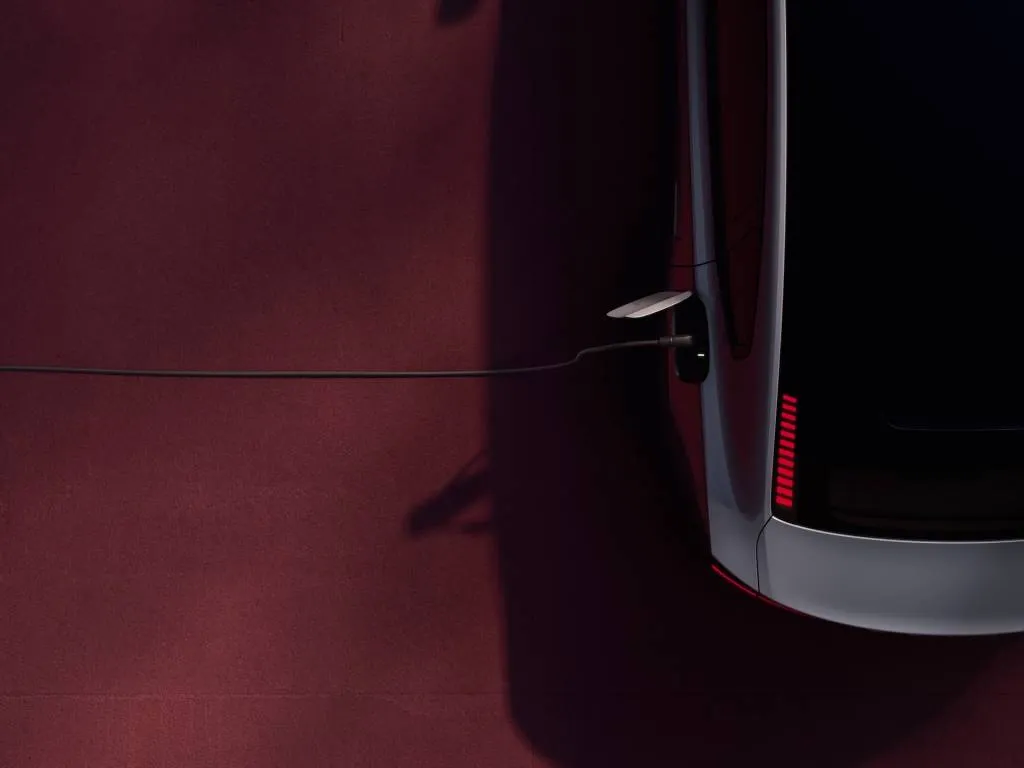
Volvo ES90 teased ahead of debut on March 5, 2025
While still based on the SPA2 architecture used by the EX90, the ES90 is shaping up to be a true evolution of that platform, rather than just the same components packaged in a new body style. In addition to its 800-volt electrical architecture, the ES90 will debut more powerful chips for Volvo’s Superset tech stack. Those chips will be retrofitted to EX90 models as well, under a timeline and details yet to be confirmed.
The ES90 is one of 10 new and updated models Volvo plans to introduce over the next two years. In addition to more EVs, some of them will be longer-range plug-in hybrids as Volvo backs away from a previous goal of going all-electric by 2030.

Lucid CEO Peter Rawlinson has stepped aside after Gravity launch
- Rawlinson becomes advisor as Lucid delivers Gravity, pivots to more affordable EVs
- CTO of Lucid and parent Atieva since 2013, led efficiency-and-performance push
- Oversaw Lucid Air and Gravity, Tesla Model S
Peter Rawlinson is no longer the top executive at California’s Lucid Motors.
In a press release, Lucid said that Rawlinson “has stepped aside from his prior roles,” and will transition to a role as senior technical advisor to the chairman of the board at Lucid, while COO Marc Winterhoff has been made interim CEO.
Rawlinson was elevated to the role of CEO at Lucid in 2019, but it’s the chief technical officer (CTO) role that he doubly held that’s been especially important. As the engineering wizard behind a lot of what has propelled the company to its technological preeminence, Rawlinson has positioned Lucid to grow as a propulsion-efficiency juggernaut. It’s shown how it could make powerful EVs providing more range—even versus rival Tesla. As such, Lucid was the first automaker to crack 500 miles of EPA-rated range without an absurdly large battery pack.
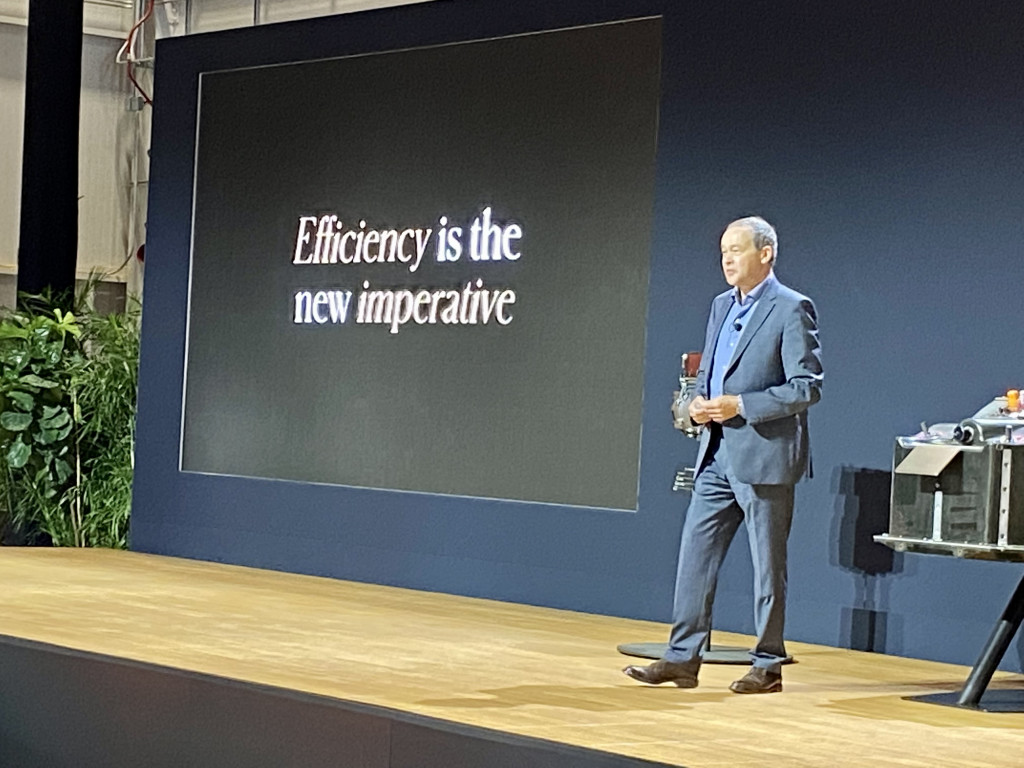
Lucid CEO Peter Rawlinson – Arizona plant commissioning
“Now that we have successfully launched the Lucid Gravity, I have decided it is finally the right time for me to step aside from my roles at Lucid,” said Rawlinson, in the release. “I am incredibly proud of the accomplishments the Lucid team have achieved together through my tenure of these past twelve years.”
It has indeed been that long. Rawlinson joined Lucid’s parent, Atieva, as chief technology officer in 2013. Rawlinson and design chief Derek Jenkins first presented to a small group, including yours truly, a concept version of the Air in 2016, when Lucid became the automotive brand of Atieva.
Lucid almost didn’t make it—and might not have without Rawlinson’s perseverance. Ford considered buying Lucid in 2018, then took a pass. Finally in April 2019, with the completion of an initial $1 billion investment from the Saudi Arabian Public Investment Fund (PIF), things got real and development accelerated.
Amid Lucid’s cash-strapped starvation era, from 2017 well into 2019, Rawlinson kept a core engineering team and revisited some of the key tech in the Lucid Air—what he called the core competence of the company. That led to the breakthroughs like the 900+ volt tech and Lucid’s own permanent-magnet motor design it uses today. In the meantime Lucid had started providing Formula E battery packs for the entire racing series, which added to the company’s knowledge base.
The company has “initiated a search to identify Lucid’s next Chief Executive Officer,” with support from an executive search firm, according to the release. “The new CEO will help Lucid execute its strategy and prepare for the next chapter,” it stated.

Peter Rawlinson
Rawlinson has held positions at Jaguar and Lotus, among other companies, but Green Car Reports first came to know Rawlinson when he was Tesla’s chief engineer for the Model S, responsible for its design and production. Back in 2011, when he was in that role, Rawlinson told GCR that he was particularly proud of the Model S battery pack and how it fit electrically and mechanically within that trailblazer, which would go on to win all sorts of awards.
The Lucid CEO has managed to hire top-tier talent at the automaker, including Tesla’s former manufacturing chief and other top executives from VW, BMW, and Apple, and hold on to them in a way Tesla hasn’t. He kept Lucid’s braintrust in the California’s Bay Area, but it opened its Casa Grande, Arizona, factory in 2021.
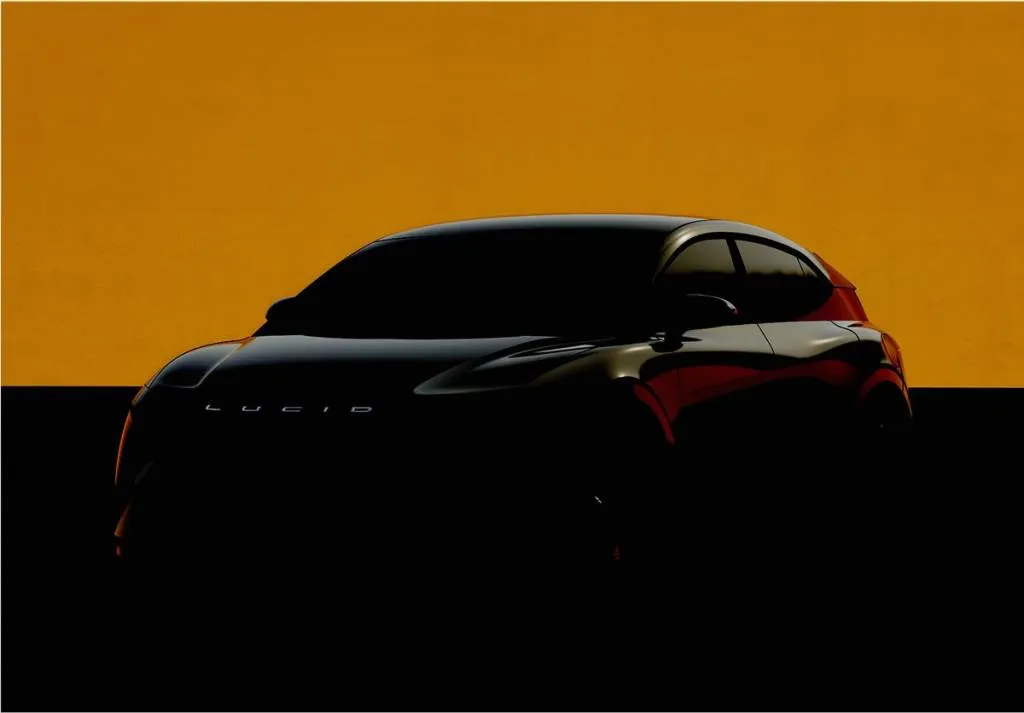
Lucid midsize SUV teaser
The Lucid Air has been Green Car Reports’ Best Car To Buy, and even though it’s a very large car, the Air Pure stands as America’s most efficient EV. It’s now delivering the Lucid Gravity SUV and hopes to more than double its vehicle production this year as a result of having the model in the mix. And three affordable EVs, built off a new midsize platform and with an even lower-cost Atlas drive unit spearheaded by Rawlinson as key to getting to further economies of scale, are due within a couple years.
For now, Rawlinson and that tech preeminence remain Lucid’s strength; he’s suggested that it would take years for the competition to catch up with Lucid’s efficiency edge, and he may be proven right.