
Author: EVAI

Mercedes-Benz Vision V name confirmed for electric van concept
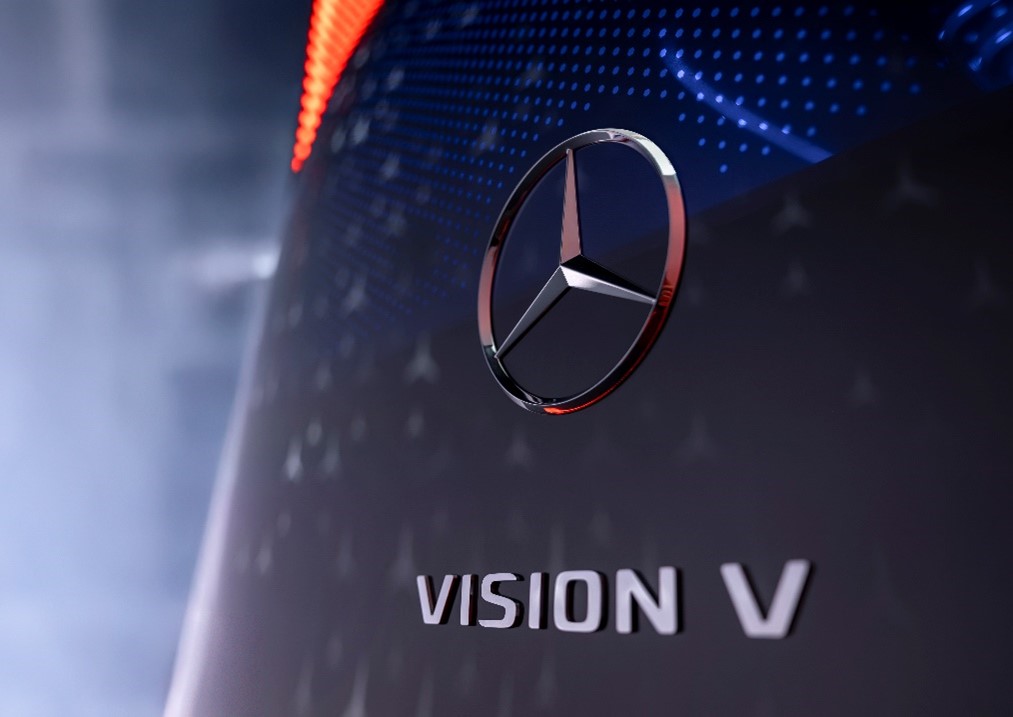
Mercedes-Benz on Monday announced that its upcoming electric van concept will be called the Vision V.
We’re still far away from the debut of this concept, which is expected to be revealed later this spring, but Mercedes has already teased that the Vision V will preview its Van.EA modular architecture for future electric vans.
The first vans based on this architecture are scheduled to enter production in 2026, and Mercedes confirmed last October that prototypes were out testing. The automaker aims to offer these vans in a number of configurations, including a U.S.-bound electric luxury van and a potential RV, alongside basic passenger and cargo vans.
Unlike the current Mercedes-Benz eSprinter, which houses an electric powertrain in a fairly standard van shell, Van.EA was designed from the start to accommodate EVs—with high levels of modularity. Mercedes has said the platform is split into three main blocks, with front and rear blocks that can each house electric motors for single-motor or dual-motor configurations. Van.EA models are expected to be front-wheel drive in single-motor form.
Mercedes previously indicated that all of future vans would be based on the Van.EA architecture, but last month it reversed course, announcing a “second variant of the architecture” called Van.CA for internal-combustion models.
Van.CA and Van.EA models will share 70% of parts, and will be built on the same assembly lines, Mercedes said at the time. So while the balance of power may have shifted to EVs, with the combustion-engine architecture now derived from the electric architecture, instead of the other way around, it appears Mercedes is planning for more tailpipes than previously thought.

2025 Honda Prologue now tops 300 miles of range
The 2025 Honda Prologue electric SUV receives range and power boosts for its second model year, but remains priced just under $50,000.
All versions still have an 85-kwh battery pack, but Honda claims a 12-mile increase for the longest-range single-motor front-wheel-drive models, to 308 miles on the EPA cycle. Honda also expects EPA ratings for dual-motor all-wheel-drive models to increase by 13 miles, to 294 miles, for EX and Touring grades. The dual-motor Elite grade, with its 21-inch wheels and higher equipment level, is now estimated at 283 miles—10 more than previously.
A new front drive unit increases the output of single-motor models by 8 hp and 7 lb-ft of torque, to 220 hp and 243 lb-ft. All-wheel-drive models see increases of 12 hp and 25 lb-ft, to 300 hp and 355 lb-ft of torque.
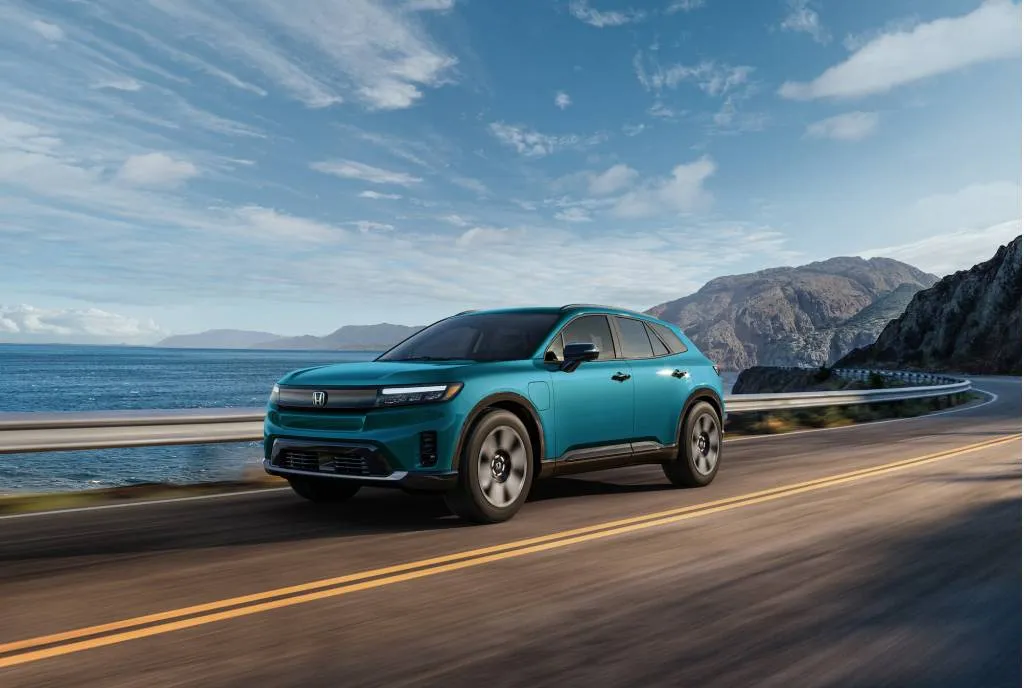
2025 Honda Prologue
The Prologue’s peak DC fast-charging rate of 150 kw is unchanged, allowing to gain 65 miles in 10 minutes of charging or get from 20-80% in 35 minutes. An 11.5-kw onboard charger allows for an eight-hour full charge for at least some of the lineup, given a 48-amp wallbox on a 60-amp circuit.
Honda expects all 2025 Prologue models to remain eligible for the full $7,500 federal EV tax credit—assuming it doesn’t go away. Even without the tax credit, the base single-motor Prologue EX’s starting price of $48,850 (including a $1,450 destination charge) is just $55 higher than the 2024 model year when it was new. Touring and Elite grades start at $53,150 and $59,350, respectively. All-wheel drive is a $3,000 option on the EX and Touring, but standard on the Elite.
The Prologue is based on a General Motors platform, but in a first drive of the 2024 model we found it to be a good on-ramp for current Honda owners looking to embrace EVs. That should make it a good warm-up for Honda’s in-house 0 Series EVs, the first of which are due to arrive in 2026.

Florida is second only to California in EV sales: How’d that happen?
Florida’s politics are the polar opposite of California’s. Yet the home state of President Trump is second only to California in EV sales.
That sales growth, leaving Florida solidly in the top position after California, based on cumulative EV registrations, was driven not by incentives but primarily by EV enthusiasm in the populous central region of Florida. More than 17,000 EVs were newly registered in the nine counties of Central Florida between November 2023 and November 2024, according to a recent examination of this sales trend by the Orlando Sentinel.
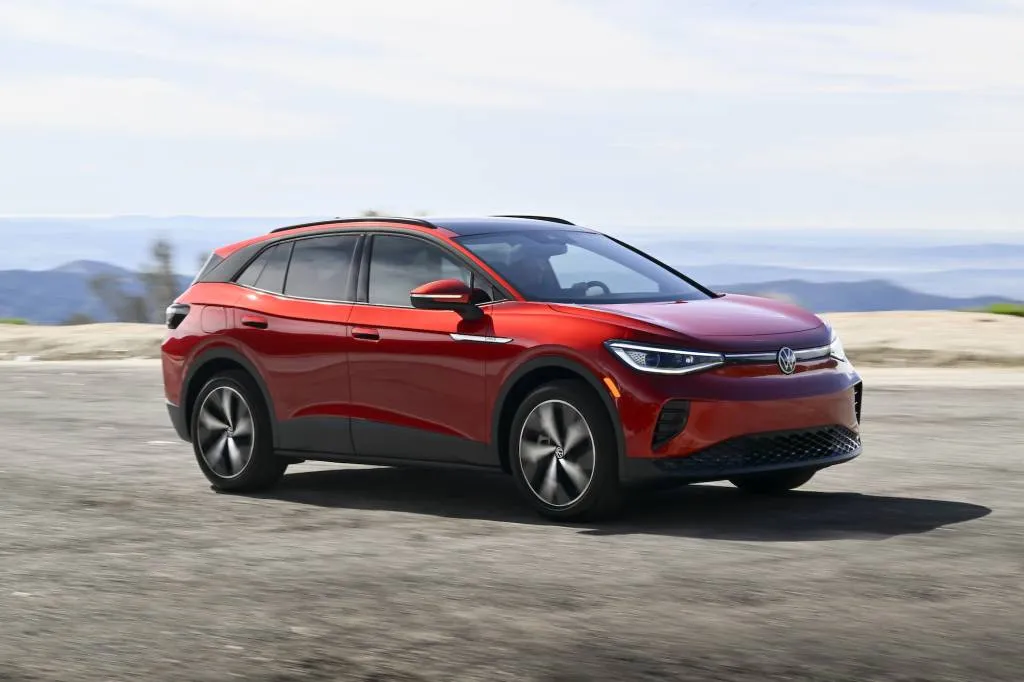
2025 Volkswagen ID.4
For the full year of 2024, Central Florida’s EV registrations grew 15.2%, surging past the national average of 9.4%. And registrations in EVs in Orange County, where Orlando is, surged 46% year-over-year. It’s an acceleration of a trend that’s been going on for years now. Florida is an anomaly and, like Texas, it’s posted relatively strong EV growth over the years without significant state incentives.
In 2023 and 2024 EV adoption continued to become more polarized by state. That may also be happening on a local level in Florida, which isn’t as homogeneous as it appears.
The rest of the country tends to see Florida as full of retirees, but even by 2030, official state projections suggest that people aged 65 and up won’t be the largest demographic group in the state. That leaves more room for Gen X and Millennials, who previous studies have shown tend to buy more EVs than Boomers, while the latter group controls policy decisions related to them.
And while the state government hasn’t exactly been pro-EV, that hasn’t stopped efforts to expand charging infrastructure in Florida. In 2022, Invisible Urban Charging (IUC) announced plans to install 6,000 chargers—doubling the number of chargers in the state. The chargers are primarily 80-amp Level 2 AC units for public spaces and housing developments, IUC said at the time.

2025 Lucid Air
 What kind of car is the Lucid Air? What does it compare to? Lucid’s flagship sedan is the longest-range electric car on the U.S. market and one of the quickest-accelerating sedans—or vehicles of any kind. Providing varying amounts of performance and efficiency, with leading-edge propulsion tech, it challenges the likes of the Tesla…

Airstream launches electric travel trailer for off-grid adventures
Airstream on Saturday unveiled its first all-electric travel trailer, which can use battery power to operate off the grid.
Called the Airstream Basecamp 20Xe, the trailer includes a 10.3-kwh battery pack and 3,000-watt inverter powering a 30-amp electrical system, providing onboard power for charging devices from built-in outlets, as well as running an optional air-conditioning system or microwave. A standard induction cooktop powered by a 110-volt outlet can be used inside or outside the trailer.
A 600-watt rooftop solar array provides supplementary power. The trailer also comes pre-wired for an additional 300 watts of solar-generating capacity, and includes a 20-pound propane tank that can be used for interior heating and hot water, as well as outdoor grilling. Heating can be done using only electricity, only propane, or a combination of the two.
An optional composting toilet helps conserve water, as does a recirculating feature that redirects cold water from the heater into the freshwater tank until it reaches the proper temperature.
The trailer’s 20-foot floorpan includes a dedicated sleeping space at the back and a convertible dinette up front. It’s also equipped with standard 3-inch lift, chunky tires, and stone guards for off-road use, as well as storage space within its teardrop shroud bodywork.

Airstream eStream electric camping trailer
Missing from Airstream’s announcement, however: There is no mention of using the battery pack to help propel the trailer and reduce the range loss of electric tow vehicles, or improve the fuel economy of internal-combustion tow vehicles, as with eStream concept Airstream unveiled in 2022. That idea has been taken up by startups Pebble and Lightship for use in their luxury travel trailers, both of which are scheduled to start production later this year.

Mercedes-Benz S-Class recalled for failing brakes
 Mercedes-Benz is recalling 20,339 S-Class luxury sedans because of front brake hoses that could rupture and leak fluid, rendering the brakes less effective. Based on a disclosure Monday from the NHTSA, the recall includes the following versions of Mercedes’ flagship sedan: 2021-2022 S 500 2021-2022 Maybach S 580 4Matic 2021-2023 S 580 4Matic 2022…

Ford Mustang recalled for phantom steering, again
 Ford is recalling a small number of recent Mustang models a second time to address a steering issue because the remedy from a previous recall may not have been applied correctly. The recall of just 332 vehicles from model years 2022 and 2023 addresses an improperly calibrated secondary steering torque sensor, which could cause the steering wheel…

2025 Ford E-Transit electric van aims for electricians
The 2025 Ford E-Transit—an all-electric version of the automaker’s Transit van—receives some new options while holding steady on pricing.
An E-Transit cargo van costs $51,000 before destination—about the same as a 2024 model. Ford also offers chassis cab and cutaway versions priced at $46,200 and $45,700 before destination, respectively.
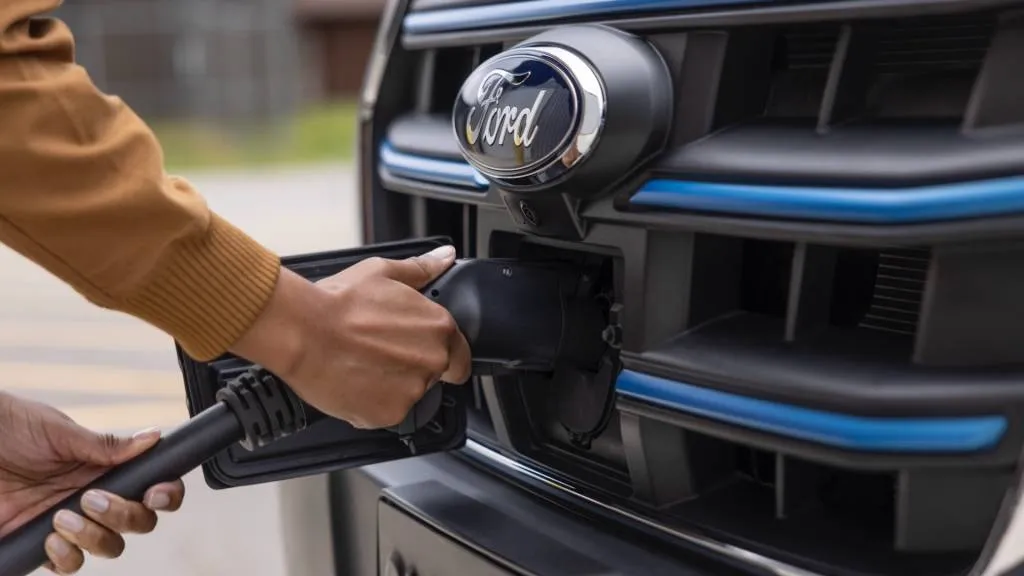
2025 Ford E-Transit
New for 2025 are four option packages aimed at specific trades. These include electrician ($4,370) HVAC ($4,440), and general contractor ($2,900) packages, as well as a $3,300 folding-shelving package with large shelves intended for delivery services.
Ford introduced the E-Transit for the 2022 model year, and upgraded it with a bigger battery pack for 2024. Those changes carry over for 2025, meaning the E-Transit continues with an 89-kwh pack affording up to 159 miles of EPA-cycle range. That pack powers a single electric motor, which sends 266 hp and 317 lb-ft of torque to the rear wheels.
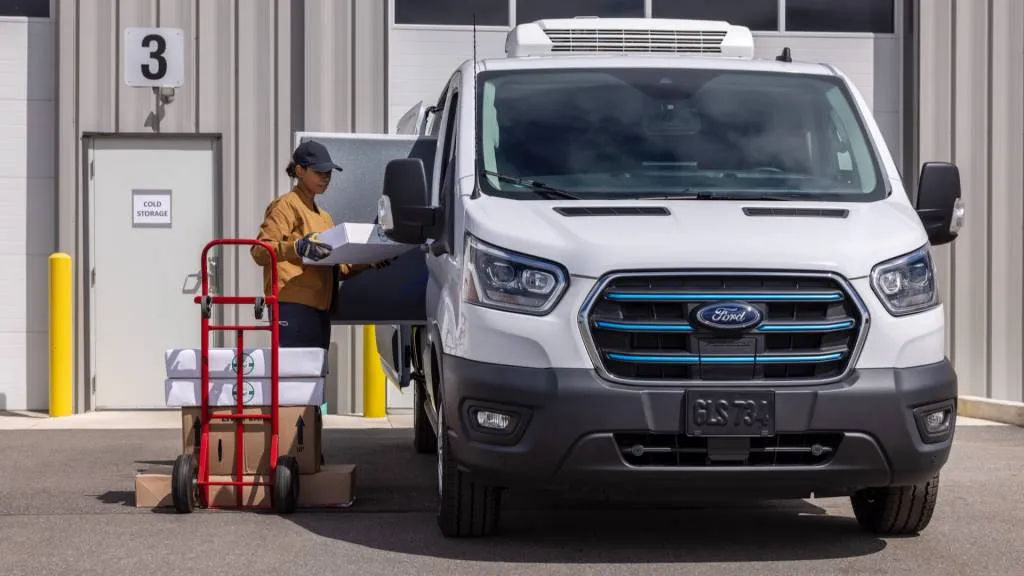
2025 Ford E-Transit
Expect unchanged peak DC fast-charging power of up to 176 kw, allowing the E-Transit to replenish 67 miles of range in 15 minutes, using a 180-kw charger. The E-Transit can also make use of an 80-amp Level 2 AC wallbox for a 6-hour, 11-minute, full recharge, as well as export up to 2.4 kw with its Pro Power Onboard system, shared with the F-150 Lightning EV as well as hybrid versions of the F-150 truck.
The E-Transit competes against electric versions of some of the same vans the standard Ford Transit fights with for fleet sales, including the Mercedes-Benz eSprinter and Ram ProMaster EV. Rivian also recently opened up sales of its electric van, originally designed for Amazon, to all fleets. And General Motors leverages its EV architecture for the BrightDrop electric vans, which were recently folded into the Chevrolet brand.

2025 Volvo EX90 EV gets $10,000 discount for Costco members
Costco members who lease a 2025 Volvo EX90 electric SUV can now take advantage of the biggest discount offered by the retailer’s auto program.
Fellow Internet Brands site CarsDirect found a potential $10,000 in savings for Costco members who are also current Volvo customers, and are planning to lease a new EX90 between now and Apr. 30.
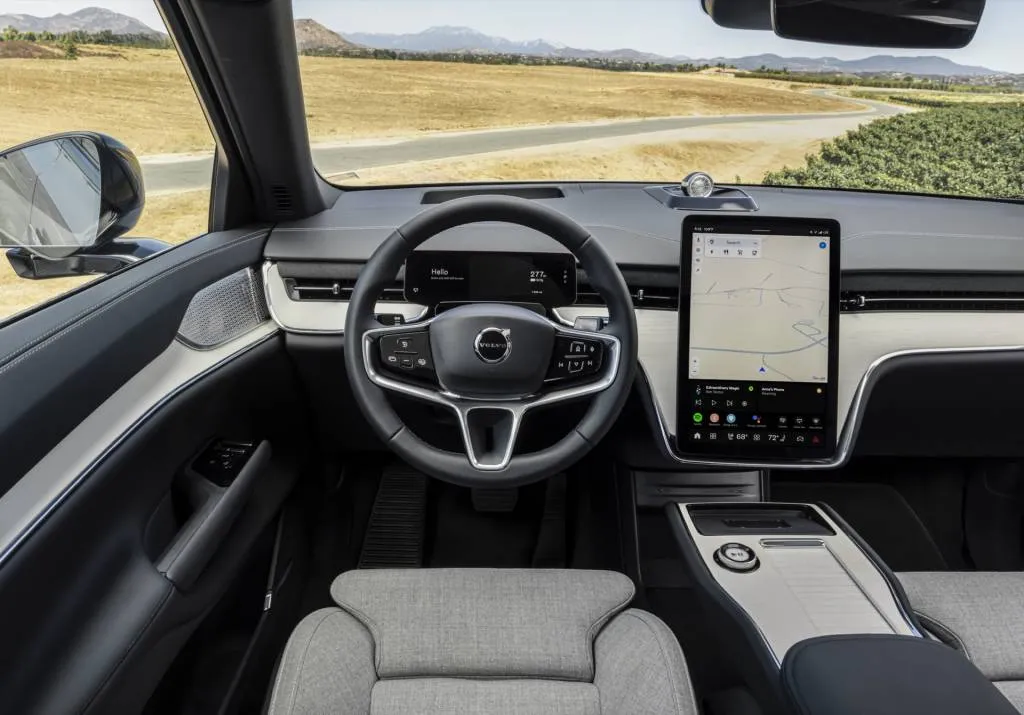
2025 Volvo EX90
This starts with $2,000 just for being a Costco Executive member, or $1,500 for Gold Star and Business members. Lower incentives of $1,250 for Executive members and $1,000 for Gold Star and Business members are also currently available for several General Motors EVs, according to the Costco website. Those eligible models include the Chevrolet Blazer EV, Equinox EV, and Silverado EV, as well as the GMC Hummer EV and Sierra EV.
That discount can be combined with a $500 loyalty discount for returning customers and a $7,500 EV lease incentive from Volvo, likely an application of the EV leasing loophole that allows manufacturers with captive leasing arms to take a $7,500 credit and pass the savings on to a customer.
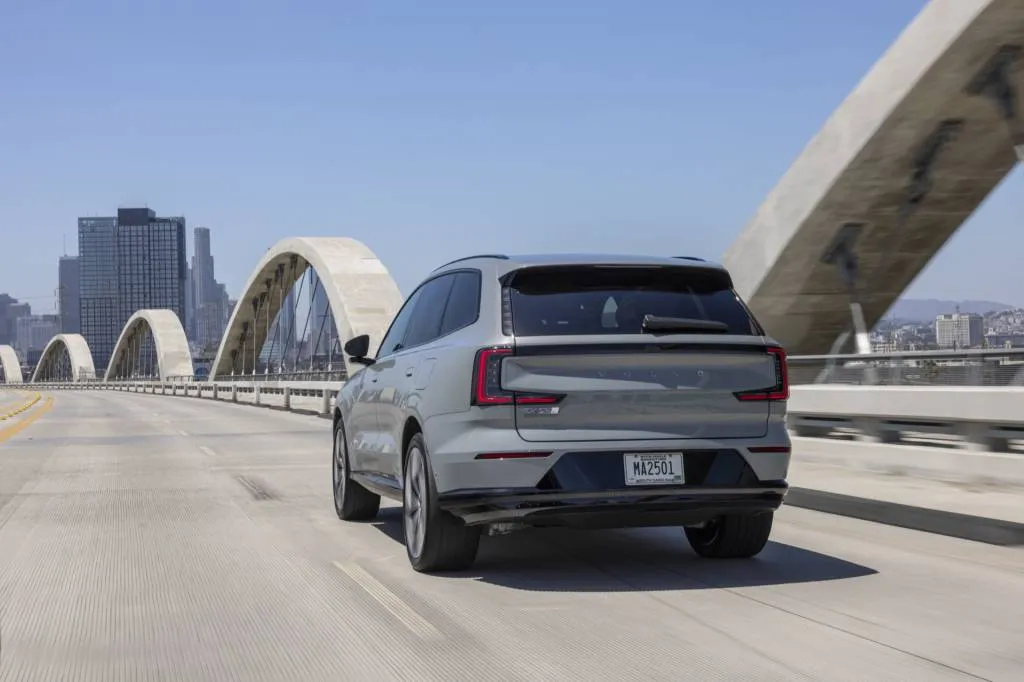
2025 Volvo EX90
The EX90 might qualify for a lease credit, but it doesn’t yet qualify for the $7,500 purchase credit. The EX90 is U.S. built, and is priced just under the ceiling for the credit, meeting some qualifications, but not all of them.
Costco has offered its discount EV program for some time, but it only in recent months jumped back into EV charging. Costco was one of the first big-box retailers to offer charging, installing Level 2 chargers at some California locations in the 1990s. It pulled the plug on those stations in 2011 and 2012, but last year resumed installing DC fast chargers while keeping its profitable gas pumps.

Mercedes design boss: “Design will be done by AI…my successor is a machine”
 Mercedes-Benz design chief Gordon Wagener predicts AI will dominate car design within 10 years Wagener said Mercedes is already using AI in car design Wagener said digital screens aren’t luxury and that Mercedes will shift focus is craftsmanship and sophistication Mercedes-Benz design chief Gorden Wagener believes artificial intelligence will play…