
Author: EVAI

2025 Chevy Blazer EV gets lower base price, omits some features
The Chevrolet Blazer EV electric SUV will arrive at a lower base price in its existing LT and RS versions as they’re renewed for the 2025 model year, the company revealed Monday.
For 2025, the Blazer EV LT AWD costs $48,995, while the Blazer RS AWD costs $54,295, both including mandatory destination fees.
Going by the starting price for both of these models, that’s $1,200 and $300 cheaper, respectively, for the 2025 Chevy Blazer versus the equivalent 2024 Chevrolet Blazer models. But Chevy makes clear it did some decontenting to get there.
“Some content which was standard on 24MY trims is now offered as optional content, resulting in a more affordable starting MSRP for these trims,” clarified spokesperson Kellie Van Maele to Green Car Reports. The LT AWD’s Comfort and Convenience package and the RS AWD’s Convenience and Driver package are now optional—and so is a charge cord.
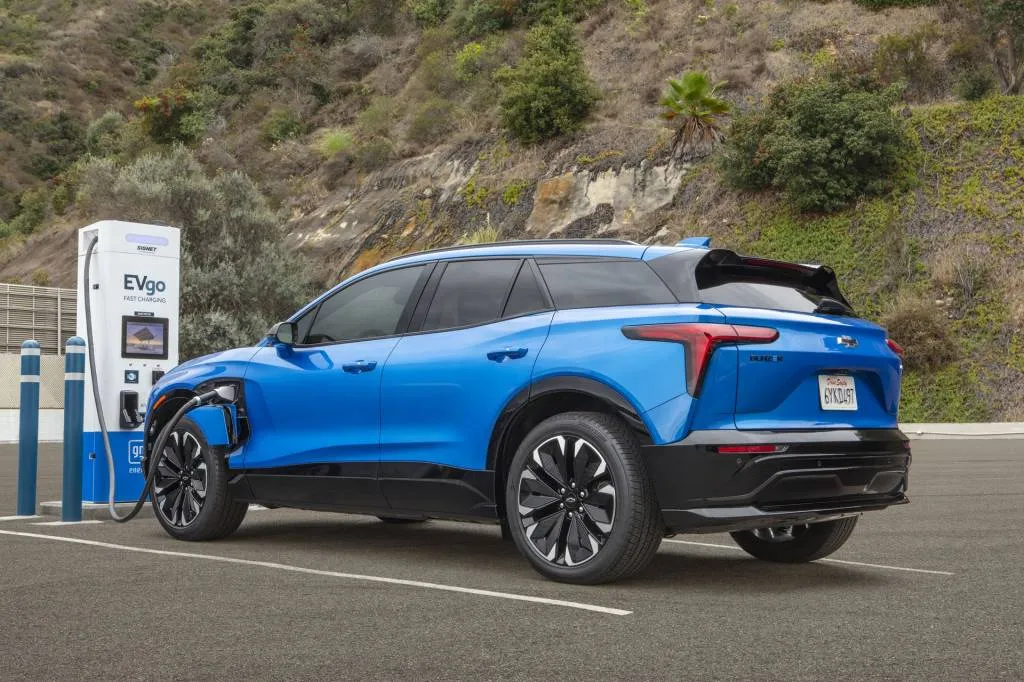
2024 Chevrolet Blazer EV RS
Adding those options to the 2025s, prices have increased. At present for 2024, you can delete the LT Comfort and Convenience package for $995. This package includes wireless phone charging, a power tailgate, power front heated seats, heated steering wheel, and more, and is indicated as costing $2,295. The RS Convenience and Driver Package combines a head-up display, a surround-view camera, and a heated wiper park. The package adds an indicated $2,620 but GM doesn’t appear to allow deleting it for 2025.
Nevertheless, the base price cut is a pleasant surprise for EV affordability, as shoppers—in recent surveys and in actual demand—have indicated they want more low-price EV choices. GM just in March cut 2024 Chevy Blazer EV prices by thousands, as it resumed sales and deliveries of the electric SUV after a range of interface glitches, including charging issues, led to a Blazer EV sales pause in December.
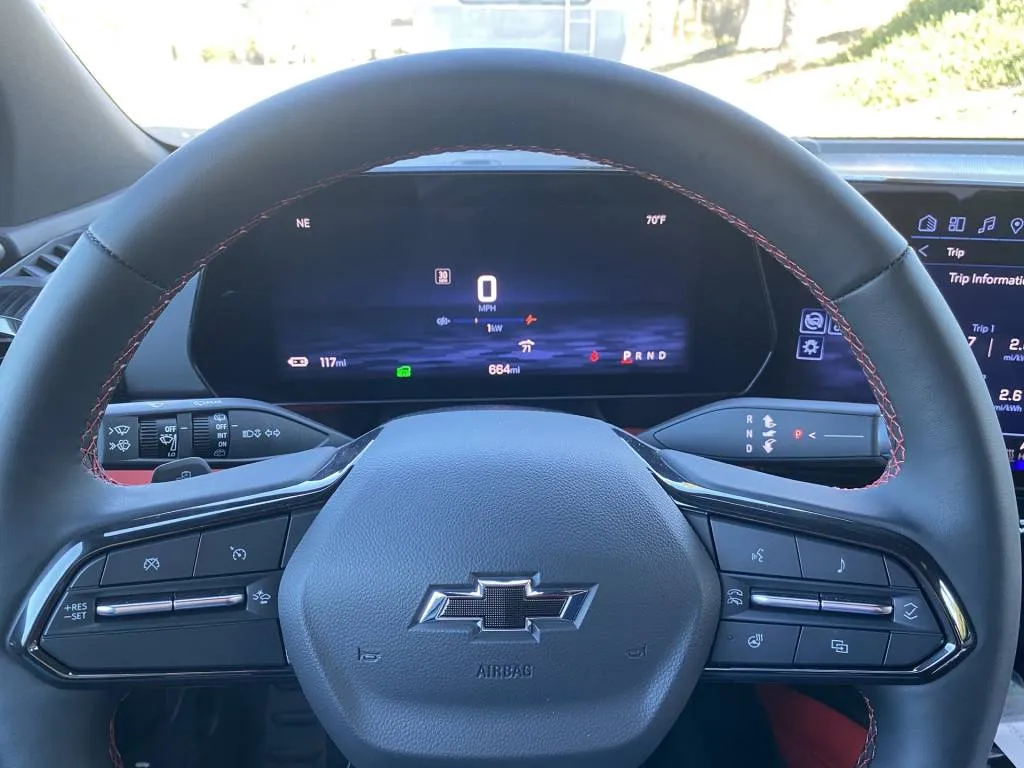
2024 Chevrolet Blazer EV
GM noted that models delivered after the pause had been given “significant software updates,” including updates to ambient lighting and gauge-cluster graphics for battery percentage.
The 2024 Chevrolet Equinox EV is one of the most important vehicles of the year for affordability, and it starts at $43,295, with an entry-level version starting at $34,995 still due later this year. A lower-priced, front-wheel-drive Blazer EV LT model is also due at some point to slow in below the LT AWD.
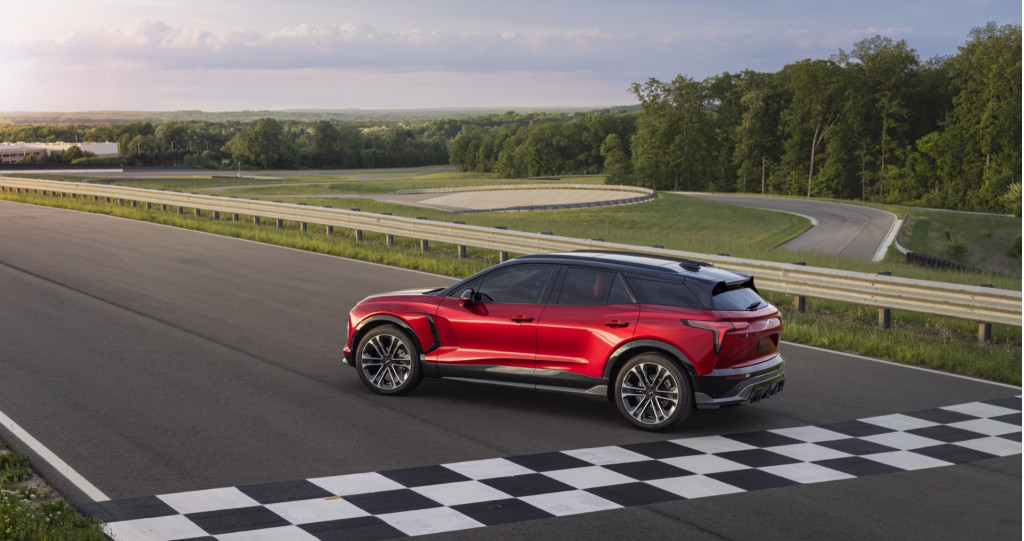
2024 Chevrolet Blazer EV SS
These 2025 Blazer models haven’t yet started production, emphasized Chevy, suggesting that there will be “performance improvements” coming for the 2025 Blazer EV yet to be detailed. It’s unclear as of yet whether that goes above and beyond the SS versions that Chevy has already said are in the pipeline. Range-leading RS RWD and top-performance SS AWD models will get a larger 102-kwh battery pack while the rest of the Blazer EVs get an 85-kwh pack. SS models step up to 557 hp, a retuned suspension, and 0-60 mph times under four seconds.

Manual-equipped 2024 Ford Mustangs recalled for fire risk
 2024 Ford Mustangs equipped with a manual transmission have been recalled Affected cars have an issue with the retention of the clutch pressure line to the firewall The issue could lead to brake fluid flowing to the engine bay, or even a fire Ford has issued a recall of its latest Mustang due to the chance the transmission may fail to shift or a…


Polestar 3 review, feds soften mpg targets, Virginia drops EV mandate: Today’s Car News
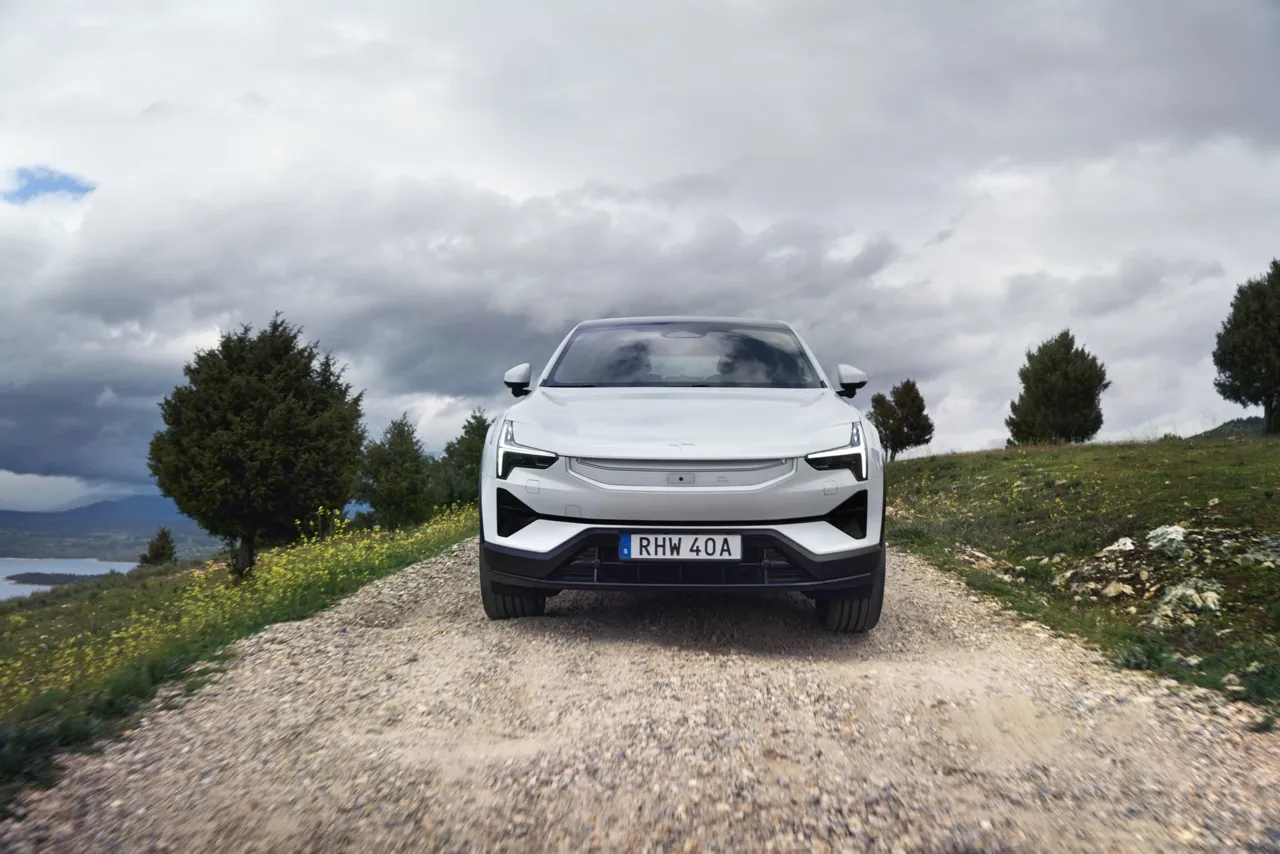
The Polestar 3 swings for efficiency and performance, and satisfies on the latter. Federal fleet rules are going easier on trucks and SUVs than originally intended. Virginia drops its EV mandate. And how is BMW using AI to create its future EVs? This and more, here at Green Car Reports.
The 2025 Polestar 3 seats five and stands out for ride and handling and overall build quality over the Tesla Model Y Performance, but at more than a $25,000 premium even before the Tesla’s tax credit, it should. In a Polestar 3 first drive, Green Car Reports also found some of the best seats in the automotive universe, although the interface feels a little lost in pale, thin fonts and steering-wheel toggles.
Final fleet efficiency rules for 2027-2031 announced Friday by the federal government go easier on mpg targets for trucks and SUVs. That means a projected real-world fleet average of about 38 mpg versus the original 43.5 mpg proposed in July 2023. A recent delay in reforming how EV efficiency is figured vs. gasoline models might also potentially give automakers a bigger boost while making fewer EVs.
Virginia governor Glenn Youngkin last week confirmed that the state will no longer follow the newest California emissions rules—meaning that it also won’t adopt California’s EV mandate and structure EV sales adoption targets. The ramp-up would put the state on a path requiring 35% of new-vehicle sales to be EVs by 2026, but the change allows more gas-guzzlers to flow to the state’s dealerships.
And BMW is using AI in its upcoming Neue Klasse EVs—to generate patterns and textures inside, and essentially as a mood board generator that still requires expert inputs from designers or engineers. At what point will some of those drop out?
_________________________________

VW finance boss: EVs are the future, but gas isn’t dead
 VW Group acknowledges EV sales haven’t taken off as expected The conglomerate believes EVs are still the future Current realities have made VW Group refocus and reallocate a third of its R&D budget back to vehicles with gas engines The Volkswagen Group has been one of the most bullish automakers on electric vehicles, having committed only a…

2025 Polestar 3, Piech GT reboot: Car News Headlines
 The Polestar 3 starts deliveries in the U.S. this summer, and we just spent some time behind the wheel. The electric midsize SUV brings with it clean Swedish design, seating for five, and up to 517 hp, and there’s a lot more to like beyond those attributes. Piech, an electric car startup from Switzerland and founded by the son of engineering icon…

Which states align with California EV mandate in 2024?
- Republican governor Glenn Youngkin says Virginia no longer will follow California emissions rules
- Most northeastern states continue to follow California rules and their EV mandates
- States in the loose union also include Nevada and Minnesota, minus the EV mandate
Virginia will stop following California’s stricter emissions standards, which would have put the state on track to end sales of nearly all new internal-combustion cars by 2035, Governor Glenn Youngkin announced last week.
All states have the option to follow California’s emissions rules instead of the federal standards, and Virginia passed a law to do this in 2021. That could draw legal challenges against Youngkin’s move to drop out of the ranks of states following California emissions rules, reports the Virginia Mercury (via Axios).
In a statement, Youngkin said an opinion from Virginia attorney general Jason Miyares found that the law, as written, does not require the state to follow the latest round of standards, known as as Advanced Clean Cars II (ACC II). So Youngkin plans to revert Virginia to the federal emissions standards on January 1, 2025.

ACC II zero-emission vehicle sales targets
Virginia has seen some challenges before for its adoption of the standards, but it’s kept them until now. The loss of the governor’s office in 2022 likely played a significant role. Democrats had full control of the legislature and governor’s office in 2021 when the law adopting the California EV mandate was passed.
California rules essentially require that 35% of all new vehicles sold need to be battery electric or plug-in hybrid by 2026, on the way to 100% of cars and light trucks all-electric by 2035. The ramp-up, as defined by ACC II, starts with 17% required for the 2023 model year, rising to 19.5% for model year 2024 and 22% for model year 2025.
As of now, Washington, Oregon, Colorado, New Mexico, Maine, Vermont, Massachusetts, Rhode Island, Connecticut, New Jersey, New York, Delaware, Maryland, and D.C. have adopted the EV mandates—13 states plus D.C. That splits the U.S. vehicle market into two nearly equal portions. Connecticut and Maine have delayed adoption of the EV mandate portion, but they’re expected to keep to it.
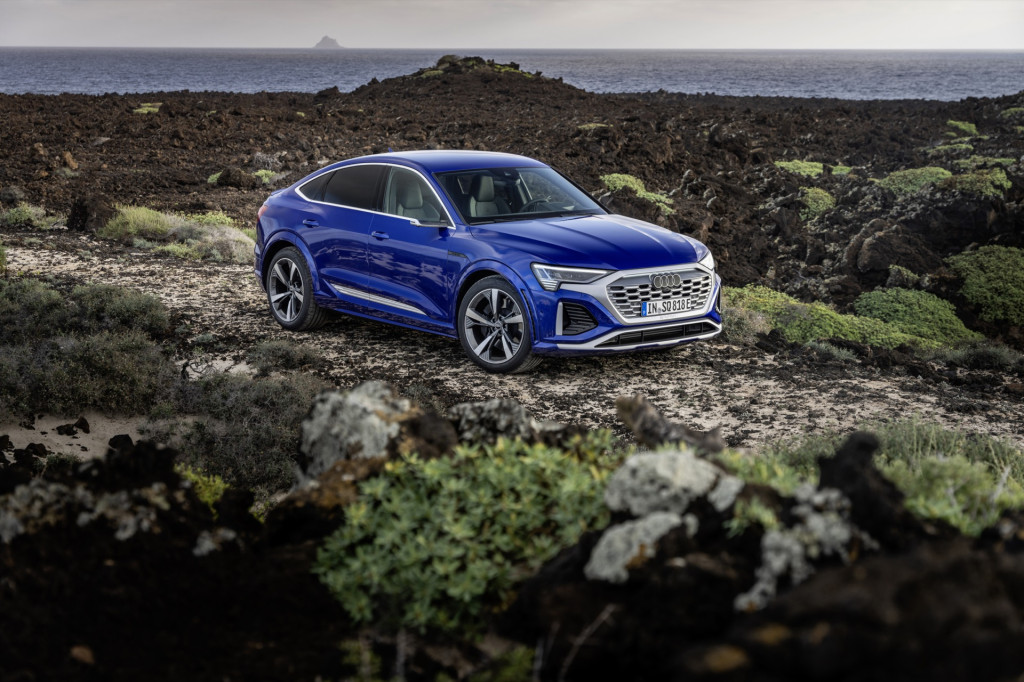
2024 Audi Q8 E-Tron
Nevada and Minnesota have followed California’s emissions rules up to this point, but so far neither state has formally adopted the ACC II rules and their EV sales mandate.
EV sales haven’t necessarily followed mandates, though. A 2021 survey showed that three of the five states with the most EVs didn’t have mandates at the time.
California also has a commercial truck EV mandate, but fewer states have adopted it. That mandate calls for a ramp-up of EV sales starting in 2024, with all-EV truck sales by 2045.

Review: 2025 Polestar 3 swings for efficient performance
-
Two-row, five-seat electric SUV
-
Estimated range: 279 miles (Performance Pack), 315 miles (base)
-
0-60 mph: 4.8 seconds (base), 4.5 seconds (Performance Pack)
-
Price: $80,300, Launch Edition; may be eligible for federal incentives
Polestar’s new electric SUV has been delayed by software issues, and sister brand Volvo has cut its funding, leaving the fledgling EV brand on its own to forge a new path.
But that path seems brightly lit, now that we’ve driven the 2025 Polestar 3. It’s not the most efficient electric SUV on the road; the Tesla Model Y easily outpaces it there. But the sleek new EV revels in ride and interior quality that set it apart from that groundbreaking, bestselling model.
Polestar sees the 3 also as a rival for the hybrid-enabled Porsche Cayenne, and it obviously treads some of the same ground as its platform-mate, the upcoming Volvo EX90. But if nothing else, the 3 reminds me of a XC90, in its poise and low-gloss refinement—with a decade’s worth of structural and efficiency improvements logged in like code revisions.
If there’s an electric-car denier in your household, this might be the vehicle to change their mind.
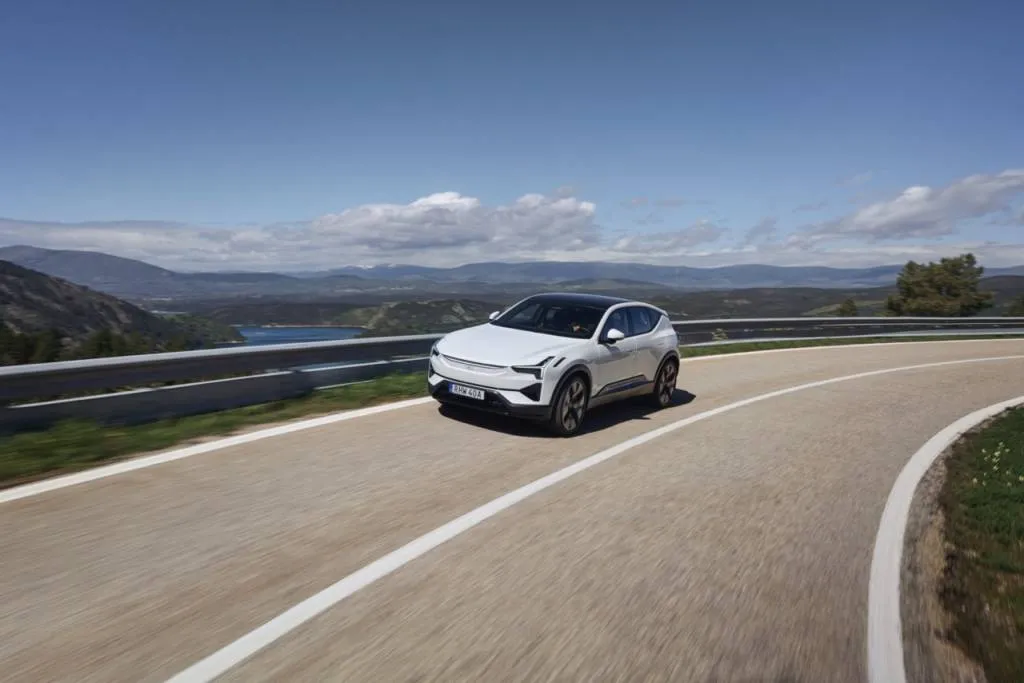
2025 Polestar 3 Performance Pack, test drive, Madrid
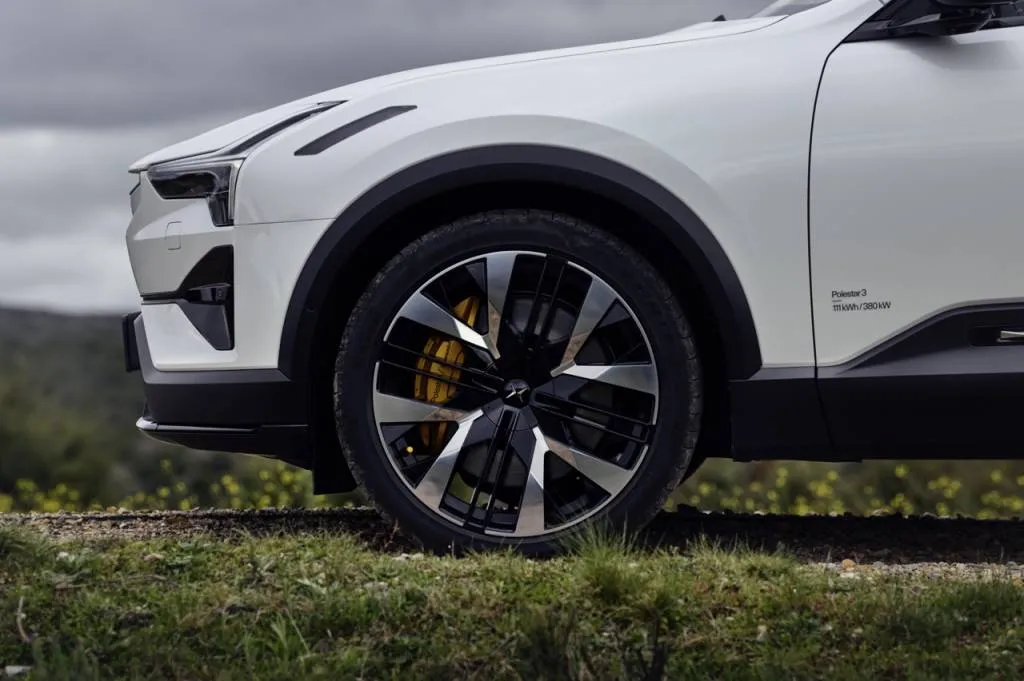
2025 Polestar 3 Performance Pack, test drive, Madrid
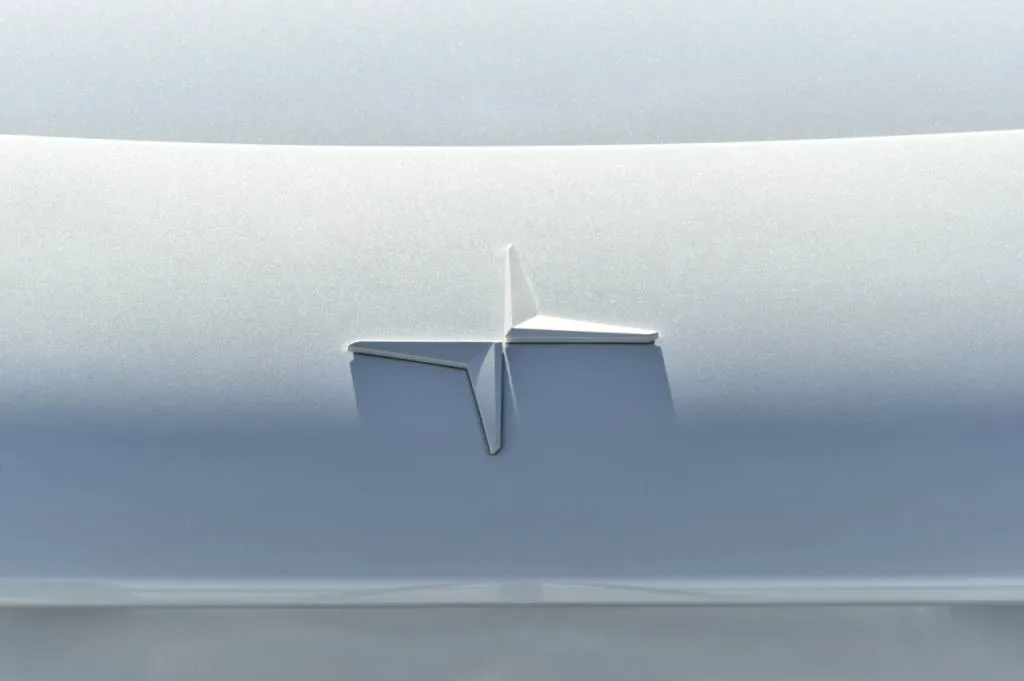
2025 Polestar 3 Performance Pack, test drive, Madrid
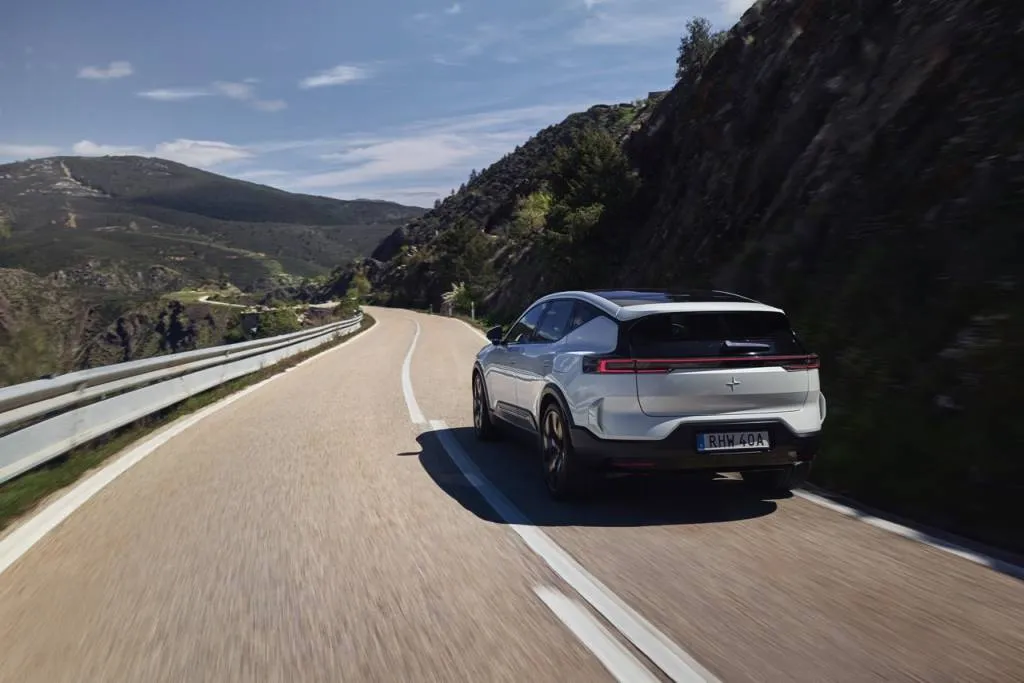
2025 Polestar 3 Performance Pack, test drive, Madrid
How does the 2025 Polestar 3 perform?
-
111-kwh battery pack (107 kwh usable), twin 180-kw motors
-
Range: 315 miles (base), 279 miles (Performance Pack)
-
0-60 mph: 4.5-4.8 seconds (base vs. Performance Pack)
-
2.2-2.6 miles per kwh (our real-world estimate)
On a recent test drive from the center of Madrid to Segovia and back, the Polestar 3 sped along motorways and dove through niches between high hills, leaving only behind positive driving impressions. It packs on a lot of weight to deliver a luxury-car feel, but doesn’t leave precision behind.
The basic layout of the dual-motor, all-wheel-drive Polestar 3 puts identical 180-kw motors at the axles, framing bracketing a 111-kwh battery pack with 107 kwh of usable energy. Polestar rates the setup at 489 hp and 620 lb-ft of torque, which propels the SUV to 60 mph in 4.8 seconds.
Add on the Performance Pack for $6,000, and Polestar jailbreaks the battery and motors for another 28 hp and 51 lb-ft of torque. There’s more in terms of suspension tuning and subtle cosmetic changes like gold-painted Brembo brake calipers and gold seatbelts, but the bragging rights here extend mostly to a 0-60 mph time of 4.5 seconds. Top speed stays put at 130 mph.
All that hustle comes at some cost. The SUV can decouple its rear electric motor to improve efficiency—and in doing so can drive for up to 315 miles of Polestar-estimated range, but that dips to 279 miles with the Performance Pack. Those figures are on par with the standard Model Y, but they fall behind those of the Model Y Performance, in part because it outweighs that car by about 1,500 pounds, at 5,886 pounds in its portliest configuration.
But the Polestar 3 carries a marked advantage over Tesla in the way it grips the road without white-knuckling it. It’s configured for agile but compliant handling, with its quick-ratio electric steering, a twin-clutch rear axle that distributes power more simply than a third motor might, and, in this model, two-mode air springs and adaptive damping. There’s precious little extra steering motion involved here—the Polestar 3 takes direction snappily—and it irons out pavement admirably, even on vehicles with 22-inch wheels. Tesla’s sometimes brittle ride quality can’t muster this sophistication; nor does it pay the range penalty from the air suspension’s power-hungry ways.
Polestar’s one-pedal drive mode leaves the rubber-band regenerative braking to other vehicles. It’s smooth, perhaps too gradual in its onset even in the most adventurous regen setting (there are three). Its friction brakes blend in well, and have 15.8-inch vented front discs to haul down one hefty vehicle. Performance Pack cars get those 4-piston Brembo calipers and more taut tuning, but we spent only a brief stint in one and will have to wait for a longer, U.S.-based drive before saying more.
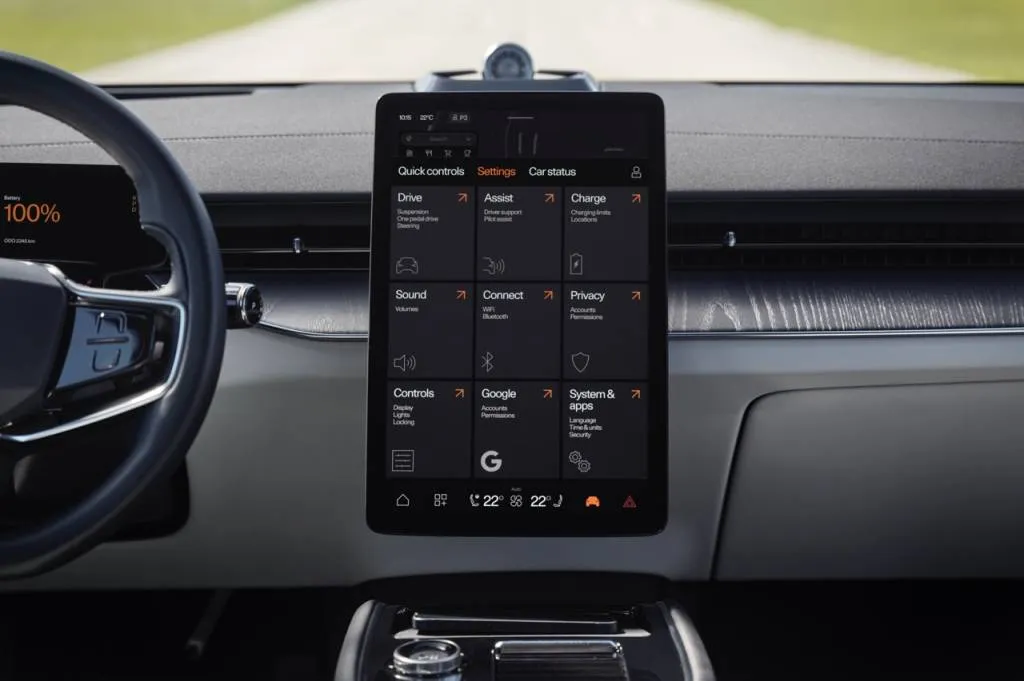
Drivers can toggle their Polestar 3 through drive modes that spare some battery or throw range caution to the wind. The 3 also has driver-selectable modes for ride and steering firmness, but all are buried behind an icon on the all-important touchscreen.
A firm suspension and steering setting don’t intrude much at all on its poised manners—but it’s irritating to have to stop to tap into a different mode safely.
A tap taps Off-road mode, too, and that grants the Polestar 3 another two inches of ground clearance beyond the usual 8.3 inches. Standard self-leveling assistance with the air springs help it along to an overall towing capacity of 3,500 pounds.
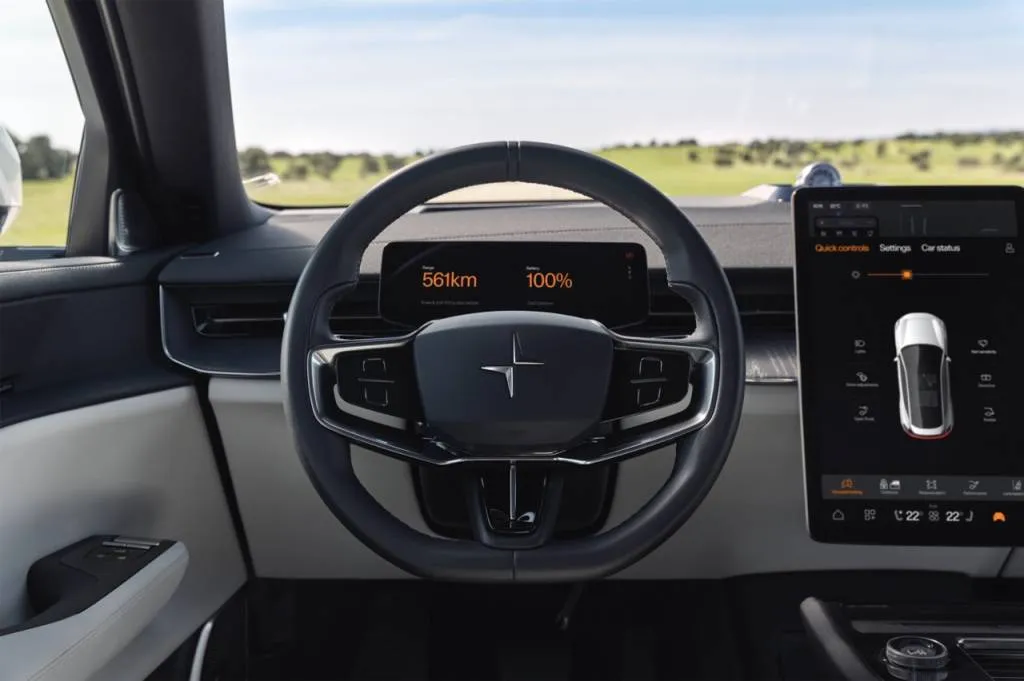
2025 Polestar 3 Performance Pack, test drive, Madrid
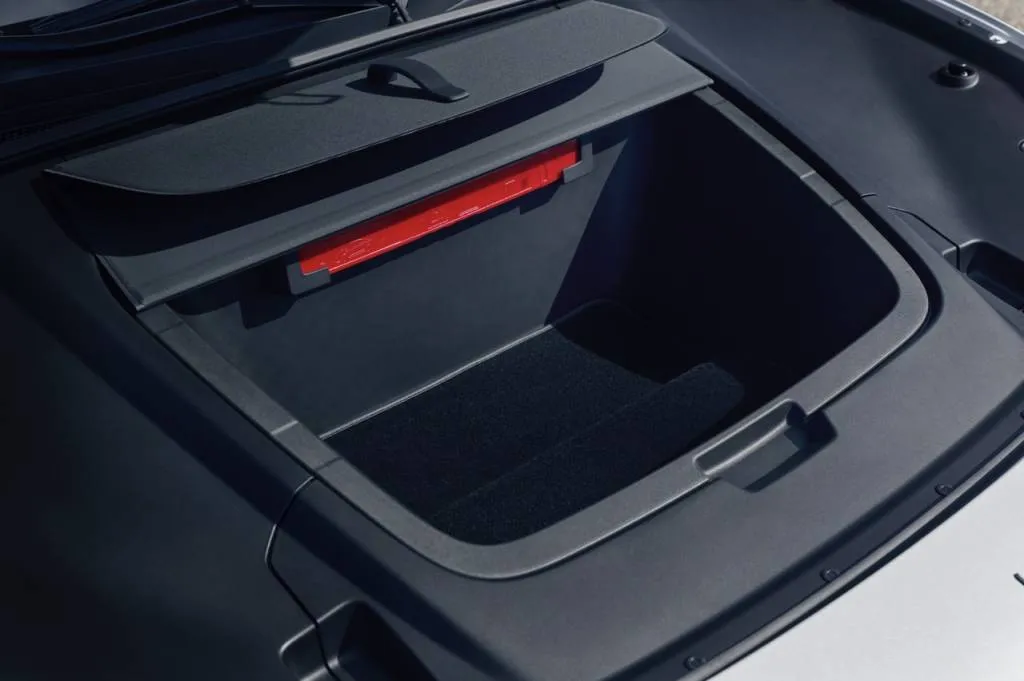
2025 Polestar 3 Performance Pack, test drive, Madrid
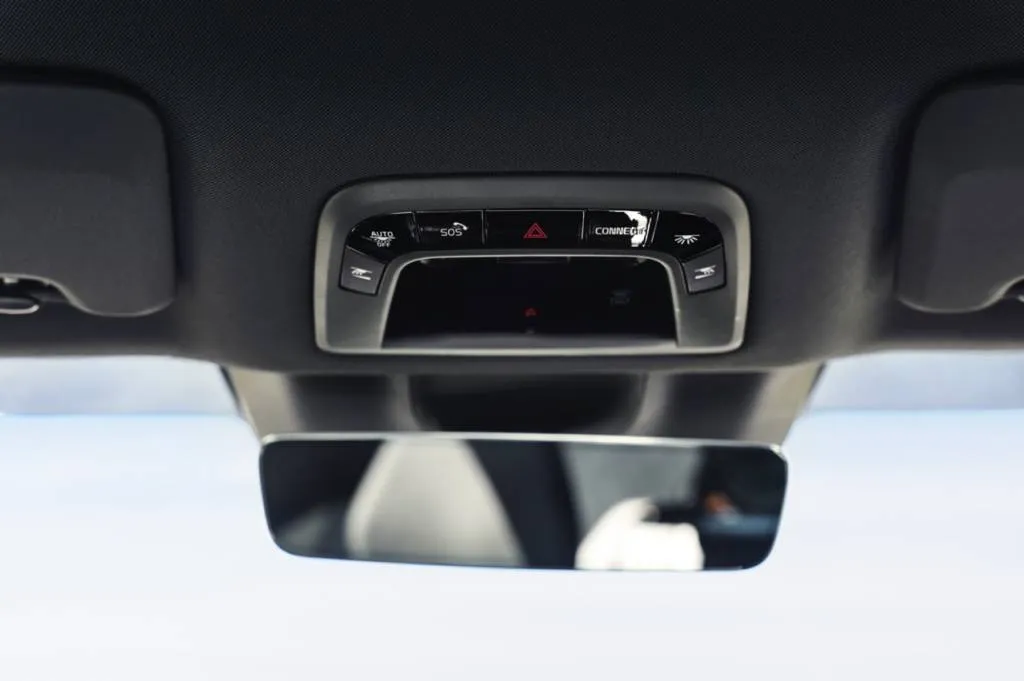
2025 Polestar 3 Performance Pack, test drive, Madrid
2025 Polestar 3 Performance Pack, test drive, Madrid
2025 Polestar 3 outglams the Model Y
-
192.9 inches long
-
117.5-inch wheelbase
-
1.1 cubic-foot front trunk
-
17.1 cubic feet of cargo space behind the rear seats
-
49.8 cubic feet of room behind the front seats
The Polestar 3 caps its capable EV skateboard with passenger space outfitted in high Scandinavian style. That means low-gloss everything and minimal fuss—maybe too minimal by a degree.
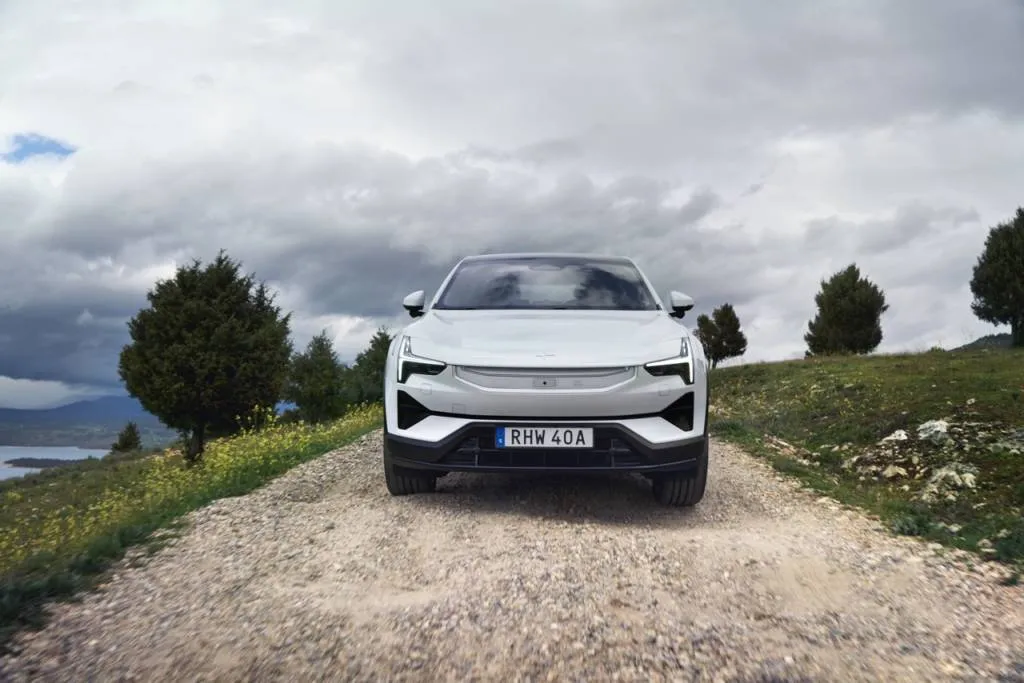
The tapered body sets a specific SUV tone, one that reads more like a sport wagon. With all its seams tightened and flattened for less drag, the 3 has a distinctive tool across its nose for better aero: a wing split beneath the pickaxe logo into three sections, which direct the wind over the body and toward the tail, where another wing shuttles it downward. Polestar has no styling rules to break, so why not?
Inside, the cabin conforms much more readily to the Swedish norm, inspired and iterated to a new benchmark. A single line cuts across nearly the whole dash, bisecting soft trim from wood or aluminum pieces with a strip of air vents hidden only in part by the 14.5-inch portrait-style touchscreen. A 9.0-inch rectangular display on the steering wheel broadcasts basic information while a head-up display throws more detail up on the windshield.
Set-up of these displays and the seats, mirrors, and other firmware can be a pain. Polestar buries most of the controls in touchscreen functions, and draws its icons in pale, thin fonts. Need to adjust a side mirror? That requires a tap or two, then a flick of steering-wheel controls to move it into place. It’s a fussy procedure that maybe future drivers will take as gospel. The rest of the interior gets put on mute, especially when it’s dressed in gray and black. On the upside, the materials rise a magnitude or three above the Tesla norm, and the few glints of character—like the gold seatbelts on the Performance Pack car—matter all that much more in contrast.
Polestar’s Volvo cousin has long claimed some of the best seats in the automotive universe, and these are no different, with lots of adjustments available to the side, back, and bottom bolsters. The back seat benefits from wide door cuts and a deep, properly angled seat bottom. Upholstery ranges from synthetic leather in base vehicles to nappa leather or wool. Folding down the rear seatbacks renders the Polestar 3 almost ready for car camping, with more than 70 inches of interior length. That sounds overly pragmatic for a car with doors that close without a clang, or propulsion that barely emits a legally required burble. So let’s call it car glamping.
2025 Polestar 3 Performance Pack, test drive, Madrid
What’s the 2025 Polestar 3’s price?
The $80,300 Polestar 3 Launch Edition saw a recent price cut to get it under the amount that would make it eligible for the $7,500 federal EV tax incentive, but it’s unclear whether it will be eligible. The very first versions will come from China, but as of August 1, Polestar will assemble the 3 in South Carolina. Stay tuned for clarification as to whether it gets that big break.
Launch Editions carry automatic emergency braking, adaptive cruise control, 20-inch wheels, a surround-view camera system, and synthetic leather trim. Also included on the Launch Edition are features that will eventually be split out into the Plus Pack and Pilot Pack on subsequent 2025 model-year vehicles—features ranging from the head-up display and air suspension to a 25-speaker Bowers & Wilkins audio system. Polestar’s Android interface means there’s no Apple CarPlay, though Spotify and Tidal service have native apps.
A Pilot Pack with lidar gains more sensors that will expand its hands-free driver assistance through OTA updates, as those features become available. And all Polestar 3 SUVs carry a 4-year/50,000-mile warranty that includes three years or 30,000 miles’ worth of free scheduled maintenance.
Base Polestar 3 SUVs will cost $74,300 when they arrive later this year. All in, it’s easy to see a fully loaded model checking in just below $100,000.
Polestar has more vehicles in the pipeline, in addition to the already-available 2 sedan. We’ll tell you more about the Polestar 4 hatchback in a few weeks. A Polestar 5 and 6 are coming, too, on a new platform developed in-house and assembled in the company’s own factory. Polestar then plans for a 7 which…will one day replace the Polestar 2. We’re not sure about the naming strategy. But the vehicles so far—while they haven’t set new benchmarks in charging, efficiency or speed—have hit the mark on luxury and EV performance. A 1 here, a 2 there, and now a 3—for Polestar, it’s all starting to add up.
Polestar paid for travel expenses to Spain so that we could bring you this test drive review.

Review: 2025 Polestar 3 hits an electric-SUV stride
 Five-seat, two-row luxury electric SUV 0-60 mph, 4.8 seconds (base); 4.5 seconds (Performance Pack) Top speed: 130 mph Range: 315 miles (base); 279 miles (Performance Pack) Launch Edition costs at least $80,300; could qualify for Federal tax incentives The Polestar 3 has five seats, an electric powertrain, and despite a lovely Polestar 1 plug-in…

The first Vector W8 Twin Turbo, chassis #001, is for sale
 The first Vector W8 Twin Turbo has surfaced The car’s for sale and bears a Chase #001 build plate Jerry Wiegert, founder and CEO of Vector Aeromotive died in 2021 Bring a Trailer is auctioning off the first 1990 Vector W8 Twin Turbo, a genuine American supercar from the ill-fated Vector Aeromotive company. Vector was the brainchild of the late…