
Author: EVAI

2025 Nissan Leaf carries over, loses EV tax credit eligibility
The 2025 Nissan Leaf carries over but loses its eligibility for the federal EV tax credit this model year.
The Leaf’s rollercoaster ride with eligibility began from the day new regulations were phased in last August. The 2024 Leaf became eligible for a $3,750 credit in October. Then at the start of the year the Leaf fell back out of eligibility until it met the “battery content” requirements of the Inflation Reduction Act (IRA) but not the “battery materials” portion. Nissan then said in March that 2024 models were still eligible for the $3,750 credit, but that doesn’t appear to apply to 2025 models.
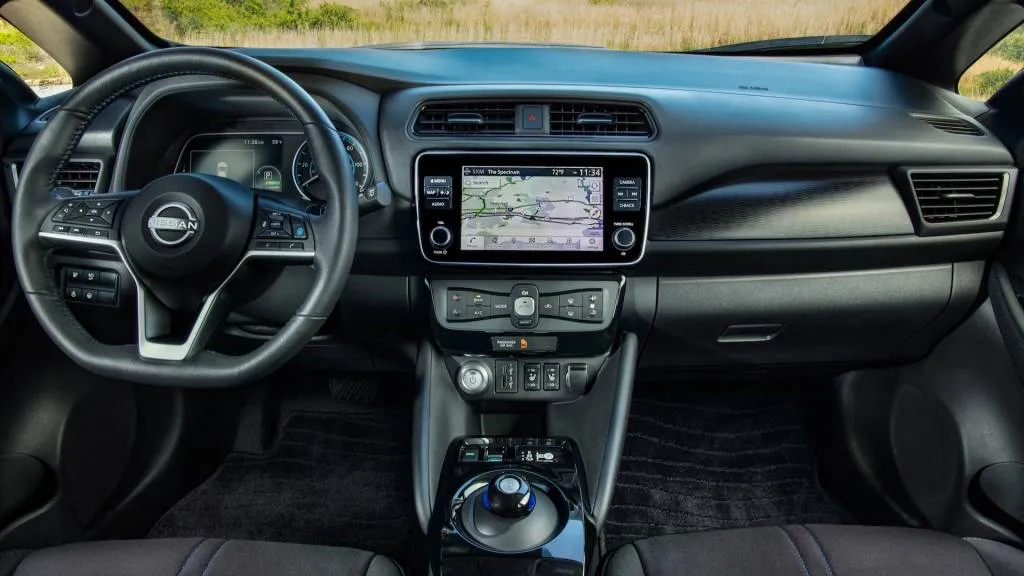
2025 Nissan Leaf
Like the 2024 model, the 2025 Leaf is available only in 40-kwh S and 60-kwh SV Plus configurations, with 149 miles and 212 miles of range, respectively. For 2025, pricing starts at $29,180 for the Leaf S and $37,330 for the Leaf SV Plus with destination. That’s compared to 2024-model-year prices of $29,235 and $37,285 for the S and SV Plus, respectively.
All Leaf models are front-wheel drive, but the Leaf S is tuned for 147 hp and 236 lb-ft of torque, while the SV Plus gets a higher output of 214 hp and 250 lb-ft of torque.
“We will continue to work closely with our supply chain to regain eligibility for the 30D Tax Credit in the future for 2025 Leaf,” replied Nissan North America spokesperson Jeff Wandell to Green Car Reports. The battery supplier remains AESC, which has over many years assembled Leaf packs adjacent to the EV’s assembly plant in Smyrna, Tennessee.
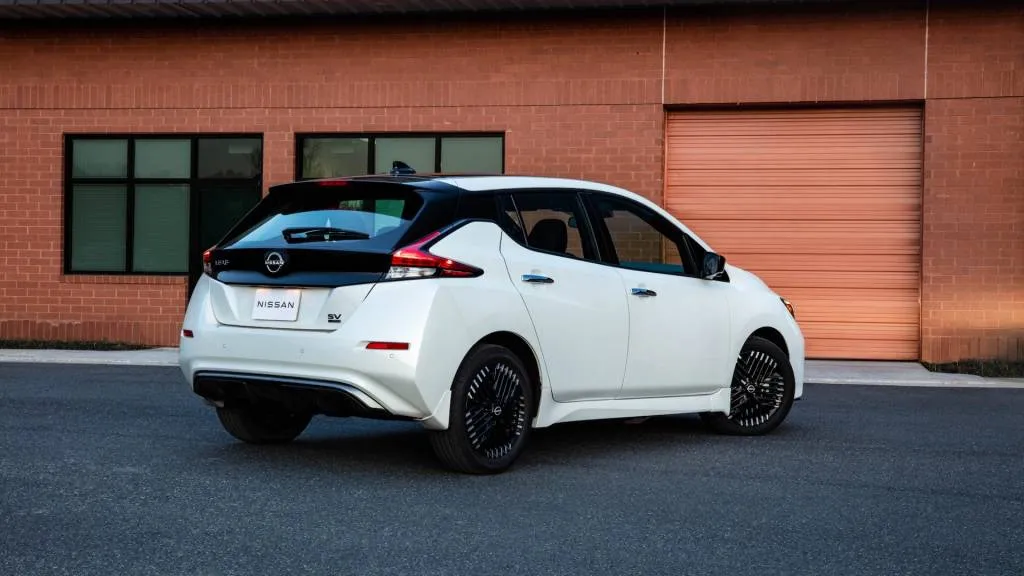
2025 Nissan Leaf
Nissan hasn’t significantly updated the Leaf in several years. It remains the only new EV with CHAdeMO fast-charging. The Leaf’s last noteworthy change was for 2023, when it received battery chemistry changes, which enabled Nissan to trim the Plus pack to 60 kwh from the previous 62 kwh while increasing efficiency. The Leaf saw an extensive redesign for the 2018 model year.
This may be the last model year for this generation of the Leaf in the U.S. It’s already been phased out for the U.K. and Europe, and a next-generation Nissan Leaf that becomes slightly more crossover-influenced is set to arrive for the 2027 model year.

Next-gen Apple CarPlay expands to gauge cluster, controls vehicle functions
 Apple has been teasing a next-generation version of its CarPlay smartphone integration system since 2022, and on Monday during the company’s annual developer’s conference we got a closer look at the system that is expected to be rolled out later this year. The biggest change will be the expansion beyond the infotainment screen. CarPlay will now…

As Tesla Supercharger plans stall, Ionna is going big on EV charging
Tesla’s recent pullback of Supercharger operations doesn’t appear to have affected the plans of Ionna, the charging network for the U.S. and Canada directly funded by seven automakers.
The charging network on Tuesday re-upped its commitment to build a network of more than 30,000 high-power urban and highway-adjacent fast-charging connectors, and it hints that work is already well underway on the first of those as it anticipates its first U.S. charging stations will open in 2024.
First announced in July 2023, with backing from BMW Group, General Motors, Honda, Hyundai, Kia, Mercedes-Benz, and Stellantis, Ionna officially started operations (and got its name) in February. It’s now begun to emerge from a stealth period.

North America, depicted in Ionna EV charging network announcement
With today’s announcement, the charging network established headquarters in Durham, North Carolina, and it confirmed some core executives: Derek Rush as CFO, formerly the CFO of BP Pulse, Ricardo Stamatti as chief product officer, formerly a top Stellantis Energy executive, and Shankar Muthukumar as COO, formerly of the construction and development firm Mortenson. CEO Seth Cutler was announced in February.
Ionna noted in its original formation that it would have “a focus on delivering an elevated customer experience,” so expect a high level of attention paid to the interface, uptime, and reliability in general—as well as the amenities at charging stops. It’s fair to say that remote corners of big-box retailer parking lots will no longer suffice.
The network has also already confirmed that it will be powered by renewable energy, with the capability for reservations and intelligent route planning, plus full support for Plug & Charge technology from the start, meaning fewer needs for credit-card swipes and app handshakes. It has also confirmed that 350-kw connectors would be a starting point for its experience, although it confirmed that it intends to have “the best charging power available on the market and technological state-of-the-art charging at all times.”
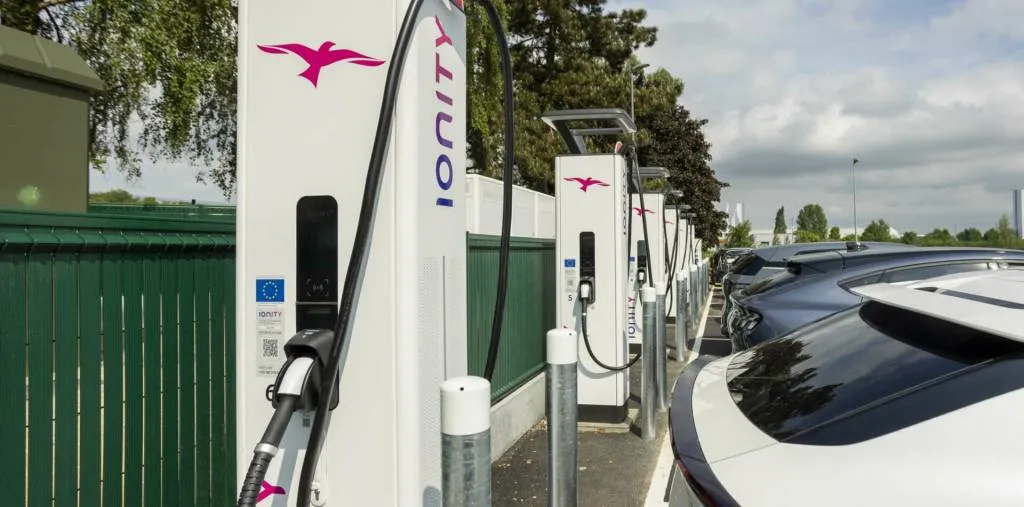
Ionity charging in France
For North America, this may be the closest equivalent to the Ionity fast-charging network that Ford, VW, and Audi launched for Europe in 2017. That network arguably helped accelerate the European EV market past America at a time when it was tracking behind it. Electrify America, which was created as part of the company’s diesel-scandal penalty, has been entirely a VW operation, with the exception of a Siemens investment; but it does plan to grow by 25% in 2024.
Some Ionna locations may potentially be vying for federal NEVI funding alongside other networks—or, perhaps, competing with the Tesla Supercharger network, depending on whether Tesla reactivates its Supercharger buildout.
Much has happened to the business around charging since Ionna was originally announced, EV charging reliability has become a hot topic, and the industry has committed to a shift to the Tesla-based NACS connector in future EVs—meaning that a wide range of brands will soon be able to charge at Tesla’s Supercharger network, providing Tesla with an additional revenue stream. Meanwhile, Tesla last month eliminated most of its Supercharger team, throwing the future growth of the network into disarray.
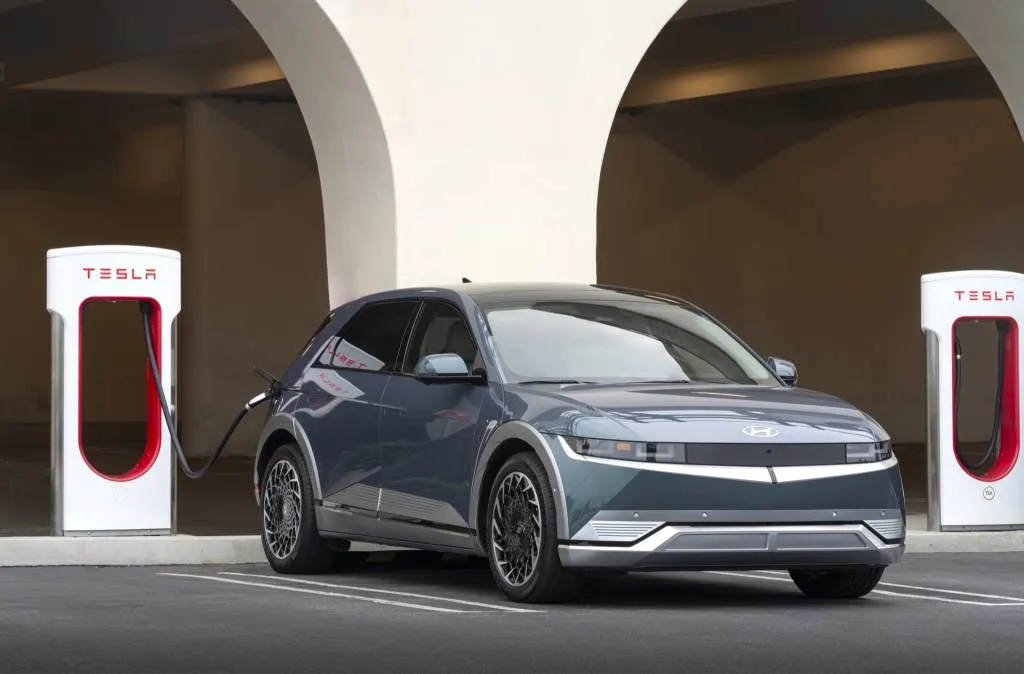
Hyundai at Tesla Supercharger
Ionna officials haven’t yet revealed details as to whether its own charging hardware will employ connectors or adapters, but it confirmed to Green Car Reports that the network will offer hardware that’s ready to charge EVs with either charge port.
“We’re committed to both,” confirmed chief product officer Stamatti to Green Car Reports, noting that even as NACS arrives, many EVs with CCS ports will continue to be built—in addition to all the ones already in use. “It’s open to all and we’ll do both form factors.”

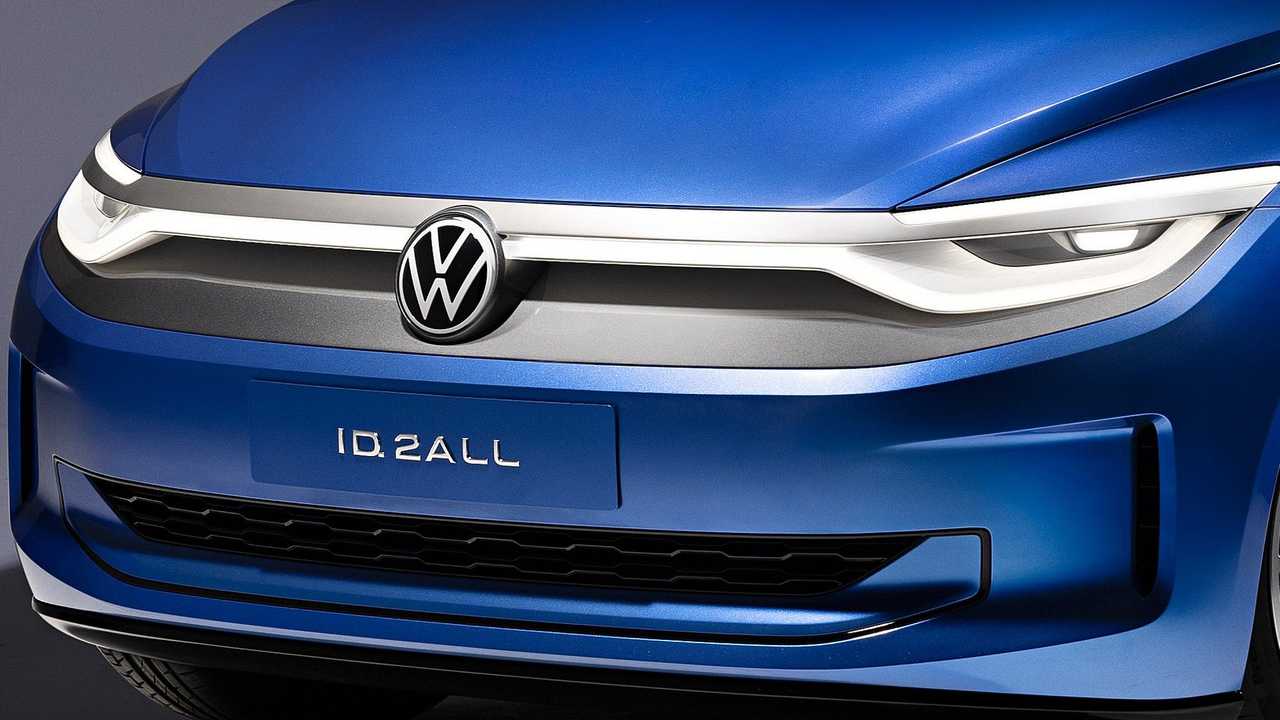
Volkswagen ID.2 Production Version Looks ‘Even Better’ Than The Concept: Design Chief
In the tumultuous times preceding what is now known as the EV revolution for many automakers worldwide, there was talk of the then-new Volkswagen ID.3 replacing the iconic Golf.
Well, that never happened, and it may very well never happen. But as VW charges forward with its commitment to electrification (where market conditions allow), a new, more friendly-looking player will join the German automaker’s portfolio by 2025: the upcoming ID.2, the production version of which is touted as being “even better” than the concept.
Volkswagen, the “love brand”
Volkswagen cars have rarely been described as sentimental, attractive or soulful, at least by journalists. They’re usually well-built and offer good value for money and the best of both worlds when it comes to handling. With the upcoming ID.2 electric hatchback, however, VW wants to change that.
We still don’t know what VW’s electric Polo replacement will look like, but it’s fair to say that it will be very similar to the ID.2all concept from last year. That’s a hatchback that looks like a futuristic next-gen Golf from the front and a retrolicious first-gen Golf from the back.
Thanks to an all-electric front-wheel-drive platform known as MEB Entry, the upcoming ID.2 (the name is still not official) will be shorter than the current ICE Golf, but the wheelbase will be similar, which will inevitably lead to better-than-expected interior space.
According to Autocar, quoting Volkswagen’s design chief Andreas Mindt, the design work on the production version of the upcoming sub-$27,000 EV is done. Mindt claims the road-going car looks “even better” than the concept that started it all.
The MEB Entry platform is designed to accommodate either a 38-kilowatt-hour battery or a 56-kWh pack for a maximum claimed range of 280 miles on a full charge. Presumably, this WLTP estimate will be valid for the bigger battery, while the cheaper car will get the smaller pack and a shorter range.

26
A high-performance GTI version and a souped-up ID.2X crossover-like trim are also in the works. What’s more, VW promised that physical buttons would make a comeback in its new affordable EVs after people were understandably not pleased with the company’s decision to replace as many buttons as possible in the ID.3 with virtual counterparts. Even the number of window buttons on the driver’s door was slashed in half for cost-cutting.
The Volkswagen ID.2 will be unveiled later this year, with a production ramp scheduled for next year. But what does “even better” mean in terms of design? Let us know in the comments below.
Share this Story

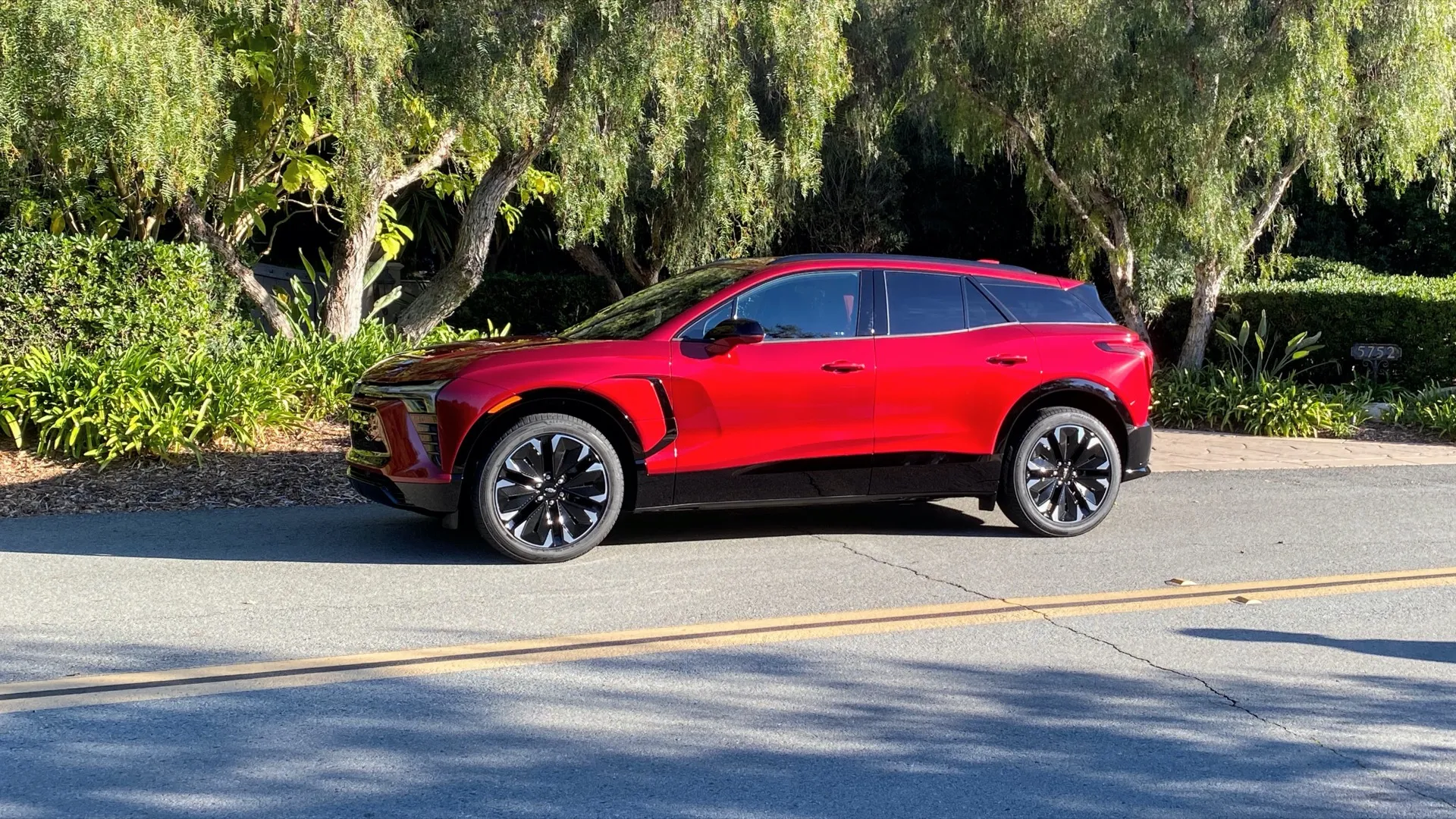
2025 Blazer EV pricing, Tesla Supercharger lead, Ariya recall: Today’s Car News
Tesla’s Supercharger network is losing its lead versus other public networks, a study suggests. Some Nissan Ariya models are recalled for an old-fashioned oil leak. And the Chevy Blazer EV gets a lower base price. This and more, here at Green Car Reports.
Chevrolet has lowered the base price of existing Blazer EV LT and RS models for 2025, but there’s a catch. In both cases, features that were previously packaged in have been made optional in 2025 Chevy Blazer EV pricing. And with lower-priced front-wheel-drive LT versions and the high-performance SS still on the way, there will soon be more to the lineup.
New survey data suggests that the Tesla Supercharger network may be losing its edge—and that’s before the company’s across-the-board cuts to that operation. The Tesla Supercharger network hasn’t necessarily gotten any worse, according to the recent J.D. Power survey looking at satisfaction with public charging but, simply put, other networks are catching up.
And a small number of Nissan Ariya EVs are being recalled due to something electric vehicles seldom have—an oil leak. In this case, a manufacturing issue can lead to oil leaks within the drive motors, potentially leading to excess wear. Nissan is replacing the entire drive-motor assembly in just 84 affected vehicles.
_________________________________

Ferrari: We’ll build V-12s until they’re outlawed
 Ferrari isn’t done with V-12 engines The automaker said it’ll continue development until the 12-cylinder is illegal Only two Ferraris are currently sold with a V-12 engine The V-12 is a rare breed these days, but Ferrari currently sells two models with just such an engine and the automaker has no plans to abandon it anytime soon. In an interview…

ZF can fit a screen and airbag into a steering wheel now
 Future steering wheels could adopt screens An airbag will still be present No automaker has committed to a putting a screen in a steering wheel, yet Screens are sprouting up everywhere in new cars, with some vehicles sporting door-to-door displays. Now ZF has found a way to breach one of the last screen-free zones on the dashboard. As described by…


Nissan Ariya recalled for something EVs rarely have: An oil leak
Nissan is recalling a small number of 2023 Ariya electric SUVs for an issue that rarely affects EVs: an oil leak.
The recall includes just 84 vehicles, but all are thought to have damaged O-rings in their motor assemblies that can lead to oil leaks within motors, “causing abnormal wear and debris,” according to the National Highway Traffic Safety Administration (NHTSA).
A mixture of debris and oil can build up, causing the vehicle to enter a “fail-safe” mode that may result in reduced power.
It’s unclear whether this issue would also lead to the spots on the driveway or garage floor that are all too common from internal-combustion vehicles. Gasoline engines with internal oil leaks can sometimes burn the excess, creating higher exhaust emissions, but that obviously isn’t the case here.
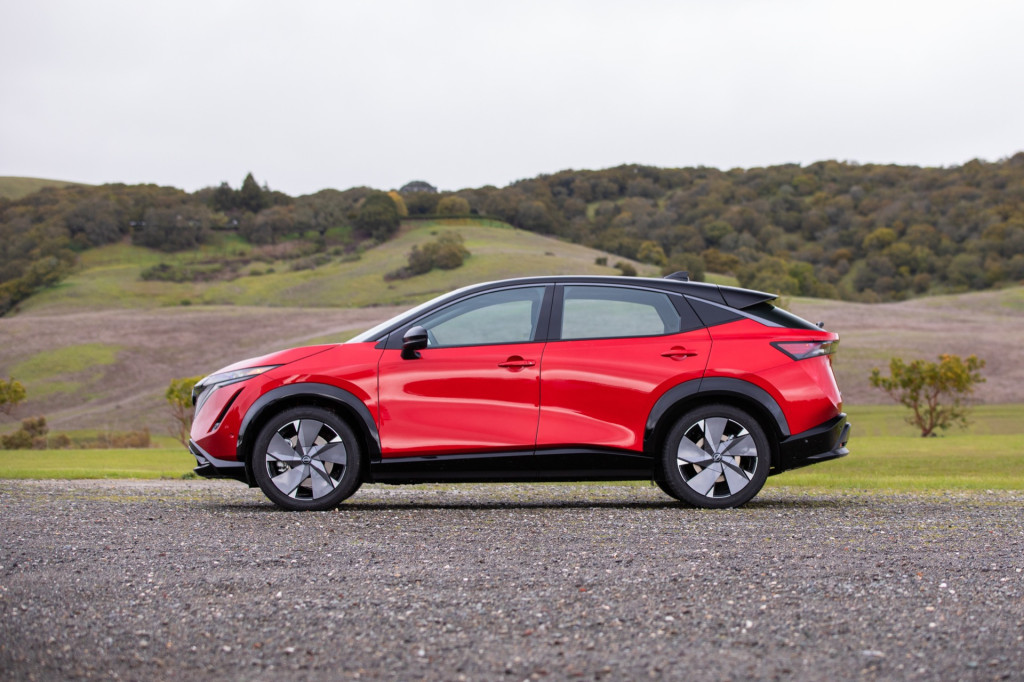
2023 Nissan Ariya e-4orce
The affected vehicles were built between May 30, 2022, and February 27, 2023, according to recall documents. No other vehicles are thought to be affected by this issue.
Owners will be notified of when to take their vehicles to dealerships, where the front motor assembly will be replaced, free of charge. That process can take up to 10.5 hours, however.
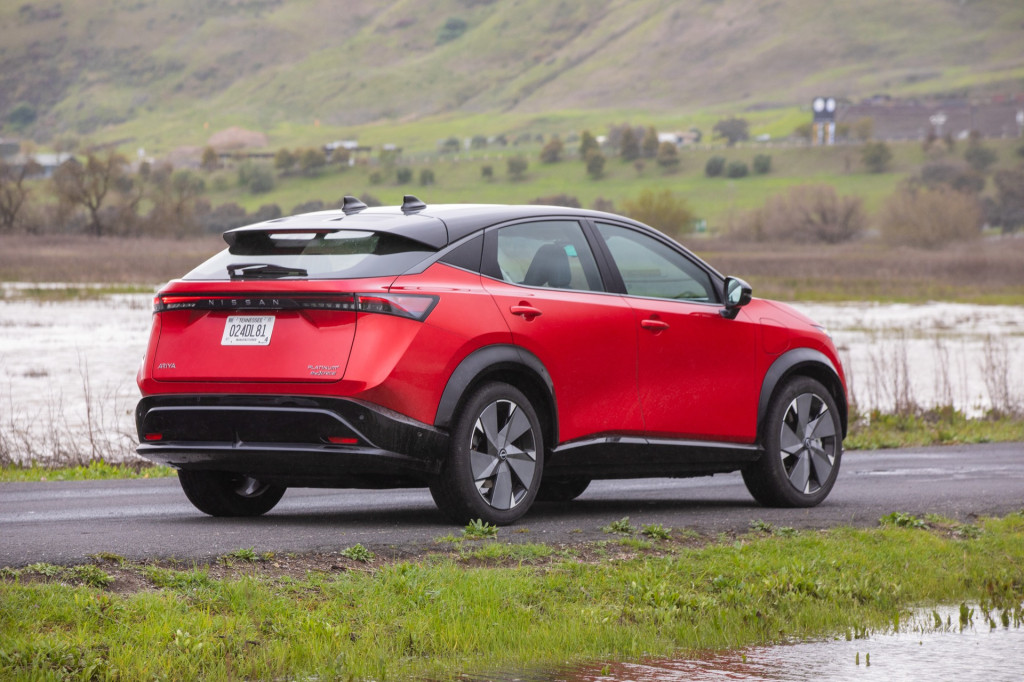
2023 Nissan Ariya e-4orce
While they may not require oil changes under normal circumstances, many EV motors are oil-cooled—like all of those used in General Motors’ Ultium family. The supplier Mahle in 2022 showed what it said was a “wear-free” motor, also including integrated oil cooling.
Several years of Consumer Reports data have backed up the claim that EV motor assemblies are generally less expensive to maintain than internal-combustion engines, with Consumer Reports consistently finding that EVs and plug-in hybrids cost less to maintain and repair. Recent data appears to contradict that, showing that plug-in cars are more trouble-prone and that hybrids are better. But recalls requiring labor-intensive remedies like this one are far from the norm for EVs.

Tesla Supercharging is losing edge vs. other public EV charging
Other EV charging networks are catching up to the Tesla Supercharger network in customer satisfaction, according to a new J.D. Power study.
The Tesla Supercharger network hasn’t necessarily gotten worse in this areas, but other networks are improving, the study found. It still has the highest level of customer satisfaction among fast-charging networks, based on analysis of “millions of data points aggregated into six categories—interest, availability, adoption, affordability, infrastructure and experience,” according to J.D. Power.
However, non-Tesla fast-charging networks saw a 19-point increase on J.D. Power’s scale in the first quarter of 2024 compared to the previous quarter, while Tesla was down a point during that period. That’s good news for EV drivers generally, as it indicates the non-Tesla charging experience is getting better, but potentially worrisome for Tesla, given the importance of the Supercharger network to the automaker’s appeal.
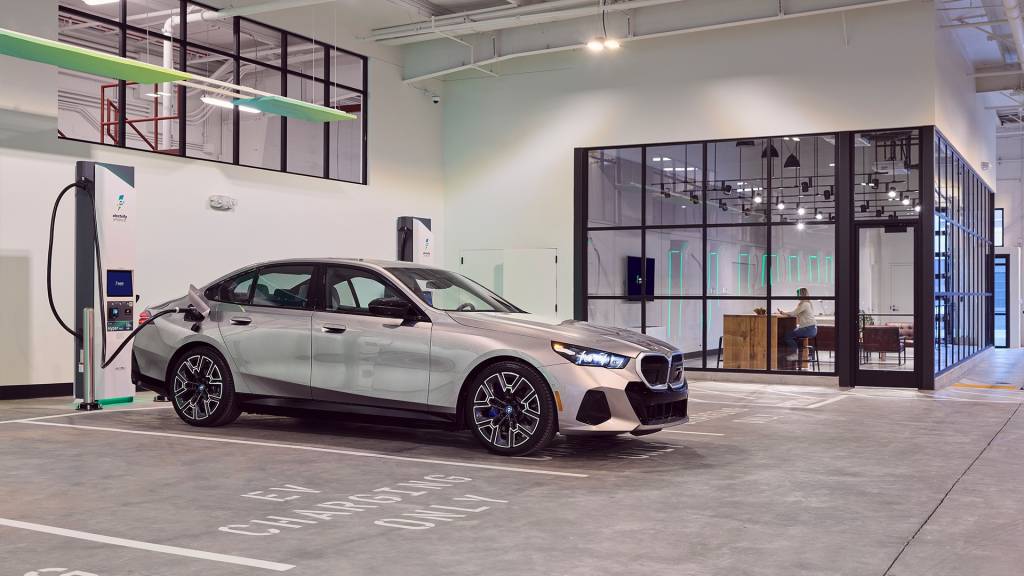
First Electrify America indoor charging station opens in San Francisco
“Should Tesla’s Supercharger network experience a significant setback or increased competition from challenger brands, it could have a significant effect on a core component of the brand’s value proposition,” J.D. Power said in a statement.
That leaves Tesla with a lot to lose—and considering its decision to fire nearly the whole Supercharger team, it’s a puzzling decision for what many see as the main value proposition the company has to offer.
Meanwhile, customer satisfaction with public EV charging is up overall thanks to the non-Tesla networks, the study found. In the first quarter, customer satisfaction with DC fast charging increased 16 points compared to the previous quarter, while Level 2 AC charging customer satisfaction increased nine points from the previous quarter. J.D. Power says these are the largest quarter-over-quarter increases since it began collecting data in 2021.
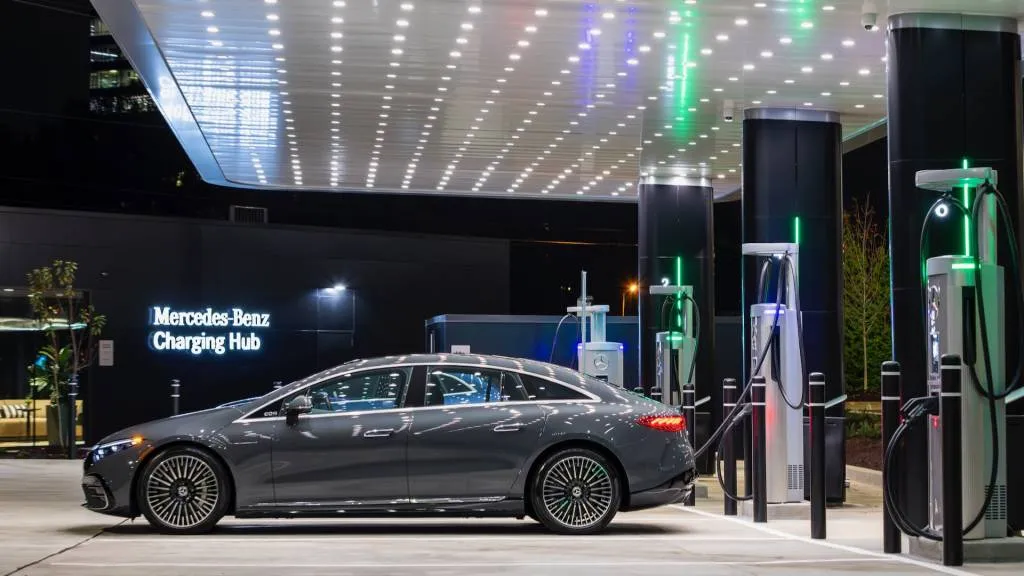
Mercedes-Benz EV Charging Hub in Sandy Springs, Georgia
It brightens up the generally gloomy picture of public EV charging. One of J.D. Power’s previous studies, from last year, suggesting that one in five charging attempts fails, was a wake-up call for the industry. Retailers aren’t doing much to support EV charging either, suggested Consumer Reports in another study.
Some efforts have been made to address issues like unreliability, though. Recently the Department of Energy underscored that hardware makers and networks need to allow a little more flexibility in station controls—and that users would much rather get a reduced rate, flagged as such, than no charge at all.