
Author: EVAI

BMW Neue Klasse EVs lean into AI for texture, inspiration
 Artificial intelligence poses all kinds of questions for society—and in the automotive world, electric cars are doing the same. But while we know that EVs will change the world, mostly for the better, the future of an AI-inflected world is less certain. How will AI and EVs intersect? BMW is among the automakers eager to find out as it…

Forvia CEO raises questions about Mexico, citing high inflation and missing trucks
Mexico is becoming more difficult to do business in as security concerns persist and labor and energy costs rise, Forvia CEO Patrick Koller said.
Reporter roundtable: What should an EV sound like? (Episode 254)
On a special episode of Shift, Automotive News staffers are contestants on a game show about electric vehicle sounds. That is followed by an explanation of the factors driving electric vehicle sound design.

2025 Rivian R1S and R1T, 2026 Toyota GR GT3: This Week’s Top Photos
 U.S. EV startup Rivian introduced a major update to its debut R1S SUV and R1T pickup truck, and we’ve already tested it. While the electric SUV and pickup truck may look the same on the outside, big changes have taken place beneath the sheet metal, including the addition of a new 1,025-hp quad-motor powertrain. Motorsports governing body, the FIA…

Rivian R1 and Toyota Crown Signia reviews, US-made Volvo, Hyundai, Kia EVs: The Week in Reverse
How safe are some of the biggest, thirstiest SUVs?
Why is the $7.5 billion federal EV charging network moving so slowly?
This is our look back at the Week In Reverse—right here at Green Car Reports—for the week ending June 6, 2024.
It was another big week of getting up-close time with some of the most anticipated new EVs, while reporting on some of the top stories for green-car shoppers. Rivian on Thursday Rivian set the stage for its mass-market R2 with more comfortable, better-performing, lighter, and more simplified “Gen 2” versions of its electric trucks. The 2025 Rivian R1S SUV and R1T pickup will be offered in Dual-, Tri-, and Quad-Motor layouts, with Standard (LFP), Large, and Max battery packs. And as Green Car Reports experienced on the road, in the mud, and on the drag strip, it all adds up to a more appealing vehicle.
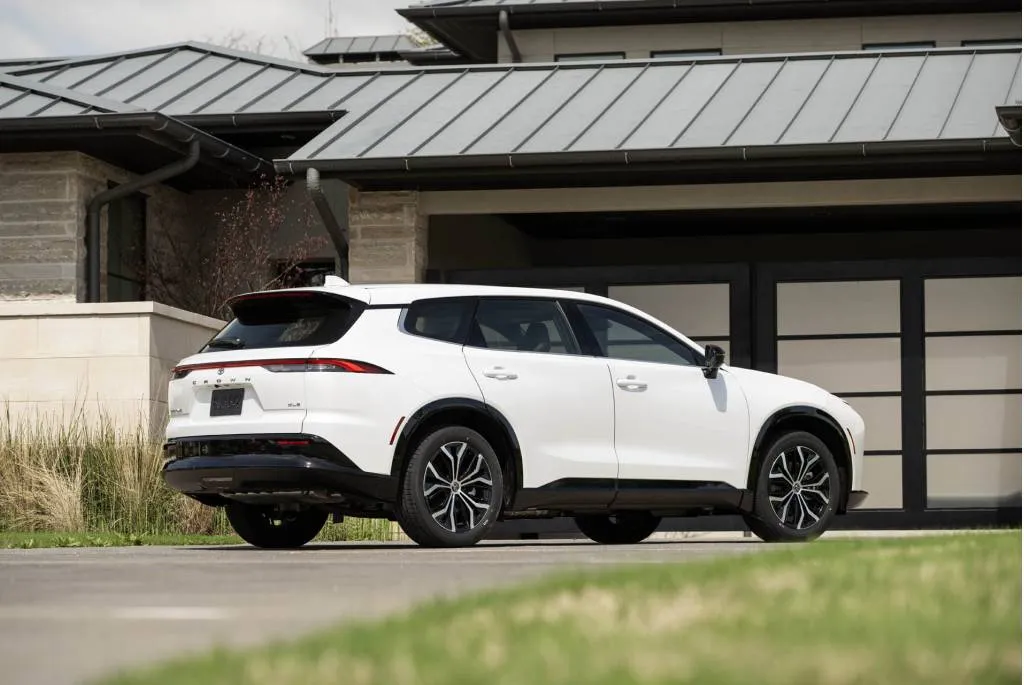
2025 Toyota Crown Signia
And do you want a roomy, gasoline-fueled hybrid station wagon that can get nearly 40 mpg? That’s what Toyota has introduced with its 2025 Crown Signia, and at around $45,000 it’s a comfortable, more carlike family alternative to the boxier Highlander Hybrid.
At the reveal of the Jeep Wagoneer S electric SUV last week, executives confirmed that extended-range Wagoneer and Grand Wagoneer 4xe versions are on the way, with large plug-in battery packs and packaging that manages to maintain their three-row layout. Given Jeep’s plans for mild hybrids, plug-in hybrids, EVs, and more, it leaves a great many build combinations—and based on executive comments about which kind of plug-in is better for which situation, it may be rolling these out in the wrong order.
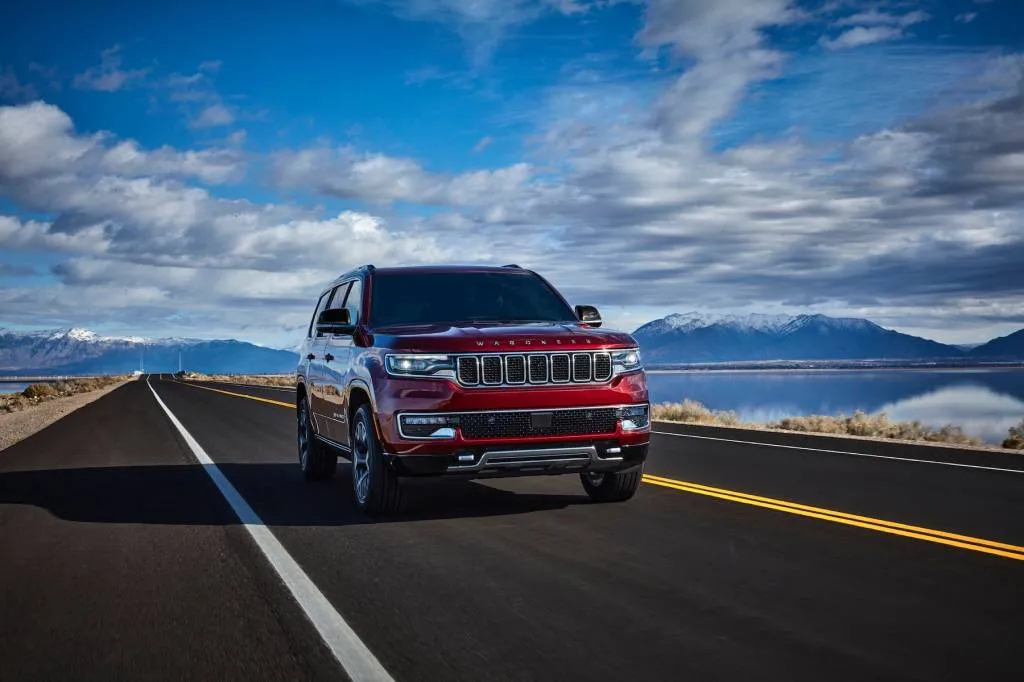
2024 Jeep Wagoneer
Separately, last week, the CEO of Stellantis, Jeep’s parent company, told media at an investor conference last week that a $25,000 Jeep EV is coming to the U.S. soon.
The federal government on Friday revealed vehicle fleet fuel efficiency standards for 2027-2031 that will improve the average mpg of vehicles, but less aggressively than originally proposed. Along with softer targets for trucks and SUVs, the rules give automakers a lot of bonus points for EVs.
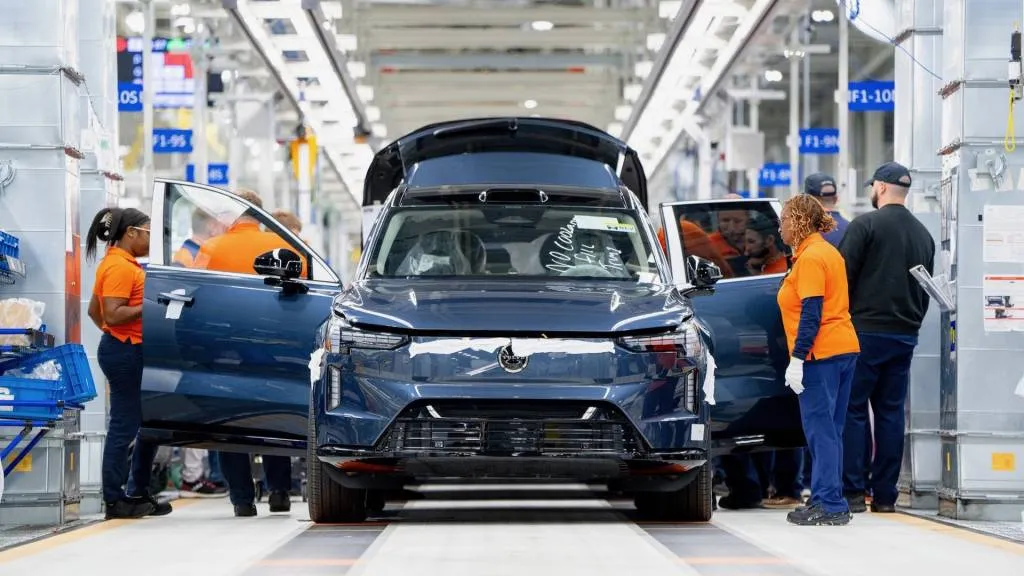
2025 Volvo EX90 production begins in South Carolina
U.S. production of the 2025 Volvo EX90 electric SUV has started in South Carolina, the Swedish automaker reported this week. The first U.S. customer vehicles will be delivered in the second half of the year, it says. And U.S.-made Hyundai and Kia EVs are coming to dealerships soon, with U.S. Kia EV9 production starting last week and Hyundai’s initial U.S.-made EV now confirmed as the Ioniq 5. But will they qualify for the full $7,500 EV tax credit?
Meanwhile, Senator Joe Manchin is back to criticizing the Biden administration’s EV tax credit rules, and this week he called on enforcement of rules requiring locally sourced battery content—rules that have recently been eased for two years. Manchin already has an issue with the “leasing loophole” written into the credits, effectively federally subsidizing foreign-made luxury EVs.
Over in Europe, this week Mercedes-Benz and Stellantis both paused European battery plans, as they refocused their efforts potentially around affordable EVs, amid slowing demand especially for premium EVs.
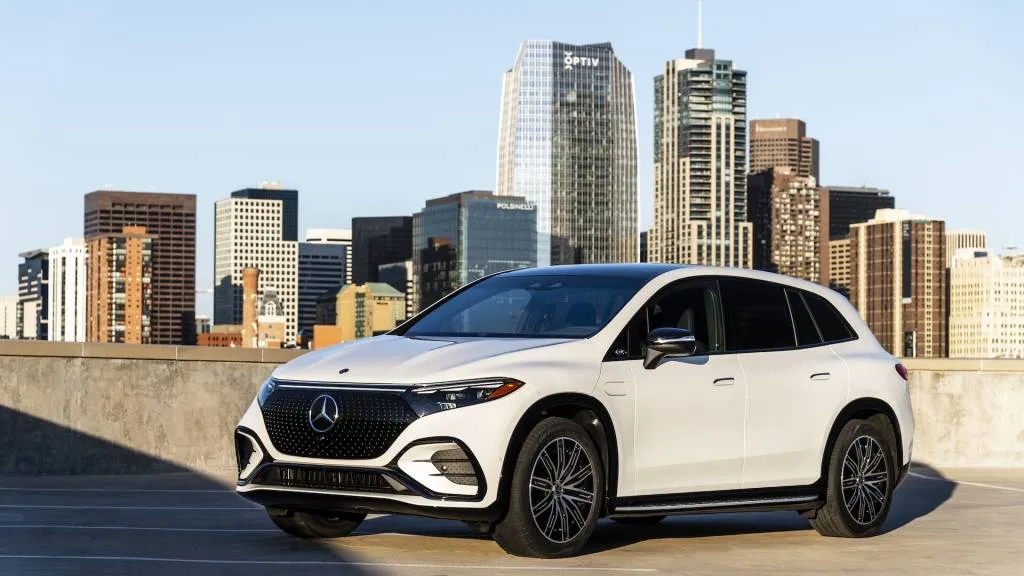
2024 Mercedes-Benz EQS SUV 580 4Matic
Mercedes-Benz has recalled nearly 15,000 EVs over a software issue that may lead to a shutdown of the high-voltage system. It amounts to a bug in the vehicles diagnostic system and no fault of the battery, but the issue requires a trip back to the dealership for an update.
According to a recent patent application, Ford is considering EV battery swapping via drive-up docking stations. If this system based on smaller modules ever becomes reality—for fleet vehicles, perhaps, or other types of mobility—it would be very different than the full-pack replacements that companies like Nio and Ample do today.
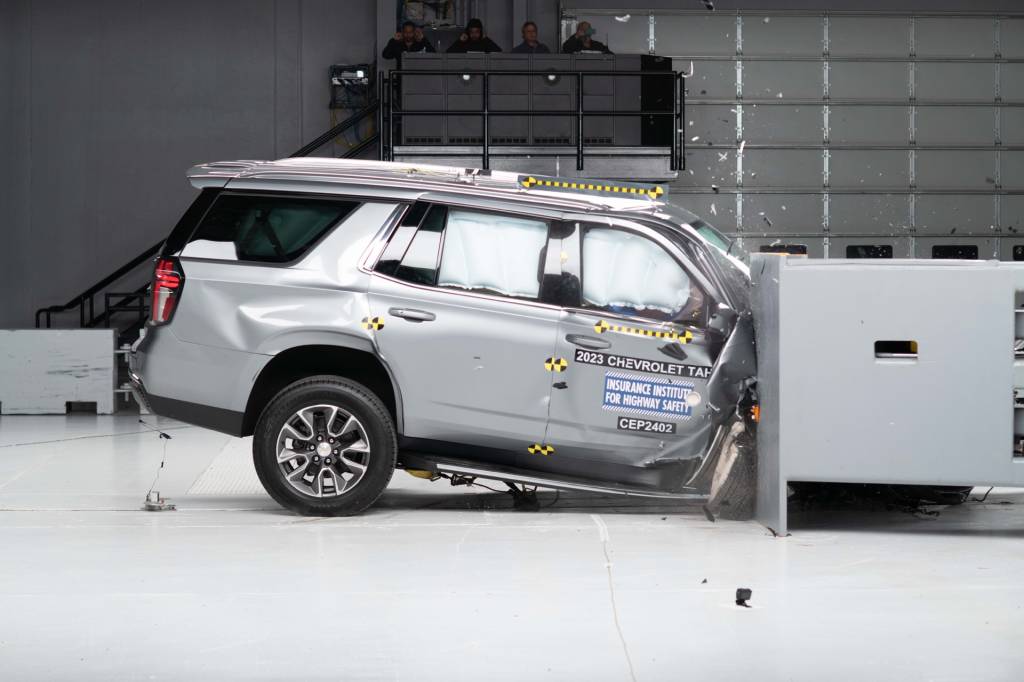
2023 and 2024 Chevrolet Tahoe crash-test impacts by the IIHS
Several big, gas-guzzling SUVs aren’t actually so safe, found the Insurance Institute for Highway Safety (IIHS) in a new round of crash tests of the Chevrolet Tahoe, Ford Expedition, and Jeep Wagoneer. Of these three-row models that largely return well under 20 mpg, only the Wagoneer received the top “good” rating.
A new survey from AAA found that fewer Americans are likely to buy a new or used EV in 2024, versus a similar survey last year. The reasons aren’t surprising, and they come down to cost and convenient charging; specifically, it suggests that nearly a third of Americans are unable to install an EV charger where they live.
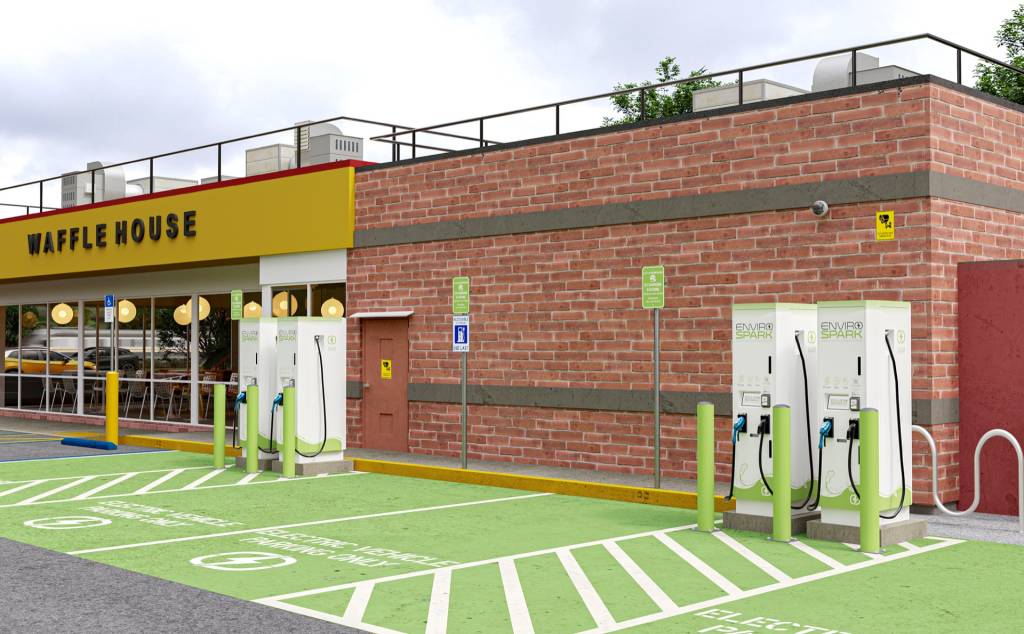
Rendering of EnviroSpark EV chargers at at Waffle House
Why is the $7.5 billion federal EV charging network that was funded in 2021 moving so slowly? To date only eight stations in six states have opened, according to a report, and it’s largely because states are taking the lead but have to face a “patchwork of public and private utilities, regulators, and bureaucracies.
And New York City actually had fleets of electric taxis in the ‘90s—the 1890s, that is. But a few unfortunate incidents, and the dominance of petroleum distribution, meant that EVs didn’t re-emerge as a viable alternative to internal combustion taxis until the 2010s.
_______________________________________

What is vegan leather?
 You’ve shopped for cars, perhaps even here at The Car Connection—and run across a phrase that’s as hopelessly 21st century as “celebrity podcaster” or “wellness guru.” “Vegan leather.” It’s not made from vegans, actually. It’s one of any number of synthetic materials that sub in for…

2025 Buick Envista
 What kind of vehicle is the 2025 Buick Envista What does it compare to? The 2025 Envista is a small crossover SUV that squeezes between the company’s subcompact Encore GX and its compact Envision. Even though it’s not the smallest Buick, it’s the cheapest. Shop it against the similar Chevrolet Trax, plus the Mazda CX-30, Hyundai…

Final US mpg rules through 2031 go easy on gas trucks, SUVs
The federal government on Friday revealed vehicle efficiency standards for 2027-2031 that improve the fleet fuel efficiency of new cars and trucks—slightly.
The final rules for Corporate Average Fuel Economy (CAFE), announced Friday by the Department of Transportation’s National Highway Traffic Safety Administration (NHTSA), set the prescribed improvement at 2% annually for passenger cars and 2% annually for light trucks for those model years.
That’s down significantly from the 4% annual increase originally proposed for trucks and SUVs, which are already held to a lower standard and have become the dominant portion of U.S. vehicle sales. As the International Energy Agency last week underscored, SUVs emit about 20% more CO2 than cars, whether they’re electric or not.
Considering those details, the EPA calculated that its final rule will require 56% EVs by 2032, plus at least 13% plug-in hybrids—and since then, GM has been among the automakers reviving plug-in hybrids, perhaps resulting in a slower EV rollout. Under that previous scenario that was more aggressive on efficient light trucks, it saw 67% EVs by 2032.
Softer on trucks, fewer EVs, and about 38 mpg by 2032
The easing of it all would mean a real-world fleet efficiency average of about 38 mpg, according to the agency—way down from 43.5 mpg under the agency’s original CAFE proposal made in July 2023.
The 2024-2026 CAFE rules, finalized in 2022, call for aggressive increases of 8% in 2024 and 2025, and 10% in 2026, so automakers will essentially “have it easy” after reaching those 2026 targets. By the end of that period, in 2026, it’s already been projected that the real-world fleet average will be around 35 mpg, versus today’s fleetwide average of about 29 mpg.
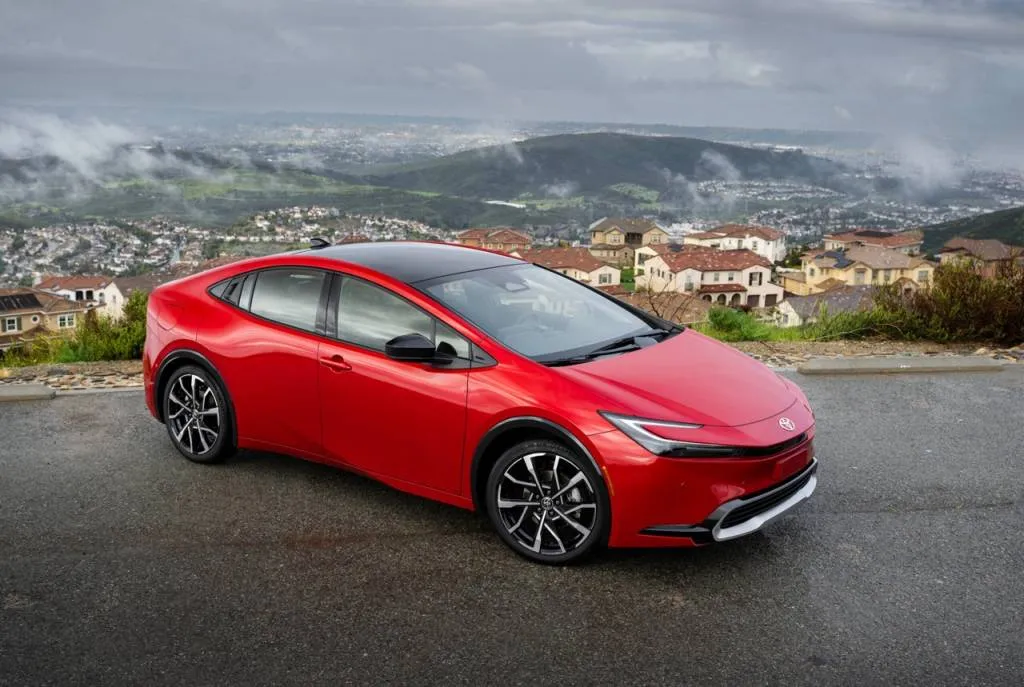
2024 Toyota Prius
These fleet rules are one side of U.S. vehicle efficiency and emissions standards, generally set in coordination between these different agencies. They follow EPA rules set in March, and those keep to a familiar framework, breaking vehicle targets down into designated “footprints,” as well as passenger cars versus light trucks.
Those EPA rules continue to avoid a direct EV mandate and follow a slower ramp-up than what was originally proposed, but as set they’re largely considered to be a victory for public health.
EVs count as a 300-mpg gas vehicle until 2027
On the fleet side of meeting these pollution and efficiency rules, automakers however already got a big break that will help them meet those much stronger 2024-2027 standards, when the Department of Energy in March revealed that it will take three extra years to phase in a revised Petroleum Equivalency Factor (PEF)—governing how EVs are taken into account in fleet calculations next to gasoline models.
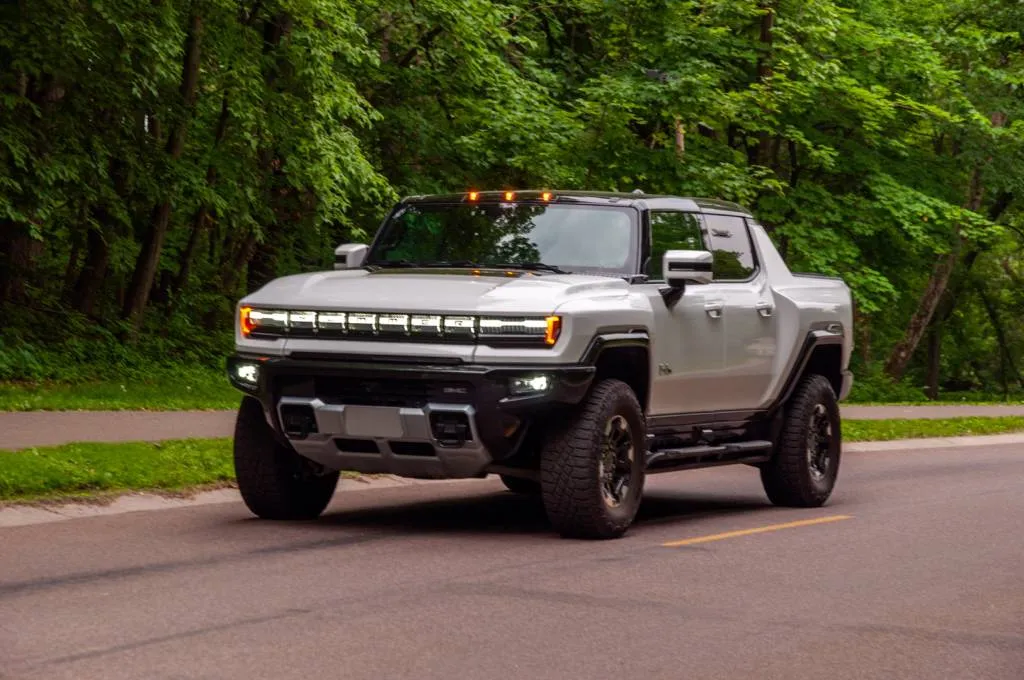
GMC Hummer EV
Calculated out, that equates a battery electric vehicle with a gasoline-powered vehicle that gets about 300 miles per gallon—allowing automakers until then to effectively produce hundreds more gasoline vehicles for every one EV, and incentivizing PHEVs. After that three-year phase-in, starting in 2027, EVs will only count like a 120-mpg gasoline model, much lowering the number of low-mpg models that each EV enables.
While the EPA standards may be the most important building blocks, the CAFE standards themselves are the step that ultimately determines the mix of vehicles that will be sold and emphasized through this time period—and it arguably gives the auto industry more of an incentive to keep sliding its product mix toward heavier, less efficient SUVs rather than passenger cars.
As the Environmental Defense Fund notes, the law requires NHTSA to set standards for the “maximum feasible” average fuel economy levels that automakers can achieve in a given model year, not all environmental and consumer groups saw these rules as meeting that maximum. The consumer organization Consumer Reports called them underwhelming and said that the NHTSA standards “only check the box on its legal requirement.”
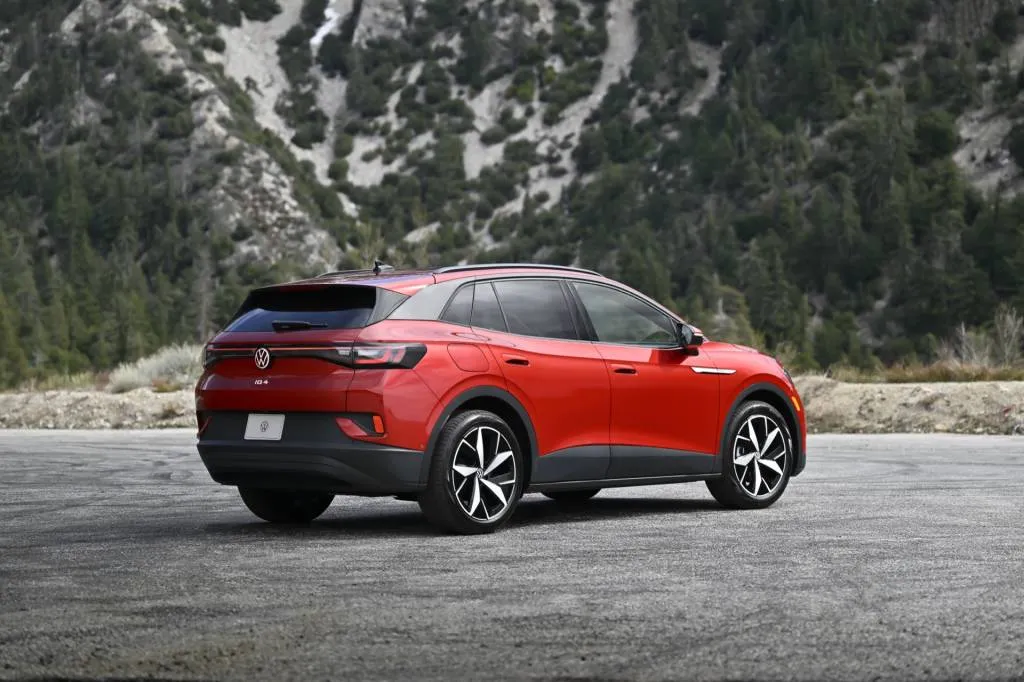
2024 Volkswagen ID.4
Will automakers make more EVs than they need to?
John Bozzella, the president and CEO of the Alliance for Automotive Innovation, representing automaker interests, applauded how the NHTSA rule works with the EPA one, and told S&P Global that “it looks like the left hand knew what the right hand was doing.”
What this generally positive remark about the rules and trendlines might mean, essentially, is that automakers are feeling confident that this interpretation will let them make more high-profit gasoline-powered trucks without paying fines.
In an era when another wave of the right EVs—perhaps aided by affordability and battery breakthroughs—might catch on a lot quicker, there’s a chance for automakers to prove regulators’ trendlines wrong.

Kia recalls 462,869 Telluride SUVs for fire risk
 Kia on Friday urged owners of the Kia Telluride SUV to park outside due to an issue with a front seat motor that can catch fire. The recall covers 462,869 Telluride SUVs dating back to when the popular three-row SUV launched in 2020. The recall covers every Telluride made from Jan. 9, 2019 through May 29, 2024, except for the base LX model; it’s…

2025 Chevy Corvette ZR1, 2026 Mercedes S-Class, Ford Mustang GTD: The Week In Reverse
 Chevrolet teased the 2025 Corvette ZR1, we spotted the 2026 Mercedes-Benz S-Class, and the Ford Mustang GTD ripped around the Núrburgring. It’s the Week in Reverse, right here at Motor Authority. The 2025 Chevrolet Corvette ZR1’s flat-plane crank twin-turbo V-8 engine sounds wild. The automaker teased the upcoming all-American supercar with…