
Author: EVAI

Guest commentary: Dealers should make technology an advantage, not a roadblock
Dealerships can work more efficiently and manage the web of documents that comes with every sale without an expensive technology overhaul.

Fisker bankrupt, Volvo S60 Recharge canceled, Kia EV3: Today’s Car News

Volvo cancels its highest-mpg hybrid. Kia might be thinking Mexico for its upcoming affordable EV. FIsker has gone belly up on the Ocean. And why don’t Americans drive their EVs more? This and more, here at Green Car Reports.
The American EV startup automaker Fisker filed for bankruptcy Monday after it failed to gather enough new investment to get production of its Ocean electric crossover going again. It’s possible that its liabilities have already neared its total assets, as Fisker has followed an “asset-light” model that involved contract manufacturing. And yes, this is the second time a Fisker automaker has gone bankrupt.
The Volvo S60 Recharge is the highest-mileage plug-in hybrid in Volvo’s lineup—by electric miles or mpg—and it’s going away after the 2025 model year. While Volvo confirmed several years ago that gasoline models would be dropped from the South Carolina plant where it’s built, Volvo on Monday ruled out making the S60 an import. It’s unclear, as of yet, where the V60 wagon variants stand.
According to a report citing inside sources, Kia is considering Mexico as the assembly location for its upcoming Kia EV3 electric SUV—so the compact EV might reach the U.S. market with a price as low as $30,000 and EV tax credit eligibility. But it’s no done deal as of yet.
In the U.S., EVs are driven fewer miles annually than gasoline models, including hybrids. It’s not that way elsewhere in the world, where EV drivers tend to drive more. Why is the U.S. the outlier?
_________________________________

2026 Audi A7, 2025 Volvo S60: Car News Headlines
 Audi is working on a redesign for the A7, and this time there will be body styles in addition to the regular Sportback hatchback. One of the body styles will be an Avant wagon, which in addition to the standard version will come in Allroad soft-roader and RS high-performance forms. Volvo’s S60 will bow out of the U.S. after the 2025 model year…

US EVs are driven fewer miles than ICE—unlike elsewhere in the world
U.S. EVs average less annual mileage than other vehicle types, according to the Department of Energy (DOE). But that isn’t the case in other countries with significant EV fleets.
According to the 2022 National Household Travel Survey, EVs averaged 12,400 miles per year. That’s compared to 14,100 miles for gasoline vehicles and a high of 17,500 miles for diesel vehicles. Plug-in hybrids and hybrids were between gasoline and diesel vehicles in annual mileage, while the average mileage for all vehicles in a household was 14,200 in 2022, the DOE noted.
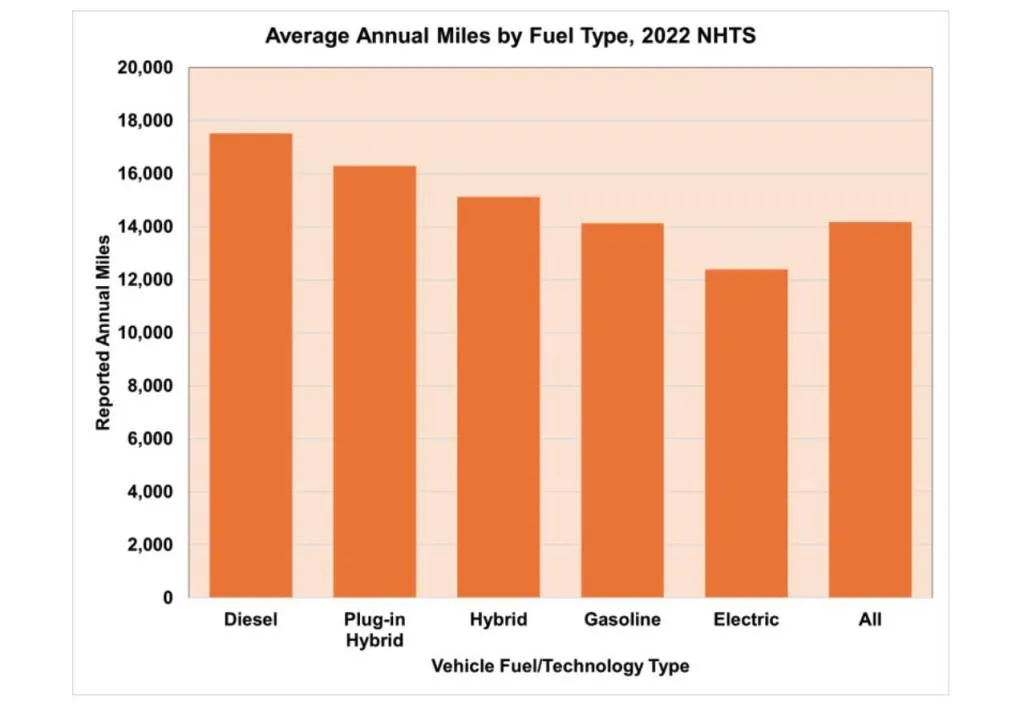
2022 U.S. average annual mileage by vehicle type (via DOE)
While plug-in hybrids had the second-highest annual mileage after diesels, U.S.-market models tend to have smaller batteries which, when combined with longer distances driven, raises a concern that they will add to oil demand as a result of relatively few electric miles, as Bloomberg New Energy Finance (BNEF) noted in recent analysis.
EVs in other countries accumulate more mileage annually, BNEF has found. In China and the Netherlands, EVs travel 66% and 56% more than internal-combustion vehicles, respectively, according to BNEF. In China, at least, that may be partly due to the popularity of EVs as ride-hailing vehicles, which was also noted by BNEF. In Norway, long a poster child for EV-friendly policies, EVs travel 40% more than internal-combustion cars.
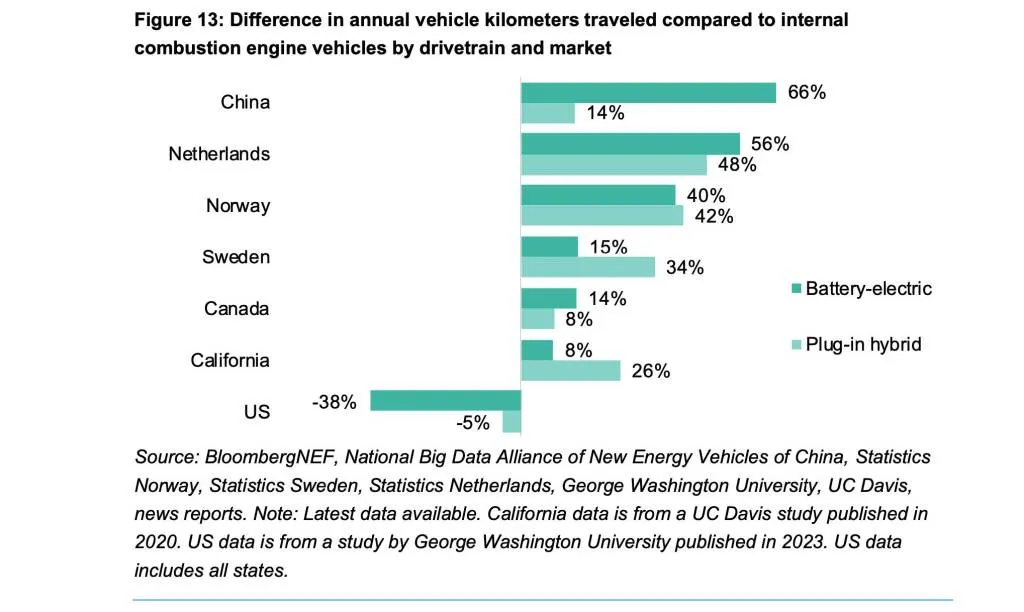
Annual kilometers traveled by EVs vs. ICE vehicles (via BNEF)
A study last year from George Washington University and the DOE’s National Renewable Energy Laboratory (NREL) found that EV drivers simply aren’t driving as much as those with gasoline vehicles (it may vary by model, though, with one analysis finding that Tesla leads other EVs in mileage). And that’s a problem for some of the emissions models and assumptions for the benefits of EVs.
Earlier EVs tended to be short-range. As other long-range EVs added to the mix, it was assumed that EV distance would go up—but so far it hasn’t tracked upward as quickly as the range capabilities of the EV fleet.
Does this mean Americans are seeing long-range EVs as second vehicles, while the rest of the world sees them as primary vehicles? That part is unclear, but it appears to be a uniquely American dilemma that, perhaps, will require some uniquely American solutions.

Out of charge: Fisker files for bankruptcy, again
- Fisker filed for bankruptcy protection in Delaware
- The startup automaker estimates liabilities between $100 million and $500 million
- Fisker halted production with contract maker Magna Steyr in March
Electric vehicle manufacturer Fisker on Monday filed for bankruptcy after the company failed to secure new investment to help get production of its Ocean crossover running again.
Fisker in a statement said it has sought Chapter 11 bankruptcy protection with a court in Delaware, and that it is currently in talks with creditors over debtor-in-possession financing and the sale of remaining assets.
In a court filing seen by Reuters, Fisker estimated its liabilities at between $100 million and $500 million, and its assets at between $500 million and $1 billion.
The move comes roughly a year after the start of deliveries of the Ocean, Fisker’s debut model. Production of the electric compact crossover was handled by contract manufacturer Magna Steyr at a plant in Austria, but it was halted in March after Fisker experienced a cash crunch.
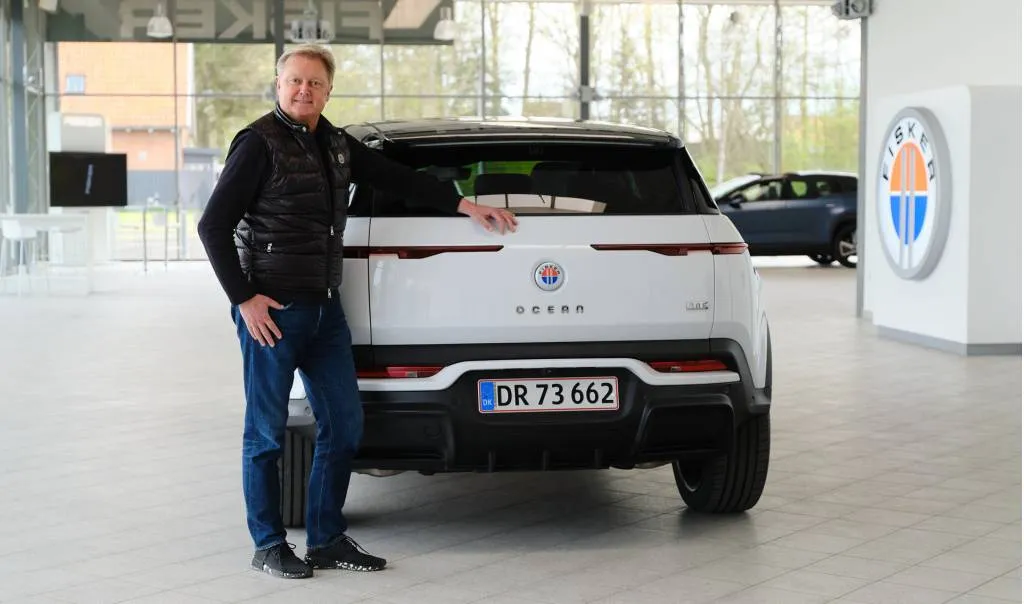
Henrik Fisker with the first customer Fisker Ocean – May 2023
According to Reuters, more than 10,000 Oceans were built in 2023 and only about 4,700 were delivered to customers. The company hasn’t said what support will be offered for Ocean owners.
Prior to filing for bankruptcy protection, Fisker tried to raise funds by forming a partnership with a major automaker, rumored to be Nissan. The company also slashed prices on the Ocean in an attempt to reduce the building glut.
Beyond the funding issues, Fisker has also suffered from cooling demand for EVs, as well as supply chain issues that delayed a ramp-up in production of the Ocean.
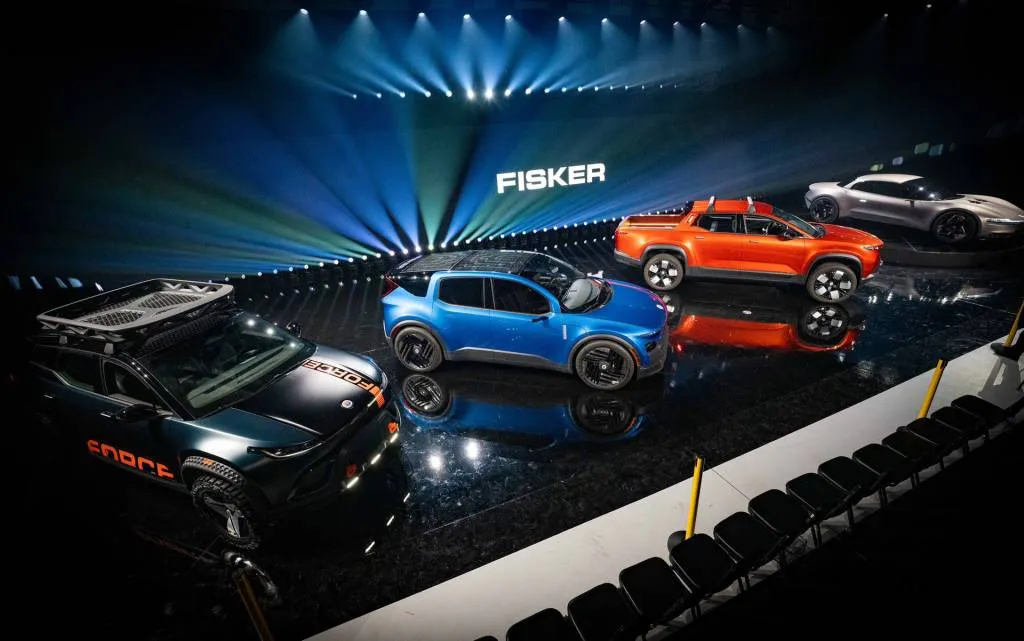
L to R: Fisker Ocean Force E, Pear, Alaska, and Ronin prototypes
The National Highway Traffic Safety Administration also started a preliminary probe into the Ocean in May after receiving complaints of doors sometimes failing to open.
This is the second instance of an EV startup founded and led by Henrik Fisker going bankrupt. Another company operating as Fisker failed in 2013, with its remaining assets sold to the Chinese battery company Wanxiang. That earlier Fisker was eventually revived and now operates as Karma.
A buyer with deep pockets could potentially purchase Fisker’s assets, pay off its liabilities, and revive Ocean production. Fisker also presented designs for three additional vehicles that could be launched. They included the Pear urban crossover, Alaska pickup truck, and Ronin convertible.

Report: Kia EV3 may be made in Mexico to hit $30,000 price
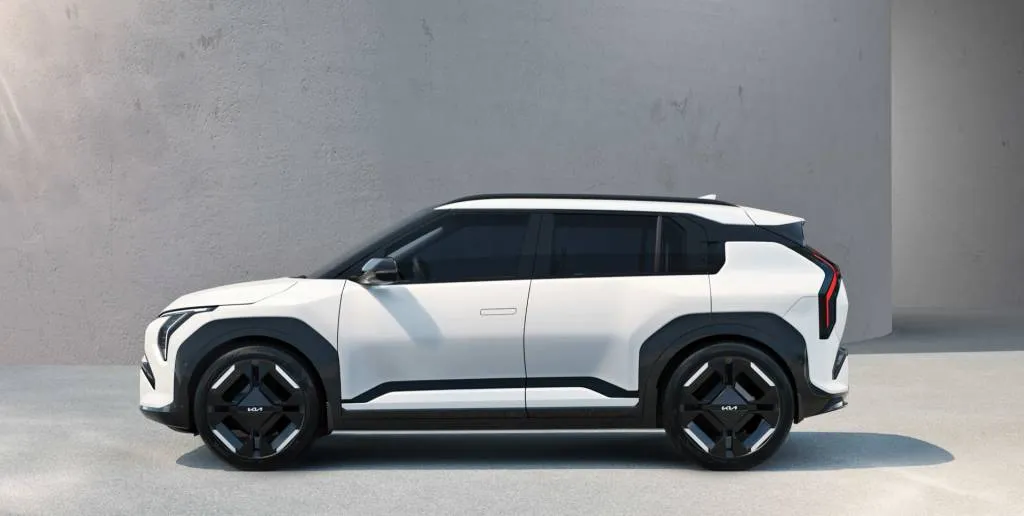
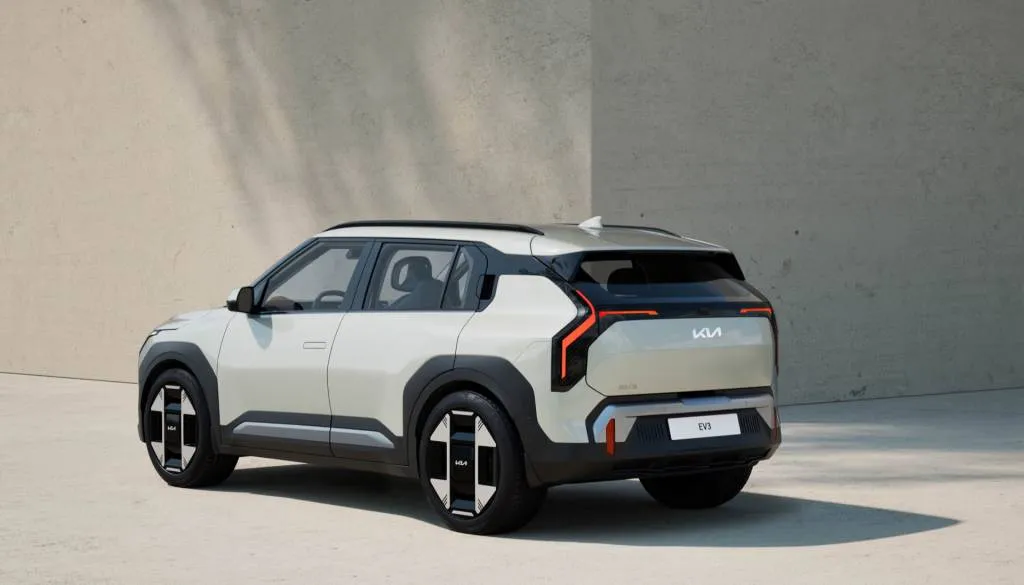
The Kia EV3 electric SUV could be assembled in Mexico for the U.S. market, a move that could allow it to be eligible for a federal tax credit and carry a sticker price of $30,000, reports Korean Car Blog (via Electrek).
“Kia is developing a distinct North American model” of the EV3, to be built at the automaker’s factory in Monterey, Mexico, starting next year, according to the report. The North American version, codenamed SVm, is reportedly scheduled to start testing later this year.
Kia EV3
Once production ramps up in the fourth quarter of 2025, Kia reportedly aims to produce up to 110,000 vehicles annually in Mexico, compared to the 100,000 target for the Gwangmyeong, South Korea, plant that launched EV3 production. That plant will serve both the Korean and European markets, according to the report.
Kia revealed the EV3 last month, with hints that some versions might return more than 300 miles of range. Earlier the automaker also suggested it would start around $35,000. It does in Korea start closer to $30,000—so this may be an attempt to get the price closer to that.
Kia EV3
Kia would likely focus on EV tax credit eligibility, as that might cut the effective price for many families around or below the $25,000 mark, including destination. Mexico-built EVs still qualify for the federal tax credit, and Mexico’s trade status would allow Kia to avoid import duties, Korean Car Blog notes.
It’s likely a difficult time for Kia to put together such a plan to make cost-conscious EVs south of the border, however. Former president Donald Trump has proposed a 100% tariff on Chinese vehicles—EV or not—and he’s given some indication he’d like to further reel in those mostly free trade rules with Mexico established under NAFTA, if re-elected. He’s also reportedly offered to scrap Biden administration incentives—like the EV tax credit—in exchange for Big Oil campaign contributions.

2025 Audi E-Tron GT given big performance boost, now hits 912 hp
 The 2025 Audi E-Tron GT replaces the R8 supercar as the automaker’s halo model A new RS Audi E-Tron GT Performance variant joins the lineup with 912 hp The Audi E-Tron GT receives the Porsche Taycan’s upgraded 105-kwh battery With the Audi R8 no longer in production, the performance mantle at Audi Sport now lies with the 2025 E-Tron GT…

To be discontinued: Volvo S60 joins dead sedans after 2025
 Volvo S60 compact sedan ends production at the end of the month in Ridgeville, South Carolina The plant now produces the Volvo EX90 three-row electric crossover SUV The 2025 Volvo S60 starts at about $44,000 The Volvo S60 sedan will end production at the end of this month, but dealers will still be selling the 2025 Volvo S60 until supplies run out…

Volvo’s highest-mileage plug-in hybrid is going away
 The Volvo S60 sedan—which in Recharge form is currently the Swedish automaker’s most efficient plug-in hybrid—is being discontinued in the U.S. Motor1 first reported that S60 production would end at Volvo’s Ridgeville, South Carolina, factory (located near the city of Charleston) this month. That was telegraphed by Volvo in 2021, when…