
Author: EVAI

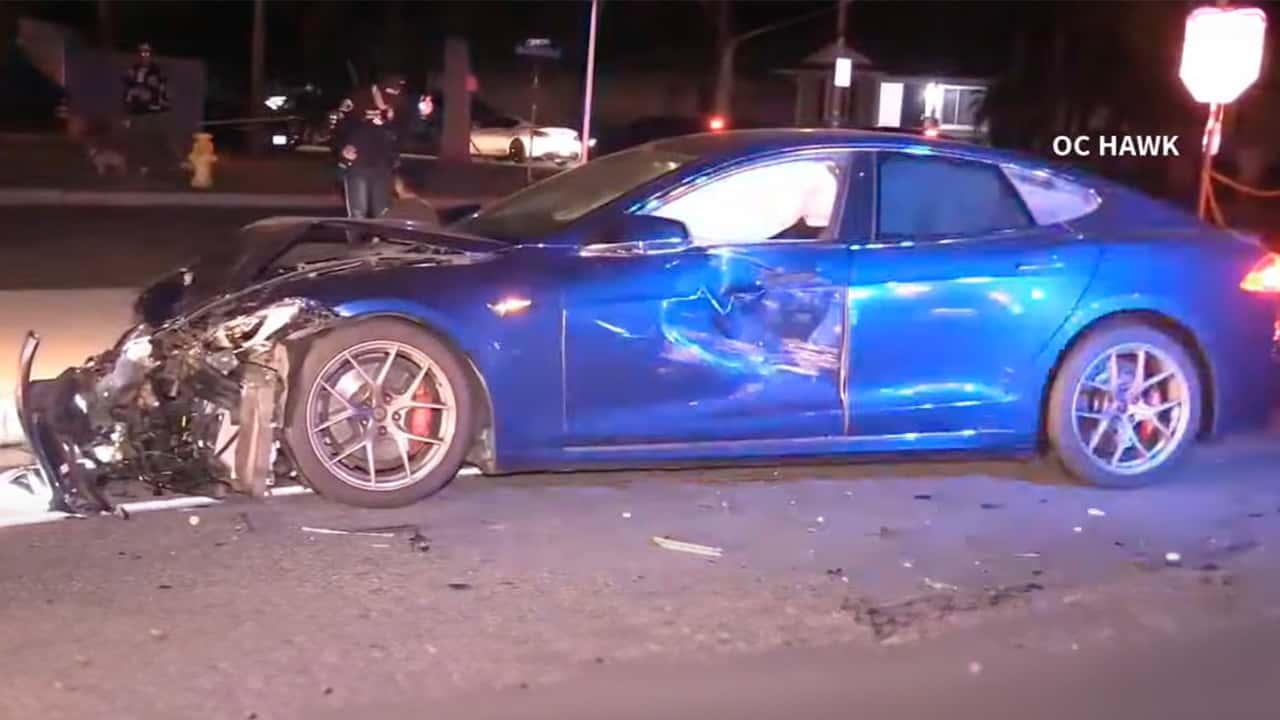
Officer Dodges Tesla On Autopilot, Which Then Crashes Into Police Cruiser
The officer was blocking traffic because of a serious accident further up the road.

Used EV price plunge, EV rejectors cite cost, Tesla roundup: Today’s Car News
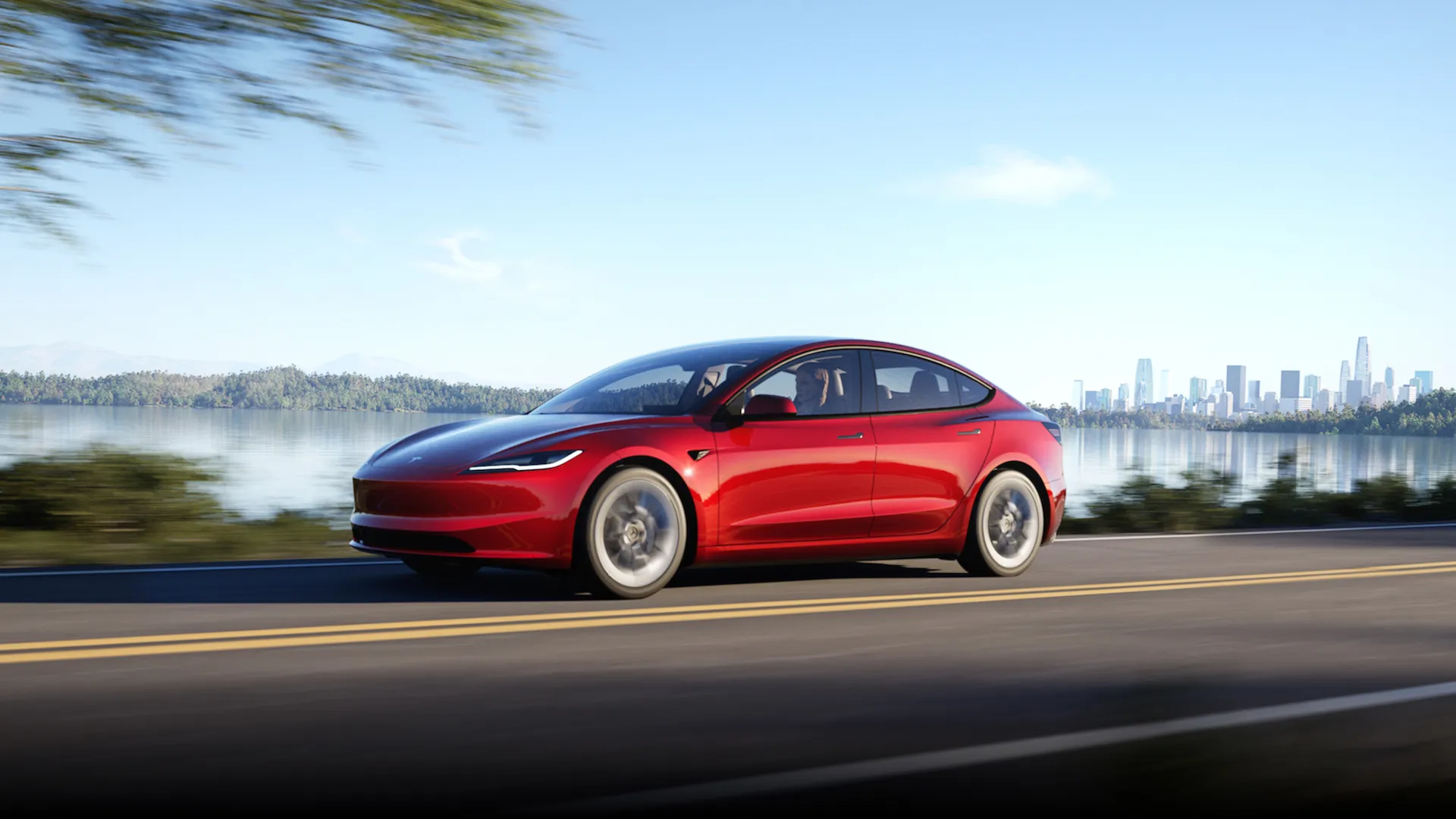
Last week’s Tesla shareholder buzz brought some product and battery news. And at the same time that EV rejectors keep citing cost as the primary reason why they don’t work, the cost of new EVs keeps settling and used EV prices have plunged. This and more, here at Green Car Reports.
We already knew that new EV transaction prices have been settling downward. Now market analysis is seeing that used EV prices have plummeted—to the degree that they now stand below the prices of comparable gasoline vehicles. If there’s an example that underscores the point best, it’s that average used Tesla Model 3 prices are now below BMW 3-Series prices, both for a recent-model-year timeframe.
At the same time, a recent wide-ranging consumer poll from the Associated Press and public policy researchers suggested that cost headlines the EV deal breakers for many U.S. adults. According to that, Nearly 6 in 10 cited cost as a primary reason for skipping EVs, with these polls echoing previous results suggesting that these EV cost concerns were greater for older adults.
And just prior to the weekend, we rounded up two product takeaways from Tesla’s annual shareholder meeting. CEO Elon Musk emphasized the importance of affordability and confirmed three upcoming “amazing” Tesla EVs—although there was no mention of the Roadster. And Musk revealed that Tesla is still struggling to lower the cost of its 4680 battery cells, pushed as a game-changer that would change the economics behind EVs, below that of current supplier-made cells.
_________________________________

Price is keeping many Americans away from EVs, polling suggests
Americans aren’t very enthusiastic about EVs, with cost, range anxiety, and charging among the main concerns, according to a new consumer poll by the Associated Press–NORC Center for Public Affairs Research and the Energy Policy Institute at the University of Chicago (EPIC).
Researchers polled 6,265 U.S. adults between March 26 and April 10, 2024, with about 4 in 10 respondents saying they were at least somewhat likely to get an EV as their next car purchase, and 21% saying they were “very” or “extremely” likely to buy an EV as their next car.
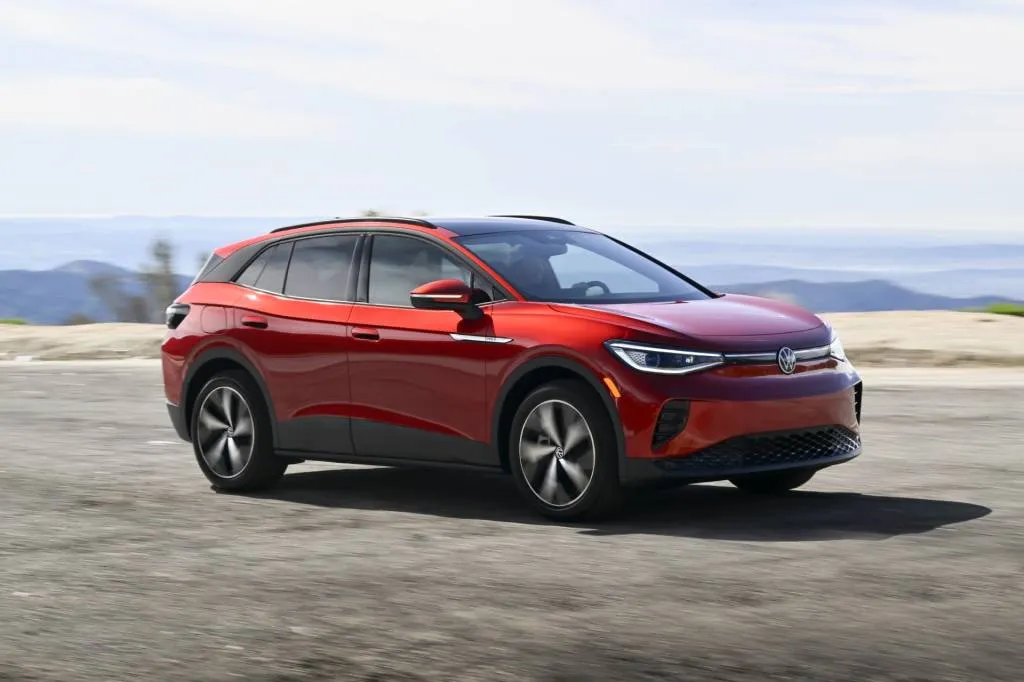
2024 Volkswagen ID.4
Among those not interested in an EV, nearly 6 in 10 cited cost as a primary reason. That echoes previous polls and studies, with the Energy Information Administration (EIA) attributing an EV sales stumble in the first quarter of this year to a dearth of affordable models.
Cost was more of a concern for older adults, the AP noted, who also tend to be less interested in EVs than younger car shoppers, according to previous research. A report from earlier this year underscored that Gen X and Millennials buy the most EVs, and one recent survey suggested that younger U.S. drivers are more open to Chinese EVs as well.
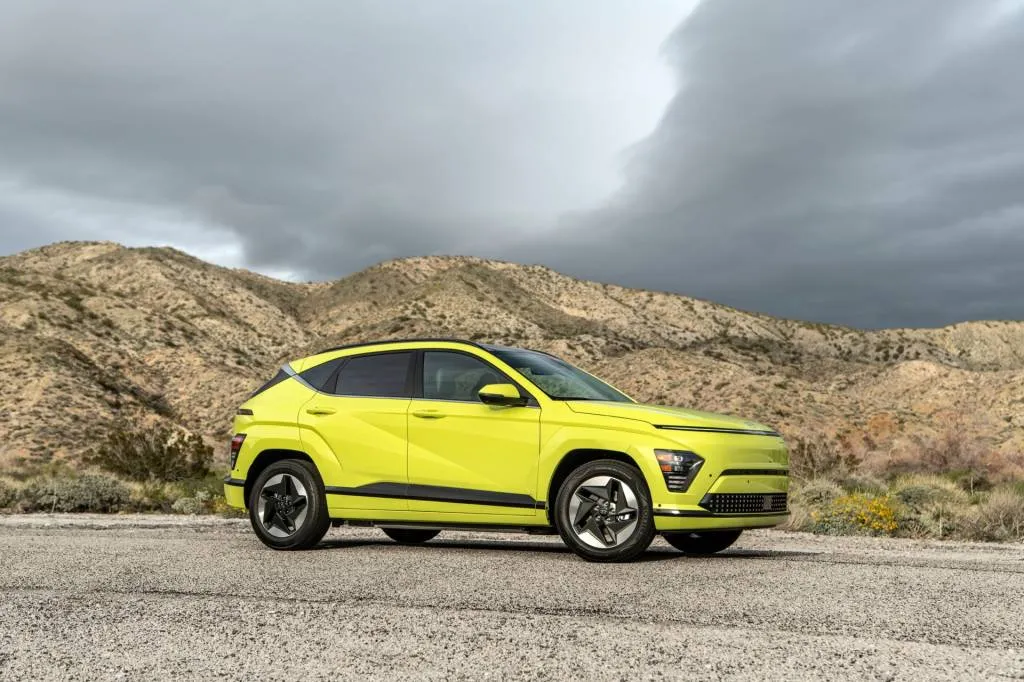
2024 Hyundai Kona Electric
About half of U.S. adults cite range anxiety as a reason not to buy an EV, while about 4 in 10 said long charging times and lack of public charging stations in their areas were strikes against EVs, the AP poll found.
While the industry often cites the figure that 85% of EV drivers charge at home the majority of the time, survey results from ChargeLab emphasize that 3 of 5 EV drivers with home charging use public chargers weekly. The federal government’s National Electric Vehicle Infrastructure (NEVI) effort is accelerating slowly, and Tesla has recently pulled back in its Supercharger push, so whether public infrastructure can truly fulfill EV drivers’ needs remains to be seen.

Used EV prices have plummeted, now stand below ICE prices
Average used EV prices fell below average prices for used gasoline cars in February, and have continued to decrease since then, according to iSeeCars.
Used EV prices stabilized in 2023, after roughly two years of surges, but they’ve fallen significantly so far this year, iSeeCars found in an analysis released earlier this month. That trend is based on surveying posted asking prices for used cars, from a wide range of dealerships and sellers, within the period studied.
Used-car values have dropped regardless of powertrain type, but EVs have seen a much steeper decline, according to iSeeCars. Over the past year, average gasoline car values have decreased 3% to 7%, but average used EV values have decreased between 30% and 39%, the analysis found.
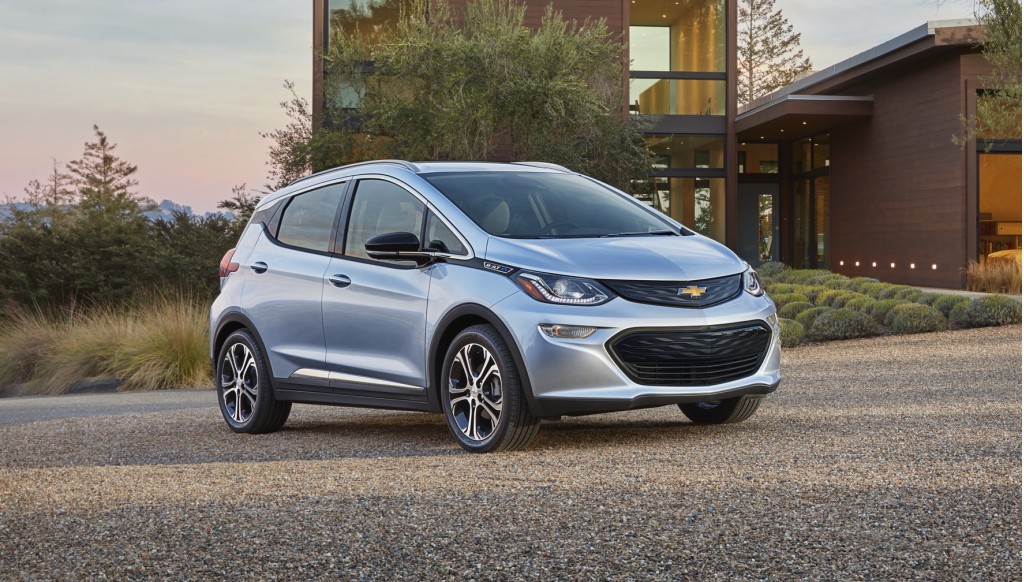
2017 Chevrolet Bolt EV
Used EV prices were around $8,000 higher (or 25%) than average values for used gasoline cars in June 2023, but in May 2024 they were $2,657 (8%) lower than average gasoline car values, per the iSeeCars data.
Some specific models saw bigger losses of value than others. In May, used Jaguar I-Pace prices were 30.1% lower year-over-year—the biggest decrease record. The I-Pace was followed by the Chevrolet Bolt EV (28%), Hyundai Kona Electric (26.5%), Kia Niro EV (24.8%) and Nissan Leaf (24%).
Average used Tesla Model 3 prices also dropped below those of the BMW 3-Series, arguably one of the Model 3’s closest gasoline rivals. In the case of Tesla, decreased values for used examples are likely linked to the volatility of new-Tesla prices, and last year’s abrupt Tesla price cuts.
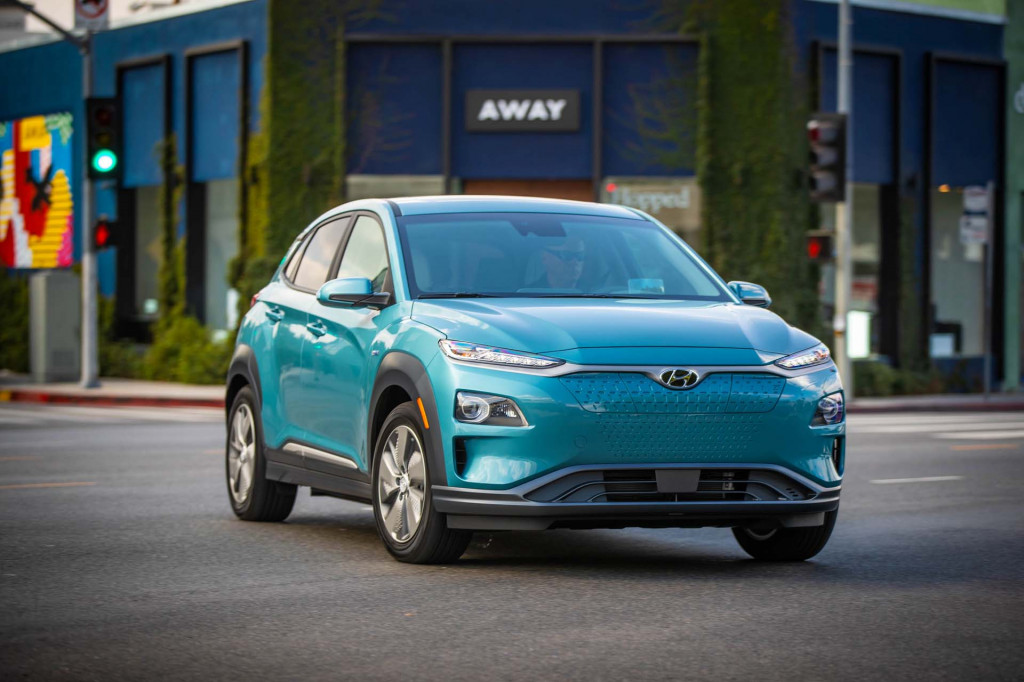
2019 Hyundai Kona Electric
Overall, used EV prices surged in 2021 and peaked in 2022. That’s put them on a downward trajectory since then, to the degree that last year the retail giant CarMax noted that top-selling used EVs for late 2023 and early 2024 were costing up to $5,000 less than a year earlier.
Meanwhile, concerns over new EV cost are at the core of a drop in consumer consideration, according to J.D. Power. Perhaps lower used EV prices will help counteract that.

Review: 2025 McLaren Artura Spider screams with topless plug-in fun
 The McLaren Artura Spider brings a raft of enhancements to the lineup for 2025 The 2025 Artura Spider costs $24,700 more than the coupe McLaren used its race-car knowledge to create a compelling plug-in hybrid supercar Just 48 hours ago Lando Norris skirted in front of George Russell and Max Verstappen in front of my very own eyes at the 2024…

Civic Hybrid and Polestar 3 reviews, $25,000 Jeep EV, Tesla 4680 update: The Week in Reverse
How are BMW and VW using AI in their EVs?
Why are lawmakers pushing back about how EVs figure into fleet efficiency standards?
This is our look back at the Week In Reverse—right here at Green Car Reports—for the week ending June 15, 2024.
This week Green Car Reports provided first impressions of two upcoming models that prioritize efficiency and driving fun. In a 2025 Honda Civic Hybrid review, we found this low-priced, high-mpg model to be a class above the Toyota Corolla Hybrid, with a quieter, punchier, and more pleasant driving experience than the non-hybrid Civic. It’s a great way to get nearly 50 mpg with no compromise. And in a 2025 Polestar 3 review, we found some of the best seats in the automotive universe, although the interface feels a little lost in pale, thin fonts and steering-wheel toggles. It seats five and stands out for ride and handling and overall build quality over the Tesla Model Y Performance, but at more than a $25,000 premium even before the Tesla’s tax credit, it should.
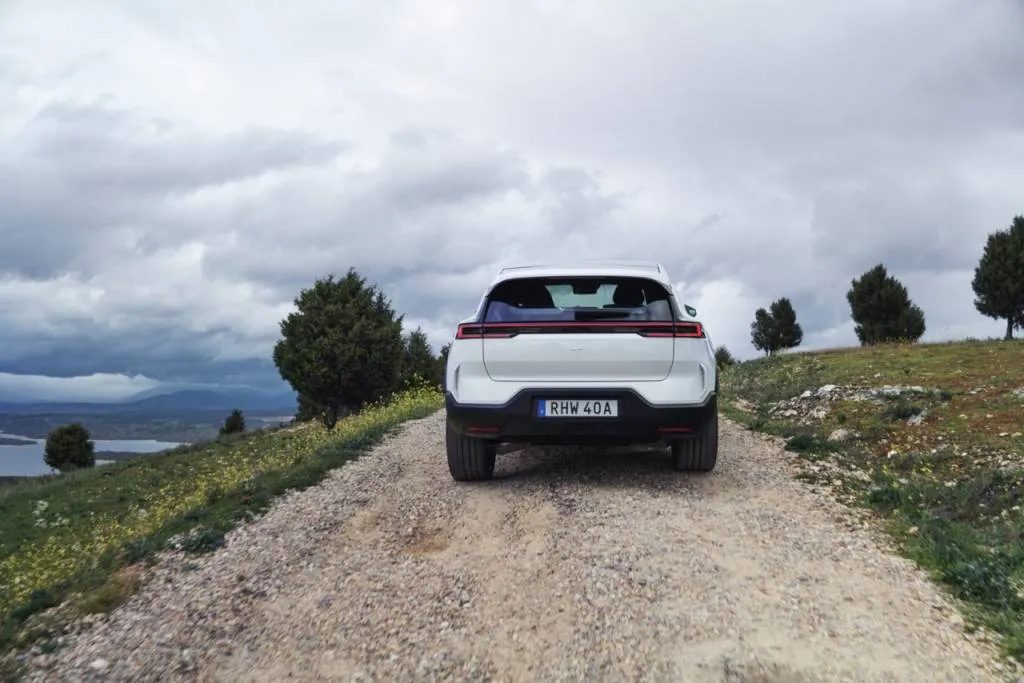
2025 Polestar 3 Performance Pack, test drive, Madrid
A $25,000 electric Jeep is arriving in the U.S. very soon, according to a Stellantis investor presentation, in the form of a 2027 Jeep Renegade EV. And according to CEO Carlos Tavares, the model will use LFP battery cells to help achieve that targeted price.
Chevrolet has lowered the base price of existing Blazer EV LT and RS models for 2025, but there’s a catch. In both cases, features that were previously packaged in have been made optional in 2025 Chevy Blazer EV pricing. And with lower-priced front-wheel-drive LT versions and the high-performance SS still on the way, there will soon be more to the lineup.
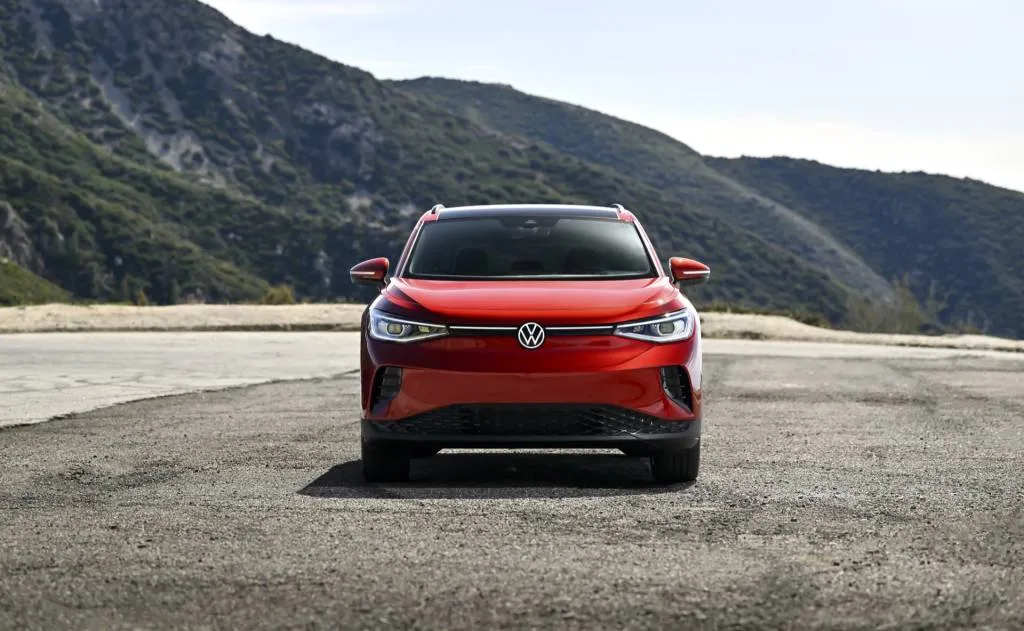
2025 Volkswagen ID.4
Volkswagen has confirmed that the 2025 VW ID.4 will carry over with all of its changes given for 2024—including more power, more driving range, and a vastly improved interface—while more of the brand’s other models will gain its ChatGPT-based digital voice assistant.
A small number of Nissan Ariya EVs are being recalled due to something electric vehicles seldom have—an oil leak. In this case, a manufacturing issue can lead to oil leaks within the drive motors, potentially leading to excess wear. Nissan is replacing the entire drive-motor assembly in just 84 affected vehicles.
The Nissan Leaf has once again lost its $3,750 EV tax credit. While 2024 Nissan Leaf models at the dealership qualify for it, the 2025 Nissan Leaf that’s essentially carried over unchanged at face value does not. In what’s become a rollercoaster ride of eligibility, it’s not the only time this has happened, and Nissan says it’s working with its supplier AESC to recover the incentive on one of the market’s most affordable EVs.
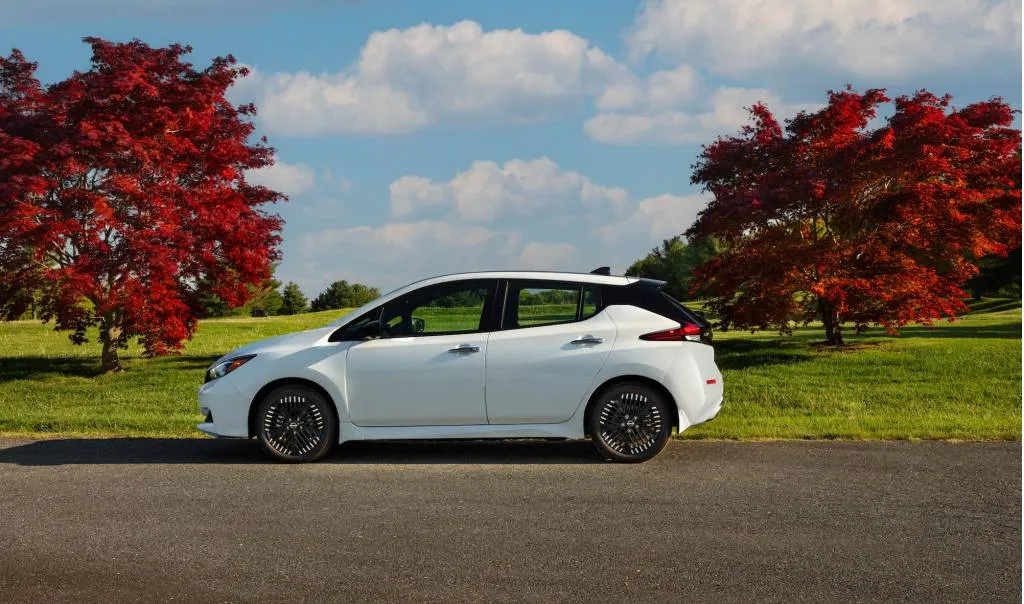
2025 Nissan Leaf
Tesla CEO Elon Musk, at Thursday’s shareholder meeting approving a record pay package, teased three “amazing” EVs in the works, with affordability touted as essential and the Tesla Roadster appearing to be omitted. But he revealed that Tesla still hasn’t achieved the dramatic cost reductions it promised from its 4680 battery cell format that it touted at its 2020 Battery Day. It’s still cheaper for Tesla to buy suppliers’ cells.
Battery leasing has been seen as one solution for making EVs more affordable, but nobody has tried it at scale in the U.S. Honda on Thursday announced a new joint venture with Mitsubishi Corporation that it says will result in more affordable Honda EVs. For now it’s only for Japan, but could a similar scheme lead to an affordable U.S.-bound Honda EV?
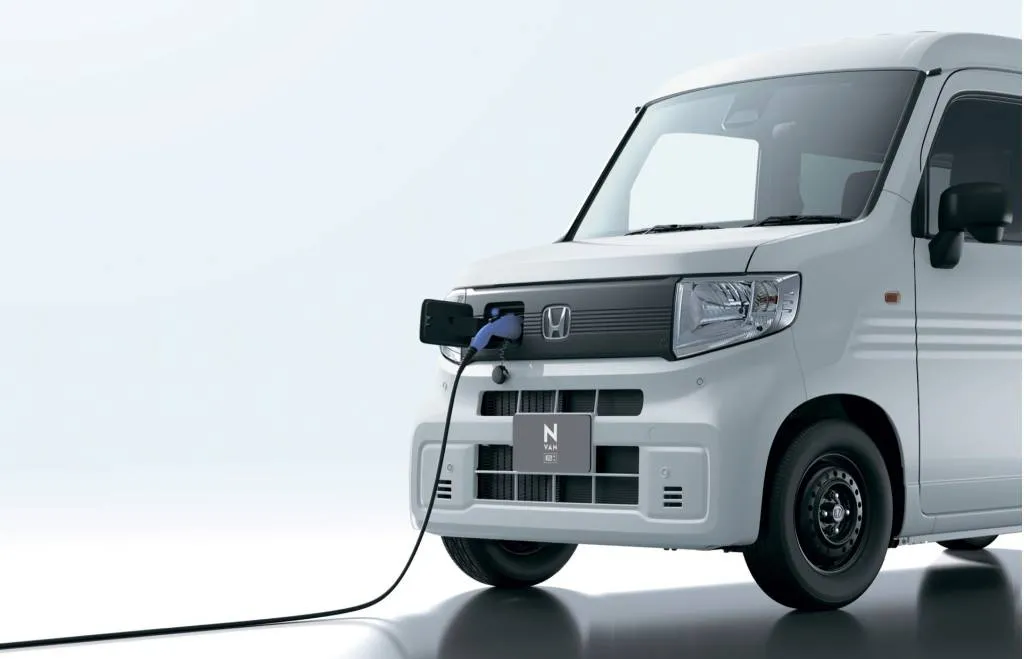
Honda N-VAN e commercial EV
Final fleet efficiency rules for 2027-2031 announced last week by the federal government go easier on mpg targets for trucks and SUVs. That means a projected real-world fleet average of about 38 mpg versus the original 43.5 mpg proposed in July 2023. A recent delay in reforming how EV efficiency is figured vs. gasoline models might also potentially give automakers a bigger boost while making fewer EVs.
Virginia governor Glenn Youngkin also last week confirmed that the state will no longer follow the newest California emissions rules—meaning that it also won’t adopt California’s EV mandate and structure EV sales adoption targets. The ramp-up would put the state on a path requiring 35% of new-vehicle sales to be EVs by 2026, but the change allows more gas-guzzlers to flow to the state’s dealerships.
New survey data suggests that the Tesla Supercharger network may be losing its edge—and that’s before the company’s across-the-board cuts to that operation. The Tesla Supercharger network hasn’t necessarily gotten any worse, according to the recent J.D. Power survey looking at satisfaction with public charging but, simply put, other networks are catching up. And just after Tesla Supercharging plans stalled, Ionna is rising. That’s the EV fast-charging network funded by seven automakers, and it anticipates opening its first U.S. charging stations in 2024, with eventual plans for 20,000 high-power urban and highway-adjacent fast-charging connectors. Ionna says it will support both the Tesla-derived NACS interface its funding automakers will soon adopt, as well as the CCS interface that most EVs are currently being delivered with.
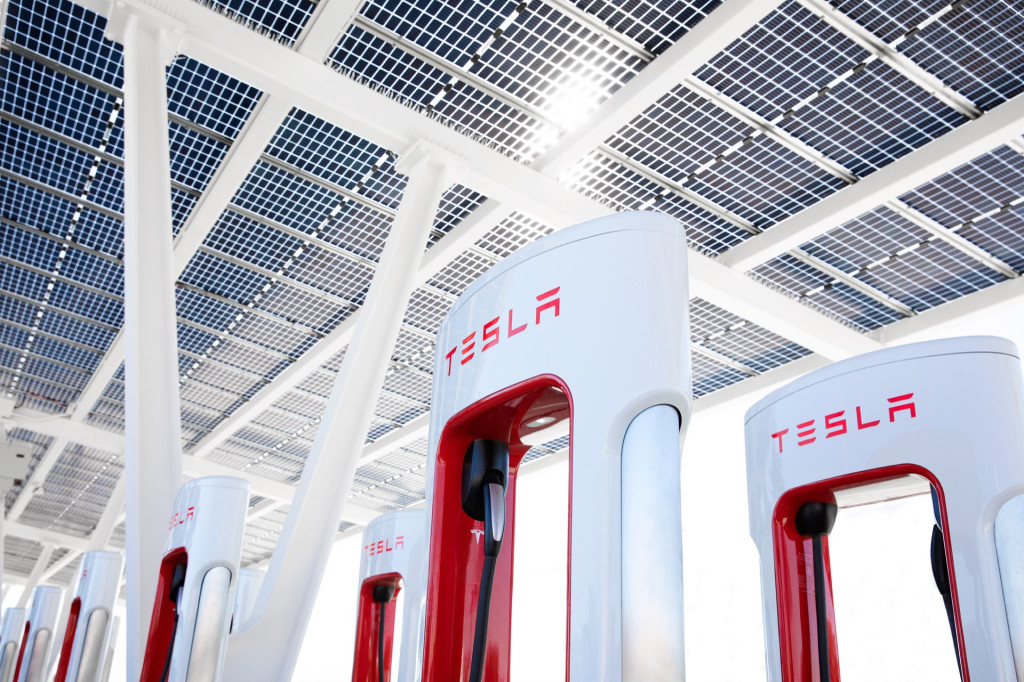
Tesla Supercharger
Porsche has added thousands of ChargePoint EV chargers to its options for those driving its EVs and plug-in hybrids—meaning that the Porsche app now allows access to 75% of compatible U.S. chargers. The expansion, arriving just ahead of Porsche’s expansion of its EV lineup to include the Macan Electric as well as the Taycan, allows integrated payment through Porsche’s app. It includes Level 2 “destination” chargers as well as DC fast-charging connectors.
According to the U.S. Treasury Department, EV buyers in recent months are overwhelmingly opting to claim their federal EV tax credit when they buy the vehicle. On Wednesday it revealed that 90% of eligible EV buyers in 2024 have opted to claim the credit at the point of sale—and 80% of eligible used EV buyers are claiming it that way.
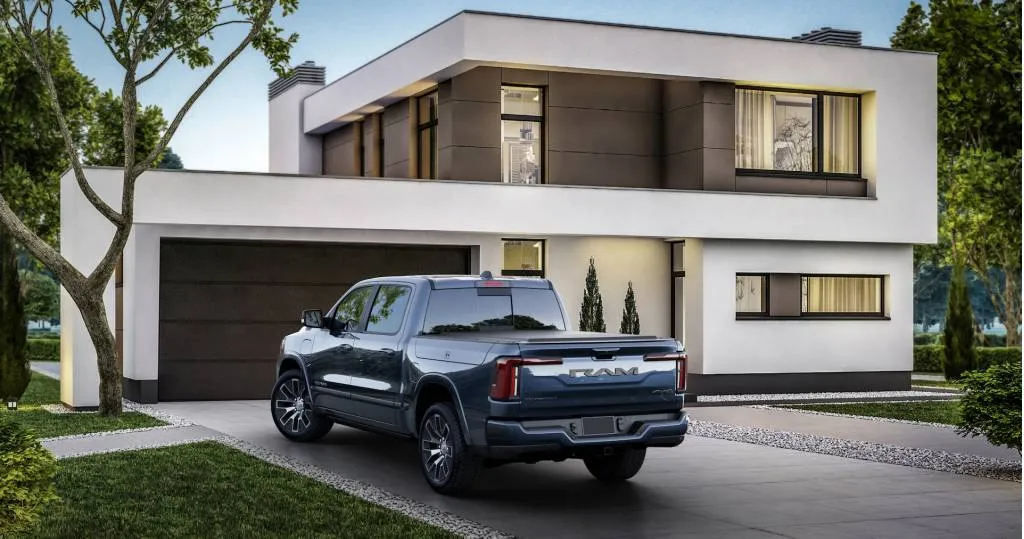
2025 Ram 1500 Ramcharger
With the release of its annual EV sales outlook, Bloomberg New Energy Finance suggests that plug-in hybrids are a wild card for oil demand. With PHEVs making a comeback, and data suggesting they’ll only run 11-54% of their miles in electric mode, if PHEVs are bought instead of EVs, they’ll boost oil demand above current projections. And if they’re pushed into the market to satisfy regulators, will they be plugged in even that much?
A group of Republican Senators are pushing back versus stricter emissions standards expected to lead to more EV sales—by questioning the way EVs are figured into fleet efficiency calculations. Currently they’re given an inflated value that motivates automakers as each EV effectively enables the sale of many gas-guzzlers. So between that and softer future targets introduced last week by the Biden administration, would automakers even want to give those calculations up?
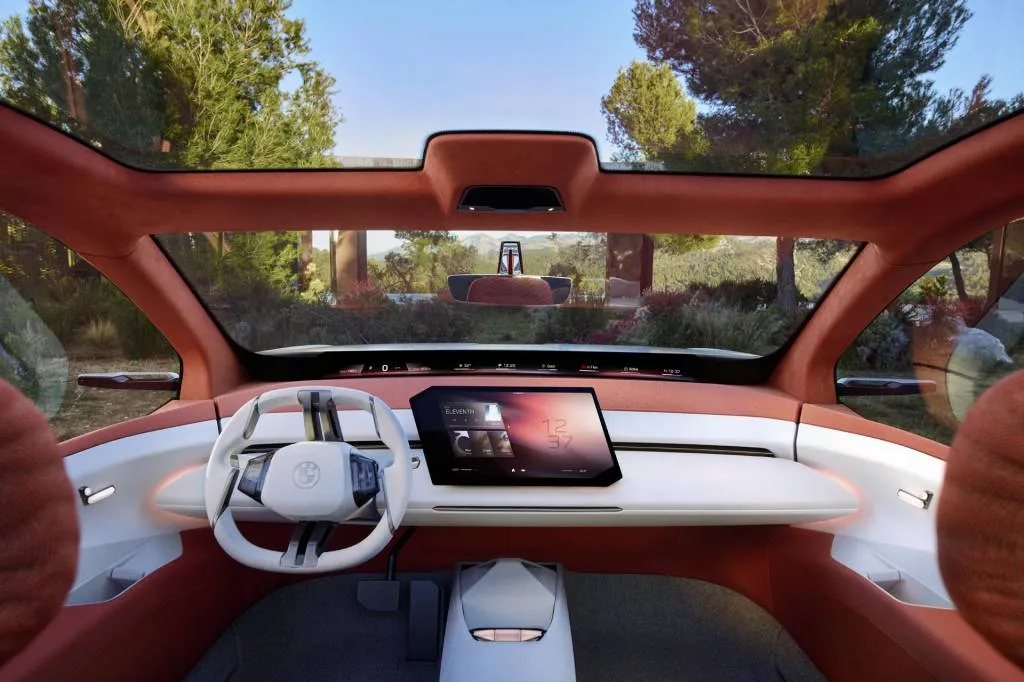
BMW Vision Neue Klasse X concept
And BMW is using AI in its upcoming Neue Klasse EVs—to generate patterns and textures inside, and essentially as a mood board generator that still requires expert inputs from designers or engineers. At what point will some of those human factors drop out?
_______________________________________

Dodge developing active aero airfoil system for Charger Daytona
 Dodge is developing active aerodynamics for its EVs The first Dodge EV to get active aerodynamics might be the Charger Daytona muscle car A patent was filed with the United States Patent and Trademark Office outlining the active aerodynamics Stellantis may add an active aerodynamic feature to the Dodge Charger Daytona, a recent patent filing…

2025 Volvo S90
 What kind of vehicle is the 2025 Volvo S90? What does it compare to? The 90-Series models are Volvo’s top passenger cars, available as either the S90 sedan or the V90 Cross Country wagon. Compare the four-door to the BMW 5-Series and Audi A6, while the wagon squares off against the Audi A6 Allroad and, perhaps, loaded-up versions of the…

Chevron’s Kaustav Sinha explores multiple paths in the energy transition (Episode 255)
The oil company’s director of strategic partnerships details efforts in renewable fuels, hydrogen and carbon capture, examines energy and auto industry synergies, and updates Chevron’s work with Toyota and Cummins.