
Author: EVAI

2024 Toyota Grand Highlander and Lexus TX hybrids recalled, stop-sale issued
 Toyota issued a stop-sale and recall for the 2024 Grand Highlander and Lexus TX The issue stems from the driver-side curtain airbag A solution doesn’t exist, and Toyota expects a remedy by mid-August Consumers looking to buy the 2024 Toyota Grand Highlander hybrid or Lexus TX hybrid can’t. A stop-sale has been issued along with a recall for…

Tesla-powered Hummer H1 EV weighs half as much as GMC Hummer EV
- A restomod Hummer H1 EV with Tesla batteries has entered the chat
- The Hummer H1 EV weighs only about 4,500 pounds
- The Hummer H1 EV is said to have about 300 miles of range from its 75-kwh battery
A Canadian company already established as an EV conversion shop is building an electric Hummer that’s lighter than the one General Motors is currently selling.
North American Electric Vehicles (NAEV) aims to take former military Humvees—the vehicles once sold as the original civilian Hummer H1—and equipping them with secondhand Tesla powertrains to create what it calls the Cyber-Hummer. And it claims this restomod, which it says it will start delivering this summer, weighs 4,500 pounds.
That’s about half the weight of a new GMC Hummer EV and about 2,000 pounds less than the leanest factory-built H1.
NAEV’s initial Executive Edition configuration has a dual-motor all-wheel-drive powertrain producing a claimed 1,000 hp and 1,000 lb-ft of torque, enabling a 0-60 mph time of 2.5 seconds. A 75-kwh battery pack will afford up to 300 miles of range, it claims. The company plans to provide both NACS and CCS charging compatibility.

NAEV Cyber-Hummer
Much of the weight savings come from removal of the stock cast-iron suspension components and geared hubs, as well as the transfer case, transmission, fuel, and exhaust systems—none of which are required with this EV conversion, NAEV founder Jeffrey Kotulak told Green Car Reports.
The stock suspension is replaced with what NAEV calls a “hybrid” independent suspension system including some new in-house components. The Cyber-Hummer still sports 15 inches of ground clearance for off-roading, though, and it rides on all-terrain tires mounted to 20-inch alloy wheels.
NAEV uses secondhand Tesla components, while the Humvees are sourced from surplus auctions, Kotulak said, adding that this use of secondhand vehicles and components is a sustainable choice.

NAEV Cyber-Hummer
With curb weight of less than 6,000 pounds, NAEV’s Hummers can also be registered as Class 1 vehicles with an on-road title, Kotulak noted.
However, as older vehicles designed for military use, these Hummers were not designed to modern standards of safety, occupant protection, or accident avoidance.
That’s the tradeoff for a Hummer that treads lighter than the GMC Hummer EV, which is so heavy and inefficient that it joined gas guzzlers on an American Council for an Energy Efficient Economy (ACEEE) list of “meanest” vehicles for the environment.
The Executive Edition has a starting price of $139,900. NAEV also plans to offer Baja and Commander versions priced at $98,900 and $119,900, respectively. Builds take six months after an order is placed, and aims to build 328 units annually, Kotulak said.

Tesla is purging turn-signal stalks, but owners are adding them back
- Teslas no longer have control stalks…
- …but some owners want stalks back
- Owners have resorted to adding aftermarket parts as replacement
Tesla has removed control stalks from the Model S, Model X, and Model 3, but owners are adding them back with aftermarket parts.
As discovered by InsideEVs, aftermarket stalks are available for about $400, and there are even some YouTube videos explaining how to install them. As one video explains, this process is a bit involved. It involves removing the steering wheel to install the stalks, as well as connecting wires to controllers in the center console, requiring additional disassembly.
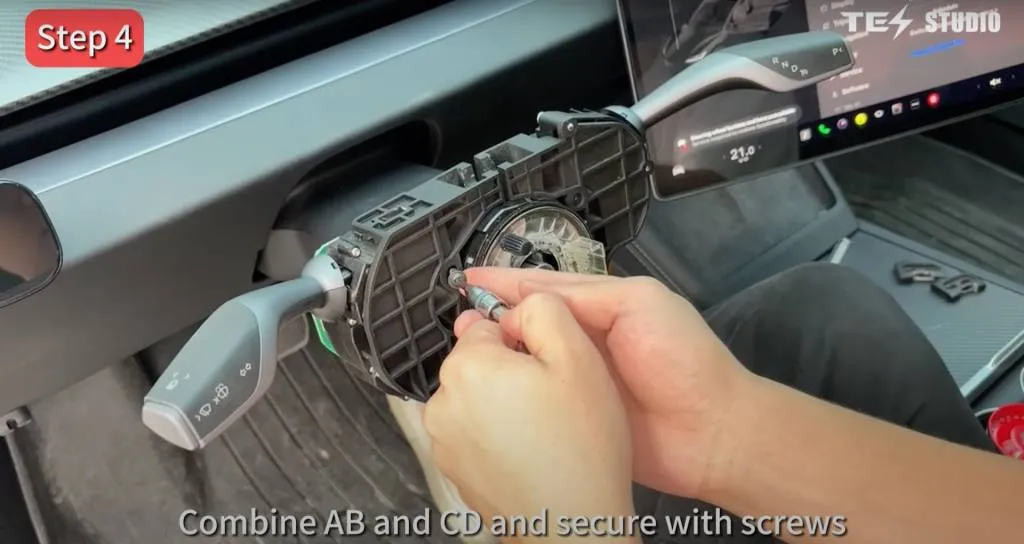
Installation of aftermarket stalks in a Tesla Model 3 Highland (via TesStudio)
That video deals with installation of aftermarket stalks in the refreshed Model 3 that went on sale in the U.S. earlier this year. Known as the Highland, this version also does away with the shift lever in addition to control stalks. But the Model 3 isn’t the only Tesla that owners are tinkering with to add back analog controls.
InsideEVs notes that Model S and Model X owners devised a workaround in 2021 using the clock spring, stalks, and Steering Column Control Module (SCCM) from the then-current Model 3. This modification, which required special software to allow the Model 3 and Model S/Model X hardware to communicate, came after the steering yoke that Consumer Reports called a pain to use—and possibly a safety concern.
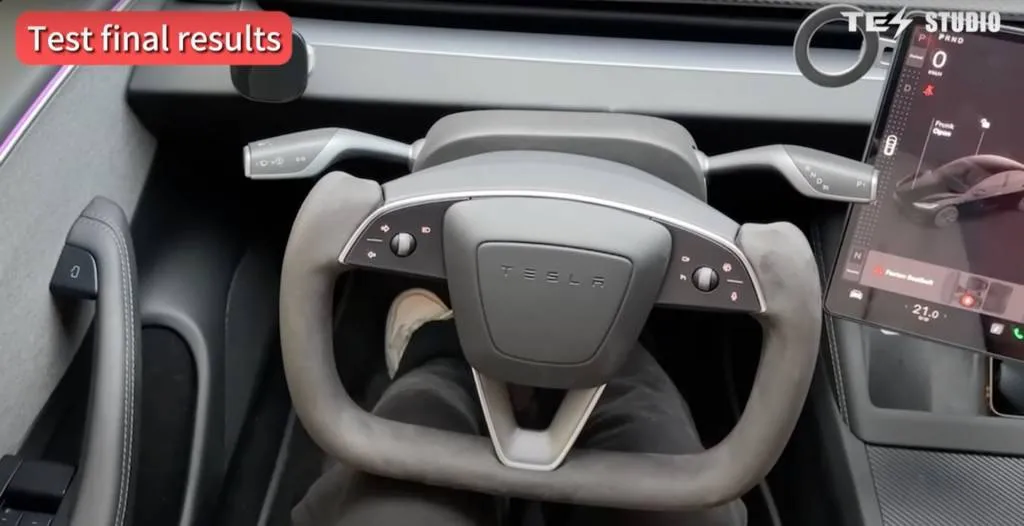
Installation of aftermarket stalks in a Tesla Model 3 Highland (via TesStudio)
Multiple studies have underscored that EVs are more trouble-prone than other vehicle types not necessarily because of their powertrains but often because of overly complex interfaces that automakers choose to adopt with them.
While none have been quite as zealous as Tesla in removing analog controls and familiar interfaces, automakers have a tendency to push high-tech features on EV customers, but in this case it seems Tesla customers are pushing back.

Dealership finance offices can still work while CDK is down
The temporary shutdown of the car dealership management system CDK following cyberattacks complicates life for auto retailers’ finance and insurance offices. However, it’s not insurmountable, according to experts.

Bugatti Tourbillon marks new era with 1,800-hp V-16 plug-in hybrid powertrain
 The Bugatti Tourbillon marks a new era for hypercars as it supersedes the Chiron Bugatti said the Tourbillon costs about $4 million The Tourbillon has a V-16 plug-in hybrid powertrain with 1,800 hp Bugatti on Thursday unveiled the successor to the Chiron, a V-16-powered plug-in hybrid hypercar called the Tourbillon. Instead of naming the new…

2025 BMW M5 debuts June 26, teaser shows off illuminated grille
 The 2025 BMW M5 will debut on June 26 Wagon and sedan versions are expected The 2025 BMW M5’s front end will be defined by an illuminated grille BMW took to social media on Wednesday to confirm the debut of a new M5 will take place on June 26. Together with the confirmation, BMW posted a teaser photo that reveals little apart from the car’s…

2025 Rivian R1T to run Pikes Peak Hill Climb with 4 motors, 1,025 hp
 Rivian will run the R1T at the 2024 Pikes Peak International Hill Climb The R1T will be the heavily updated 2025 model with four motors and 1,025 hp Rivian set a record at last year’s hill climb and The 102nd running of the Pikes Peak International Hill Climb gets underway in Colorado this Sunday, and the updated 2025 Rivian R1T electric truck…

Volvo PHEV review, EV insurance cost, cable theft, Big Oil pushback: Today’s Car News
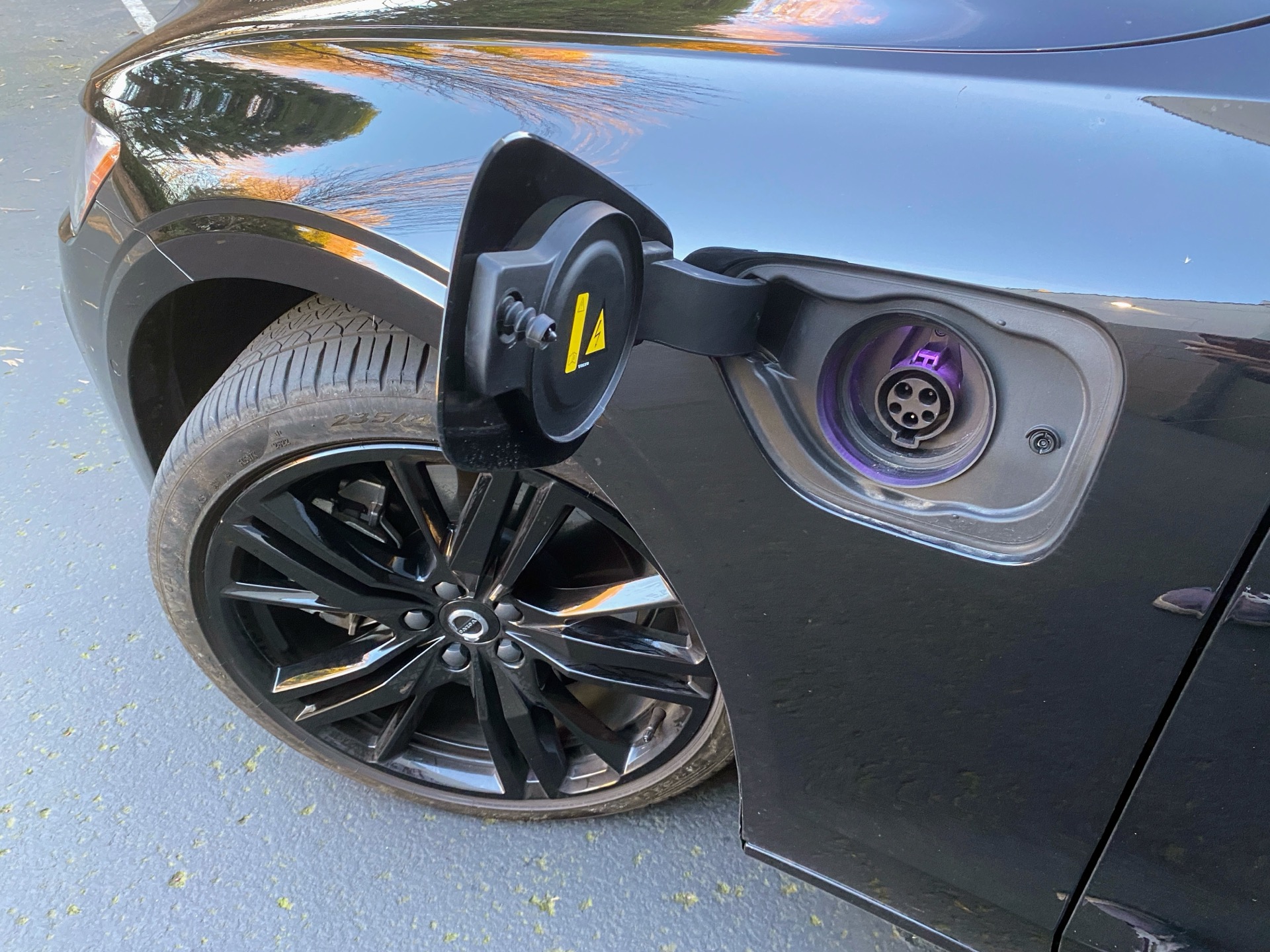
EVs still cost more to insure. Thieves are looking at fat charging cables as a fat paycheck (but they’re not). The oil industry is speaking up against EPA standards—and filing court cases. And we plug in Volvo’s plug-in hybrid sedan and see why it’s pointing to EVs. This and more, here at Green Car Reports.
In a review of the Volvo S60 Recharge plug-in hybrid, Green Car Reports found this highest-mpg, highest-mileage PHEV from Volvo to be a little confused about its hybrid identity but more electric when it counts compared to previous PHEVs from the brand.
The oil industry challenged EPA vehicle standards this past week—standards that had already been softened for light trucks versus their earlier proposal. Spurred by rules that emphasize plug-in vehicles and mostly ignore ethanol, the American Petroleum Institute says the standards amount to an electric vehicle mandate (it’s technically not). It hadn’t pushed back as strongly vs. the last round of standards, so its timing in an election year is likely no mistake.
More data has rolled in from the insurance industry, unfortunately underscoring a trend that makes electric vehicle ownership a little more complicated: EVs are more expensive to insure. Why? In its latest risk report looking at calendar-year 2023, LexisNexis doesn’t point to particulars but says EVs have a 17% higher claim frequency and 34% higher claim severity (by cost) versus “traditional segments.”
And the fat cables on commercial EV chargers are becoming a magnet for thieves, according to a recent AP report looking at crime statistics and checking in with charging networks. That’s left EV drivers frustrated and charging companies with big repair bills. It costs about $1,000 to replace each cable that might ultimately contain $15 of hard-to-extract copper.
_________________________________

Report: Fat public EV charging cables are a magnet for thieves
Copper remains lucrative for thieves, enough that public EV charging cables are now a target, reports the Associated Press.
Charging cables contain large amounts of copper, prices for which are now at record highs. And charging-station operators are reporting increased instances of cut cables and thefts, according to the AP.
Two years ago, Electrify America noted a cut cable at one of its stations about every six months. Through May of this year, the number of reported cut cables reach 129—four more than in all of 2023, according to the report. At one Seattle charging station, cables were cut six times in the past year, Electrify America vice president of operations Anthony Lambkin told the AP.
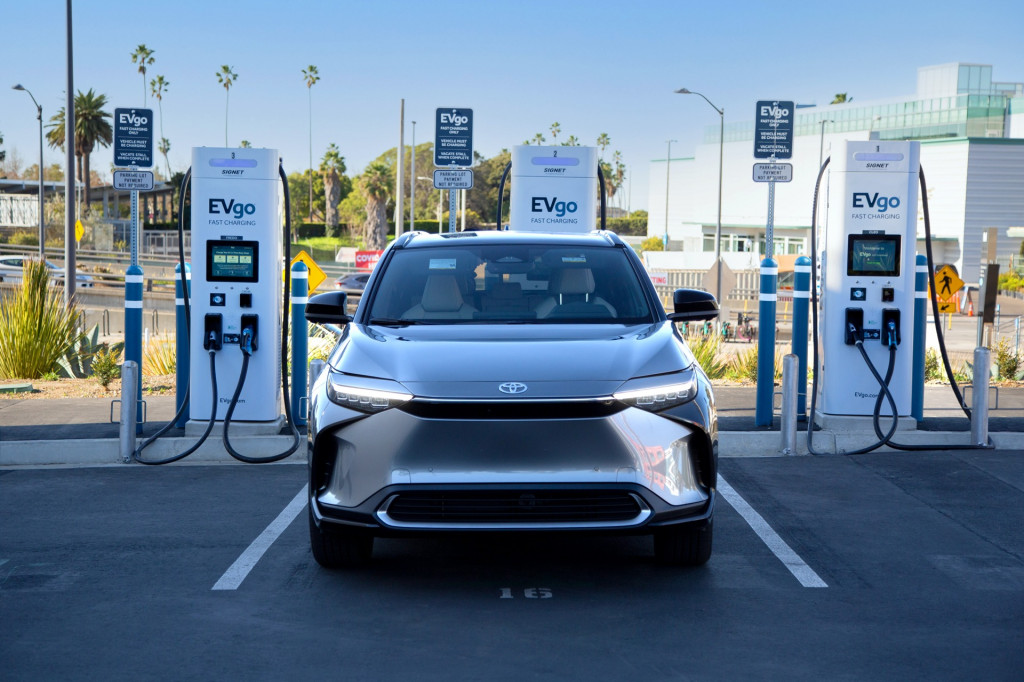
2023 Toyota bZ4X at EVgo charging station
After the report was shared by the AP’s official account on X (formerly Twitter), Electrify America reposted it, adding that “cable theft across the electric vehicle (EV) charging industry is on the rise.” The company said it is “committed to cooperating with law enforcement to swiftly address this issue.”
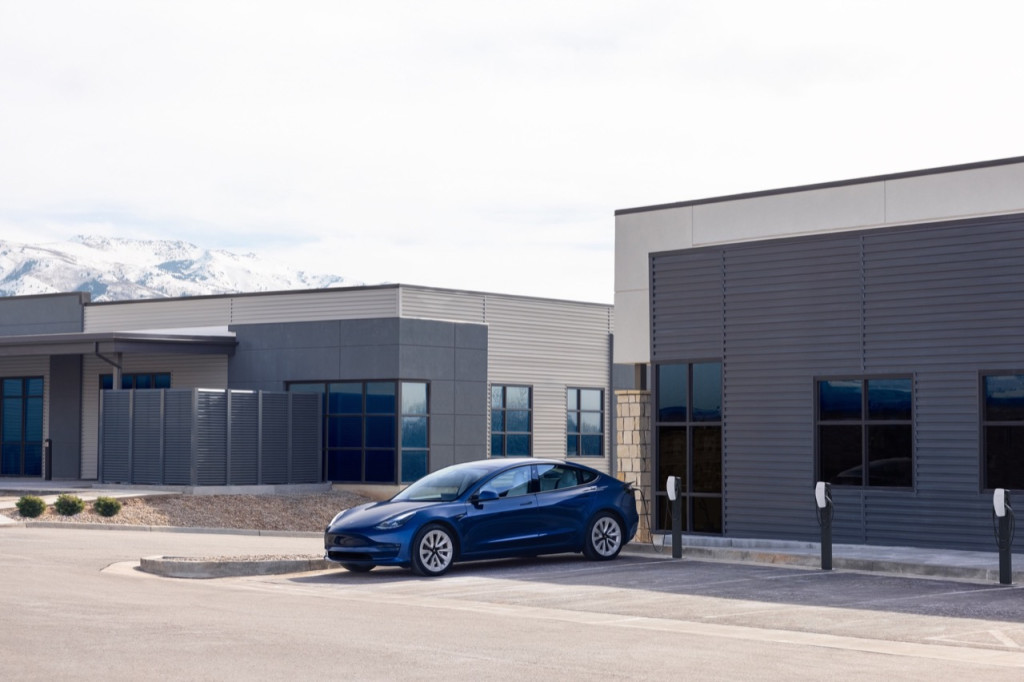
Flo and EVgo also reported a rise in thefts, and Tesla charging stations have been struck by copper thieves as well, according to the AP report. At one Houston-area Tesla station, thieves stole 18 of 19 charging cables, local police told the AP.
Copper prices hit a record high of nearly $5.20 in late May (up about 25% from a year ago), and analysts expect further increases, according to the AP. Yet charging companies said there isn’t much copper in their cables—perhaps $15 to $20 per cable—and what metal there is can be difficult to extract. That metal often ends up at scrap yards, which often can’t tell it was extracting from a vandalized charging cable, according to the report.
Tesla charging
In many respects, it’s for the same reason that hybrids became a target for thieves several years ago—because their catalytic converters included higher amounts of platinum, rhodium, and palladium to accommodate the frequent starts of their engines. Prior to that, Prius owners also needed to worry about battery theft itself.
Charging-station operators are left with frustrated EV drivers and big repair bills. Minneapolis has paid $1,000 to replace just one cable at its city-owned charging stations after they were vandalized, according to the report.
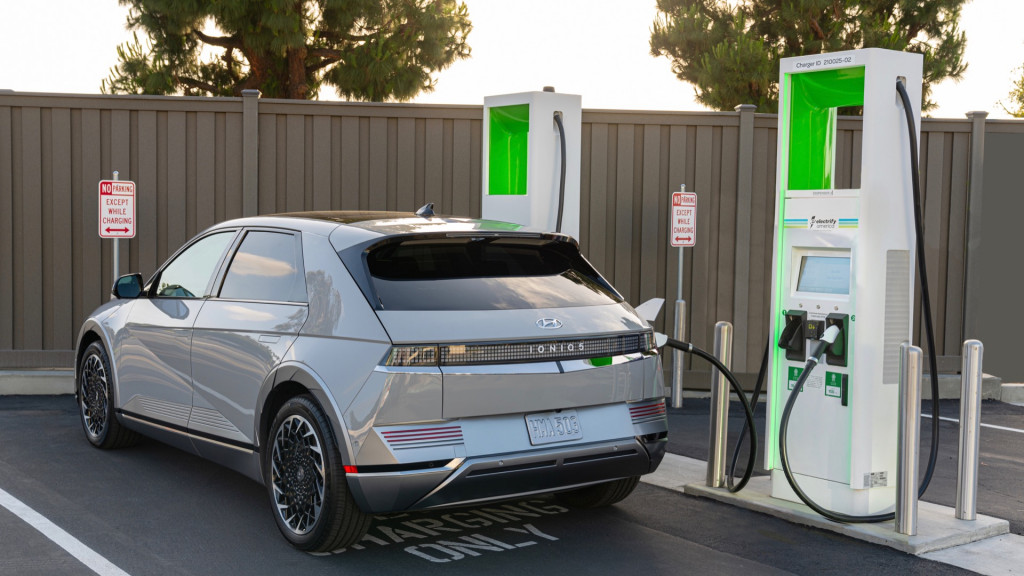
2022 Hyundai IONIQ 5 at Electrify America DC fast-charging station
For now, charging companies and police are taking some steps to guard against cable theft. Electrify America is installing more security cameras, and Houston police are spending more time plying scrap yards for stolen copper, according to the report. But technological changes could also help.
Higher-power 800-volt charging means thinner cables without the same cooling needs, so at least at the charger and cable level it helps cut costs. Charging companies have been aiming to provide faster charging without bulkier cables, involving some innovative cooling methods. Wireless charging could also lessen the need for bulky copper cables, but it’s expensive.