
Author: EVAI

Steve Kiefer on eradicating the scourge of distracted driving (Episode 256)
Ahead of the July 4th holiday, historically a deadly date on U.S. roads, the Kiefer Foundation chairman details the steps that tech companies, automakers, lawmakers and individual drivers can all take to stop distracted driving and improve traffic safety.
World’s biggest suppliers are rethinking where, how to make parts
Revenue at the world’s largest suppliers largely grew in 2023 from a year earlier as the supply chain chaos of the post-COVID global economy began to subside.

Using VIN numbers to check car accident history
 When purchasing a used car, experts say it’s best to spend a few dollars to obtain a vehicle history report. Most dealers will run a vehicle history report for used cars, which will be provided to potential buyers. However, if you’re shopping for a used car from a private party, or at a dealership that does not provide history reports…

Ferrari plots first EV—for $500,000 or more
- Ferrari’s first EV due in late 2025
- Production to take place at new “e-building” plant
- May not be a traditional supercar
It was only a decade ago that Ferrari was vehemently against launching an electric car, but the automaker known for its loud gas engines has been working on one for several years and plans to reveal it in late 2025.
It is expected be priced at the high end of Ferrari’s pricing spectrum, with a source revealing to Reuters that the starting price will be 500,000 euros (approximately $535,000).
That will make it more expensive than the SF90 Stradale supercar and Purosangue SUV, which are Ferrari’s priciest non-limited-production models. It will also make it considerably more expensive than the average transaction price for a Ferrari, which according to Reuters was about 350,000 euros in the first quarter of 2024, including options.
If accurate, it means Ferrari won’t rely on sharp pricing to entice buyers to give up the emotional sound of its gas engines. Instead it may offer advanced technology like axial-flux motors, in-wheel motors, and sound generators.
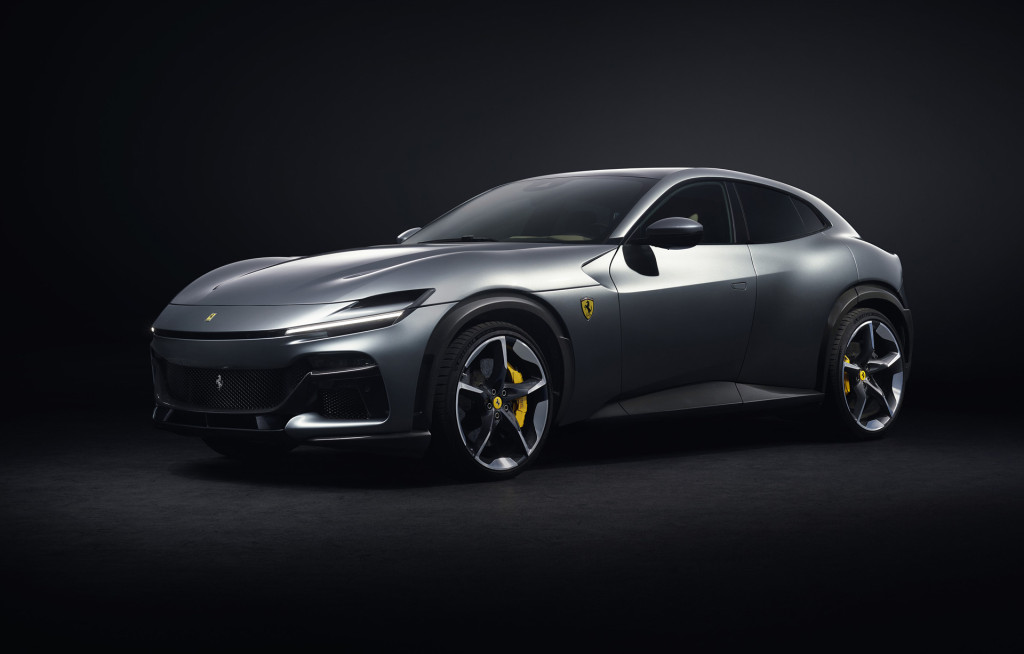
Ferrari Purosangue
Ferrari hasn’t said what form the car will take, and there are rumors it may be something closer to the Purosangue than one of the automaker’s traditional supercar models. According to Reuters’ source, Ferrari has a second electric car already in development, albeit still at an early stage.
Ferrari will build its electric cars at a new plant referred to as the “e-building” by CEO Benedetto Vigna. Located adjacent to the current plant at the automaker’s Maranello headquarters, the new plant is expected to come online this week, initially to build some gas models in addition to electric motors, inverters, and batteries for plug-in hybrid powertrains. Volume production of EVs isn’t expected to start at the site until early 2026.
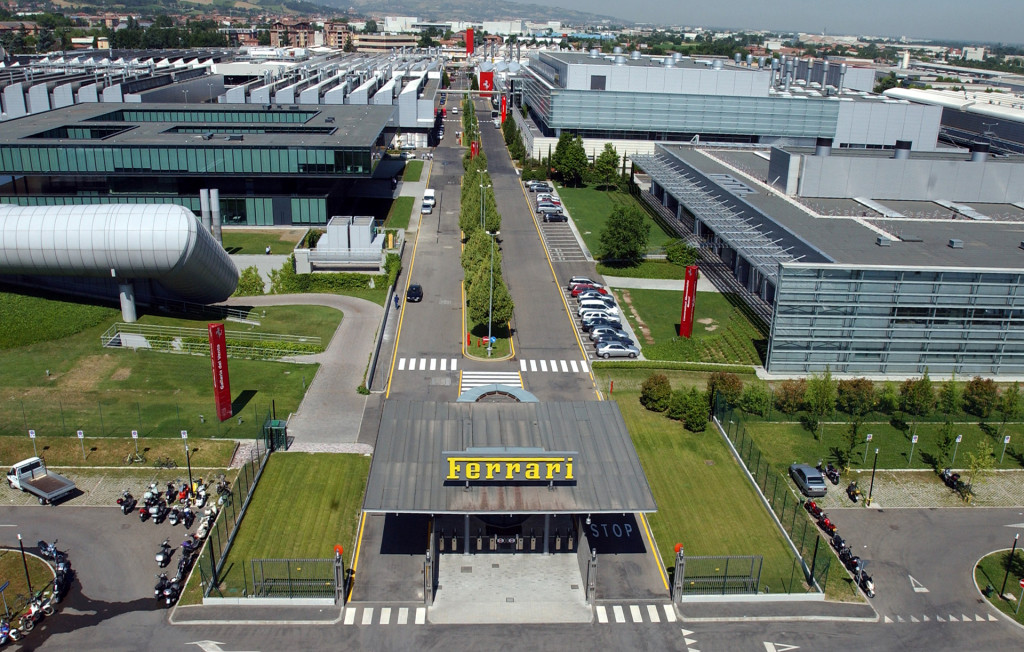
Ferrari plant in Maranello, Italy
Similar to its approach with gas powertrains, Ferrari intends to develop its own electric motors, inverters, and batteries, aiming for industry-leading weight and power density.
The automaker will work with partners in some areas, one of which is leading battery supplier SK On. The two already have a deal for the supply of batteries going in Ferrari’s existing plug-in hybrid models, and in March they announced plans to explore new possibilities in the area of battery cell technology.

Updated 2025 Audi RS 3 sets new Nürburgring lap record
 The 2025 Audi RS 3 set the compact car Nürburgring lap record The RS 3 gets a refresh for 2025 with mild design tweaks Audi confirmed the updated 2025 RS 3 will retain the turbocharged 2.5-liter inline-5 The 2025 Audi RS 3 hasn’t been revealed yet and it’s already set a lap record at the Nürburgring. On Friday, Audi announced that its…
Top 5 stories of the week: CDK cyberattack; Fisker bankruptcy
A quick look at the top automotive stories of the week as determined by reader interest.

BMW M boss: Electric M3 will “beat everything”
 An electric BMW M3 is in the works Some future electric M cars will be based on BMW’s Neue Klasse platform BMW’s M boss, Frank van Meel, said the electric M3, presumed to be called i3 M, “will beat everything” BMW is working on a new generation of electric vehicles, known as the Neue Klasse, and some of these will be the basis for the first…

Reality check: Living with the 2024 GMC Hummer EV SUV
 2024 GMC Hummer EV SUV might be an off-road hit, but it’s a suburban pain As tested, the GMC Hummer EV 3X SUV cost $118,205 Rear-wheel steering makes U-turns simple, but fitting in is hard I’ve marveled at the off-road majesty of the GMC Hummer EV SUV in Moab, and appreciated its conspicuous conscription in last year’s Napa…

2025 BMW X5 Silver Anniversary Edition celebrates 25 years of BMW SUVs
 BMW’s celebrating the X5 SUV’s 25th anniversary A 2025 BMW X5 Silver Anniversary Edition marks the occasion, about 1,000 units will be made The X5 has been produced in Spartanburg, South Carolina, since its inception BMW on Friday revealed the 2025 X5 Silver Anniversary Edition to mark 25 years since the first X5 rolled off the production line at…