
Author: EVAI

2025 Kia Carnival minivan starts at $37,895, hybrid at $41,895
 The new 2025 Kia Carnival hybrid costs $2,000 more than a similarly equipped Carnival LXS The 2025 Kia Carnival hybrid costs between $41,895 and $53,395 The hybrid joins the Toyota Sienna and Chrysler Pacifica, leaving only the Honda Odyssey without a hybrid The redesigned 2025 Kia Carnival minivan arrives with a new look, fresh tech, a first-ever…

2025 Kia Carnival Hybrid minivan costs at least $41,895
 Gas-electric Kia Carnival debuts for 2025 Powertrain delivers a net 242 hp Three levels of brake regeneration are controlled by shift paddles Kia on Monday announced prices for the new hybrid version of its Carnival minivan. The 2025 Kia Carnival Hybrid starts at $41,895 (including the mandatory $1,395 destination charge) for the base LXS grade…


Do EVs need to simulate gear shifts? BMW and Hyundai think so
- Hyundai and BMW think consumers want EVs to simulate shift points
- Hyundai already sells the Ioniq 5 N, which is a sporty EV featuring fake shift points
- BMW’s now working on simulating gearshifts for its future EVs
The 2025 Hyundai Ioniq 5 N brought simulated gear shifts to a production EV. Now it appears BMW is working on something similar.
In an interview with Top Gear (via BMW Blog), Frank van Meel, the boss of BMW’s M performance division, said he liked Hyundai’s approach, adding that BMW is also working on simulated gearshifts. Most EVs lack multi-speed transmissions, but simulating them in a performance car could be useful for providing feedback to the driver, van Meel suggested.
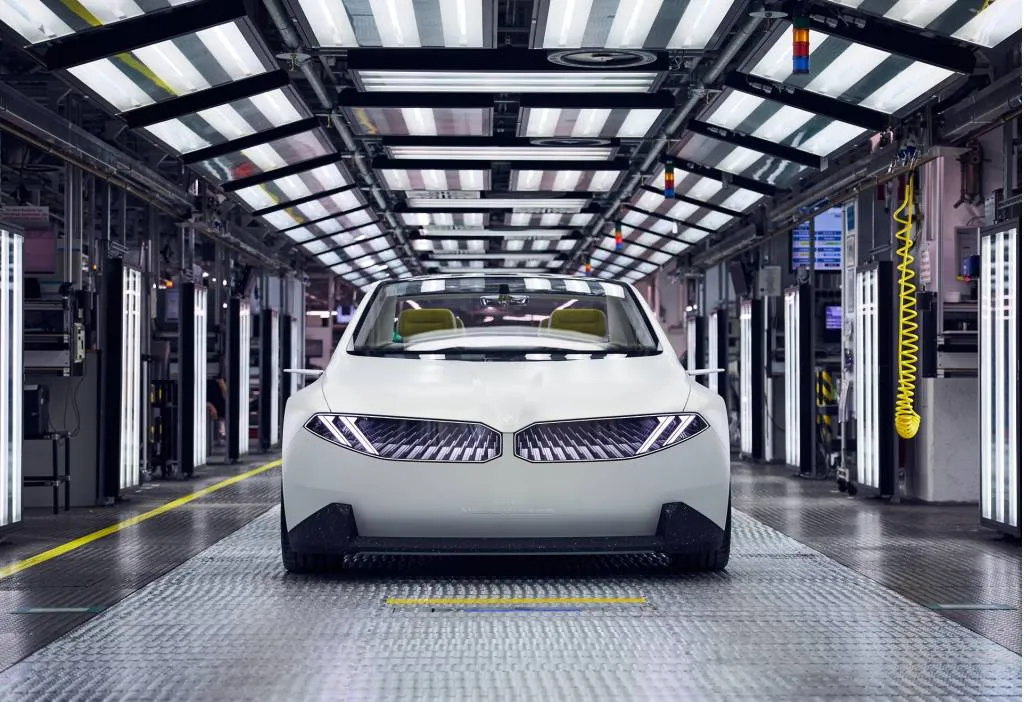
BMW Vision Neue Klasse concept
“In a pure EV with one gear, no sound and no emotion, you don’t know if you’re doing 125, 150, or whatever,” van Meel told Top Gear. “You need a solution for that.” He also said BMW M has been working on simulated gearshifts “for some years already” and has developed “some very interesting approaches.”
In a similar vein, BMW M is considering fake engine noises synced with a driver’s inputs, according to van Meel. That’s also something Hyundai has done with the Ioniq 5 N, which replicates the snaps, crackles, and pops of the gasoline Elantra N. Toyota and Dodge have developed simulated gearshifts in forthcoming EVs, as well. As long as they sound convincing, the BMW M boss doesn’t see a problem with this.
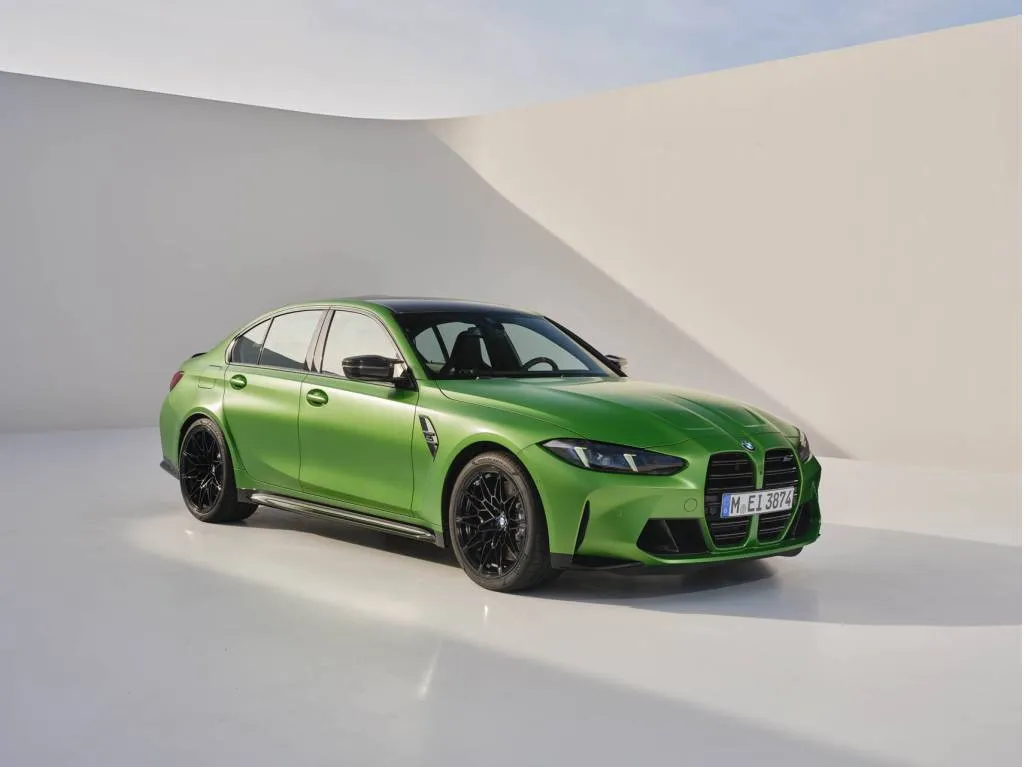
2025 BMW M3
“We wouldn’t do a fake supercar or spaceship noise,” van Meel said, adding that while he didn’t think the artificial engine noises in the Ioniq 5 N sounded realistic, he liked the way Hyundai thinks.
This comes after van Meel, in a separate interview, said BMW M is developing an electric version of the M3 based on its next-generation Neue Klasse platform that will “beat everything.” Whether it will do so with simulated shifts and engine noises remains to be seen.

EVs dominate 2024 Pikes Peak Hill Climb, preview next-gen motorsports
- Annual Pikes Peak run took EVs to the top of the 14,115-foot summit
- Ford’s F-150 Lightning SuperTruck set this year’s pace
- Hyundai, Rivian also raced versions of the Ioniq 5 and R1 vehicles, respectively
EVs had a strong showing at the 2024 Pikes Peak International Hill Climb, showing the potential for electric powertrains in motorsports.
This is not the first time EVs have competed at Pikes Peak, an annual contest in which vehicles make timed runs up the 12.5-mile road to the 14,115 summit of that Colorado mountain. But they dominated this year, with French racing driver Romain Dumas setting the fastest time of 8:53.533 in the wild Ford F-150 Lightning SuperTruck.
The SuperTruck is a one-off demonstrator fitted with a tri-motor powertrain that, for Pikes Peak, was tuned to produce 1,600 hp. The truck was also fitted with an aerodynamics package generating a claimed 6,000 pounds of downforce at 150 mph that effectively erased any resemblance between the SuperTruck and a stock Lightning.
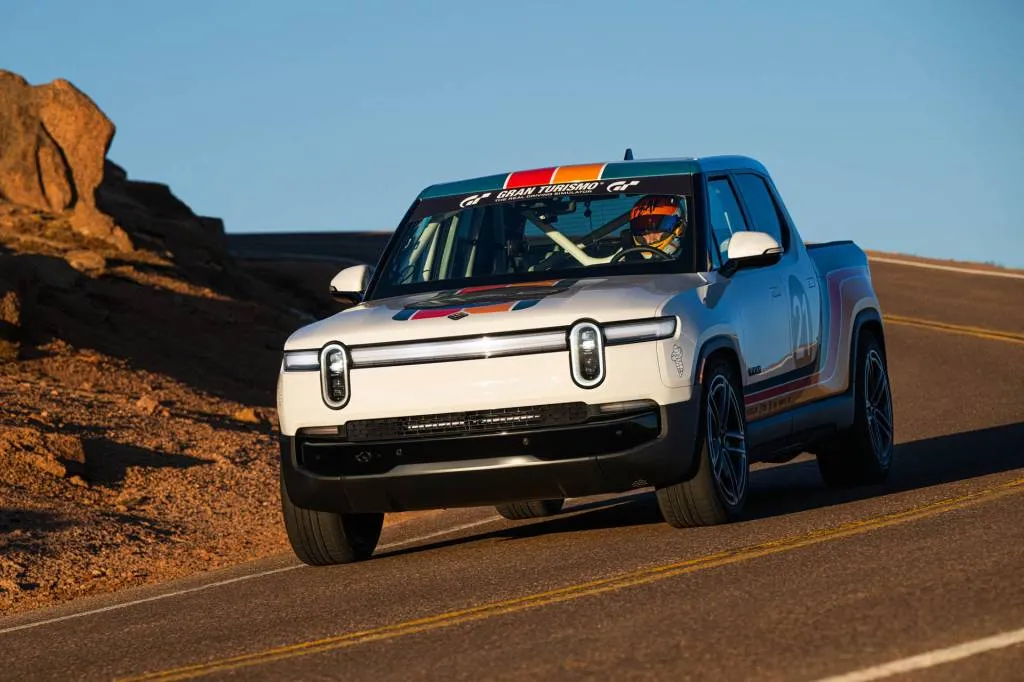
2025 Rivian R1T Quad-Motor at Pikes Peak
Extensive aerodynamic aids are necessary at Pikes Peak because the thinner air at altitude lessens the effectiveness of spoilers, splitters, diffusers and other parts that generate downforce, which pushes the vehicle into the racing surface to create more grip. Less dense air also impacts oxygen-breathing internal-combustion engines, but not electric motors.
Dumas also holds the Pikes Peak overall record of 7:57.148, which he set in 2018 in the Volkswagen ID.R—another one-off EV demonstrator. Dumas also drove the similar Ford SuperVan 4.2 at Pikes Peak in 2023, setting a time of 8:47.682. Ford said it used lessons from the SuperVan to develop the SuperTruck.
Overall victory isn’t the only goal for Pikes Peak competitors. Gardner Nichols completed the course in 10:53.883 in a 2025 Rivian R1T, beating the time he set last year in a Rivian by 30 seconds and setting a record for fastest production truck. For the 2025 model year, both the R1T and its R1S SUV sibling have been revamped to boost efficiency and comfort.

Hyundai Ioniq 5 N TA Spec at 2024 Pikes Peak International Hill Climb
Hyundai, meanwhile, deployed both a stock 2025 Ioniq 5 N and two modified TA (Time Attack Spec) versions. The stock Ioniq 5 N was driven by Pikes Peak rookie Ron Zaras, who managed a 10:49.267 time and set a record for a production SUV, which was how the Ioniq 5 N was classified for the purposes of this event.
The TA Spec cars featured big rear wings, racing-specific shock absorbers, brakes, and tires, and software changes to increase power output. Rally driver Dani Sordo recorded a 9:30.852 time in one car, winning the exhibition class. Veteran racing driver Randy Pobst set a 9:55.551 time in the other car.
EVs also race in dedicated series such as Formula E and Extreme E. But the Pikes Peak hill climb shows that EVs can also race alongside internal combustion—and win.

BMW nixes Northvolt battery deal
- BMW cancels deal with Swedish EV battery supplier worth $2 billion
- Northvolt, based in Sweden, still has deals with Volvo and Volkswagen Group
- BMW has shifted to more energy-dense cylindrical battery cells
BMW has canceled a contract worth roughly $2 billion for EV battery cells from Swedish firm Northvolt, Reuters reported Thursday.
German media, including Manager magazine, initially reported that Northvolt could not deliver on time on a supply contract signed in 2020 and worth $2.3 billion at the time. That contract specified that Northvolt would begin making electric-car batteries for BMW in 2024.
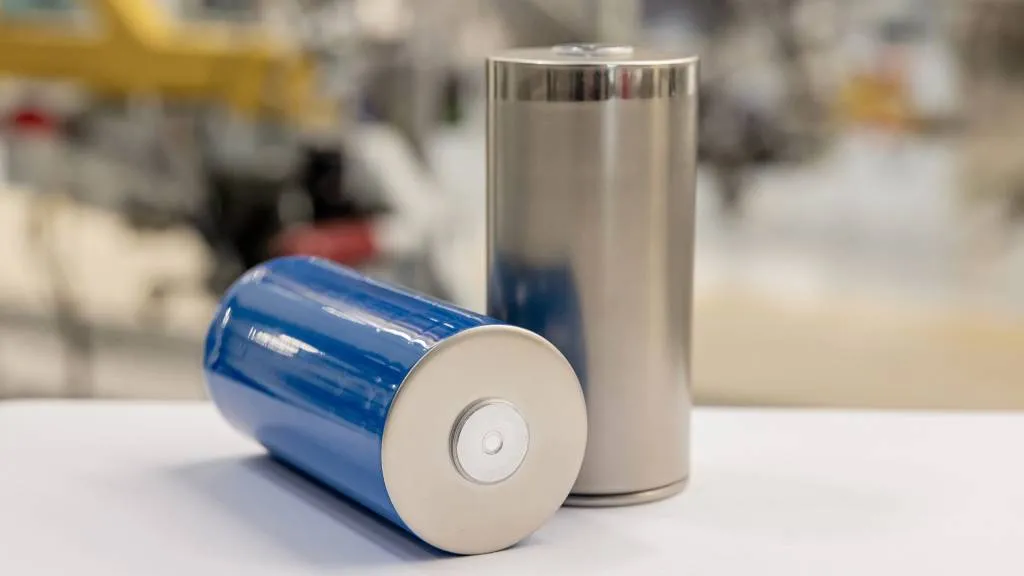
BMW cylindrical battery cells
“Northvolt and the BMW Group have jointly decided to focus Northvolt’s activities on the goal of developing next-generation battery cells,” BMW said in a statement to Reuters. “The BMW Group continues to have a strong interest in establishing a high-performance manufacturer of circular and sustainable battery cells in Europe.”
BMW already contracts with Samsung SDI and CATL for batteries. Both Asian companies have factories in Europe, but the Northvolt deal would have given BMW a supplier that was also headquartered in Europe—a box German automakers have been pressured to check.
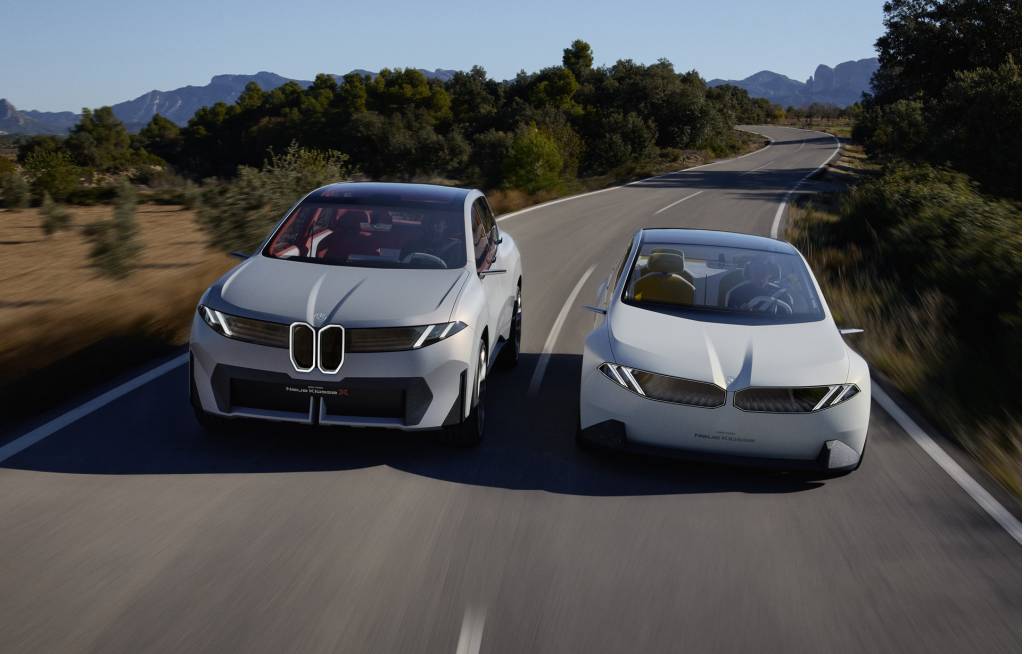
BMW Vision Neue Klasse X concept
BMW said in 2020 that batteries would be manufactured by Northvolt at a factory then under construction in Skelleftea, Sweden, using 100% renewable energy. Around the same time, Northvolt announced a German factory as part of a partnership with the Volkswagen Group. It also announced a joint-venture battery plant with Volvo in 2022 that’s expected to make cells for an electric Volvo XC60 SUV, and a Canadian plant in 2023.
BMW is shifting to cylindrical battery cells with its next-generation Neue Klasse (German for “new class”) EVs, claiming boosts to energy density and charging performance. The cars themselves will be assembled at two European sites starting in 2025, with production for the North American market at a factory in Mexico following in 2027.

Lincoln Navigator vs. Cadillac Escalade: Compare Luxury SUVs
 Both the2024 Cadillac Escalade and the 2024 Lincoln Navigator have a long history of satisfying luxury-SUV drivers. The Navigator emerged in 1998; the Escalade, the next model year. Since then, both full-size sport-utility vehicles have evolved from their truck-based roots to become legitimate players in the luxury world, catering to livery…

Nissan Rogue vs Toyota RAV4: Compare Crossover SUVs
 The 2024 Toyota RAV4 and 2024 Nissan Rogue both offer an excellent combination of affordability, efficiency, spaciousness, and versatility. It’s easy to see why these are two of the most popular compact crossover SUVs. These multi-talented vehicles embody the crossover craze and underscore why shoppers have shifted from sedans to this form…

Used car lemon law: Your rights and protections explained
 Does it seem that your car is in for repairs more than it’s in your driveway, or more to the point, for the same repairs, over and over again? If that’s the case, lemon laws might apply to you. Simply put, lemon laws are meant to give you some legal leverage to seek a refund for the purchase price of your vehicle (or replacement) and…

Electric BMW M3 coming to “beat everything”
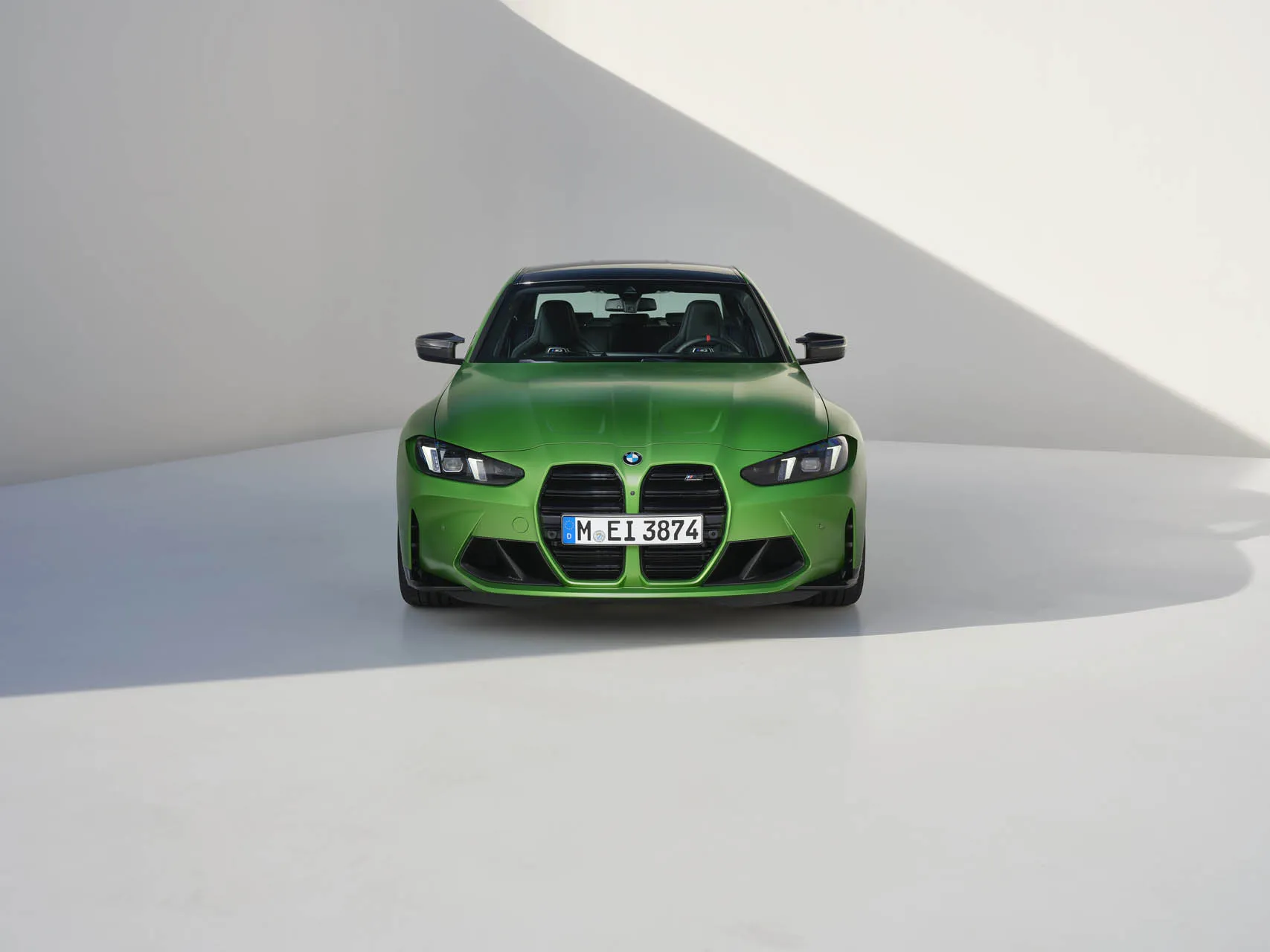
- An electric BMW M3 variant is in the works
- BMW M division’s boss expects his electric sports car to “beat everything”
- The electric M3 variant, possibly called i3 M, probably won’t arrive until 2026 or 2027
Luxury automaker BMW, known for making sports car icons, has mapped out a performance plan for its next-gen EVs.
Work is underway on those vehicles, which will be based on the Neue Klasse platform. BMW’s M performance division is dedicating resources to create M cars from these new vehicles. One of those vehicles will be an electric M3, which is among the most important and historic models the division churns out.
Frank van Meel, the man in charge of BMW’s M division, told Motor Trend the upcoming electric sports car based on the Neue Klasse platform “will beat everything you have ever seen.”
Expected to be part of an expanded 3-Series lineup, the sedan might revive the i3 nameplate to be badged i3 M.
BMW began testing a 4-motor performance powertrain in an i4 prototype back in 2022. BMW never said how much power that prototype made. Motor Trend said the upcoming performance vehicle will have about 1,000 kw, which is about 1,341 hp. That would make the electric sport sedan the most powerful production M car in history. It would also be more powerful than nearly every production electric car on the market including the Lucid Air Sapphire and Tesla Model S Plaid.
BMW has been developing its next-generation electric motors in-house with an emphasis on lightweight and compact design.
M cars have always had a strong focus on driving dynamics rather than outright power. The electric era sounds like it will be no different despite the extreme power output coming in this electric car. Van Meel told the magazine that a strong emphasis will be put on “neutral, linear, and predictable” handling, limits, and chassis control.
Purists will be delighted to hear van Meel confirmed rear-wheel drive will be available in the EV era, though obviously not with a 4-motor powertrain.
The electric M3 variant will likely arrive around 2026 or 2027.