Author: EVAI

2026 Jeep Grand Cherokee spy shots
 The 2026 Jeep Grand Cherokee will be refreshed The Hurricane turbo-6 may replace the V-8 engine Jeep’s next-gen hands-free driver assist system dubbed STLA AutoDrive may be an option The Jeep Grand Cherokee is preparing to go under the knife for a mild revamp. An updated version of the Jeep Grand Cherokee has been spotted testing on public roads…

Polestar 6 electric convertible may get spicy BST edition
- Polestar’s Concept BST contemplates a spicy 6 electric convertible
- The 6’s still on the docket for 2026
- Polestar CEO Thomas Ingenlath says more BST editions are coming
While the Polestar 3 SUV swings for efficient performance and the Polestar 4 swings for body-style-curious buyers, the upcoming Polestar 6 might be swinging at Tesla.
Still two years away—and still a dark-horse candidate to beat the second-generation Tesla Roadster to production—the Polestar 6 has gained a concept edition that may lead to a high-performance production model.
The Polestar Concept BST has made its debut ahead of this weekend’s 2024 Goodwood Festival of Speed, where it will be shown to the public for the first time. Polestar has scheduled its original 6 Concept to run the Goodwood hill over the weekend while the Concept BST is on display.
The BST version, according to Polestar CEO Thomas Ingenlath, is the convertible electric car “turned up to 11.” (“Spinal Tap” references may die out in our lifetimes, but not yet.) It wears concept-specific bodywork such as a wider track and flared fenders which house 22-inch forged alloy wheels.
The aerodynamic add-ons include a vented hood with a new front splitter, and a massive rear wing like the one found on Porsche’s GT3 cars and the $300,000-plus Ford Mustang GTD. What’s good for gas can be good for electric cars, too.
The Concept BST drapes its motorsport silver paint in racing graphics. The interior has yet to be shown.
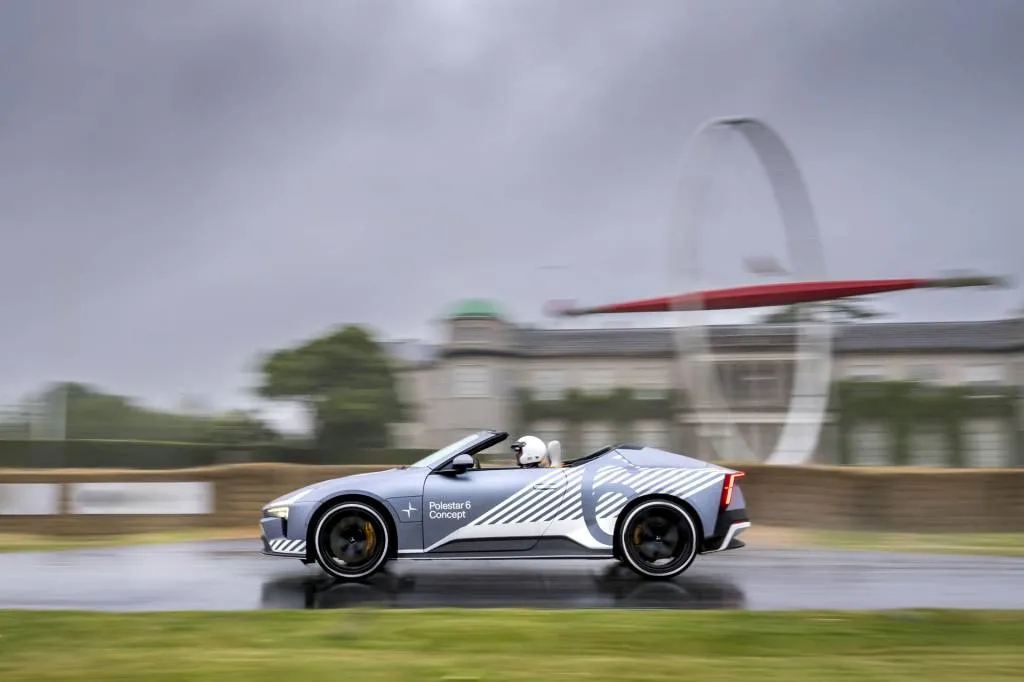
Polestar 6 Concept AT 2024 Goodwood Festival of Speed
Polestar first showed the 6 concept in 2022 and promised production by 2026. In concept form, it sports a twin-motor powertrain with a battery pack of an unspecified size. The setup produces a promised 884 hp and 663 lb-ft of torque, delivers all-wheel drive, and shoots to 60 mph in under 3.2 seconds as it cruises to a mooted top speed of 155 mph. An 800-volt electrical architecture is likely to help enable high fast-charging rates. Polestar has not confirmed any powertrain upgrades for the BST edition.

Genesis GV60 gets the first Magma treatment, in 2025
- Genesis confirmed its GV60 Magma for production in 2025
- The first public look at the production model comes this week at the 2024 Goodwood Festival of Speed
- Genesis plans a Magma for every model
The rolling design statement that is the Genesis GV60 gets a performance edition in 2025.
The South Korean luxury brand confirmed on Thursday that it will produce the GV60 Magma concept shown at this year’s New York Auto Show. This weekend, the car will make its production debut at the 2024 Goodwood Festival of Speed.
The GV60, a Green Car Reports Best Car To Buy 2023 finalist, recently gained a lower-priced version with more range for the 2024 model year.
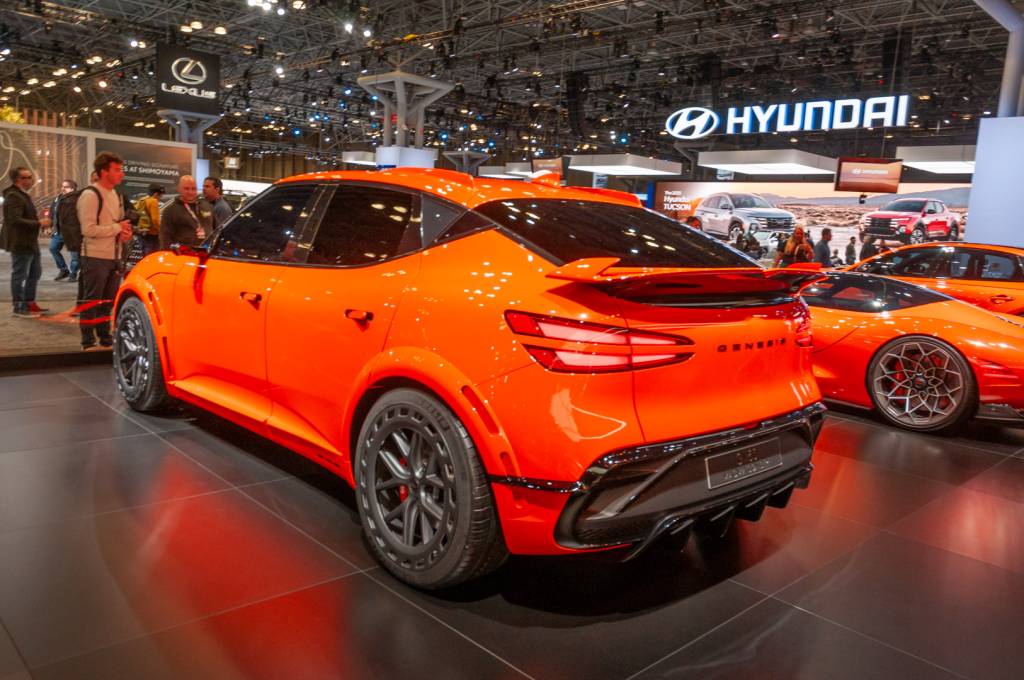
Genesis GV60 Magma concept
Sales will begin in South Korea by the third quarter of next year, with a European launch set to follow by the fourth quarter of 2025. Genesis hasn’t confirmed when the vehicle will arrive in U.S. showrooms, though it chose New York for its global debut.
Genesis confirmed that it hopes to build a Magma version of every model in its lineup, though it has not said whether the Magma updates will apply to EV versions of existing models, such as the Electrified G80 sedan (which may grow a new long-wheelbase edition soon) or the Electrified GV70 crossover SUV, which it now builds in Alabama.
Separately, Genesis may also develop and sell more hybrids and plug-in hybrids, as the rate of EV sales growth has slowed.
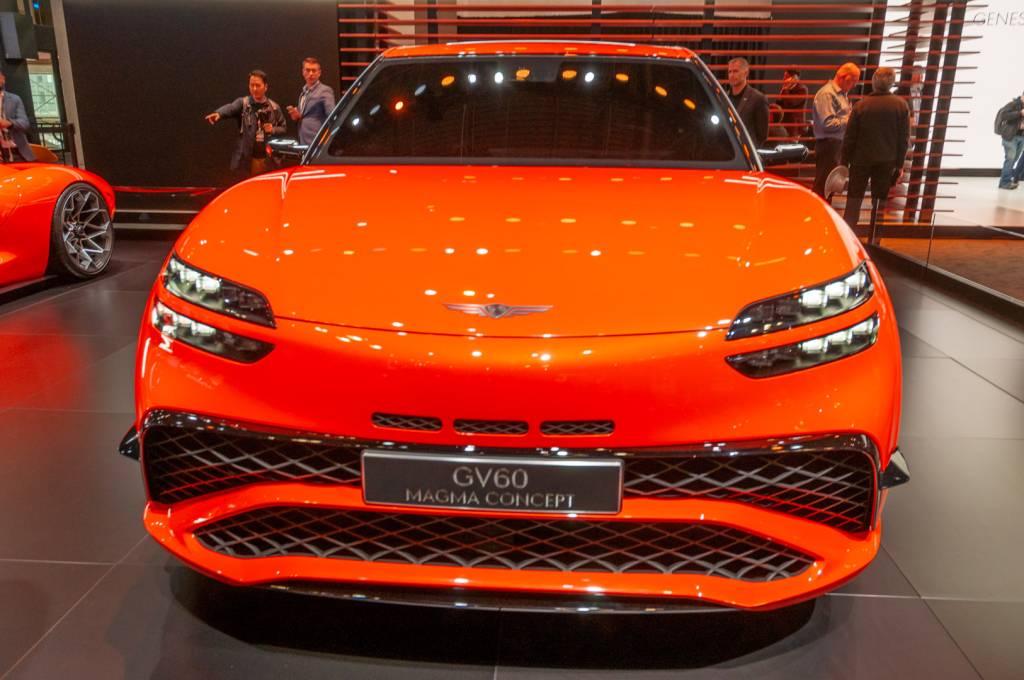
Genesis GV60 Magma concept
Magma cars will get sport-tuned suspensions and will ride lower, but no performance upgrades have been confirmed. The GV60 Magma concept does have upgrades to its cooling systems, and presumably, power output. It could end up with performance in the range of the blistering-quick Hyundai Ioniq 5 N, since the vehicles share their E-GMP architecture.

Ineos debuts bespoke editions and weighs V-8 power for Grenadier, Quartermaster
Ineos is debuting bespoke editions and weighing V-8 power. The upgrades to Grenadier SUV and Quartermaster range come after Ineos decided to delay the smaller Fusilier SUV, which would have full-electric and range-extender hybrid powertrains.

IIHS: Driver-assist systems not proven to lower risk
 BMW, Nissan vehicles showed negligible effect of driver assistance Crash-prevention features such as automatic emergency braking still lead the safety way Newer versions of driver assistance haven’t changed the rules Driver-assistance systems may not do much—if anything at all—to improve the crash safety of vehicles on which they’re…

Polestar Concept BST previews potentially more track-ready Polestar 6
 The Polestar Concept BST previews a potentially hotter Polestar 6 The Polestar 6 is an electric convertible set to arrive in 2026 Polestar CEO Thomas Ingenlath has confirmed more BST editions The Polestar 6 is still two years away from production and the start-up automaker’s already showing variants in concept form. On Thursday, the Polestar…
Detroit 3 fall behind international automakers in U.S. vehicle production
International automakers produced more light vehicles in the U.S. than the Detroit 3 for the first time in 2023, according to a report from Autos Drive America and the American International Automobile Dealers Association released July 9.

Toyota joins Ionna EV charging network, stations due in 2024
- Toyota and Lexus EV drivers will have access to Ionna
- Toyota has made an undisclosed investment in Ionna, becoming the eighth automaker to do so
- Ionna will support the NACS charge port set to be adopted in future Toyota EVs
Toyota has joined the fledgling North American EV fast-charging network Ionna, the companies jointly announced Wednesday.
With an undisclosed investment in the charging network, that brings the total number of automakers invested in the network to eight.
Ionna, which now includes Toyota/Lexus in addition to BMW Group, General Motors, Honda, Hyundai, Kia, Mercedes-Benz, and Stellantis, has said that it will build a network of more than 30,000 high-power fast-charging connectors across the U.S. and Canada, including both urban and highway-adjacent locations.
The charging network started emerging from stealth mode in June, when it hinted that work was already well underway on its first chargers, with its first U.S. charging stations still due to open in 2024.
Toyota and Lexus drivers will have access to the charging network as it rolls out its chargers, the company confirmed, although it didn’t detail how or when. Currently the automaker only sells the Toyota bZ4X and Lexus RZ electric vehicles in the U.S., but more EVs are on the way in the next couple of years, including a three-row electric SUV set to be made in Kentucky plus a fully electric Toyota Highlander, also with three rows, set to arrive in 2026.
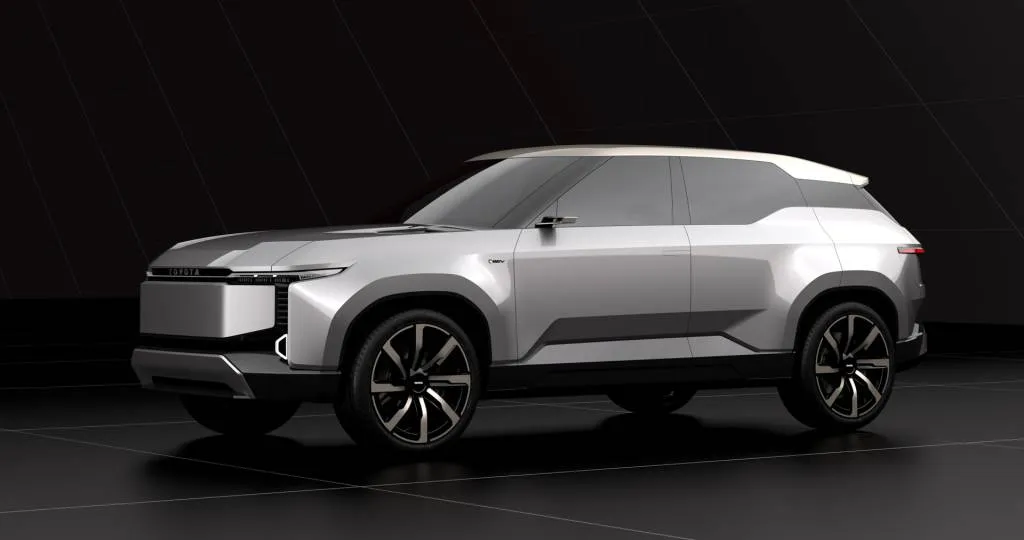
Toyota Land Cruiser Se concept
Both of those models are due to debut with the Tesla-based NACS charging interface, based on Toyota’s timeline for adopting it. Ionna has said that 350 kw will be a minimum supported power for the network’s connectors, and it’s voiced its commitment to both the NACS and CCS connector standards
Ionna was first revealed in July 2023, with its proposed scale amounting to the closest rival yet to the Tesla Supercharger network. It aims to be powered by renewable energy, and will fully support reservations, route planning, and Plug & Charge technology for fewer credit-card swipes or app handshakes.
Locations will be different, too, versus existing locations favored by major networks like Electrify America. That means remote corners or islands in big-box retailer parking lots will likely no longer be the template.

The Ford Capri Is Already Catching Shade From Polestar’s CEO
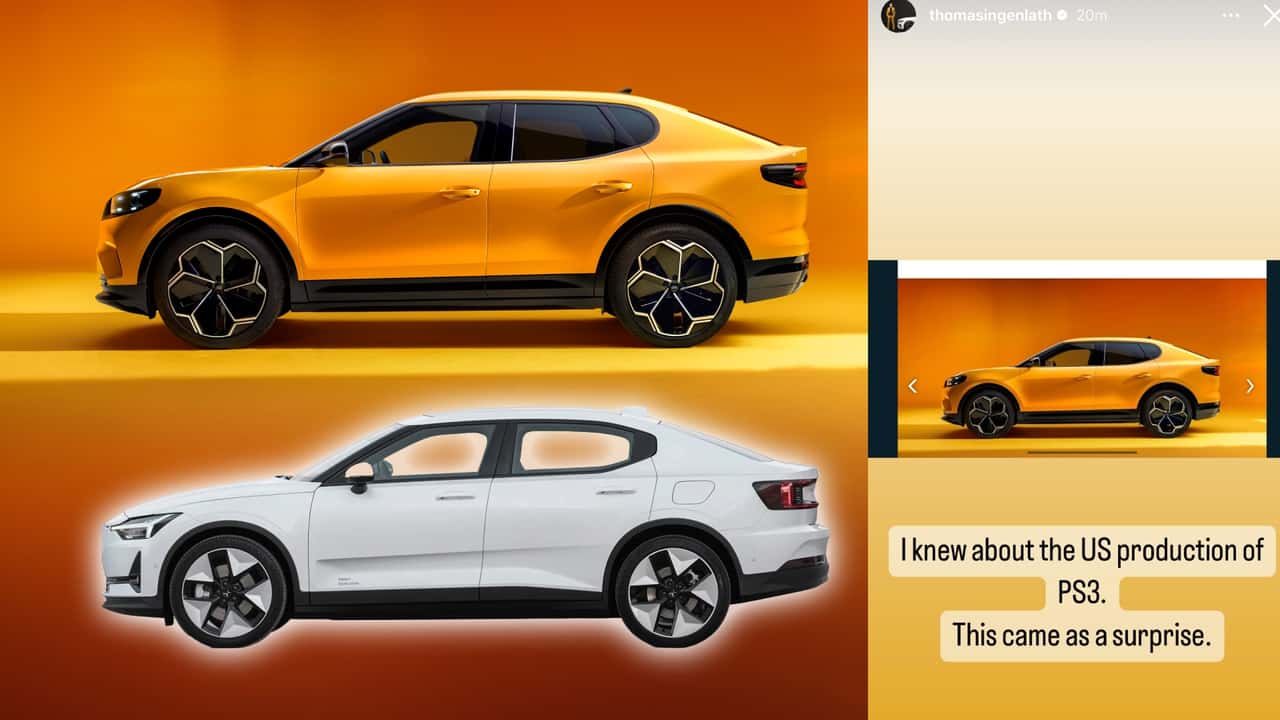
This morning, I had to double-check whether the InsideEVs CMS was working properly. That’s because when I went to edit a story about the new electric 2025 Ford Capri, I was convinced that I was looking at a Polestar 2 instead.
Evidently, our CMS is working just fine today; nothing was wrong with the images we were trying to publish. And the Capri actually looks very good! I’m especially a fan of that very striking orange color that Ford chose for so many of the initial publicity photos.
It’s just that, yes, the damn thing does look like a Polestar 2. I’m not crazy, and neither are you for thinking the same.
In fact, even Polestar’s CEO, Thomas Ingenlath, felt compelled to throw some shade at Ford in the most modern way possible: his Instagram story. Ingenlath posted the following image earlier today.

Not bad. Corporate shade is one of my favorite kinds of shade.
What’s especially funny is that in addition to being a tall sedan with almost crossover-like ride height and a steep, coupe-like rear end, the Capri has nearly identical dimensions to the Polestar 2 as well. The Capri has a wheelbase that’s two inches longer and the whole package is four inches taller overall, but otherwise, they’re pretty close to one another. (Since it rides on Volkswagen’s MEB electric platform, it’s also not surprising that the Capri is nearly identical in shape and size to the VW ID.5, although I’d wager both look better than that car.)

13
Source: Ford
So how did this happen exactly? I’m reluctant to call it a complete coincidence, but when you think of what car designers have to do now to sell four-door cars, it kind of makes sense. The sedan segment has been in decline globally for years as people flock to crossovers and SUVs, so automakers have to do more “interesting” things to keep them around—like making them taller and more SUV-like. Add in the general shape of the original Capri—which was a two-door coupe, another type of car that barely exists anymore—and you get something that ends up looking a lot like a Polestar.
9
What’s that saying about imitation and flattery again? Either way, fans of tall sedans now have one more option to choose from, provided they’re in Europe, anyway. Along with the also-Volkswagen-based new Ford Explorer, that region is going to be the new Capri’s remit. I look forward to its inevitable showdown with the P2.
Contact the author: patrick.george@insideevs.com
Share this Story