
Author: EVAI

New Dodge Charger Daytona EV sounds like it has a V-8
 The sound and feel of a V-8 roaring away is one of the biggest appeals of driving a performance car fitted with that type of engine. Given speed limits, it may even be the biggest appeal for some buyers. That all goes away with electric vehicles, but some automakers are looking at ways to keep some of the V-8 magic alive, even if it means…

Hyundai and Kia thefts deterred by software upgrade
 Hyundai and Kia vehicles with keyed ignitions instead of pushbutton starts have been besieged by thieves in a viral trend, but a software upgrade offered to owners has cut rates of these thefts by more than half, the Highway Loss Data Institute (HLDI) reported on Wednesday. Staring during the pandemic, a spike in thefts due in part to social media…

Sustainable products give manufacturers an edge over competition, suppliers say
Suppliers and automakers increasingly see developing sustainable products not just as a way to check a box on climate targets but to help them save costs and differentiate themselves from competitors.

Tesla Model 3 Performance Races Hyundai Ioniq 5 N: Not What You’d Expect
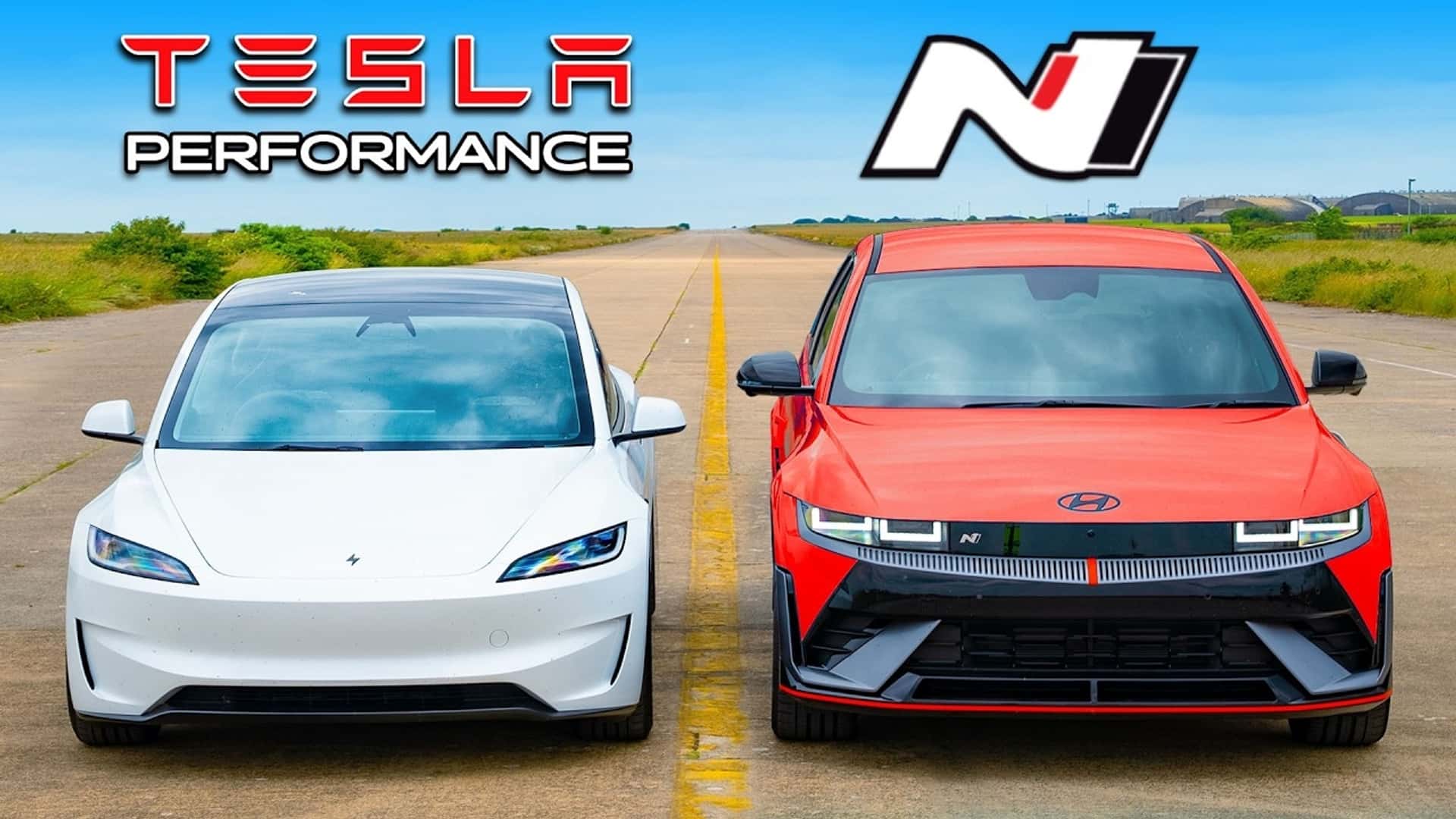
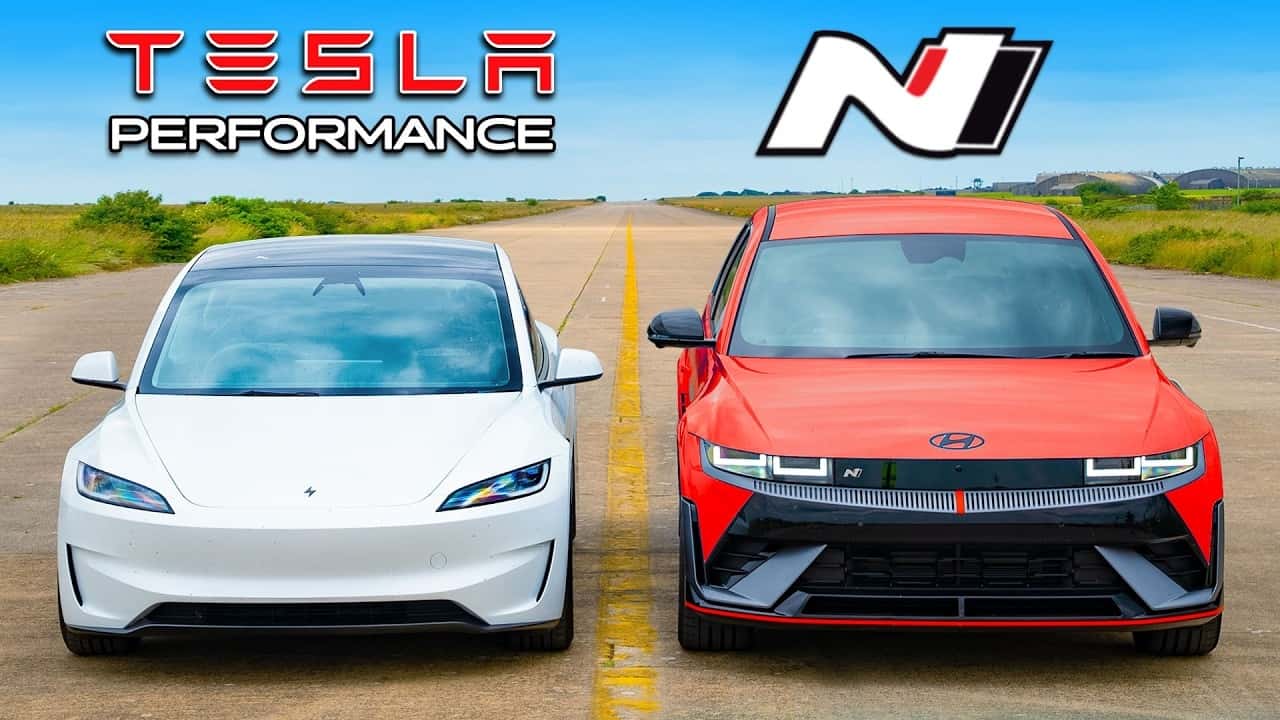
Bench racing will only get you so far. Car enthusiasts love to line up numbers on a spreadsheet to crown a performance king, but the real world isn’t that simple. Take this Carwow race between a new Tesla Model 3 Performance and a Hyundai Ioniq 5 N. A competition between 460 hp and 601 hp, respectively. Open and shut. Hyundai by a mile.
But the real world isn’t that simple.
The Latest Performance EVs
Hyundai disrupted the performance EV world when it launched the track-ready Ioniq 5 N. Not to be outdone, Tesla has redesigned the Model 3 Performance. It should offer more performance and a more refined driving experience, but we’re still waiting on the U.S.-market version.
Both fight in different weight classes. The Hyundai‘s hauling 4,861 lbs, while the Tesla is closer to 4,200 lbs. Both have different tire compounds, different launch control tuning and different electrical architectures. Both are also U.K.-market cars, which means the Model 3 is fighting with one hand tied behind its back.
While Chinese-built, U.K.-market Model 3 Performances get 460 hp, the American version gets 510 hp. The 0-60 time for the U.K. model is 3.1 seconds, two ticks behind the U.S. car’s 2.9-second figure.
Despite this, the Hyundai can’t shake the Model 3 from its heels. The Tesla launches quicker in all three attempts and outruns the Hyundai in one. For the other two, Hyundai’s power advantage kicks in later in the run, nudging it past the Tesla as it approaches the end of the quarter-mile race. That’s true in the rolling race, too, where the Hyundai’s power advantage pays dividends.
But that slower start shows that it’s not invincible. Either due to the added weight, worse launch control programming, a lack of N Grin Boost activation—which bumps power up to 641 hp briefly—or all three, the all-wheel-drive Hyundai doesn’t launch with as much ferocity as the dual-motor Tesla. It does appear to be the more fun option, though. In the drifting test, the Hyundai looks far more composed and predictable, while the Tesla snaps around on the driver.
Hyundai’s focus on fun doesn’t come without a cost. I love Hyundai’s N Grin Shift feature, for instance, which emulates an eight-speed dual-clutch transmission and is a game-changer for giving EVs an innate sensation of speed. But in order to emulate the “power band”—that is, the way engines produce more power at certain areas of their rev range—an EV inherently must pull back some power. Electric motors produce their maximum torque from a standstill, so their more perfect power band has no real defining curve. Just max torque until a high-speed drop off point.
To learn how pulling back a bit of its power affects the Ioniq 5 N’s acceleration, Carwow does a rolling race with the technology both on and off. It’s worth watching the video just to see how big the effect is.
Do you think it’s worth it? Will you take a slightly slower experience if it gives the car more character? Let me know in the comments.
Contact the author: mack.hogan@insideevs.com
Share this Story
DARCARS Honda and owners face civil charges for alleged deceptive sales practices
DARCARS denies the allegations filed in a Maryland Attorney General statement of charges in July.

Mercedes EQE’s Catastrophic Fire In Underground Garage: What We Know
The EV was parked in a Korean parking garage for three days before it spontaneously burst into flames, and wasn’t charging at the time.


Review: 2025 Genesis GV80 Coupe slicks back its roof, aims high
 The GV80 Coupes drives how it looks, which is sporty Genesis sorted out its camera-based suspension system The 2025 Genesis GV80 Coupe costs $81,300, which is more than the Audi Q8 and BMW X6 Genesis has slicked back its roofline while it aims for coupe-like SUV rivals with the 2025 GV80 Coupe. The 2025 Genesis GV80 Coupe, now in dealerships, is a…

Tesla testing 320+ kw output with Superchargers and Cybertruck
While the future of Tesla’s Supercharger team still remains uncertain, the automaker is testing higher outputs at some of its DC fast-charging stations.
YouTuber TesLatino recently posted on X (formerly Twitter) about finding a Supercharger station with a significantly higher output than normal. Instead of the typical peak around 250 kw, TesLatino saw a peak of 323 kw.
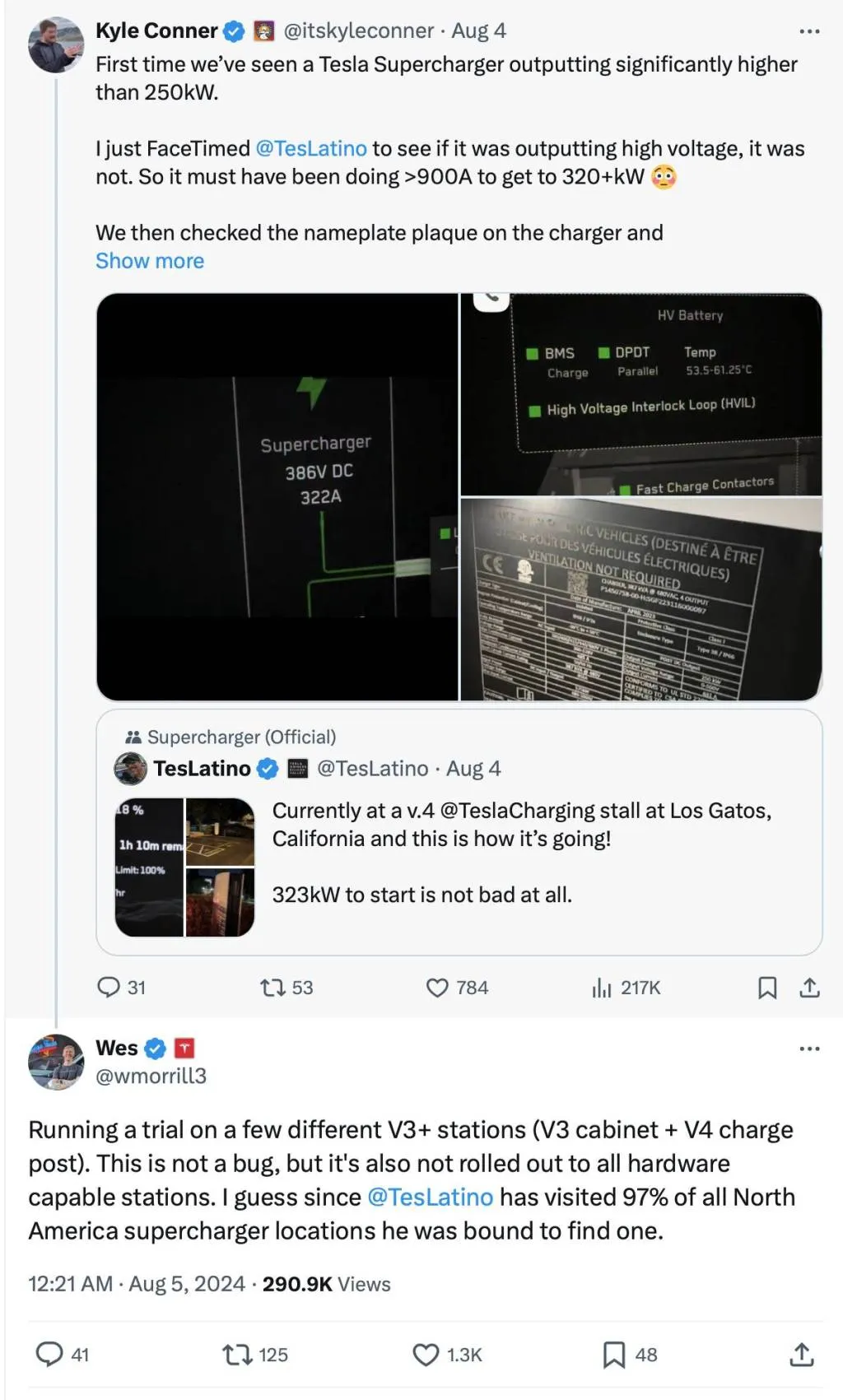
Screen shot of X post from Tesla engineer Wes Morrill explaining higher-power Supercharger trial
Wes Morrill, lead engineer for the Tesla Cybertruck, responded with an explanation that this was part of a trial Tesla was running on V3+ Supercharger stations, meaning those with a V3 cabinet and V4 charge post—so not yet taking advantage of the Cybertruck’s 800-volt charging capability some have demonstrated with higher-voltage non-Tesla chargers. This hasn’t rolled out to all stations with the applicable hardware, Morrill noted, but Tesla drivers can now look forward to being pleasantly surprised by higher power levels at certain stations, it seems.
Kyle Conner from Out Of Spec Studios connected with TesLatino during the charging experience and noted the charger was outputting over 900 amps to get to the 320-plus kw charging power. Tesla’s V3 Superchargers were originally rated at 425 amps, while Tesla’s V4 chargers were rated to 615 amps at 1,000 volts.
That might indicate some very special thermal considerations designed into the Cybertruck—particularly its charging inlet—to allow such a rate without excess heat.
The Cybertruck itself was unveiled in production form in November 2023, but didn’t come anywhere close to the $39,900 starting price or range of up to 500 miles Tesla suggested when the truck premiered. Tesla is no longer discussing 500 miles even with an extra range-extender battery pack that fits into the bed.
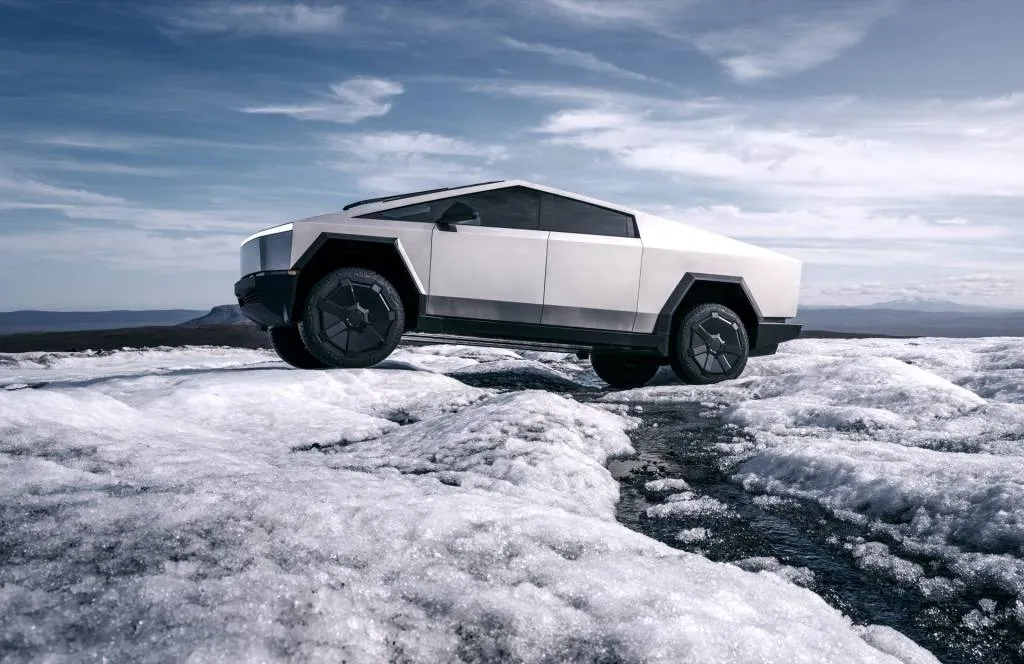
2025 Tesla Cybertruck – Courtesy of Tesla, Inc.
Tesla CEO Elon Musk earlier this year fired nearly the entire Tesla Supercharger team, but later promised a $500 million expansion funding “thousands” of new chargers, separate from any costs associated with keeping the current network running.
The decision to pull back on Supercharger operations did not appear to affect the plans of Ionna, the charging network for the U.S. and Canada that is directly funded by seven automakers. Shortly after Tesla’s firing of its Supercharger staff, Ionna re-upped its commitment to build a network of more than 30,000 high-power connectors. BP has said it will gladly take over Supercharger sites Tesla no longer wants to run as it builds out its own charging network.
Guest commentary: Why smartsourcing makes sense in a soft automotive economy
Smartsourcing companies provide a team of highly trained, career-minded agents who have deep expertise in complicated areas.