
Category: General

NYC had electric taxis in the ’90s—the 1890s, that is
New York City’s iconic fleet of taxis once included some EVs—but you have to look back more than a century to find them.
As National Geographic explains in a recent article, electric taxis had a brief moment of popularity in the city in the 1890s. The fleet quickly grew from a dozen vehicles in 1897 to over 100 by 1899. It’s an important reminder that battery-electric cars are not a new invention. The technology has changed significantly, but many of the qualities that make EVs appealing have remained consistent throughout.
A 19th century model called the Electrobat has considered ideal for taxi service because of its quick acceleration and noiselessness, according to National Geographic. The instant torque of electric motors and lack of exhaust noise have also created many a modern EV enthusiast.
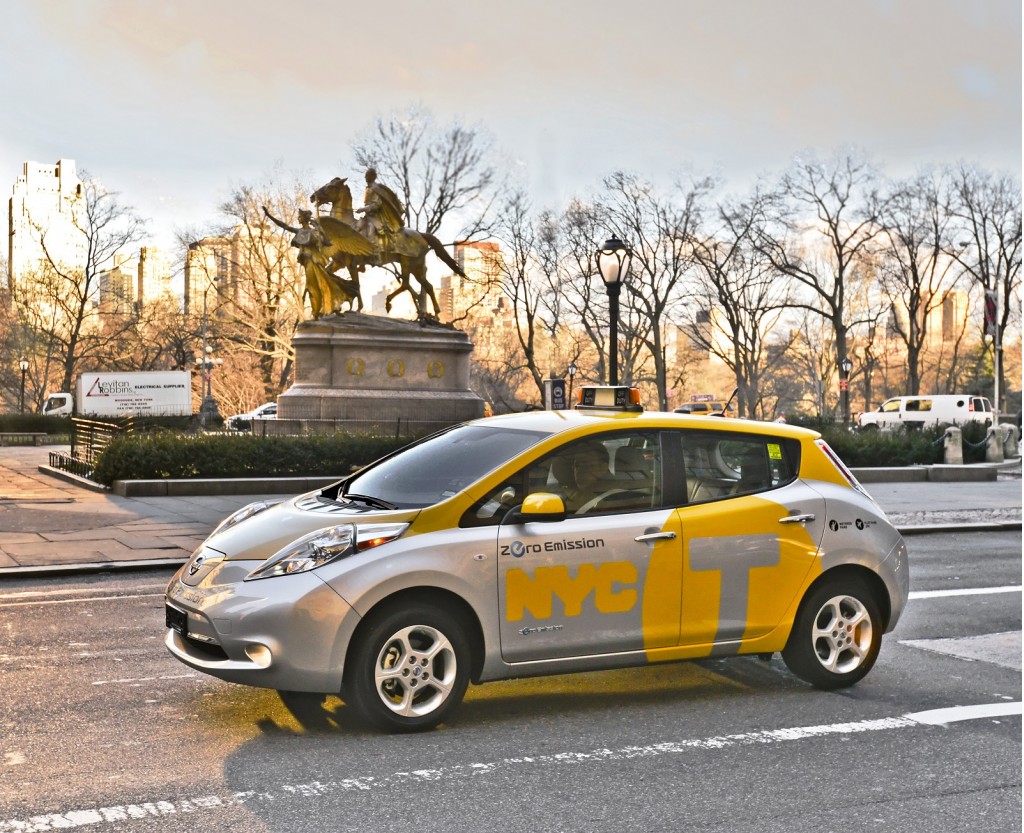
2013 Nissan Leaf electric car tested as taxi in New York City, April 2013
However, electric taxis are also responsible for two unfortunate historical firsts. In May 1899, taxi driver Jason German reportedly became the first operator of an automobile arrested for speeding after being clocked at a heady 12 mph on Manhattan’s Lexington Avenue.
That same year, another taxi driver struck a person in what is thought to be the first pedestrian fatality involving a car. Concerns that pedestrians might not hear quiet electric cars resurfaced in the 2010s, leading to regulations requiring pedestrian sound alerts on both EVs and hybrids.
New York’s 1890s electric taxis were a product of the early, experimental age of the car, when electric power competed with both internal combustion and steam. Both steam and electric cars were relatively popular until gasoline cars and their fueling infrastructure became reliable enough to take a clear lead in convenience.
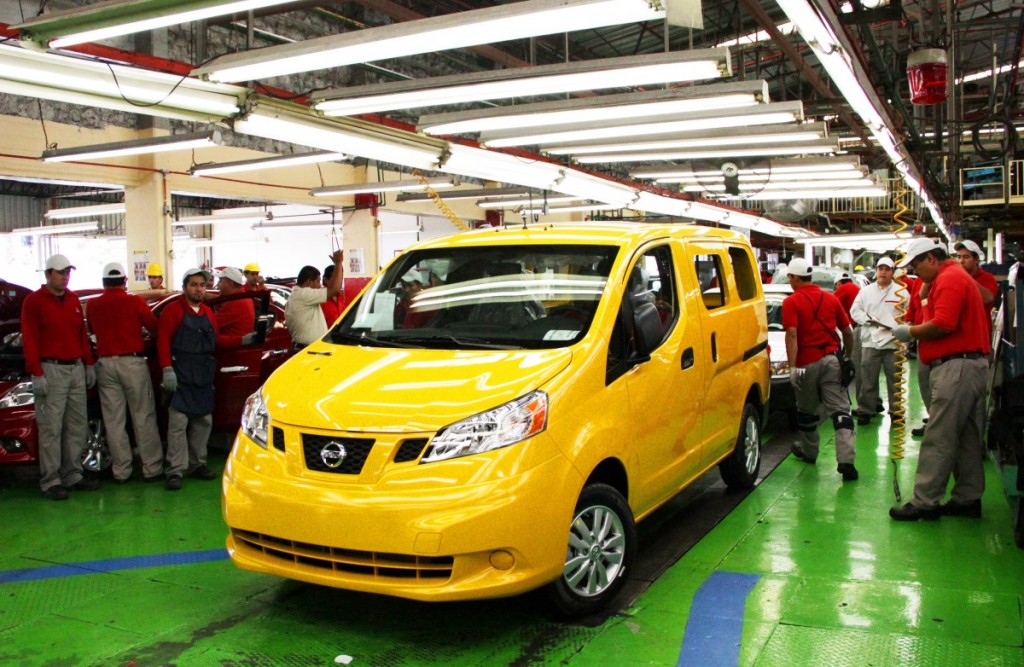
First Nissan NV200 New York
As EVs re-emerged as a viable alternative to internal combustion in the 2010s, New York City thought about bringing them back. The city council began pushing for electric taxis around 2012, but concerns over charging led officials to consider hybrids instead. The ill-fated “Taxi of Tomorrow” project, which sought to enshrine the Nissan NV200 van as the default New York taxi, was also being implemented at this time but without discussion of hybrid or all-electric versions of the taxi.
Nissan never did achieve a monopoly on New York taxis with the NV200. The fleet now features lots of hybrids, as well as some EVs, although the latter may be less attractive to cab operators now that a proposed EV exemption from the city’s new congestion pricing appears to have fallen through.
It’s also unclear, under the current administration of Mayor Eric Adams, how much progress New York is making toward a goal set by former Mayor Bill de Blasio in an executive order of making all NYC municipal vehicles electric by 2040.

Mercedes and Stellantis pause European EV battery plans, look to LFP
Mercedes-Benz and Stellantis are pausing work on two EV battery plants and may be looking to LFP battery cells to lower costs, reports Bloomberg.
Automotive Cells Company (ACC), a battery supplier for the two automakers with plans to open three new battery plants in Europe at a cost of 7.6 billion euros (approximately $8.2 billion at current exchange rates), has stopped construction at a site in Kaiserslautern, Germany, and paused prep work at a site in Termoli, Italy, according to the report.
Demand for EVs in Europe has slowed, with growth only expected in mass-market segments, ACC CEO Yann Vincent said in an interview on the sidelines of a recent Bloomberg New Energy Finance conference. Mercedes and Stellantis are now requesting lower-cost batteries for entry-level EVs, Vincent told Bloomberg.
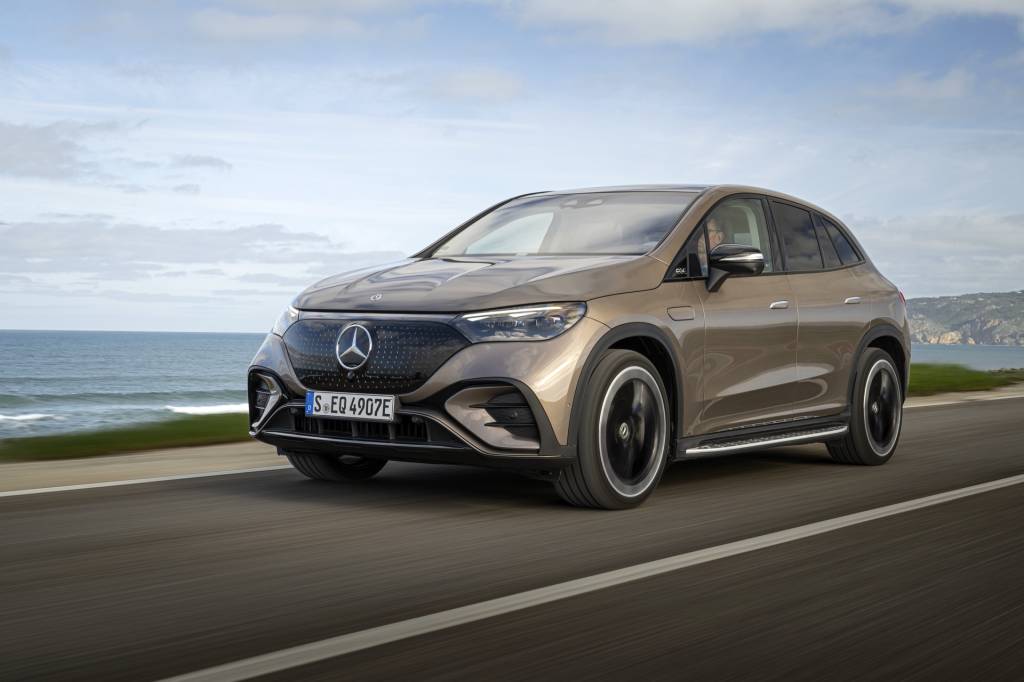
2024 Mercedes-Benz EQE SUV
This has led ACC to reconsider its plans. One option is to manufacture LFP battery cells in Kaiserslautern, Vincent said, adding that a final decision is due later this year or in early 2025, with cell production starting up to 2.5 years after that. ACC put out a separate statement June 4 saying it had “reopened discussions on plans” for the Termoli factory, Bloomberg noted.
Mercedes and Stellantis aren’t the only automakers cooling on new European battery factories. Volkswagen said last month that its European battery factories may take longer to reach full capacity, while both VW and Renault have moved away from plans to sell shares in EV or battery businesses, Bloomberg noted.
Sales of battery electric models overtook sales of diesels in 2022, signaling a sea change for the Continent, where diesel was once an institution. And upcoming models like the Renault 5 E-Tech have generated a lot of buzz in Europe.
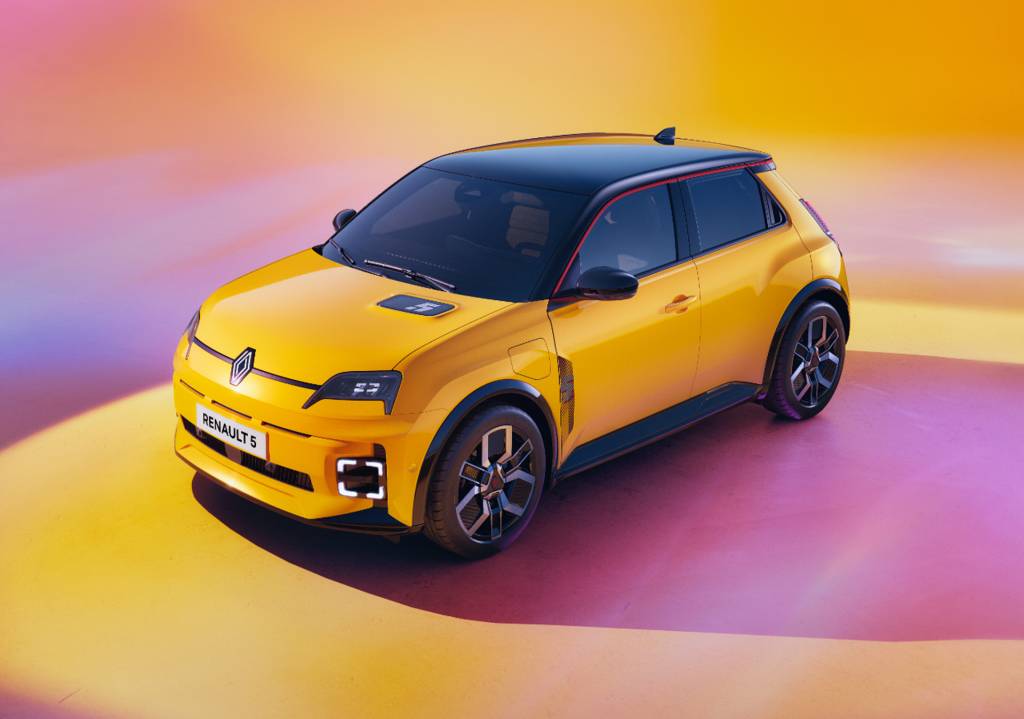
2025 Renault 5 E-Tech
The EV affordability picture for Europe certainly looks better than that of the U.S. EV prices have skewed lower this year, but there’s a dearth of affordable EVs.
Like Mercedes and Stellantis, Ford aims to fill the affordability gap with EVs powered by LFP batteries, which it plans to make in the U.S. But the affordable EV that’s generated the most interest recently—outside the returning Chevrolet Bolt EV of which there are few details—is the 2024 Chevy Equinox EV, which will have a base version priced at $35,000 with destination.

Mercedes EV recall, Ford battery swapping, charging infrastructure lag: Today’s Car News
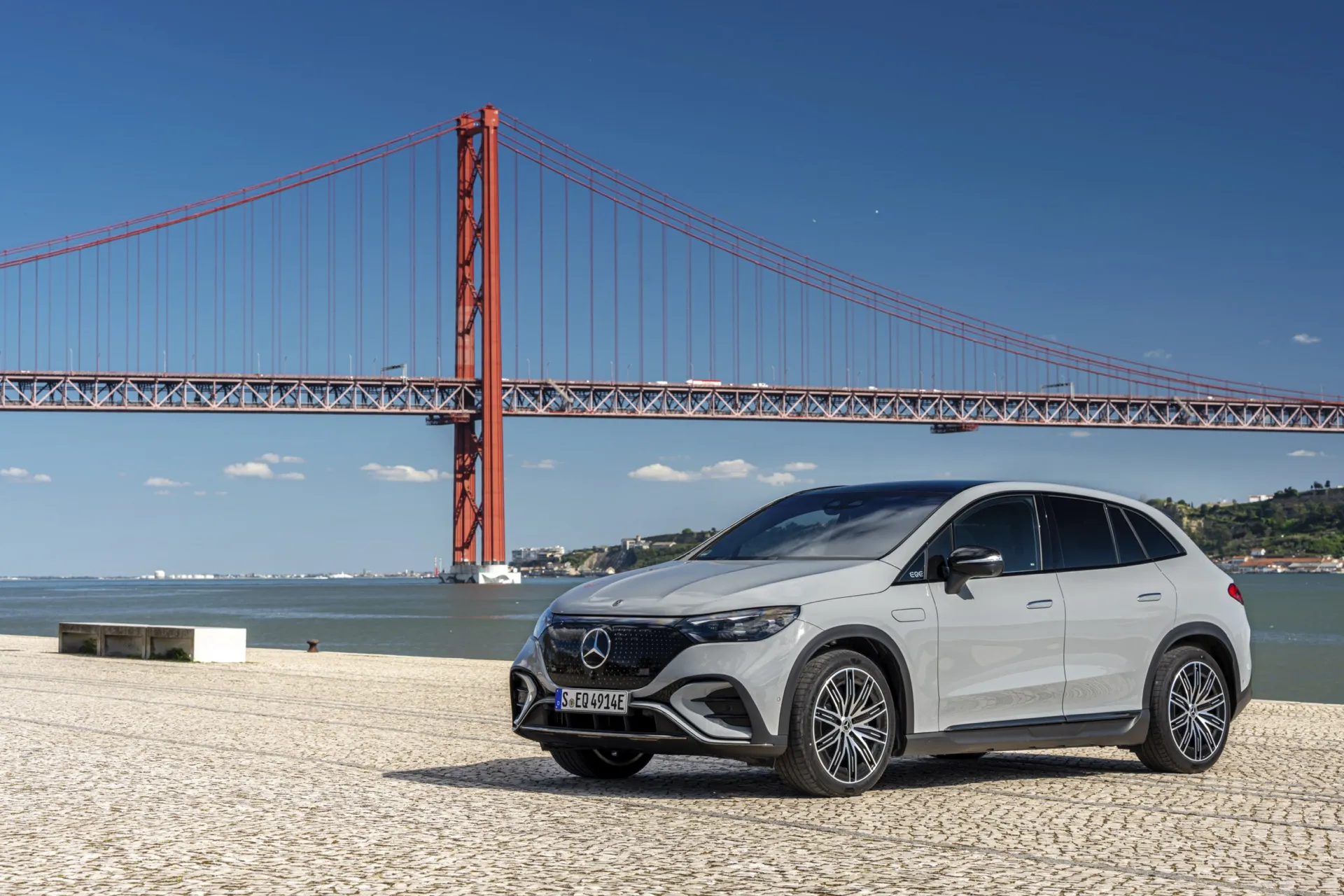
Many of Mercedes’ EVs get recalled. Ford may be thinking about battery swapping with a new twist. And why is the federal EV charging network taking so long to take form? This and more, here at Green Car Reports.
Mercedes-Benz has recalled nearly 15,000 EVs over a software issue that may lead to a shutdown of the high-voltage system. It amounts to a bug in the vehicles diagnostic system and no fault of the battery, but the issue requires a trip back to the dealership for an update.
According to a recent patent application, Ford is considering EV battery swapping via drive-up docking stations. If this system based on smaller modules ever becomes reality—for fleet vehicles, perhaps, or other types of mobility—it would be very different than the full-pack replacements that companies like Nio and Ample do today.
And why is the $7.5 billion federal EV charging network that was funded in 2021 moving so slowly? To date only eight stations in six states have opened, according to a report, and it’s largely because states are taking the lead but have to face a “patchwork of public and private utilities, regulators, and bureaucracies.
_________________________________


Ford considers EV battery swapping via drive-up docking stations
A recently surfaced patent application from Ford envisions a new type of EV battery swapping system.
EV battery swapping generally involves removing a depleted battery pack from underneath the vehicle and sliding in a fully charged one. But in this patent application, the automaker discusses drive-up docking stations that would use a vehicle’s own power to complete the swap.
Instead of detaching a heavy battery pack from underneath a vehicle, Ford envisions a series of electrically-connected modules that could be disconnected and swapped. These modules could be accessed from either the front or rear of the vehicle, accompanying drawings show. So vehicles would park at one of the docking stations as if they were pulling up to a charger.
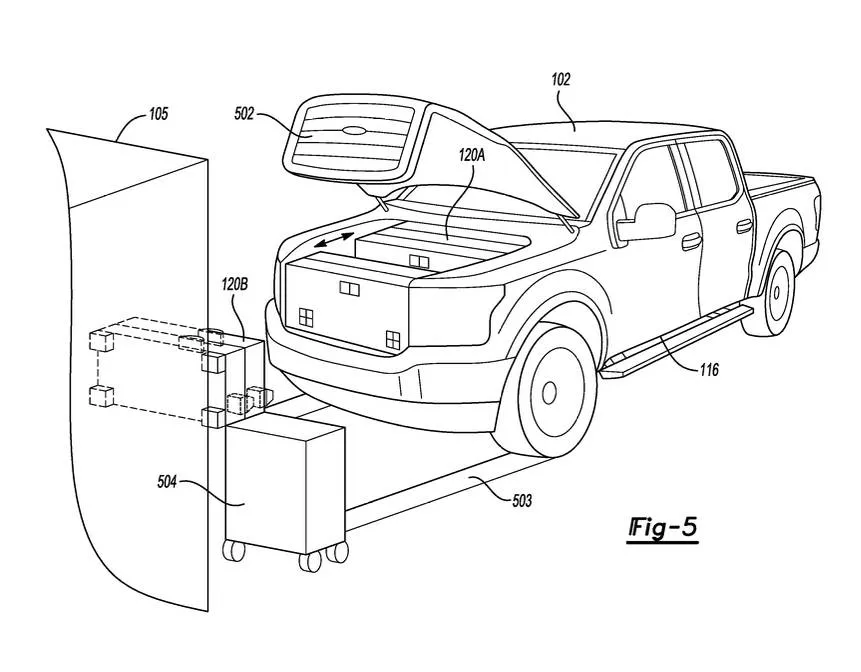
Ford EV battery swapping patent image
Typically for a patent application, Ford discusses lots of variations that might not make it into the final design should it be commercialized. In addition to EVs, Ford claims the docking stations could work with hybrids and other types of machinery ranging from unmanned aerial vehicles (UAVs) to “a watercraft such as a submarine, or a robot.” On a car, particularly, the placement of heavy battery packs higher up in the vehicle might have a profound effect on dynamics and possibly stability.
Ford also discusses large, self-aligning connectors for the battery modules—creating lots of wiggle room to make the docking process easier—as well as a two-way locking system to keep them in place. The docking stations themselves could also serve as charging hubs, Ford suggests.
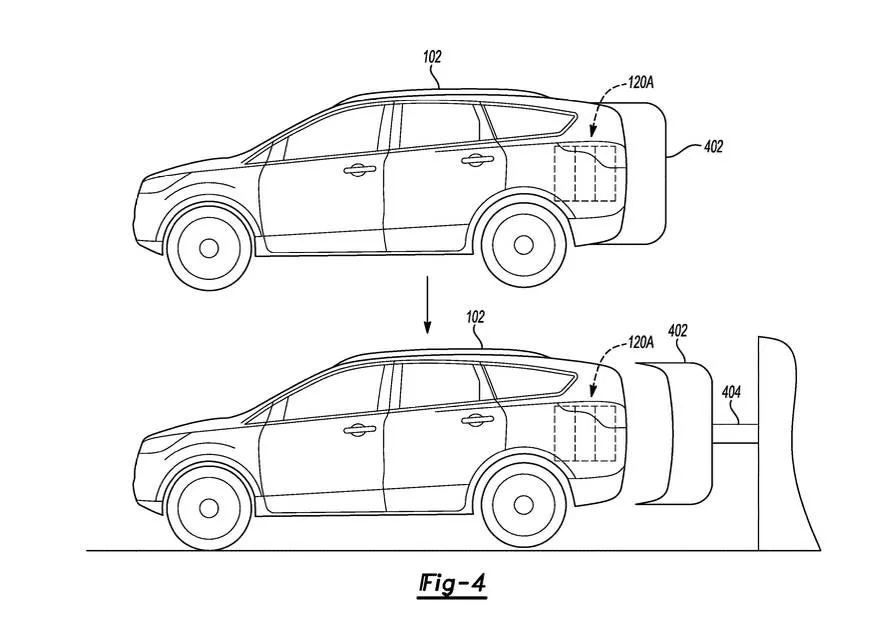
Ford EV battery swapping patent image
As with other patented ideas, it’s unclear if Ford’s battery swapping system will get commercialized. The application was published by the United States Patent and Trademark Office (USPTO) May 14, 2024, but it was originally filed by Ford back in 2018, so it’s unclear whether this is an idea Ford is filing away or one it might potentially test out.
Currently, Chinese automaker Nio operates a large battery-swapping network in China based around removing and replacing battery packs of a conventional design from underneath EVs. It’s expanding to Europe as well, and has partnered with Chinese battery maker CATL on the next generation battery swapping. China’s Geely—parent of Volvo and Polestar—is also on board.
In the U.S., startup Ample has been working on battery swapping to include larger delivery trucks. Last December, Stellantis announced plans for a Fiat 500e battery-swapping test with Ample’s system.

Here’s why the federal EV charging network is rolling out so slowly
The Biden administration funded a $7.5 billion national EV charging network as part of the 2021 infrastructure law, but despite the investment new charging stations are rolling out at a slow pace, reports Automotive News.
The National Electric Vehicle Infrastructure (NEVI) program calls for 500,000 charging stations nationwide, but to date only eight stations in six states have opened, according to the report. That’s largely because, while the federal government designates the funding, states take the lead in determining how and when it is used.
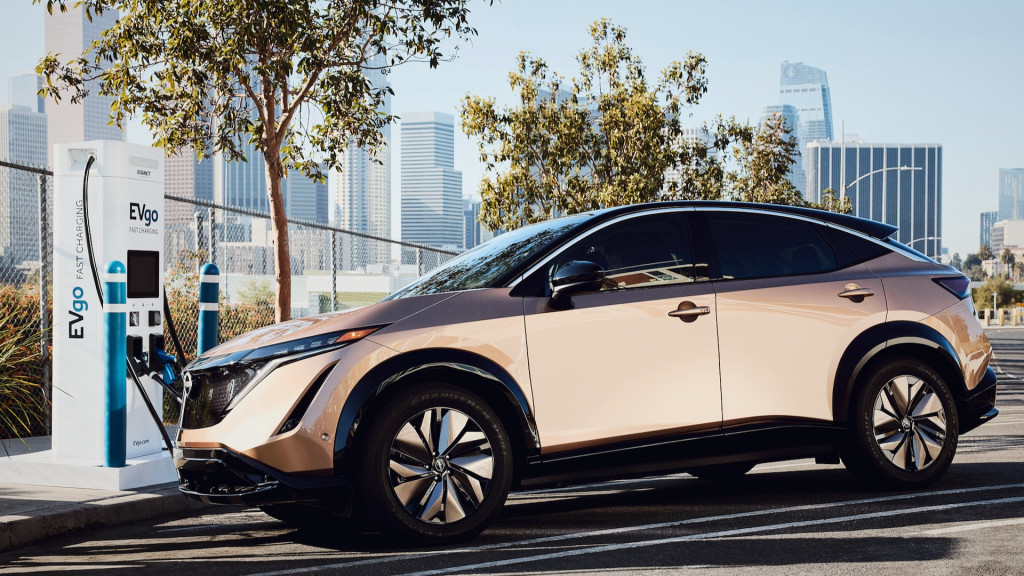
2023 Nissan Ariya at EVgo charging station
Companies that win funding through the federal program can’t uniformly plan for its use nationwide because they must deal with individual state regulators and bureaucracies that all operate differently, Automotive News notes, adding that charging companies must also deal with a “patchwork” of public and private utilities in different regions of the country.
The federal government released the first round of NEVI funding to 35 states in September 2022, then in early 2023 outlined rules for chargers—involving access, privacy, payment systems, and more—that any company looking to claim federal funds would need to follow. The first station built with NEVI funding was up and running in Ohio in December 2023.
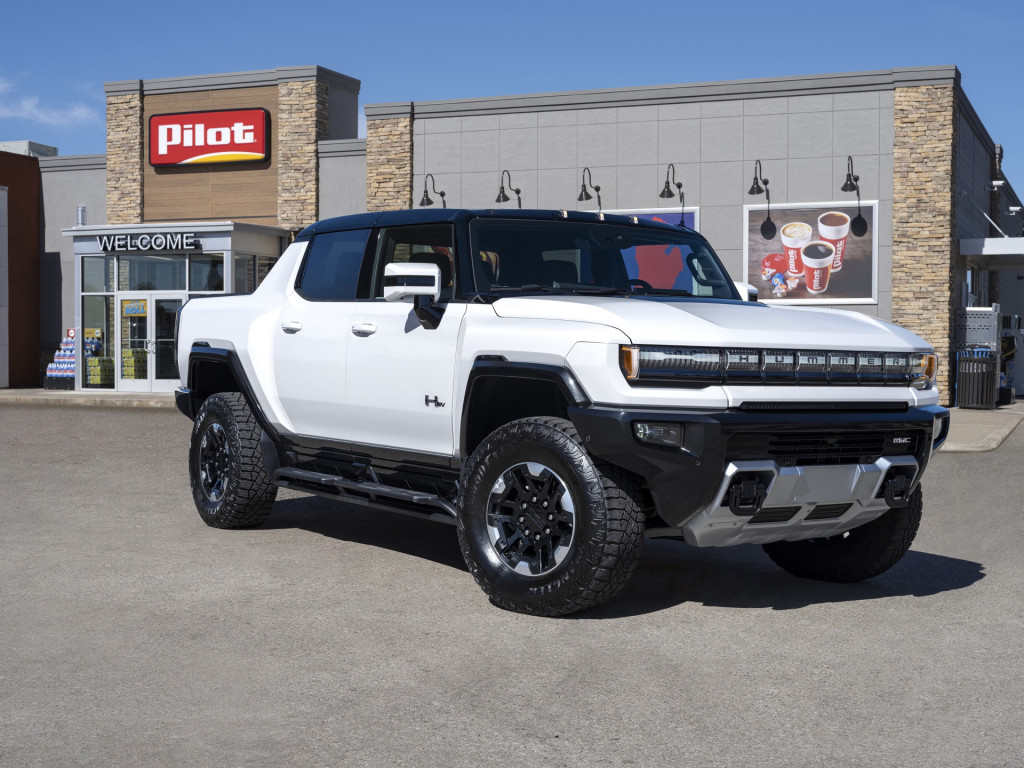
GMC Hummer EV at Pilot travel center
As of May 28, 2024, 23 states have begun releasing NEVI funding, according to Automotive News, citing data from EVAdoption. That includes 10 states that have closed the first round of applications, one is open for applications, 10 have a tentative start date for accepting applications, and six have not provided an application timeline.
Ohio, New York, Colorado, and Pennsylvania are among the fastest-moving states when it comes to using NEVI, funding, according to Automotive News, while Idaho, Mississippi, Nevada, South Carolina, South Dakota, and Wyoming are the slowest. That’s partly down to anticipated demand for EV charging in those states; just 87 EVs were sold in Wyoming in the first quarter of 2024, according to S&P Global Mobility. So the differing pace of EV adoption among the states may also affect the buildout of the national charging network.

Mercedes recalls nearly 15,000 EVs for software issue
Mercedes-Benz is recalling 14,912 EVs in the U.S. to address a battery management system software issue that could cause a loss of drive power.
The recalled vehicles include all versions of the EQS and EQE sedans, as well as the EQS SUV and EQE SUV, from model years 2023 to 2025, depending on the variant. These vehicles may have battery management software that “might not meet current production specifications and may lead to a shutdown of the high-voltage system in specific situations,” according to recall documents.
That specific situation is a “diagnostic data overflow” to the battery management system. Other onboard control units might continuously send diagnostic requests to the battery management system, overloading its memory and triggering the opening of contractors that disconnect the battery pack from the powertrain.
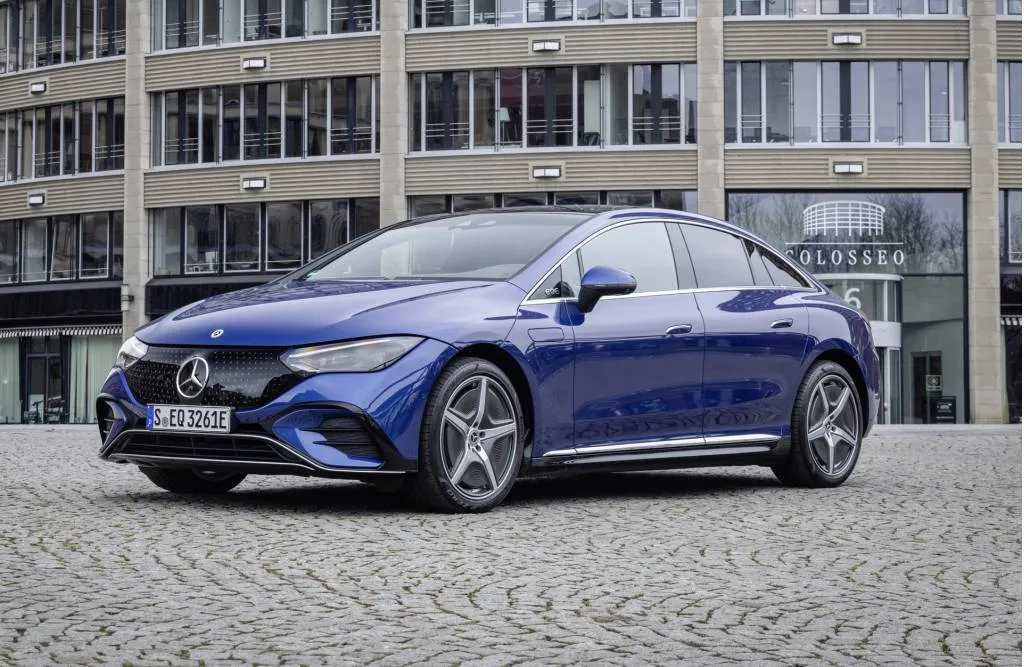
2024 Mercedes-Benz EQE
The recall comes after an investigation from Mercedes following reports of warning messages in vehicle instrument clusters related to the battery pack, the first of which came from a dealership in Denmark in October 2023. The recall population was determined by production records; all other examples of the EQS and EQE sedan and SUV have software that “meets current production specifications” according to Mercedes.
Owners of recalled cars will have to schedule appointments with dealerships to have updated battery management software installed, free of charge. This remedy cannot be done via an over-the-air (OTA) update.
The rollout of EQ-branded dedicated EVs for the U.S. started with the EQS sedan, which launched as a 2022 model. For 2025, Mercedes is improving the EQS with a heat pump and better braking, and those elements are expected to spread to the rest of the EV lineup in the near future.
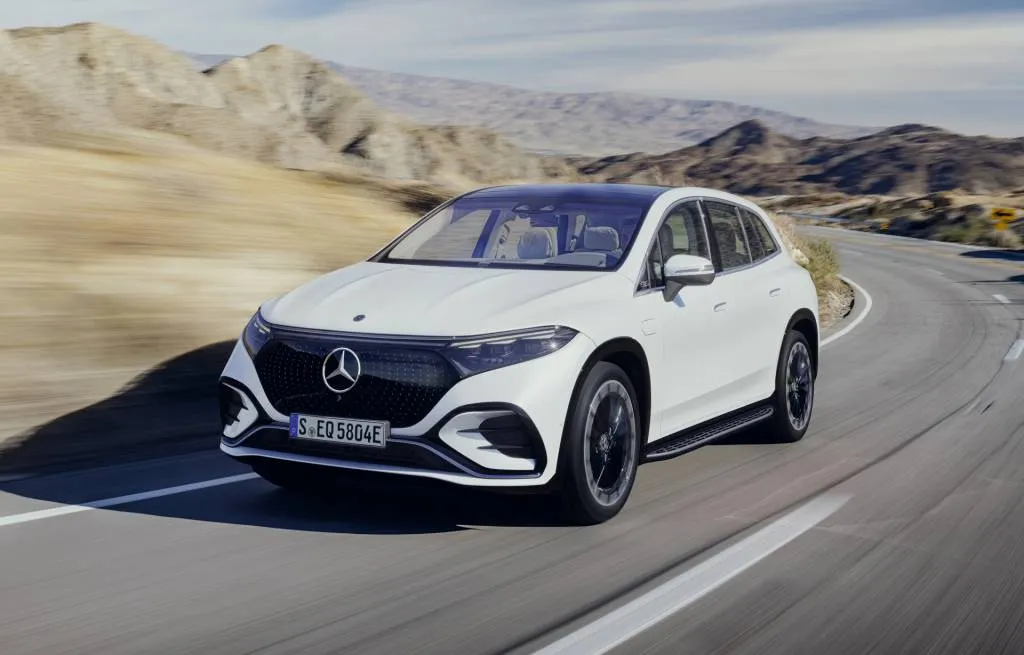
2024 Mercedes-Benz EQS SUV
However, the future of Mercedes’ EV lineup is in flux. Earlier this year it announced a delay of EV targets that would keep combustion engines in its lineup “well into the 2030s.” It’s also reportedly pulled the plug on a range-extended EV project that had reached the testing stage with EQS-based prototypes.
Mercedes is also reportedly in the process of dropping EQ badging for EVs, but it hasn’t issued anything definitive yet. The closest hint we have at what might replace the EQ nomenclature is the “G 580 with EQ Technology” badging of the electric G-Class.

$25,000 Jeep EV, Jeep Wagoneer 4xe, US-made Hyundai and Kia EVs: Today’s Car News
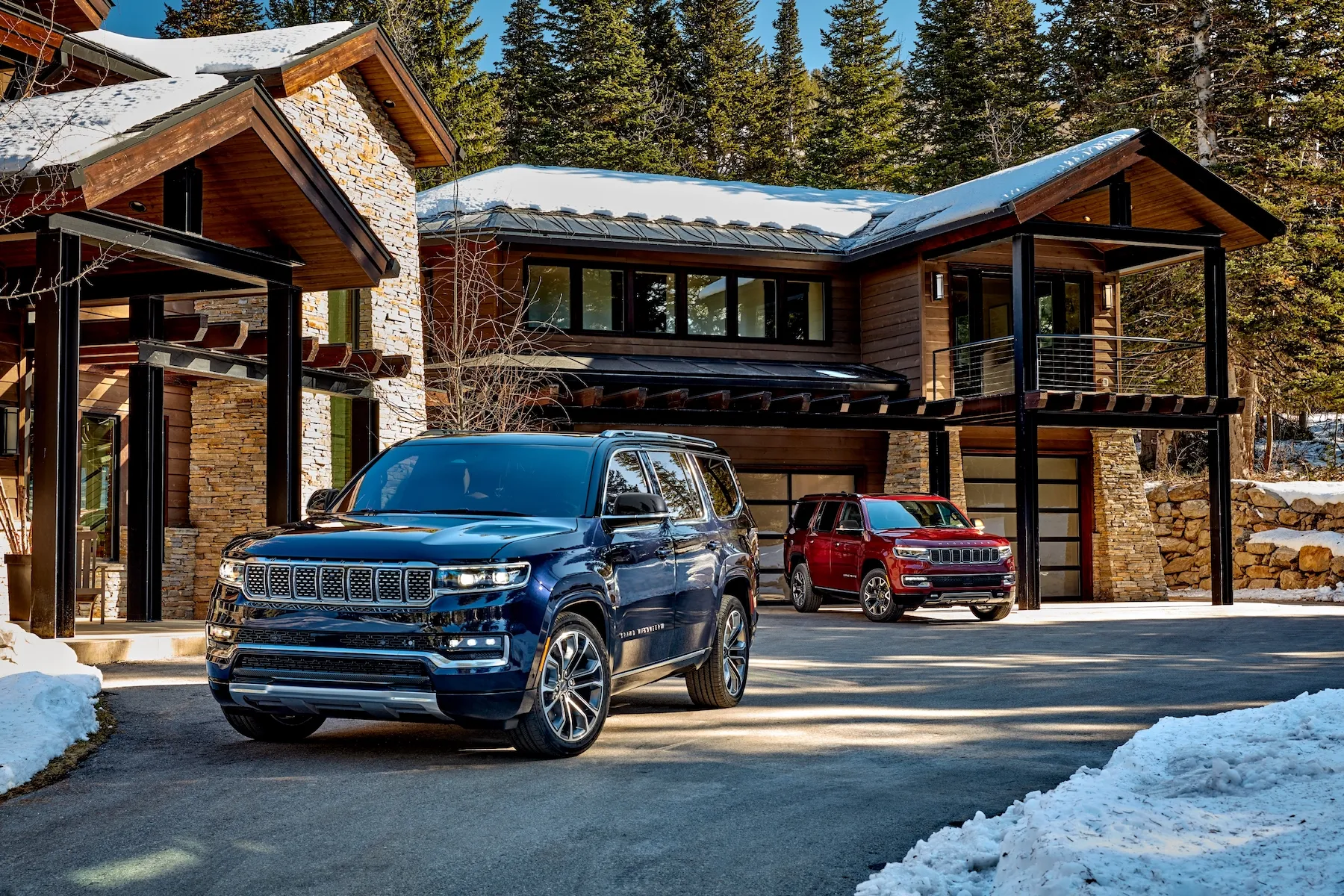
Jeep might have a $25,000 EV in the works. Kia and Hyundai confirm details for U.S.-made EVs. And which electrified powertrain does Jeep see as better for off-roading? This and more, here at Green Car Reports.
At the reveal of the Jeep Wagoneer S electric SUV last week, executives confirmed that extended-range Wagoneer and Grand Wagoneer 4xe versions are on the way, with large plug-in battery packs and packaging that manages to maintain their three-row layout. Given Jeep’s plans for mild hybrids, plug-in hybrids, EVs, and more, it leaves a great many build combinations—and based on executive comments about which kind of plug-in is better for which situation, it may be rolling these out in the wrong order.
Separately, last week, the CEO of Stellantis, Jeep’s parent company, told media at an investor conference last week that a $25,000 Jeep EV is coming to the U.S. soon.
And U.S.-made Hyundai and Kia EVs are coming to dealerships soon, with U.S. Kia EV9 production starting last week and Hyundai’s initial U.S.-made EV now confirmed as the Ioniq 5. But will they qualify for the full $7,500 EV tax credit?
_________________________________

Hyundai, Kia confirm first US-made EVs: $7,500 tax credit eligible?
- Both Hyundai and Kia will build electric vehicles in the U.S.
- Hyundai’s Ioniq 5 will be assembled in its new factory near Savannah, Georgia.
- Kia has begun production of its EV9 crossover EV near West Point, Georgia.
- Federal tax credits have not been confirmed
Hyundai on Friday confirmed its first EV for U.S. production, while the automaker’s Kia brand began U.S. EV production that same day. But neither brand is discussing eligibility for the $7,500 federal tax credit quite yet.
The Hyundai Ioniq 5 will be the first model produced at the automaker’s EV “Metaplant” near Savannah, Georgia, Jose Muñoz, CEO of Hyundai Motor North America, said in an interview with Automotive News. U.S. assembly is slated to start in October under a stepped-up U.S. EV timeline Hyundai announced last year.
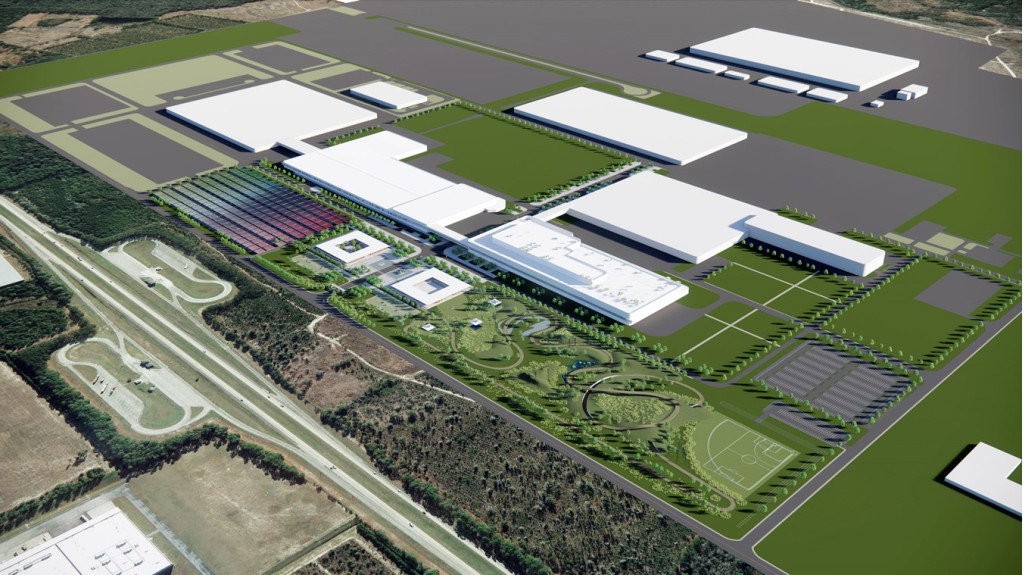
Kia EV manufacturing in Georgia
“It absolutely is the bestseller,” Muñoz said of the decision to kick off U.S. EV production with the Ioniq 5. “So I think it is a no-brainer that it needs to be that one.”
Hyundai plans to ramp up to as many as 300,000 EVs (and battery packs) a year at the new Georgia plant, part of a $7.6 billion manufacturing complex that also includes a joint-venture battery plant run with LG Energy Solution. The opening of the battery plant will lag the assembly plant by about a year, Muñoz told Automotive News, adding that in the meantime Hyundai will source batteries from an SK On factory in Hungary.
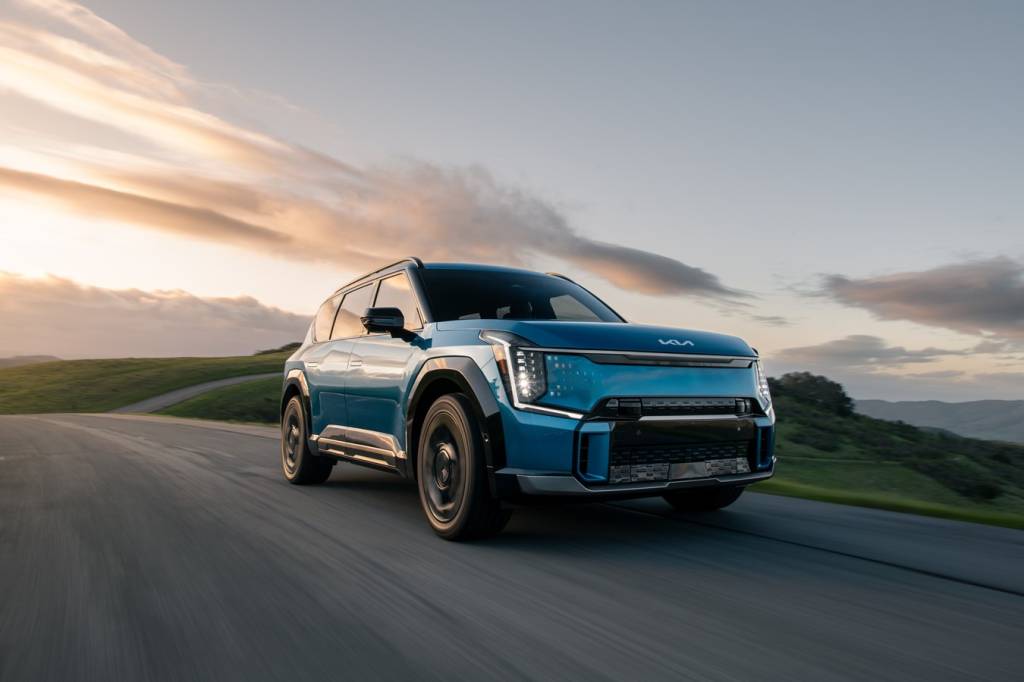
2024 Kia EV9
The factory will eventually build six models across the Hyundai, Kia, and Genesis brands, according to Automotive News. Hyundai confirmed in April that, despite initial plans to make this a dedicated EV plant, it would make hybrids too. Genesis, the luxury brand of the Hyundai Motor Group, is already building its Electrified GV70 electric SUV at another plant in Alabama as well.
While some Kia EVs will be made at the Metaplant, the Kia EV9 started production Friday at the automaker’s existing facility in West Point, Georgia.
EVs produced at either plant will be up against tighter rules regarding battery and battery raw material origins, so it’s unclear as of yet whether these initial models will qualify for the full $7,500.
“More details and specifics will come closer to production,” said Hyundai Motor America to Green Car Reports.
Kia did earlier last year anticipate last year that U.S.-built EV9s will qualify for the tax credit. But that was prior to federal guidance, issued in December, that started applying January 2024 and limited foreign content to an expanded list of “low-value” battery components. Green Car Reports has reached out to Kia for comment on whether they expect to qualify for the tax credit from the outset, in whole or in part, with these newly U.S.-made EVs.