
Category: General

Rivian R1 and Toyota Crown Signia reviews, US-made Volvo, Hyundai, Kia EVs: The Week in Reverse
How safe are some of the biggest, thirstiest SUVs?
Why is the $7.5 billion federal EV charging network moving so slowly?
This is our look back at the Week In Reverse—right here at Green Car Reports—for the week ending June 6, 2024.
It was another big week of getting up-close time with some of the most anticipated new EVs, while reporting on some of the top stories for green-car shoppers. Rivian on Thursday Rivian set the stage for its mass-market R2 with more comfortable, better-performing, lighter, and more simplified “Gen 2” versions of its electric trucks. The 2025 Rivian R1S SUV and R1T pickup will be offered in Dual-, Tri-, and Quad-Motor layouts, with Standard (LFP), Large, and Max battery packs. And as Green Car Reports experienced on the road, in the mud, and on the drag strip, it all adds up to a more appealing vehicle.
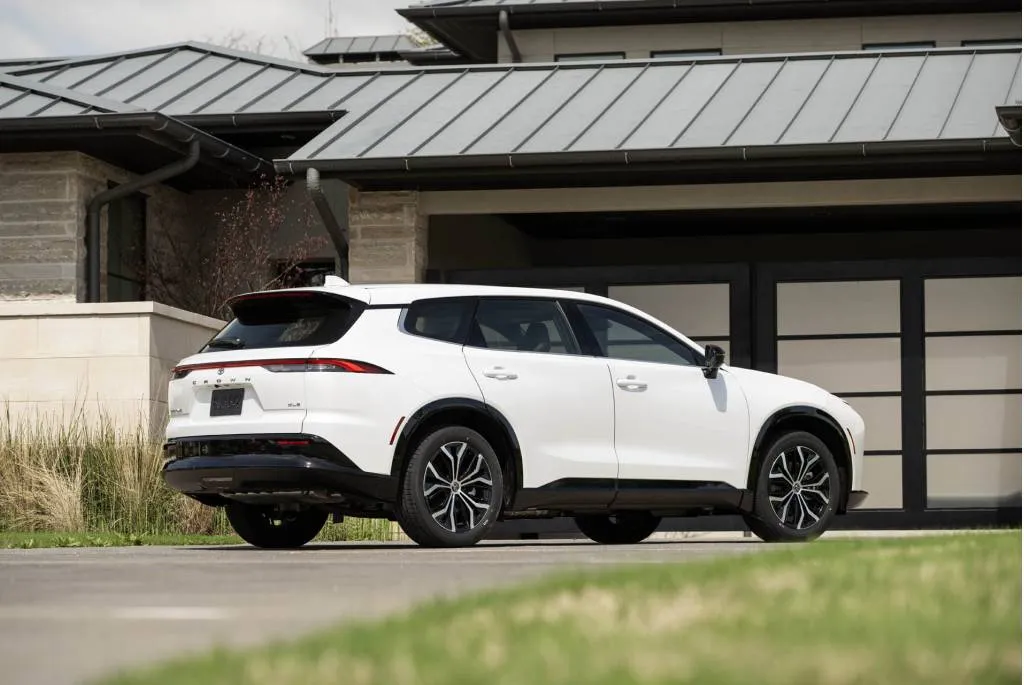
2025 Toyota Crown Signia
And do you want a roomy, gasoline-fueled hybrid station wagon that can get nearly 40 mpg? That’s what Toyota has introduced with its 2025 Crown Signia, and at around $45,000 it’s a comfortable, more carlike family alternative to the boxier Highlander Hybrid.
At the reveal of the Jeep Wagoneer S electric SUV last week, executives confirmed that extended-range Wagoneer and Grand Wagoneer 4xe versions are on the way, with large plug-in battery packs and packaging that manages to maintain their three-row layout. Given Jeep’s plans for mild hybrids, plug-in hybrids, EVs, and more, it leaves a great many build combinations—and based on executive comments about which kind of plug-in is better for which situation, it may be rolling these out in the wrong order.
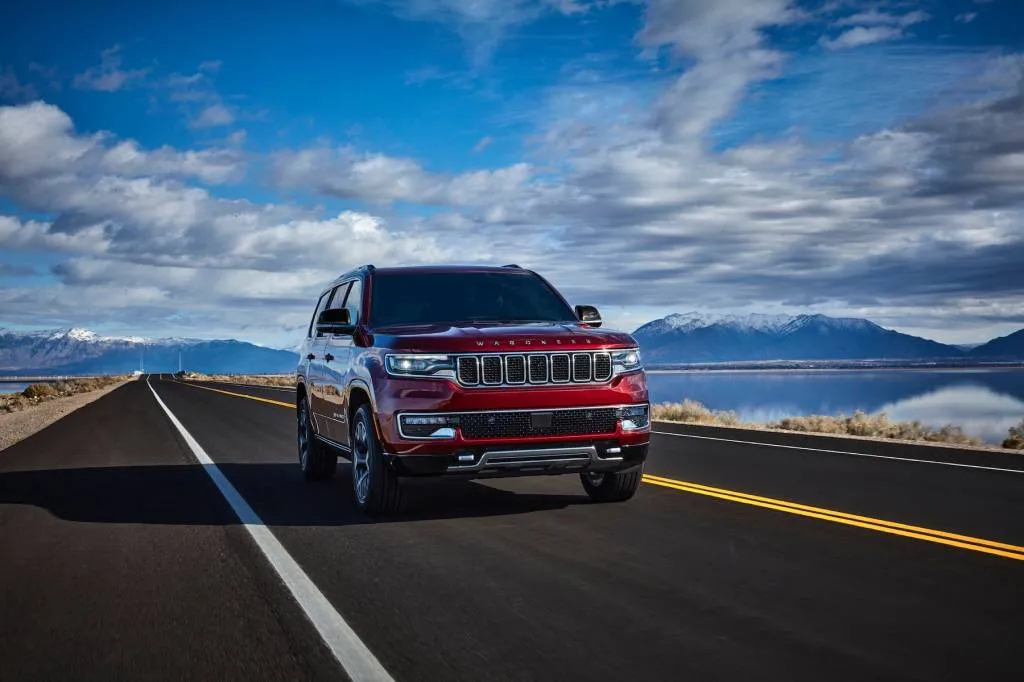
2024 Jeep Wagoneer
Separately, last week, the CEO of Stellantis, Jeep’s parent company, told media at an investor conference last week that a $25,000 Jeep EV is coming to the U.S. soon.
The federal government on Friday revealed vehicle fleet fuel efficiency standards for 2027-2031 that will improve the average mpg of vehicles, but less aggressively than originally proposed. Along with softer targets for trucks and SUVs, the rules give automakers a lot of bonus points for EVs.
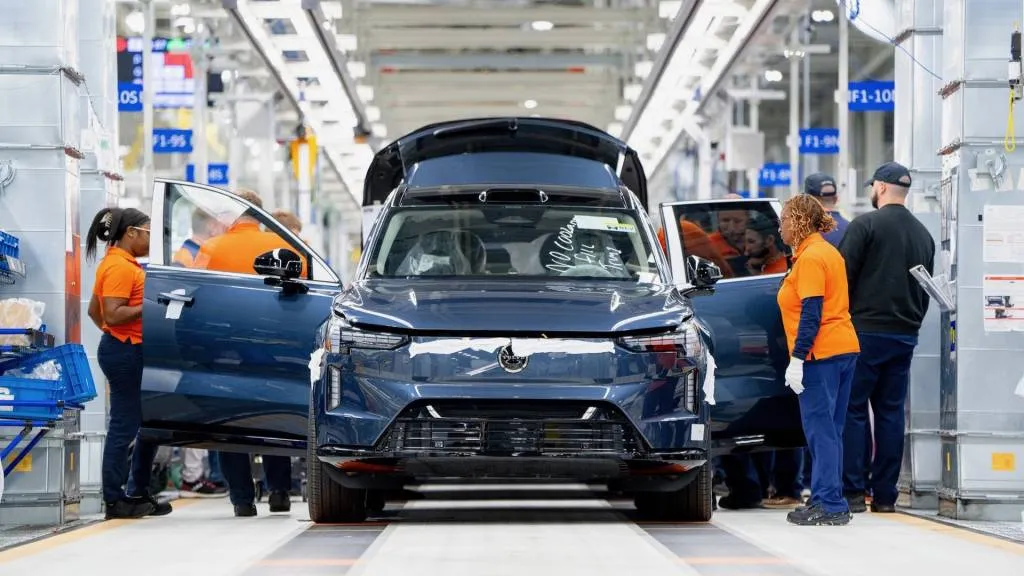
2025 Volvo EX90 production begins in South Carolina
U.S. production of the 2025 Volvo EX90 electric SUV has started in South Carolina, the Swedish automaker reported this week. The first U.S. customer vehicles will be delivered in the second half of the year, it says. And U.S.-made Hyundai and Kia EVs are coming to dealerships soon, with U.S. Kia EV9 production starting last week and Hyundai’s initial U.S.-made EV now confirmed as the Ioniq 5. But will they qualify for the full $7,500 EV tax credit?
Meanwhile, Senator Joe Manchin is back to criticizing the Biden administration’s EV tax credit rules, and this week he called on enforcement of rules requiring locally sourced battery content—rules that have recently been eased for two years. Manchin already has an issue with the “leasing loophole” written into the credits, effectively federally subsidizing foreign-made luxury EVs.
Over in Europe, this week Mercedes-Benz and Stellantis both paused European battery plans, as they refocused their efforts potentially around affordable EVs, amid slowing demand especially for premium EVs.
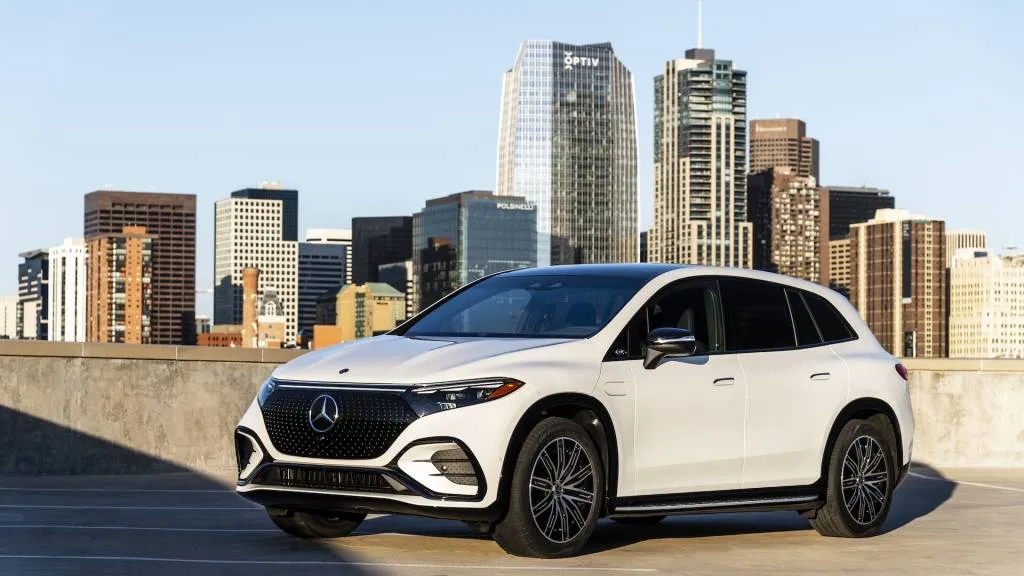
2024 Mercedes-Benz EQS SUV 580 4Matic
Mercedes-Benz has recalled nearly 15,000 EVs over a software issue that may lead to a shutdown of the high-voltage system. It amounts to a bug in the vehicles diagnostic system and no fault of the battery, but the issue requires a trip back to the dealership for an update.
According to a recent patent application, Ford is considering EV battery swapping via drive-up docking stations. If this system based on smaller modules ever becomes reality—for fleet vehicles, perhaps, or other types of mobility—it would be very different than the full-pack replacements that companies like Nio and Ample do today.
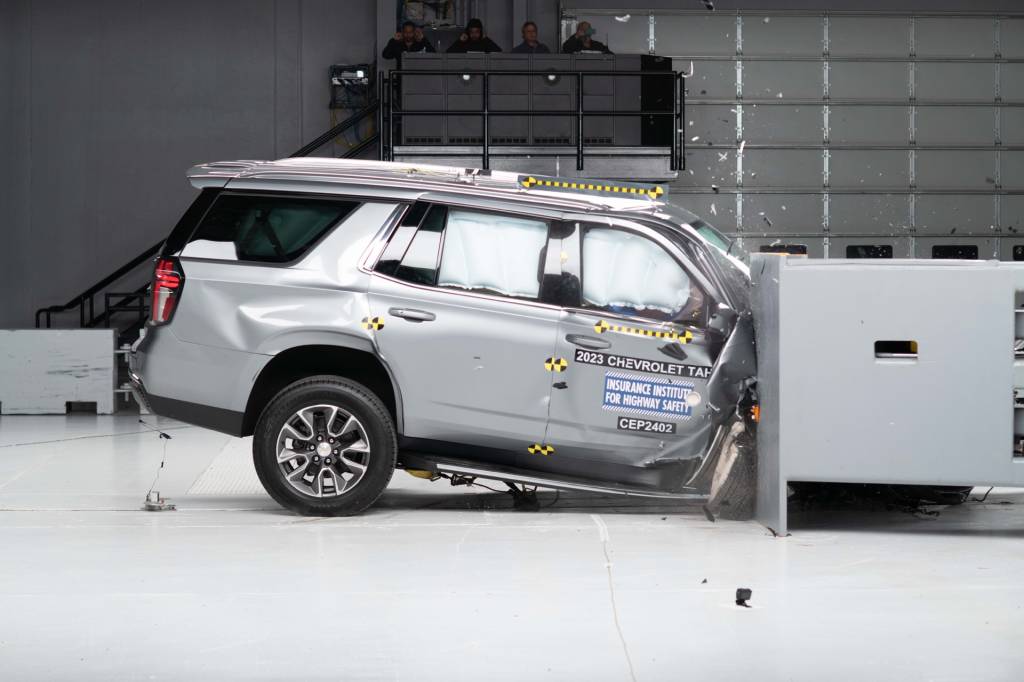
2023 and 2024 Chevrolet Tahoe crash-test impacts by the IIHS
Several big, gas-guzzling SUVs aren’t actually so safe, found the Insurance Institute for Highway Safety (IIHS) in a new round of crash tests of the Chevrolet Tahoe, Ford Expedition, and Jeep Wagoneer. Of these three-row models that largely return well under 20 mpg, only the Wagoneer received the top “good” rating.
A new survey from AAA found that fewer Americans are likely to buy a new or used EV in 2024, versus a similar survey last year. The reasons aren’t surprising, and they come down to cost and convenient charging; specifically, it suggests that nearly a third of Americans are unable to install an EV charger where they live.
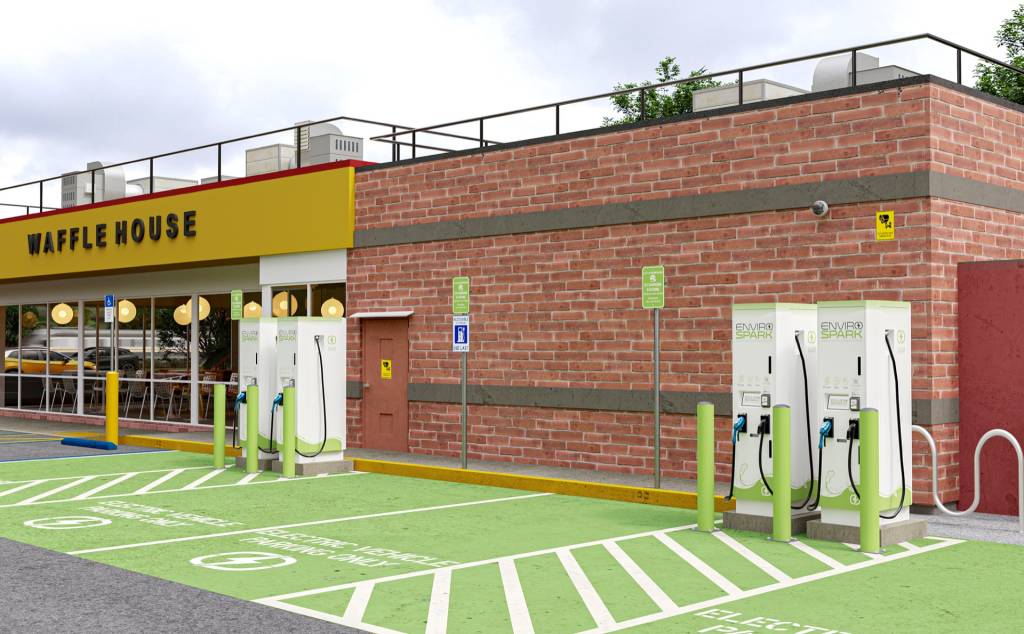
Rendering of EnviroSpark EV chargers at at Waffle House
Why is the $7.5 billion federal EV charging network that was funded in 2021 moving so slowly? To date only eight stations in six states have opened, according to a report, and it’s largely because states are taking the lead but have to face a “patchwork of public and private utilities, regulators, and bureaucracies.
And New York City actually had fleets of electric taxis in the ‘90s—the 1890s, that is. But a few unfortunate incidents, and the dominance of petroleum distribution, meant that EVs didn’t re-emerge as a viable alternative to internal combustion taxis until the 2010s.
_______________________________________

Final US mpg rules through 2031 go easy on gas trucks, SUVs
The federal government on Friday revealed vehicle efficiency standards for 2027-2031 that improve the fleet fuel efficiency of new cars and trucks—slightly.
The final rules for Corporate Average Fuel Economy (CAFE), announced Friday by the Department of Transportation’s National Highway Traffic Safety Administration (NHTSA), set the prescribed improvement at 2% annually for passenger cars and 2% annually for light trucks for those model years.
That’s down significantly from the 4% annual increase originally proposed for trucks and SUVs, which are already held to a lower standard and have become the dominant portion of U.S. vehicle sales. As the International Energy Agency last week underscored, SUVs emit about 20% more CO2 than cars, whether they’re electric or not.
Considering those details, the EPA calculated that its final rule will require 56% EVs by 2032, plus at least 13% plug-in hybrids—and since then, GM has been among the automakers reviving plug-in hybrids, perhaps resulting in a slower EV rollout. Under that previous scenario that was more aggressive on efficient light trucks, it saw 67% EVs by 2032.
Softer on trucks, fewer EVs, and about 38 mpg by 2032
The easing of it all would mean a real-world fleet efficiency average of about 38 mpg, according to the agency—way down from 43.5 mpg under the agency’s original CAFE proposal made in July 2023.
The 2024-2026 CAFE rules, finalized in 2022, call for aggressive increases of 8% in 2024 and 2025, and 10% in 2026, so automakers will essentially “have it easy” after reaching those 2026 targets. By the end of that period, in 2026, it’s already been projected that the real-world fleet average will be around 35 mpg, versus today’s fleetwide average of about 29 mpg.
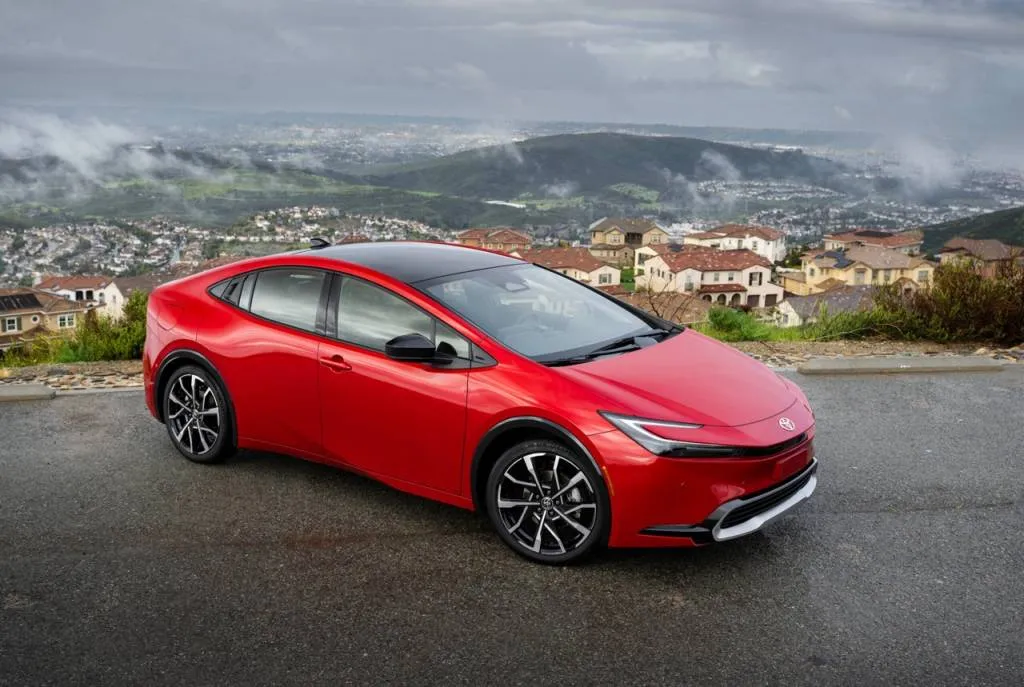
2024 Toyota Prius
These fleet rules are one side of U.S. vehicle efficiency and emissions standards, generally set in coordination between these different agencies. They follow EPA rules set in March, and those keep to a familiar framework, breaking vehicle targets down into designated “footprints,” as well as passenger cars versus light trucks.
Those EPA rules continue to avoid a direct EV mandate and follow a slower ramp-up than what was originally proposed, but as set they’re largely considered to be a victory for public health.
EVs count as a 300-mpg gas vehicle until 2027
On the fleet side of meeting these pollution and efficiency rules, automakers however already got a big break that will help them meet those much stronger 2024-2027 standards, when the Department of Energy in March revealed that it will take three extra years to phase in a revised Petroleum Equivalency Factor (PEF)—governing how EVs are taken into account in fleet calculations next to gasoline models.
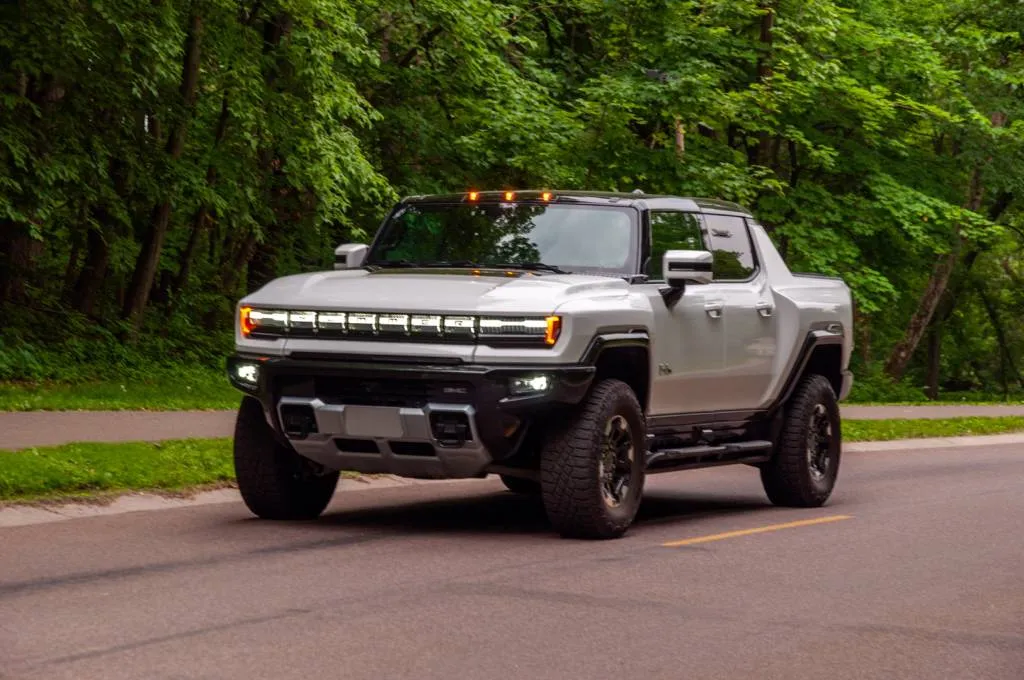
GMC Hummer EV
Calculated out, that equates a battery electric vehicle with a gasoline-powered vehicle that gets about 300 miles per gallon—allowing automakers until then to effectively produce hundreds more gasoline vehicles for every one EV, and incentivizing PHEVs. After that three-year phase-in, starting in 2027, EVs will only count like a 120-mpg gasoline model, much lowering the number of low-mpg models that each EV enables.
While the EPA standards may be the most important building blocks, the CAFE standards themselves are the step that ultimately determines the mix of vehicles that will be sold and emphasized through this time period—and it arguably gives the auto industry more of an incentive to keep sliding its product mix toward heavier, less efficient SUVs rather than passenger cars.
As the Environmental Defense Fund notes, the law requires NHTSA to set standards for the “maximum feasible” average fuel economy levels that automakers can achieve in a given model year, not all environmental and consumer groups saw these rules as meeting that maximum. The consumer organization Consumer Reports called them underwhelming and said that the NHTSA standards “only check the box on its legal requirement.”
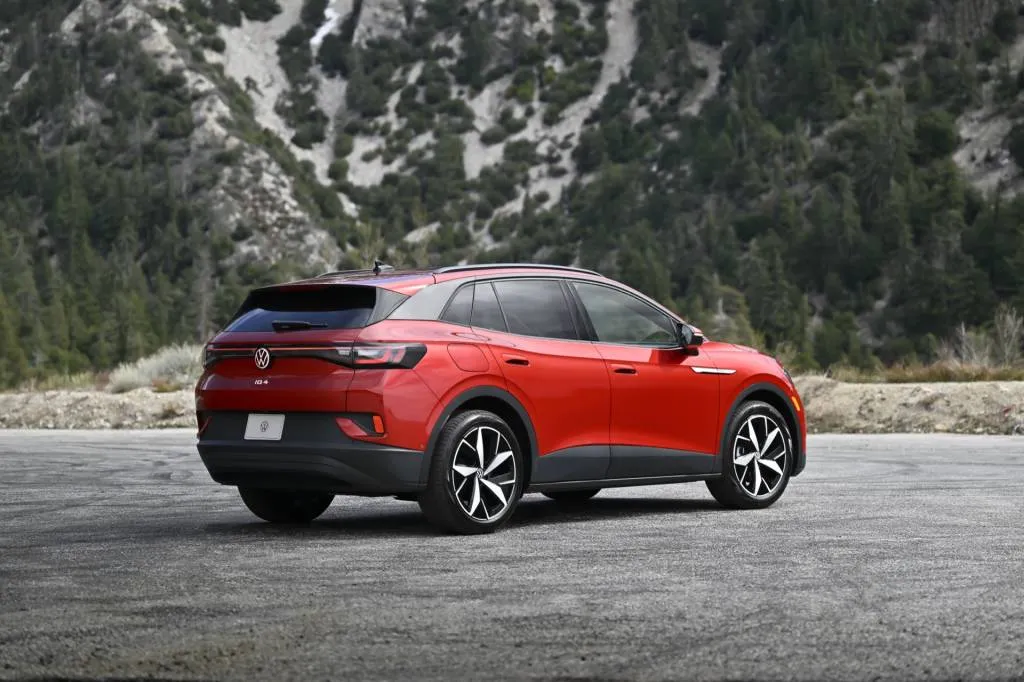
2024 Volkswagen ID.4
Will automakers make more EVs than they need to?
John Bozzella, the president and CEO of the Alliance for Automotive Innovation, representing automaker interests, applauded how the NHTSA rule works with the EPA one, and told S&P Global that “it looks like the left hand knew what the right hand was doing.”
What this generally positive remark about the rules and trendlines might mean, essentially, is that automakers are feeling confident that this interpretation will let them make more high-profit gasoline-powered trucks without paying fines.
In an era when another wave of the right EVs—perhaps aided by affordability and battery breakthroughs—might catch on a lot quicker, there’s a chance for automakers to prove regulators’ trendlines wrong.

Charging shorts EV interest, big SUV safety, Rivian Gen 2 and Toyota hybrid wagon: Today’s Car News
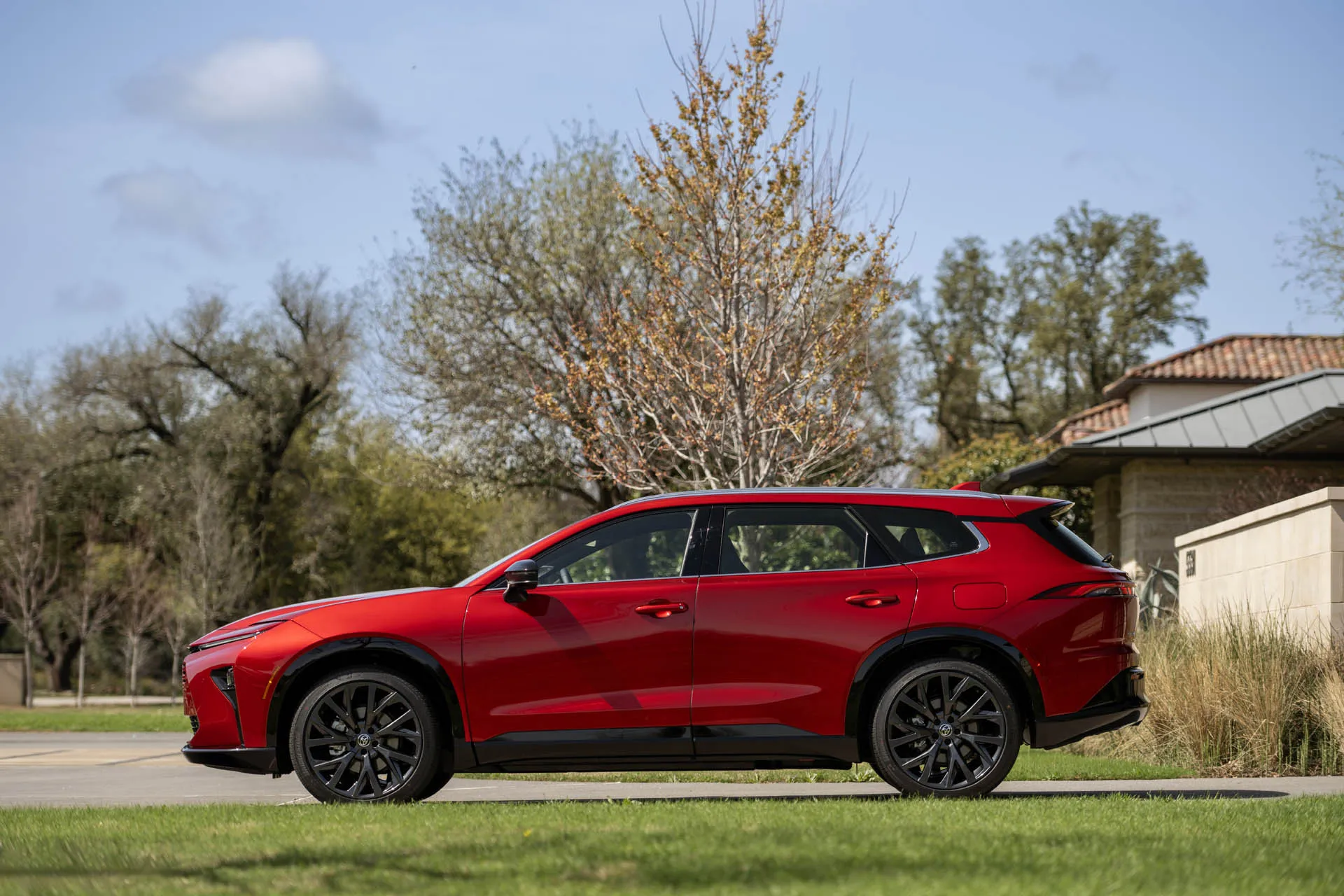
Check out first drives of the Rivian R1S and R1T, and the Toyota Crown Signia hybrid wagon. New survey results suggest that more Americans are holding back on EV plans due to charging. And no, thirsty non-hybrid SUVs aren’t safer. This and more, here at Green Car Reports.
Several big, gas-guzzling SUVs aren’t actually so safe, found the Insurance Institute for Highway Safety (IIHS) in a new round of crash tests of the Chevrolet Tahoe, Ford Expedition, and Jeep Wagoneer. Of these three-row models that largely return well under 20 mpg, only the Wagoneer received the top “good” rating.
A new survey from AAA found that fewer Americans are likely to buy a new or used EV in 2024, versus a similar survey last year. The reasons aren’t surprising, and they come down to cost and convenient charging; specifically, it suggests that nearly a third of Americans are unable to install an EV charger where they live.
Thursday, Green Car Reports rolled out a couple of first-drive impressions and debut material. Rivian on Thursday rolled out revamped “Gen 2” versions of its electric trucks that gain efficiency, ride comfort, and a lot more. The 2025 Rivian R1S SUV and R1T pickup will be offered in Dual-, Tri-, and Quad-Motor layouts, with Standard, Large, and Max battery packs. The arrival of LFP battery tech for the Standard pack, Rivian’s own motor systems for Tri- and Quad-Motor versions, and a simplified electrical architecture are just the start of a series of smart engineering decisions intended to set the stage for its mass-market R2 in a couple years. And as Green Car Reports experienced on the road, in the mud, and on the drag strip, it means impressive gains in performance and comfort.
And do you want a roomy, gasoline-fueled hybrid station wagon that can get nearly 40 mpg? That’s what Toyota has introduced with its 2025 Crown Signia, and at around $45,000 it’s a comfortable, more carlike family alternative to the boxier Highlander Hybrid.
_________________________________


Survey: Fewer Americans seek EVs, as attention shifts to hybrids
Consumer interest in EVs has declined, with car shoppers showing more interest in hybrids, according to a new AAA survey.
Only 18% of U.S. adults surveyed said they were “likely” or “very likely” to buy a new or used EV, down from 23% last year. And 63% of respondents said they were “unlikely or very unlikely” to make an EV their next car purchase. However, 31% of respondents said they were “likely” or “very likely” to buy a hybrid.
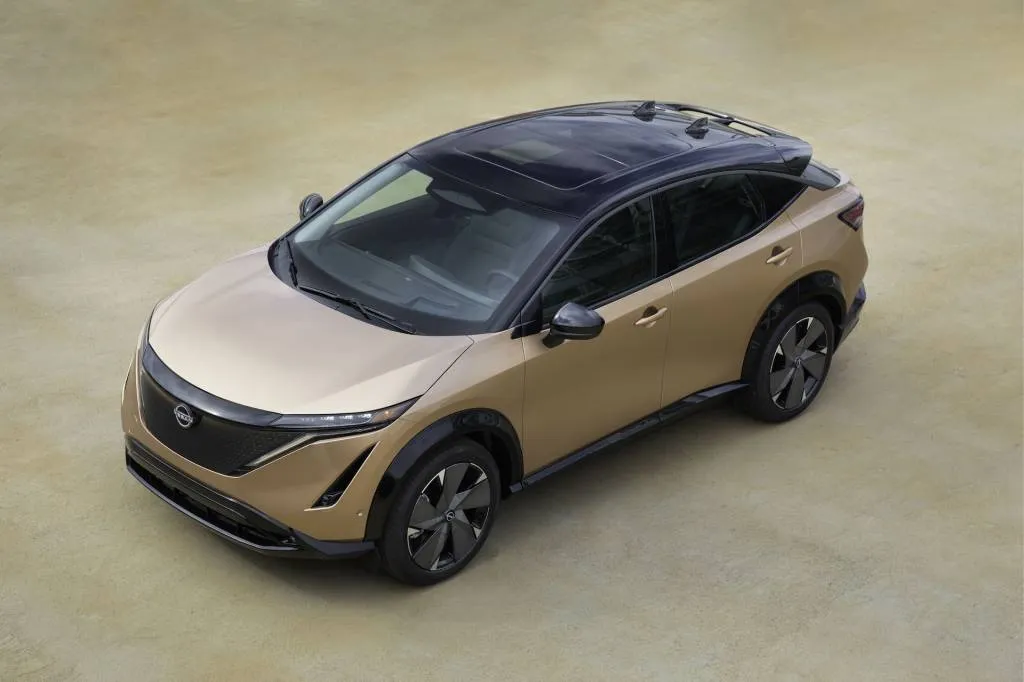
2024 Nissan Ariya
The main reasons for lack of interesting EVs were cost, lack of convenient charging options, and range anxiety, according to the survey, which is based on 1,152 mostly online interviews (those without internet access were interviewed by phone) conducted between April 4-8, 2024. The survey sample was representative of approximately 97% of the U.S. household population, according to AAA.
The survey also found that three in 10 U.S. adults were unable to install an EV charger where they lived. Drivers without access to home charging also have limited options, In 2022 Bloomberg New Energy Finance found that the U.S. lags other countries in installed public chargers vs. registered EVs. But solutions like curbside chargers from Voltpost might help more of those who live in apartments and depend on street parking to feel comfortable with the shift.
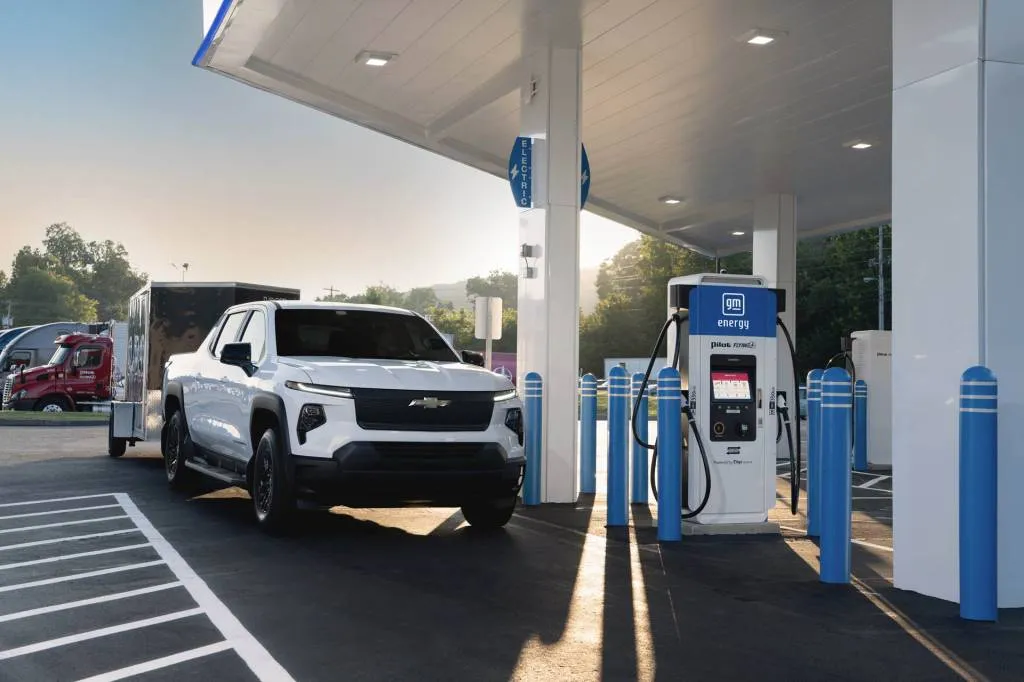
GM and Pilot Company’s EV charging network
Based on these results, AAA predicts that “there may be a near-term ceiling related to consumer adoption of battery electric vehicles due to their costs, charging accessibility, and range anxiety,” a statement from the auto club read.
AAA in recent years has also evolved to support EV needs with mobile charging and EV trip planning. In past surveys, AAA has found a positive message in EVs, and it’s found in past polling that simply owning and living with an EV will often quell concerns of range anxiety. But perhaps there’s a big difference between early adopters and today’s mass-market shoppers who need a lot more convincing.

Review: 2025 Rivian R1T and R1S gain efficiency, comfort, and a lifeline
-
Rivian has re-engineered the batteries, motors, and body structure of its R1T and R1S
-
This year the R1 vehicles get their first lithium-iron-phosphate (LFP) batteries
-
The revamp may give the R1 vehicles more in common with Rivian’s upcoming R2 series
Rivian this week in Seattle rolled out its revamped R1 family that will take the adventure-focused brand onward and upward, more efficiently and comfortably.
Against a skyline dominated by the Space Needle, I set out driving several models in this refreshed lineup—enough to understand that Rivian has made them undeniably better in most ways. Meanwhile, Rivian is threading its own needle between what R1 owners and premium EV owners want, what’s forward-compatible with its eagerly anticipated Rivian R2 lineup, and what the company itself needs to survive as an independent American automaker.
At face value, in body shape and cabin design, the Rivian R1S electric SUV and Rivian R1T electric pickup can look deceivingly similar to their predecessors. But nearly all of the components and technology details within them have been changed for the better. Even the body structure under the sheet metal has changed for easier assembly and weight savings.
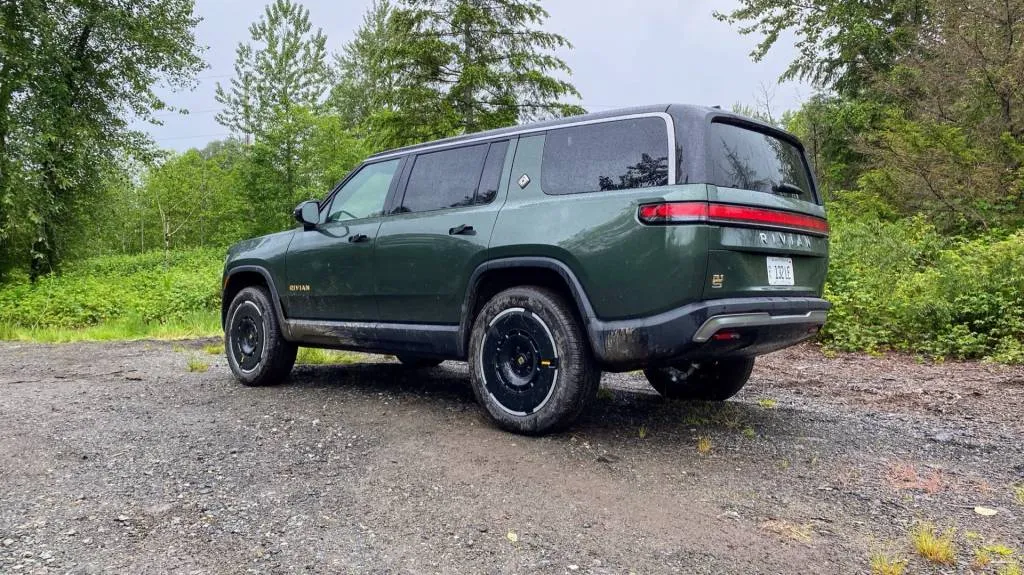
2025 Rivian R1 lineup
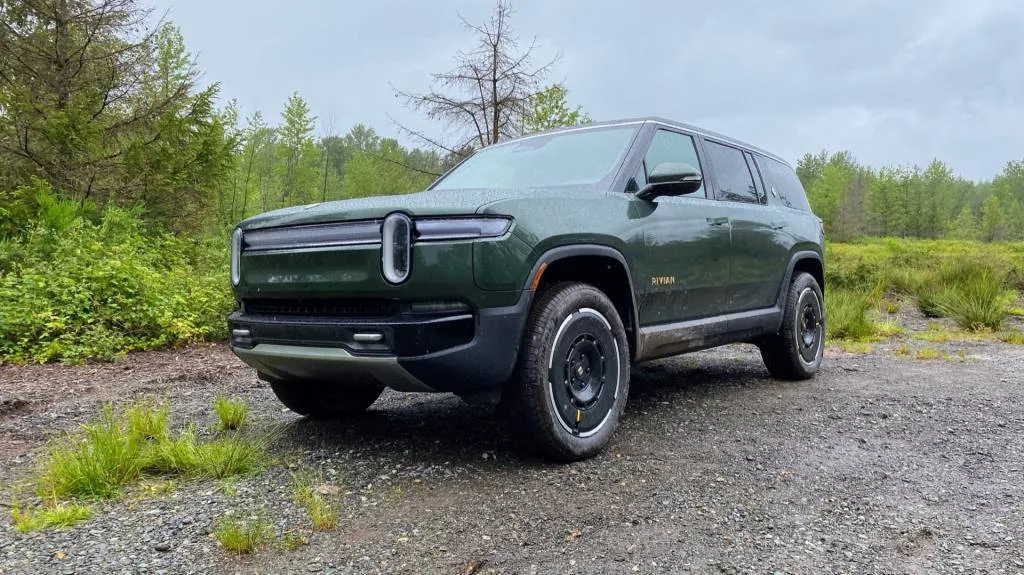
2025 Rivian R1 lineup
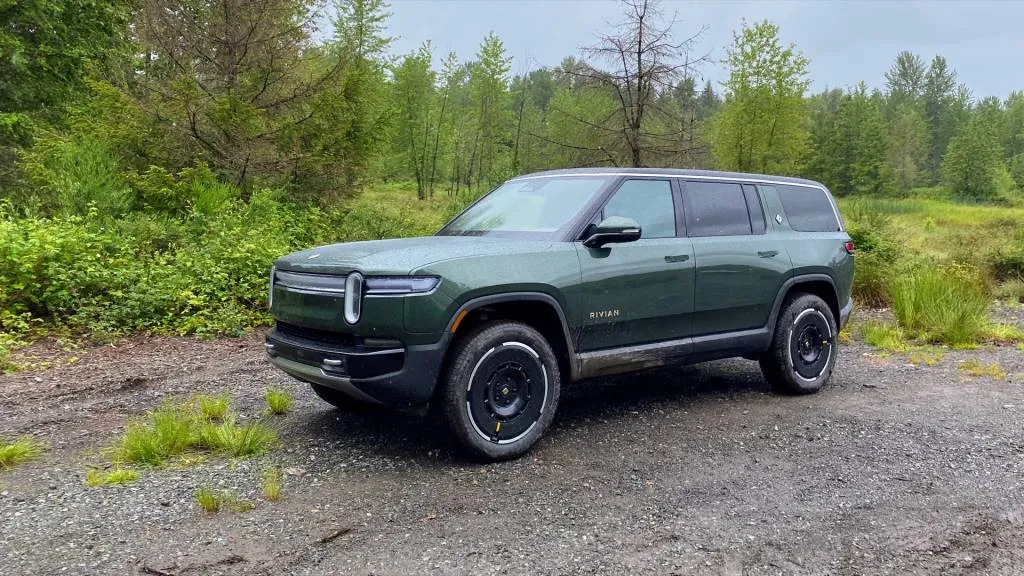
2025 Rivian R1 lineup
Over a couple of days with the Rivian team in Seattle, Green Car Reports got an understanding of how Rivian went systematically down the punchlist, surgically fixing nearly every line item that Rivian’s early adopters wanted to see changed—and adding many clever things that will help bring new owners into the fold.
2025 Rivian R1T and R1S taps 2, 3, or 4 motors
In their new configuration, the 2025 R1S and R1T will be offered in Standard pack, Large pack, and Max pack battery sizes, with Dual-Motor, Tri-Motor, and Quad-Motor layouts.
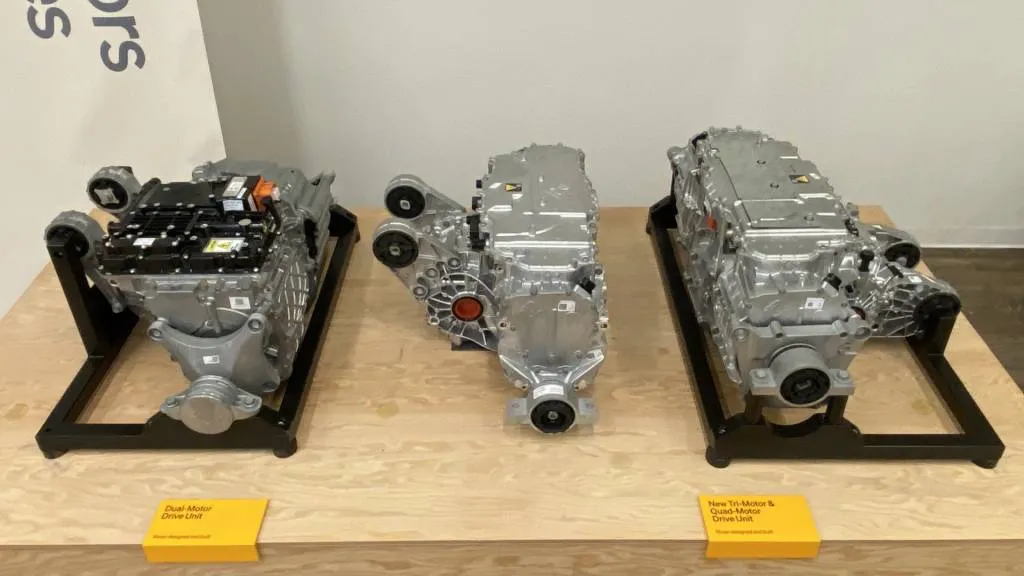
Last summer brought Dual-Motor models to market with new Rivian motors, also used in EDV. Now, the R1 lineup retires the previous Quad-Motor layout by adding two sizes of dual-motor modular units incorporating Rivian’s own oil-cooled motors inside.
These motors are set up to be made in quantity, and they may, based on hints, help the company lean into the smaller R2 lineup. Across their different packages, they have the same windings and magnets, with inverter tech shared front and rear and designed in-house. Rivian follows a philosophy that still emphasizes the front motors for efficiency while the rear motors are there for performance and can be disconnected.
Rivian notes that the new Tri-Motor models are quicker than the previous Quad-Motor versions. Quad-Motor models include two different motor couples in modularized form, with smaller motors in front, altogether delivering 1,025 hp, with 1,198 lb-ft of torque in launch control mode, and providing 0-60 mph acceleration in less than 2.5 seconds according to Rivian. Tri-Motor versions make 850 hp and 1,103 lb-ft from the same dual-rear-motor package but with a single motor at the front wheels, for a 0-60 mph time of 2.9 seconds. Dual-Motor models split into regular and performance versions, with the former making 533 hp and 610 lb-ft (4.5 seconds) and the latter making 665 hp and 829 lb-ft (3.4 seconds).
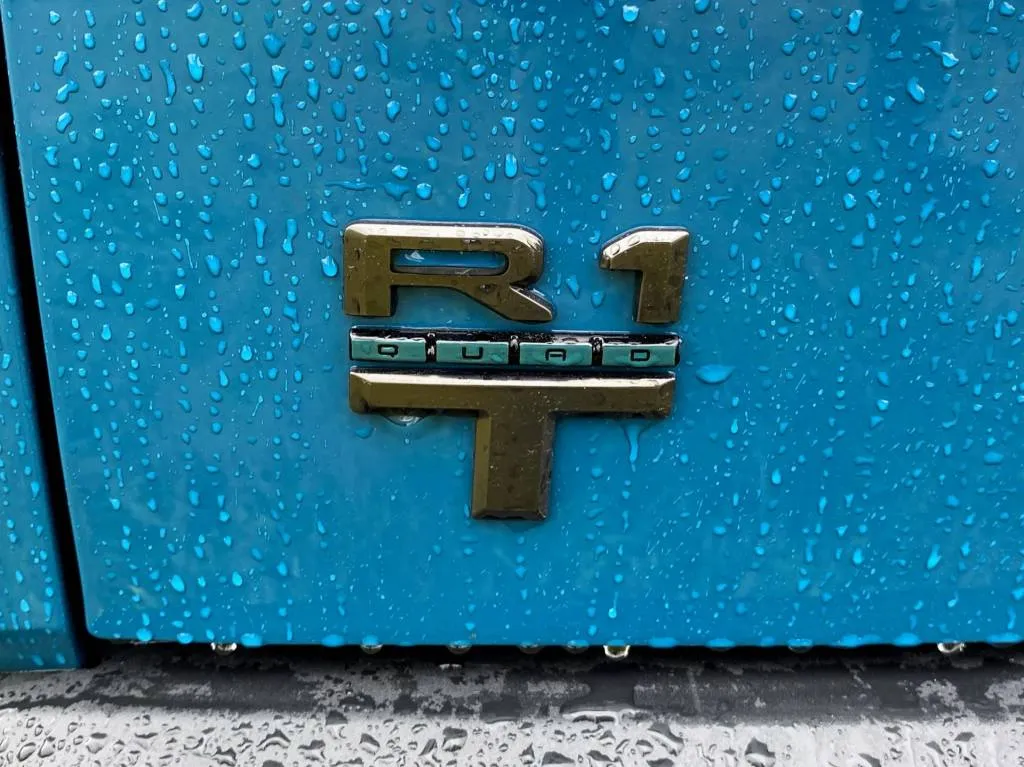
There’s very little to distinguish these models on the outside. Quad-Motor brake calipers get a new color, Laguna Blue, with a low-key “QUAD” badge in the middle of their rear badge, while Tri-Motor models get yellow calipers and a yellow badge strip in back.
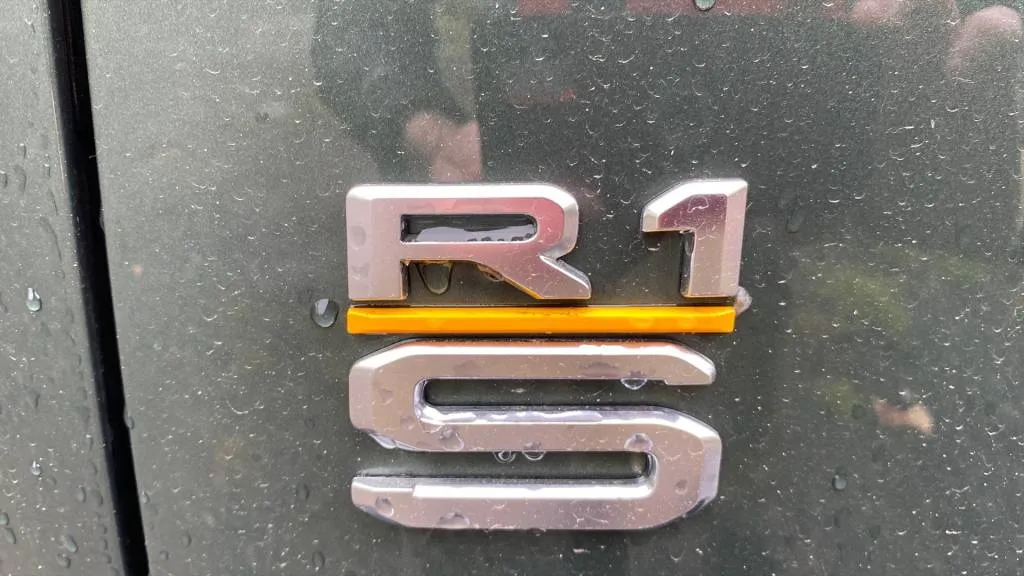
2025 Rivian R1 lineup
2025 Rivian R1 lineup

2025 Rivian R1 lineup
The Tri- and Quad-Motor versions are set up so that the rear motors deliver extra punch—with a 11.7:1 reduction ratio in the back, versus 9.1:1 in front. As I experienced with launch control in a Quad-Motor model on a dragstrip, these trucks will leap away from a standing start and hold close to their max power to a higher speed than before.
Rivian follows a complicated torque distribution algorithm that varies between drive modes. The dual-motor units used in the back of 3-motor models and in front and in back in 4-motor models aren’t connected and each turn their respective wheels. Dual-Motor and Tri-Motor models at the front wheel use their single motor package in combination with a differential and brake-torque application instead. No matter which configuration, the R1 family can detach the motors to the front or rear axle as needed for traction or efficiency, and the R1 still defers to the front wheels under light acceleration and during most cruising conditions, sending more power to the rear motors when needed especially for acceleration.
The R1T and R1S retain their peak tow ratings of 11,000 and 7,700 pounds, respectively.
R1S, R1T get LFP Standard Pack, lighter Large and Max
Rivian has evolved its battery pack design for weight savings, manufacturability, and cost, while keeping the architecture that relies on a flat cooling plate sandwiched (in Large and Max Packs) between two layers of cells. The Standard Pack has 92.5 kwh of usable capacity, while the Large Pack has 109.4 kwh and Max Packs are essentially unchanged at 141.5 kwh.
Yes, for Standard and Large packs, those are lower capacities than for the 2024 models. But thanks to efficiency improvements Rivian notes that ranges start at 258 EPA miles, and even Standard Pack versions are expected to roll in at 270 miles—the same range as provided by the 106-kwh Standard Pack for Gen 1, to underscore how pronounced the efficiency improvements are. Range ratings aren’t finalized yet, but it expects up to 420 miles of EPA range with the Dual-Motor R1T and Max Pack and up to 410 miles with the Dual-Motor R1S and Max Pack. Rivian says that the second-generation R1T will be the most efficient truck on the market, and we look forward to seeing that in real-world use.
New 22-inch wheels—not 21-inchers—are the aero optimized picks of the lineup, leading to a coefficient of drag as low as 0.297 and helping maximize range.
Rivian R1 heat pump
Rivian R1 heat pump
Rivian motor systems
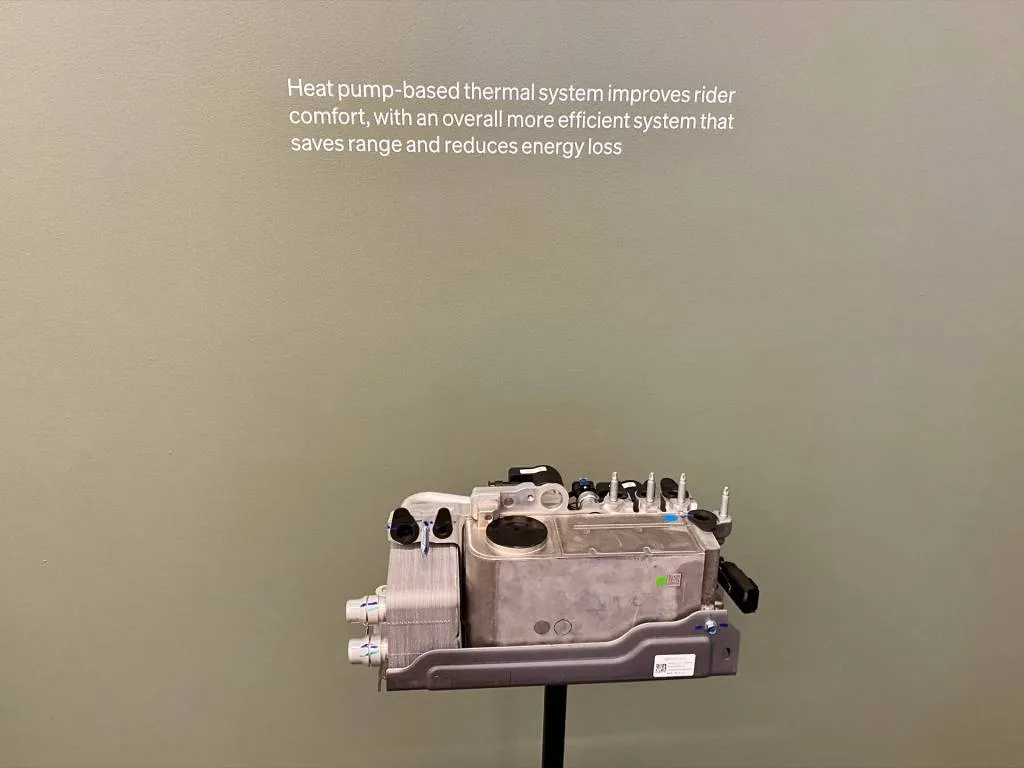
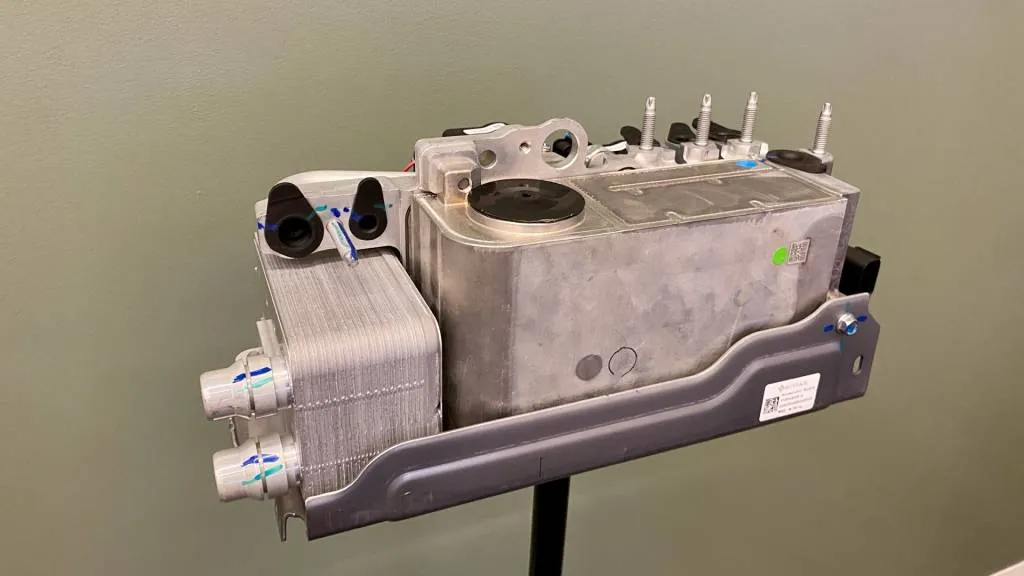
And the heat pump is here. The unit that’s at last been introduced to the entire R1 lineup improves real-world range by up to 10 miles on average, or appreciably more in specific situations. It allows Rivian to drop the conventional resistive heater, instead opting for an element that heats the coolant when needed—and when it can keep that heat in the system.
Further, summing all these improvements to efficiency and manufacturability, it says that the carbon footprint of the R1 has been cut by 15%.
Large Pack and Max Pack versions retain their 2170-format cylindrical cells in the same NCA (nickel cobalt aluminum) chemistry, although a boost in energy density of around 6% pays dividends. The long-awaited LFP cells use large-format pouch cells packaged at the same height as the two layers of cylindrical cells, with an entirely different internal cooling strategy. Officials told Green Car Reports that these LFP cells are only “a little less energy dense” than the NCA cells, and Rivian wouldn’t yet reveal the supplier.
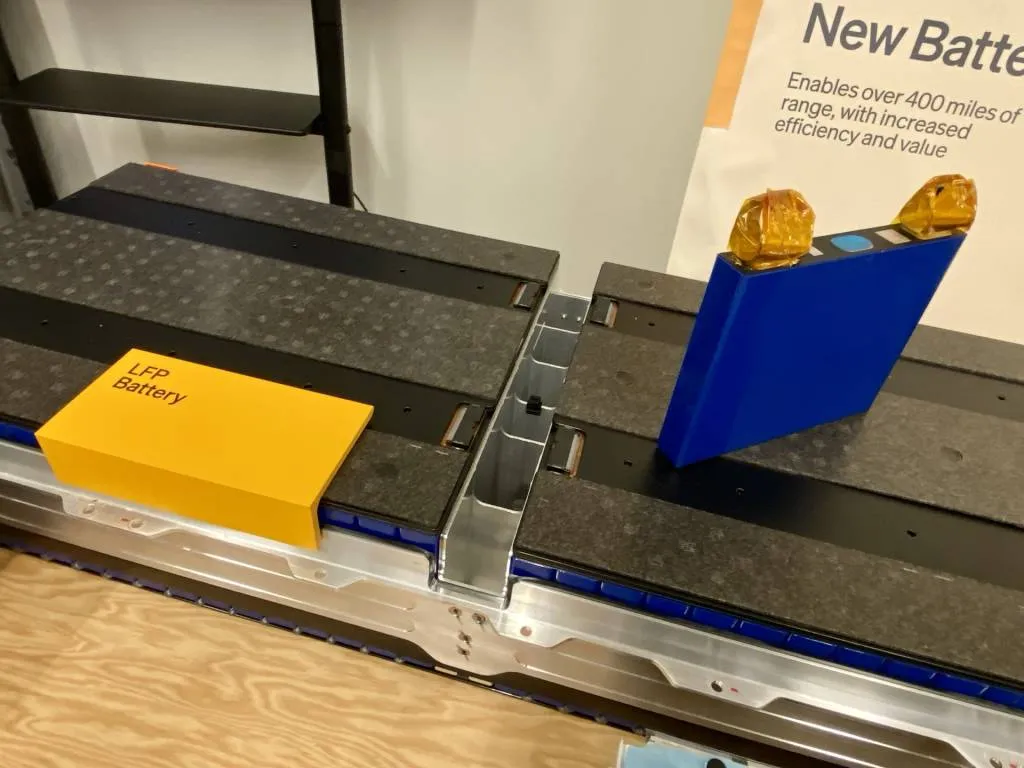
Rivian LFP pack
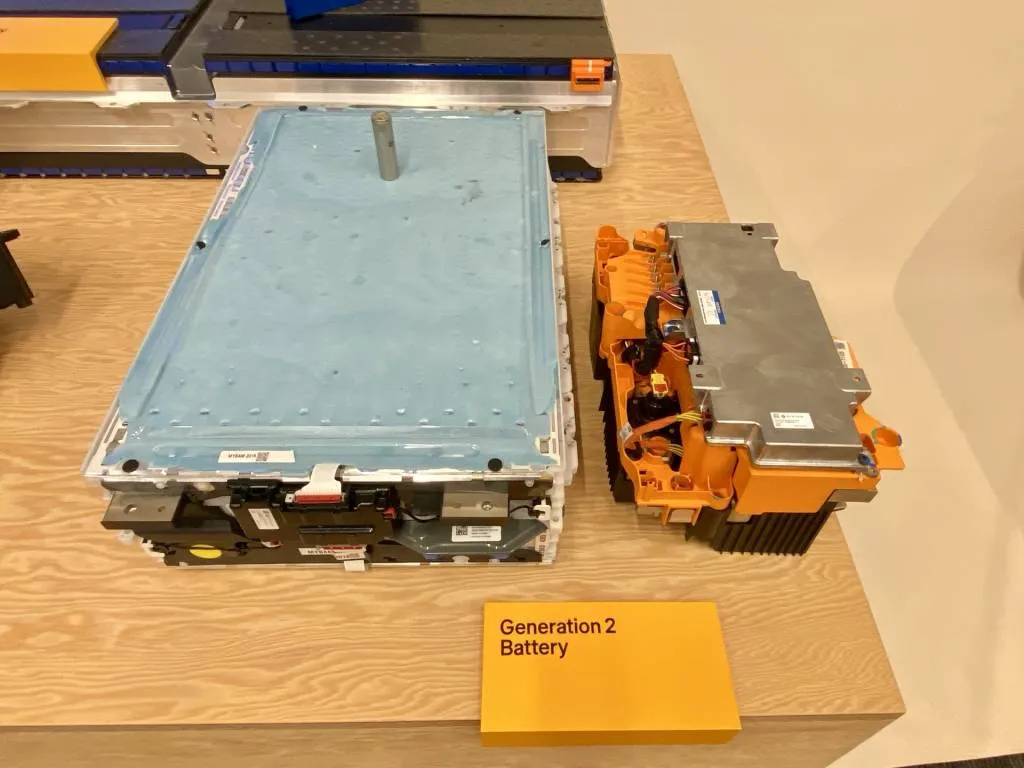
Rivian Gen 2 battery pack
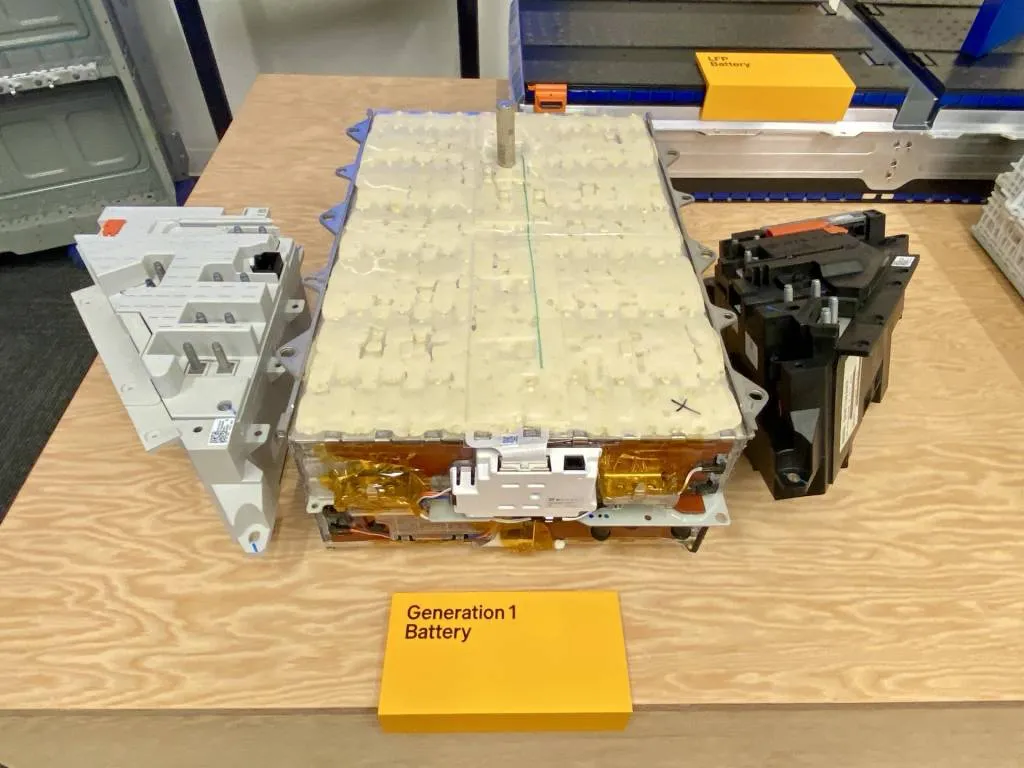
Rivian Gen 1 battery pack
These have Rivian’s new battery-pack architecture, which is an evolution of its previous pack, cutting out some weight and complexity. The battery case itself is high-pressure die-cast versus extruded for more accuracy, saving 55 pounds alone, with 154 pounds of mass saved for the entire battery pack assembly, including a singular unit that incorporates the battery management system.
No 800V—so no big charging boost
On the other hand, the Gen 2 isn’t everything that Rivian had hinted in the past might be coming. It makes no shift to 800-volt, as CEO RJ Scaringe suggested years ago these models might migrate to with their first significant refresh. Rivian has hinted that the R1 lineup is set up for bidirectional charging, but officials shied away from revealing how or when that might be implemented.
Thus, charging hasn’t changed much. Rivian has extended the plateau of the charge curve and made it flatter, but peak charging power for the Large and Max packs remains at 220 kw, while the Standard Pack, with LFP cells, will max out at 200 kw. Rivian says that a 10-80% fast-charge will take 30-41 minutes, depending on the battery, and the lineup is able to add about 140 miles of range in about 20 minutes. Level 2 charging remains at a max 48 amps (11.5 kw), which won’t quite assure a full charge overnight if you have a Max Pack.
And it’s done some serious work to update and simplify the R1’s electrical architecture, while answering issues of “vampire drain” and again optimizing efficiency and simplifying the supply chain. It’s been completely redesigned—with a simpler layout including 7 ECUs versus the previous 17, and the removal of 1.6 miles of wiring from the vehicle. Further, it’s added what it calls a mini DC-DC converter that helps “float” the 12-volt battery at a near-constant state of charge and power lower-power accessories like infotainment and lights.
Outdoorsy folks depend on returning to the state of charge they left, and now Rivian claims industry leading range-loss numbers—with the Gear Guard off, as Gear Guard uses cameras and processing units.
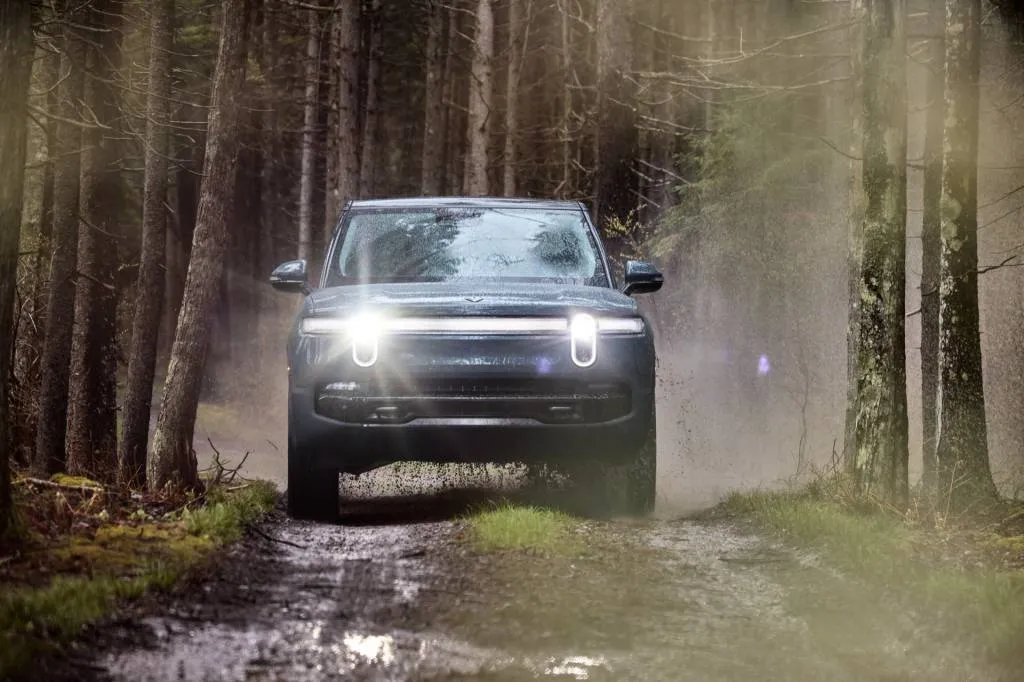
2025 Rivian R1T
2025 Rivian R1 lineup
2025 Rivian R1 lineup
R1 lighting works with you
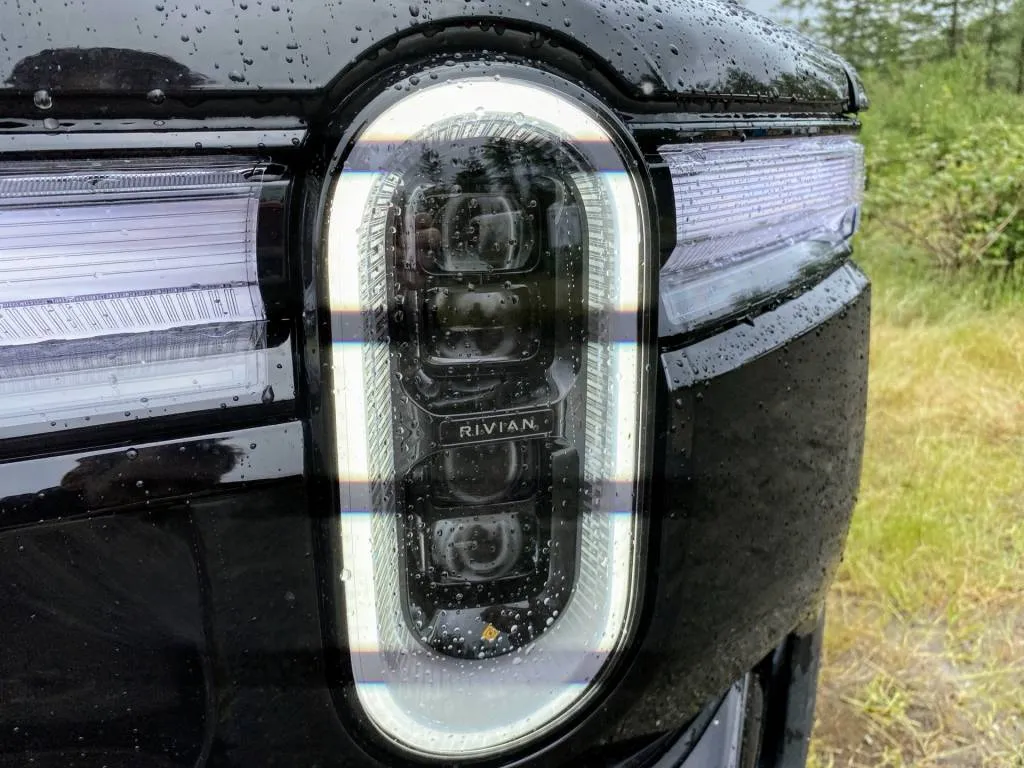
Rivian hasn’t messed with the design of the vehicle, or its unmistakable lightning signature. In fact, it’s made that signature even more distinct—with active-matrix headlamps that have adaptive-beam tech Rivian will enable later this year. The lighting will launch with adaptive cornering functions, with adaptive high beam in its final certification stage and to be enabled with a future software update.
In addition to the new headlights, the lightbar across the front end is now earning its keep. It has 10 individual sections of RGB lighting that can show effectively any color, and one of the initial uses of this is to show the state of charge at a glance in percent. As the executive hinted, between the headlights and the new RGB light bar, it leaves lots of potential for Easter Eggs.
Rivian chief design officer Jeff Hammoud explained that these changes add “a lot more dimensionality” to the appearance of the whole lighting scheme. “It’s still distinctly Rivian, we love the face,” said Hammoud. “It’s really hard to come up with something that’s simple, easy to describe, and iconic, and we’re happy to have it and don’t want to walk away from it.”
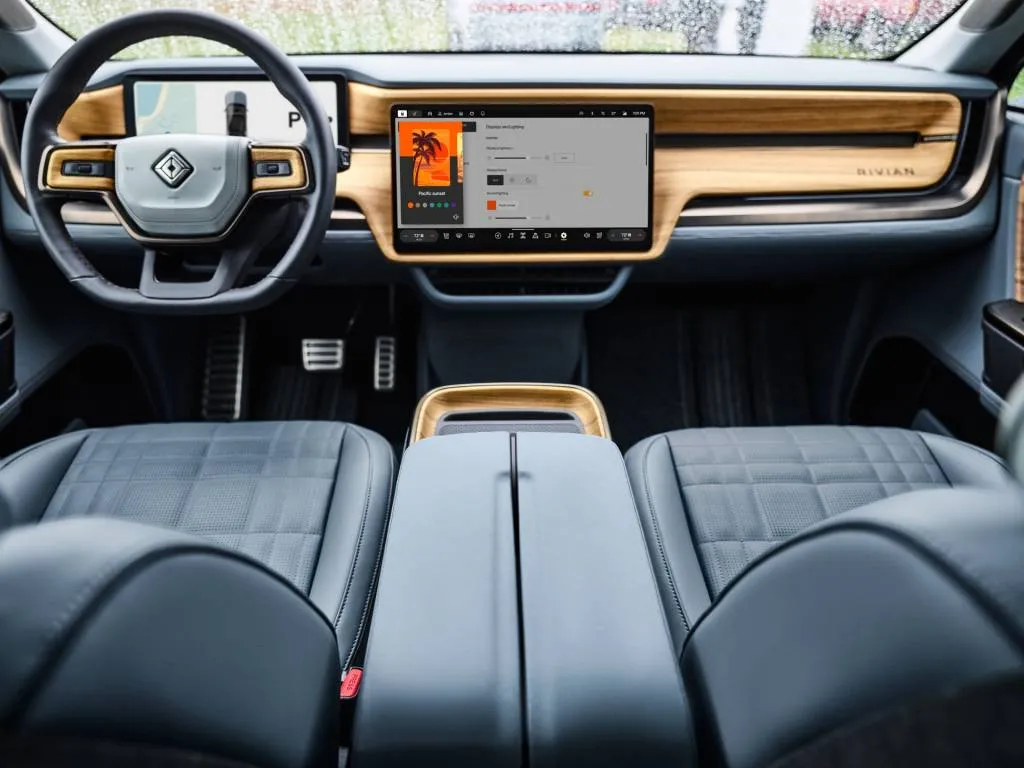
The R1 family’s glass roof is new, too, with tinting on demand and a multi-color interior lighting system.
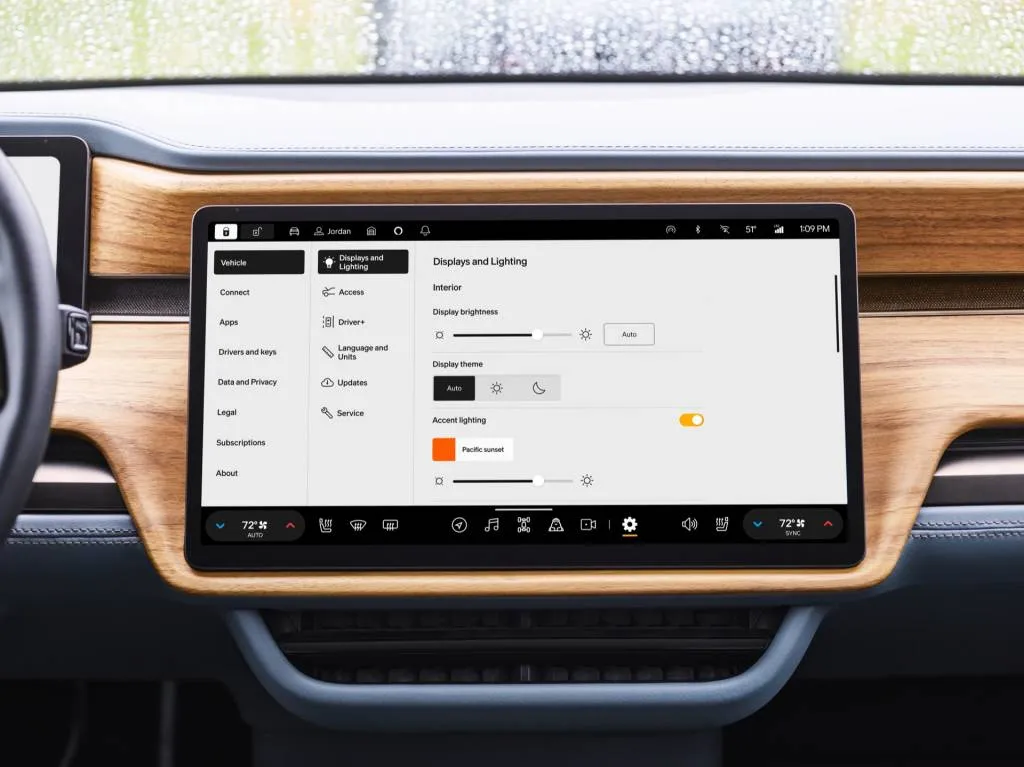
Rivian’s interface has been further flattened for navigability, and for help in revamping its visualizations in the interface, Rivian turned to Epic Games and its Unreal Engine. Splashy visuals aside, it remains one of the most straightforward interfaces on the market—especially if you simply want to check in on all the vehicle systems.
Apart from the UI itself, details that stand out to this correspondent included the new button-based electronic door releases (just a luxury touch as there’s still a manual pull and you can use it as much as you want), and revisited interior upholsteries and surfaces, including a plaid-quilted design for seats and mats.
2025 Rivian R1S
2025 Rivian R1S
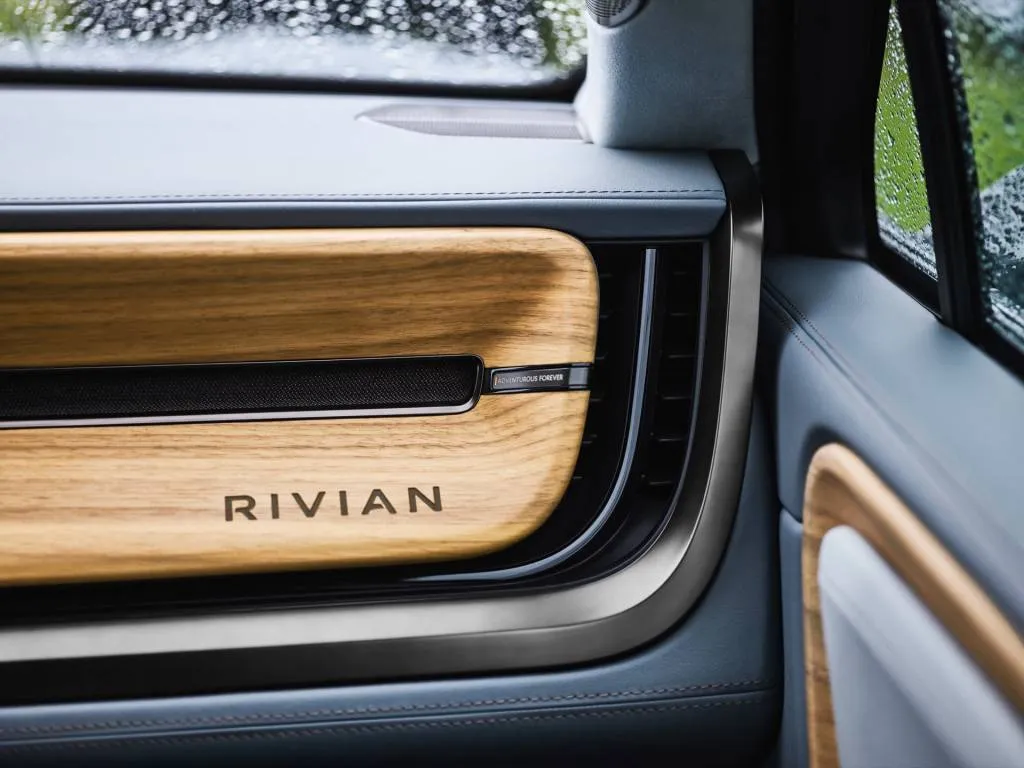
2025 Rivian R1S
Revamped Rivian R1 ride and handling: More lux
Inside, the R1 lineup feels a little more like a luxury vehicle, and it’s less a matter of features than it is how this model rides and handles.
To that point, once the Gen 2 is rolling—even if it’s on city streets—it’s the first thing you’ll notice. Rivian has effectively purged these models’ brittle, sometimes noisy ride by applying a softer tune across the lineups, without affecting handling and quite possibly, when the going gets rough, improving it.
To get there, it increased the front spring rate and lowered the rear spring rate, then applied a new damper tune and new bushings. All versions still ride on air springs, but the retune aims to better work with the rear-biased weight and power delivery of these vehicles.
The suspension work all comes together with the additional Rally and Drift modes gained by Tri-Motor versions. On a muddy off-road course intended for feeling out R1S dynamics, I felt a pronounced difference between the two modes—which mostly comes down to different behavior dialed into the hydraulic roll control.
I also took the R1T out on a rutted off-road course allowing this model to show off its strengths in wheel articulation and overall trail ability. Peak ground clearance is 14.6 and 14.7 inches for the R1T and R1S, respectively. At the deepest point, the light bar on our R1T was lapping up against the water. The R1 trucks can ford around 43 inches of water, so even considering the pouring rain and deep water crossings, we still weren’t close.
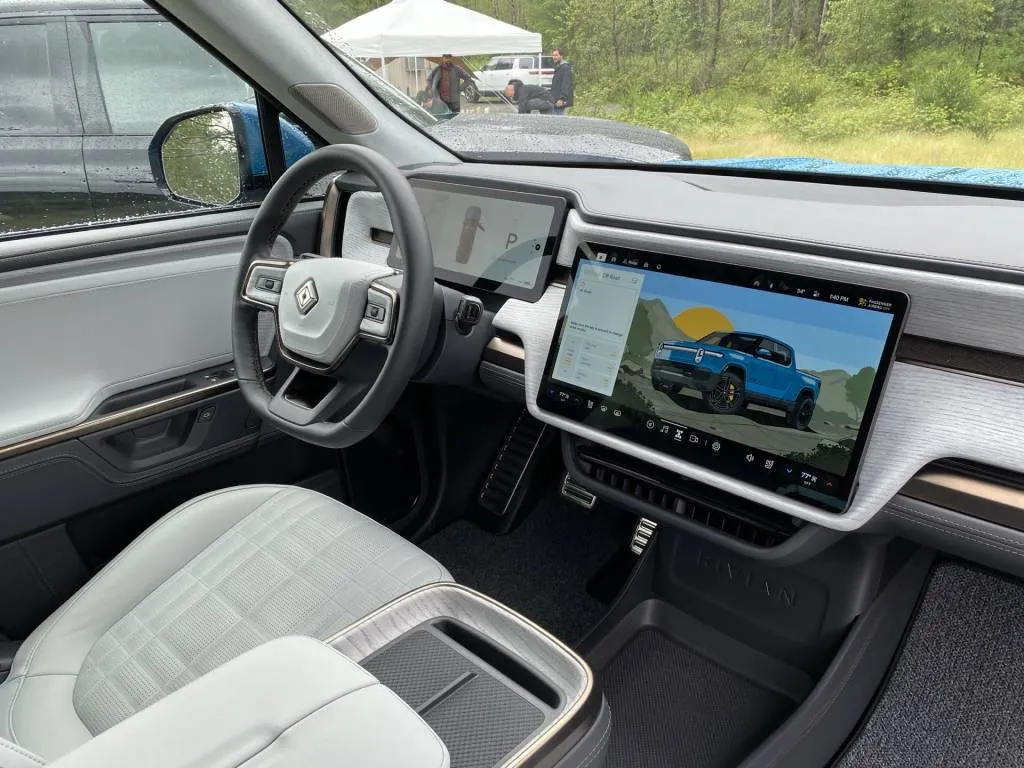
2025 Rivian R1 lineup
Rivian R1 features: Connectivity for sight and sound
Rivian has also completely upgraded its sensing and driving-assist system. In this so-called Rivian Autonomy Platform, 11 cameras, five radar units, and AI algorithms come together to provide 350-degree visibility with eight times the camera megapixels of the outgoing systems, allowing vastly improved vision in inclement weather and challenging lighting situations. Base versions of this system will include blind-spot monitors and driving assistance combining active lane control and adaptive cruise control, while a “plus” version of the system will initially add a driver-initiated lane change and, soon, an enhanced version of the system yet to be detailed.
Rivian is also offering a new premium audio system with Dolby Atmos, and it will launch with Apple Music integration and its Spatial Audio. Rivian Connect+, at $14.99 a month, will enable Apple Music access as well as wifi hotspot functionality and more. Further, any application with Google Cast can now play video (and audio) entertainment on the screen—definitely an asset during charging stops. But you’ll need to understand that there’s no Apple CarPlay (or Android Auto) to fully take your smartphone experience into the vehicle.
Owners can use Apple Wallet on their iPhone or Apple Watch, or some Google Pixel devices, to unlock their Rivian or share keys with family or friends—or give what amounts to a day pass for their vehicle.
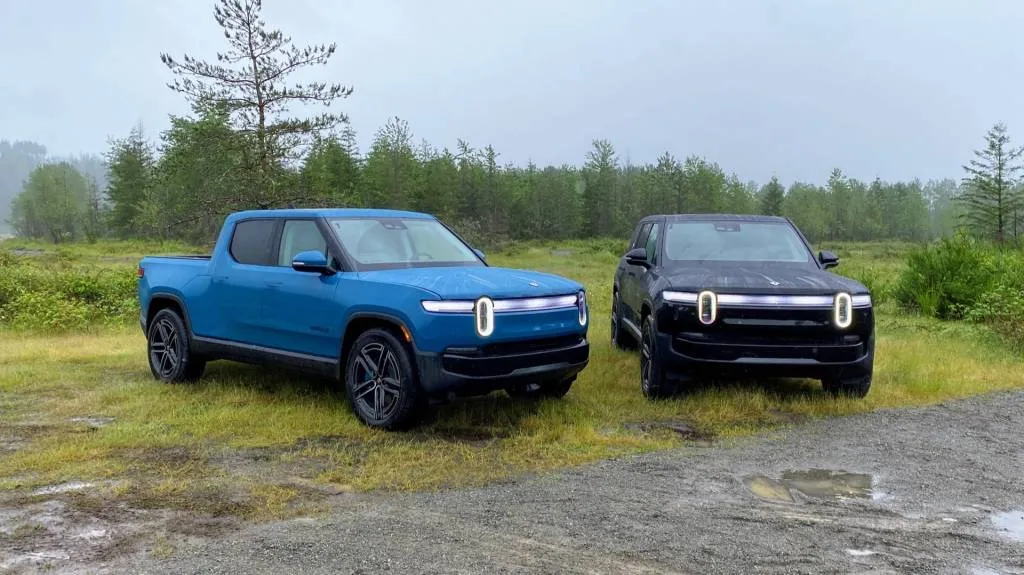
2025 Rivian R1 lineup
Deliveries of the second-gen R1 family start this Friday, June 7, with the 2025 Rivian R1T starting at $71,700 (including $1,800 destination) and the 2025 Rivian R1S starting at $77,700. The lineup tops out for now with Tri-Motor Max Pack versions, costing $101,700 in R1T form and $107,700 in R1S form. Quad-Motor Max Pack models haven’t yet been priced and will be coming a bit later. Rivian’s offering them in Adventure and Ascend trims, with precise feature differences yet to come. The Dual-Motor and Performance Dual-Motor will be only offered in Adventure trim, while the Tri-Motor and Quad-Motor are only offered in Ascend trim.
Meanwhile, final development stages continue on Rivian’s R2 lineup—truly its lifeline for survival. The R2 will likely share the R1’s motor systems and more, but otherwise it will push the envelope in many respects toward mass-market affordability, profitability, and the company’s viability, long-term. Based on what I see here, and what it can roll out to the R1 family, there’s a lot of hope the company can and will deliver that in spades.
Rivian provided Seattle accommodations and some healthy meals to help facilitate this review.

Volvo starts production of EX90 EV in US
Production of the 2025 Volvo EX90 electric SUV for the U.S. market is now underway in Charleston, South Carolina, Volvo confirmed Wednesday.
Unveiled in November 2022, the EX90 was originally scheduled for first deliveries in early 2024, but it was held back due to software issues. Volvo now plans to deliver the first U.S. customer cars in the second half of this year.
The EX90 is built alongside the Volvo S60 sedan (available with gasoline and plug-in hybrid powertrains) at the South Carolina plant, which opened in 2018 as Volvo’s first U.S. manufacturing facility. It has the capacity to build up to 150,000 cars per year, according to Volvo, and it will soon add the Polestar 3 electric SUV that shares a platform with the EX90.
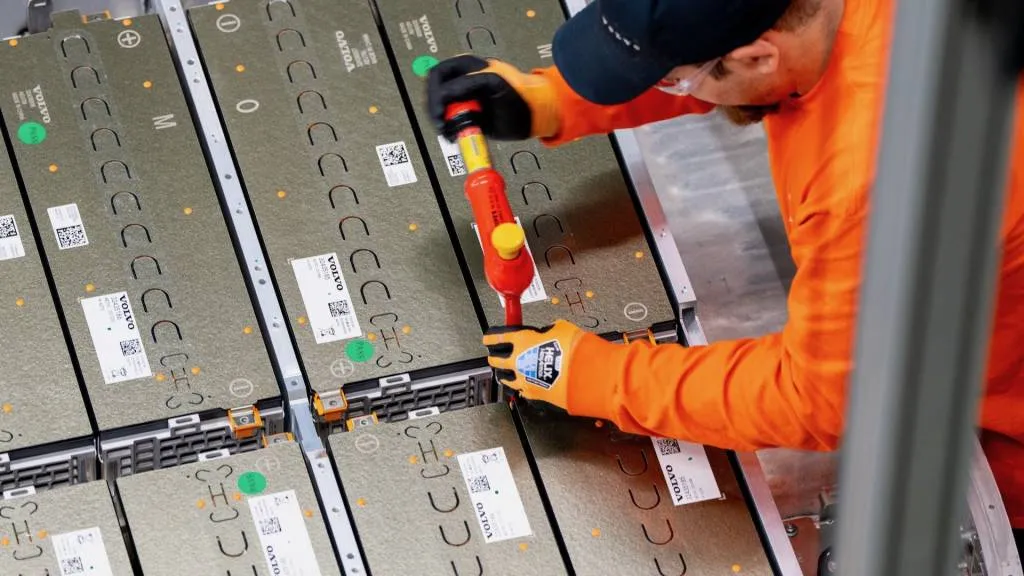
2025 Volvo EX90 production begins in South Carolina
U.S. versions of the EX90 are priced from $77,990 in the seven-passenger layout, while the six-passenger layout with second-row captain’s chairs starts at $78,490 (both prices include a $1,295 destination fee). That means at least some of the lineup is likely to land under the $80,000 federal EV tax-credit price cap.
Volvo previously confirmed two performance levels, both with dual-motor all-wheel drive. The Twin Motor spec makes 402 hp and 568 lb-ft of torque and will do 0-60 mph in 5.7 seconds, according to Volvo. For $5,000 more, the Twin Motor Performance ups output to 496 hp and 671 lb-ft, and can accelerate to 60 mph in a Volvo-estimated 4.7 seconds.
Volvo has mentioned up to 300 miles of range from a 111-kwh battery pack, but there is no official EPA confirmation yet. The automaker has also clarified that all EX90 models for the U.S. will include a heat pump and the hardware for bidirectional charging. The peak DC fast-charging rate is 250 kw, with 10-80% coming in about 30 minutes.
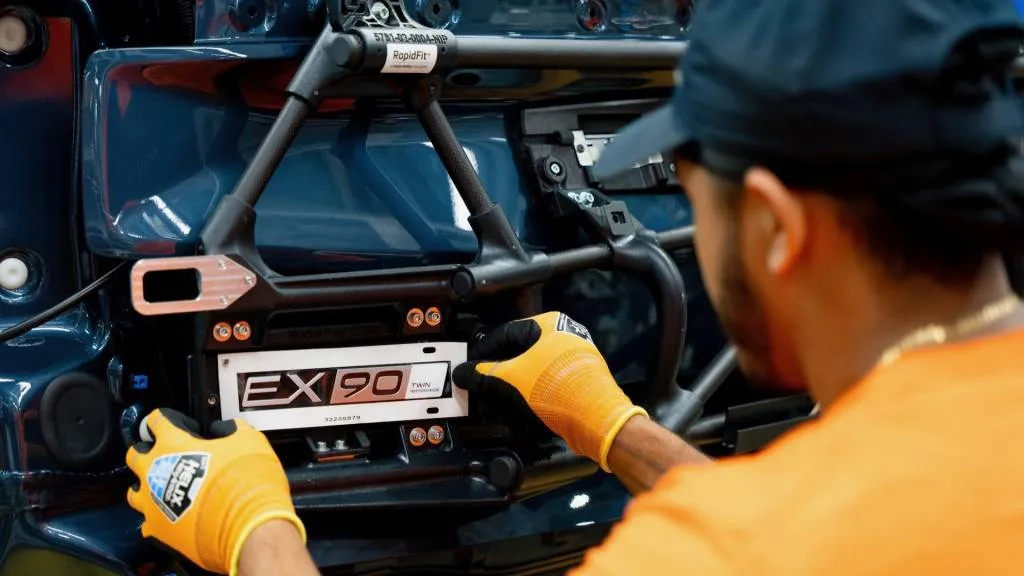
2025 Volvo EX90 production begins in South Carolina
The Charleston plant isn’t the only planned EV manufacturing site in South Carolina. The Volkswagen Group’s new Scout Motors brand plans to build EVs at a new factory near the state capital of Columbia within the next couple of years. Scout will build rugged EVs inspired by the classic International Harvester Scout, including a $40,000 SUV.
Meanwhile, the 2025 Volvo EX30 is also due to reach the U.S.—with a $36,245 base price. Volvo had planned to manufacture the EX30 in China for the U.S., which could prove more complicated due to new Biden administration tariffs.

Manchin pushes back over EV tax credit battery content rules
West Virginia Senator Joe Manchin is once again criticizing the Biden administration’s EV tax credit rules, reports Reuters.
Manchin, who is known for opposing Biden administration policies and last week left the Democratic Party and registered as an independent, told U.S. Treasury Secretary Janet Yellen during a hearing of the Senate Appropriations Committee that rules requiring locally-sourced battery content in order to qualify for the EV tax credit had been watered down.

Mercedes-Benz battery factory
Implemented under the Inflation Reduction Act (IRA), the battery-materials rules aim to cut China out of the U.S. EV supply chain. The Biden administration last month issued guidelines easing these rules for two years, but it’s still keeping restrictions on Chinese content in place. That appears to be what Manchin is taking issue with.
The Senator said in the hearing that, rather than strengthening U.S. battery resources, the Treasury Department’s interpretation of the battery-materials rules would keep China “in the market for the entire extent of the IRA.” He said the easing the rules, allowing automakers to use China-sourced battery materials such as graphite for a longer period of time, would “break the law.”
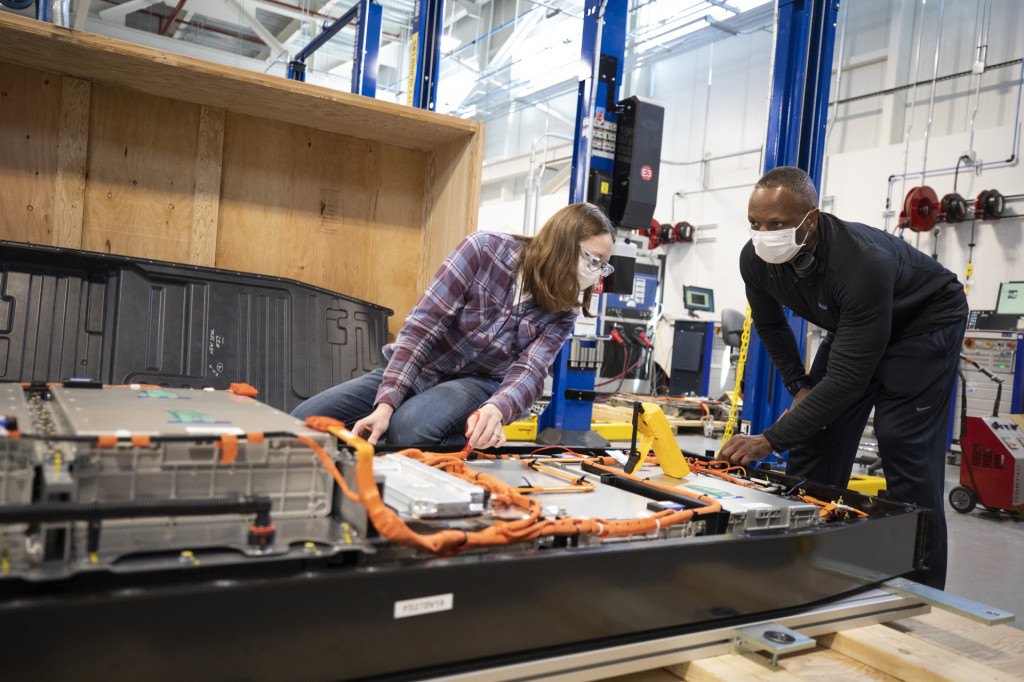
Ford Battery Benchmarking and Test Laboratory in Allen Park, Michigan
This is not the first time Manchin has spoken out against an EV-related aspect of the IRA. While still a Democrat, he threatened to stop the IRA over an initial focus on union-made vehicles. That helped scrap a proposed union-made bonus for the EV tax credit, one that would have admittedly applied to only a small number of models initially.
Manchin has also spoken out against the so-called “leasing loophole” afforded by the IRA. In a stretch of the original intent allowed by the Biden administration, that’s led to federal subsidies for EVs that wouldn’t qualify for the tax credit as purchases, including luxury EVs that exceed price caps set by the IRA. A surge in EV leasing has followed, and it serves as an incentive for automakers to continue making more luxury EVs.