
Category: General

2025 VW ID.4 gets ChatGPT—why, we’re not sure
- AI makes its way into Volkswagen’s maiden electric car
- VW says it’ll be used as a voice assistant
- VW also says your data won’t be at risk from in-car use
Volkswagen confirmed Thursday that it’s carrying over its refreshed lineup of VW ID.4 EV models to the new model year essentially unchanged—and with most of the lineup now offering the ChatGPT-based voice assistant that the ID.4 gained for 2024.
As with the 2024 models, which arrived earlier this calendar year, the vast majority of the 2025 Volkswagen ID.4 lineup offers a punchier permanent-magnet rear motor unit allowing 282 hp in single-motor rear-wheel-drive form, or 335 hp in dual-motor all-wheel-drive form that includes a smaller induction motor in front. Meanwhile VW boosted ID.4 EPA range ratings to 263 miles for AWD versions or up to 291 miles for the single-motor version, both with the larger 82-kwh (77-kwh usable) battery pack.
The base ID.4 Standard, with its 62-kwh (58 kwh usable) battery pack is only offered with rear-wheel drive and keeps the 201-hp rear motor unit formerly used throughout the lineup. It also holds tight with the old 12.0-inch infotainment screen, while the rest of the lineup gets a 12.9-inch infotainment system with a revamped interface that cures, from what we could see in a first drive of the 2024 VW ID.4, nearly all of the interface ills of the ID.4 as it was initially launched. It keeps its Apple CarPlay and Android Auto compatibility, but it adds improved processing hardware to get rid of the latency, a tray of shortcuts, and climate functions that “stick” to the bottom of the screen. Supporting haptic sliders are now backlit and no longer laggy.
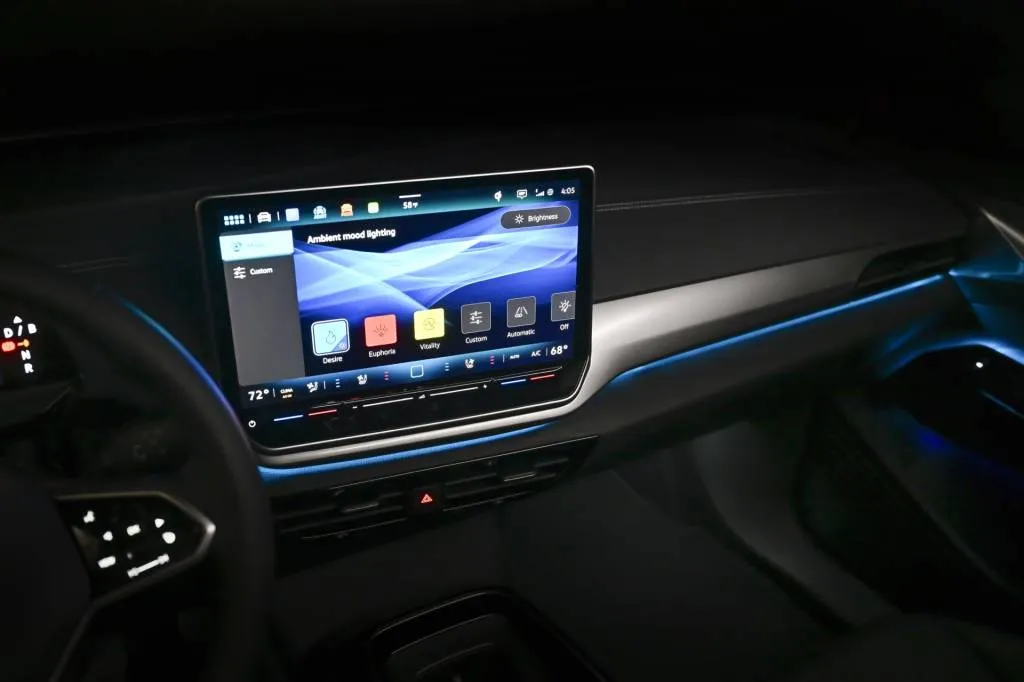
2024 Volkswagen ID.4
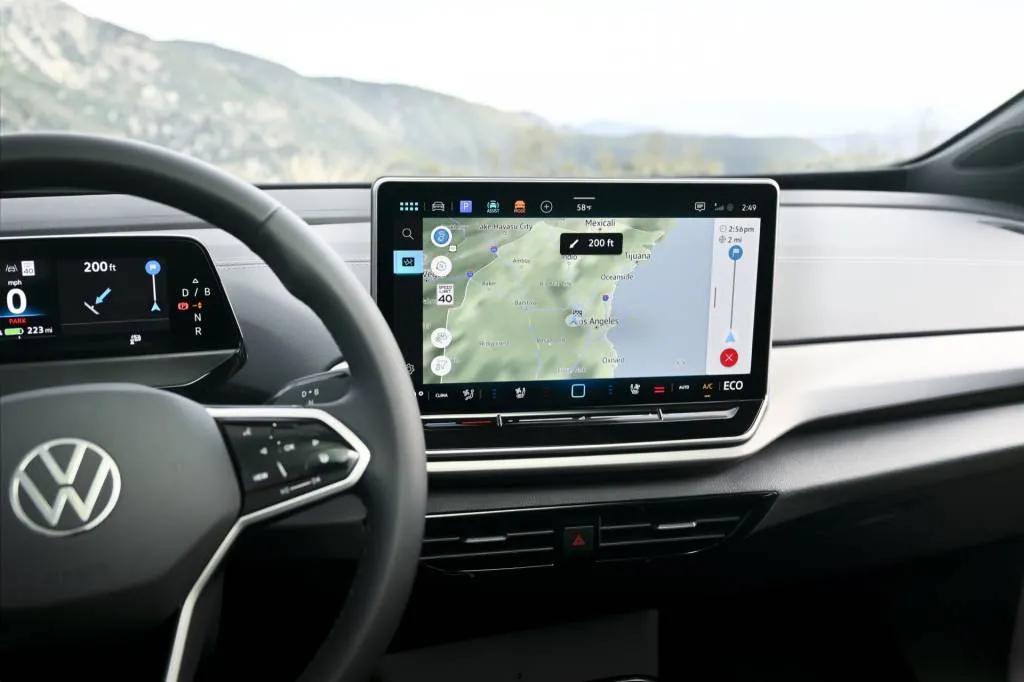
2024 Volkswagen ID.4
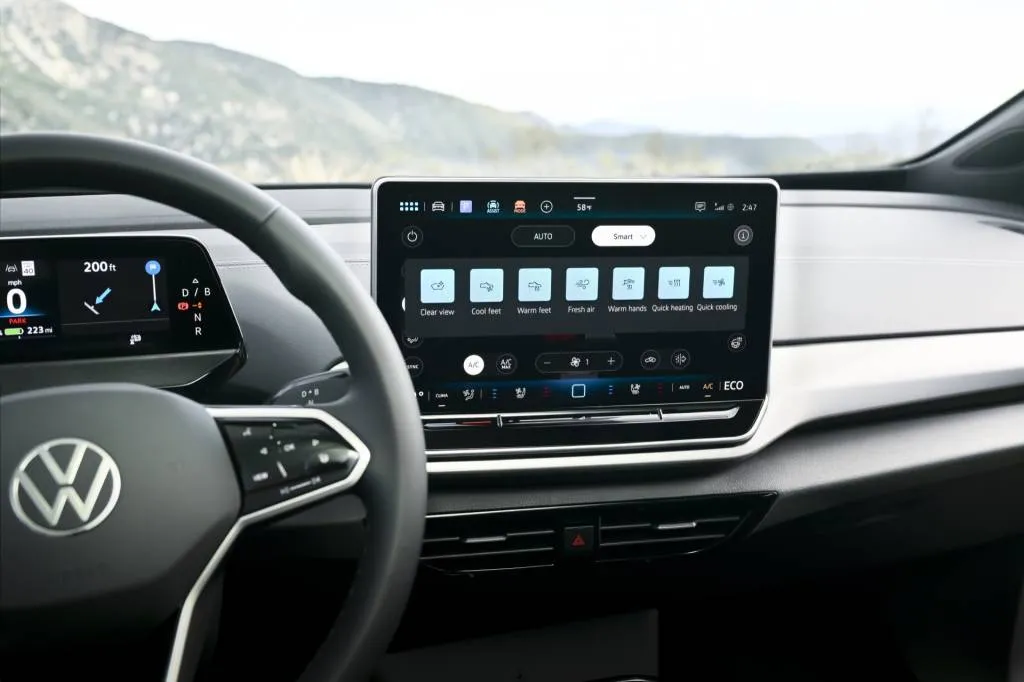
2024 Volkswagen ID.4
It also maintains the ChatGPT-embedded functions VW rolled out in January at CES—for which it’s been challenging to parse out what VW is doing with or without the help of AI. The automaker at that time emphasized that nothing changes for the driver. “There is no need to create a new account, install a new app or activate ChatGPT,” it summed. “If the request cannot be answered by the Volkswagen system, it is forwarded anonymously to AI and the familiar Volkswagen voice responds.”
VW has underscored, thankfully, that ChatGPT, or the integration partner Cerence, doesn’t gain access to vehicle data, and questions and answers are “deleted immediately to ensure the highest possible level of data protection.” At that time VW said that the new voice assistant could help answer general-knowledge questions, but in a CES demo Green Car Reports didn’t find it any easier than a Google search—or any more competent than Siri, which says something.
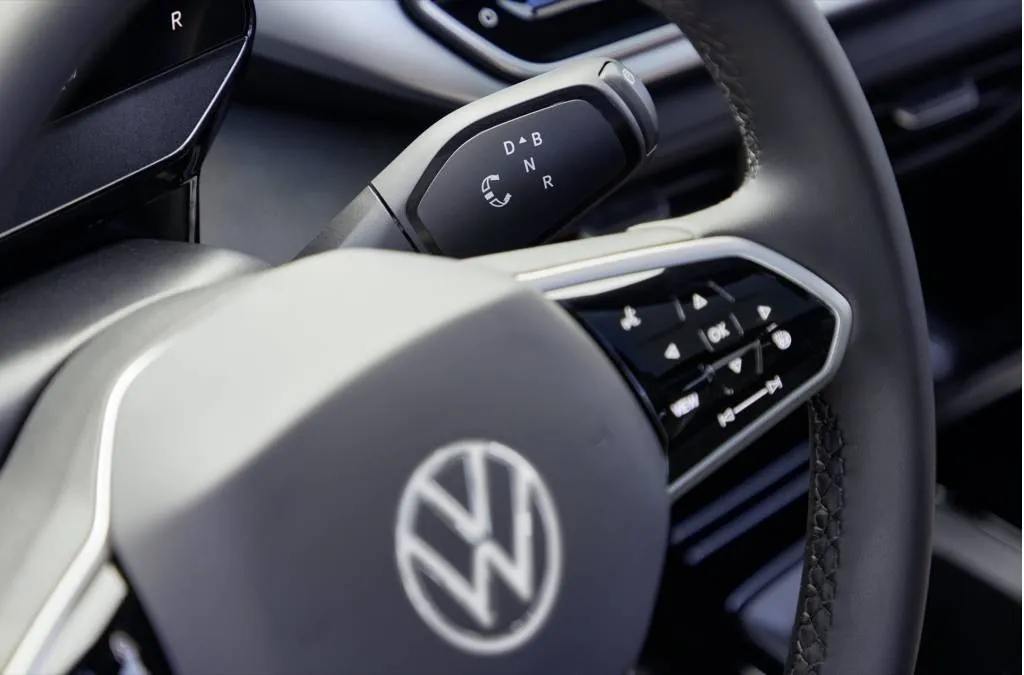
2024 Volkswagen ID.4
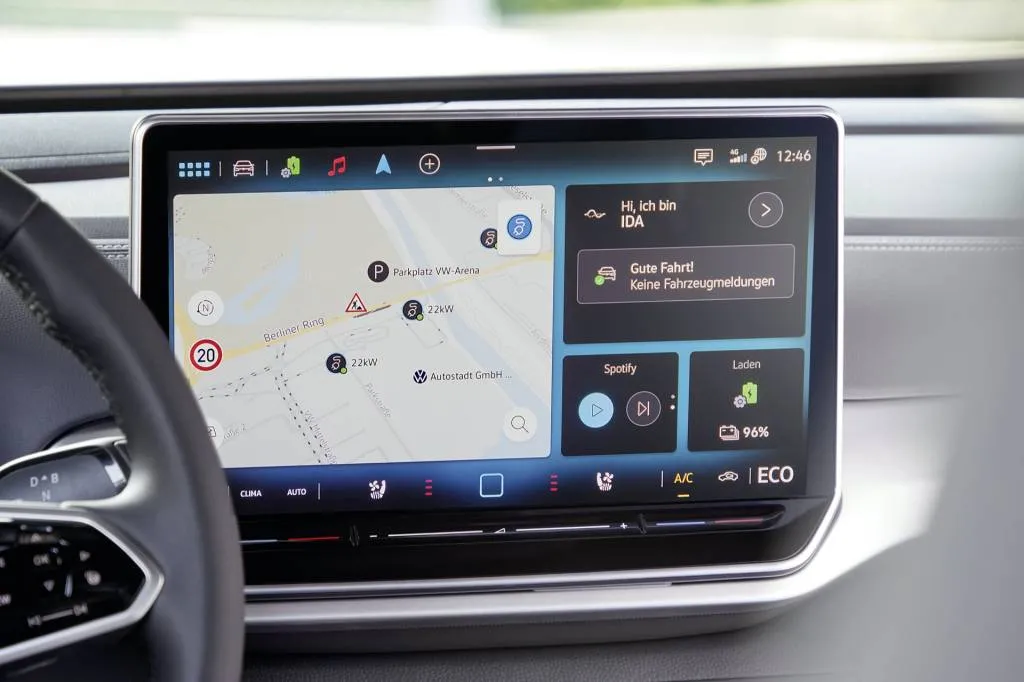
2024 Volkswagen ID.4
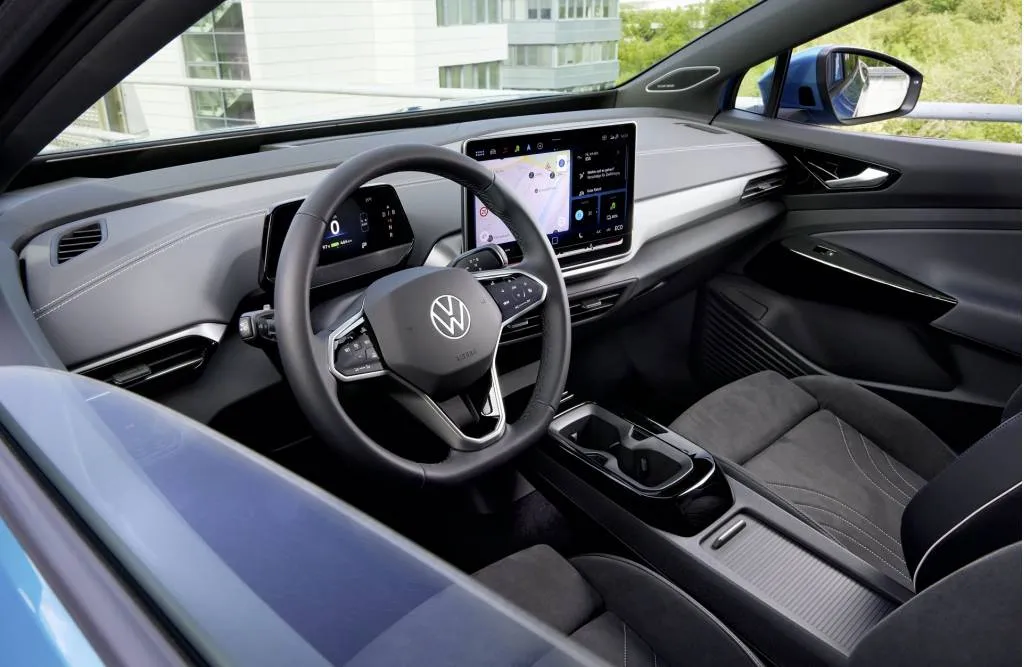
2024 Volkswagen ID.4
For 2025 this new assistant isn’t just for the ID.4. While VW didn’t list out exactly which other models in the lineup get it, it did say most of its 2025 models will get it.
Although it might be hard to tell what ChatGPT is doing as of yet, it’s not going away. VW has said that it’s developing a large-language-model-based system, once again incorporating AI, for a next-generation in-car assistant.
VW didn’t give any arrival date for the 2025 ID.4, but it does say it will be offered once again in a total of seven trims. VW did raise the price of the 2024 ID.4, versus 2023, but they start at $41,160 with the smaller pack and $46,300 with the larger pack. All versions are eligible for the full $7,500 EV tax credit, and given no expected change in its Tennessee assembly point or trade-partner-approved battery supply, we expect the 2025 models to continue to qualify.

PHEVs and oil demand, Porsche charging, point-of-sale tax credit: Today’s Car News

Porsche adds thousands of chargers to its app. The point-of-sale EV tax credit is very popular. And are plug-in hybrids potentially adding to future oil demand? This and more, here at Green Car Reports.
With the release of its annual EV sales outlook, Bloomberg New Energy Finance suggests that plug-in hybrids are a wild card for oil demand. With PHEVs making a comeback, and data suggesting they’ll only run 11-54% of their miles in electric mode, if PHEVs are bought instead of EVs, they’ll boost oil demand above current projections. And if they’re pushed into the market to satisfy regulators, will they be plugged in even that much?
Porsche has added thousands of ChargePoint EV chargers to its options for those driving its EVs and plug-in hybrids—meaning that the Porsche app now allows access to 75% of compatible U.S. chargers. The expansion, arriving just ahead of Porsche’s expansion of its EV lineup to include the Macan Electric as well as the Taycan, allows integrated payment through Porsche’s app. It includes Level 2 “destination” chargers as well as DC fast-charging connectors.
And according to the U.S. Treasury Department, EV buyers in recent months are overwhelmingly opting to claim their federal EV tax credit when they buy the vehicle. On Wednesday it revealed that 90% of eligible EV buyers in 2024 have opted to claim the credit at the point of sale—and 80% of eligible used EV buyers are claiming it that way.
_________________________________

Will plug-in hybrids be plugged in, or will they add oil demand?
- Plug-in hybrids might add to oil consumption estimates, says BNEF
- New EPA guidelines might give plug-in hybrids a pass, if drivers don’t plug them in
- Meanwhile, automakers have softened their battery-electric sales targets
The global fleet of internal-combustion vehicles will peak in 2025, but plug-in hybrids may determine whether this leads to decreased oil demand, according to new analysis from Bloomberg New Energy Finance (BNEF).
Sales of internal-combustion vehicles already peaked in 2017, and BNEF expects them to be 29% below that peak in 2027. While BNEF still expects EVs to be “the primary method of decarbonizing road transport,” right now sales are slowing in established markets while plug-in hybrids are “making a comeback,” analysts note.
Electric range for plug-in hybrids is also increasing, averaging 80 kilometers (49.7 miles) in 2023, but the share of kilometers driven in electric mode is around 11% to 54% of total distances driven, depending on the country and owner type, analysts found.
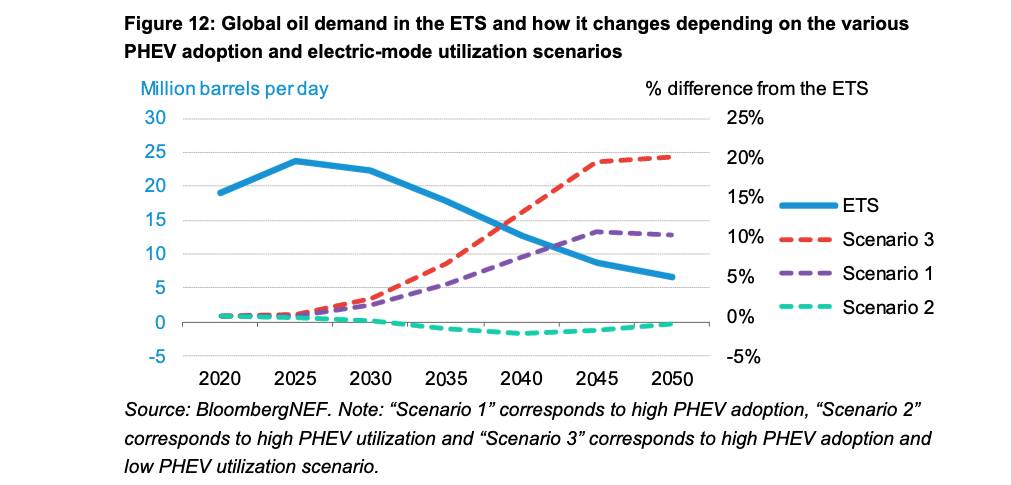
Plug-in hybrid electric mode usage and global oil demand (via BNEF)
“If PHEVs are displacing BEV sales and are not utilizing their full electric driving potential, they add to oil demand in our analysis,” BNEF noted. In the U.S., the EPA has potentially given them a pass with new regulations, and it’s unclear how often drivers will truly plug in.
Meanwhile, EV markets are not traveling at the same speed, according to the analysis. Some markets the U.S., Germany, and Italy have seen slowing sales, and automakers—such as Mercedes-Benz—have softened EV targets. But markets like China, India, and France are still seeing “healthy growth.”
EV sales are also still growing on a global level, helped by expansion in developing economies. Thailand, India, Turkey, Brazil and others are seeing record EV sales thanks to an influx of low-cost models targeted at local buyers, according to BNEF, which adds that much of this product comes from Chinese manufacturers eager to find new markets.
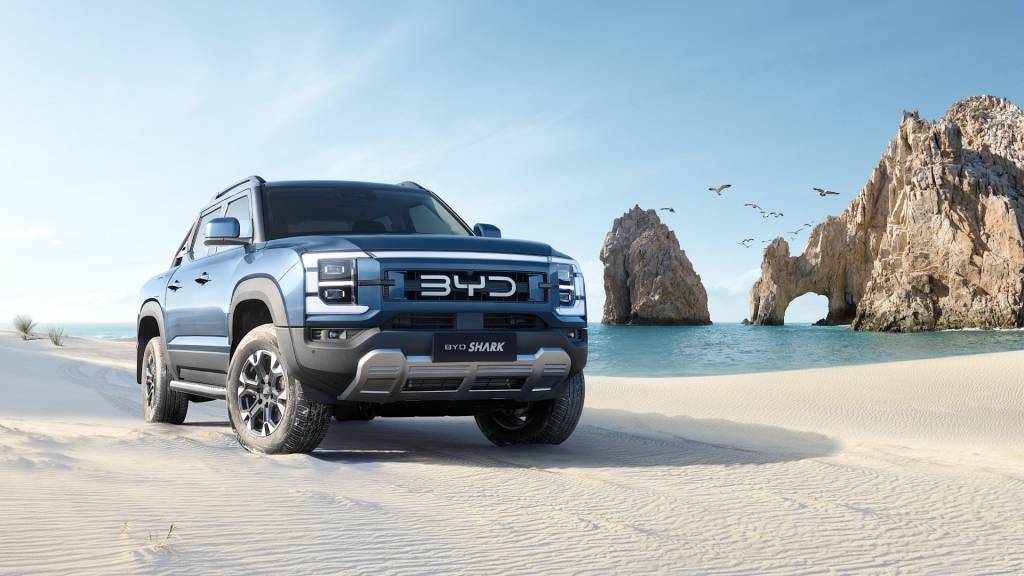
BYD Shark plug-in hybrid pickup
BNEF points out that dropping battery prices are mostly a good thing for the EV market. As Goldman Sachs noted earlier this year, a 40% drop in battery sales will help EVs reach cost parity with internal combustion as soon as next year in some segments of the market, without subsidies. And increasing use of LFP battery cells will decrease demand for nickel and manganese, further improving the economic and environmental picture for EVs, BNEF noted.
Another point made by this analysis is that EV sales and fleet turnover are very different things. BNEF estimates that, even with rapid EV adoption, less than 50% of of the global passenger-vehicle fleet will be electric at this rate. In the U.S. and abroad, it begs the question as to whether regulators are focusing too much on EV sales and not enough on retiring internal-combustion vehicles.


Porsche app gives EV drivers access to 75% of compatible US chargers
Porsche on Thursday announced an agreement in the U.S. with ChargePoint to include the network’s chargers in its My Porsche app starting in Q4 of this year.
With the app and its coordinated Porsche Charging Service, the arrangement will bring the total number of supported chargers to more than 86,000, according to Porsche. That aggregated total includes both the CCS DC fast chargers that you might make part of a highway road trip, and the J1772 AC chargers, otherwise referred to as destination charging or Level 2—or, simply, the type owners are likely to install at home.
At these public chargers, Porsche drivers won’t need to worry about individual payment details. That will be handled through a single account—an arrangement that’s becoming increasingly common among brands to support ease of ownership.
According to the Department of Energy’s Alternative Fuels Data Center, ChargePoint includes a total of 62,536 chargers across 34,569 locations. That breaks out to 2,783 locations with DC fast charging and 31,789 with destination charging.
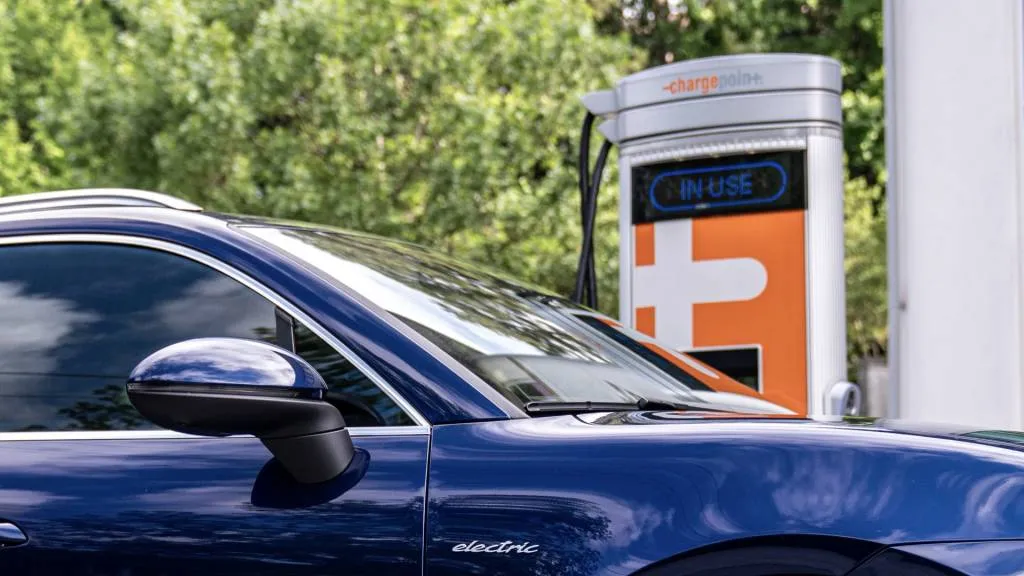
Porsche Macan EV at ChargePoint charger
Porsche Cars North America president and CEO Timo Resch called the move to include ChargePoint “well-timed as we look forward to the arrival of both the new Taycan arriving at Porsche Centers this summer but also the all-new Macan Electric later this year.”
Indeed, a refreshed 2025 Porsche Taycan delivers more range while keeping its 10-80% charging stops under 20 minutes, in some cases, with access to a 350-kw CCS connector. And the Macan electric SUV builds on that 800-volt charging tech, with an entry price of $80,450.
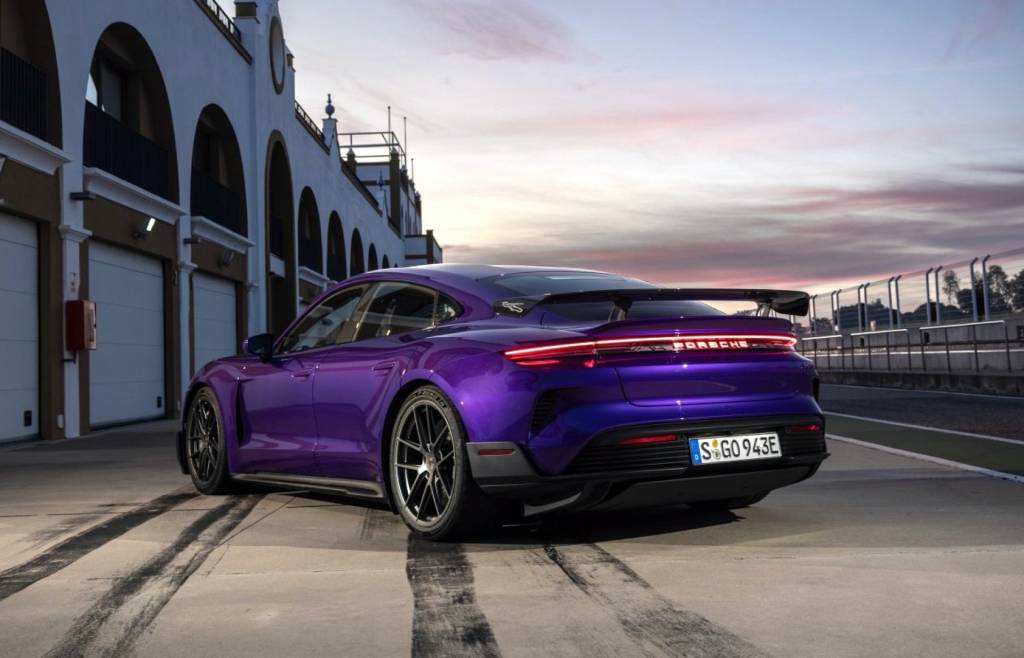
2024 Porsche Taycan Turbo GT Weissach package
Porsche, as part of the Volkswagen Group, announced in December that it would implement the Tesla-based NACS standard in future products for North America starting in 2025.
Porsche reiterated with Thursday’s announcement that it’s also still “exploring adapter solutions for existing vehicles to access the Tesla Supercharger network, starting in the first half of 2025.” It’s easy to understand how this isn’t particularly high-priority for Porsche; as Green Car Reports has underscored before, Taycan drivers likely won’t see peak charge rates on Tesla Supercharger V3 hardware, while the latest V4 hardware set for higher-voltage charging has been very slow to roll out.

Feds: 90% of eligible EV purchases get tax credit at point of sale
The majority of EV purchasers eligible for a federal tax credit have gotten the credit as a point-of-sale rebate since that option was added at the beginning of the year, The Treasury Department said in a press release.
As part of a revamp of the federal EV credit enacted under the Inflation Reduction Act (IRA), credits of up to $7,500 for new EVs and up to $4,000 for used EVs became available at the point of sale through dealerships January 1.
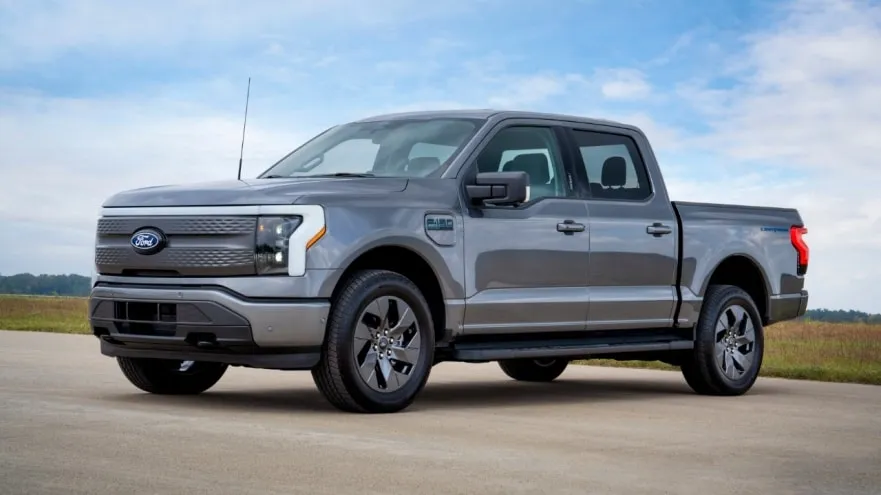
2024 Ford F-150 Lightning Flash
Since, then the Treasury Department claims to have issued more than 150,000 tax credits—125,000 of which were for new-vehicle purchases—equivalent to more than $1 billion in financial benefits. More than 90% of new-vehicle credits and approximately 80% of used-vehicle credits were issued as point-of-sale rebates, according to the Treasury Department.
Those take rates are impressive considering that not all eligible dealerships were registered with the IRS and ready to offer point-of-sale rebates at the beginning of the year, when the new policy took effect. The figures quoted by the Treasury Department indicate that most dealerships—or at least the ones that sell the most EVs—have since gotten onboard.
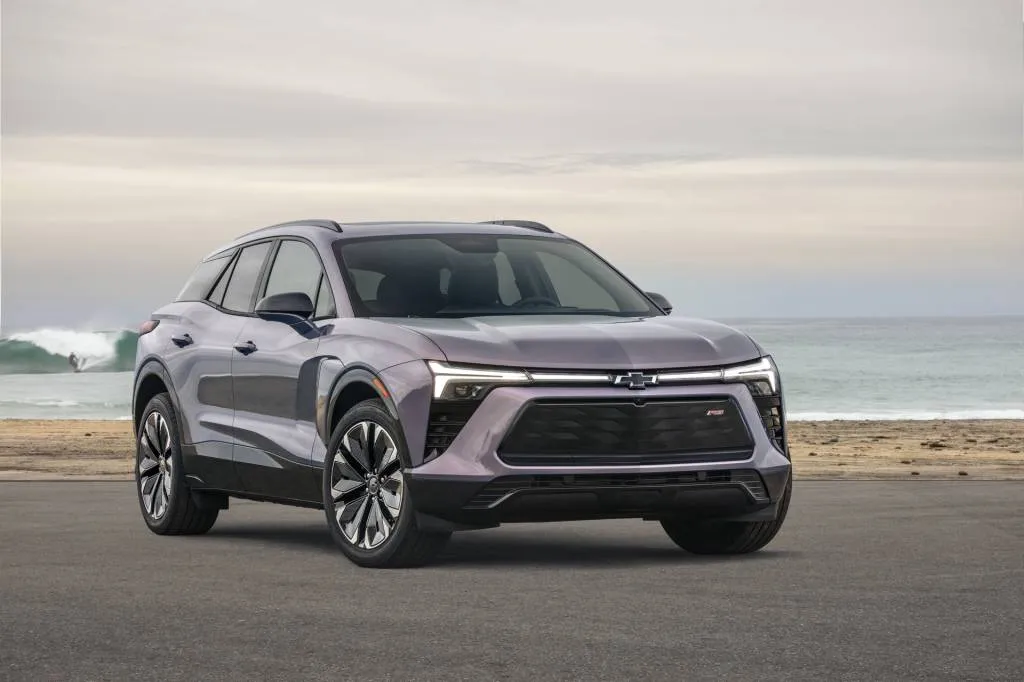
2024 Chevrolet Blazer EV RS
Allowing eligible EV buyers to collect the credit at the point of sale, rather than receiving it when they do their taxes, could enhance the effectiveness of the incentive. Buyers like the idea of a point-of-sale rebate so much that they would have settled for less money up front, a George Washington University study published in 2022 found.
Point-of-sale rebates aren’t limited to franchised dealerships, either. The tax credit can be claimed on Teslas at the time of purchase via its company-owned direct sales apparatus.

2025 Honda Civic review, 2025 Nissan Leaf, Ionna charging network: Today’s Car News
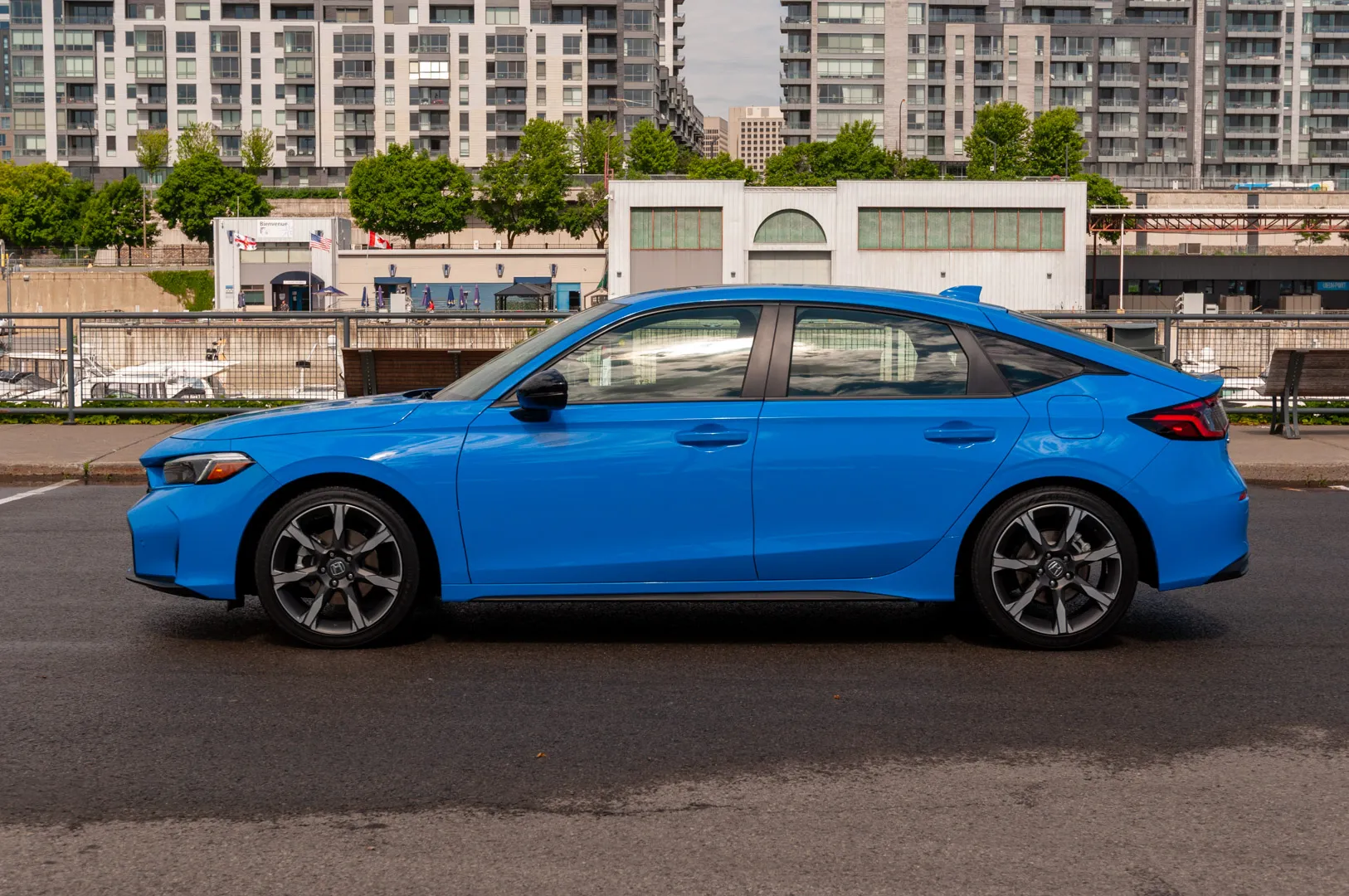
We take a first drive in the 2025 Honda Civic Hybrid. The 2025 Nissan Leaf loses its EV tax credit once again. And as Tesla’s Supercharger network stalls Ionna is rising. This and more, here at Green Car Reports.
In a review of the 2025 Honda Civic Hybrid, we found this models to be a class above the Toyota Corolla Hybrid, with a quieter, punchier, and more pleasant driving experience than the non-hybrid Civic. It’s a great way to get nearly 50 mpg with no compromise.
Just after Tesla Supercharging plans stalled, Ionna is rising. That’s the EV fast-charging network funded by seven automakers, and it anticipates opening its first U.S. charging stations in 2024, with eventual plans for 20,000 high-power urban and highway-adjacent fast-charging connectors. Ionna says it will support both the Tesla-derived NACS interface its funding automakers will soon adopt, as well as the CCS interface that most EVs are currently being delivered with.
And the Nissan Leaf has once again lost its $3,750 EV tax credit. While 2024 Nissan Leaf models at the dealership qualify for it, the 2025 Nissan Leaf that’s essentially carried over unchanged at face value does not. In what’s become a rollercoaster ride of eligibility, it’s not the only time this has happened, and Nissan says it’s working with its supplier AESC to recover the incentive on one of the market’s most affordable EVs.
_________________________________

2025 Nissan Leaf carries over, loses EV tax credit eligibility
The 2025 Nissan Leaf carries over but loses its eligibility for the federal EV tax credit this model year.
The Leaf’s rollercoaster ride with eligibility began from the day new regulations were phased in last August. The 2024 Leaf became eligible for a $3,750 credit in October. Then at the start of the year the Leaf fell back out of eligibility until it met the “battery content” requirements of the Inflation Reduction Act (IRA) but not the “battery materials” portion. Nissan then said in March that 2024 models were still eligible for the $3,750 credit, but that doesn’t appear to apply to 2025 models.
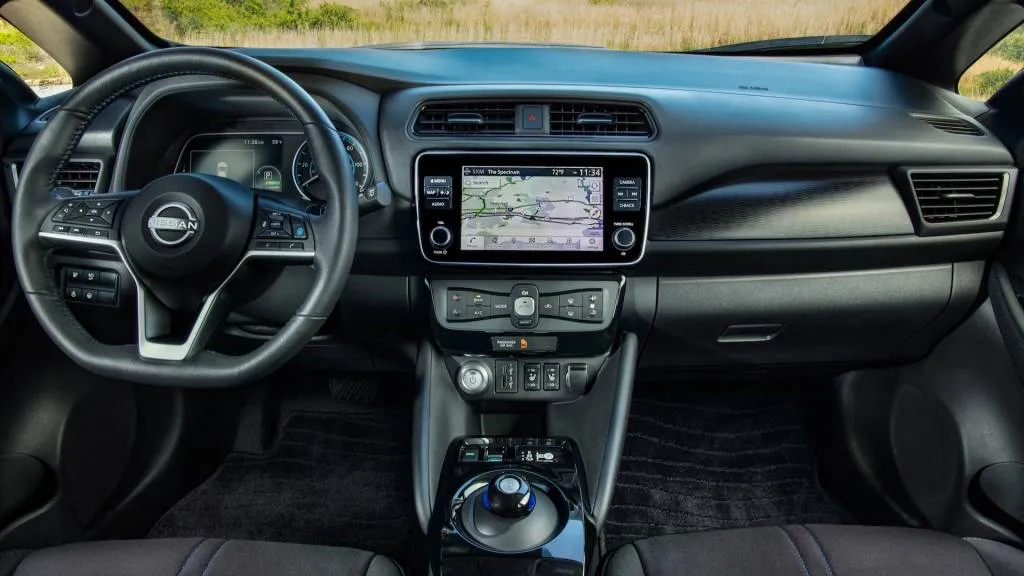
2025 Nissan Leaf
Like the 2024 model, the 2025 Leaf is available only in 40-kwh S and 60-kwh SV Plus configurations, with 149 miles and 212 miles of range, respectively. For 2025, pricing starts at $29,180 for the Leaf S and $37,330 for the Leaf SV Plus with destination. That’s compared to 2024-model-year prices of $29,235 and $37,285 for the S and SV Plus, respectively.
All Leaf models are front-wheel drive, but the Leaf S is tuned for 147 hp and 236 lb-ft of torque, while the SV Plus gets a higher output of 214 hp and 250 lb-ft of torque.
“We will continue to work closely with our supply chain to regain eligibility for the 30D Tax Credit in the future for 2025 Leaf,” replied Nissan North America spokesperson Jeff Wandell to Green Car Reports. The battery supplier remains AESC, which has over many years assembled Leaf packs adjacent to the EV’s assembly plant in Smyrna, Tennessee.
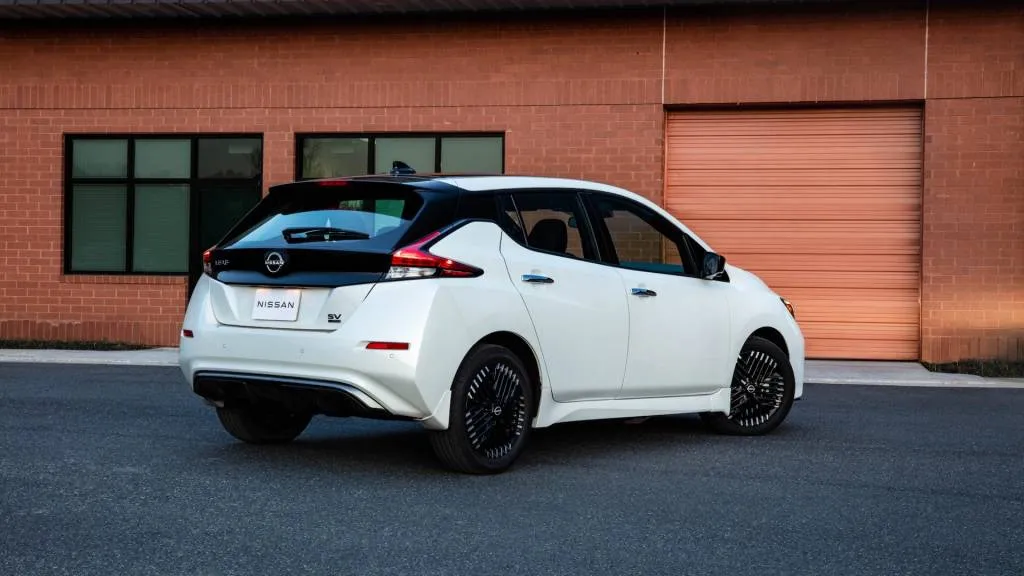
2025 Nissan Leaf
Nissan hasn’t significantly updated the Leaf in several years. It remains the only new EV with CHAdeMO fast-charging. The Leaf’s last noteworthy change was for 2023, when it received battery chemistry changes, which enabled Nissan to trim the Plus pack to 60 kwh from the previous 62 kwh while increasing efficiency. The Leaf saw an extensive redesign for the 2018 model year.
This may be the last model year for this generation of the Leaf in the U.S. It’s already been phased out for the U.K. and Europe, and a next-generation Nissan Leaf that becomes slightly more crossover-influenced is set to arrive for the 2027 model year.

As Tesla Supercharger plans stall, Ionna is going big on EV charging
Tesla’s recent pullback of Supercharger operations doesn’t appear to have affected the plans of Ionna, the charging network for the U.S. and Canada directly funded by seven automakers.
The charging network on Tuesday re-upped its commitment to build a network of more than 30,000 high-power urban and highway-adjacent fast-charging connectors, and it hints that work is already well underway on the first of those as it anticipates its first U.S. charging stations will open in 2024.
First announced in July 2023, with backing from BMW Group, General Motors, Honda, Hyundai, Kia, Mercedes-Benz, and Stellantis, Ionna officially started operations (and got its name) in February. It’s now begun to emerge from a stealth period.

North America, depicted in Ionna EV charging network announcement
With today’s announcement, the charging network established headquarters in Durham, North Carolina, and it confirmed some core executives: Derek Rush as CFO, formerly the CFO of BP Pulse, Ricardo Stamatti as chief product officer, formerly a top Stellantis Energy executive, and Shankar Muthukumar as COO, formerly of the construction and development firm Mortenson. CEO Seth Cutler was announced in February.
Ionna noted in its original formation that it would have “a focus on delivering an elevated customer experience,” so expect a high level of attention paid to the interface, uptime, and reliability in general—as well as the amenities at charging stops. It’s fair to say that remote corners of big-box retailer parking lots will no longer suffice.
The network has also already confirmed that it will be powered by renewable energy, with the capability for reservations and intelligent route planning, plus full support for Plug & Charge technology from the start, meaning fewer needs for credit-card swipes and app handshakes. It has also confirmed that 350-kw connectors would be a starting point for its experience, although it confirmed that it intends to have “the best charging power available on the market and technological state-of-the-art charging at all times.”
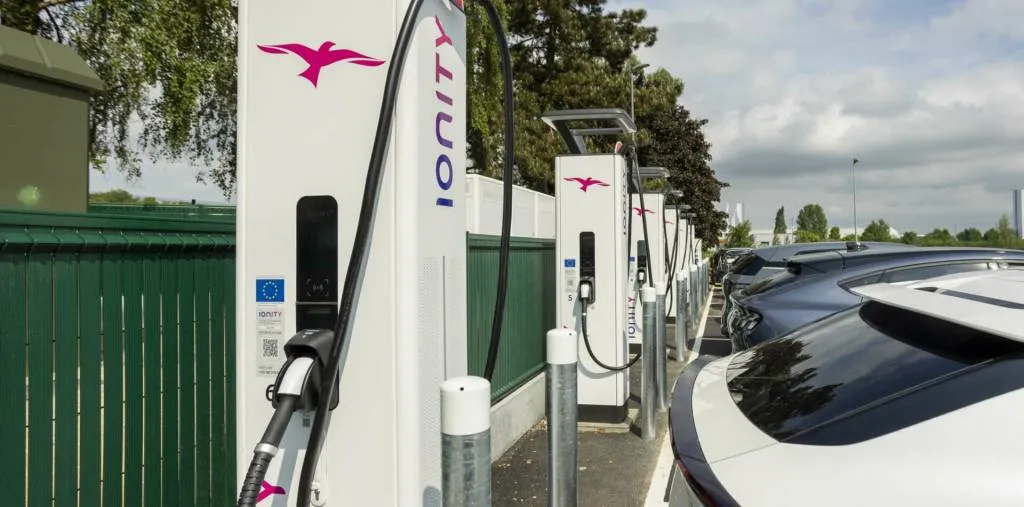
Ionity charging in France
For North America, this may be the closest equivalent to the Ionity fast-charging network that Ford, VW, and Audi launched for Europe in 2017. That network arguably helped accelerate the European EV market past America at a time when it was tracking behind it. Electrify America, which was created as part of the company’s diesel-scandal penalty, has been entirely a VW operation, with the exception of a Siemens investment; but it does plan to grow by 25% in 2024.
Some Ionna locations may potentially be vying for federal NEVI funding alongside other networks—or, perhaps, competing with the Tesla Supercharger network, depending on whether Tesla reactivates its Supercharger buildout.
Much has happened to the business around charging since Ionna was originally announced, EV charging reliability has become a hot topic, and the industry has committed to a shift to the Tesla-based NACS connector in future EVs—meaning that a wide range of brands will soon be able to charge at Tesla’s Supercharger network, providing Tesla with an additional revenue stream. Meanwhile, Tesla last month eliminated most of its Supercharger team, throwing the future growth of the network into disarray.
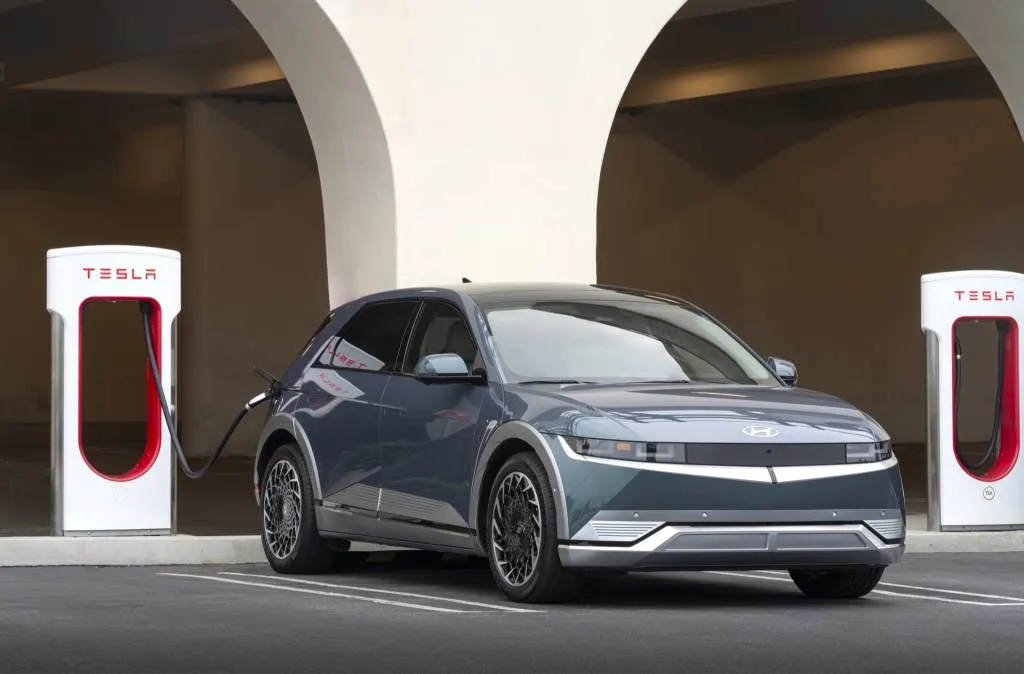
Hyundai at Tesla Supercharger
Ionna officials haven’t yet revealed details as to whether its own charging hardware will employ connectors or adapters, but it confirmed to Green Car Reports that the network will offer hardware that’s ready to charge EVs with either charge port.
“We’re committed to both,” confirmed chief product officer Stamatti to Green Car Reports, noting that even as NACS arrives, many EVs with CCS ports will continue to be built—in addition to all the ones already in use. “It’s open to all and we’ll do both form factors.”