
Category: General

2025 Lucid Gravity costs $94,900, targets 440 miles of range
The Lucid Gravity electric SUV is still on track to start production before the end of the year, targeting more than 440 miles of range and more than 800 hp, Lucid confirmed Tuesday.
Order books are scheduled to open Nov. 7 at 9:00 a.m. Pacific Time. Orders will initially be taken for a Gravity Grand Touring model priced at $94,900 before destination. A Gravity Touring model expected as a 2026 model year is scheduled to start production after the Grand Touring, in late 2025, with a $79,900 starting price.
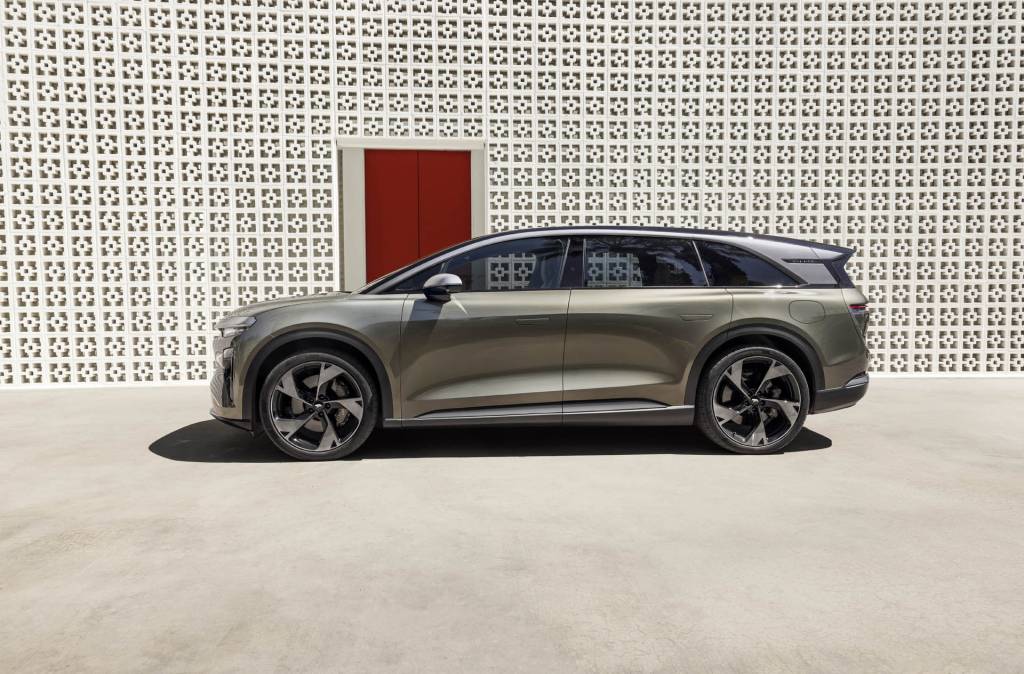
2025 Lucid Gravity
The estimated maximum range is based on “battery pack capacity similar to that of the 2025 Lucid Air Grand Touring,” the automaker confirmed. That version of Lucid’s sedan has a 112-kwh pack that contributes to 516 miles of EPA range. The difference will likely come down, at least partially, to the Gravity’s additional weight and less aerodynamic form versus the Air.
The range figure and 800-hp output are also consistent with what Lucid discussed when the Gravity was unveiled in Nov. 2023. At the time, Lucid said the latter figure applied to a dual-motor variant that would arrive first (presumably the now-confirmed Grand Touring) and would enable a 0-60 mph time of less than 3.5 seconds.
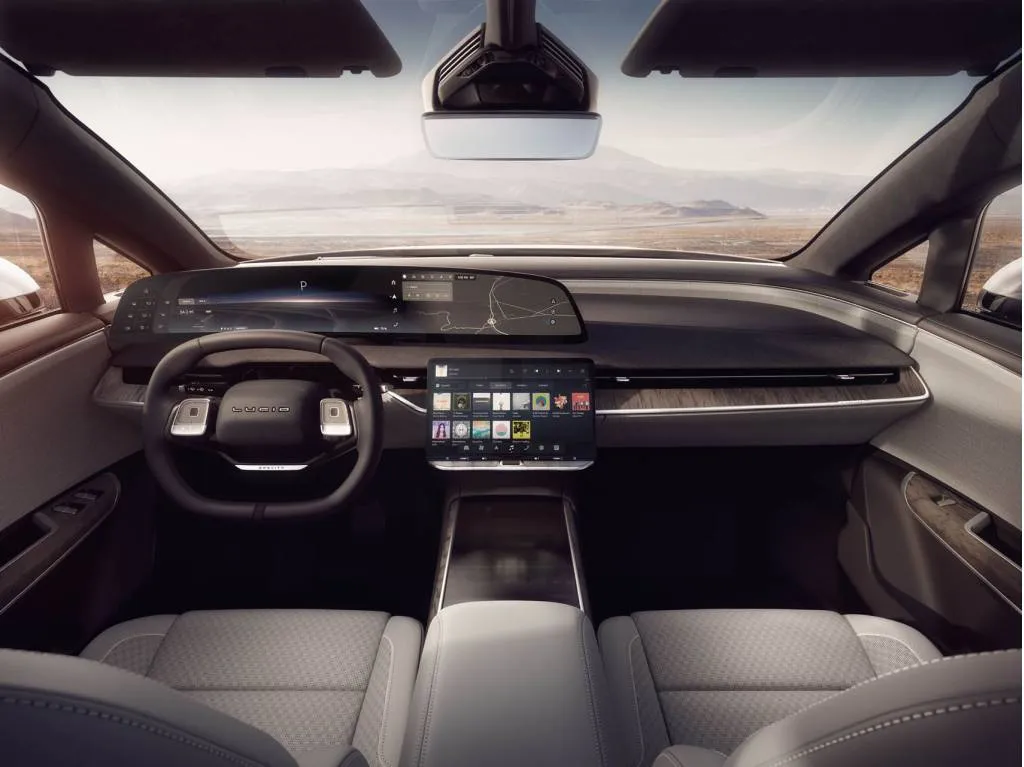
2025 Lucid Gravity
Lucid confirmed in September that the Gravity will get the Tesla North American Charging Standard (NACS) port starting in 2025, meaning the first customer cars will likely have a Combined Charging Standard (CCS) port, as seen on Gravity prototypes.
Following the Gravity, Lucid is expected to move further downmarket with three affordable EVs, although they may only be considered to be truly affordable in relation to Lucid’s existing models. The first is expected to be a $50,000 midsize SUV called the Lucid Earth due to start production in late 2026.

Tesla Roadster battery replacement cuts 400 pounds, half the space
As the second-generation Tesla Roadster remains on the drawing board, a Texas-based company has sketched out a new life for original Roadsters, while improving their handling.
Re/Cell, which specializes in remanufacturing EV battery packs, recently unveiled a replacement Roadster battery pack that’s 400 pounds lighter than the original and takes up 3.7 cubic feet less space—making it about half the volume of the original pack.
With 47 kwh of total capacity, Re/Cell expects the replacement pack to return 220-240 miles of range, which is in line with the factory pack. But instead of just matching the factory specs, the weight and volume reductions of the new pack are claimed to help make the Roadster a better car.

Re/Cell replacement battery pack for the Tesla Roadster
“Replacement packs for the Roadster are expensive and overburdened, with an unnecessary focus on straight-line performance and range,” Re/Cell president Chad Maglaque said in a statement. “The focus should instead be on handling and speed, to match the racing pedigree of its world-class performance chassis.”
The Roadster was based on the Lotus Elise, and Lotus founder Colin Chapman, with the maxim “simplify, then add lightness,” would likely agree with this emphasis on handling over straight-line acceleration.
Re/Cell claims its pack also helps lower the Roadster’s center of gravity and allows more mass to be moved toward the center of the chassis—further improving handling—while also making room for DC fast-charging hardware and liquid cooling systems for the motor and power electronics module (those features are optional, however).
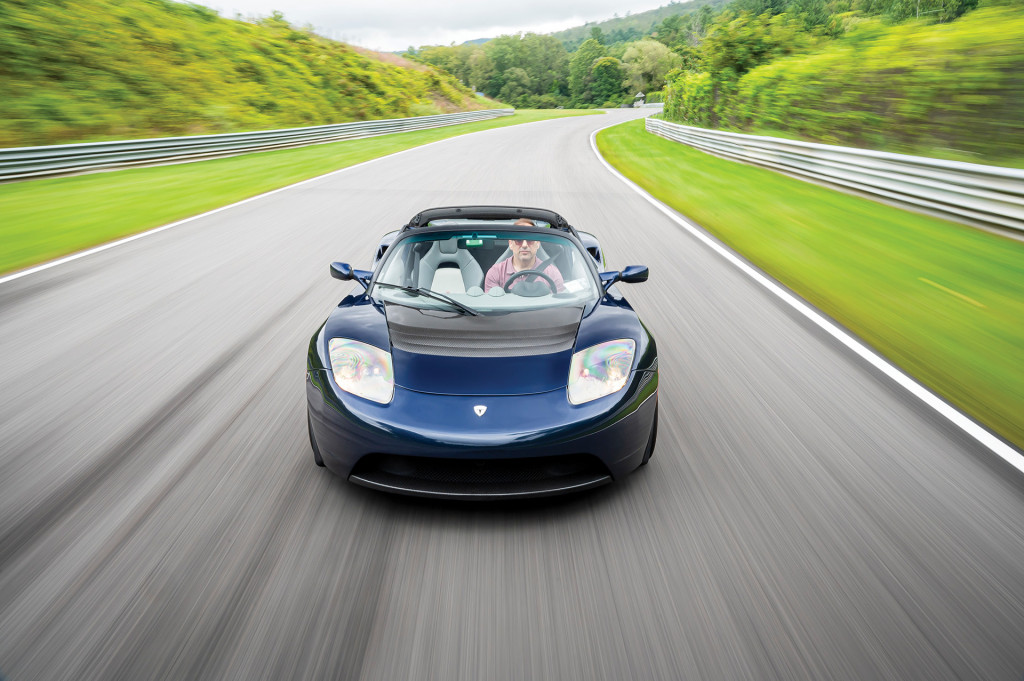
2010 Tesla Roadster Sport (photo via Hagerty)
The battery itself gets an upgraded cooling system consisting of a molded core with attached ribbons, allowing for a 50-times-greater contact area for heat transfer compared to the factory cooling system, along with consistent temperature control, Re/Cell claims. The company stuck with the original 18650 cell format, though of course the chemistry has evolved significantly.
Re/Cell has priced the pack at $27,895 for the version offering maximum performance, after a $11,500 core credit for their existing pack. It uses those early Roadster cells for remanufactured battery packs and use with solar systems or as backup power. Out of more than a half a million cells Re/Cell processed this past year, it disposed of or recycled just 150, the firm said to Green Car Reports.
The last Tesla Roadster was built in December 2011, just before the Model S was launched. This was the car that launched Tesla, but Elon Musk didn’t have much to do with it, nor did he start Tesla. He became CEO in late 2008, after the Roadster had already gone into limited production.
Tesla has not been consistent over the years about providing factory support for original Roadsters. But since the sports car was introduced, EV battery costs have plunged, creating more of an opening for aftermarket companies like Re/Cell to provide alternative solutions.

Polestar and Volvo gain Tesla Supercharger access, NACS adapters cost $230
Polestar and Volvo on Tuesday confirmed details of its rollout of Tesla North American Charging Standard (NACS) adoption, which the automakers claim will give customers access to more than 17,800 Tesla Supercharger DC fast-charging stations.
Current Polestar owners can now order a $230 NACS adapter through their local service center, with deliveries planned for mid-November, the automaker said in a press release. Volvo will also offer adapters to existing customers through its dealers for the same price, and will include free adapters with new EX90, EX40, and EC40 purchases or leases. Adapters for the China-made Volvo EX30, currently in limbo due to steep tariffs on EVs imported from that country, will be announced later.
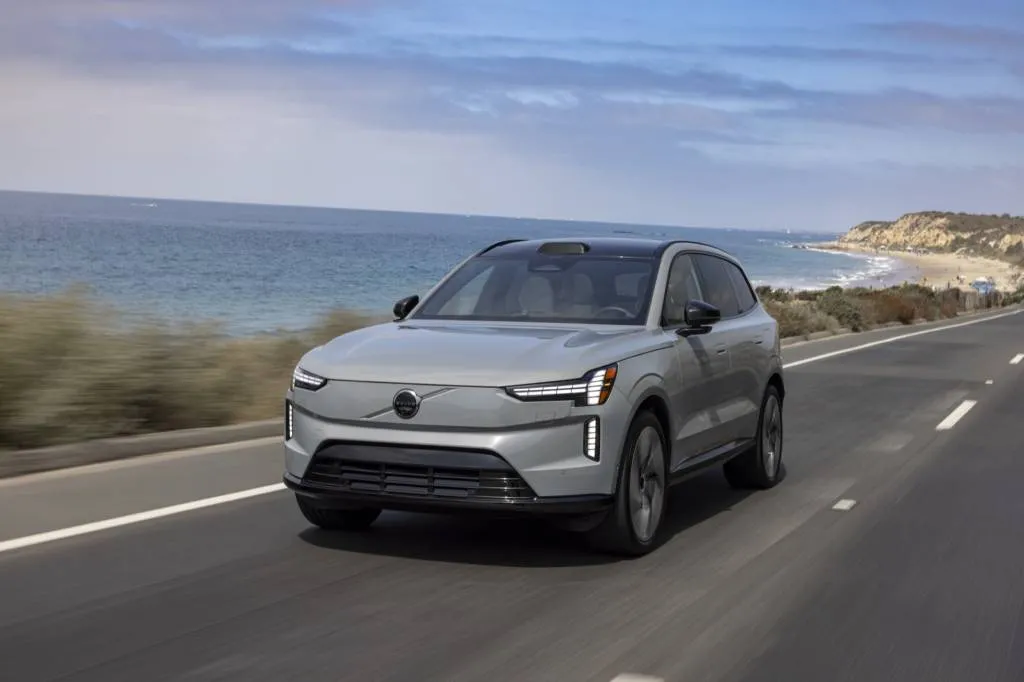
2025 Volvo EX90
Future EVs from both brands will adopt the NACS port as standard equipment. When they announced Supercharger access in 2023, both Volvo and Polestar said this would happen starting in 2025, but didn’t provide any updates with this announcement.
Most major EV brands have at this point committed to NACS, but are adopting the Tesla charge port at varying speeds. Ford was the first to announce, in May 2023, and became the first to provide Supercharger access when it began shipping free adapters in February. Rivian followed with its own free adapters in March, and General Motors announced adapters in September. But GM charges $225 for them.

Polestar 3 at a Tesla Supercharger station
Hyundai has so far skipped over the Tesla adapter phase, announcing in September that the 2025 Ioniq 5 would be built with an NACS port. The automaker will instead offer adapters for the Combined Charging Standard (CCS) port the Ioniq 5 previously used, maintaining access to the considerable number of CCS stations also in operation.
Polestar began as a racing team closely aligned with Volvo, evolving into a performance brand for Volvo before the latter’s parent company, Chinese automaker Geely, repurposed it as a standalone brand in 2017. While the two brands share resources and vehicle platforms, Polestar has been pulling in its own direction with plans to make its own motors and other components, while Volvo earlier this year lessened its funding commitment to Polestar.

2026 Cadillac Lyriq-V brings performance to luxury brand’s EV lineup
- The first electric Cadillac V-Series will be a 2026 Lyriq
- The 2026 Cadillac Lyriq-V will arrive in 2025
- Cadillac hasn’t said how much power the Lyriq-V will have or how much it will cost
The Cadillac Lyriq will be the first electric vehicle to wear the luxury brand’s V-Series performance badge.
Cadillac confirmed Tuesday that the Lyriq-V will arrive early next year as a 2026 model, with further details to be revealed at that time. For now, there’s little to be gleaned from the photos released by Cadillac, which only reveal subtle styling changes versus the standard Lyriq.
“V” has been the letter signifying performance at Cadillac since 2004, when the original CTS-V sedan launched. Over the ensuing two decades, Cadillac introduced numerous V-Series versions of its existing models, lent credibility by a racing program. The current lineup includes V-Series versions of the CT4 and CT5 sedans—in both standard and full Blackwing configurations—and the Escalade SUV.
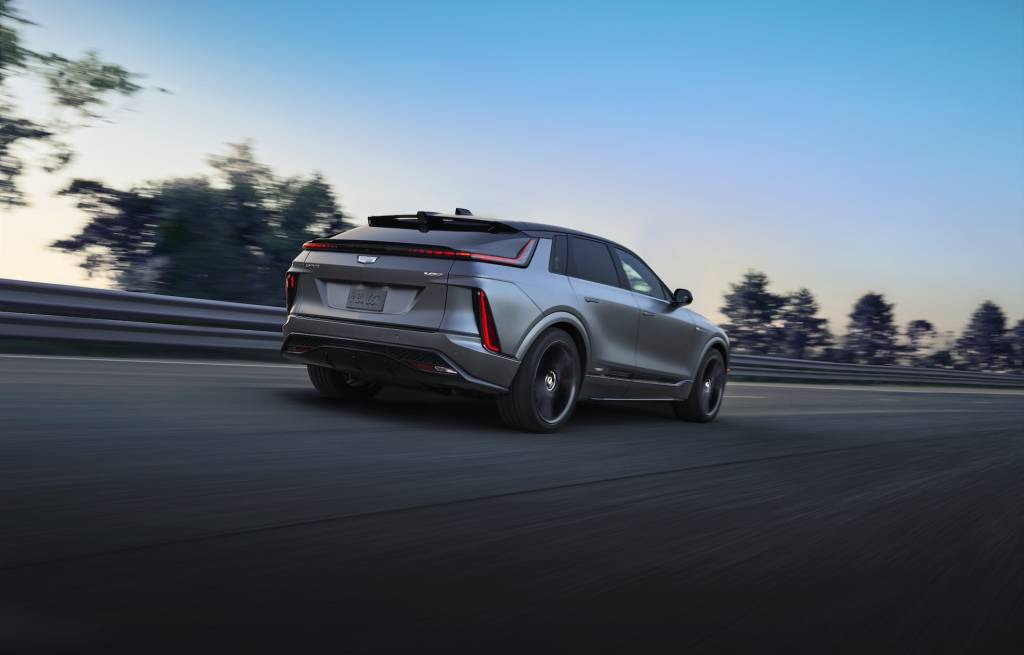
2026 Cadillac Lyriq-V
The V-Series treatment will likely include an increase in power over the standard Lyriq’s 500 hp and 450 lb-ft of torque (with the optional dual-motor all-wheel-drive powertrain) plus chassis enhancements for sportier handling. Meanwhile, the 2025 Lyriq drops the previous base trim level, while remaining trims get price cuts. Those small changes are in line with what is still a fairly new model.
The Lyriq arrived for the 2023 model year as the first Cadillac EV based on what parent General Motors was then calling the Ultium architecture (GM recently decided to phase out use of the Ultium name). So it’s appropriate that the Lyriq is also the first Cadillac EV to morph into a V-Series performance vehicle.
While GM is reportedly reconsidering plans to make Cadillac all-electric by 2030, the luxury brand will soon have an extensive lineup of EVs. The Lyriq will be flanked by the entry-level Optiq and three-row Vistiq, with the Celestiq sedan and Escalade IQ addressing the higher end of the market. Whether Cadillac will launch V-Series versions of any of those EVs remains to be seen.

Report: EVs, solar will put fossil fuels in global decline by 2030
EVs could help hasten the ongoing transition from fossil fuels to renewable energy through the end of the decade, according to a new report from the International Energy Agency (IEA).
The IEA predicts that more than half of the world’s electricity will come from low-emission sources by 2030, and that demand for coal, oil, and gas will have also peaked by then. Greater use of renewables will be needed not only to reduce carbon emissions, but to meet growing demand for electricity from EVs and other sources like data centers, according to the report.
Current policies are on track to add the equivalent of Japan’s demand use to global electricity use each year. But low-emission sources, led by renewables, are expected to outpace this demand in every scenario the IEA envisions. That in turn keeps trimming down the share of fossil fuels used in electricity generation.
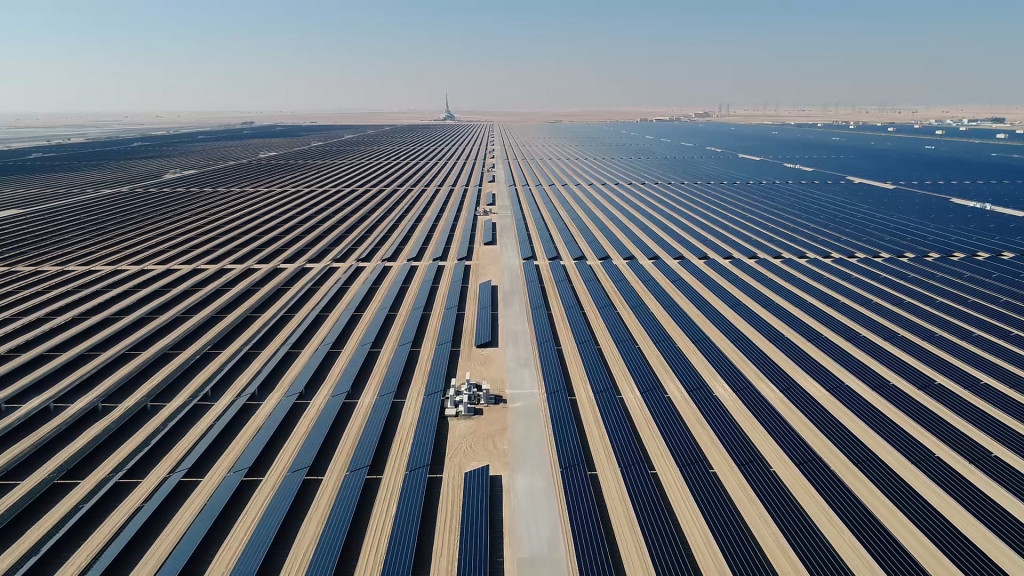
Mohammed Bin Rashid Al Maktoum Solar Park in United Arab Emirates
This would merely continue an ongoing trend. Renewables provided 30% of the global electricity supply in 2023, while fossil fuels decreased to 60%, their lowest share in 50 years, according to the IEA.
That’s being helped by market forces. After pandemic-induced declines, 2021 was an anomaly fueled by a momentary blip in coal popularity, but overall, the cost of coal and natural gas in recent years has actually fueled some of the push to renewables.
It’s worth noting, however, that the IEA expects nuclear power to remain at 10% of global electricity generating capacity in all scenarios. Continued pushback against nuclear power, as well as new technologies aimed at increasing its use, could move the needled in the plus or minus direction.
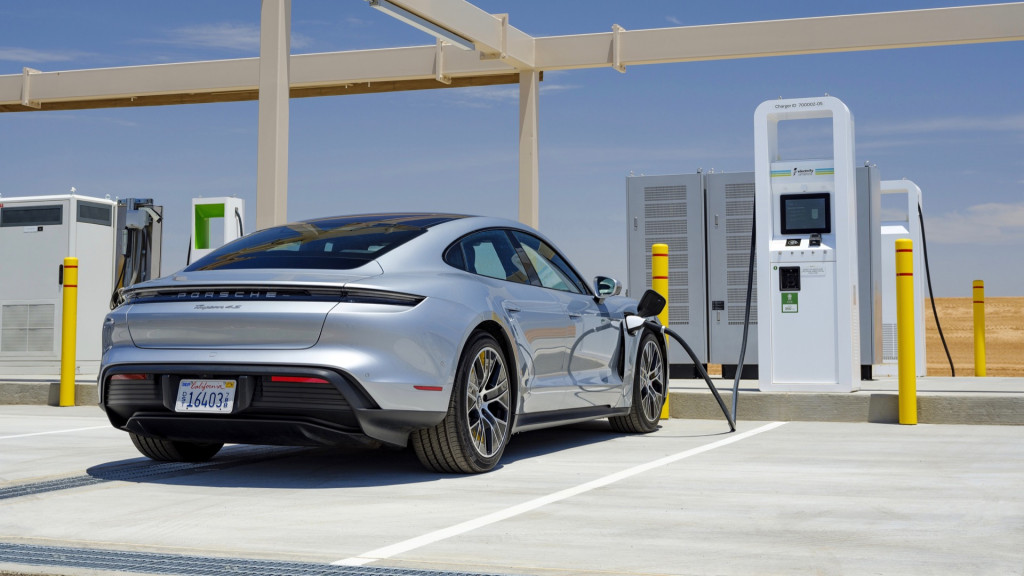
Charging stations at Volkswagen Arizona Proving Grounds
The report also pointed to huge potential for EV growth and emissions cuts, simultaneously, in parts of the developing world. Almost 750 million people—mostly in Sub-Saharan Africa—lack access to electricity, the IEA estimates.
Long-term and due to a Biden administration push, the U.S. shift toward wind and solar will continue to cut coal use and make EVs cleaner. But the U.S. utility landscape is fragmented, which could make a wholesale shift away from fossil fuels more challenging.
A symbiotic relationship with renewable energy is just one part of the emissions-reduction picture. A report from consultancy Wood Mackenzie also confirmed, through an alternate analysis, that EVs are putting a big dent in global gasoline demand.

LG shifting Ford Mustang Mach-E battery production to Michigan
- Ford Mustang Mach-E battery production will move from Poland to Michigan
- The move will translate into federal EV tax credit eligibility
- The Ford Mustang Mach-E is assembled in Mexico
LG Energy Solution will shift production of batteries for the Ford Mustang Mach-E from Poland to Michigan in 2025, checking a box for federal EV tax-credit qualification.
The Mach-E fell off the short list of EVs that qualify for the $7,500 tax credit this year when tougher rules for the origin of battery components and critical minerals were phased in. To qualify for half the credit amount ($3,750), the rules stipulate 50% of critical mineral content in batteries be North American-sourced, or be from countries in which there’s a free-trade agreement in place.
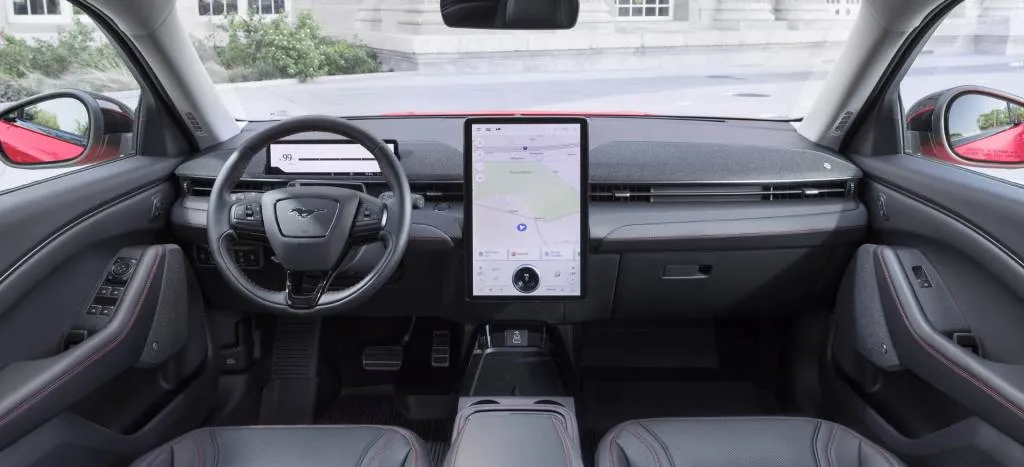
2025 Ford Mustang Mach-E (Premium with Sport Appearance Package)
The other $3,750 is based on North American sourcing of 60% of battery parts and North American assembly of the vehicle itself. The Mach-E is currently manufactured in Mexico, so it meets the latter requirement. For the rest of the lineup, the Ford F-150 Lightning currently qualifies for the full $7,500 credit, while the Escape Plug-In Hybrid qualifies for a $3,750 credit.
LG currently manufactures EV batteries in Holland, Michigan, but the battery supplier and Ford had planned another facility in Marshall to manufacture lithium iron phosphate (LFP) batteries, which Ford previously touted as a key to EV affordability. However, Ford paused construction on the $3.5 billion factory in late 2023.
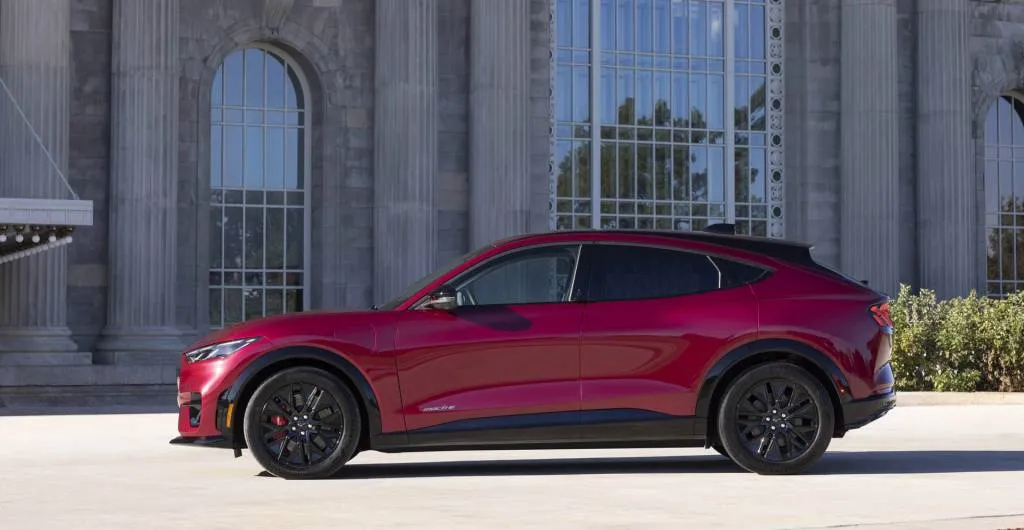
2025 Ford Mustang Mach-E (Premium with Sport Appearance Package)
Around the same time, Ford also delayed construction on one of two EV battery plants located on a common site in Kentucky, citing lower-than-expected demand for electric vehicles. The two plants comprise the Blue Oval SK Battery Park, a joint venture with battery supplier SK On financed with part of a $9.2 billion government loan. Construction work on the second plant was not affected.
Ford CEO Jim Farley said in 2021 that the automaker was pursuing projects like this because more U.S. battery production would ensure stability of battery supplies. The move will also keep carbon emissions lower by powering factories with a domestic electricity grid that’s cleaner than that of China—currently the world’s largest battery manufacturer. The potential boost in sales from more EVs that qualify for a federal tax credit adds another incentive.

Hyundai RN24 previews automaker’s EV performance future
- The Hyundai RN24 is a stripped-down EV concept
- Hyundai said the RN24 tests tech for future performance EVs
- Hyundai gave the RN24 features that mimic gas-powered cars such as sound
Hyundai is using a stripped-down test vehicle to develop its next generation of performance EVs.
The automaker on Friday unveiled the RN24 concept, which it describes as a rolling laboratory for testing technologies that could be used in vehicles for its N performance division. Hyundai has done this before with EV concepts like the RM20e and RN22e, but where those concepts used production vehicles as starting points, the RN24e goes in a more radical direction.
This concept is based around a bare chassis inspired by the one used by Hyundai in the World Rally Championship (WRC). Rally cars race with full bodywork, but Hyundai skipped that to keep the RN24 as light and compact as possible.
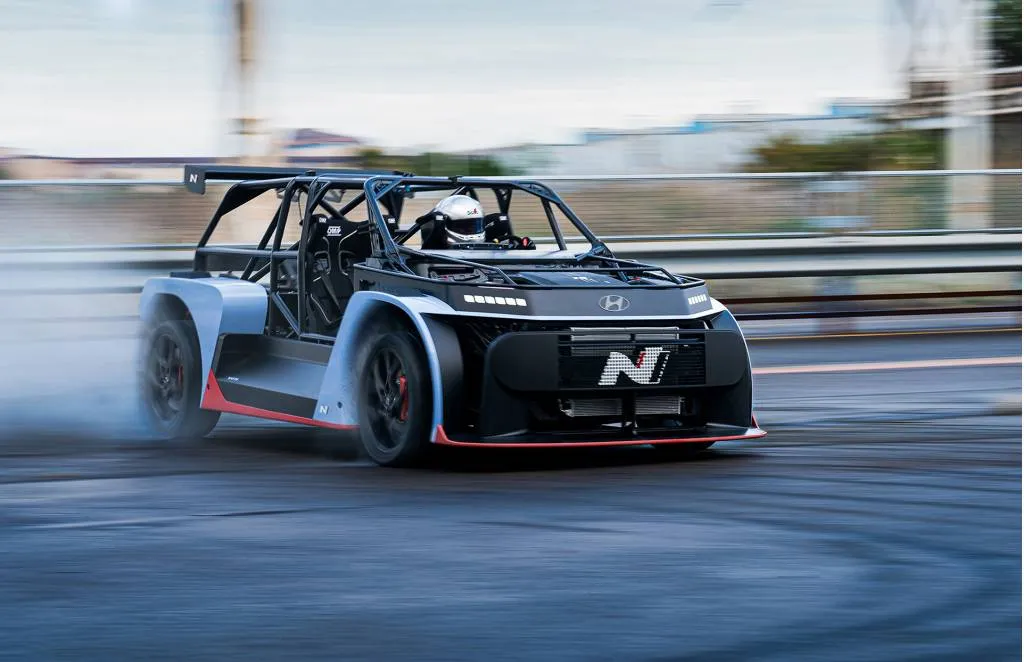
Hyundai RN24 concept
A 641-hp dual-motor all-wheel-drive powertrain has been borrowed from the Hyundai Ioniq 5 N, but because the concept’s wheelbase is 13.4 inches shorter, the Ioniq’s 84-kwh battery pack had to be reworked to fit. To take full advantage of the nimble chassis, the steering was designed to match the speed of systems in Hyundai rally cars.
The suspension was inspired by Hyundai’s rally cars as well, with similar dampers and high-rigidity subframes used, as were the electronic controls, which were taken directly from the current Hyundai i20 N Rally1 Hybrid. These include a powertrain controller that lets the driver adjust things like peak power, acceleration sensitivity, regenerative braking sensitivity, and more.
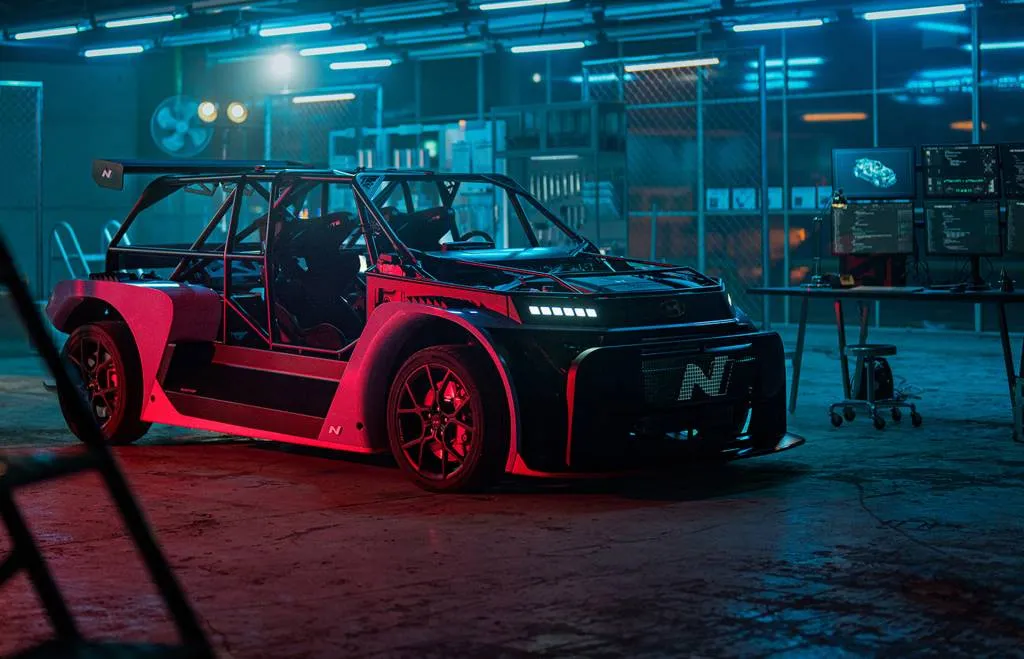
Hyundai RN24 concept
Other features are designed to mimic mechanical components in current rally cars. A Rally Mode is designed to distribute power among the four wheels in a manner similar to mechanical all-wheel-drive systems used in rally cars, and there’s an electronic hand brake as well.
An upgraded version of the N Active Sound+ system from the Ioniq 5 N adds two speakers, and is designed to use the rear fenders as a soundbox to further enhance the audio experience. With the Ioniq 5 N, Hyundai has tried to use artificial sound and gear shifts to cater to enthusiasts. The RN24 indicates it’s committed to that approach for the near term.

Over half of US EV and PHEV sales in 2023 were SUVs
- SUVs were 53% of EV and 83% of PHEV sales in 2023
- They’re heavier and less aerodynamic—thus less efficient—than cars
- Broadly, SUVs emit 20% more CO2 than cars regardless of powertrain
Reflecting overall industry trends, most electric vehicles and plug-in hybrids sold in the U.S. in 2023 were SUVs, according to the Department of Energy (DOE).
By sales, SUVs have surpassed sedans, wagons, hatchbacks, and minivans, and last year they also accounted for 53% of battery-electric vehicle sales and 83% of plug-in hybrid sales. Conventional car body styles still accounted for 43.4% of EV sales, but just 10% of plug-in hybrid sales.
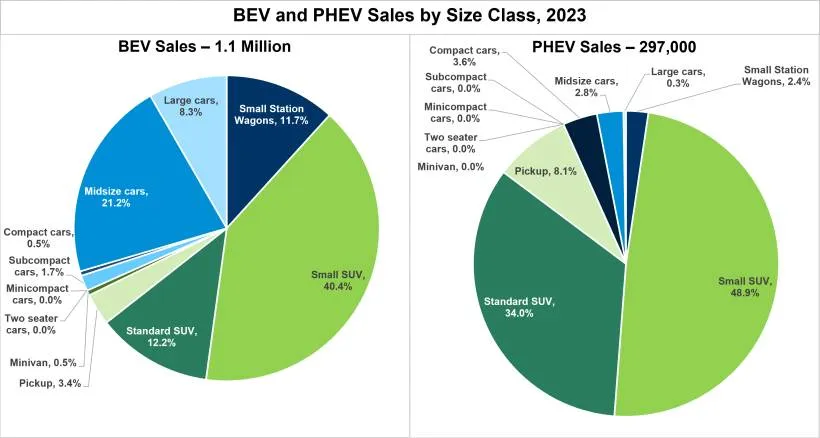
2023 U.S. EV and PHEV sales by size class (via U.S. Department of Energy)
SUVs are generally heavier and less aerodynamic than cars, which impacts efficiency of internal-combustion and electric powertrains alike. That’s led to differing analyses of the relatively high number of plug-in SUV sales.
The DOE has a fairly positive outlook, saying in September that a small electric SUV with 300 miles of range is estimated to have half the lifetime greenhouse gas emissions of a comparable gasoline vehicle. In 2021 it said that popular small SUVs were a meaningfully better choice than larger models in terms of overall emissions—and that EVs and plug-in hybrids were better still.
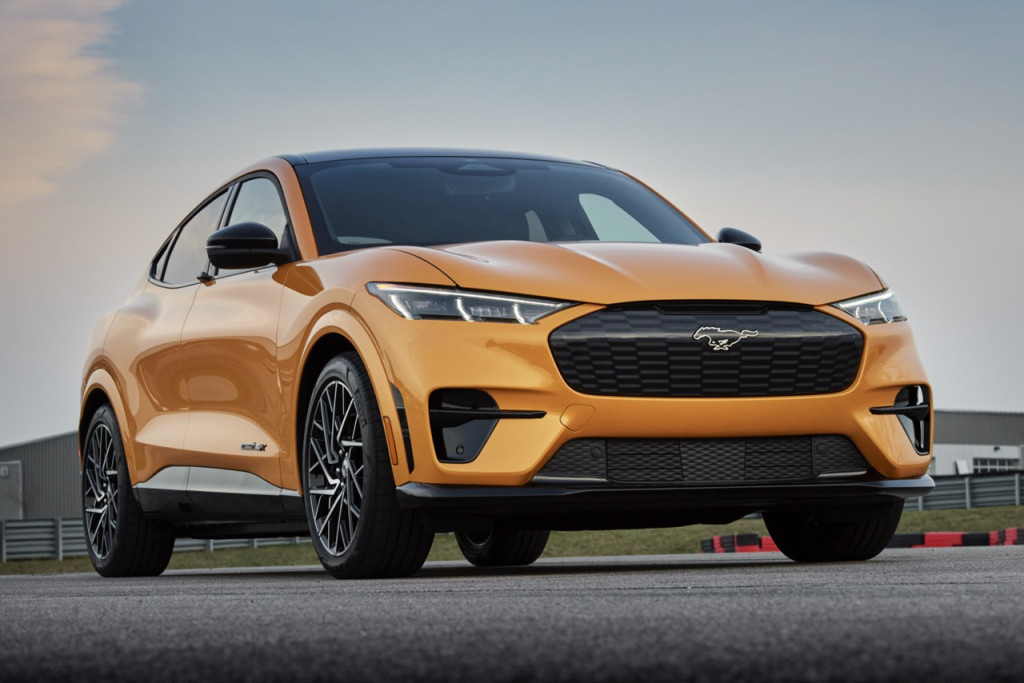
2023 Ford Mustang Mach-E
However, the International Energy Agency (IEA) said earlier this year that SUVs emit 20% more CO2 compared to cars, regardless of powertrain type. The IEA also warned in 2023 that the SUV market is fueling global oil demand, countering some of the emissions reductions one might hope to see from higher EV adoption.
When comparing electric SUVs to gasoline SUVs, though, electric vehicles at least have the advantage of getting cleaner over their useful life as more renewable energy is used to power the grid. And while emissions from electricity production and distribution are currently double that of the equivalent emissions for gasoline, that’s more than offset by the tailpipe emissions of gasoline vehicles, which represent nearly three quarters of their total lifecycle emissions, the DOE previously noted.

GMC Sierra EV recalled because turn signals may be too dim
The 2024 GMC Sierra EV full-size electric pickup truck is already being recalled because other road users might not be able to see its turn signals.
General Motors is recalling 1,962 of the trucks because the front signal lights and parking lights may be too similar in their levels of brightness, according to the National Highway Traffic Safety Administration (NHTSA). This could make it too difficult to see the turn signals when they’re activated, which could lead to confusion and crashes.
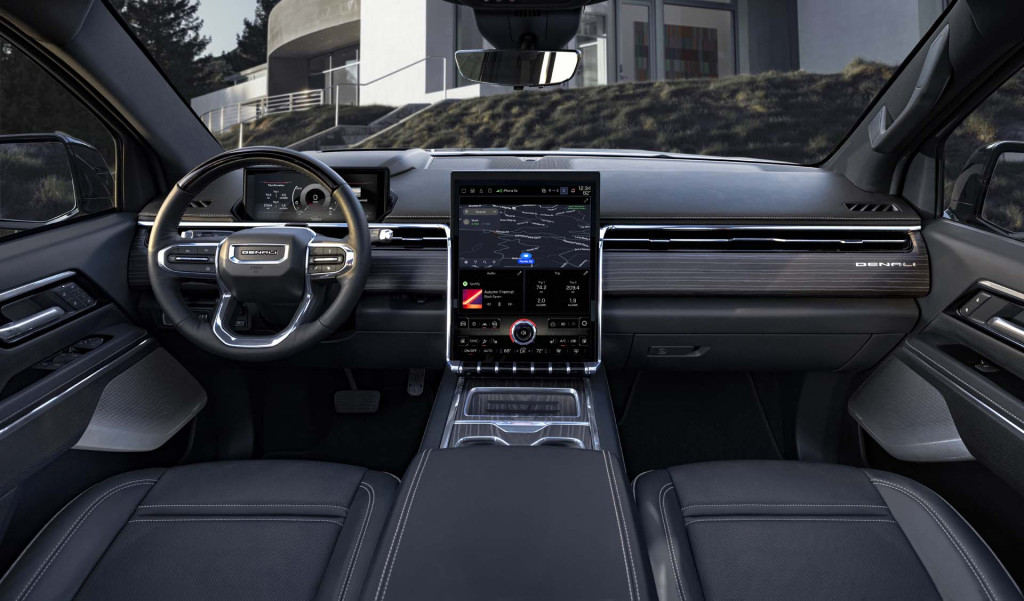
2024 GMC Sierra EV Denali Edition 1
GM estimates that 100% of recalled vehicles have this issue, which was first spotted by one of the automaker’s engineers and is attributed to a supplier not performing proper calculations of the luminosity of the turn signals and parking lights.
The remedy is replacement of the headlights’ multipurpose LED driver module, work dealers will perform free of charge. GM plans to mail owner notification letters Nov. 25. Owners can also contact GM customer service at 888-988-7267 for more information. The automaker’s reference number for this recall is N242474560.
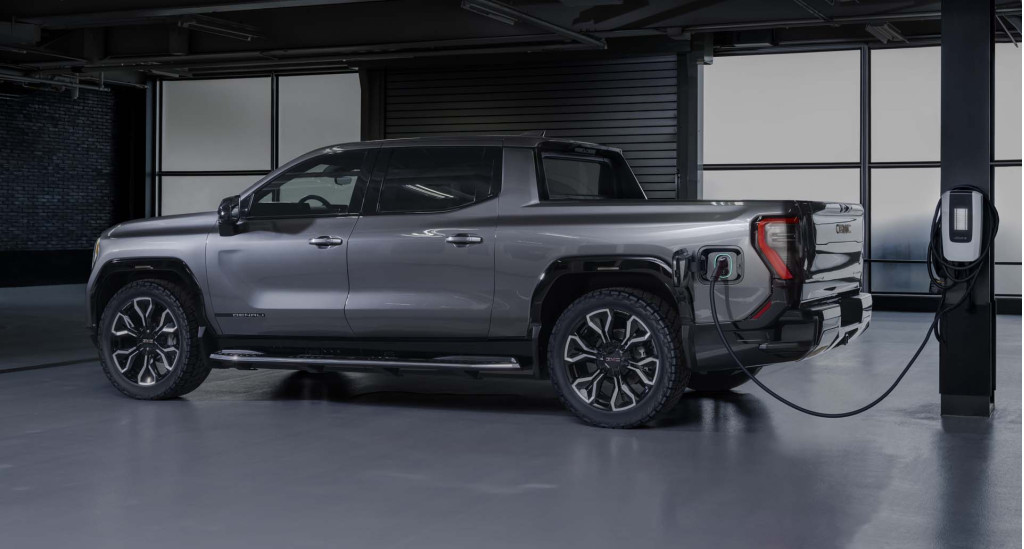
2024 GMC Sierra EV Denali Edition 1
Deliveries of the Sierra EV only began in August, starting with a special Denali Edition 1 launch version that costs $99,495—a few thousand less than the price suggested when the Sierra EV was first shown in 2022. The launch model’s 440-mile EPA range is about 10% more than originally suggested.
Denali Edition 1 models have an adaptive air suspension, rear-wheel steering, and the CrabWalk feature from the GMC Hummer EV. The latter distinguishes the Sierra EV from the top-spec Chevrolet Silverado EV RST. Like their internal-combustion counterparts, the Chevy and GMC electric trucks are essentially twins, with the main differences coming down to styling and some feature content.

Scout reveals electric Traveler SUV and Terra pickup, due in 2027
- The Scout Traveler SUV and Terra pickup arrive in 2027
- Scout said the EVs will have up to 350 miles of range; 500 miles with the range extender
- Pricing is said to start at under $60,000
Scout Motors on Thursday unveiled concept versions of an electric SUV and pickup truck the new Volkswagen Group brand aims to start manufacturing in 2027 at its new $2 billion South Carolina factory. The concepts are about 85% accurate to the production models, according to Scout.
The Scout Traveler SUV and Scout Terra pickup truck are based on a new body-on-frame platform that’s exclusive to the Scout, with four-wheel drive and a solid rear axle. The old school layout is intended to maximize off-road capability and towing capacity, which Scout estimates at more than 10,000 pounds for the pickup and 7,000 pounds for the SUV, with a maximum payload capacity of 2,000 pounds for both models.
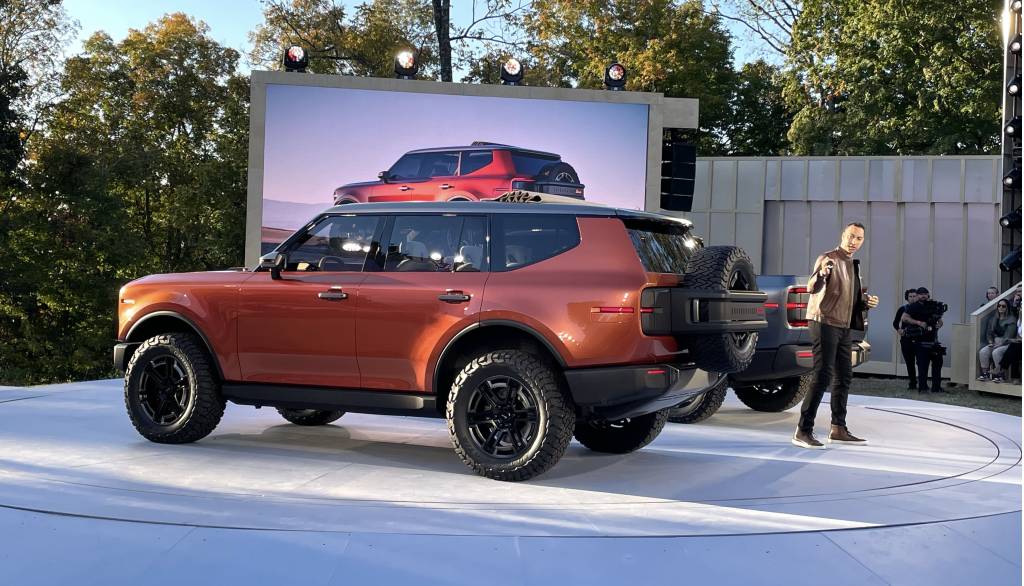
Scout Traveler SUV concept
Body-on-frame construction also ties the Scout EVs to the original Scout trucks manufactured by International Harvester from 1961-1980. VW got the rights to the name through its acquisition of successor company Navistar in 2020. That’s also reflected in retro styling that references the original Scout vehicles with features like rectangular grilles and a kicked-up lower rear window line on the Traveler SUV, which will also be available with a Cabana Top offering a larger roof opening than a typical sunroof.
In contrast to the Volkswagen ID EVs, Scout also emphasizes tactility with mechanical door handles and analog controls. This should help contribute to Scout’s goal of easy repairability. The brand claims approximately 80% of repairs can be performed without having to go to a dealership.
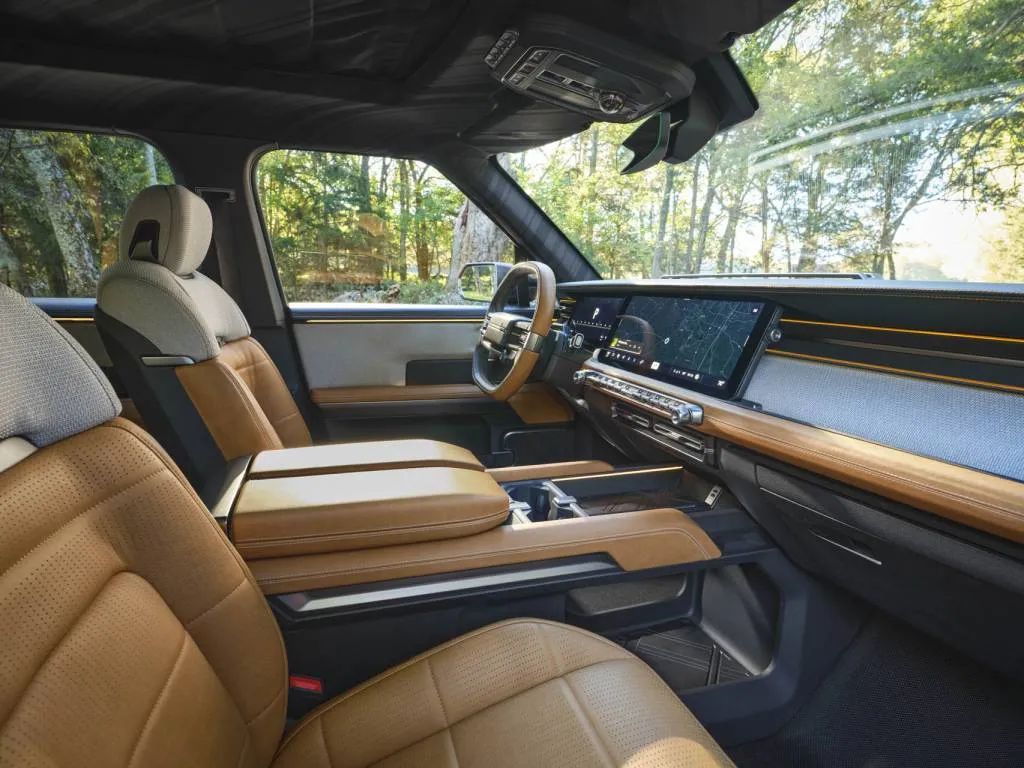
Scout Traveler concept
A front bench seat is another throwback feature, although a conventional setup of front bucket seats with a center console will be available. Modern touches include a 16.2-inch touchscreen and 12.3-inch digital instrument cluster.
The Terra measures in at 229.2 inches long while the Traveler checks in at 207.9 inches long, and both models are 91.6 inches wide. Scout said both models are designed to accommodate 35-inch tires, offer over a foot of ground clearance, and can ford least three feet of water. They’ll also be offered with a front sway bar disconnect and front and rear mechanical lockers to further enhance off-road capability. On pavement, up to 1,000 lb-ft of torque will get the trucks from 0-60 mph in 3.5 seconds, Scout claims.
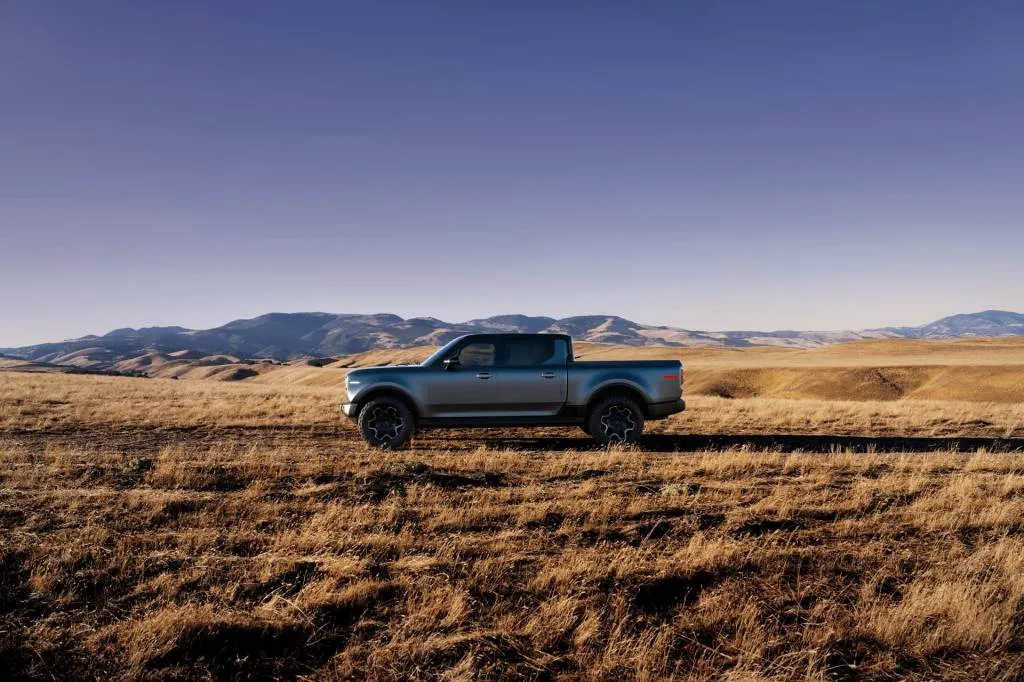
Scout Terra concept
Scout plans to offer all-electric and range extended versions of both models, the latter dubbed Harvester in reference to the original Scout’s manufacturer. All-electric versions will offer up to 350 miles of range and will use the Tesla North American Charging Standard (NACS) connector for DC fast charging from the start. Harvester range-extended models will have a driving range of 500 miles, according to Scout.
An 800-volt electrical architecture will accommodate fast-charging at up to 350 kw, as well as bidirectional charging. The Scout Terra pickup also houses two 120-volt outlets and one 240-volt outlet in its standard 5.5-foot bed. That bed can also accommodate a 35-inch spare tire with an optional carrier (the standard under-bed mounting point holds tires up to 33 inches) as can the Traveler SUV’s standard rear spare tire carrier.
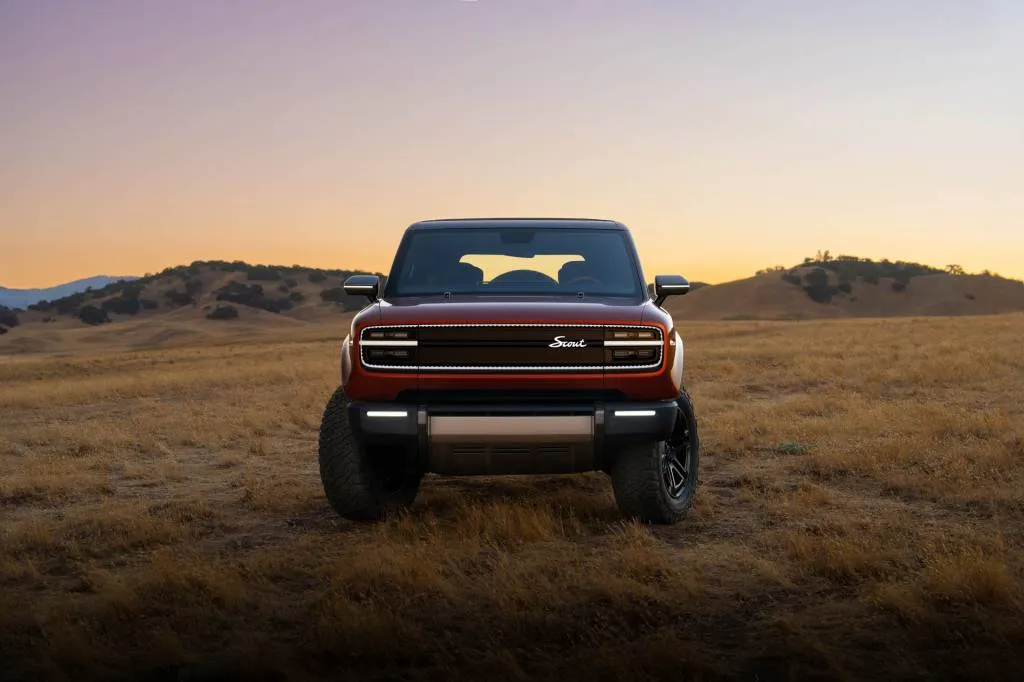
Scout Traveler concept
Scout expects both models to start at under $60,000, which is a big hike from the $40,000 base price CEO Scott Keogh discussed in 2023. With incentives factored in, though, starting prices will be closer to $50,000 for the Traveler and $51,500 for the Terra, according to Scout. Reservations open Oct. 24 and require a $100 refundable deposit.
The Volkswagen Group announced Scout in 2022 as a brand under the control of the parent company—not VW of America—allowing the space for a different direct-sales model. Announced at the peak of heightened demand for EVs, it was a complete surprise to VW’s U.S. dealers, who had reportedly been asking for an electric truck. They’re about to get a different 1960s throwback EV in the form of the ID.Buzz van.