
Category: General

Honda’s ready to build prototype solid-state batteries for EVs
Honda on Thursday unveiled what it calls a demonstration production line for solid-state batteries, with aims to commercialize the technology later this decade.
Located in Sakura City, in Japan’s Tochigi Prefecture, the 295,000-square-foot facility is intended to establish the process for eventual mass production, as well as determine costs and some final cell specifications, Honda said.
Construction was completed this past spring, and all necessary equipment has now been installed, according to the automaker. Honda plans to start making cells in January 2025. That’s almost a year later than the spring 2024 target date Honda executives mentioned when first publicly discussing the demonstration plant in 2022.
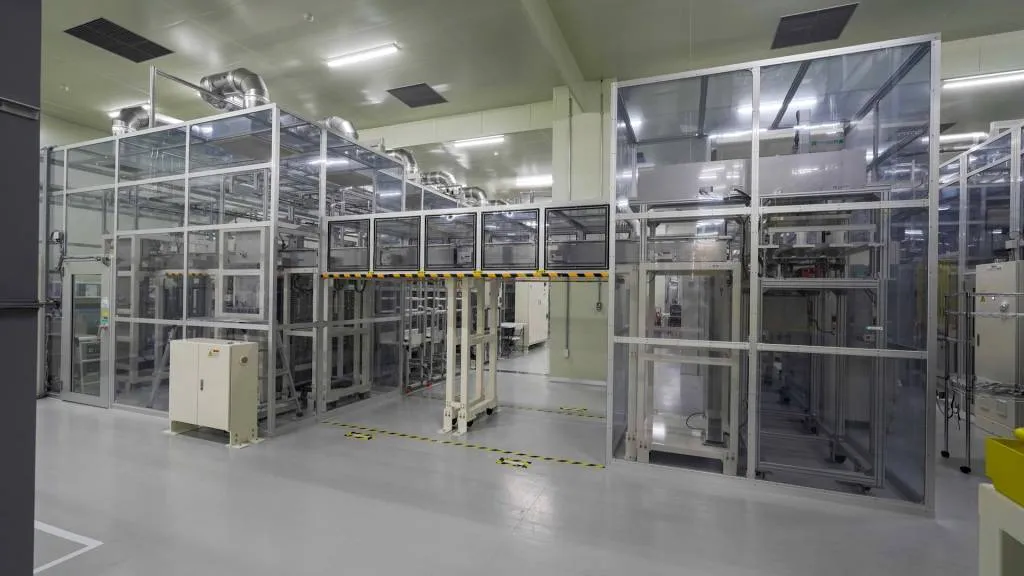
Honda solid-state battery production demonstration plant in Sakura City, Japan
Honda said the production process it plans to use is based on that of liquid-electrolyte lithium-ion cells, albeit with a roll-pressing step designed to increase the density of solid electrolyte layers that’s unique to solid-state cells. This also increases the degree of interfacial contact between by the electrolyte and electrodes, according to Honda.
The automaker also claims to have consolidated or accelerated several other parts of the production process, including bonding the positive and negative electrodes, and hopes to cut other associated costs, including by lowering energy consumption.
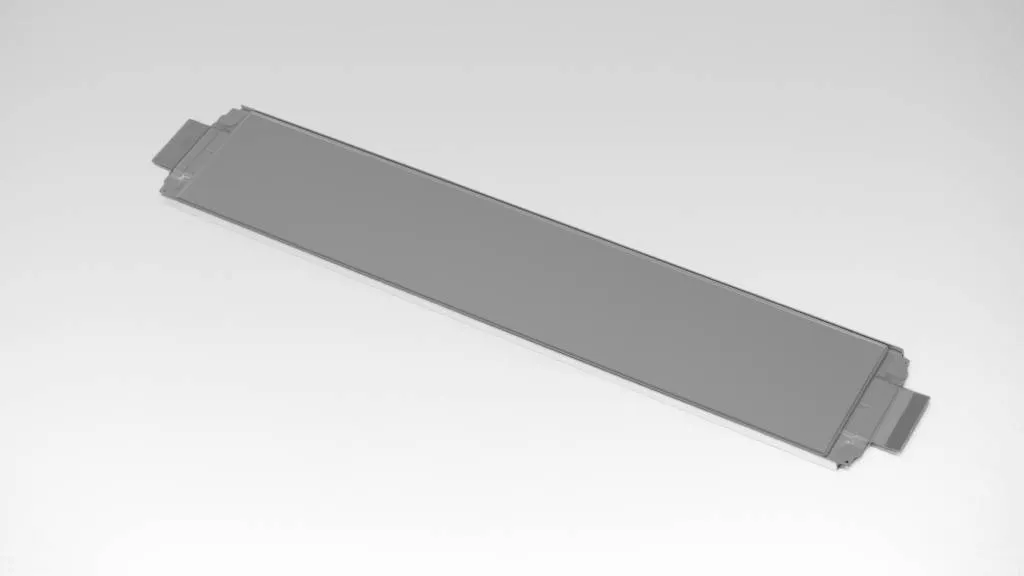
Honda solid-state battery prototype
Honda aims to start mass production of solid-state batteries in the second half of the 2020s, for use “not only in automobiles, but motorcycles and aircraft.” With this wider array of applications, Honda hopes to achieve reasonable economies of scale to make solid-state batteries financially viable.
Honda has been discussing solid-state batteries since at least 2021, at the time also saying that they would arrive later in the decade. Honda CEO Toshihiro Mibe told Green Car Reports earlier this year that solid-state batteries may enable a small affordable EV by 2030 thanks to lower battery costs and higher potential range than current cell chemistries.

Electric Chrysler Pacifica minivan plays with flexible interior
- The Chrysler Pacifica lineup will gain an electric variant
- Electric Chrysler Pacifica interior will feature flexible interior packaging
- Pacifica will be refreshed in 2026 with the electric variant to follow
Chrysler’s inching closer to an electric minivan, and now we know what it will be called.
On Thursday at the 2024 LA Auto Show, Chrysler CEO Christine Feuell confirmed to Green Car Reports that the upcoming electric Chrysler minivan will bear the Pacific name.
“There’s so much equity in the market, consumers have a favorable opinion about Pacifica and very high awareness. I see no reason at this point to change the name,” Feuell said.
In 2022 at the New York Auto Show, Feuell told GCR the automaker was rethinking the minivan for the electric era. That future is coming quickly.
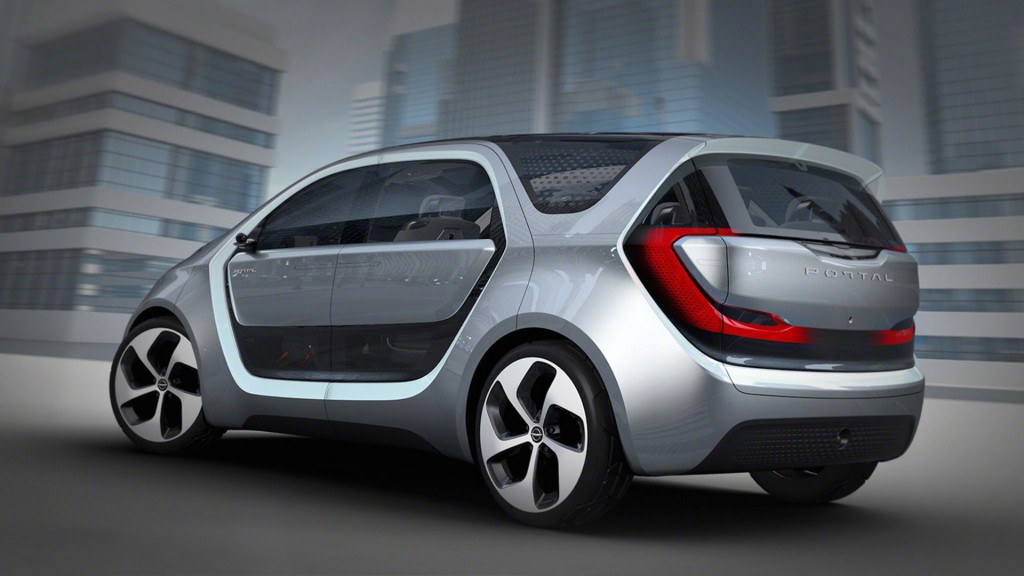
Chrysler Portal concept, 2017 Consumer Electronics Show
In 2026 the Pacifica will receive a refresh, according to Feuell. The updated design will set the stage for the electric Pacifica that will follow, likely a year later.
Chrysler will not use the design direction set by the Airflow electric SUV concept. Feuell said the brand’s design identity will take design cues from the Halcyon concept shown in February. “Modern” and “futuristic” were the design terms Feuell used for Chrysler’s design direction.
Feuell wouldn’t commit to whether the Pacifica Hybrid with its plug-in hybrid powertrain will coexist alongside the electric Pacifica. The executive also wouldn’t comment on whether an electric Pacifica with a range extender, like the Ram Charger EREV pickup truck, would make sense.
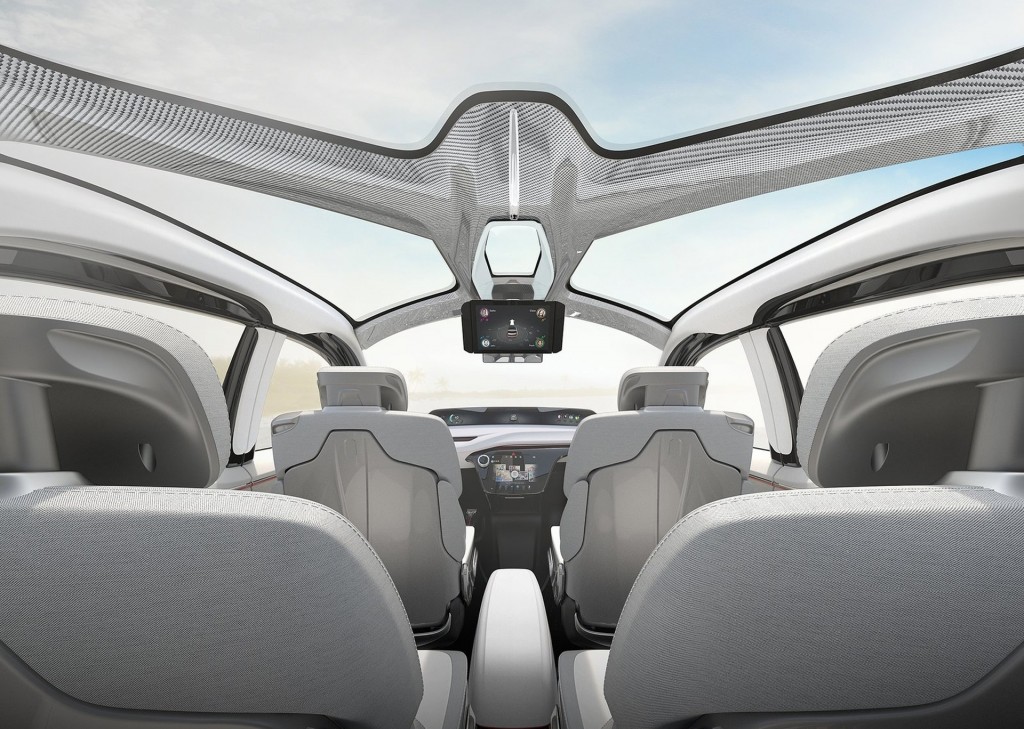
Chrysler Portal concept, 2017 Consumer Electronics Show
Electric Chrysler Pacifica getting flexible seating
Feuell was quick to note that with the VW ID.Buzz–the first electric minivan to hit the U.S. market–you have to remove the seats entirely to create an open space.
The Chrysler team’s been working up creative ways to reimagine the automaker’s patented Stow ‘N Go seating system with a BEV powertrain. Feuell noted one option is pushing the front seats forward to create a clever cargo space under the front seats to store the second row. The executive also mentioned looking at the outboard seating positions in the second row and perhaps putting them on rails to slide sideways.
No final interior configuration for the reconfigurable seating has been locked in yet, according to Feuell. But the planning stages are advanced enough that suppliers are now involved in the discussion to understand what’s possible.
Feuell said the team’s looking at the use cases and how customers will want to use the space. From lounging while waiting for their kid’s soccer practice is done to camping or having a picnic or tailgating, it’s all on the table. There’s also a focus on how to load and unload cargo along with ingress, egress, and cargo liftover height.

2026 Kia EV9 GT goes fast with 501 hp, charges fast with NACS port
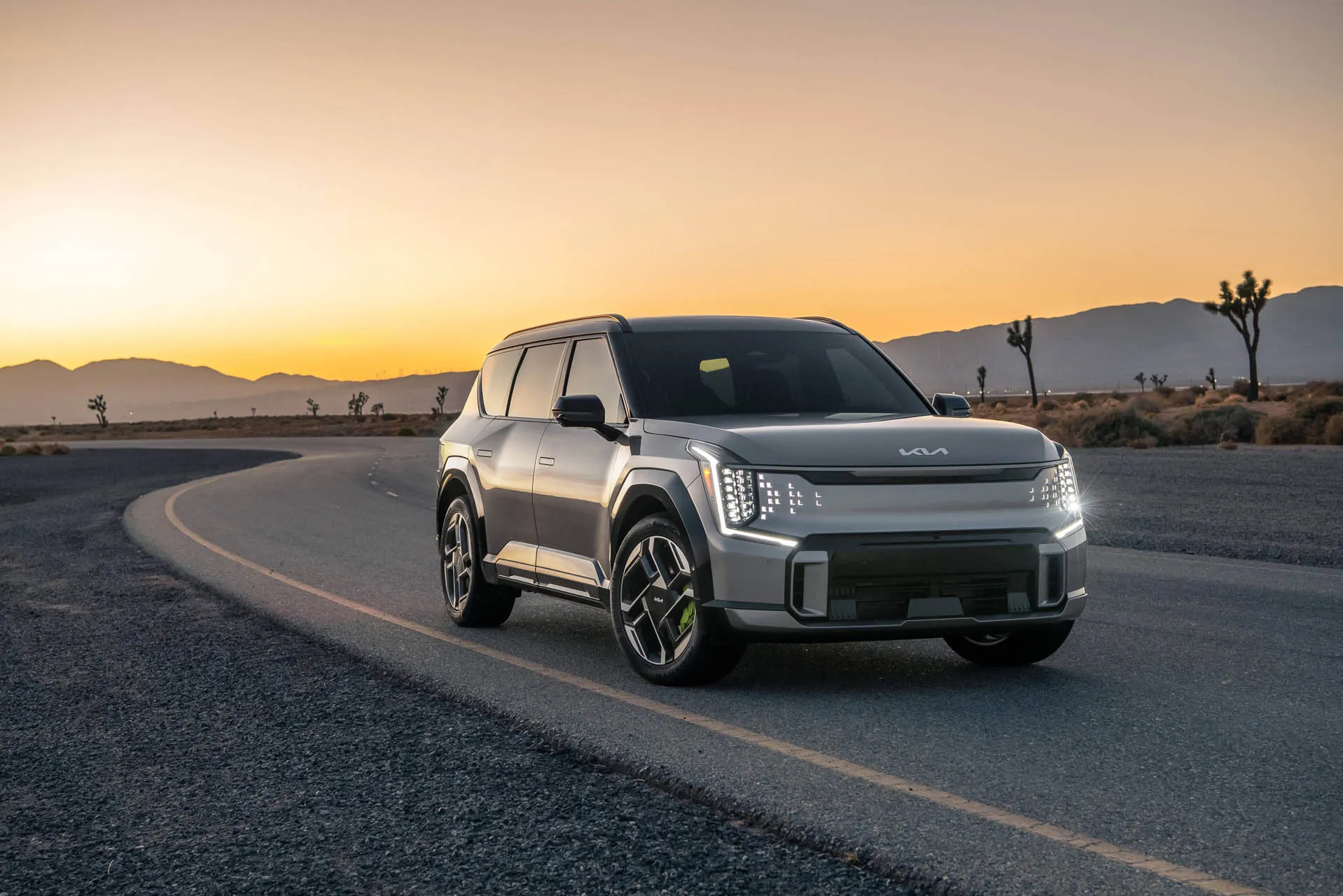
- The performance model of the EV9 three-row electric SUV debuted at the Los Angeles Auto Show
- Expect a 0-60 mph time of 4.3 seconds for the 2026 Kia EV9 GT
- The 2026 Kia EV9 comes with a NACS port to access Tesla’s Supercharger network
Three-row SUVs aren’t generally the first choice for performance car buyers, but Kia believes dialing up power and speed is the next logical step for its all-electric EV9.
Debuting at the 2024 Los Angeles auto show, the 2026 Kia EV9 GT applies a similar template to the previous EV6 GT to the larger EV9. That starts with a dual-motor all-wheel-drive powertrain producing 501 hp—122 hp more than the EV9 GT-Line, currently the most powerful EV9 grade. Kia estimates that this will reduce 0-60 mph acceleration from 5.0 seconds for the GT-Line to 4.3 seconds for the GT.
Kia also gave the EV9 GT virtual shifting, which provides the feel of running up through gears this EV does not have (or need), and will even slow acceleration once an artificial “rev limit” is achieved, just like in a combustion car. The artificial gear shifts are accompanied by their own soundtrack. Similar features debuted in the Hyundai Ioniq 5 N from Kia’s parent brand—but in a more track-focused package.
GT models also receive Continental performance tires, upgraded brakes, an electronic limited-slip differential, and adaptive suspension. Normal, Eco, Sport, and My Drive modes change the damping, as well as steering and brake feel, as does a GT mode that automatically dials in the stiffest damping. Kia notes that the 7.8 inches of ground clearance and 5,000-pound towing capacity of other EV9 models carries over.
Exterior differences between the GT and other EV9 models are subtle, mostly limited to new 21-inch wheels and green brake calipers, the latter a styling trait shared with the EV6 GT. The green theme continues inside with select trim elements. GT models also have a different steering wheel and robustly bolstered sport seats with Alcantara inserts, as well as unique schemes for the ambient lighting and the menus of the 12.3-inch touchscreen.
Kia expects to begin U.S. deliveries in the second half of 2025, meaning the EV9 GT will have a standard North American Charging Standard (NACS) port, which will be standard on all EV9 models starting in the first half of the year.
Pricing will be announced closer to launch, but expect the GT to come in higher than the current range-topping GT-Line, which is priced at $75,225 for the 2025 model year with the $1,325 destination charge factored in. The EV9 sees a modest $700 price increase for 2025, with no other significant changes to the vehicle that we named Green Car Reports Best Car To Buy 2024.
All EV9 GT models will be assembled in South Korea, meaning they won’t qualify for the $3,750 federal tax credit available for EV9 models assembled in Georgia, either at Kia’s West Point factory or Hyundai’s new Metaplant. It’s another indication that, as a recent report suggested, Kia is becoming less committed to U.S. assembly of the EV9 in the face of tougher tax-credit rules.

2025 Kia EV6 gets bigger battery, will be U.S.-built
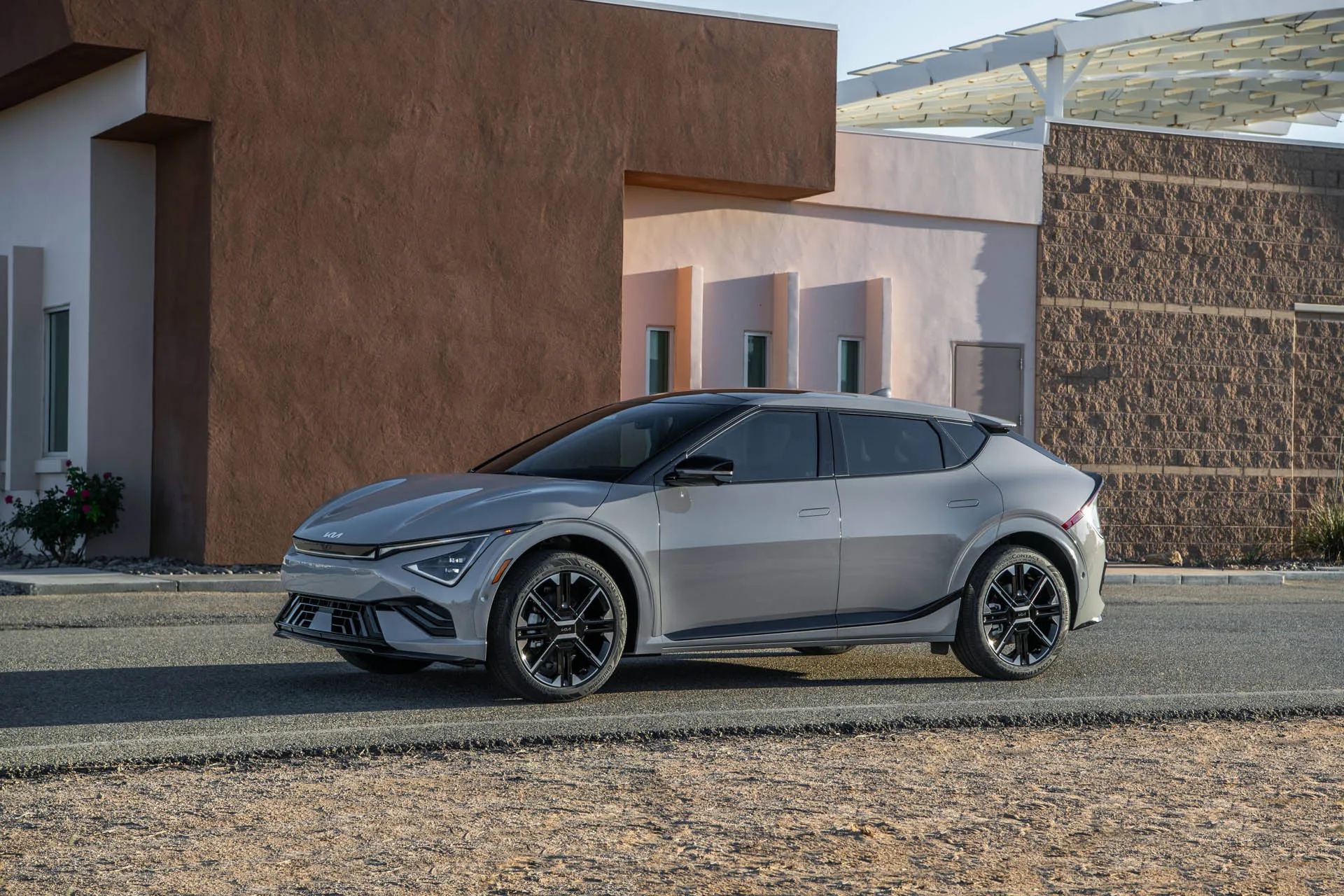
- The electric sedan now has NACS ports for easy access to Tesla Superchargers
- The base EV6 has a 68.0-kwh battery pack, up from 63.0 kwh last year
- The top-rated models have an 84.0-kwh pack, up from 77.4 kwh last year
The 2025 Kia EV6 made its U.S. debut Thursday at the 2024 Los Angeles auto show with updated styling, bigger battery packs, and confirmation of U.S. assembly.
Unveiled earlier this year in Kia’s home market of South Korea, the exterior gets a mild refresh with new headlights and more subtle changes in other areas, including a new graphic for the curved bar of the taillights. Kia says these changes were made to keep the EV6 more in line with its other models stylistically.
The standard battery pack has also been enlarged to 63.0 kwh, from 68.0 kwh currently, while an 84.0-kwh pack replaces the 77.4-kwh pack that has been the largest available since the EV6’s 2022 model year launch. Kia is targeting 319 miles of EPA range with the larger battery in single-motor rear-wheel-drive Light Long Range, Wind, and GT-Line models—a bit higher than the current peak of 303 EPA miles.
Rear-wheel-drive models are still rated at 167 hp and 258 lb-ft of torque with the smaller pack and 225 hp and 258 lb-ft of torque with the larger pack. A dual-motor all-wheel-drive powertrain also remains available with the bigger pack, delivering 320 hp and 446 lb-ft.
The sporty EV6 GT returns as well, but now makes 601 hp, compared to 576 hp before, while torque remains unchanged at 545 lb-ft. A standard GT mode provides a temporary boost to 641 hp and 568 lb-ft.
Like the related Hyundai Ioniq 5, the EV6 also receives a North American Charging Standard (NACS) port with this update. The charge port was also moved to the left rear fender on all models expect the GT. Kia didn’t say whether it will provide adapters for continued use of Combined Charging Standard (CCS) charging stations, as Hyundai is doing, or discuss how fast the EV6 will charge at Tesla Supercharger stations owners will now have access to.
Kia also implemented a new operating system that offers fast processing and enables over-the-air (OTA) updates, as well as digital key functionality that allows drivers to use a smartphone in place of the key fob. Automatically-deploying flush door handles are now standard on all models as well.
The 2025 Kia EV6 is expected to go on sale in the first half of 2025, with pricing to be announced closer to that time. Assembly will move to Kia’s West Point, Georgia, plant, which also started building the three-row Kia EV9 earlier this year. The U.S.-built EV9 still only qualifies for a $3,750 federal tax credit—half the full amount—because its batteries aren’t sourced from the U.S., and that could be the case for the EV6 as well.

Jaguar EV concept teased ahead of Dec. 2 debut
Jaguar will unveil a concept car previewing the look of its future electric vehicles on Dec. 2, during Miami Art Week.
The automaker released a teaser image of the concept, called the Design Vision concept, on Wednesday showing a bulging rear fender, but also some more angular elements that appear to be a departure from Jaguar’s current look.
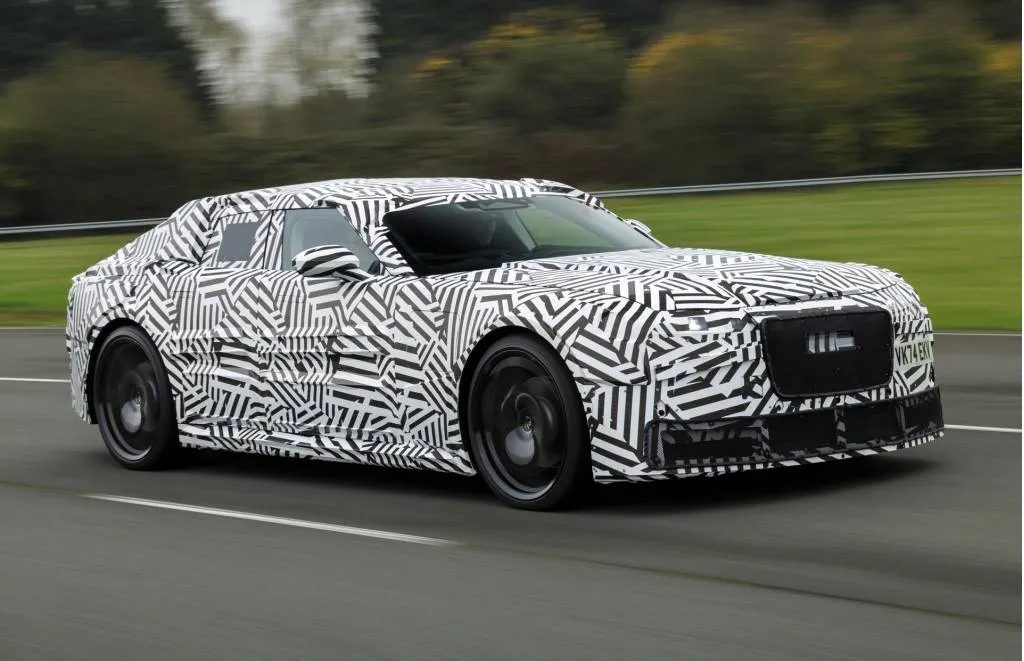
Next-generation Jaguar EV prototype
The concept will likely most closely preview the first of Jaguar’s lineup, a low-slung grand tourer the automaker has already shown testing in heavily-camouflaged guise. Jaguar previously said a production version would debut in 2025 sporting a six-figure price tag and more power than any previous Jaguar road car, with deliveries starting the following year.
This will be one of three EVs, with the other two expected to be an SUV and a more traditionally-styled sedan. All three will be based on a new platform called JEA (Jaguar Electrified Architecture) and will feature North American Charging Standard (NACS) ports to give drivers access to Tesla Supercharger stations. They’ll comprise the brand’s entire lineup, making Jaguar all-electric after years of hesitation.
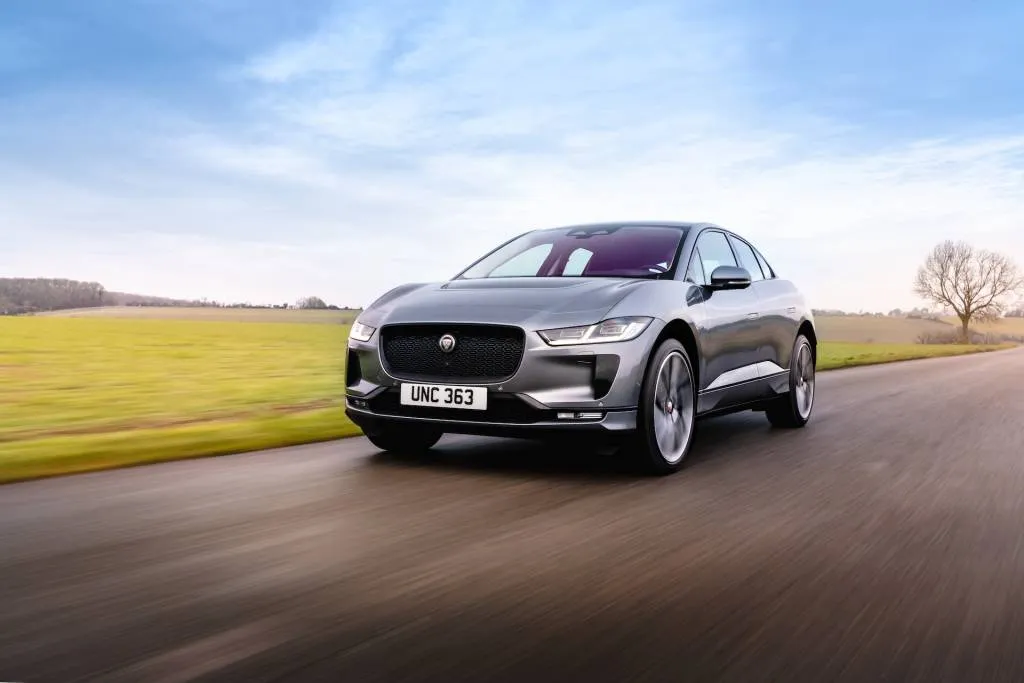
2024 Jaguar I-Pace
The Jaguar I-Pace was one of the first electric vehicles from an established luxury brand, but Jaguar failed to follow up on it. There were plans to bring the I-Pace into a second generation, as well as launch an all-electric flagship sedan to replace the gasoline XJ, but both were nixed in favor of a clean-slate approach.
Jaguar is also making this all-electric shift very abruptly, discontinuing most of its current gasoline models, as well as the I-Pace. The F-Pace is slated to remain Jaguar’s only model until the new EVs arrive, a situation Jaguar managing director Rawdon Glover has called “hugely frustrating.”

BMW Neue Klasse electric SUV enters pre-production status
- BMW’s new electric SUV has entered pro-production status
- Production is on track for late 2025
- Initial production will take place in Hungary and Germany, then Mexico will be added to the mix
BMW is now building pre-productions examples of the first of its next-generation Neue Klasse EVs at its assembly plant in Debrecen, Hungary,
This is the “final preparation phase” before the start of series production, which is still on track for late 2025, BMW said. A standard part of the ramp-up of any volume model, the pre-production process allows automakers to test every aspect of vehicle assembly, as well as the attendant logistics processes, to ensure everything is running smoothly.

BMW Group Plant Debrecen, Hungary
The first Neue Klasse model will be an SUV previewed by the Vision Neue Klasse X concept revealed earlier this year. It will be followed by a sedan based on the Vision Neue Klasse concept first shown in late 2023, with both sporting a minimalist look and tech features like a panoramic head-up display, with a name that honors a family of models from the 1960s that set the template for modern BMWs.
Neue Klasse models also mark a battery shift for BMW to cylindrical cells, which the automaker has said will have a volumetric energy density more than 20% higher than the prismatic cells it currently uses. They’ll combine with an 800-volt electrical architecture to speed up charging by 30%, BMW has said. The automaker has also promised bidirectional charging capability, allowing Neue Klasse EVs to serve as home backup power sources.

BMW Group Plant Debrecen, Hungary
The Neue Klasse EVs pick up where the formative BMW i3—the automaker’s first dedicated EV—left off, but with designs aimed more at the mainstream and the potential for much higher production volumes. After production gets underway in Hungary, BMW plans to add Neue Klasse models at its main plant in Munich, Germany. Production in San Luis Potosí, Mexico, will then follow in 2027.
Plans for Mexican assembly, which include a new battery-assembly facility, could help Neue Klasse models qualify for a federal EV tax credit in the U.S. But by the time BMW is ready to start building EVs in Mexico, the tax credit may have already been nixed by the second Trump administration.

2026 Hyundai Ioniq 9 smooths the electric SUV form
- Ioniq 9 will seat up to seven, has fully reclining first and second
- Aims for 335 miles of range, 24-minute 10-80% fast-charging
- Capable of downloadable Features on Demand, energy sharing
Hyundai’s upcoming three-row EV, the 2026 Ioniq 9, may get closer than any contemporary vehicle to straddling the boundaries between SUV, wagon, and minivan.
Although measuring out to roughly the same size as the Kia EV9, the Ioniq 9 is a completely different form factor—one appearing to be less focused on truck looks and backcountry possibilities, and instead more focused on interior comfort and highway efficiency and range.
It could shape up as a unique rival to other aero-savvy or non-conventional three-row EV designs, including the Lucid Gravity, Tesla Model X, and Volkswagen ID.Buzz.
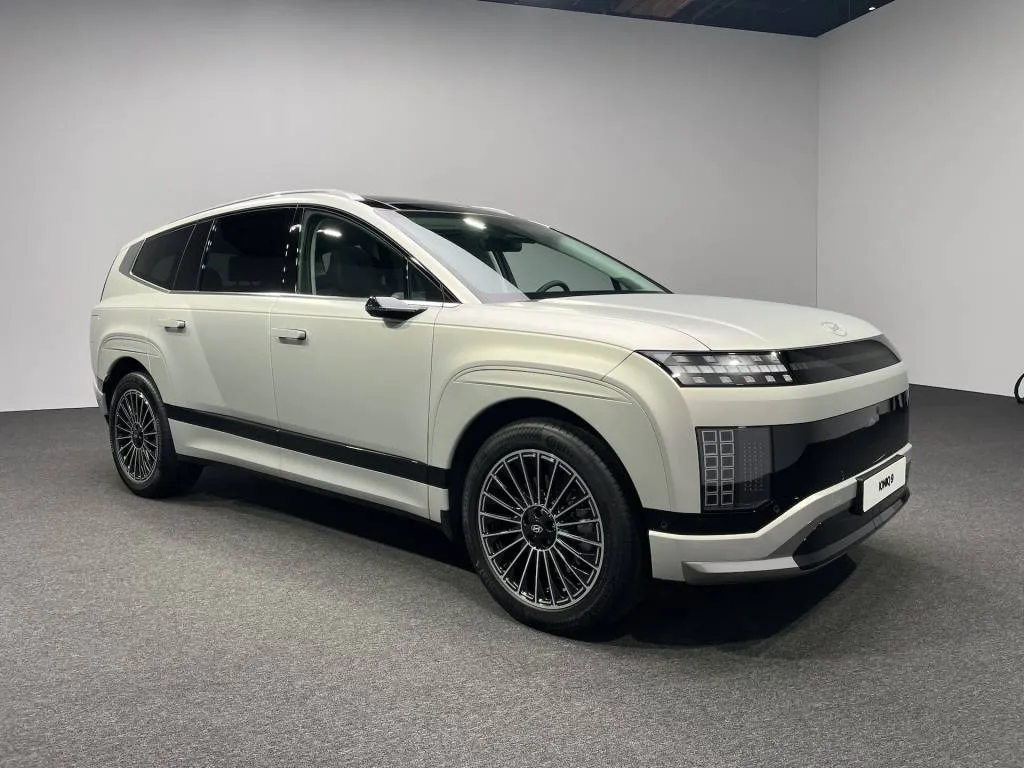
2026 Hyundai Ioniq 9
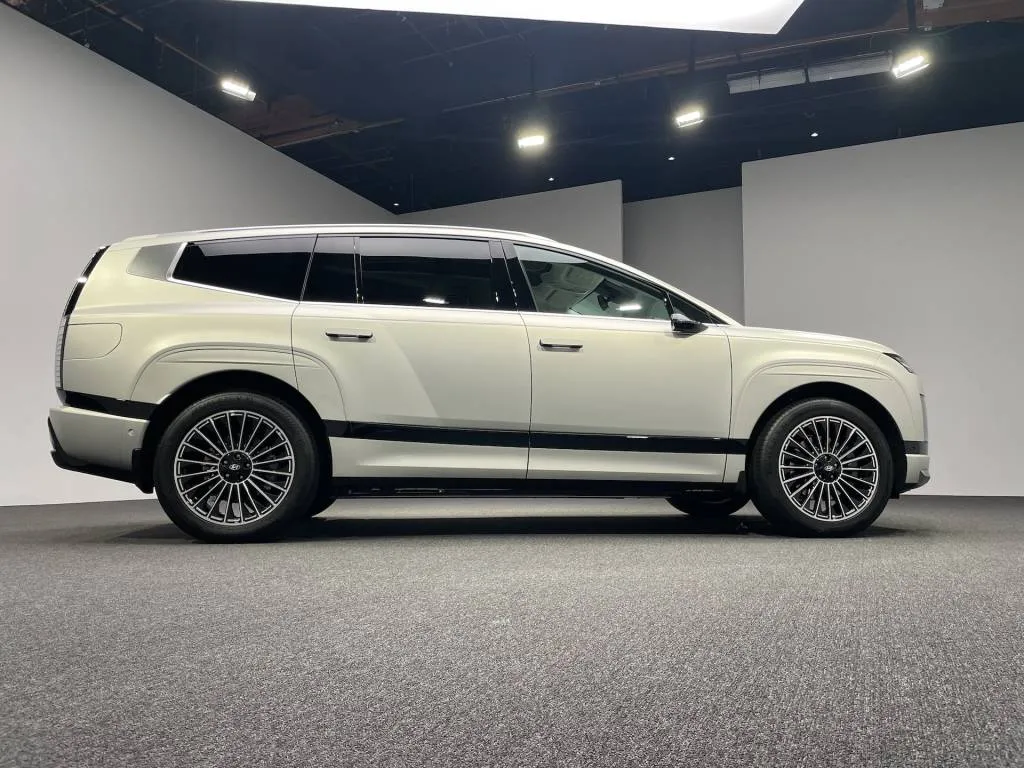
2026 Hyundai Ioniq 9
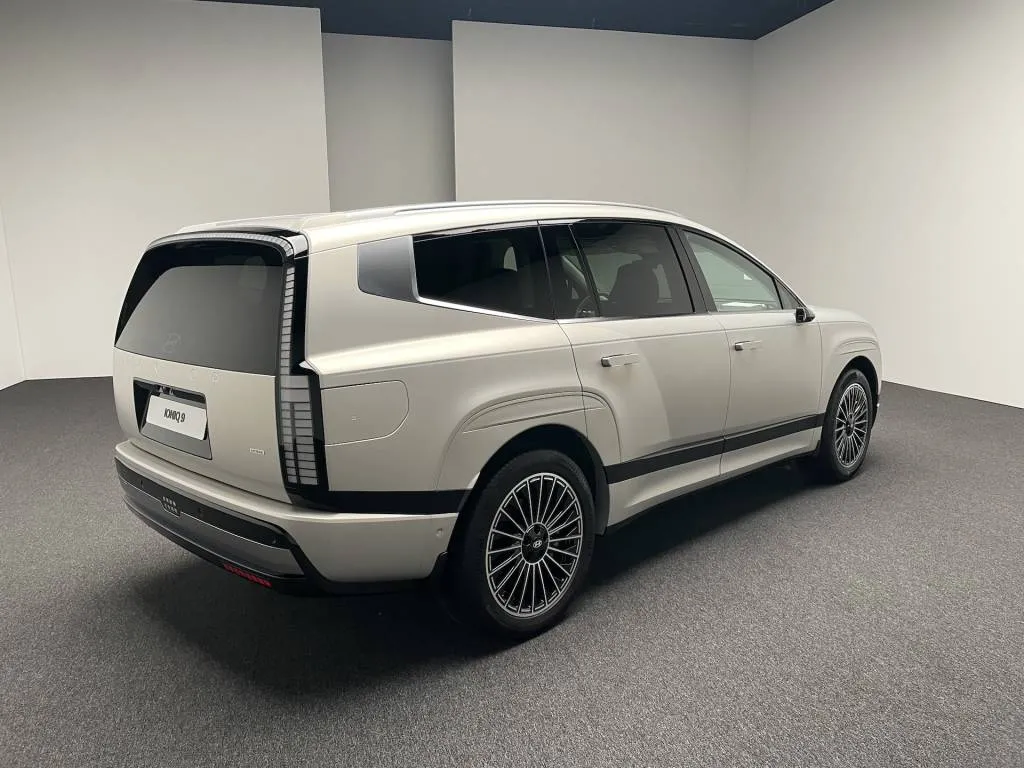
2026 Hyundai Ioniq 9
Ioniq 9 styling: Not a boxy SUV
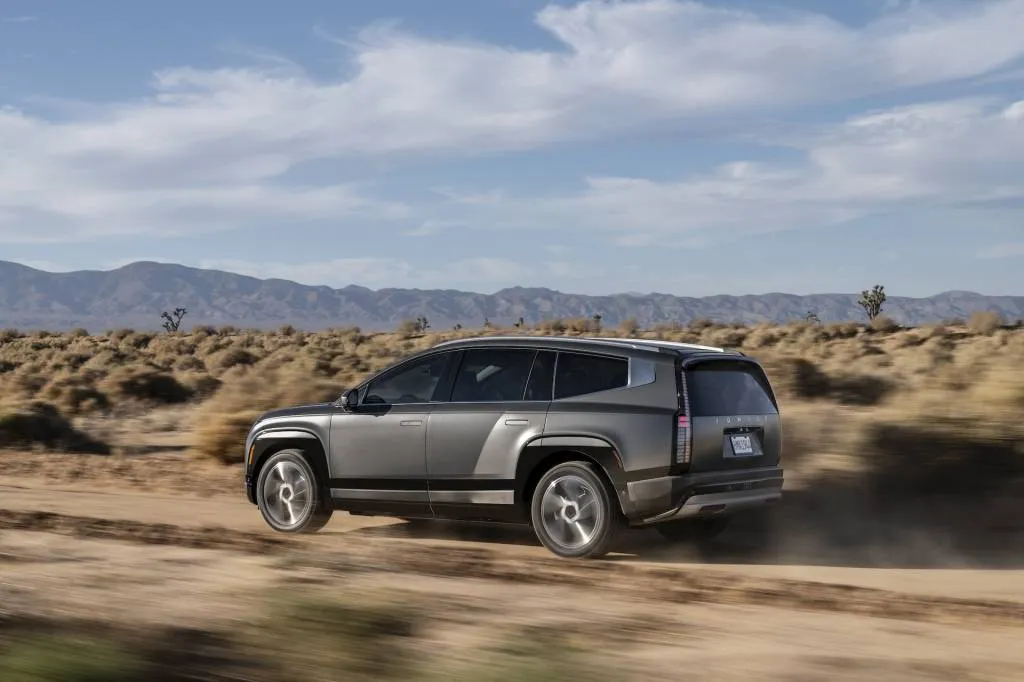
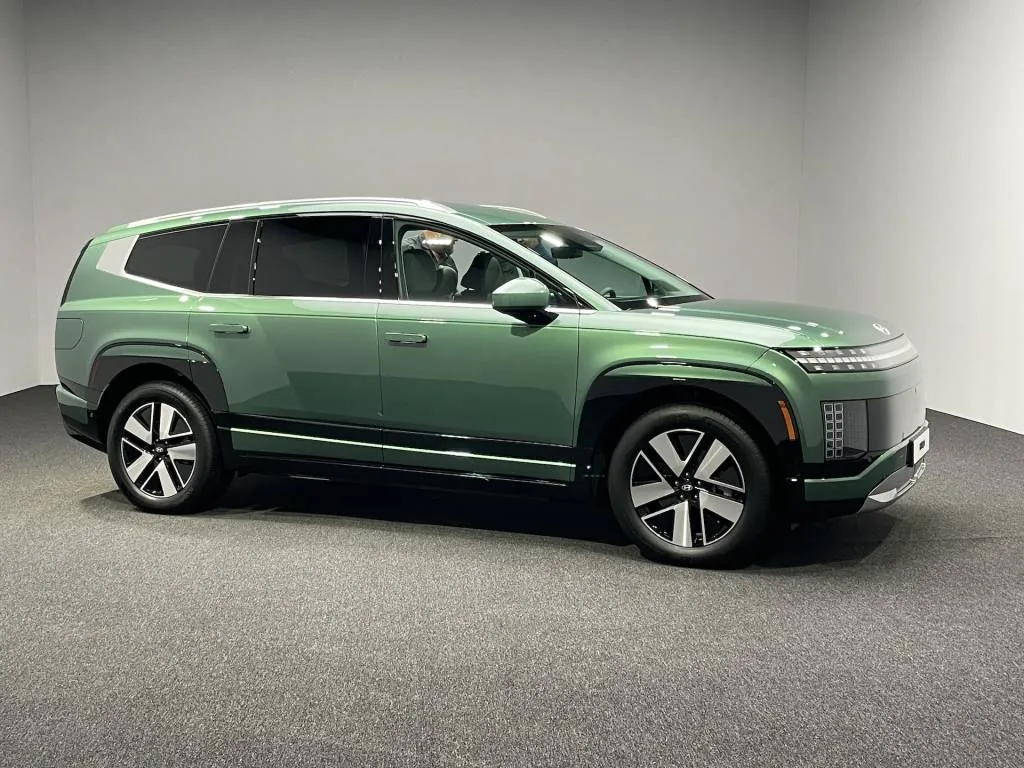
The Ioniq 9 pretty closely follows the shape of the Seven concept from 2021. It pairs a series of linear design aspects—the bitmapped line of lighting across the front, the nearly level beltline crease, and the straight-back lower-body trim—with a roofline and sides that softly taper, extending almost in a boattail shape.
That results in a coefficient of drag of just 0.269—remarkably good for an SUV, and an asset in providing a projected EPA range of up to 335 miles from just 110.3 kwh.
The Ioniq 9 is 199.2 inches long—about two inches longer than the EV9. That makes it the largest vehicle yet to be built on its E-GMP dedicated EV platform, which also underpins the Ioniq 5 crossover, Ioniq 6 sedan, Kia EV6 wagon, Kia EV9 SUV, and Genesis GV60 hatchback.
It rides on a 123.2-inch wheelbase, which is 0.2 inch longer than the EV9’s and the longest of any model from Hyundai. A flat floor, enabled by bypassing worries about locating the fuel tank, exhaust pipes, and more, helps package roomier seating and more cargo space than comparably sized combustion vehicles.
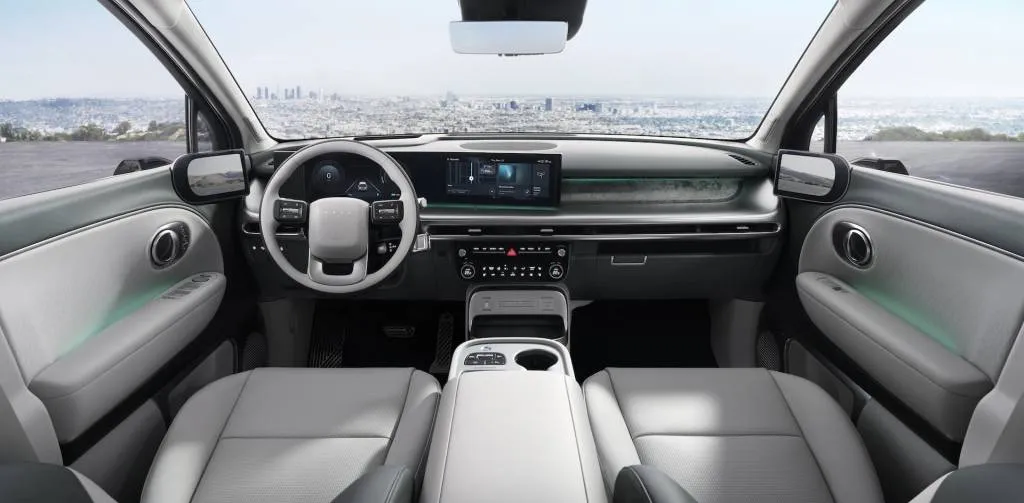
2026 Hyundai Ioniq 9
2026 Hyundai Ioniq 9
2026 Hyundai Ioniq 9
Ioniq 9 interior: Spacious and futuristic
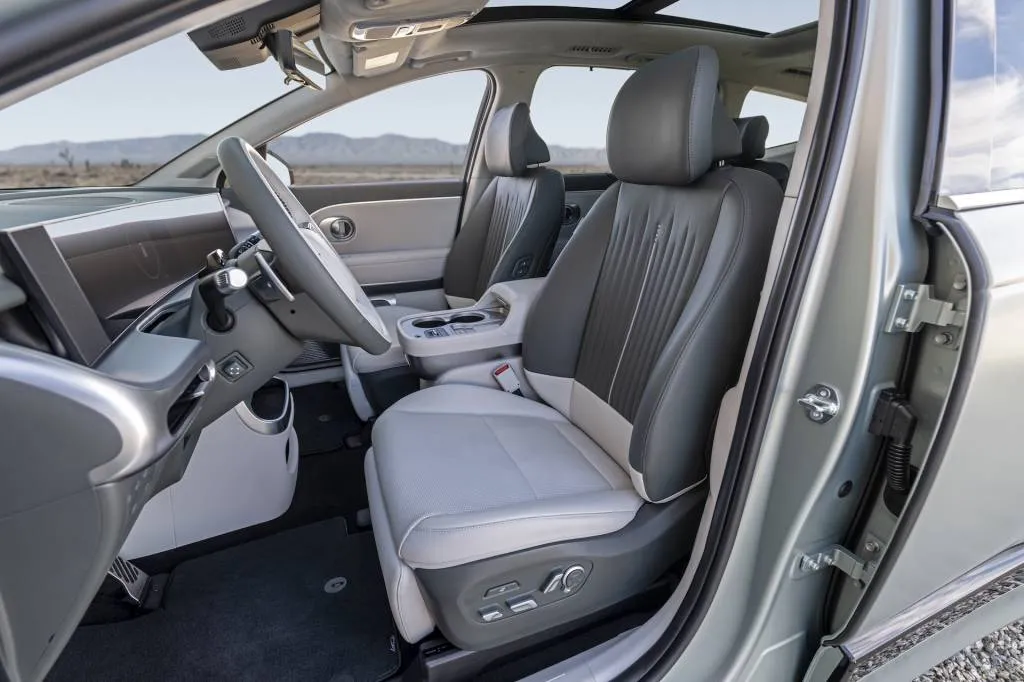
The cabin has a futuristic look, with a “floating dashboard,” slim vents, and ambient lighting. Six two-tone combinations are offered to complement (or contrast with) 16 different exterior colors, and eco-savvy materials are used throughout.
The front seats have armrests, and a center console allows a walk-through area in front and is in reach of the second row. It can slide back by up to 7.5 inches and has two layers of tray storage, with the lower one sliding. Frunk space—with an electric opener—stands at 1.8 or 3.1 cubic feet (depending if you have a motor up there), while the rear cargo area has 21.9 cubic feet with the second and third rows in place.
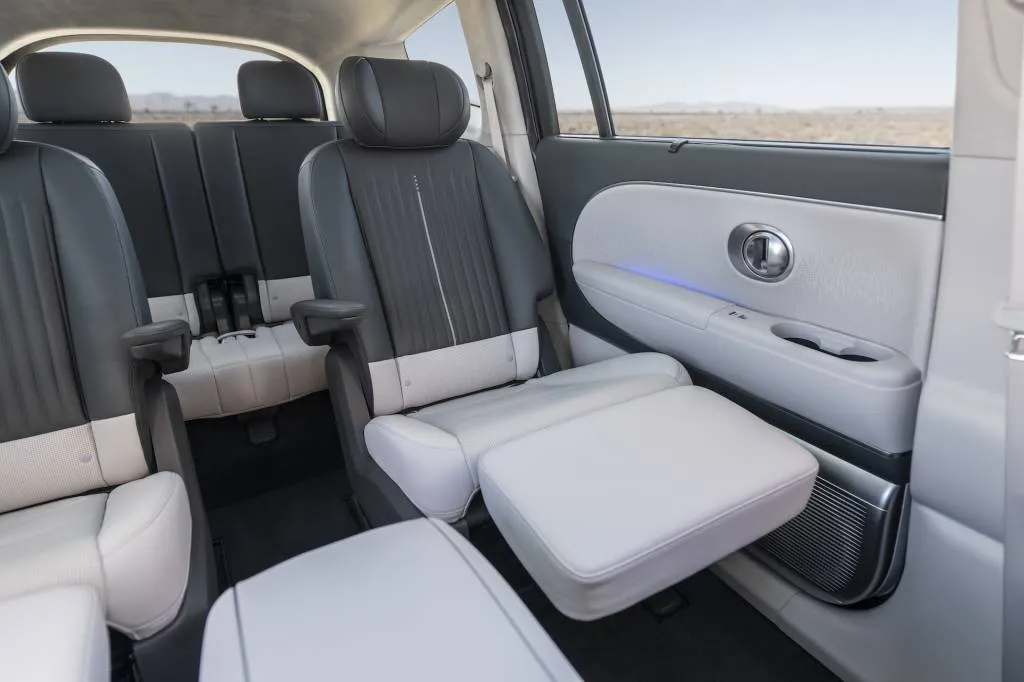
Hyundai notes that the first and second rows can fully recline and have leg rests, “allowing up to four people to rest during vehicle charging,” it says. The Ioniq 9 also has a massage function for the driver seat.
Camera side mirrors and second-row swiveling seats are feature points included with the auto-show debut, but Hyundai has said they won’t arrive in the U.S. version.
2026 Hyundai Ioniq 9
Three Ioniq 9 models, up to 335 miles
The Ioniq 9 will be offered in three configurations: Long-Range RWD, Long-Range AWD, and Performance AWD. All three versions have a 215-hp (160-kw) motor at the rear wheels, but the Long-Range AWD has a 93-hp (70-kw) motor in front while the Performance AWD gets 215-hp motors front and rear. The Long-Range RWD will return that estimated 335 miles, but Hyundai says it aims for more than 300 miles of range for all versions.
Hyundai quotes a 0-60 mph time of 4.9 seconds for the Performance model, while the two other versions are pegged at 6.2 and 8.4 seconds. It can tow up to 5,000 pounds and includes a towing mode that focuses on a 50:50 torque distribution, varying it as needed. Additional drive modes will include Normal, Eco, Sport, and a customizable MyDrive mode. Sand, Mud, and Snow off-road modes cater to specific terrain types.
The Ioniq 9 rides on a four-wheel independent suspension, with a MacPherson strut front suspension and a multi-link rear, plus self-leveling dampers and vibration-isolating hydro-bushings. It uses torque vectoring for ride and stability.
2026 Hyundai Ioniq 9
Ioniq 9 gets serious about aero and noise reduction
Aerodynamics are aided by an active air flap system and flush body panels. It also has a new type of door-closure mechanism that Hyundai says will assure a better fit-and-finish. According to Hyundai, this is also the first model from the automaker to get aluminum fenders and quarter panels, which helps cut weight. Hyundai has said the Ioniq 9 will weigh between 5,500 and 6,000 pounds.
It also includes an active noise control system that focuses on combating road noise, which can be especially noticeable in EVs. The Bose 14-speaker sound system that’s available includes a so-called e-Active Sound Design feature that creates different EV driving sounds.
Hyundai also notes that 100-watt USB-C ports are provided in all three rows. Also noteworthy is an available multi-tray UV-C sterilizer that can disinfect phones or masks, though it’s unclear if that feature is coming to our shores.
2026 Hyundai Ioniq 9
Ioniq 9 charging times, energy sharing
With a 350-kw charge connector, the Ioniq 9 can get from a 10-80% charge in just 24 minutes, according to Hyundai. It has vehicle-to-load (V2L) convenience for outputting power through AC sockets—in the cargo area. It will use the NACS (Tesla-style) charge port.
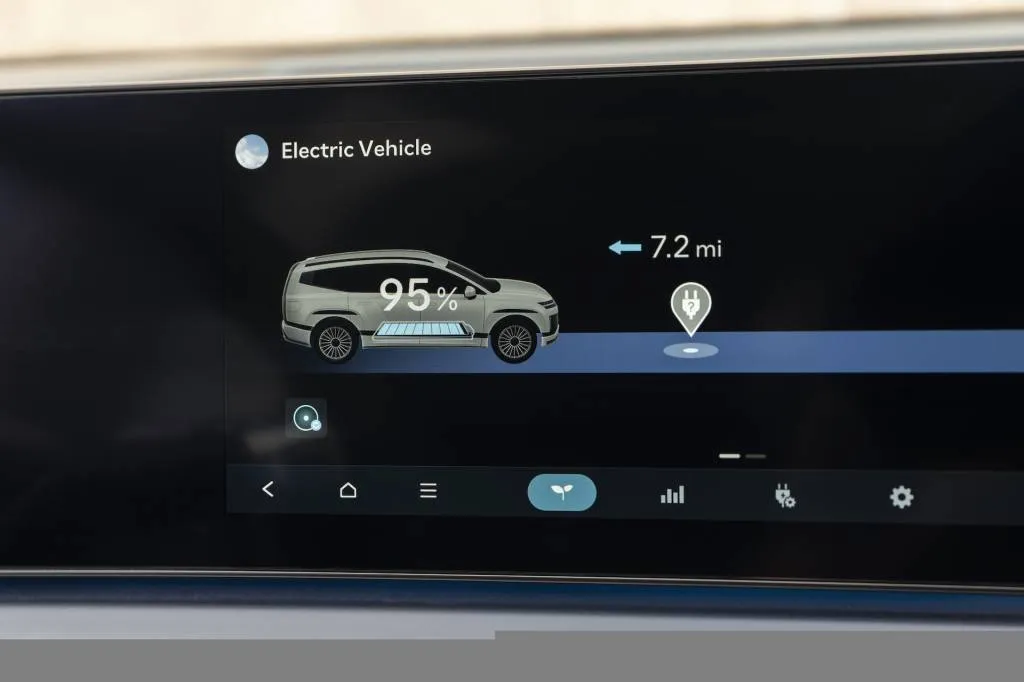
Charge status is now represented by four green dots on the steering wheel, and Hyundai is introducing a “refined EV Route Planner” with the Ioniq 9, plus “improved battery consistency” and new energy displays.
A 12.0-inch gauge cluster and 12.0-inch infotainment system are set across a curved display. Hyundai has added an expanded AI voice assistant, while it hopes to roll out optional features for download—called Features on Demand—that might include dynamic lighting or music apps.
The Ioniq 9 has 10 airbags, and improved third-row passenger protection, along with automatic emergency braking, active lane control, blind-spot monitors, and many other active-safety systems.
Hyundai says that the Ioniq 9 will be launched in Korea and the U.S. in early 2025, with Europe and other markets to follow. Expect starting prices around $60,000, ranging near or past $80,000 for the top Performance version. The Ioniq 9 will be made in Georgia and is expected to qualify for the full $7,500 federal EV tax credit.

2026 Genesis Electrified GV70 gets more range, NACS port
- Electrified GV70 upgrades to an 84-kwh battery pack
- Likely 250+ miles of range, with 10-80% SOC in about 20 minutes
- Revamped cabin interface and ambience, dynamic improvements
Genesis on Tuesday night revealed a substantially updated version of its Electrified GV70 crossover with a larger battery, a Tesla NACS charge port, and a refreshed front-end design.
It’s part of a refresh for the GV70 lineup, which is Genesis’ top-selling model line. The Electrified GV70 gets a bigger battery pack and more range—a much-needed upgrade, although Genesis isn’t talking numbers quite yet. 2025 Electrified GV70 models came in at an EPA-rated 236 miles. Going from 77.4 kwh up to 84 kwh will surely push this model well past the 250-mile mark.
At about 186 inches long, the Electrified GV70 doesn’t have obvious direct rivals, but looking upward in size it overlaps with the Cadillac Lyriq, Acura ZDX, and BMW iX. Looking smaller, the XC40 Recharge might be an alternative.
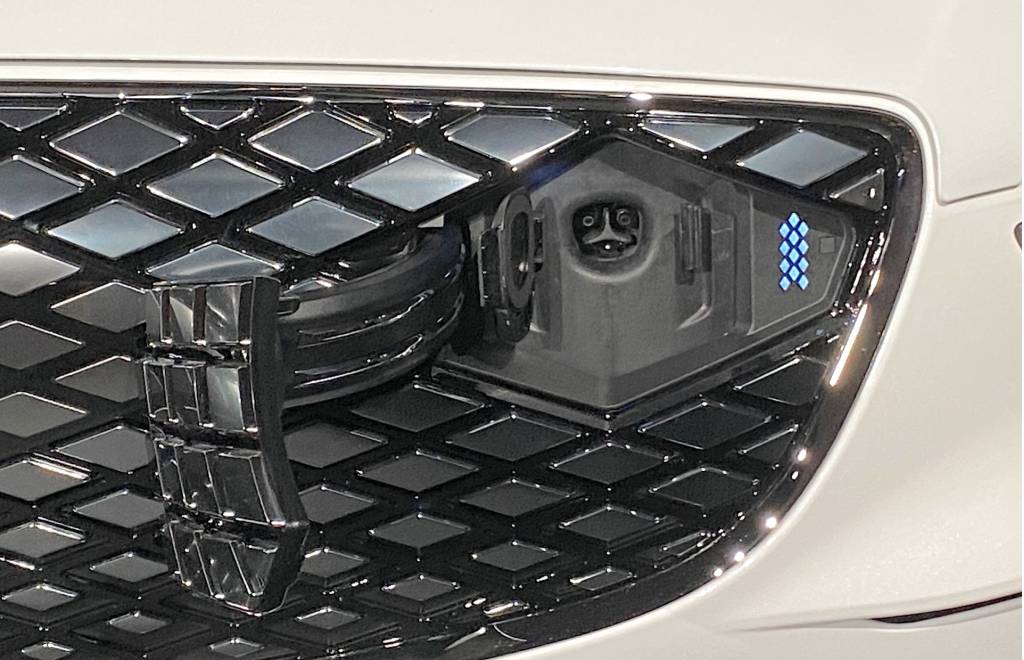
2026 Genesis Electrified GV70. – NACS port
With the shift to a Tesla NACS port, the 2026 GV70 Electrified will have native support with no need for an adapter at Tesla Supercharger stations. Genesis says that adding NACS will more than double the size of the DC fast-charging network available to Genesis EV drivers—for road trips and more. With the bigger battery, expect 10-80% charge times to increase slightly from the now-optimal 18 minutes (when using a CCS adapter).
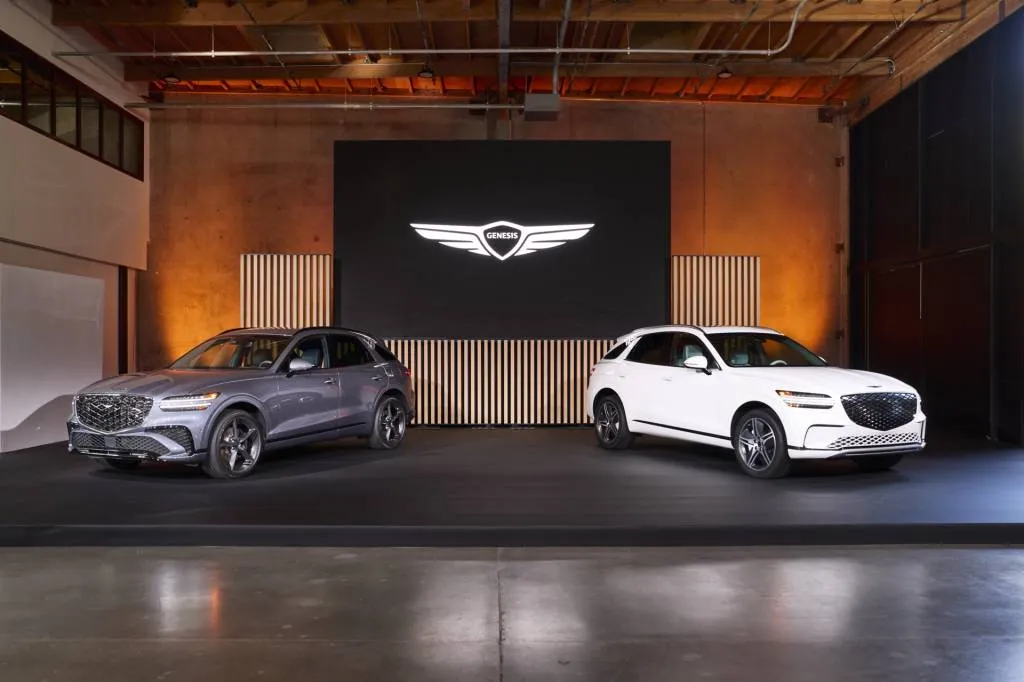
On the outside, the profile and much of the surfacing carry over, but Genesis has pushed up the prominence of the two horizontal lines of light with new multi-lens array (MLA) headlights, and what’s over the NACS port has changed slightly in texture. On gasoline versions there’s a new grille design.
Down below, the skid plate design is a little bolder, and air intake grilles have been extended up for a slightly more chiseled look around the corner of the vehicle.
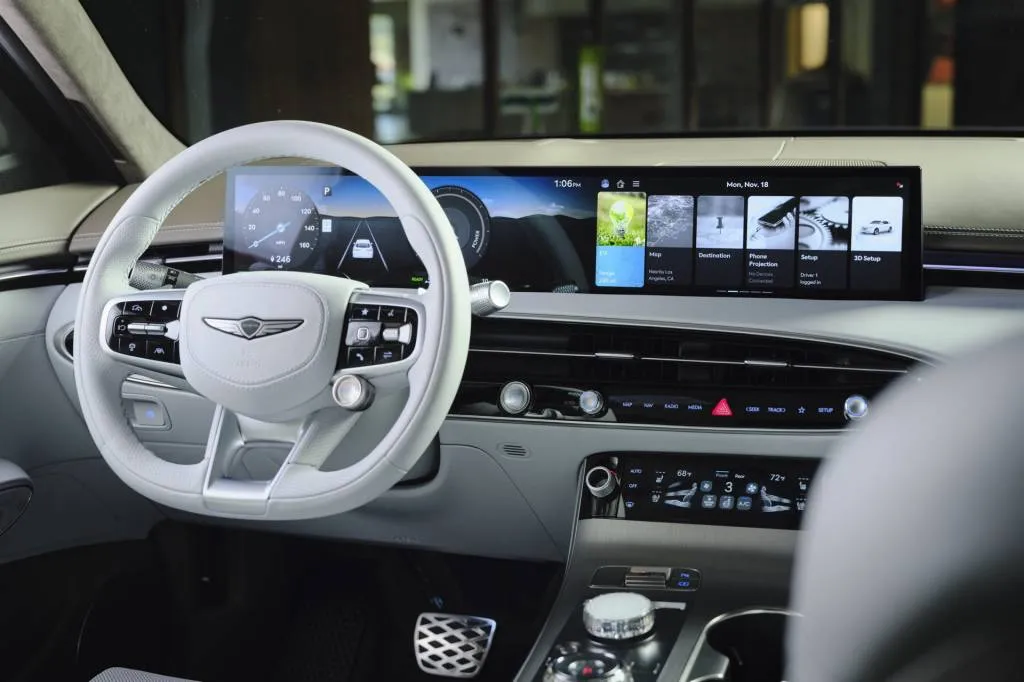
2026 Genesis GV70
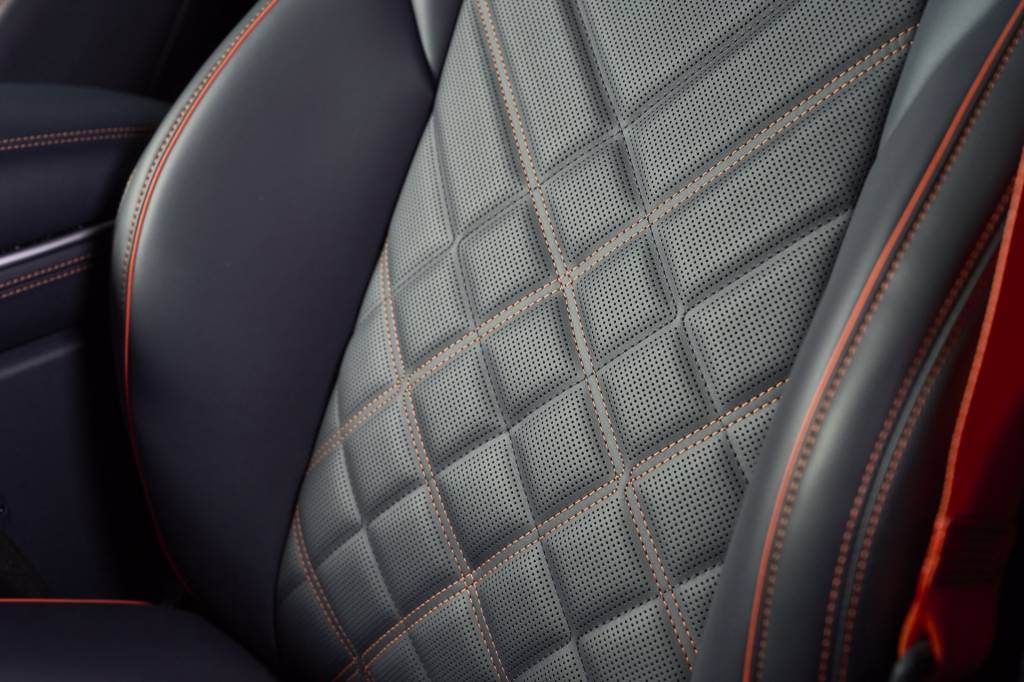
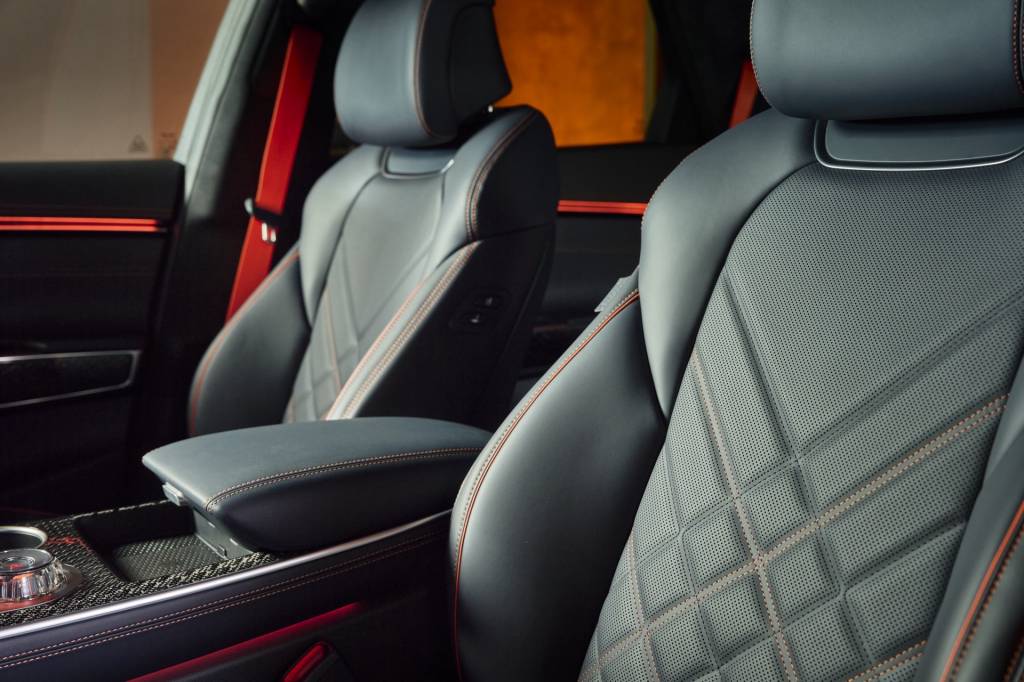
Genesis says that the cabin follows a “Beauty of White Space” design principle. It includes a completely new dash design focused around a 27-inch OLED screen, with buttons consolidated to an oblong area across the dash.
Strips of ambient lighting run a lap around it all, and door areas have been redone with lighted trim surfaces that really fit the upscale mood. There are four nappa leather color options, including a signature Ultramarine Blue, complementing ten different exterior hues.
The 2025 model’s dual-motor propulsion system delivered 429 hp and 516 lb-ft of torque, with a boost mode that provided 483 hp in 10-second bursts. The Boost mode button has been moved to a different spot on the 2026 steering wheel, but we anticipate those power numbers to stay the same.
The GV70 family gets dynamic improvements with a system that better controls front and rear damping forces when accelerating or decelerating. It continues to use forward-facing cameras to read the road surface and adjust accordingly. Genesis also added a new Terrain Mode, with specialized modes for sun, mud, and sand.
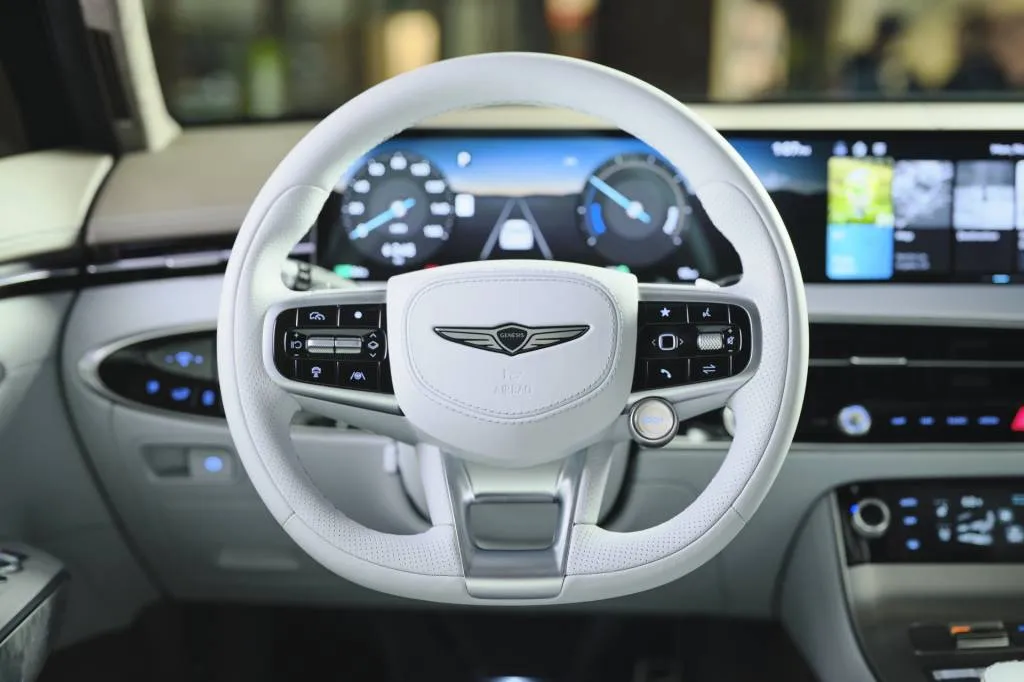
2026 Genesis GV70
2026 Genesis GV70
2026 Genesis GV70
Along with the cabin interface and display changes, Genesis has added hands-on detection for the steering wheel, improved lane assist, and an updated parking assist feature that can do diagonal parking now, too.
Genesis has been keeping this model updated along the way. The 2025 GV70 Electrified added wireless Apple CarPlay and Android Auto, as well as updated Genesis Connected Services telematics.
2026 Genesis GV70
The GV70 Electrified was the first U.S.-built EV from the entire Hyundai Group, and Genesis says that both the EV and the gasoline version will be “dual-sourced” from its Alabama U.S. plant and one in South Korea. The 2026 Electrified GV70 models will arrive in the first half of 2025.

Electric Ram Rev delayed to first half of 2025
Stellantis is delaying the start of production of the Ram 1500 REV electric pickup truck to the first half of 2025, Reuters reports.
Production was originally scheduled to start before the end of this year, making the REV a 2025 model, but is being pushed back to ensure quality, Stellantis CEO Carlos Tavares said on a media call with Reuters and other outlets.
“We are just facing a very significant amount of workload,” Tavares said.
2025 Ram 1500 REV
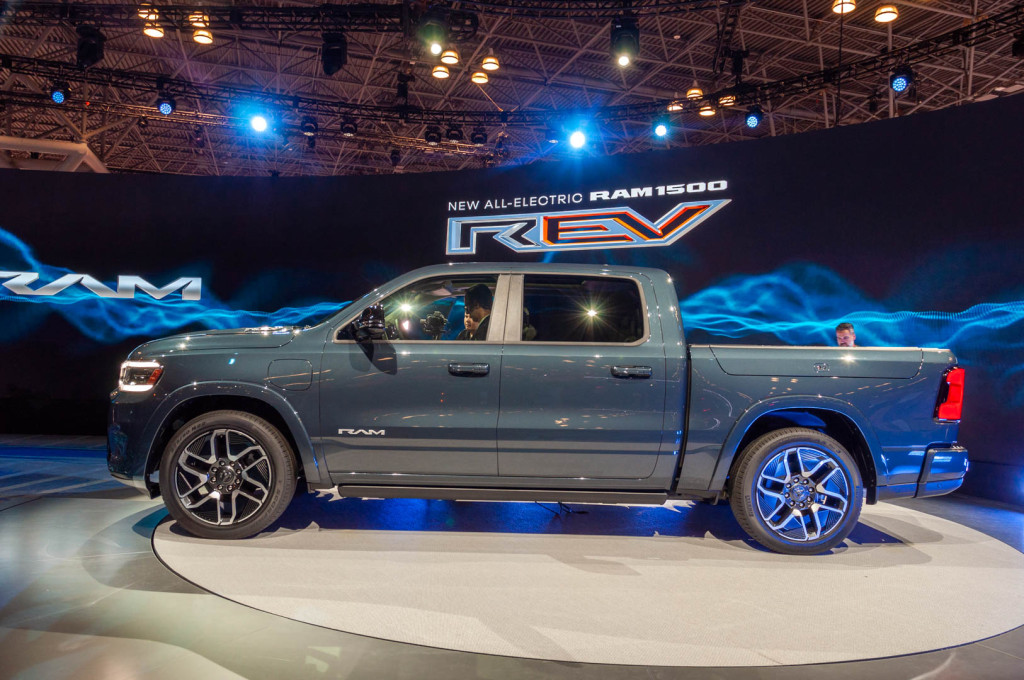
First shown in 2023, the Ram 1500 REV aims to upstage the Ford F-150 Lightning, Chevrolet Silverado EV, Rivian R1T, and Tesla Cybertruck with up to 500 miles of range, courtesy of a 229-kwh battery pack. A 168-kwh pack will be standard, delivering what Ram estimates to be up to 350 miles of range. And 350-kw DC fast charging can recover up to 110 miles of range in about 10 minutes, Ram has said.
Ram has also confirmed a dual-motor all-wheel drive powertrain producing 654 hp and 620 lb-ft of torque. It’s promised a 0-60 mph time of 4.4. seconds, a 14,000-pound towing capacity, and a 2,700-pound payload capacity.
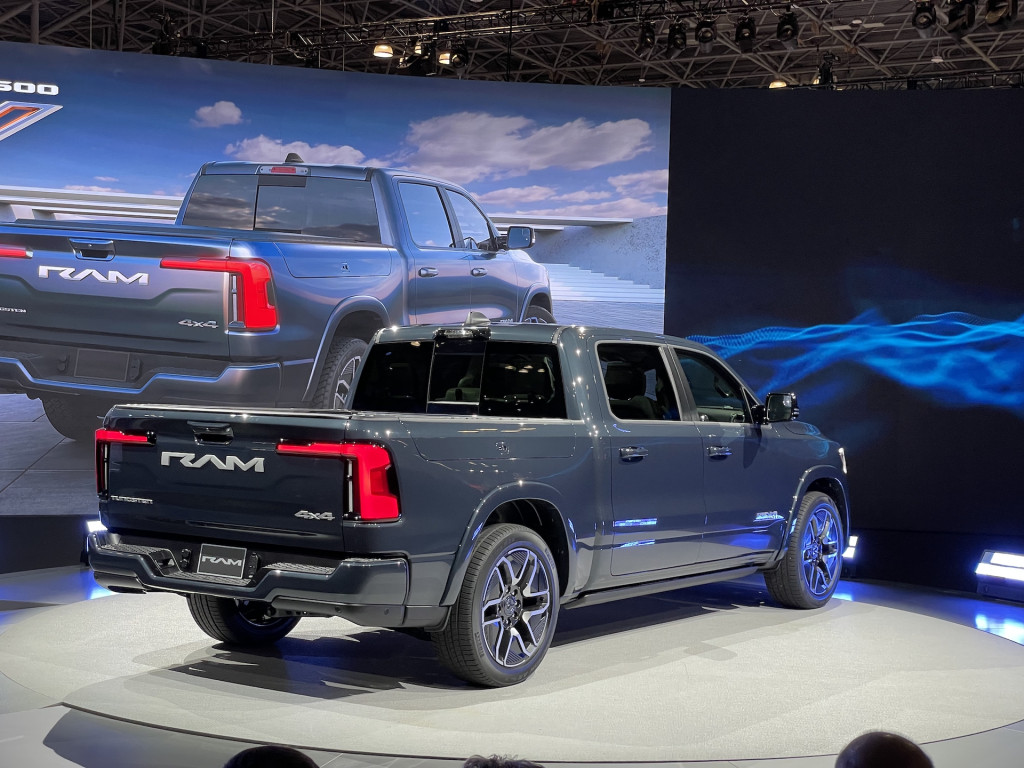
2025 Ram 1500 REV at the 2023 New York auto show
Stellantis is also preparing a range-extended Ram 1500 Ramcharger pickup. This uses a 92-kwh battery pack that Ram has said will provide 145 miles of range on its own, while a V-6 engine provides another 545 miles by running as a generator. This truck is also slated to arrive as a 2025 model, but Ram hasn’t confirmed exact timing.
The electrified Ram 1500 trucks are based on the STLA Frame platform, which the automaker just this week provided further details on. It’s the largest of four so-called multi-energy platforms first announced in 2021, and designed to support battery-electric, hybrid, plug-in hybrid, hydrogen fuel-cell, and internal-combustion powertrains. In addition to Ram trucks, STLA Frame will be used for commercial vehicles and full-size SUVs such as the next iterations of the Jeep Wagoneer and Grand Wagoneer—which will also get range-extended powertrains.

Electric Mini Cooper and Aceman not coming to US for now
Mini is deferring plans to bring the redesigned electric Cooper hatchback and new Aceman urban electric vehicle to the U.S., but isn’t shutting the door on U.S. availability completely.
The news was first reported by MotoringFile, and confirmed to Green Car Reports by Mini spokesperson Andrew Cutler, who noted that Mini had previously said that a decision had yet to be made on U.S. (and Canadian) availability of both models.
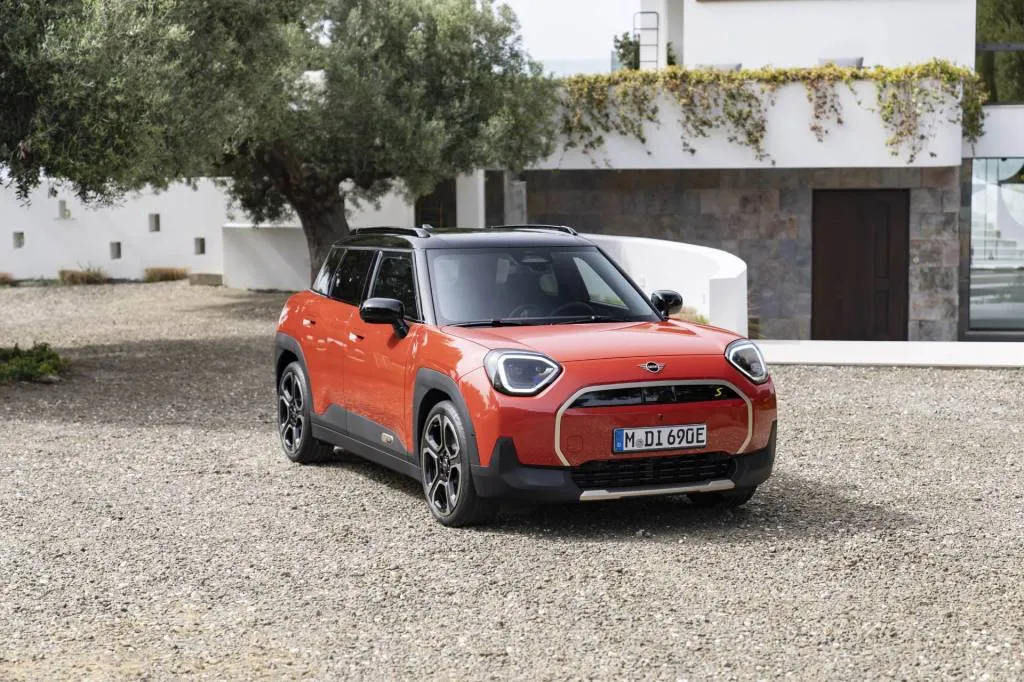
2025 Mini Aceman
“A decision has been taken to defer market availability of these models in the US (and Canada) until a later date,” Cutler said in a statement, adding that Mini is not able to confirm what that date might be.
The redesigned electric Mini Cooper hatchback was unveiled alongside a first-ever electric version of the Countryman crossover at the 2023 Munich auto show, promising more range than the 114 miles of the outgoing Mini Cooper SE, on the EPA test cycle. Mini is selling gasoline versions of the redesigned Cooper in the U.S., as well as a redesigned Countryman SE ALL4 plug-in hybrid, but hasn’t provided any updates recently on plans to bring the Countryman EV here.
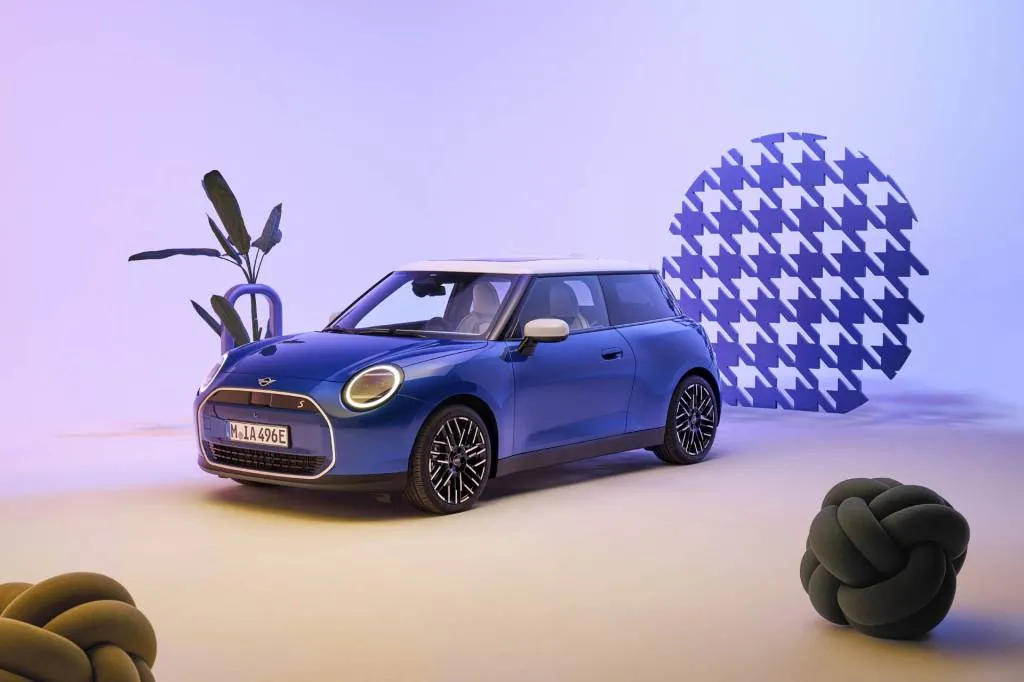
2025 Mini Cooper electric hatch
Sold exclusively as an EV, and positioned between the Cooper and Countryman in size, the Aceman was unveiled earlier this year. It always seemed like a long shot for the U.S. both because of its size—smaller than the Hyundai Kona Electric and Volvo EX30—and the fact that it was developed by a joint venture of Mini and Chinese automaker Great Wall Motors, and slated to be built in China. That would rule out a federal EV tax credit due to foreign entity of concern policies.
Mini aims to go all-electric by 2030 and now has a lineup of three EVs between the Cooper, Countryman, and Aceman. But it now looks like it will take a bit longer for that electric revolution to reach the U.S.