
Category: General

More Kia PHEVs coming, 60 miles on electric in “a couple years”
- Kia is serious about boosting PHEV electric miles—and sales
- It’s still working on hybrid, ICE development
- Range-extended EVs could be the future of hybrids
While Kia works to expand sales of American-made EVs, it’s also aiming to broaden sales of hybrids, while expanding a plug-in hybrid lineup that may keep growing—not just in sales but in electric miles.
According to Steven Center, Kia America’s chief operating officer and executive vice president, the plug-in hybrid electric range to meet or beat is 60 miles.
That number, said Center to Green Car Reports last week at the Los Angeles auto show, may arrive in Kia production models in as little as “a couple years”—enabled by a number of factors including the continuous improvement of batteries, as well as upcoming vehicle platforms that are being laid out to allow more space for PHEV battery packs.
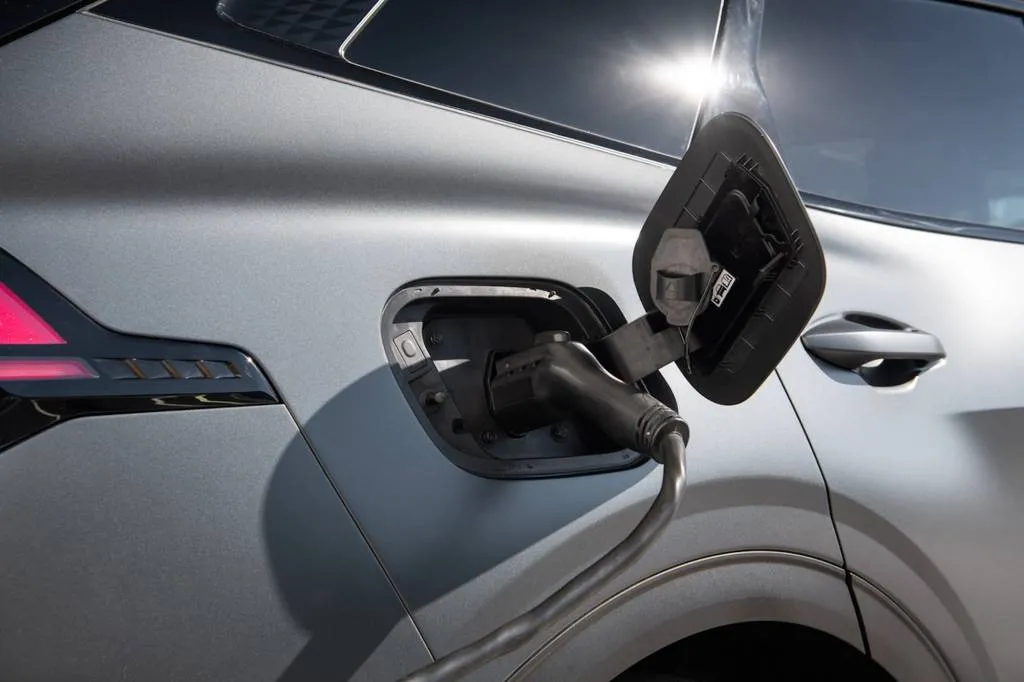
A PHEV with 60 miles of electric range would be a big jump from present numbers. Kia revealed refreshed 2026 Sportage hybrid and plug-in hybrid models at the auto show. Currently, the Sportage plug-in hybrid comes EPA-rated at 34 miles, and 35 mpg combined after that. That’s for the 2024 model; outputs are up slightly for 2025 and it’s unclear as of yet whether that and the refresh might alter those numbers.
Sign up for Newsletter
2025 Kia Sportage
Center didn’t elaborate about which models might get the long-range PHEV treatment first, but he noted that the 60-mile figure was informed by an “engineering statistic” relating to the total daily-driving distance for Americans—enough to be an EV in daily driving, plus more for road trips.
That happens to be very close to California’s target of 70 miles of electric range that serves as a way automakers can earn bonus points in upcoming fleet standards.
California does mandate EVs, but in the push toward them it’s allowing automakers some added flexibility, starting with the 2026 model year, if they deliver plug-in hybrids with more range. In short, they can apply plug-in hybrid models certified at 70 miles of electric range or higher at the same fleet-credit value as an EV, while PHEVs rated at 43-69 miles qualify at a partial value of an EV.
It’s quite the engineering challenge in itself right now to get there. A top Nissan executive for product planning in North America told Green Car Reports earlier this year that to achieve 70 miles of plug-in electric range, the necessary 30- to 40-kwh battery packs remain prohibitively large and heavy. But next-generation batteries will bring down the size and weight and be easier to package.
Sign up for Newsletter
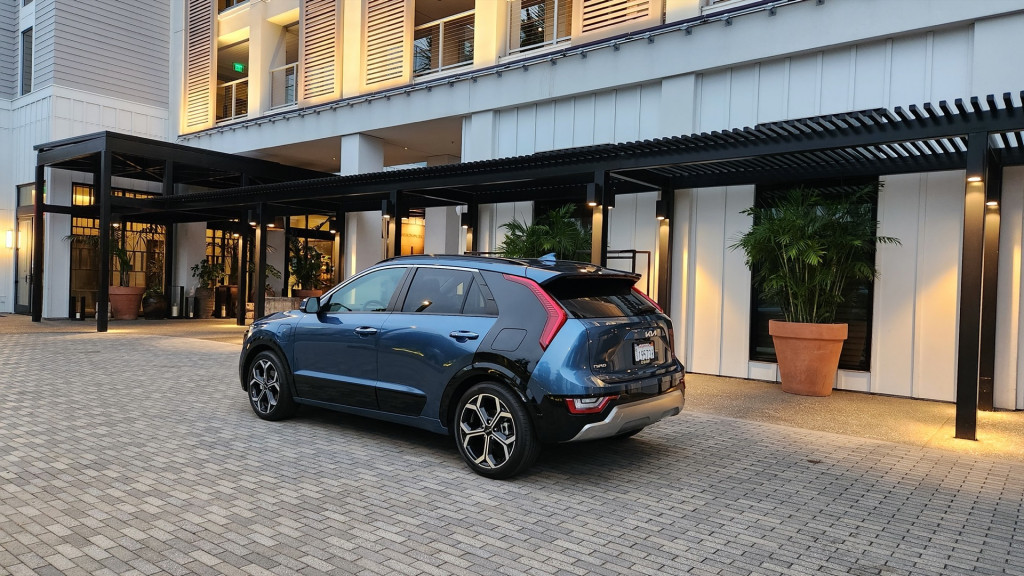
2023 Kia Niro Plug-In Hybrid
Center reiterated the benefits of battery improvements. Kia also continues to develop internal-combustion engines, but it’s mainly in the context of hybrid systems. For instance, according to Center, it’s considering extended range EV tech, although it’s not yet confirmed in any future vehicle from the brand. In a series-hybrid layout with the engine running as an efficient onboard generator, this type of application might warrant an entirely new kind of engine.
For instance, on the pickup front, Ram has been working on that formula, and it’s on the way next year in the 1500 Ramcharger truck. Ram claims that it will be able to get to about 145 miles of electric range with a 92-kwh battery pack and the Pentastar 3.6-liter V-6 engine that it’s put in base-level pickups for years, put to task here only as a generator—amounting to 14,000 pounds of towing capacity and 690 miles considering an initial battery charge and full tank of gas.
While some automakers continue to see plug-in hybrids as a confusing middle ground—including examples like that Ram truck—Kia isn’t holding back in plans to emphasize them over the next few years especially.
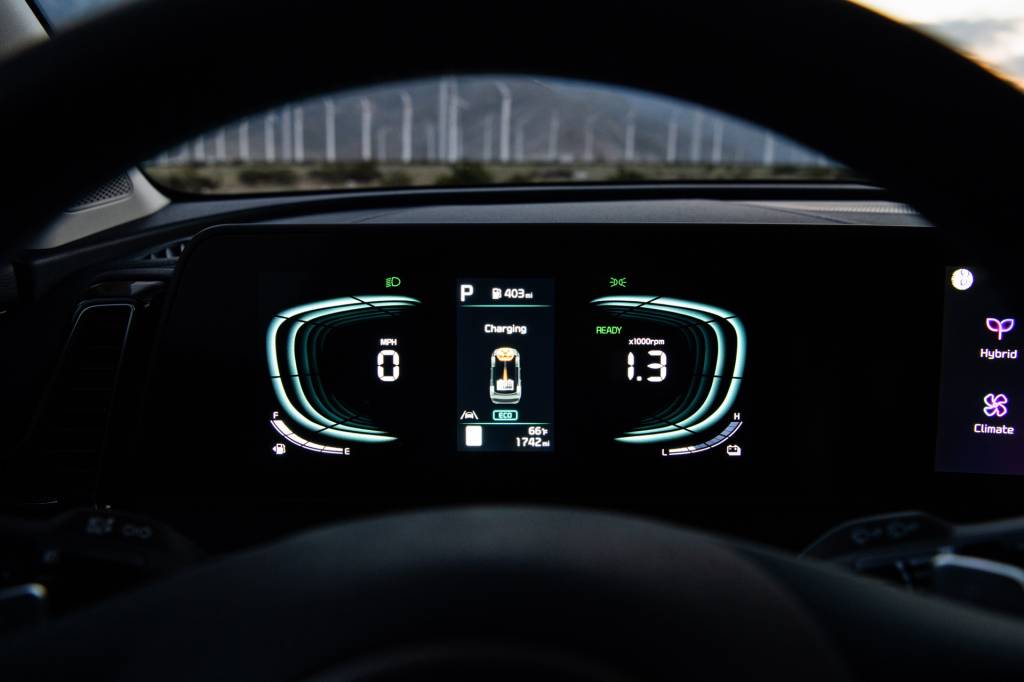
2025 Kia Sportage Hybrid
The brand is aiming to have more of them, said Center of PHEVs, calling them “the gateway drug for electrification.”
Kia is currently selling its plug-in hybrids in all 50 states, and it’s already pushed for its dealerships to be not just EV-savvy, but plug-in-hybrid-savvy. Kia Motors America marketing director Russell Wager told Green Car Reports that it’s not an easy message for dealerships to deliver—that plug-in hybrids can go 30 or 35 miles of electric range without running the gasoline engine—but it’s already done some of this hard work.
Kia isn’t naming target volumes or percentages for its hybrid vehicles, Wager asserted. “We don’t have a goal; and the reason we don’t have a goal is the customer is going to determine.”
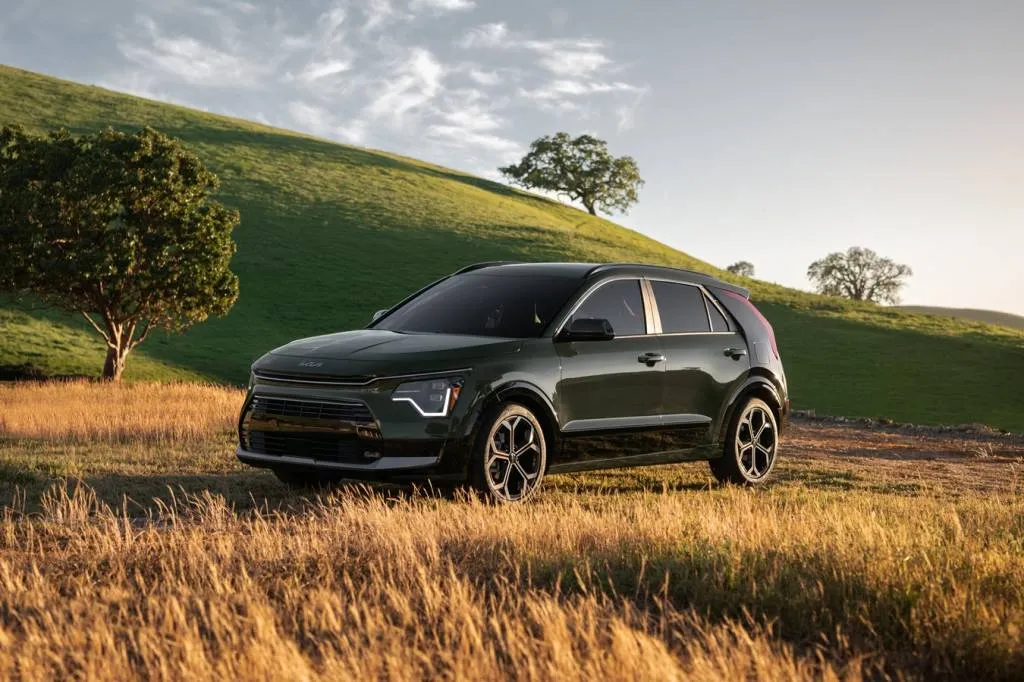
2024 Kia Niro
“That’s why we have three choices, so that if the customers are saying we want more hybrids, we’ll build more hybrids,” Wager explained, pointing to the flexibility not only built into the Hyundai Motor Group Metaplant in Georgia that will source some upcoming Kia vehicles, but to Kia’s West Point, Georgia, plant, where the majority of Sportage production will happen—and to Korea, where additional hybrids can come from if need be.
“We’re working on the supply chain to increase what we need for hybrids,” said Center. “Customers want them, dealers will have no trouble selling them, and it’s better for the environment.”
And thus, whatever new path regulators hand to the auto industry, come January or next year, the flexibility is helping Kia look very prepared.

Rivian CEO: The world doesn’t need another Tesla

- Rivian CEO RJ Scaringe sees few compelling sub-$50k EVs
- Scaringe is amused by the interest in Scout
- CEO believes it’s important to have a variety of EV choices
“The world doesn’t need another one of those,” said Rivian CEO RJ Scaringe, referring to Tesla.
“We think Tesla has done an amazing job,” said Scaringe, during a roundtable session last Wednesday with Green Car Reports and other media outlets. “It’s a great brand; they have great products.”
The top Rivian executive noted that he’s had both a Model 3 and Y, but seemingly every competitor is chasing after them.
The upcoming Rivian R2 will aim squarely for the market the Tesla Model Y occupies, but in a different visual form factor that is much more like that of a traditional SUV. It’s set to arrive in 2026 with batteries from Arizona from LG.
Sign up for Newsletter
Scaringe went on to say that there are “less than five highly compelling choices” in the EV market for under $50,000. With EVs at less than 10% of the market that includes “a choice” that’s bar-setting—the Model Y.
Suppliers fear a world of Tesla owning 65% of the EV market forever, as Tesla’ massive scale drives their “supply chain wonderfully aggressively,” Scaringe said, which is hard on suppliers.
Scout is owned by Volkswagen, which just invested $5.8 billion into Rivian as part of a joint venture, and so the CEO was asked about the upcoming Scout EVs.
“I’m amused by how much interest there is in Scout,” said Scaringe, later adding: “I think it’s great to see another choice.”

California may block $7,500 Tesla EV rebates if Trump kills tax credit
California will provide its residents with $7,500 rebates for electric vehicles if the incoming Trump administration eliminates the federal EV tax credit, Governor Gavin Newsom declared Monday. And it may seek to exclude Tesla from the subsidy.
Trump’s transition team has indicated that killing the federal EV tax credit is a priority, as it’s viewed as an easy target in a likely Republican-controlled Congress and could provide some cost savings to help offset trillions of dollars in soon-to-expire tax cuts the incoming administration is expected to renew.
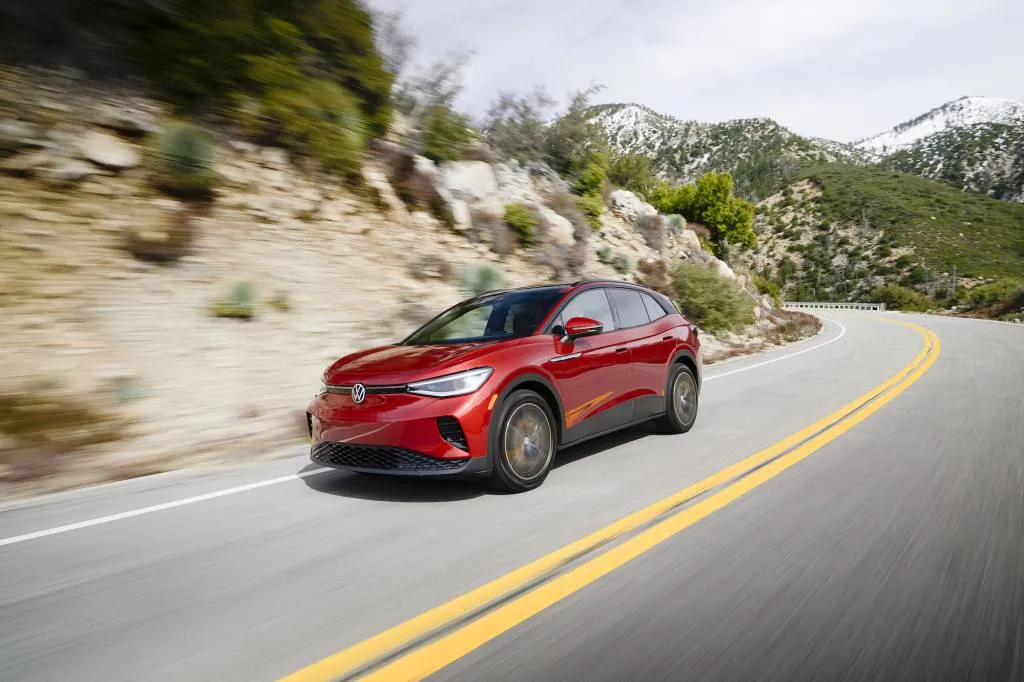
2025 Volkswagen ID.4
The release about the potential program noted that it “would include changes to promote innovation and competition in the ZEV market.” Several news outlets, including Reuters, later on Monday cited the California governor’s office in pointing to market share as the potential reason for a cap affecting Tesla.
Sign up for Newsletter
The EV maker, as of the third quarter, has a 56% market share of EV sales in the state. And it’s the only automaker who makes EVs in the state on a volume basis.
That prompted Tesla CEO Elon Musk, to write on his X social media platform: “Even though Tesla is the only company who manufactures their EVs in California! This is insane.”
If Trump does nix a $7,500 federal tax credit for EVs, Newsom laid out aims to provide an equivalent amount to California residents with a revival of the state’s Clean Vehicle Rebate Project (CVRP). That program, phased out in 2023, funded more than 594,000 vehicles and saved more than 456 million gallons of fossil fuels since its launch in 2010.
The proposed rebates “would include changes to promote innovation and competition” in the EV market, according to a press release, and could be paid for out of California’s Greenhouse Gas Reduction Fund, which draws its money from the state’s cap-and-trade program.
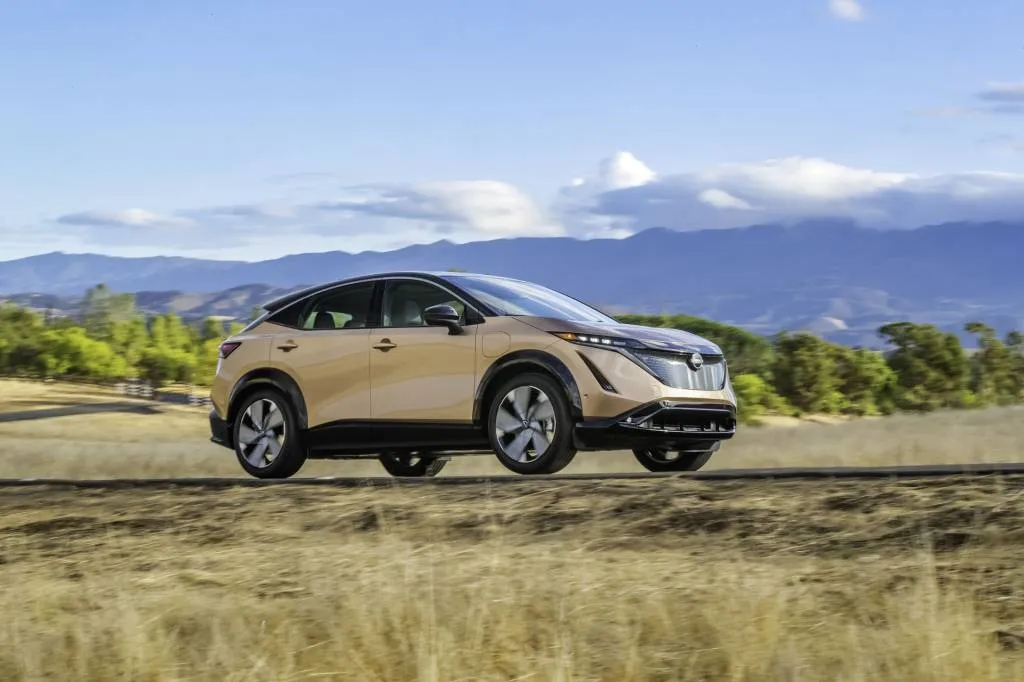
2024 Nissan Ariya
It’s unclear if California might factor income into rebate qualification. Income and MSRP caps were added to the CVRP in its later years to limit the number of rebates going to the highest-income drivers. And in 2023 the California Air Resources Board (CARB)—which oversees the state’s EV incentive programs—said it would expand the Clean Cars 4 All program aimed at lower-income drivers as a replacement for the CVRP.
Also left out of this incentive would be all the other states that have opted to follow California’s Advanced Clean Cars II framework for vehicle emissions—and its mandate for plug-in vehicles.
The federal tax credit added income and MSRP caps as part of its revamp under the Biden administration’s Inflation Reduction Act (IRA), which also made it an instant dealership rebate, but sourcing requirements that went into effect at the beginning of 2024 also limited the number of EVs that qualify.
Yet the IRA also left the so-called “leasing loophole,” which applies a $7,500 rebate toward leased EVs even if they wouldn’t otherwise qualify for a tax credit. That’s something unlikely to be revived by even California.
UPDATED 5:45 p.m. to include citations pointing to market share and Musk’s response.

Tesla Superchargers are getting longer cables for non-Tesla EVs
- Tesla’s installing longer cables on its Superchargers
- Superchargers can now detect when a non-Tesla EV is plugged in
- Tesla’s Supercharger software will take into where a vehicle’s charge port is located
Tesla is installing longer cables and making other changes to accommodate EVs from other brands at its Supercharger DC fast-charging stations.
The official Tesla Charging account on X (formerly known as Twitter) the social media network owned by Tesla CEO Elon Musk, recently posted that the automaker is increasing the number of longer-cable V4 chargers and expects them to outnumber short-cable chargers within the next 18 months.
Tesla has also modified over 1,500 sites to avoid drivers blocking a charging space to reach a charger, and has updated the software that tells Tesla drivers which charging stalls are available, according to the same post.
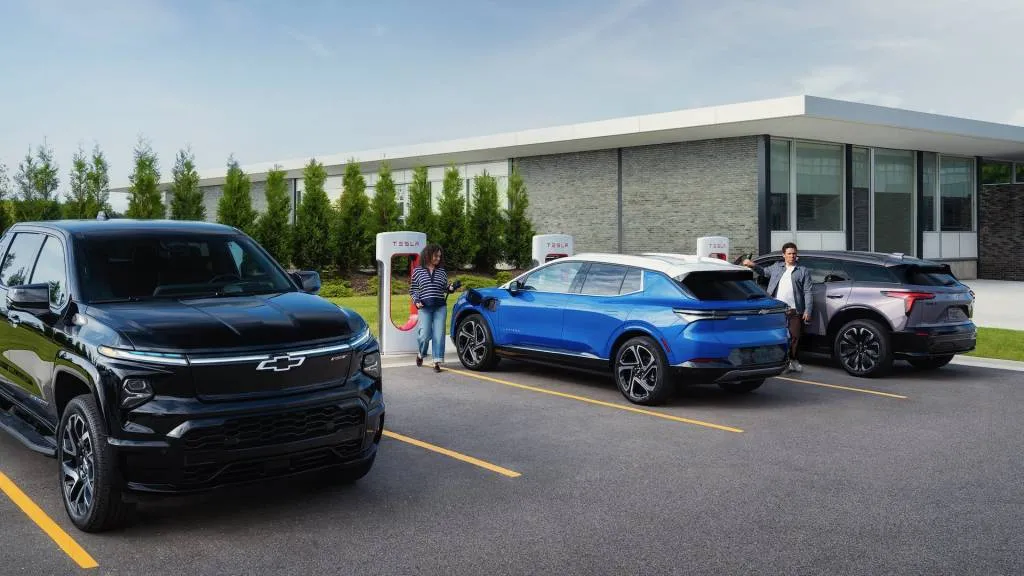
Chevrolet EVs at a Tesla Supercharger station
To further account for EVs potentially blocking spaces to plug into chargers with short cables, Tesla claims it can now detect when an EV with a charge port located somewhere other than the left rear or right front of the vehicle is plugged in at shorter-cable spots in an effort not to overpromise on charger availability.
This is possible because Tesla can now detect what type of vehicle is plugged in, Max de Zegher, Tesla’s director of charging in North American said in an X post, adding that the charger-availability algorithm now refreshes about every 15 seconds.
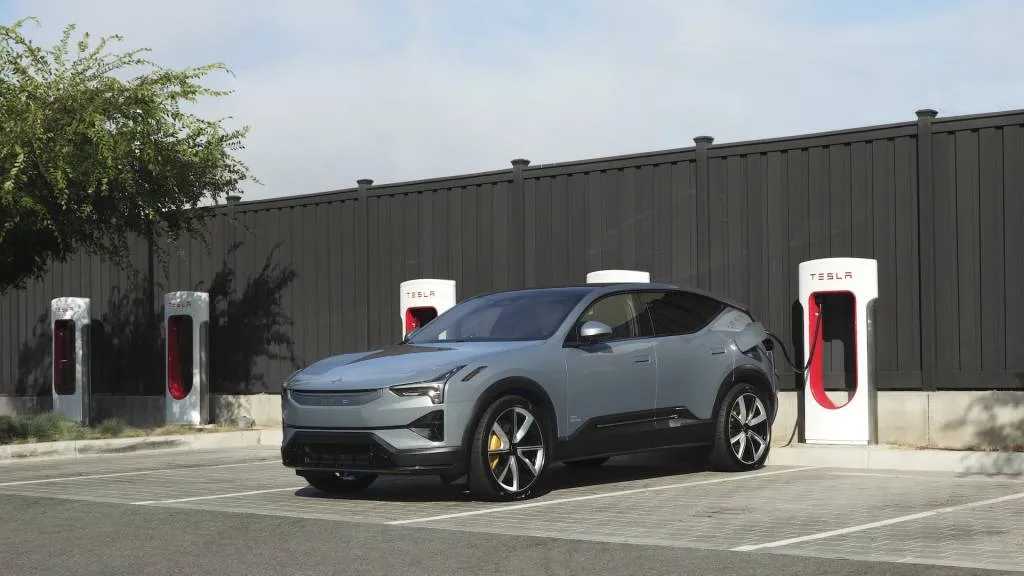
Polestar 3 at a Tesla Supercharger station
A migration of most major car brands to Tesla’s North American Charging Standard (NACS) began in May 2023 with Ford, followed the formalization of NACS as a true standard by the SAE and the backing of that standard by the Biden administration, which has prioritized funding for expansion of public charging. Musk, meanwhile, nearly shuttered the Supercharger team earlier this year before backtracking and promising a $500 million expansion of the network.
Such expansion will likely be needed as more automakers equip their EVs to charge at Supercharger stations. To date, Ford, General Motors, Rivian, Polestar, and Volvo have made adapters available to customers, while the first non-Tesla EVs with built-in NACS ports are expected to appear in 2025.

Hyundai recalls 145,000 Ioniq and Genesis EVs for loss of drive power
- 145,235 Hyundai and Genesis EVs have been recalled
- The recall stems from a potential issue with the onboard charger
- The issue results in a potential loss in drive power
Hyundai is recalling 145,235 electric vehicles from its main brand and Genesis luxury brand because of a potential issue with onboard chargers that could cause vehicles to enter a fail-safe driving mode with reduced power.
The recall includes 2022-2024 Hyundai Ioniq 5, 2023-2025 Hyundai Ioniq 6, and 2023-2025 Genesis GV60 models. Those three are based on the same E-GMP dedicated EV platform. Other vehicles in the recall population, including 2023-2025 Genesis Electrified GV70 SUVs and 2023-2024 Genesis Electrified G80 sedans, are electric variants of internal-combustion models.
Integrated charging control units in the affected vehicles may become damaged by certain electrical loads, preventing them from charging the vehicles’ 12-volt batteries, according to the National Highway Traffic Safety Administration (NHTSA). This triggers the fail-safe mode, which initially allows full power but gradually decreases available power over time.
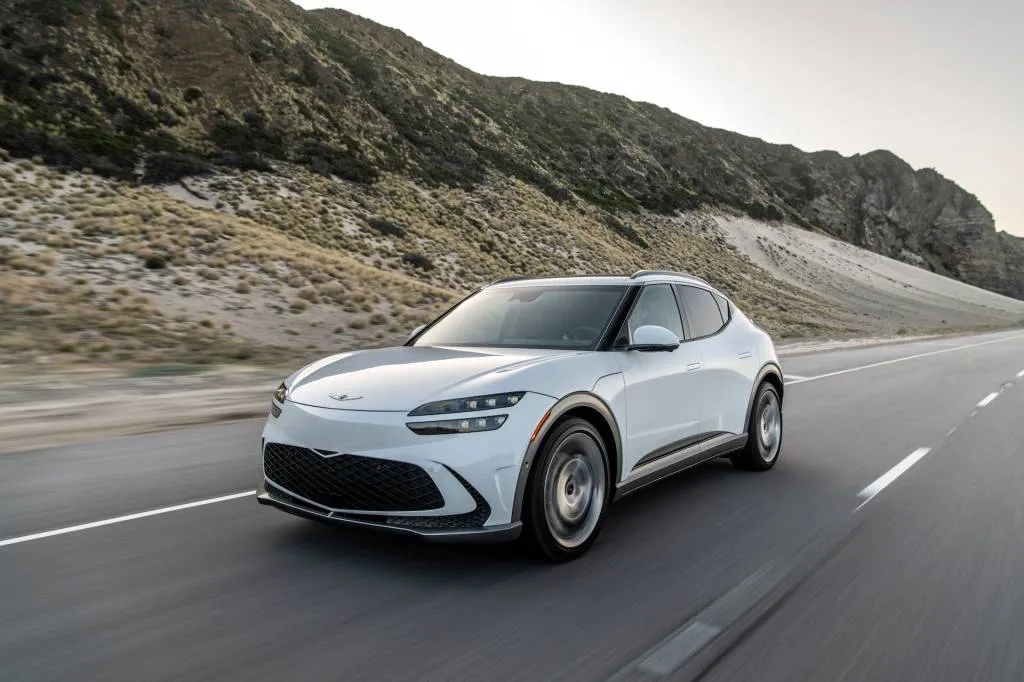
2024 Genesis GV60
Drivers will see warnings on the dashboard and hear audible chimes if this fault occurs, the NHTSA said, adding that other vehicle functions such as steering and brake assist, as well as airbags, will remain functional.
The remedy involves updating the charging control unit’s software, as well as inspection of the unit and its fuse, with replacement as needed. All of this will be done free of charge by Hyundai and Genesis dealers.
Hyundai plans to mail owner notification letters Jan. 17, 2025. Owners can also contact Hyundai customer service at 1-855-371-9460 or Genesis customer service at 1-844-340-9741. Reference numbers are 272 for Hyundai and 025G for Genesis. Some of the recalled vehicles are involved in a previous recall, but will need to have the new recall work completed as well, according to the NHTSA.
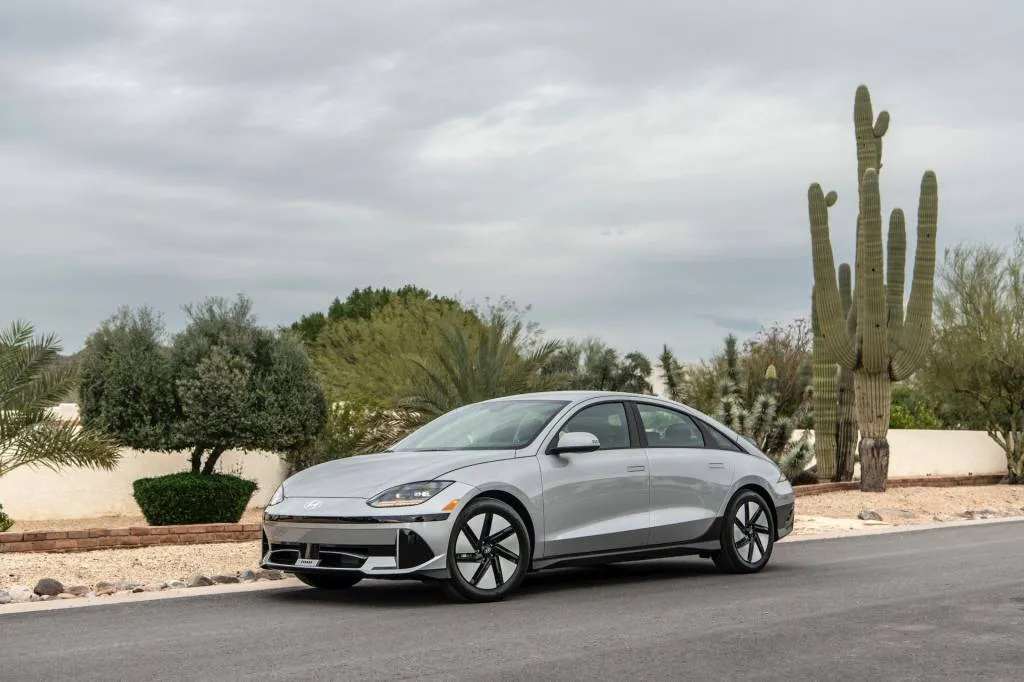
2024 Hyundai Ioniq 6
Automakers have been very slow to get rid of 12-volt electrical systems in new vehicles. One of the few vehicles to have made the switch so far is the Tesla Cybertruck, which uses 48-volt hardware that Tesla is now shopping around to other automakers.
Omission of 48-volt electronics is particularly surprising in Hyundai’s E-GMP vehicles, which incorporate various other advancements like 800-volt charging. Hyundai has even introduced a solution that does away with the old-style lead-acid 12-volt battery in some of its hybrids—but not any of its EVs thus far.

Rivian CEO: Dealer laws are “as close as you can get to corruption”

- Rivian CEO RJ Scaringe pointed to a “horrific state-by-state level of rules”
- Dealers’ lobbying efforts have made it hard for Rivian to interact directly with customers
- Rivian’s aware it has a service backlog, views it as a short-term problem
Rivian CEO RJ Scaringe isn’t a fan of U.S. dealership franchise laws. These laws work against the EV maker, which has a direct-sales model rather than franchised dealers.
On Wednesday during a roundtable with Green Car Reports and other media Scaringe said “we have this horrific state-by-state level of rules that are as close as you can get to corruption.”
The CEO was referring to franchise laws for car dealers, which are widely protected by heavy lobbying efforts.
“You essentially have lots of dealers that paid for lots of laws that make it really hard for us to interact directly with the customer,” Scaringe said.
Scaringe had been asked whether, after VW’s recent investment of $5.8 billion into Rivian, the U.S. EV maker might be able to leverage the dealer network of one of the world’s largest automakers.
Rivian’s CEO then noted with an upbeat smile that “Europe doesn’t have the same rules,” and “there’s certainly opportunities there.” Rivian plans to sell both the smaller upcoming R2 and R3 crossover SUVs in Europe, but the R1T and R1S are deemed too large for that market.
“Service is the bigger thing,” continued Scaringe. “You don’t need 5,000 retail location in the U.S. to sell 3 or 4 million cars a year. Tesla’s a good example,” he said.
“You do need a lot of service infrastructure,” Scaringe went on to say. But even that’s changing because historically a customer needed to go into a dealer anytime a car made a clicking noise.
Often, depending what is needed, that service can come to you. Rivian handles more than half of its service with its in-house mobile service crews going to customers rather than customers coming to them.
Scaringe admitted the automaker has a service backlog in the U.S., as it tries to build as much service infrastructure as fast as it can. But in some U.S. markets the product is scaling faster than the automaker can build out the infrastructure.
“That’s a short-term anomaly,” Scaringe said. Long-term the executive said the team believes it’s going to build a robust service infrastructure.
In Europe, Scaringe said there’s a question whether Rivian partners with someone for service. “It’s certainly an opportunity,” he added.
But in America, with the franchise laws, the possibility of Rivian partnering with anyone else for service would be complicated.

Mercedes tech may enable EV batteries with mixed cell types
Mercedes-Benz has its eyes on solid-state batteries with its partnership with Factorial for battery cells, but the automaker’s already thinking one step beyond that.
In the future, Mercedes envisions mixed battery packs with different types of cells all wired in parallel rather than today’s series arrangement. The enabling factor to this is a new micro-converter the automaker’s developing in-house to replace today’s electrical inverter systems.
In Germany, Mercedes engineers showed working prototypes to Green Car Reports of the programmable micro-converters. The converters are about the length of a stick of gum and twice the width. They looked light and were encased in black plastic, but engineers were sure to keep us from touching the (presumably expensive) prototypes.
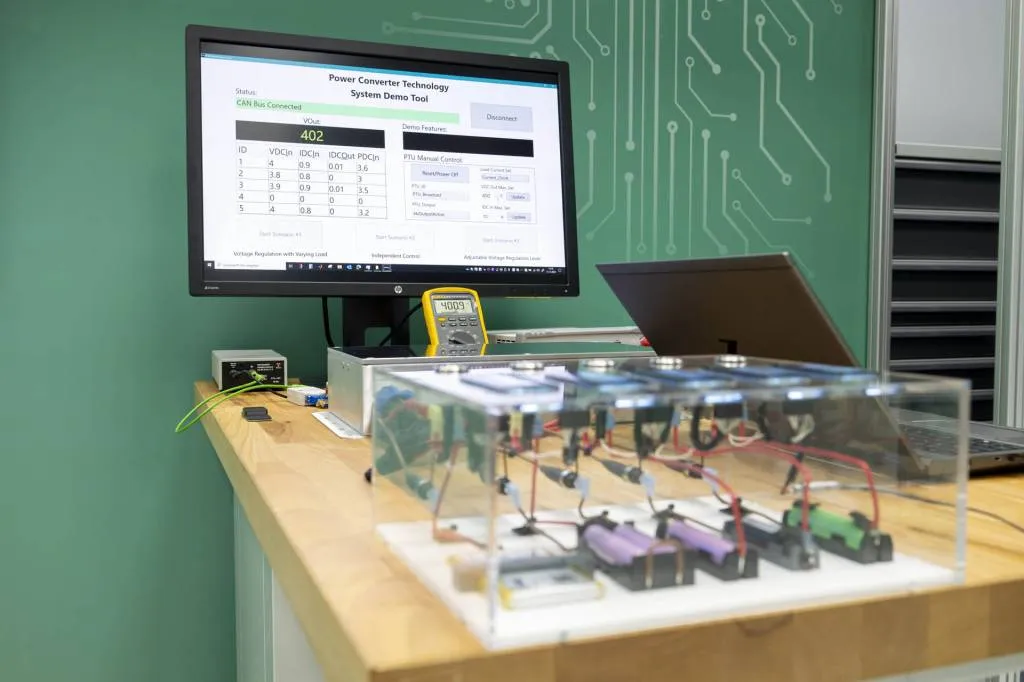
Mercedes-Benz micro-converters
The micro-converters can be connected directly to any number of cell pairs. This enables engineers to program and control individual cell pairings independently regardless of the state-of-charge. Engineers demonstrated this on a workbench, putting the mixed test cells under load and then independently turning on and off certain cell pairings.
Engineers said the new micro-converters open the possibility to mix-and-match cell types, chemistries, and more for various situations. The converters could enable a pack to have LFP cells, NMC cells, and solid-state cells all together, and they could call upon different types of cells for different conditions and situations to work in their optimal operating windows. That could open a new door for performance vehicles for the automaker’s AMG division.
The new approach could translate to faster charging rates, longer driving range, and more flexibility in pack design, according to Mercedes’ engineers.
Mercedes-Benz paid for travel and lodging for Green Car Reports to bring you this information.

Mercedes developing solar paint for EVs
- Mercedes-Benz is developing a solar coating for EVs
- In ideal conditions it could provide many miles of additional EV range per day
- Mercedes wouldn’t say how the solar paint would be applied to a car
Mercedes-Benz is trying to come up with any and all new ways to increase efficiency, which it believes is the new currency as it enters the EV era.
In Germany, the automaker showed Green Car Reports working prototypes of a new solar coating, which the automaker views as solar paint that could cover future EVs.
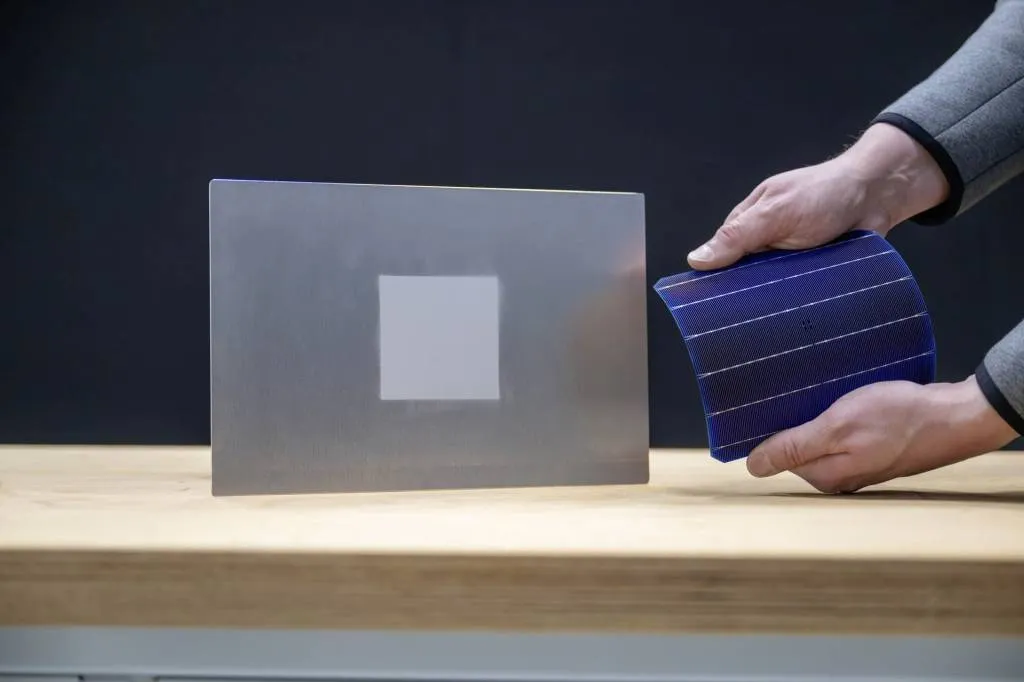
Mercedes-Benz solar paint coating vs. a solar cell
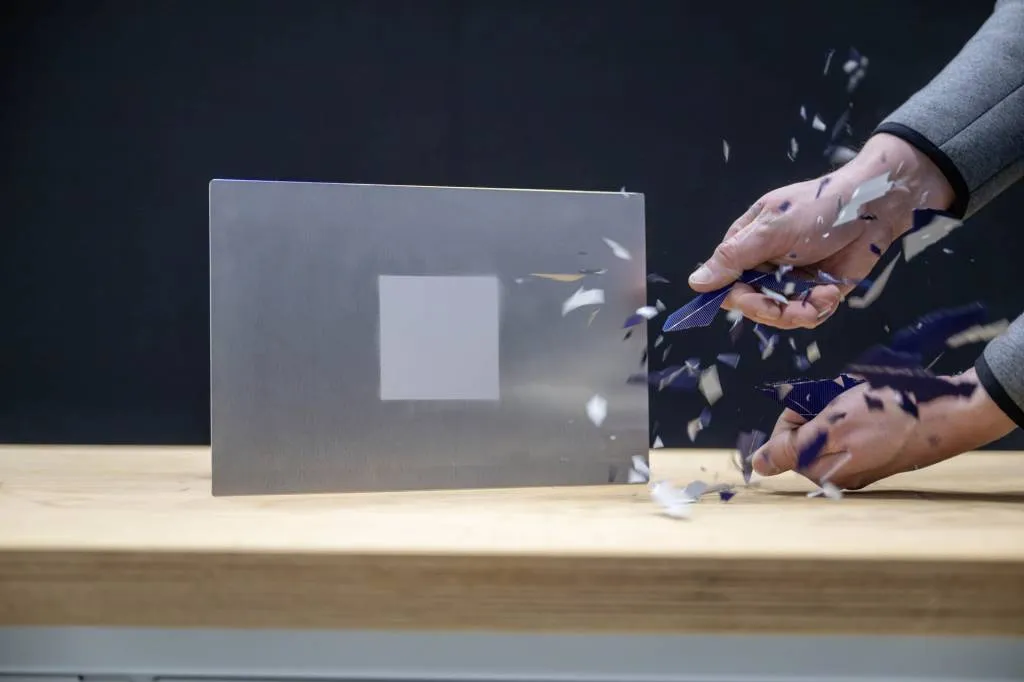
Mercedes-Benz solar paint coating vs. a solar cell
Some EVs, hybrids, and even gas-powered cars have featured various arrangements of solar cells. These are usually mounted on the roof and are wired in a series array actuated by a single central control unit. The solar cells aren’t flexible and can shatter under stress.
Mercedes is developing a solar paint that could cover the entire body in solar-active material. Mercedes said the coating is thin at only 5 micrometers thick and weighs 50 grams per square meter, and that it can be applied to any material. It can also be applied to any surface, from wheels to curved fenders and hood creases.
The solar paint can be any color, but darker colors are better because they absorb more light whereas lighter colors like white and silver are more reflective. Mercedes engineers said the solar paint has an efficiency of 20%, which matches today’s solar cells used on vehicles.
The energy recovered by the solar paint can be transferred to the vehicle’s high-voltage battery pack. The paint is active at all times, whether the vehicle is on or off, and always provides energy to the battery.
The average customer in Los Angeles drives 29 miles per day, the brand says. But according to its engineers, an EV with the solar paint could produce up to 34 miles worth of energy per day.
Mercedes noted the paint is a paste-like substance, but the automaker wouldn’t say how it would be applied—only confirming it wouldn’t be painted on.
Mercedes-Benz paid for travel and lodging for Green Car Reports to bring you this information.

Mercedes In-Drive moves braking system inside EV’s electric motor
- Mercedes In-Drive system mounts the brakes to the electric motor
- In-Drive is a friction-based braking system
- Mercedes has In-Drive in active testing, hasn’t given a timeline for production
Mercedes-Benz is rethinking how the braking system works, and where it’s located, in upcoming EVs.
In Germany last week, Mercedes-Benz engineers showed Green Car Reports one of its latest innovations dubbed In-Drive. It’s a system that relocates the entire braking system from inside the wheels to inside an EV’s electric motor housing.
The automaker didn’t commit to when, or which vehicle, the system might debut on and go into production, but it said the feature is already in active testing.

Mercedes-Benz In-Drive brake system
Referred to internally as “the brake of the future,” the In-Drive system is still a friction-based brake system that consists of a water-cooled brake disk that isn’t exposed to air. Mercedes engineers said they are still experimenting with different fluids. They want a lot of water in the unit to dissipate the heat, but they don’t want a giant radiator to assist. Completely enclosed, the brake discs reside on both sides of the electric motor.
Mechanical braking in EVs is only needed about 2% of the time while 98% of braking situations can be handled by regenerative braking, according to Mercedes engineers.
The new regenerative braking system in the 2026 CLA-Class, which will be the first EV on the automaker’s next-gen MMA platform, is capable of up to 200 kw of recuperation, according to Mercedes. The current EQS—a heavier car—is capable of up to 290 kw of recuperation, a Mercedes engineer said.

Mercedes-Benz In-Drive brake system
The Mercedes team said In-Drive is designed to be a lifetime system good for about 15 years and 186,400 miles (300,000 km), given it would theoretically only be engaged 2% of the time. Today’s brake pads only cover a small percentage of the brake disc, but the In-Drive system’s pads cover the entire surface area of the disc, which results in less force being used.
The In-Drive braking system could be mounted on a front axle that’s devoid of an electric motor, but the system would still sit in the center of the car and axle rather than by the wheels like today’s brakes.
Moving the brakes inboard shifts the weight to the center of the car and creates less unsprung mass, which will result in better handling.
By enclosing the brakes fully there’s no brake dust particulates and the wheels can be closed off to be more aerodynamic.
Mercedes-Benz paid for travel and lodging along with some German pretzels for Green Car Reports to bring you this firsthand report

Northvolt battery maker files for bankruptcy
Swedish battery firm Northvolt filed for U.S. Chapter 11 bankruptcy protection Thursday, with CEO Peter Carlsson stepping down the following day.
Northvolt needs to raise between $1 billion and $1.2 billion to restore itself to full operations, Carlsson told Reuters and other media Friday. On Thursday, the company said it only had enough cash to support operations for about a week, and that it had secured $100 million in financing to take it through the bankruptcy process, according to Reuters.
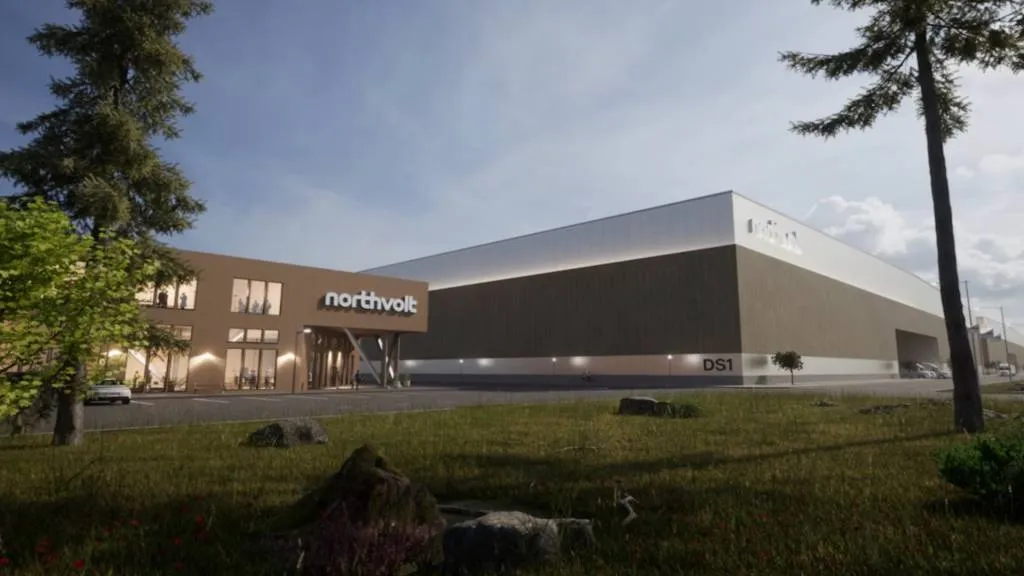
Rendering of Northvolt Six battery factory in Quebec, Canada
In its Chapter 11 filing, Northvolt said it expected to complete the restructuring required by the bankruptcy process by the first quarter of 2025. Carlsson told reporters that the bankruptcy process will give the company time to reorganize itself and ramp up operations, while honoring customer and supplier commitments.
Carlsson will remain on the company’s board and will take on a new senior advisor role. The company has reportedly started searching for a new CEO, and will be led by current CFO Pia Aaltonen-Forsell for the time being.
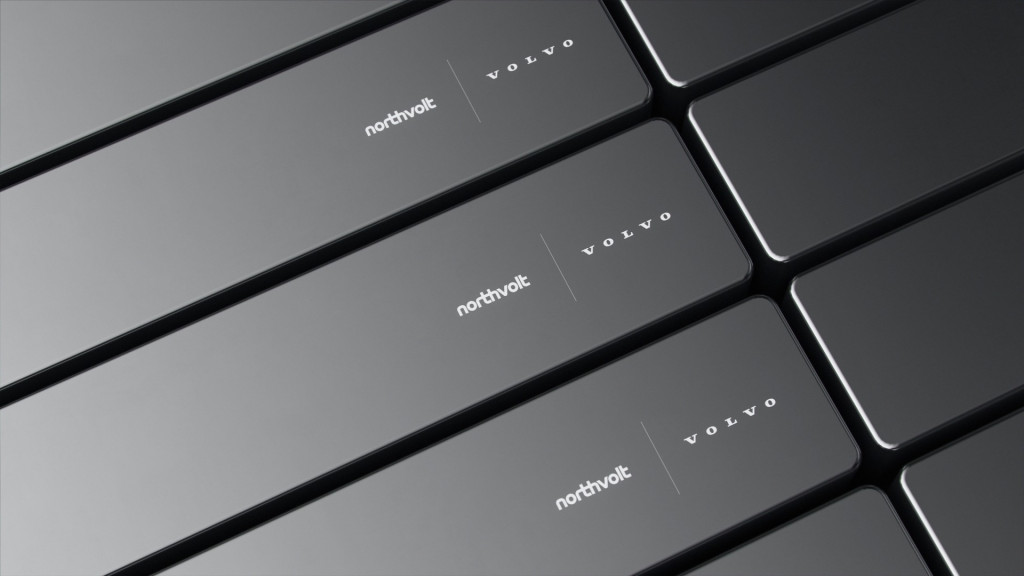
Volvo and Northvolt partner on battery development and production
Northvolt was the subject of high hopes for the establishment of a local EV battery industry for Europe. It opened its first battery factory in Sweden in 2021, and that year claimed to be making battery cells with 100% recycled nickel, manganese, and cobalt. Battery-supply deals with BMW and Volvo, as well as for a Canadian battery factory, soon followed.
But Northvolt has faced several setbacks recently. In June BMW cancelled its battery deal, estimated to be worth about $2 billion, and in September Northvolt announced a strategic review and cost cuts, including suspension of cathode active material production at its first factory. That plant never reach full production capacity, Reuters reported at the time.