
Author: EVAI

Mercedes In-Drive moves braking system inside EV’s electric motor
- Mercedes In-Drive system mounts the brakes to the electric motor
- In-Drive is a friction-based braking system
- Mercedes has In-Drive in active testing, hasn’t given a timeline for production
Mercedes-Benz is rethinking how the braking system works, and where it’s located, in upcoming EVs.
In Germany last week, Mercedes-Benz engineers showed Green Car Reports one of its latest innovations dubbed In-Drive. It’s a system that relocates the entire braking system from inside the wheels to inside an EV’s electric motor housing.
The automaker didn’t commit to when, or which vehicle, the system might debut on and go into production, but it said the feature is already in active testing.

Mercedes-Benz In-Drive brake system
Referred to internally as “the brake of the future,” the In-Drive system is still a friction-based brake system that consists of a water-cooled brake disk that isn’t exposed to air. Mercedes engineers said they are still experimenting with different fluids. They want a lot of water in the unit to dissipate the heat, but they don’t want a giant radiator to assist. Completely enclosed, the brake discs reside on both sides of the electric motor.
Mechanical braking in EVs is only needed about 2% of the time while 98% of braking situations can be handled by regenerative braking, according to Mercedes engineers.
The new regenerative braking system in the 2026 CLA-Class, which will be the first EV on the automaker’s next-gen MMA platform, is capable of up to 200 kw of recuperation, according to Mercedes. The current EQS—a heavier car—is capable of up to 290 kw of recuperation, a Mercedes engineer said.

Mercedes-Benz In-Drive brake system
The Mercedes team said In-Drive is designed to be a lifetime system good for about 15 years and 186,400 miles (300,000 km), given it would theoretically only be engaged 2% of the time. Today’s brake pads only cover a small percentage of the brake disc, but the In-Drive system’s pads cover the entire surface area of the disc, which results in less force being used.
The In-Drive braking system could be mounted on a front axle that’s devoid of an electric motor, but the system would still sit in the center of the car and axle rather than by the wheels like today’s brakes.
Moving the brakes inboard shifts the weight to the center of the car and creates less unsprung mass, which will result in better handling.
By enclosing the brakes fully there’s no brake dust particulates and the wheels can be closed off to be more aerodynamic.
Mercedes-Benz paid for travel and lodging along with some German pretzels for Green Car Reports to bring you this firsthand report

Cupra will bring gas, hybrid, and electric cars to US
 Volkswagen Group’s Cupra brand has given an update on its plans to launch in the U.S. The Spanish performance marque still targets a U.S. arrival by the end of the decade, but a previous plan to only sell electric vehicles, starting with a pair of crossovers, has been abandoned. Cupra now expects to offer gas, plug-in hybrid, and electric vehicles…

2026 Kia Sportage preview
 What kind of vehicle is the 2026 Kia Sportage? What does it compare to? Kia’s entry in the most popular compact crossover segment rivals bestsellers such as the Toyota RAV4 and Honda CR-V, and squares off against the related Hyundai Tucson as well as redesigned versions of the Mazda CX-50, Volkswagen Tiguan, and Chevy Equinox. Is the 2026…

2024 F1 Las Vegas Grand Prix preview: Racing down the Strip
 The Las Vegas Grand Prix is round 22 of the 2024 F1 season The race runs on a Tilke-designed street circuit known as the Las Vegas Strip Circuit The race is scheduled for Saturday night instead of F1’s usual Sunday setting The 2024 Formula 1 World Championship heads to Las Vegas this weekend for what will be the third to last race of the season…

Northvolt battery maker files for bankruptcy
Swedish battery firm Northvolt filed for U.S. Chapter 11 bankruptcy protection Thursday, with CEO Peter Carlsson stepping down the following day.
Northvolt needs to raise between $1 billion and $1.2 billion to restore itself to full operations, Carlsson told Reuters and other media Friday. On Thursday, the company said it only had enough cash to support operations for about a week, and that it had secured $100 million in financing to take it through the bankruptcy process, according to Reuters.
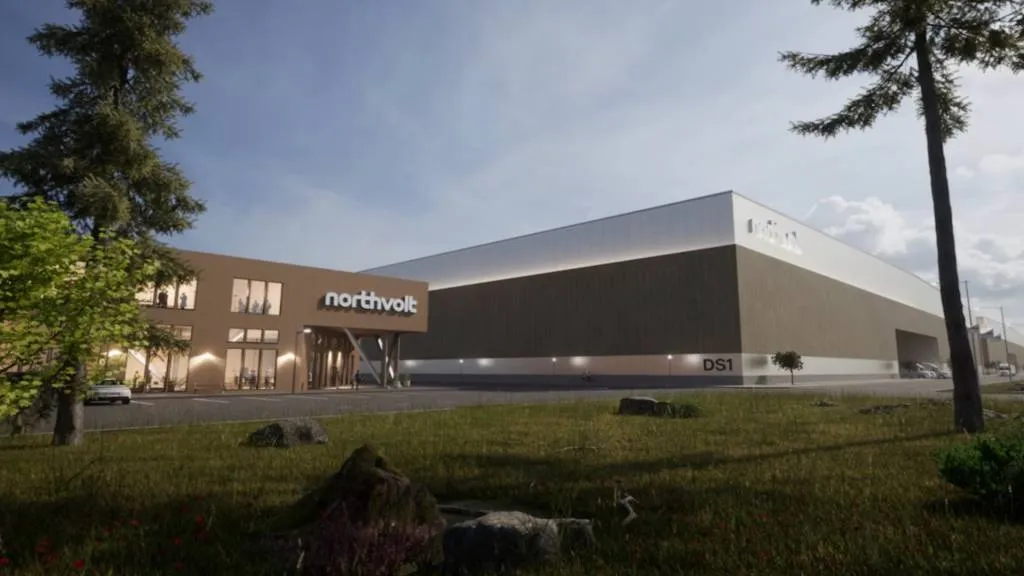
Rendering of Northvolt Six battery factory in Quebec, Canada
In its Chapter 11 filing, Northvolt said it expected to complete the restructuring required by the bankruptcy process by the first quarter of 2025. Carlsson told reporters that the bankruptcy process will give the company time to reorganize itself and ramp up operations, while honoring customer and supplier commitments.
Carlsson will remain on the company’s board and will take on a new senior advisor role. The company has reportedly started searching for a new CEO, and will be led by current CFO Pia Aaltonen-Forsell for the time being.
Volvo and Northvolt partner on battery development and production
Northvolt was the subject of high hopes for the establishment of a local EV battery industry for Europe. It opened its first battery factory in Sweden in 2021, and that year claimed to be making battery cells with 100% recycled nickel, manganese, and cobalt. Battery-supply deals with BMW and Volvo, as well as for a Canadian battery factory, soon followed.
But Northvolt has faced several setbacks recently. In June BMW cancelled its battery deal, estimated to be worth about $2 billion, and in September Northvolt announced a strategic review and cost cuts, including suspension of cathode active material production at its first factory. That plant never reach full production capacity, Reuters reported at the time.

Honda’s ready to build prototype solid-state batteries for EVs
Honda on Thursday unveiled what it calls a demonstration production line for solid-state batteries, with aims to commercialize the technology later this decade.
Located in Sakura City, in Japan’s Tochigi Prefecture, the 295,000-square-foot facility is intended to establish the process for eventual mass production, as well as determine costs and some final cell specifications, Honda said.
Construction was completed this past spring, and all necessary equipment has now been installed, according to the automaker. Honda plans to start making cells in January 2025. That’s almost a year later than the spring 2024 target date Honda executives mentioned when first publicly discussing the demonstration plant in 2022.
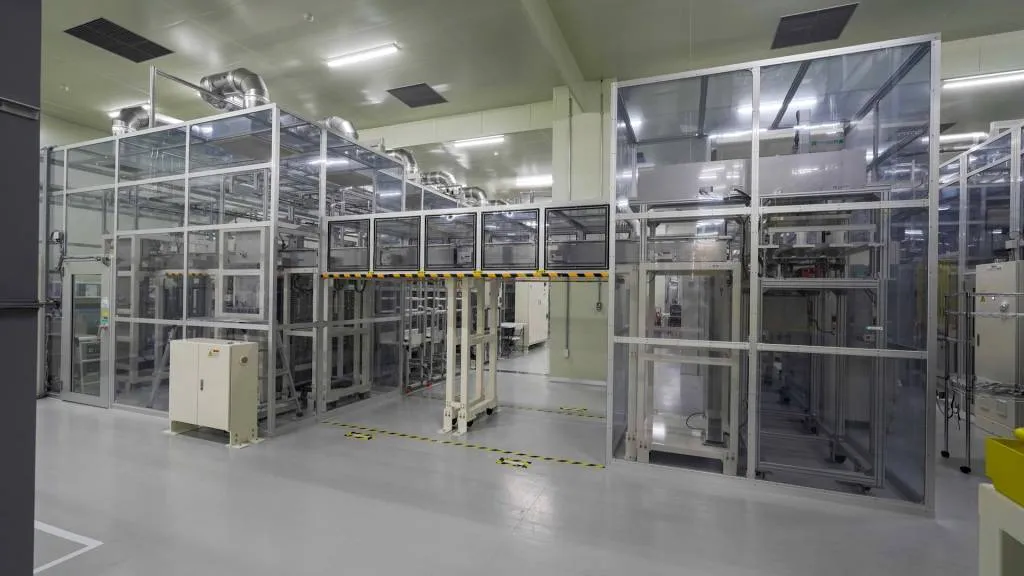
Honda solid-state battery production demonstration plant in Sakura City, Japan
Honda said the production process it plans to use is based on that of liquid-electrolyte lithium-ion cells, albeit with a roll-pressing step designed to increase the density of solid electrolyte layers that’s unique to solid-state cells. This also increases the degree of interfacial contact between by the electrolyte and electrodes, according to Honda.
The automaker also claims to have consolidated or accelerated several other parts of the production process, including bonding the positive and negative electrodes, and hopes to cut other associated costs, including by lowering energy consumption.
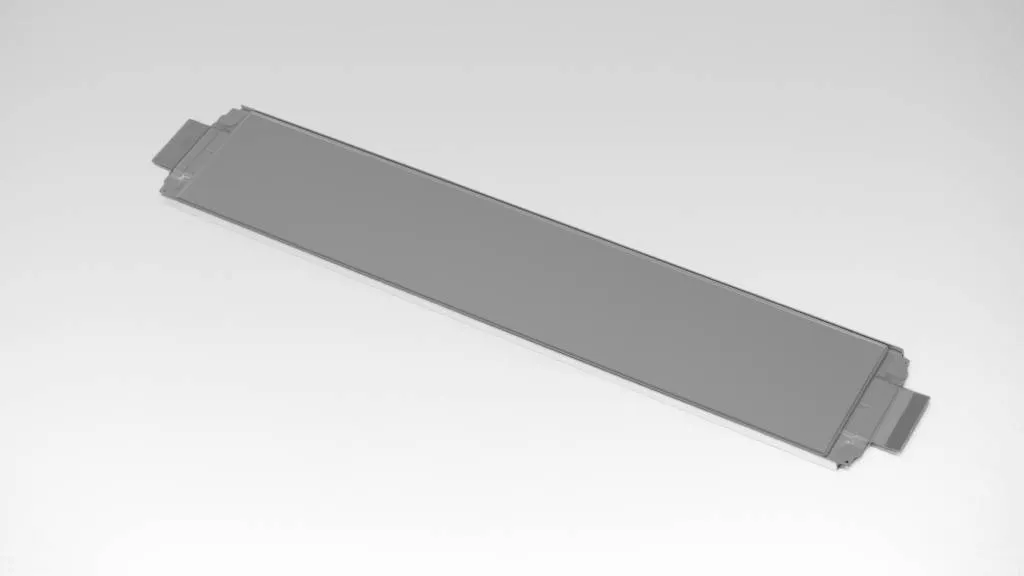
Honda solid-state battery prototype
Honda aims to start mass production of solid-state batteries in the second half of the 2020s, for use “not only in automobiles, but motorcycles and aircraft.” With this wider array of applications, Honda hopes to achieve reasonable economies of scale to make solid-state batteries financially viable.
Honda has been discussing solid-state batteries since at least 2021, at the time also saying that they would arrive later in the decade. Honda CEO Toshihiro Mibe told Green Car Reports earlier this year that solid-state batteries may enable a small affordable EV by 2030 thanks to lower battery costs and higher potential range than current cell chemistries.

NHTSA finally modernizes 5-star crash-test safety criteria
 The five-star safety rating system gets an overdue overhaul to test for pedestrian safety Measuring the effectiveness of driver-assist systems mirrors testing by the IIHS Analysts call the updates the most significant in the agency’s 46-year history The U.S. government’s new car safety agency will enact more rigorous crash-test criteria to offset…

2025 Jeep Recon electric off-roader spied in production form
 The Jeep Recon has been spied testing with minimal camouflage gear The Recon will use the STLA Large platform shared with the Jeep Wagoneer S EV The design was previewed in 2022 and first deliveries are expected to start in 2025 The production version of the Jeep Recon electric off-roader has been spied testing in prototype form for the first…

Electric Chrysler Pacifica minivan plays with flexible interior
- The Chrysler Pacifica lineup will gain an electric variant
- Electric Chrysler Pacifica interior will feature flexible interior packaging
- Pacifica will be refreshed in 2026 with the electric variant to follow
Chrysler’s inching closer to an electric minivan, and now we know what it will be called.
On Thursday at the 2024 LA Auto Show, Chrysler CEO Christine Feuell confirmed to Green Car Reports that the upcoming electric Chrysler minivan will bear the Pacific name.
“There’s so much equity in the market, consumers have a favorable opinion about Pacifica and very high awareness. I see no reason at this point to change the name,” Feuell said.
In 2022 at the New York Auto Show, Feuell told GCR the automaker was rethinking the minivan for the electric era. That future is coming quickly.
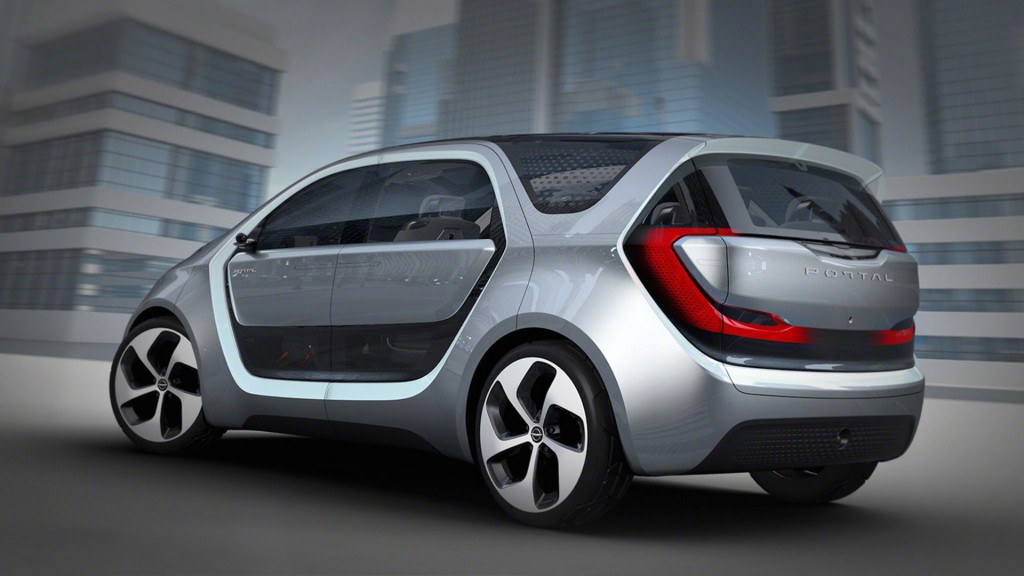
Chrysler Portal concept, 2017 Consumer Electronics Show
In 2026 the Pacifica will receive a refresh, according to Feuell. The updated design will set the stage for the electric Pacifica that will follow, likely a year later.
Chrysler will not use the design direction set by the Airflow electric SUV concept. Feuell said the brand’s design identity will take design cues from the Halcyon concept shown in February. “Modern” and “futuristic” were the design terms Feuell used for Chrysler’s design direction.
Feuell wouldn’t commit to whether the Pacifica Hybrid with its plug-in hybrid powertrain will coexist alongside the electric Pacifica. The executive also wouldn’t comment on whether an electric Pacifica with a range extender, like the Ram Charger EREV pickup truck, would make sense.
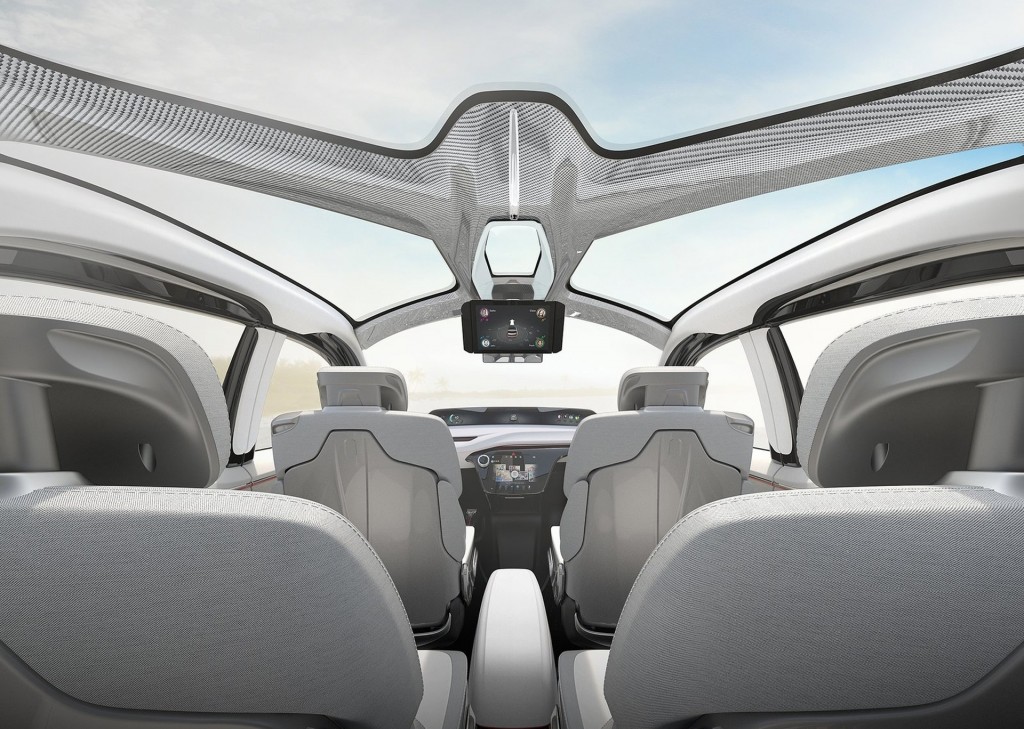
Chrysler Portal concept, 2017 Consumer Electronics Show
Electric Chrysler Pacifica getting flexible seating
Feuell was quick to note that with the VW ID.Buzz–the first electric minivan to hit the U.S. market–you have to remove the seats entirely to create an open space.
The Chrysler team’s been working up creative ways to reimagine the automaker’s patented Stow ‘N Go seating system with a BEV powertrain. Feuell noted one option is pushing the front seats forward to create a clever cargo space under the front seats to store the second row. The executive also mentioned looking at the outboard seating positions in the second row and perhaps putting them on rails to slide sideways.
No final interior configuration for the reconfigurable seating has been locked in yet, according to Feuell. But the planning stages are advanced enough that suppliers are now involved in the discussion to understand what’s possible.
Feuell said the team’s looking at the use cases and how customers will want to use the space. From lounging while waiting for their kid’s soccer practice is done to camping or having a picnic or tailgating, it’s all on the table. There’s also a focus on how to load and unload cargo along with ingress, egress, and cargo liftover height.

2025 Kia EV6 gets bigger battery, will be U.S.-built
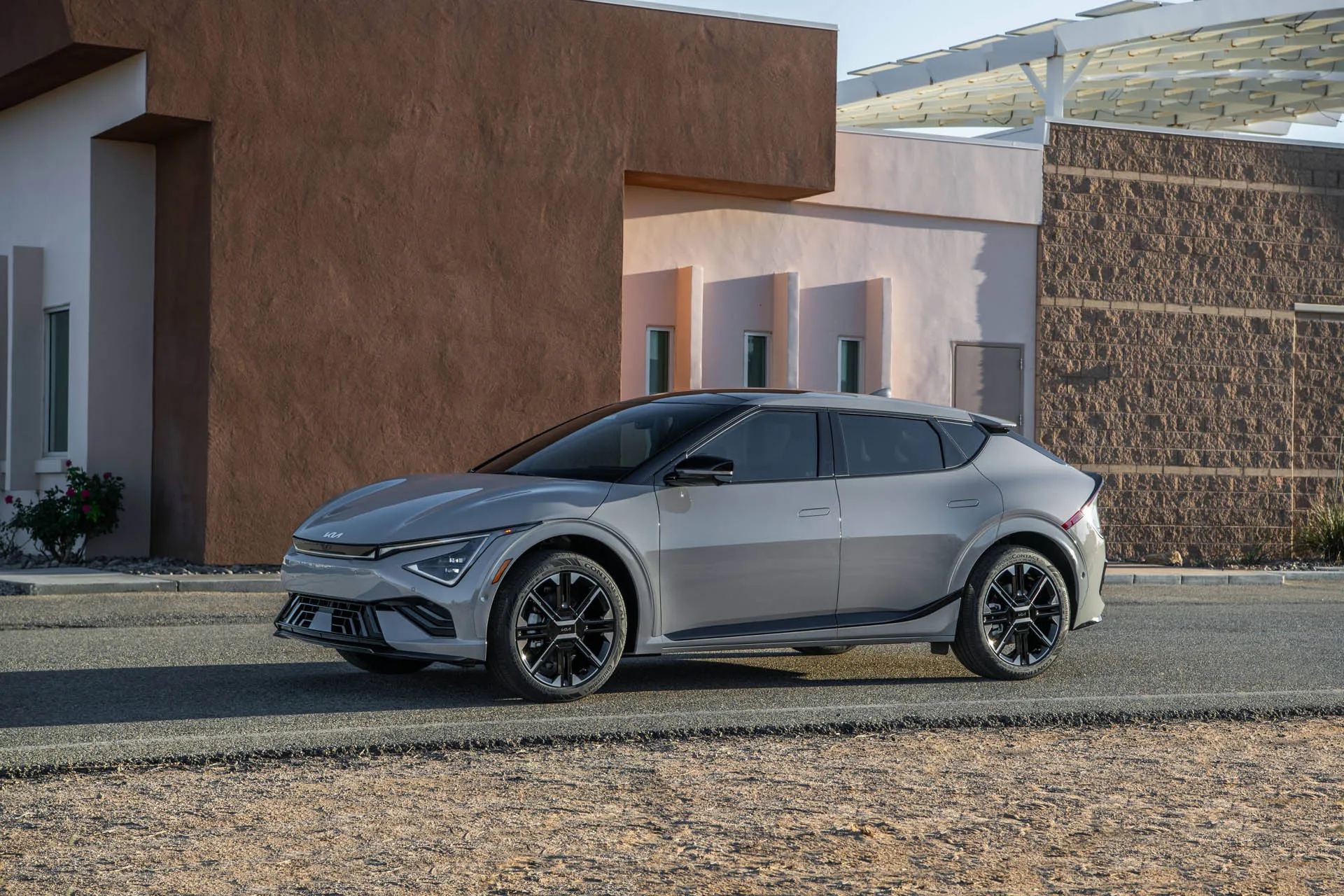
- The electric sedan now has NACS ports for easy access to Tesla Superchargers
- The base EV6 has a 68.0-kwh battery pack, up from 63.0 kwh last year
- The top-rated models have an 84.0-kwh pack, up from 77.4 kwh last year
The 2025 Kia EV6 made its U.S. debut Thursday at the 2024 Los Angeles auto show with updated styling, bigger battery packs, and confirmation of U.S. assembly.
Unveiled earlier this year in Kia’s home market of South Korea, the exterior gets a mild refresh with new headlights and more subtle changes in other areas, including a new graphic for the curved bar of the taillights. Kia says these changes were made to keep the EV6 more in line with its other models stylistically.
The standard battery pack has also been enlarged to 63.0 kwh, from 68.0 kwh currently, while an 84.0-kwh pack replaces the 77.4-kwh pack that has been the largest available since the EV6’s 2022 model year launch. Kia is targeting 319 miles of EPA range with the larger battery in single-motor rear-wheel-drive Light Long Range, Wind, and GT-Line models—a bit higher than the current peak of 303 EPA miles.
Rear-wheel-drive models are still rated at 167 hp and 258 lb-ft of torque with the smaller pack and 225 hp and 258 lb-ft of torque with the larger pack. A dual-motor all-wheel-drive powertrain also remains available with the bigger pack, delivering 320 hp and 446 lb-ft.
The sporty EV6 GT returns as well, but now makes 601 hp, compared to 576 hp before, while torque remains unchanged at 545 lb-ft. A standard GT mode provides a temporary boost to 641 hp and 568 lb-ft.
Like the related Hyundai Ioniq 5, the EV6 also receives a North American Charging Standard (NACS) port with this update. The charge port was also moved to the left rear fender on all models expect the GT. Kia didn’t say whether it will provide adapters for continued use of Combined Charging Standard (CCS) charging stations, as Hyundai is doing, or discuss how fast the EV6 will charge at Tesla Supercharger stations owners will now have access to.
Kia also implemented a new operating system that offers fast processing and enables over-the-air (OTA) updates, as well as digital key functionality that allows drivers to use a smartphone in place of the key fob. Automatically-deploying flush door handles are now standard on all models as well.
The 2025 Kia EV6 is expected to go on sale in the first half of 2025, with pricing to be announced closer to that time. Assembly will move to Kia’s West Point, Georgia, plant, which also started building the three-row Kia EV9 earlier this year. The U.S.-built EV9 still only qualifies for a $3,750 federal tax credit—half the full amount—because its batteries aren’t sourced from the U.S., and that could be the case for the EV6 as well.