
Author: EVAI

Hyundai Ioniq 5 N DK Edition packs aero and brake enhancements
 Hyundai on Friday used the 2025 Tokyo Auto Salon to showcase a special edition of the Ioniq 5 N with additional performance upgrades. Called the Hyundai Ioniq 5 N DK Edition, it’s scheduled to launch in Japan and South Korea later this year. Hyundai said it’s evaluating other potential markets, so importation to the U.S. hasn’t been ruled out. The…

Reflective clothing could make you invisible to car safety systems at night
 Reflective clothing might not help in all situations at night Electronic safety systems in vehicles don’t see the same way as the human eye New federal safety regulations go into effect in 2029 Reflective clothing makes pedestrians more visible to human drivers, but it could make them invisible to the automatic emergency braking (AEB) systems…

Tesla recalls over 230,000 vehicles due to rearview camera issue
Tesla is recalling 239,382 electric vehicles because of rearview camera displays that could fail.
The recall includes 2024-2025 Tesla Model 3 and Model S sedans and 2023-2025 Model X and Model Y crossovers. Circuit boards in these vehicles could short out, causing a loss of the rearview camera image, according to the NHTSA. A functioning rearview camera is required under Federal Motor Vehicle Safety Standard (FMVSS) number 111.
The short-circuit condition occurs due to reverse current on startup, according to the NHTSA. If this happens, drivers will see a blank screen after shifting into reverse, and will have to rely on shoulder checks and mirrors when backing up, the safety agency said.
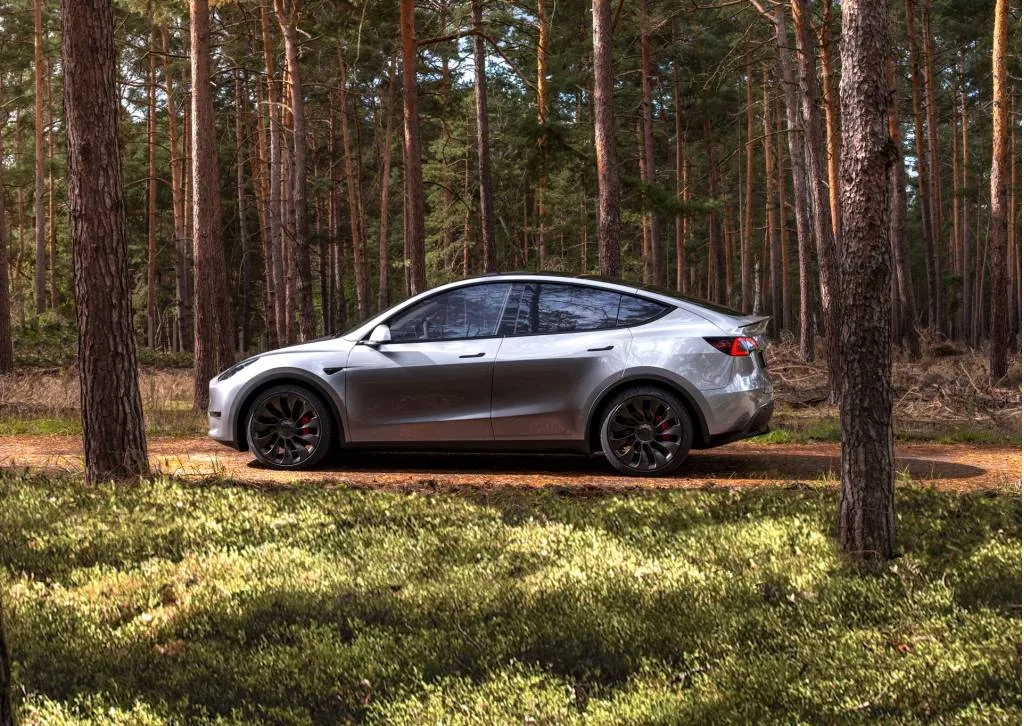
2024 Tesla Model Y. – Courtesy of Tesla, Inc.
Tesla estimates that just 2% of the recalled vehicles actually have this defect. The automaker has identified 887 warranty claims and 68 field reports related to this issue, but it told the NHTSA that it’s unaware of any related collisions, injuries, or fatalities.
Tesla released a free over-the-air (OTA) software update to address this issue, but will also work to identify vehicles with circuit board failure, or component stress that could lead to a failure. It will then replace the affected computers in those vehicles, also free of charge.
The automaker expects to mail owner notification letters Mar. 7, 2025. In the meantime, owners can also contact the customer service department at 877-798-3752. Tesla’s reference number for this recall is SB-25-00-001.
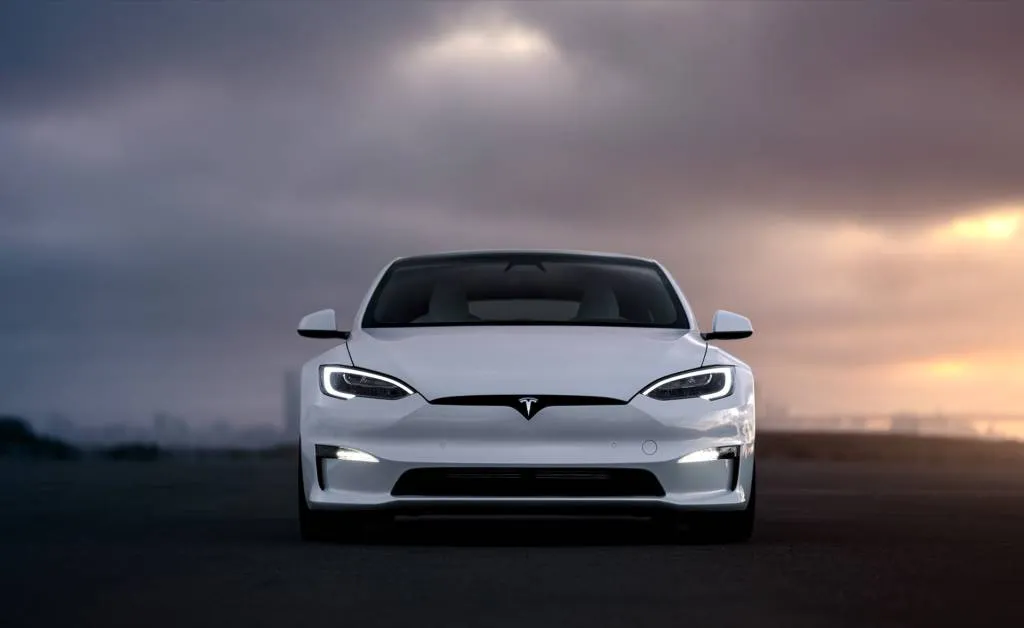
2024 Tesla Model S. – Courtesy of Tesla, Inc.
While this recall can be at least partially addressed through an OTA update that doesn’t require a service-center visit, that isn’t always the case with Tesla recalls. The automaker just recently recalled a small number of Model S and Model X EVs for an airbag issue that requires replacement of the airbag. Hardware, rather than software, issues were also behind many of the seven recalls of the Tesla Cybertruck during its first year on sale.
The NHTSA also recently announced a preliminary investigation of 2.6 million Tesla electric vehicles with the Actually Smart Summon remote driving feature. That follows another federal probe, opened in October, of 2.4 million Teslas equipped with what the automaker has termed Full Self-Driving, after reports of four crashes and one fatality related to that system.

2025 Tesla Model Y Juniper debuts in China with Cybercab vibe
- The Tesla Model Y is receiving its first refresh since debuting six years ago
- The updated Model Y is expected to arrive in the U.S. this spring
- Tesla sales were down in 2024
Following its refresh of the Model 3, Tesla has released an updated version of the Model Y crossover, codenamed Juniper, though only for the Chinese market right now.
Deliveries in China and other Southeast Asian countries begin in March, but U.S. availability has not been announced yet. North American deliveries are anticipated to begin this spring, which would make the Model Y Juniper a late 2025 model.
This marks the first major update of the Model Y since it debuted in 2019. It’s noticeable thanks to exterior styling changes that seem to have been inspired by the Tesla Cybercab, including a chiseled front end, small, angular headlights, and a thin light bar running across the leading edge of the hood. At the back, a continuous light strip unites the third brake light with the taillights.
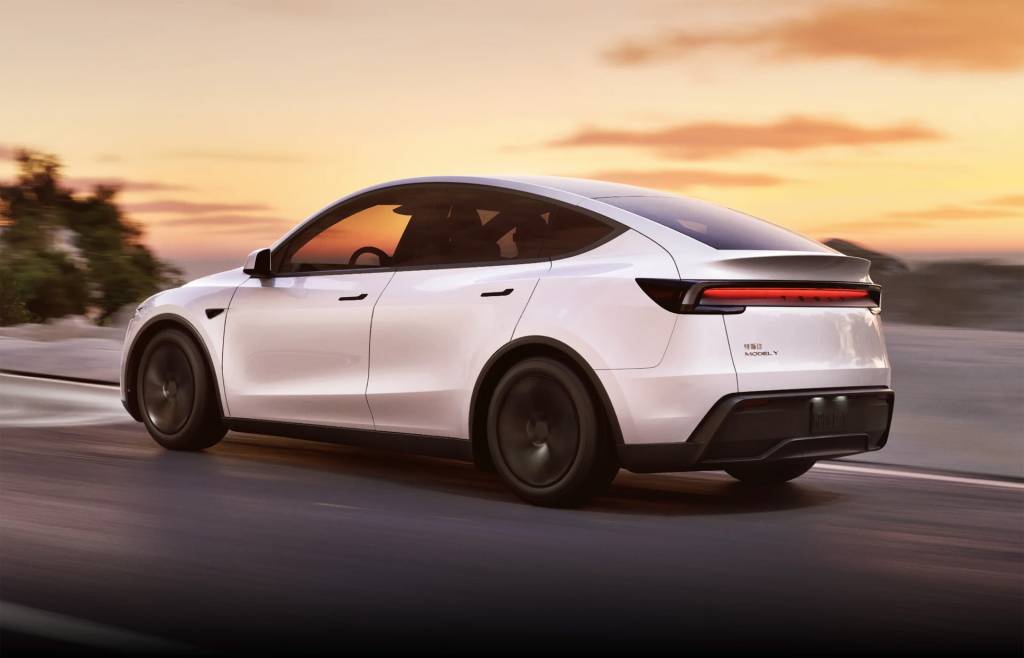
2025 Tesla Model Y (China spec)
Inside, Tesla is claiming similar changes to the recent Model 3 update, codenamed Highland, introduced in 2023. These include a quieter cabin, ambient lighting and purging of control stalks. Heated and ventilated seats are now available as well, along with a touchscreen for rear-seat passengers.
While not detailed here, the updated Model Y is expected to benefit from suspension changes similar to the Model 3 which we found produced a more refined ride. We also saw better fit and finish in the refreshed sedan, something that will hopefully apply to the Model Y update as well.
For the Chinese market, Tesla also increased range and made the Model Y quicker. The base single-motor rear-wheel drive version now delivers 295 hp and gets from 0-62 mph in 5.3 seconds, compared to 5.9 seconds before. A 62.5-kwh battery pack delivers an estimated range of 368 miles on the Chinese test cycle, up from 344 miles before.
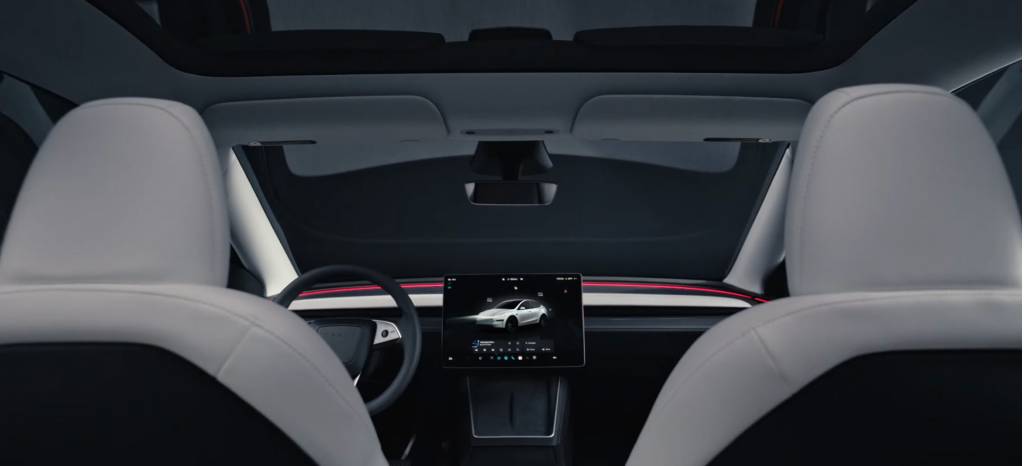
2025 Tesla Model Y (China spec)
The dual-motor all-wheel drive version, with a 184-hp motor at the front and a 260-hp motor at the rear gets from 0-62 mph in 4.3 seconds (compared to 5.0 seconds previously) and returns 446 miles of range on the Chinese test cycle (up from 428 miles) with a 78.4-kwh pack.
For reference, the U.S. Model Y lineup currently consists of single-motor and dual-motor Long Range variants and a dual-motor Performance grade. The Model Y Performance does 0-60 mph in 3.5 seconds, while maximum EPA estimated range of 337 miles is achieved in single-motor Long Range form.
Tesla sales fell in 2024, and it likely continued to lose market share as more EV competitors arrived. The Model Y has generally been the automaker’s bestseller, so this update will be an important factor in arresting that decline.

Toyota built a mid-engined prototype packing a new turbo-4
 Toyota unveiled a mid-engined GR Yaris prototype at the 2025 Tokyo Auto Salon The prototype is powered by a newly developed 2.0-liter turbo-4 The prototype’s reveal has reignited rumors of the return of the MR2 Toyota surprised visitors at the 2025 Tokyo Auto Salon on Friday with a GR Yaris prototype featuring a new 2.0-liter turbo-4 engine in a…

Cadillac F1 to become a full works team by 2030
 The Cadillac F1 team will be a full works team with its own chassis and power units The new GM Performance Power Units will be responsible for Cadillac F1’s power units The Cadillac F1 team is anticipated to start racing in 2026, initially running Ferrari power units General Motors is taking steps to ensure that the forthcoming Cadillac Formula 1…

Most recalled automaker of 2024? It wasn’t Ford
 Tesla issued 16 recalls encompassing more than 5 million electric vehicles Stellantis had the second highest number of recalled vehicles, followed by Ford Ford continued to reverse the trend of leading the industry in recalls Tesla sales may have slowed in 2024, but the number of vehicles it recalled spiked, according to the latest year-end data…

Faraday Future aims for mainstream masses with $20,000 EV
Faraday Future provided further detail on plans for its new FX sub-brand at CES 2025 in Las Vegas this week.
The company reaffirmed plans for an affordable EV called the FX 5 that will cost between $20,000 and $30,000 and a larger model called the FX 6 priced between $30,000 and $50,000. First outlined in a September 2024 investor presentation, the pair will be offered with fully electric and gasoline extended-range powertrains, Faraday says. The company has also said it’s taking an asset-light approach to the FX sub-brand—similar to the now-defunct Fisker.
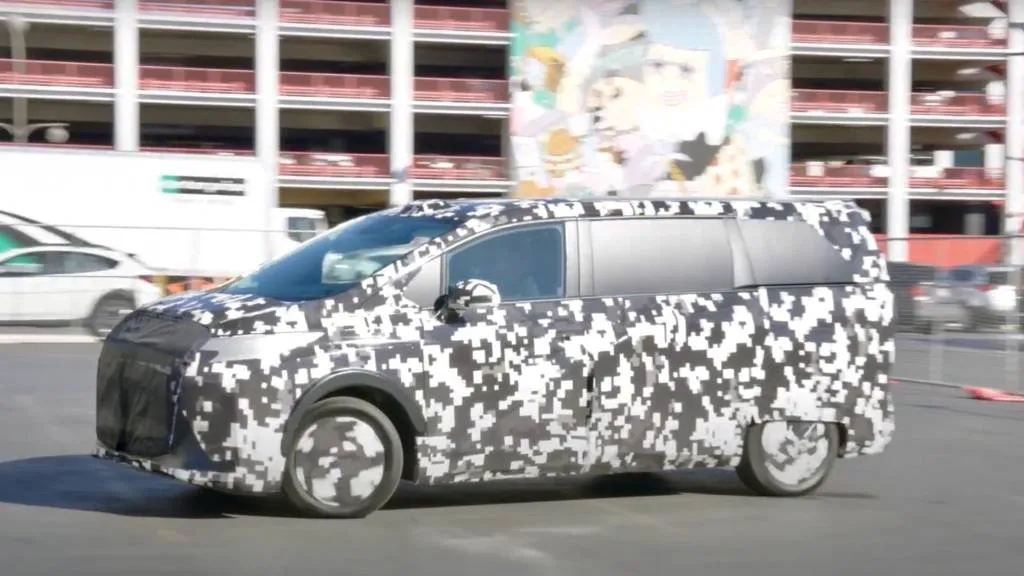
Faraday Future FX Super One prototype
At CES, Faraday also confirmed plans for a third FX model, a minivan called the Super One. The automaker said this model is intended to “cater to both leaders and visionary groups, represented by celebrities, stars, and high-profile business professionals.” That’s a somewhat different demographic than the mass-market FX 5 and FX 6, then, but overlapping with Faraday’s only current product—the $309,000 FF 91 electric SUV.
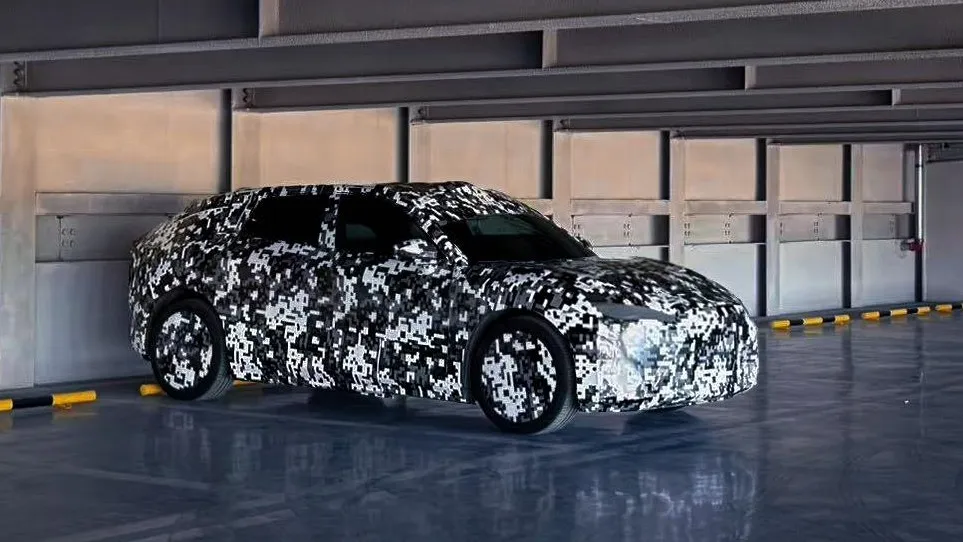
Faraday Future FX 6 prototype
Faraday showed camouflaged prototypes of the FX 6 and Super One in press materials. The FX 6 appears to be a crossover, while the Super One has a typical minivan profile. Should the Super One reach production, it could serve as a more upscale alternative to the Volkswagen ID.Buzz, which we recently named Green Car Reports Best Car To Buy 2025.
Faraday said it is currently conducting testing for U.S. regulator homologation, and it aims to stage a full reveal of the Super One in the second quarter of this year. It also hopes to start pre-production of at least one new model by the end of the year, pending acquisition of necessary funding. The company says it’s secured $60 million in new commitments since September 2024, but that’s still just a drop in the bucket when it comes to launching a new vehicle.
Scaling up production to mass-market levels could also prove challenging for Faraday, which struggled to get even its low-volume flagship FF 91 to customers. The FF 91 was first shown in production-bound prototype form at CES 2017, but the first customer example wasn’t delivered until August 2023.

Faraday Future not dead, launches FX brand for AI minivans
 Faraday Future launched the FX sub-brand during 2025 CES FX initially aims for trio of minivans with a choice of electric or hybrid powertrains It says first model will be a luxury minivan called Super One It’s been eight years since Faraday Future first unveiled its FF 91, and since then, only a handful of the high-priced electric…

Most Scout reservations pick hybrid over EV, says CEO
 Scout received over 50,000 reservations since revealing its Terra pickup truck and Traveler SUV last fall Around 70% opted for the Traveler and over 50% opted for a hybrid powertrain The new Scouts are due in 2027 with a promised starting price below $60,000 Volkswagen Group’s new pickup and SUV brand, Scout, designed specifically for America, has…