
Author: EVAI

BMW R&D boss: Bigger batteries in EVs “don’t make sense”
- Bigger battery packs bring an inflated carbon footprint
- Solution is higher efficiency and reeling range in to a real-world 300 miles
- Six upcoming Neue Klasse EVs will follow this philosophy
BMW aims to grow its electric-vehicle momentum with its next-generation Neue Klasse family of vehicles, but it won’t be doing that with big battery packs.
“You can’t make battery packs bigger and bigger because then BEVs don’t make sense anymore,” BMW chief development officer Frank Weber said in an interview with Automotive News Europe published Monday, arguing that chasing ever-bigger range numbers with ever-larger battery packs would lead to a penalty in the form of an inflated carbon footprint.
Bigger battery packs could indeed lead to more emissions from their manufacture—plus a range of farther-reaching consequences. One 2022 study suggested heavier EVs would also mean increased particulate emissions from tires wearing down more quickly under the added weight of those packs. They’ll also strain the supply chain, which has been shown to be fragile over the past few years.
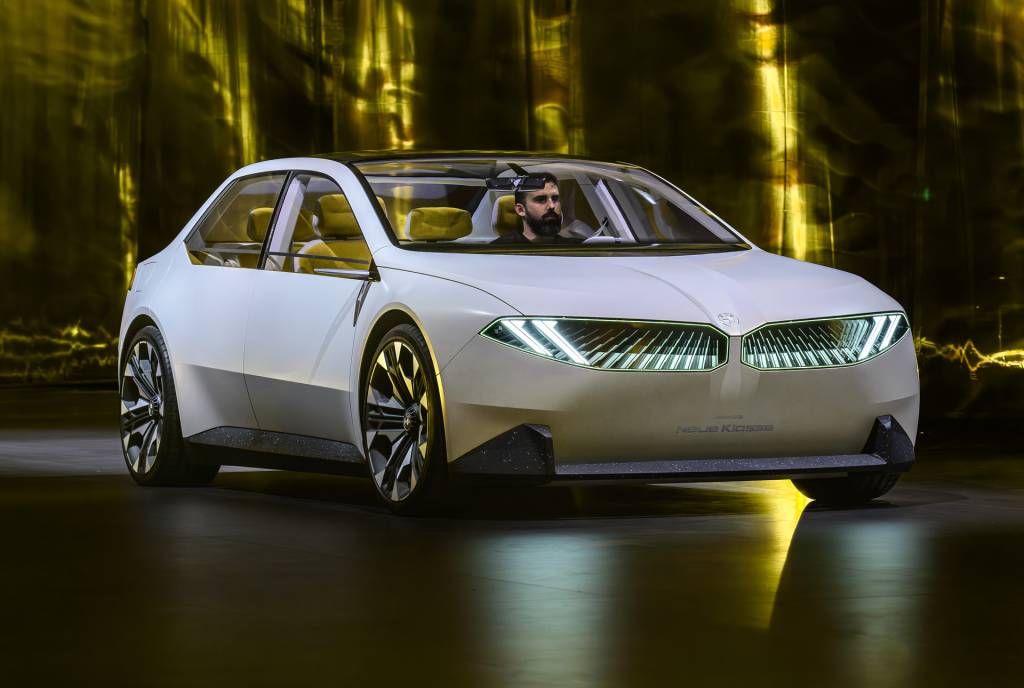
BMW Vision Neue Klasse concept
“Improving efficiency is much more important than ever-larger batteries,” Weber said. “And this is exactly what we are doing with the Neue Klasse, which makes efficiency leaps of up to 20%, depending on the model.”
At a certain point, increased range is also unnecessary, Weber said, noting that current BMW EV customers are happy with 250 to 310 miles of range “under real-world conditions.” BMW is finding that this amount of range allows customers to complete most trips without charging, Weber, said, adding that BMW still is aiming for a 30% range boost over its current models with the Neue Klasse.
Those comments echo what Green Car Reports and a rather small group of automakers have emphasized for years—that range is a red herring, and that no one needs a 500-mile EV. But now that philosophy is being applied to what BMW has promised will be a large family of fairly high-volume models.
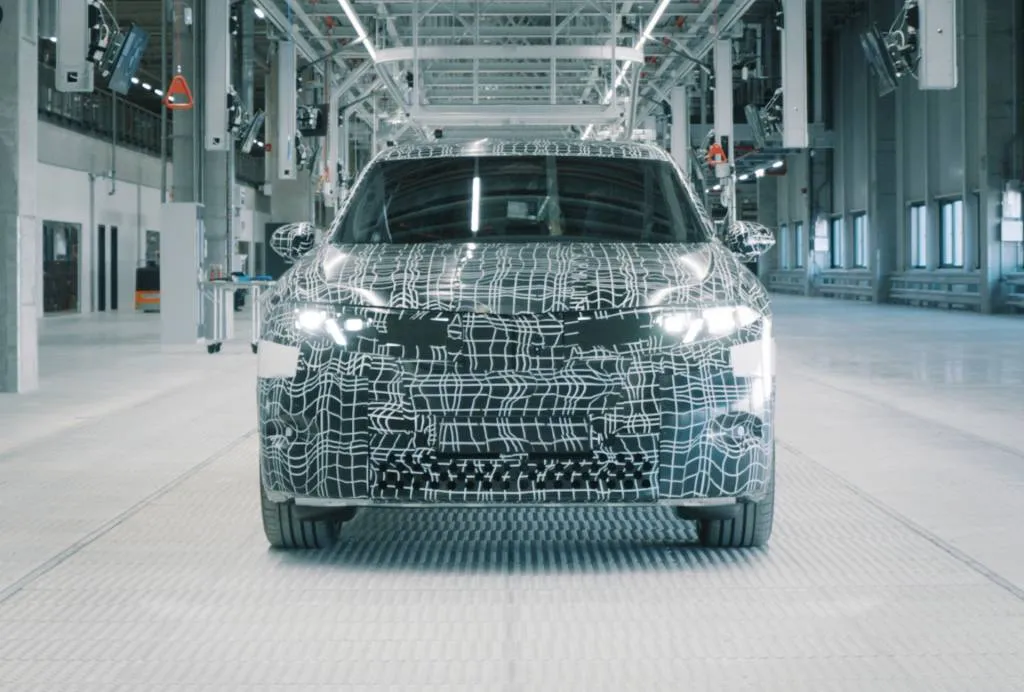
Pre-production example of first BMW Neue Klasse electric vehicle at plant in Hungary
BMW plans to launch six Neue Klasse EVs within the next two years, Weber told Automotive News Europe. The first of those models, an electric crossover SUV, is expected to start production later this year. The first vehicles will be built in Hungary, but BMW has said factories in Germany and Mexico will build Neue Klasse models as well.
Those models will reverse BMW’s current trend of basing EVs on existing gasoline vehicles, although Weber pointed out that they’ll still share elements with other BMW models, such as the new dashboard display the automaker unveiled last month at CES 2025. During media roundtables at that show, Weber also said the upcoming EVs will set the design template for future gasoline BMW models.

2025 Ford Maverick Hybrid price hiked again, to $28,590
 Ford gives 2025 Maverick buyers the option of pairing AWD with the hybrid powertrain The updated 2025 Ford Maverick has a larger touchscreen The 2025 Ford Maverick is on sale now and costs $28,590 For 2025, Ford’s smallest pickup truck gets its biggest update since its 2022 model year launch. The Maverick Hybrid also gets another price hike to…

Bugatti boss provides first taste of Tourbillon’s V-16 howl
 New video shows a prototype of the Bugatti Tourbillon hybrid hypercar The video provides a clear taste of the Tourbillon’s newly developed 8.3-liter V-16 engine The Tourbillon enters production in 2026 and carries a starting price of about $4 million Bugatti surprised many last year when, instead of revealing an electric successor to its Chiron…

Report: GM, Ford seeking gradual EV tax credit phaseout
Automakers are already preparing for the federal government stop electric vehicle tax incentives, lobbying for a gradual phaseout rather than an abrupt end, Bloomberg reported Tuesday.
Several automakers, including Ford and General Motors, along with industry lobbying groups, have asked the Trump Administration and Republican Congressional lawmakers to preserve some EV incentives from the Biden Administration’s Inflation Reduction Act (IRA) as long as possible, according to the report, which cites anonymous sources familiar with the matter.
The IRA, with its manufacturing incentives and tax credits, was predicted to double EV sales by 2030 vs. the previous forecast. But by all previous accounts, the Trump Administration was aiming to make nixing the federal EV tax credit a priority—with support from Elon Musk and Tesla.
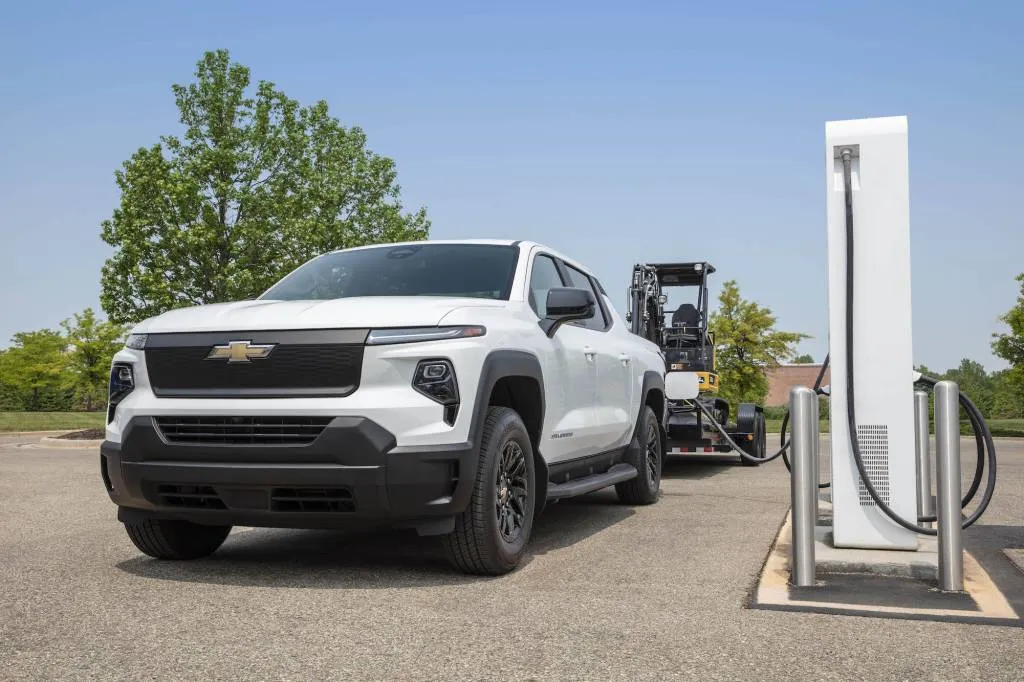
2025 Chevrolet Silverado EV
According to this report, one of the ideas being discussed in the event that Trump eliminates it is a three-year credit sunset that would buy more time to reduce costs of new EVs and make the loss of the tax credit less impactful.
Automakers are reportedly also rallying to keep the so-called leasing loophole that allows automakers with captive financing companies to get a $7,500 tax credit for leased vehicles, and pass the savings on to the customer. This allows for an equivalent discount on EVs that wouldn’t normally qualify for the credit due to price, battery-materials sourcing, or the customer’s income.
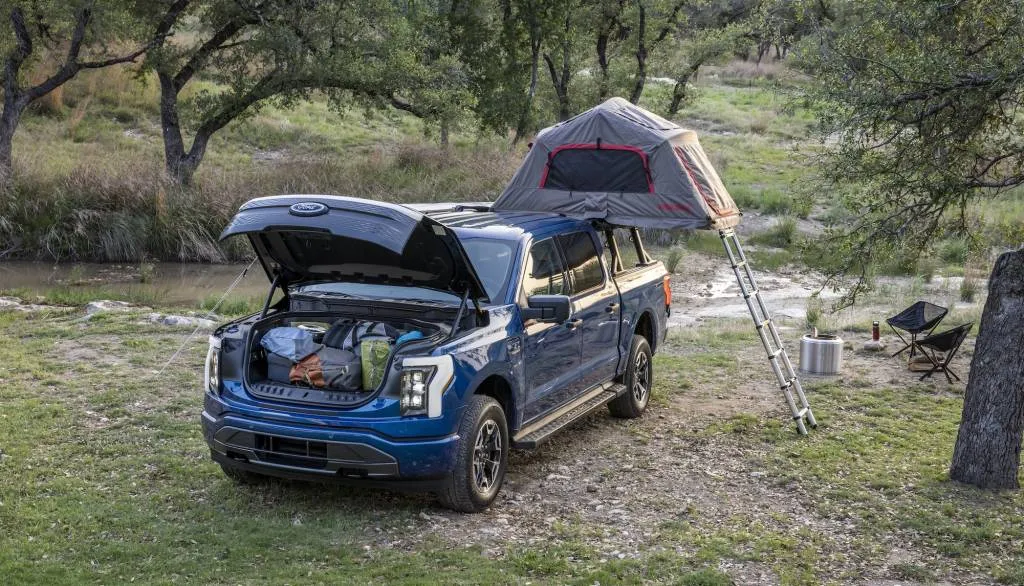
2025 Ford F-150 Lightning
That led to a surge in EV leasing in recent years—with federal money subsidizing luxury EVs built in other countries. That’s likely not going to be a winning argument in Congress, where the IRA’s EV tax credit barely squeaked through the first time around.
Even if automakers fail to convince Republicans to keep the federal EV tax credit, increased state incentives may help make up for it. California plans to provide its residents with $7,500 rebates if Trump kills the tax credit, but it’s seeking to exclude Tesla, ostensibly to provide more incentives to brands with less market share in order to promote competition.

Renault is making things easier for classic car owners
 Although car companies typically want to push new models onto the public, in some cases they provide plenty of support for customers looking to hold onto and maintain a classic. This used to be the domain of exotic brands like Aston Martin and Ferrari, whose classic cars are often worth so much they’re typically seen as investments, but in recent…

2025 Ford Maverick Tremor debuts in updated pickup lineup for $41,945
 Ford’s expanded the Maverick’s optional all-wheel drive to the hybrid powertrain The Ford Maverick Tremor is now a standalone trim rather than a package The 2025 Ford Maverick is on sale and costs $28,590, but Tremor models cost $41,945 The Ford Maverick compact pickup gains an update for the 2025 model year, its first since its 2022 arrival. The…

Scout extended-range PHEV tech, platform could be scaled to other vehicles
- EV version offers 350 miles; bigger battery would be detrimental
- EREV system will go 150 miles on battery, then 350 miles on gasoline
- Promises full system performance whether on battery or range extender
- Rivian-based architecture promises to keep electric trucks “fresh”
It’s been nearly two years since Volkswagen’s Scout Motors electric SUV brand announced a $2 billion South Carolina factory and started to emerge from stealth mode. But it will be another two years before these models are due for their first deliveries.
Based on the reveal of its Traveler SUV and Terra pickup in concept versions shown last fall, including prices said to start under $60,000, and executive comments thus far, Scout has laid out some of the basics for the brand.
Scout will, on one hand, offer a look back to the past: rugged EVs with squared-off styling inspired by the classic International Harvester SUVs made from 1960 to 1980. It won’t be a ruse either, as Scout promises to build unparalleled DIY, back-to-basics simplicity into these trucks, with an approach that makes them easy to repair yourself.
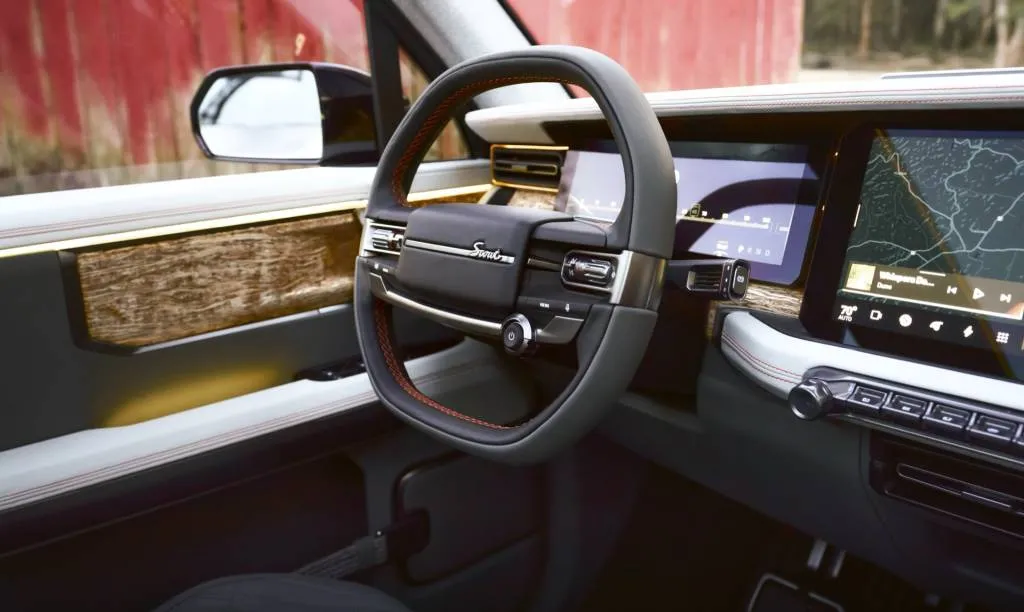
Scout concept interior
But on the other hand these trucks will be backstopped by some leading-edge elements, including a completely new infotainment interface called Community UX, plus a zonal architecture and software-defined vehicle basis conceived by the new joint venture between the VW Group and Rivian. That’s an exciting point, and it opens up all kinds of opportunities that could add complexity or simplify, depending on the end product.
Could Scout’s standout pairing of nuts and bolts and clicky buttons, crossed with the potential of satellite-data-delivered feature upgrades, help make EVs popular with a new group, or will it be the McDLT of electric SUVs?
It sounds like quite the balancing act from a technology and engineering perspective, and that’s why Green Car Reports checked in with Scout Motors chief technology officer Burkhard Huhnke last month at CES. As these models push ahead from the concept to the prototype stage, the CTO revealed various details about the brand, the trucks, and the tech.
Scout Terra concept
Scout: Trailblazing EV range-extender layout
From an engineering standpoint, the elephant in the room is that, among Volkswagen Group’s core passenger vehicle brands—VW, Audi, Porsche, Lamborghini, and Bentley, plus Seat, Škoda, and Cupra—Scout is trailblazing. There is no current body-on-frame SUV and there’s never been an EV with a range extender.
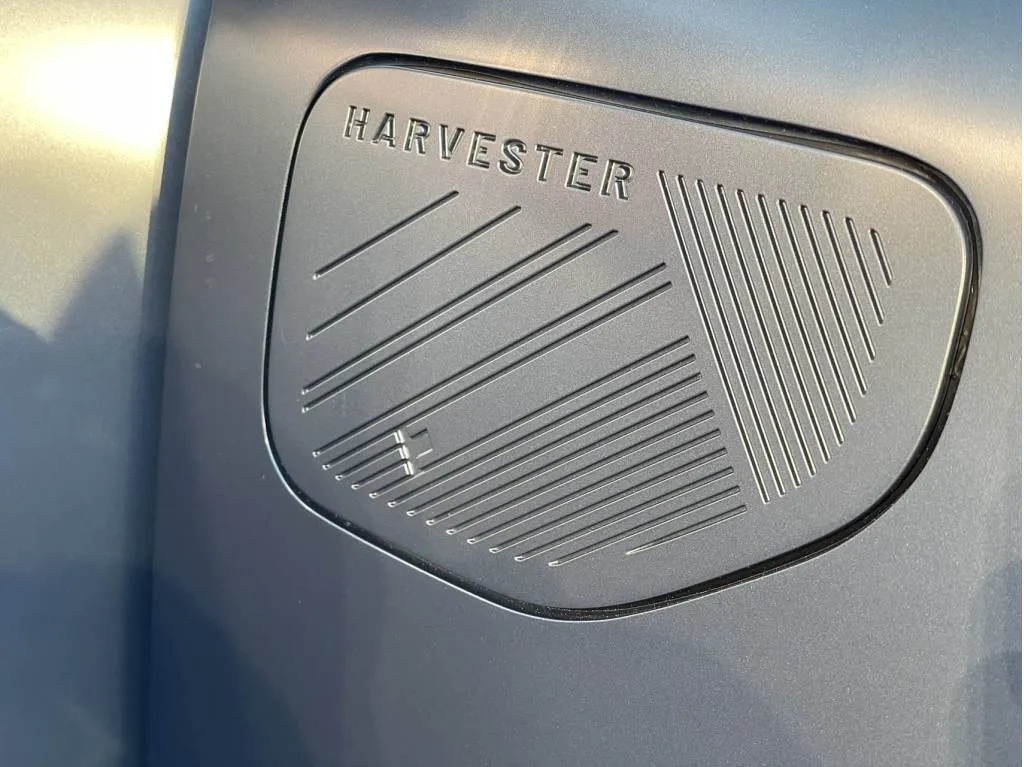
“It’s of course an opportunity,” said Huhnke. The CTO underscored that it’s the first body-on-frame vehicle in the group, the first model with the ladder-frame concept, and the first such vehicle with an EREV propulsion system (a plug-in series hybrid system, to be dubbed Harvester). “Everything has been developed as a unit—platform—which has the opportunity as a flexible platform to be scaled, maybe, in the future,” he said.
“Our IP has been generated in-house,” said Huhnke, about the EREV system, referring to it as another core competence for Scout. So the engine, the generator motor, and other components will come from elsewhere in the VW Group, Huhnke verified, while Scout is managing it all in a unified system.
“The operational strategy, it’s completely ours,” he elaborated. “We cannot build an engine ourselves, but the range extender itself is so charming; you’re using a BEV architecture underneath and just carrying a kind of DC charging system with you.”
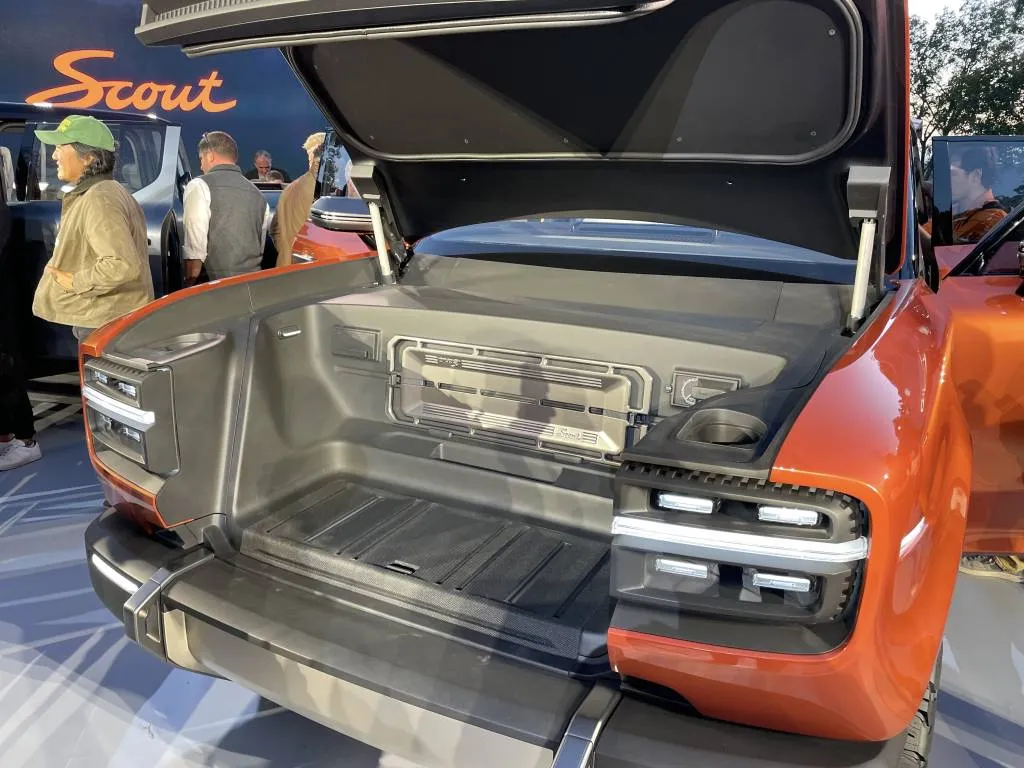
Huhnke didn’t give any hints about what engine, or type of engine, might be used here from the vast VW Group parts bin. But addressing a potential sore point—ask some former BMW i3 REx owners—he assured that drivers would have the “full performance of the system” whether using the battery or constantly charging from the range extender. Based on cutaways shown by Scout Motors, the range extender will be small, and will mount not under the hood but at the rear of the vehicle, behind the rear axle and under the cargo floor—an approach that will maintain the frunk but hopefully not impinge on off-road angles.
Scout Traveler SUV concept
Why does Scout EV peg 350 miles of range?
Why did Scout decide that 350 miles is enough for the BEV, while Rivian, for instance, pushes to 410 or 420 miles and the Chevy Silverado EV and Cadillac Escalade IQ push it out to 460 miles?
Put bluntly, it may be close to the limitations of what fits within the ladder frame. But Scout also didn’t want to be seen in the same company as models like the GMC Hummer EV, Huhnke let on. It’s a matter of keeping weight under control—which is what the EREV version achieves.
Cramming in more batteries, Huhnke explained, would be detrimental. “You can increase the driving range by adding more and more capacity into the battery, and that’s increasing the weight drastically,” he said. “Or it’s maxed out by the existing space of the ladder frame.”
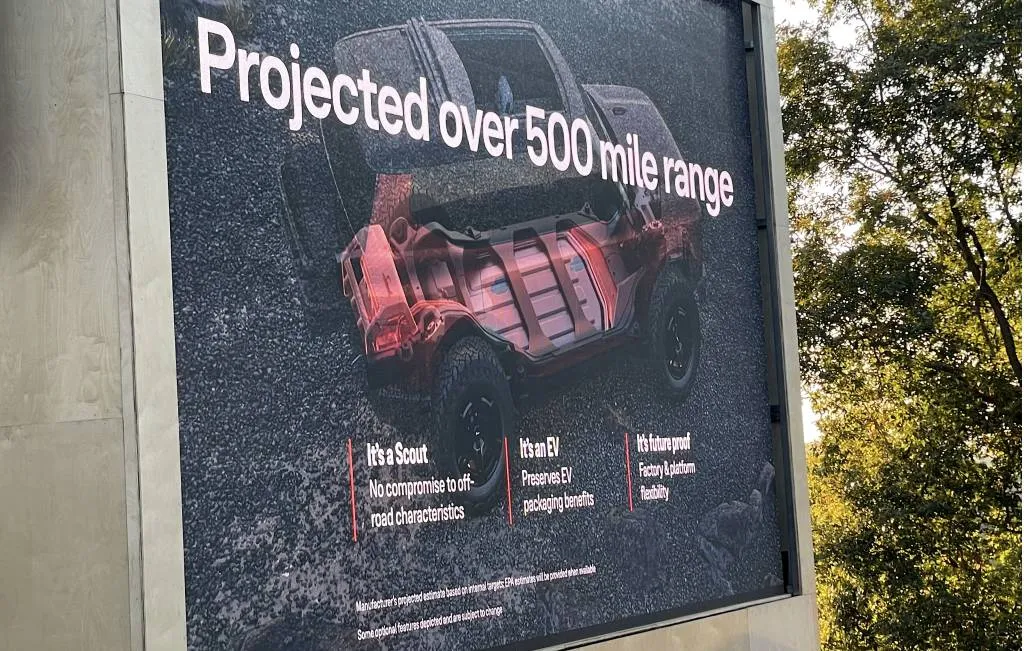
Scout claiming 500 miles with in gasoline range-extender form
Huhnke said that the EREV version—which Scout CEO Scott Keogh recently said more customers were ordering because of range anxiety—will deliver an electric driving range of around 150 miles, then an additional 350 miles with the range-extender. “So in total, 500 miles, that should be sufficient; it’s a trade off in between the weight equation and the capacity of the battery.”
The only other fully electric models that ride on such a setup—body over ladder frame—are the Ford F-150 Lightning and the Mercedes-Benz G-Class EV (or G580 with EQ Technology, in Mercedes marketing parlance). The latter fits a 116-kwh battery pack inside the frame rails, while the Lightning fits up to 131 kwh. Scout hasn’t said what size its battery packs are, but it makes clear it didn’t want to go super-sized.
GM’s full-size electric pickups and SUVs, as introduced in the GMC Hummer EV, employ a structure that combines aspects of body-on-frame and unibody construction, relying on a thick battery pack to provide some of the structural benefits of a frame. But these models’ curb weights soar past 9,000 pounds.
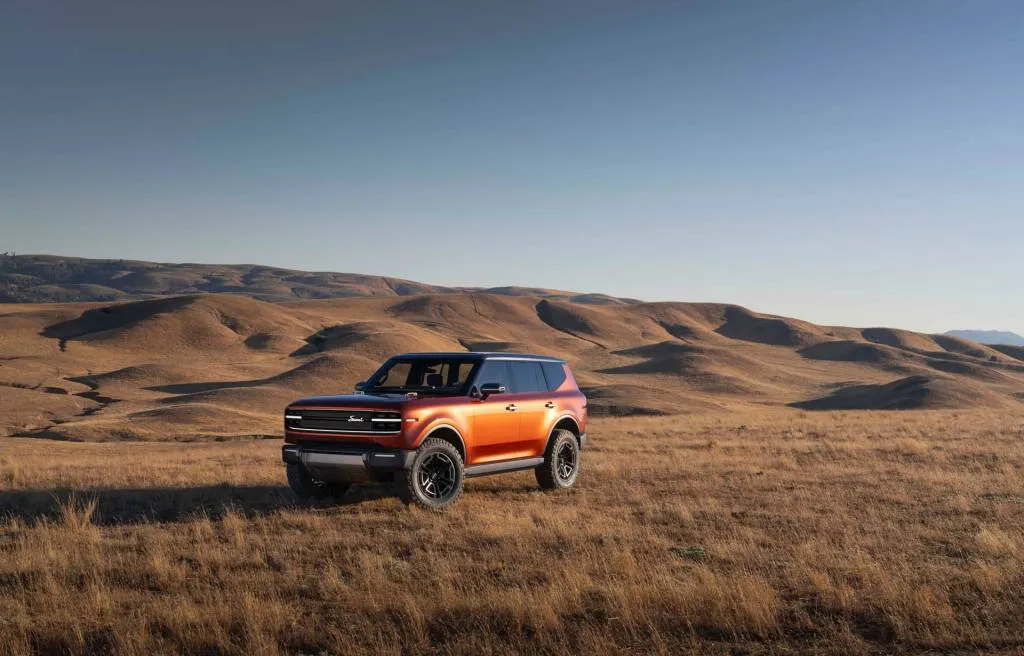
Scout Traveler concept
Scout EVs will be off-roaders to the core
Scout will also need a new level of traction and stability control systems catered to off-road situations—and Huhnke assured that these are taking form in-house together with chassis and propulsion development.
“We are going to have an air suspension integrated as a suspension system itself (his emphasis),” said Huhnke, which will allow new levels of tuning and reduction of noise, vibration, and harshness (NVH). And he says it’s how Scout reconciles this with off-roading that will be another core competence.
“We had decided to have this off-road capability, and therefore we decided to use a more conventional approach on the chassis and propulsion system,” he said. “That means we have one e-beam (an electric motor incorporated into a solid axle), for instance, as the rear axle.”
How much of all of this is truly being engineered by Scout Motors? Some development is happening within Scout, plus “competence in-house to design, simulate, and run durability testing,” explained Huhnke. “Of course we are working together with suppliers. We cannot just hire an entire team; that doesn’t make sense.”
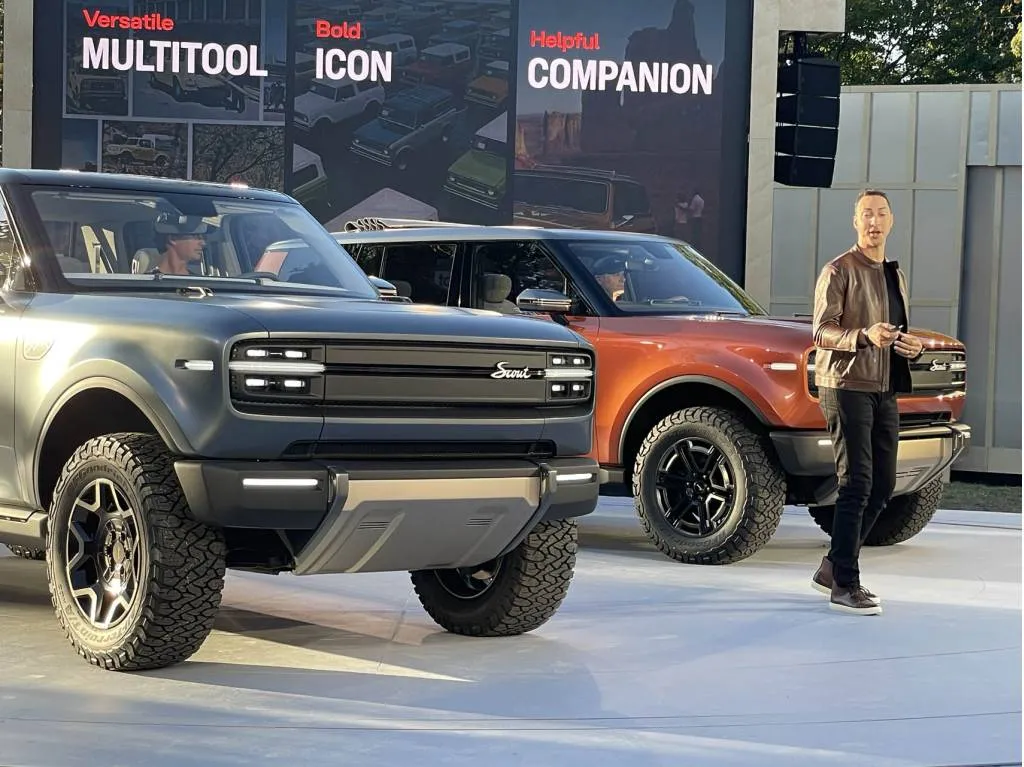
Scout Terra and Traveler concepts
Optimizing for weight, aero, sustainability
What Scout is doing a lot of in-house is optimizing, via a development path that’s been different than anything the VW Group has made up to now, Huhnke explained. Development has emphasized the use of AI and digital twins—one of the auto-industry tech buzzwords of the year—allowing the team to test structural details, design details, or engineering changes underneath, in a way that wasn’t possible before without physical prototypes.
“Combining the full compute power in 3D models with a combined AI approach gives us instant results for changes in aerodynamics or structure,” said Huhnke, adding that having a new factory and its higher levels of accuracy will make the most of this fine tuning.
On the way from concept to production-bound prototypes, that’s been especially useful in reconciling the design from chief design officer Chris Benjamin’s team with underbody airflow. Huhnke said that it will also help the team achieve its targeted top U.S. safety ratings from the NHTSA and the IIHS.
You won’t find carbon fiber in the Scout trucks, nor much aluminum. The Scout electric trucks follow a “traditional materials approach,” said Huhnke, but the optimization approach and simulation is leading to a serious weight reduction. It made decisions to emphasize steel partly based on carbon footprint, he said. “We are carefully going through the material list and optimizing from that standpoint,” said Huhnke. “If you talk about carbon fiber, it’s always appealing to be used from a weight optimization perspective, but not from the sustainability perspective.”

Rivian and Volkswagen Group electrical architecture and software stack
Radically different, Rivian-based underpinnings
While the body-on-frame and solid-axle underpinnings suggest a conservative approach to these vehicles overall, what’s underneath connecting components will be one of the most leading-edge layouts in the industry.
“With the new joint venture between VW and Rivian, we have a chance to use zonal architecture as one of the first brands, and that gives us the OTA opportunity we always wanted to have,” said Huhnke. “So new features, new updates over a lifetime…we’ll keep the cars fresh.”
The CTO is referring to the adoption of Rivian’s zonal architecture, which allows a vast reduction of the number of separate control units around the vehicle, and a reduction of the amount of wiring, connectors, and other associated pieces. With software-based controls for zones, it gives much more flexibility to roll out changes that could retune, refine, or redefine how a core component works—the dream of the software-defined vehicle.
Scout has confirmed that its electric trucks will run on 800 volts, and be capable of charging at up to 350 kw—and that they would support some level of bidirectional charging capability. Altogether, that might make it more advanced in some fundamental aspects than Rivian’s current R1 lineup while also harnessing Rivian’s more advanced electronics architecture. The VW Group pioneered 800-volt systems in the Porsche Taycan and Audi E-Tron GT, and it’s now in a growing group of PPE vehicles including the Porsche Macan Electric and Audi Q6 E-Tron.
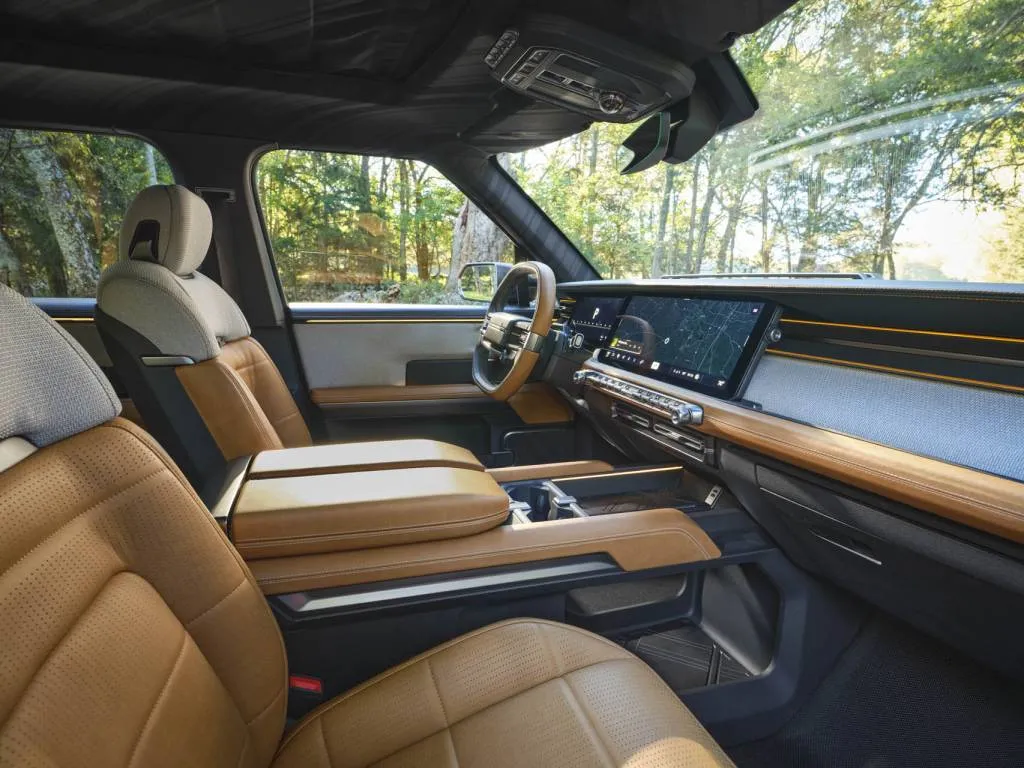
Scout Traveler concept
But there are lots of details yet to come. Scout will emphasize tactile buttons and controls and won’t bury items in infotainment menus, Huhnke promised. Yet the Scout trucks will be able to both monitor vehicle diagnostics and manage predictive maintenance with cloud-based services, with push updates when required. It also plans to build satellite internet into its trucks, but Huhnke suggested that it’s still working out how to make that a seamless part of the experience.
Two years from now Scout will provide a very different experience versus Rivian models, and perhaps a different experience versus any other EVs on the market. Whether or not it’s a hit depends on price, specs, and more, of course, but perhaps more so, whether truck types are charmed by this very original mix of the past and the future.

2025 Ford Maverick hybrid gets more expensive, gains AWD option
 Ford refreshed the Maverick pickup truck for 2025 The updated Maverick can pair the hybrid powertrain with all-wheel drive The 2025 Ford Maverick is on sale now and costs $28,590 The Ford Maverick compact pickup truck has impressed with its fuel efficiency and capability, but customers wanting all-wheel drive have had to opt for non-hybrid models…

Mercedes-Benz EQB recalled due to potential battery fire
Mercedes-Benz is recalling 7,362 EQB electric SUVs due to a battery issue that could lead to fires, and it’s asking customers to avoid fully charging until a remedy is implemented.
The recall covers certain 2022-2024 Mercedes EQB models that received battery cells from an early-production batch. These cells could be more vulnerable to internal short circuits under certain conditions, such as current ripples from charging equipment or damage to the battery pack, according to the NHTSA. That presents a fire risk both when the vehicle is being driven and when parked.
Owners will see a battery-malfunction warning message in the instrument cluster should any problems occur while driving, but there may not be any external indication of a problem when the vehicle is parked and shut off, the NHTSA noted.
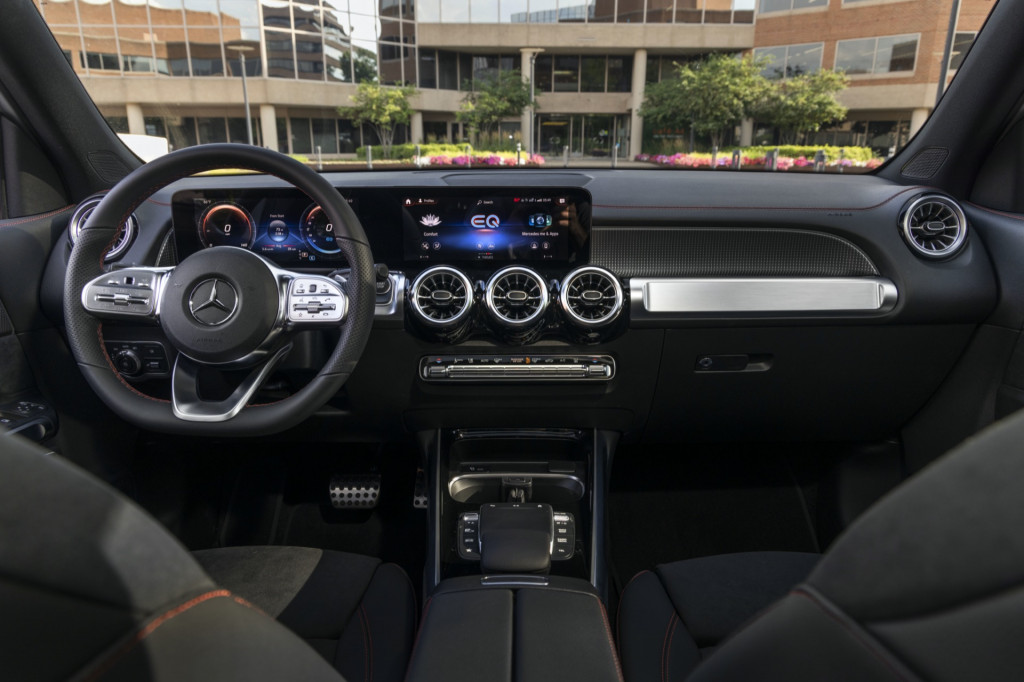
2022 Mercedes-Benz EQB 300
Mercedes told the NHTSA that it was not aware of any fires or related warranty claims in the U.S., but that it first became aware of the problem through reports of fires in other markets. Changes in the manufacturing process used by the battery supplier to address the issue have been implemented in vehicles manufactured after Jan. 24, 2024, Mercedes said.
Owners of vehicles manufactured before that date must take them to dealerships, where updated battery management software will be installed free of charge.
In the meantime, Mercedes instructs owners not to charge beyond 80% battery capacity. Given its 2024 range ratings of 205 to 251 miles, depending on the version, that limits its usable range to less than 200 miles if you leave a few miles left when plugging in.
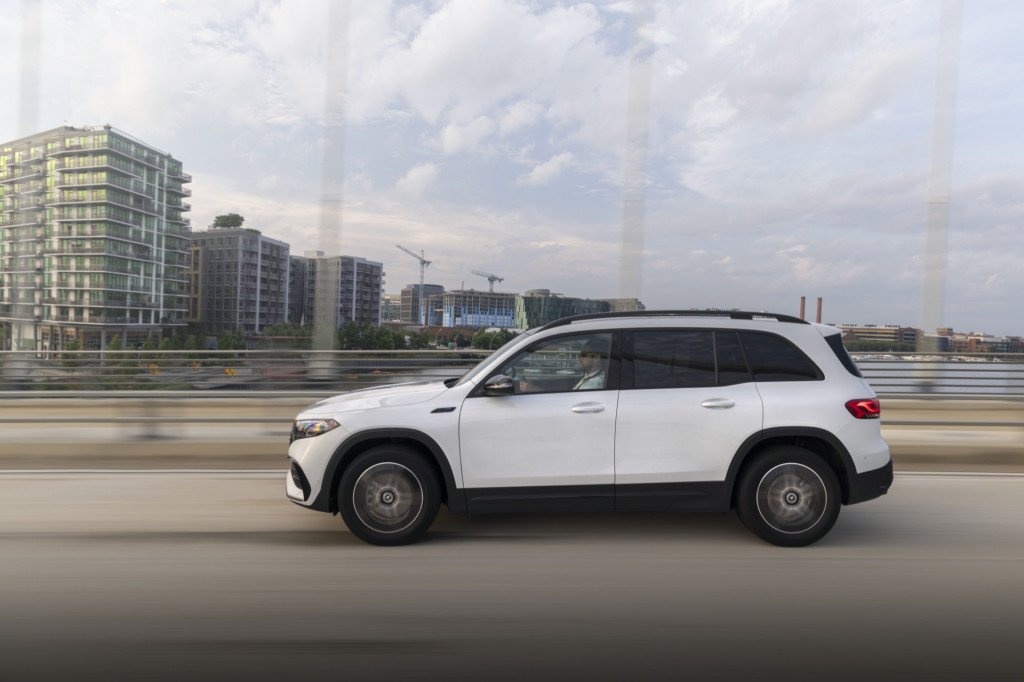
2022 Mercedes-Benz EQB 300
Mercedes plans to notify owners by mail beginning Apr. 1. Owners can also call the automaker’s customer service department at 1-800-367-6372 for more information.
Introduced for the 2022 model year, the EQB applies an electric powertrain to the GLB-Class crossover, preserving that model’s boxy profile and thus standing out in a market segment dominated by teardrop-shaped crossovers. It received a refresh for 2024 that brought a larger standard touchscreen and Plug & Charge compatibility, while keeping that distinctive shape.

2025 Roush F-150 delivers performance off the road
 Roush has revealed off-road-focused upgrades for the 2025 Ford F-150 Most of the upgrades were developed in-house Pricing starts at $19,995, plus the donor truck Roush Performance may be best known for its high-horsepower builds, but in recent years, the company—closely tied to Ford—has expanded its focus to off-road capability. Its…